
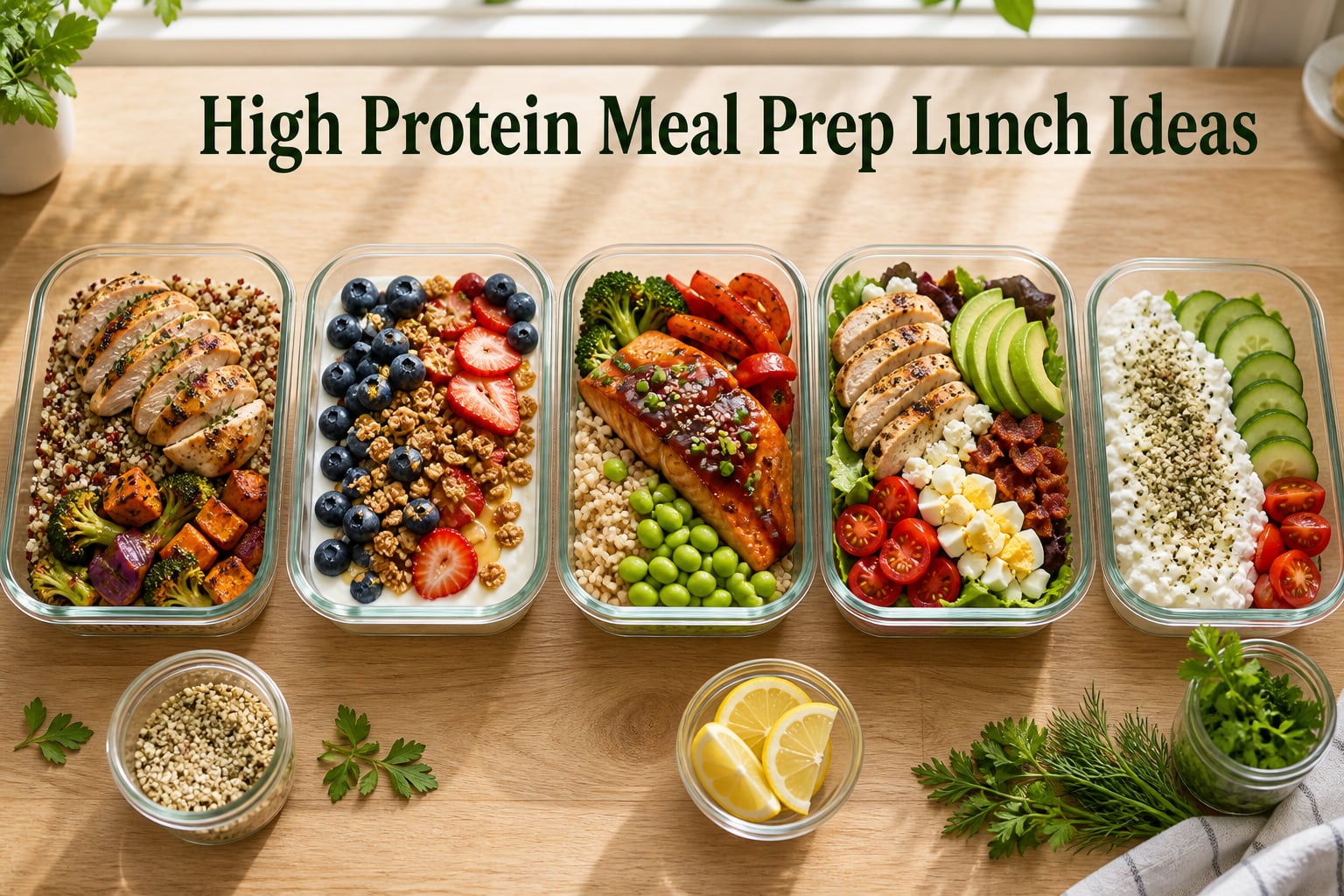
“High protein” should describe the center of lunch, not a powdered garnish. In these high protein meal prep lunch ideas, each container begins with a measured portion of poultry, fish, meat, eggs, dairy, tofu, beans, lentils, or chickpeas, then adds enough grain and produce to feel like a complete midday meal.
I keep sauces and crisp components separate because a filling lunch still fails if its texture declines by Tuesday. The quantities below are batch amounts rather than invented nutrition totals.
Table of Contents
15 High Protein Meal Prep Lunch Ideas with Real Portions
Hot Grain Bowls for the First Half of the Week
1. Lemon Chicken Quinoa Boxes
Cook 2 cups dry quinoa in low-sodium broth and roast 2 pounds lemon-herb chicken breasts to 165°F. Divide 5 ounces sliced chicken, 3/4 cup cooked quinoa, 1 cup roasted broccoli, and 2 tablespoons pumpkin seeds into six containers. Pack a lemon-yogurt dressing separately so the grain remains distinct. Refrigerate four lunches for up to 4 days and freeze two without dressing or raw garnish. Reheat the chicken, quinoa, and broccoli to 165°F, then add dressing. Boneless thighs can replace breasts and stay moist after reheating; chickpeas can replace chicken for a plant-based box.
2. Miso Salmon Soba Jars
Bake five 5-ounce salmon portions with a thin miso glaze until they reach 145°F. Prepare 12 ounces soba just until tender, cool the noodles under running water, and coat them with 2 teaspoons rice vinegar. Layer five wide jars with sesame dressing, shredded cabbage, cucumber, edamame, noodles, and salmon at the top. Keep nori or sesame seeds dry until lunch. Because cooked fish is best early in the week, use the jars within 3 days and transport them with an ice pack. Baked tofu extends the refrigerator window to 4 days and absorbs the same miso flavor.
3. Turkey Taco Brown-Rice Bowls
Brown 2 pounds ground turkey with onion, cumin, chili powder, and 1 teaspoon kosher salt until the meat reaches 165°F. Portion 5 ounces turkey, 3/4 cup brown rice, 1/2 cup black beans, and 1/2 cup roasted corn into six bowls. Add shredded lettuce, salsa, lime, and avocado only after reheating. Keep four bowls refrigerated for 4 days and freeze two hot-component bases for 2 months. Heat the base to 165°F, then finish it as a bowl or wrap it in a tortilla. Ground chicken works at the same poultry temperature; pinto beans can replace black beans.
4. Steak, Barley, and Roasted Pepper Boxes
Sear 1 1/2 pounds sirloin to at least 145°F for medium with a 3-minute rest, then slice thinly across the grain. Simmer 1 1/2 cups pearl barley and roast 4 cups peppers and onions. Fill five boxes with 4 to 5 ounces steak, 3/4 cup barley, and about 1 cup vegetables. Carry chimichurri separately and add it after reheating. Use within 3 days for the best steak texture and heat leftovers to 165°F. Mushrooms can replace half the peppers, while cooked farro can stand in for barley. Keep steak in larger slices so it loses less moisture.
5. Tuna and White Bean Crunch Salads
For five cold lunches, combine four 5-ounce cans drained tuna, two cans rinsed cannellini beans, 2 cups chopped celery, 1 cup diced bell pepper, 1/2 cup parsley, and a lemon-Dijon vinaigrette. Divide over sturdy chopped romaine, keeping crackers or toasted seeds in a separate dry pouch. Refrigerate at 40°F or below and use within 3 days; do not let the salad sit unrefrigerated through the morning. Canned salmon can replace tuna, and chickpeas can replace the fish for a vegetarian version. Add dressing to the bean mixture, not the lettuce, so the greens stay crisp.
The chicken bowl can borrow time-saving portions from these weekly prep systems when breakfast and dinner also need attention.
Choose One Protein Anchor, Then Build Around It
-
Cooked poultry, meat, or seafood: portion 4 to 5 ounces per adult lunch.
-
Eggs and dairy: pair two eggs with measured cottage cheese or yogurt and sturdy produce.
-
Beans, lentils, tofu, and edamame: combine two plant sources when one portion feels too small.
-
Sauces: use them for moisture and flavor, not as the only source of substance.
Cold Lunches for No-Microwave Days
6. Cottage Cheese Egg Bento
Build four boxes with 3/4 cup cottage cheese in a sealed compartment, 2 hard-boiled eggs, 1 cup sliced vegetables, one piece of fruit, and 1 ounce whole-grain crackers. Chill eggs promptly after boiling and keep them unpeeled until the night before packing. These lunches need no reheating but still require an insulated bag and ice pack. Use within 4 days, replacing watery cucumber midway if necessary. Plain Greek yogurt can replace cottage cheese, and roasted chickpeas can replace eggs when a meatless crunch is preferable. Season the dairy at lunch so salt does not draw water from the vegetables.
7. Greek-Yogurt Chicken Salad Wrap Kits
Poach or roast 2 pounds chicken breast to 165°F, cool, and dice it. Mix with 1 cup plain Greek yogurt, Dijon, celery, grapes, scallions, and black pepper. Portion about 1 cup salad into five containers, with whole-wheat tortillas and lettuce packed separately. Assemble only when ready to eat; this keeps the wrap from becoming wet. Refrigerate for 4 days and keep below 40°F during transport. Cooked turkey is a direct substitute. For a nutty variation, add 1 tablespoon sunflower seeds per lunch rather than mixing them into the batch, where they would soften.
8. Sesame Tofu Edamame Bowls
Press two 14-ounce blocks extra-firm tofu, cube them, and bake until browned. Cook 2 cups dry brown rice and steam 4 cups edamame and broccoli. Divide tofu, 3/4 cup rice, 1/2 cup edamame, and vegetables among six bowls; pack a sesame-ginger sauce separately. Refrigerate for 4 days and freeze two bowls without sauce if needed. Reheat the solids to 165°F or eat properly chilled, then add sauce. Tempeh can replace tofu but should be steamed before browning to soften its bitterness. A cabbage slaw is a better cold vegetable than broccoli for no-microwave lunches.
9. Lentil, Feta, and Roasted Carrot Jars
Cook 2 cups green lentils until tender but intact, then cool them. Roast 2 pounds carrots with cumin and prepare a red-wine vinaigrette. Layer six jars with dressing, lentils, carrots, cucumber, 1/3 cup crumbled feta, and arugula at the top. The legumes and cheese provide the center of the lunch without requiring reheating. Refrigerate for 4 days and shake into a bowl when ready. Goat cheese can replace feta, though it is softer; roasted cauliflower can replace carrots. Keep arugula away from the dressing and label the jars so the oldest lunch is used first.
10. Tahini Chickpea Pita Kits
Mash three cans rinsed chickpeas with 1/3 cup tahini, lemon juice, chopped celery, parsley, and cumin, leaving plenty of texture. Divide into five containers with one pita, tomato wedges, cucumber, and cabbage in separate sections. Fill the pita only at lunch and keep the kit cold with an ice pack. Use within 4 days, refreshing cut tomato after day two. White beans can replace chickpeas for a softer mixture; sunflower-seed butter can replace tahini for sesame-free needs. If extra crunch matters, carry toasted pepitas in a dry pouch rather than stirring them into the creamy filling.
These high protein meal prep lunch ideas also change texture and temperature across the week: jars and bento boxes stay cold, while meatballs and rice bowls reheat. That contrast prevents one batch from feeling like five copies.
Reheatable and Freezer-Friendly Final Options
11. Turkey Meatball Marinara Boxes
Mix 2 pounds ground turkey with egg, breadcrumbs, Parmesan, garlic, and herbs; shape 30 meatballs and bake until several centers reach 165°F. Portion five meatballs with 3/4 cup cooked whole-wheat pasta and 3/4 cup marinara into six containers. Add steamed green beans in a separate compartment so the tomato sauce does not soften them. Refrigerate four lunches for 4 days and freeze two for 2 months. Reheat everything to 165°F, then add fresh basil. Ground chicken is usable, while cooked polenta can replace pasta and freezes with a softer texture.
12. Garlic Shrimp Rice Boxes
Sauté 2 pounds large shrimp with garlic, olive oil, lemon zest, and black pepper until opaque and 145°F. Divide 5 ounces shrimp, 3/4 cup cooked rice, and 1 cup roasted zucchini among six shallow boxes, cooling promptly. Use the refrigerated portions within 3 days and freeze the other three without fresh lemon for up to 1 month. Reheat only to 165°F and stop as soon as hot so the shrimp do not toughen. Diced chicken thigh can replace seafood but needs a longer cook and 165°F from the start. Add parsley and lemon juice after reheating.
13. Pork Tenderloin Spinach Salads
Roast 1 1/2 pounds pork tenderloin to 145°F and rest 5 minutes before slicing. For five salads, pack 4 ounces pork with spinach, roasted sweet potato cubes, sliced apple, and 2 tablespoons walnuts. Store a mustard-cider dressing separately and leave apple whole until the night before if browning is a concern. Use within 4 days and keep the salad chilled; the pork can be eaten cold or reheated alone to 165°F. Chicken cutlets are an alternative, while roasted chickpeas can replace meat. Nuts remain crisp when carried in a dry cup.
14. Hummus, Egg, and Turkey Snack Boxes
Arrange five boxes with 1/3 cup hummus, 2 hard-boiled eggs, 3 ounces sliced cooked turkey, carrots, snap peas, olives, and a small whole-grain pita. Keep the hummus in a lidded cup and the pita wrapped separately. Chill eggs and turkey continuously and use within 4 days, making only four boxes at first if Friday’s lunch cannot be refreshed. Cheese can replace turkey, and extra chickpeas can replace eggs for a vegetarian box. This format works for a short lunch break because nothing must be heated or assembled, but an ice pack is still necessary.
15. Freezer Chicken and Bean Burritos
Cook 2 pounds chicken thighs to 165°F and chop them. Mix with two cans drained pinto beans, 3 cups cooked brown rice, sautéed peppers, and 1 1/2 cups shredded cheese. Cool the filling and divide among ten large tortillas, using about 1 cup each. Roll tightly, wrap individually, label, and freeze flat for up to 2 months. Thaw overnight or microwave from frozen after removing foil, pausing to turn; heat the center to 165°F. Salsa and avocado stay outside the freezer. Shredded pork can replace chicken, and a drained corn-bean mixture makes a meatless version.
For the pork salad, the roasting and slicing cues in these pork tenderloin preparations help keep lean slices from drying during lunch reheating.
The shrimp boxes can change flavor without changing the portion; these garlic-butter shrimp methods show when a sauce should be added after the seafood reaches its temperature.
Frequently Asked Questions
Does every lunch need meat?
No. Tofu with edamame, lentils with feta, or chickpeas with tahini provides a substantial center. Variety also makes the week easier to repeat.
How long do prepared lunches last?
Most cooked poultry, meat, eggs, and mixed meals should be used within 4 refrigerated days; seafood is best earlier. Freeze later portions at the start instead of waiting until day four.
What temperature should reheated lunch reach?
Heat leftovers to 165°F. Original cooking temperatures differ by protein, so use the USDA safe-temperature chart while preparing the batch.
How can cold lunch stay safe during a commute?
Use an insulated bag with enough frozen packs to maintain 40°F or below, and place the lunch in a refrigerator as soon as one is available.
How do I keep portions from becoming repetitive?
Repeat the protein only if needed; vary the grain, vegetable, sauce, and serving temperature. Pack one bowl, one salad, one wrap, and one bento rather than four versions of the same container.
Conclusion: Let the Protein Set the Portion
Start by choosing the protein anchor and its safe storage window, then add grain, vegetables, sauce, and a crisp finish. The high protein meal prep lunch ideas above stay practical because they use measured food portions and different formats instead of relying on a label or a scoop of powder to make lunch feel substantial.