
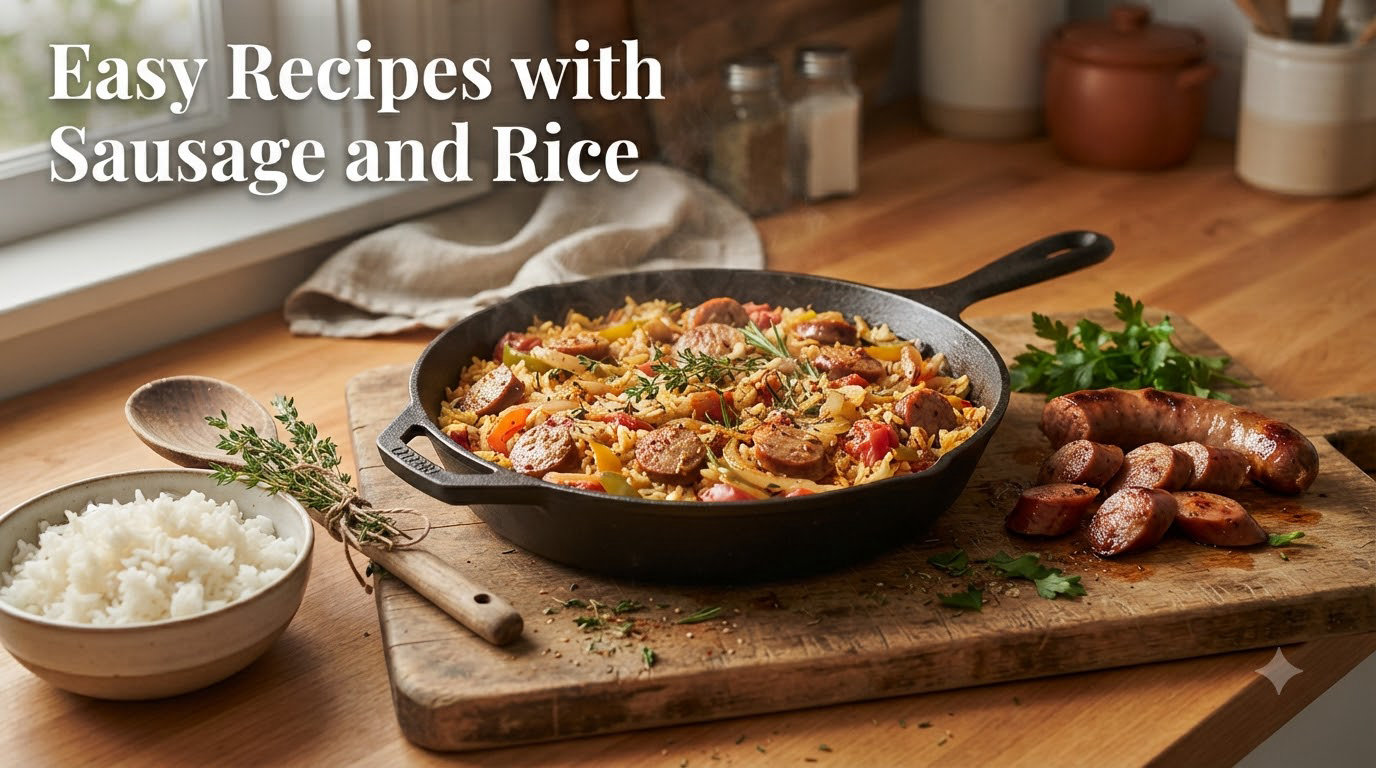
A practical way to make sausage and rice feel useful rather than repetitive is to start with these easy recipes with sausage and rice and match the recipe to the time available.
Use the sausage and rice recipes as flexible formulas: keep the core ratio steady, then adjust sauce, vegetables, cheese, or seasoning without losing the intended texture.
A quick choice guide comes first, followed by the full recipes, practical troubleshooting, safe storage, and focused follow-up answers.
Table of Contents
Easy Recipes With Sausage And Rice
Choose the Recipe by Method and Texture
-
Use a skillet when browned edges and a fast sauce matter most.
-
Choose an oven or casserole method for hands-off cooking and larger portions.
-
Use a one-pot method when the starch should absorb the cooking liquid and seasoning.
-
Keep fresh herbs, acid, or a crisp vegetable for the end when the main ingredients are rich.
These easy recipes with sausage and rice are organized so the cooking method, doneness cue, and practical adjustment are visible before the longer instructions.
Why Sausage and Rice Is the Ultimate Weeknight Dinner
Sausage and rice works because it hits every note a good dinner should. The sausage brings fat, salt, and deep savory flavor in one ingredient. The rice soaks up all those seasoned juices and stretches the meal to feed a family for very little money.
This combination has roots in cuisines all over the world. Louisiana gave us dirty rice and jambalaya, both built on the same foundation of seasoned meat and rice cooked together. Chinese home cooks have been making lap cheong fan (Chinese sausage rice) for generations in a single clay pot. Eastern European kielbasa and rice casseroles fill the same comforting role.
The beauty is that once you understand the basic method, you can adapt it to whatever sausage, rice, or vegetables you have on hand. It pairs naturally with other one pot recipes in your rotation for effortless weeknight cooking.
Choosing the Right Sausage for Your Rice Dish
The sausage you pick sets the entire flavor direction of the dish. Here is a breakdown of the best options and how each one changes the final result.
Smoked Sausage (Kielbasa, Andouille, Kransky)
Smoked sausage is the most popular choice for sausage and rice recipes, and for good reason. It is fully cooked, so you just slice and brown it. Kielbasa gives you a mild, garlicky flavor that works with almost any seasoning blend. Andouille brings a smoky, spicy kick that pairs naturally with Cajun flavors. Kransky, popular in Australian cooking, adds a slightly tangy note.
I recommend slicing smoked sausage into quarter-inch rounds and browning them hard in the skillet before adding anything else. Those crispy edges are where the best flavor lives.
Ground Sausage
Ground sausage (sometimes called bulk sausage) is raw sausage meat without the casing. It browns quickly and coats every grain of rice with seasoned fat. Breakfast sausage works well for milder palates, while spicy Italian ground sausage brings heat that permeates the whole dish.
One thing to keep in mind: ground sausage releases more fat during cooking than smoked sausage. You may need to drain some of that fat before adding your rice and liquid, or your dish can turn greasy.
Italian Sausage (Sweet or Hot)
Italian sausage links, both sweet and hot varieties, bring a fennel-and-garlic flavor profile that pairs beautifully with tomatoes and bell peppers. Remove the casings and crumble the meat into the skillet for even cooking, or leave the casings on and slice into chunks for a heartier texture.
Chinese Sausage (Lap Cheong)
Chinese sausage is cured and sweet, with a distinctive reddish color. Dice it small and cook it with jasmine rice for a dish that tastes like it came from a dim sum kitchen. It is drier than other sausages, so you will need a bit more cooking oil in the pan.
Sausage Substitution Tips
Any fully cooked sausage can be swapped for another in a pinch. Turkey sausage and chicken sausage work well if you want something leaner. Plant-based sausages also work, though they release less fat, so add a tablespoon of oil to compensate. The key is matching the sausage personality to the seasoning direction you want.
Rice Types: What Works and What Doesn’t
Getting the rice right is the single most important part of this dish. The wrong rice or the wrong water ratio can turn your dinner into a sticky mess. Here is what I have learned from testing every common rice variety.
Long Grain White Rice (Best Overall)
Long grain white rice is the clear winner for sausage and rice recipes. It cooks up fluffy and separate, absorbs flavor beautifully, and holds its texture even after reheating. Standard long grain, Carolina gold, or similar varieties all work well.
Use a 2:1 ratio of liquid to rice (2 cups broth for 1 cup rice) when cooking in a skillet with other ingredients, since some liquid will evaporate during simmering.
Jasmine Rice
Jasmine rice is my personal favorite for this dish. It has a delicate floral aroma that complements sausage without overpowering it. Use the same 2:1 ratio, but reduce the simmer time to about 15 minutes since jasmine cooks slightly faster than standard long grain.
Basmati Rice
Basmati produces the longest, most separate grains of any common rice. It works well but has a distinctly nutty aroma that competes with the sausage flavor. If you love basmati, go for it, but I find it pairs better with curried sausage dishes than classic American-style recipes.
Brown Rice
Brown rice adds a chewy texture and nutty flavor that some people love. The trade-off is that it needs significantly more liquid (about 2.25:1 ratio) and 40 to 45 minutes of simmer time. If you are using brown rice, I recommend pre-cooking it partially before adding it to the skillet, or your sausage will overcook by the time the rice is tender.
Instant Rice (Not Recommended)
Instant or minute rice is pre-cooked and dehydrated, so it absorbs liquid unevenly in one-pot recipes. It tends to turn mushy and lacks the texture that makes this dish satisfying. If instant rice is all you have, cook it separately according to the package directions and stir it in at the very end.
Complete Sausage And Rice Recipes
1. Classic One-Pot Smoked Sausage and Rice
Serves: 4 | Time: 35 minutes | Method: One pot
Close-up of smoked sausage slices browning in a large cast iron skillet with diced onions and colorful bell peppers, golden caramelization on the sausage edges.
Ingredients
-
1 pound smoked sausage (kielbasa or andouille), sliced into quarter-inch rounds
-
1 tablespoon olive oil
-
1 medium yellow onion, diced
-
1 green bell pepper, diced
-
1 red bell pepper, diced
-
3 cloves garlic, minced
-
1 cup long grain white rice (uncooked)
-
2 cups chicken broth
-
1 teaspoon smoked paprika
-
1 teaspoon dried thyme
-
1/2 teaspoon black pepper
-
1/2 teaspoon salt (adjust based on sausage saltiness)
Instructions
-
Heat the olive oil in a large skillet or Dutch oven over medium-high heat. Add the sliced sausage in a single layer and cook for 4 to 5 minutes, turning once, until both sides are deeply browned. Remove the sausage to a plate and set aside.
-
In the same skillet, using the rendered sausage fat, add the diced onion and bell peppers. Cook for 5 to 6 minutes, stirring occasionally, until the vegetables are softened and the onions are translucent. Add the minced garlic and cook for 30 seconds until fragrant.
-
Add the uncooked rice to the skillet and stir to coat every grain in the oil and pan juices. Toast the rice for about 60 seconds. This step is important because it helps the grains stay separate during simmering and adds a nutty depth.
-
Pour in the chicken broth and add the smoked paprika, thyme, black pepper, and salt. Stir well, scraping up any browned bits from the bottom of the pan. Bring the liquid to a boil.
-
Once boiling, reduce the heat to low, return the browned sausage to the skillet, and stir gently to distribute. Cover with a tight-fitting lid and simmer for 18 to 20 minutes. Do not lift the lid during this time.
-
After 18 minutes, check the rice. If the liquid is absorbed and the rice is tender, remove the skillet from the heat. If the rice needs more time, cover and cook for 2 to 3 more minutes.
-
Let the skillet sit covered for 5 minutes off the heat. Then remove the lid and fluff gently with a fork. Serve hot.
-
Pro Tip: If your lid does not fit tightly, lay a sheet of aluminum foil over the skillet before placing the lid on top. A tight seal is what gives you fluffy, evenly cooked rice.
2. Cajun Sausage and Rice Skillet
Serves: 4 | Time: 35 minutes | Method: Skillet
Top-down view of a Cajun sausage and rice skillet with sliced andouille sausage, fire-roasted diced tomatoes, celery, and the classic holy trinity of vegetables, deep red-orange color from Cajun seasoning.
This recipe leans into the Louisiana roots of sausage and rice cooking. It uses andouille sausage, the Cajun holy trinity (onion, celery, bell pepper), and fire-roasted tomatoes for a smoky, slightly spicy dish that tastes like a simplified jambalaya. For inspiration on budget-friendly Cajun cooking, this style of cooking is one of the most cost-effective ways to feed a crowd.
Ingredients
-
1 pound andouille sausage, sliced into rounds
-
1 tablespoon vegetable oil
-
1 medium onion, diced
-
1 celery stalk, diced
-
1 green bell pepper, diced
-
3 cloves garlic, minced
-
1 tablespoon Cajun seasoning (store-bought or homemade)
-
1 teaspoon smoked paprika
-
1 cup long grain white rice
-
1 can (14.5 ounces) fire-roasted diced tomatoes, undrained
-
1.5 cups chicken broth
-
1 bay leaf
-
Hot sauce, to taste
Instructions
-
Heat the oil in a large skillet over medium-high heat. Brown the andouille slices for 3 to 4 minutes per side until crisp at the edges. Transfer to a plate.
-
Add the onion, celery, and bell pepper to the same skillet. Cook for 5 minutes until softened. Add the garlic, Cajun seasoning, and smoked paprika. Stir and cook for 60 seconds until the spices are fragrant and toasted.
-
Stir in the uncooked rice and toast for 60 seconds. Pour in the fire-roasted tomatoes with their juices and the chicken broth. Add the bay leaf. Stir everything together and bring to a boil.
-
Return the sausage to the skillet, reduce heat to low, cover tightly, and simmer for 18 to 20 minutes. Do not stir during simmering.
-
Remove from heat and let rest covered for 5 minutes. Remove the bay leaf, fluff with a fork, and season with hot sauce to taste.
3. Creamy Cheesy Sausage and Rice Casserole
Serves: 4 | Time: 35 minutes | Method: Oven
Creamy cheesy sausage and rice casserole in a glass baking dish, melted sharp cheddar cheese bubbling on top with golden-brown edges, a wooden spoon lifting a portion to show the creamy interior.
This version takes a different approach. Instead of a loose, fluffy texture, you get a rich, comforting casserole that diners absolutely love. It is also one of the best freezer-friendly meals you can make, since it reheats beautifully straight from frozen.
Ingredients
-
1 pound smoked sausage, sliced
-
1 medium onion, diced
-
1 cup long grain white rice
-
2 cups chicken broth
-
1 can (10.5 ounces) cream of chicken soup
-
1/2 cup sour cream
-
1.5 cups sharp cheddar cheese, shredded (divided)
-
1 cup frozen peas
-
1/2 teaspoon garlic powder
-
1/2 teaspoon black pepper
Instructions
-
Preheat your oven to 375 degrees Fahrenheit. In a large skillet, brown the sausage slices over medium-high heat for 4 minutes. Remove and set aside.
-
In the same skillet, saute the diced onion for 3 minutes until softened. Add the uncooked rice and stir for 60 seconds to toast.
-
In a large mixing bowl, combine the chicken broth, cream of chicken soup, sour cream, half of the shredded cheddar, frozen peas, garlic powder, and black pepper. Mix until smooth.
-
Stir the rice mixture and the sausage into the bowl with the creamy base. Transfer everything to a greased 9×13 baking dish. Cover tightly with foil.
-
Bake covered for 35 minutes. Remove the foil, sprinkle the remaining cheddar on top, and bake uncovered for 10 more minutes until the cheese is melted and bubbly. Let rest for 5 minutes before serving.
Vegetable Add-ins and Variations
One of the best things about sausage and rice is how easily it adapts. Here are the vegetables and additions I rotate through regularly to keep things interesting.
The Cajun Trinity: Diced onion, celery, and green bell pepper. This trio forms the base of almost every good Southern sausage and rice dish. Cook them down before adding the rice.
Colorful Bell Peppers: Red, yellow, and orange bell peppers add sweetness and visual appeal. Slice them into strips for a fajita-style version.
Frozen Mixed Vegetables: A cup of frozen peas and carrots stirred in during the last 5 minutes of cooking adds nutrition without extra prep.
Corn: Fresh, frozen, or canned corn kernels bring a sweet pop that pairs especially well with the Cajun version.
Greens: Stir in a few handfuls of fresh spinach or kale right after cooking. The residual heat wilts them perfectly.
For more dinner ideas using similar quick cooking methods, check out these sheet pan dinner recipes that share the same set-it-and-forget-it convenience.
Storage, Reheating, and Freezing
Refrigerator Storage
Let the dish cool to room temperature, then transfer to an airtight container. It will keep in the refrigerator for 3 to 4 days. Store in individual portion containers for grab-and-go lunches throughout the week.
Reheating
Reheat on the stovetop over medium-low heat with a splash of chicken broth or water to loosen the rice. Cover the pan and warm for 5 minutes, stirring once. Microwave reheating works too. Add a tablespoon of water, cover loosely, and heat in 60-second intervals, stirring between each.
Freezing
Sausage and rice freezes well for up to 3 months. Portion it into freezer-safe containers, leaving a little room for expansion. Thaw overnight in the refrigerator before reheating. The creamy casserole version freezes particularly well and is perfect for those nights when cooking feels impossible.
If you love make-ahead cooking, you can find more freezer-friendly meals that pair well with this approach to weeknight dinners.
Common Mistakes to Avoid
After making sausage and rice more times than I can count, here are the pitfalls I see most often, along with how to fix them.
Mushy Rice: This is the number one complaint, and it almost always comes from using too much liquid or stirring the rice during simmering. Stick to a 2:1 ratio and leave that lid alone.
Rice Sticking to the Pot: Toasting the rice in oil before adding liquid creates a protective barrier. Also, make sure your heat is genuinely on low during the simmer, not medium-low.
Undercooked Rice: If the liquid has absorbed but the rice is still crunchy, add 2 tablespoons of water, cover tightly, and cook on low for 5 more minutes. Different brands of rice absorb at slightly different rates.
Overcooked, Rubbery Sausage: Smoked sausage only needs browning, not long cooking. If you are adding raw sausage, brown it first, then remove it and add it back only for the last few minutes.
Bland Flavor: The sausage fat carries most of the seasoning. If you drain all the fat, you drain the flavor. Keep at least a tablespoon, and do not be shy with the smoked paprika, garlic, or Cajun seasoning.
When I compare easy recipes with sausage and rice, I look first at whether the protein, starch, and sauce finish at the same time; that one decision prevents most dry meat, broken sauces, and uneven texture.
For cooked food and leftovers, follow the USDA leftovers and food-safety guidance for prompt chilling, shallow storage, and thorough reheating rather than relying on smell or appearance alone.
A second way to use easy recipes with sausage and rice is to prep the slower component first, keep moisture adjustments small, and add delicate vegetables, dairy, or crisp toppings only when their texture can be protected.
For another practical dinner, see easy one-pot pasta recipes, instant-pot rice, or easy ground beef dinners.
Frequently Asked Questions
Can I change the seasoning in these sausage and rice recipes?
Yes. Keep the cooking ratio and method steady, then change the herb, spice, or sauce profile. Taste salty ingredients before adding extra salt.
What can I substitute in sausage and rice recipes?
Choose a substitute with a similar moisture level and cooking time. Adjust liquid gradually rather than making a large change before the dish has simmered.
How do I scale sausage and rice for more people?
Use a wider pan or two baking dishes so ingredients are not crowded. Check doneness rather than relying only on the original clock time.
What side dish balances sausage and rice?
Add contrast: a crisp salad, steamed green vegetable, acidic slaw, or simple roasted vegetable usually balances a rich or starchy main.
Can I use frozen ingredients with sausage and rice?
Thaw meat safely before recipes that depend on browning. Frozen vegetables can often go in later, but drain excess liquid so the sauce stays balanced.
Conclusion: A Practical Finish for Sausage And Rice
Keep these easy recipes with sausage and rice nearby when sausage and rice need a dependable plan, then choose the method according to the texture and amount of hands-on time you want.
Once the base method in the sausage and rice recipes feels familiar, vary the seasoning or vegetables while keeping the liquid and cooking sequence consistent.