
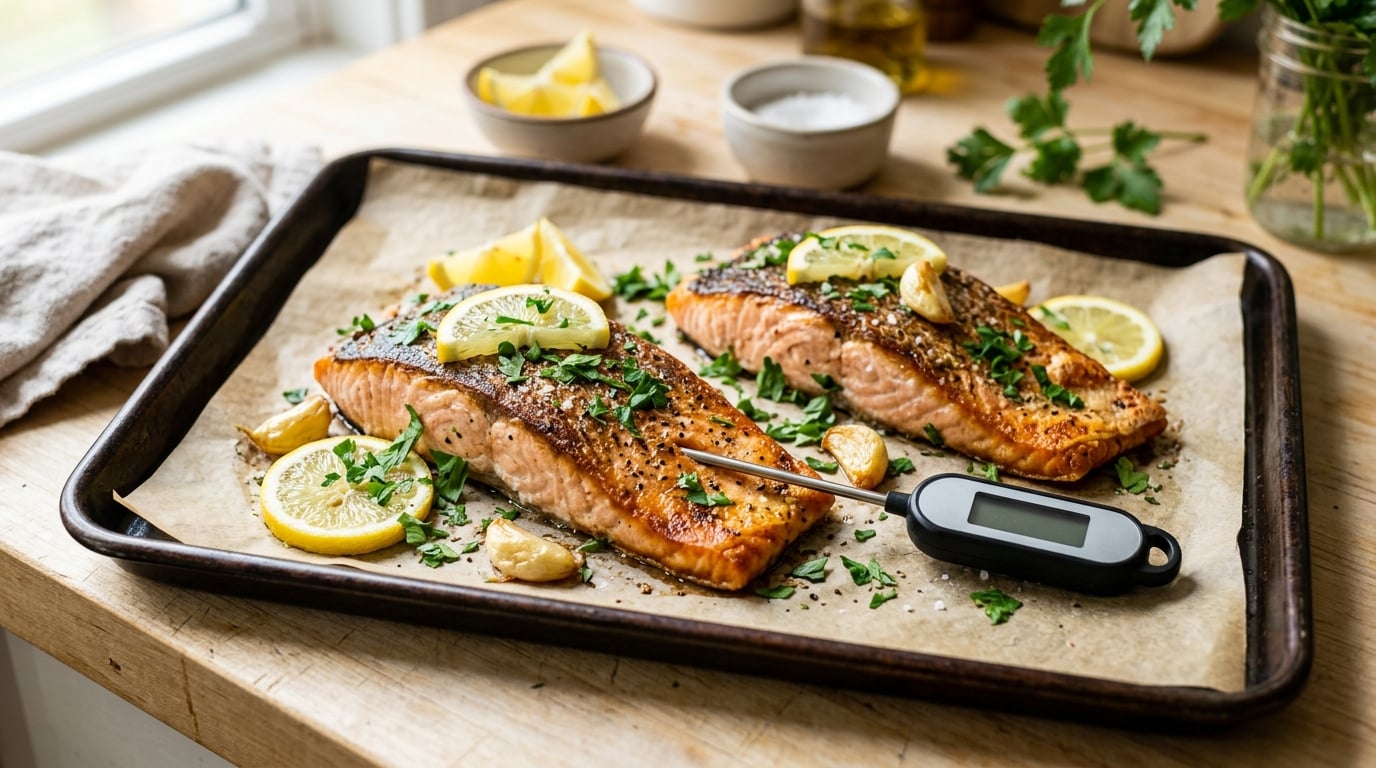
At 400°F, a 1-inch thick salmon fillet takes 12 to 14 minutes, a 1.5-inch center-cut piece takes 16 to 18 minutes, and a full side of salmon needs 20 to 28 minutes. That clock starts the moment the fish goes into a fully preheated oven, and thickness is the only variable that really matters.
Salmon has less fat and connective tissue than a steak or a chicken thigh, so it goes from moist to dry faster than you would expect. A few extra minutes is the difference between flaky and rubbery. I learned that the hard way, many overcooked fillets ago.
This guide breaks the timing down by cut and thickness, explains how to read doneness instead of guessing, and covers the frozen, breaded and glazed cases that trip people up. I pulled a skillet version of the fish out of a hot oven often enough to have opinions, but a thermometer is still the fastest way to a good piece.
Table of Contents
How Long to Bake Salmon at 400 Degrees by Cut and Thickness
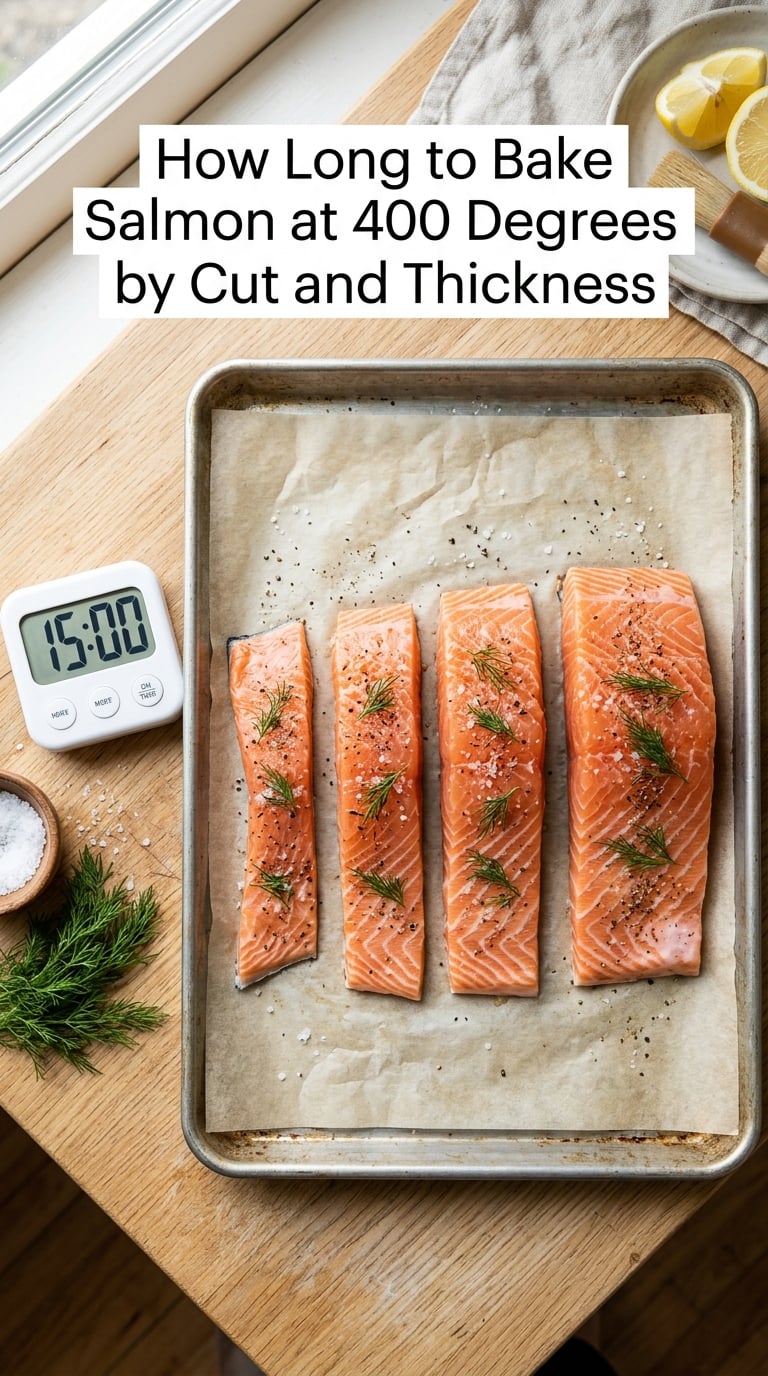
Use the thickest part of the piece, not the average. The thin tail cooks roughly twice as fast as the center, so a fillet that looks thin end-to-end can still need the full time in the table below.
| Cut or thickness | Approx. weight | Bake time at 400°F | What done looks like |
|---|---|---|---|
| 3/4 inch fillet | 6 to 8 oz | 10 to 12 minutes | Flakes at the thickest point, still slightly translucent in the very center |
| 1 inch fillet | 8 to 10 oz | 12 to 14 minutes | Opaque all the way through, flakes easily with a fork |
| 1.5 inch center-cut | 10 to 12 oz | 16 to 18 minutes | Firm to the touch, springs back lightly, flakes in large moist pieces |
| 2 inch salmon steak | 12 to 16 oz | 20 to 24 minutes | Center reaches 140°F or higher, edges begin to set |
| Whole side of salmon | 2 to 4 lb | 20 to 28 minutes | Thickest part at the shoulder reaches 145°F |
All of those times assume a conventional oven at 400°F and a fillet that has been sitting at room temperature for about 15 minutes. Colder fish needs a few extra minutes, and a convection oven cooks roughly 25 to 30 percent faster, so drop the time by a couple of minutes there.
For doneness, the USDA safe minimum internal temperature for fish is 145°F (63°C). Plenty of home cooks pull earlier, around 130 to 140°F, because carryover cooking keeps raising the temperature after the fish leaves the oven.
How long to bake salmon at 400 degrees with foil or without
Wrapped tightly in foil, add 1 to 2 minutes because the packet takes time to heat through. Baked uncovered on parchment, use the table times as written, and you get crisper skin and slightly firmer edges. Foil steams, which keeps the flesh moist but softens the skin entirely.
How to Choose the Right Baking Time
Measure the fish, not the packaging. If you have a ruler, measure at the center of the fillet. If not, compare it to a quarter: a quarter is roughly a quarter inch, and most people can eyeball a half inch and an inch accurately enough.
The kitchen thermometer does double duty here. A quick probe before the fish goes in tells you the starting temperature, so you know whether you are cooking a piece that came straight off the fridge or one that has warmed up while you chopped vegetables.
Pan size matters more than most recipes admit. Crowding drops the pan temperature and traps moisture, so two fillets on a rimmed sheet pan cook differently from four on the same pan. Give each piece an inch of space. A crowded pan runs cooler and slower, and the edges dry out before the center catches up.
Species changes things a little. Sockeye and coho are leaner and firm up quickly, so they lean toward the shorter end of each range. Atlantic and king carry more fat, which gives them a little more grace before they dry out.
Very fresh fish straight from the fishmonger is firmer and takes a touch longer than fish that has been sitting in the case for a day. Previously frozen fish often loosens slightly, so check it a minute early. My rule: start checking two minutes before the low end of the range and trust the thermometer over the clock.
How to Bake Salmon at 400 Degrees
- Heat the oven to 400°F with the rack in the middle. Give it a full 10 to 15 minutes to come to temperature, and put the baking sheet in while it heats so the pan is hot too.
- Pat the fillet dry with paper towels on both sides. Moisture is the enemy of browning, and dry skin crisps in the oven while wet skin steams.
- Brush or drizzle a thin coat of oil on the flesh side. Olive oil and avocado oil both handle 400°F fine; butter on its own will brown too fast.
- Season now with salt and pepper, then let the fillet sit 10 to 15 minutes. That rest lets the flesh firm slightly, which means less shrinkage in the oven and a better texture.
- Lay the fillet skin side down on the hot sheet pan. Do not crowd it. If the tail is thin and lifts, tuck that end under the thick part so the piece sits flat.
- Bake without opening the door until the earliest time in the chart. Constant door-opening drops the oven temperature by 25°F or more and adds real time.
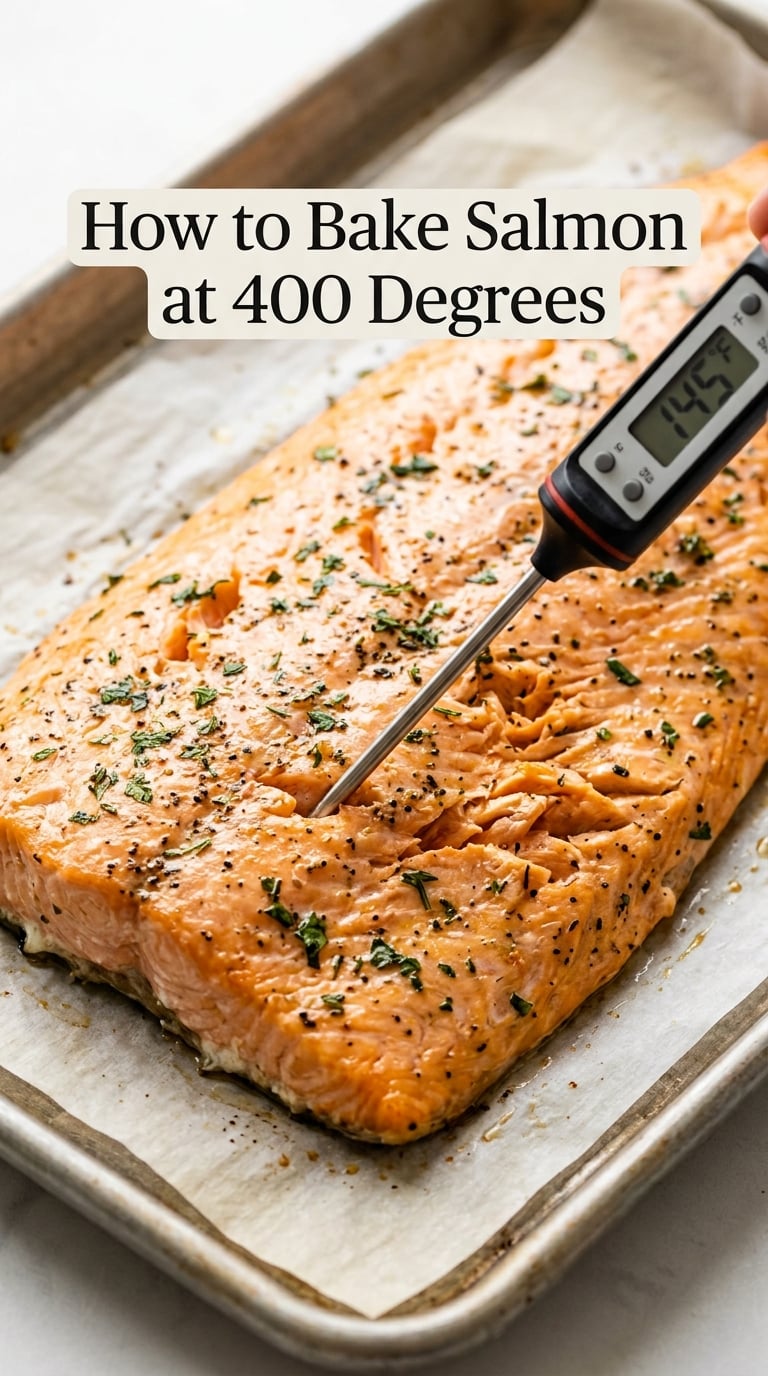
- Check with an instant-read thermometer in the thickest part, aiming the probe away from the bone and the skin. Pull at 130 to 140°F for a moist medium result, or at 145°F (63°C) for the USDA-safe fully cooked temperature.
- Rest the fish 3 to 5 minutes on the pan or a plate before serving.
That rest is not optional if you care about texture. The residual heat finishes the center while the juices settle back into the flesh instead of running out onto the cutting board.
How to Tell When Salmon Is Done
Temperature is the only reliable test. Everything else is a hint that can point in the wrong direction, because color varies by species and by what you put on the fish before it went in.
- Temperature: 125 to 130°F is moist and rare, 135 to 140°F is the sweet spot for most people, and 145°F (63°C) is the USDA safe minimum. Cooks who pan-sear fish first routinely pull salmon at 125 to 130°F, because the sear and the carryover finish the job.
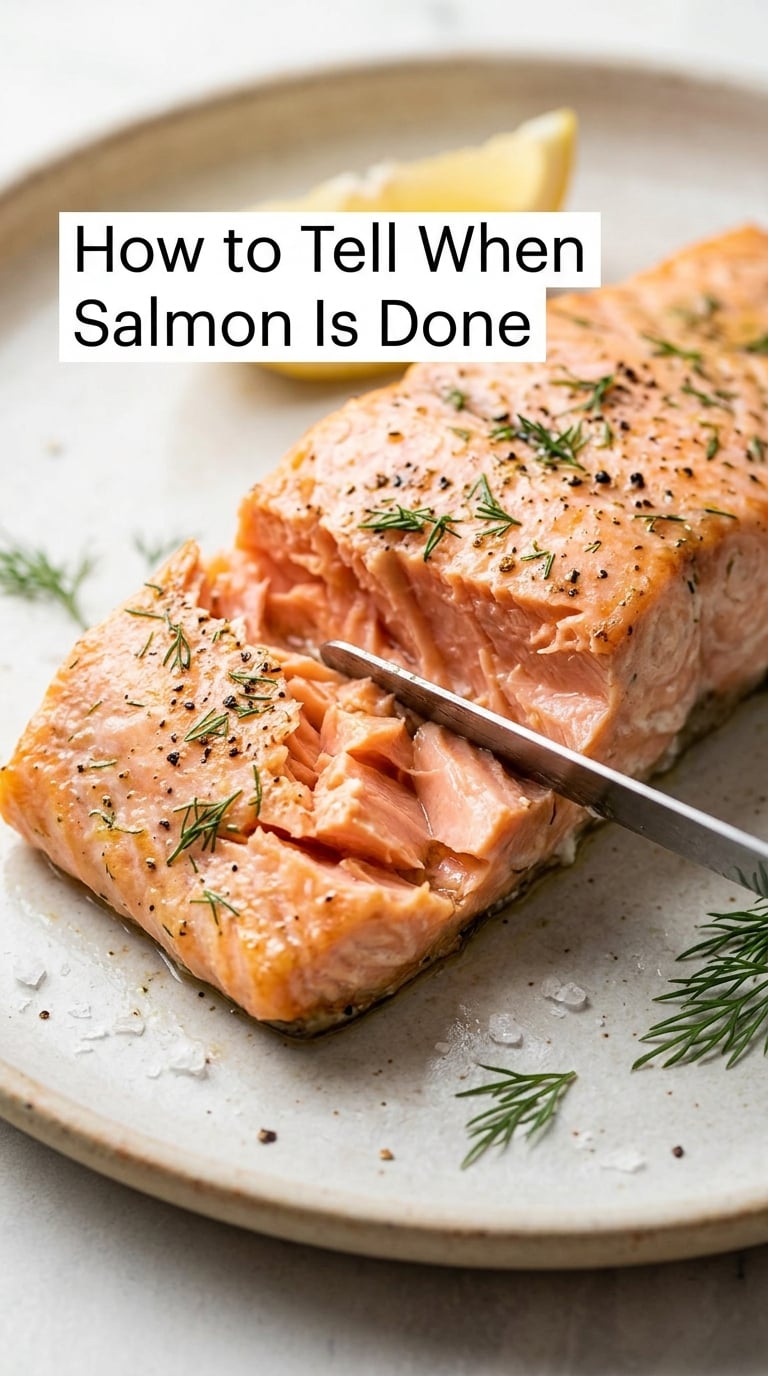
- Flake test: slide a fork into the thickest part and twist gently. It should separate into long, moist layers with almost no resistance. If the fork meets firm resistance and the fish springs back, it needs another minute or two.
- Firmness: press the top lightly with your finger. Medium salmon gives slightly and leaves a dent that slowly fills in. Overcooked salmon feels firm like a rubbery eraser and springs back instantly.
- Color: the flesh turns opaque and pale pink, and the flakes separate along the natural muscle lines. Dark red sockeye stays a deeper shade than pink Atlantic, so compare the fish to itself rather than to a photo.
Carryover cooking is why the thermometer beats the clock. A piece pulled at 130°F will keep climbing several degrees as it rests, landing closer to 140°F by the time you cut it. That is the whole reason experienced cooks pull early on purpose rather than baking to the final number.
One more cue worth knowing: the white streaks that ooze out are called albumin. It is harmless protein, not a sign the fish is ruined. Blot excess albumin with a paper towel before plating if it bothers you visually.
Baked Salmon at 400 Degrees: Simple Seasoning Ideas
A 400°F oven is hot enough to scorch anything sugary, so what you add and when you add it matters as much as what you add at all.
- Lemon, garlic and herbs: The simplest option. Olive oil, sliced garlic, lemon wedges, and parsley or dill added at the start. No timing tricks needed.
- Dijon and honey: Whisk 1 tablespoon Dijon with 1 tablespoon honey and a teaspoon of soy sauce. Brush it on for the last 4 to 5 minutes only, so it sets to a glaze instead of burning.
- Smoked paprika and cumin: A dry rub that needs no extra time. Paprika, cumin, salt, pepper and a little brown sugar work well together.
- Teriyaki-style glaze: Soy, mirin or rice vinegar, and a little brown sugar. Add it in the final 5 minutes and watch it closely; it goes from lacquered to black fast.
- Breadcrumb topping: Panko with butter and parmesan, added for the last 6 to 8 minutes. Add it late or the crumbs burn before the center cooks through.
- Mustard and cheese crust: Dijon under a layer of gruyere or cheddar, baked from the start. The cheese crisps and browns without needing a broil.
Sauce goes on late, sugar goes on later, and the crust goes on last. Everything else can ride along from the start.
Can You Bake Frozen Salmon at 400 Degrees?
Yes, and for thick fillets it is often the better method. Baking from frozen holds the shape and keeps the flesh from turning mushy the way a quick countertop thaw can.
Remove the plastic packaging and the paper backing sheet before it goes anywhere near a hot pan. Plastic in a 400°F oven is the one real hazard here. Blot the surface with a paper towel, then oil and season as usual.
A frozen fillet needs about 50 percent more time than a fresh one of the same thickness, so a 1-inch piece that takes 12 to 14 minutes thawed will take 18 to 22 minutes from frozen. Check the temperature at the halfway point, because the outside will brown well before the center catches up.
Thaw in the refrigerator instead when the fillet is under an inch thick, when you are glazing or breading it, or when you want the cleanest texture. Overnight in the fridge is the standard move, and it is the only thaw method I trust for fish.
Thick salmon steaks can go from frozen to the oven without any adjustment at all. Many of the thicker portions are effectively steak-like, and the long bake gives the center time to come up to temperature evenly.
Common Mistakes When Baking Salmon at High Temperatures
- Trusting the clock instead of the thermometer. Recipe times assume a 1-inch fillet, and home fillets run from three-quarters of an inch to two. The thermometer removes the guesswork.
- Pulling too late. A 400°F oven is fast. Check two minutes before the earliest time in the chart and use carryover cooking as your safety margin.
- Leaving the skin on and papering over it. The skin protects the flesh while the flesh cooks, which is good. It is not a lid, and it does not stop the center from drying out.
- Skipping the parchment. Salmon sticks to bare metal. Line the pan with parchment or a silicone mat, and the fish lifts off clean every time.
- Ignoring uneven thickness. Tail-end thinness cooks faster than the shoulder. Tuck the thin end under the thick part so the whole piece sits flat on the pan.
- Opening the door repeatedly. Every peek costs oven temperature and adds minutes. One check at the end of the range is enough.
- Adding sauce or breadcrumbs at the start. Sugar and crumbs burn long before the fish is done. Add them for the final 5 to 8 minutes.
- Crowding the pan. Too many pieces on one sheet lowers the temperature and steams the fish. One inch of space per fillet.
- Using the broiler setting by mistake. Broil is top-heat only, from about 500°F, and it will blacken the surface in under two minutes. Bake at 400°F, then broil for 30 to 60 seconds at the very end if you want crisp skin.
Overcooked salmon is not fully ruined. Break it into large pieces, warm it gently in a pan with a knob of butter and a splash of water for two minutes, and it softens back into something worth eating.
Frequently Asked Questions
How long should a whole salmon fillet bake at 400°F?
A whole side of salmon bakes at 400°F for 20 to 28 minutes, depending on how thick the shoulder is. Check the temperature at the thickest point near the front of the side, not the thin tail. Pull it at 145°F (63°C) for USDA-safe doneness, or slightly earlier if you prefer it moist. A very large side may need a little longer, so start checking at 20 minutes.
How long does a 1-pound salmon fillet take at 400°F?
A 1-pound fillet is usually 1 to 1.5 inches thick, so give it 12 to 18 minutes at 400°F. A 1-inch piece needs about 12 to 14 minutes, while a 1.5-inch center-cut piece needs 16 to 18. The weight alone is not a reliable guide, because two 1-pound fillets can differ by half an inch. Measure the thickness or check with a thermometer.
Should I bake frozen salmon from frozen at 400°F?
For fillets thicker than an inch, yes. Baking from frozen keeps the fish moist and holds its shape, and you add roughly 50 percent to the bake time, so a 1-inch fillet needs 18 to 22 minutes. Always remove the plastic packaging and paper backing first. Thaw in the refrigerator overnight if the fillet is thin, or if you plan to bread or glaze it.
Can I bread or crumb salmon before baking it at 400°F?
Yes, but add the coating for the last 6 to 8 minutes so it browns without burning. A 400°F oven will scorch breadcrumbs or panko long before the center of a thick fillet is done. Press the coating on lightly, drizzle with oil so it colors evenly, and check the temperature through the thickest part of the piece.
How do I keep baked salmon from drying out?
Pat the fish dry, oil it lightly, and keep the skin on, where it acts as a moisture barrier over the flesh. Bake on a hot lined sheet pan without crowding, pull the fish at 130 to 140°F, and let it rest 3 to 5 minutes before cutting. Baking it in a foil packet also helps, at the cost of softer skin.
How long does baked salmon last in the fridge?
Cooked salmon keeps 3 to 4 days in the refrigerator, stored in a sealed container on the coldest shelf. For longer storage, freeze it in portions with a thin layer of oil or sauce to prevent freezer burn, where it holds for up to two to three months. Reheat gently in a 275°F oven for about 10 minutes rather than microwaving, which dries the edges.
If you want a pan version of the same fish, my easy Marry Me salmon skillet recipe uses the same doneness cues, just with a hotter pan and a fast sauce at the end.
Conclusion
Start with the thickness chart, not a fixed number: 12 to 14 minutes at 400°F for a 1-inch fillet, 16 to 18 for 1.5 inches, 20 to 24 for a 2-inch steak, and 20 to 28 for a whole side. Check the thickest part two minutes early, pull at 130 to 140°F for moist salmon, and let carryover cooking take it the rest of the way.
When you want the safe, fully cooked result rather than the moist one, 145°F (63°C) is the USDA minimum. That single habit, a cheap instant-read thermometer doing the work instead of the recipe clock, is what separates a good piece of baked salmon from a dry one. Knowing how long to bake salmon at 400 degrees gets you in the neighborhood; the thermometer gets you there.