
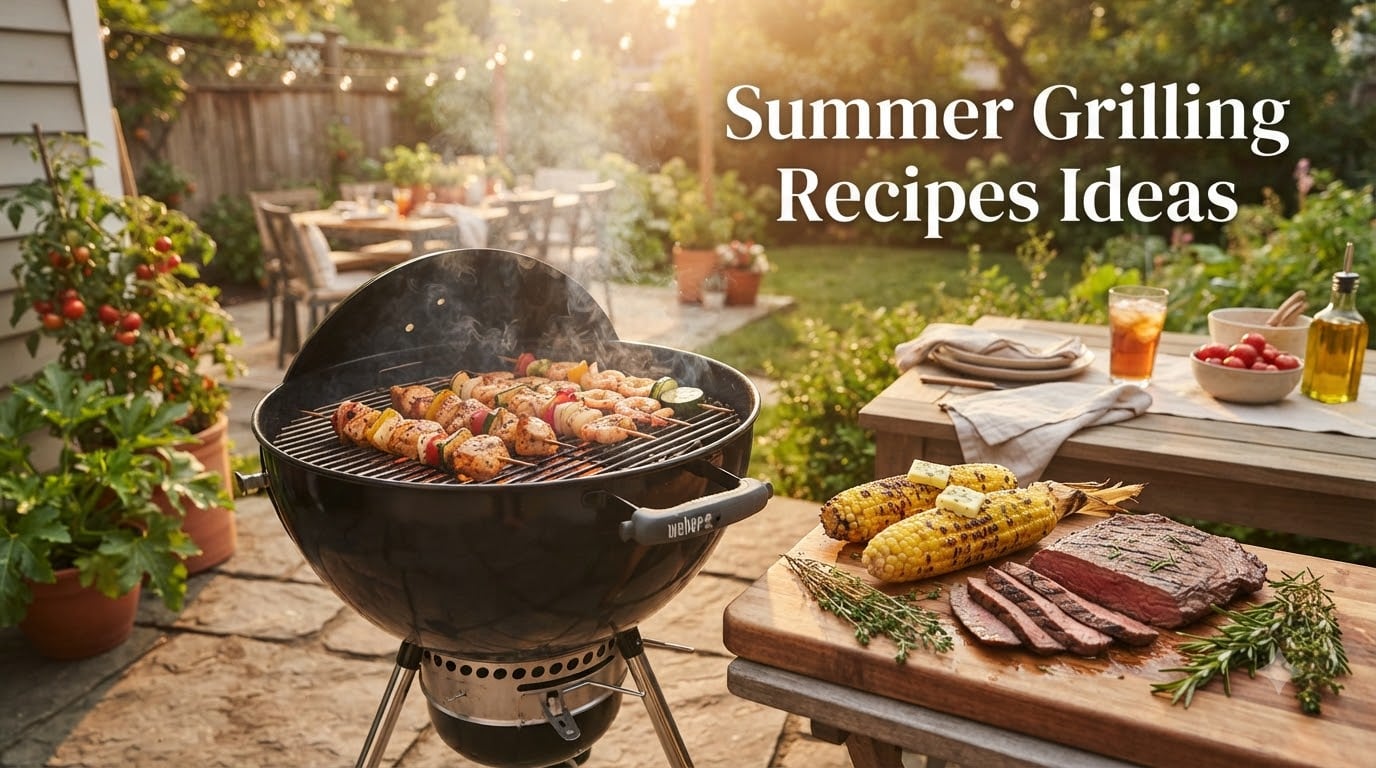
My grill becomes easier to use when I stop treating the entire grate as one temperature. One side browns quickly, one side finishes food gently, and a clean strip near the front is where I can check a thermometer without reaching through smoke. The summer grilling recipes ideas below state which zone they need and when a glaze, rest, or transfer should happen.
This is a technique collection, not one giant cookout menu. Pick a single protein or vegetarian main, then use a cold side or one of the barbecue sides that balances smoke.
Table of Contents
11 Summer Grilling Recipes Ideas with Clear Heat Zones
Direct-heat recipes for quick browning
1. Greek Lemon Chicken Skewers
Serves: 6 | Time: 55 minutes | Method: direct medium-high heat
Small chicken pieces cook quickly, but alternating them with vegetables causes uneven doneness. These skewers hold chicken only; tomatoes and cucumber become a cold relish.
Ingredients
-
2 pounds boneless chicken breast, 1-inch pieces
-
3 tablespoons olive oil
-
2 tablespoons lemon juice
-
1 tablespoon lemon zest
-
2 teaspoons dried oregano
-
2 garlic cloves, grated
-
1 1/2 teaspoons kosher salt
-
2 cups cherry tomatoes, halved
-
1 cucumber, diced
-
1/2 cup crumbled feta
Instructions
-
Toss chicken with oil, lemon juice, zest, oregano, garlic, and salt; refrigerate 30 minutes. Thread onto six skewers with small gaps.
-
Heat the grill to medium-high, clean the grates, and oil them lightly.
-
Grill skewers 4 to 5 minutes per side until marked and every piece reaches 165°F.
-
Rest 5 minutes. Mix tomatoes, cucumber, and feta and spoon the cold relish beside the chicken.
Substitutions: Use boneless thighs or tofu on separate skewers.
Storage: Refrigerate cooked chicken for 4 days; store relish separately for 2 days.
Tip: Keeping one ingredient per skewer gives every piece the same cooking time. Keep the order deliberate.
2. Cumin-Lime Flank Steak Tacos
Serves: 8 | Time: 1 hour | Method: direct high heat
Flank steak needs a fast sear, a short rest, and slicing across the grain. Warm tortillas use the dying heat after the meat leaves the grate.
Ingredients
-
2 pounds flank steak
-
2 tablespoons olive oil
-
2 teaspoons ground cumin
-
1 teaspoon smoked paprika
-
1 1/2 teaspoons kosher salt
-
2 tablespoons lime juice
-
16 small corn tortillas
-
2 cups shredded cabbage
-
1 cup salsa verde
-
1/2 cup chopped cilantro
Instructions
-
Pat steak dry and rub with oil, cumin, paprika, and salt. Rest at room temperature 20 minutes while the grill heats high.
-
Grill 4 to 6 minutes per side until the thickest area reaches 145°F for medium and develops a dark crust.
-
Rest 8 minutes, then slice thinly across the visible grain.
-
Warm tortillas 20 seconds per side and fill with steak, cabbage, salsa, cilantro, and lime juice.
Substitutions: Use skirt steak or portobello strips; flour tortillas work.
Storage: Refrigerate sliced steak for 4 days and warm gently.
Tip: Find the grain before grilling so you know which direction to cut afterward.
3. Ginger Garlic Shrimp Lettuce Cups
Serves: 6 | Time: 35 minutes | Method: grill basket or skewers
A grill basket keeps shrimp from falling through, while a dry surface encourages browning. The sweet glaze is brushed on only during the final minute.
Ingredients
-
2 pounds large shrimp, peeled and deveined
-
2 tablespoons neutral oil
-
1 teaspoon kosher salt
-
1 tablespoon grated ginger
-
2 garlic cloves, grated
-
2 tablespoons low-sodium soy sauce
-
1 tablespoon honey
-
1 tablespoon lime juice
-
12 butter lettuce leaves
-
2 cups shredded carrots and cucumber
Instructions
-
Pat shrimp dry and toss with oil and salt. Whisk ginger, garlic, soy, honey, and lime separately.
-
Heat a grill basket over medium-high heat for 5 minutes.
-
Grill shrimp 2 minutes, turn, brush lightly with glaze, and cook 1 to 2 minutes until opaque and 145°F.
-
Place shrimp in lettuce leaves with carrots and cucumber; serve remaining unused glaze beside them.
Substitutions: Use scallops or tofu cubes and tamari.
Storage: Refrigerate cooked shrimp for 3 days; keep lettuce dry and separate.
Tip: Do not use glaze that touched raw seafood as a finishing sauce.
4. Coffee Pepper Strip Steaks
Serves: 4 | Time: 45 minutes | Method: two-zone grill
Coffee deepens a pepper crust without making the steak taste like breakfast. A cooler zone finishes thick cuts after the direct side creates browning.
Ingredients
-
4 New York strip steaks, 10 ounces each
-
1 tablespoon finely ground coffee
-
2 teaspoons coarse black pepper
-
2 teaspoons kosher salt
-
1 teaspoon brown sugar
-
1 tablespoon neutral oil
-
2 tablespoons unsalted butter
-
1 tablespoon chopped chives
Instructions
-
Mix coffee, pepper, salt, and sugar. Pat steaks dry, oil lightly, and coat with the rub.
-
Create a hot direct zone and a medium indirect zone. Sear steaks 2 to 3 minutes per side over direct heat.
-
Move to indirect heat and cook until 145°F with a 3-minute rest for the USDA minimum, adjusting for thickness.
-
Rest at least 5 minutes, then add butter and chives before slicing.
Substitutions: Use decaffeinated coffee or only pepper and smoked paprika.
Storage: Refrigerate cooked steak for 4 days and slice cold for salads.
Tip: Measure temperature from the side into the center, away from bone or fat.
Move thicker food between two zones
5. Peach-Mustard Pork Chops
Serves: 6 | Time: 50 minutes | Method: two-zone grill
A peach-mustard glaze delivers summer fruit, but it goes on after the chops are nearly cooked. Brining is skipped; measured salt and a rest protect the meat.
Ingredients
-
6 boneless pork chops, 1 inch thick
-
2 tablespoons olive oil
-
1 1/2 teaspoons kosher salt
-
1 teaspoon black pepper
-
1 ripe peach, grated
-
2 tablespoons Dijon mustard
-
1 tablespoon honey
-
1 tablespoon apple cider vinegar
-
2 tablespoons chopped thyme
Instructions
-
Pat chops dry, brush with oil, and season with salt and pepper. Whisk peach, mustard, honey, vinegar, and thyme.
-
Sear chops over medium-high direct heat 3 minutes per side.
-
Move to the cooler zone and cook until 140°F, then brush with glaze and turn for 1 minute per side.
-
Remove at 145°F, rest 3 minutes, and spoon on only glaze that never touched raw pork.
Substitutions: Use apricot preserves thinned with vinegar or boneless chicken thighs cooked to 165°F.
Storage: Refrigerate for 4 days and slice before reheating gently.
Tip: Sugary glaze belongs at the end or it will darken before the center is ready.
6. Salmon Foil Parcels with Corn and Dill
Serves: 6 | Time: 40 minutes | Method: indirect medium heat
Individual foil parcels protect salmon from sticking and capture corn, tomato, and lemon juices. A vented top prevents the fish from boiling in excess steam.
Ingredients
-
6 salmon fillets, 5 ounces each
-
3 cups corn kernels
-
2 cups cherry tomatoes, halved
-
2 tablespoons olive oil
-
1 teaspoon kosher salt
-
1 lemon, thinly sliced
-
1/2 cup chopped dill
-
2 tablespoons unsalted butter
Instructions
-
Create six double-layer foil sheets. Divide corn and tomatoes among them and add salmon on top.
-
Brush with oil, season with salt, and add lemon, dill, and a small piece of butter. Fold parcels, leaving a small vent.
-
Grill over indirect medium heat 12 to 16 minutes until salmon reaches 145°F and flakes at the thickest part.
-
Open away from the face, rest 2 minutes, and serve the fish with its vegetables.
Substitutions: Use cod, zucchini, or dairy-free butter.
Storage: Refrigerate cooked parcels for 3 days after cooling promptly.
Tip: Keep the packets in one layer so they receive similar heat.
7. Turkey Zucchini Burgers
Serves: 6 | Time: 40 minutes | Method: direct medium heat
Grated zucchini adds moisture to lean turkey, but it must be squeezed dry so patties hold together. A thermometer, not color, decides when they are done.
Ingredients
-
1 1/2 pounds ground turkey
-
1 medium zucchini, grated
-
1 teaspoon kosher salt, divided
-
1 large egg
-
1/2 cup panko breadcrumbs
-
1 teaspoon garlic powder
-
1 teaspoon dried basil
-
6 burger buns
-
1 cup tomato slices
-
1/2 cup pesto yogurt
Instructions
-
Salt zucchini with half the salt, rest 10 minutes, and squeeze completely dry.
-
Mix turkey, zucchini, egg, panko, garlic, basil, and remaining salt; form six patties.
-
Grill over medium heat 5 to 7 minutes per side until firm and 165°F in the center.
-
Rest 3 minutes, toast buns briefly, and assemble with tomato and pesto yogurt.
Substitutions: Use ground chicken or gluten-free crumbs.
Storage: Refrigerate cooked patties for 4 days or freeze for 2 months.
Tip: Oil the grate and turn patties only after they release easily.
8. Miso Maple Tofu Planks
Serves: 6 | Time: 45 minutes | Method: direct medium-high heat
Thick tofu planks resist tearing and show real grill marks. A small portion of the miso sauce marinates; a clean portion becomes the finish.
Ingredients
-
2 blocks extra-firm tofu, 14 ounces each
-
2 tablespoons neutral oil
-
3 tablespoons white miso
-
2 tablespoons maple syrup
-
2 tablespoons rice vinegar
-
1 tablespoon low-sodium soy sauce
-
1 teaspoon grated ginger
-
4 scallions, sliced
-
2 tablespoons sesame seeds
Instructions
-
Press tofu 20 minutes and cut each block into three wide planks. Whisk oil, miso, maple, vinegar, soy, and ginger.
-
Reserve one-third of the clean sauce. Brush the rest over tofu and rest 10 minutes.
-
Grill over medium-high heat 4 to 5 minutes per side until browned and the planks release cleanly.
-
Move to a platter, brush with reserved sauce, and add scallions and sesame seeds.
Substitutions: Use tempeh steamed 10 minutes first or tamari for soy sauce.
Storage: Refrigerate cooked tofu for 4 days.
Tip: Slide a wide spatula fully under each plank before turning.
Vegetarian mains and a fruit finish
9. Eggplant Flatbreads with Tomato and Ricotta
Serves: 6 | Time: 55 minutes | Method: direct then indirect heat
Grilled eggplant and store-bought dough turn the grill into a pizza oven. Toppings stay light so the thin crust cooks before the center becomes soggy.
Ingredients
-
1 pound pizza dough
-
1 large eggplant, sliced in rounds
-
3 tablespoons olive oil, divided
-
1 teaspoon kosher salt
-
1 cup crushed tomatoes
-
1 1/2 cups whole-milk ricotta
-
1 cup shredded mozzarella
-
1/2 cup basil leaves
-
1/4 teaspoon red pepper flakes
Instructions
-
Salt eggplant lightly for 15 minutes, blot dry, brush with oil, and grill 3 minutes per side until tender.
-
Divide dough into six pieces, roll thin, brush with oil, and grill 2 minutes on one side.
-
Turn crusts, spread with a thin layer of tomato, and add eggplant, ricotta, and mozzarella.
-
Move to indirect heat, close the lid, and cook 5 to 7 minutes until cheese melts and crust is crisp. Add basil and pepper.
Substitutions: Use zucchini, naan, or dairy-free cheese.
Storage: Refrigerate for 3 days and re-crisp on the grill or in the oven.
Tip: Prepare every topping before dough touches the grate because the first side cooks quickly.
10. Portobello Fajita Platter
Serves: 6 | Time: 40 minutes | Method: grill basket
Mushrooms, peppers, and onions cook in a basket so small pieces do not disappear into the fire. Lime and spices arrive after browning, preserving the char.
Ingredients
-
6 portobello mushroom caps
-
3 bell peppers, sliced
-
2 onions, sliced
-
3 tablespoons olive oil
-
1 1/2 teaspoons kosher salt
-
2 teaspoons ground cumin
-
1 teaspoon chili powder
-
2 tablespoons lime juice
-
12 flour tortillas
-
1 cup avocado salsa
Instructions
-
Scrape mushroom gills if desired and slice caps. Toss mushrooms, peppers, and onions with oil and salt.
-
Heat a grill basket over medium-high for 5 minutes. Add vegetables in a single layer, working in batches.
-
Grill 10 to 14 minutes, turning several times, until peppers are tender and mushrooms are browned.
-
Toss hot vegetables with cumin, chile, and lime. Warm tortillas and serve with avocado salsa.
Substitutions: Use zucchini, poblano peppers, or corn tortillas.
Storage: Refrigerate cooked vegetables for 4 days and store tortillas separately.
Tip: Do not crowd the basket; moisture needs space to escape.
11. Grilled Peaches with Oat Crumble
Serves: 6 | Time: 30 minutes | Method: direct medium heat
Firm peaches become tender at the cut surface while keeping their shape. A pre-toasted oat crumble adds contrast without putting a sugary dessert pan on the grill.
Ingredients
-
6 ripe-firm peaches, halved
-
1 tablespoon neutral oil
-
1 cup rolled oats
-
1/3 cup chopped almonds
-
2 tablespoons brown sugar
-
2 tablespoons unsalted butter
-
1/2 teaspoon cinnamon
-
1/4 teaspoon kosher salt
-
2 cups vanilla Greek yogurt
Instructions
-
Toast oats and almonds in a skillet with sugar, butter, cinnamon, and salt for 6 minutes until golden; cool.
-
Brush peach cut sides lightly with oil and heat the grill to medium.
-
Grill peaches cut-side down 3 to 5 minutes until marked, then turn for 2 minutes until tender but intact.
-
Place two halves per serving, add yogurt, and scatter cool crumble over the top.
Substitutions: Use nectarines, sunflower seeds, or dairy-free yogurt.
Storage: Refrigerate grilled fruit for 2 days and crumble airtight for 4 days.
Tip: Start with firm fruit; very soft peaches stick and collapse.
Troubleshoot the Surface before Changing the Recipe
If food looks pale, I first ask whether the grate was fully preheated and whether the surface of the food was dry. Adding more sugar or oil will not fix weak heat; sugar burns and excess oil drips. I move the item to the hotter zone, leave it untouched long enough to brown, and then return it to indirect heat if the center still needs time.
If flames rise, I do not spray water over the grill. I move food to the cooler zone, close the lid only if the grill manufacturer’s guidance supports that response, and let dripping fat settle. A flare-up is a heat-management signal, not a seasoning step. Trimming large exterior fat pockets, cleaning the grease system, and keeping a cool zone available prevent most repeated flames.
If the exterior is dark while the center is underdone, I move the food away from direct heat and close the lid. Thick steaks, pork chops, and dense burgers benefit from this finish. The same principle appears in the steak pairings and cooking checks in the steak side-dish guide: a rest and verified center matter more than leaving a cut over fierce heat.
If vegetables are limp, they may be sliced too thin, crowded in a basket, or salted too early. I use larger pieces, give steam somewhere to escape, and season watery vegetables after they develop color. Eggplant needs enough oil to brown but not so much that it becomes heavy. Tofu needs pressing and a wide spatula. Fruit must begin firm enough to survive tongs.
Finally, I keep a written note of one variable when a recipe needs adjustment: food thickness, grill temperature, or cook time. Changing all three next time makes the result impossible to understand. A dependable grill routine grows from small observations, and those observations make it easier to cook a different ingredient without repeating the same mistake.
I also check airflow before lighting. A grill must remain outdoors in an open area, away from doors, overhangs, and anything that can catch fire. Vents control combustion and should not be treated like seasoning knobs; I follow the grill manual, keep the lid and grease path clean, and never move a hot grill to chase shade. A stable fire starts with a stable, appropriate location, a charged light for evening cooking, and a clear route back to the kitchen.
Read Release, Not Just the Clock
Food that is properly browned usually releases from a clean, oiled grate. If a chicken skewer, tofu plank, or burger clings, I give it another thirty seconds rather than tearing it. Fish in foil is the exception; its packet stays closed until the stated check window.
Wind, fuel, lid position, and food thickness make every grill clock approximate. I use time to decide when to check, then confirm with surface color, texture, and a thermometer. The USDA grilling guidance notes that meat can brown before it is safely cooked, which is exactly why appearance cannot replace temperature.
Keep Marinade, Glaze, and Finish Separate
The summer grilling recipes ideas use three different liquids for three jobs. Marinade touches raw food and builds seasoning. A sugary glaze goes on late so it does not burn. A clean finishing sauce brightens cooked food and must never be the liquid left from the raw container.
I portion sauces into labeled cups before going outside and bring the raw-food brush back to the sink as soon as its job is done. The clean-station timing in the Memorial Day grill plan works for ordinary weeknight cooking too.
Frequently Asked Questions
How do I make two heat zones?
On gas, heat burners on one side and lower or turn off the others. With charcoal, bank lit coals to one side and leave the opposite side clear.
When should I close the grill lid?
Close it for indirect cooking, thick foods, parcels, and melting cheese. Leave it open for quick searing when you need to watch flare-ups closely.
Why does food stick?
The grate may be dirty or cool, the food surface may be wet, or browning may not be complete. Clean, preheat, oil lightly, dry food, and wait for release.
Can I grill a whole menu at once?
Only if items share heat and timing. It is usually better to grill one main, rest it, and use the clean grate for vegetables or bread.
What tools are essential?
Use long tongs, a wide spatula, an instant-read thermometer, clean platters, a grill brush appropriate for the grate, and separate utensils for raw and cooked food.
Conclusion: Control the Fire, Then Cook
The most dependable summer grilling recipes ideas begin before food reaches the grate. Build distinct heat zones, dry surfaces, keep raw and clean tools separate, turn food when it releases, and verify the center with a thermometer. Once the fire has a plan, summer dinner stops feeling like a rescue operation.