
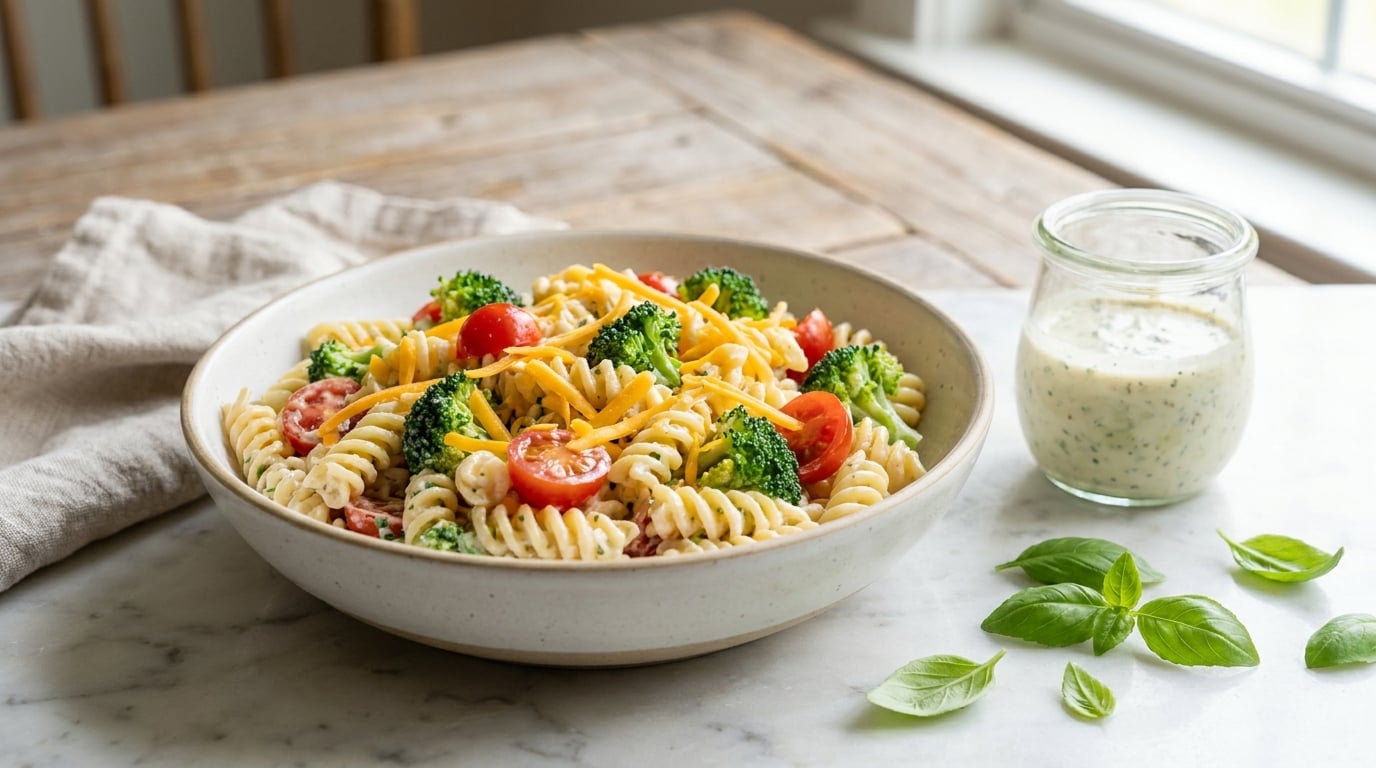
How long does pasta salad last in the fridge? Three to four days, kept in an airtight container at or below 40°F (4°C). A sharp vinegar-forward vinaigrette stretches that to five days. Add shrimp or fresh tuna and you are back down to two or three.
The window moves because pasta salad has no single ingredient setting the pace. Cooked pasta holds about 3 to 4 days on its own, mayo and dairy dressings run on a similar clock, and the acidity in a vinaigrette is what buys the extra days. A creamy bowl simply does not have that protection.
Late summer is when this question comes up most, because pasta salad shows up on every porch table and in every potluck line. Once a bowl sits out past two hours the countdown has already started, no matter how it looks. Here is how the timing actually works.
Table of Contents
How Long Does Pasta Salad Last in the Fridge?
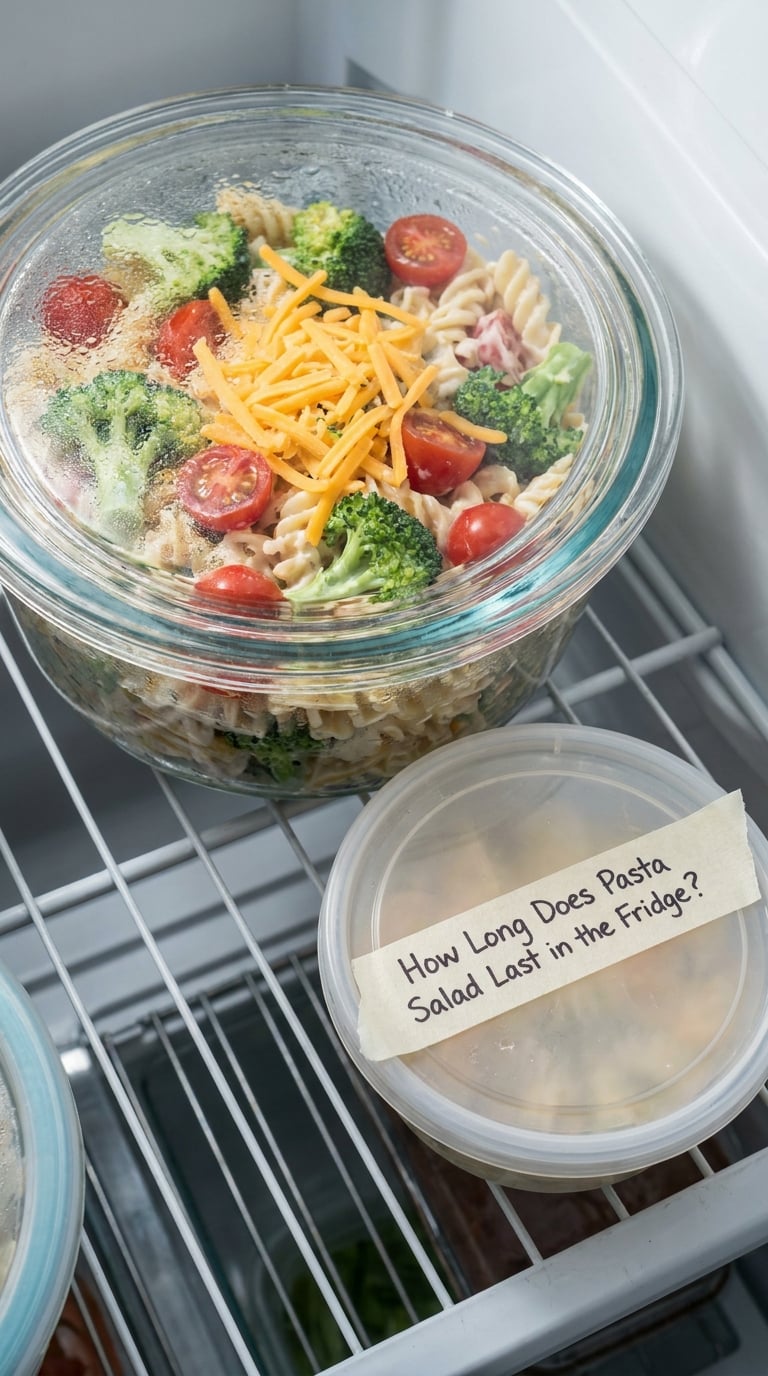
Three to four days is the number to plan around, and it holds for most homemade bowls. Two details change it.
The first is the dressing. An acidic vinaigrette preserves the pasta and vegetables noticeably longer than mayonnaise, ranch or a yogurt-based dressing does.
The second is the protein. Chicken, ham and turkey keep the window where it is. Fresh seafood, meaning shrimp, crab and fresh tuna rather than canned, pulls it down to 2 to 3 days.
For most people, the general rule is enough: homemade pasta salad keeps 3 to 4 days refrigerated, and the dressing type is what changes that. The real answer to how long does pasta salad last in the fridge depends on what you mixed into it.
Pasta Salad Storage Times at a Glance
Find the row that matches your bowl and use that number. When a salad falls into two categories, take the shorter one.
| Pasta salad type | Safe storage time | Best eating quality |
|---|---|---|
| Vinaigrette with vegetables, no meat | 4 to 5 days refrigerated | First 2 days |
| Olive oil based dressing | 4 to 5 days refrigerated | First 2 to 3 days |
| Mayonnaise-based or ranch | 3 to 4 days refrigerated | First day |
| Dairy-based with yogurt, sour cream or feta | 3 to 4 days refrigerated | First day |
| With chicken, ham or turkey | 3 to 4 days refrigerated | First 2 days |
| With hard-boiled egg | 3 to 4 days refrigerated | First 2 days |
| With shrimp, crab or fresh tuna | 2 to 3 days refrigerated | Same day or next |
| Store-bought, unopened | Follow the use-by date | Whole label window |
| Store-bought, after opening | 3 to 5 days refrigerated | First 2 days |
| At room temperature, between 40°F and 140°F (4°C and 60°C) | 2 hours, or 1 hour above 90°F (32°C) | Serve it right away |
Canned tuna behaves like any other pantry protein and does not shorten the window the way fresh fish does.
Store-bought salad carries preservatives and a tested shelf life, which is why an unopened tub often outlasts your homemade batch. Once you open it, though, treat it the same as a homemade bowl.
Freezing is a separate question, and most pasta salad is a poor candidate. The Can You Freeze Pasta Salad? section covers which versions survive it.
How to Store Pasta Salad Safely in the Fridge
Good storage takes about five minutes of attention, and it is the difference between eating the salad on day four and dumping it on day two.
1. Cool the pasta before it goes anywhere near the fridge
Pasta stored while still warm raises the temperature of everything around it, including the cold air holding the rest of the fridge steady.
Drain it, spread it on a sheet pan, and let it lose its heat. An ice bath does the same job in a couple of minutes and halts the cooking at the same time, which is why it is the technique I use for every batch.
2. Portion it into shallow containers
The USDA advises getting food into the refrigerator within two hours of cooking, and sooner in hot weather.
Deep bowls cool slowly in the middle, and that lukewarm center is exactly where bacteria grow. Wide shallow containers put more of the salad near the cooling surface, so it drops to refrigerator temperature fast.
3. Seal it airtight and press out the air
A plate or a loose lid lets moisture escape. The pasta dries, then goes limp and clumpy by the next day.
A gasket lid, a glass container with a clamp, or plastic wrap pressed right onto the surface of the salad all beat a bowl with a slip-on top.
4. Label it with the date and keep it cold
Write the date on the container. It takes five seconds with a strip of masking tape and it stops the day-six leftovers problem entirely.
Most home fridges run a few degrees warmer than the dial suggests, so keep the bowl toward the back rather than in the door. Move it forward the day before you plan to eat it.
5. Keep dressing separate when you are packing lunches
Home cooks doing weekly meal prep bring this up constantly, and it is the one change that fixes most complaints about stiff, dry pasta by Wednesday.
Store the pasta and the dressing in separate containers and combine them the night before.
What Makes Pasta Salad Last Longer?
Shelf life and eating quality are two different problems. You can be safely within the window on day four and still have a bowl nobody wants, and that is usually the pasta rather than the bacteria.
Use more acid than feels natural
A vinaigrette built on two tablespoons of vinegar or lemon juice per cup of oil slows spoilage and keeps vegetables crisp. Mayonnaise is emulsified oil with egg and a little acid already worked in, which is why it sits closer to the three-day mark. If you want the longer window, build the dressing sharp.
Pick sturdy vegetables
Broccoli, cucumber, bell pepper, celery and olives hold their shape for the full window. Tomatoes, soft berries and asparagus start breaking down within a day or two and turn the bowl watery.
Cucumber is the one I add on the day of serving, because the water it releases is the number one cause of a soupy salad.
Stop the pasta just short of al dente
Pasta that finishes slightly firm resists turning to mush once the dressing goes on. This is also why the ice bath matters beyond texture.
Shape plays a part too. Medium tubes and rotini hold dressing inside their own pockets, while thin strands and delicate filled pasta break apart and soften faster.
Hold wetter ingredients back when you can
Marinated onion, fresh herbs, pickles and dried fruit are fine from day one. Fresh tomato, cucumber and banana are not.
Prepping for the week? Keep those back and add them the night before you eat.
Revive dry or stiff salad instead of drowning it
Day-two salad in an airtight container usually needs loosening, not more dressing, and extra dressing is what makes it heavy.
Hold back a little of the dressing, add a teaspoon at a time, and toss gently. For a vinaigrette bowl a splash of cold water does the job. A few minutes of mixing brings it close to fresh.
Do not oversalt at the start
Salt and acid both get absorbed over the first day, so a salad seasoned to taste on day zero tastes flat on day one and over-seasoned on day three. Season lightly and adjust at the table.
Can You Freeze Pasta Salad?
Yes, but only some versions, and the texture rarely comes back the way it started. Freezing is worth it for a big batch you will not eat in time, and it is not worth it for a small bowl.
Freezes acceptably
- Pasta with a vinegar-based vinaigrette
- Roasted or firm raw vegetables such as broccoli and bell pepper
- Cured meats like salami and pepperoni
- Firm cheeses such as cheddar
Freezes poorly
- Mayonnaise and ranch dressing, which split and turn grainy
- Yogurt and sour cream dressings, which go curdled
- Fresh tomato and cucumber, which thaw to mush
- Any shape that clumps, because the starch gels as it freezes
When you do freeze a batch, cool the salad completely first and leave headroom in the container for expansion. Press plastic wrap onto the surface before sealing so air cannot get at it, and freeze flat portions rather than one large tub. Use it within two months for the best texture.
Thaw it in the refrigerator overnight, never on the counter. Stir in a fresh spoonful of dressing and add any raw vegetables after thawing.
My own rule is simpler. If a batch will be eaten within four days, it never needs freezing. If it will not, freezing the pasta and dressing separately gets you much closer to the original bowl.
How to Tell When Pasta Salad Has Gone Bad
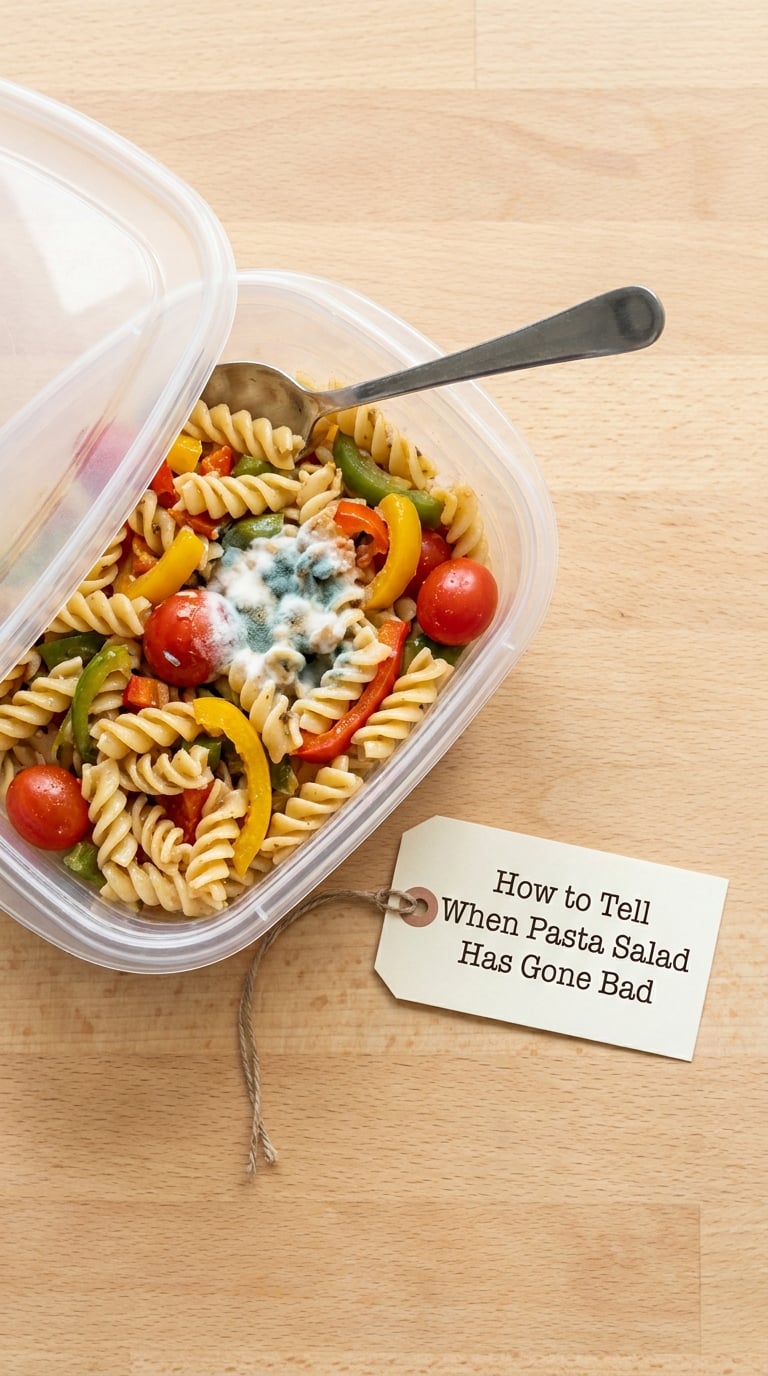
You do not need a thermometer to know pasta salad has turned. Checking in this order catches it early.
1. Start with your nose
The first and most reliable signal is an off smell. Any sour, pungent or faintly ammonia-like note means the bowl goes in the trash.
Fresh pasta salad should smell like its dressing and not much else. If you are asking yourself whether the smell is normal, it is not normal.
2. Look for visual change
Any patch of white, green, blue or black fuzz means mold has taken hold, and you discard the whole container. You cannot scoop the good part out and keep the rest.
Also watch for a slimy dressing that has separated and will not emulsify again, a cloudy puddle at the bottom, and vegetables gone translucent or blackened at the edges. Those changes are bacterial, and bacteria do not always come with a visible mold colony.
3. Notice the texture
A sticky film on the pasta, cheese turned rubbery, or a salad compressed into a dense paste all signal degradation. Dressing that tastes sour or fizzy means it is fermenting.
4. Do not taste-test it
Harmful bacteria and their byproducts often produce no smell and no visible sign at all, so a single spoonful is a real risk.
Follow the clock instead. Pasta salad made today should be finished by day three or four, and anything past that gets discarded without debate. The safe window is generous enough that you rarely have to choose between caution and waste.
Common Pasta Salad Storage Mistakes
Most spoiled pasta salad traces back to one of a handful of habits, and each has a straightforward fix.
Storing warm pasta
Warm pasta goes straight into the fridge and raises the temperature around it, while the center of the bowl stays lukewarm for hours. Fix: cool it first, spread it out on a pan, or run it through an ice bath.
Covering it loosely
A plate or a loose lid dries the surface out, and dried pasta clumps and toughens within hours. Fix: use a true airtight container or press wrap directly onto the salad.
Using one deep bowl
Deep containers cool slowly in the middle, which is where spoilage starts. Fix: portion into shallow containers, especially for a large batch.
Adding every vegetable at once
Tomato, cucumber and asparagus break down quickly and release water into the dressing. Fix: add the watery and delicate vegetables on the day you serve, and keep the sturdy ones from the start.
Leaving it on the table too long
Two hours at room temperature is the limit, and one hour when it is above 90°F (32°C). A potluck bowl sitting out all afternoon is the most common way people get sick from this dish. Fix: serve small batches on a platter and refill often, so the clock on the counter resets each time.
Skipping the date label
Unlabelled leftovers get eaten on day six because nobody remembers when they were made. Fix: write the date on the container as soon as it goes in.
Frequently Asked Questions
How long does pasta salad with mayonnaise last in the fridge?
A mayonnaise-based pasta salad keeps 3 to 4 days in the fridge at or below 40°F (4°C) when stored airtight. Mayonnaise dressings carry less acid than vinaigrettes, so they spoil sooner. Plan to finish it within two days for the best texture, and discard anything past day four or showing any sign of spoilage.
Is pasta salad still good after 4 days?
Day four is the outer edge of the safe window, and it holds only if the salad went into the fridge within two hours of being made and stayed cold. Quality is usually past its best by then, especially with mayo or dairy dressing. A simple vinaigrette salad with no meat is usually fine on day four. If you are unsure how it was stored, discard it.
Can you freeze pasta salad for later?
You can, but the texture suffers. Vinaigrette-based salad with firm vegetables and cured meats freezes acceptably for up to two months. Mayonnaise, ranch and dairy dressings split and turn grainy, and fresh tomato and cucumber thaw to mush. Freezing the pasta and dressing separately and adding raw vegetables after thawing in the fridge overnight gives a better result.
How long can pasta salad sit out at a picnic or potluck?
Two hours at room temperature is the limit, and one hour if it is above 90°F (32°C). Past that, bacteria multiply quickly even when the salad looks and smells normal. Keep it in a cooler on ice, and serve it in small batches that you refill often rather than one large bowl sitting out for the whole event.
How do I meal prep pasta salad so it does not turn dry?
Store the pasta and the dressing separately, then combine them the night before you eat. Pasta kept undressed in the fridge dries and stiffens, then turns clumpy and heavy once dressed. Hold back watery vegetables like cucumber and fresh tomato, and loosen day-two salad with a small splash of the reserved dressing or a little cold water before serving.
If you are still deciding what to cook, start with my 13 pasta salad recipes that stay cool and never dry. Most of them are built on a vinaigrette base, which is also the version that keeps longest.
Two more storage guides are worth bookmarking, since they cover the ingredients that turn up most often in pasta salad: how long cooked chicken lasts in the fridge and how long hard-boiled eggs last in the fridge. Both follow the same 3-to-4-day rule for cooked food that pasta salad does.
Conclusion
So, how long does pasta salad last in the fridge? Three to four days in an airtight container at or below 40°F (4°C), stretching to five days for a sharp vinaigrette and dropping to two or three once seafood goes in.
The first thing to do is simple. Cool the pasta before it goes in, seal the container properly, write the date on the lid, and eat it inside the window. When the smell or the look gives you any doubt, throw it out rather than reasoning about it. If you need something sturdier to pack instead, my egg salad recipes for lunch hold up for a few days too.