
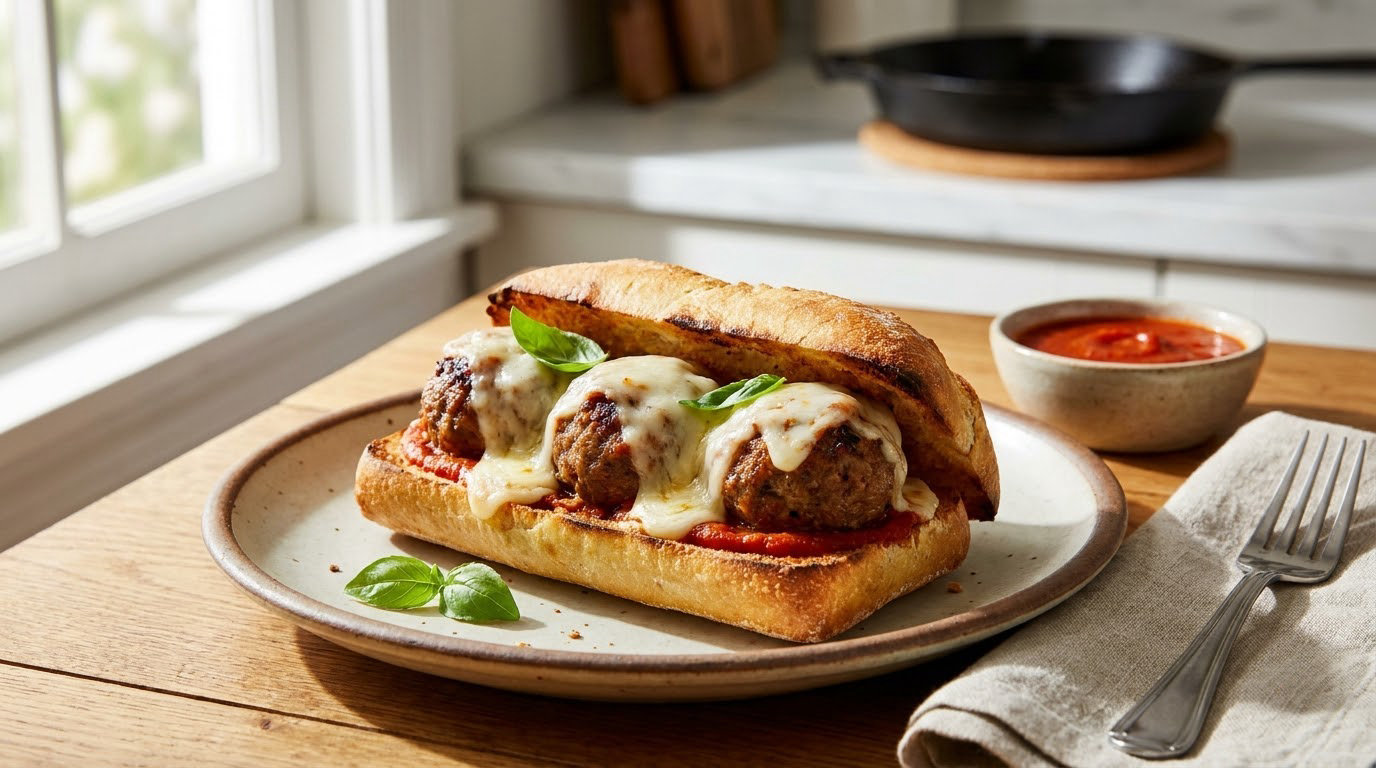
The short answer to what temperature to cook meatballs in the oven: 400°F (200°C) for 20 to 25 minutes, then confirm the center hits 160°F (71°C) or 165°F (74°C) with an instant-read thermometer before you pull the tray. That is my default for 1.5-inch balls made from raw ground beef or pork. The oven temperature shapes the crust, the thermometer decides when they are safe, and nothing else does.
Most home cooks chase the wrong number. They watch the timer, or they cut one open and peek, or they wait for the outside to look the color of a fried meatball. By then the middle is either dry or still pink. This guide sorts out the oven settings, the times, and the one measurement that actually matters.
Table of Contents
What Temperature to Cook Meatballs in the Oven: Quick Guide
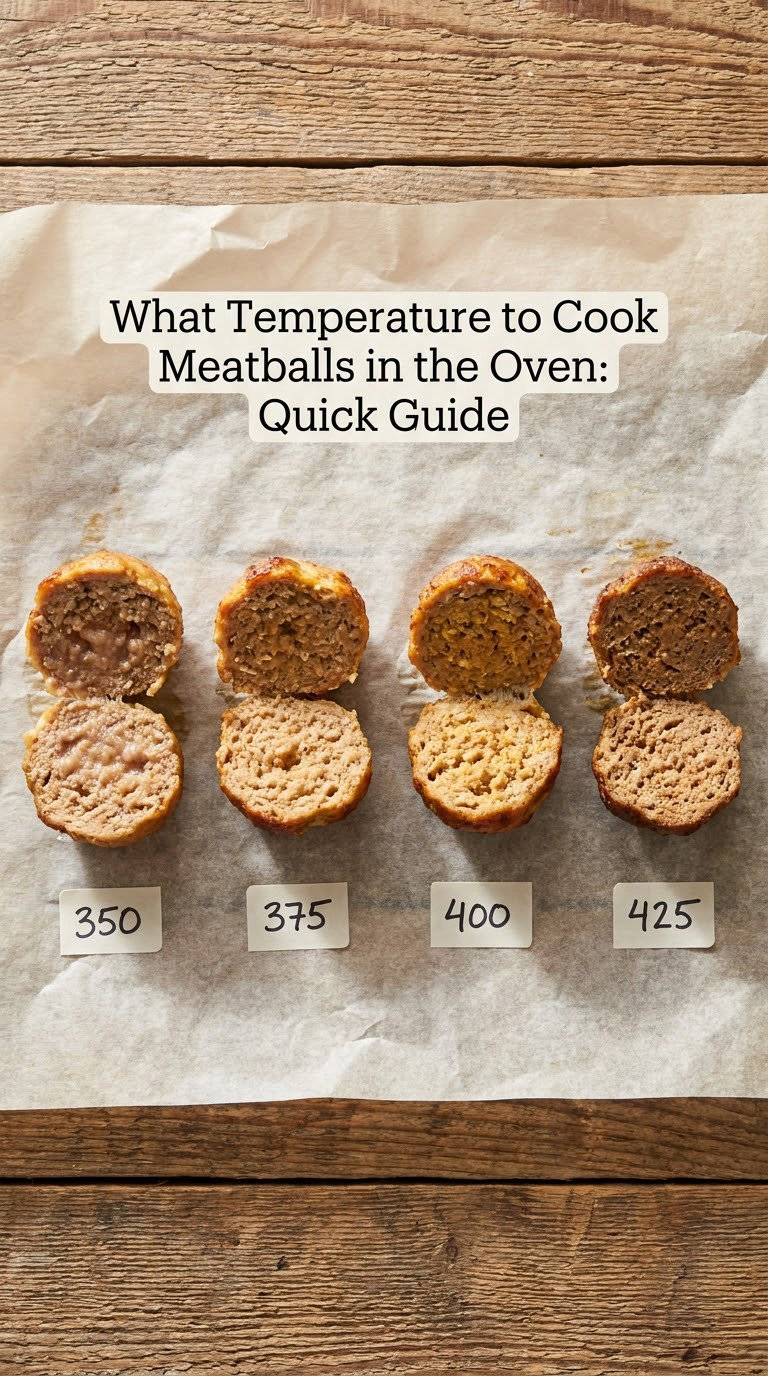
Bake at 400°F (200°C) for a crisp browned outside and the fastest, most forgiving bake. The four temperatures below are preferences for texture and timing, not safety rules. Only the internal temperature decides whether meatballs are safe to eat.
| Oven temperature | Best for | Estimated time for 1.5-inch meatballs | Safe center temperature |
|---|---|---|---|
| 350°F (180°C), gas mark 4 | Gentle cooking, cheese-stuffed meatballs, meatball casseroles with other dishes | 25 to 30 minutes | 160°F (71°C) beef or pork, 165°F (74°C) poultry |
| 375°F (190°C), gas mark 5 | A middle ground for beef and pork, tighter browning than 350°F | 22 to 27 minutes | 160°F (71°C) beef or pork, 165°F (74°C) poultry |
| 400°F (200°C), gas mark 6 | The everyday choice: brown crust, shortest bake, easiest to judge | 20 to 25 minutes | 160°F (71°C) beef or pork, 165°F (74°C) poultry |
| 425°F (220°C), gas mark 7 | Small, thin meatballs that need to set fast in a hot oven | 16 to 20 minutes | 160°F (71°C) beef or pork, 165°F (74°C) poultry |
Two minutes at 425°F is the difference between a nice crust and a scorched one, so that temperature only suits balls under 1.5 inches. For anything larger, 400°F is the safer bet.
What Internal Temperature Should Meatballs Reach?
Ground beef, pork, veal and lamb meatballs must reach 160°F (71°C). Ground chicken and turkey meatballs must reach 165°F (74°C). Those are the USDA safe minimum internal temperatures for ground meat, and a meatball is always ground meat.
You will see 155°F quoted in older recipes. That figure applies to whole cuts of beef, pork, veal and lamb, not to ground meat, and never to ground poultry. Because ground meat is handled and mixed, it has to reach the higher target.
Browning, size and cooking time do not determine safety. The outside of a meatball turns brown long before heat has reached the middle, which is exactly how you get a golden ball with a raw center.
Push an instant-read thermometer into the thickest part of one meatball, avoiding the pan wall, and read it without touching bone or metal. Check three meatballs from different spots in the pan. If the batch is uneven, the probe reading from the smallest ball is the one that matters, because that is the one that finishes first.
What Temperature to Cook Meatballs in the Oven by Meat Type
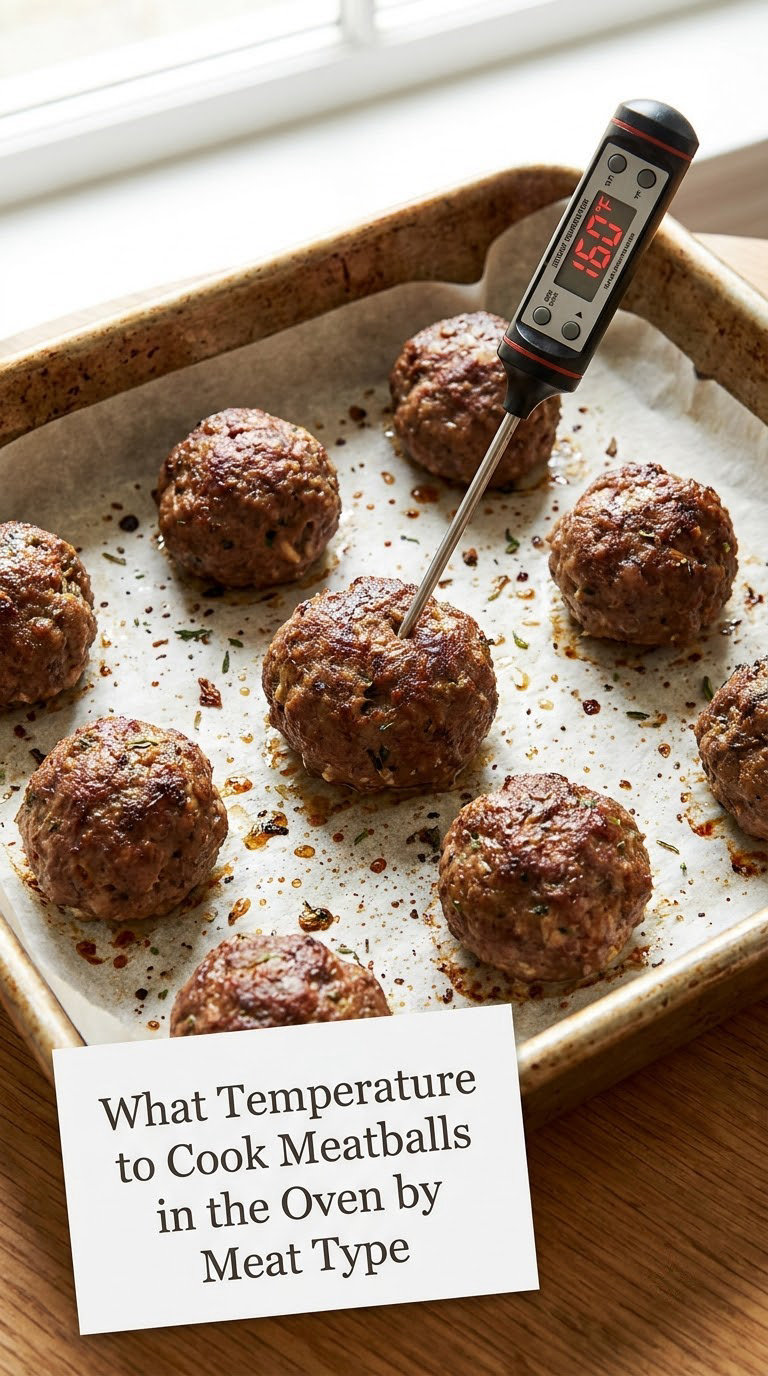
The oven setting barely changes by meat, but the safe internal temperature changes a lot. Beef, pork, veal and lamb balls all bake happily at 400°F (200°C) for 20 to 25 minutes and come out safe at 160°F (71°C). Pork and beef meatballs are the easiest to get right because the target is lower.
What temperature to cook meatballs in the oven for chicken or turkey
Poultry meatballs need more. Bake ground chicken or ground turkey meatballs at 400°F (200°C) for 20 to 28 minutes and take them to 165°F (74°C). Lean turkey has almost no fat of its own, so it also dries faster. Pulling it the moment the probe reads 165°F is the whole trick.
Mixed-meat meatballs, the pork-beef-veal blend most Italian recipes call for, use the 160°F (71°C) target. Any raw ground meat in the bowl sets the floor. Pre-cooked ingredients such as blanched spinach, pre-cooked sausage or leftover roasted meat can lower the risk, but they never lower the requirement. If raw ground meat went into the mixture, it still has to hit its safe minimum.
How Long Should Meatballs Cook at Each Temperature?
These are estimates for meatballs that start at refrigerator temperature. They are not a recipe for pulling the tray at a set minute. Start checking at the low end of each range, because pan crowding, your oven’s real temperature and size variation all shift the clock.
| Meatball size | 350°F (180°C) | 375°F (190°C) | 400°F (200°C) | 425°F (220°C) |
|---|---|---|---|---|
| 1 inch (2.5 cm) appetizer size | 18 to 22 minutes | 16 to 20 minutes | 14 to 18 minutes | 11 to 14 minutes |
| 1.5 inch (3.75 cm) standard | 25 to 30 minutes | 22 to 27 minutes | 20 to 25 minutes | 16 to 20 minutes |
| 2 inch (5 cm) large, stuffed or freezer-sized | 30 to 36 minutes | 28 to 32 minutes | 25 to 30 minutes | 22 to 26 minutes |
Shape them as evenly as you can. A cookie scoop makes 1.5-inch balls in seconds and stops the small ones from drying out while the big ones finish. If your pan is loaded with mismatched sizes, pull them in two waves rather than compromising on one time for all.
How to Bake Meatballs So They Stay Juicy and Cook Through
Moisture is lost three ways: too much heat, too long in the oven, and too little fat in the pan. The method below handles all three.
- Preheat the oven to 400°F (200°C) and let it hold for 10 to 15 minutes. Set a rack in the middle so the heat wraps around the balls.
- Line a rimmed baking sheet with parchment paper, or lightly oil foil. Parchment keeps the bottoms from sticking, which is what usually makes meatballs tear apart.
- Space the meatballs about 1 inch apart. Touching meatballs steam instead of brown, and you get pale tops instead of a crust.
- Optionally sear the bottoms in a skillet for 2 minutes a side, then transfer to the tray. This is the hybrid method most home cooks use, and it works well.
- Brush or spray with a little oil, then season. Oil on the surface gives the crust something to brown against.
- Bake at 400°F (200°C) for 20 to 25 minutes for 1.5-inch balls, checking early.
- Insert the thermometer into the center of the smallest meatball. It should read 160°F (71°C) or 165°F (74°C) depending on the meat.
- Rest 2 to 3 minutes before serving so the juices settle back into the meat instead of running onto the tray.
Do not cover meatballs for most of the bake. Foil or a lid traps steam, softens the crust and keeps the outside pale. If a meatball is large enough to dry out before its center cooks, tent the whole tray loosely with foil for the first 10 minutes, then pull it off to brown.
Flipping halfway helps only if the balls are pale underneath. It costs you some crust on the bottom, so if they are browning evenly, leave them alone. A wire rack set inside the rimmed pan lifts them off the pooled juices and lets hot air circulate underneath.
Can You Bake Frozen or Pre-Cooked Meatballs?
Yes, both. If you are wondering what temperature to cook meatballs in the oven straight from frozen, drop a step to 375°F (190°C) instead of 400°F, so the outside does not scorch before the inside thaws and cooks. Space them on the lined tray, add 5 to 10 minutes to the time chart for their size, and still take the internal temperature to 160°F (71°C) or 165°F (74°C).
Fully cooked meatballs need a much gentler hand. Bake refrigerated pre-cooked meatballs at 350°F (180°C) for 20 to 25 minutes, just until they heat through and the sauce glazes. Frozen pre-cooked meatballs go at 375°F (190°C) for 25 to 30 minutes on the sheet, or 20 to 25 minutes in sauce.
Package directions on pre-cooked meatballs are reheating instructions, not a raw-meat safety rule, so they say nothing about a thermometer. But if the meatballs you are baking are raw, the rule holds no matter what the box says. Raw ground beef and pork still need 160°F (71°C), and raw ground poultry still needs 165°F (74°C), even when the package suggests a shorter time.
One more option worth knowing: bake meatballs just until set, then finish them in sauce. Marinara or gravy adds moisture back and infuses flavor, which is why so many Italian recipes call for it.
Do You Need to Preheat the Oven for Meatballs?
Yes, and a proper preheat takes 10 to 15 minutes. Meatballs go into the oven with a small amount of fat on their surface, and that fat needs immediate heat to turn into a browned crust. Dropping raw meatballs into a cool oven greases the tray, dulls the crust and stretches the bake by several minutes.
Allowing more time at the start does not improve doneness. A cold oven simply cooks them slowly at a lower temperature, which dries the outside before the center catches up.
For a fan-assisted or convection oven, drop the temperature by 25°F (15°C) and start checking five minutes early. Air moves faster, so the outside sets sooner. Turn it down if the bottoms darken before the centers cook.
An oven thermometer matters more than most people expect. Ranges and wall ovens routinely run 25°F off, and that drift is why the same recipe behaves differently in two kitchens. If yours browns unevenly or runs hot, an inexpensive leave-in thermometer settles the question in a day. I keep one in the oven year round and check it whenever a bake surprises me.
Common Mistakes When Baking Meatballs
Overcrowding the tray. Meatballs touching each other steam instead of browning and take longer to cook through. Give each one an inch of space and use a second pan.
Making them too large. Anything over 2 inches spends so long in the oven that the outer 2 inches go dry and leathery. Smaller balls cook faster, evenly and stay juicier.
Trusting color alone. A browned crust means the outside got hot, not that the middle did. Probe the center of the smallest meatball in the pan.
Cutting a test meatball open. It drains juices and gives you a peephole, not a measurement. A thermometer hole is barely noticeable and gives a real number.
Using a shallow sheet. Meatballs sitting in their own rendered liquid stew in their own fat and never crisp. Use a rimmed pan or set a wire rack inside it.
Rotating too late or too much. Opening the oven repeatedly drops the temperature and slows the bake. One rotation at the halfway mark, only if the bottoms look pale, is enough.
Overmixing the meat. Worked the mixture too hard before shaping and you get a dense, bouncy meatball. Mix with a light hand and stop as soon as the binder disappears.
Overbaking out of doubt. Waiting an extra 10 minutes to be sure is the single most common way meatballs turn dry and rubbery. Trust the thermometer, then take them out.
Frequently Asked Questions
Should meatballs be covered while baking in the oven?
Usually not. Covering traps steam and keeps the crust pale and soft, which defeats the point of a hot oven. For large or 2 inch meatballs that dry out before the center cooks, tent the tray loosely with foil for the first 10 minutes, then remove it to brown.
Why are the edges of my meatballs brown but the centers still raw?
Heat moves from the outside in, so the crust sets long before the center is safe. A dark edge tells you nothing about the middle. Bake at 400°F (200°C) and probe the smallest meatball in the pan with an instant-read thermometer until it reads 160°F (71°C) or 165°F (74°C).
What is the best temperature for baked chicken meatballs?
Bake ground chicken meatballs at 400°F (200°C) for 20 to 25 minutes, then check the center with a thermometer. Ground poultry is required to reach 165°F (74°C) for safety. Because lean chicken dries fast, take them out the moment the probe hits that number rather than baking longer.
How do I adjust meatball cooking time for a convection oven?
Lower the temperature by 25°F (15°C) and start checking about five minutes early, because fan-assisted heat cooks faster and browns sooner. A 400°F (200°C) conventional recipe becomes 375°F (190°C) convection. Keep the same internal temperature target, and tent the pan if the bottoms color before the centers cook.
How can I tell if meatballs are done without cutting them open?
Use an instant-read thermometer in the thickest part of one meatball, without touching the pan. Check three meatballs, including the smallest one in the tray. Beef, pork, veal and lamb meatballs are done at 160°F (71°C); chicken and turkey meatballs are done at 165°F (74°C).
Use 400°F and Check the Center for the Best Results
Preheat to 400°F (200°C), give the meatballs an inch of space on a lined rimmed tray, and bake 20 to 25 minutes for 1.5-inch balls. Take them out the moment the thermometer reads 160°F (71°C) for beef or pork, or 165°F (74°C) for poultry.
Next time, adjust for your own oven rather than trusting someone else’s timing. If your meatballs always run dry, pull them two minutes earlier or drop to 375°F (190°C). If the centers lag behind, make them smaller next time or space them further apart. Appearance alone is never a doneness test. If you want a starting recipe, my easy French onion meatballs bake at 400°F for about 22 minutes, and my oven bacon method uses the same preheat-and-probe logic that keeps anything from overcooking.
Cooked meatballs keep 3 to 4 days in the fridge and freeze well on a tray first, so they do not clump together before you bag them.