

To freeze bread so it stays fresh, let the loaf cool completely, slice it, wrap it airtight in plastic wrap plus a freezer bag with the air squeezed out, label it with the date, and lay the package flat in the freezer. Wrapped that way, bread holds its best texture for 3 to 6 months and stays safe to eat long after that.
Freezing is not a backup plan. It is the better plan than the bread box or the countertop canister, and it is the reason I stopped throwing out the heel of every loaf. Nearly every piece of advice below is one I learned the hard way, usually after finding a grey fuzzy patch inside a freezer bag.
Table of Contents
How to Freeze Bread So It Stays Fresh
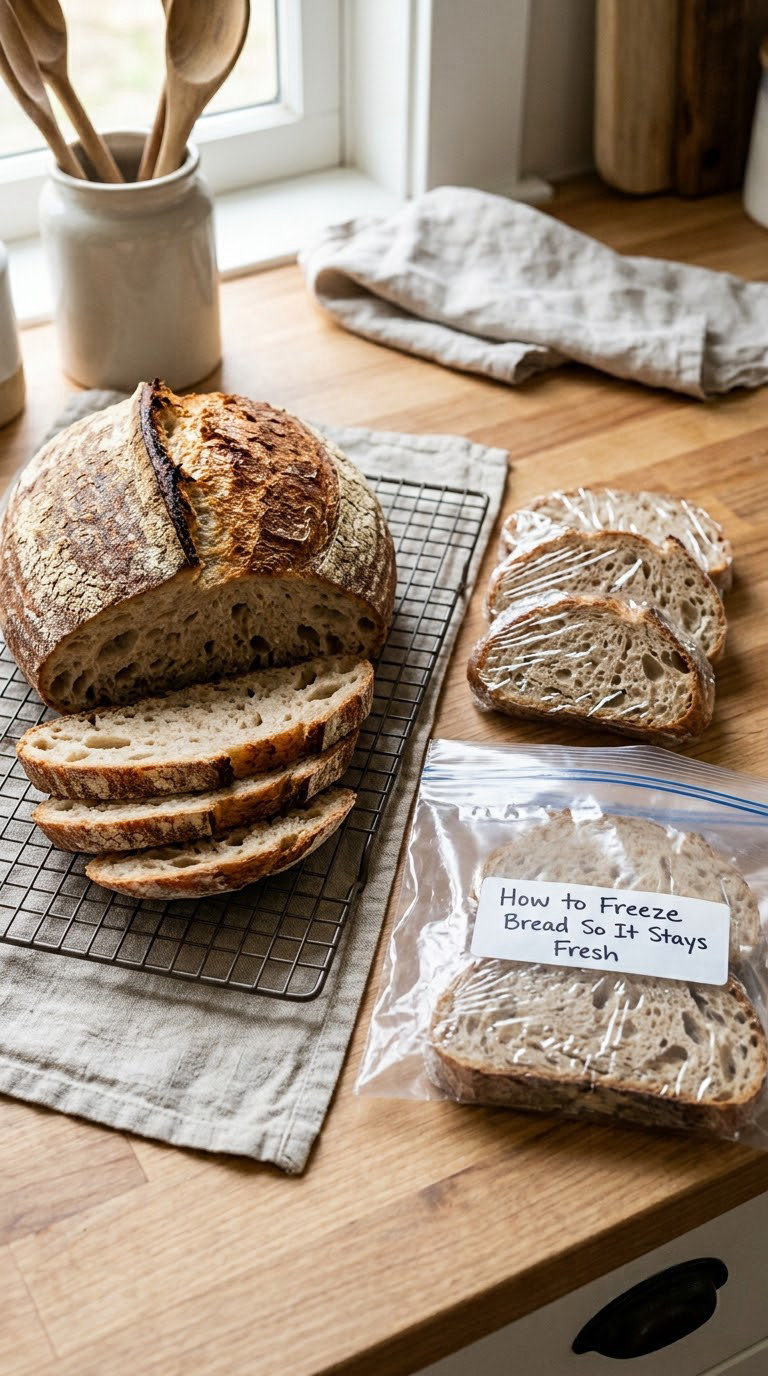
The whole method in one line: cool it fully, slice it, seal out every bit of air, label it, freeze it flat. Freezing suspends the two things that ruin bread. The first is moisture leaving the crumb, which is what you call staling, and the freezer handles that one for you. The second is air moving back into the bread, which causes freezer burn and the pale, papery patches you have probably seen on a bag of frozen rolls.
So airtight wrapping is the single most important variable in this whole guide. Everything else is a detail.
The shape you freeze depends on how you plan to eat it, and it matters more than most guides admit. A whole loaf keeps its moisture best and is the right choice if a guest is coming over in two weeks. Sliced bread freezes perfectly well and is the right choice for daily sandwiches, since you can pull two slices out instead of thawing a whole loaf. Rolls and buns go in as they are, because nobody has ever wanted half a roll.
Breads with strong or delicate ingredients need extra thought. Cheese, olives, seeds, and fresh herbs survive freezing fine on their own, but anything with a wet filling or a soft topping, like a loaf with fresh cheese spread on top or a custard-soaked bread, traps water and turns unappetizing. Freeze those plain and add the fresh filling after thawing.
If you are starting from fruit for baking, most fruit freezes fine too, including bananas. I use the same double-wrap method on frozen bananas for banana bread and it has never changed a batter.
What Bread Can You Freeze?
Almost all of it. Freezing works best on breads with a low fat and sugar content, which means the sturdy, chewy ones are the real winners.
- Sourdough and other artisan loaves: excellent, and better than most people expect. The crumb freezes beautifully. Expect the crust to soften a little, which you can fix in the oven.
- White sandwich bread and whole wheat: the easiest of all. Wrap it right out of the bag and it comes back nearly identical.
- Enriched breads: brioche, challah, and milk bread freeze well because the fat and sugar actually help them hold moisture through a freeze and thaw.
- Baguettes: fine, but use them first. The crust is the point, and it softens fastest of any bread.
- Rolls, burger buns, and English muffins: freeze very well. Do not freeze them in the twist tie or sealed plastic from the bakery; cut that off first.
- Quick breads and muffins: banana bread, cornbread, and pumpkin bread all freeze well and thaw almost as if they were fresh that morning.
The breads I avoid are the ones that are best on the same day: very high-hydration loaves with a delicate open crumb, and anything with a fresh filling or glaze. The second great, but the crumb is different when it comes back. Sourdough bakers on r/Sourdough say the same thing about pre-slicing a whole sourdough loaf, so do not expect an identical round.
One distinction worth clearing up early. Freezing dough and freezing baked bread are two different things. Dough freezes well for later baking, usually right after the first rise, and it will need a longer second proof. That is a whole different process from what this guide covers, and mixing the two up is the most common reason a home baker gets a disappointing result.
How to Prepare Bread Before Freezing
Cool the bread completely first. This is where most freezer bread fails, and the fix is just patience. Warm bread still holds steam, and if you wrap it, that steam gets trapped and condenses into water inside the package. You get an airtight bag of wet bread. Wait until the loaf feels room temperature, bottom and all, which for a large sourdough round can take two to three hours on a rack.
Slice with a serrated bread knife. If the loaf has gone a little firm on the counter, that is a help, not a problem: partly frozen bread slices cleanly without tearing the crumb. For sandwiches, bundling two slices at a time with wax paper or parchment and standing the bundles upright in the bag is the trick home bakers on r/Breadit swear by, since you grab lunch portions without hunting for pairs.
Remove excess air. Press gently to push out the big pockets, then seal. Air left in the bag freezes into ice crystals, which is what causes freezer burn, and it takes months for those crystals to migrate out and leave the bread dry and pale.
Label every package with the bread and the date. When four unlabeled bags turn up as mystery shapes nine months later, you will open two and throw them out. A permanent marker on the bag or a strip of masking tape on the foil solves it in five seconds.
Never refrigerate bread. Cold temperatures speed up the starch changes that make bread stale, so a week in the fridge costs you two weeks on the counter. If you have a week of bread to get through, freeze some of it.
If you currently keep bread in a canister or on the counter, a bread box is a smaller upgrade that helps for a day or two. That said, it is not in the same league as freezing. Our bread box picks cover the short window, and this guide covers everything past it.
What Is the Best Way to Wrap Bread for Freezing?
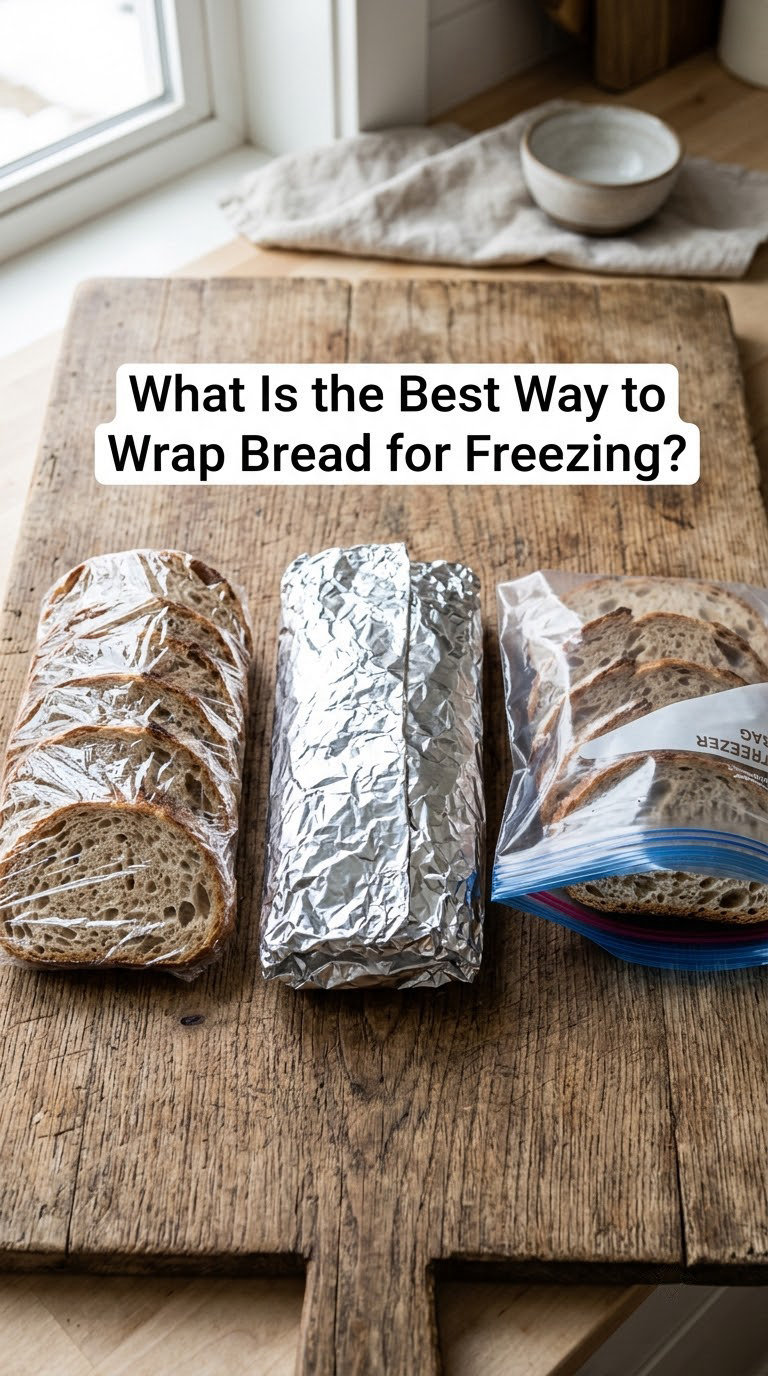
Short answer: two layers, airtight, air squeezed out. The specific materials matter less than the fact that nothing can reach the bread.
- Plastic wrap alone: fine for a week or two, and fine for sliced sandwich bread. It clings nicely, but cling film is thin enough that ice crystals eventually punch through it.
- Aluminum foil alone: good, but foil has no reseal, so every time you open it you have to rewrap. Use it as the second layer around a loaf.
- Resealable freezer bags: the workhorse for sliced bread, rolls, and buns. Squeeze the air out before you seal, and lay the bag flat so the slices freeze in a single layer.
- Parchment or wax paper: goes inside the bag between bread and plastic for very soft or moist breads, where slices might otherwise stick to each other.
- Two layers of plastic, then foil or a freezer bag: the best answer for a whole loaf, a sourdough round, or anything stored beyond a month.
Store-bought bread in its original packaging is fine to freeze, as long as you add a second layer. Most people already do this without thinking of it as a method. Cut the twist tie, push the loaf back in, and put the whole thing in a freezer bag or wrap it in foil.
If you would rather not use plastic at all, you have workable options. Line a bread tin or loaf pan with parchment paper, wrap the whole loaf in parchment or freezer paper, then set that inside a large freezer bag. It will not hold quite as long as foil, but it holds far longer than an unwrapped loaf, and it is what the r/PlasticFreeLiving crowd has settled on.
A vacuum sealer is the genuine upgrade here. One zip and the air is gone completely, which is the whole game.
How to Freeze Bread So It Stays Fresh: Step by Step
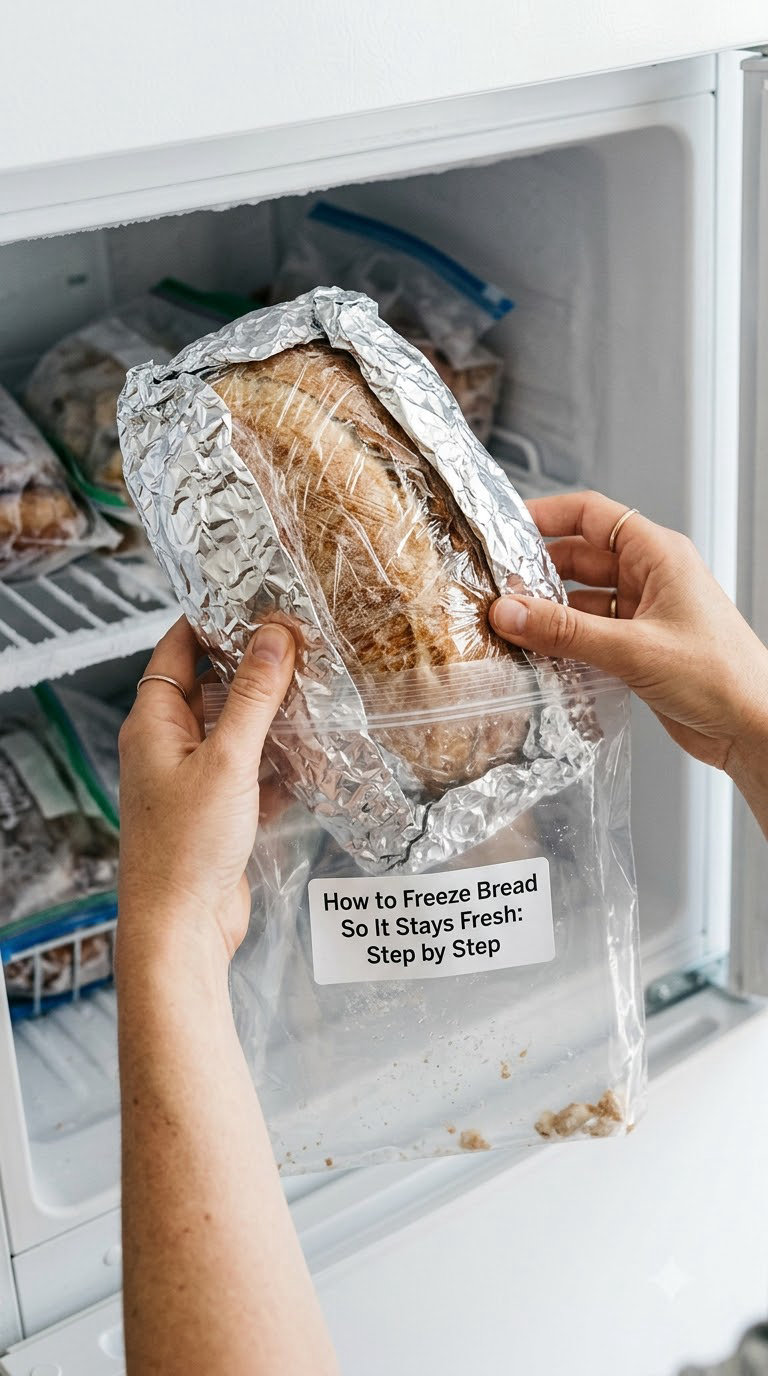
This is the method I use, for homemade loaves and grocery store bread alike.
- Cool it completely. Leave the loaf on a wire rack until it is room temperature, bottom included. No exceptions, and no rushing it with a fan.
- Slice it, or don’t. Slice for daily use and for sandwiches. Keep a loaf whole if it is a special bake you are saving for later or for guests.
- Wrap it tight. Slices go in plastic wrap or straight into a bag. Whole loaves get plastic wrap pressed against the crust, then aluminum foil or freezer paper over that.
- Double-bag and squeeze. Put the wrapped loaf or the slices into a resealable freezer bag, press out the air, and seal it across as much as you can.
- Label and date it. Write the type of bread and today’s date on the bag with a marker, or on the foil with tape.
- Lay it flat and freeze. Keep packages flat rather than standing them up, so they do not get crushed by whatever is already in the freezer.
For bread going in beyond a month or two, flash freeze it first. Lay the slices or rolls on a parchment-lined baking sheet and leave them in the freezer for at least 2 hours until solid, then transfer them into their sealed bag. That extra step keeps slices from fusing into one solid block, which is the complaint that comes up most often from people who thawed a whole loaf for two slices. A dedicated serrated slicer, if you bake often, makes step two faster. Our homemade bread slicer picks cover the options.
Freezing Times by Bread Type
Use this as your starting point for quality, and treat anything past the far column as food waste waiting to happen.
| Bread type | Freeze whole or sliced | Best wrapping | Best thawing method | Freezer time for best quality |
|---|---|---|---|---|
| Sourdough | Sliced, for everyday use | Plastic wrap, then foil | Toast from frozen or 300°F oven | 3 to 6 months |
| White sandwich loaf | Sliced | Original bag, then a freezer bag | Toaster, straight from frozen | 3 to 6 months |
| Whole wheat loaf | Sliced | Plastic wrap, then a freezer bag | Toaster or fridge overnight | 3 to 6 months |
| Baguette | Whole if possible | Foil or freezer bag | Warm it in the oven, do not thaw first | 1 to 2 months |
| Brioche or challah | Whole or sliced | Plastic wrap, then foil | Overnight in the fridge | 3 months |
| Burger buns and dinner rolls | As they come | Freezer bag, flat | Counter, then toast | 2 to 3 months |
| English muffins | Whole | Freezer bag | Split frozen, then toast | 2 to 3 months |
| Quick breads, cornbread | Sliced | Parchment, then a freezer bag | Thaw wrapped on the counter | 2 to 3 months |
How to Thaw Frozen Bread Without Getting Soggy
Soggy thawed bread is almost always damp bread, not soggy bread. Moisture that escaped during freezing gathers on the surface, and if you eat it soft you are tasting water. Here is how to eat frozen bread by use case.
- Toast straight from frozen: the best method for sliced bread. Drop the slices in a dry toaster, or into a toaster oven at 350°F for about 5 to 8 minutes. No thawing at all.
- Overnight in the refrigerator: the gentlest option, and the one for enriched breads. Put the sealed package in the fridge overnight and let the bread come to room temperature slowly, still wrapped so it does not dry out.
- On the counter, still in its wrapper: takes a few hours and gives you the best crust. Never leave bread sitting unwrapped overnight, and never put it back in a plastic bag while it is still damp.
- Re-crisp a whole loaf at 300°F: take it from the freezer straight to a preheated oven and heat it for about 30 minutes. This is the move that brings a sourdough or baguette crust back to something close to bakery texture.
- Microwave, briefly: 20 to 30 seconds on high, with a damp paper towel over the top. It softens the crust, so toast it right after if that matters to you.
- For sandwiches: thaw only the two-slice bundles you made earlier. Thawing a whole loaf to use four slices is how people talk themselves out of freezing bread at all.
Can You Freeze Bread and Keep It Fresh?
Yes, with a realistic definition of fresh. Frozen bread will not taste quite like bread from the oven. It will taste like good bread for months, which is a far better outcome than stale bread from the counter.
The quality window runs 3 to 6 months from the date you froze it. After that, flavor and texture decline slowly, mostly through freezer burn if the wrapping was not airtight. The safety window is much longer. Bread that is frozen solid stays safe to eat far longer than it stays tasty, because freezing halts the mold and bacteria that spoil the loaf.
Nutrition does not change. A slice of frozen white bread has the same calories and the same carbs as the slice you baked, with none of the nutrients lost.
How do you tell if bread has gone bad? After thawing, look for a musty or sour dairy smell, any fuzzy green, white, or grey growth on the crust, or a slimy, dark crumb. Heavy frost inside the package on the bread itself is another sign it never froze fast enough and you should let it go. Mild white frost on the bag is just surface ice. If you are unsure, throw it out. It costs a loaf, and guessing about mold does not.
Common Mistakes When Freezing Bread
- Freezing it warm. Trapped steam condenses into water. Fix: cool until the bottom of the loaf is room temperature.
- Sealing loosely. A bag that is not airtight lets air in and invites freezer burn. Fix: press the air out before you seal, and double-bag or wrap for anything past a month.
- Leaving too much air in the bag. A loaf floating in a bag full of air freezes unevenly and dries out. Fix: bag it snugly with minimal headspace.
- Storing bread uncovered. Nothing exposed survives a freezer. Fix: every piece gets a layer, no exceptions.
- Skipping labels. You will not recognize frozen bread six months later. Fix: bread and date, every time.
- Wrapping soft sandwich bread individually. Soft bread gets squashed in a crowded freezer. Fix: wrap the whole loaf once, as one package.
- Thawing slowly in damp packaging. The wrapper traps condensation on the crust. Fix: thaw still wrapped for refrigerator and counter methods, and use the oven method if you want a crisp crust.
- Refreezing the same loaf over and over. Every thaw and refreeze costs you moisture and texture. Fix: freeze in portions you will actually eat, so you thaw once.
Frequently Asked Questions
How long does bread stay fresh in the freezer?
Wrapped airtight, frozen bread keeps its best texture for 3 to 6 months. After that the flavor and crust slowly fade, mainly from freezer burn if any air got into the wrapping. Bread stays safe to eat much longer than it stays tasty, so check for mold, off smells, or a slimy crumb after thawing before you eat an old loaf.
Should I freeze bread before it cools completely?
No. Wrapping bread while it is still warm traps steam, which condenses into water inside the package and gives you soggy, damp bread. Wait until the loaf is room temperature all the way through, including the bottom, which can take two to three hours for a large sourdough round. If you are in a hurry, slice it and leave it on a rack.
Is it better to freeze a whole loaf or individual slices?
Freeze sliced bread for everyday sandwiches so you can pull out only what you need. A whole loaf stays sealed and moist longest, so freeze it whole if it is a special bake for guests or for later in the month. Bundling two slices in deli or wax paper and standing the bundles upright in a freezer bag is the compromise most home bakers land on.
Can I freeze bread in a Ziploc bag without plastic wrap?
Yes, and for sliced sandwich bread it is usually enough on its own. Squeeze the air out before sealing, lay the bag flat, and date it. For a whole loaf, a crusty artisan loaf, or anything stored beyond a month, add a second layer of plastic wrap and foil, because a thin bag alone will not stop ice crystals forming on the crust.
How do I refresh frozen bread so it tastes like it was just baked?
Toast sliced bread straight from frozen, either in a dry toaster or in a toaster oven at 350°F for about 5 to 8 minutes. For a whole loaf, go from the freezer to a preheated 300°F oven for roughly 30 minutes to bring the crust back. That oven step is the closest thing to a bakery crust you will get at home.
Can I refreeze bread that has already been thawed?
Technically yes, but each thaw and refreeze cycle costs moisture and texture, and bread that has sat out will pick up new moisture that refreezes badly. Refreeze only bread thawed in the refrigerator, return it to the freezer within a day, and plan to eat it sooner. Thaw only the portion you need next time and leave the rest frozen.
Conclusion
Freeze it while it is still fresh, cool it all the way down first, wrap it tight enough that no air can reach the crust, label the bag with the date, and lay it flat in the freezer. That is the reliable method, and it works for a grocery store loaf, a sourdough round, or a tray of dinner rolls.
From there it is one habit: thaw only what you will eat today. The second slice stays frozen, and the loaf stops going to waste. When you get the hang of it, learning how to freeze bread so it stays fresh quietly becomes the easiest kitchen win in the house.