
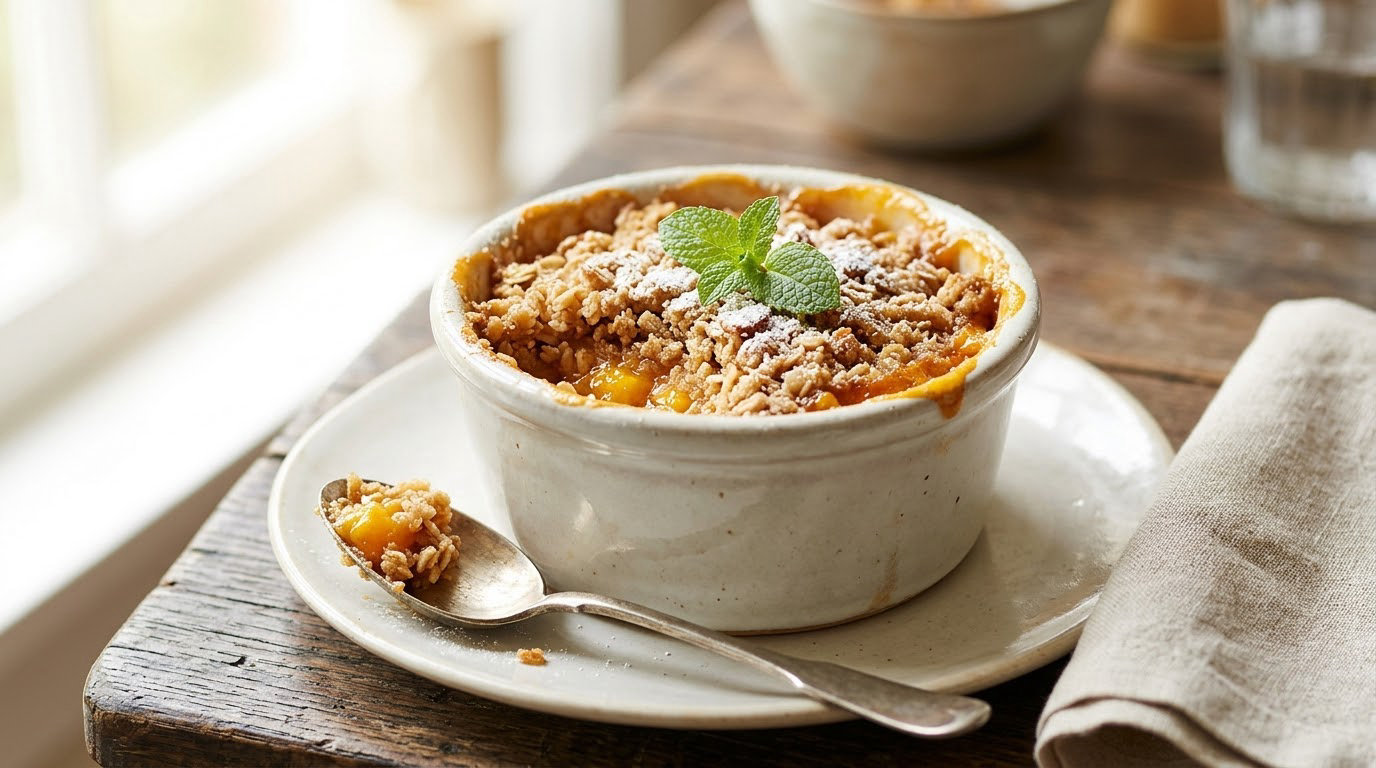
How to freeze peaches for winter baking comes down to three things: treat the cut fruit so it does not brown, flash-freeze it in a single layer until solid, then seal it airtight at 0°F (−18°C) or below. That method keeps individual slices from fusing into one block and gives you clean, measurable fruit for a January pie.
Fresh peaches are a six-to-eight-week game in most of the country. Freeze them in the form the recipe actually calls for, and winter baking stops being a limitation. I do the same thing with freezing bananas for banana bread, where the method choice matters just as much.
Table of Contents
How to Freeze Peaches for Winter Baking at a Glance
Three methods cover almost every baking job. The texture and the sugar you carry into the batter are what separate them.
| Method | Best texture | Prep time | Freezer space | Suitable cuts | Best baking uses | After thawing | How long it keeps |
|---|---|---|---|---|---|---|---|
| Syrup-packed slices | Soft but still sliceable | 25–35 min | Heavy (fruit plus syrup) | Halves or thick wedges | Pies, cobblers, crisps | Very soft, very juicy | 9–12 months |
| Tray-frozen pieces | Firm, keeps shape | 15–20 min plus freeze time | Light, stacks flat | Slices or cubes | Cakes, muffins, quick breads, crisps | Soft, releases a little juice | 6–9 months |
| Peach purée | No chunks at all | 20–30 min | Compact | Any, blended smooth | Smoothies, sauces, swirl batters, folded into cake batter | Fully soft | 6–9 months |
How to Prepare Peaches Before Freezing
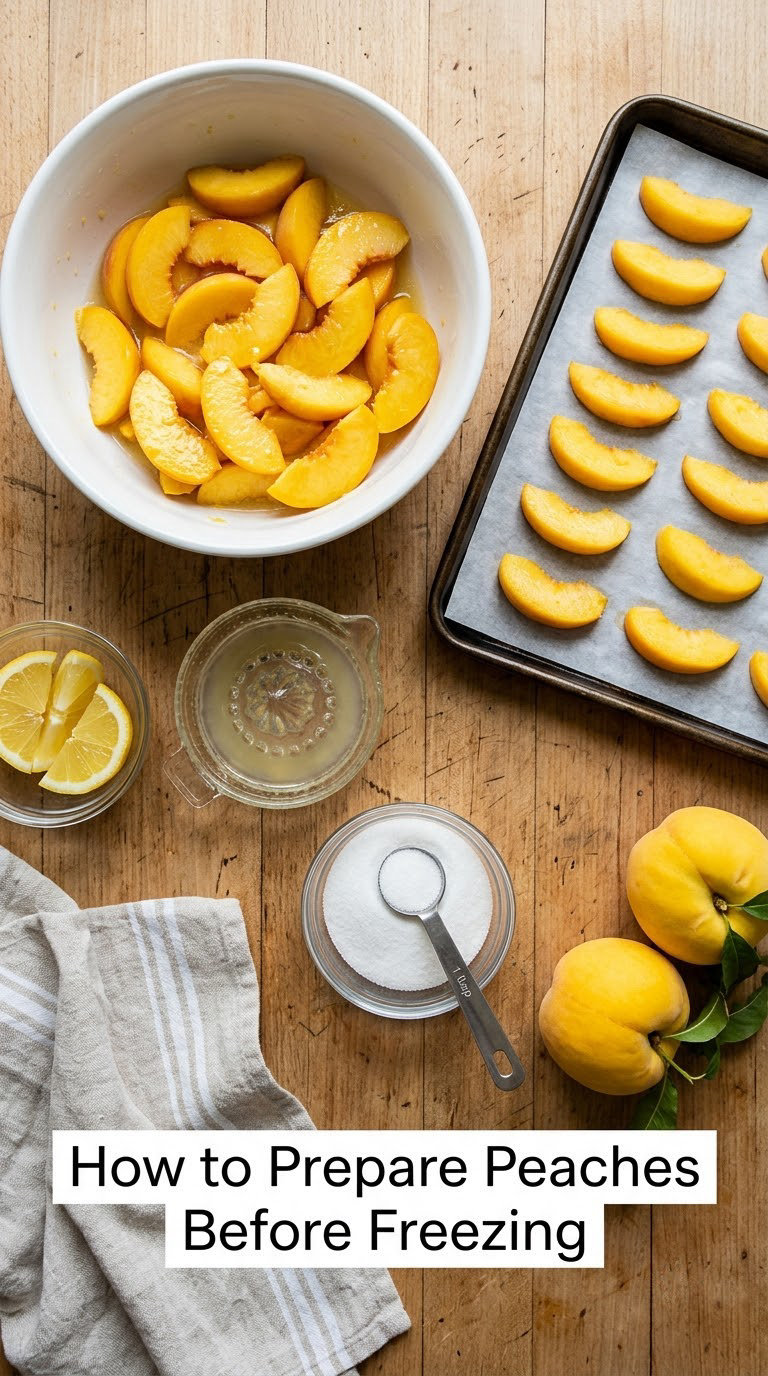
Pick fruit that is ripe but still firm. It should give slightly at the shoulder and smell sweet, and it should not dent under your thumb.
Freestone peaches come away from the pit cleanly and are the easier choice for baking, since the flesh stays in whole slices. Clingstone fruit holds the pit, which means cutting around it and losing a little meat. Either works, just expect smaller pieces from clingstones.
Wash the peaches under cool running water and dry them well. Moisture is the enemy here, since surface water freezes into ice crystals that dull the flavor.
- Wash and dry. Scrub the fuzz off with your fingers under cool water, then pat dry on a towel or in a salad spinner.
- Pit. Cut in half around the stone and twist, or run a melon baller around it if the fruit is clingstone.
- Choose your cut. Slice into half-moons about 1/2 inch thick for pies and crisps, or dice into 1-inch cubes for cobblers and muffins.
- Stop the browning. Toss with 1 to 2 tablespoons of lemon juice, or dip the pieces in a bowl of water with the juice of one lemon. Work in small batches so nothing sits untreated.
- Portion for the bake. Measure 4 cups of fruit per 9-inch pie filling, 6 to 8 cups for a 9×13 cobbler, and 2 cups for a standard loaf or muffin tin.
- Pat dry again. Blot the pieces on a clean towel. Excess surface juice dilutes the syrup method and makes slices steam instead of freeze.
If you want the skin off, blanch the halves for 30 to 60 seconds in boiling water, then drop them into ice water for a minute. The skins will slip right off. Blanching is optional for baking, and it mainly helps when you want clean slices rather than soft ones.
Three Ways to Freeze Peaches
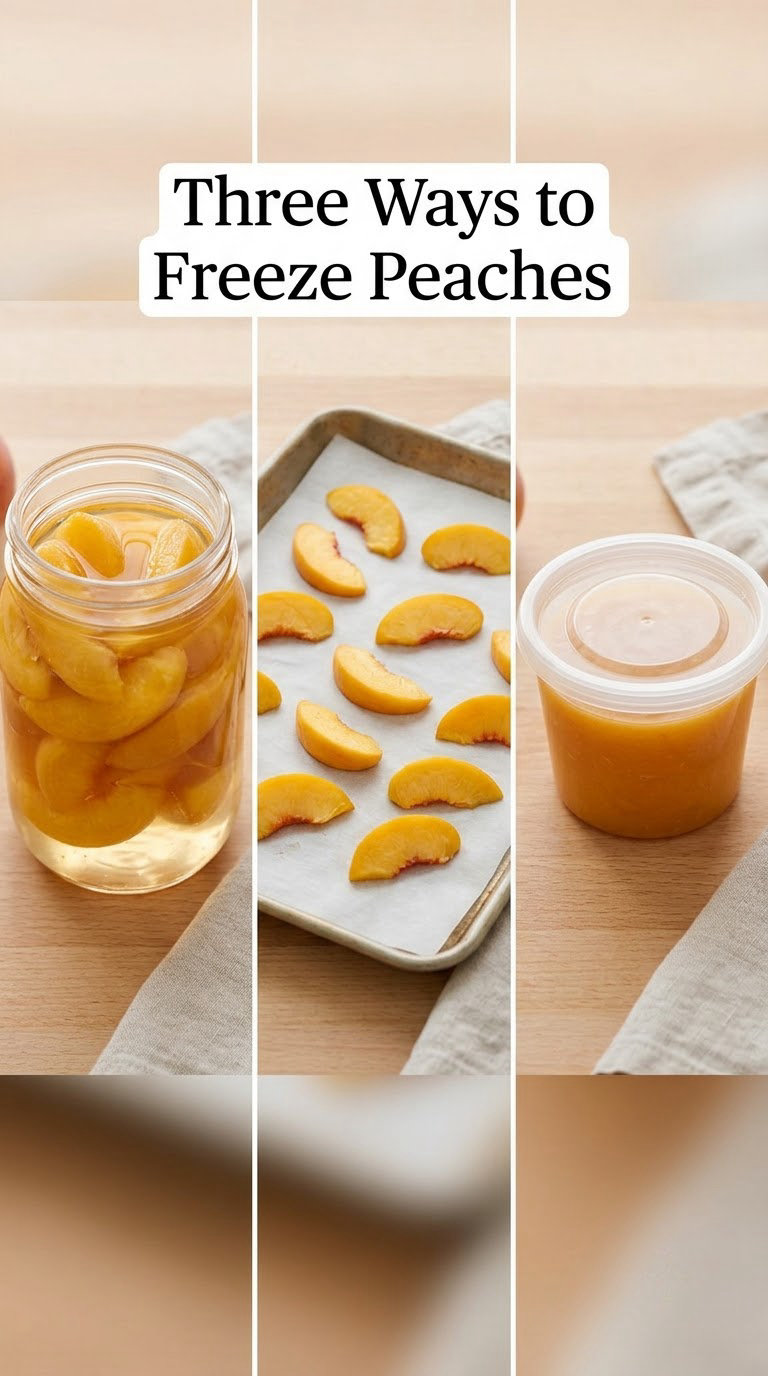
The syrup method trades texture for sweetness. The two dry methods rely on rapid freezing and airtight packaging to keep the fruit tasting like peaches.
How to Freeze Peaches for Winter Baking in Syrup
Use this when you want a pie filling that tastes sweet on its own, without adjusting sugar in the recipe. A light syrup keeps the fruit soft and spoonable, which is exactly what a summer pie filling wants.
- Make a light syrup. Combine 1 cup sugar with 1 cup water in a saucepan. Bring to a boil, stir until dissolved, then take it off the heat.
- Cool the syrup. Let it drop to room temperature. Pouring boiling syrup over cold fruit cooks it and ruins the texture.
- Warm the peaches briefly. Dip the slices in boiling water for 30 to 60 seconds, then into ice water. This keeps the pieces reasonably intact instead of collapsing into jam.
- Pack the fruit. Put the drained slices into pint- or quart-size freezer-safe containers or bags.
- Cover with syrup. Pour cool syrup over the fruit, leaving 1/2 inch of head space in pints and 1 inch in quarts.
- Remove air and seal. Press the air out, seal the lid, and lay containers flat if you are stacking them.
- Freeze at 0°F (−18°C). Label with the date and the type of cut.
How to Freeze Peach Pieces Without Sugar
This is the most versatile supply and my default. You control the sugar at bake time, which means the same bag works in a tart cobbler and a sweet one.
- Arrange in a single layer. Lay unbaked slices or cubes on a parchment-lined baking sheet with no touching pieces. Crowding is what creates one solid peach brick.
- Freeze until solid. Set the sheet flat in the freezer for 2 to 4 hours, until the fruit is firm to the touch.
- Transfer quickly. Tip the frozen pieces into heavy-duty resealable freezer bags or airtight containers while they are still frozen.
- Remove the air. Squeeze the bag flat with your palms. For stubborn air pockets, insert a drinking straw through a small hole in the corner, squeeze, then seal over the hole.
- Label and store. Write the date and the amount on the bag, then stack the bags flat in the freezer.
Expect the fruit to be a little softer than fresh. That is fine for baking and worth knowing for fruit salad and snacking.
How to Freeze Peach Purée for Baking
Purée is the answer when you want no chunks at all. It goes straight into smoothies, sauce, oatmeal, and the batter of a swirl cake without any prep on the day you bake.
- Prep the fruit. Wash, pit, and cut the peaches, then blanch for 30 to 60 seconds and cool in ice water if you want the skins off.
- Blend. Purée in a blender or food processor until smooth, scraping down the sides a couple of times.
- Cool before storing. Let the purée sit at room temperature until it stops steaming, then chill it briefly. Warm purée expands in the container and can push the lid off.
- Measure into portions. Spoon 1-cup or 2-cup portions into freezer-safe containers or silicone molds, leaving 1/2 inch of head space for expansion.
- Label and freeze. Date each container. Skip the freezer bag until the purée is solid, or use a small bag if you want to break off cubes.
Do not add sugar or lemon juice automatically. For a smoothie you might want both, but in a cake recipe you would be doubling the sugar. Follow the destination recipe instead.
How to Thaw Frozen Peaches Without Making Them Mushy
Thaw frozen peaches in the refrigerator, not on the counter. Cold slow thawing keeps the pieces firmer, and a warm counter speeds up the softening that turns fruit into jam.
You often do not need to thaw at all. For a cobbler or crisp, go straight from the freezer to the dish and add them near the end of the bake so they keep some shape.
Three options, in order of my preference:
- Refrigerator overnight. Best for pies and anything where you want to control the liquid. Put the container on a plate or in a bowl to catch what drips.
- Microwave in short bursts. Thirty seconds at a time, checking after each burst. Works for purée going into a cake batter.
- Thaw only as much as the recipe needs. For a pie, pull out the amount for one filling and leave the rest frozen. Cold fruit going into a hot oven keeps the filling from turning into juice.
Drain syrup-packed fruit before it goes into a pie, and reduce the liquid in the recipe by a couple of tablespoons. Frozen fruit carries more water than fresh, and a pie that never thickens is the most common complaint I hear about winter fruit bakes.
How to Use Frozen Peaches in Winter Baking
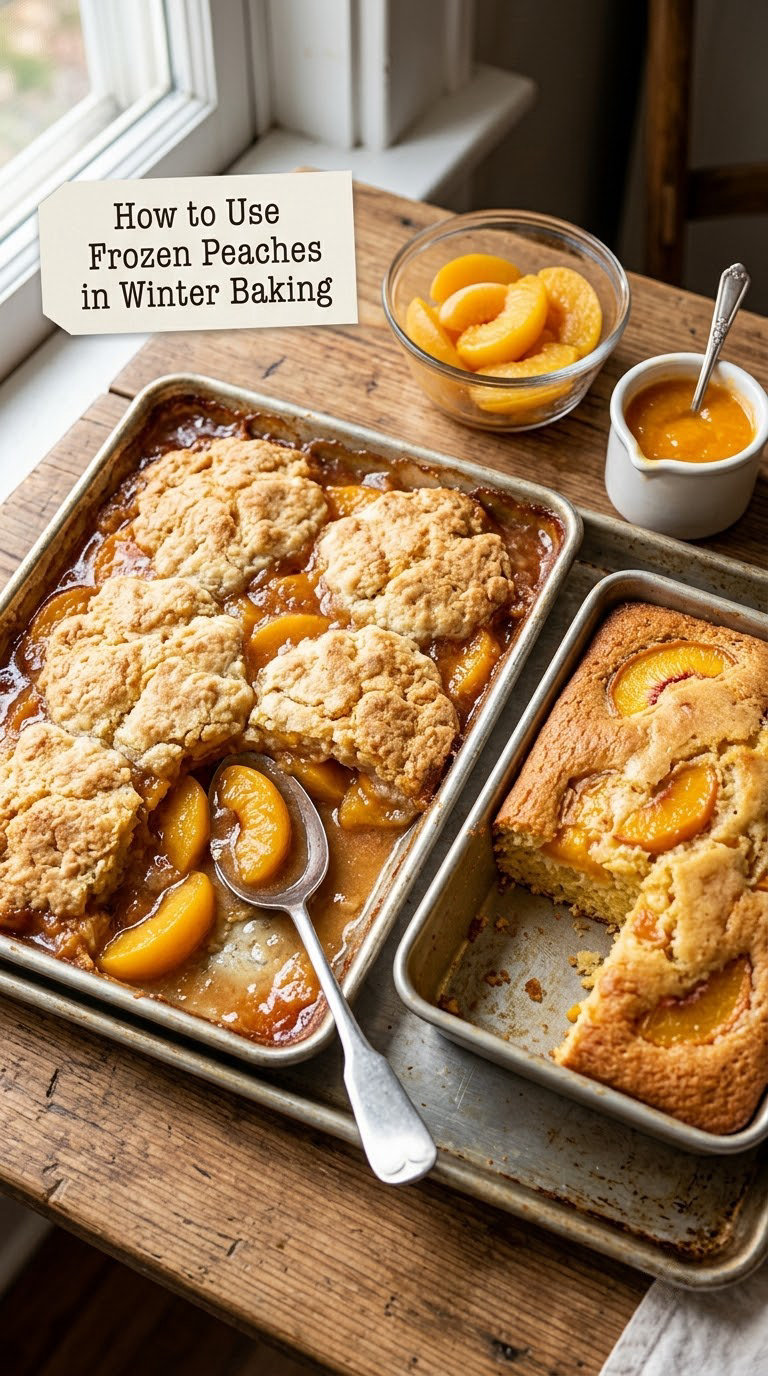
Match the freeze to the bake, and the substitution becomes a straight swap. A 1:1 swap by volume works for most recipes, with one adjustment: frozen fruit releases liquid, so treat it like the fruit is slightly wetter than fresh.
- Pie. Use 4 cups of thawed, drained slices for a 9-inch pie. Thicken with 2 tablespoons of cornstarch or cornmeal, and add the fruit after the butter and sugar are creamed.
- Cobbler and crisp. Use 6 to 8 cups, frozen, scattered over the filling. Bake 5 to 10 minutes longer than the fresh-fruit version and expect more juice under the topping.
- Cake and quick bread. Fold in 1 to 1 1/2 cups of diced frozen peaches, tossing with a little flour first so they suspend instead of sinking.
- Muffins. Use 1/2 cup per muffin, unbaked cubes added right before the batter goes into the tin.
- Sauce and smoothies. Purée straight from the freezer, or soften the purée by warming it in a saucepan with a tablespoon of lemon juice.
If you are planning a whole winter of fruit bakes, portion the bags by recipe instead of by peach. A bag of four cups is one pie, and you will not measure fruit at 8 p.m. in December. My guide to freezing mashed potatoes uses the same portioning logic for a starchy side, and if you have pumpkins to freeze too, my pumpkin recipes for fall baking work off the same habit.
How Long Do Frozen Peaches Keep?
Frozen peaches keep 6 to 12 months at 0°F (−18°C) or below, and quality slides after the first few months. Syrup-packed fruit holds up the longest at 9 to 12 months, while tray-frozen pieces and purée are best in the first 6 to 9 months.
Air is what ruins the stash. Ice crystals form around any pocket of trapped air, which dries the fruit out and causes freezer burn. That is why the air-removal step matters more than the container brand.
Label every bag with the date, the method, and the quantity. A sharpie on freezer tape works, and it lets you eat oldest first when the baking season arrives.
Keep the freezer at a steady temperature. A chest freezer that gets opened often cycles harder than a stand-alone unit, and fruit stored in a door rack experiences the most temperature swings.
Frequently Asked Questions
Can I freeze canned peaches instead of fresh ones?
You can, but read the label first. Canned peaches packed in juice or water freeze well and are fine for pies and crisps. Canned peaches packed in heavy syrup arrive already sweet, so cut the sugar in your recipe or you will have a very sugary bake. Drain them well before freezing and skip the browning treatment, since the fruit is already protected.
Can I use frozen peaches in pie or cake without thawing them first?
Yes, and for cobblers and crisps that is usually the better method. Frozen fruit goes into a hot dish and part of it stays distinct instead of collapsing into the filling. For pie, thaw in the refrigerator overnight and drain, because you want control over the liquid or the filling will not thicken. For cake batter, use them straight from the freezer and toss with a little flour.
Why do my frozen peaches turn brown after thawing?
Browning is oxidation, and it shows up in two places. During prep, cut flesh exposed to air reacts and darkens, so toss your pieces in lemon juice or ascorbic acid right away. During thawing, fruit that sat in bags with air in them develops freezer burn, which looks dull and brownish. Remove the air, seal tightly, and use the fruit within a few months for the brightest color and flavor.
Should I add sugar or lemon juice before freezing peaches?
Add lemon juice when you are freezing bare slices, cubes, or purée, since it blocks browning and costs you almost nothing. Skip the sugar. Sugar packed into the fruit changes the sweetness of the finished bake, so you would have to reduce the sugar in the recipe to compensate. Keeping the stash unsweetened means one bag works for every bake you make in the following months.
Can I refreeze peaches after thawing them?
You can, but the fruit will be softer and leak more juice the second time around. If the peaches are still cold and firm, tray-freeze them again before bagging, which limits the damage. If they have thawed fully in the refrigerator, expect a purée-like result. That is fine for smoothies, sauce, and oatmeal, but it will not hold slices in a pie or a crisp.
What is the best peach variety for freezing?
Freestone varieties, the ones whose pits release easily, are the best pick for baking. The flesh stays in whole slices rather than breaking up around the stone, which matters in a pie. Ripe but firm fruit freezes better than very soft fruit, no matter the variety. Clingstone peaches freeze fine too, you just cut around the pit and expect a few torn edges.
Which Freezing Method Should You Choose?
Start with tray-freezing. It keeps the fruit firm, stacks flat in the freezer, leaves the sweetness up to your recipe, and works for pies, cobblers, cakes, and muffins from the same bag.
Choose syrup-packing when you want a filling that is sweet on its own and you have freezer space to spare. Choose purée when you would rather scoop a measured cup into a batter than slice anything on a winter morning.
Either way, do a small batch first. Freeze four cups the way you plan to freeze the rest, bake with them, and see how your recipes respond before you commit a whole bushel. That is how to freeze peaches for winter baking in a way that actually gets used.