
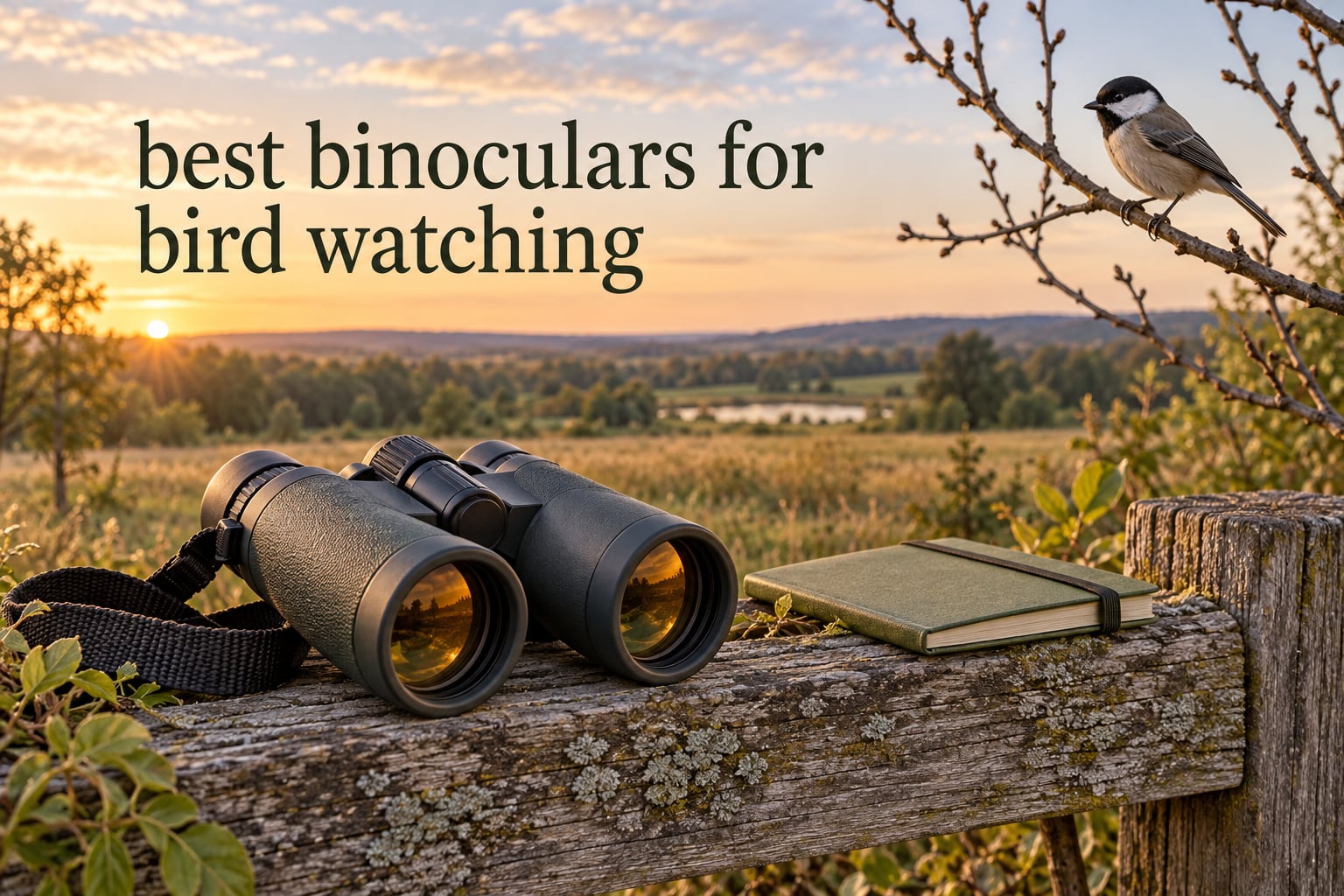
The best binoculars for bird watching are 8×42 models. That single spec pairing gives you enough magnification to pick out a warbler in a willow, enough light to keep working after sunset, a wide enough field of view to follow that warbler when it launches, and a body light enough to carry for three hours without your neck complaining.
Birding is one of the few hobbies where a spec sheet actually predicts how much you will enjoy it. The Cornell Lab of Ornithology reviewed more than two dozen affordable 8×42 binoculars and found the format suits most kinds of bird watching, and the National Audubon Society names 8×42 the sweet spot for the same reason. I have pulled twelve pairs that genuinely fit the job, from a budget starter to a pair you will still be using a decade from now.
How I picked: I compared magnification, objective lens size, exit pupil, field of view, close focus, eye relief, prism type, coatings, sealing and warranty across the twelve, then matched each one to a specific scenario. Backyard feeder watching, forest canopy work, dawn chorus, wetland scanning, travel, and digiscoping all reward different things, and no single pair wins all of them.
One thing worth saying up front, because birding forums repeat it constantly and it is the most useful advice in this guide: binocular fit is personal. Eye placement, grip comfort and physical size cannot be judged from a page, so treat this as a shortlist and handle the finalists before committing. It also helps to have something to look at while you learn: a feeder within a few feet of a window, such as our picks for the best window bird feeders, will get you more practice time behind the glass than any other single purchase.
Table of Contents
Top 3 Picks for Bird Watching in 2026

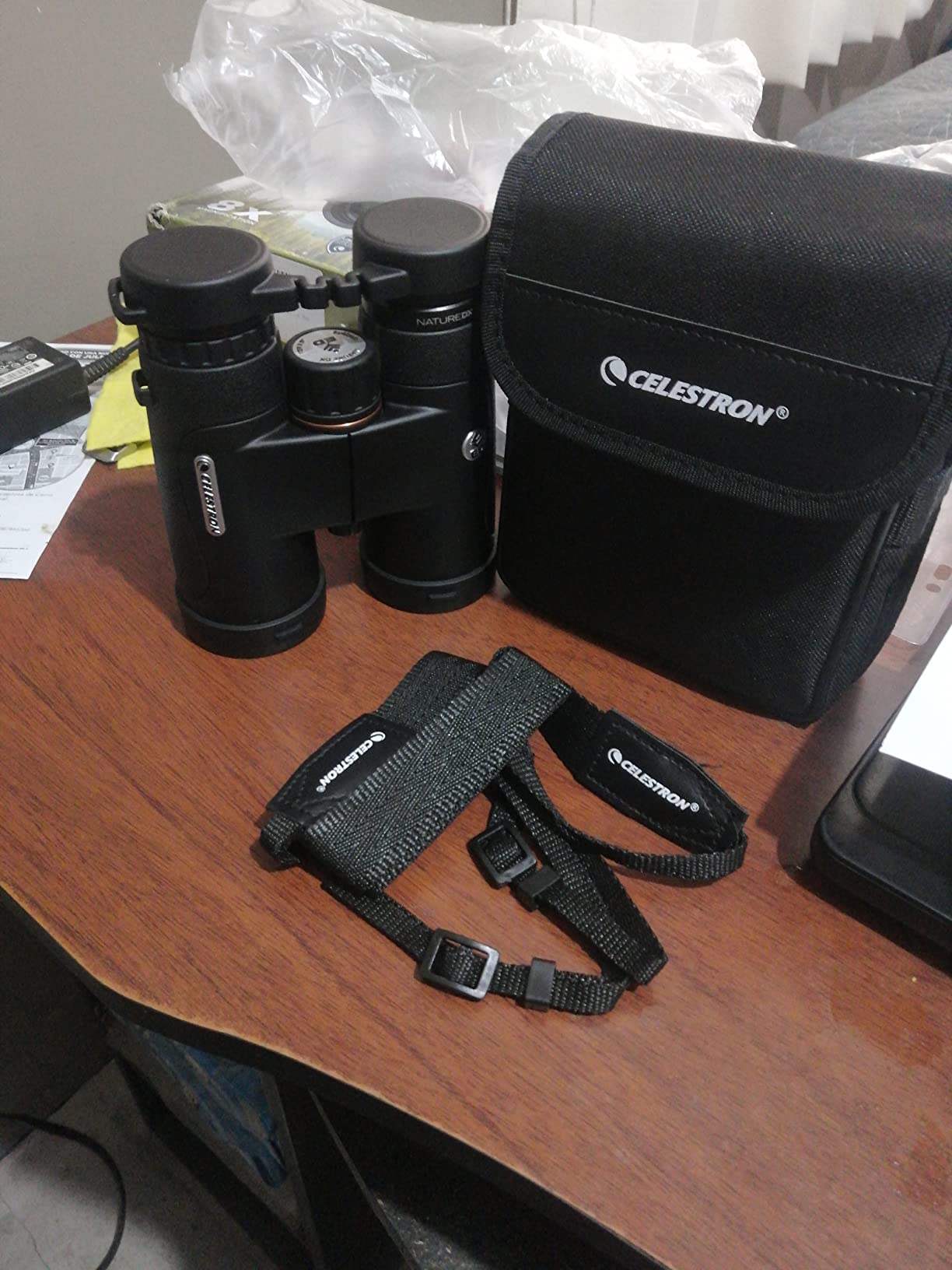
Celestron Nature DX 8×42
- 8x42 with 7.4 degree field of view
- 17.5mm eye relief for glasses
- Phase coated BaK-4 prisms

Vortex Crossfire HD 10×42
- 10x42 HD optics
- Fully multi-coated glass
- Unlimited lifetime VIP warranty

Vortex Triumph HD 10×42
- 10x42 HD optical system
- Nitrogen purged and fogproof
- GlassPak harness included
The Celestron Nature DX 8×42 is the version of the sweet spot that works for the most people, which is why it leads this list. The Vortex Crossfire HD 10×42 trades a little field of view for real reach at distance, and the Vortex Triumph HD 10×42 delivers that reach at a lower entry point with a harness in the box.
Best Binoculars for Bird Watching Compared in 2026
| Product | Specifications | Action |
|---|---|---|
| Celestron Nature DX 8×42 |
|
Check Latest Price |
| Vortex Crossfire HD 10×42 |
|
Check Latest Price |
 Celestron Outland X 8×42 Celestron Outland X 8×42 |
|
Check Latest Price |
| Vortex Triumph HD 10×42 |
|
Check Latest Price |
 Vortex Diamondback HD 8×42 Vortex Diamondback HD 8×42 |
|
Check Latest Price |
 Occer 12×25 Compact Occer 12×25 Compact |
|
Check Latest Price |
 Adasion 12×42 with Phone Adapter Adasion 12×42 with Phone Adapter |
|
Check Latest Price |
 Hontry 8×42 IPX6 Hontry 8×42 IPX6 |
|
Check Latest Price |
 Bushnell H2O Xtreme 10×42 Bushnell H2O Xtreme 10×42 |
|
Check Latest Price |
 Nikon PROSTAFF P3 8×42 Nikon PROSTAFF P3 8×42 |
|
Check Latest Price |
 Celestron Nature DX ED 8×42 Celestron Nature DX ED 8×42 |
|
Check Latest Price |
 FLYANT 20×50 High Powered FLYANT 20×50 High Powered |
|
Check Latest Price |
1. Celestron Nature DX 8×42 – Best All-Rounder for Everyday Birding
Celestron Nature DX 8×42 Waterproof Binoculars for Bird Watching & Outdoors
- Wide 7.4 degree field of view makes moving birds easy to follow
- 17.5mm eye relief works with eyeglasses
- Phase coated BaK-4 prisms and fully multi-coated lenses
- Waterproof nitrogen purged and rubber armored
- Tripod mount included with carrying case
- Dusk and heavy shade performance trails ED glass models
- Some color fringing in low light
- Included neck strap is passable and often replaced
This is the pair I hand to anyone who asks me what to buy without overthinking it. The 8x magnification gives a view that stays put when a robin crosses a lawn, and the 388 foot field of view means I rarely lose a bird that bolts out of a hedge. Feather detail holds up on warblers and finches at feeder range, which is the daily reality of backyard birding.
Reviewers consistently describe the same experience: sharp enough for plumage detail, bright enough for normal daylight, light enough to wear all day. The long 17.5mm eye relief is a quiet hero, because it means my glasses clear the eyepiece without me pinching the bridge of my nose.
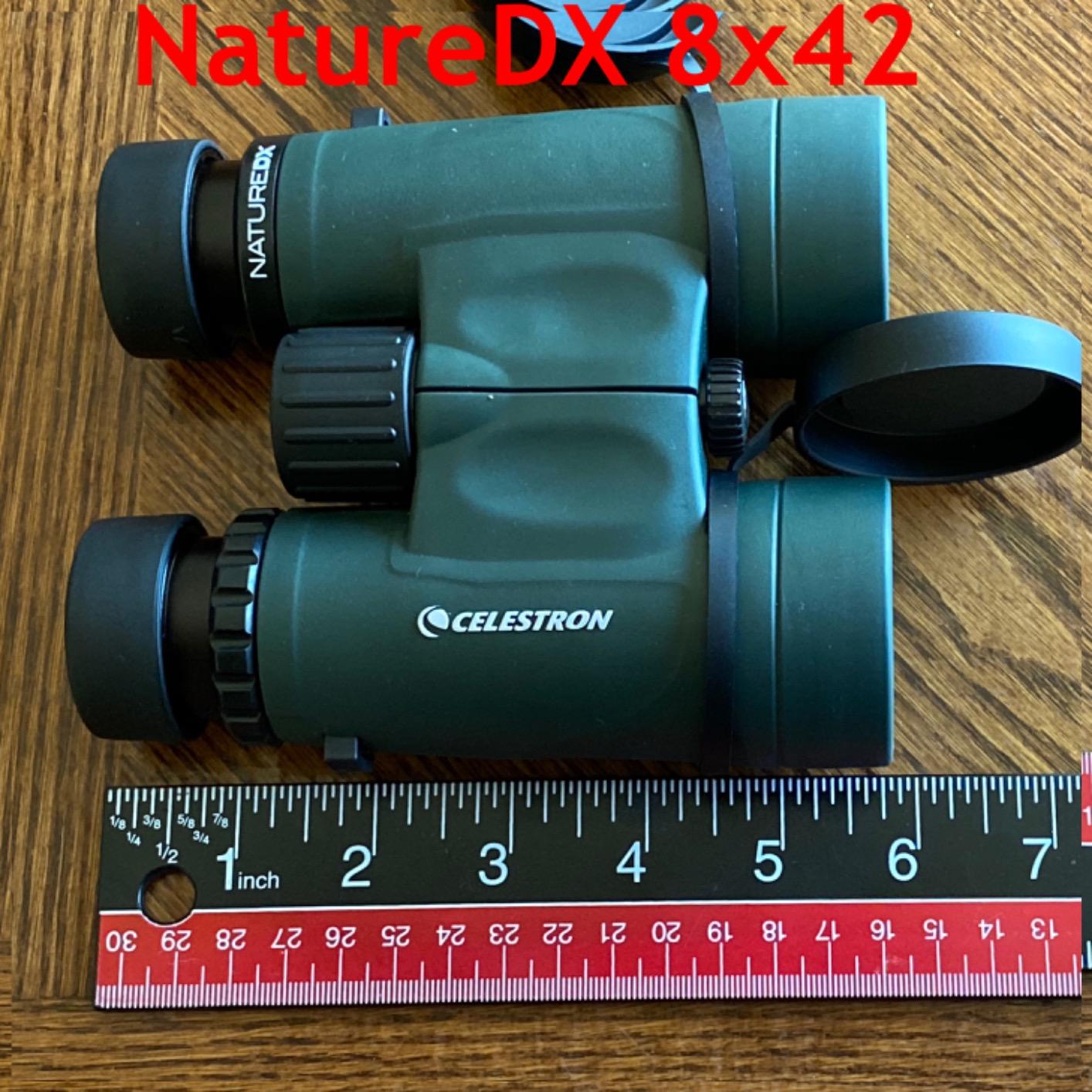
Technically it is a roof prism design with phase coating on the prisms and full multi-coating on the lenses, which is why the contrast holds up against a bright sky. Relative brightness sits at 27.56, high enough for shaded woodland edges but not competitive with ED glass once the sun drops.
Focus is individual rather than center wheel, so you adjust each barrel separately. That is a genuine advantage when two people share one pair, and it means a glasses wearer and a non-wearer can both get a sharp image without fighting over a single focus wheel.
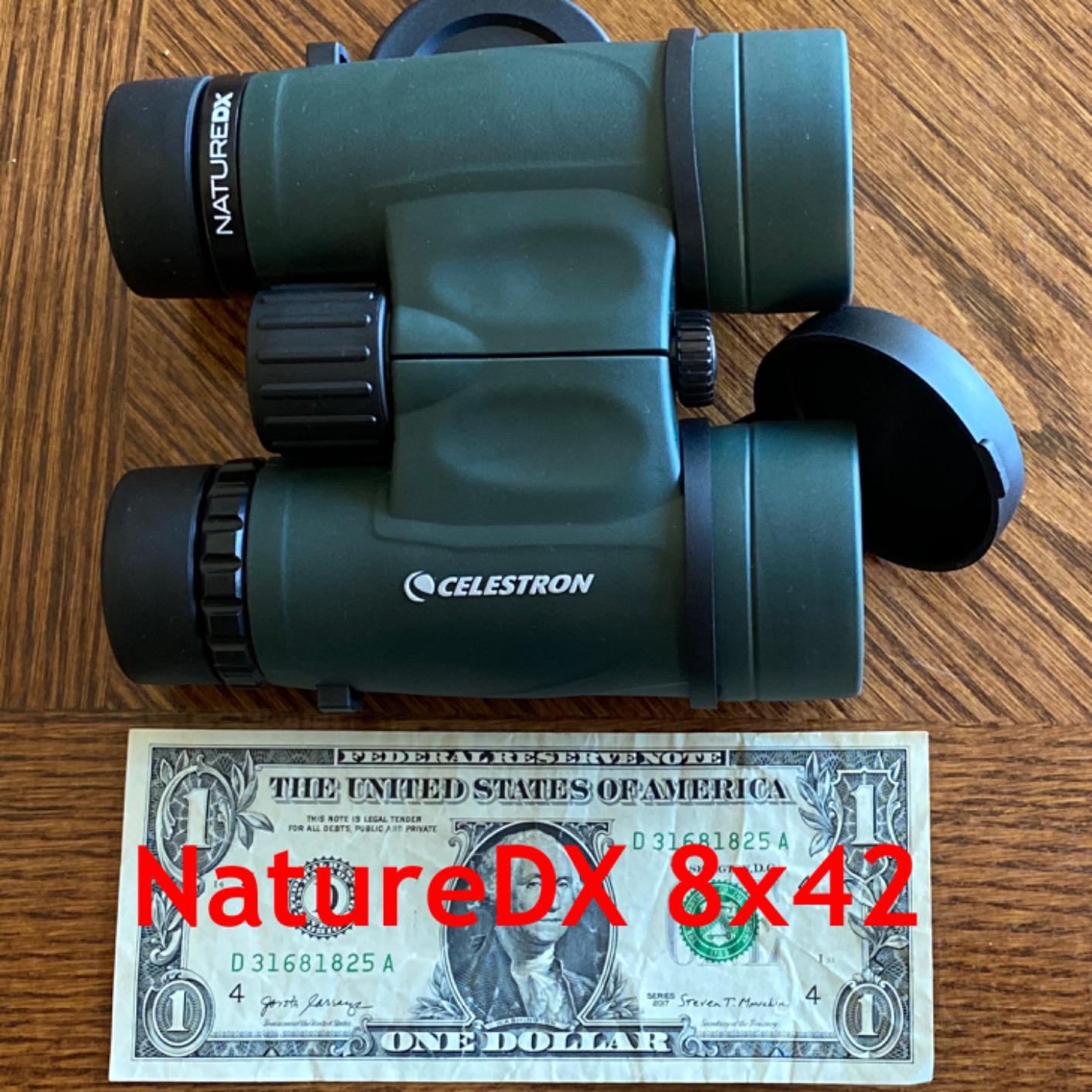
Who the Celestron Nature DX 8×42 suits
It suits the person birding in mixed light across mixed terrain, from a suburban garden to a woodland edge. It also suits anyone wearing prescription glasses, and anyone planning to pass a single pair around between family members. If you have ever struggled to hold a steadier pair steady, 8x is the magnification that keeps the view calm.
Who it does not suit
It does not suit the dawn-chorus birder who wants to identify a rail in heavy shade forty minutes after sunrise, or anyone who shoots distant passerines where color fringing at the edges becomes distracting. If your priority is edge-to-edge image purity, step up to the ED model further down this list.
2. Vortex Crossfire HD 10×42 – Best Value for Reaching Distant Birds
- 4.8 average rating across more than 4000 reviews
- HD elements reduce chromatic aberration
- Fully multi-coated for low light transmission
- Tripod adaptable with GlassPak case included
- Unlimited unconditional lifetime warranty
- 6.2 degree field of view is narrower than 8x42 models
- 15mm eye relief is short for strong prescriptions
- 10x can introduce hand shake on fast movers
I reach for this pair when the target is a bird perched on the far side of a marsh or a treetop against flat white sky. Ten power pulls detail out of distance that 8x simply will not show you, and the HD optical system keeps that extra magnification from turning into mush.
Owners treat it as the value leader in the class rather than a compromise. The color is accurate, the center focus is smooth and precise, and the whole thing feels more substantial in the hand than a typical pair at this level.
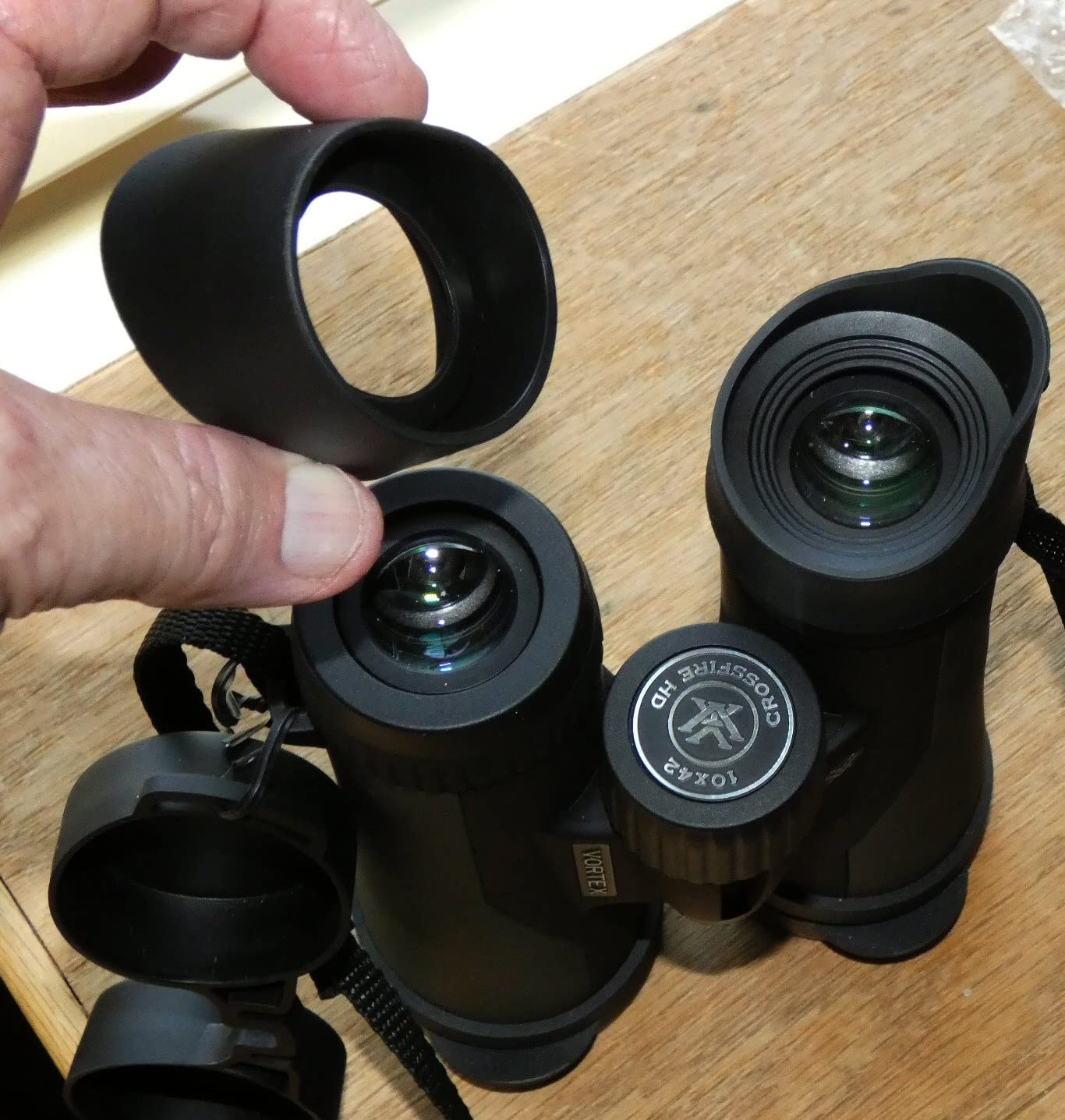
The body is aluminum with rubber armor, nitrogen purged with o-ring seals, and rated waterproof and fogproof. At 1.4 pounds it is the lightest full-size pair in this guide that still gives you 10x, which matters when you are covering ground on foot rather than standing still.
Relative brightness of 17.64 tells the real story: this is a daylight pair. A 4.2mm exit pupil is perfectly usable in shade and overcast conditions, but it is the first thing to struggle with as light falls away.
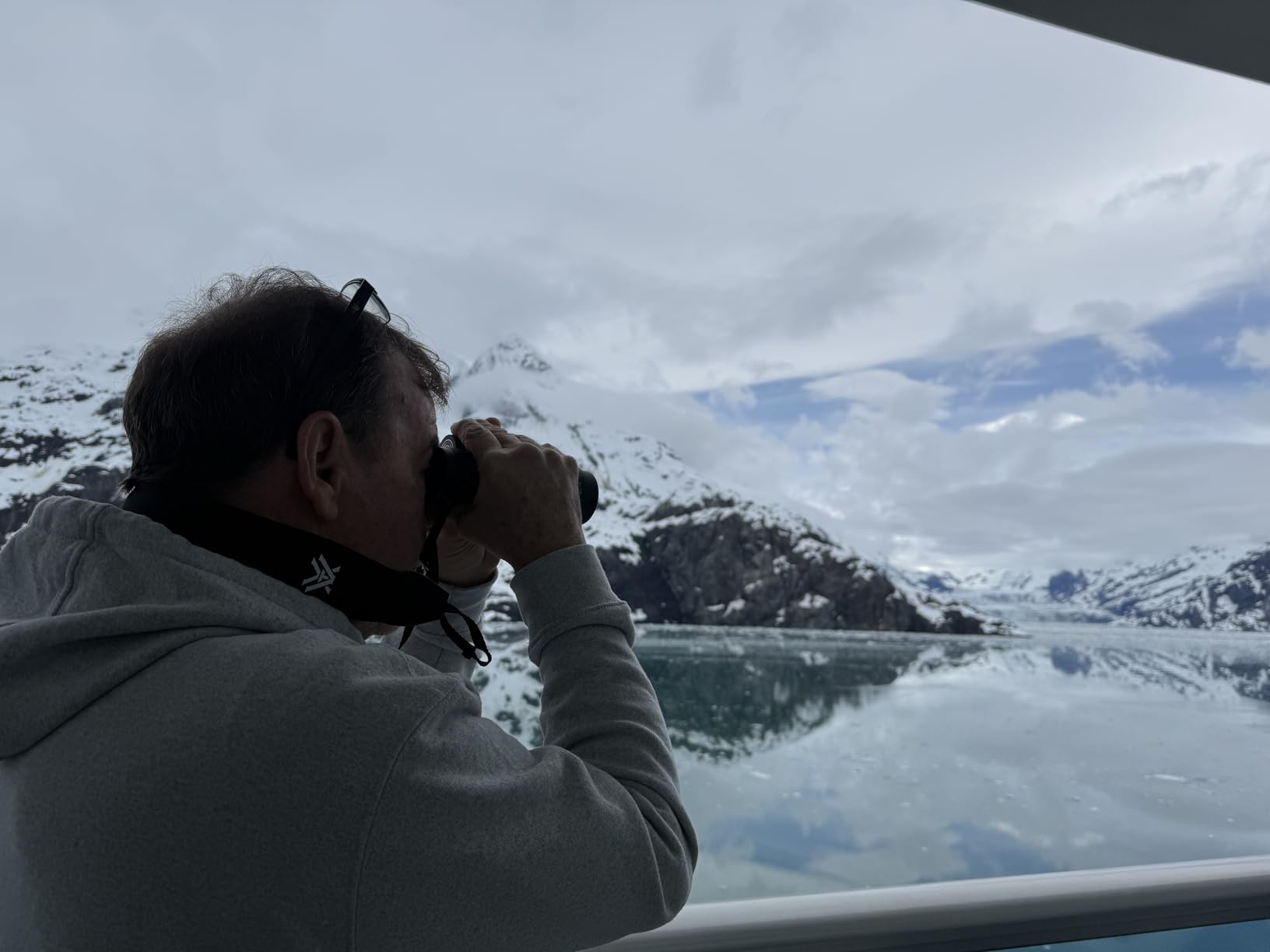
Who the Vortex Crossfire HD 10×42 suits
It suits open country birders, wildlife viewers, and anyone scanning a shoreline or an estuary where scanning the tree line is not the priority. It also suits anyone who wants a genuinely long warranty and does not want to think about serviceability again for the next few decades.
Who it does not suit
It does not suit someone scanning a canopy that never stops moving, because a 6.2 degree field means more panning to find and re-find birds. It also frustrates wearers with strong prescriptions who need more than 15mm of eye relief.
3. Celestron Outland X 8×42 – Best Starter Binoculars for New Birders
- True 8x42 format with a wide field for tracking birds
- Multi-coated optics with BaK-4 prisms
- Waterproof and nitrogen purged at an entry level
- 17.8mm eye relief is glasses friendly
- Padded case and strap included
- Light gathering trails Celestron Nature DX and ED models
- Image less crisp in low light and shade
- Eyecup position is easy to knock out of setting
- Two year warranty
This is the pair I recommend without hesitation to somebody who has never held binoculars. Everything about it is forgiving: 8x keeps the image steady, the field of view makes birds easy to follow, and the 17.8mm eye relief means nobody has to learn an awkward workaround to see through it.
Several owners who later upgraded report that this was the right first step rather than a mistake. Close focus of roughly 14 feet covers feeder distance, garden distance and most trail distance, which is where a new birder spends their first year.
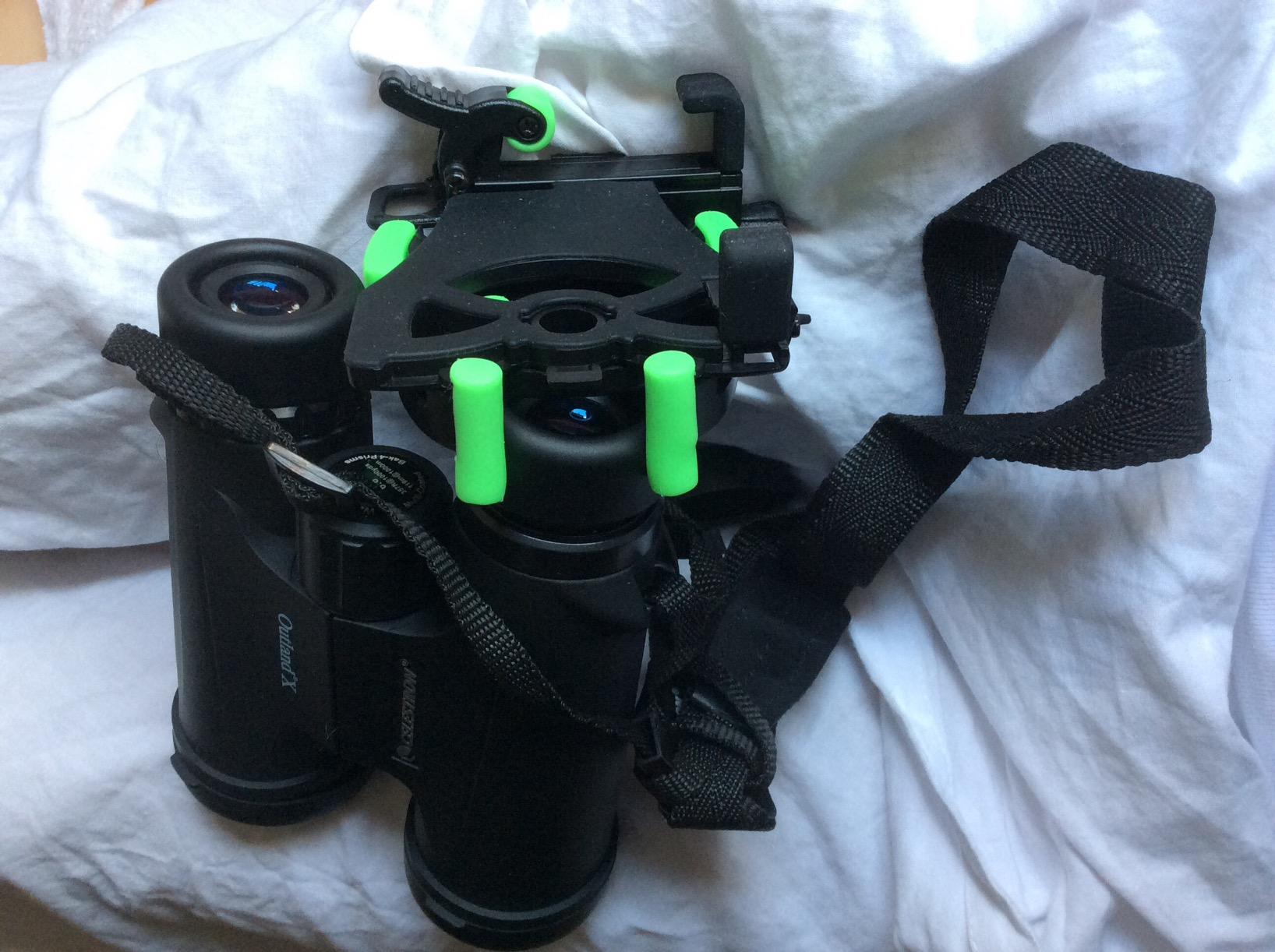
Optically it is multi-coated with BaK-4 prisms in a rubber-armored polycarbonate housing, waterproof and nitrogen purged, with built-in tripod adapter threads. Center focus means one wheel sharpens both barrels at once, which is the simplest interface available.
The honest limitation is light. Owners comparing it against Celestron’s own Nature DX and ED models note that brightness and low-light crispness sit a step below, so treat this as an affordable first pair rather than an end state.
Who the Celestron Outland X 8×42 suits
It suits children learning to bird with a parent, anyone setting up a feeder in the garden, and anyone who wants a durable pair to leave in a car or a garden shed without thinking about it. It also suits anyone who wants to keep the cost of a first attempt as low as possible.
Who it does not suit
It does not suit a birder who plans regular dawn sessions in deep woodland, or anyone who is going to notice and mind color fringing against a bright sky. A two year warranty is also shorter than the lifetime coverage some rivals carry.
4. Vortex Triumph HD 10×42 – Most Versatile for Digiscoping and Travel
- HD system with fully multi-coated lenses for sharp color
- Nitrogen purged waterproof and shockproof
- Adjustable eyecups and diopter suit glasses wearers
- GlassPak harness included for hands-free carry
- Tripod adaptable
- Heavier than most 10x42 rivals at 2.3 pounds
- Field of view narrower than 8x42 models for scanning
- 10x amplifies hand shake on fast birds
This is the pair I recommend for anyone who wants genuine reach without stepping into premium territory. Owners consistently describe it as a real step up from generic glass: bright, sharp, and durable in rain and mist, which is exactly what a full-size 10×42 needs to be.
The included GlassPak harness and case set earn more praise than they should. Having something to slide the binoculars into, and something to carry them around your neck, removes the two most common reasons a good pair ends up sitting unused on the kitchen table.
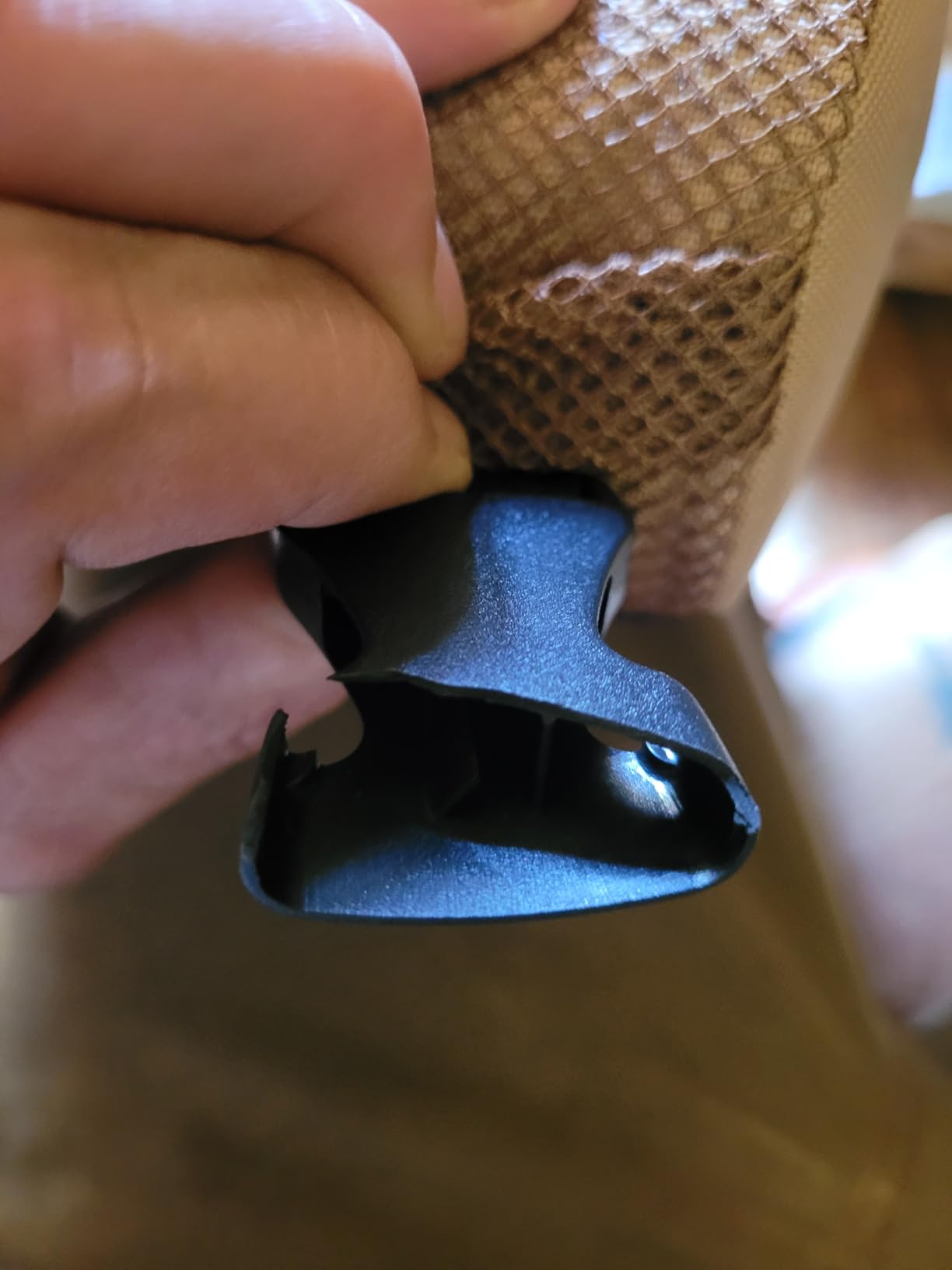
Construction is a shockproof polycarbonate chassis under full rubber armor, nitrogen purged, waterproof and fogproof, with adjustable eyecups and an adjustable diopter. Tripod adaptable, so it works on a car window mount as readily as in the hand.
At 2.3 pounds this is the heaviest pair in the guide. That is a fair trade for the sealing and armor, but it is the reason I would not pack it for a long mountain walk.
Who the Vortex Triumph HD 10×42 suits
It suits hikers and travelers who want distance magnification in a tough, sealed body, and anyone who photographs sightings through a phone adapter on a tripod. The lifetime warranty also makes it a sensible choice for a household that shares one pair around.
Who it does not suit
It does not suit anyone sensitive to neck fatigue over a full day in the field, and it is a poor tool for scanning. The narrower field means you will work harder to find birds, which is the opposite of what you want when something flushes and flies.
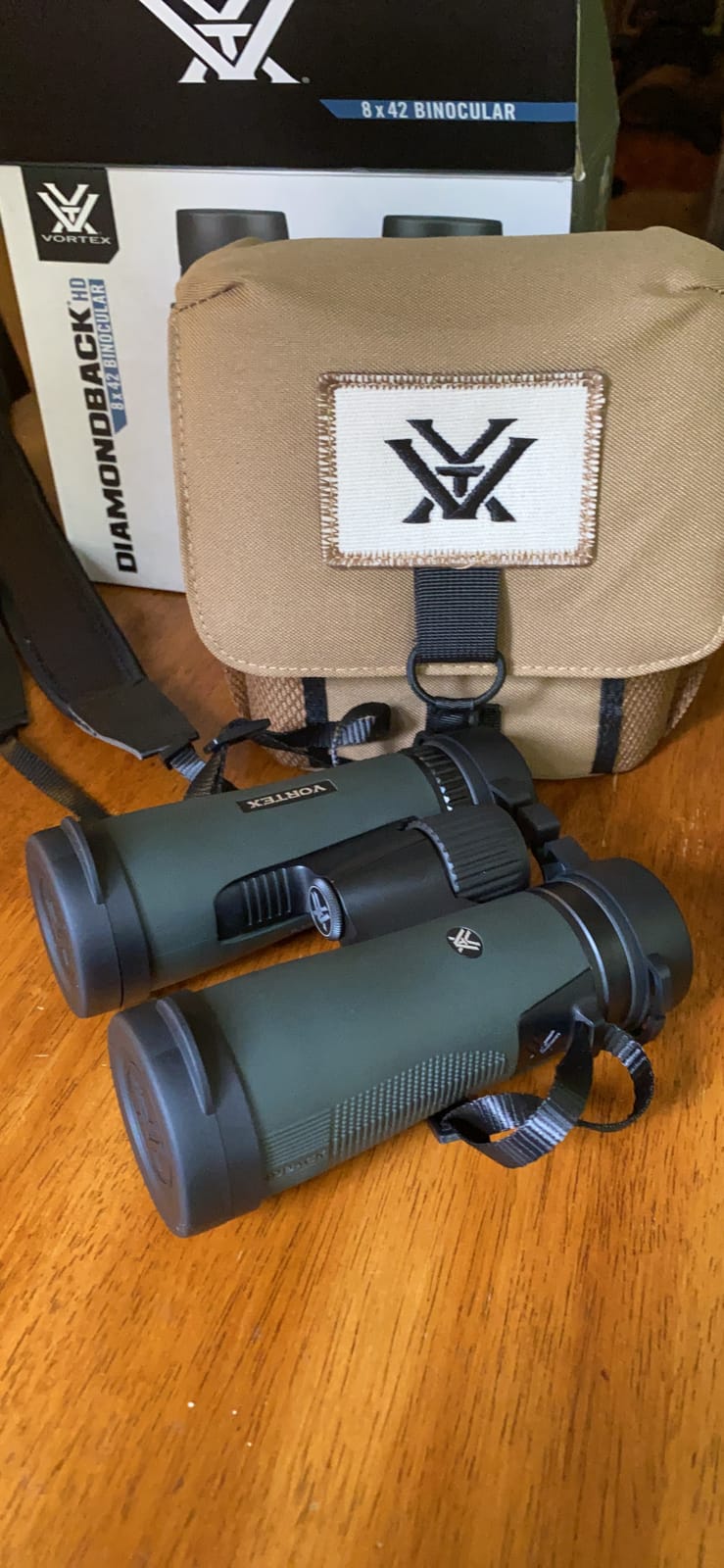
5. Vortex Diamondback HD 8×42 – Best for Dawn and Dusk Birding
- Exceptionally clear and bright in low light and shade
- Dielectric and fully multi-coated optics give true to life color
- Very wide 7.5 degree field of view for fast scanning
- Argon purged waterproof and fogproof
- GlassPak case and harness included
- Faint edge color fringing on high contrast subjects
- Some units arrive with a damaged cover
- Carries a premium price within its class
Dawn and dusk is when birding is at its best and when most binoculars give up. This one does not. Owners describe exceptional clarity and brightness in low light and shade, which is precisely the window when a robin or a woodcock is moving and you have one chance to identify it.
The 393 foot field of view is roomy, and combined with 8x magnification it gives the most forgiving way to work a canopy or a reedbed at first light. Several owners who replaced older mid-tier glass report the jump in brightness and clarity exceeded what the step up in class would suggest.
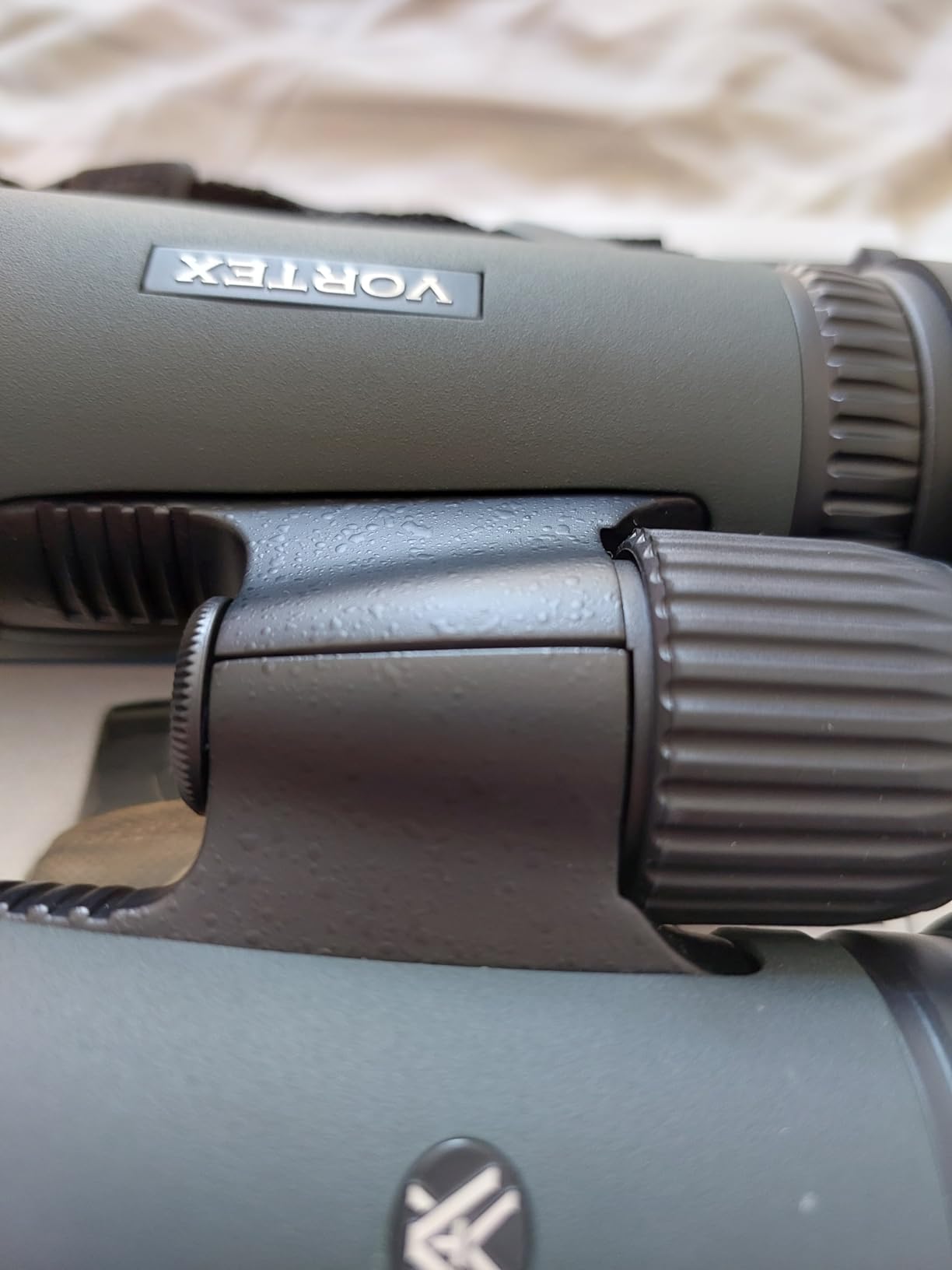
Optics use HD glass elements with full multi-coating plus a dielectric prism coating, and Armortek coating on the exterior lenses to resist scratches, oil and dirt. The body is argon purged with o-ring seals, waterproof and fogproof, with twist-up eyecups, center focus and a right-eyepiece diopter.
It is also adaptable to a car window mount, which is how I would use it for estuary birding where the birds are far out over the water and you are not moving much anyway.
Who the Vortex Diamondback HD 8×42 suits
It suits serious birders who bird at dawn and dusk, anyone who has graduated past a first pair and wants the step up, and anyone watching from a hide or a car where steadiness matters more than packability. The lifetime warranty is generous for a pair you may keep for decades.
Who it does not suit
It does not suit a buyer on a fixed budget, and it will not rescue someone who needs a very wide field more than they need light. If you are on a hard budget, the same 8×42 logic at a lower tier is covered by the Hontry later on.
6. Occer 12×25 Compact – Best Packable Binoculars for Travel and Kids
- Fits in a pocket or day pack at under half a pound
- 20mm eye relief works with or without glasses
- 7.5 degree field of view in a tiny body
- Clear and crisp daylight image for a compact body
- Easy gift for adults and children
- 25mm objectives dim badly at dusk
- Not nitrogen purged so condensation is a risk in wet weather
- Reported magnification feels closer to 8x than the 12x label
- Basic construction with no stated warranty
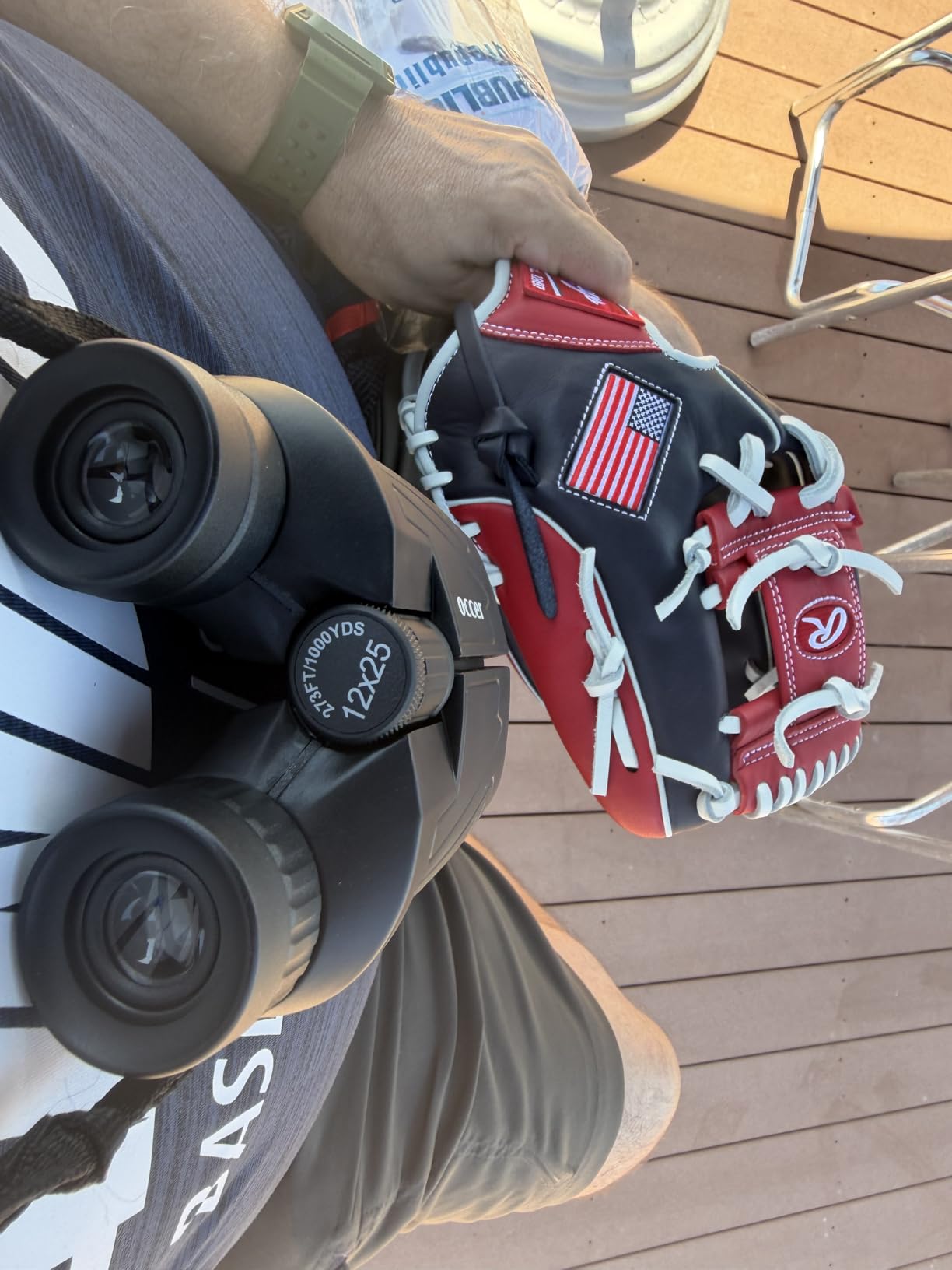
I have taken these on a cruise and into a carry-on where a full-size pair would never have gone. That is the entire point. At just under half a pound with 20mm eye relief and twist-up eyecups, it is the pair that gets used spontaneously, and spontaneous use is when most birds are actually seen.
Parents reviewing this pair point out the same appeal. The large 15mm eyepieces and 7.5 degree field of view make it easy for small hands and small faces, and the daylight image is clear and crisp for the price.
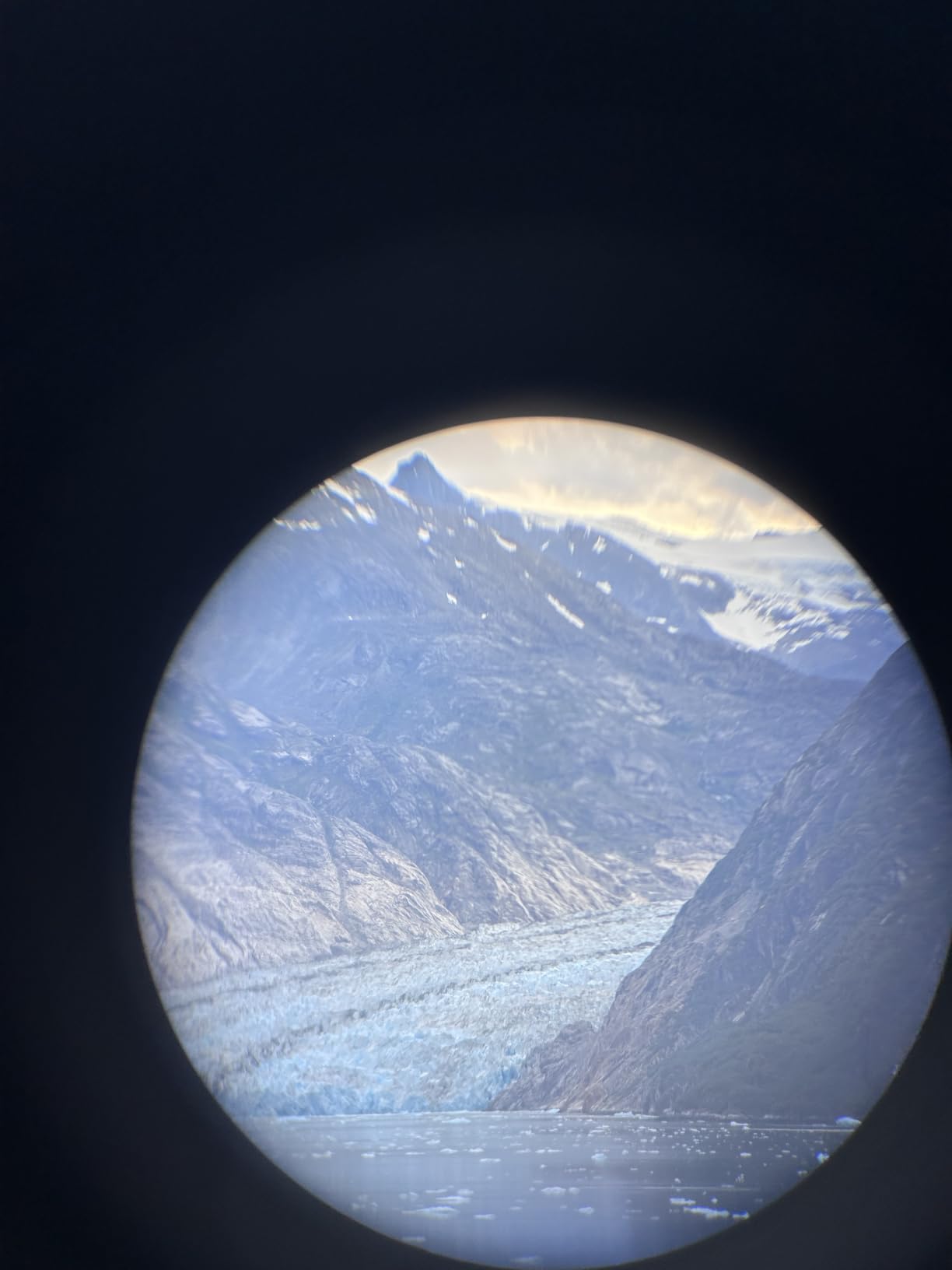
Optically it is a BaK-4 prism with fully multi-coated broadband objectives and blue FMC eyepiece optics, in a waterproof ABS body with rubber armor. That glass specification is genuinely good on paper for a pocket format.
The catch is the objective size. A 2.5mm exit pupil means the image dims quickly once the light goes, and the absence of nitrogen purging means dew and rain can fog the interior, which matters enormously for a pair designed to be used outdoors.
Who the Occer 12×25 Compact suits
It suits travelers, cruise passengers, and anyone who wants binoculars for holidays rather than for a hobby. It also suits children and families introducing birding, and anyone who needs a low-cost backup pair in a car or a rucksack.
Who it does not suit
It does not suit serious birders, and the gap widens fast as light fades. It does not suit anyone in a humid or wet climate, since it is not nitrogen purged. It also does not suit a buyer who wants a magnification number to mean something, because owners report the real view is closer to 8x.
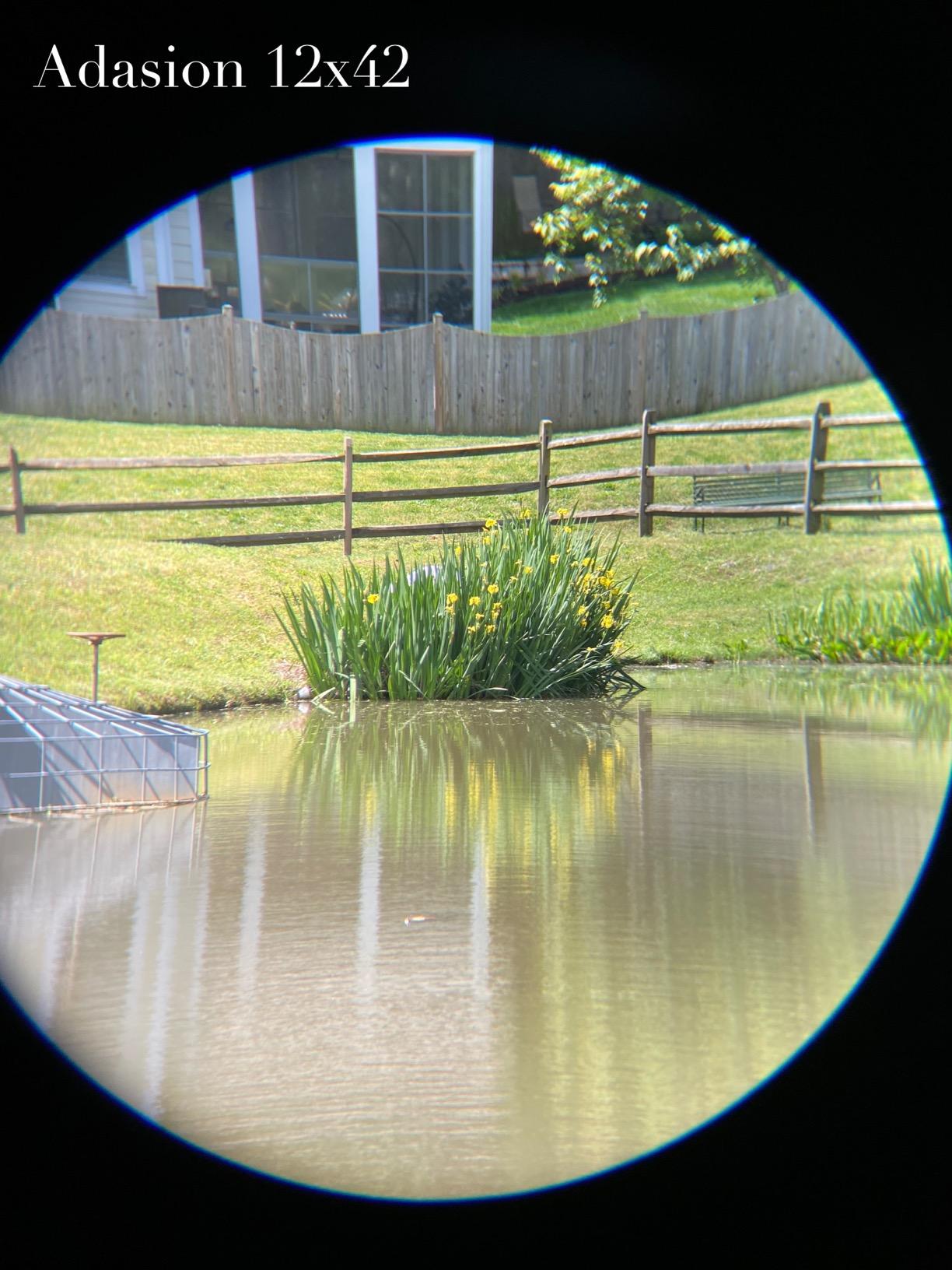
7. Adasion 12×42 with Phone Adapter – Best for Digiscoping and Documenting Sightings
12×42 Binoculars for Adults High Powered with Phone Adapter & Tripod
- 12x42 gives real reach at only 1.2 pounds
- BaK-4 prisms and fully multi-coated lenses
- Phone adapter and 360 degree swivel tripod included
- IPX7 waterproof and fogproof with non-slip grip
- Twist-up eyecups and adjustable center focus
- 13.6mm minimum eye relief is tight for strong prescriptions
- 12x amplifies hand shake on moving birds
- 7 degree field of view is narrower for scanning
- Included strap is thin for the body size
Most people who photograph birds are doing it through a phone held up to the eyepiece, which wobbles and produces soft, crooked frames. This pair includes a universal phone adapter and a swivel tripod, so the phone sits still against the eye and you actually get usable images of that distant warbler.
Buyers frame it as the budget high-power option, and that is fair. A 12×42 is brighter and more capable at distance than most small-objective 10x32s, and at 1.2 pounds it is unexpectedly light for a full-size body.
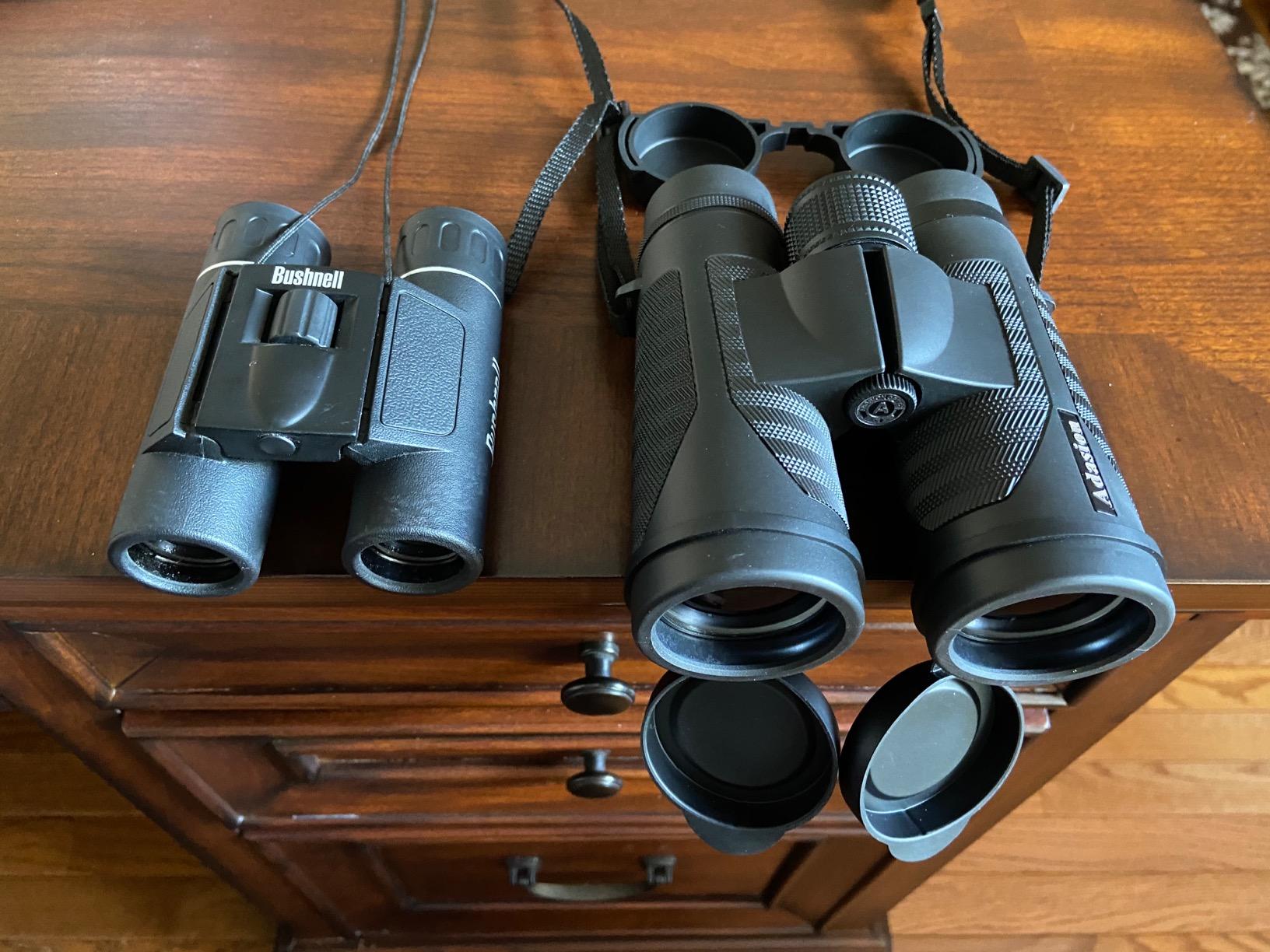
Optics use BaK-4 prisms with fully multi-coated lenses, rated IPX7 waterproof and fogproof, with an ABS body, non-slip rubber grip, twist-up eyecups and an adjustable center focus wheel. A crossbody case with a phone pocket and padded strap is included.
Relative brightness of 12.25 is the lowest in this group, so this is a daylight and overglass pair. A 4mm exit pupil gets hard work out of you once the sun goes down, whatever the magnification on the box says.
Who the Adasion 12×42 suits
It suits anyone building a bird photo record rather than a mental one, since the adapter and tripod remove the single biggest obstacle to digiscoping. It also suits birders who want to share sightings with family or a community group straight away.
Who it does not suit
It does not suit wearers with strong prescriptions, because 13.6mm of eye relief is the bare minimum and the range only helps at the twist. And 12x handheld means the view shakes on anything that moves, so a tripod or a car window is effectively required.
8. Hontry 8×42 IPX6 – Best Close-Focus Pair for Feeder and Garden Birding
- Close focus near 11 feet beats most budget rivals
- IPX6 waterproof body floats back to the surface
- Well balanced weight reduces tremor
- Good depth of field for backyard and mid-distance work
- Twist-up eyecups work with or without glasses
- Heavier than other pairs at this level
- Color and edge clarity trail premium glass
- Some chromatic aberration at the field edges
- One year warranty only
Close focus is the spec nobody explains until they have watched a warbler land six feet from their face. This pair focuses to roughly 11 feet, which is a genuine upgrade over most budget rivals and makes it the one I would put on the patio table next to a feeder.
Owners consistently position it as the best balance of magnification, field of view, weight and durability available at the low end, and the close focus distance is singled out as the real differentiator rather than the glass.
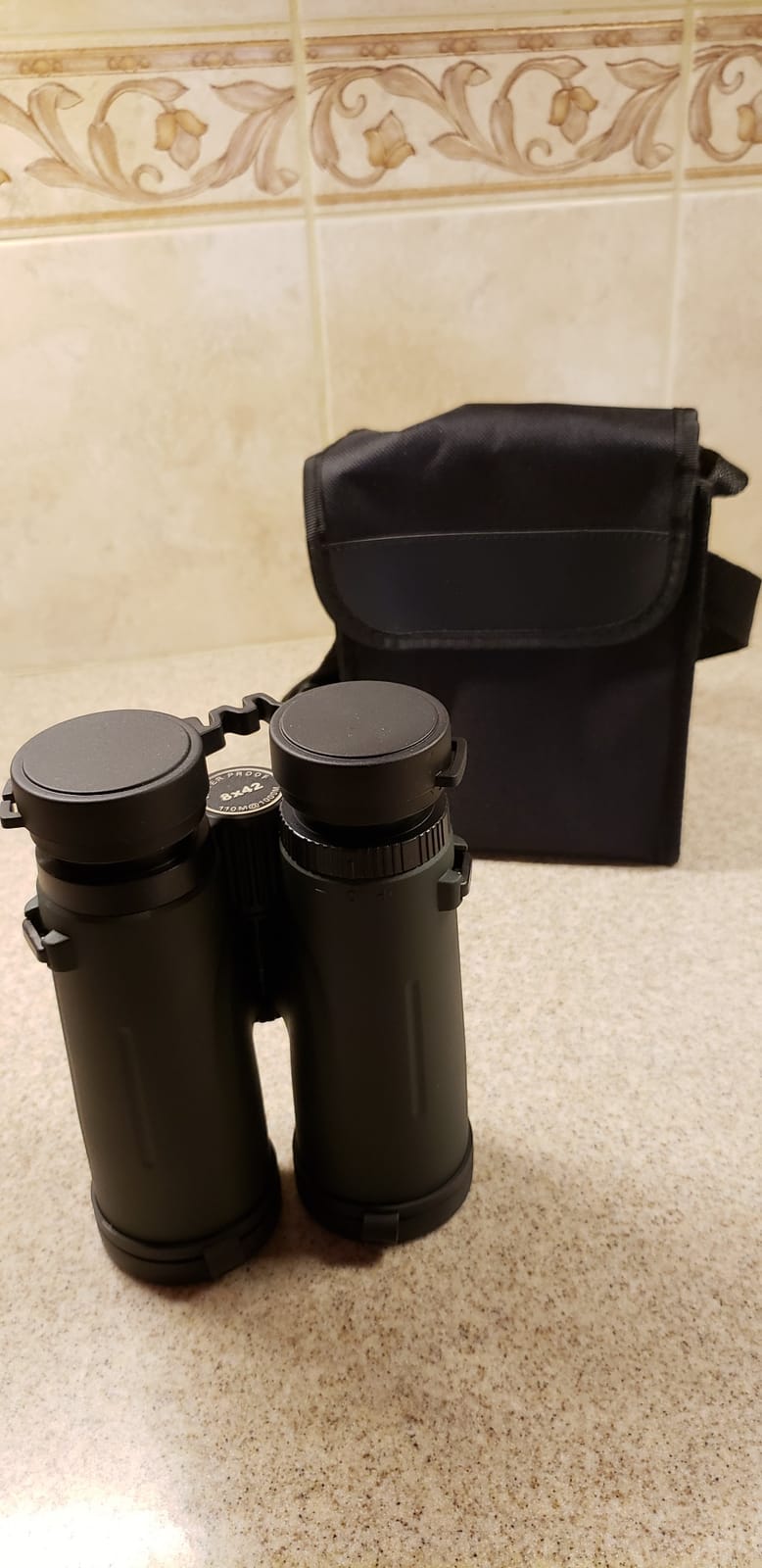
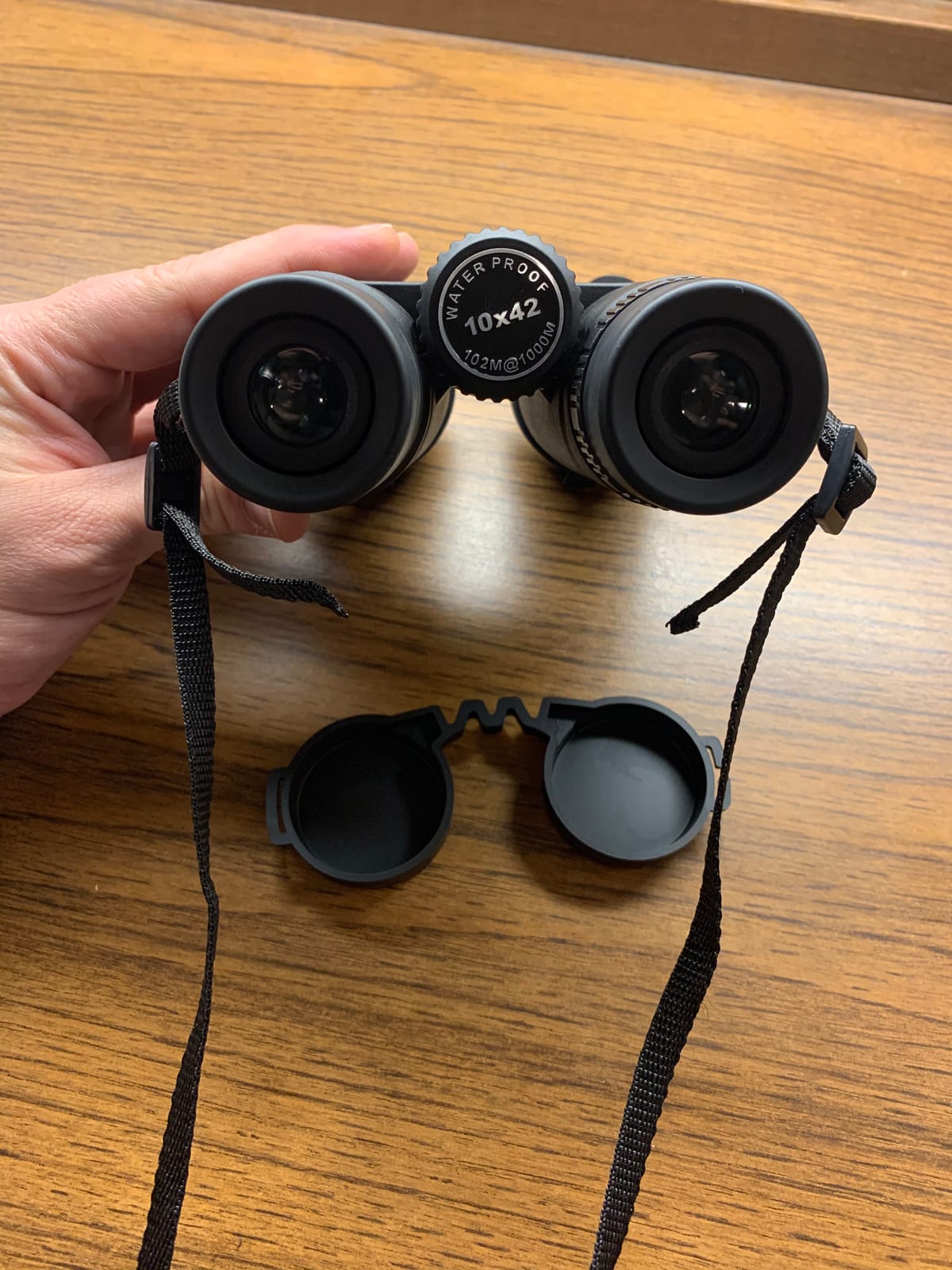
It is a roof prism design with anti-reflective coatings, a 5.2mm exit pupil, 15mm eye relief and a 318 foot field of view. The rubber body gives a secure grip that stays comfortable in cold or wet hands, which matters more than it sounds in November.
IPX6 protection includes floating buoyancy, so if it goes over the side of a boat or into a pond it comes back up rather than sinking. That is a small feature that only matters until the one time it matters enormously.
Who the Hontry 8×42 IPX6 suits
It suits backyard and feeder watchers who want detail on a bird that is genuinely close, and it suits wetland and shoreline birders who lose gear to water more often than they would like. If you want to see how close you can actually get, our guide to the best window bird feeders explains how to place one that brings birds to within a few feet of your glass.
Who it does not suit
It does not suit someone who cares intensely about color rendering, because owners coming from premium glass describe it as a clear tier down. The 15mm eye relief is also modest, and the 318 foot field of view is on the tighter side for canopy work.
9. Bushnell H2O Xtreme 10×42 – Best Waterproof Pair for Boats and Wet Weather
- True IPX7 sealing with O-rings and nitrogen purging
- BaK-4 prisms with fully multi-coated glass
- Never fogs in rain mist or temperature swings
- Compact enough to pack for boating and travel
- 17mm eye relief with rubber armor
- 6.8 degree field of view is narrow for scanning open areas
- 10x shows hand shake on fast moving birds
- Build feels more plasticky than rivals at the same level
My favorite detail on this pair is that it simply refuses to fog. Owners on boats, in hunting blinds and on rainy walks describe the same experience: the temperature changes, the binoculars do not, and the birding session keeps going. That is a paid-for feature in wet climates and hard to fake.
Optical quality is described as solid and bright for the money rather than exceptional, which is fair. Where it is exceptional is durability. The IPX7 O-ring sealed optical system is rated for submersion, and the nitrogen purge handles the internal condensation problem that ruins so many mid-priced pairs.
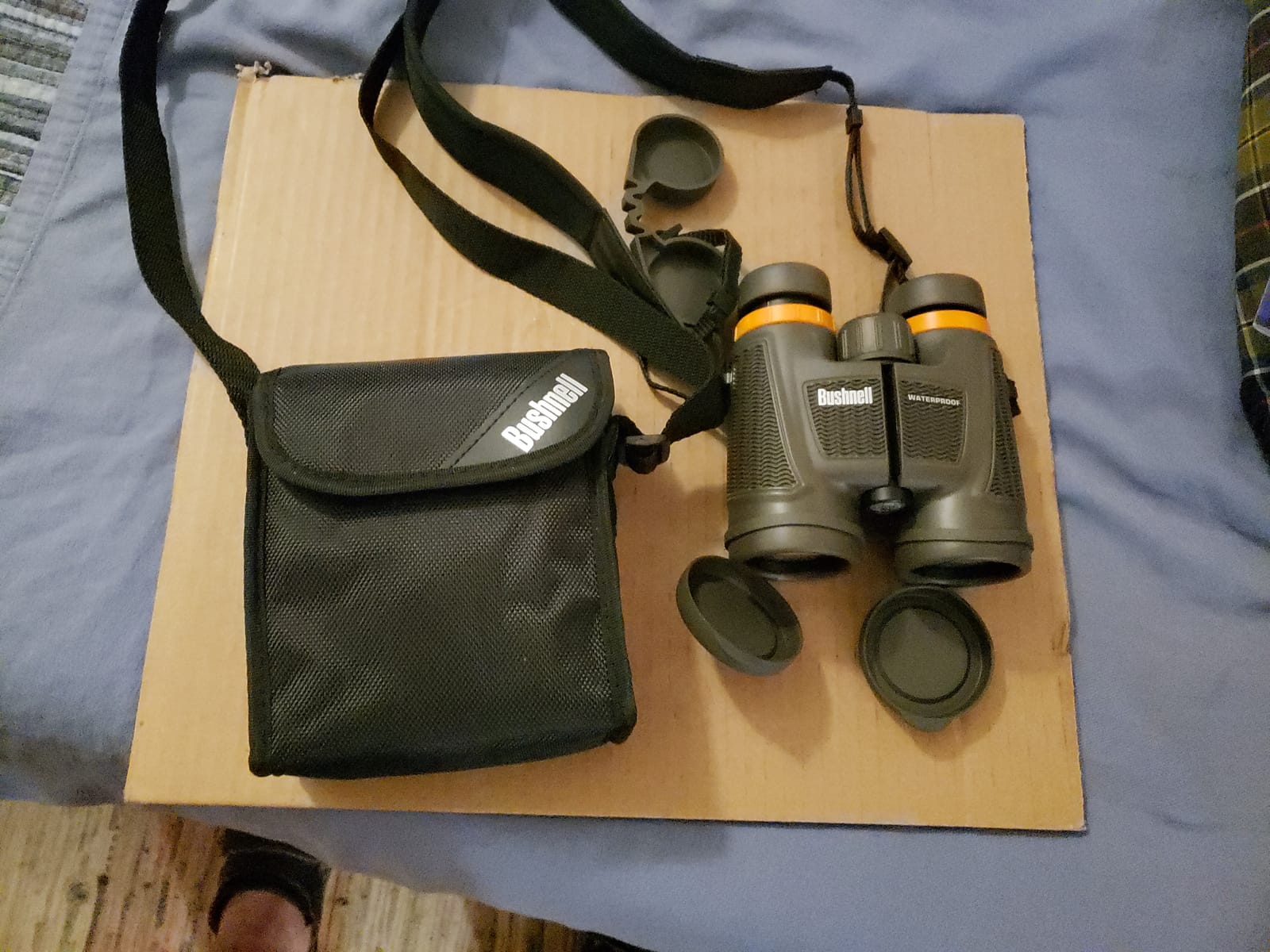
BaK-4 prisms and fully multi-coated glass across 10×42, a 4.2mm exit pupil, 17mm eye relief and a 6.8 degree field of view. Soft non-slip rubber armor over the body, tripod mountable, with a case, strap and both lens covers included.
At just over a pound and a half, it packs down well for travel and boating, and the sealing means you do not need to think about it when the spray comes over the side.
Who the Bushnell H2O Xtreme 10×42 suits
It suits anyone birding on the coast, on a river, in a hide or in a wet climate, and it suits hunters who want one pair for everything. If you live somewhere humid, the nitrogen purge is the reason to pick it over an otherwise similar pair.
Who it does not suit
It does not suit people who judge build quality by feel alone, since the housing reads as more plasticky than rivals at the same level. And a 6.8 degree field of view is a real constraint if your birding is scanning rather than watching.
10. Nikon PROSTAFF P3 8×42 – Best for Glasses Wearers and Long Days Out
Nikon PROSTAFF P3 8×42 Binocular | Waterproof, fogproof, rubber-armored Full-Size Binocular, wide field of view & long eye relief | Official Nikon USA Model
- 20.2mm eye relief is among the best available
- 1.3 pound body light enough for all day carry
- 377 foot field of view with smooth central focus
- Eco-Glass optics with nitrogen purging and O-rings
- Limited lifetime warranty
- Diopter adjustment is stiff to set
- Neck strap lacks a fixed adjustment loop
- Some chromatic aberration against bright sky
- Slightly heavier than some 8x42 rivals
Twenty millimeters of eye relief is the number that matters here, and very few pairs at this level give it. Turn-and-slide eyecups plus that much clearance means I can put glasses on, press the eyecups to my brow, and see a clean, full field without contorting my face.
Owners returning to Nikon after a spell with cheaper glass describe the PROSTAFF P3 as a satisfying compromise: near-premium clarity and 20mm class eye relief without stepping up a full tier. At 1.3 pounds it is also one of the lighter full-size pairs here.
Optics are multilayer-coated with a silver-alloy prism coating on lead- and arsenic-free Eco-Glass elements, giving vivid, accurate color in daylight and at dawn or dusk. Sealing is O-rings plus nitrogen gas, and the body is fiberglass-reinforced polycarbonate with rubber armor over a tripod-mountable chassis.
Relative brightness of 28.1 and a 377 foot field of view put this firmly in the all-purpose category, and the large central focus wheel makes quick, precise corrections easy in dappled woodland light.
Who the Nikon PROSTAFF P3 8×42 suits
It suits glasses wearers more than any other pair on this list, and it suits anyone with a long neck or a neck that aches by hour three. Owners also single it out for casual stargazing, where the 8x format works well.
Who it does not suit
It does not suit anyone who wants premium-tier coating performance; reviewers note the coatings sit a tier below Nikon’s higher models. The stiff diopter is a genuine annoyance for first-time setup, and the neck strap is the weak point of the package.
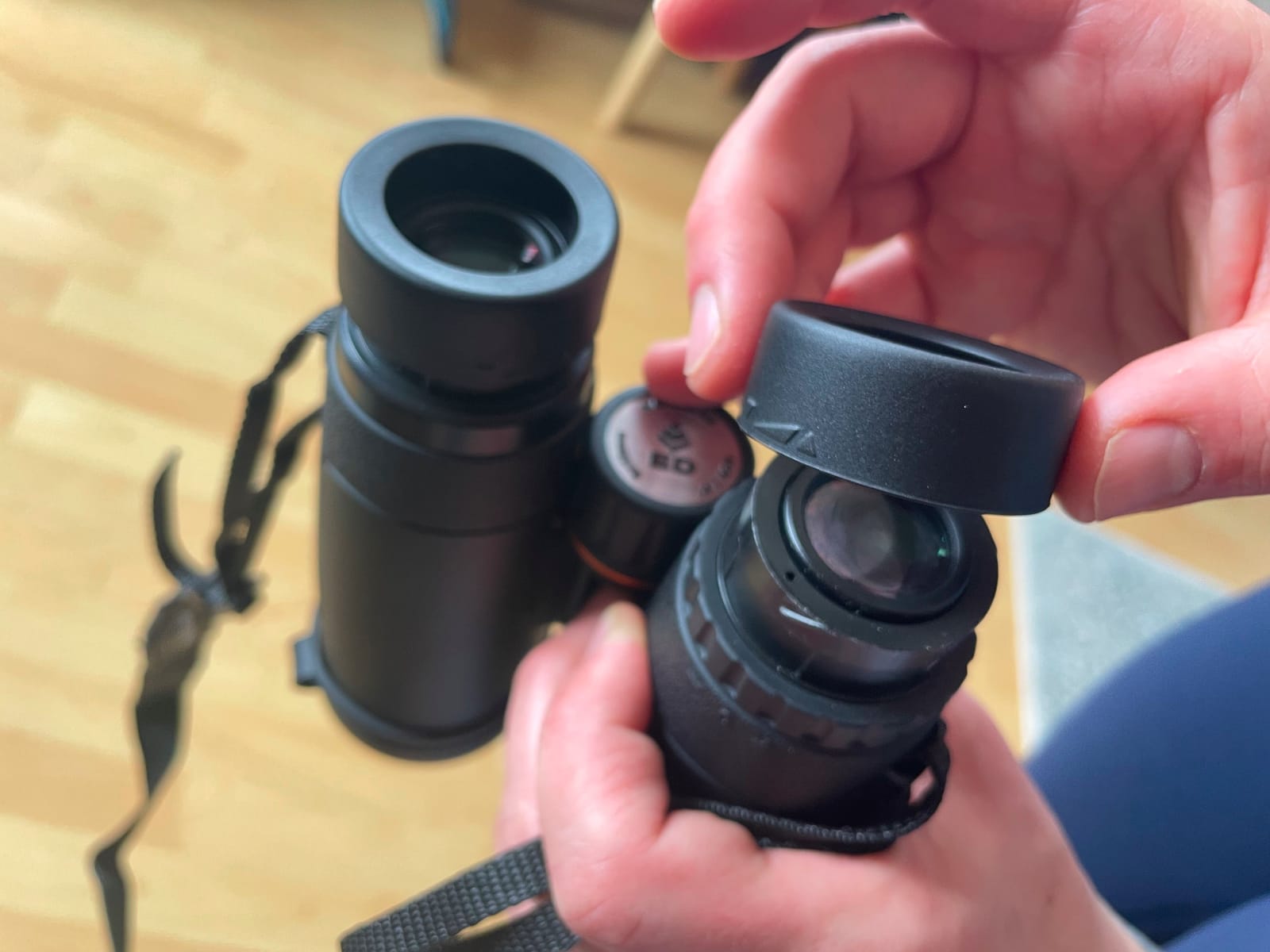
11. Celestron Nature DX ED 8×42 – Best for Color Accuracy and Close Wildlife
Celestron Nature DX ED 8×42 Premium Waterproof Birding Binoculars
- ED objectives largely remove chromatic aberration and color fringing
- True to life color across the whole field
- Close focus near 6.5 feet for butterflies and small wildlife
- Compact and lighter than many 8x42 rivals
- Waterproof nitrogen purged with tripod threads
- Flimsy eyecups have detached for some owners within a year
- Shallower depth of field means more refocusing
- Longer focus wheel travel
- 6 percent one-star share shows more variance than peers
Extra-low dispersion glass is the single biggest optical upgrade in this guide, and it is the reason color fringing around a branch or a wing stops being distracting. When a bird is backlit against a bright sky, the ED objectives here are the difference between a clean edge and a colored halo.
Reviewers widely regard this as the cheapest genuine route to ED glass, and many say the optics look and color much like pairs several tiers above. The 6.5 foot close focus is a bonus that butterfly and small-wildlife watchers appreciate more than birders do.
Fully multi-coated optics with dielectric and phase-coated BaK-4 prisms feed into the ED objectives, with a 7.5 degree apparent field of view, 17.8mm eye relief and a 5.25mm exit pupil. Center focus with a plus or minus 3 diopter adjustment, tripod mountable, housed in a waterproof nitrogen-purged rubber-armored shell.
At just under a kilo it is lighter than most 8×42 rivals, which is a real advantage on a long walk. There is a slight pincushion distortion at the field corners that only shows on architecture rather than birds.
Who the Celestron Nature DX ED 8×42 suits
It suits anyone who judges a bird by plumage pattern and wing bars rather than by silhouette, and anyone shooting or recording against a bright sky. It also suits butterfly and insect watchers, and anyone with a specific reason to want color fidelity.
Who it does not suit
It does not suit a buyer who will drop their gear. Flimsy eyecups detaching within a year is the most serious recurring complaint, and the shallower depth of field means you refocus more often, which is tiring in moving light.
12. FLYANT 20×50 High Powered – Best for Casual Long-Range Spotting
- 20x makes distant birds and wildlife easy to pick out
- 50mm objectives gather serious light for dawn and dusk
- 26mm eye relief and 26mm eyepieces reduce eye strain
- Rubber-coated body with non-slip grip
- Storage bag and cloth included
- Heavy hand shake at 20x when tracking moving birds
- 2.5mm exit pupil dims the view in poor light
- Waterproof body is not rated for immersion
- Edge definition trails established birding brands
- No stated warranty
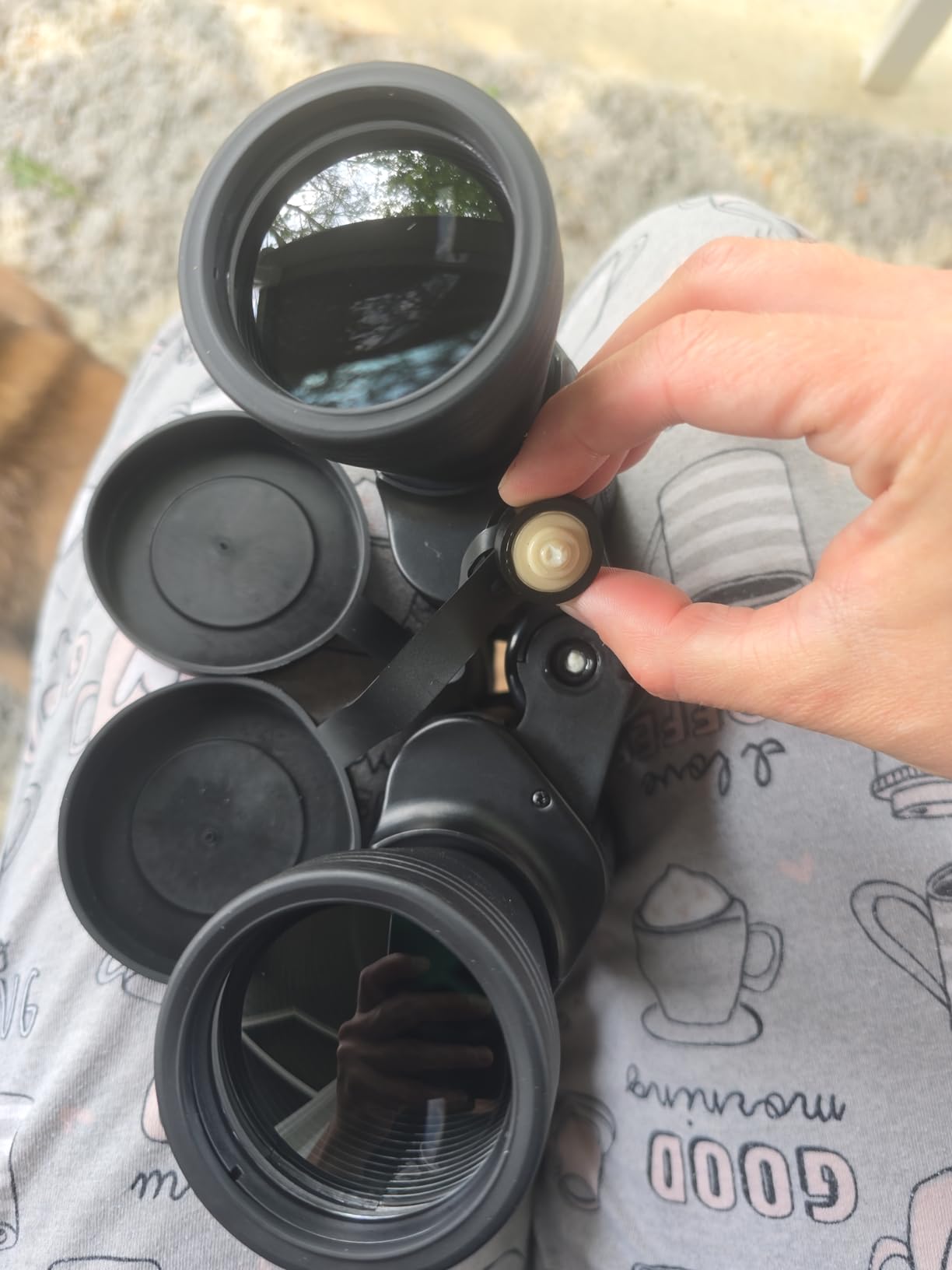
I include this pair because people ask about 20x binoculars constantly, and the answer deserves to be direct. Twenty power on a static subject across a valley is genuinely useful. Twenty power on a bird in flight is a genuinely frustrating experience, because the view shakes so badly that the image breaks apart.
Owners buy it for magnification rather than image quality. They like the reach, and they like the long 26mm eye relief with large 26mm eyepieces, which keeps long viewing sessions comfortable and reduces the dizziness that short eye relief can cause.
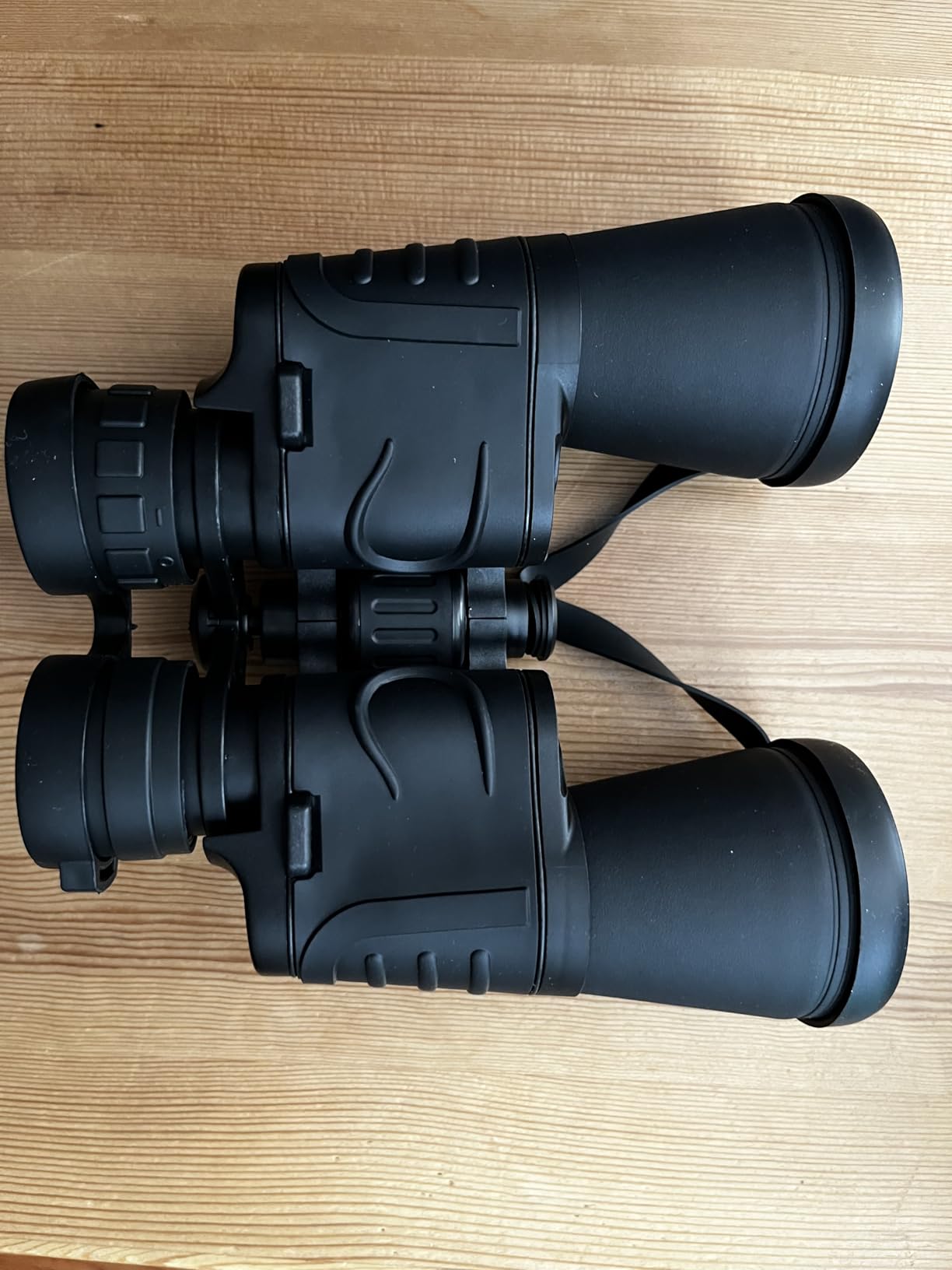
It is a BaK4 Porro prism design with multilayer aspherical elements and green FMC anti-reflective coatings on the objectives, with a 50mm objective and a 2.5mm exit pupil. The Porro prism layout is worth noting because it usually gives a wider, more natural field than a roof prism of the same power.
Even so, the listed field of view at 1000 yards is 168 yards, which is a narrow tunnel compared with the 8×42 pairs. The rubber-covered body has textured grips and a sensitive center focus wheel, and it is tripod mountable.
Who the FLYANT 20×50 suits
It suits casual users who want to look at a distant ridge or a harbour from a fixed position, and it suits anyone who prefers an accessory-feeling pair for holidays and gifts. It also suits long-eye-relief wearers who find short eye relief uncomfortable.
Who it does not suit
It does not suit birders, frankly, and that is the honest framing. A 2.5mm exit pupil means the view dims even though the objectives are large, edge definition trails established brands, and a waterproof body that is not rated for immersion is a warning in a wet climate.
How to Choose Binoculars for Bird Watching
Every question that matters comes down to how you actually bird. Someone watching a feeder from a kitchen chair has completely different requirements from someone scanning a mudflat at 200 metres, and specs that look identical on paper behave very differently in those two situations. Here is what each number actually does for you.
Magnification: 8x, 10x, 12x and beyond
Eight power is the handheld sweet spot because it lets you pan after a moving bird without fighting the view. Ten power gets you real detail on distant subjects and is the choice for open country, but it narrows your field and makes shake more obvious. Twelve power and above genuinely need a tripod or a car window, and anything past that is a spotting scope job rather than a binocular job.
The 8×42 versus 10×42 argument comes down to this: 8×42 gives you a wider view, a brighter image, more eye relief and a steadier picture, while 10×42 gives you roughly a quarter more detail on a bird twice as far away. Birding forum veterans overwhelmingly tell beginners to start at 8x and only move up when they know they are working at distance.
Objective lens size and exit pupil
The second number is the objective lens diameter in millimetres, and it is really about light gathering. Larger objectives collect more light, which is what lets you keep identifying birds well after sunset. The exit pupil, calculated by dividing the objective by the magnification, is the number that actually predicts how the view will look to your eye.
Anything above about 5mm is comfortable in dim light; below 4mm and you will be squinting in poor light even with big objectives. That is why the 12×50 style on this list still produces a dim view despite its large lenses, and it is the single most misunderstood number in the hobby.
Field of view and close focus
Field of view is measured in feet at 1000 yards, and more is better for finding and tracking birds. Around 7 degrees is the comfortable zone for handheld birding; anything under 6 degrees turns every sighting into a search. Close focus distance decides how much detail you get on a bird at feeder range, and anything under 15 feet is worth paying attention to if your birding happens close to home.
Before you buy anything, it is worth asking what the birds will be at a distance. Feeder and garden birding is a close-focus problem, while estuary and open-field birding is a brightness and magnification problem. Buying the wrong strength for your habitat is the most common first-pair mistake, and getting the feeders right helps: our picks for the best squirrel proof bird feeders keep a clear view onto whatever is using them.
Porro vs roof prism
A Porro prism design is usually wider, brighter and cheaper to build, which is why it dominates the budget end. A roof prism design is more compact, more modern and generally more robust, which is why it dominates everything above the mid range. A roof prism listing at a suspiciously low price is worth treating with suspicion, because proper alignment on that layout is not cheap.
Neither is wrong for birding. The practical difference shows up in weight and in how the image looks, not in whether you can identify the bird, so choose on ergonomics and build quality rather than on prism type alone.
Eye relief and glasses
Eye relief is the distance between your eye and the eyepiece, and it is what determines whether you can bird in your glasses. Anything at or above 15mm is workable; 17mm and above is comfortable; 20mm and above means you can relax entirely. This is a top return and complaint topic in birding communities, and it is the one spec most worth checking before checkout.
Twist-up or turn-and-slide eyecups help, but they cannot compensate for genuinely short eye relief. If you have a strong prescription, filter this list down by eye relief first and only then by price.
Waterproofing, coatings and body build
O-ring sealing and nitrogen purging are what stop a pair fogging internally when the temperature changes, and they are worth far more in the field than any coating upgrade. A pair rated IPX7 can be submerged, IPX6 handles heavy spray and rain. In hot and humid climates, forum users specifically value magnesium alloy frames and water-repellent eyepiece coatings.
Coating language is mostly marketing shorthand, but the useful distinctions are simple. Fully multi-coated means every air-to-glass surface is treated and generally transmits more light; phase-coated or dielectric prism coatings improve contrast and color. ED glass is the real quality differentiator, because it is what controls chromatic aberration, the colored fringing that ruins distant views.
Try before you buy
The most repeated piece of expert advice in birding forums is that it is impossible to pick the right pair from a spec sheet or from other people reviews. Ease of eye placement, grip comfort and physical size are personal, so shortlist three or four within your budget, then handle them. Many stores will let you take a pair outside and point it at something twenty feet away.
If you cannot try them, buy from a seller with a straightforward return policy, and spend the first ten minutes adjusting interpupillary distance, diopter and focus before you decide.
Caring for your binoculars
Cleaning is the one thing that ruins good glass fastest, and the fix is simple. Use a blower or a soft brush to remove grit before it becomes a scratch, then a microfiber cloth barely dampened with a proper lens cleaner, and never use saliva, tissue or household glass cleaner. Do not touch the lens surface with bare fingers, because the oils are abrasive under any amount of rubbing.
For storage, keep the eyepiece caps and objective caps on, keep the binoculars out of a hot car in summer, and leave them in a dry place with a silica gel pack if you live somewhere damp. If a bird or weather knocks them out of alignment, do not try to fix it yourself; the warranty services on most of these models cover repairs that a shop would otherwise charge you for.
Frequently Asked Questions
Is 10×42 or 8×42 better for birding?
For most birders, 8×42 is better. Eight power gives you a wider field of view, a brighter image, more eye relief and a steadier handheld view, which matters when you are tracking a moving bird. Ten power gives you more detail on distant subjects across open country, but narrows your field and amplifies hand shake. Start at 8×42 and move up only if you regularly work at long range.
What magnification binoculars are best for bird watching?
Eight times magnification is the best all-round choice for bird watching, and 10x is the right step up for open country and distant subjects. Anything above 10x is difficult to hold steady by hand and works best on a tripod or from a car window. Compact 12x designs suit travel and children rather than serious birding, because small objective lenses limit light.
Are 12×50 binoculars good for birding?
They can be, but only for specific situations. A 12×50 gathers plenty of light and gives real reach, so it works well on a tripod, from a car window, or for spotting static distant subjects at dawn and dusk. The problem is weight and the 4.2mm exit pupil, which makes a handheld view shake badly. Most birders find 8×42 or 10×42 more useful day to day.
Can I use binoculars with glasses for birding?
Yes, if the pair has enough eye relief, which is the distance between your eye and the eyepiece. Look for 15mm as a workable minimum, 17mm as comfortable, and 20mm or more if you want to relax fully. Twist-up eyecups help, but they cannot fix genuinely short eye relief, so check this spec before anything else when you wear a strong prescription.
Do I need waterproof binoculars for bird watching?
If you bird outdoors at all, you need sealing, and nitrogen purging is the part that matters most. O-ring seals keep rain and spray out, while nitrogen prevents internal fogging when temperatures shift between a cold dawn and a warming morning. A pair rated IPX7 can be submerged, while IPX6 handles heavy rain and spray. In hot and humid climates, treat purging as essential.
Final Thoughts on Choosing Binoculars for Bird Watching in 2026
The Celestron Nature DX 8×42 is our pick for the best binoculars for bird watching in 2026, and it is not a close call. It is the spec pair experts recommend, it suits the widest range of light conditions and habitats, and at 4062 reviews it is also the most thoroughly proven pair here. If you can only hold one, hold that one.
Match the second choice to your habitat instead of your budget. Take the Vortex Diamondback HD 8×42 if you bird at dawn and dusk, the Nikon PROSTAFF P3 8×42 if you wear glasses, the Celestron Nature DX ED 8×42 if color fringing bothers you, and the Bushnell H2O Xtreme 10×42 if you work in wet weather. For travel, the Occer 12×25 goes in a pocket and simply works.
Whatever you choose, handle it before you commit. Two binoculars with identical specs can feel completely different in the hand, and no amount of research replaces ten minutes of pointing one at a bird. Set up your feeder, keep a field notebook, and start early.
Once you have a pair, get the habitat right as well as the glass. Our guides to the best outdoor bird baths and the best smart bird feeders cover the two things that reliably bring birds close enough to enjoy the binoculars you just chose.