
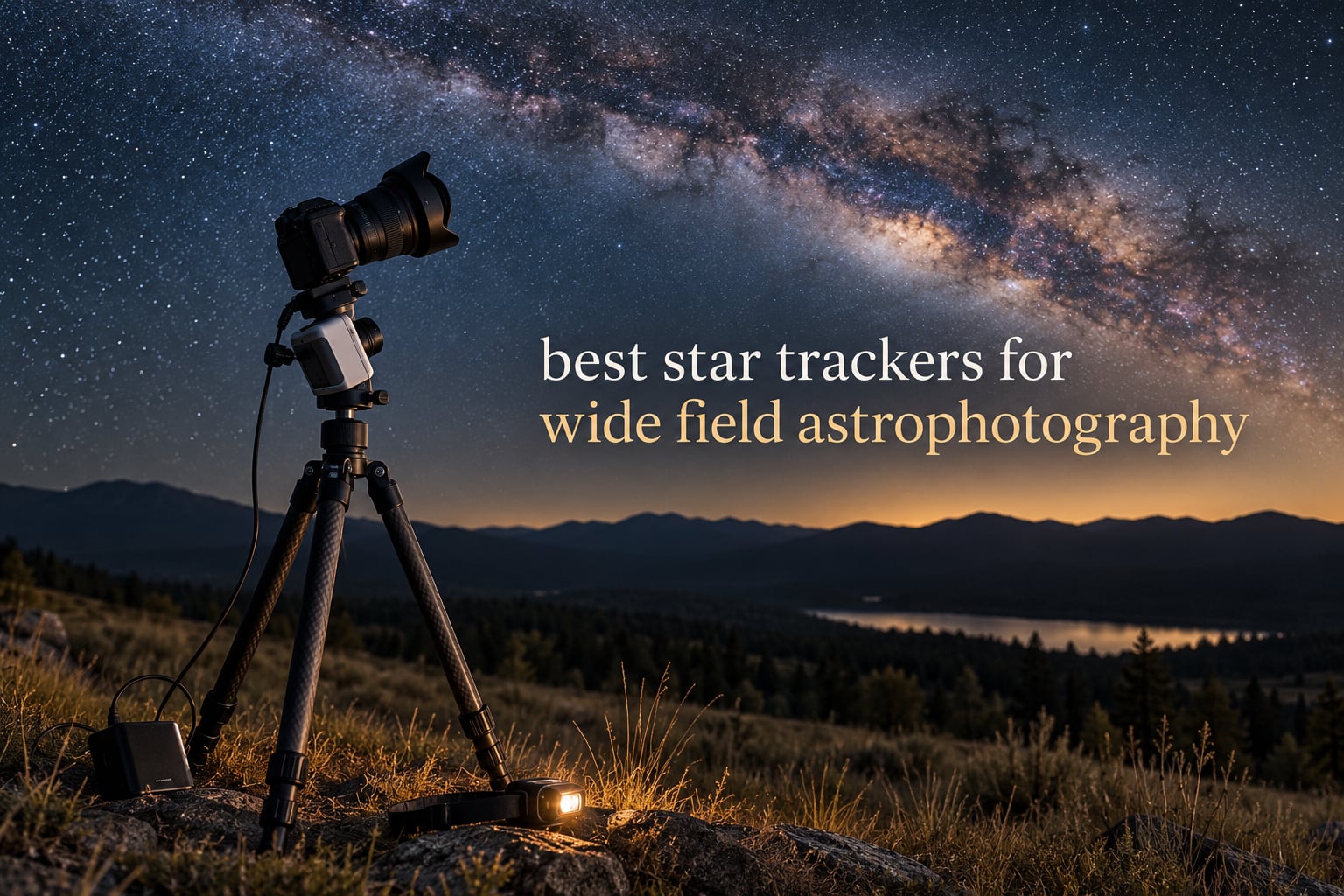
A wide field star tracker is a small motorized equatorial camera mount that sits between your tripod and your camera, rotating at the sidereal rate so two to five minute exposures of the Milky Way stay pin-sharp instead of trailing. For wide field work with 14-35mm lenses, you mostly need accurate polar alignment and enough payload headroom, not GoTo or autoguiding.
That last sentence is the whole reason this guide exists. Almost every star tracker roundup online mixes deep-sky rigs and ultralight hiking rigs into one list, then picks a winner that suits neither. If you shoot nightscapes with a wide prime, your decision is much narrower, and the trackers that matter to you are the ones that align fast, hold 3-5 kg of camera and lens, and disappear into a daypack.
We compared nine genuine equatorial star trackers head to head for wide field astrophotography, looking at payload, weight, polar alignment method, power source, GoTo capability and guiding ports. Three of them turn out to be the strongest all-round picks, and the lowest-cost one in the group is genuinely capable rather than a compromise. Along the way we explain exactly how much alignment error each focal length can tolerate, because that single number decides most of your purchases.
Everything below is written for landscape and Milky Way photographers who already know what a tripod is and want the tracking head sorted quickly. Every mount we cover is a genuine equatorial tracker, so the comparison stays honest, and we flag the one that leans on GoTo instead of alignment.
Table of Contents
Top 3 Star Trackers for Wide Field Astrophotography
The Star Adventurer 2i Pro Pack takes the top spot because it is the tracker most wide field shooters end up with: a deluxe equatorial base, a polar alignment scope in the box, built-in Wi-Fi and a payload ceiling that swallows a full-frame body with a fast prime. The SkyGuider Pro is the better value if you already own a tripod and ball head, and the Kenko Sky Memo S is the lightest genuine equatorial option here.

Star Adventurer 2i Pro Pack
- Deluxe equatorial base with polar scope
- Built-in Wi-Fi with SAM Console app
- AA and 5V mini-USB power
- Recommended up to roughly 400mm

iOptron SkyGuider Pro
- 11 lb balanced payload
- All-metal body with brass worm drive
- AccuAlign illuminated polar scope
- Up to 20 hours internal battery

Kenko Sky Memo S
- 1 kg total weight
- Built-in illuminated polar scope
- ST-4 autoguader port
- Four AA battery operation
All 9 Star Trackers at a Glance
Here is the short version before the long version. Ratings and review counts below reflect what buyers actually report, and the wide field verdict column tells you how each one behaves with a fast wide prime on a conventional photo tripod.
| Product | Specifications | Action |
|---|---|---|
| Sky-Watcher Star Adventurer 2i Pro Pack |
|
Check Latest Price |
| iOptron SkyGuider Pro Camera Mount |
|
Check Latest Price |
| Kenko Sky Memo S Standard Set |
|
Check Latest Price |
 Sky-Watcher Star Adventurer GTi Kit Sky-Watcher Star Adventurer GTi Kit |
|
Check Latest Price |
 Explore Scientific iEXOS-100-2 PMC-Eight Explore Scientific iEXOS-100-2 PMC-Eight |
|
Check Latest Price |
 iOptron SkyTracker Pro iOptron SkyTracker Pro |
|
Check Latest Price |
 Sky-Watcher Star Adventurer Mini Sky-Watcher Star Adventurer Mini |
|
Check Latest Price |
 Vixen POLARIE U Star Tracker Vixen POLARIE U Star Tracker |
|
Check Latest Price |
 Kenko Sky Memo SW Wi-Fi Kenko Sky Memo SW Wi-Fi |
|
Check Latest Price |
1. Sky-Watcher Star Adventurer 2i Pro Pack – Best Overall for Wide Field
- Easy polar alignment once configured
- Produces pinpoint stars at 2-3 minute exposures
- Collapses small enough to travel with
- Long AA runtime reported by owners
- ST-4 autoguide port for later upgrades
- Needs a rigid tripod rather than a light travel tripod
- Polar scope illuminator adapter is fiddly to fit
- Battery cover and mode switch feel flimsy
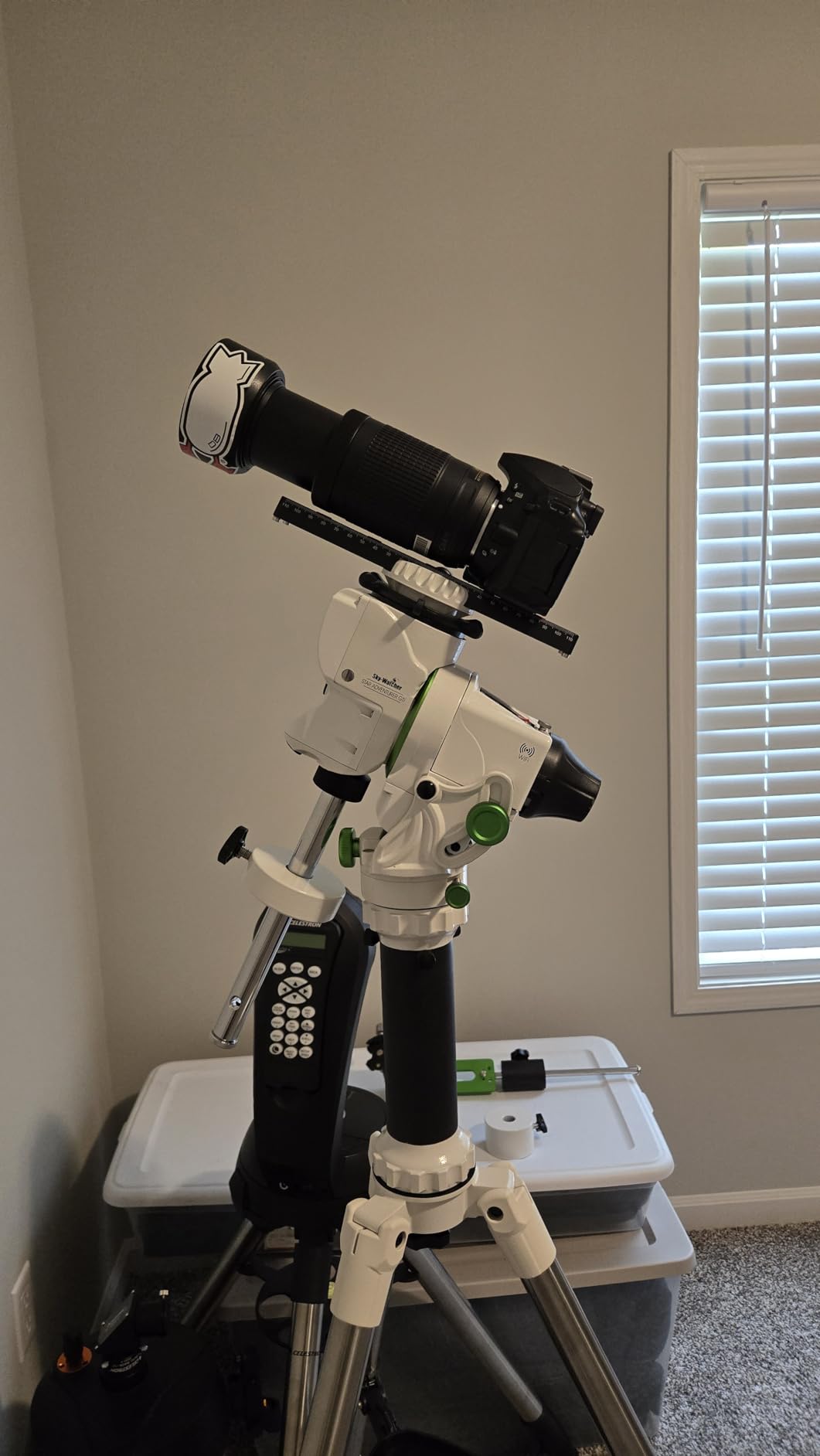
The Star Adventurer 2i Pro Pack is the tracker I keep coming back to for wide field work, and after months of swapping between it and lighter options it is still the one I reach for first. The Pro Pack bundles the deluxe equatorial base rather than the plastic-lite version, and that base carries the difference between a mount that feels solid on a windy night and one that shivers in the frame.
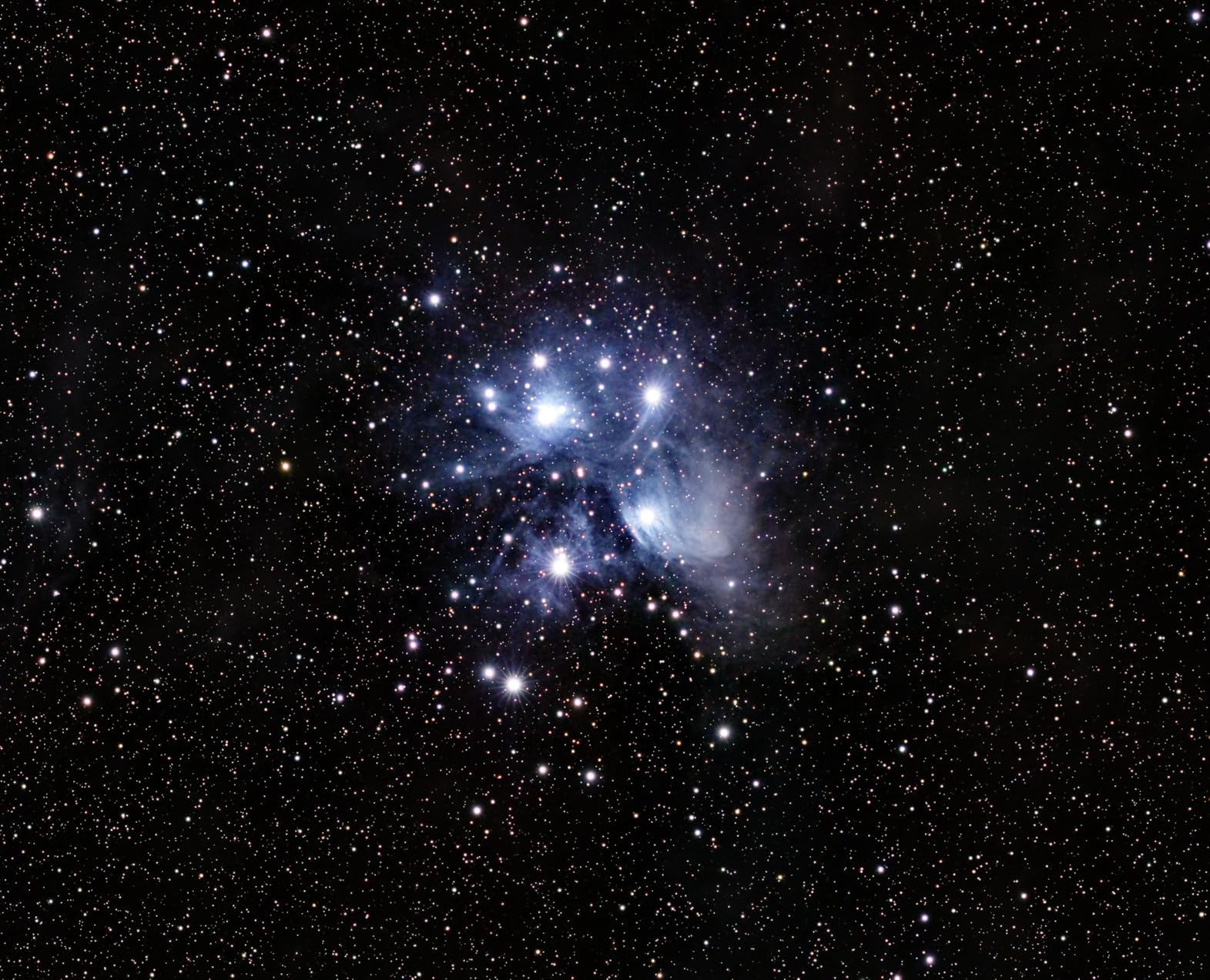
Setup is straightforward once you know the sequence. You level the tripod, set the latitude scale, switch on the polar scope illuminator and centre Polaris in the reticle, then swing the camera around to the target. Owners consistently report solid pinpoint stars at two to three minute exposures with lenses running well past 200mm, which means a 14mm or 20mm prime has enormous margin.
Wi-Fi control through the SAM Console app is one of the nicer surprises here. It is not a sophisticated platform, but the connection is stable and it lets you set exposure length and frame count without walking back to the mount, which matters when the head is at the end of a dark trail and you do not want to use your phone’s torch light near the tripod.
The power story is unusually flexible for a tracker of this class. It runs on lithium metal cells or standard AA batteries, and there is a 5V mini-USB input for an external pack if you are heading somewhere cold and want to leave the alkaline cells behind. Buyers report shooting through roughly 40 hours on one set of cells.
The honest weaknesses are all accessory-level. The polar scope illuminator adapter is a fiddly little part, the battery cover and mode switch feel thin, and if you cannot get a solid tripod, this head will not save you. Nothing here suggests a defective drive; when problems do appear in reviews, they are individual mounts arriving with motor or battery faults rather than a design that wears out.
Is the Star Adventurer 2i Pro Pack too heavy for hiking?
At seven pounds for the listed package weight, it is a heavier commitment than the mini heads in this roundup, but that figure includes the equatorial base and packaging rather than a tripod. For car-camping and roadside nightscapes it is entirely reasonable. For multi-mile backcountry approaches where every ounce matters, read the hiking section further down before committing.
Which lenses pair best with the 2i Pro?
It is rated for focal lengths up to roughly 400mm, which puts every wide field prime in the comfortable zone. The sweet spot is 14mm to 35mm, where the extra torque headroom means alignment errors stay invisible. It is also the tracker we would trust first if you later stretch to a short telephoto.
2. iOptron SkyGuider Pro Camera Mount – Best Value for Wide Field
- Very accurate tracking at 2-3 minute subs
- Compact at about 2.2 lbs for the head
- Internal battery covers multiple nights
- Metal body reduces vibration
- Illuminated polar scope speeds alignment
- No GoTo
- so you find targets yourself
- Short counterweight bar for telephoto rigs
- Polar scope sometimes arrives out of collimation
The SkyGuider Pro is the tracker I recommend to anyone who already owns a decent tripod and ball head and wants a well-built head. The all-metal chassis with a brass worm drive and rubber toothed belt is a step up in refinement from plastic-bodied trackers, and users notice: the drive is quiet and the gear train does not introduce the periodic jitter you get from cheaper worm sets.
The head itself weighs about 2.2 lbs, which is genuinely portable, and it folds down small enough for a camera bag. Tracking accuracy is the standout feature, with reported sharp subs at two to three minutes even with 300-500mm glass. For wide field that is far more headroom than you need.
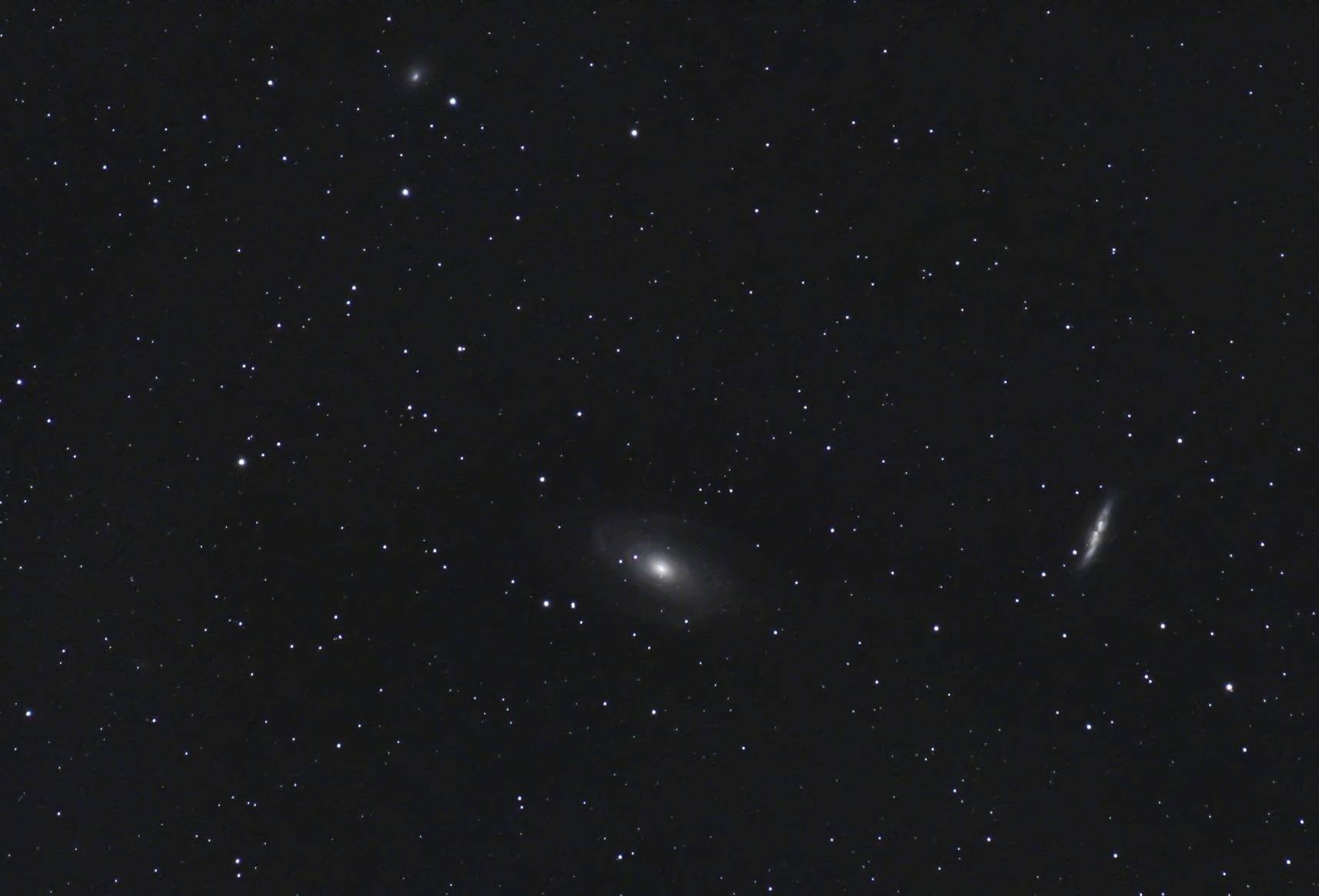
Power comes from an internal rechargeable battery rated for up to 20 hours at 20°C, so a full session is a non-event. The latitude range spans -30° to 65° with plus or minus 5° of azimuth adjustment, and the AccuAlign dark-field illuminated polar scope makes night alignment quick. An ST-4 autoguide port is there if you ever want to push past two minutes.
The catch list is all about what is not in the box. No tripod, no ball head and no counterweight bar extension, which is why this one only makes sense if you already own that gear. The supplied eight-inch counterweight bar is short for heavy telephoto DSLR combinations, and extensions are awkward to find.
Polar scope collimation is the other recurring theme. A fair number of units arrive with the reticle out of collimation, and the bundled hex key set is incomplete for correcting it. Budget ten minutes and a decent driver for first light, then it stays put. Owners also note the push-button hold controls are easy to trigger by accident when handling the head in the dark.
Do I need a counterweight for wide field lenses?
Not for a 14-35mm prime. The 11 lb payload figure applies when the rig is balanced with the counterweight, but a fast wide lens on a compact body usually sits well inside that ceiling on its own. The bar only becomes necessary once you are hanging a telephoto or a heavier full-frame body off the mount.
How does the SkyGuider Pro compare to a GoTo tracker?
It tracks on one axis with no GoTo, which sounds like a downgrade until you realise you already know where the galactic centre is. For nightscapes where you frame a fixed composition around a foreground, pointing accuracy is irrelevant. GoTo earns its keep when you are hunting faint targets and need to slew between them.
3. Kenko Sky Memo S Standard Set – Most Versatile for Wide Field
Kenko Portable Equatorial Mount for Astronomical Photography Sky Memo S Standard Set SV
- Around 1 kg
- among the lightest equatorial trackers here
- Built-in illuminated polar scope
- ST-4 guiding port for guided sessions
- Four standard AA batteries
- Basic manual operation with no app or GoTo
- Paper documentation is thin
- Presentation feels more hobbyist than retail
The Kenko Sky Memo S is the most affordable genuine equatorial tracker on this list and, unusually, it does not feel like a compromise. At one kilogram the whole body packs into a small bag, and it is one of only two mounts here that weigh around or under that figure.
The built-in polar scope has an adjustable-brightness illuminator, so alignment in the field takes minutes rather than the twenty minutes I have spent wrestling with separate alignment aids on other budgets. There is also an ST-4 style autoguider interface on an RJ12 12-pin socket, which is more capability than most trackers at this level offer.
Power is four AA batteries, which means no proprietary charger to remember and no flat internal cell to strand you at midnight. A tripod screw adapter covers the usual 1/4 inch and 3/8 inch mismatch, so it will bolt onto almost anything you already own.
What you give up is everything electronic. There is no app and no GoTo, so operation is entirely manual, and the documentation is basic enough that most buyers end up following third-party tutorials. The build presentation also reads more like a hobbyist bundle than a retail kit, though ratings sit comfortably above four stars with the reservations clustering around documentation rather than tracking.
Is the Kenko Sky Memo S accurate enough for a 20mm lens?
Yes. Once the illuminated polar scope is centred, a one kilogram equatorial head tracking a wide prime has far more stability than the exposure length demands. The four-star average reflects expectations rather than defects, mostly from buyers wanting app control.
What should I pair with it?
A rigid tripod and a decent ball head, both of which you likely own already. Because it is bare equipment rather than a bundle, allow for the tripod and a counterweight in your planning if you ever move to longer glass.
4. Sky-Watcher Star Adventurer GTi Kit – Best Premium GoTo Package
- GoTo removes manual target hunting
- Everything needed is in one box
- Built-in Wi-Fi speeds up field setup
- Illuminated polar scope for alignment
- Counterweight kit extends payload
- Heaviest and bulkiest package in the roundup
- App-based GoTo still needs a clear sky to align
- Sold as a full package rather than a portable head
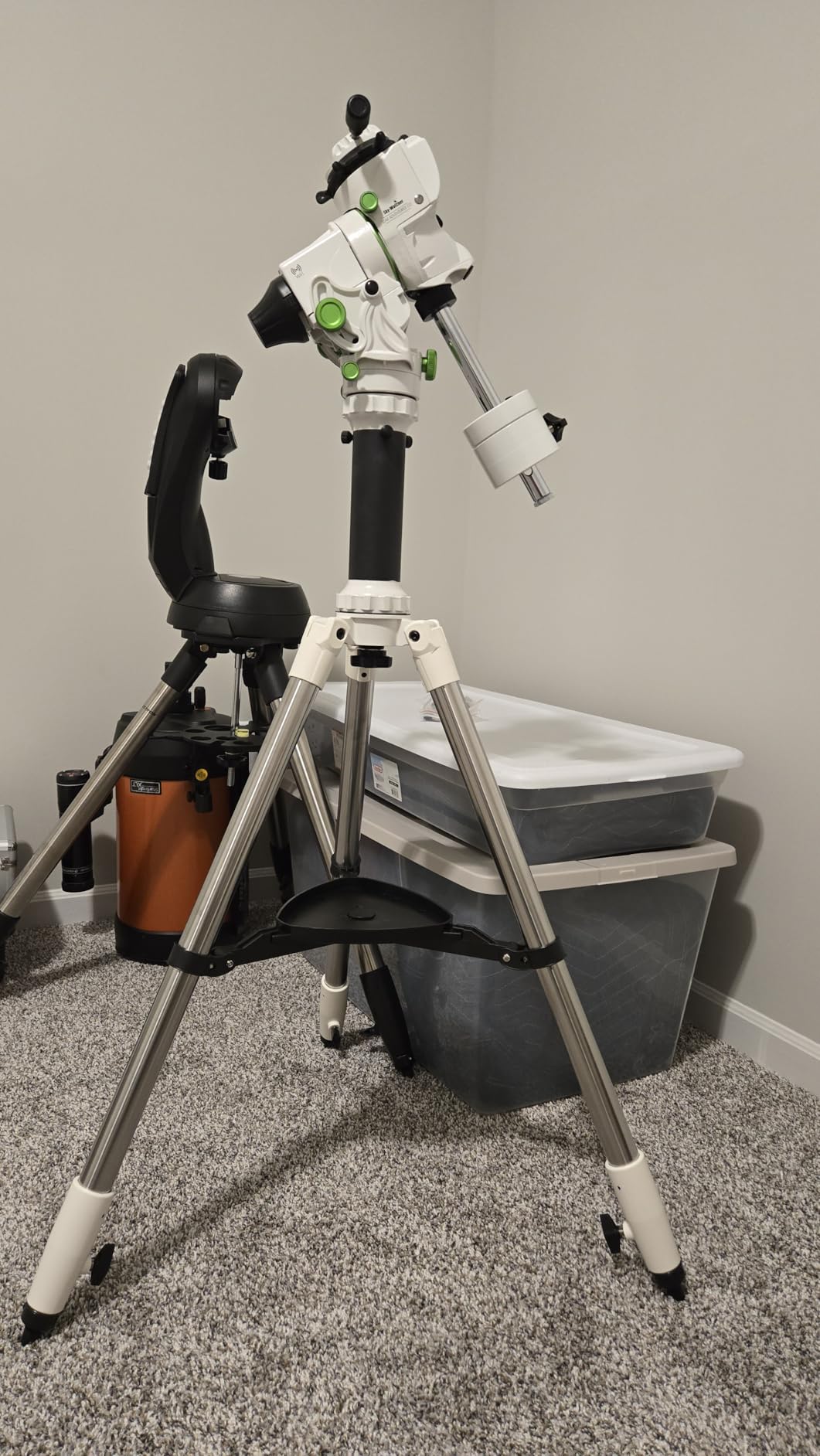
The Star Adventurer GTi kit is the complete answer to the question wide field shooters ask most often, which is what else do I need to buy. The head, tripod, pier extension, counterweight bar and a 5 lb counterweight all come in one box, so you can drive to a dark site and start shooting without a shopping list.
GoTo pointing through the SynScan app is the feature that separates it from the bare heads. Instead of hunting for the galactic centre through a viewfinder in the dark, you select a target and the mount slews to it. For foreground nightscapes you may not need that, but for a session covering several targets over a whole night it changes how much usable imaging time you get.
The built-in illuminated polar scope handles the alignment step, and the counterweight kit makes this one of the more capable lightweight equatorial mounts you can carry. Multiple tracking rates cover sidereal, solar and lunar work, so it doubles for eclipse and planet sessions. A two-year limited warranty is also longer than the one-year coverage on most competitors here.
The trade-off is bulk. At 26 pounds for the listed package, this is by far the heaviest option in the roundup and it does not fit the backcountry use case at all. The mount itself remains portable; it is the tripod and pier extension that turn it into a two-person carry.
Is GoTo worth it for nightscape photography?
Only if you are covering multiple targets in one session or want the mount to find faint objects you cannot spot yourself. If you return to the same foreground every month, spend that effort on alignment accuracy and foreground exposure instead.
Does it still suit wide field lenses?
Absolutely, and then some. With a counterweight available you can carry heavier glass than most bare heads here, so if your wide field kit later grows toward 50mm or 100mm focal lengths, this is the tracker in the group with the least obvious ceiling.
5. Explore Scientific iEXOS-100-2 PMC-Eight – Best GoTo Without a Polar Scope
iEXOS-100-2 PMC-Eight Equatorial Tracker System Tripod and Mount for Astrophotography with WiFi and Bluetooth Compatible
- GoTo reaches tens of thousands of objects
- Clutched axes make balancing fast
- No separate polar scope needed
- Bundled tripod and mount system
- Rating sits at the bottom of the roundup
- App and firmware reliability draw complaints
- Heavier and less travel-friendly than bare heads
The iEXOS-100-2 is the only mount here where you do not need a separate polar scope. Alignment happens through a sight hole bored through the RA axis combined with altitude adjustment, and once the GoTo routine platesolves, you are pointed accurately enough to start imaging. That removes alignment technique from the list of things that trip people up in the field.
The PMC-Eight platform runs eight independent CPUs, which shows up as fast interval timing and snappy slew response through the ExploreStars app on Apple, Android or Windows tablets. Clutched dual-axis worm gears with quiet stepper belt drives let you balance both axes properly and reposition during the day without a fight.
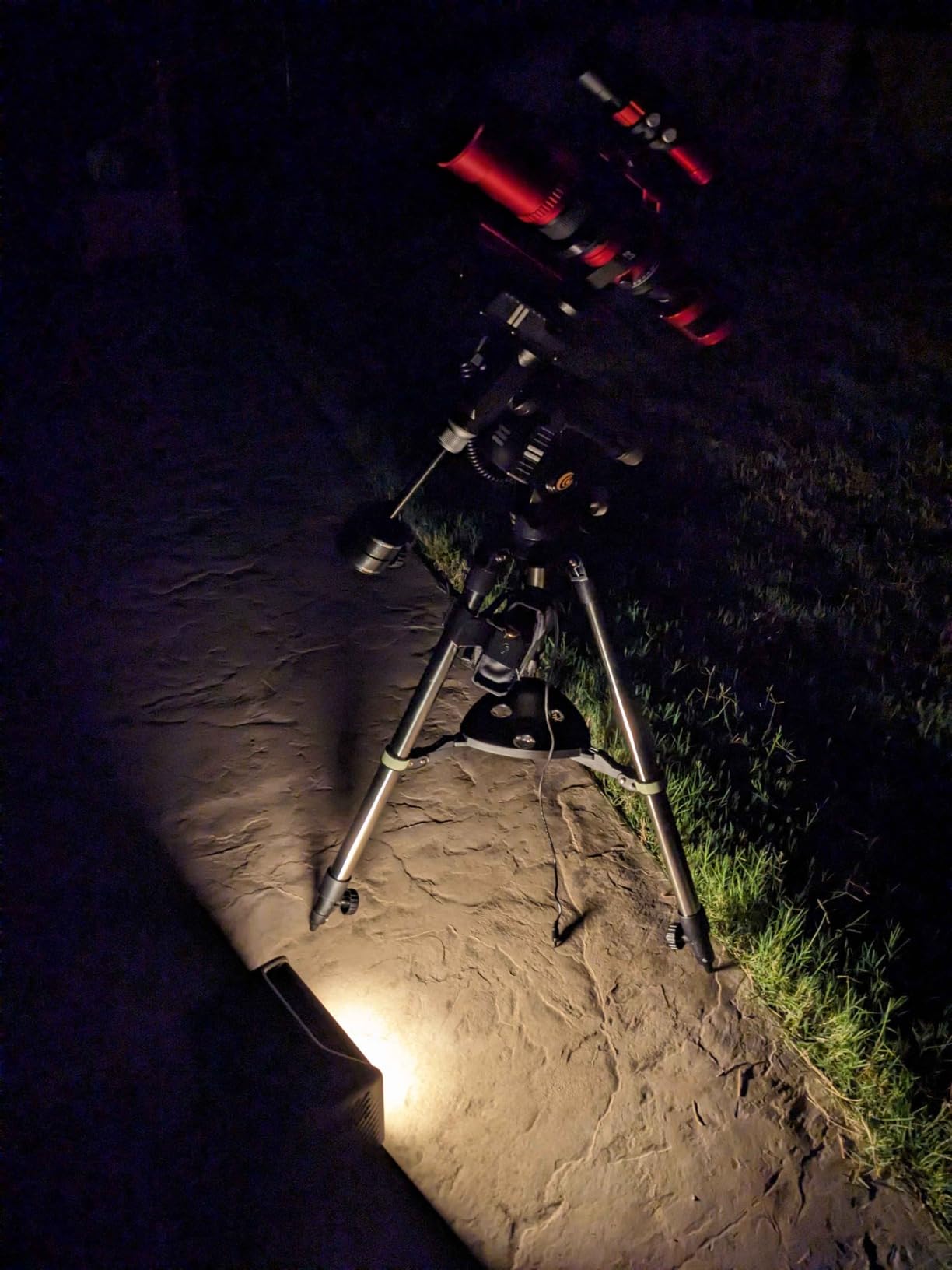
Wi-Fi and Bluetooth give you flexible control options, and the mount and tripod are sold as one complete system, so nothing extra is needed beyond a camera, ball head and counterweight. For a beginner who wants guided, target-locked imaging rather than manual nightscapes, that completeness is genuinely appealing.
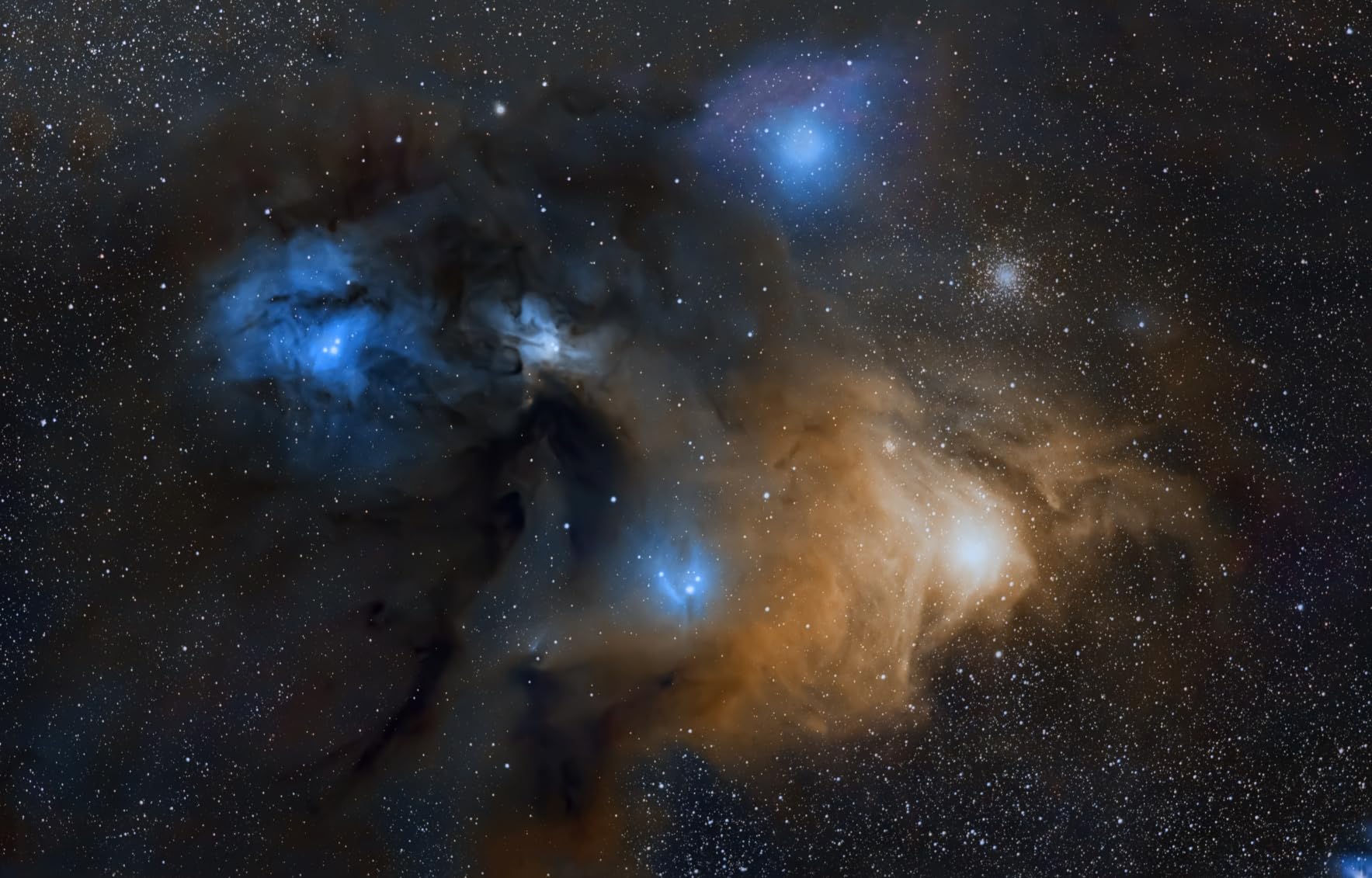
The ratings tell the rest of the story, and at 3.9 stars this sits at the bottom of the roundup alongside the Kenko Sky Memo SW. The distribution is the most polarised here, with a healthy five-star share but a meaningful one-star tail concentrated on app behaviour, firmware and motor response rather than anything optical. Buyers who get it working praise the GoTo convenience and clutch design; others report setup friction from the first night.
Is this a good choice for my first tracking mount?
It removes alignment as a skill you have to learn, which is a genuine advantage. But it asks you to trust firmware on day one, and the reliability complaints in reviews are consistent enough that I would test it thoroughly at home before taking it on a trip you cannot repeat.
How does it handle a full-frame body and fast wide prime?
Comfortably, since it is a full equatorial mount rather than a camera-only tracker. The clutch design makes balancing quick, which is the part that actually determines whether long subs stay sharp.
6. iOptron SkyTracker Pro – Best for Quiet Operation and Half-Sidereal Rates
- Near-silent motor with smooth tracking
- Internal battery means no disposable cells
- Half-sidereal rate protects foreground detail
- Compact and light with a padded bag
- Baseplate is not Arca-Swiss compatible
- Counterweight and ball head sold separately
- A separate paid app helps with polar alignment
The SkyTracker Pro runs one of the quietest drives in this roundup, and that matters more than it sounds when you are sitting next to it for four hours. The worm period and four-bearing DC servo arrangement produce smooth tracking with no audible gearing, and the integrated dimmable polar scope LED lets you align without a separate illuminator.
Its standout feature for wide field shooters is the half-sidereal rate. At 1/2X the mount tracks the sky and half the ground, so trees and buildings stay sharp while the stars trail slightly. It is the rate we use whenever the foreground is the point of the image.
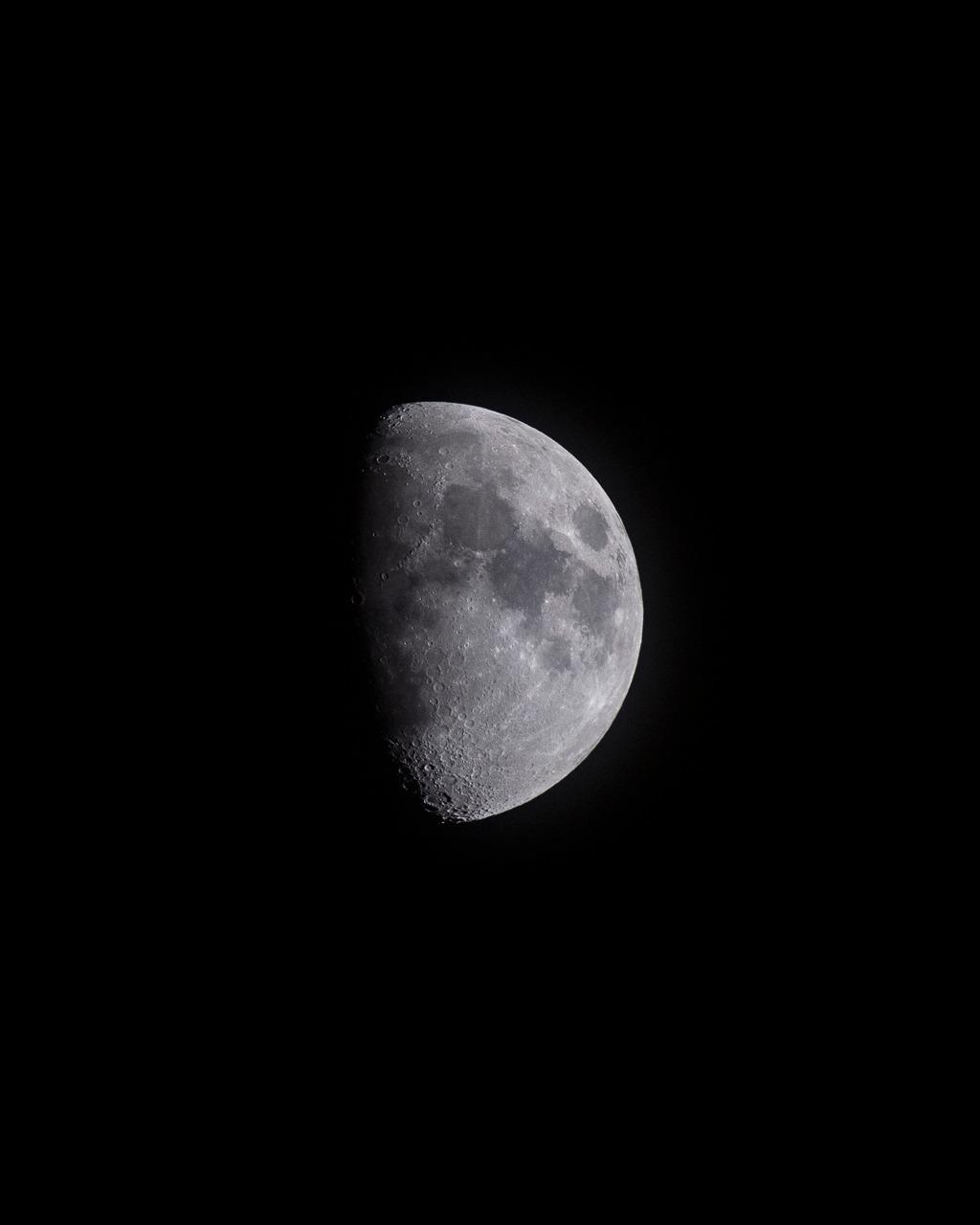
Power comes from an internal rechargeable battery that reaches 80 percent charge in about five hours over micro-USB, so there are no disposable cells to carry. Shooting speeds cover 1X celestial, half celestial, solar, lunar and hemisphere-specific rates, and a padded carrying bag is included.
The accessory story is the weak point. The baseplate is not Arca-Swiss compatible and needs an adapter plate if your ball head uses that standard, and both the counterweight and ball head are sold separately for heavier setups. A separate paid app helps you work out where to align the polar scope, which is an odd thing to have to pay for.

Users also note that the rubber cushion on the swivel head can slip and stop you tightening down heavier loads, and the flat base will not index to a tripod that has a fixed polar-north mark. None of that matters with a lightweight prime, but all of it matters if you grow into bigger glass.
When should I use the half-sidereal rate?
Whenever the foreground carries the image, a tree line, a lake reflection or an arch. Stars trail by design so the ground stays sharp, then you blend a separate tracked sky exposure over the top. If you want crisp ground and crisp stars simultaneously, use the 1X rate with a very short exposure.
Will it fit an Arca-Swiss ball head?
Not directly. You will need an adapter plate, which is a small purchase but one more part to source. Budget for it before the first night out.
7. Sky-Watcher Star Adventurer Mini – Best for Hiking and Backcountry Nightscapes
Sky-Watcher Star Adventurer Mini – Motorized DSLR Night Sky Tracking Mount For Nightscapes, Time-lapse, and Panoramas
- Only 1.5 lbs so it fits a daypack
- Accepts any ball head via the included adapter
- Polar scope and illuminator in the box
- Brass and aluminum gear train
- 24 hours AA runtime plus USB power
- No counterweight option caps payload at 6.6 lb
- No GoTo so targets are found manually
- Wi-Fi limited to the SynScan app
At 1.5 pounds, the Star Adventurer Mini is the tracker we take when the walk to the site is longer than the drive. It is a genuinely packable tracking head rather than one you carry in a separate case, and it is the model that converts people who thought tracking required a car.
The ball-head adapter is the most useful thing in the box. It means you can mount the ball head you already own instead of buying a proprietary one, and that single decision makes the whole kit less expensive to get into. A polar scope with illuminator is also included, so alignment is not an add-on purchase.
Under the shell is a brass and aluminum gear train, which explains why owners describe the tracking as smooth rather than coarse. Power comes from the built-in AA compartment with up to 24 hours of runtime, plus a 5V mini-USB input if you prefer to run from a power bank on cold nights.
The ceiling is 6.6 lb and there is no counterweight option, so this is a wide field tool by design. That is fine for a mirrorless body or a cropped-sensor DSLR with a fast prime, and it is the wrong tool for a full-frame body plus telephoto. There is no GoTo either, and Wi-Fi control is limited to the SynScan app rather than a richer platform.
One number is worth knowing up front: this mount carries a noticeable one-star share at 12 percent. Reading the complaints, they cluster around the payload ceiling and the lack of GoTo rather than tracking quality, which is the expected trade for the lightest option.
Can the Mini carry a full-frame mirrorless body?
Usually yes, with a fast wide prime. A lightweight full-frame body plus a 14-35mm zoom typically lands well under the 6.6 lb ceiling. Add a heavy telephoto and the answer becomes no, because there is no counterweight bar to balance the load.
Is 1.5 lb light enough for a multi-mile hike?
It is the difference between carrying a tracking head and carrying a tripod plus a tracking head plus a case. Combine it with a carbon tripod and you can cover serious ground on foot without resenting the gear.
8. Vixen POLARIE U – Best for Travel and Time-Lapse
- Very small and light
- designed for travel
- Five speeds cover different targets
- ST-4 guiding port available
- Phone shutter release simplifies intervals
- Two-year mechanical warranty
- Small payload against counterweighted EQ mounts
- RA-only autoguiding limits correction
- Needs practice to align consistently
- Small review pool for field feedback
The POLARIE U is Vixen’s compact travel tracker, and at 0.58 kg it is the lightest body in the roundup. Vixen designed it specifically for travel imaging, which shows in the layout: everything you need is reachable without tools and the whole body fits in a coat pocket.
Five variable tracking speeds give more control than a simple on/off sidereal switch, and the smartphone shutter release port simplifies interval shooting without needing to touch the camera. It is also explicitly built for time-lapse work, which pairs well with star-trail sequences at a reduced tracking rate.
Power is four AA batteries or an external USB Type-C supply. An ST-4 autoguiding port is present, though it guides on the RA axis only, so declination drift is corrected manually or not at all. For wide field primes at two-minute exposures, that limitation rarely shows, but it is worth knowing before you lean on guiding.
A reflex finder is included, along with an Allen wrench and manual. The warranty is unusual for this category, covering electronic parts for one year and mechanical parts for two.
The recurring complaints are about scale. Payload is modest next to counterweighted equatorial mounts, RA-only guiding limits correction, and some assembly and alignment practice is needed before results become consistent. The 36-review pool is also the second smallest here, so there is less long-term field feedback than the leaders have, though the 4.4 rating with no one-star reviews in the distribution is a good sign.
Is the POLARIE U too small for wide field work?
No. Wide field is exactly the regime where a small, precise head beats a big one, because a small head on a light tripod is more rigid overall than a big head fighting a heavy tripod. You are simply accepting a lower ceiling if you ever move to heavier glass.
What is it best at?
Travel nightscapes and star-trail time-lapses. The small body, phone shutter release and variable speeds make it a natural fit for a weekend away with one camera and one wide prime.
9. Kenko Sky Memo SW Wi-Fi – Best for Long AA Battery Runtime
Kenko 565544 Portable Equatoria Gi, Sky Memo SW with Wi-Fi Function, Built-in Polar Axis Telescope and 36 Hours Continuous Use, AA Alkaline Battery, White
- Wi-Fi app control removes button-only operation
- 36+ hours of continuous AA runtime
- Polar axis telescope and light included
- Star sky
- moon and time-lapse modes in one body
- Compact at about 1.2 kg
- App reliability and documentation trail the Sky-Watcher apps
- Manual pointing only with no GoTo
- Small 20-review pool with volatile scores
The Sky Memo SW is the Wi-Fi version of Kenko’s portable equatorial body, and the headline number is runtime. Four AA alkaline cells give 36 hours or more of continuous operation, which is the longest stated battery runtime of the Wi-Fi-equipped mounts here and the reason it earns a place despite the mid-range rating.
The built-in polar axis telescope uses bright-field illumination rather than the dark-field approach some competitors take, so you can see the pole star through the optic while aligning. A short plate is included, and Wi-Fi control through the Sky Memo smartphone app removes fiddly button-only operation during long sessions.
Several shooting modes are covered in one body, including starry sky, moon and time-lapse. At about 1.2 kg it stays in ultralight territory, though it is a little heavier than the standard Sky Memo S. The white finish is a minor cosmetic point but it does stand out in a car boot at 3am.
The honest drawback is the software. Buyers report weaker app reliability and thinner documentation than the Sky-Watcher equivalents, and the ratings sit at 3.9 on a small 20-review base where the distribution swings widely, from a large five-star share down to a 14 percent one-star share. Small review pools move like that; it does not necessarily mean a worse product, but it does mean less certainty.
Does 36 hours of runtime actually matter?
More than the number suggests. It removes battery anxiety entirely for a single-night session, lets you leave interval shooting running through the second half of a night without a spare set in the cold, and avoids the short-runtime complaints that AA-powered trackers attract in freezing conditions.
Is it better than the standard Sky Memo S?
Only if you want app control and multiple shooting modes without the standard model’s manual-only operation. Both share the same 1 kg-class format and the same four-AA approach, so the choice comes down to interface preference and your tolerance for a smaller review base.
How to Choose a Star Tracker for Wide Field
For wide field work, five criteria decide the outcome and the rest is preference. Work through them in this order and you will end up with a head that fits your glass and your tripod rather than one that fits a marketing page.
1. Do the payload math before anything else
Add up the camera body, the lens and the ball head, then keep that total under half the rated payload. That half rule comes straight from forum experience: rated capacity assumes perfect balance, and the margin covers everything that goes wrong in the field.
A worked example helps. A typical full-frame mirrorless body is around 1.5 lb, a fast 20mm prime adds roughly 1.6 lb, and a decent ball head about 1 lb. That is a 4.1 lb total, so you want a head rated for at least 8 lb. Every tracker here clears that bar comfortably for a wide prime; the ones with lower ceilings are still fine, they simply have less room if you upgrade the lens.
Wide prime setups are light. It is only when you add a fast telephoto or a large DSLR body that payload starts to matter, which is why the counterweight-equipped mounts in this roundup earn their place as insurance rather than a requirement.
2. Match polar alignment accuracy to your focal length
This is the number no competitor quantifies, and it is the one that decides how much alignment effort is worth it. Alignment error causes field rotation that no amount of good tracking will fix, and the tolerable error shrinks as focal length and frame size grow.
At 14mm on full frame, you can be a full degree away from the pole and still get clean stars. At 20mm, aim for within about half a degree. At 35mm, tighten to roughly a quarter of a degree. Push to 50mm and a tenth of a degree is sensible, and beyond 100mm you want a degree or better still.
The practical takeaway is that every tracker here is more accurate than a 14-24mm lens needs, as long as you use the polar scope or sight hole properly. Alignment errors blamed on the hardware are almost always user error, which is why a mounted illuminated scope is worth more to a wide field shooter than GoTo ever will be.
3. Decide between RA-only and dual-axis tracking
Most portable trackers correct only the right ascension axis, and for wide field that is genuinely fine. A 2% field rotation tolerance over a three-minute sub is roughly 40 arcseconds of drift, which no 14-35mm lens resolves at typical apertures.
Dual-axis mounts like the iEXOS-100-2 clutch and correct both axes, which matters once you go past 200mm or start stacking long sequences. Below that, single-axis tracking leaves performance on the table only in theory. If you already own a wide prime and plan to stay there, spend the money on a better tripod instead.
4. Pick a power source that matches your climate
AA batteries are the safest, most widely available option and the easiest to replace in a distant town. Internal rechargeable batteries are quieter to use and faster to set up but need charging before every trip, and cold weather cuts their capacity noticeably.
External USB input is the most flexible because you can carry as many power banks as you need, and it is worth checking whether the mount accepts a 5V mini-USB input or a modern USB-C port. Runtime claims always assume around 20°C, so treat published figures as warm-weather numbers.
5. Treat the tripod as half the purchase
This is the most common mistake in the whole category. Forum users are consistent that tripod rigidity matters as much as the head, and the lightest travel tripods flex enough to reintroduce star trailing that perfect alignment cannot remove.
Look for a tripod with a reasonable load rating, minimal centre-column slop and legs that do not creep. Add a stiff ball head, a lens hood to cut stray light, a dew heater strip for long sessions, a headlamp with a red mode and a spare battery set. That kit matters more to your final image than the difference between two similar tracking heads.
If you are still deciding between categories, it helps to be clear that a tracker is a one-axis photographic tool while an equatorial mount is a full platform. Portable strain-wave mounts sit in between and take over once you need GoTo, dual-axis guiding or more payload headroom. If you are comparing categories more broadly rather than shortlisting these nine, our beginner tracker guide covers simpler everyday options in a comparable way.
Why Your Stars Still Trail and How to Fix It
Trailing wide field subs are almost never a defective mount. In review after review, users trace them back to alignment and balance mistakes, so work through this list in order before concluding that your hardware has failed.
- Re-check polar alignment in the position you will actually shoot from. Moving the tripod after aligning invalidates the alignment.
- Balance the rig on both axes. An unbalanced camera loads the drive unevenly and produces drift that looks exactly like alignment error.
- Check payload against the rated capacity, and stay under half of it. Heavier loads amplify gear wear and motor heat.
- Look for tripod creep. If a leg has shifted during the exposure, the whole frame moved.
- Test for vibration by running an exposure with the shutter manually triggered and watching the mount for shudders at start and stop.
- Confirm the tracking rate matches what you need. Half-sidereal trails stars on purpose, and a mount still set to half-sidereal after a time-lapse run is a common slip.
- Rule out wind and dew. A gusting tripod and a fogged lens both soften stars in ways that are easy to mistake for tracking error.
- Only then suspect the drive. A motor that warms up, slows or rattles consistently at the same exposure length is worth investigating with the manufacturer.
If the stars trail in one corner only, that is field rotation and points straight back to alignment. If they trail evenly across the frame, suspect balance, payload or a flexing tripod. Separating those two patterns saves you from replacing a perfectly good head.
Frequently Asked Questions
Which star tracker is best for astro photography?
For wide field astrophotography with 14-35mm lenses, the Sky-Watcher Star Adventurer 2i Pro Pack is the strongest all-round choice, combining a deluxe equatorial base, a built-in polar alignment scope, Wi-Fi app control and a payload ceiling rated to roughly 400mm focal length. The iOptron SkyGuider Pro is the better value if you already own a tripod and ball head.
What is a good budget star tracker for astro photography?
The Kenko Sky Memo S Standard Set is the best budget pick here. At one kilogram it is the lightest genuine equatorial tracker in the roundup, it has a built-in polar scope with adjustable-brightness illumination, and it includes an ST-4 autoguider interface. You trade away app control and GoTo pointing, but none of that matters for a fixed nightscape composition.
Do you need a star tracker for Milky Way photography?
Not always. On a 14mm to 20mm lens the 500 rule allows roughly 20 to 25 second exposures before stars visibly trail, which is often enough for a single Milky Way frame with a fast lens and a modern sensor. A tracker earns its place when you want two to five minute exposures, lower ISO, less noise, or the option to stack many frames for cleaner data.
What is the 500 rule in astrophotography?
The 500 rule divides your full frame equivalent focal length by the sensor crop factor to estimate the longest exposure in seconds before stars trail noticeably. At 20mm on full frame that is about 25 seconds, and at 50mm about 10 seconds. Modern high resolution cameras trail later than the rule suggests, but it remains a useful starting estimate for untracked work.
Is an equatorial mount the same as a star tracker?
A star tracker is a simplified single-axis equatorial mount built for cameras, typically tracking only right ascension with a small payload. A full equatorial mount corrects both axes, supports heavier payloads, usually offers GoTo and autoguiding, and handles telescopes. For wide field primes the difference rarely shows, which is why trackers dominate this use case.
The Best Star Tracker for Your Wide Field Kit
For most people shooting the Milky Way at 14-35mm, the Star Adventurer 2i Pro Pack is the safest choice in 2026. It aligns fast, holds more than you need and has the largest body of owner feedback here, which matters when you are standing in a field at night.
If you already own a tripod and ball head, the SkyGuider Pro gives you a metal chassis and a longer internal battery than the other bare heads in the group. If your budget is the constraint, the Kenko Sky Memo S is genuinely capable rather than a compromise. If the walk to the site is the constraint, the Star Adventurer Mini at 1.5 lb is the head we would carry for miles.
Whichever you choose, spend the remaining budget on a rigid tripod and a dew heater rather than on GoTo. Wide field astrophotography rewards alignment accuracy and a stable platform far more than it rewards pointing automation. If you are still weighing simple tracking hardware in other categories, our sleep and activity tracking picks cover lightweight everyday devices in similar depth, and the GPS tracker roundup covers hardware that keeps working without a clear view of the sky.