
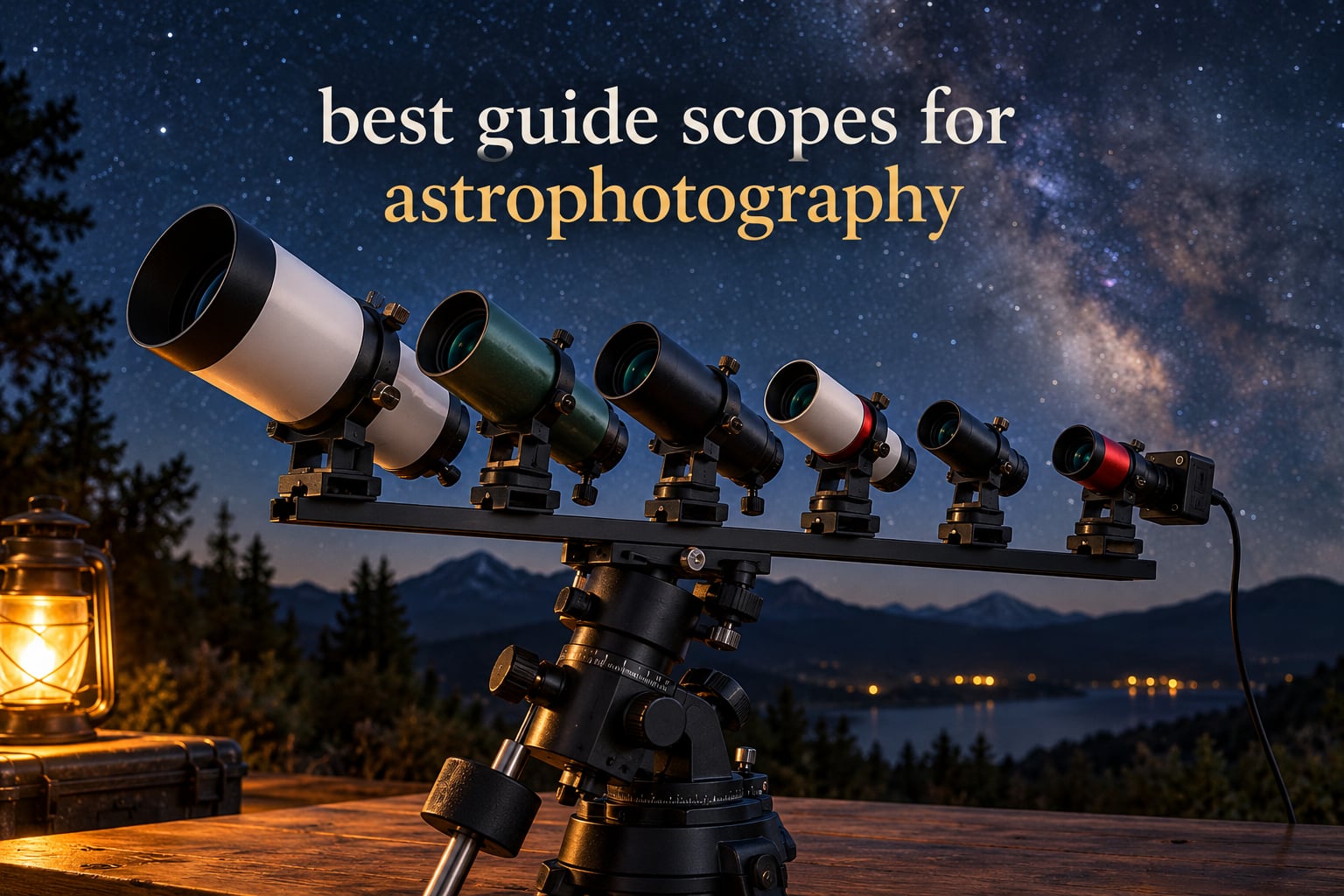
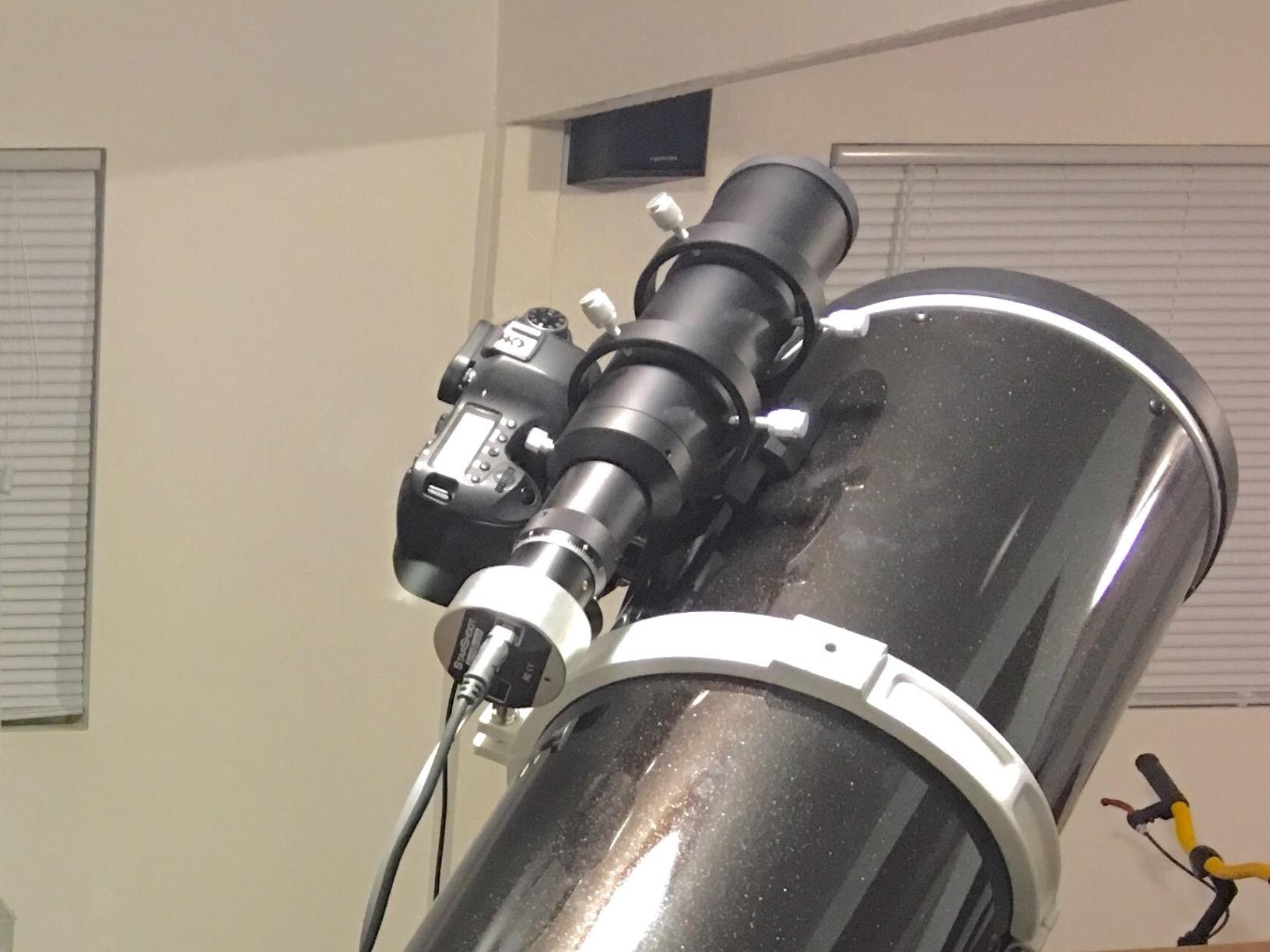
A guide scope is a small, inexpensive second telescope that sits alongside your imaging telescope and, paired with a guide camera, watches a star drift and sends correction pulses to your equatorial mount so it tracks accurately through long exposures.
That is the whole idea. The guide scope never looks at anything you care about photographically. It only measures error, which is exactly why the best guide scopes for astrophotography are judged on rigidity, focuser stability and back focus travel rather than on optical pedigree. We went through the full lineup of guide scopes currently on the market, read the owner reviews, and narrowed it to six worth your money in 2026.
What surprised us most is how little the glass matters. Forum consensus on AstroBin is blunt about it: the optical quality of a guide scope is largely immaterial, and a 60mm scope is plenty. Meanwhile the complaints that actually cost people guiding time are thread backlash, loose focuser rings and a guide star that will not hold focus in wind. We weighted our ranking accordingly.
We also built two tables that no competitor page on the search results currently offers: a full side-by-side of every scope below, and a lookup table that maps your imaging telescope focal length to the guide scope focal length you should actually buy.
Table of Contents
Top 3 Guide Scope Picks for 2026

Sky-Watcher EvoGuide 50DX
- 50mm f/4.8 ED doublet apochromat
- 242mm focal length
- stalk and rail included
All Six Guide Scopes Side by Side in 2026
| Product | Specifications | Action |
|---|---|---|
 SVBONY SV165 30mm Guide Scope SVBONY SV165 30mm Guide Scope |
|
Check Latest Price |
| SVBONY SV106 60mm Guide Scope |
|
Check Latest Price |
 SVBONY SV106 50mm Guide Scope SVBONY SV106 50mm Guide Scope |
|
Check Latest Price |
| Sky-Watcher EvoGuide 50DX |
|
Check Latest Price |
 Astromania 60mm FMC Guide Scope Astromania 60mm FMC Guide Scope |
|
Check Latest Price |
 SVBONY SV165 40mm Guide Scope SVBONY SV165 40mm Guide Scope |
|
Check Latest Price |
One note before the individual reviews. Every scope here lists a 1.25-inch interface, and every one accepts the small mono guide cameras most people own. The differences that matter in practice are aperture, how much back focus you get before you need spacers, and how stiff the mounting hardware is.
1. SVBONY SV165 30mm Guide Scope – The Lightest Starter Autoguider
SVBONY SV165 Guide Scope, 30mm Focal Ratio F4 Mini Finder and Guide Scope
- Very light at 342 g so tracking mounts barely notice it
- 45mm back focus needs no spacers for short guide cameras
- Sharp star images with no halos
- Nylon-tipped ring screws will not scratch the tube
- CNC metal machining keeps the tube rigid
- Basic focuser mechanics at this level
- Smallest aperture here so only dimmer guide stars
- Will not focus with a dielectric mirror diagonal
This is the scope we keep coming back to for anyone building a first autoguiding rig, and it earns the top spot on the numbers. It carries a 4.6 rating across more owner reviews than any other guide scope we evaluated, and it weighs 342 g, which means you can bolt it onto a lightweight star tracker or an entry-level equatorial mount without disturbing the balance you carefully dialled in.
The 45mm back focus distance is the sleeper feature. Small cylindrical 1.25-inch guide cameras have a sensor set fairly deep inside the body, and plenty of 30mm scopes need a stack of extension rings before they will reach focus at all. This one does not, which removes the single most common setup frustration people report.

Optically it is a fully multi-coated 30mm achromatic doublet with a 2.86 degree field of view. That is a wide field by guide scope standards, and wide field matters because more field means more candidate guide stars, which means PHD2 Guiding has options in light pollution and during a passing cloud. Owners repeatedly report sub-arcsecond total guiding error from this tube.
Physically it is CNC machined metal rather than the painted plastic you get at this end of the market. The included mounting rings use nylon-tipped thumbscrews, a small detail that stops you from scratching the anodizing every time you tighten the rings.
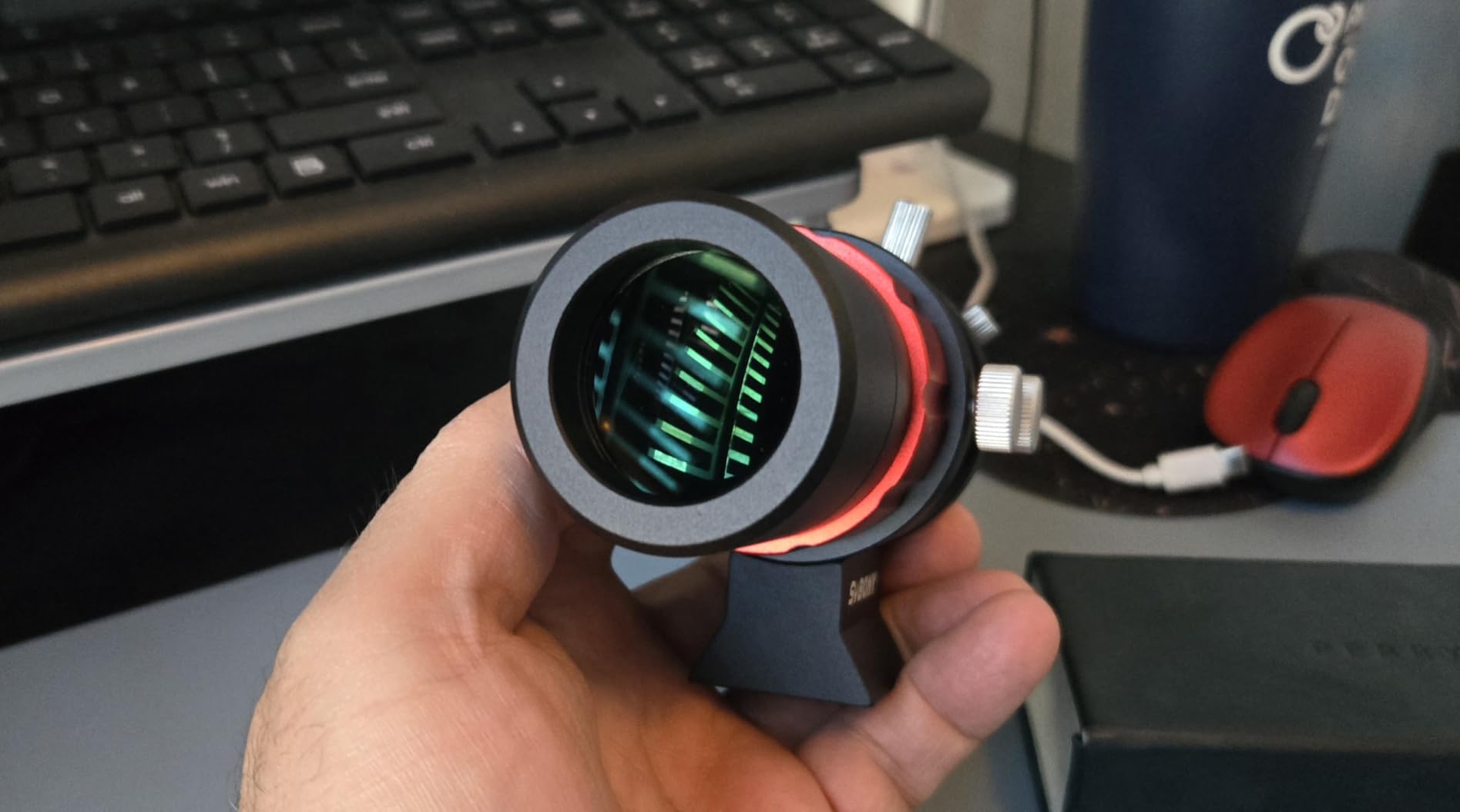
What the 30mm SV165 does well for you
It is the right pick for a wide-field refractor or a RedCat astrograph under about 400mm of focal length, where the guide scope only needs to track a slow drift. The 2.86 degree field makes target acquisition fast, and the low mass makes it ideal for a portable grab-and-go rig where you carry everything in one case.
It is also the safest first upgrade for anyone moving from unguided to guided imaging. There is no adapter stack to figure out, no balance to redo beyond a small shift, and nothing to learn beyond plugging a guide camera into the M42 or 1.25-inch port.
Where the 30mm SV165 falls short
The 30mm aperture is the smallest in this lineup, so in a genuinely dark site far from city glow you will be limited to fainter guide stars than the 50mm and 60mm options offer. If your imaging target sits in a sparse part of the sky and you need the extra light, step up.
The focuser is honest but basic, and it will not reach focus with a dielectric mirror diagonal because there is not enough back focus behind the objective for that accessory. That is rarely a real problem for imaging, since you are mounting a camera rather than an eyepiece, but it does mean this tube is not a visual finder as well as a guider.
2. SVBONY SV106 60mm Guide Scope – The Best All-Round Helical Focuser
SVBONY SV106 Guide Scope Finder Scope 60mm,Helical Focuser Finder Multi-Use
- Helical focus moves the camera without rotating the field
- Generous back focus suits 1.25 inch guide cameras
- All-metal build with sharp optics
- Doubles as a visual finder with an eyepiece
- Focuser and threads can feel stiff
- Will not reach focus with a right-angle diagonal
- Heavier at 790 g than the mini guides
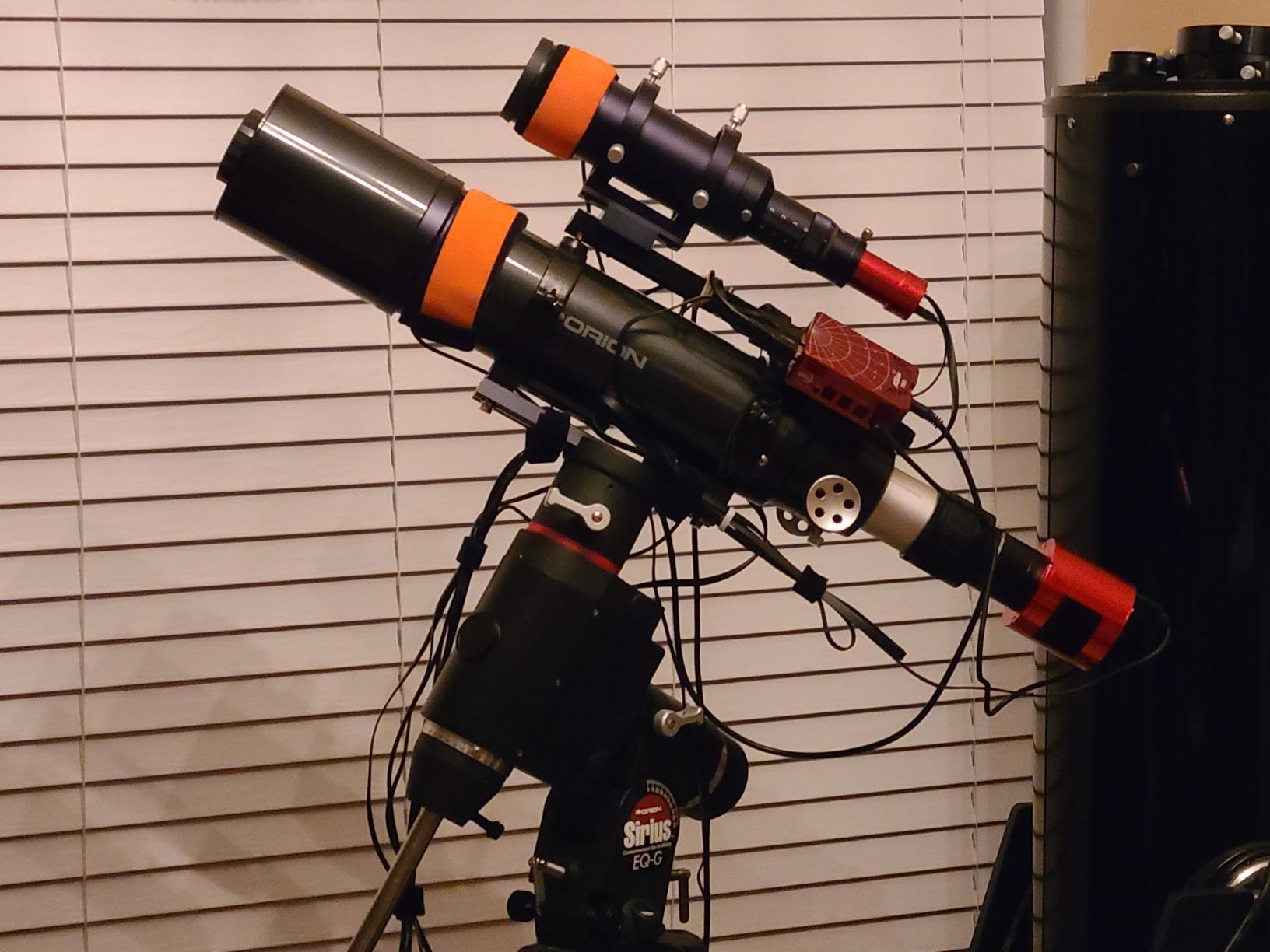
If we had to build one rig and stop, this is the tube we would mount. At 60mm aperture and 240mm focal length it sits in the middle of the sizing sweet spot for almost every wide-field astrograph and short refractor, and the 4.6 rating here sits on a healthy volume of owner reviews.
The helical focuser is the reason to pay up. It gives 8mm of fine travel that rotates nothing, so your guide camera stays perfectly still and the star field does not shift under your fingers. A compression ring protects the inserted camera body or eyepiece from scratches, which matters when you are swapping cameras in the dark.
The telescoping drawtube adds up to 35mm of extra back travel on top of the helical range, so a broad range of 1.25-inch guide cameras reaches focus without spacers. Male T-threads on the focuser collar suit cameras with female T-threads, and the all-metal optical structure keeps thermal changes small through a night.
It doubles as a straight-through finder. Drop in a 25mm eyepiece and it becomes a 9.6×60 finder, which is a genuinely useful second job for a tube you are carrying anyway.
Who should buy the 60mm SV106
This is the one for imaging telescopes running from roughly 500mm to 1500mm focal length. At 240mm it gives a sensible guiding ratio without needing to think about it, and the extra aperture over a 30mm mini means brighter guide stars and faster acquisition when you are fighting thin cloud.
It also suits people who want one tube for two jobs. If you use it visually for finding before switching to imaging, the helical focuser holds a crisp image and the finder view is bright rather than dim.
Where the 60mm SV106 frustrates people
Reviewers mention that the threads and helical focuser can feel stiff rather than silky. It is not a defect, but on a cold night with gloves on it takes more deliberate pressure to move than the William Optics class of focuser people in forum threads keep praising.
At 790 g it is more than twice the weight of the 30mm mini, and it will not reach focus with a right-angle diagonal without adding a Barlow. On a light payload mount, that extra mass is a real consideration for balancing.
3. SVBONY SV106 50mm Guide Scope – The Complete Kit With Rings and Dovetail
SVBONY SV106 Guide Scope 50mm, with Helical Focuser Finder and Guide Scope
- Three-stage coarse and fine focus arrangement
- Back focus suits ZWO 120 Mini class cameras
- Rings and dovetail bar included in the box
- Stable guiding reported up to about 1000mm
- Color fringing around bright stars
- Almost no documentation in the box
- No right-angle diagonal compatibility
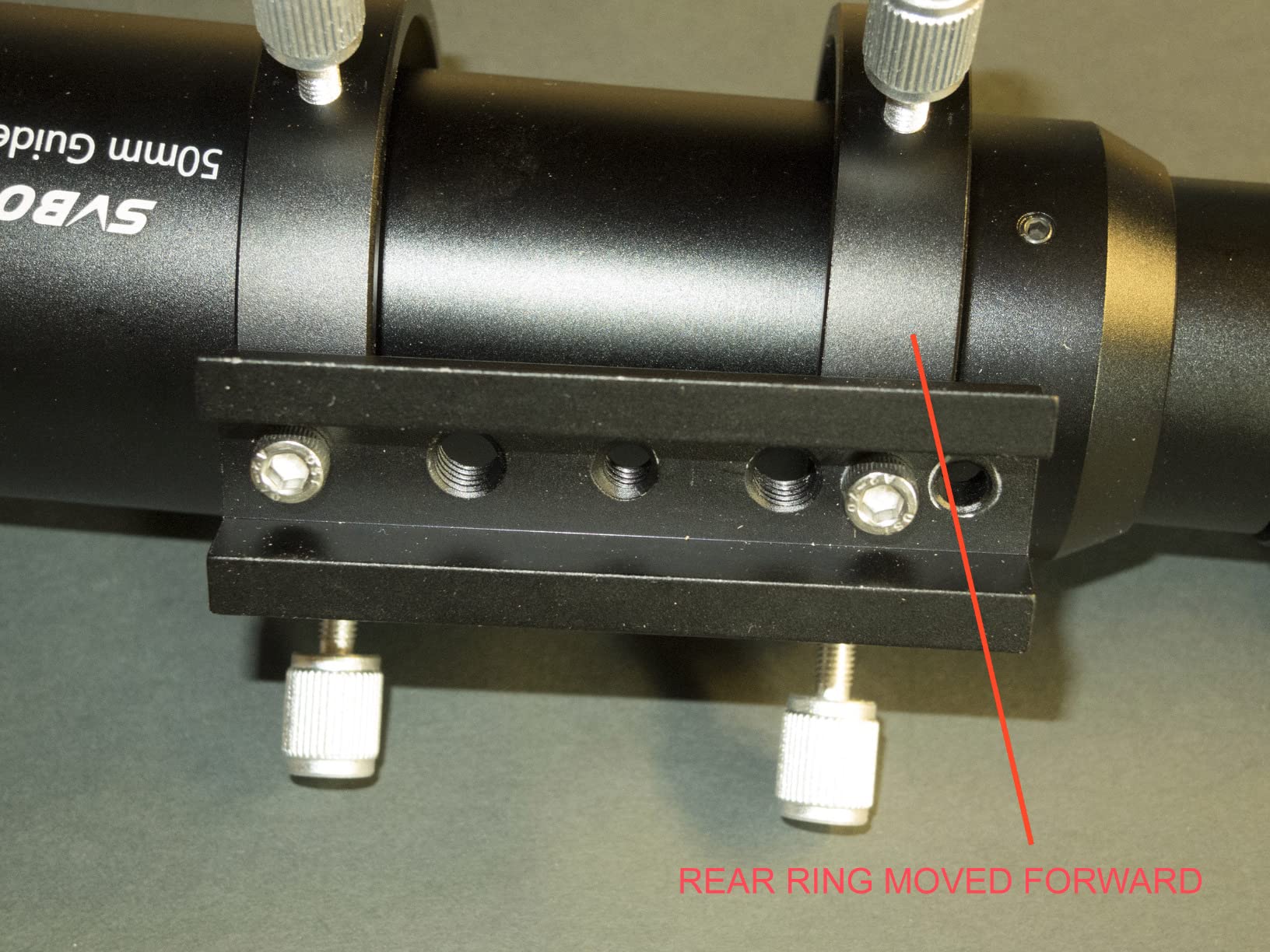
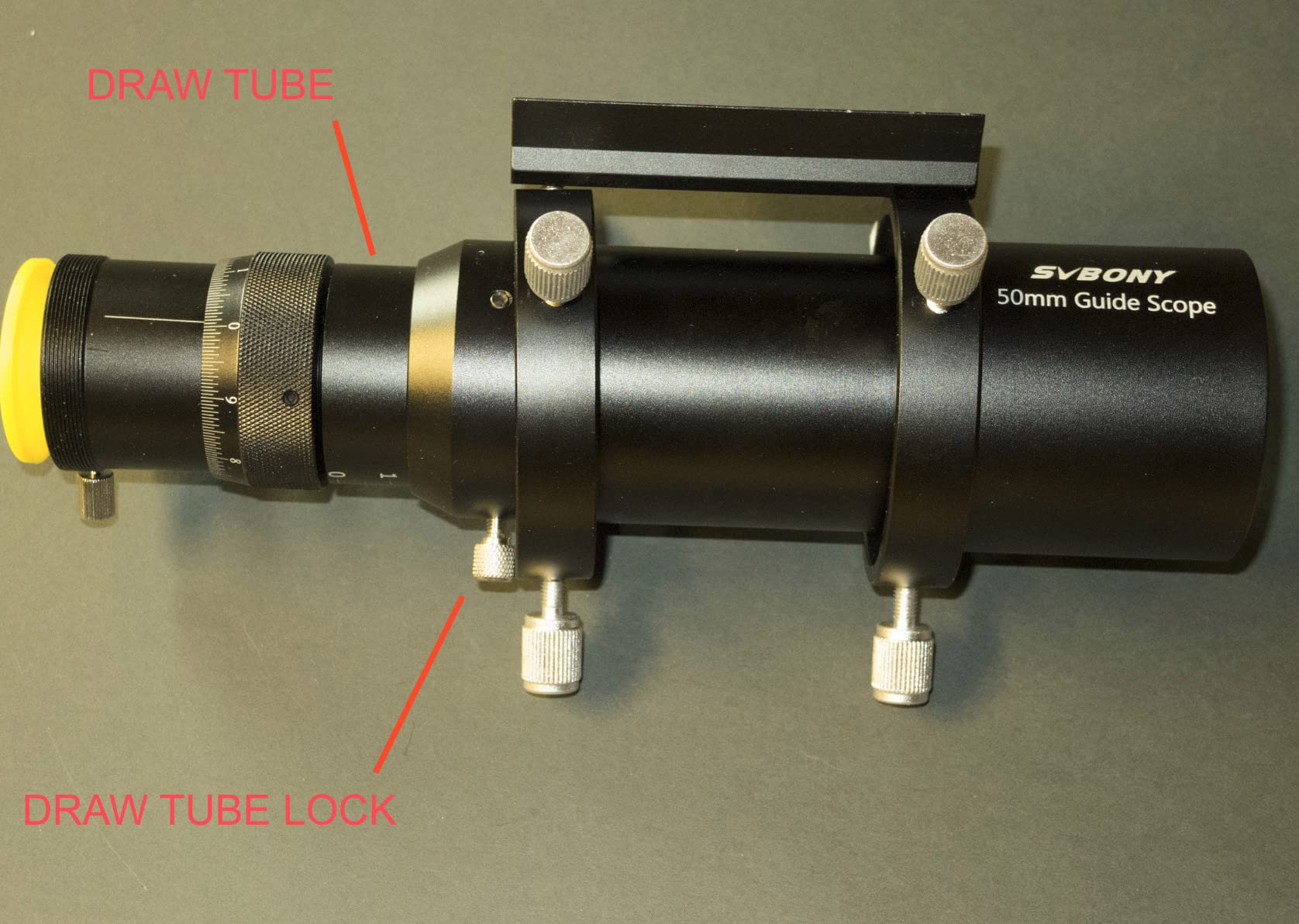
This 50mm version of the SV106 is the one to buy if you want everything in a single box. The box includes two heavy-duty guide scope rings, six metal thumbscrews, and a 3.5 inch dovetail bar with five threaded through-sockets. If you have ever spent an evening hunting for the right finder base hardware, that matters.
The focusing is a three-stage system: a sliding drawtube for coarse movement, an 8mm helical range for fine work, and up to 30mm of additional back travel from the drawtube. That combination covers everything from a small mono guide camera to a bulkier body, and it holds position once you tighten the thumbscrew lock-down.
The 3.4 degree field of view is the widest in this group, which translates into the largest selection of candidate guide stars on any given target. For a mono guide camera with small pixels that is valuable, since you want a bright star to hit and you want options when the field is empty.
Owners report stable guiding on imaging telescopes up to about 1000mm focal length, which covers the majority of entry-level and mid-range refractors sold today.
Why the 50mm SV106 suits most rigs
The complete kit is the deciding factor for beginners. Between the rings and the dovetail bar, you can mount it on almost any finder base or finder shoe without buying a single extra part. The knurled fine focus ring is larger and easier to grip in the dark than the smaller controls on the mini scopes.
For a rig built around a 400mm to 1000mm refractor, 190mm of guiding focal length keeps the ratio comfortable and the correction pulses gentle enough that your mount motors are not working constantly.
What to watch out for
The achromatic objective shows the colour fringing you would expect around bright stars, visible as a slight halo in a high-contrast field. It has no effect whatsoever on guiding accuracy, but if you also use the tube for visual work the halos are noticeable against bright targets.
Documentation is essentially absent from the box, so spend the first ten minutes working out ring alignment and the focus sequence before you are under a dark sky. The ring set screws also need to be genuinely tight, and reviewers note the nylon tips can slip if overtightened.
4. Sky-Watcher EvoGuide 50DX – The Optical Benchmark in the Set
- ED apochromat delivers pinpoint guide stars
- Smaller guiding stars than budget achromats
- Finder stalk and V-style rail both included
- Sharp enough to double as an astrograph
- Helical focuser has backlash
- Back focus too short for a star diagonal
- Rough focus motion complicates autofocus
This is the only apochromat in the group, and it earns its place. The 50mm f/4.8 objective uses matched ED glass in a doublet, so you get a smaller, cleaner guide star image than the achromats at roughly the same aperture. Owners who own several other guide scopes describe it as the quality benchmark.
That translates into a measurable practical gain: more usable guide stars and a lower total guiding error, because the software has a cleaner centroid to lock onto. In reviews of the budget 30mm and 50mm achromats, the recurring theme is that smaller guide stars are the single change people notice most.
Mounting flexibility is excellent. A machined finder stalk, a V-style rail, and a prime focus ring all come in the box, so it fits Sky-Watcher brackets, standard finder shoes and Vixen-style dovetail rails without extra adapters. Built-in T-threads let an optional adapter turn it into a fast astrograph if you want to use it for imaging as well.
It also comes with a two year warranty from the manufacturer, which is more reassurance than the small brands in this category offer.
Where the EvoGuide earns its price
Buy this one if your imaging telescope is a long refractor, if you shoot in heavily light-polluted skies where you want every photon the guide camera can gather, or if you simply plan to keep the same guide scope for a decade. The optical headroom means it will outlast the mount it is bolted to.
It is also the only scope here with enough optical quality to double as a lightweight wide-field imaging astrograph with a flattener, if your back focus allows it. That versatility is genuinely unusual at this size.
Where it disappoints
The helical focuser has backlash, and owners are explicit that you have to screw it forward to take up the slack before fine focusing works properly. Rough focus motion also makes electronic autofocus harder to tune if you rely on that for dithering.
Back focus is tight enough that it will not reach focus with a star diagonal, and the camera spacing can be restrictive with bulky DSLR bodies. At 2.7 lb it is also the heaviest guide scope here, which is a real cost on a small mount.
5. Astromania 60mm FMC Guide Scope – Built for Long Imaging Telescopes
Astromania Guide Scope Finder Scope 60mm FMC Multi-Use with Helical Focuser
- 45mm focus range from helical and drawtube
- Ample back focus so cameras mount without adapters
- Drops into a standard Synta-style finder base
- Users report total error under 0.40 arcsec
- No focus with a 90-degree diagonal
- Shiny drawtube interior can reflect light
- Drawtube can stick when moving it
The Astromania is the odd one out in this lineup and we think it is underrated. It is a 60mm achromatic objective with full multi-coating at 240mm focal length, and the manufacturer rates it for imaging telescopes up to about 1500mm focal length. That is a longer reach than most 60mm guides claim.
The worm or helical focuser prevents rotation of the camera during focusing, and the total focusing range is about 45mm, split between roughly 10mm of helical micro focus and 35mm of scaled drawtube. A compression ring lets most guide cameras mount without a separate adapter.
Reported guiding results are the best numbers in this group. Users on a 900mm imaging telescope report PHD2 total error consistently under 0.40 arcsec, which is comfortably inside the range where most refractors stop improving. It is a 4.2 rating, the lowest here, but the reviews point at specification trade-offs rather than failures.
Build quality is a genuine strength. The housing is black anodized aluminium with a milled knurled fine focus ring and a brass compression ring, and it includes pipe clamps plus a Synta-style mounting plate that fits standard dovetail finder brackets.
Best fit for long refractors
Reach for this if your imaging telescope is a 1000mm to 1500mm refractor such as an Esprit 100 or an Esprit 120. The 240mm focal length keeps the guiding ratio sensible at that focal length, and the 60mm aperture collects enough light to find a star quickly even when your imaging field is crowded.
It is also a good choice for anyone who wants the tube to double as a finder. A Kellner eyepiece gives you a bright, upright view for star hopping before you start the sequence.
Known limitations
Like most 60mm guides, it will not reach focus with a 90-degree diagonal, so it is not a diagonal-friendly visual instrument. Plan to use it with an eyepiece or a camera, not a diagonal and eyepiece combination.
The drawtube interior is shiny and can reflect light into the field unless it is flocked, which is a small dark-frame nuisance rather than a guiding problem. Reviewers also note the drawtube can stick slightly when moved quickly, and that the thin retail packaging offers little protection.
6. SVBONY SV165 40mm Guide Scope – Six-Point Alignment for Fussy Mounts
SVBONY SV165 Guide Scope, 40mm Focal Ratio F4 Mini Finder and Guide Scope
- Six-point ring adjusts the aim point
- Wider field and more aperture than the 30mm SV165
- Printed focus scale with a locking ring
- Fits a standard Synta-style finder shoe
- Limited focus travel may need T2 tubes
- Noticeable thread clearance allows rocking
- Screw focus rather than helical gearing
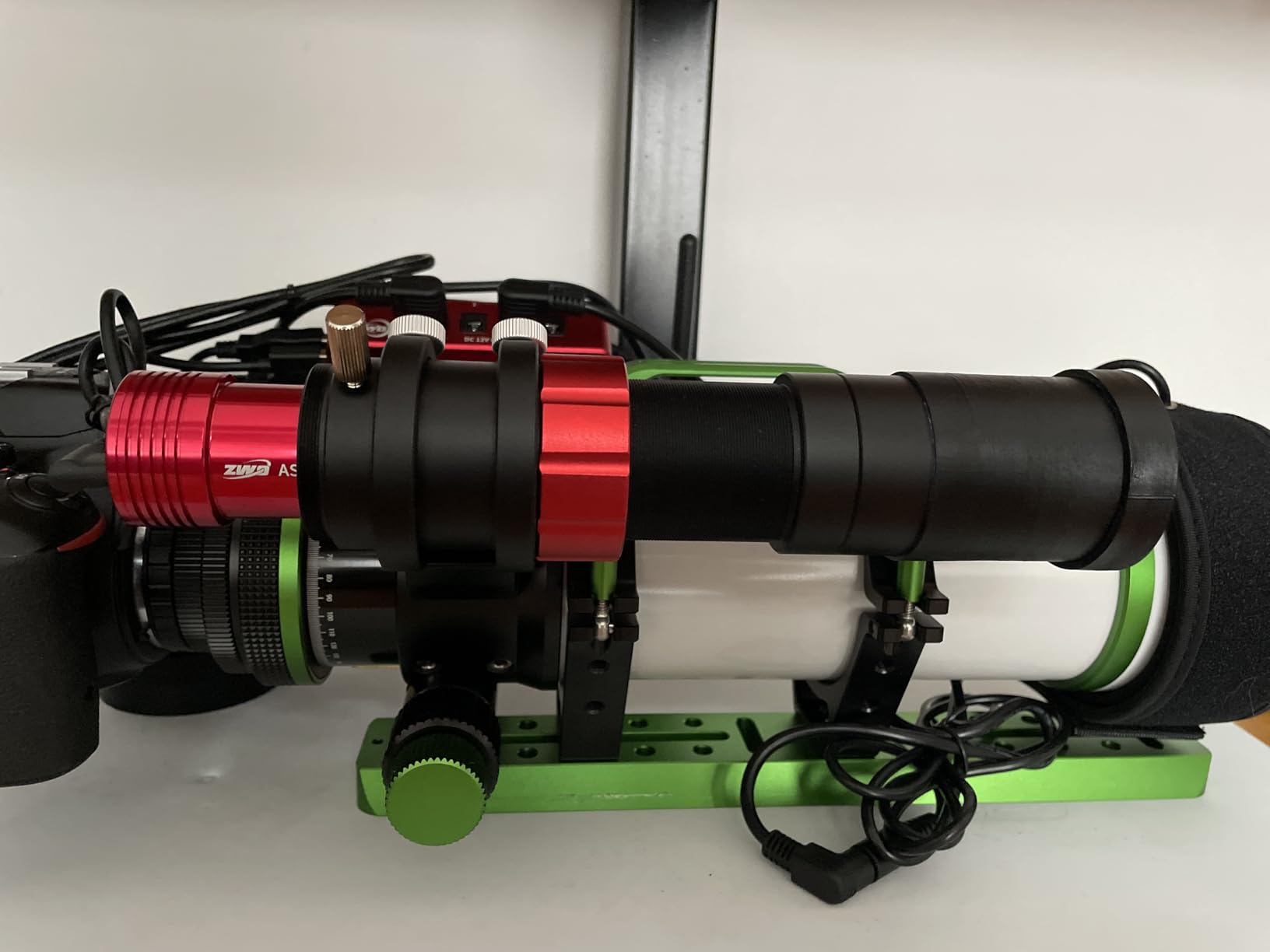
This is the 40mm sibling of the 30mm SV165, and the upgrade that matters is mechanical rather than optical. Instead of the two-screw ring on the smaller model, it carries a six-point adjustable guide ring, so you can move the aim point in both axes until the guide star sits in the same part of the field as your imaging target.
That is the fix for a specific and common problem. A cheap guide scope that cannot be lined up well will report guiding errors that have nothing to do with your mount, and you will spend a night chasing a fault that is really an alignment fault.

The front focuser has a printed scale to mark the focus position and a locking ring to hold it, so once you focus you can confirm at a glance that nothing has moved. Two T2 extension tubes can be added if you need more range, which keeps you from hitting a hard stop on a tight sensor train.
At 450 g it remains light enough for portable rigs, and it fits a standard Synta-style finder shoe so it plate-solves well for mount alignment routines.
When the 40mm version is the right buy
Choose it over the 30mm if you have already struggled with getting a small guide scope to point where you want it. The extra aperture gives a better finder view, which makes that alignment work far less frustrating in the first place.
It is recommended for imaging telescopes within 700mm focal length, and the added light over the 30mm makes it a comfortable step up for anyone running a mid-wide field astrograph who found guide star acquisition marginal.
What the listings get wrong
Be aware of a specification discrepancy here. The listing carries a 700mm focal length figure, yet one reviewer measured the tube at roughly 170mm, and the 18.4 degree field of view figure on the page is consistent with the shorter number. Treat the effective focal length as roughly 170mm and size your guiding ratio from what you can measure yourself.
Thread clearance is noticeable, so a camera can rock slightly after you tighten the locking ring, and the focus mechanism is a simple screw with a lock rather than a geared helical design. Tighten deliberately and check for rotation before you walk away from the rig.
How to Choose a Guide Scope
Two rules cover most decisions: match the guide scope focal length to roughly a third of your imaging telescope focal length, and buy the stiffest, lightest mounting hardware you can carry. Everything else is refinement.
Aperture and focal length: how big does a guide scope need to be?
Aperture decides how bright and how small your guide stars look. A 30mm achromat is enough for wide-field astrographs and portable rigs where every gram counts. A 50mm gives noticeably smaller stars and more candidates. A 60mm, or a 50mm apochromat, is the sensible ceiling for almost everything short of a long SCT.
Going wider past 60mm mostly buys you weight. The reason is the guiding ratio: once your guide scope reaches roughly a third of your imaging focal length, additional length stops improving accuracy and just makes the tube harder to carry and harder to keep rigid.
Guide scope focal length ratio for your imaging scope
This lookup table is the single most useful thing on this page. Pick your imaging telescope focal length on the left, then choose a guide scope focal length from the right-hand column.
- Up to 400mm, RedCat and wide-field astrographs: choose a 120mm to 190mm guide scope.
- 400mm to 700mm, short refractors: choose 190mm to 240mm.
- 700mm to 1000mm, Esprit 100 class: choose 240mm to 300mm.
- 1000mm to 1500mm, Esprit 120 class: choose 240mm to 400mm, ideally a 50mm apochromat.
- 1500mm to 2500mm, long refractor or Edge HD: consider an off-axis guider instead.
A guide scope much shorter than a third of your imaging focal length produces large, coarse corrections that can add error rather than remove it. Much longer and the guide star is so small that any focus slip or flex immediately ruins the guiding signal.
Mounting base and rigidity beat optical quality
Differential flexure is the failure mode that ruins otherwise good rigs. It happens when the guide scope moves relative to the imaging scope in wind or under motor torque, so the guide camera sees error that does not exist on the imaging sensor. Wind-induced right ascension instability followed by declination error is the classic signature.
Defend against it with a short, rigid mounting path. A machined finder stalk, a V-style rail, or a solid dovetail in a proper finder base all work. The scopes in this roundup that include two heavy-duty rings and a machined dovetail bar give you the fewest degrees of freedom, and that is worth more than a better glass element.
Focuser travel, back focus and camera fit
Back focus is the number to check before you buy. Many 1.25-inch guide cameras have a deep sensor set, and a scope with only 15mm of travel will leave you stacking extension rings. Anything from 30mm to 45mm of total travel covers most small mono guide cameras with no spacers at all.
Also check thread type. Scopes with male T-threads on the focuser collar suit cameras with female T-threads, and scopes offering both a 1.25-inch and an M42 port give you flexibility if you change guide cameras later. If you can only have one focus adjustment, a helical or worm design beats a plain screw because it moves the camera without rotating it.
Weight, payload capacity and travel rigs
Guide scope plus guide camera typically adds between 0.5 kg and 1.5 kg to the top of your imaging train, and on a mount already near its payload limit that extra mass at the far end increases the balancing torque. It is not usually catastrophic, but it is why we rate the 342 g 30mm mini so highly for travel work.
Star trackers are the other case where weight decides everything. If your mount is designed to move rather than track smoothly, adding mass is the fastest way to degrade performance. Choose the lightest scope that gives you the aperture you need.
Guide scope vs off-axis guider: which should you buy?
A guide scope is a separate telescope that sees a completely different patch of sky, so field curvature and tilt between the two are corrected away by the guiding loop. An off-axis guider samples the actual imaging field, which makes it immune to differential flexure, but everything the main scope does to the image, the guider also sees.
Use a guide scope for anything up to roughly 1500mm of focal length on a refractor. Beyond that, or on an SCT or Edge HD where the corrector plate sits at the end of the tube, an off-axis guider usually becomes the better tool because there is no separate tube to keep aligned.
Which guide camera to pair with a mini guide scope
Match the camera’s pixel size to the guide scope focal length rather than the other way round. A small mono camera with roughly 2 to 3 micron pixels on a 30mm scope at 120mm gives about 2.9 arcseconds per pixel, which is coarse for guiding. That is precisely why wide-field scopes with longer guide scopes and wider guide fields pair better with small-pixel cameras.
Whichever camera you pick, focus once and lock it. Forum advice is consistent on this point, and the Urban Astrophotography review of a locking-focus guide scope reports it holding focus for a year with no slippage. That single habit eliminates most of the guiding problems people blame on the mount.
Frequently Asked Questions
How do I choose a guide scope?
Match the guide scope focal length to roughly a third of your imaging telescope focal length, then pick the lightest, stiffest mounting hardware you can carry. Aperture between 30mm and 60mm covers everything, and 30mm to 45mm of back focus means you avoid extension spacers. Optical quality matters far less than focuser rigidity.
What is the difference between a guide scope and a finder scope?
A guide scope is paired with a guide camera and guiding software to measure tracking error and send correction pulses to the mount. A finder scope is an optical sight used by your eye to centre a target. Several scopes in this roundup, including the SVBONY SV106 60mm and the Astromania 60mm, do both jobs with an eyepiece.
What is the best imaging to guiding focal length ratio?
About one to three, meaning a guide scope roughly a third the focal length of the imaging telescope. A 550mm refractor pairs well with a 190mm to 240mm guide scope, and a 1000mm refractor with 240mm to 300mm. Going much shorter makes corrections too coarse and going much longer makes the guide star too small to focus reliably.
What size guide scope do I need?
A 30mm mini covers wide-field astrographs and lightweight rigs, a 50mm suits most refractors up to about 1000mm, and a 60mm reaches 1500mm focal length imaging telescopes. If you have an off-axis guider or a telescope beyond that, a guide scope is no longer the right tool.
Is a guide scope better than an off-axis guider?
A guide scope is simpler, cheaper and immune to field curvature because it views a different patch of sky, so it is the better choice for refractors up to about 1500mm. An off-axis guider samples the imaging field directly, which removes differential flexure entirely and makes it better for long focal length telescopes and SCTs.
The Verdict by Rig Type in 2026
Build a first guided rig or a portable one, and the SVBONY SV165 30mm is the guide scope to buy. Its 342 g mass, 45mm back focus and 2.86 degree field solve the three problems beginners actually hit, and it carries more owner reviews than anything else here.
For most refractors between 400mm and 1500mm, the SVBONY SV106 60mm is the strongest all-round buy, while the 50mm version wins if you want rings and a dovetail bar in the box. Choose the Sky-Watcher EvoGuide 50DX when guide star quality matters more than weight, and the Astromania 60mm when you are pushing toward 1500mm focal length.
Whatever you choose from this list of the best guide scopes for astrophotography, focus once, lock it, and bolt it on as rigidly as you can. Those three habits will do more for your final image than any upgrade you make to the optics.