
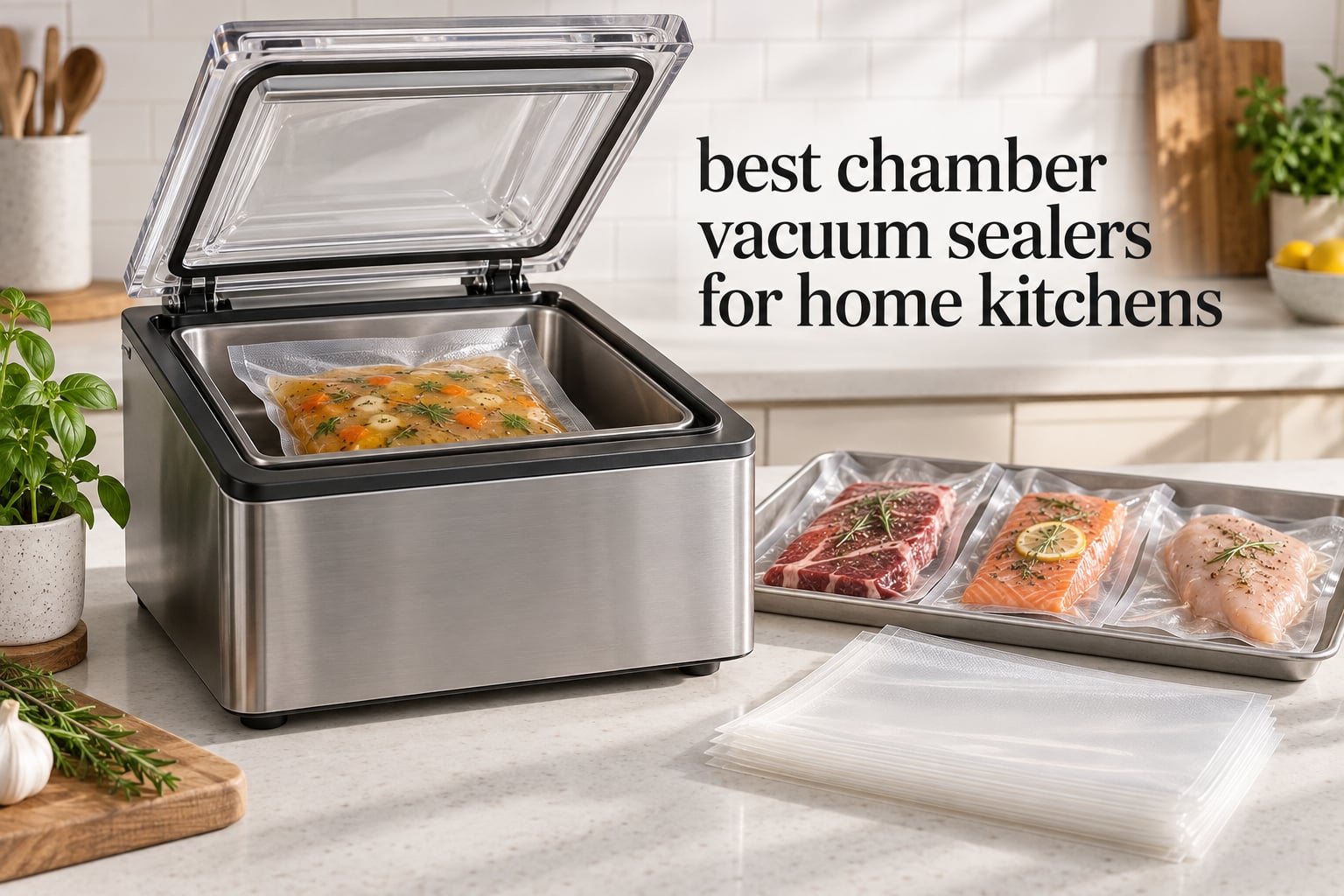
Chamber vacuum sealers pull the air out of an entire sealed box rather than sucking it through a nozzle, which is the only reason they can seal a bag of soup without shooting liquid into the pump. That single design difference decides everything else: thicker seals, less freezer burn, and the ability to pack liquids, marinades and bulky cuts most edge sealers choke on.
We compared ten of the best chamber vacuum sealers for home kitchens, weighing the specs that actually change daily use: chamber depth, seal bar width, machine weight, pump type and warranty length. The ten models below span lightweight home units to genuinely commercial machines, and every weight, dimension and rating comes from the manufacturer’s own listing and customer reviews.
If you have never used one, read the chamber versus edge section first. It is the fastest way to decide whether a chamber machine earns a permanent spot on your counter. If you already know you want one, the top picks table is where to start.
Pair this guide with our best vacuum sealers for meal prep roundup if you want an edge sealer for sous vide bags alongside one of these chamber machines, which is what most home kitchens end up doing. If your counter needs work before a machine fits, our concrete countertop sealer guide covers the surface question too.
Table of Contents
Top 3 Chamber Vacuum Sealers for Home Kitchens in 2026
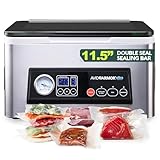
Avid Armor USV20
- 4L chamber for wet foods
- 11.5 inch seal bar
- 17.3 lb body
- replaceable seal bar
Best Chamber Vacuum Sealers at a Glance in 2026
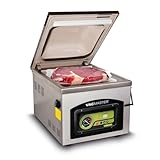
All ten machines below chamber vacuum seal from the whole cavity, so every one of them handles soups and marinades. Weight is the number that decides most home purchases, and it ranges from 17.3 pounds on our top pick to 89 pounds on the commercial VacMaster.
| Product | Specifications | Action |
|---|---|---|
| Avid Armor USV20 |
|
Check Latest Price |
| VacMaster VP230 |
|
Check Latest Price |
 VEVOR DZ-260C VEVOR DZ-260C |
|
Check Latest Price |
 VacMaster VP210 VacMaster VP210 |
|
Check Latest Price |
 VEVOR DZ-260S VEVOR DZ-260S |
|
Check Latest Price |
 Beelicious Pro CVS101 Beelicious Pro CVS101 |
|
Check Latest Price |
 Gasbye CV4520 Gasbye CV4520 |
|
Check Latest Price |
 Wevac CV12 Pro Wevac CV12 Pro |
|
Check Latest Price |
 Vesta Precision V513 Vesta Precision V513 |
|
Check Latest Price |
 CM255 Chamber Sealer CM255 Chamber Sealer |
|
Check Latest Price |
What Is a Chamber Vacuum Sealer?
A chamber vacuum sealer is a countertop food-storage appliance with an airtight box that removes the air from the whole chamber and the bag together once the lid closes, then heat-seals the bag opening across one or two lines. An edge sealer does the opposite: a nozzle pulls air out of the bag through grooves in the bag wall while the bag lies flat on a counter.
Because a chamber sealer evacuates the entire cavity, the pressure outside the bag and the pressure inside the bag fall at the same rate. A pouch of stock, a bag of marinated pork, or a chunk of watermelon compresses evenly instead of tearing open or draining into the pump. The seal itself is a full-width heat weld rather than a narrow strip pressed against an open nozzle, so the finished bag is flatter, wider and more durable in the freezer.
Chamber units also bring accessories to the party. Most of the models below have an accessory hose port that lets the same pump pull air from Mason jar lids, canisters and small food containers, so one machine covers both bags and jars. The tradeoff is size: a chamber machine is a countertop fixture rather than a storable tool, and the models in this roundup weigh between 17.3 and 89 pounds.
Chamber Vacuum Sealer vs Edge Vacuum Sealer: Which Is Better?
A chamber vacuum sealer is better if you seal liquids, marinate meat, freeze bulky cuts or want the strongest possible seal. An edge vacuum sealer is better if you mostly seal dry, flat portions, work in a small kitchen and want something you can put in a cupboard.
The practical differences come down to four things. First, liquid handling: an edge sealer can pull soup or marinade straight into the pump, while a chamber sealer traps it inside the bag. Second, seal width: a chamber bag gets a seal across the full 10 to 12.5 inch bar, whereas an edge sealer welds a narrow line. Third, bags: chamber machines use inexpensive smooth pouches, and edge sealers need grooved or embossed channel bags that cost more per unit. Fourth, footprint: a countertop edge sealer is light and shallow, and a chamber machine is a heavy box that occupies counter space permanently.
Owners on BBQ Brethren and smokingmeatforums.com who own both types generally keep both, using the chamber machine for soups, sauces and removing air, and a wide edge sealer for whole briskets and oversized cuts. Our advice matches that: if you already own a decent edge sealer, the chamber upgrade earns its counter space by adding capability, not by replacing what you have.
1. Avid Armor USV20 – Best Overall Chamber Vacuum Sealer
Avid Armor USV20 Chamber Vacuum Sealer Machine – High-Volume 11.5” Sealer
- Seals soups and marinades with no liquid reaching the pump
- Very light at 17.3 lb for a chamber machine
- Adjustable vacuum time from 15 to 60 sec
- Works with inexpensive smooth pouches
- User-replaceable seal bar
- 3 inch maximum chamber depth limits bulky items
- Buttons occasionally need a power cycle
- No dust cover included
The USV20 is the one we would put on a normal kitchen counter. At 17.3 pounds it is the lightest chamber machine in this roundup by a wide margin, and owners repeatedly call that weight the deciding factor in a small kitchen. Avid Armor owners also point out that the seal bar is user-replaceable, which keeps the machine alive well past the point where cheaper units quit.
Its 4L stainless chamber measures 12.25 inches wide by 8.5 inches long by 3 inches high, paired with an 11.5 inch heating bar and adjustable vacuum timing from 15 to 60 seconds. We use the manual vacuum time rather than max on soft items, because a 3 inch deep chamber that pulls hard on a delicate item will press it against the chamber wall.
Bag compatibility is where this machine quietly wins on cost. It works with smooth pouches up to 11 by 10 inches, and smooth pouches cost noticeably less per unit than the grooved channel bags an edge sealer requires. Over a year of weekly use that difference adds up, and the accessory port also handles Mason jars and vacuum canisters through an external port.
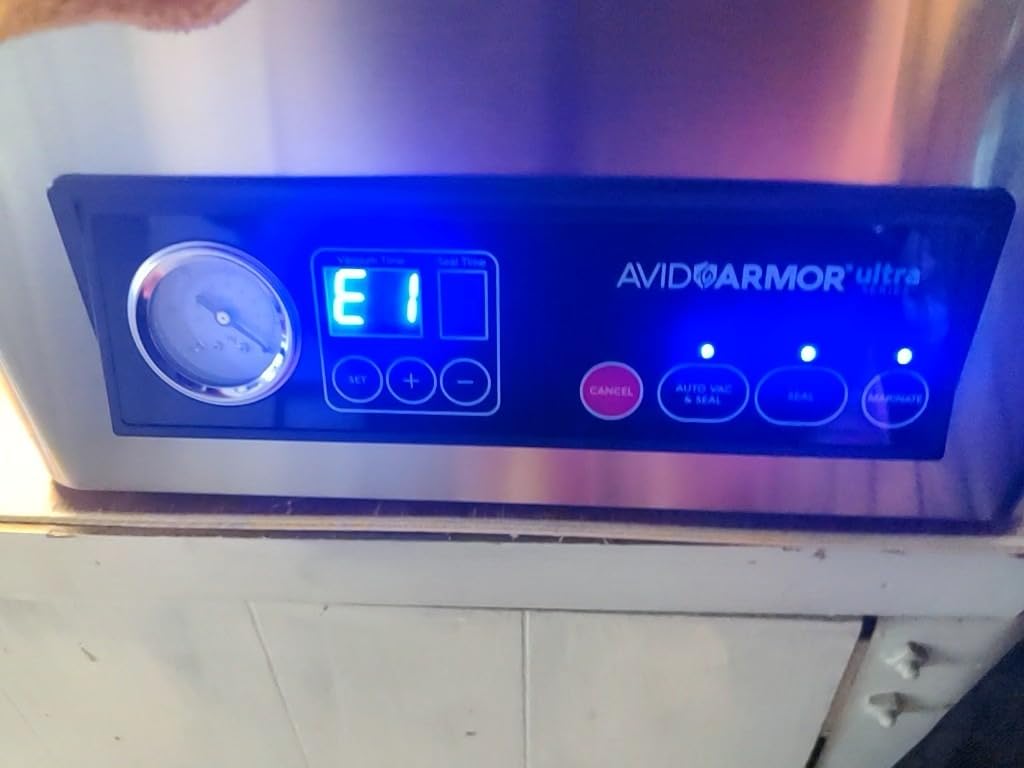
Two things to know before you commit. The 3 inch maximum chamber depth is the first real limit, and it means a whole ham or a large roast will not lie flat inside the cavity. Second, the buttons occasionally need a power cycle before they respond, and no dust cover is included, so the open chamber collects kitchen dust between uses.
Why the USV20 suits a small kitchen
The body measures 14 inches wide by 12 inches deep by 8.25 inches tall, which is about the footprint of a stand mixer, and it weighs less than a bag of flour. Almost every other machine here weighs 40 pounds or more, and several require a dedicated shelf rather than counter space. If your kitchen has one clear corner, this is the machine that fits it without an argument.
Where it falls short
Buyers who want to pack whole poultry or a full round of game will outgrow the 3 inch chamber quickly, and the maximum seal time is needed for thick Mylar bags, so those cycles run longer. The other drawback is the open cavity itself, since without a dust cover the stainless floor needs a wipe before the next bag goes in.
2. VacMaster VP230 – Best Premium Chamber Sealer for Large Bags
- Largest bag capacity in the roundup at 12 by 15 inches
- One-touch panel with pressure indicator
- Dependable double seal
- Built for prolonged continuous use
- Handles soups and sauces cleanly
- Weighs 89 lb
- Oil pump needs periodic changes
- Large counter footprint
The VP230 is a machine that never sees a small bag. Its chamber measures 12.5 by 15 by 5 inches, so it takes the largest pouches in this roundup, and the 5 inch chamber height is double what most home units offer. That extra height is what lets a bag of stock or a whole small bird sit upright instead of splaying flat.
The 12.25 inch seal bar double-seals across 3 MIL to 7 MIL Mylar, and the one-touch panel with a pressure indicator ends the cycle for you if you get the timing wrong. A stop button seals the bag and opens the chamber automatically, which matters when you are running twenty cycles in a row while packing a freezer.
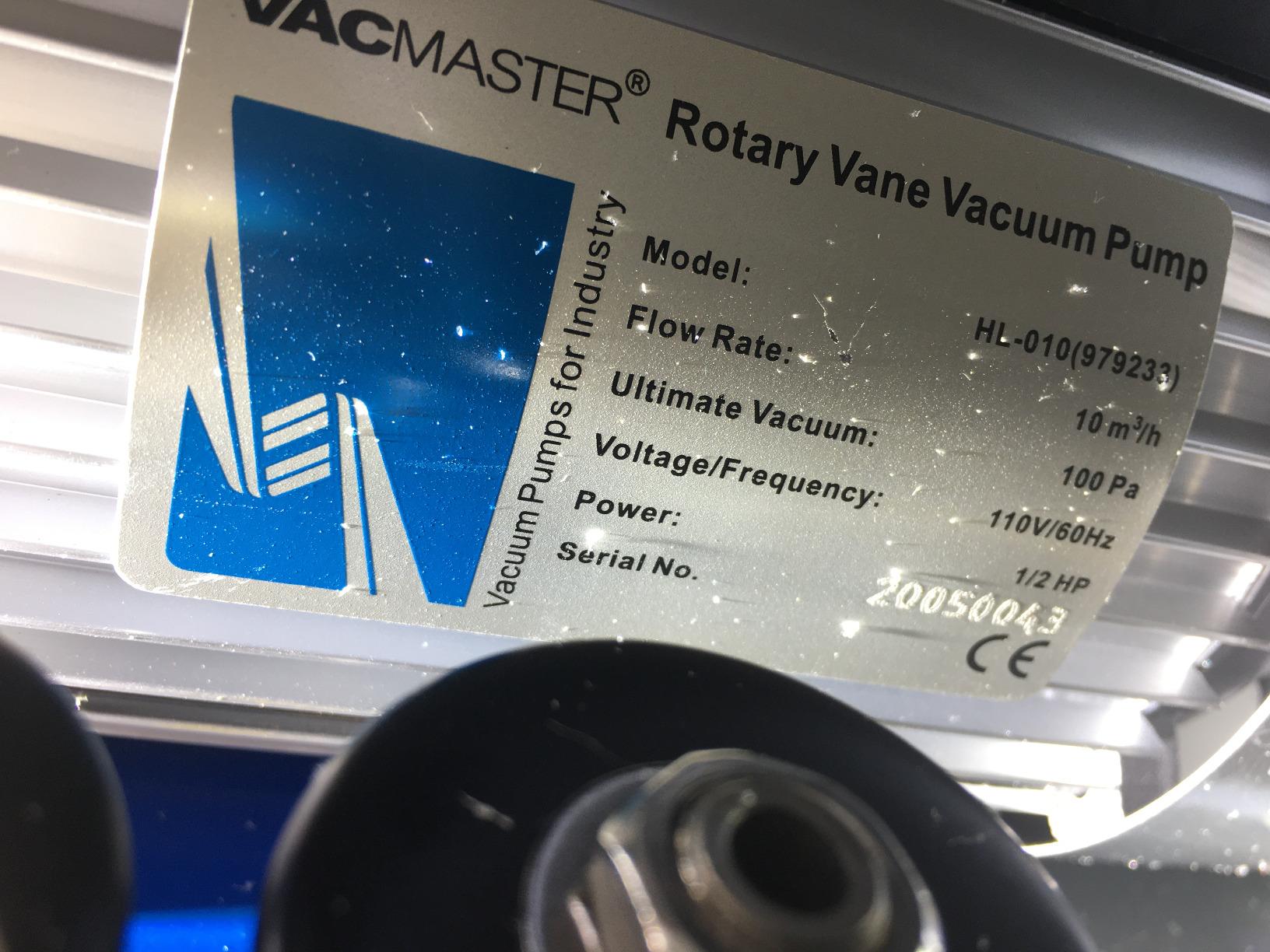
Backing that is a heavy-duty 1/2 HP oil pump, and here the honest caveat is the weight: 89 pounds, with a body of 15.5 by 19 by 15.75 inches. This is not a machine you move to a shelf when dinner is over. It is a fixture, and it belongs to kitchens that preserve serious volume of food or run a small home food business.
The oil pump does need periodic oil changes, which is the routine maintenance most owners would rather avoid. In exchange you get a pump that holds vacuum through long sessions, and reviewers describe seals as repeatable rather than occasional. Sixty assorted 3 mil chamber pouches, filler plates and a maintenance kit are in the box.
What you give up for that capacity
Counter space is the honest limit. This machine is bigger than a microwave box, and at 89 pounds most people accept it in a garage, basement or pantry rather than in the working kitchen. If you seal four bags a month rather than four a week, the capacity is wasted weight on a shelf.
How it handles liquids and sous vide
Because the pump evacuates the whole 5 inch tall chamber, soups, sauces and marinades seal without leaking into the machine, and reviewers call the result consistently clean. The double seal is the other reason it works for sous vide, where a slow leak ruins a long cook and the bag has to sit in a water bath for hours.
3. VEVOR DZ-260C – Best Chamber Sealer for Big Cuts and Bulk Loaves
VEVOR Chamber Vacuum Sealer 320W Sealing Power 12.6 Inch Sealing Length
- Deep chamber fits large steaks and full bread loaves
- 10 mm dual lock seal handles freezer swelling
- Stainless chamber resists oily and salty foods
- Pressure gauge prevents crushing delicate items
- LED display and simple controls
- Weighs 62 lb
- Bulkier body than smaller home chamber units
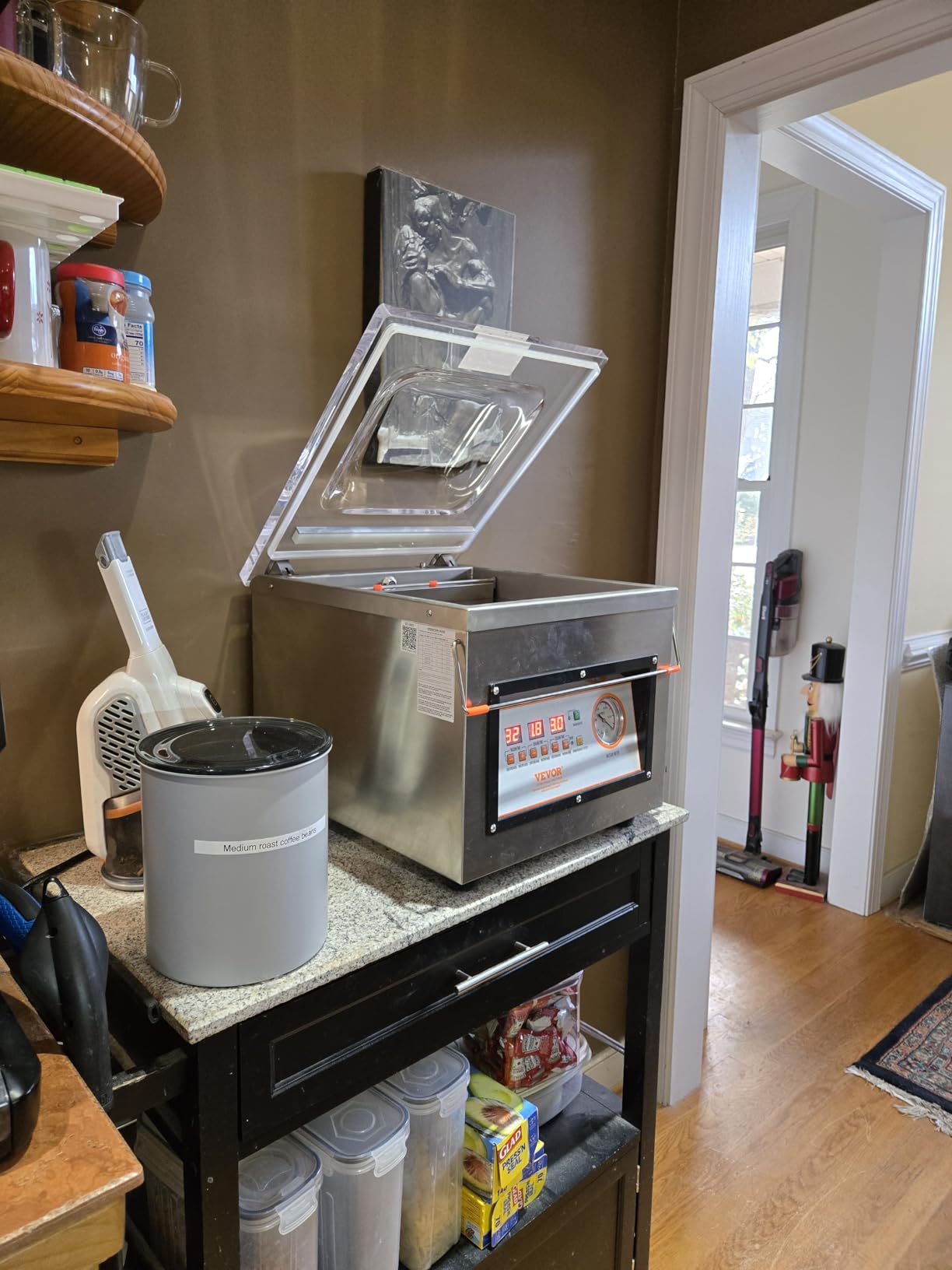
This VEVOR is the one to look at if you bake or buy meat in bulk. The chamber is deep enough for full loaves of bread and thick steaks, and the 12.6 inch sealing length is the second widest bar in the roundup. With 320W of heating power driving a 10 mm dual lock seal strip, it produces the kind of heavy weld that survives a bag swelling in the freezer.
Vacuum strength is listed at minus 100 kPa, driven by a 180W pump, and the stainless chamber is rated for oily or salty foods, which matters if you seal brined pork or oil-packed vegetables. A built-in real-time pressure gauge and LED display make it easy to watch what the pump is doing instead of guessing at a timer.
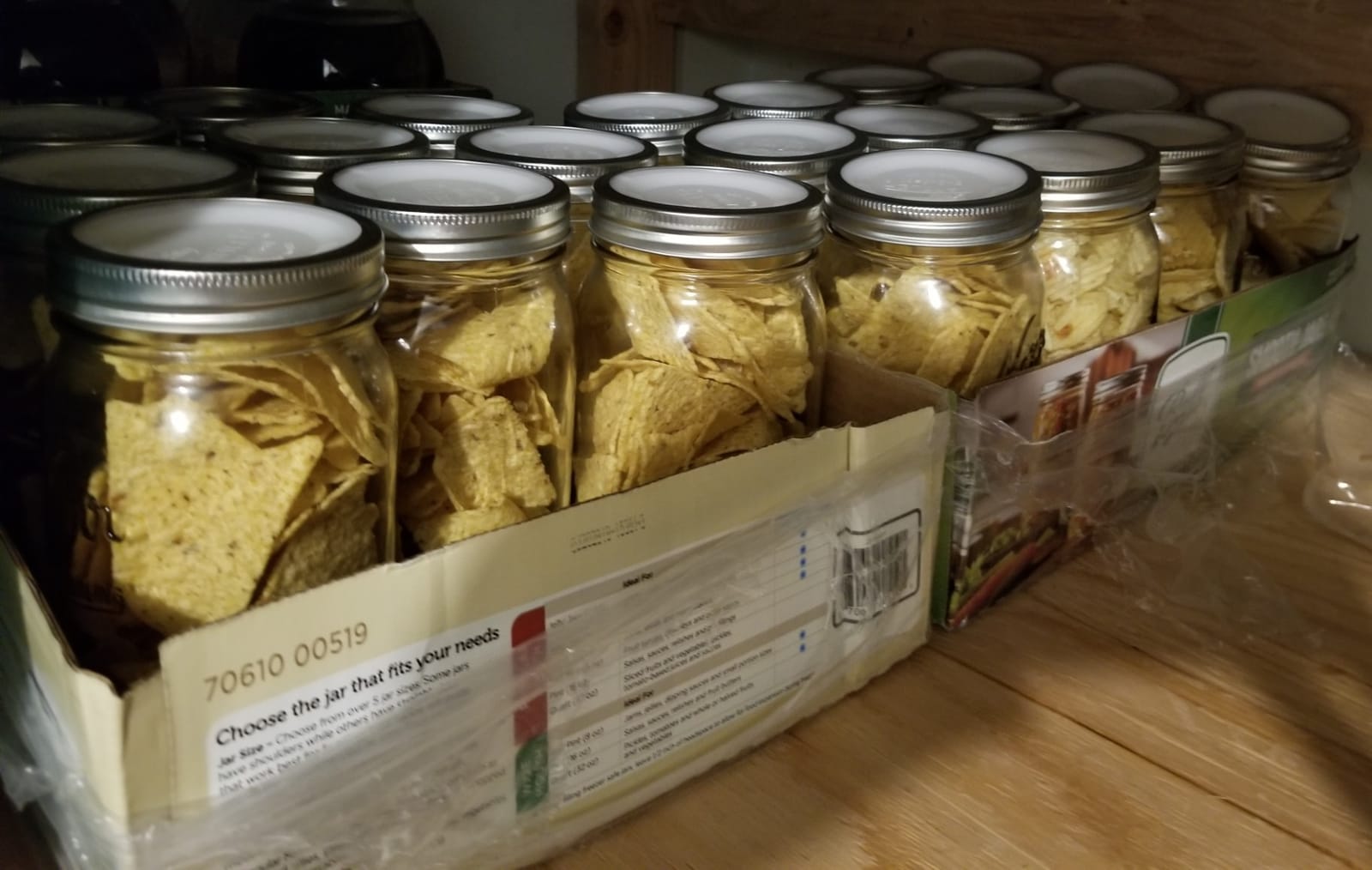
That gauge has a second use owners like: if you watch the reading and stop early, the vacuum will not crush fragile items like chips or breaded food. It is the same feature that protects a sliced avocado or a stack of crackers, and it is one reason we rate this machine above cheaper units with the same headline wattage.
The catch is weight and bulk again. At 62 pounds with a body of 17.9 by 16.1 by 16 inches, this is a semi-permanent fixture in most kitchens. The box includes a spare heating wire, Teflon cloth, vacuum pump and wrench, so the consumable part of the machine is covered from day one.
Who should pay attention to the deep chamber
Bakers, butchers and hunters are the obvious audience. If you regularly deal with a full loaf, a large roast or a stack of brined cuts, the shallow 3 inch chambers on lighter machines will frustrate you, and this one accepts standard vacuum bags for homes, bakeries and butcher shops alike.
What the pressure gauge is really for
Minus 100 kPa is a strong pull, and strong pulls destroy soft food. Watching the gauge and stopping the cycle before full evacuation protects chips, crackers, breaded items and soft fruit, and it is a habit worth building before the first bag of freezer bread goes in.
4. VacMaster VP210 – Best Maintenance-Free Chamber Sealer
- Dry air pump needs no oil changes
- Compact for a commercial chamber unit
- Built for prolonged continuous use
- Double sealing from 3 to 7 MIL Mylar
- Handles soups and marinades cleanly
- Weighs 72 lb
- 110W power rating is modest
- Older listing with a lower category rank
The VP210 solves the single most common complaint about commercial chamber sealers, which is pump upkeep. Its dry air pump needs no oil changes, so the maintenance schedule is a wipe-down of the chamber and occasional seal bar cleaning. Members of r/BuyItForLife single out serviceable pumps as the main reason to buy one machine and keep it, and this design supports that thinking.
It is not a small machine, but it is the most compact of the heavy commercial options. The overall body is 14 by 20 by 15 inches and the chamber is 11.25 by 15.25 by 5 inches, which takes pouches up to 10 by 13 inches across a 10.25 inch seal bar. The 5 inch chamber height is the useful part for soups and stocks.
Sealing runs across 3, 4, 5 and up to 7 MIL Mylar in a double seal, and the one-touch panel behaves like the VP230, with a stop button that seals and opens the chamber. That control layout is easy to learn in about a minute, and it is why reviewers pair this machine with sous vide work and bulk freezer packing.
At 72 pounds, repositioning is the main complaint, and the 110 watt power rating is modest next to the pump output. Support comes from a company with more than 45 years of experience in vacuum equipment, which is the sort of thing that matters when something fails in year three.
Why a dry pump matters for a home kitchen
An oil pump needs a scheduled change, the right oil, and a little care, and skipped oil changes shorten pump life. In a home kitchen that runs in bursts rather than daily, a dry pump removes the one task you are most likely to forget, and it is the single strongest reason we rate this above the heavier VP230 for most homes.
Where the weight still bites
Seventy-two pounds is more than most people can safely lift into a high cabinet, so plan a fixed location before you buy. It is a pantry, garage or lower-shelf machine, and buyers who ignore that end up moving it less than they should.
5. VEVOR DZ-260S – Best Value Chamber Vacuum Sealer
- Minus 100 kPa vacuum at a mid-range price
- Compact body for a chamber machine
- Shallow flat chamber floor handles liquids
- Adjustable vacuum seal and cool-down timing
- Works with Mylar and channel bags
- Weighs 45 lb
- Lid needs 25.5 inch vertical clearance
- Cycle time closer to a minute
- Few reports of lost vacuum performance
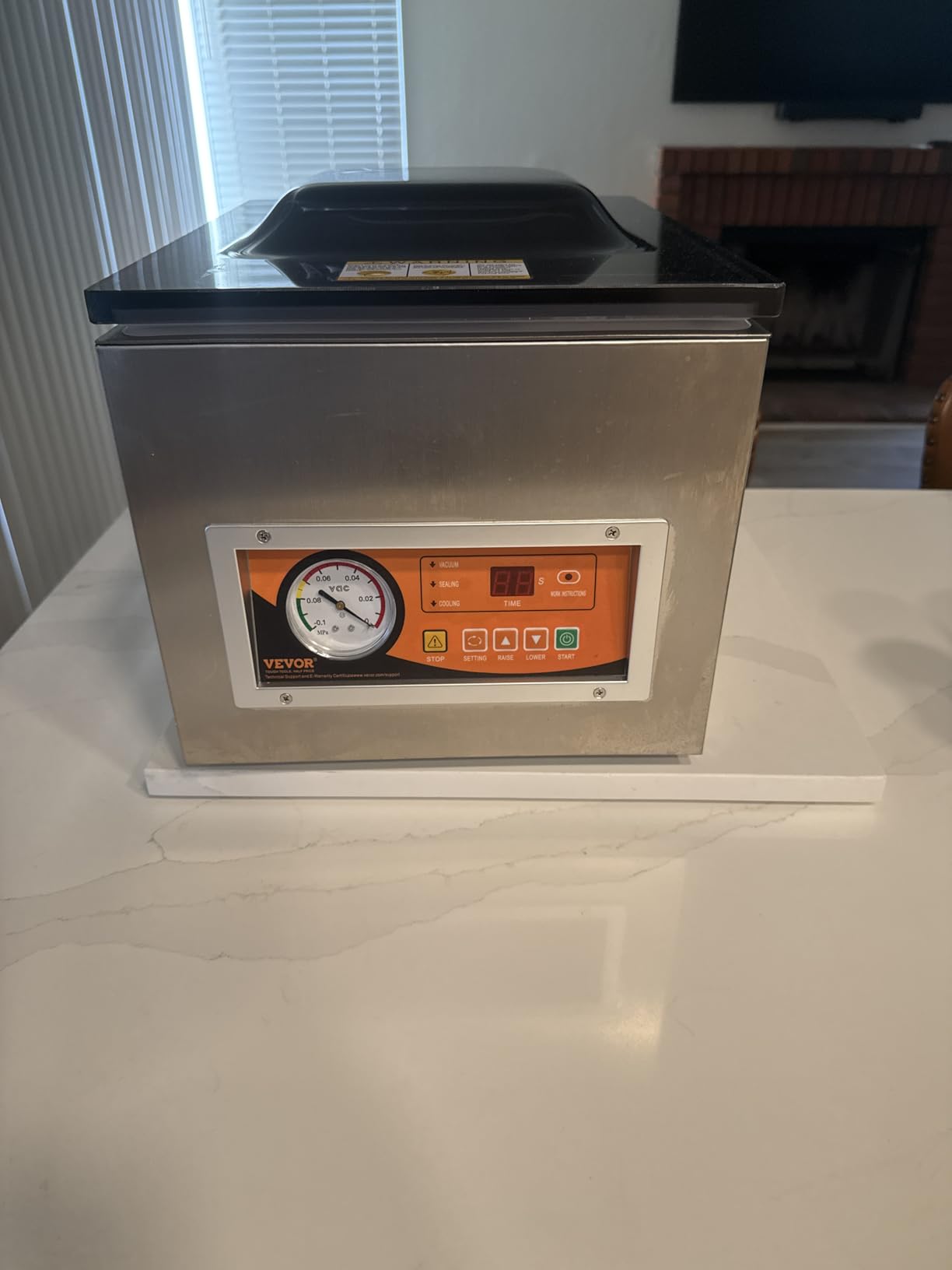
The DZ-260S is the value pick in this roundup because it pairs minus 100 kPa vacuum strength with a body that is smaller than most machines in the same class. At 15.9 by 12.4 by 11.8 inches and 45 pounds, it is a machine you could move to a different counter once a year, which is more than we can say for anything above 60 pounds here.
Vacuum strength is minus 100 kPa from a 120W pump, and the 260W heating element drives an 8 mm wide dual lock seal strip across a 10.2 inch sealing length for bags up to 10 inches wide. Unlike some chamber machines, it works with Mylar bags as well as channel-style bags, so you are not locked into one pouch type.
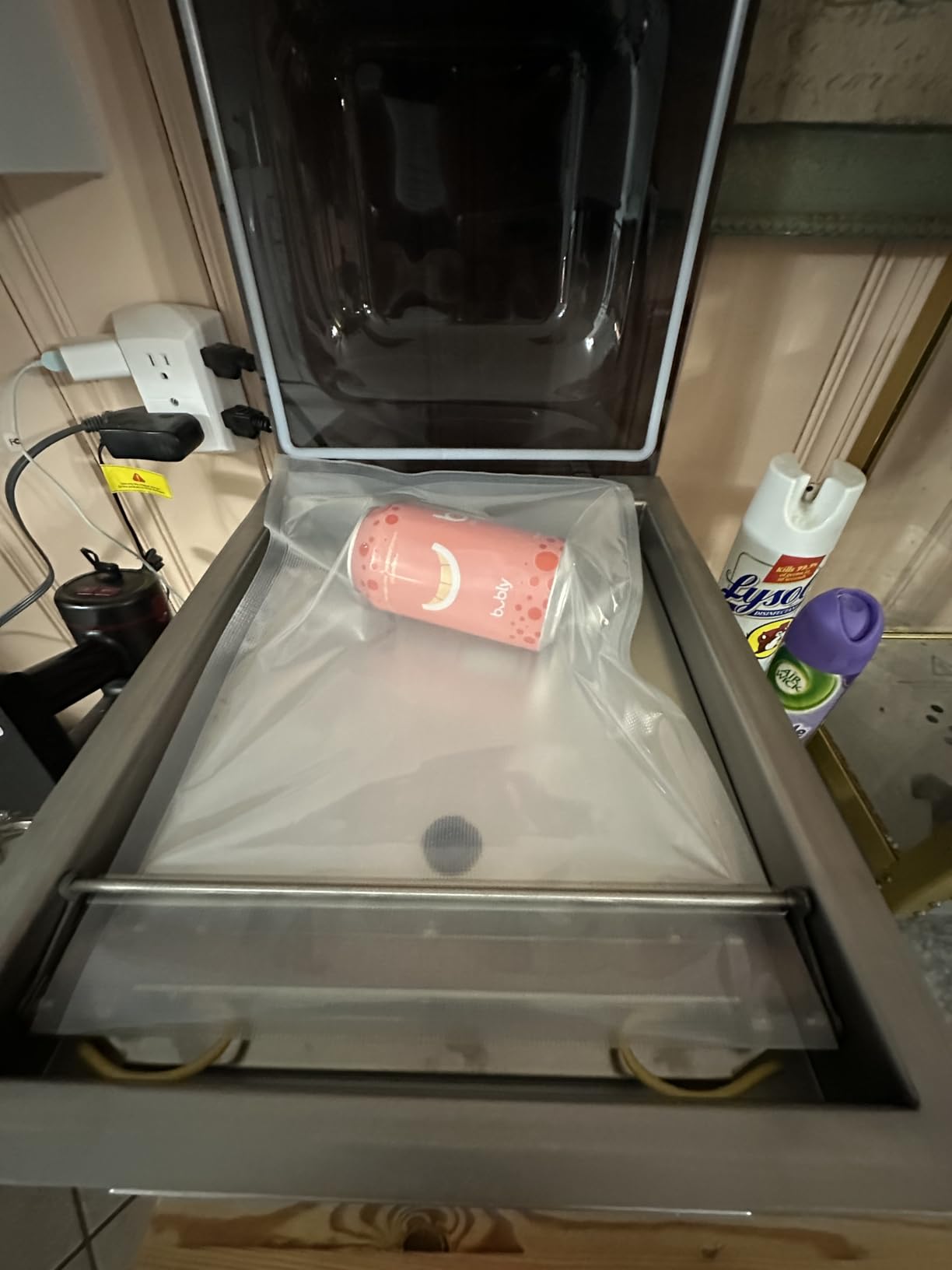
The shallow, non-sloped chamber floor is the detail that reviewers mention when explaining why it handles liquids, and a 3 pound bag of coffee or a 4.5 pound whole chicken fits inside. Adjustable vacuum time, seal time and cool-down settings, plus a real-time pressure gauge and LED display, give you the same manual control as pricier machines.
Two practical notes. Pump oil must be filled before first use, and the lid needs roughly 25.5 inches of vertical clearance to stay open, so check the cabinet above your counter before this one goes in. A small number of owners also report losing vacuum performance within weeks of use, so keep the receipt and test a bag soon after delivery.
Best for the counter space you actually have
This is the machine to buy if your kitchen is a galley, an apartment, or a counter shared with a coffee maker. Forty-five pounds is still a commitment, but the footprint is small enough to sit beside a toaster oven and the chamber is deep enough for real food rather than garnish-sized portions.
What about sealing liquids and soups
Because the pump pulls the whole chamber and the floor is flat, soups and sauces stay inside the bag and the machine finishes with a clean chamber. Expect a cycle closer to a minute for a full wet bag, which is slower than the compact home units but far more reliable than an edge sealer managing the same food.
6. Beelicious Pro CVS101 – Best Chamber Sealer for Marinating
Beelicious Pro DualCore CVS101 6L Chamber Vacuum Sealer for Wet Foods
- Dual zone with a separate lower external sealing area
- Marinate mode infuses in about 15 to 20 minutes
- Four oil-free dry pumps need no maintenance
- Handles soups powders nuts and Mason jars
- Dual seal bar for consistent seals
- Bulky footprint for a chamber sealer
- Upper chamber smaller than some commercial units
- App features need a smartphone
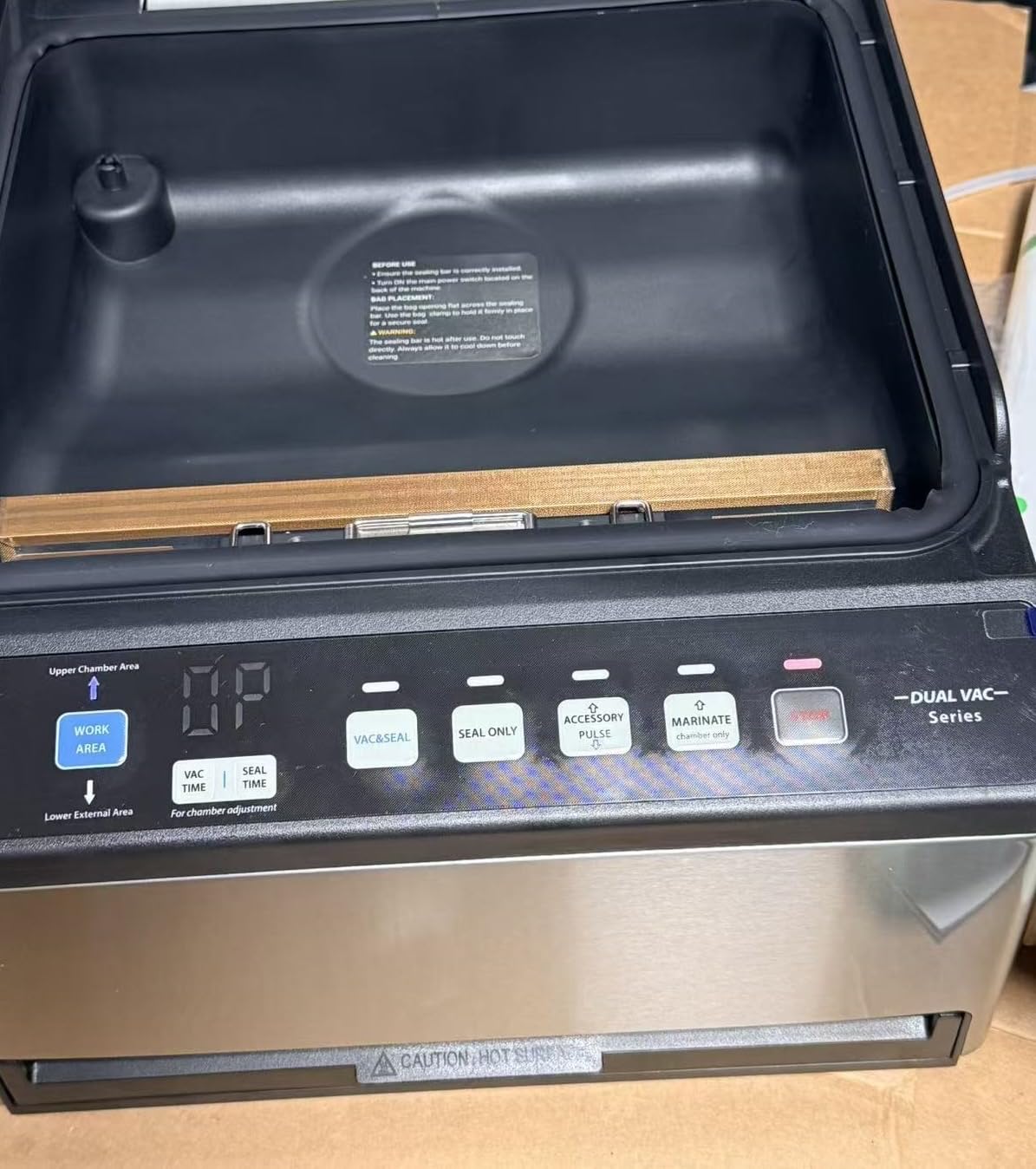
The CVS101 is the only machine here with two separate work areas. The 6L upper chamber measures about 300 by 260 by 80 mm, and a lower independent external sealing area handles anything that will not fit inside, which quietly solves the capacity ceiling that limits other chamber units.
The marinate function is the reason most owners bought it. The 5x flavor infusion mode cycles the vacuum against an external container port, and owners report marinating times dropping from hours to about 15 to 20 minutes. A user on r/sousvide notes you can run it twice in an open container without wasting a bag each time, which is how the feature is meant to be used.
Maintenance is a non-issue with four oil-free dry pumps driven by a 230W dual-core system, and vacuum strength reaches up to minus 100 kPa. The removable 12 inch dual-seal bar handles textured, smooth and embossed bag types, and the box includes bags in all three styles plus an accessory hose and app support for scanning and date logging.
It is the lightest multi-zone machine here at 25.7 pounds, but reviewers still call the footprint bulky, and the 6L upper chamber is smaller than the commercial units on this list. The app-dependent features need a smartphone, which is a fair question to ask if you want the machine to stand alone.
How the dual zone changes daily use
Most home cooks hit a wall when a cut is too wide for the chamber. A lower external sealing area gives you an edge-sealer style option on the same machine, so a wide flat piece of fish or a long strip of flank does not force you to cut it into small portions first.
What to know about the marinate mode
Infusion works by pulling air out of the container and letting it back in repeatedly, so the liquid moves into the meat faster than a static soak. Set it up in a container deeper than the food, use the external port, and expect the flavour change to be obvious within about twenty minutes.
7. Gasbye CV4520 – Best Chamber Sealer for Spare Parts and Warranty Cover
- Seals soups sauces and marinades with no leakage
- Deep chamber holds more meat per bag
- Double seal lowers long-term leak risk
- Spare gasket and heating element in the box
- Three year warranty with US support
- Weighs 40 lb and is awkward for some users
- Small learning curve with wet foods
The CV4520 is the pick if you care about what happens in year four rather than year one. A replacement gasket and a replacement heater element ship in the box, the 11.5 inch dual heating wires are replaceable, and the warranty runs three years. Among the machines in this roundup that combination is unusual, and owners coming from cheap edge sealers call it out specifically.
The 5.3 quart chamber gives a 9.7 inch chamber width, driven by a 300W high-power pump that removes air from the entire cavity rather than the bag alone. The result is a bag that conforms tightly around chunky food, and reviews describe it as a decisive step up for anyone who previously used a sub 100 dollar edge sealer.
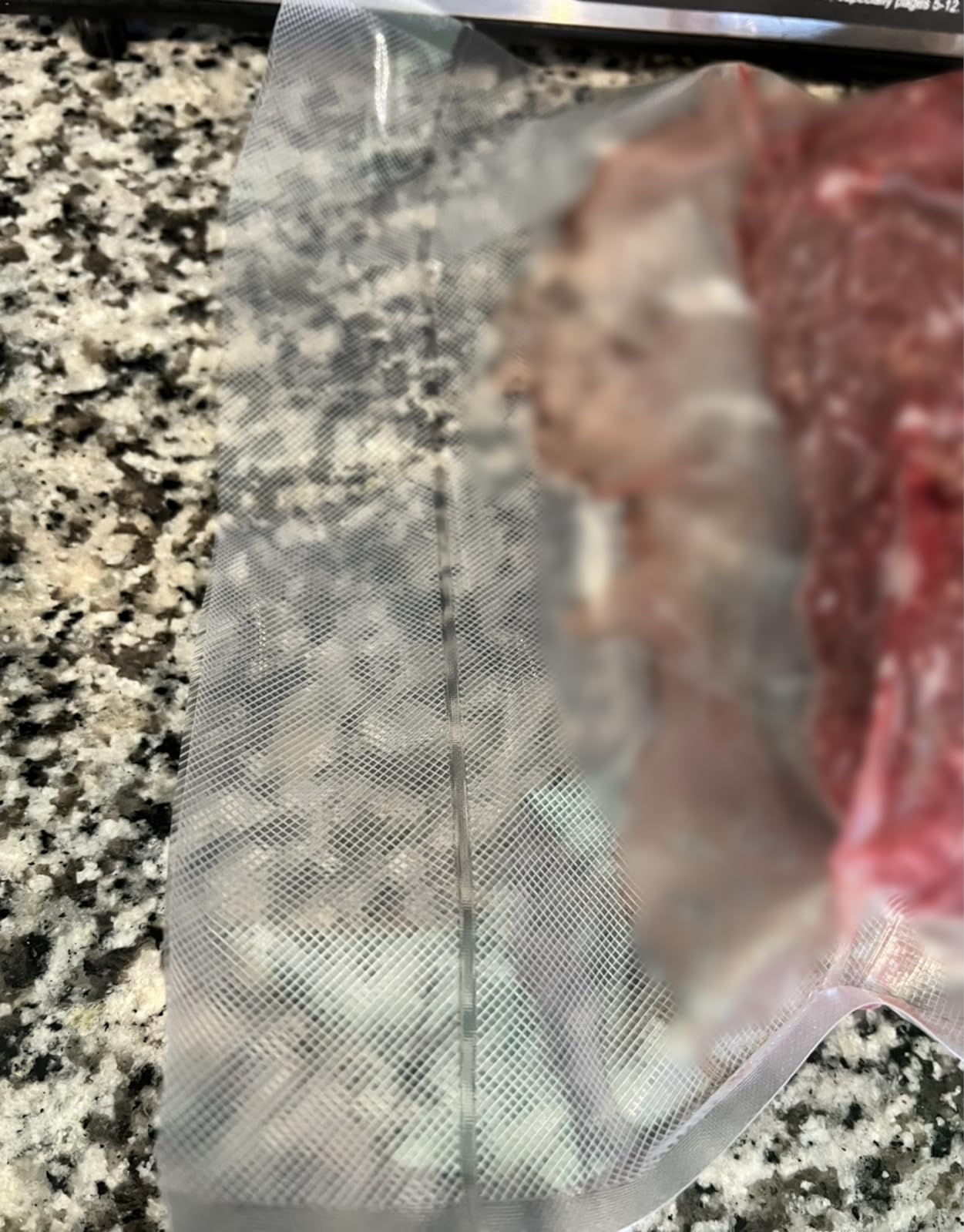
Thirty pre-cut 11 by 11 inch vacuum bags are included, along with an external air suction hose, a filler plate and a power cord. That filler plate matters more than it sounds, because it gives you a flat surface to lay a bag on while filling soups, which is where a lot of first-time wet-food seals go wrong.
At 40 pounds with a body of 13.6 by 12.2 by 8.1 inches, the machine is on the heavy side but still within reach of most people. Owners report a short learning curve when starting with wet foods, and the machine draws on 115 volts, so it works on standard US kitchen circuits.

Why spare parts decide longevity
Almost every vacuum sealer eventually needs a new heating element, and when the replacement is sold separately the real cost of ownership climbs. Shipping a spare gasket and heater with the machine means the first repair is a ten minute swap with a part already in a drawer.
Best for wet foods and bigger meat loads
The double seal on the 11.5 inch bar is what makes this machine dependable for soups and sauces, and the deep chamber means more meat per bag. If your freezer plan is a monthly bulk buy, a single chamber that holds a larger portion saves you from cutting everything into small bags.
8. Wevac CV12 Pro – Best Chamber Sealer for Automatic Vacuum Sensing
Wevac 12″ Chamber Vacuum Sealer, 8.5 Qt, Auto Vacuum Sensing for Food
- Automatic vacuum sensing sets the cycle from food volume
- Extra deep 8.5 quart chamber fits bulky roasts
- Removable tray and washable seal bar clean fast
- Dual sealing wires for leak-proof seals
- Accessory hose and Mason jar kit included
- Higher price point than entry-level units
- Fewer customer reviews on this newer listing
The CV12 Pro is the largest chamber in the roundup by volume, at 8.5 quarts and 12.4 by 12.8 by 3.8 inches, and that depth is the reason it takes bulky roasts and family-size portions. The 4 inch chamber height also means a bag of soup sits inside the cavity rather than pressed against the door.
Automatic vacuum sensing is the feature that separates it. The 360W commercial-grade pump reads the chamber as it evacuates and sets the cycle based on how much food is inside, which removes the most common beginner mistake of ending a cycle too early or pulling too hard. When you want manual control, the 12 inch seal bar with dual sealing wires is there.
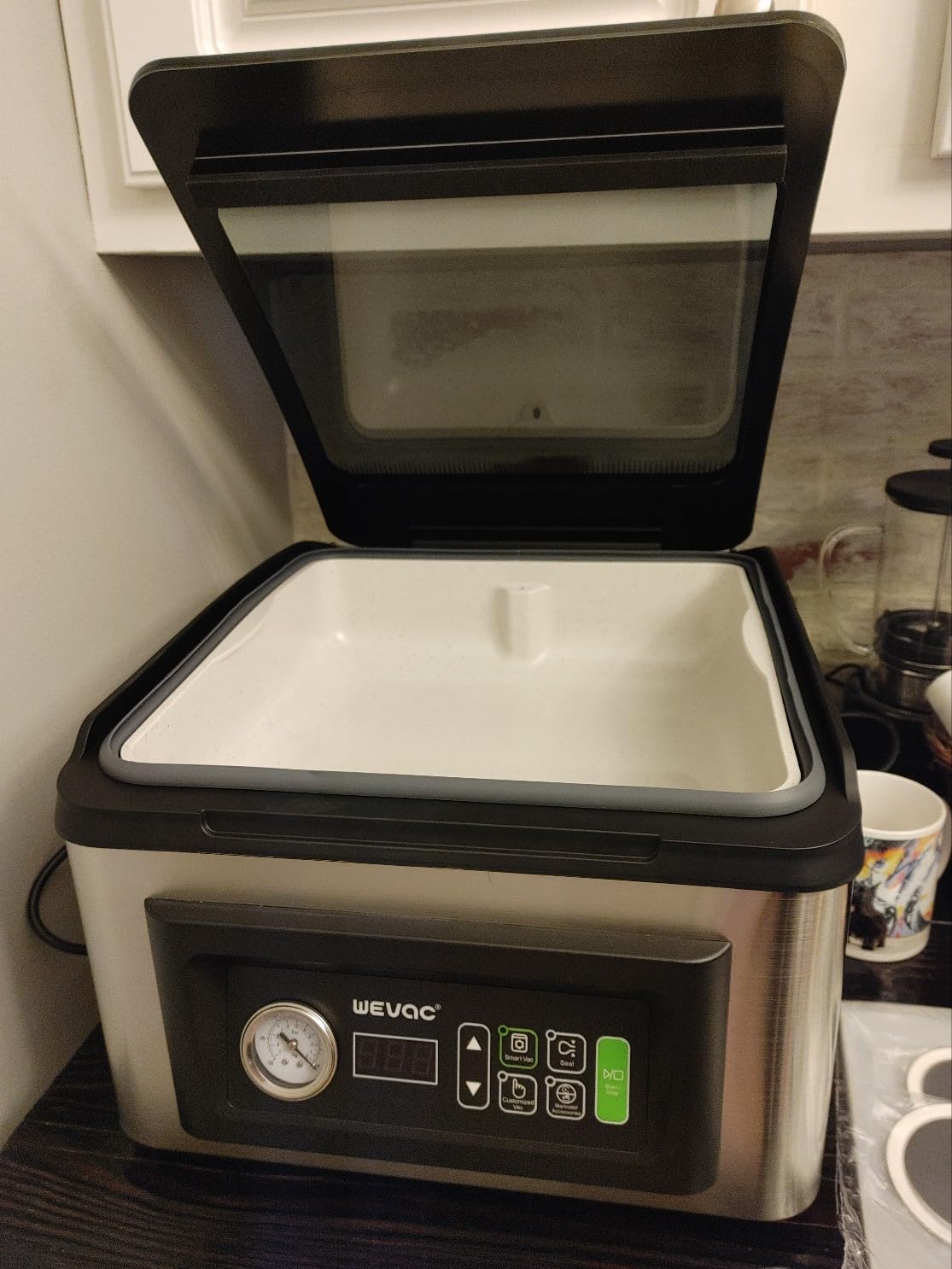
Cleaning is where a chamber machine usually loses points, and the fully removable chamber tray plus washable seal bar take minutes rather than soaking. A damped assist lid and transparent lid let you watch the bag without lifting the lid and breaking the seal, and stainless housing keeps the exterior looking presentable.
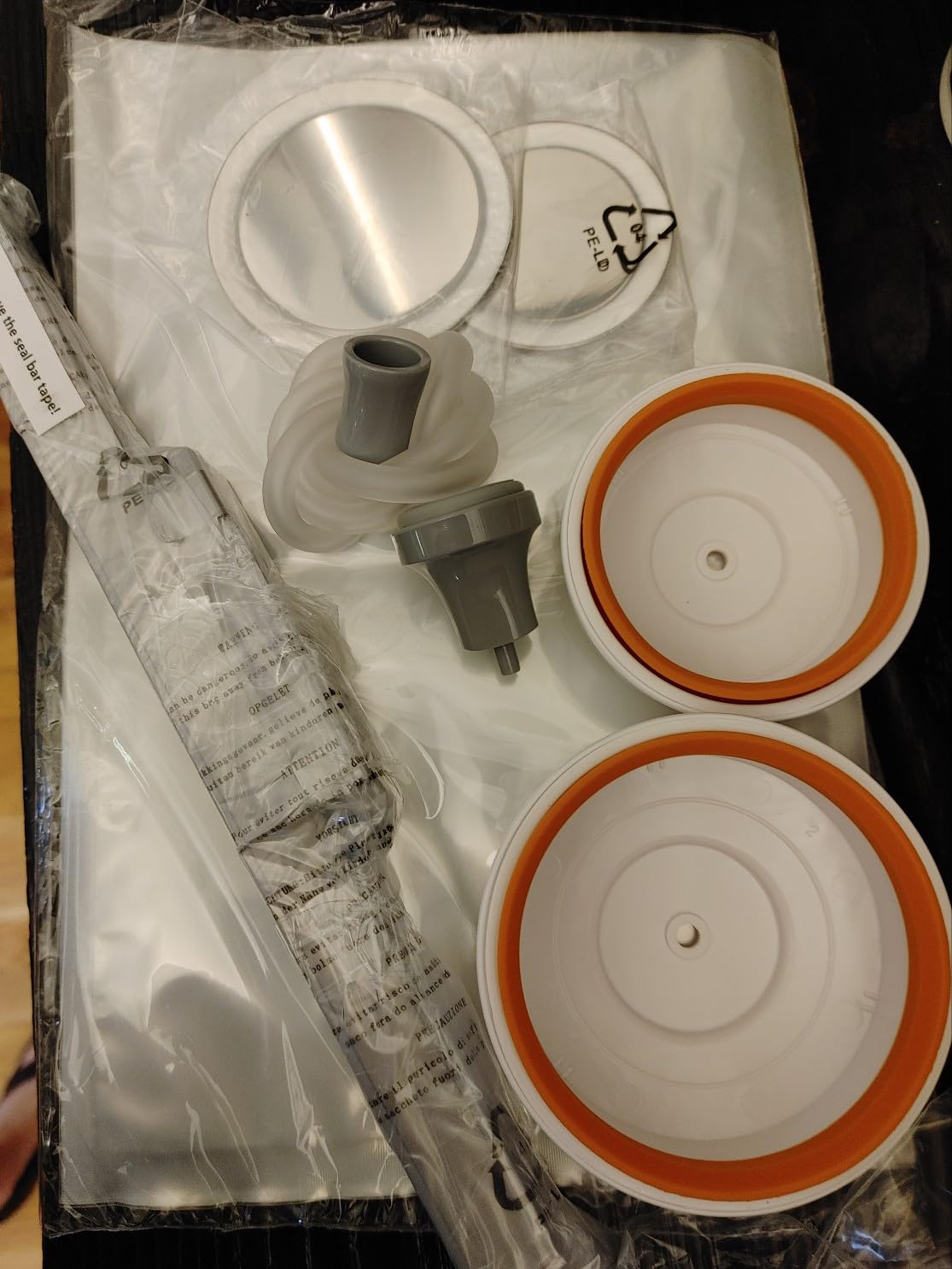
The box is unusually well equipped, with an accessory hose, two Mason jar adapters, a cleaning tray and two spare seal bars. The trade-offs are the higher price compared with entry-level home chamber units and a smaller pool of customer reviews, since the listing is newer than most on this list.
Do you need auto sensing or manual control?
Auto sensing is a real advantage when you are packing a mix of foods and do not want to learn each one. It is less useful if you like to experiment with long, slow pulls on fish, and it cannot tell you anything the pressure gauge would not, so manual machines still have a place.
What the deep chamber means for real meals
A deeper chamber is not about bigger bags so much as realistic portions. It is the difference between a two-pound roast that fits flat and a three-pound cut that has to be split, and at 3.8 inches of internal depth you can stack a bag of stock beside a portion of meat inside one cycle.
9. Vesta Precision V513 – Best Chamber Sealer for Mason Jars
Vesta Precision 12” Chamber Vacuum Sealer, 5.6Qt chamber, Auto Vacuum Time
- SmartVac auto sensing picks the cycle automatically
- Light at 21.6 lb for a chamber machine
- Quiet variable frequency pump
- Removable tray and washable seal bar
- Works with mason jars of all sizes
- Some report inconsistent sealing and a small chamber
- SmartVac can crush fragile items
- Compact variant gets the weakest feedback
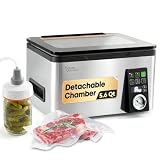
The V513 is the second-lightest machine here at 21.6 pounds, and at 12.6 by 13.9 by 8.5 inches it fits counters where the 60 and 70 pound machines do not. The 360W variable frequency pump is designed for quiet operation, which makes this one easier to live with early in the morning than most commercial units.
Its 5.6 quart chamber gives 12.3 by 8.8 by 3.7 inches of internal space behind a 12 inch washable seal bar with SmartVac automatic vacuum sensing. The removable CleanTray and washable bar mean you can rinse out a marinade or soup bag in minutes, and the glass lid with soft-close damping stops the lid slamming shut on your fingers.
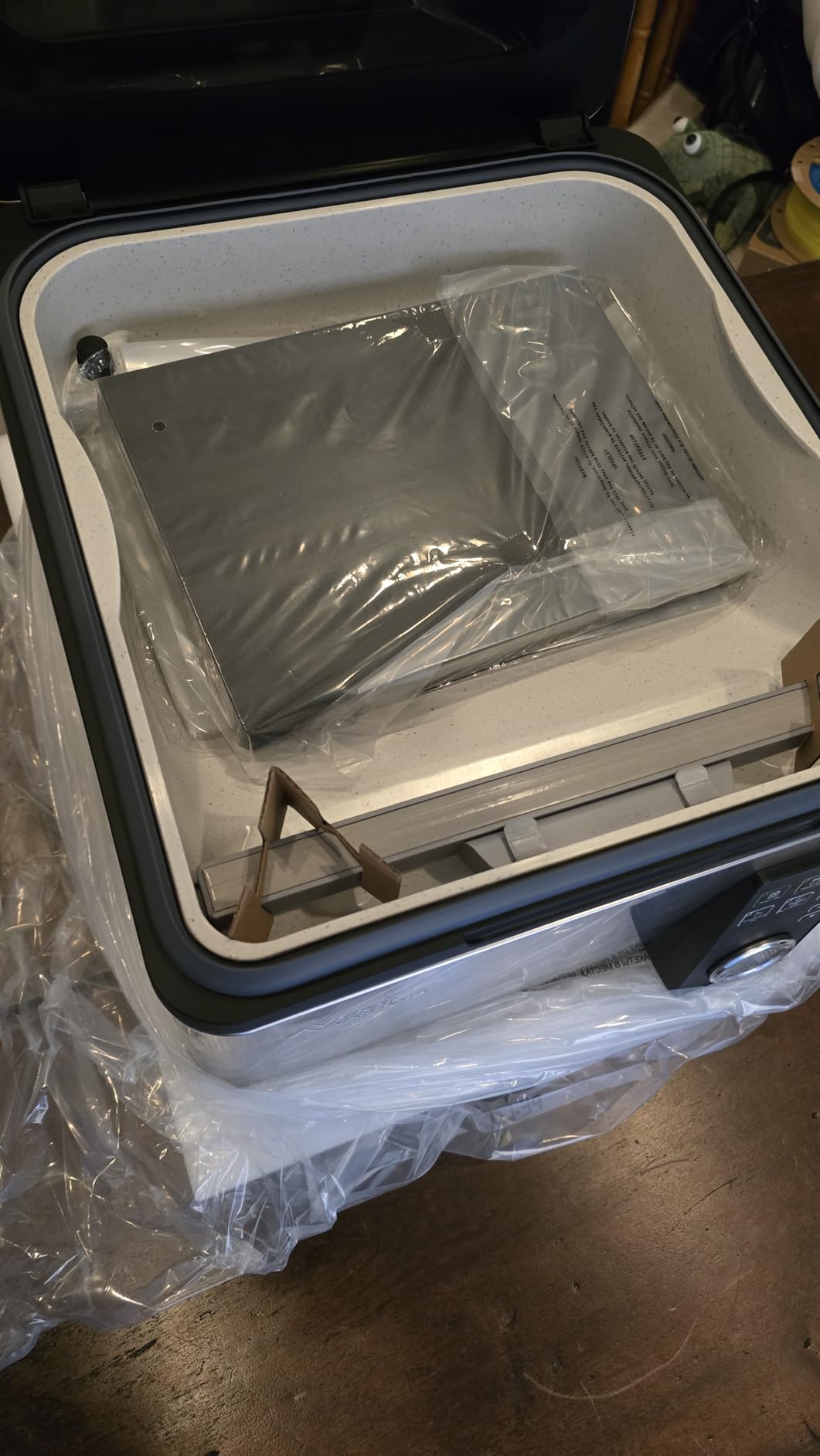
The reason it earns the Mason jar badge is the accessory kit. An accessory hose plus two universal Mason jar adapters and lids cover regular and wide mouth jars, and the adapters handle tall jars that will not sit flat under a standard attachment. Reviewers also report that the machine can be used with mason jars for long-term storage without leakage.
Feedback is mixed at this rating, though. Some users report inconsistent sealing and a chamber smaller than expected, particularly on the compact variant, and SmartVac can crush fragile items like supplement capsules unless you switch it off and use a manual setting. Test a bag the day it arrives.
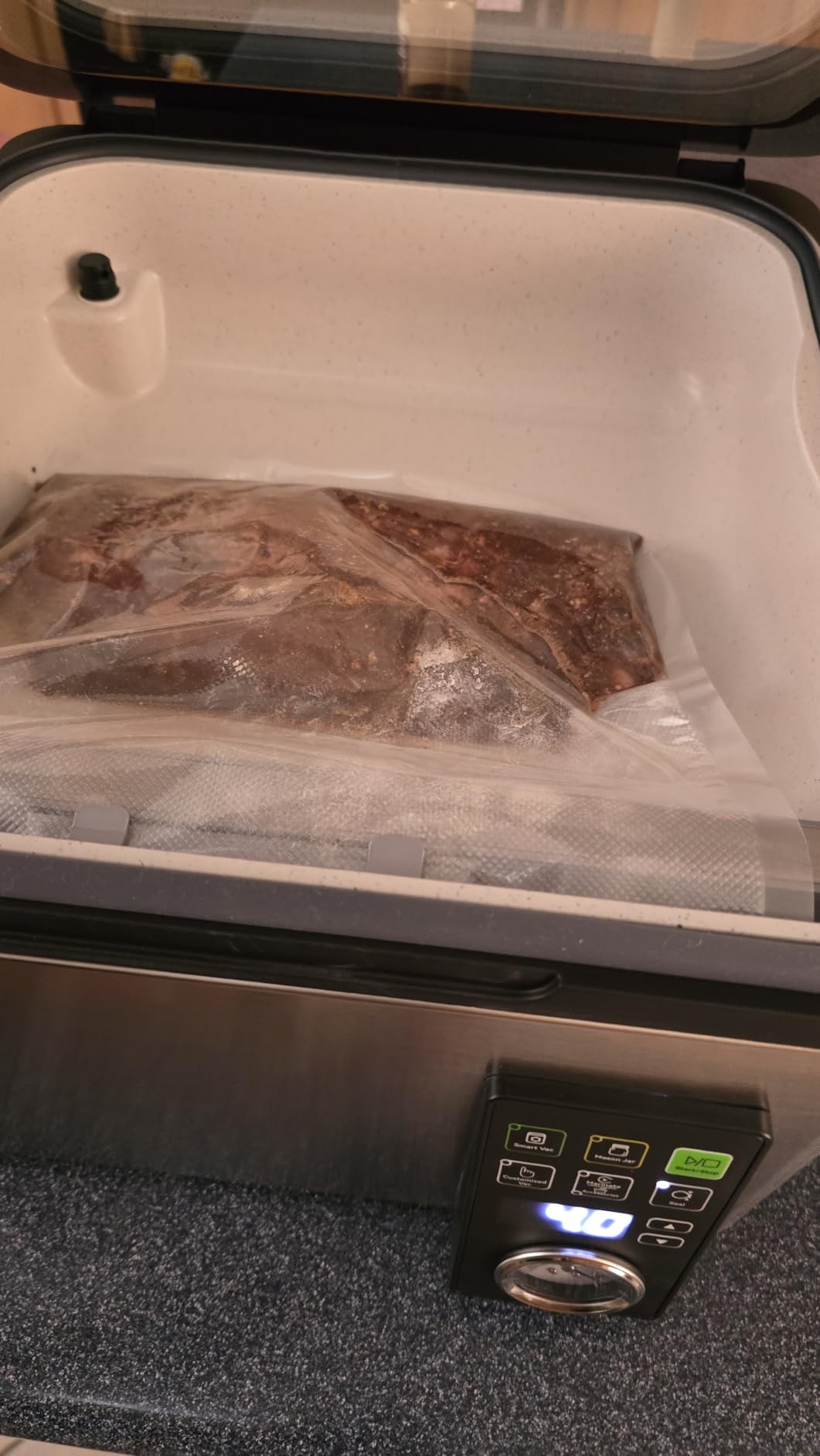
Can one machine handle bags and jars?
Yes, and the adapters are the part people miss. A hose runs from the chamber pump to a jar lid, the lid sits on a Mason jar, and the machine evacuates the jar through the same pump that pulls your bags. The universal adapters matter because jar heights vary by brand.
When to turn SmartVac off
Any fragile, compressible or crushable item needs a manual vacuum time. Capsules, crackers, chips and soft bread should be pulled to a set time and stopped, because an auto sensor has no way to know the food will not survive full evacuation.
10. CM255 Chamber Sealer – Best for Standard Smooth Bags on 230V
Chamber Vacuum Sealer, CM255, Perfect for Home and Commercial Kitchens, Industrial Grade Packaging Machine with High Powered Pump
- Uses standard smooth bags instead of costly embossed ones
- Industrial grade high-powered vacuum pump
- Quieter than expected for its size
- Simple panel with vacuum depth marinate and dry cycles
- Responsive US based technical support
- Only a 90 day manufacturer warranty
- Some report air not fully evacuated
- Manufacturing odor on arrival
- Heavier than expected
The CM255 is the bag-economics pick. It does not require embossed or channelled bags, so you can buy standard smooth pouches in bulk, and at 48 pounds with a 16 by 12.5 by 10.5 inch body it sits in the middle of this roundup on both size and weight. The operation panel gives you vacuum depth, a quick marinate cycle and a dry goods cycle.
The industrial grade high-powered pump and extra wide seal element handle pouches up to 10 by 13 inches, and a durable acrylic lid gives you a clear view of the bag during the cycle. Reviewers note it is quieter than expected for its size, which is a pleasant surprise at this weight class.
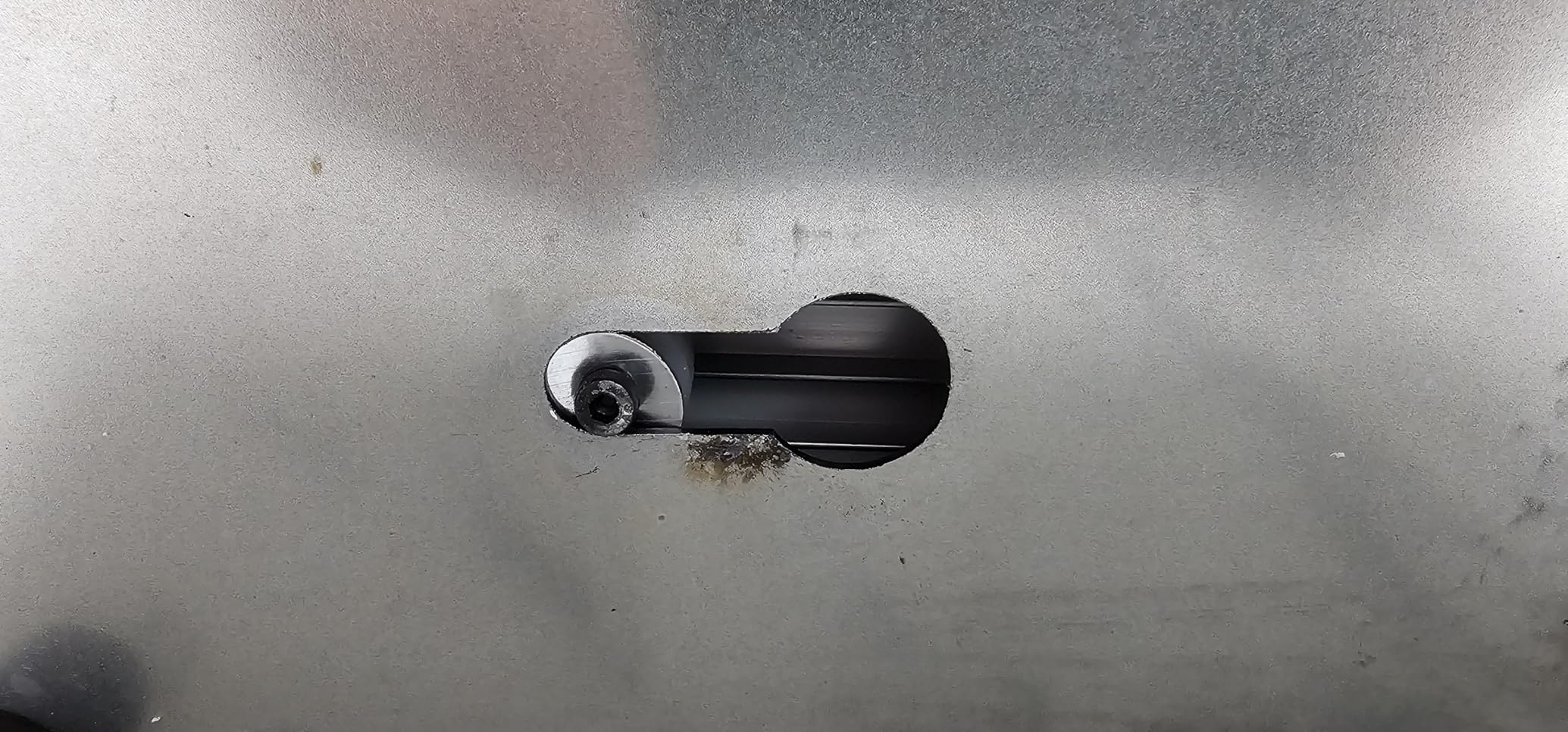
US-based technical support is a genuine plus, with owners reporting a damaged machine replaced quickly, and factory presets work straight out of the box. If you have never used a chamber sealer, being able to hit a preset and get a good seal on the first try matters more than any other feature on the list.
Now the warnings. The manufacturer warranty is 90 days, the shortest in this roundup, and it is the reason we place this machine last despite a solid 4.4 rating. A few owners also report bags that did not fully evacuate, and there is often a strong manufacturing odor inside the chamber on arrival that needs an airing.
Why smooth bags change the running cost
An edge sealer needs channel bags with grooves molded into the wall, and those cost more per pouch. A chamber machine works with flat smooth pouches cut from any roll, so a bulk order of generic pouches can cut your per-bag cost sharply over a year of regular use.
Who should look past the 90 day warranty
If you seal a bag a week, a short warranty matters little. If you plan to run this machine daily for a restaurant-scale food prep business or heavy hunting season packing, the 90 day coverage is the wrong risk, and one of the two year or three year machines on this list is the safer buy.
How to Choose a Chamber Vacuum Sealer for Your Kitchen
Six criteria matter more than everything else on the spec sheet. Work through them in order, because the first two eliminate most of the field before you look at a single feature badge.
1. Counter space and weight. Measure the width, depth and the height above your counter before you buy. The lightest machine here is 17.3 pounds and the heaviest is 89 pounds, and a machine you cannot lift out of the way becomes furniture. If your counter is tight, our top pick and the Vesta V513 are the two that stay portable, and both are also the easiest to store in a pantry when the season ends.
2. Chamber depth and bag size. Chamber height decides what fits. Models with 3 inches of depth handle cuts and portions, while 4 to 5 inch chambers take whole poultry, upright bags of stock and larger roasts. Check the maximum pouch width against the bags you already own before you commit, because 10 inch and 12 inch bars are not interchangeable.
3. Pump type and maintenance. A dry, oil-free pump needs nothing but cleaning. An oil pump needs scheduled changes with the correct oil, and skipping them shortens pump life. On r/BuyItForLife, the advice repeats: a machine with a serviceable, oil-changeable pump is a machine you keep for a decade, so factor that into the price rather than buying the lightest option.
4. Seal bar width and seal type. A wider bar means a wider, stronger weld. Look for double sealing across 3 to 7 MIL Mylar if you plan to freeze large cuts, and check whether the heating bar is user-replaceable, because that is the part that wears out first.
5. Bags and running cost. Chamber machines use smooth pouches, which are cheaper per unit than the grooved channel bags an edge sealer requires. Never mix the two bag types between machines, and buy pouches in bulk once you know your machine works with them.
6. Voltage and warranty. Every machine in this roundup except the CM255 is designed for 120V US power, while the CM255 runs on 230 volts. If you are outside the US, confirm the voltage and the plug before ordering rather than after. Warranty length ranges from 90 days on the CM255 to three years on the Gasbye CV4520 and two years on the Wevac and Vesta machines.
Where to put it. A rolling cart in a garage, basement or pantry solves the storage problem for anything over 40 pounds, and it keeps the working counter clear. If the machine will live in the kitchen, choose a spot with vertical clearance above the lid, because several models need well over 20 inches of headroom with the lid open.
How to Use a Chamber Vacuum Sealer Step by Step
Follow these steps in order and you will get a clean seal on the first or second try, which is the fastest way to learn a new chamber machine.
1. Cool the food first. Vacuum sealing hot food warms the bag and the chamber, and heat plus moisture is what you are trying to keep out. Cool cooked stocks and roasted meats to room temperature before packing.
2. Use a filler plate. Set the filler plate inside the chamber and lay the open pouch on it. The flat surface stops a heavy liquid bag from tipping or draining toward the seal bar.
3. Fill the bag about a third full. Leave enough room for the food to compress as air leaves, and for liquids, leave extra headroom so nothing touches the seal bar. A bag filled to the brim is the most common cause of a failed wet-food seal.
4. Lay the bag opening over the seal bar. The open edge of the pouch needs to sit flat across the bar inside the chamber, with the food clear of the sealing line. Smooth out wrinkles along the bar or you will seal a fold instead of the plastic.
5. Close the lid and start the cycle. The pump evacuates the whole chamber, so the bag collapses evenly around the food. If you are packing delicate items, set a manual vacuum time and stop early rather than letting a strong pull crush them.
6. Let it seal and cool. After the vacuum stage, the heating bar welds the bag across one or two lines. Give thick Mylar bags a longer seal time, and let the pouch sit for a few seconds before pulling it out so the weld can cool.
7. Open, check and label. Check the seal with a light tug and look for a continuous line with no channels. Then label the bag with the contents and the date, because an unlabeled vacuum bag in a freezer is a bag you will not find again until next year.
Frequently Asked Questions
What is the top-rated chamber vacuum sealer for home cooks?
Among the ten machines we compared, the Avid Armor USV20 stands out for home kitchens because it pairs a 4L chamber and an 11.5 inch seal bar with a body that weighs only 17.3 pounds. It holds a 4.7 rating across more than a thousand reviews, seals soups and marinades cleanly, and takes inexpensive smooth pouches. Units with deeper chambers seal more per cycle, but they cost counter space most kitchens do not have.
What is better, a vacuum sealer or a chamber sealer?
A chamber vacuum sealer is better when you seal liquids, marinate meat, freeze bulky cuts or want the strongest seal. It pulls air out of an entire sealed chamber, so a bag of soup or a wet brined cut stays intact, and the seal runs across the full bar width. An edge vacuum sealer is better for dry flat portions, small kitchens and storable equipment, and it costs less. Most owners end up keeping both.
Are chamber vacuum sealers worth it for home cooks?
They are worth it if you freeze meat or game in bulk, batch cook on a weekly schedule, make soups and sauces, sous vide often or marinate several times a month. The sealing of liquids alone is often the deciding factor, since that is the main thing an edge sealer cannot do. If you seal a few dry portions a month, an edge sealer is the better use of counter space and budget.
Do chamber vacuum sealers need special bags?
A chamber sealer needs smooth pouches, which are the flat, unembossed bags you cut from a roll. It does not need the grooved or channelled bags that an edge sealer requires, and the two types are not interchangeable. Check the maximum bag width and the material thickness your machine supports, since some models handle 3 to 7 MIL Mylar while others take only smooth bags up to 10 inches wide.
What oil do you use in a chamber vacuum sealer?
Only oil-pump machines need oil. Use the oil specified by the manufacturer for that pump, typically a food-grade or specific weight of vacuum pump oil, and change it on the schedule in the manual rather than when the pump starts sounding different. Dry, oil-free pumps need no oil at all, which is a reason to choose one if you will only use the machine in bursts. Never substitute cooking oil or a general machine oil.
How much space does a chamber vacuum sealer take up?
Plan for both a footprint and a height. The machines in this roundup range from 14 by 12 by 8.25 inches at 17.3 pounds up to 15.5 by 19 by 15.75 inches at 89 pounds, and several models need more than 20 inches of vertical clearance with the lid open. If the counter cannot hold it, a rolling cart in a pantry, basement or garage keeps a heavy machine available without giving up kitchen space.
Final Verdict: Which Chamber Vacuum Sealer Should You Buy?
The Avid Armor USV20 is our pick for the best chamber vacuum sealers for home kitchens in 2026. It is the lightest machine in the roundup at 17.3 pounds, it has the largest review count of any model here at 4.7 across 1170 ratings, and it handles the wet foods that push people toward a chamber machine in the first place.
If you need more chamber depth, the VacMaster VP210 gives you a 5 inch tall cavity and a dry pump that never needs oil, while the Wevac CV12 Pro adds automatic vacuum sensing and the deepest chamber at 8.5 quarts. Budget-conscious buyers should look at the VEVOR DZ-260S for minus 100 kPa vacuum in a smaller body, and anyone outside the US running on 230 volts should start with the CM255.
Measure your counter, check the headroom above your cabinet, and order a small bag of smooth pouches to test before you commit to a bulk supply. Whatever you choose, the step list above will get you a clean seal on the first try.