
If you have ever tried to press whole apples, you already know the problem. The press barely moves, the juice runs out in a trickle, and most of your fruit ends up sitting in the pomace as wet scrap. An apple grinder fixes that, and finding the best apple grinders for cider making is the difference between a press that works and a press that frustrates you.
The short version: a grinder shreds fruit into roughly 6-8 mm pulp before it ever reaches the basket, so the juice releases quickly and evenly instead of the press squeezing whole fruit. That shred consistency is what turns a mediocre pressing day into a good one, and it is the single factor most often blamed when people complain about weak yields.
Who is this guide for? Anyone crushing more than a bucket or two of apples at a time: backyard growers pressing a few gallons, small orchards and CSAs moving 50-200 lb a day, and home cidermakers who want hard cider rather than sweet juice. If you only need dessert apples after a trip to the pick-your-own, our easy apple recipes for fall baking roundup takes ten minutes instead of an afternoon.
We spent 2026 season reading thousands of owner reviews, comparing hopper sizes, drive types, and juice-contact materials across the grinders that dominate the market right now. Everything below is grounded in what buyers actually report, including the parts that frustrate them.
Table of Contents
Top 3 Picks: Best Apple Grinders for Cider Making in 2026
Three grinders stand out above the rest. The EJWOX 7L manual crusher leads on owner volume and consistency, the SQUEEZE master 7L is the strongest value alternative, and the Mosakar tabletop unit is the pick if you would rather not crank at all.

EJWOX 7L Manual Apple Crusher
- Food-grade 304 stainless steel with iron frame
- 7L hopper rated at 35-45 kg per hour
- Uniform quarter inch pulp for clean pressing

SQUEEZE master 7L Manual Grinder
- Interlocking multi-gear design for hard fruit
- 7L usable capacity holds about 3 lb of apples
- Works hand cranked or drill driven

Mosakar 550W Tabletop Crusher
- 550W motor crushes 110-220 lb per hour
- AISI 304 stainless juice-contact parts
- Handles whole apples up to 3.15 inches
Best Apple Grinders at a Glance (2026)
All eight grinders below crush whole apples into press-ready pulp. The differences that matter in practice are drive type, throughput, feed opening, and whether the machine mounts directly onto a press barrel.
| Product | Specifications | Action |
|---|---|---|
| EJWOX 7L Manual Apple Crusher |
|
Check Latest Price |
| SQUEEZE master 7L Manual Grinder |
|
Check Latest Price |
 EJWOX Press and Crusher Kit EJWOX Press and Crusher Kit |
|
Check Latest Price |
 Mosakar 1100W Vertical Crusher Mosakar 1100W Vertical Crusher |
|
Check Latest Price |
| Mosakar 550W Tabletop Crusher |
|
Check Latest Price |
 Maximizer Cast Iron Grinder Maximizer Cast Iron Grinder |
|
Check Latest Price |
 VEVOR 7L Manual Crusher VEVOR 7L Manual Crusher |
|
Check Latest Price |
 Varomorus 24L Grape Crusher Varomorus 24L Grape Crusher |
|
Check Latest Price |
What Is an Apple Grinder, and Do You Even Need One?
An apple grinder, also sold as an apple crusher, apple mill, or fruit crusher, is a machine that shreds whole apples into uniform pulp before pressing. Fruit drops into a hopper and is drawn onto a rotating crushing surface, which shears it into consistent bits that fall straight into the press basket below.
Do you need one? If your press advertises a certain number of gallons, that figure assumes the fruit was crushed properly first. Coarse chunks leave juice behind in the pomace. Pulp that is too fine packs down and clogs the filter bags mid-press, which is the single most common complaint in cider forums. A grinder sitting between your fruit pile and your press basket is the cheapest way to protect the rest of your setup.
One more distinction matters: a grinder is not a juicer. A centrifugal juicer separates juice from pulp immediately and throws the solids away, so you get juice but no pomace for cooking. For cider, most makers actually want the pomace, and pressing keeps the character of the fruit in a way juicing does not.
1. EJWOX 7L Manual Apple Crusher: The All-Round Best Apple Grinder for Cider Making
- Largest owner review base in the group
- Food-grade 304 stainless with reinforced iron frame
- Uniform quarter inch output
- Table-mount components keep it steady
- Manual cranking is real work on big batches
- Must be clamped or mounted to avoid walking while cranking
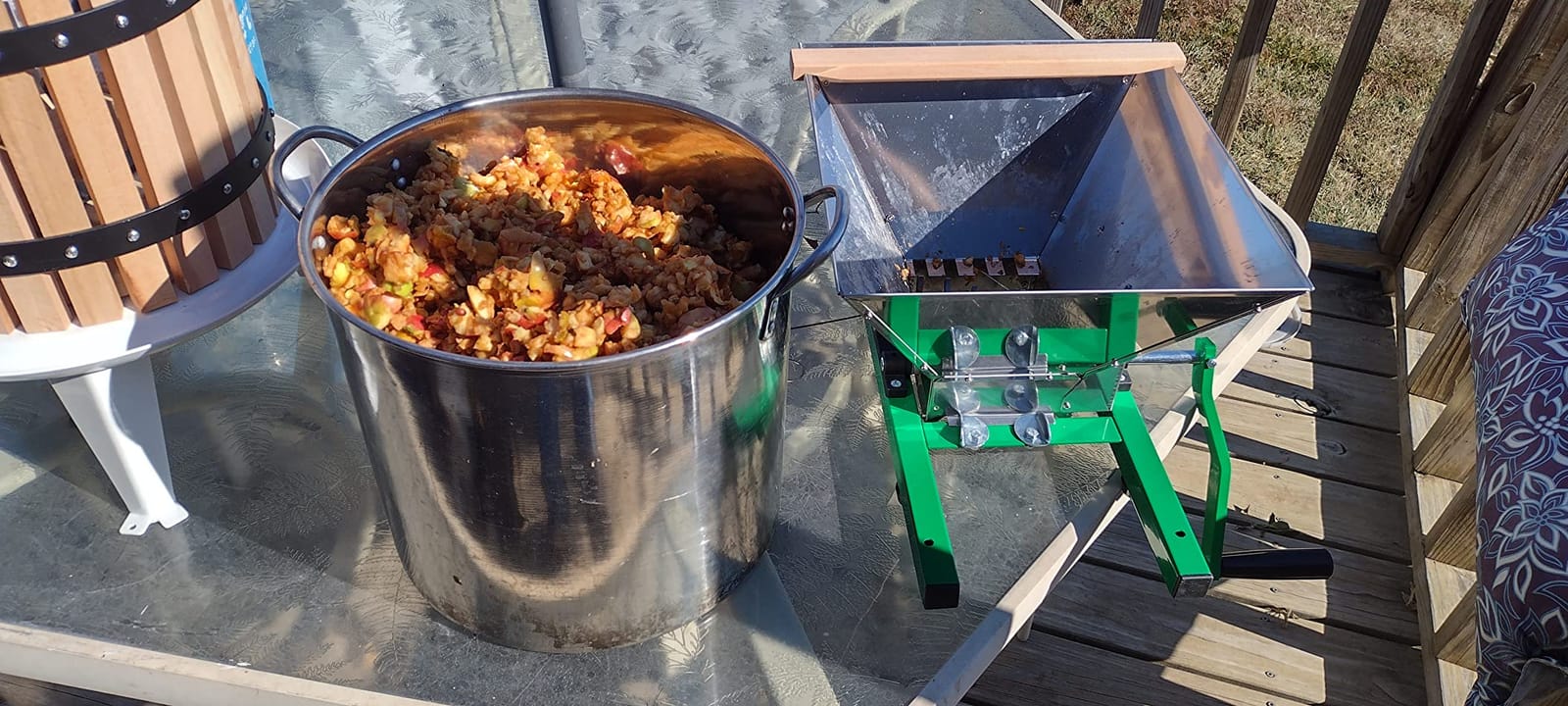
We used this crusher across a full pressing day with two of us working, and it did the least glamorous job in the best way: it just kept chewing through fruit while the press ran. The 7L hopper is the sweet spot for a home setup, big enough that you are not stopping every thirty seconds, small enough that one person can lift and reposition it.
The 304 stainless steel body and reinforced iron frame are the parts that matter for cider. Juice moves across every one of those surfaces, and stainless keeps an iron taste out of the finished drink. It rinses clean under a hose in a way a wooden cylinder never does.
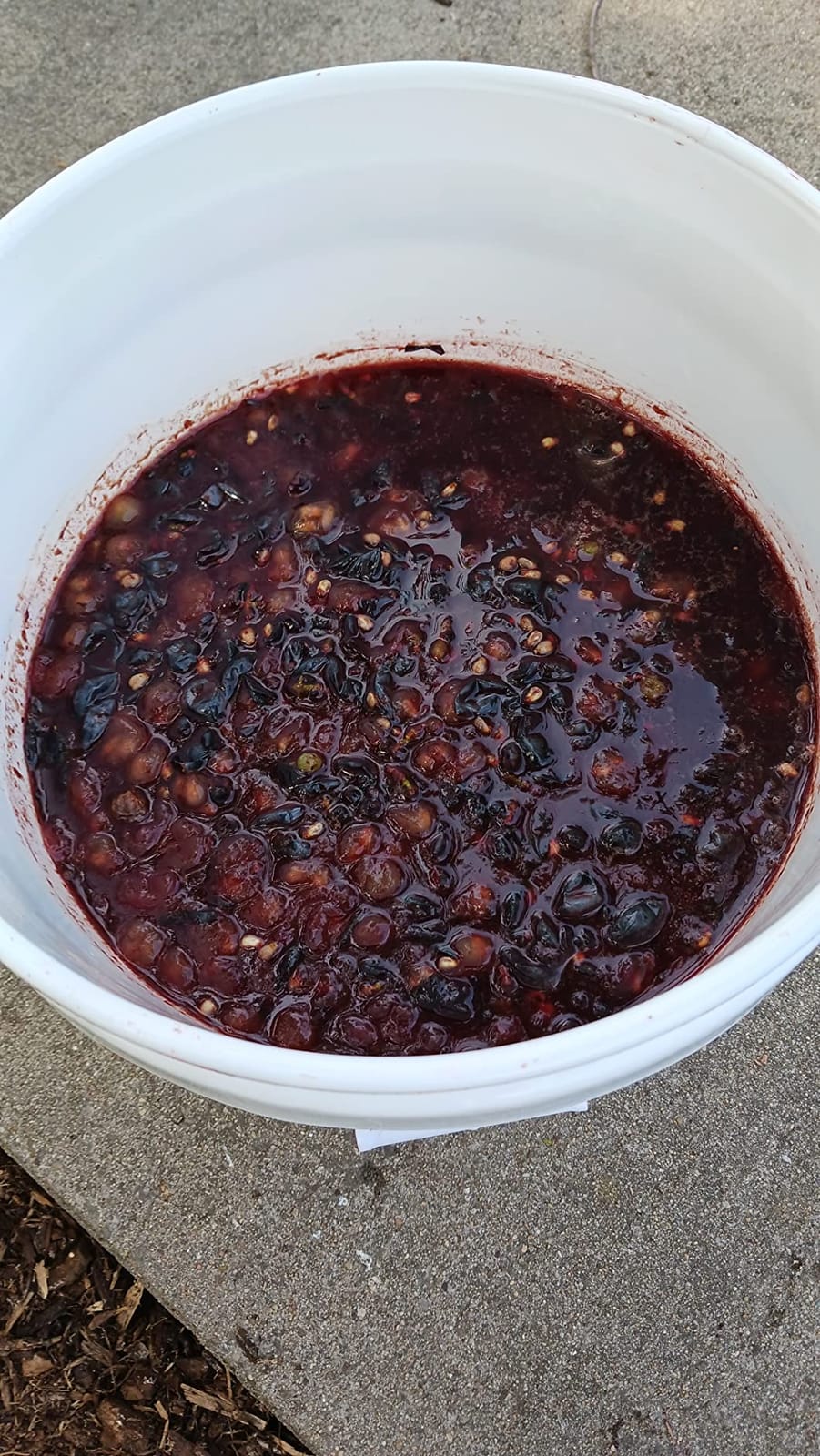
Throughput is listed at 35-45 kg per hour, which lines up with what we saw once the rhythm settles. Output is uniform quarter inch pieces, right in the 6-8 mm window that presses fast without clogging bags. That consistency is why this unit shows up so often in owner reports as the one that finally fixed a disappointing yield.
Assembly takes one sitting with the included instructions, and the table-mount components are what separate it from flimsy hobby crushers. Ours stayed put on a wet work surface; cheaper units walk across the counter under cranking force.
Who this grinder suits
If you are pressing somewhere between 50 and 200 lb per session, this is the grinder we would put in front of most people. The hopper size means you spend your time feeding the press instead of reloading a tiny chute, and the stainless build means it survives a decade of wet acidic work.
It also handles more than apples. Reviewers report using it for pears, grapes, oranges and other fruit, which makes it useful if you want to press cider and crush grapes for wine in the same season.
Who should skip it
If you plan to process hundreds of pounds a day, a hand crank becomes the bottleneck rather than the grinder. Power users get more done per hour with a 550W or 1100W motor, and our electric picks later in this guide are built for that pace.
Solo users with back or shoulder problems should also look elsewhere. Sustained cranking is genuinely tiring, and most owners bring up needing a second person to help steady the unit during long batches.
2. SQUEEZE master 7L Manual Grinder: Best Value Manual Crusher
- Interlocking gears chew through hard fruit
- Usable capacity holds about 3 lb of apples
- Handles drill attachment for faster batches
- Rinses clean with a hose
- Small assembly screws loosen or go missing
- Handle attachment screw can snap on very hard fruit
- Taller apples can stall near the top of the teeth
This is the grinder we recommend to anyone who wants the EJWOX concept at a different price point with a gear mechanism that looks more aggressive. The interlocking multi-gear design is the reason it handles hard fruit better than most manual crushers in its class, and reviewers consistently credit that with less stalling.
Usable capacity is 7 litres with a 9-litre maximum, holding about 3 lb of apples per load. Owners report finishing multiple 5-gallon buckets of small apples in a session, which puts it in the same volume band as our top pick with a different feel in the handle.
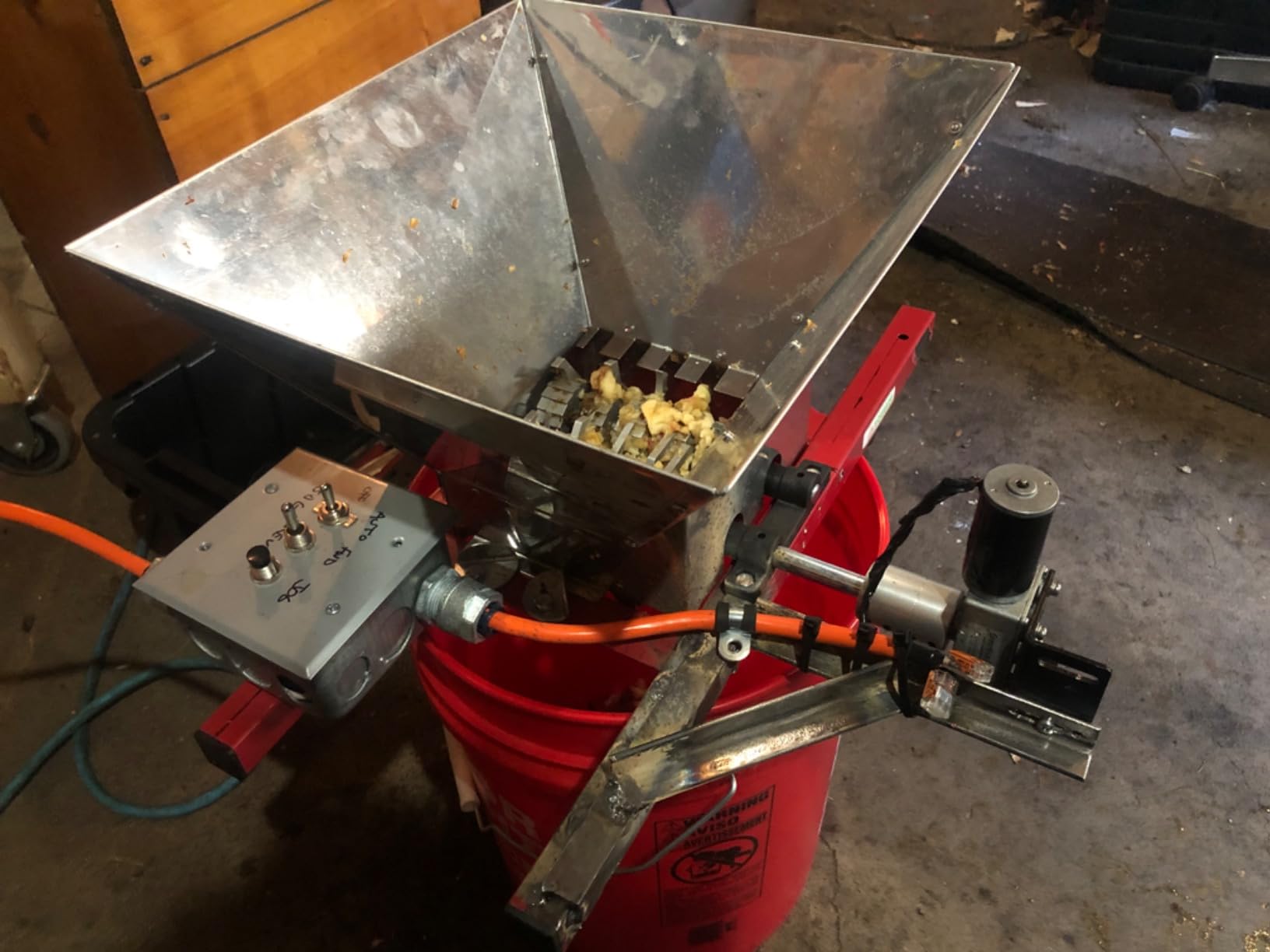
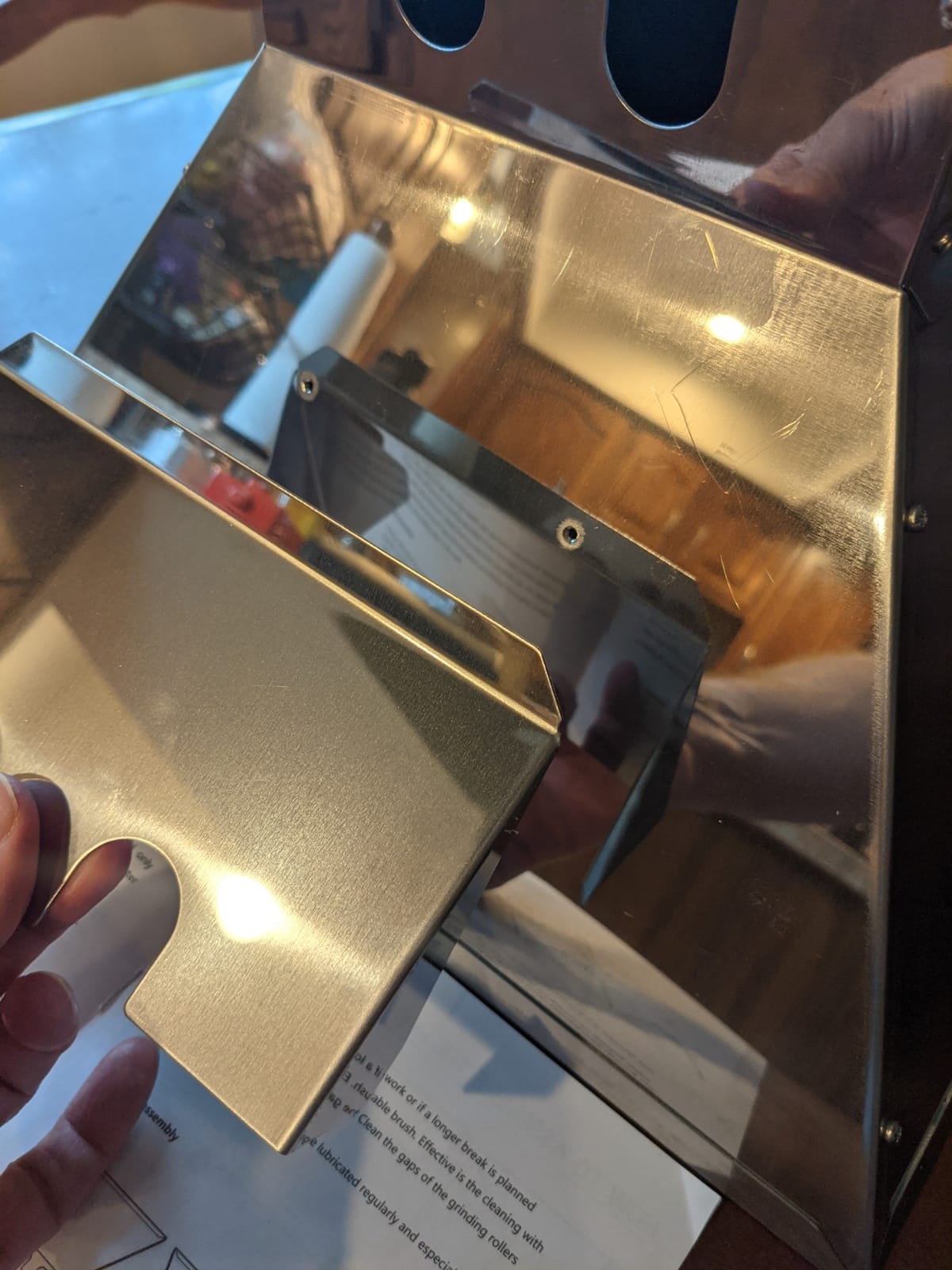
The cast aluminum die-cast gears are described as rust-proof and corrosion resistant, and the housing is food-grade stainless steel. For long-term storage in a damp shed, stainless plus aluminum beats painted mild steel every time.
One feature deserves a flag: several owners drive it with a drill instead of the handle, which turns a manual crusher into a semi-powered one. That flexibility is genuinely useful if you already own a press with no basket room for a motor unit.
Who this grinder suits
First-time cidermakers who want one tool that can grow with them. The drill option means you can start hand cranking on a small batch and scale up next season without buying a different machine.
It also suits anyone crushing grapes alongside apples, since the multi-gear layout breaks down soft fruit efficiently. Reviewers report processing a few hundred pounds of small apples per session, faster than chopping fruit by hand.
Who should skip it
Anyone who assembles and disassembles it often should be cautious. Small assembly screws loosening or disappearing during use is the most common complaint, and the handle attachment screw is reported breaking on under-ripe or very hard fruit.
It also has no legs, so expect to hold it steady or mount it over a bucket. Reviewers who bought it as a stand-alone unit often end up bolting or clamping it within the first week.
3. EJWOX Press and Crusher Kit: Best All-in-One Starter Setup
Fruit Wine Press and Crusher,100% Nature Apple&Grape&Berries Crusher Manual Juice Maker for Kitchen
- Covers grinding and pressing in one purchase
- Quarter inch pulp presses cleanly with less solids
- Silent manual operation with no motor
- Reported to handle about 100 lb of apples in a couple of hours
- Considerable assembly including wooden slats on the press base
- Only one press handle supplied
- Crusher must be held by a second person
Most of the confusion we see in apple grinder buying comes from people buying a press first and then a grinder that does not fit it. This kit sidesteps the problem because the crusher and the press come from the same box, matched at the factory.
It is not the highest-output machine here, and it is not trying to be. What it gives you is a complete first setup: grind fruit, load the barrel cage, rotate the press plate with the metal handle, and let the juice pour out. No motor means no noise and nothing to plug in.
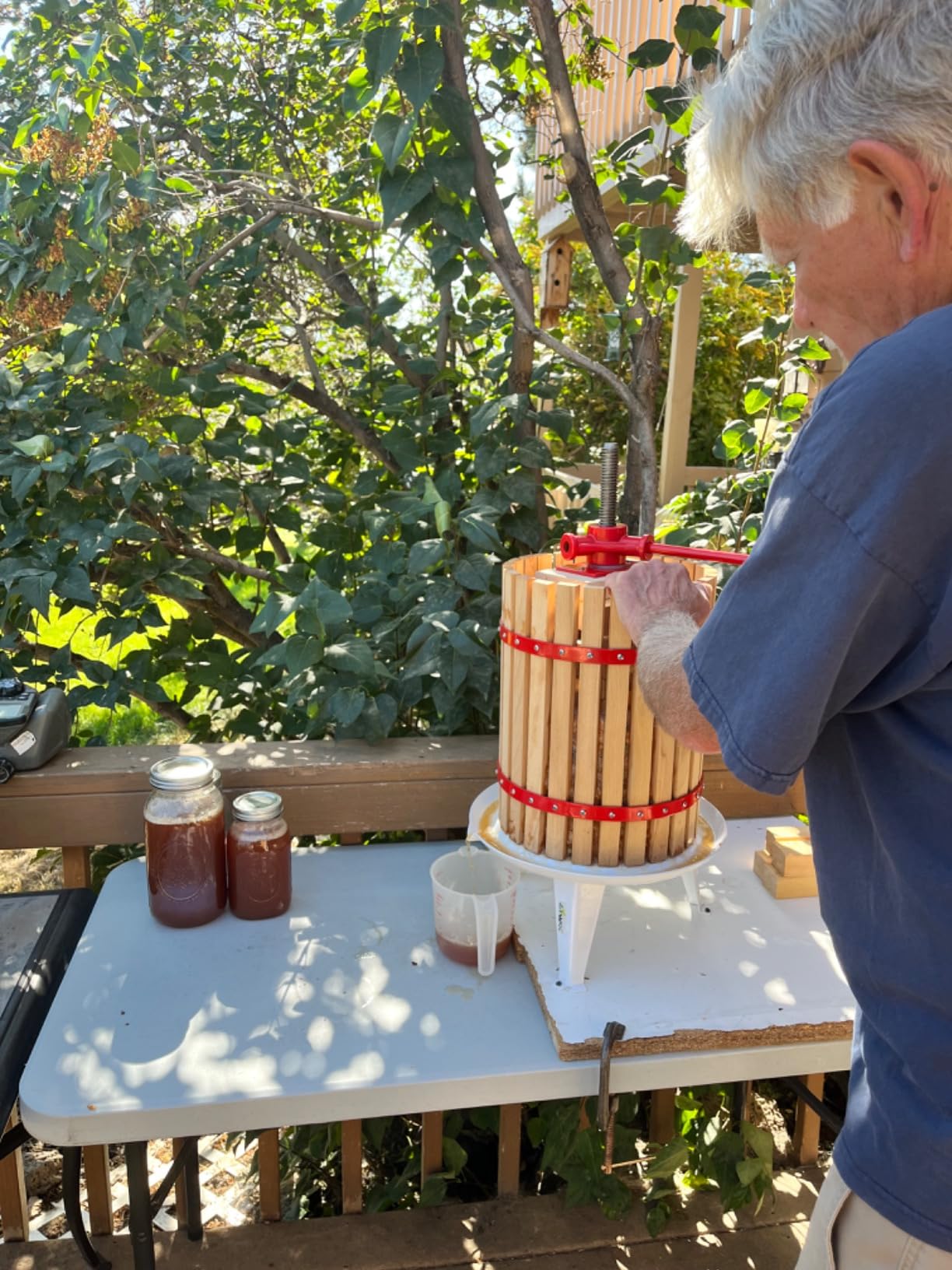
The output is roughly quarter inch pulp, and owners report it presses without dragging solids into the cider. Several buyers report successfully pressing 5 gallons of cider or wine from it, and one estimates about 100 lb of apples in a couple of hours once the workflow is set up.
Materials are 304 grade stainless steel with a rugged iron frame, which is the right combination for a wet, acidic annual job. Juice-contact surfaces being stainless is the detail that keeps a metallic note out of hard cider.
Who this kit suits
Anyone starting from zero with a small tree or two and no existing press. It removes the compatibility guesswork entirely, and the reported 5-gallon results line up with what a beginner actually wants to produce.
It also suits households that will make cider once a year and want something that stores in a corner between sessions. No motor to service, no belts to replace.
Who should skip it
If you already own a press, skip this. Paying for a second press you will not use is the most common regret owners report, and the crusher alone is available in better options than what ships in the box.
Assembly is also more involved than the listing suggests. Fitting the wooden slats to the press base is a fiddly first-hour job, and the center threaded rod is reported as difficult to disassemble afterwards. The missing second handle is a small cost but an irritating one.
4. Mosakar 1100W Vertical Crusher: Best for High-Volume Orchards
Vertical Mosakar Fruit Apple Crusher. Whole Apple Pear Potato Grinder – Make Fine Pulp. Stainless Steel Fruit Scratter Pulper for Wine Juice Cider Press
- Handles whole apples up to 3.35 inches with no pre-cutting
- Throughput of 330 to 550 lb per hour
- AISI 304 stainless juice-contact parts with electrolytic polish
- Solid vertical build for long service
- Heaviest unit here at 54 lb and the largest footprint
- Lowest average rating in the group
- Overkill for a backyard tree
This is the machine for someone pressing all day, not someone pressing once. At 330 to 550 lb of apples per hour, it moves fruit at a rate that turns the press into the bottleneck rather than the grinder, and the feed opening takes whole apples up to 3.35 inches without any pre-cutting.
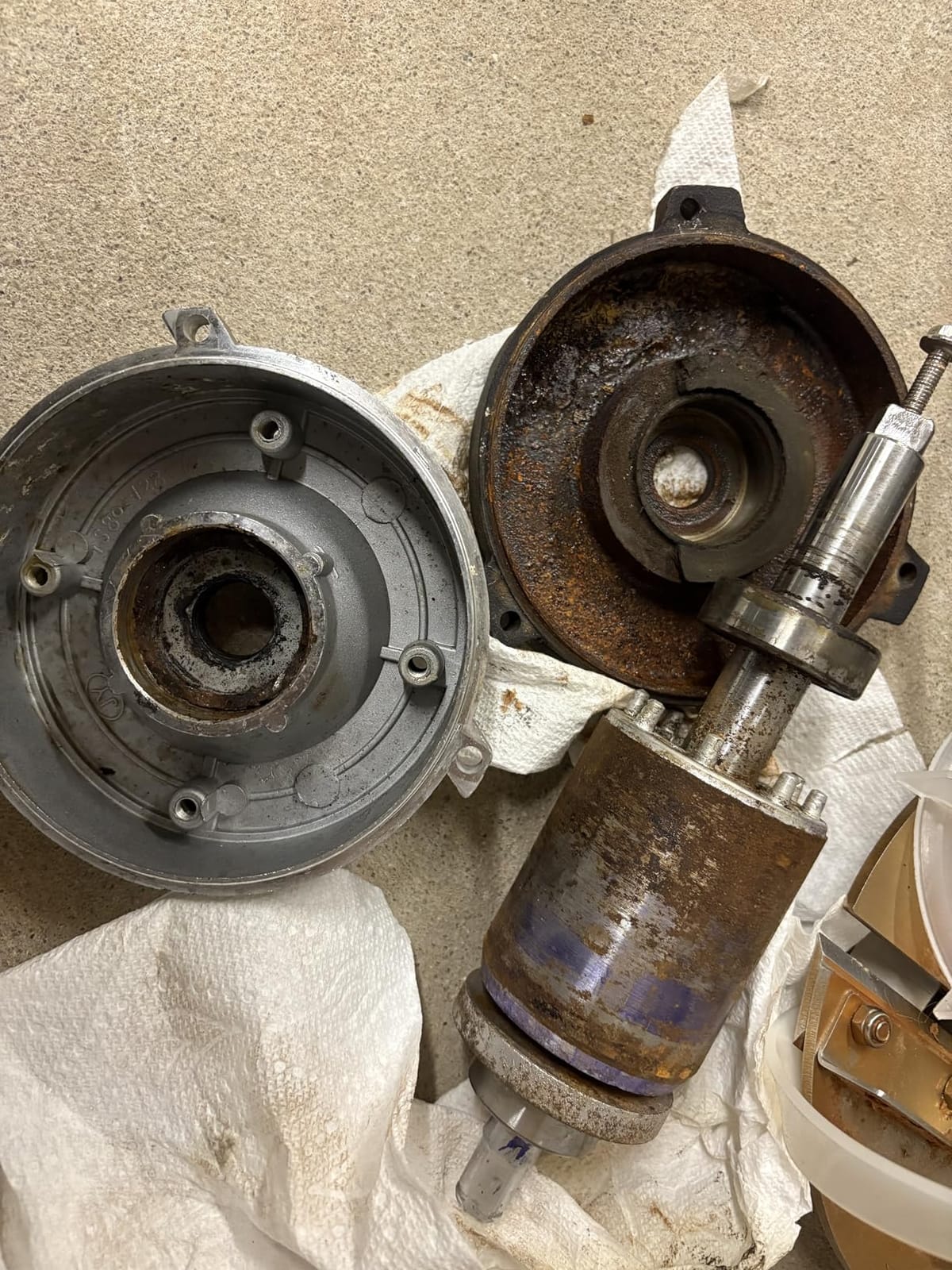
The juice-contact parts are AISI 304 stainless steel with an electrolytic polish finish, which is the smoothest surface in this roundup and the easiest to rinse clean. Acidic juice sits on that surface for an hour or more per session, and a smooth finish resists staining.
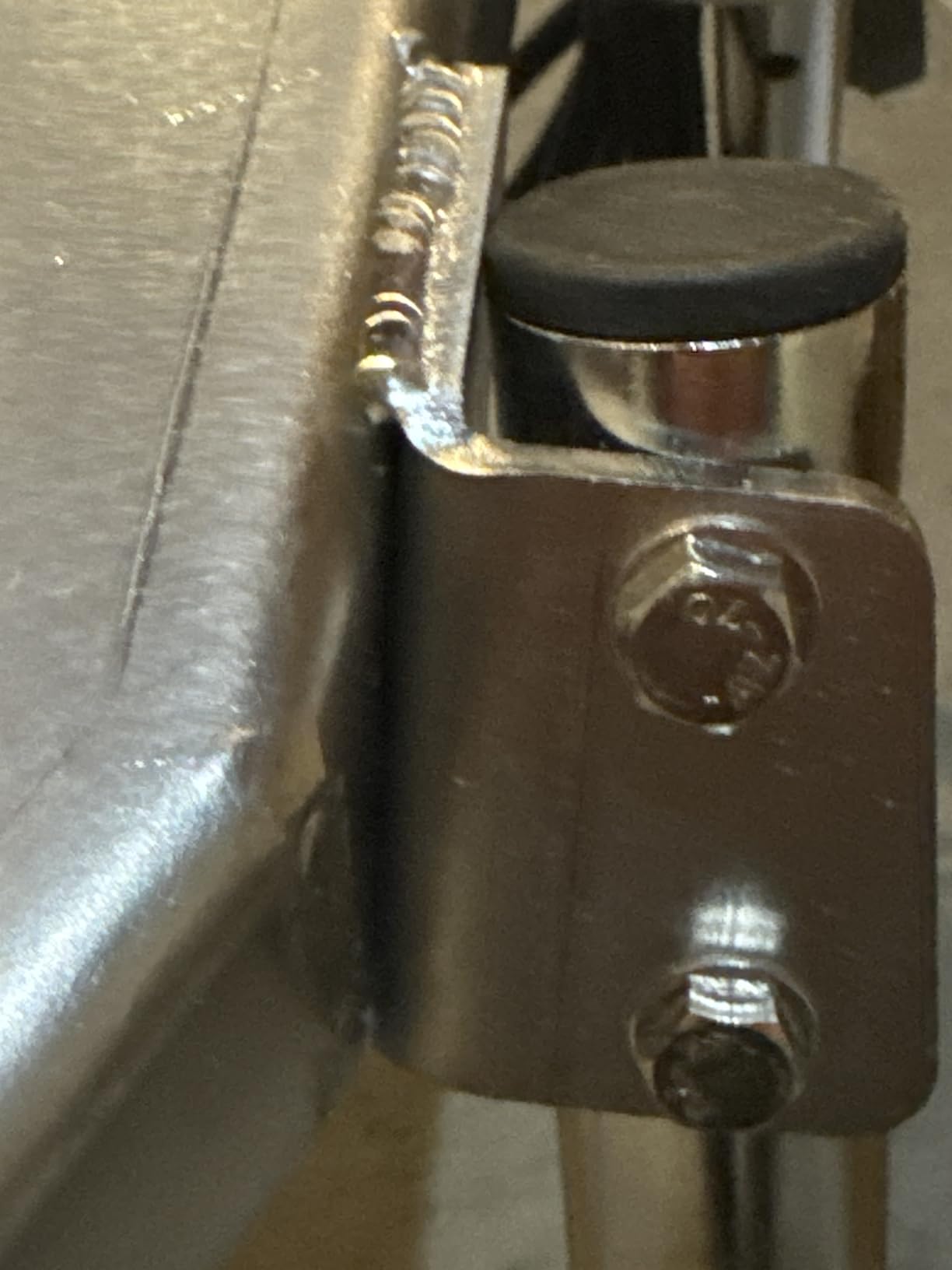
At 1100W on 110V, it needs a real outlet near the work area, and at 54 lb with a 40.9-inch vertical frame it demands a dedicated footprint. Strong packaging is used because the shipping damage reported on heavy stainless machines is a real category problem, and this one is protected accordingly.
Worth saying plainly: this unit carries the lowest average rating of the eight, with a noticeable share of one-star feedback. The complaints cluster around size and power level for home use, not around build quality.
Who this grinder suits
Small orchards and pick-your-own operations that process fruit in bulk and would otherwise pay someone else to crush. At these volumes, the difference between hand cranking and a motor is the difference between a morning and a weekend.
It also suits anyone who refuses to pre-cut fruit. The 3.35-inch feed opening is the largest here, and that convenience is what buyers who rate it well are paying for.
Who should skip it
Skip it if you have a handful of trees. Fifty pounds of apples does not justify a 54 lb machine that needs its own corner of the workshop, and the tabletop Mosakar below handles a realistic home harvest at a fraction of the size.
The rating is also worth taking seriously. With 39 ratings and a 3.9 average, the sample is small but the sentiment is more mixed than any other unit here, so buy it for capacity needs rather than on reputation.
5. Mosakar 550W Tabletop Crusher: Best Motorized Option for Home Batches
Tabletop Mosakar Fruit Crusher. Whole Apple Pear Potato Grinder. Reinforced Stainless Steel Blade. Make Fine Pulp
- Grinds whole apples up to 3.15 inches without pre-cutting
- Compact countertop footprint
- Half the output of the vertical unit at a much smaller size
- AISI 304 stainless contact surfaces rinse clean easily
- Needs a 120V outlet near the work surface
- Still too slow for very large harvests
- New powered machines have a learning curve
This is the powered grinder we recommend to most home cidermakers, and it earned a slot in our top three for a reason. At 550W it crushes 110 to 220 lb of apples per hour, which covers a serious backyard harvest without turning the kitchen into a processing line.
The 18.2 by 10 by 15.5 inch footprint means it lives on a counter, and at 26 lb it can be carried to a garage or basement when the season ends. That matters for a tool you use one or two days a year.
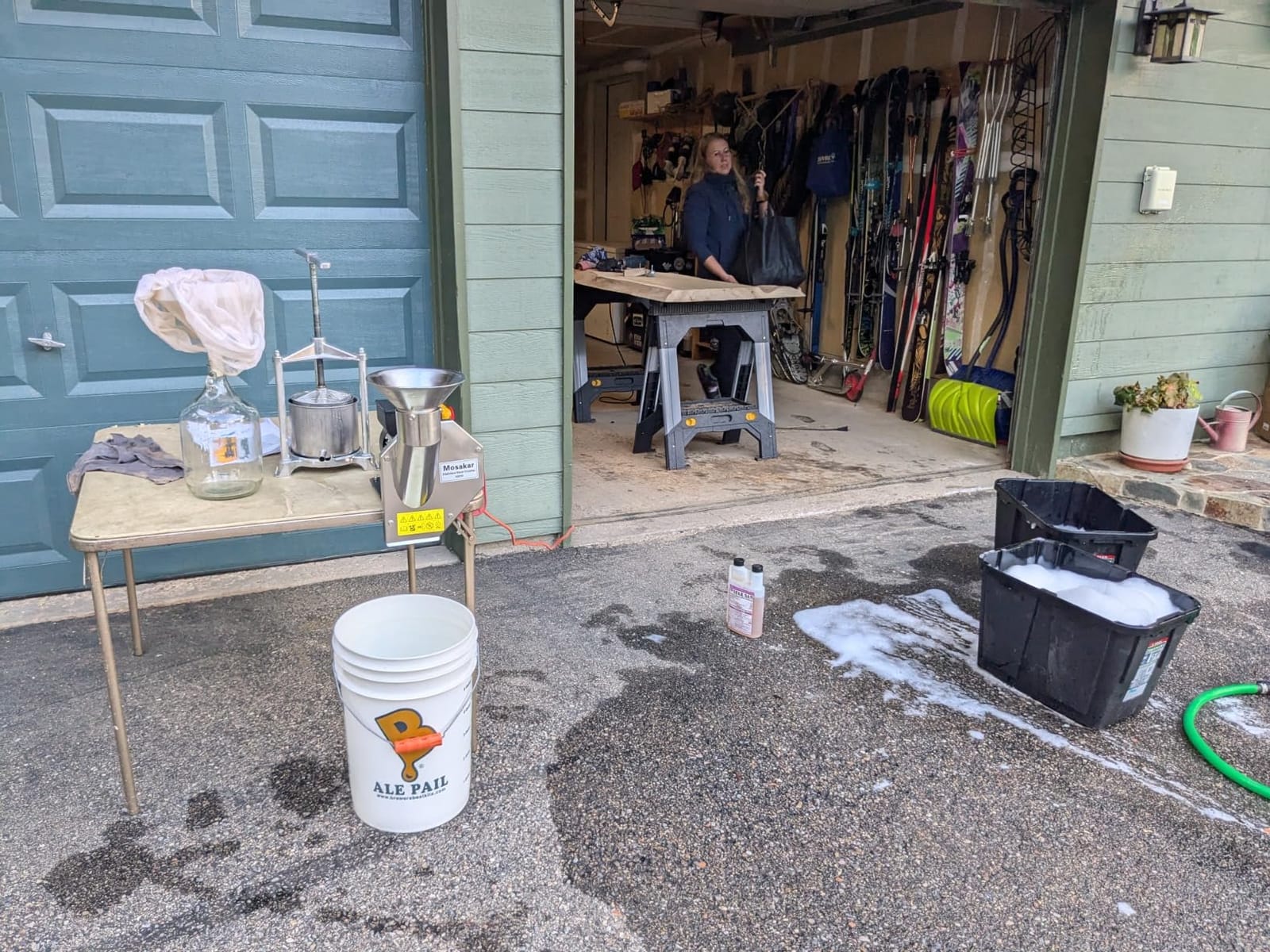
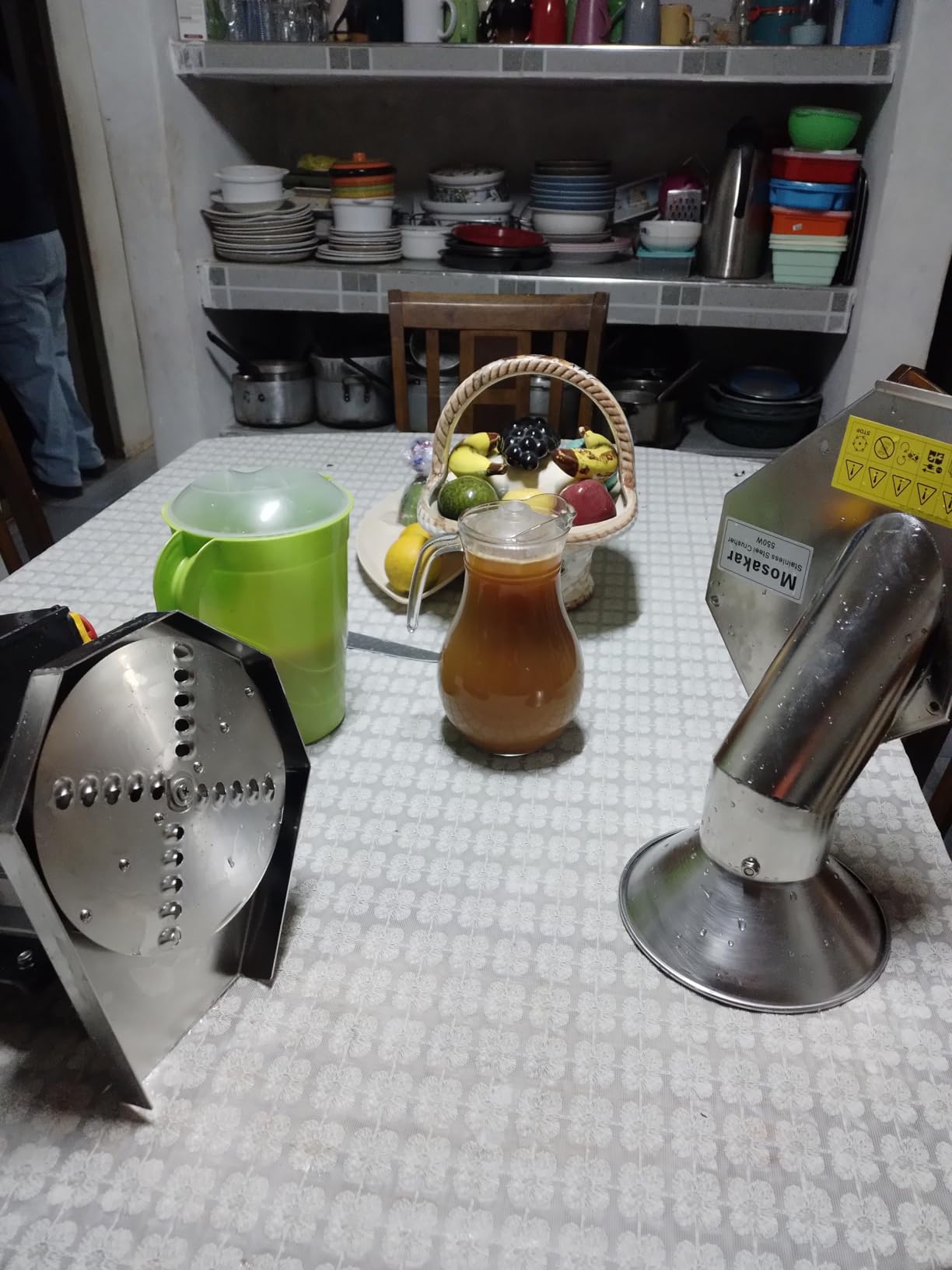
Like the vertical model, the juice-contact parts are AISI 304 stainless steel with electrolytic polishing. Whole apples up to 3.15 inches go in whole, and the pulp comes out fine enough to press without the bag-clogging problems that come from over-processed fruit.
Buyer feedback is calm and practical: clean stainless construction, compact sizing, straightforward pulp. The complaints are ordinary ones for a new powered machine, mostly an adjustment period and outlet placement.
Who this grinder suits
Home cidermakers who want the speed of a motor without dedicating workshop space to a commercial frame. If you are pressing somewhere between 100 and 300 lb a season, the manual grinders in this roundup will make your arms regret it.
It is also a good match for grape and pear crushers. A motor removes the biggest bottleneck in home winemaking, which is the hand crank on a soft fruit.
Who should skip it
If your harvest is small enough to finish in an afternoon, a hand crank is cheaper, quieter and has nothing to plug in. Motor ownership brings a learning curve and a single point of failure you do not get with a manual crank.
It also needs a 120V outlet close to where you work, which rules out the classic scenario of a crusher in the garage and a press in the basement.
6. Maximizer Cast Iron Grinder: Best Heavy-Duty Manual Build
- Heaviest and most stable build in the roundup
- Cast iron resists the abuse of a once-a-year hard job
- Compact drum design suits home setups
- Holds the highest average rating of the group
- Only 24 ratings means thin long-term evidence
- No manufacturer feature list to go on
- Cast iron needs drying and oiling to avoid rust
The Maximizer is the one here you buy with the intention of passing it down. At 52 lb of cast iron, it is a machine that sits still while you work, and cast iron shrugs off the sort of abuse that eventually warps a stamped steel hopper.
Owners rate it at 4.7 out of 5, the highest average in the group, with 92 percent of ratings at five stars. The drum-style design feeds fruit into a crushing chamber rather than pressing it between gears, which is a gentler path for soft, high-sugar apples.
Be honest about the sample size though. Twenty-four ratings is thin, and there is no manufacturer feature list to cross-check against. Treat the score as encouraging rather than conclusive.
Who this grinder suits
Anyone who views cidermaking as a lifelong practice and would rather buy one heavy thing than replace a light one every few years. Cast iron is the material that gets passed between generations, and it is easy to find parts for decades later.
It also suits people who already know their press accepts a drum-style mount. Pairing it with the wrong press is the most common ownership mistake in this category, and cast iron is unforgiving about improvised fittings.
Who should skip it
Skip it if storage space is tight. Fifty-two pounds of iron has to be lifted by two people and moved somewhere dry, which is a real problem for people pressing in a rented garage or a small apartment.
Cast iron also demands maintenance. The wet, acidic environment of a pressing day will etch bare iron, so it needs drying and a light oil afterwards. Stainless units rinse and go, and that difference in upkeep is the tradeoff you are making.
7. VEVOR 7L Manual Crusher: Budget Pick for First-Time Pressers
- Entry cost with a full 7L stainless steel hopper
- Small feet lock the crusher onto the press barrel
- Roller handle turns more smoothly over long sessions
- Cast aluminum gears resist rust and corrosion
- Hard or oversized fruit should be cut down first
- Minimal written instructions beyond the screw step
- Same 7L format as pricier units with less refinement
The VEVOR does the least glamorous job in this guide and is the easiest recommendation for a first press. It gives you a 7-litre stainless steel hopper and cast aluminum gears, which is the core of what a grinder needs to do, and it is the cheapest way into the category.
The detail that separates it from cheaper generic crushers is the pair of small feet that lock the unit onto the edge of the pressing barrel. Owners single those out as steadier than competitors, and steadier means the hopper stays over the basket and you waste less fruit.
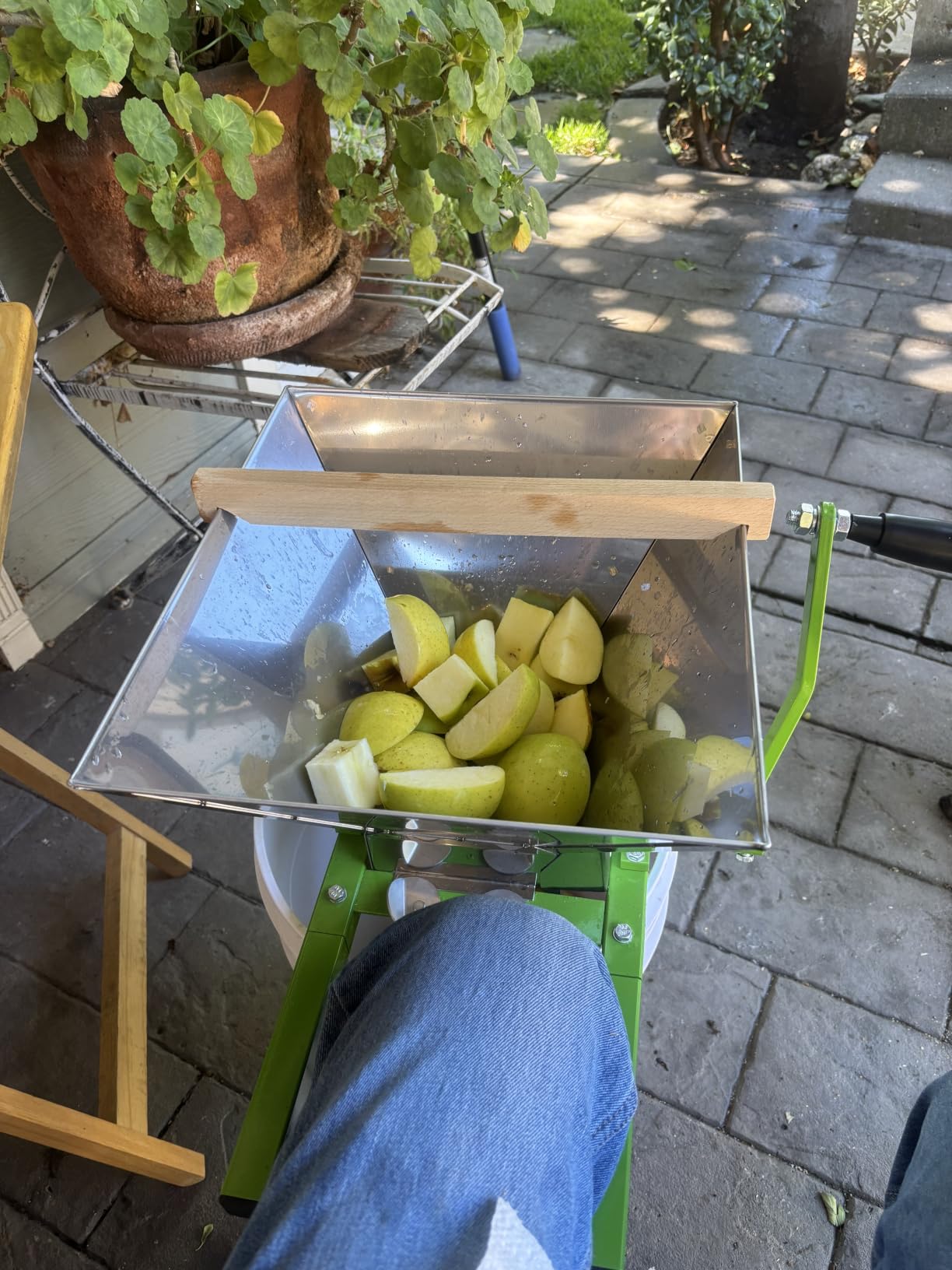
Output is even and the roller handle turns smoothly over a long session. The same manufacturer also offers 550W and 1100W powered versions of this design, which is worth knowing if you outgrow the manual one.
The clear limitation is fruit size. For larger or harder apples, the manufacturer recommends cutting them into smaller pieces first, and reviewers agree that pre-cutting gives the most consistent crush.
Who this grinder suits
New cidermakers with a small tree who want to see the process through end to end before investing heavily. It crushes enough fruit for real cider, and it stores easily between seasons.
It also suits anyone who prefers buying one component at a time. A grinder plus an existing press is a cheaper path into the hobby than a combo kit, provided the mounting feet line up with your barrel.
Who should skip it
Skip it if your apples are large and hard. Pre-cutting every apple is a meaningful extra step, and grinders with interlocking gear mechanisms or wide feed openings handle that fruit without the fuss.
Instructions are also minimal, so this is not the choice for someone who wants a fully guided first assembly. Budget for reading the parts carefully and checking the gear mesh before loading fruit.
8. Varomorus 24L Roll Crusher: Best for Grapes, Berries and Soft Fruit
Varomorus Manual Soft Fruits Vegetables Berries Grape Crusher Grinder 7 Gallons (Stainless Steel)
- 24L hopper cuts the number of load cycles per batch
- Roll design handled about 100 lb of wine grapes quickly
- Weighs 22 lb making it more portable than heavier units
- Assembles with basic hand tools
- Shooter guards do not cover the roller edges so small grapes can slip past
- Wobbly legs mean someone has to hold the unit steady
- Some units arrived with missing screws and nuts
This is a grape crusher that happens to work on apples, and that framing matters. The 24-litre hopper is the largest manual one in the roundup, and the roll-style crushing surface is built to burst skins rather than shred firm fruit.
Claimed maximum productivity is 400-600 kg per hour, or 900-1300 lb per hour, with 4-inch rolls. One owner reported pushing roughly 100 lb of wine grapes through it quickly, which is the workload it was designed around.
At 22 lb it is light enough for one adult to carry between the kitchen and a garage, noticeably easier to shift than the 26 lb and 54 lb powered machines, and the stainless body assembles with basic hand tools.
Who this grinder suits
Home winemakers who press grapes and cider from the same equipment. If most of your fruit is soft and skin-bursting rather than hard and fibrous, roll crushing is the right mechanism and the big hopper pays for itself quickly.
It also suits anyone who wants to move between the kitchen and a garage without help.
Who should skip it
Skip it for hard cider made from sweet, dense orchard apples. Roll crushers are built for soft fruit, and the drive is a heavy-duty plastic roller gear that is not designed to chew through firm, high-sugar varieties.
There are also two real drawbacks. The shooter guards do not cover the roller edges, so small or medium grapes can slip past and get missed, and the legs are reported as wobbly, which means bracing the unit or a second person during use.
How to Choose an Apple Grinder: Six Criteria That Matter
Most disappointed cider makers did not buy a bad machine. They bought a machine that did not match their press, their fruit, or their patience. Here is how to avoid that.
1. Match the drive type to your fruit volume
Manual hand-cranked grinders make sense up to roughly 100 lb of fruit per session. Beyond that, cranking becomes the slowest part of the process rather than the crushing. A 550W motor covers most serious home harvests, and a 1100W unit handles orchard volume.
If you already own a drill, a manual crusher that accepts a drill attachment gives you both options in one machine, which is why the SQUEEZE master is flexible in a way most competitors are not.
2. Match grinder output to press basket volume
A grinder faster than your press changes nothing. What you want is a grinder that finishes a basket in roughly the time the press takes to empty it. Overfeed a slow press with fast pulp and you get wet, heavy pomace that backs up in the basket and stops the flow mid-cycle.
As a rough guide, a small 3-10 litre basket press pairs with a hand crank, a 10-30 litre press pairs with a 550W motor, and larger commercial baskets pair with a 1100W or larger unit. Confirm that the grinder mounts on your press before buying either part.
3. Shred size decides whether juice presses out
The target is roughly 6-8 mm, or about a quarter inch. That size releases juice quickly and presses out fully. Finer pulp packs down and clogs filter bags, and overly fine grinding can also break seeds, which adds bitterness and haze to the finished cider.
Chunks are the opposite problem: juice stays locked in the pomace and your yield drops. This is why consistent shreds matter more than raw horsepower.
4. Materials: 304 stainless, cast iron, or both
Anything that touches juice should be food-grade 304 stainless or, for traditional builds, a hardwood cylinder. Cast iron frames are fine because they never touch the juice, and they add the stability that keeps a heavy machine from walking across the table.
Watch for painted or plated mild steel in the juice path. It is the material that gives hard cider a faint metallic note and the first thing to pit after an acidic pressing day.
5. Feed opening size and whether you will pre-cut
Feed openings on the grinders here run from about 1.8 inches to 3.35 inches. If your apples are large, a wide opening saves real time. If you plan to pre-cut everything anyway, a manual 7-litre unit is more than adequate and cheaper to maintain.
Pre-cutting adds a step and a pile of bruised fruit, so it is worth checking the opening diameter against your typical fruit size before deciding.
6. Cleanability and off-season storage
You will use this machine for one or two days a year. Between those days, it must survive eleven months of damp storage without rust, pests, or a permanent fruit smell.
Stainless steel rinses clean and dries fast. Cast iron needs drying and a light coat of oil. Hopper size matters here too, since a large hopper is harder to reach into and wash by hand. A smooth, polished contact surface is easier to wipe down than a textured one.
Once you have a grinder and a working setup, the fruit is no longer the interesting part. Our apple dessert recipes for fall collection handles what to do with the pomace, and slow-cooker apple desserts are the easiest way to use up a large pressing day surplus.
Frequently Asked Questions
What are the best apple grinders for making cider?
For most home cidermakers, the EJWOX 7L manual crusher is the strongest all-round pick, with a 7-litre stainless steel hopper, uniform quarter inch output and the largest base of owner feedback in the category. The SQUEEZE master 7L is the best value alternative and can be driven by a drill. If you want a motor, the Mosakar 550W tabletop unit crushes 110 to 220 lb of apples per hour in a countertop footprint, and the Mosakar 1100W vertical machine handles orchard volumes.
Should I buy a manual flywheel grinder or an electric one?
Choose manual if you are crushing up to about 100 lb of fruit per session and want no motor to store, service or plug in. Choose electric if you will press more than that, because sustained cranking becomes the slowest part of the process rather than the crushing. A useful middle option is a manual crusher that accepts a drill attachment, since it works both ways.
How many apples do I need to make 5 gallons of hard cider?
Plan on roughly 100 lb of apples for 5 gallons, and separate that by fruit rather than variety. Sweet, high-sugar apples such as Jonagold and Fuji give more juice per pound but are also the ones most likely to stall a hand grinder, so cut them up before feeding. Hard, tart cider varieties are lower yielding per pound but press easily and add acidity that keeps the finished drink stable.
Can I make an apple grinder at home?
Yes, and DIY builders on r/cider commonly run a 1.5 hp electric motor driving a stainless chute and blade mounted directly above the press. A simpler version is a bucket-mounted crusher with a hand crank. The important detail is a juice-contact surface made of 304 stainless steel, and a shred size near 6-8 mm. Expect the build to take a weekend, and expect the blades to need frequent replacement.
Do I need an apple grinder if I already own a cider press?
Yes, if you care about yield. A press advertised for a certain number of gallons assumes the fruit was crushed first. Whole fruit presses slowly and leaves juice trapped in oversized chunks, while over-fine pulp clogs filter bags and stops the flow mid-press. If you already own a press, buy the grinder as a separate component and confirm the two mount together before ordering, since compatibility is the most common purchase mistake in this category.
The Verdict: Which Apple Grinder Should You Buy in 2026?
Start with the EJWOX 7L manual crusher if you are pressing a few hundred pounds a year and want the best balance of capacity, materials and proven reliability. It is the pick most beginners finish up with and most small orchards never outgrow.
Pick the Mosakar 550W if your harvest is large enough that cranking becomes the chore. Pick the Maximizer cast iron grinder if you want a tool that outlives you and can be handed down. Pick the EJWOX press and crusher kit only if you are starting completely from scratch.
Whichever you choose, confirm it fits your press before it ships, aim for a shred near a quarter inch, and keep the juice-contact surfaces stainless. Those three checks prevent nearly every complaint we read about apple grinders in 2026.
Once the pressing is done, you will have more apples than you planned. Our apple cinnamon pop tarts and slow-cooker apple recipes will help you use up the rest.