
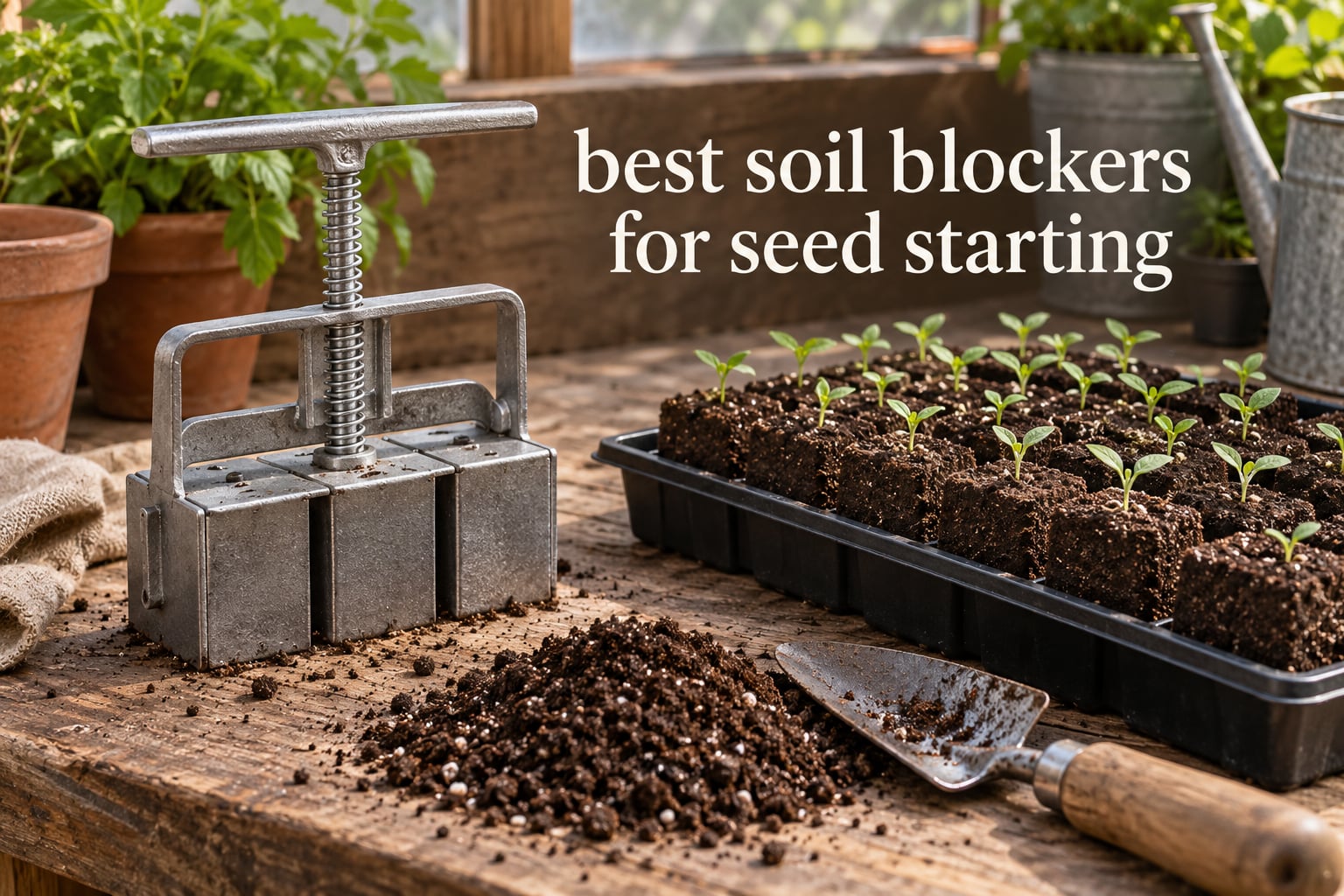
A soil blocker is a hand-operated mold that compresses damp seed-starting mix into freestanding soil cubes, each with a small seed dimple in the top, so you can start seeds and later plant them out without a plastic pot or cell tray. You scoop on a mix dense enough to bind, press the tool firmly into the pile, scrape the bottom flat, and push the plunger to eject clean cubes. Because the sides are exposed, roots reach the edge, dry out, and branch back inward instead of circling. That trimming is called air pruning, and it is the whole reason blocking exists.
That is the short version. If you want the honest long version: the best soil blockers for seed starting are simple tools, and choosing between them is mostly a question of block size, cell count, and how much pressing your hands can take. There is no gadget here. The expensive-looking options and the cheap-looking ones do the same physical job, and the difference in outcome comes down to two things you control yourself, the moisture of your mix and how firmly you press.
We built this roundup to kill the overwhelm that hangs over this category. New growers land on a search page with a Reddit thread at the top asking why tools that look identical range from fifteen dollars to more than eighty, and the honest answer is that some of that spread is construction, some is cell count, and some is simply brand premium and marketplace markup. So we picked eight tools that between them cover every real decision you face, and we told you plainly which of them have rough edges.
A few notes on how we chose, so you know what you are reading. We looked for coverage first: at least one 3/4-inch micro tool for tiny seeds, several 2-inch tools, and at least one high-count design for volume. Then we looked at construction, because cast iron, coated steel, stainless, and plastic behave very differently in the hand. Finally we weighted the size of the review base, since a category this small accumulates real long-term wear reports and thin ones do not. We are not claiming a six-month lab test. We are telling you which tools have owners reporting years of use and which have owners filing complaints about bent handles.
If you are still working out the gear side of seed starting, our guide to seed starting systems with grow lights covers the lighting and tray half of the setup, which is where most beginners stall out first. Soil blocking is the tray half, and it replaces rather than joins with plastic cells.
Table of Contents
Top 3 Picks for Seed Starting in 2026
Three tools carry the roundup. The Ladbrooke Mini 4 is the one most gardeners end up with, the Ladbrooke 5-piece set is the complete two-stage system, and the Micro 20 is the seedling-volume workhorse. Everything else here is a reasonable second or third purchase, and we say so in each review.

Ladbrooke Mini 4
- Four 2-inch soil blocks per press
- Made in England since the 1960s
- Premium EP-coated steel
- Nests into the Ladbrooke Maxi system

Ladbrooke 5-Pc Essentials Set
- Mini 4 plus Micro 20 in one kit
- Cubic inserts nest micro blocks into mini blocks
- 3/8-inch and 7/8-inch seed pins

Ladbrooke Micro 20
- Twenty 3/4-inch soil blocks per press
- Best for lettuce basil and parsley
- Nests into Mini 4 blocks
- Light at 0.28 kg
All 8 Soil Blockers at a Glance in 2026
Here is the short version, formatted the way buyers actually search for these things, model by block size and count.
- Ladbrooke Mini 4 – four 2-inch blocks per press, EP-coated steel, made in England. Best for tomatoes, peppers, and most vegetables. The one to buy first.
- Ladbrooke Micro 20 – twenty 3/4-inch blocks per press, the same steel. Best for lettuce, basil, parsley, celery, and flower starts needing volume.
- Fiskars Soil Block Maker – one 3-inch block or four 1-inch blocks, plastic with a lifetime warranty. Best as a low-commitment trial, with real geometry compromises.
- Ladbrooke 5-Pc Essentials Set – Mini 4 plus Micro 20 plus cubic inserts and both pin sizes. Best for anyone who wants the whole nesting system from day one.
- SOLIGT 4-Cell Blocker – four 2-inch blocks, heavy-gauge coated steel, rounded handle. Best for small hands and for anyone who wants a quieter press.
- BlumWay 8-Cell Stainless Blocker – eight 2-inch blocks per press, stainless steel, three pin sizes. Best for 2-inch throughput per minute.
- nanovi 4-Cell Blocker – four 2-inch blocks, zinc-coated steel, three pin sizes, 1.11 kg. Best when you want steel you can carry with one hand.
- ALXMYAO 4-Cell Heavy Duty Blocker – four 2-inch cells, powder-coated galvanized steel, silent. Best if noise and rust are your two dealbreakers.
| Product | Specifications | Action |
|---|---|---|
| Ladbrooke Mini 4 |
|
Check Latest Price |
| Ladbrooke Micro 20 |
|
Check Latest Price |
 Fiskars Soil Block Maker Fiskars Soil Block Maker |
|
Check Latest Price |
| Ladbrooke 5-Pc Essentials Set |
|
Check Latest Price |
 SOLIGT 4-Cell Blocker SOLIGT 4-Cell Blocker |
|
Check Latest Price |
 BlumWay 8-Cell Stainless Blocker BlumWay 8-Cell Stainless Blocker |
|
Check Latest Price |
 nanovi 4-Cell Blocker nanovi 4-Cell Blocker |
|
Check Latest Price |
 ALXMYAO 4-Cell Heavy Duty Blocker ALXMYAO 4-Cell Heavy Duty Blocker |
|
Check Latest Price |
1. Ladbrooke Mini 4 – Best Overall Soil Blocker for Seed Starting
Authentic Ladbrooke Mini 4 Soil Blocker — Four 2″ Blocks Per Press, Made in England
- Makes four 2-inch blocks
- the widely recommended starting size
- Sturdy EP-coated steel reported to last many seasons
- Blocks nest into the Ladbrooke Maxi system
- Holds enough moisture that domes are often unnecessary
- Eliminates plastic pots entirely
- Real learning curve before blocks release cleanly
- Block tops can tear off if technique is not yet right
- Loud in use
- Small seed pins are easy to lose
Four 2-inch blocks per press, made of coated steel that has been produced in England since the 1960s. That is the entire product, and it is the reason this tool sits at number one on a great many farms’ wish lists. The 2-inch cube is the size most vegetable and herb growers actually want to end up with, and four at a time is a sensible rhythm for a hand.
The review base is the largest in the category, more than eleven hundred ratings averaging just under five stars, with roughly eight out of ten at full marks. Owners consistently report steady germination and minimal transplant shock, and several mention nine years or more of continuous use. That longevity line matters more here than in most tool categories, because a blocker is a purchase you make once.
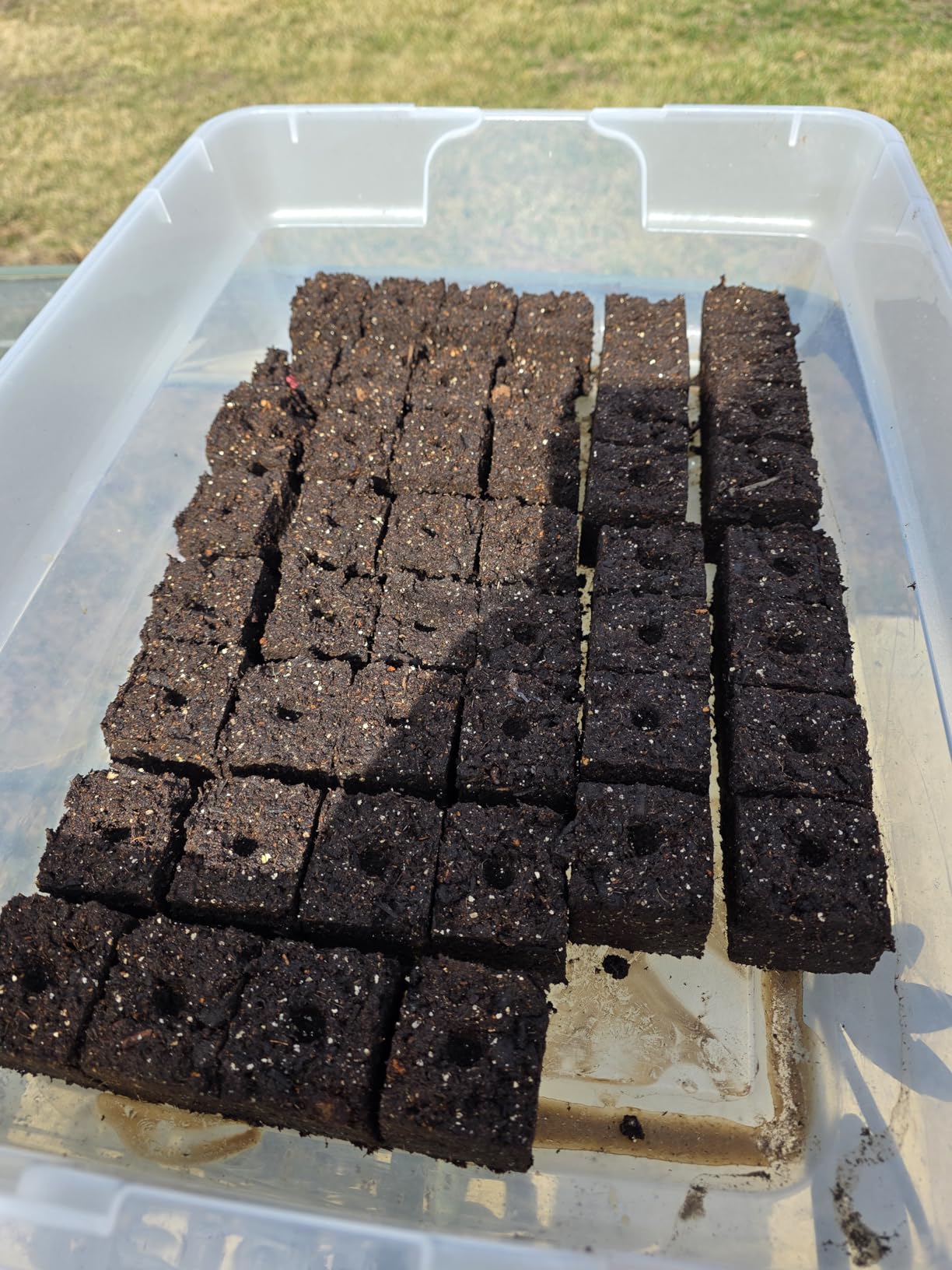
The complaints are all technique complaints, not quality complaints. Several people describe blocks whose tops separated from the body when lifting the tool, which is what happens when the mix is too wet or the press is not fully committed. Others note the tool is loud, which is real, coated steel on a workbench is a noisy object and there is no way around that.
What the Mini 4 does that most rivals do not is nest. The 2-inch blocks drop into the Ladbrooke Maxi, so you can move a plant up a size without tearing roots out of anything. Owners also report that blocks hold enough moisture that humidity domes are often unnecessary once the seedling has its first true leaves, which removes a piece of equipment from the list.
What tells you it is built to last
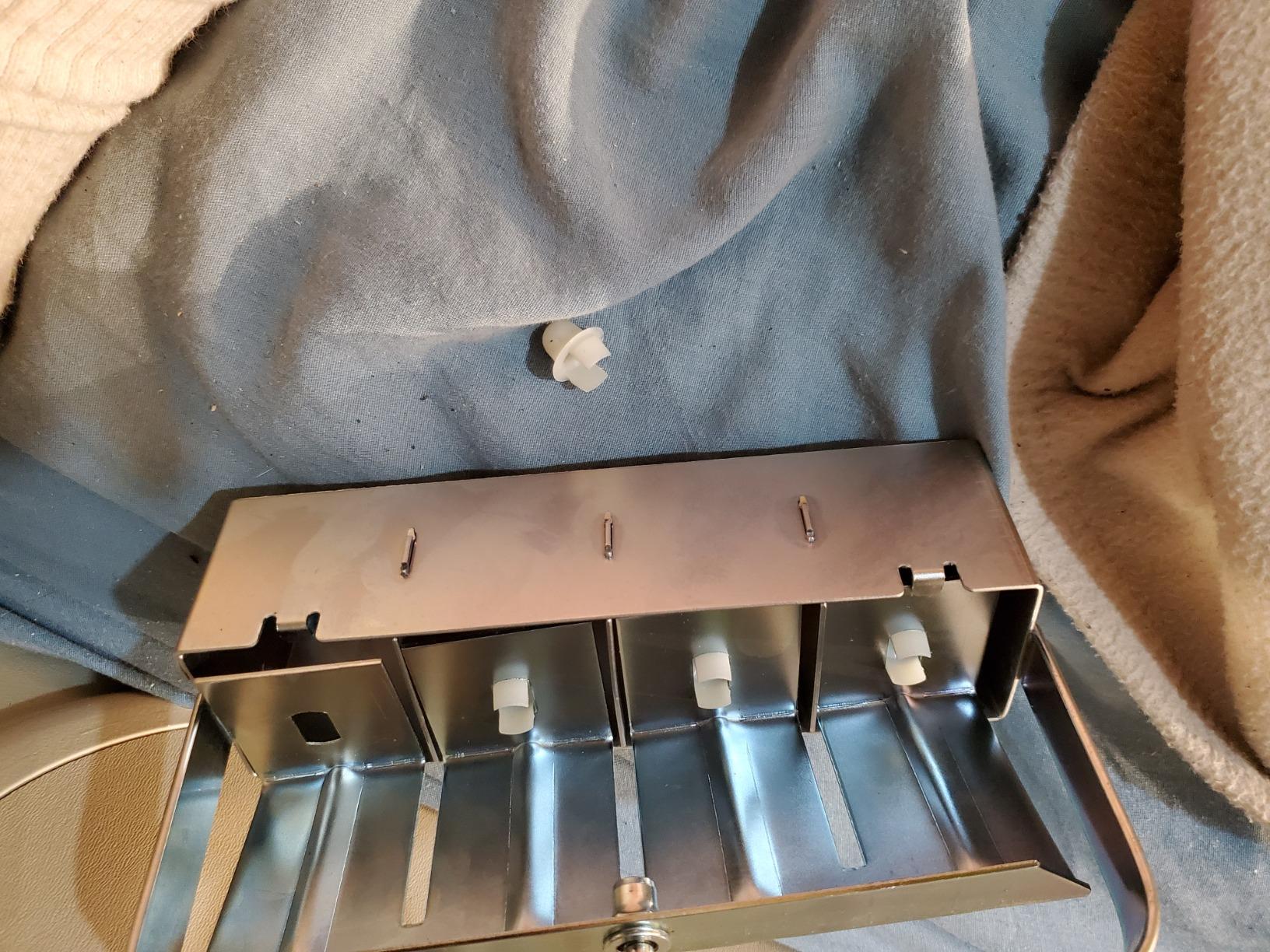
The tool weighs 1.5 pounds and measures 9 by 2 by 8 inches, which is a genuinely dense object for its size. That mass is the reason the block faces stay flat under pressure and the reason the ejection mechanism does not develop the play that makes cheap tools smear corners. The coating resists the acidity of soil over years, and owners with nine-plus years of use are not describing a novelty.
Seed pins come in the box, and they are the small posts that form the dimple you drop a seed into. They are the one consumable here. Losing one is annoying rather than fatal, but check the box before you start because a missing pin means a block with no hole.
Who should buy something else instead
If you are starting a hundred lettuce or basil seedlings and you have no plan to grow them on to 2-inch size, this is the wrong tool. A 2-inch block holds far more mix than a lettuce plug needs and dries slower than you would expect, so the space on the shelf goes to waste.
Similarly, if you grow cucurbits, squash, cucumber, or melon, this mold is too small. Large-seeded crops want a single much larger block where the root system is not disturbed at all, and several of the tools further down cover that. Buy the size your crop actually ends at.
2. Ladbrooke Micro 20 – Best for Tiny Seeds and Volume
- Twenty blocks per press for fine seeds
- Suited to lettuce basil tomato parsley and celery
- Saves shelf space under grow lights
- Resists corrosion and soil chemistry
- Blocks nest into Mini 4 blocks
- Small blocks dry out fast and need daily attention
- Requires a finely sifted mix with no twigs or rocks
- Fast-germinating seeds outgrow the blocks in days
- Unsuitable for large seeds like squash
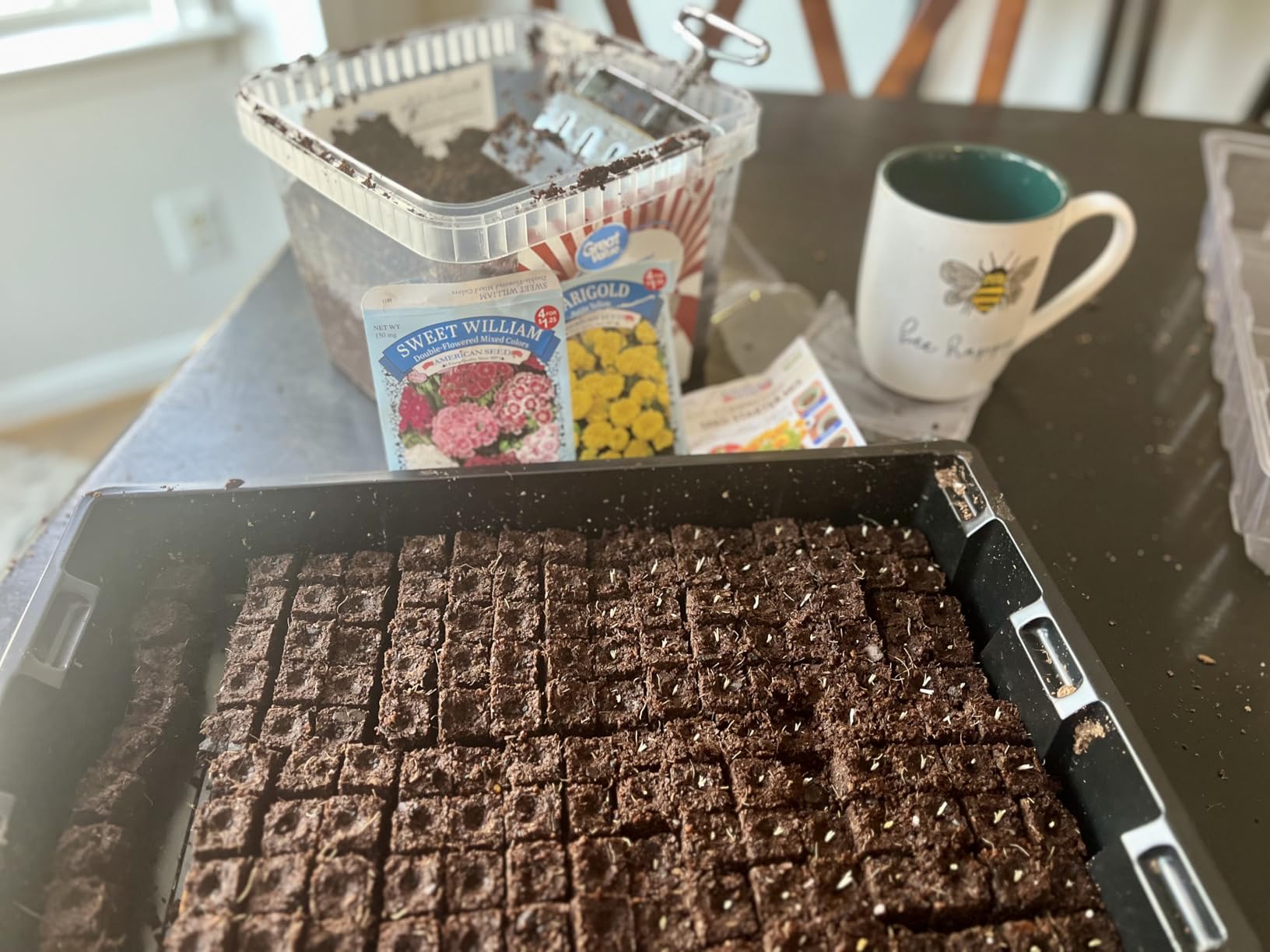
Twenty 3/4-inch blocks per press, in the same black EP-coated steel as the Mini 4. This is the volume tool of the Ladbrooke line and the one most growers reach for when the sowing list is long. The blocks are small enough that a standard 10-by-20-inch tray holds a serious number of them, and light enough at 0.28 kg that pressing does not tire your hand.
At just under four and a half stars across more than six hundred ratings, the pattern in the reviews is consistent. Buyers like it for fine seeds specifically, naming lettuce, basil, tomato, parsley, and celery, and they like the space saving under grow lights or in a small indoor setup. Nearly seventy-three percent of ratings are full marks.
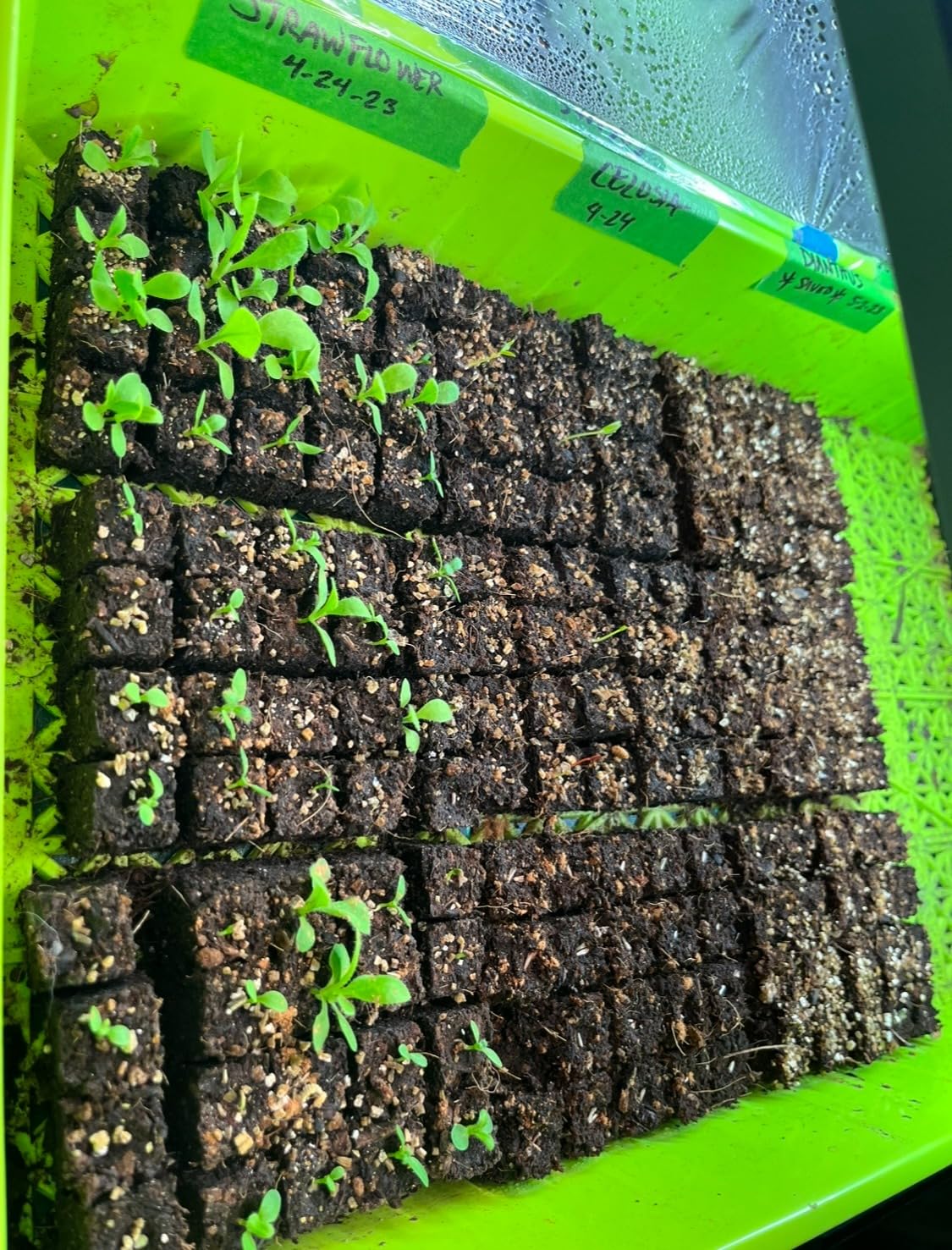
The caveat that appears in almost every review is moisture, and it deserves more than a sentence. A 3/4-inch block has very little water reserve compared to a plastic cell, and the exposed sides mean evaporation happens on every face. Owners report needing to check trays daily, and on a windowsill in a warm room that can mean twice a day. We cover the specific setup that makes this manageable later in the article.
Second caveat: the mix must be fine. Owners are explicit that rocks, twigs, and chunky material stop this tool producing clean blocks, because there is nowhere for a fragment to go in a chamber that size. Third, anything that germinates fast can be outgrowing the block before you notice, which is the argument for having a Mini 4 to pot up into.
Whether it earns its own space on your shelf
Only if you also own a larger blocker. That is the honest answer, and it is the answer on r/marketgardening, where growers describe loving a soil blocker for crops that sit in plugs for a long time, tomatoes and peppers chief among them. The Micro 20 is the front end of that workflow. Blocks drop directly into a Mini 4 with no repotting, and the seedling you started in February is in a 2-inch block by April without a single root being handled.
On its own, with nothing to pot up into, the 3/4-inch block is a dead end for most crops. For very short-cycle crops like radish it can be the whole cycle, but that is a narrow use.
What you give up for the volume
You give up margin for error. A 2-inch block is forgiving, because it is large enough that a slightly damp or slightly dry press still produces something usable. A 3/4-inch block is unforgiving, because the same mistake produces a crumble instead of a cube. If you are new to blocking, this tool will teach you the technique the hard way.
You also give up the ability to handle large seeds, full stop. The chamber is the wrong shape for a bean or a squash seed, and forcing it produces a block with a torn corner. Use the tool for what it is sized for.
3. Fiskars Soil Block Maker – The Budget Entry With Real Limits
Fiskars Garden Soil Block Maker for Plant Seeds with Natural Air Pruning
- Two block sizes in one tool
- Plastic will not rust and washes clean
- Full lifetime warranty from Fiskars
- Genuinely useful for large 3-inch blocks
- Encourages air pruning
- Round blocks fit standard trays poorly
- The single 3-inch block is inefficient for most plants
- The 1-inch blocks dry out very fast
- Blocks do not nest like metal blockers
Plastic, weighing under a pound, making either one 3-inch block or four 1-inch blocks from the same mold, and carrying a full lifetime warranty from a company people already own garden tools from. On paper that is an appealing entry point, and it is why this tool keeps showing up in beginner recommendations.
It also has the most important asterisk in this entire roundup. On r/gardening, in a thread specifically asking whether the Fiskars tool holds up, one owner wrote that they bought it because it was cheaper than the alternatives and Fiskars is a reliable brand, and then said plainly, I hate it. That is a specific, named complaint from someone who chose it on brand trust, and it deserves more weight than an average rating suggests.
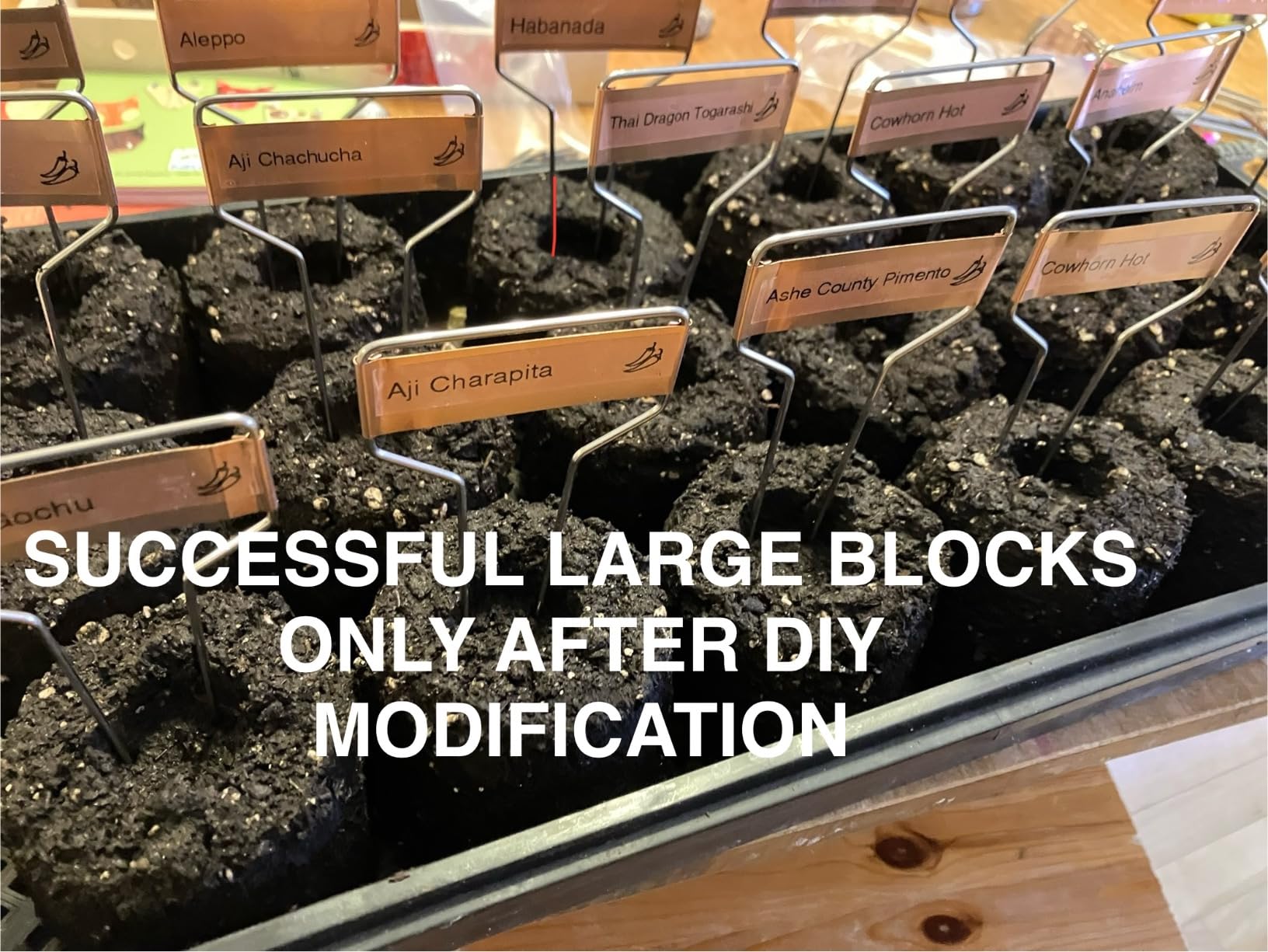
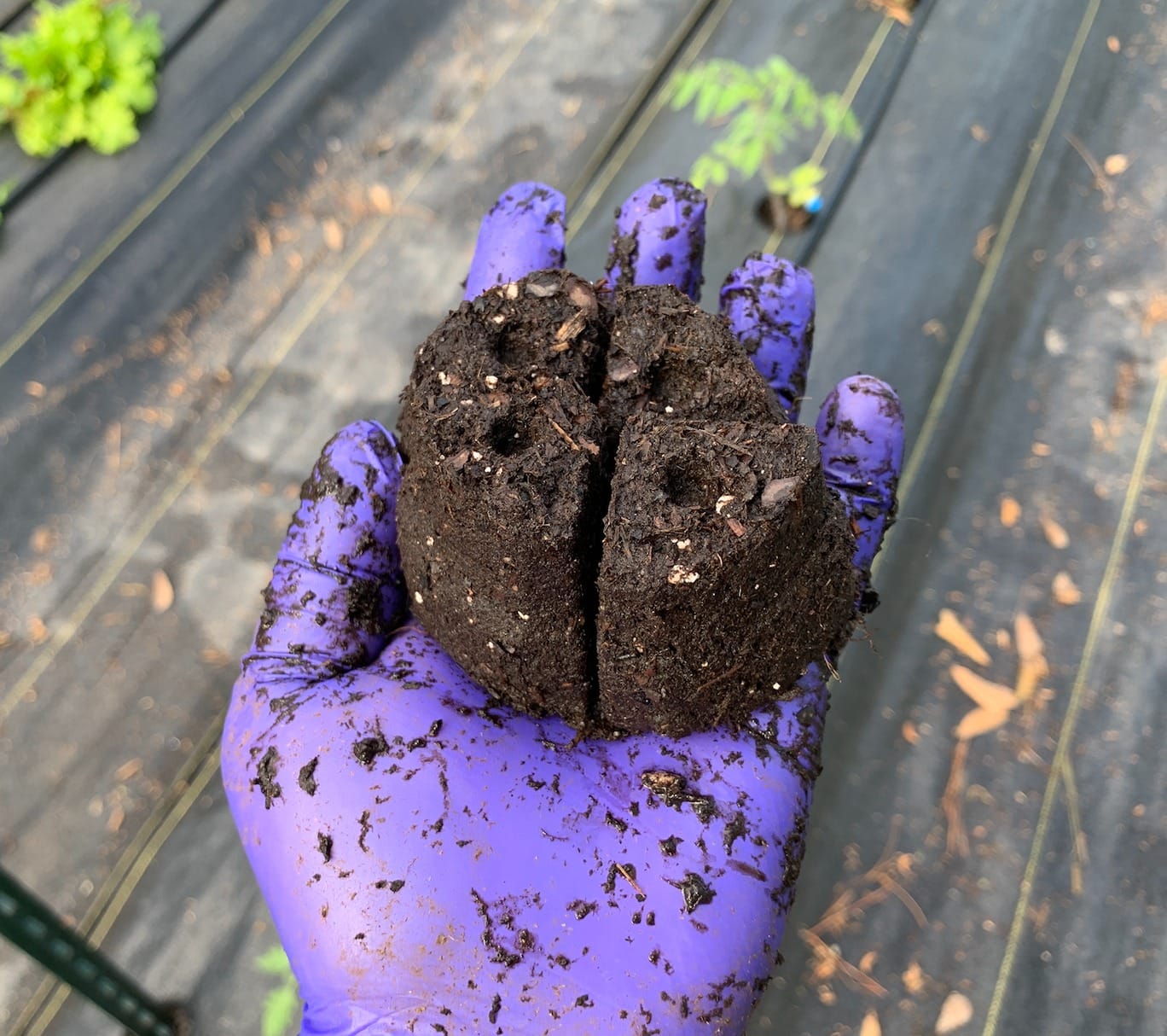
The geometry is the reason. The blocks this mold makes are round and cone-shaped rather than square, which is the whole problem in one word. A round block sits in a 10-by-20-inch tray badly. It rolls, it leaves gaps, and you cannot stack or nest anything, because a cone-shaped block has nothing to sit inside. Every metal blocker in this roundup makes square cubes that tile a tray and stack into bigger molds. This one does not.
The second half of the design is awkward too. The single 3-inch block is large, and using it for most seedlings wastes mix and shelf space, since you are giving a tomato the volume of a cucurbit. The four 1-inch blocks are on the small side and dry out quickly. Sixty-two percent of ratings are full marks, and the eighteen percent at four stars reflects people who are happy but not thrilled.
When it genuinely makes sense
Two situations. First, if you want to try the technique itself before committing to a metal tool, this is a low-commitment way to find out whether you enjoy making blocks at all, because at this weight and material a bad press is not a ruined tool. Second, if you grow large-seeded crops and want one oversized block per plant, the 3-inch option does something no square 4-cell mold on this list can do.
It also will never rust, and it washes clean in seconds, which matters more than it sounds if you are working with a mix that gets sticky.
Why we do not recommend it as the value winner
Because the fit problem is not a preference. Buyers who came to it from a cast tool spend their reviews complaining about how the blocks sit in a tray, and buyers who started here often end up buying metal within a season anyway. A tool that teaches you the motion but fights you on the tray is a false economy.
If you want a first metal blocker, the Mini 4 is the one to get. If you want a first tool of any kind and cost is the deciding factor, this is a legitimate trial purchase, with the shape compromise understood up front.
4. Ladbrooke 5-Piece Essentials Set – Best for the Full System
- Both block sizes and all inserts arrive together
- Micro blocks snap into Mini blocks with no repotting
- English steel construction reported to last a lifetime
- One user starts 300 seeds in a single tray
- Good germination across flowers and vegetables
- Cubic inserts screw in rather than quick-release
- One owner had a bent handle that had to be glued
- Small blocks need daily watering
- Large blocks break apart if watered from above
Both blockers, the cubic inserts, the 3/8-inch seed pins, and the 7/8-inch dowel pins, in one box weighing two and a half pounds. If you have decided that blocking is how you will start seeds, this is the version that skips the two-stage awkwardness of buying a Mini 4 now and a Micro 20 in six months.
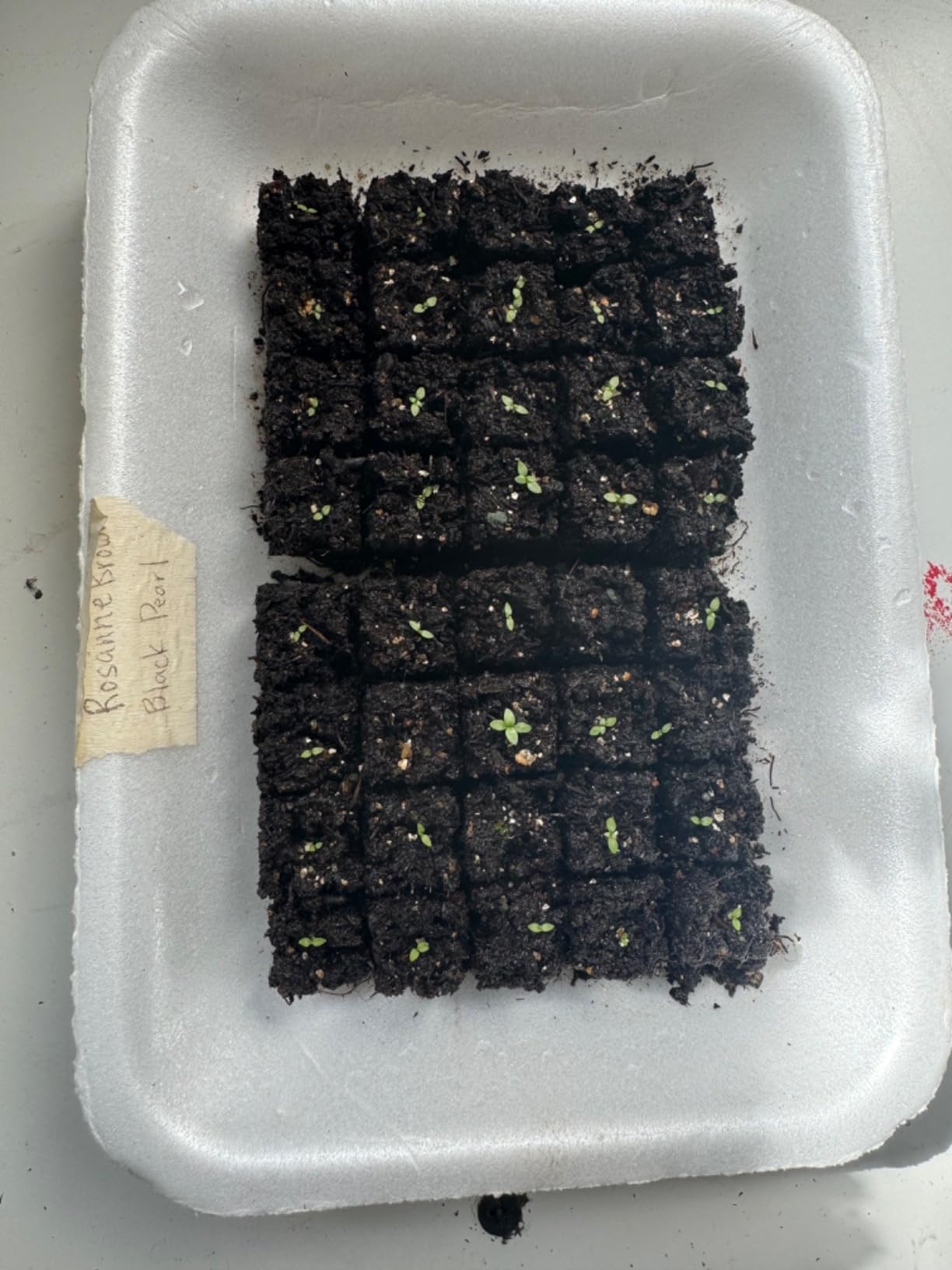
That nesting path is the real argument. The cubic inserts let a 3/4-inch Micro block sit inside a 2-inch Mini block, so a seedling that started in February is transplanted in April by dropping one block into another. Nothing is scooped out, nothing is teased apart, and the roots are not touched at all during the move. On r/marketgardening, growers describe exactly this as the reason they care about blocking for tomatoes and peppers, crops that sit in plugs a long time.
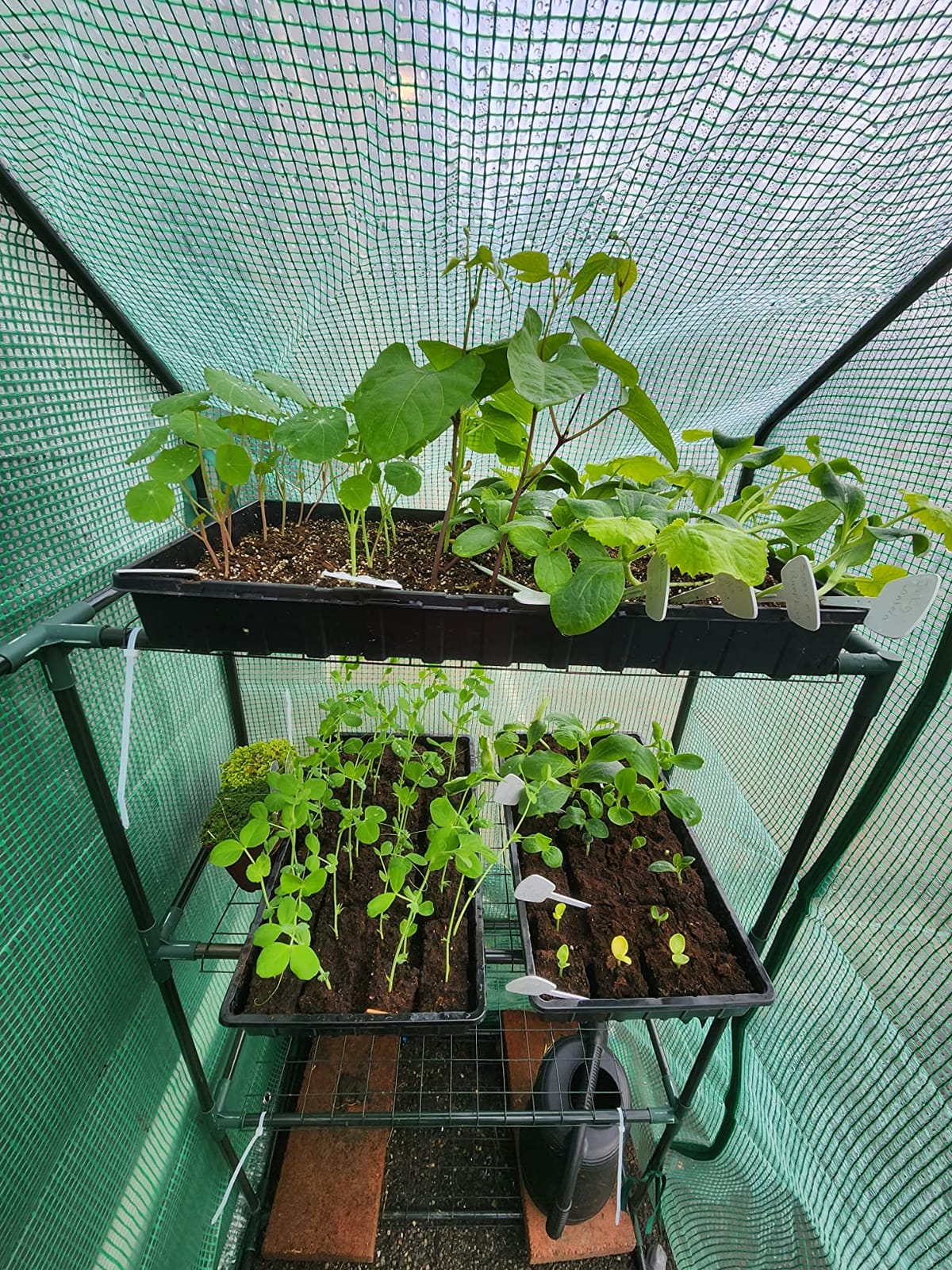
Reviews rate it at four and a half stars across four hundred and eighty ratings, with seventy-six percent at full marks, and the recurring praise is completeness and build. Owners report a single tray holding three hundred starts, which is a density claim we would not repeat without seeing it, but it tells you how small the blocks are when you have the right tool for the front end.
The dowel pins are the sleeper feature. The 3/8-inch seed pin makes a shallow dimple, right for lettuce and basil. The 7/8-inch dowel makes a much deeper hole, which is what you want for a tomato or a pepper seed that needs to go in deeper and sprout with something to push against.
What the set costs you in trade-offs
The cubic inserts are the weak point and they are consistent across reviews. They screw into the Mini 4 rather than dropping in, and installation is described as awkward. It is a fifteen-minute job once, done at the start of a season, and it is the reason this kit is not flawless.
One owner also reported the smaller blocker bending at the handle and needing to be glued, which is the kind of isolated failure that can happen to any tool but is worth knowing about. The 2.5-pound total weight is real, and buyers doing thousands of blocks report the handles becoming uncomfortable over a long session. That is the argument for a stand-up tool, which we cover below.
Who should buy the set instead of the Mini 4 alone
Buy the set if you know you will grow more than a few hundred seedlings a year, if you start a lot of fine-seeded flowers alongside vegetables, or if you are the type who would rather own the system than assemble it. The Micro 20 is the piece you would buy second, and buying it second means you spend weeks of seedlings stuck in 2-inch blocks you did not need yet.
Buy the Mini 4 alone if you are still deciding. It is the lower-commitment path into the same system, and the two blockers nest with each other regardless of which order you buy them in.
5. SOLIGT 4-Cell Blocker – Best for Small Hands and Quiet Work
Soil Blocker with Comfortable Handle, 4 Cell Soil Block Maker 2 Inch Mold
- Rounded handle with no sharp edges
- Heavy-gauge steel that resists rust
- Produces blocks that separate cleanly
- Quieter than most comparable metal blockers
- Compact footprint saves indoor growing space
- Blocks crumble if the mix is too dry and stick if too wet
- Unsifted chunks make weak blocks
- Best suited to all but the tiniest seeds
- Needs thorough cleaning between uses
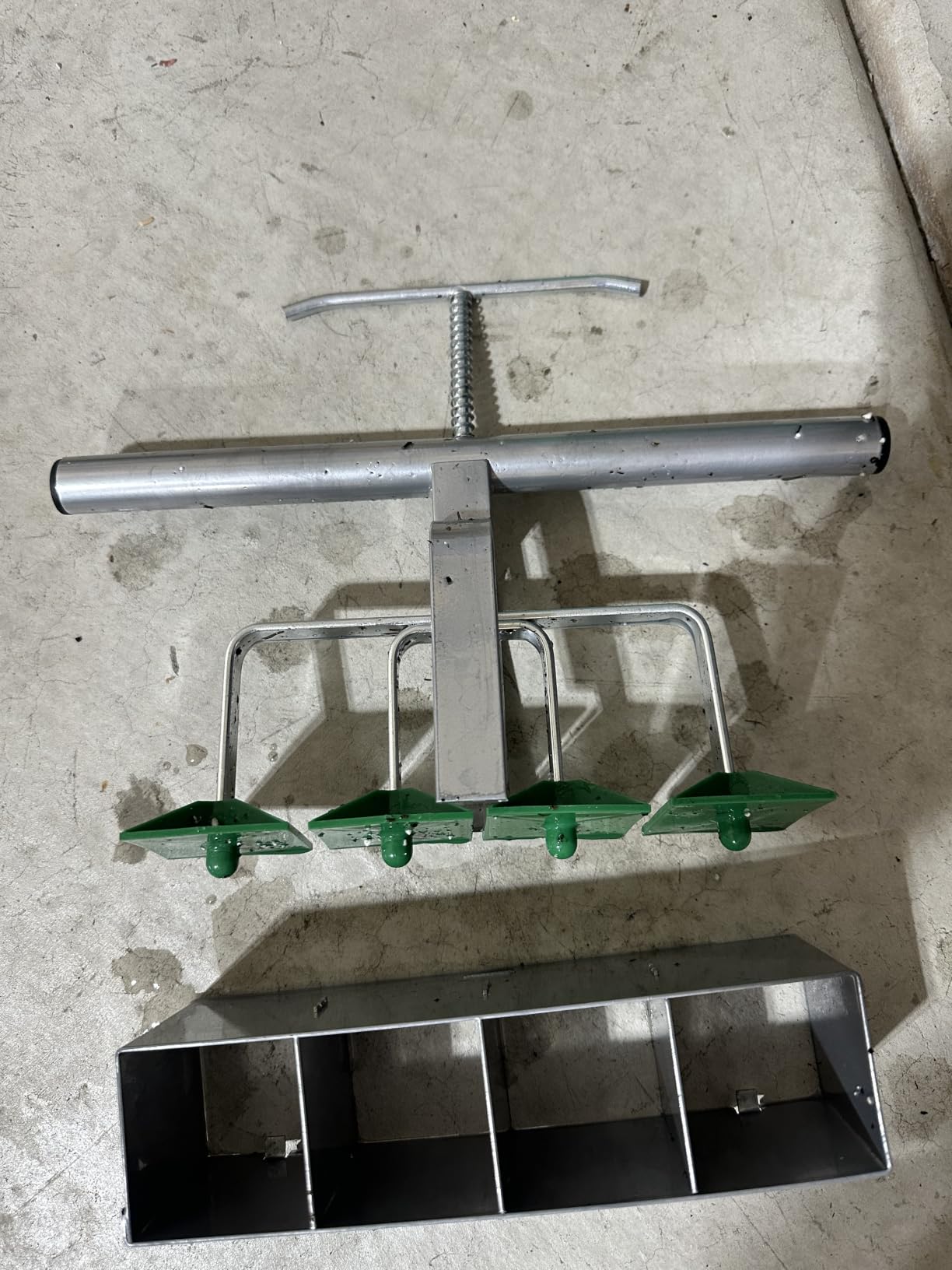
Four 2-inch blocks per press in heavy-gauge steel with a rust-resistant coating, weighing just under a kilogram, with a handle rounded so there are no sharp edges anywhere your hand lands. It is a straightforward 2-inch blocker with no gimmick, and for a first or only tool that simplicity is a feature.
Two details keep coming up in reviews. The first is the handle shape, which is the reason this tool gets recommended for anyone with smaller hands or grip issues. The second is noise, and owners repeatedly note this is quieter than most metal competitors, which sounds trivial until you have pressed several hundred blocks on a shelf at six in the morning.
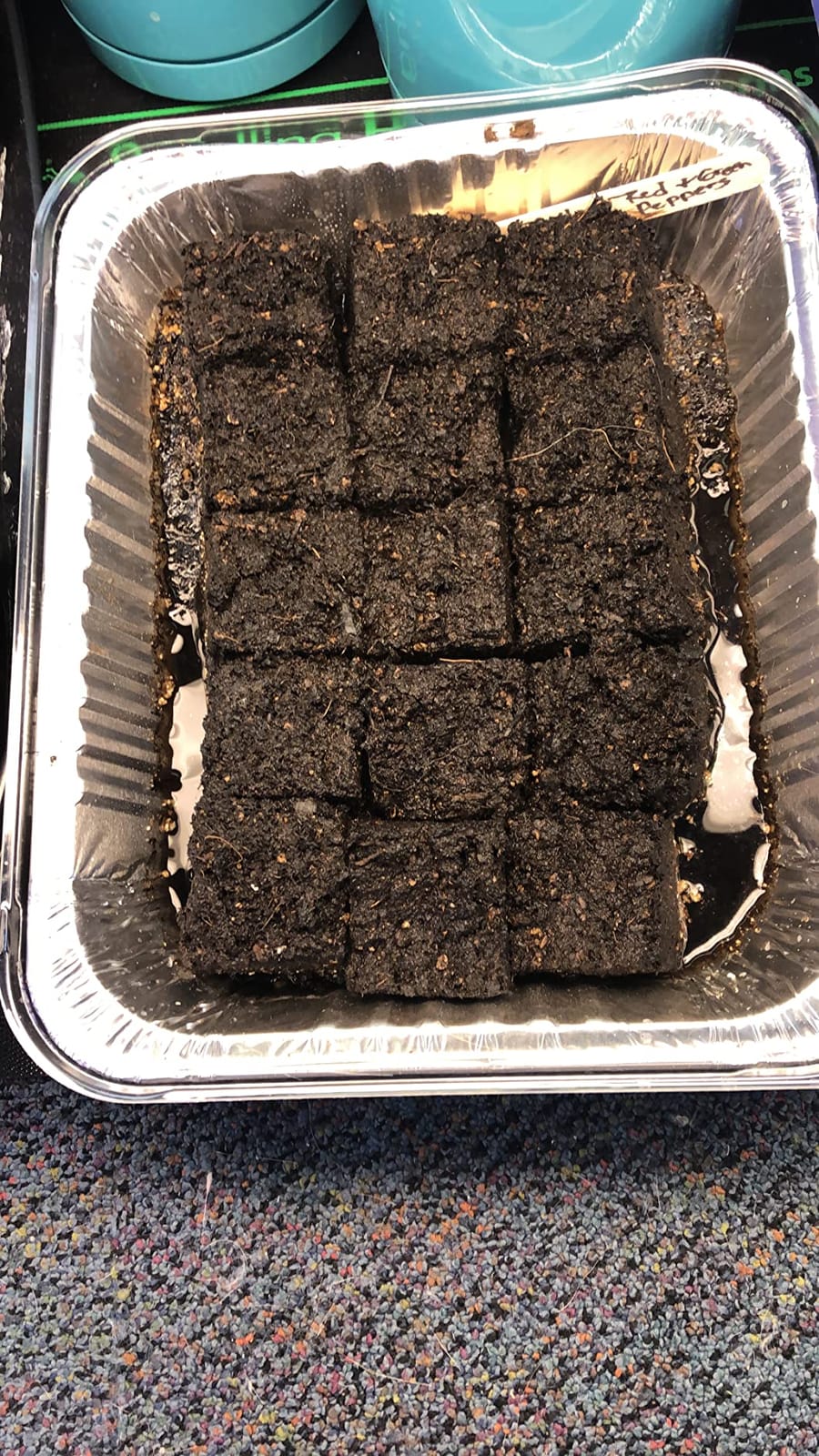
At four point three stars across three hundred and twenty-nine ratings, seventy percent at full marks, the tone is positive and practical. Reviewers like that the strong working structure helps the cubes separate cleanly from the mold, which is the single thing that decides whether blocking feels pleasant or frustrating.
What the reviews also stress, over and over, is that success depends entirely on the mix. Users describe a blend of coco coir, sand, perlite, worm castings, and compost at the right moisture level as the thing that makes this tool work well. We get into that recipe in detail later, because getting it wrong is the main reason blocks fail on any of these tools.
Where it beats the Ladbrooke Mini 4
Hand comfort and noise, honestly. The Mini 4 is a louder, heavier object with a handle that some people find punishing over long sessions. This one is lighter, quieter, and rounder, and if pressing four 2-inch blocks is going to be a twice-weekly job for years rather than a spring project, those two things add up.
It is also the friendlier of the two to store and to hand to a teenager. There is no learning curve attached to a sharp edge you did not know was there.
Where the Mini 4 is the better buy
Everything to do with the system. The Mini 4 blocks nest into the Ladbrooke Maxi and pair with the Micro 20 through the cubic inserts. This tool makes good 2-inch blocks, but they are simply 2-inch blocks, and when you later want a larger block for a cucurbit or want to bump a seedling up, you are buying a different brand’s tool.
Also note the seed size limit that appears in the reviews: all but the very smallest seeds. For a micro-block workflow where you are sowing lettuce and snapdragon by hand, this is not the tool.
6. BlumWay 8-Cell Stainless Blocker – Best 2-Inch Throughput
BlumWay Soil Blocker, 8 Cell 2 inch Soil Block Maker for Seed Starting
- Eight 2-inch blocks per press doubles four-cell throughput
- Three interchangeable pin sizes
- Owners report steel that will not bend
- Blocks separate cleanly when soil is loaded right
- Simple to learn after a short practice period
- Instructions are minimal and thin on soil mixing
- Hard on joints and limited hand strength
- Only a 2-inch size with no larger option
- Squeaky spring during release
- Pins can break and may not ship
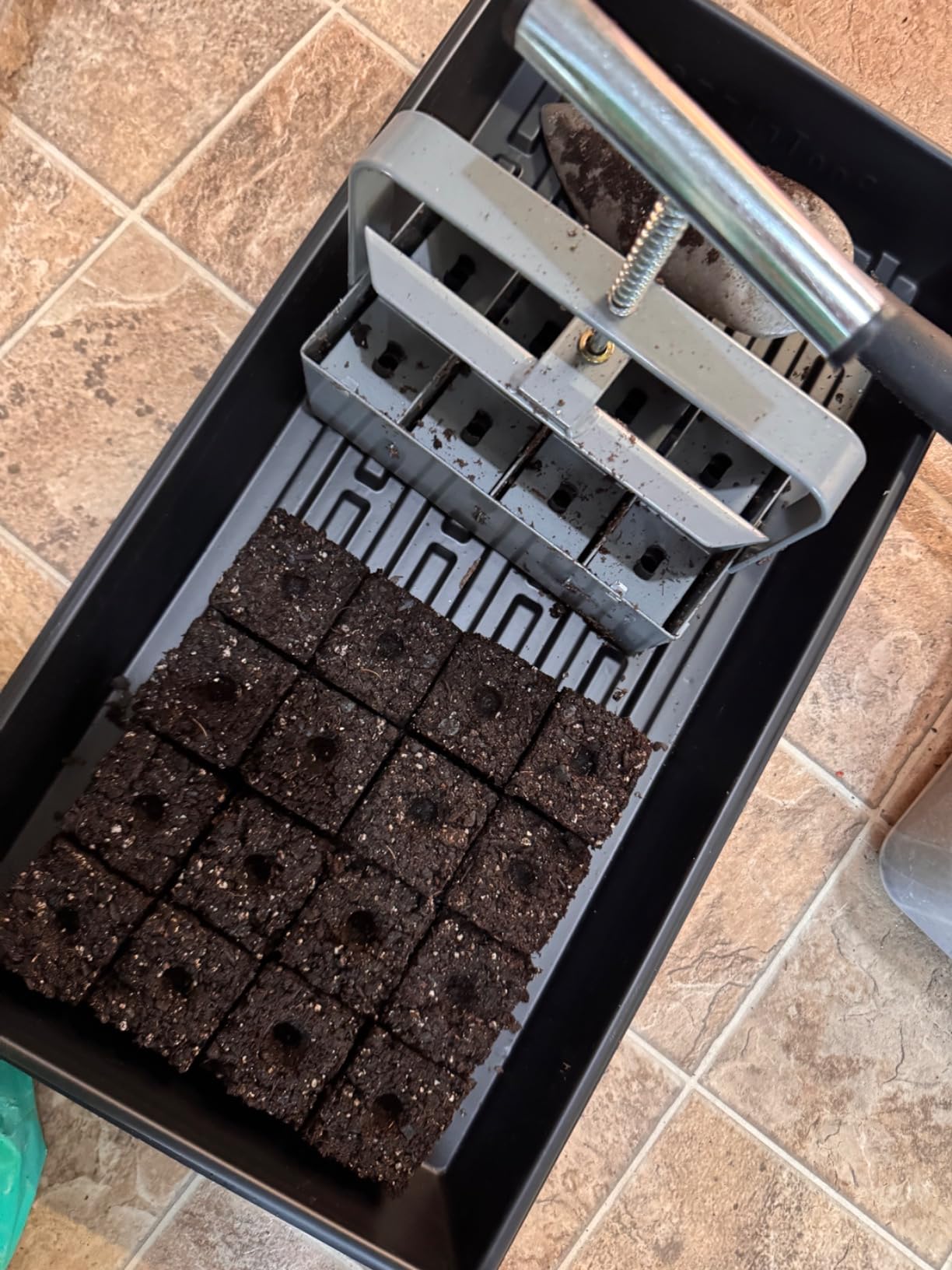
Eight 2-inch blocks per press, in stainless steel, at eight inches tall and 1.53 kg. If your measure of a blocker is how many usable blocks leave it per minute, this is the most efficient tool in the roundup, and nothing else here doubles the cell count without changing the block size.
Stainless is the construction story on this one. Several owners say outright that it cannot be bent, which is the claim we would want from any steel tool in a category where handles warp. Stainless also means no coating to chip and no coating on the bolt threads, which is a real failure point in some powder-coated designs. The three included pin sizes cover a square, a short cylinder, and a long cylinder, so you can match the seed hole to the seed.
Reviews sit at four point four stars across two hundred and seventy-two ratings, with seventy-one percent at full marks. The recurring praise is that the blocks separate without sticking when the soil is loaded properly, and that after a short practice period the tool is simple to carry and easy to operate. Owners also note it cuts plastic use and speeds up transplanting.
The complaint, and it is a consistent one, is documentation. Reviewers say the included instructions are minimal and do not explain soil mixing technique, and they want clearer guidance on moisture. That is a documentation problem rather than a tool problem, but it means you will need to read the mix section below before your first session.
Whether the doubled cell count is worth the weight
For most home gardeners, no. Eight blocks per press is a volume-gain, and volume only matters if you are making more than a few hundred a season. At 1.53 kg this is a substantial object to hold, and reviewers with joint pain or limited hand strength flag it as a challenge. If you are making ninety blocks a year, four per press is plenty and a lighter tool is kinder.
For a cut flower operation or a market garden running thousands, it is a real saving. One press, one squeeze, eight transplants-ready blocks instead of four. That is the calculation the design is built for.
The two things to check on arrival
The spring, which reviewers describe as squeaky during release. That is cosmetic, but if noise bothers you in a shared house, know it going in. More important, the seed pins, which reviewers report can break and are not always included in the box. Open the box, count three pins, and order a replacement set before you need it rather than at sowing time.
There is also no larger size. A seedling in a 2-inch block here has nowhere to go except a cell tray, so this tool suits crops that finish their life in a 2-inch block, which is most vegetables and many flowers.
7. nanovi 4-Cell Blocker – Best for Lightweight Steel Handling
- Consistent 2-inch blocks with a pre-formed seed hole
- Rounded handle with no sharp edges
- Three pin sizes let you match hole depth to seed
- Zinc coating reported to resist deformation over years
- Washes clean and carries easily
- Needs a finely sifted mix
- Twigs and chunks break the blocks
- Blocks dry faster than plastic cells
- One owner had a missing handle bolt
- One owner found sharp edges and a bending handle
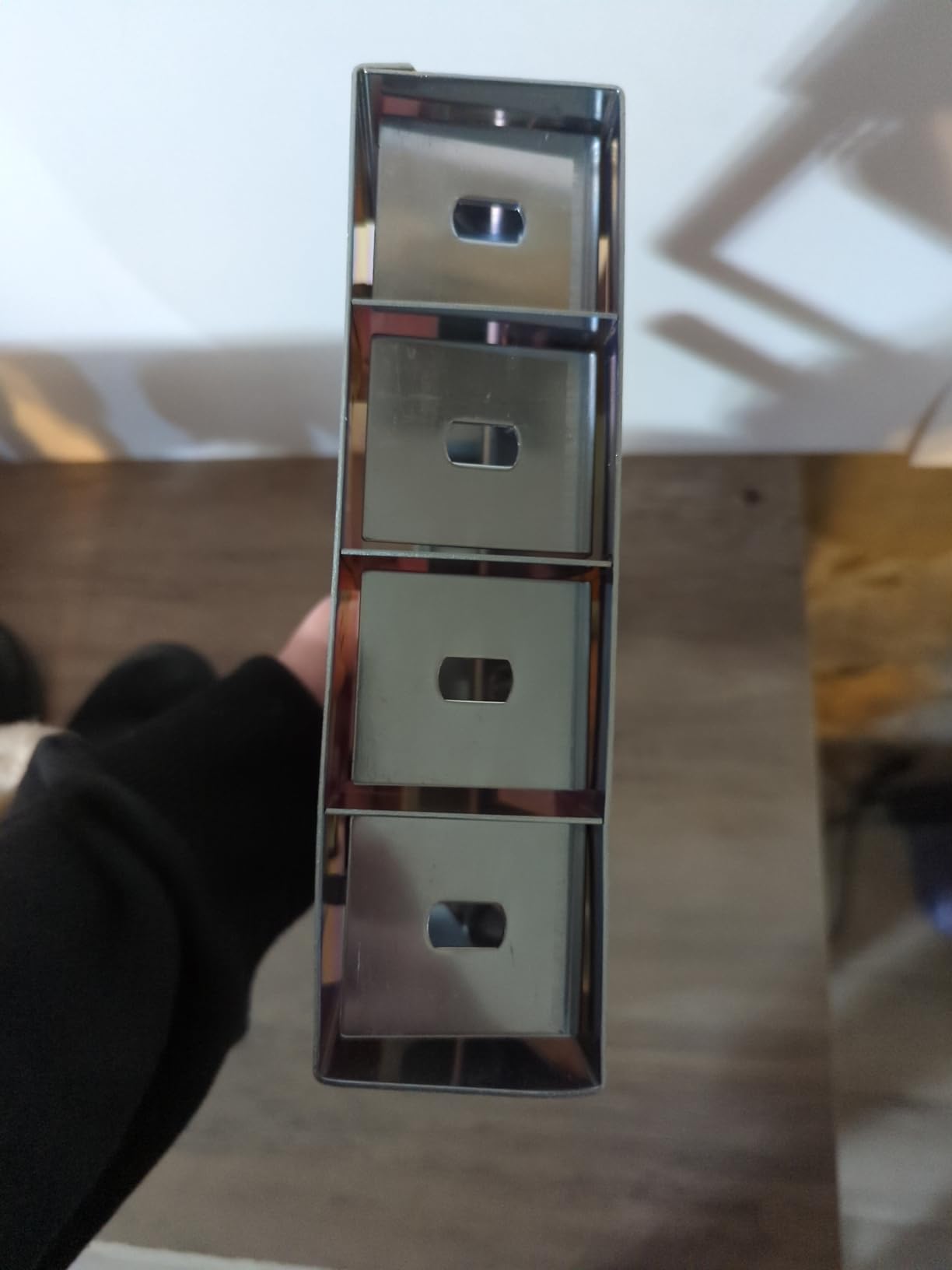
Four 2-inch blocks from a rounded handle, in thickened zinc-coated steel, at 1.11 kg. It sits between the two heavier 2-inch tools on this list, and for anyone who wants a square-block metal blocker without a large object in their hands, that middle ground is the point.
Zinc coating is the construction detail worth knowing. Owners report it resisting deformation over years of reuse, and unlike paint, zinc is bonded to the steel rather than sitting on top of it, so scratches do not become rust pits the way they do on a powder-coated surface. The three included pin sizes are listed at specific dimensions, which lets you match the seed hole to a small herb seed or a larger nightshade seed rather than guessing.
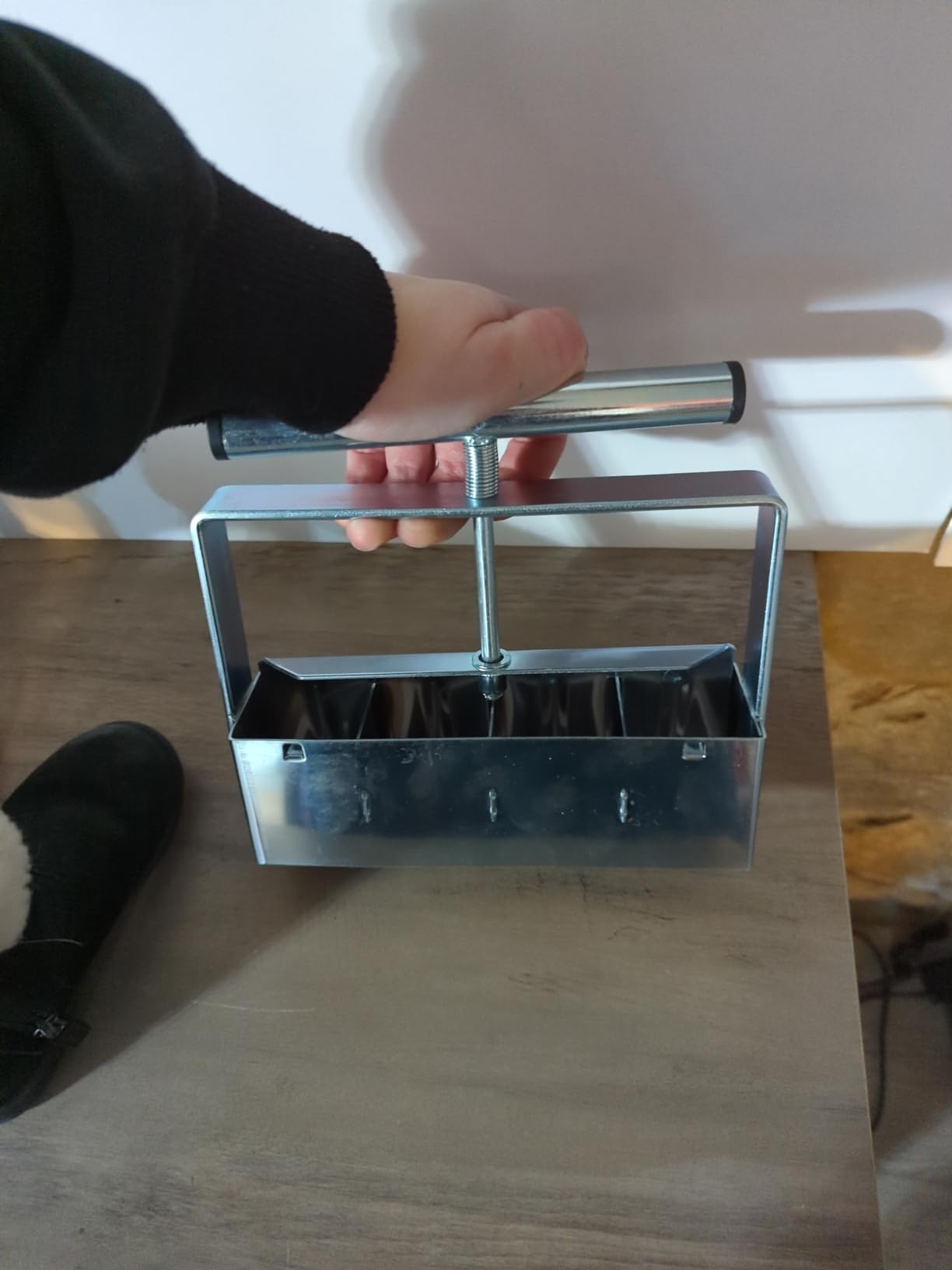
Four point four stars across one hundred and fifty-four ratings, seventy-one percent at full marks. Users describe it as easy to assemble, comfortable to operate, and capable of producing uniform blocks once the mix is right. The block is both container and growing medium, so roots are not pulled from a cell at transplant, which is the whole argument for the technique.
The build feedback is mixed, and we would rather say so. One reviewer received a missing handle bolt and improvised a replacement. Another found sharp edges and parts that fit loosely, with a handle that bent under pressure. Those are individual reports, but they mean this is the one on this list where you should inspect the tool before your first full session.
Why weight is the deciding feature here
Compare it to the BlumWay eight-cell at 1.53 kg or the ALXMYAO at 2.27 kg and you can feel the difference by the end of a session. For a home gardener making blocks on a weekend morning, a lighter tool means you keep going, and keeping going matters because the technique improves with repetition.
It also makes the tool portable, which matters if you are blocking on a potting bench outside and carrying trays in. At just over a kilogram you can hold the blocker in one hand and a tray in the other.
Where it is the weaker choice
Consistent reports say blocks dry out faster than plastic cell sheets and need closer monitoring, and that the tool needs a finely sifted mix where twigs and chunky particles break the blocks outright. Neither is unusual for soil blocking, but both mean this tool is less forgiving of a beginner than the heavier steel models, which have more mass driving the press.
It also does more work than a basic 2-inch tool requires. The three pin sizes are genuinely useful, but if you only sow one type of seed, you are paying for options you will not use.
8. ALXMYAO 4-Cell Heavy Duty Blocker – Best for Quiet Pressing
2 Inch 4-Cell Handheld Heavy Duty Soil Block Maker for Seed Starting
- Does not squeak during use
- Heavier build than the size suggests
- Consistent uniform 2-inch blocks
- Operates smoothly with little upper-body strength
- Includes a seed sizer tray with five outlet sizes
- Soil must be packed by hand before pressing or blocks fall apart
- Powder coat can gum the bolt threads
- Return spring reported as too short and weak
- Blocks are fragile and need careful watering
Four 2-inch cells in powder-coated galvanized steel, weighing 2.27 pounds, measuring 7.6 by 2 by 8.7 inches, and it does not squeak. That last point is the one owners mention most, and it is unusual, because a spring-loaded metal release is normally the noisiest part of any blocker on this list.
It also comes with a sowing tray with five different outlet sizes, which is a small accessory that solves a real annoyance. When you are sowing hundreds of tiny seeds, you can tap a seed into a five-size tray and get a controlled flow onto the block instead of trying to place each one with a fingertip.
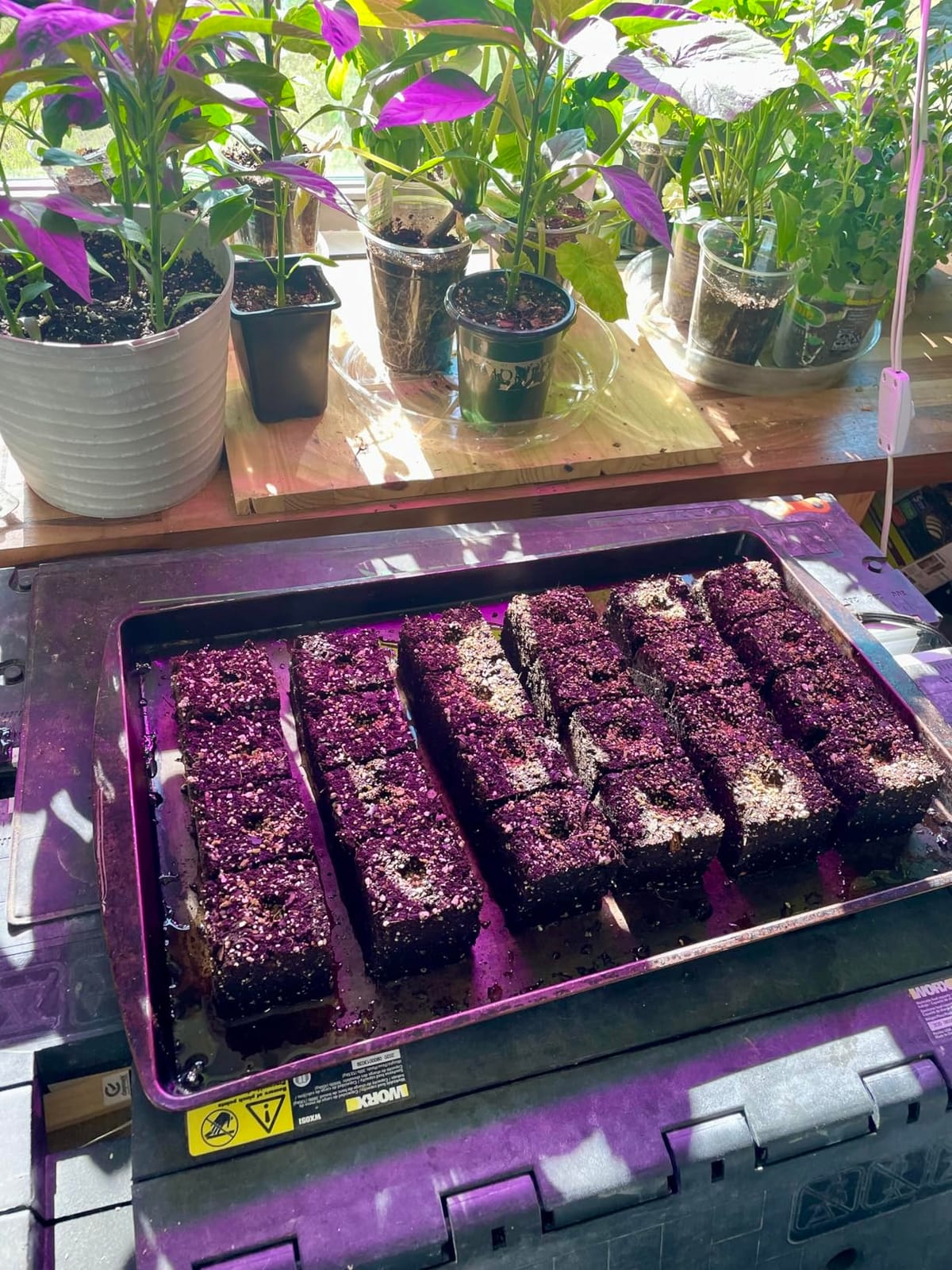
At four point six stars across fifty-five ratings, this has the highest average rating of the eight tools here, with seventy-five percent at full marks and no one-star ratings at all. Owners describe it as unexpectedly heavy-duty for its size, producing consistent uniform blocks and operating smoothly with little upper-body strength.
Small review base, though, and we want to be straight about that. Fifty-five ratings tells you the people who bought it liked it. It does not tell you what happens in year five. Owners nonetheless compare it favorably to tools that cost considerably more, which is a claim about the current price tier, not about longevity.
What to inspect in the first ten minutes
Two mechanical issues appear in the reviews and you can check both before you commit. First, the powder coating can gum the bolt threads, so the bolt may only screw in halfway. Second, the included return spring is reported as too short and too weak to hold the metal section up on its own. If either is true of your unit, both are fixable before your first session, but find out now rather than mid-sowing.
There is also an assembly note worth knowing. If the blocker section seems to sit wrong, it can be flipped to align the tabs, which is a normal adjustment rather than a defect.
Who should pick this and who should not
Pick it if noise is a genuine concern, such as early mornings, a small house, or a shared wall, and if you like having a seed sizer tray. Do not pick it if you are squeamish about hardware, because it is the tool on this list most likely to need a part checked or replaced.
One more honest limit: the blocks are fragile and need careful watering and minimal handling, and owners note the whole process is slower than filling plastic cell trays, though they accept that as the expected trade. It is also worth knowing the soil has to be compacted by hand inside the chambers before you press, or the blocks come apart. That extra step slows you down at the start and is the single most common reason people quit.
Start With a 2-Inch Blocker and Add a Micro Blocker Second
Most people buy the wrong size first. Here is the sizing logic in plain terms. Block size is the finished width of the cube, cell count is how many you get per press, and your crop decides both. A 2-inch block is the target most vegetables finish in, so a four-cell 2-inch mold is the sensible default.
Going smaller, the 3/4-inch micro block is a germination stage, not a growing stage. Anything in it needs to move on within days for fast crops and within a couple of weeks for slower ones. That is only a sensible purchase if you have somewhere to move it to, which means buying the micro second, not first.
Going larger, cucurbits, meaning squash, cucumber, and melon, are grown from large seeds and resent root disturbance more than almost anything else you will sow. They want one oversized block each, and a two-inch four-cell mold forces you to either transplant them bare-root or skip blocking entirely. Farm-scale growers on r/Cutflowers describe moving sunflowers to outdoor plug trays for exactly this reason, that 2-inch blocks consume too much space and mix at volume.
The honest advice on which crops to skip entirely: cucurbits unless you have a large-block tool, and any large-seeded crop at volume if space is your constraint. Everything else, from tomatoes and peppers to zinnias and snapdragons, is better in blocks.
For the tray question people keep asking, a standard 10-by-20-inch tray, called a 1020 tray by everyone who sells them, holds a lot more micro blocks than it holds 2-inch blocks. That is the entire efficiency argument for the two-stage system, and it is why a grower with a fixed shelf footprint can start hundreds more seedlings without buying a second shelf.
Skip Perlite: What Blocking Mix Actually Needs
This is the one genuine argument in the category, and it is worth settling because it is the difference between blocks that hold and blocks that crumble. Most published recipes include perlite. The Gardener’s Workshop argues explicitly that blocking mix should contain no perlite and no vermiculite, because the mix has to bind under compression and those ingredients are there to keep a mix loose and airy.
Both positions are right about their own purpose, and that is the reconciliation. Perlite does what it promises in a potting mix, which is drainage and air space. Blocking mix is a different product with a different job. It has to survive being squeezed into a two-inch cube and then hold its own weight on a shelf with no pot around it. A mix that crumbles when you open your hand has too much of the loose stuff in it.
So the rule we would give a beginner is simple. Small amounts of perlite are tolerable and many growers use them successfully. But if your blocks are falling apart, the fix is not more water, it is more base and compost and less perlite. Add coir or peat, add fine compost or worm castings, and pull the perlite back until a squeezed handful holds a ball and releases a single drop when you squeeze it. That is moist oatmeal, not cement, and the people who describe cement slop are describing a mix that will smear rather than release.
The proportions that work: roughly one-third moisture-retention base such as coco coir or peat, one-third drainage material, one-third fine compost or worm castings, with a light mineral amendment if you want one. You wet it, mix it thoroughly, and test it before you charge the tool.
One note on peat, since it is worth a sentence. Several growers in the community have moved to peat-light or peat-free blends, including a permies thread where someone running a fifty-fifty sifted compost and coco coir mix reported it worked fine. If you want to avoid peat, coco coir with compost will carry you.
Why Soil Blocks Fall Apart, and How to Fix It
Fallen-apart blocks are the number one failure and the number one reason people give up. Almost every case is one of four things, and you can diagnose it in a minute.
The mix is too dry. There is not enough water to bind the particles, so the cube loses cohesion the moment the mold releases. Squeeze a handful. If it crumbles into dust before you can form a ball, add water. The fix is immediate and the second press will tell you.
The mix is too wet. This one smears instead of crumbling. The block comes out with rounded, slick corners and the ejection plate drags rather than separating. Owners across several tools report blocks whose tops sheared off, and excess moisture is the usual cause. Hold the mix, let it sit, and test again.
The mix is too sandy or too loose. Sand has no fiber and no stickiness, so a block made from it is a loose pile shaped like a cube. This is the perlite problem above, and the fix is the same, more base and compost.
You did not pack it firmly enough. This one shows up even on good tools. Reviewers for several of the four-cell blockers describe needing to compact the mix into the chambers by hand before pressing, and say blocks fall apart otherwise. Press with your whole weight, wrist included, and count to three.
There is a fifth, quieter problem: chunky material. A stone, a twig, or an undecomposed piece of compost in the chamber has nowhere to go, so the block forms around it with a weak spot. That is why every reviewer on every tool says sift, and it is why the Micro 20 needs a finer mix than the Mini 4.
Bottom-Water in a Free Channel, Not Over the Top
The most-asked question in the r/gardening thread on soil blockers is how the blocks stay standing if you bottom-water them. It is a good question and it has a clean answer. Blocks stay standing because the mix binds, which is the whole premise, and because you leave a channel for the water to travel.
Leave one edge of the 1020 tray empty. Do not fill the tray wall to wall with blocks, leave a gap along one short side, and pour your water into that channel. The water runs along the empty strip, finds the tray floor, and rises by capillary action into the bottom of the blocks. Nothing lands on a block top, so nothing knocks a block over and nothing washes soil out of the corners. This one layout habit solves the majority of the collapsing-block complaints we read.
For the mini 3/4-inch blocks specifically, which are the ones that give people trouble, here is the protocol. Bottom-water once daily in the morning, always before the sun hits the tray, and pour into the channel rather than over the blocks. Keep trays out of intense direct sun, because a warm windowsill can dry a small block in a morning. Do a quick finger check on a corner block mid-afternoon on the first few days, purely to calibrate how fast your specific setup dries. And if you are away for a weekend, move the trays to a cooler, dimmer spot before you leave rather than trying to over-water them to hold.
Reviewers of the Ladbrooke 5-piece set are explicit that larger blocks break apart when watered from above, which is why bottom-watering is not a stylistic preference in this system. The 2-inch blocks are the most vulnerable to overhead water, and the free channel is what keeps them intact.
Hand-Held vs Stand-Up: Which One Earns Its Place
Every tool in this roundup is hand-held, and that is a deliberate limitation rather than an oversight, because the stand-up category has a different buying logic. A hand-held blocker is faster per press for small jobs, because there is no setup and no swinging lever. A stand-up blocker puts the pressing force through your legs and body weight instead of your hand and wrist, and it costs noticeably more.
The case for the upgrade is volume and comfort. Growers doing thousands of blocks a season describe hand and wrist pain from hand-pressing, and one flower farmer with small hands simply passes the blocker to someone else in the household. If you are pressing several hundred blocks in a session, or you already have joint issues, the stand-up economics change quickly.
The case against is that most home gardeners never reach that number. Two hundred blocks a year, spread over a spring, is a few afternoons of work and a hand-held tool is the right call. Buying a lever press for that is solving a problem you do not have.
There is a middle path worth naming, and it is the one several growers in the community describe. A larger-cell hand-held tool, like the eight-cell design above, cuts the number of presses per block roughly in half for the same 2-inch block size. You get most of the volume saving of a stand-up rig without changing how the force is applied. If your wrists are the limiting factor rather than your time, that is the upgrade to make first.
There is also a design feature some brands push hard, which is seeding the blocks inside the mold before pressing them out, so you are not handling fifty loose blocks one at a time. We did not include a tool with that feature on this list, but it is worth knowing it exists when you are comparing stand-up and high-count options.
Yes, Soil Blockers Are Worth It Past About Two Trays
Direct answer: for most home gardeners who start more than a tray or two of seed a year, yes. If you start a dozen pots a year, a cell tray is simpler and the payback never arrives.
What you gain is real. Roots air-prune instead of circling, so seedlings establish faster with less transplant shock. You stop buying and throwing away plastic cell trays. And you can pack a shelf far more densely, which is the difference between fitting your seed starting on one shelf or two.
What you give up is equally real, and the disadvantages are worth reading before you buy anything. Mini 3/4-inch blocks dry fast and need daily watering. The mix must bind, and a standard loose potting mix will not do it, which means sifting and measuring on a schedule. Hand-pressing is hard on wrists over a long session. Blocks are slower to make than dumping soil into plastic cells. Large-seeded crops at volume use more space and more mix than outdoor plug trays. And blocks crumble if the mix is too dry, too sandy, or not packed firmly.
Where blocking genuinely loses to cell trays is when you only want a handful of plants, when your crops are large-seeded and you have no large-block tool, or when you are not willing to spend twenty minutes on mixing. Those are real situations and no amount of enthusiasm changes them.
The tipping point is simple. One tray of micro blocks is the minimum volume where the method makes sense. Past roughly two trays a year, the tray savings and the root quality start to pay for the extra setup steps.
You Can Block Seeds Without a Purchased Tool
If you want to try the technique before buying anything, a homemade mold works well enough to learn on. Three options, easiest first.
A toilet paper tube. The simplest option and the one to use with children. The cylinder is the diameter you want your block to be, which is a small block, but it is a genuine block. Fill it with damp blocking mix, pack it with your fingers, set the filled end flat on the table, and push the compacted block out by pressing the tube against the surface while you pull the cardboard up. Slightly thicker at the base than the top helps it stand.
A sectioned paper towel roll. Same principle, bigger diameter, and the sectioned version is kid-safe in a way the whole tube is not. Cut the roll to your block width, pack it, and push out.
A soda can and a dowel. Cut a soda can into a cylinder, slide it loosely over a wooden dowel so the dowel is your handle and pusher, fill around it, and press the block out the way you would with a real tool. This gets you a larger block closer to the 2-inch size, and it is the version to use if you want to see whether a bigger block is worth pursuing.
Whatever you build, the technique is the same as a real tool. Pack the mix firmly enough that it holds, set the filled end flat, and push rather than pull. A dimple for the seed can be made with a pencil or a dowel after the block is out.
Once you know you like it, the upgrade path is clear, and picking the right tool is mostly about cell count and construction. If you are still choosing the rest of your setup, our seed drill buying guide covers direct sowing, which is a faster route for large-seeded crops like beans, peas, and radishes than blocking them at all.
Frequently Asked Questions
Is it a good idea to start seeds in soil blocks?
Yes, for most home gardeners who start more than a tray or two a year. Blocks air-prune roots so seedlings never become root-bound, they cut transplant shock, and they let you skip disposable plastic cell trays. The trade-offs are a fussy mixing requirement, faster drying than cell trays, and a learning curve. If you start a dozen pots a year, cell trays are simpler and blocking will not pay for itself.
What are the disadvantages of soil blockers?
Six real ones. Small 3/4-inch blocks dry out fast and need daily watering. The mix must bind together, so a loose standard potting mix will not make blocks. Hand-pressing is hard on wrists over a long session. Blocks are slower to make than dumping soil into cell trays. Large-seeded crops at volume use more space and more mix than outdoor plug trays. And blocks crumble if the mix is too dry, too sandy, or not packed firmly enough.
What is the best soil mix for soil blockers?
Roughly one-third moisture-retention base such as coco coir or peat, one-third drainage material, and one-third fine compost or worm castings, wet to a moist-oatmeal consistency that holds a ball and releases a single drop when squeezed. Many recipes include perlite, but small amounts are tolerable; a mix that crumbles in your hand has too much of it. Increase coir or peat and compost and pull the perlite back.
Are soil blockers actually worth it?
For most home gardeners starting more than one or two trays a year, yes. Roots air-prune instead of circling, so seedlings establish faster with less transplant shock, and you stop buying plastic cell trays. Below roughly two trays a year the payback never arrives and a simple cell tray is the better choice. The method is at its weakest with large-seeded crops unless you own a large-block tool.
Why are my soil blocks falling apart?
Almost always one of four things. The mix is too dry, so it crumbles before you can form a ball. The mix is too wet, so corners come out rounded and smeared. The mix is too sandy or has too much perlite, so it has no fiber to bind. Or you did not pack the chambers firmly enough before pressing. Chunky material like stones or twigs in the mix also creates weak spots, which is why every tool on this list needs a sifted blend.
How do you water soil blocks without washing them away?
Bottom-water, and leave a free channel. Do not fill the 10-by-20-inch tray wall to wall, leave a gap along one short side, and pour water into that empty strip. It runs along the tray floor and rises into the blocks by capillary action without landing on a block top. For 3/4-inch micro blocks, water once daily in the morning before direct sun hits the tray and keep them out of intense sun.
What size soil blocker should I buy first?
A four-cell 2-inch blocker. It is the size most vegetables finish in, and it is forgiving enough to learn the technique on. Add a micro 3/4-inch tool second, once you have somewhere to pot seedlings up into, since a small block with nowhere to go is a dead end. Only buy a large single-block tool if you grow cucurbits such as squash, cucumber, or melon.
The Best Soil Blockers for Seed Starting in 2026
Start with the Ladbrooke Mini 4 if you want one tool and one decision made for you. Four 2-inch blocks per press, coated English steel, a review base deep enough that longevity is not in question, and blocks that nest upward into other Ladbrooke tools later.
Add the Ladbrooke Micro 20 when you are starting hundreds of fine seeds a season and you already have somewhere to put them. Add the Ladbrooke 5-piece set instead of both if you would rather have the whole system from the start. If wrists are your limit rather than time, the eight-cell stainless design halves your presses for the same block size.
Whatever you choose, remember that the tool is the easy part. A sifted mix at moist-oatmeal moisture, packed firmly, on a tray with a free water channel, will carry you further than the difference between any two blockers on this list. And if you are still only planning a dozen pots, use a cell tray and save the learning curve for next season.
Kitchen, garden, or windowsill, the same rule holds. Start small, do it twice, and buy the bigger version once you know you will keep going. Until then, here is our poppy seed chicken casserole to plant out while you wait.