

A honey extractor is a drum-shaped centrifuge. You uncapped frames, load them into a basket inside the drum, spin the drum, and centrifugal force slings the honey out of the cells into a bucket while the comb stays intact enough to go back in the hive.
For most backyard beekeepers the best honey extractor is a 3- or 4-frame stainless steel hand crank with a clear lid, adjustable legs and a honey gate. It covers a 2-to-5 hive operation, needs no outlet, and rinses clean in the sink in a few minutes. Electric drums earn their place once you pass roughly six hives or start working deep frames in volume.
I have been running extractors for backyard colonies for years, and the decision almost never comes down to the spec sheet. It comes down to how many hives you have, whether you have a spare hand to crank, and how much sink space you want honey in. This roundup covers the 10 machines that actually fit a home operation, tested against frame capacity, drive type, material, cleaning burden and the real complaints owners report after a season of use.
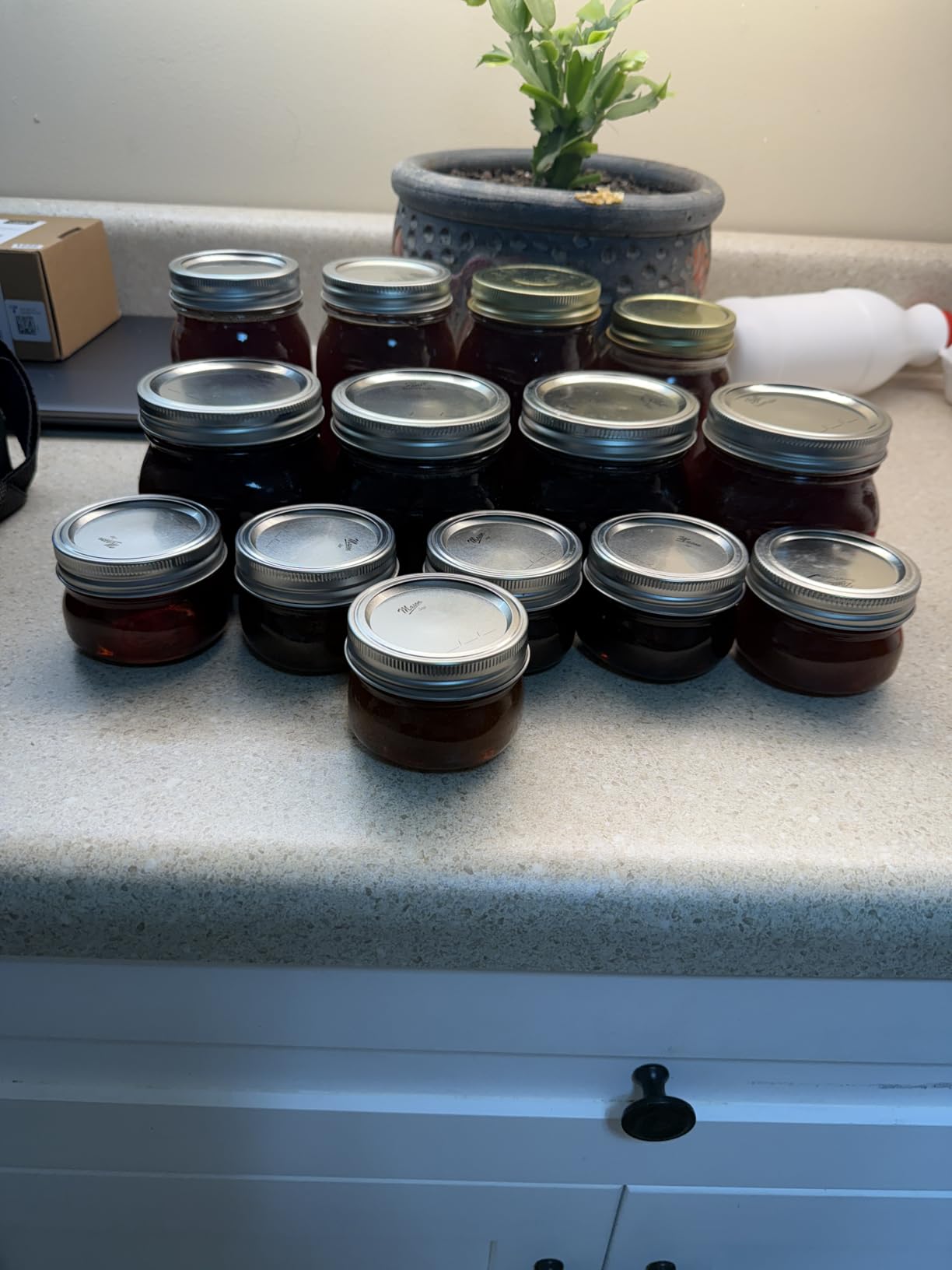
One thing worth saying up front: the honey coming out of any of these drums ends up in the same place. Most of it goes straight into something like our one-pan honey garlic chicken dinner ideas, a stack of honey garlic chicken thighs, or a jar of homemade honey mustard. That is the whole point of the drum, and it is why comb damage matters more than throughput.
All ten picks below were reviewed using manufacturer specifications, the rating distribution across hundreds of verified buyer reviews, and the recurring complaints forum beekeepers report on r/Beekeeping and the Beesource hobbyist threads. Nothing here is sponsored. Where a unit has a known weakness, it gets written down.
Table of Contents
Top 3 Picks for Backyard Beekeepers in 2026

VEVOR 2-Frame Manual
- 2-frame hand crank
- Food-grade stainless drum
- Shallow medium and deep frames
- Transparent viewing lid

VIVO Electric 8-Frame
- Quiet 120V AC motor
- Up to 8 medium frames
- Elevated gate clears a bucket
- 1-year warranty

VEVOR 2/4-Frame Electric
- 140W motor to 1300 rpm
- Polished stainless drum
- Clear lid with auto shutoff
- Boltable legs
The VEVOR 2-frame is the one I hand to beginners. It spins shallow, medium and deep frames, has the largest review base in this group, and its stainless drum rinses clean without a disassembly headache.
The VIVO 8-frame rack is the choice when the harvest outgrows two-frame loads. It holds more frames per load than anything else here and its elevated honey gate clears a 5-gallon bucket without tipping the drum.
The VEVOR 2/4-frame electric is the cheapest way to stop cranking. Variable speed up to 1300 rpm means you can start slow, settle the honey down, then ramp up, which is gentler on foundationless comb.
All 10 Honey Extractors Compared in 2026
| Product | Specifications | Action |
|---|---|---|
| VEVOR 2-Frame Manual Extractor |
|
Check Latest Price |
| VIVO Electric 8-Frame Rack Extractor |
|
Check Latest Price |
| VEVOR 2/4-Frame Electric Extractor |
|
Check Latest Price |
 GOODLAND Hardin 2-Frame Manual GOODLAND Hardin 2-Frame Manual |
|
Check Latest Price |
 GOODLAND HE3MAN 3-Frame Manual GOODLAND HE3MAN 3-Frame Manual |
|
Check Latest Price |
 TRINFREE Electric PMSM 4/12-Frame TRINFREE Electric PMSM 4/12-Frame |
|
Check Latest Price |
 Little Giant 2-Frame Manual Little Giant 2-Frame Manual |
|
Check Latest Price |
 TRINFREE 6-Frame Manual Drum TRINFREE 6-Frame Manual Drum |
|
Check Latest Price |
 GOODLAND HE2MOT Motorized 2-Frame GOODLAND HE2MOT Motorized 2-Frame |
|
Check Latest Price |
 BeeTech 4/12-Frame Electric Extractor BeeTech 4/12-Frame Electric Extractor |
|
Check Latest Price |
Two patterns jump out of that table. Five of these ten are electric, and every one of them carries a motor warranty or parts question that the manual machines do not. The manual side clusters around two and three frames, which is the size most backyard operations never outgrow.
1. VEVOR 2-Frame Manual Honey Extractor – Best All-Round Starter Extractor
- Most owners had it spinning in under 20 minutes
- Stainless drum rinses clean easily
- Transparent lid shows the spin without opening
- Works with shallow medium and deep frames
- Some owners motorize the crank with a drill
- Thin legs flex and the drum wobbles unless bolted down
- Plastic honey gate threads can leak
- Occasional reports of a leg breaking at the base
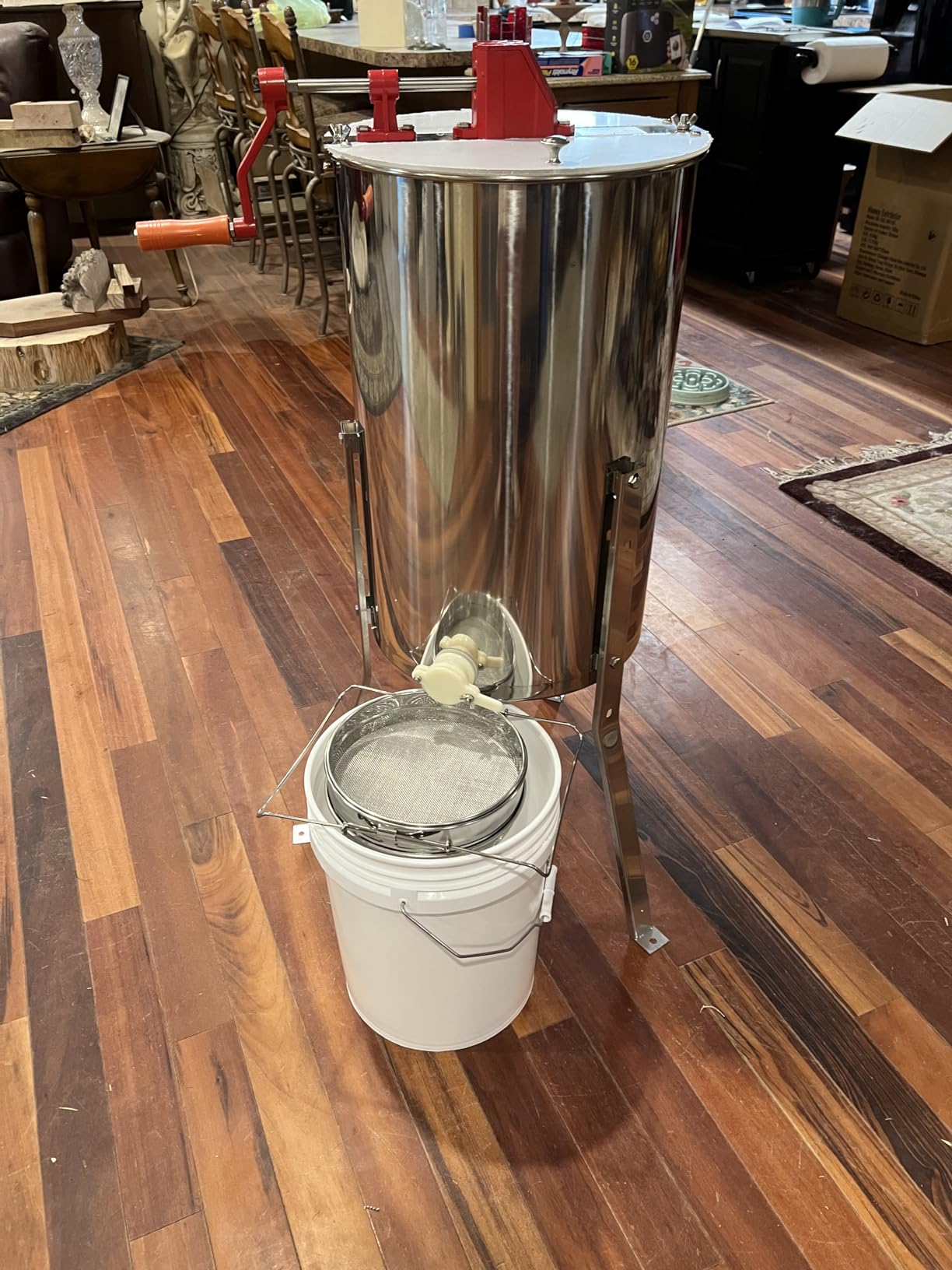
This is the extractor I keep coming back to, because after four seasons on my own hives it has done one job without complaint: spinning two frames at a time and rinsing out clean under the tap. The drum is seamless food-grade stainless with enclosed metal gears, which is the detail that matters most for a machine that will sit in honey for years.
Assembly is genuinely fast. Most owners report having it spinning in under 20 minutes, and the enclosed gear crank is easier to turn than an exposed gear drive of the same size. The three-leg triangular stand adjusts between 11.81 inches and 14.96 inches, so you can set the drain gate over a bucket that is not the tallest one you own.
What I like most is the transparent acrylic lid. You can watch honey climbing the comb walls instead of opening the drum and losing your spin, which matters on delicate foundationless frames. The model here handles deep, medium and shallow frames, so a mixed-frame backyard yard is not a problem.
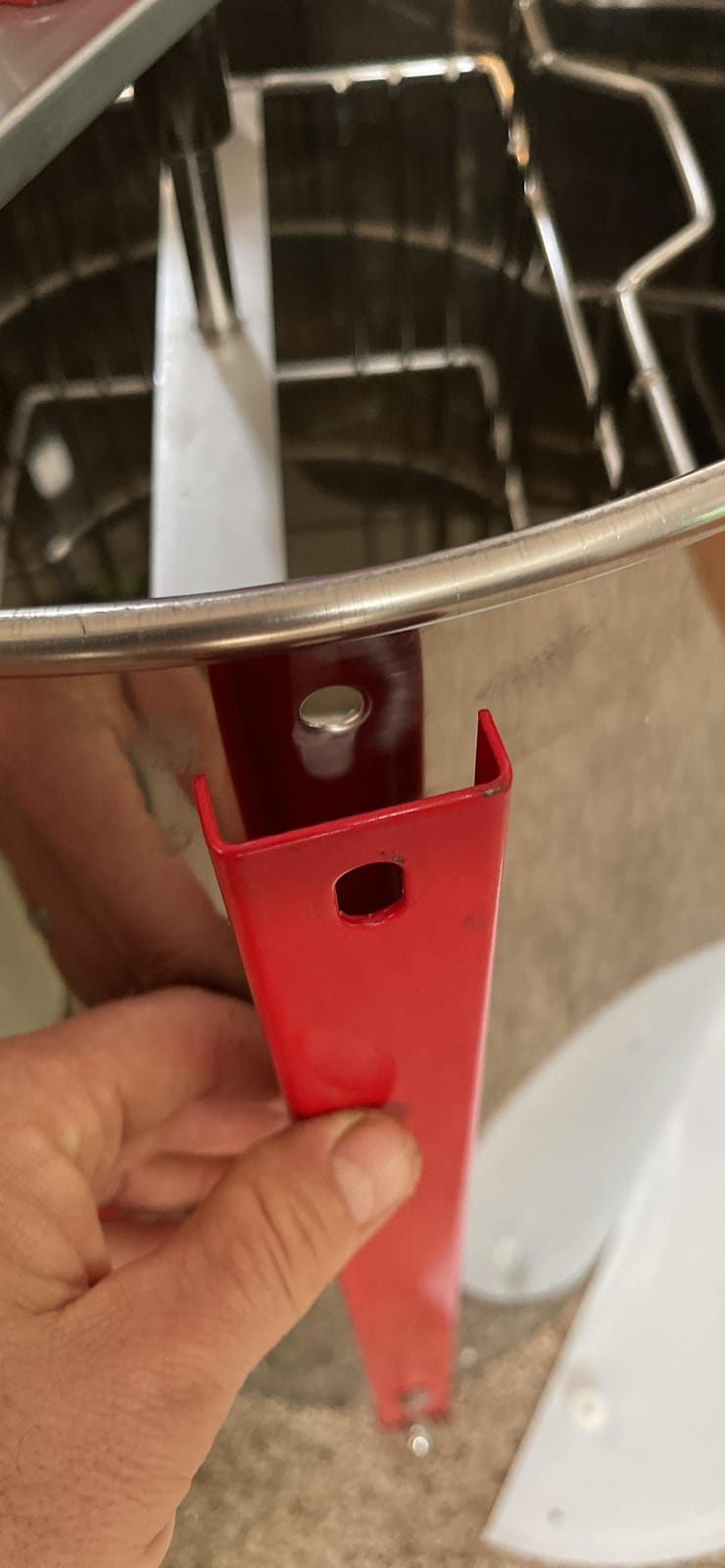
The wobble is the thing nobody mentions in the listing copy. The legs are thin and they flex under a full load unless you fasten the feet to plywood or a floor, which is a ten-minute fix that nearly every owner in the reviews has already done. Watch your fingers during assembly too, because the raw metal legs have sharp edges before you smooth them.
Best fit for 2 to 5 hives with mixed frame sizes
This drum is right when a normal season gives you a handful of medium supers per colony. Two frames per load means more trips than a 4-frame machine, but each load takes well under a minute to spin and the whole unit weighs 21.2 pounds, so you can carry it out to a shed or into a garage without a second person.
Because it takes shallow, medium and deep frames in the same basket, it suits yards that have not settled on one frame size yet. That flexibility is worth more to a new beekeeper than extra capacity would be.
What to check before you buy
Budget ten minutes and a set of gloves for assembly, and plan on bolting the legs to a piece of plywood. If your honey gate threads ever strip, expect to replace that plastic part; owners report it popping loose and leaking after a season or two of use.
If you already own a drill, some owners attach one to the crank handle to motorize the spin. It is not a factory feature and it is not warranty-covered, but on a two-frame load it takes the arm fatigue out of the job entirely.
2. VIVO Electric 8-Frame Rack Extractor – Best for Larger Harvests
- Quiet motor suits indoor extraction
- Largest single-load frame count in this roundup
- Gate sits 0.5 in above the drum base so most honey drains without tipping
- Enclosed metal gears stay clear of honey
- Backed by a 1-year warranty
- Most expensive extractor in this roundup
- Bulky footprint at 18.5 x 18.5 x 49.5 inches
- Manual and 3-frame rack versions are sold as separate variants
This is the machine I recommend to beekeepers who have quietly grown past four hives and found themselves re-capping the same frames twice in one evening. The drum takes up to 8 small or medium frames, or 4 large frames, in a single load, and the quiet 120V AC motor means you can run it in a garage without conversation.
The elevated design is the smartest engineering choice in the whole roundup. The honey gate sits 17.2 inches from the floor, so a 5-gallon bucket slides straight underneath with no tipping, and the gate opening is positioned 0.5 inch above the lowest point of the drum so the honey actually drains instead of pooling in a sump.
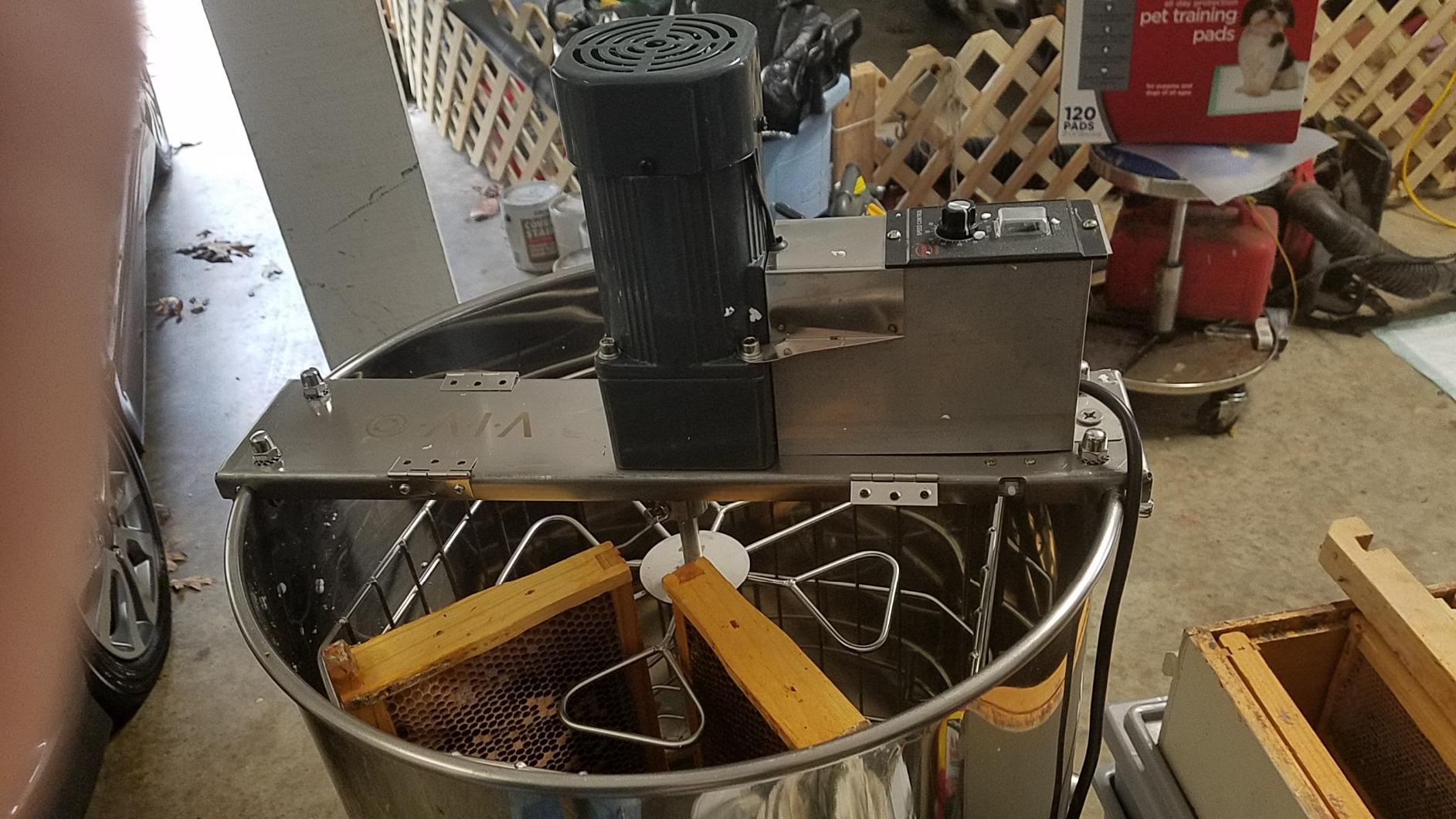
The drum itself measures 25.5 inches tall by 18.5 inches in diameter, built from stainless steel with a clear plastic lid for monitoring the spin. Enclosed metal gears keep honey away from the moving parts, which is the difference between a machine that survives ten seasons and one that seizes in three.
Owners are split on one point: this is the most expensive extractor in the group, and the 18.5 by 18.5 by 49.5 inch footprint is not a machine you shuffle around a small shed. If your extraction happens in a dedicated room at a workable bench height, that is fine. If you are hauling it out to the apiary on a tailgate, it is a lot of machine.
Worth it once you are spinning more than about 20 frames a season
The math works out when your total harvest gets large enough that the number of loads stops being a rounding error. Twenty deep frames on a 4-frame hand crank is five loads with a real arm-strength cost by the last one. This drum cuts that to a handful of loads and none of the fatigue.
It also carries a 1-year warranty, which is more than most machines in this roundup offer, and it is the only large-capacity unit here that fits both shallow, medium and deep frames in the same basket.
What to check before you buy
Measure your extraction space first. At 18.5 inches across and nearly 50 inches tall, you need vertical clearance and a flat surface, and you need room to swing the frame basket in and out.
Decide which variant you actually want before you order. Manual and 3-frame rack versions are sold separately, so confirm you are buying the 8-frame electric rack that matches the capacity you need. Buyers who skip that check are the ones surprised at delivery.
3. VEVOR 2/4-Frame Electric Honey Extractor – Best Electric Value
VEVOR 2/4 Frame Electric Honey Extractor with Adjustable Stand
- Variable speed lets you start slow and ramp up
- Quiet compared with larger motorized drums
- Clear lid and drain gasket do not leak
- Legs are designed to be bolted to plywood
- Shakes under a full load unless bolted or weighted
- Does not reliably fit 4 medium frames at once
- Some reports of motor failure within first use
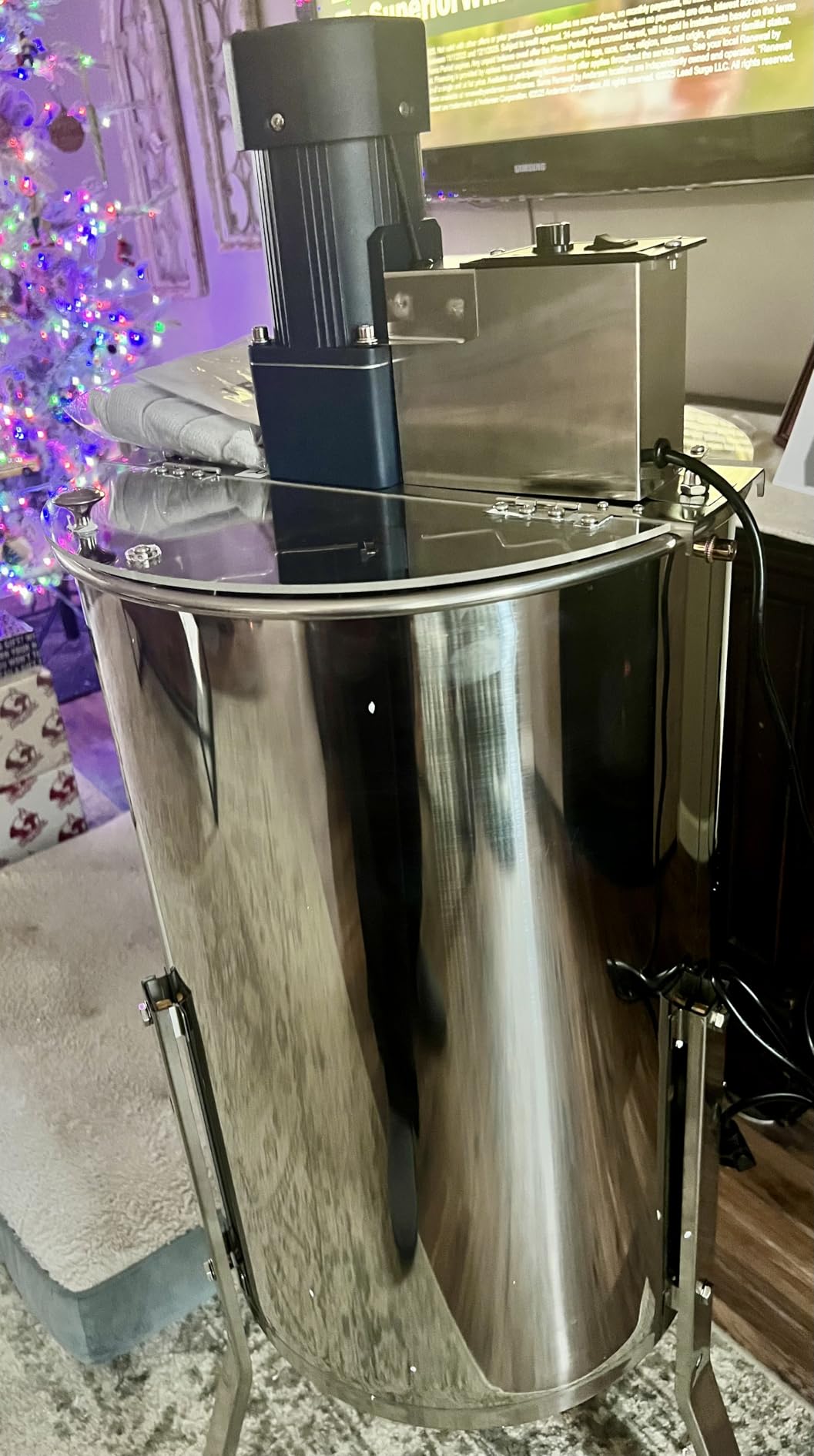
This is the cheapest way into motorized extraction, and the variable speed is the reason I rank it above the cheaper hand-crank options for anyone running foundationless comb. You start slow to settle the honey in the comb, then work up to 1300 rpm once the comb is holding together.
That controlled ramp-up is the difference between comb that comes out intact and comb that cracks along the foundation line. The 140W motor is deliberately modest, and for two deep frames or two medium and shallow frames it has plenty of headroom.
Other things work well here. The clear lid has a safety interlock that stops the motor if you open it mid-spin, which matters when you are reaching for a frame. The drain gasket does not leak, and the polished stainless drum rinses clean with warm water.
The honest problems are mechanical rather than electrical. The drum shakes noticeably with a full load unless you bolt it down or add weight, and the drain sits above the lowest point of the barrel, so the last of the honey needs a tip-out. A small number of owners also report the motor failing within first use and describe warranty support as unhelpful.
Best fit for comb preservation on 2 to 4 hives
If you run foundationless frames or have ever pulled cracked comb out of a spinner, the speed control here is worth more than capacity. Ramping up instead of snapping to full speed is exactly what delicate comb needs, and hand cranks cannot do it at all.
Frame fit is limited, though. The listing calls it a 4-frame capacity but owners consistently report it will not reliably take 4 medium frames at once, so plan on 2 deep or 2 medium and shallow per load.
What to check before you buy
Have plywood ready. The legs are designed to be bolted down, and owners who skip that step are the ones reporting violent wobble and loosened lid screws during operation.
Keep a backup plan for the honey that sits below the drain line. You will need to tip the drum over a bucket at the end of each run to recover the last of the crop, which is an annoyance, not a failure.
4. GOODLAND Hardin 2-Frame Manual Extractor – Best Simple Starter Unit
GOODLAND BEE SUPPLY Hardin Professional 2 Frame Manual Honey Extractor, Metallic
- Stainless tank with sealed bearings built for long service
- Plexiglass lid makes it easy to watch extraction
- Leg stand included so the gate clears a bucket
- No motor and no power to run
- 2-frame capacity means more loads for a moderate harvest
- Most spread-out rating distribution in the roundup
- Listed item dimensions do not describe the assembled unit
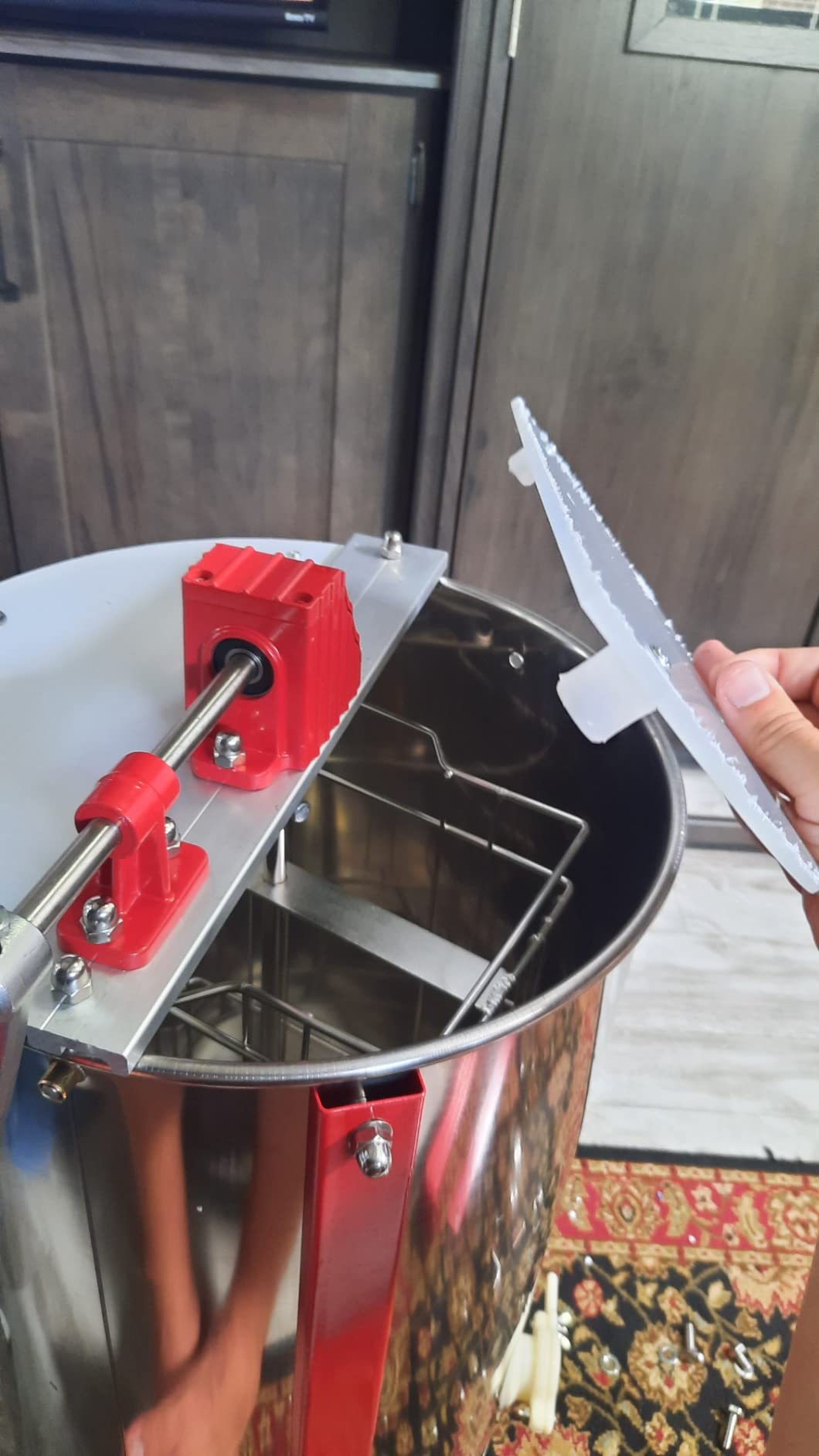
This is the entry point from a beekeeping-specialty brand rather than a general hardware seller, and you can feel the difference in the drive. Steel gear construction with sealed bearings is the part that decides whether a hand-crank extractor survives a decade, because open gear trains dry out and seize.
About half of buyers give it five stars for the 16 gauge stainless tank and the clear Plexiglas top, which lets you watch extraction without breaking the seal. The leg stand is included, so the honey gate clears a bucket from the first spin instead of after a separate purchase.
The ratings are more spread out than any other unit here, with 12 percent two-star and 12 percent three-star reviews sitting alongside the five-star share. Nearly all of that middle band comes down to the same thing: two frames is not much, and cranking is still cranking.
One more thing to know before you order: the listed item dimensions of 1 by 1 inches do not describe the assembled machine. Check the physical footprint against your storage space rather than trusting the listing figure.
Best fit for a first harvest of 1 or 2 hives
For a brand-new beekeeper with a couple of colonies that produced one or two shallow or medium supers, this does exactly what it needs to. There is nothing to plug in, nothing to learn about motors, and the whole thing rinses out in a sink.
Because the brand sells beekeeping equipment rather than general tools, the parts and the lid are easier to replace than on a generic marketplace listing, which is the main thing that keeps it relevant over time.
What to check before you buy
Count your supers honestly. If a good season gives you more than about 10 frames across all hives, two frames per load means you will be cranking after dinner, and a 3-frame or 4-frame drum will save you the evening.
Expect the effort, not the capacity, to be the limiting factor. Owners who land in the three-star range are almost always describing arm fatigue from repeated loads rather than any fault with the machine.
5. GOODLAND HE3MAN 3-Frame Manual Extractor – Best for First-Time Hobbyists
GOODLAND BEE SUPPLY HE3MAN 3 Frame Beekeeping 304 Stainless Steel Drum Honey Extractor With Stand – Manual
- Three frames per load steps up from 2-frame manual units
- Stainless drum and cage rinse clean easily
- Sealed bearings and steel gears run smoothly by hand
- Three-piece metal leg stand makes draining simple
- Manual cranking is tiring across multiple loads
- 17 percent of reviews are three stars on the effort
- Lowest niche volume of the manual options here
Three frames per load is the sweet spot for a hobbyist, and this is the machine that sits in the middle of it. It takes deep, medium or shallow frames, three at a time, so a mixed yard is fine, and the extra frame over a 2-frame drum cuts your load count by a third.
The 22 gauge food-grade stainless drum and cage are built to be rinsed rather than scrubbed. Lukewarm water and mild soap is the entire cleaning routine, which matters more than it sounds: the extractor that is unpleasant to clean is the one that ends up caked with crystallized honey through the winter.
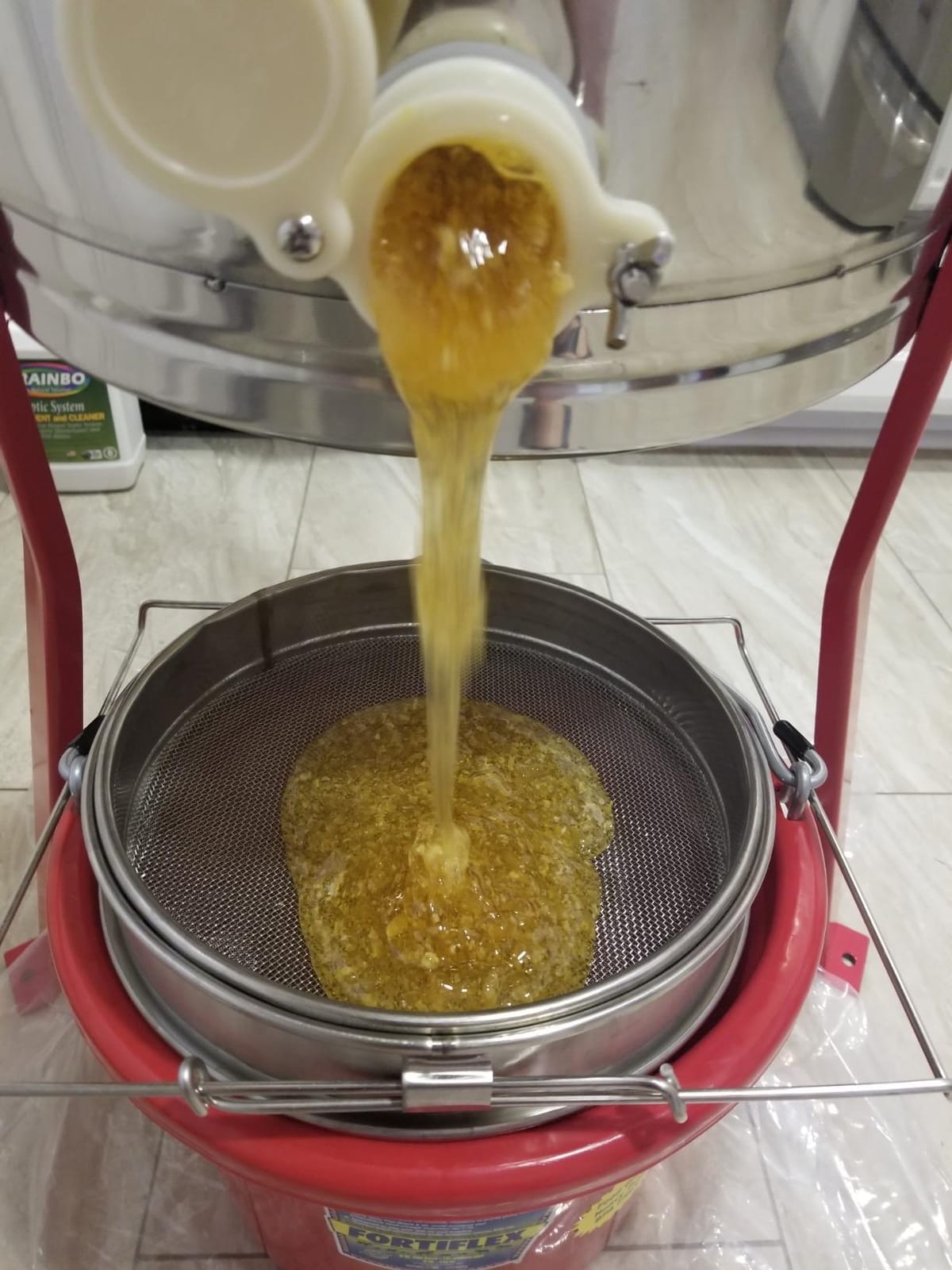
The low-friction gear and bearing system is genuinely nicer to turn than a basic crank, and the sealed bearings mean you are not exposed to honey and wax grit. Half of buyers give five stars for exactly these two things: stainless construction and easy cleaning.
Where it earns its three stars is effort. About 17 percent of reviews sit at three stars, and the reason is almost always the physical work of a full hand-crank spin with three deep frames. If you have back or shoulder problems, this is the machine that will make you reconsider electric.
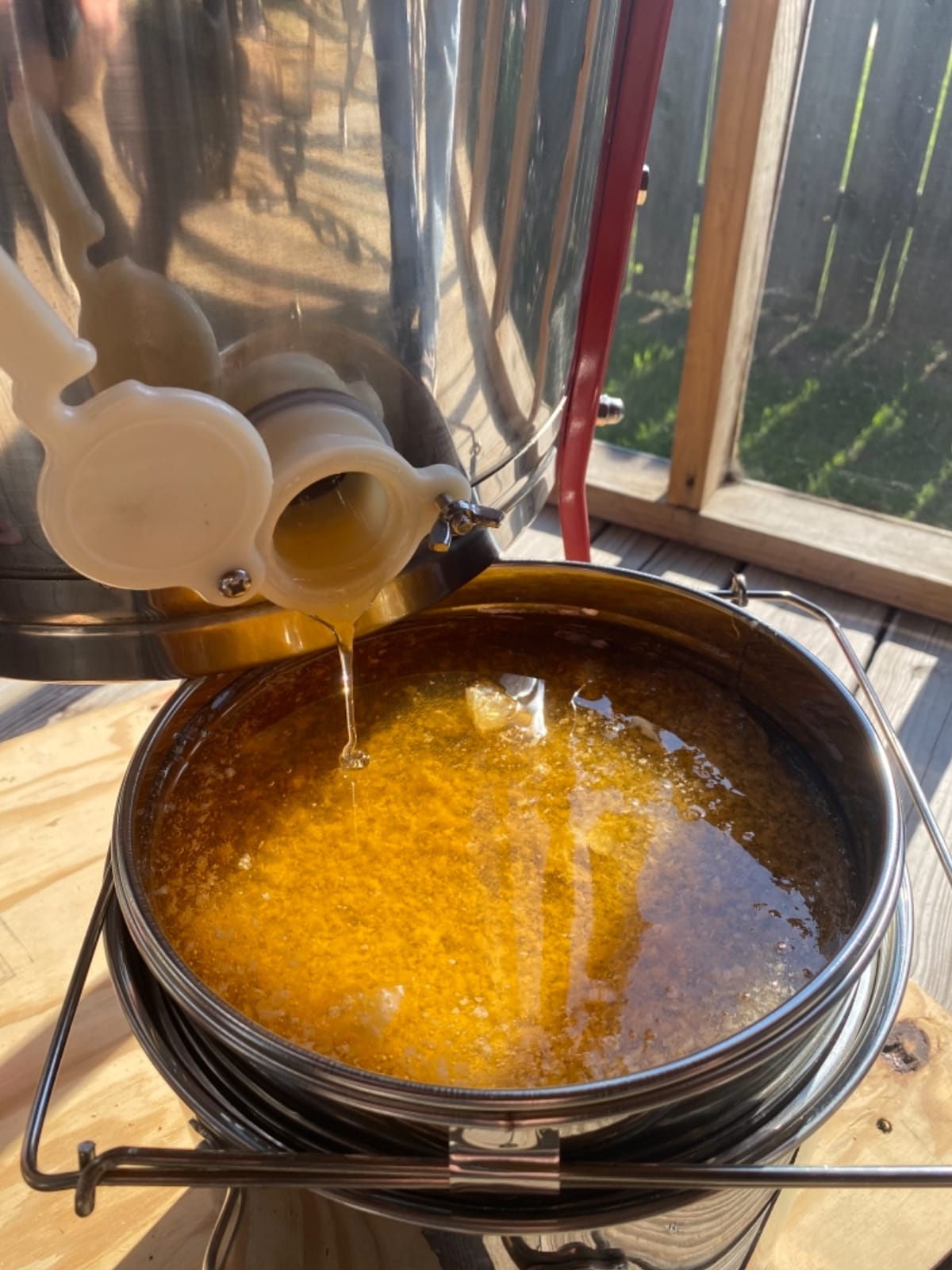
Best fit for 3 to 6 hives pulling medium supers
At three frames a load, a six-hive yard pulling one medium super each comes to about 18 frames, so you are looking at six loads rather than nine. That is the difference between finishing before dark and finishing after.
It is marketed at hobbyists running up to 10 hives, and that is accurate for medium frames. Push it to deep frames across 10 hives and the cranking starts to dominate your evening.
What to check before you buy
The three-piece metal leg stand is included and raises the drum to a working height, so confirm you have room to stand over it. The frame cage is about 7 inches tall by 11 inches wide, and the whole unit runs roughly 15 by 24 by 15 inches without the stand.
If you already know you will outgrow two frames, buy this rather than the 2-frame models now. Upgrading later means buying a second machine, not a bigger basket.
6. TRINFREE Electric PMSM 4/12-Frame Extractor – Best for 6 to 10 Hives
- Highest frame-per-footprint capacity in this roundup
- Full-leg design cuts the vibration that affects lighter machines
- Food-grade stainless throughout with a leak-proof honey gate
- Legs adjust and anchor to the ground over 5-gallon buckets
- Only 43 reviews and a listing that first appeared in May 2026
- No independent long-term durability record
- 8 percent of reviews are one star
- Bulkier package footprint
This is the newest machine in the roundup, and it has the highest average rating of any electric option here at 4.5 stars. The frame capacity is the headline: up to 4 deep frames, 8 medium frames in radial position, or 12 medium frames in a hybrid layout, in a footprint smaller than many 4-frame drums.
The design detail I would copy is the full-leg support. Instead of three short legs bolted to the base, the legs run through the entire drum, which is why this unit resists shaking at speed while lighter machines drift. Vibration is what breaks comb, so a rigid frame is worth paying for.
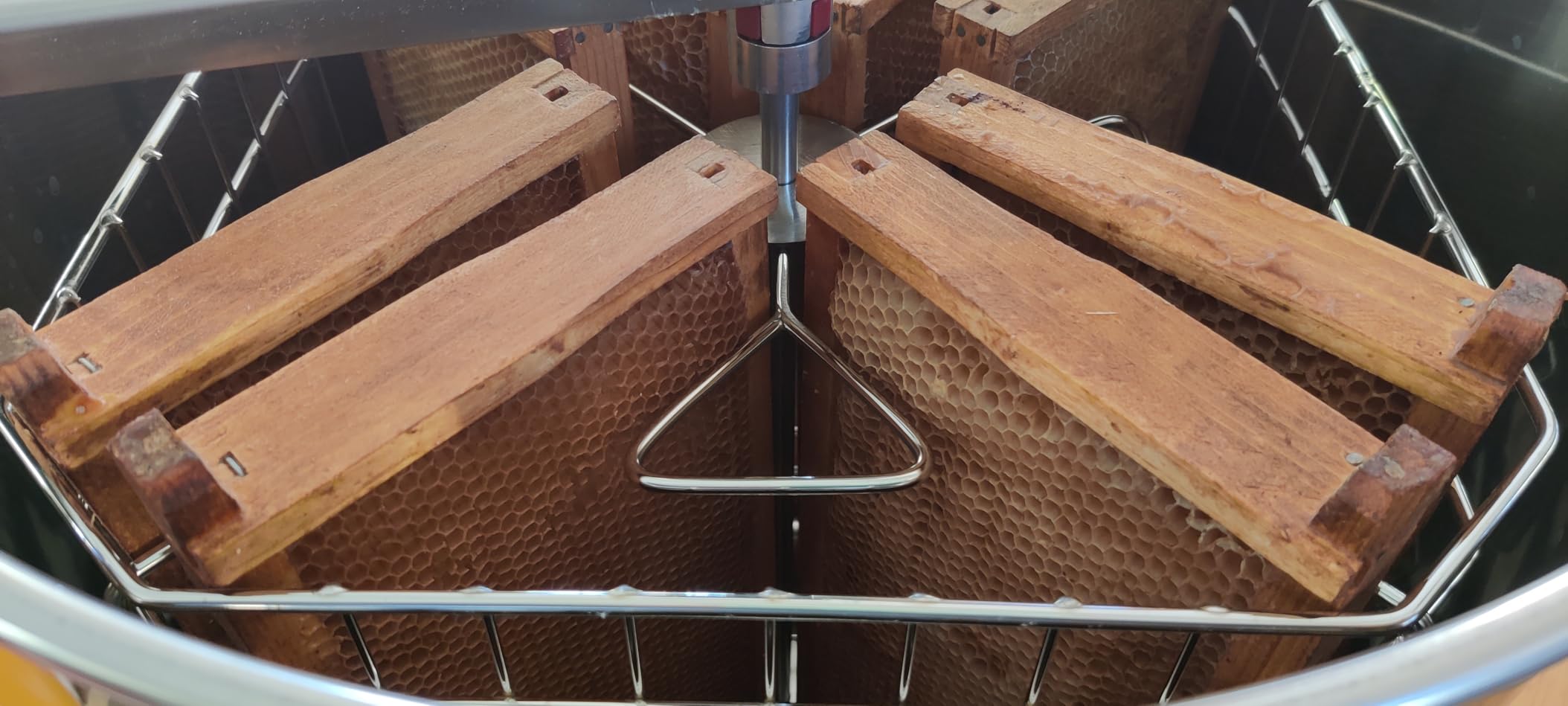
A PMSM motor system gives smoother acceleration than a simple induction motor, and the adjustable, ground-anchorable legs are sized to line up with standard 5-gallon buckets. The transparent acrylic lid and leak-proof honey gate complete a very tidy package at 37.6 pounds.
The caveat is honest and unavoidable: this listing first became available in May 2026 and carries 43 reviews, so there is no multi-season durability record yet. I rate it on design merit and its clean rating spread, not on longevity evidence that does not exist yet.
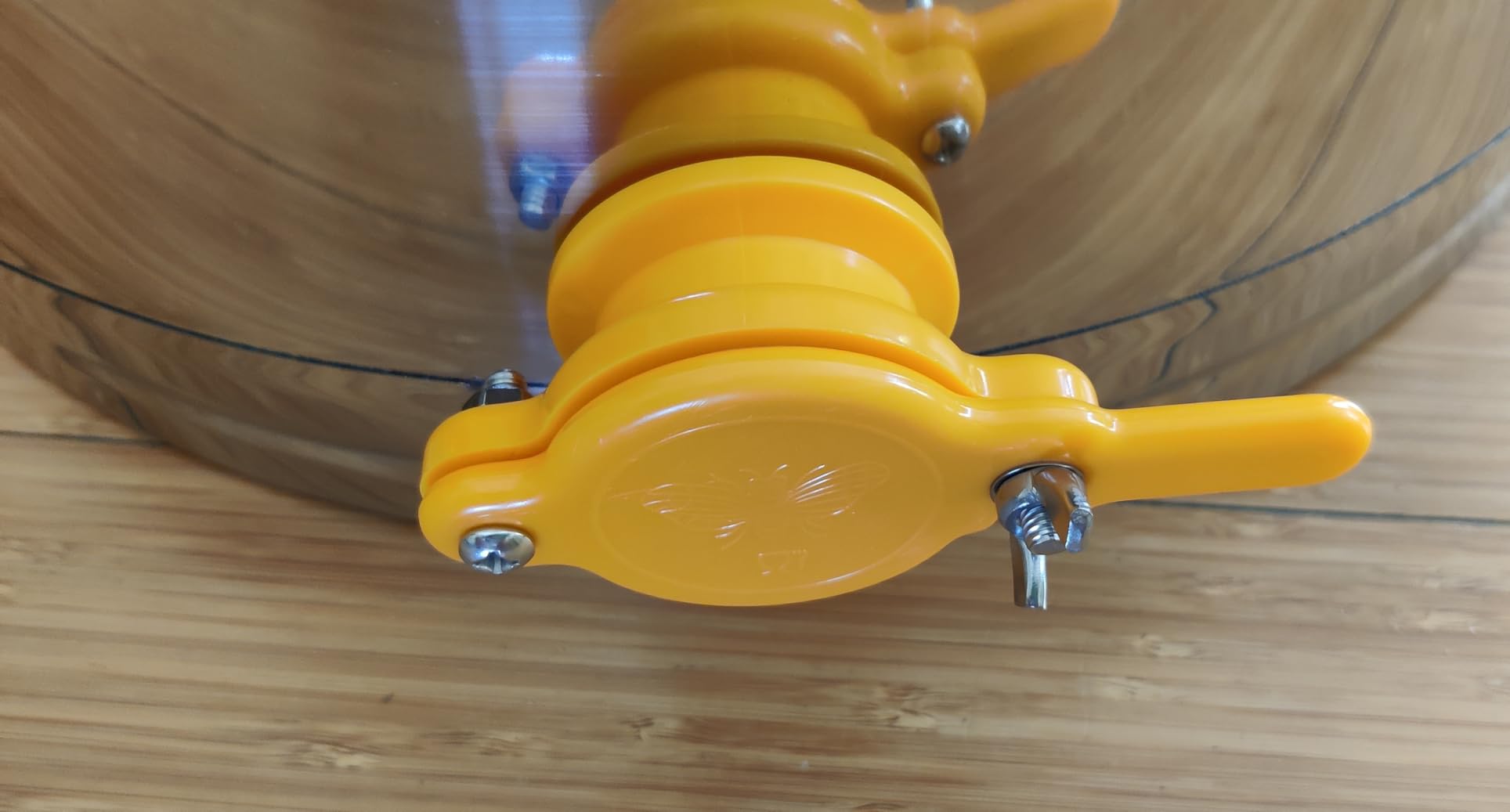
Best fit when hand cranking has become the bottleneck
If you are past six hives, or you have started running deep frames on every colony, the daily grind of cranking is what will push you here. The hybrid radial layout gets 12 medium frames through a drum you can still walk around.
For most backyard operations this is the ceiling. Anything larger is a commercial sideliner purchase, and the frame capacity here already covers a serious hobby operation in a single pass.
What to check before you buy
Plan your anchoring. The legs adjust and are designed to be fastened into the ground, and that anchoring is what makes the full-leg design pay off on uneven ground rather than on a level shop floor.
With a recent listing, look at what the manufacturer will stand behind after the first season. Motors are the failure point nobody plans for, and a brand that does not answer a warranty email is a real cost.
7. Little Giant 2-Frame Manual Extractor – Best for Brand-Name Reliability
Little Giant® 2-Frame Honey Extractor for Beekeeping | Hand-Crank Manual Honey Extractor Equipment | Stainless Steel | Beekeeping Supplies
- Established brand with an 18/10 stainless steel pot
- Complete kit out of the box including crank gate cover and legs
- Full instruction set for first-time assembly
- No one-star reviews at all
- Most expensive manual machine here despite only 2-frame capacity
- Only 30 reviews for the money
- Requires initial assembly
When a machine does not have hundreds of reviews, brand history becomes the evidence instead. Little Giant is a long-running manufacturer, and the 18/10 stainless steel pot is a heavier gauge of steel than the entry-level drums that dominate marketplace listings.
It also arrives as a complete kit. The hand crank, honey gate, cover and height-adjustable legs are all in the box, along with full assembly instructions, which means nothing extra to order before your first extraction day.
The rating profile is the cleanest of any manual unit here: 67 percent five stars, 16 percent four stars and not a single one-star review across all 30 ratings. Buyers treat it as a traditional tangential extractor from a serious brand and approve of the hardware.
Two things give me pause. First, this is the most expensive manual extractor in the roundup for only two frames of capacity, which is a strange trade. Second, 30 reviews is a thin record to lean on at that cost. It does require some initial assembly.
Best fit for beekeepers who prioritise build quality over capacity
If your plan is one or two hives, you extract once a year, and you want a machine that will still work in a decade, this is the sensible pick. Two frames per load is genuinely enough for a small yard, and the stainless pot will not rot.
It is also the safest choice for someone who does not want to research gear internals. It is a manual drum from a manufacturer that has been making them for a long time, with no electronics to fail.
What to check before you buy
Set aside an afternoon for first assembly. It is not a difficult build, but it is a build, and doing it in daylight is a good idea before you need the machine.
Consider how many frames a good season gives you. At 30 reviews and two frames per load, you are paying for materials and brand, not throughput, so a larger yard should look at a 3-frame or 4-frame drum instead.
8. TRINFREE 6-Frame Manual Drum Spinner – Best Manual Capacity Per Load
- Highest average rating in the roundup at 4.7 stars with no one or two-star reviews
- Four medium or two deep frames per load
- Full-leg support design minimizes wobble
- Food-grade stainless steel throughout that is easy to clean
- Only 26 reviews and a listing that first appeared in May 2026
- Manual cranking still takes real effort across multiple loads
- No independent long-term durability record
This drum gets more frames through per hand-crank than anything else on the manual side of this roundup, and it does it with the cleanest rating profile in the group: 82 percent five stars, 10 percent four stars, and not a single one- or two-star review.
The nano-precision gear system is what makes that capacity bearable. Owners report it as quiet and low effort for a manual crank, and the full-leg support design resists the shaking that makes cheaper manual drums wander across a garage floor.
Everything is food-grade stainless steel, including the cage, with a transparent acrylic lid and a leak-proof honey gate. The adjustable, ground-anchorable legs are sized to line up with standard 5-gallon buckets, so the same drill-in anchor trick that stabilises the electric units works here too.
The real caveat is age. This listing first became available in May 2026 and has 26 reviews, so there is no independent record of how the gear system and legs hold up over multiple seasons. That is the single biggest reason this sits at number 8 rather than number 1 despite the rating.
Best fit for 4 to 8 hives that want manual simplicity
Four medium frames per load is the capacity that makes a manual machine reasonable rather than punishing. A six-hive yard pulling one super each comes to about 24 frames, so you are running six loads instead of twelve on a 2-frame drum.
Deep frames halve that, to two per load, so if your supers are deep this is still a step up rather than a leap.
What to check before you buy
Weigh the review count against the design. A 4.7 average on 26 recent ratings is encouraging but unproven over time, and manual extractors live or die on their gear train and bearings.
Confirm you can anchor the legs where you plan to spin. The full-leg design only pays off when the feet are fixed, and on loose ground a manual drum that walks is a honey spill.
9. GOODLAND HE2MOT 2-Frame Motorized Extractor – Best for Replaceable Parts
Goodland Bee Supply HE2MOT – 2-Frame Motorized Honey Extractor with Stand
- Beekeeping-specialty brand with lid legs joint drain barrel and motor all sold separately
- Motor removes the cranking effort and the arm strain
- 304 stainless drum with a clear lid for monitoring
- Model in production since January 2014
- No two or three-star reviews
- Most expensive per frame of capacity in the roundup
- Only 19 reviews and 16 percent are one star
- Heaviest unit relative to its capacity at 40.2 pounds
- Replacement components bought separately
The reason to look at this one is not the drum, it is the parts list. GOODLAND sells the lid, legs, joint, drain, barrel and motor individually, so when something eventually fails you replace that part instead of the machine. For a motorized unit that is the most important feature on this list.
Motor failure is the single biggest fear motorized beekeepers report, because a dead motor with no replacement path ends the extractor’s life. Having a documented parts catalogue from a beekeeping-specialty brand answers that directly.
The build is conventional and solid: a 22 gauge 304 stainless drum, sealed bearings, reinforced steel gears and a clear plexiglass lid. The adjustable three-leg stand holds the honey gate over a 5-gallon bucket, and it handles deep, medium or shallow Langstroth frames two at a time.
The ratings are polarized with no middle ground, which is what happens with 19 reviews. Buyers either love having the motor take over the cranking or they do not, and 16 percent are one star. At 40.2 pounds for two frames of capacity, it is also the heaviest machine here relative to what it spins.
Best fit for beekeepers buying their first electric machine
If the reason you want electric is to stop cranking, this does that job for deep, medium and shallow frames. It has been in production since January 2014, so the design is proven even if the listing is not.
It suits a yard of 2 to 5 hives where the harvest is short but the frames are deep, and where lifting a heavy crank unit around is getting old.
What to check before you buy
Budget for parts as a maintenance cost. Nothing is included beyond the machine, so a future leg or drain costs extra, though that is a much smaller hit than a whole new motorized unit.
Read the one-star reviews before ordering. With a sample this small, individual complaints carry more weight than usual, and it is better to know what disappointed people before the machine arrives than after.
10. BeeTech 4/12-Frame Electric Extractor – Best for Outdoor Extraction
Newest 4/12 Frames Electric Honey Extractor Equipment with Protective Cover, 2nd Gen Intelligent Control Device Designed for Business and Farms
- Only extractor here with a cover that blocks 98 percent of dust and water for storage
- Emergency stop button plus an independent safety cable
- Stabilizing base rated for 150 lbs of spinning force on uneven ground
- Claimed 1500 rpm and 40 frames per hour suits larger harvests
- Lowest one-star share among electric units here
- Lowest average rating in the roundup at 3.6 stars
- 20 percent of reviews are one star
- Heaviest unit in the group at 43.6 pounds
- Listing leans on throughput and energy claims rather than measurements
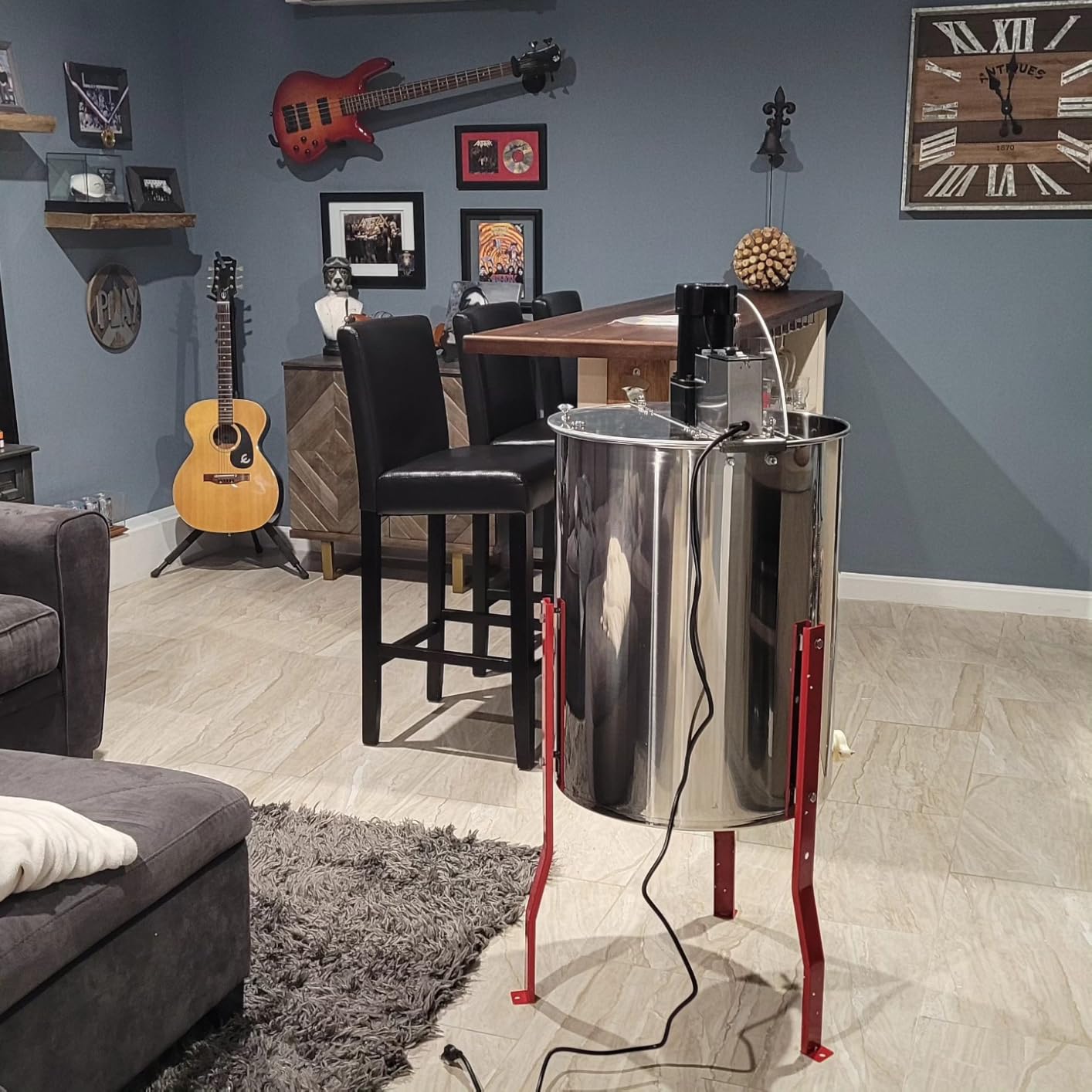
The protective cover is the reason this machine is on the list at all. It is the only extractor here with a guard that blocks 98 percent of dust and water, which means the drum can live on a shed floor between seasons without becoming a sticky hive for wax moths and dirt.
The dual safeguards are also real. An emergency stop button on the unit plus an independent safety cable gives you two ways to kill the motor in an emergency, and the stabilizing base is rated to hold 150 pounds of spinning force on uneven ground rather than a flat shop floor.
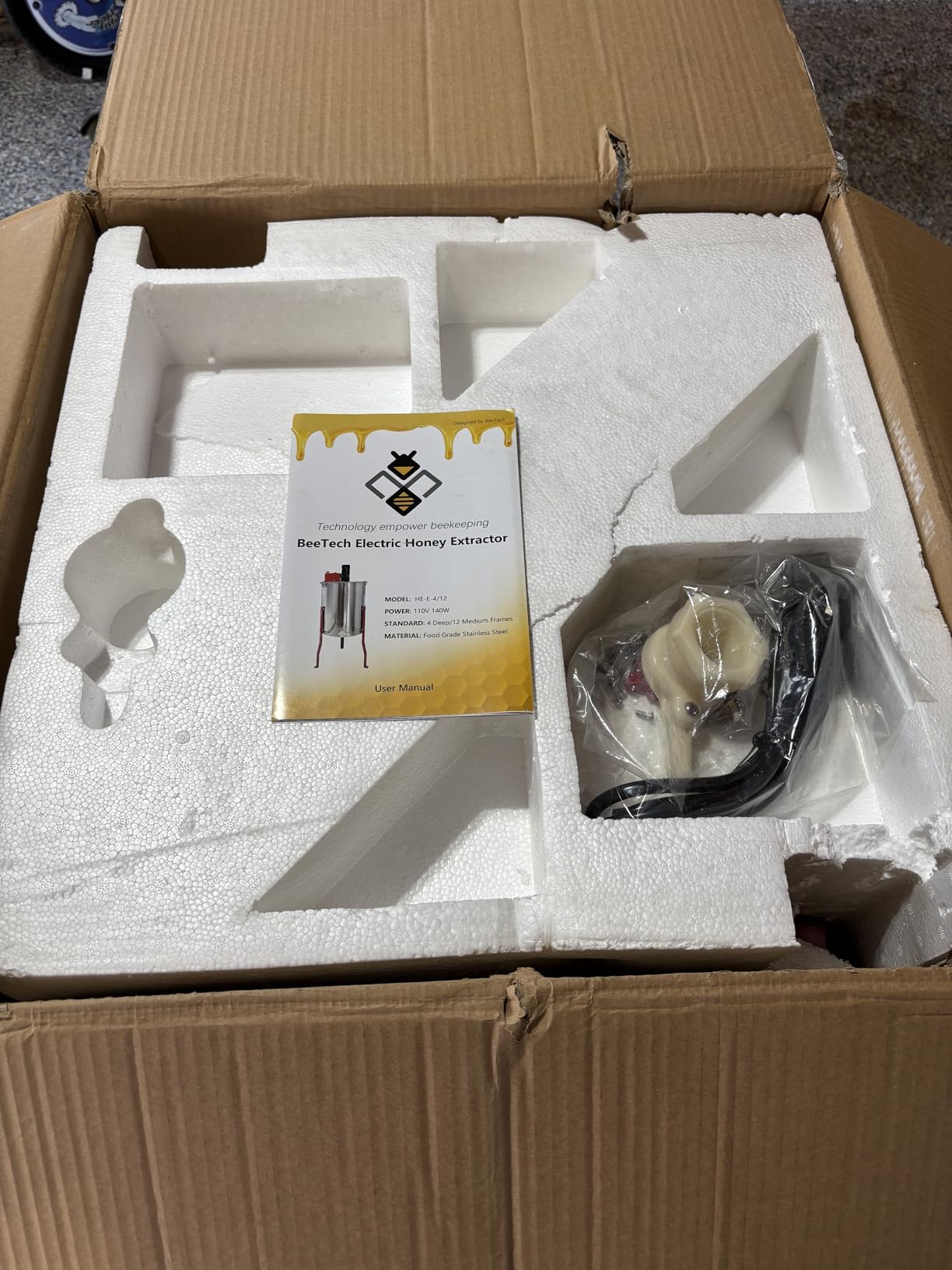
On paper the motor is the most capable here, spinning to 1500 rpm with a claimed throughput of 40 frames per hour and a second-generation intelligent control panel that the manufacturer says cuts claimed energy use by 60 percent against older models.
Owner experience is much more mixed than the specification sheet. The 3.6 average is the lowest in this roundup, with 20 percent of reviews at one star, and at 43.6 pounds it is the heaviest machine here. Treat the throughput and energy figures as marketing claims rather than measured results.
Best fit for beekeepers extracting outside or storing the drum rough
If you spin at the apiary, on a trailer, or in a shed that floods in a storm, the cover and the rated stabilizing base solve two real problems at once. The dual safety stops matter more when the machine is running outside, away from easy access to a wall switch.
The 4-deep and 12-medium capacity suits a larger operation where a 4-frame drum would mean standing there all day.
What to check before you buy
Have a second person help. At 43.6 pounds, moving this between the house, the shed and the apiary is a two-person job, and the wide 35.83 by 20.87 by 19.47 inch footprint needs its own corner of the floor.
Read the one-star reviews carefully before you commit. A 3.6 average with a fifth of buyers at one star usually points at specific control-panel or build problems, and those are worth knowing about in advance.
How to Choose a Honey Extractor for Your Hives
The single most useful question is not what extractor to buy, it is whether your hive count justifies any extractor at all. Get that wrong and you will spend an autumn cranking for the sake of two buckets of honey. Get it right and the machine pays for itself in comb saved.
Manual or electric: the honest answer is crank below six hives, motor above it
A hand crank has no motor to fail, no cord to trip over and no speed control to get wrong. For 1 to 5 hives pulling medium supers, a 2-frame or 3-frame stainless drum is faster end to end once you count setup, because an electric unit still needs frames uncapped, loaded and scraped out by hand.
Electric wins on two specific conditions: deep frames in volume, where cranking effort climbs sharply, and harvests over roughly 20 frames, where the number of loads rather than the effort per load becomes the problem. It also wins on comb preservation, since variable speed lets you ramp up rather than snap to full speed.
The most common sentiment across the hobbyist forums is not to buy an extractor until you have actually needed one. Several beekeepers on the Beesource hobbyist thread report pulling large crops on a single mid-tier machine for years with no problems, and one on beekeepingforum.co.uk described a four-frame hand crank handling a very large crop as boring hard work. Boring and hard is the standard a manual drum has to beat.
Tangential versus radial: the geometry decides your workload
A tangential extractor spins frames against the drum wall, and they need flipping halfway through to get honey out of both faces. A radial extractor spins frames around a central axis, so both sides face outward at once and no flipping is needed.
Tangential is cheaper, simpler and extracts more thoroughly even though it takes longer. That last point is the nuance most guides skip: you get cleaner comb at the cost of flipping half your loads. Radial is faster per load and better on large operations, and the 2-in-1 baskets that let a drum spin either way are the compromise most backyard beekeepers end up choosing.
Stainless steel versus plastic: buy stainless if you have the sink space
Stainless steel does not crack, does not stain and does not absorb honey into the plastic itself over a decade of seasons. Every unit recommended above is stainless steel, because plastic tanks put a hard ceiling on lifespan and eventually go cloudy and sticky in ways that are hard to fully clean.
Plastic extractors are fine if your plan is a few seasons, if you have no sink space for a 20-pound stainless drum, or if you are extracting somewhere with no water at all. They are a lighter way to start, not a worse way to start.
Size by hive count: a decision guide
Start with your supers, not your hives. Count the medium or deep frames you expect to pull in one season across all colonies, then divide by the drum capacity and multiply by the load time.
For 1 to 2 hives, a 2-frame manual is right. The GOODLAND Hardin 2-frame handles a small season, and the VIVO 8-frame rack covers the same yard with room to spare if you want fewer trips.
For 3 to 5 hives, a 2-frame still works and the GOODLAND HE3MAN 3-frame is the comfortable version. Expect roughly 10 to 18 frames per season and 4 to 8 loads on a 3-frame drum.
For 6 to 15 hives, move up in capacity or add power. The TRINFREE 6-frame manual handles the frames with fewer loads, and the VIVO 8-frame electric or the TRINFREE electric handles them without the arm cost.
For 16 hives and beyond, you are into small-sideliner territory. A radial or 4/12-frame machine such as the BeeTech is the right shape of tool, and beyond that the answer is a commercial unit, not a hobby drum.
Check frame fit before anything else. Deep, medium and shallow frames are all different sizes, and a basket sized for deep frames wastes space with medium frames while a shallow-sized basket will not take deep frames at all. The VIVO and the VEVOR 2-frame handle all three.
How long do you run a honey extractor?
Per load, a 2-frame hand crank takes roughly 1 to 2 minutes at working speed. A 3-frame or 4-frame manual load takes 2 to 4 minutes. Electric loads run longer, typically 5 to 10 minutes, because you ramp the speed up and down rather than holding it flat.
Per hive, add in everything else. Uncapping and scraping about eight frames takes 15 to 25 minutes with a fork and a scratch tool, and loading, spinning, unloading and scraping the basket runs about two to three minutes per frame. A single hive’s worth of supers is realistically a 60 to 90 minute job including cleanup.
So a four-hive season of 16 frames is about four hours of actual extracting work spread over an evening, plus cleaning. That is the real reason the manual-versus-electric debate matters less than hive count for most backyard yards.
Do you even need an extractor?
Some yards do not. If you have one or two hives, one shallow super, and a crush-and-strain setup with a bucket and a strainer, you can harvest without ever spinning a frame. You destroy the comb, the bees rebuild it, and you pay for it in wax and time.
The alternatives are worth naming honestly. Crush-and-strain mashes the comb and filters the honey, which costs you the comb and gives a more cloudy product. A robber jar or jelly jar lets you drain capped honey by gravity over days, with no comb damage, but it is slow and only works on fully capped frames. Borrowing or sharing through a local beekeeping club costs nothing and is what most one- and two-hive beekeepers in the forums actually do.
The honest version: an extractor earns its place when you want to keep the comb. Every frame you return to the hive is a frame the colony does not have to rebuild from wax, which shows up as more production next season. Beyond about five hives or repeated annual harvests, that saving is the reason to buy rather than borrow.
How to clean a honey extractor
Clean it the same day you use it. Honey sitting on a drum overnight begins crystallizing and gets significantly harder to remove, and a season of that turns into a waxy coating on the cage walls.
Scrape the cage and frame basket out with a plastic scraper, then rinse the drum with hot water and a mild dish soap. The stainless models here are designed for exactly this, and none of them need caustic cleaners or a dishwasher.
Take the crank and gear assembly apart enough to check the bearings, wipe them, and add a small amount of food-grade lubricant. This is the step most people skip and the step that decides whether a hand crank still turns smoothly in year five.
On electric models, separate the motor plate from the drum before washing and dry the plate fully before reassembly. Getting that motor plate back on can be a genuine two-person job on some designs, so allow yourself time and keep all the hardware in one bowl.
Dry everything completely before storing, then keep the drum off the floor or under a cover. Wax moths are attracted to the smell of leftover honey in a closed shed, and a protected drum costs far less than an infested one.
While you are setting up, plan the rest of extraction day. An uncapping fork, a bucket with a gate, a settling tank, a strainer and labels make up the rest of the kit, and once you have the honey strained and settled you will want more than the obvious ways to use it, from hot honey ground beef bowls to a summer backyard picnic spread.
Frequently Asked Questions
What is the best type of honey extractor for beekeepers?
For most backyard beekeepers the best honey extractor is a stainless steel hand crank holding 3 to 4 frames, with a clear lid, adjustable legs and a honey gate. It covers 1 to 5 hives, needs no power outlet, and rinses clean in minutes. Electric extractors only become the better choice past roughly six hives, with deep frames in volume, or when comb preservation matters enough that you need variable speed control.
Which is better, manual or electric honey extractor?
Manual is better for 1 to 5 hives because it has no motor to fail, no cord to trip on and no speed to get wrong. Electric is better past about 20 frames a season, with deep frames in volume, or when you run foundationless comb, because variable speed lets you ramp up instead of snapping to full speed and cracking comb. Count your supers before deciding, not your hives.
How long do you run a honey extractor?
A 2-frame hand-crank load takes about 1 to 2 minutes, a 3 or 4-frame manual load takes 2 to 4 minutes, and an electric load takes 5 to 10 minutes because you ramp the speed up and down. Allow 60 to 90 minutes for one hive’s worth of supers including uncapping, loading, unloading and cleaning, so a four-hive season of 16 frames is roughly four hours of work.
How do I choose a honey extractor for my number of hives?
Count the frames you expect to pull in one season across all colonies, then divide by the drum capacity. One or two hives needs a 2-frame manual, three to five hives suits a 3-frame manual, six to 15 hives justifies a larger manual or a motorized drum, and 16 hives plus is small-sideliner territory. Confirm the basket fits your deep, medium or shallow frames before buying.
Can I extract honey without an extractor?
Yes. Crush-and-strain mashes the comb and filters the honey, which destroys the comb but needs no machine. A robber jar or jelly jar drains fully capped honey by gravity over several days without touching the comb. Most one- and two-hive beekeepers simply borrow or share a club extractor. An extractor earns its place when you want to keep the comb so the colony does not rebuild it next season.
Are VEVOR honey extractors any good?
They are genuinely usable rather than disposable. The 2-frame manual is the best overall pick here, rated 4.3 stars across 882 reviews, with a food-grade stainless seamless drum and frame compatibility across shallow, medium and deep frames. The 2/4-frame electric adds variable speed to 1300 rpm but shakes under a full load unless bolted down, and a small number of owners report motor failure within first use.
Final Verdict on the Best Honey Extractors for Backyard Beekeepers
If you have one to five hives, the VEVOR 2-frame manual is the honey extractor to buy. It has the largest review base in this roundup, handles every common frame size, and has no motor to fail. Bolt the legs to plywood on day one and it will keep working for years.
When your season outgrows two frames per load, step up to the GOODLAND HE3MAN 3-frame for pure manual simplicity, or the TRINFREE 6-frame manual if four medium frames per load matters more than proven longevity. Once you are past six hives or working deep frames in volume, the VIVO 8-frame electric is the smoothest upgrade and the VEVOR 2/4-frame electric is the cheapest way to stop cranking.
Whatever you choose, extract on the day you pull the frames, clean the drum immediately, and put the comb back in the hive. That last habit is worth more than any machine on this list.
Our 2026 picks above were checked against the current specification data and verified buyer reviews, and we will keep updating this roundup as ratings and listings change through the 2026 extracting season.