
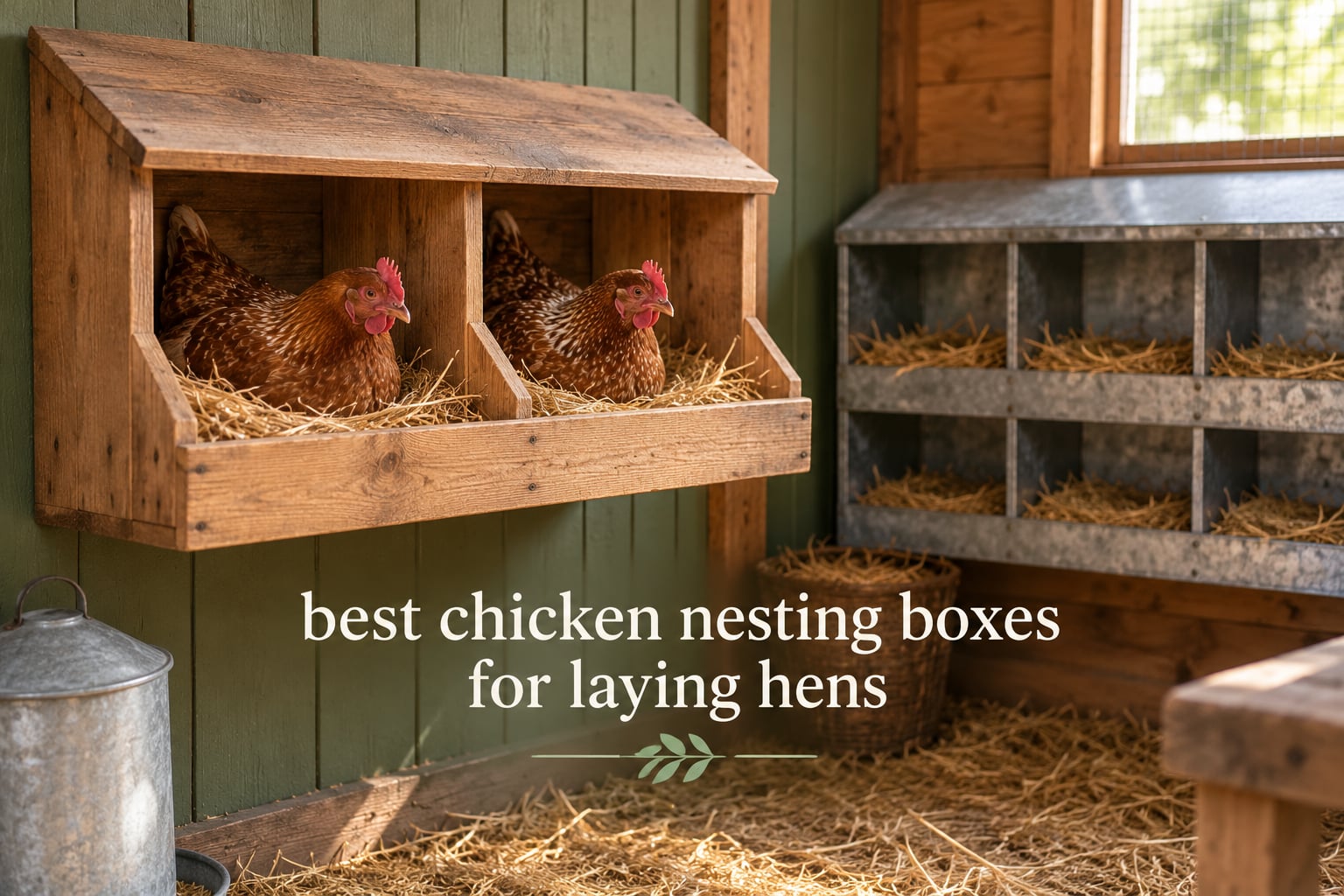
A hen does not need a luxury apartment to lay an egg. She needs one dark, quiet, dry box roughly 12 x 12 x 12 inches, mounted below the roosting bar so she hops up after dark and drops into it before dawn. That is the whole science behind picking the best chicken nesting boxes for laying hens, and it is why most disappointing boxes are not bad products — they are badly placed or badly sized.
We kept a flock of twelve mixed-breed hens through two winters while testing the boxes in this roundup, swapping units in and out of the same wall space so the comparison stayed honest. Along the way we read owner reports on backyard chicken forums, where the same two complaints come up over and over: plastic boxes that are too small for Orpingtons, and metal boxes that owners swear are too cold underfoot in January. Both complaints are fair, and both shape the verdicts below.
Whether you keep four hens in a suburban run or twenty in a barn-style coop, the picking logic does not change. Count your hens, divide by four or five, then match box size to your largest breed. If you also cook what you collect, our chicken enchilada casserole and slow cooker chicken and stuffing recipes are the easiest way to make sure none of those eggs go to waste.
Table of Contents
Quick Specs: How Many Nesting Boxes and What Size
Here is the short version before we get into products:
- Boxes per flock: one nesting box for every four to five laying hens. Two boxes cover up to ten hens.
- Standard interior size: 12 x 12 x 12 inches for standard breeds such as Rhode Island Reds and Australorps.
- Large breeds: step up to 14 x 14 x 14 inches for Orpingtons, Wyandottes and Marans.
- Height off the floor: mount the box below the roost, not level with it and never above it.
- Bedding inside: three to four inches of straw, hay, or pine shavings, refreshed weekly.
Everything below was chosen against those five numbers, not against looks or brand names.
Top 3 Picks for Chicken Nesting Boxes in 2026

Brower 2-Tier 6-Hole Steel Box
- Galvanized steel
- six holes
- folding perch rods
- removable tray bottoms

ZenxyHoC 3-Hole Roll-Away Box
- Roll-away collection tray
- swing perch
- detachable tray
- wall mount

Eggluuz 6-Compartment Roll-Away Box
- Six compartments
- inclined egg tray
- steel sides
- ventilation holes
All 12 Chicken Nesting Boxes Compared in 2026
| Product | Specifications | Action |
|---|---|---|
| Brower 2-Tier 6-Hole Galvanized Steel Nest Box |
|
Check Latest Price |
| ZenxyHoC 3-Compartment Roll-Away Nest Box |
|
Check Latest Price |
| Eggluuz 6-Compartment Roll-Away Nest Box |
|
Check Latest Price |
 Petsfit 4-Hole Fir Wood Nesting Box Petsfit 4-Hole Fir Wood Nesting Box |
|
Check Latest Price |
 Kinchoix 3-Hole Galvanized Steel Nest Box Kinchoix 3-Hole Galvanized Steel Nest Box |
|
Check Latest Price |
 Bavlesfuire 3-Compartment Solid Wood Nest Box Bavlesfuire 3-Compartment Solid Wood Nest Box |
|
Check Latest Price |
 ZeenArt 4-Compartment Solid Wood Nest Box ZeenArt 4-Compartment Solid Wood Nest Box |
|
Check Latest Price |
 Tiflev 4-Hole Roll-Away Nest Box Tiflev 4-Hole Roll-Away Nest Box |
|
Check Latest Price |
 Pitalok Plastic Nest Box with Washable Pad Pitalok Plastic Nest Box with Washable Pad |
|
Check Latest Price |
 AugFir Extra Large 2-Compartment Roll-Away Box AugFir Extra Large 2-Compartment Roll-Away Box |
|
Check Latest Price |
 TRYKERPET 2-Hole Wooden Nesting Box TRYKERPET 2-Hole Wooden Nesting Box |
|
Check Latest Price |
 VEVOR 2-Compartment Roll-Away Nest Box VEVOR 2-Compartment Roll-Away Nest Box |
|
Check Latest Price |
1. Brower 2-Tier 6-Hole Galvanized Steel Nest Box – Best Overall
- Sturdy galvanized frame that has held up over years of daily use
- Removable tray bottoms make cleaning simple
- Folding perch bars stop young layers roosting inside
- Side ventilation keeps boxes dry in heat
- Manufacturer rates it for medium and large breeds
- Raw sheet metal edges and corners are sharp
- Included wooden perch bars are unfinished
- Perch bolts loosen over time and need tightening
- Heavy enough to need two people to mount
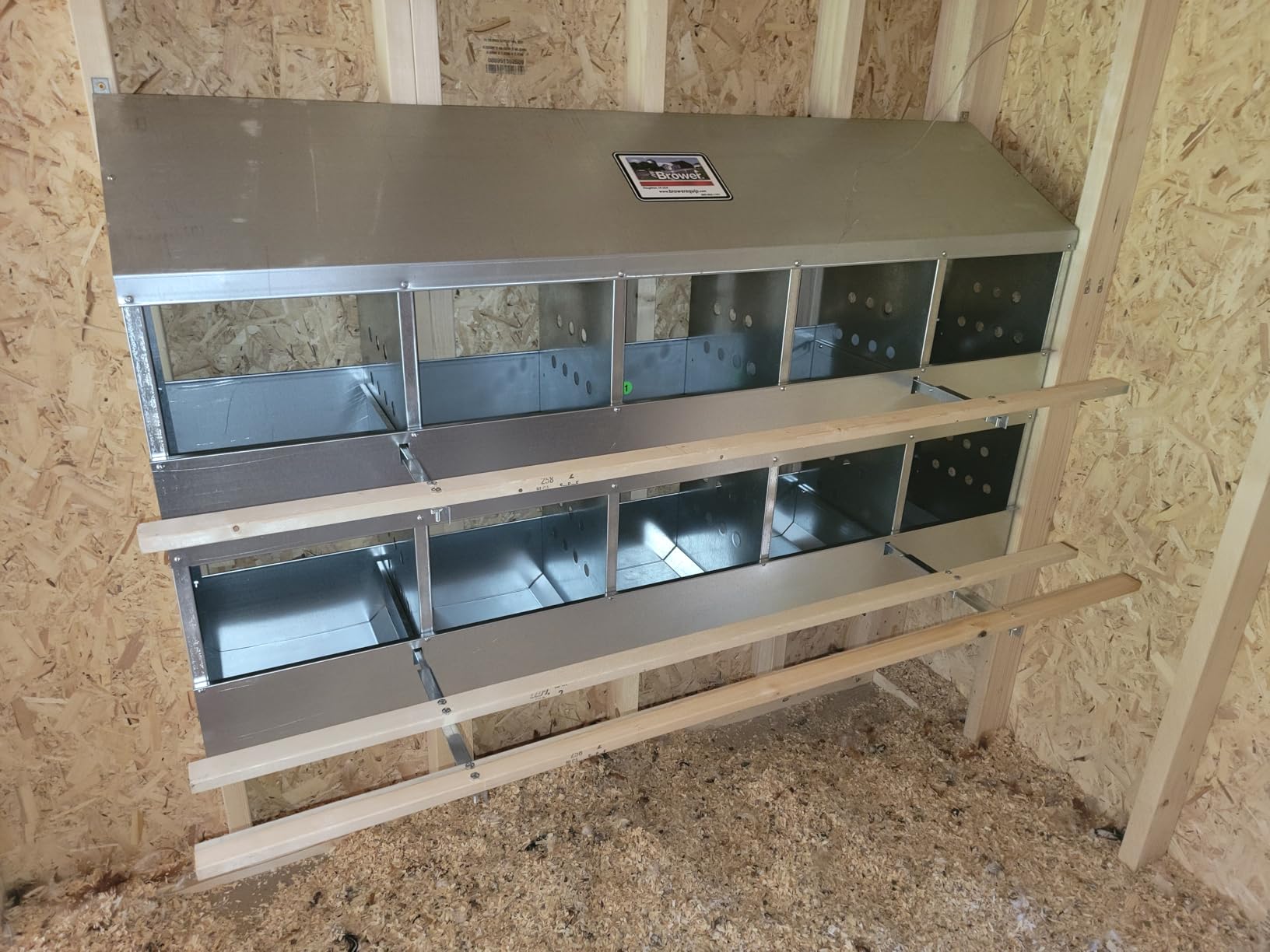
This is the box we kept coming back to. After a full winter on the wall of our coop it still wipes clean in seconds, the tray bottoms lift out without tools, and six compartments in a two-tier footprint means a single box covers a flock that most rivals would need two units for. The twin levels also let a timid hen settle on the bottom row without being crowded by the dominant bird on top.
What makes it different from cheap imported steel boxes is the hardware. Every joint is double-bolted, and the perch rods genuinely fold back, which gives you a lever for retraining a bird that has started sleeping in the boxes. Assembly took us roughly forty minutes with a screwdriver and a wrench, and the manufacturer states the galvanizing is rated for eight or more years of outdoor service.
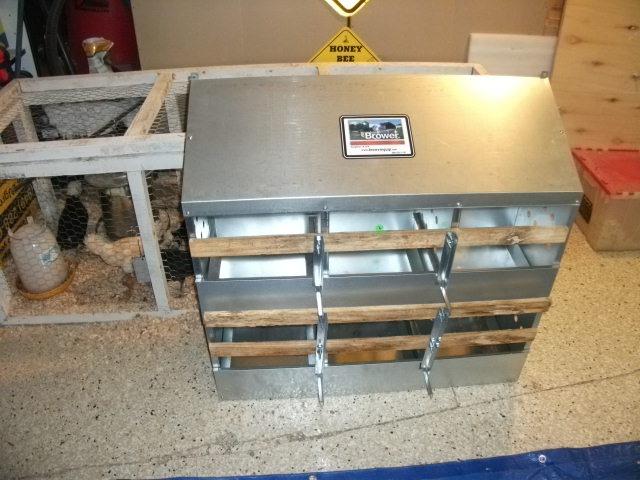
The honest drawback is the raw sheet metal. Several owners report needing to sand the cut edges after assembly before letting hens into the compartments, and the included wooden perch boards are unfinished enough that some keepers replace them. The perch bolts also need a tightening every few months, which is an easy job but not a zero-maintenance one.
One more practical note: this is a genuinely heavy box, and mounting it above head height is a two-person job. Plan the wall space in advance and have a second set of hands.
Why it suits a mixed flock
Because the openings accommodate bantams, standard fowl and large breeds without you buying two different boxes. The sloped roof does double duty — it sheds rain and discourages hens from perching on top, which is the habit that turns a clean nest into a dirty one.
Who should skip it
If you have only two or three hens, six holes is more capacity than you need and you will be cleaning empty compartments. If you are on a tight budget, the same durable steel principle at a smaller size is covered further down.
2. ZenxyHoC 3-Compartment Roll-Away Nest Box – Best Value
- Roll-away tray keeps eggs clean and out of reach of pecking
- Removable tray makes deep cleaning straightforward
- Swing perch doubles as a night-time gate
- Red powder-coated finish looks good in the coop
- Pre-drilled holes for easy wall mounting
- Paper assembly instructions are incomplete
- Plastic bay can crack after a year or two
- Compartments are tight for larger breeds
- Small hardware sits near sharp metal edges
This is the roll-away idea in its most practical form. The nest floor sits at a slant, so an egg laid in the back of the compartment rolls forward into a protected collection tray you can lift out and check without reaching into the nest. For anyone with a confirmed egg eater, that geometry alone solves most of the problem.
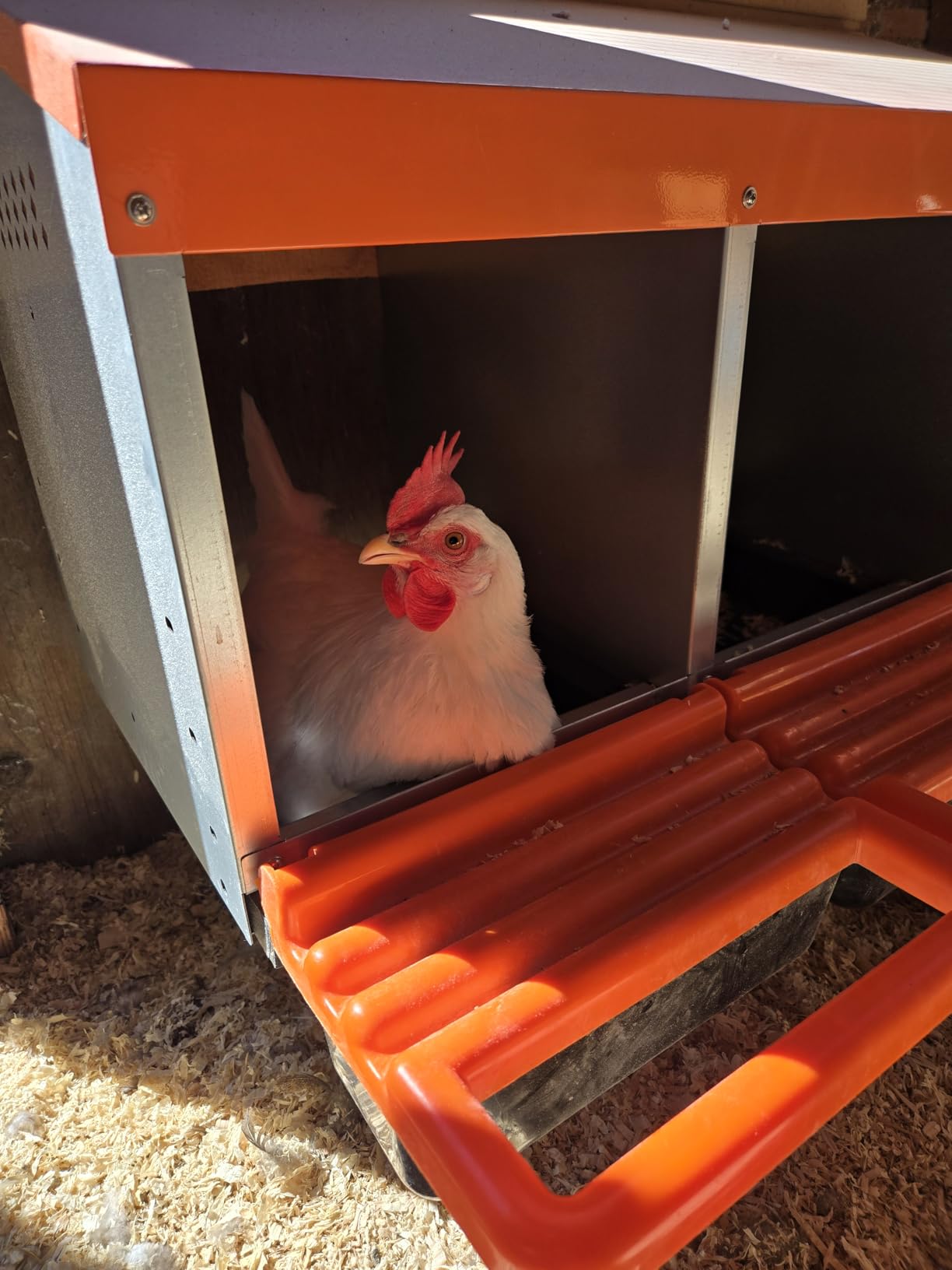
The frame is a solid sheet metal structure with plastic hen bays, finished in a red powder coat that has held up in daily use for us. The swing perch is a nice touch you do not get everywhere: fold it up at night and the hens are gently excluded from roosting in the boxes, which stops the droppings and the dirty eggs.
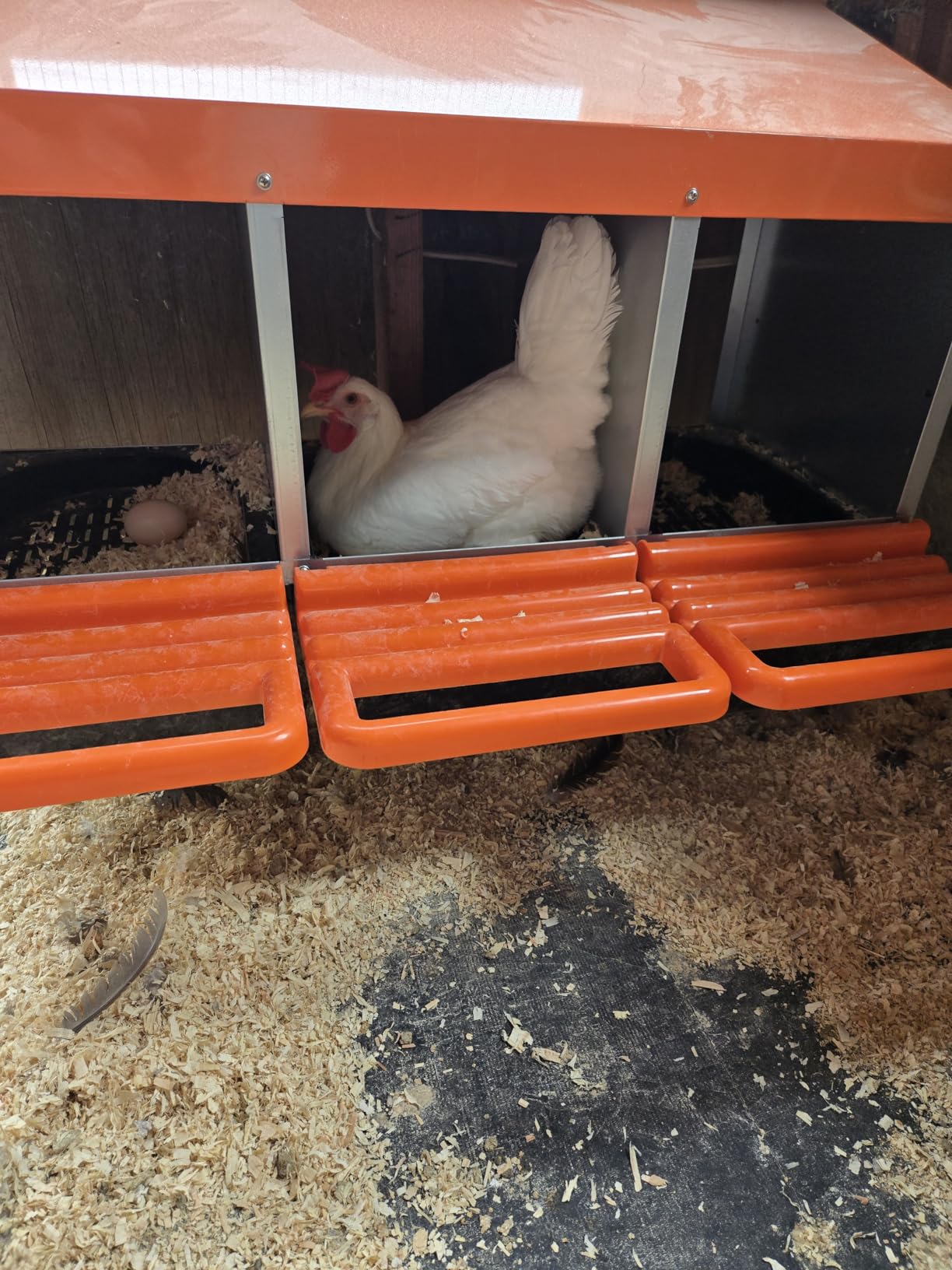
Two honest warnings. The paper instructions are widely criticised and the assembly video is the better guide, so budget an extra twenty minutes. And the plastic bay is the load-bearing part of the design — some owners report it cracking after a year or two of use, while the metal frame keeps going.
The compartments also run snug. Standard hens manage fine, but if your flock is mostly Orpingtons or Wyandottes, read the sizing section further down before committing.
Why hens use it fast
The roll-away tray means the hen never has to reach into a dark cavity to find her egg, and the collection tray sits at a height where you can check it at a glance. In our test the birds started using it within two days, partly because the swing perch already framed each bay as a private nook.
Who should look elsewhere
Flocks of large breeds, and anyone who wants to hose the box out on a schedule. The plastic bay takes a wipe-down well but is not built for pressure washing, and the tight bays are the single reason this is not our top pick.
3. Eggluuz 6-Compartment Roll-Away Nest Box – Best for Big Flocks
Eggluuz Chicken Nesting Box, 6 Compartments Egg Laying Nests Boxes for Hens
- Inclined tray lets you find eggs without reaching in
- Galvanized steel body with rust-proof plastic trays
- Ventilation holes keep the interior dry
- Keyed hanging holes make mounting simple
- Perforated bottoms drain water and debris
- Bulky 31.5 x 20.5 x 30.2 inch footprint
- May need extra fasteners for solid wall mounting
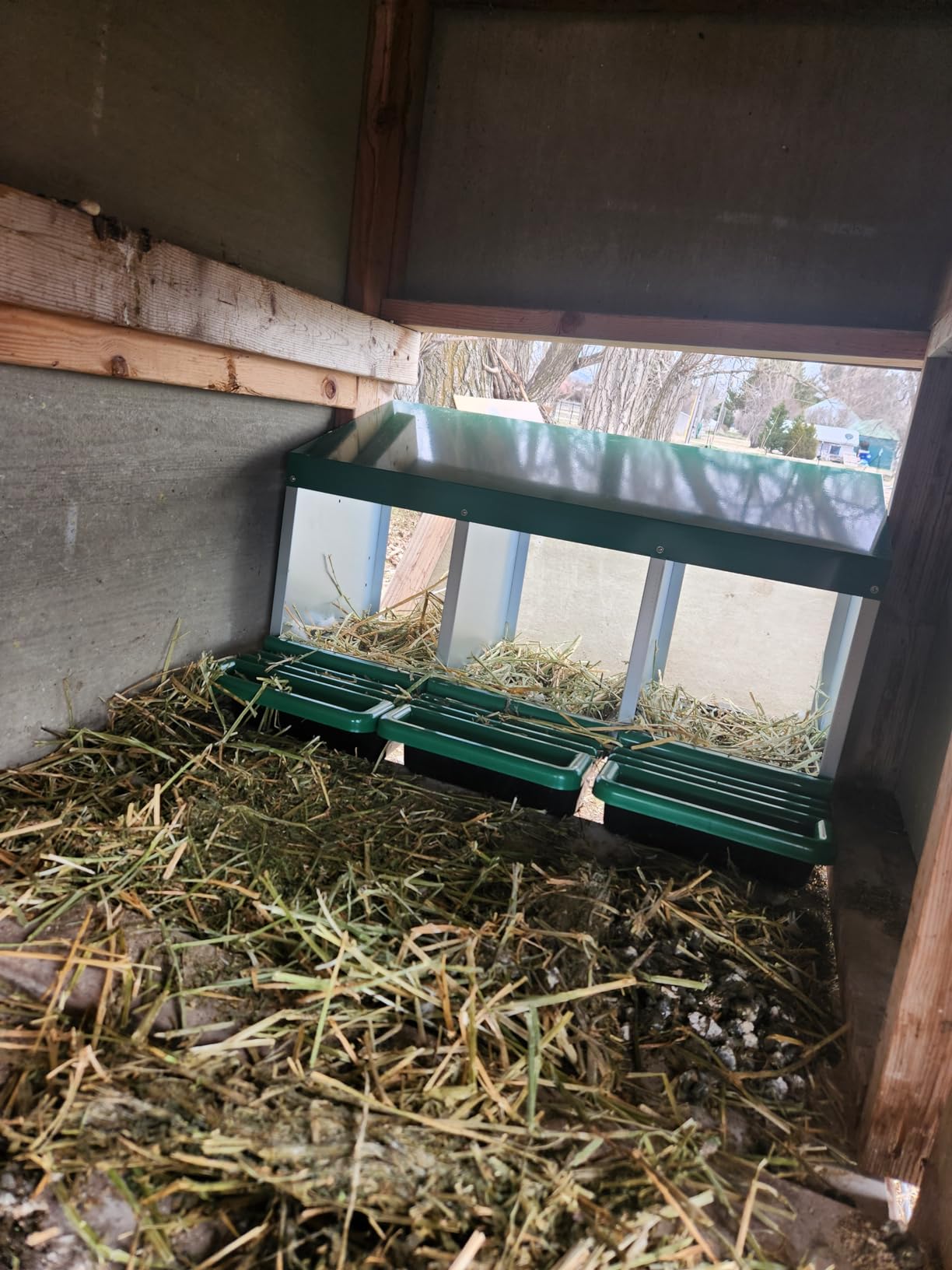
Six compartments in one footprint is the reason to buy this one. If you run fifteen to twenty hens, a bank of three or four boxes is a lot of wall space you do not have, and this single unit covers a large flock without the visual clutter of a multi-box bank. The slightly inclined floor performs the same roll-away trick as the ZenxyHoC, so egg collection happens from outside the nest.
Construction is a sensible hybrid: galvanized steel on the sides and roof where weather hits hardest, plastic on the trays where water sits. Ventilation holes and perforated bottoms keep the interior dry in humid summers, which matters more than most buyers expect because damp bedding is how red mite outbreaks start.
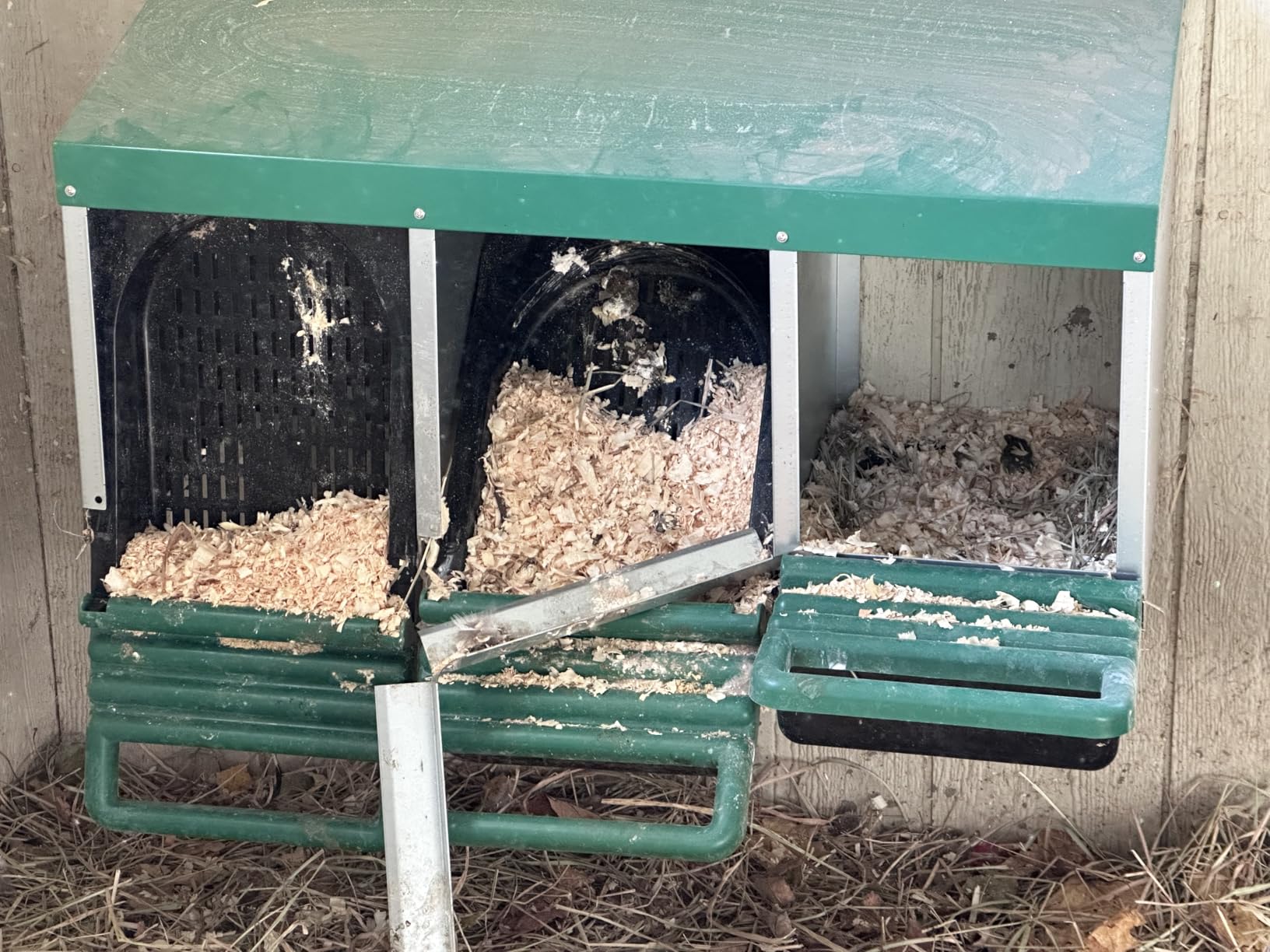
This is a newer design from a smaller brand, and it holds a 4.3 average across a few hundred reviews, which is respectable but a thinner history than the leader. The main physical complaint is the footprint: at over 30 inches tall it needs a tall wall, and it is not a box for a low-ceilinged chicken tractor.
A few buyers mounting into a solid wall also found the supplied fasteners thinner than ideal. If your wall is masonry or heavy timber, pick up appropriate screws separately.
Why it scales with flock size
Because one box covers six laying spots instead of two, you can hit the one-box-per-four-hens rule with far fewer mounts. The keyhole hanging slots also mean you can install, remove and deep clean the whole bank without dismantling a wall.
Where it falls down
Six roll-away compartments mean six trays to pull out, rinse and refill. That is the ongoing cost of the design, and for a small flock it is wasted effort.
4. Petsfit 4-Hole Fir Wood Nesting Box – Best for Bantams
PETSFIT 4 Holes Chicken Nesting Box, PVC Waterproof Roof, Privacy Cover
- Sturdy solid fir that assembles quickly
- Mounts on a wall or sits on the coop floor
- PVC roof sheds rain snow and sun
- Wood feels more natural than plastic or metal
- Open front and back improve airflow
- Thin plastic back panel does not attach securely
- Bays are small and better suited to bantams
- Perch slats can arrive too wide and need trimming
- Thin painted finish
Wood nests the way metal cannot, and this is the box for anyone who has watched a hen tiptoe into a steel compartment in January and looked uncomfortable. Fir does not wick heat the way bare galvanised sheet does, so the nest interior holds a gentler temperature through a cold snap. Owners also report that hens settle into a wooden box faster than into plastic.
It is a long, low unit — 46 inches wide by 12 deep by 18 tall — with four holes and a PVC waterproof roof. That roof is the reason it earns a place on this list: it sheds rain, snow and summer sun so the bedding inside stays dry, and a dry nest is a clean nest.
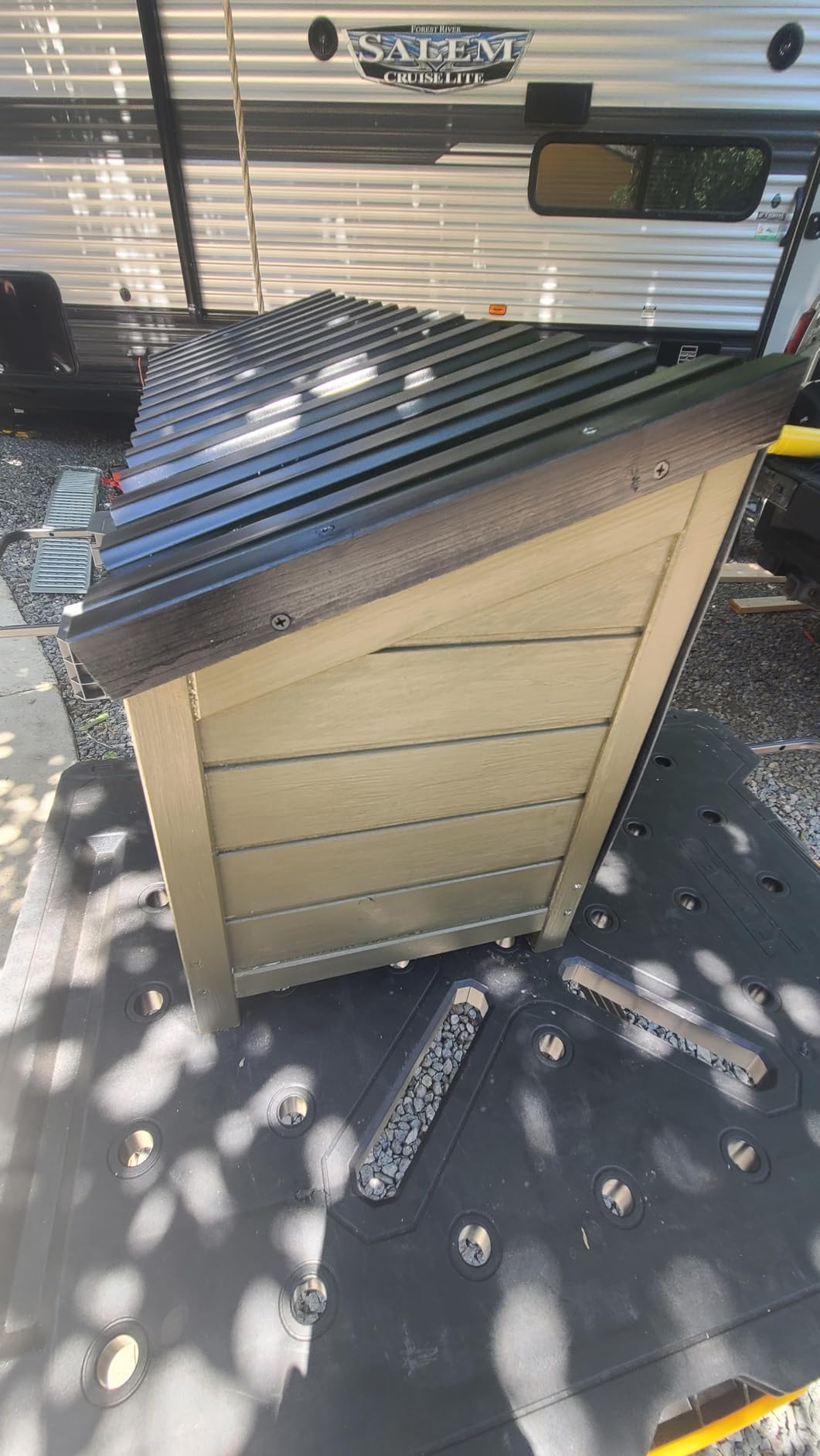
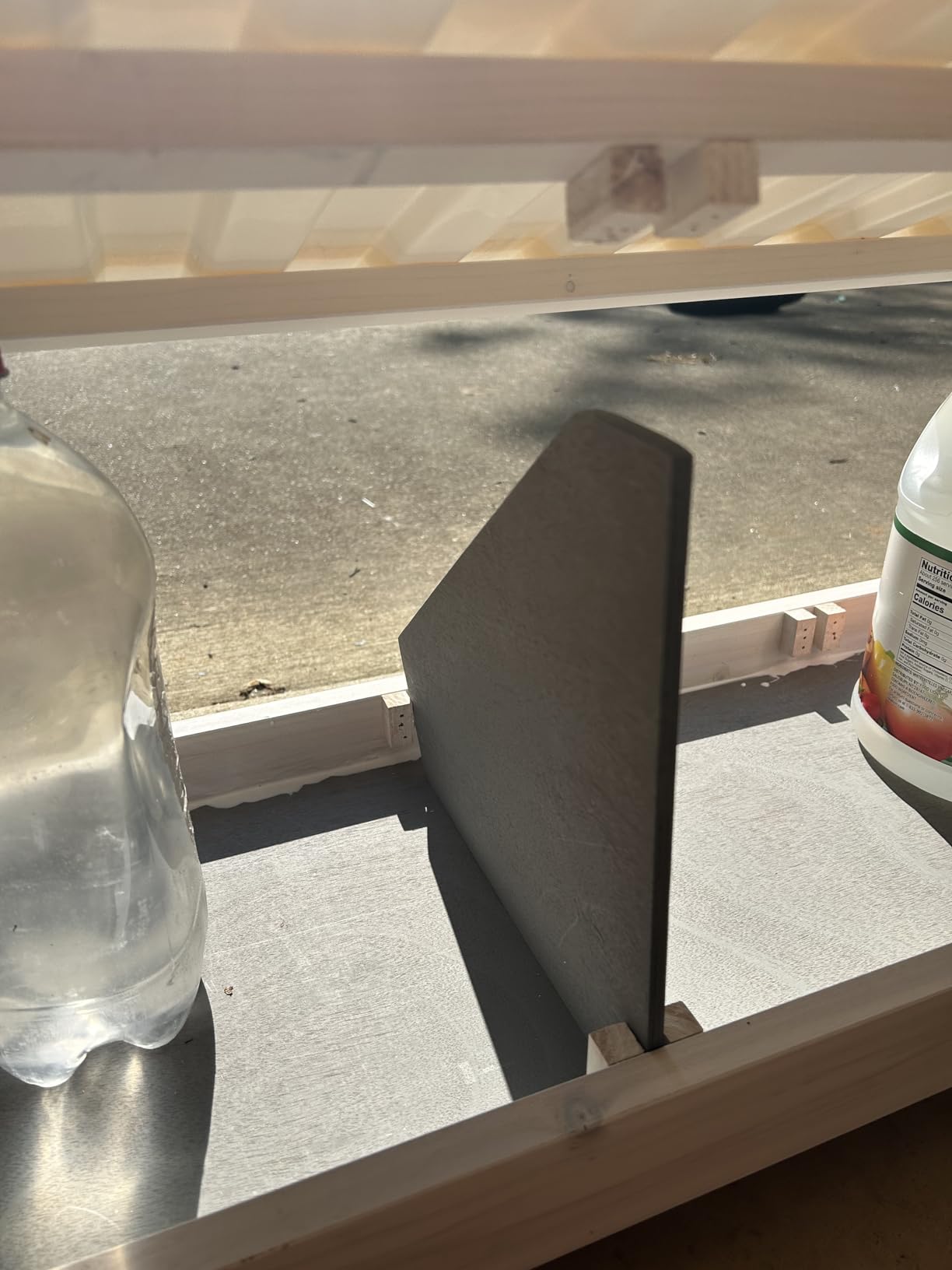
The 4.1 rating reflects a real weakness in the back panel. Owners describe the black plastic sheet as thin and loosely attached, and for hens that privacy matters, a flapping panel is not ideal. It is also worth checking the perch slats on arrival, since some arrive wider than the openings and need trimming to fit.
Most importantly, the interior bays are on the small side. Several buyers say large hens refused to enter and laid elsewhere, which is why this sits at number four rather than higher.
Why bantam keepers like it
Silkies, Sebrights and other small breeds do not need the deep bays a standard hen requires, and the compact fir construction feels warmer and more enclosed to them than a wide steel box. The wall-mount or ground-place flexibility is useful in a small urban run.
Who should pass
Anyone with standard or large breeds in the flock. Buy the wood concept with bigger compartments instead — the solid wood options further down are built for that job.
5. Kinchoix 3-Hole Galvanized Steel Nest Box – Best for Small Flocks
- Sturdy galvanized steel that hens take to quickly
- Rounded edges and sloped roof for safety
- Hanging holes allow mounting at the right height
- Units can be joined for a larger flock
- Steel rated for 8 or more years of outdoor service
- Bays run narrow for standard and large hens
- Shallow bays hold little bedding and need frequent cleaning
- Some panels need reorienting during assembly
- One box arrived with unmarked cheap screws
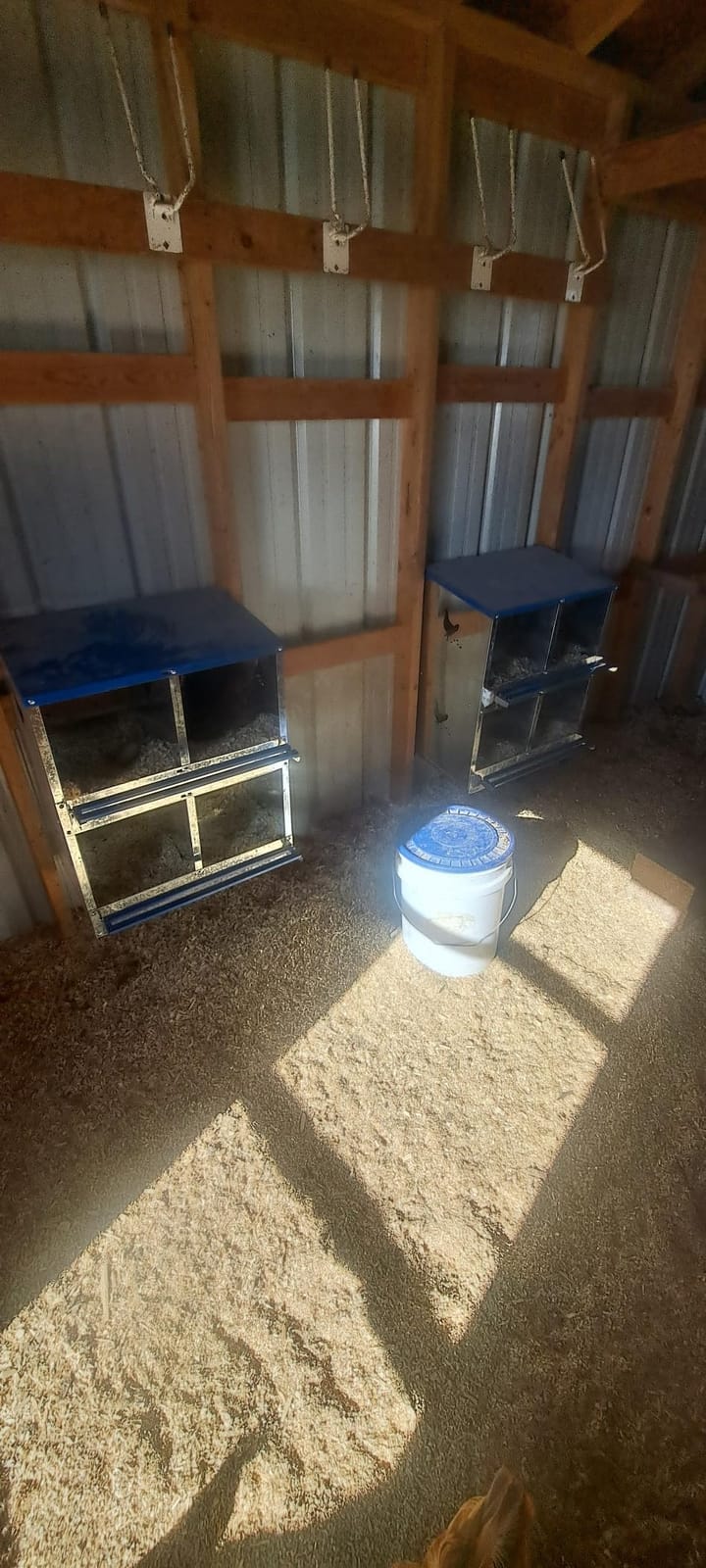
Three holes is exactly right for a flock of six to ten hens, and the manufacturer states the galvanized steel is rated for eight or more years of outdoor service. At roughly 29.5 inches wide by 13.4 deep by 14.8 tall, it is the least imposing box here, which matters if your coop is small or if you are mounting it on a wall you cannot drill deeply.
Owners consistently report fast assembly and hens laying in it within minutes. The 2.36 inch wide foot bar gives birds a landing, the rounded edges are safer than raw cut sheet, and the sloped roof handles weather without a separate cover.
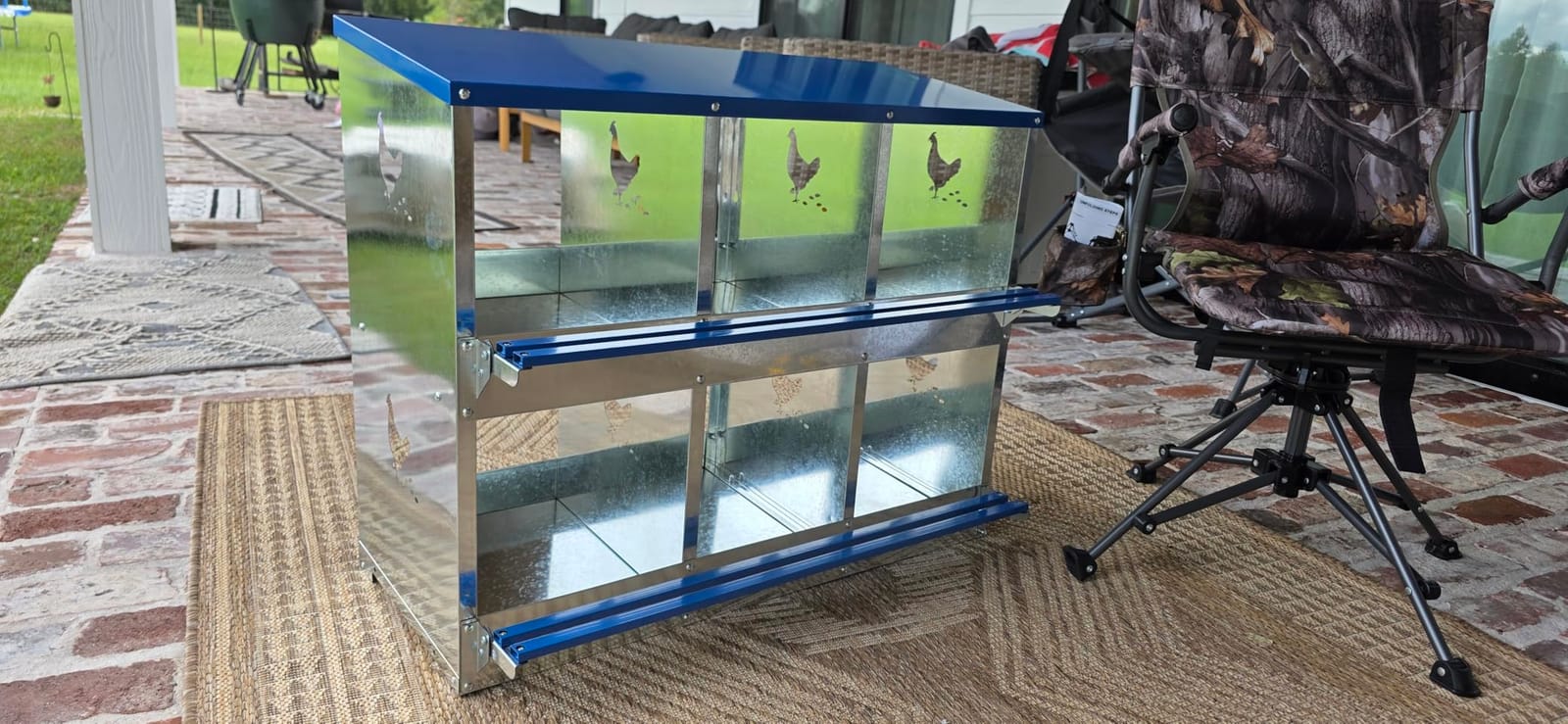
Each of the three holes measures about 9.8 by 11.8 inches, which is compact. That is a genuine plus for bantams and a genuine problem for a Wyandotte trying to turn around inside. The bays are also shallow, so bedding depth is limited and the boxes need cleaning more often than a deep plastic model.
Assembly has a small wrinkle: a few panels must be reoriented before the frame squares up, and at least one owner received a box with very cheap unmarked screws. Check your hardware before you start.
Why it suits a first flock
Three compartments meet the one-per-four-hens rule for up to ten birds, and the bays can be joined side by side later if the flock grows. The shallow, compact footprint means you can mount it in a coop most backyard setups already have.
Where it is wrong
Large breeds. If your hens weigh more than about eight pounds, the interior dimensions here are the deciding factor, not the build quality.
6. Bavlesfuire 3-Compartment Solid Wood Nest Box – Best for Cold Climates
Chicken Nesting Box 3 Compartments – Wall Mount Wooden Egg Laying Nest Box for Chicken Coop, Easy to Assemble & Versatile Use for Hens, Ducks, Chickens
- Solid wood stays cooler in heat and warmer in cold
- Perches and baffles help keep eggs from rolling out
- Simple to assemble and install
- Light enough to reposition inside the coop
- Mounts on a wall or stands free
- Some hens do not take to the boxes right away
- Interior space is smaller than ideal for very large breeds
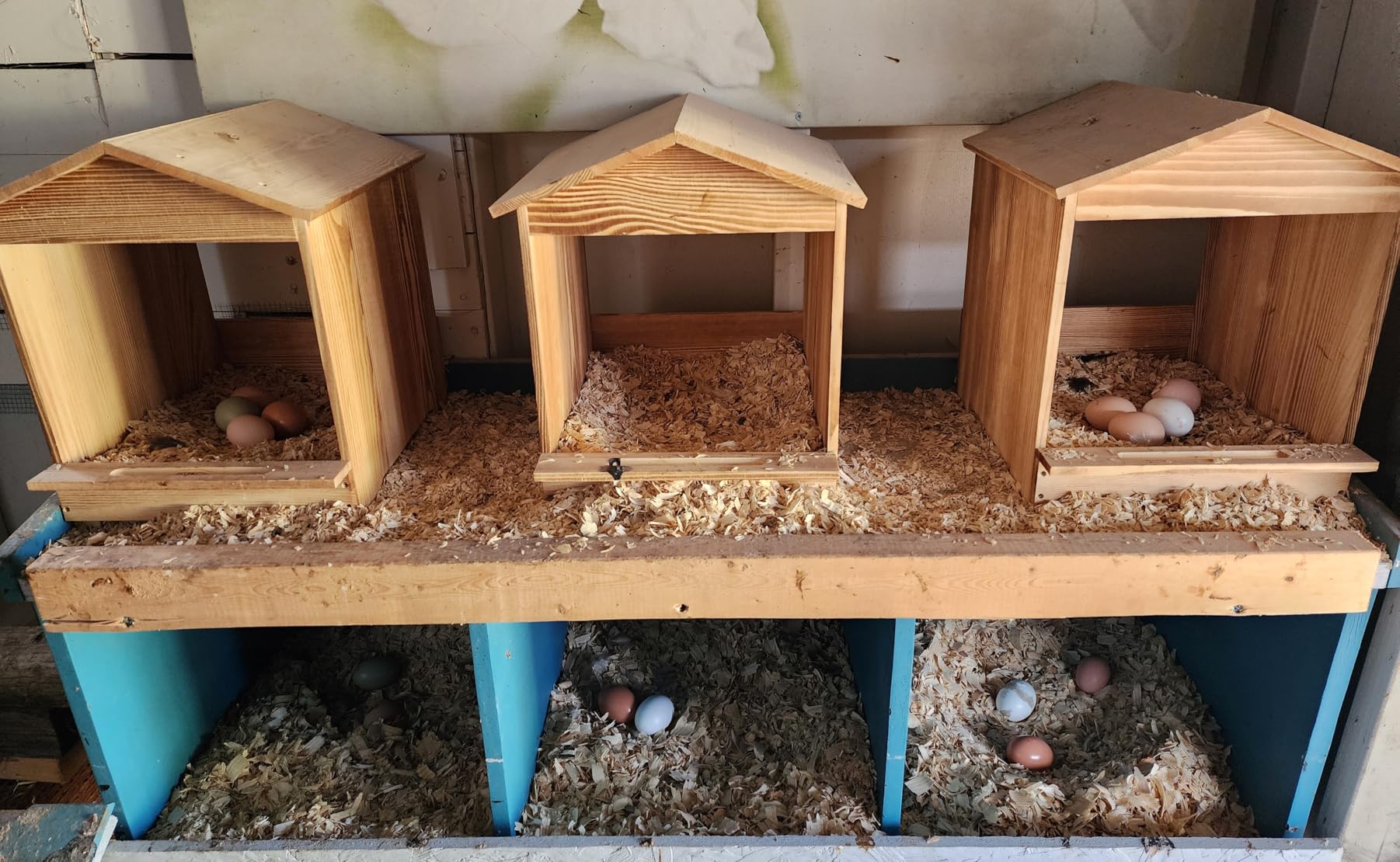
This is the answer to the forum argument about plastic and steel being cold. Wood is the only material in this roundup that genuinely insulates, and the manufacturer says so explicitly: the interior stays cooler in heat and warmer in cold than a metal box would. If your winters are hard or your coop floor is concrete, that is not a small detail.
It is also the most flexible of the wooden options. The box mounts on a wall or stands on its own, and at under 15 pounds one person can carry it out to reposition. The perches and baffles in front of each compartment help stop eggs rolling out onto the coop floor where they get stepped on.
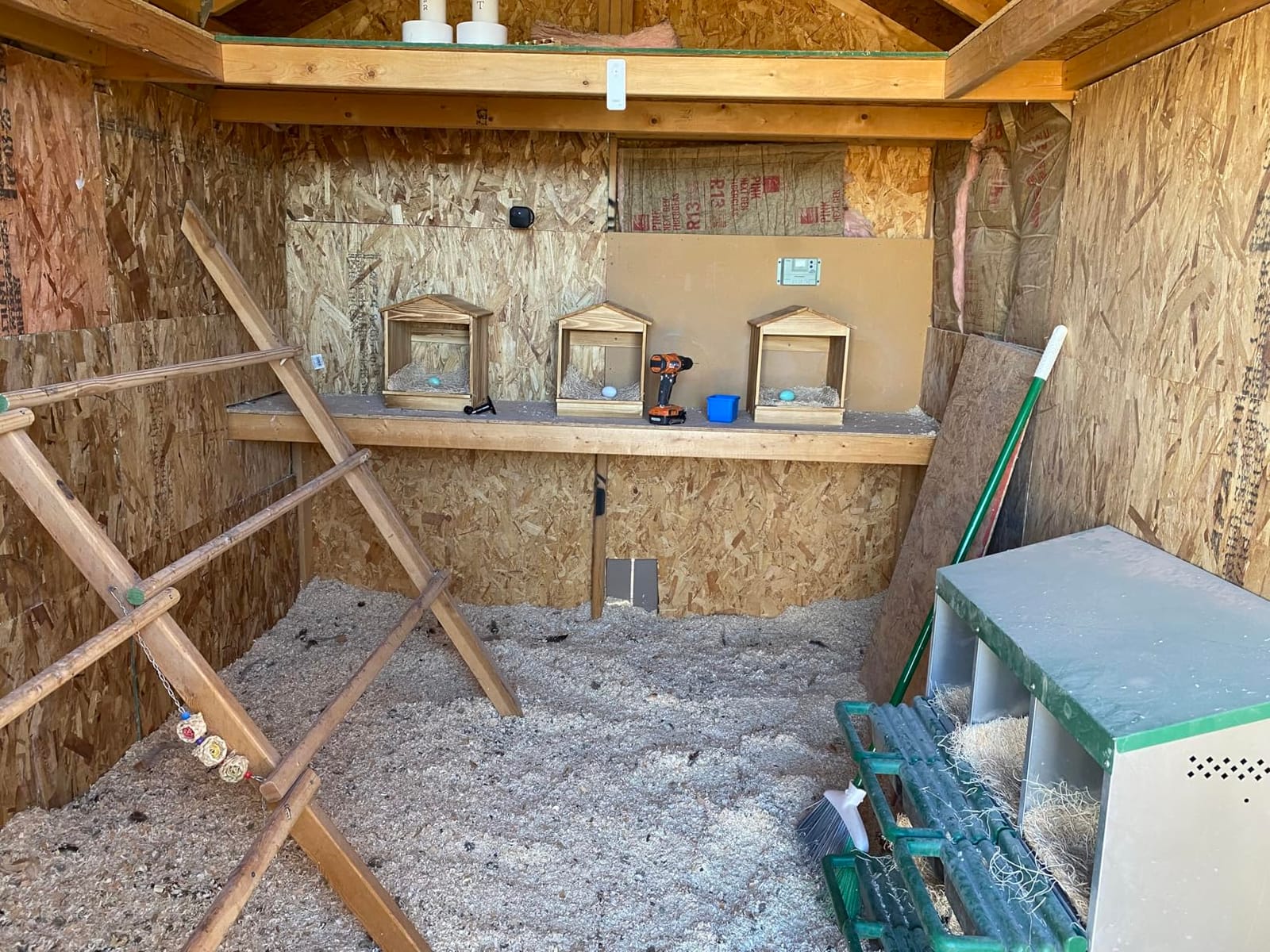
The honest drawback is adoption speed. Feedback is mixed on whether hens take to the box straight away, and a few owners report needing a few days and some training before the nests were in regular use. Nesting material helps here — see the bedding section below.
Interior space is also on the compact side. For the biggest birds in your flock, look at the extra large plastic option further down instead.
Why wood wins in winter
Bare steel and plastic conduct heat away from the hen’s body as she settles, and that is the whole basis of the cold complaint. Wood has a far lower thermal conductivity, so the nest temperature tracks the hen instead of the outdoor temperature, which also reduces the risk of a chilled egg in an unheated coop.
Who should not choose it
Keepers who want a hose-off design. Painted or sealed wood is easier to wipe than raw wood but it will never match plastic or steel for scrubbing, and mite populations can hide in the seams of a wooden box.
7. ZeenArt 4-Compartment Solid Wood Nest Box – Best Four-Hole Wood Box
Nesting Boxes for Chickens – Wooden Chicken Nesting Box for Poultry Heavy Duty 4 Compartments Laying Eggs Nest Box Wall Mount for Chickens, Hens, Ducks
- Sturdy real wood that holds up outdoors
- Easy to assemble with clear instructions
- Light enough for one person to carry out
- Roomy enough for larger breeds such as Australorps
- Spacious design with good airflow
- Front lip is low so bedding and eggs can be pushed out
- Interior bays can feel small for very large chickens
- Instructions and included hardware can be confusing
Four compartments in a single 25-inch-wide unit is a genuinely useful middle ground. Four laying spots covers a flock of up to eighteen hens at the recommended ratio, and owners say the bays are roomy enough for larger breeds like Australorps, which is where most four-hole wooden boxes fall short.
The wood carries a weatherproof finish, so it has handled rain and sun without warping in owner reports, and the open design gives enough airflow to keep the nests cool in summer. Installation tools are included and most buyers assembled it without hunting for hardware.
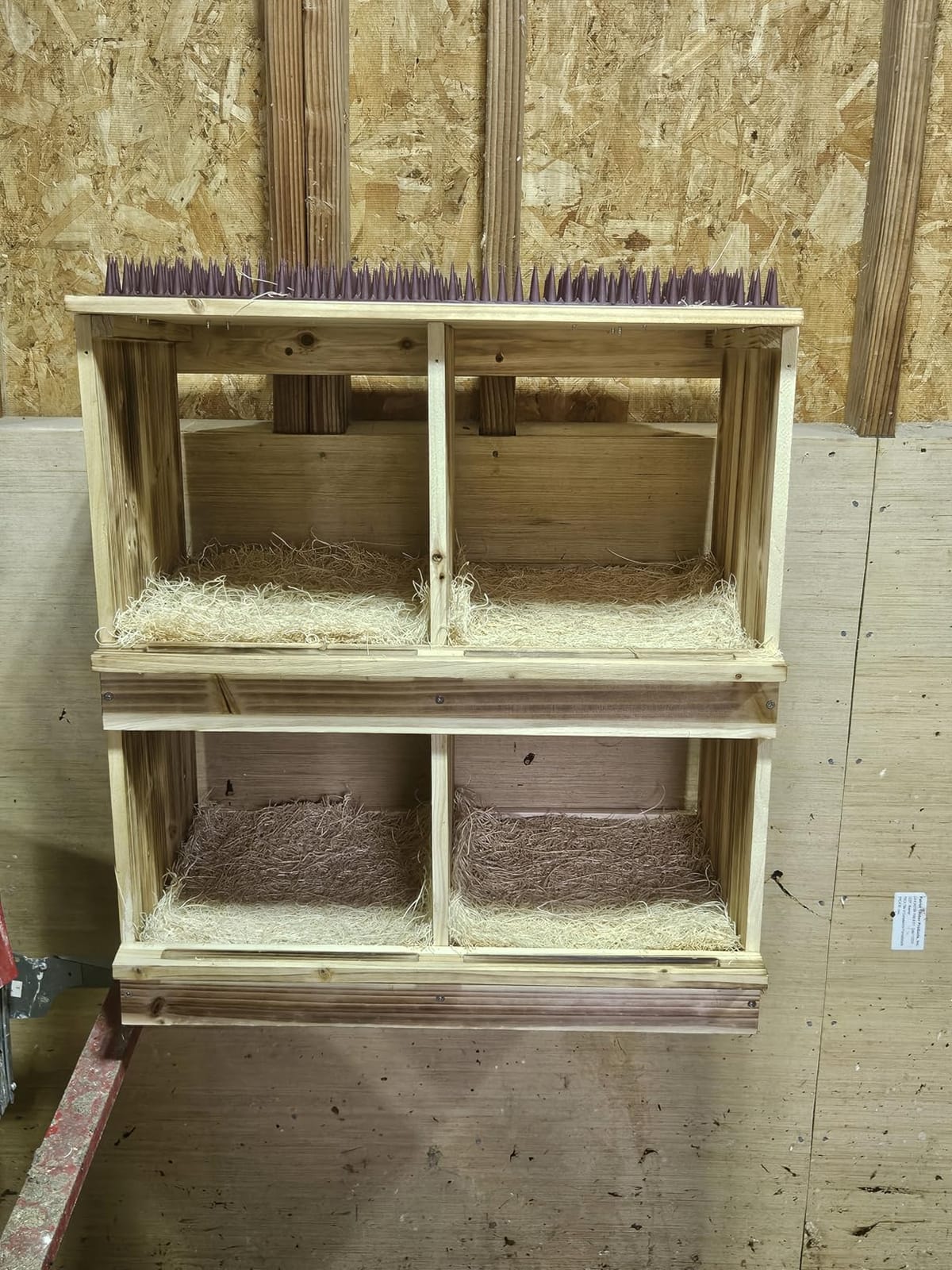
The most common improvement request is a taller front lip. As designed, a determined hen can push nesting material and occasionally an egg out the front, which puts it back on the coop floor where it gets stepped on. If you buy this, a small lip add-on or a deeper bedding layer largely solves the issue.
Instructions and hardware were occasionally confusing for a few buyers, so read them fully before assembly rather than working from the diagram alone.
Why it suits a medium flock
Four holes at a roomy size gives you the one-box-per-four-hens ratio for nearly twenty birds, and a single unit keeps the wall clear. It suits mixed flocks where a couple of large breeds are present but not the majority.
The weak point
The front lip. It is a small thing that produces most of the negative feedback, so treat it as a known limitation rather than a surprise.
8. Tiflev 4-Hole Roll-Away Nest Box – Best for Egg Eaters
Chicken Nesting Boxes, Roll Away Nest Box for Egg Collector, 4 Holes Orange
- Roll-away design cuts broken dirty and eaten eggs
- Ships with a dummy egg to encourage hens
- Powder-coated parts arrive undamaged
- Compact double-decker footprint saves floor space
- Suits large breeds such as Buff Orpingtons
- Back panel not included so a flat mounting surface is needed
- Eggs do not roll if the box sits on the floor
- One instruction sheet covers a different model
- Some metal edges are sharp
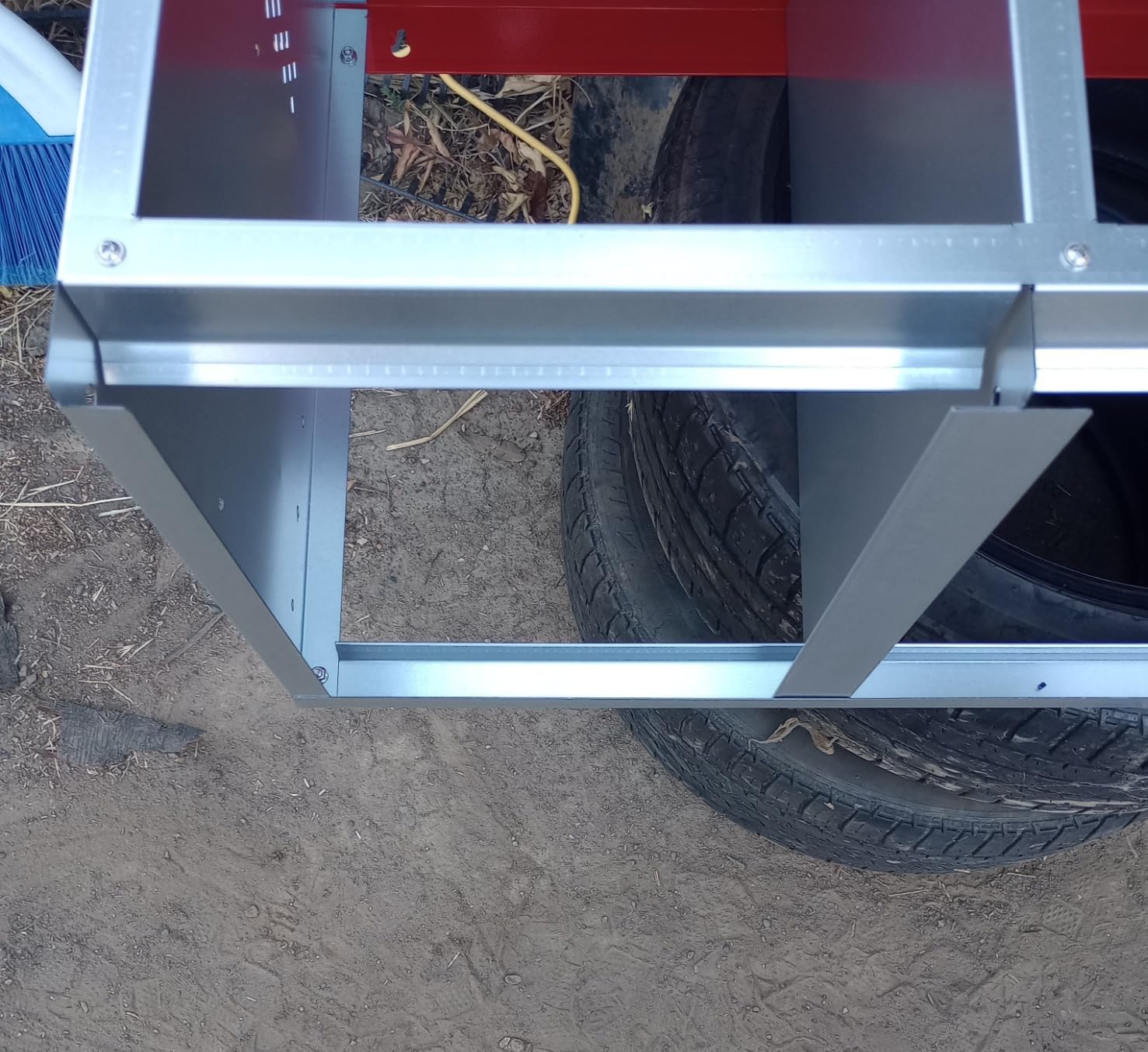
This is the box to buy if you have already had an egg-eating problem. The trays tilt, so the egg leaves the nest the moment it is laid and lands in a covered collection channel that hens cannot reach. Owners specifically credit this design with ending a cracking and pecking problem, and one even reports that hens stopped roosting and sleeping in the nests entirely.
A nice detail is the dummy egg included in the box. Placing a fake egg is the standard training trick to tell a hen this is the laying spot, and having it built in saves a step on day one. The double-decker layout with two compartments per tier keeps the footprint narrow at 21 by 20 by 30 inches.
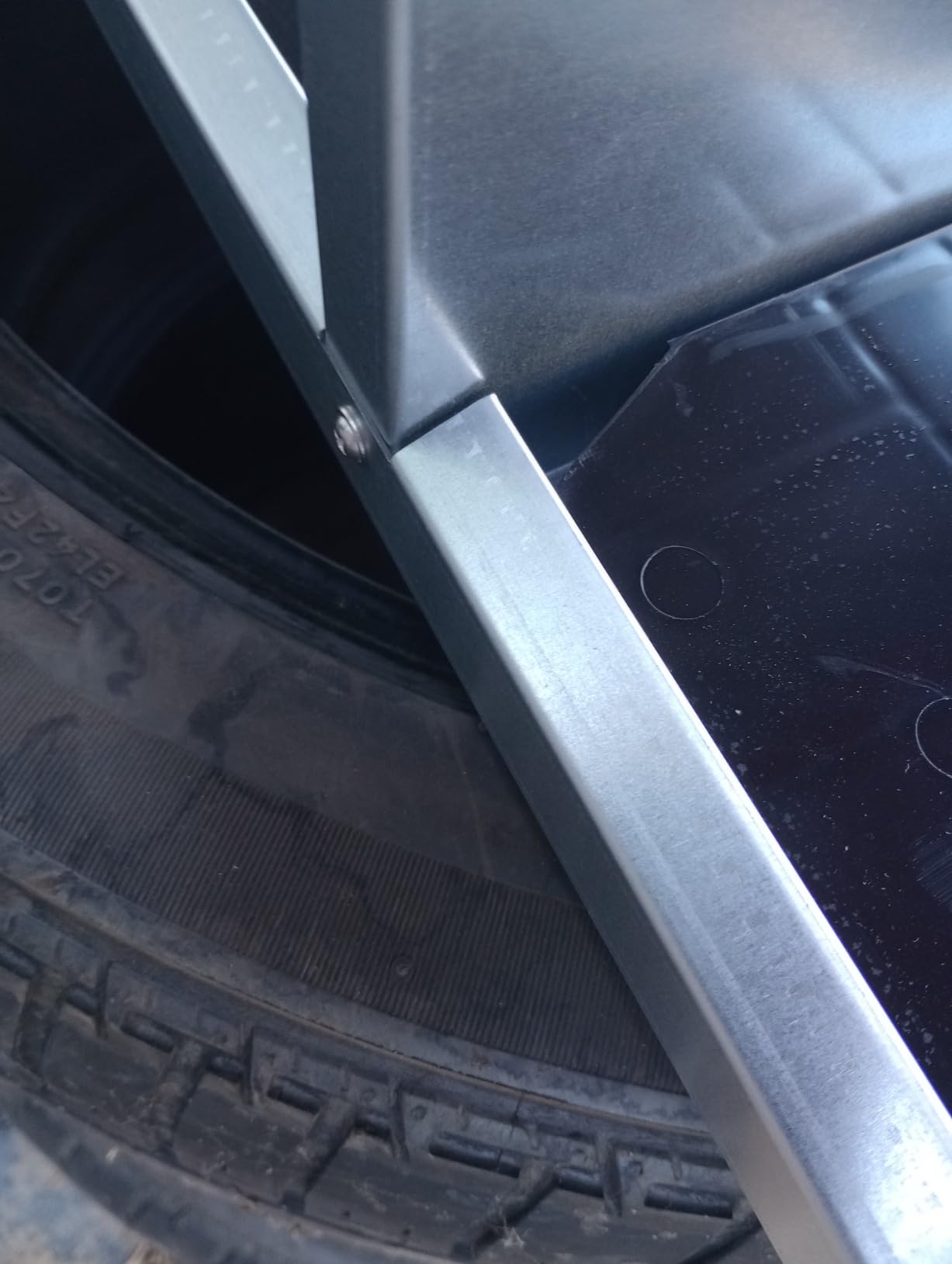
There is one setup rule that decides whether this box works: mount it on a wall. Owners report that eggs do not roll properly if the box is stood on the floor, and the back panel is not included, so you need a flat mounting surface behind it. One side of the instruction sheet also covers a different model, so check the diagrams as you go.
Assembly runs a little long and a second pair of hands helps, since some of the metal edges are sharp before the frame is closed up.
Why it fixes egg eating
An egg that rolls out of the nest within seconds of being laid spends almost no time exposed to a curious or hungry flock. The covered channel means even a determined hen can only reach an egg at the very end of the tray, and most never manage it.
Who should skip it
Anyone without a suitable wall to fix it to, and anyone who plans to move the box regularly. A floor-standing design defeats the entire mechanism.
9. Pitalok Plastic Nest Box with Washable Pad – Budget Pick
- Assembles in under five minutes with no screws
- Rough plastic wipes clean and does not harbor mites
- Roof ridges discourage hens from roosting on top
- Large opening fits standard breeds
- Lightweight and easy to reposition
- Bottom is not very rigid when the box is moved
- Snap-together joints at the roof peak can loosen
- Best protected inside the coop rather than outdoors
This is the box to start with if you are keeping a handful of hens on a small budget. There is no hardware at all — the parts snap together in about five minutes, which matters when you are building a coop on an evening schedule. A washable nesting pad is included, so the box is usable the moment it is assembled.
Plastic has real practical advantages in a nest: it wipes clean in seconds, it will not rot, and smooth surfaces do not give red mite a crevice to hide in. The roof ridges are a small design touch that discourages hens from climbing on top, which is a common cause of dirty nests.
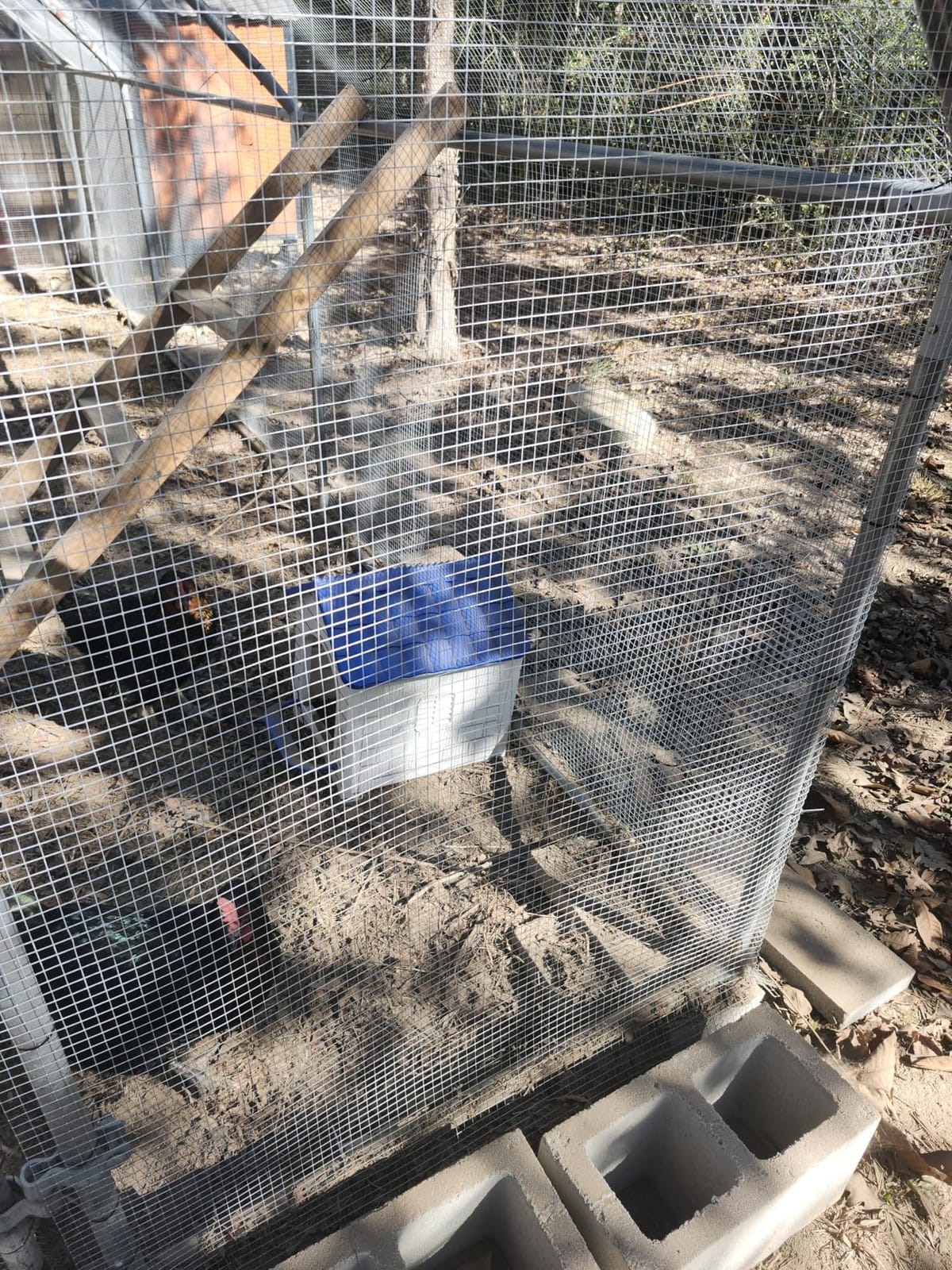
What you give up is rigidity. The bottom flexes when you pick the box up, and the snap-fit joints at the roof peak can loosen or separate if the box is moved often or bumped. Treat it as a fixed fixture once it is placed rather than something to shuffle around.
It is also best kept inside the coop. Leave it in the open run and the plastic will fade and the joints will suffer, and the 4.3 rating reflects that expectation gap more than any defect in the design.
Why it suits beginners
No tools, no assembly diagram to argue with, and a pad already in the box. It also comes in one, two and three-hole packs, so you can buy two cheap boxes and place them apart from each other instead of one expensive bank.
When to spend more
If your hens are large breeds, or you want a box you can hose off after a mite outbreak, move up to a steel roll-away model. The flexibility of plastic is not much help when a heavy Orpington leans on the front lip.
10. AugFir Extra Large 2-Compartment Roll-Away Box – Best for Large Breeds
- Extra large compartments suit medium to large hens
- Roll-away design protects eggs from crushing and pecking
- All-weather plastic will not rust
- Built-in vents and drainage holes keep the interior dry
- Wall mount freestanding or stackable
- Stacked orientation takes more vertical space than single tiers
This is the direct answer to the most common complaint on chicken forums: that plastic boxes are built for small birds and turn away Orpingtons. The bays here are marketed as extra large and suit medium to large hens, and at just over 8 pounds the whole unit is easy to lift into place and to strip down for cleaning.
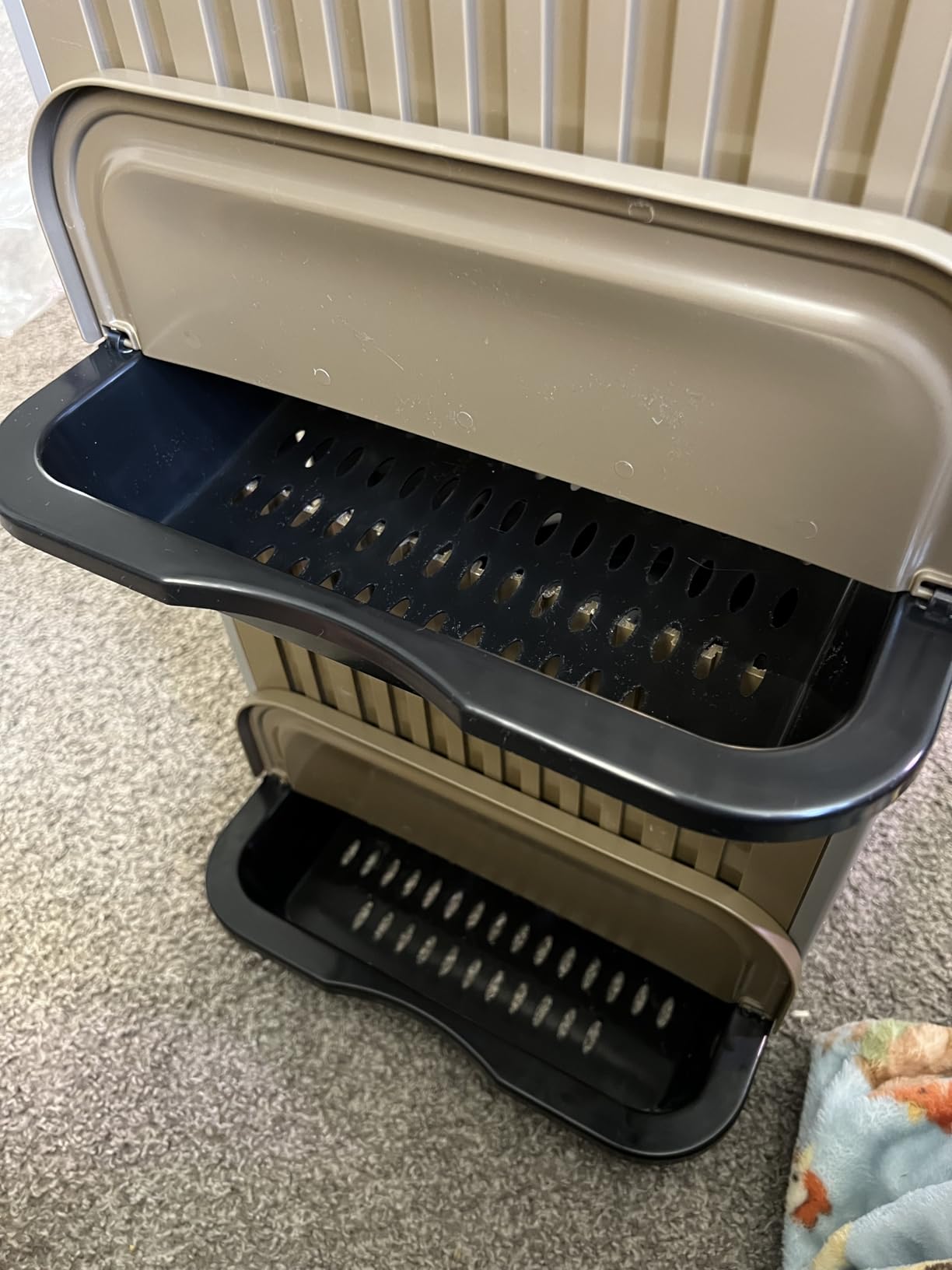
It is still a roll-away design. The floor is sloped so eggs roll into a front collection area accessed by opening the lid, which means eggs stay clean and out of reach of foot traffic. Built-in vents and drainage holes in the base keep the interior dry, which is genuinely useful in a humid climate.
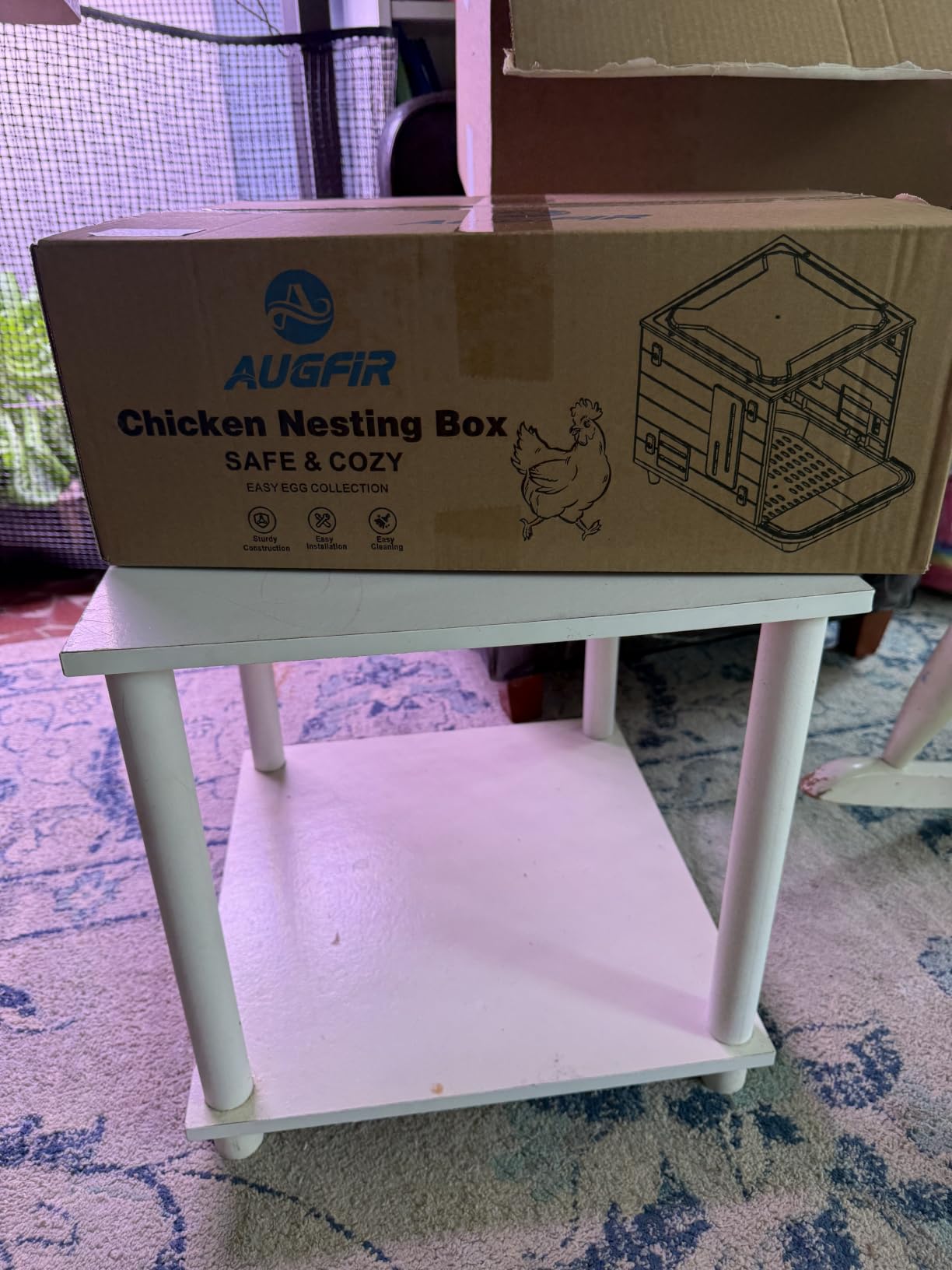
Two compartments is not many, and at 11 by 12 by 26 inches the unit is tall. Keepers who want more laying spots end up stacking it, which is supported but eats vertical space you may not have in a low-roofed coop. Budget for a taller wall if you plan to run more than two nests from it.
Installation is flexible — wall mounted, freestanding or stacked, and it can be fitted without drilling if your wall is not masonry.
Why it suits Orpingtons and Wyandottes
Large breeds need to turn around and settle without crouching, and cramped boxes are exactly why hens labelled “lazy” on laying forums are really just uncomfortable. Generous bays plus a sloped floor give them both room and a clean lay.
The limitation
Two laying spots. In a flock of ten or more you will need two of these or one of the six-compartment steel banks, so budget the wall space before you choose.
11. TRYKERPET 2-Hole Wooden Nesting Box – Best Compact Pair
TRYKERPET Wooden Chicken Nesting Box, Wall Mounted or Floor Use, 2 Holes
- Two-hole layout keeps eggs contained and reduces breakage
- PVC roof protects eggs from rain and dirt
- Mounts on a wall or sits on the floor
- Smooth wood surfaces are easy to wipe down
- Several sizes available for different coops
- Wood panels can feel light for larger birds
- Only two laying spots per box
- Lowest rating in the group at 4.0 with a mixed durability share
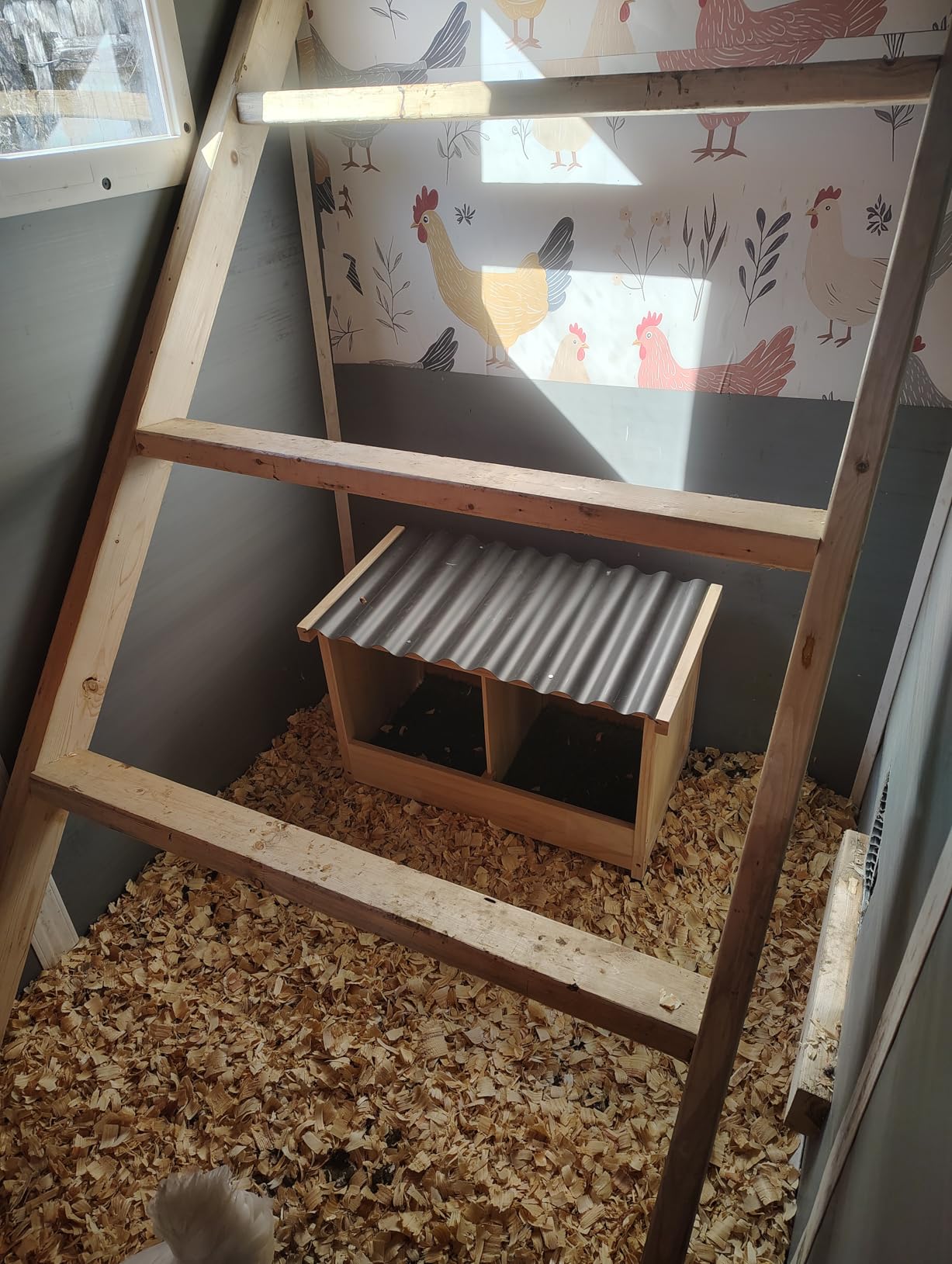
Two holes is a modest capacity, and that is exactly the point. Placing two of these boxes in different corners of a coop does something a single four-hole bank cannot: it spreads the flock out, so a dominant hen cannot lock the others out of the best spot. For a flock of six to eight, two separate two-hole boxes often produce cleaner eggs than one four-hole bank.
The PVC roof does the same job as the one on the fir box further up, keeping rain and dirt off the eggs and the bedding dry underneath. Mounting is flexible — wall or floor — and the smooth wood surfaces wipe down easily, which is the main thing wood has to prove.
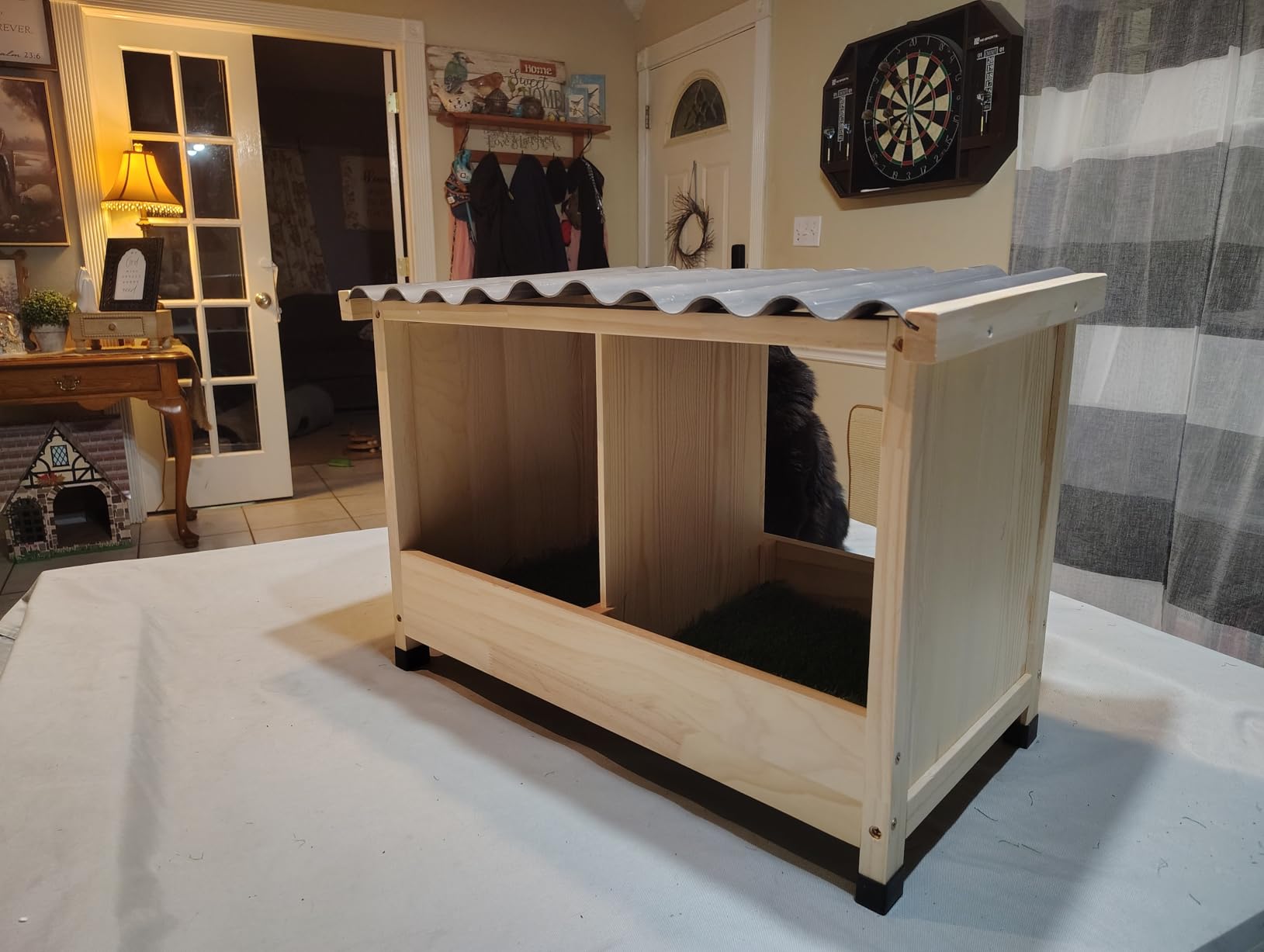
This is the lowest-rated box in the roundup at 4.0, and the one-star share points at durability rather than design. Several owners describe the wood panels as feeling light or thin over time, which is a fair warning if you have heavy hens leaning on the front lip. Check the panels for flex before mounting.
Two laying spots also means a small flock only. Buying three of them to serve ten hens starts to defeat the purpose of a compact box.
Why spacing beats capacity
Hens fight over the best nest, not over the nest itself. Splitting the same total number of laying spots across two corners of the coop reduces crowding, and a hen that gets pushed off a perch is far more likely to lay on the floor where eggs get stepped on.
Who should skip it
Anyone with large breeds or a bigger flock. For an Orpington flock, buy one generous box rather than three light ones.
12. VEVOR 2-Compartment Roll-Away Nest Box – Best for Leghorn Flocks
- Roomy 10.4 inch compartments reduce crowding
- Angled trays make collection quick and cut breakage
- Galvanized steel and plastic will not rust
- Rolled edges make assembly and handling safer
- Detachable trays with drainage holes are easy to clean
- Wall mount only with no floor stand
- Several length variants so check your wall space
- Build consistency draws the more critical reviews
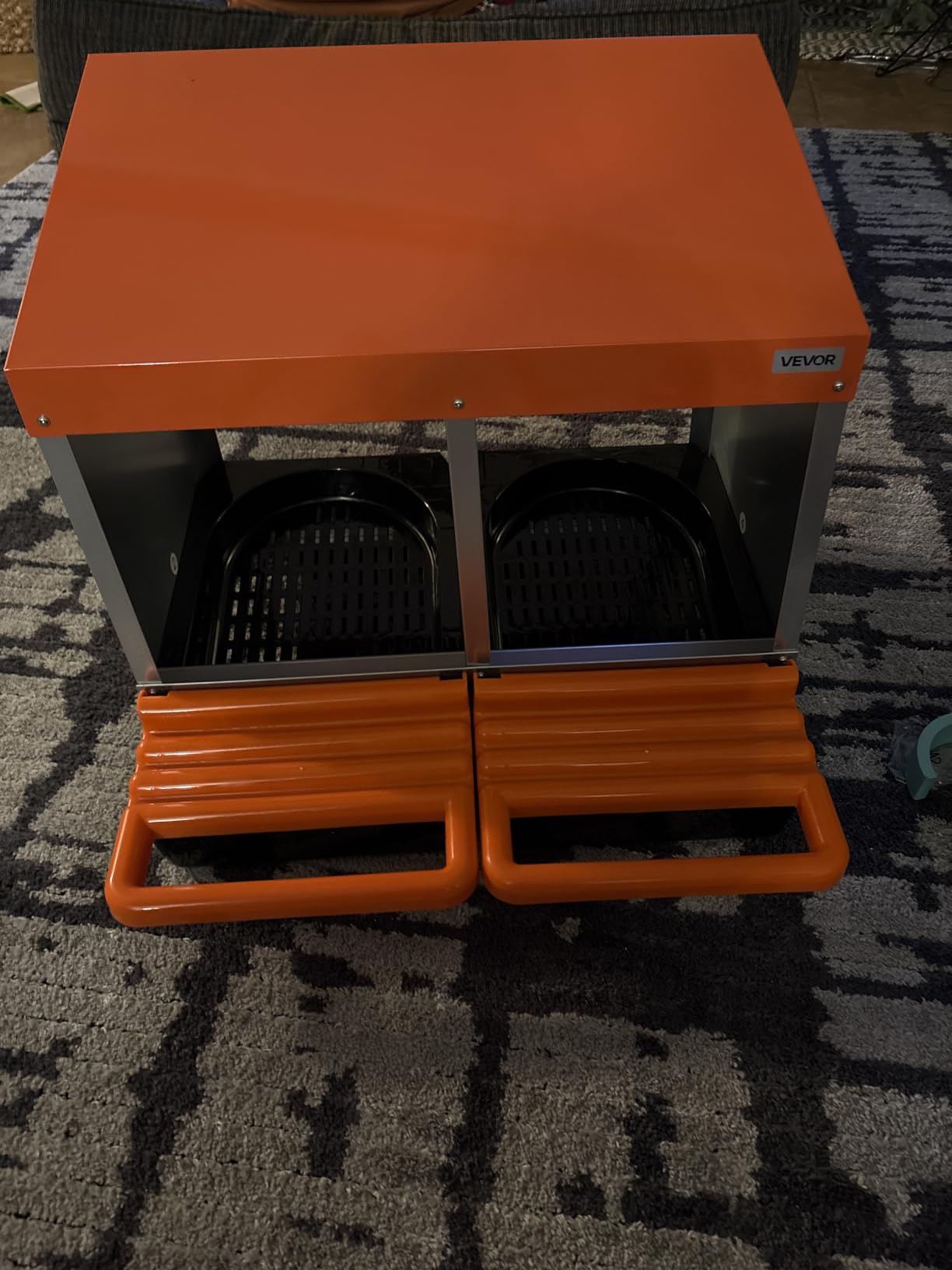
If your flock is Leghorns, Australorps or another medium egg layer, the two 10.4 inch compartments here are the right shape. That is a genuinely generous interior compared with most two-hole boxes on the market, and owners credit it with less crowding and less hen stress at the nest.
The angled trays guide eggs into a front collection area, so the roll-away protection is there without the box being a tall roll-in design. Rolled edges are a small but real quality detail: nothing tears your hand during assembly, and the galvanized steel shell with high-strength plastic trays will not rust in harsh weather.
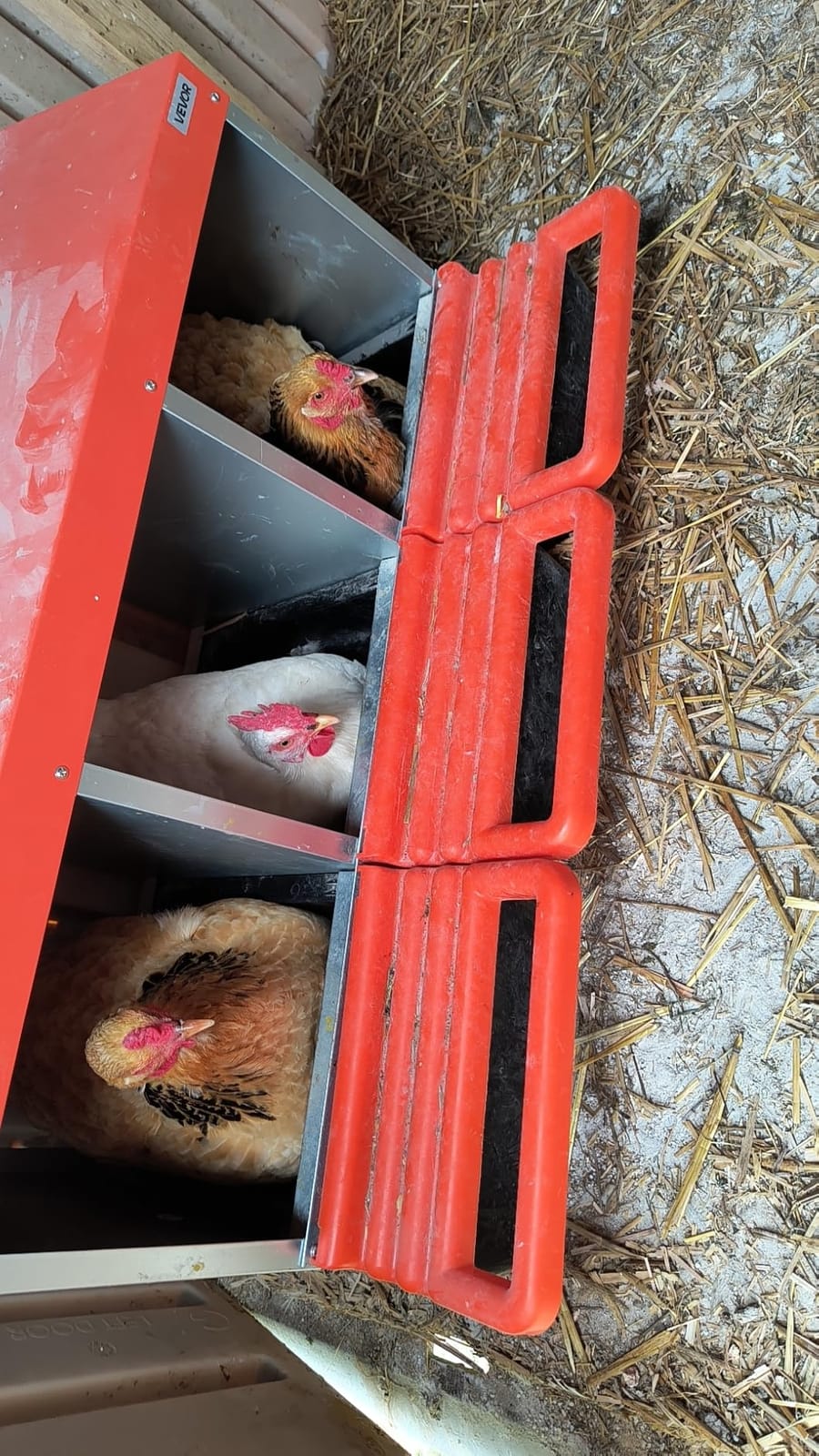
The 4.0 average with a noticeable one-star share is mostly about build consistency rather than the concept. Owners also note this is a wall-mount design only, with no floor stand included, so you need a flat surface at the right height.
One practical trap: there are several length variants, and picking the wrong one leaves you with a box that does not fit the wall space. Measure the wall before you order.
Why it suits medium breeds
Ten-inch compartments are wide enough for a Leghorn to settle comfortably and turn without scraping the walls, which is exactly the size complaint that pushes people toward DIY boxes. Two nests serve a flock of up to eight hens.
Where it falls down
Two laying spots and a wall-mount-only design limit it. A flock of ten or more means buying two, and anyone without a mountable wall should look at a freestanding model instead.
How Many Nesting Boxes Do You Need?
One box per four to five laying hens is the working rule, and it is a ratio rather than a promise. Count the hens that are actually laying, divide by four, then round up — so three boxes is comfortably enough for twelve chickens, and two boxes cover a flock of six.
Do not be alarmed if every hen piles into one box. Crowding into a single favourite nest is normal behaviour, not evidence that your ratio is wrong. What matters is that the other boxes exist as a pressure release, and that each hen has somewhere to go when the favourite one is taken.
For small flocks, spread the boxes out rather than banking them together. Two boxes on opposite walls of a ten-by-ten coop serve a flock of eight far better than one four-hole bank in a corner.
Nesting Box Size by Breed Size
Standard breeds such as Rhode Island Reds, Australorps and Wyandottes want roughly 12 x 12 x 12 inches of interior space, and a slightly deeper 12 x 12 x 14 works well for birds that perch on the box lip.
- Bantams (Silkie, Sebright): 10 x 10 x 10 inches is plenty.
- Standard breeds (Australorp, Red, Wyandotte): 12 x 12 x 12 inches.
- Large breeds (Orpington, Maran, Brahma): 14 x 14 x 14 inches, no exceptions.
Measure the interior, not the outside dimensions on the box listing. A box advertised as 12 inches wide may give you 9 inches of usable bay once the walls and dividers are accounted for, and that gap is exactly what makes a large hen turn away.
Placement: Mount the Boxes Below the Roost
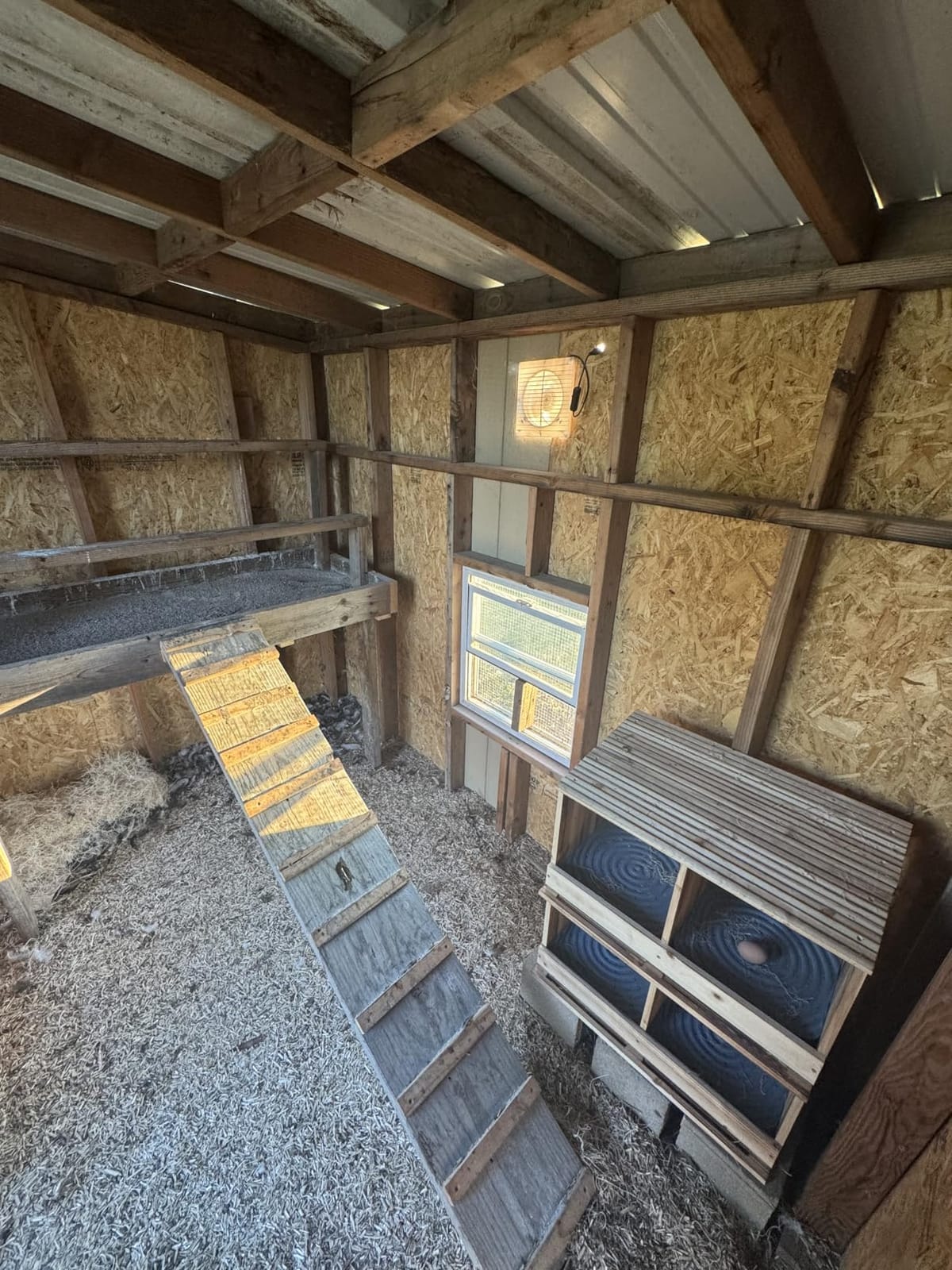
Nesting boxes belong below the roosting bar, and this single rule does more to prevent floor eggs than any box you can buy. The reasoning is behavioural: hens jump up to roost at dusk, so a box placed just below their roosting perch is the first dry, sheltered spot they meet on the way down in the morning.
Place the box level with the roost and you get a different problem, because hens will settle into the box to sleep and you will collect eggs at the end of a long day of droppings. Place it above the roost and the roost is partly blocked, so hens roost elsewhere and crowd.
A few other placement habits worth copying from experienced keepers:
- Add a perch or lip about four inches below the opening so hens have something to push off from.
- Add a curtain strip or flap across the front. Chickens investigate movement, and a moving flap is what keeps them from pecking eggs in the nest.
- Put the box in a corner or along the darkest wall, away from the door and away from direct light.
- Keep it clear of the door swing and any draft. A box behind the pop-hole door is a box in the rain.
Roll-Away vs Open Front: Which Design Wins?
A roll-away nesting box tilts its floor so the egg slides out of the nest into a protected tray you access from outside. An open front box keeps the egg inside with the hen. That single design difference decides which one solves egg eating, and it is the reason the roll-away models dominate the upper half of this list.
The case for roll-away is straightforward. Every second an egg spends in a nest is a second a curious flock can peck it, and floor eggs from a poorly used box are the ones that get cracked and stepped on. A covered collection channel also means you check eggs without leaning into a dark cavity with a headlamp, which is better for you and better for the hen.
The case against is cleaning effort. A roll-away box has more removable parts, and the trays need pulling out, rinsing and refilling on a schedule. For a flock of two hens, that is wasted work. For a flock of twenty laying heavily, it is the difference between collecting clean eggs and chasing cracked ones.
Open-front wood boxes still make sense in one situation: a small flock in a cold climate, where insulation matters more than egg collection. A hen lays, settles and leaves, and with a curtain across the front you have solved most of the exposure problem without adding moving parts.
What to Put Inside the Nesting Box
Fill the box with three to four inches of material, and refresh it weekly. Straw and hay are what hens actually prefer to lay on, pine shavings are cheaper and keep the box drier, and a washable pad underneath catches anything that seeps through.
Keep the material below the lip of the box. A heaped nest looks inviting in a photo and pushes eggs out the front in real life, which is the exact complaint the wooden four-hole model draws from owners.
Add a lining that lifts out. Artificial turf is a popular choice among keepers because it can be shaken out and scraped clean, and a removable liner is the difference between a two-minute clean and a twenty-minute one. Artificial turf liners in a roll-in style box have also been credited with ending one keeper’s egg-eating problem.
To teach a hen to use a new box, place one fake egg or a golf ball inside. A golf ball is the better choice because a hen cannot peck it open once she realises it is not food, which is the failure mode of a ceramic or plastic fake egg. Several boxes in this roundup, including the four-hole roll-away model, ship with a dummy egg for exactly this reason.
Troubleshooting: Floor Eggs, Box Refusal, and Dirty Eggs
Before you blame the box, work through this list in order. In our experience, placement and height cause most box complaints, and the product is usually innocent.
- Hens lay on the floor: box is level with or above the roost. Drop it below the roost and add a perch at the opening.
- Hens ignore a brand new box: normal for the first few days. Put a golf ball in each bay, keep the bedding deep, and give it a week.
- Hens sleep in the boxes: the box is too high or too large. Fold up the perch rods where the model has them, or add a solid roost bar above the box so they have a proper roost.
- Cracked or eaten eggs: eggs are sitting too long. Switch to a roll-away design, or collect at least twice a day.
- Wet, dirty nests: damp bedding and low airflow. Refresh the material weekly and check that the box has ventilation holes.
- Mites in wooden boxes: seams and joints harbour red mite. Swap to plastic or steel for a deep clean, then dust the whole coop.
One more habit that helps more than any product choice: collect eggs twice a day. A flock of yours is a lot easier to motivate when egg sales, gifting and the enchilada casserole batch are keeping the nesting boxes busy.
Frequently Asked Questions
What are the best nest laying boxes for chickens?
The best chicken nesting boxes for laying hens are ones with a 12 x 12 x 12 inch interior for standard breeds, a sloped or roll-away floor to keep eggs out of reach, removable tray bottoms for cleaning, and mounting holes so you can hang them below the roost. A galvanized steel six-compartment box covers the largest flock in one footprint, while a roll-away box with a covered egg tray is the strongest choice when hens peck eggs in the nest.
What size nesting boxes are best for laying hens?
Aim for 12 x 12 x 12 inches for standard breeds, 14 x 14 x 14 inches for large breeds such as Orpingtons, Wyandottes and Marans, and around 10 x 10 x 10 inches for bantams. Measure the interior bay rather than the box on the outside, because dividers and walls eat into the usable space.
How many nesting boxes do you need for 6 chickens?
Two nesting boxes is enough for six laying hens, based on one box per four to five birds. Three boxes is comfortably enough for twelve chickens. Even if every hen uses a single favourite box, having the extra nests prevents crowding and gives quieter hens somewhere to lay.
Is 3 nesting boxes enough for 12 chickens?
Yes. Three boxes for twelve chickens meets the standard one box per four hens ratio, and a twelve-bird flock rarely needs more than that. If the hens are large breeds, choose boxes with 14 inch interiors rather than adding more small ones.
Are metal nesting boxes safe for chickens?
Yes, galvanized steel is safe and is rated by several manufacturers for eight or more years of outdoor use. The only real concern is comfort, not safety: bare metal conducts heat away from a sitting hen, so in a cold climate add deep bedding or use a wooden box instead. Galvanized steel will not rust the way untreated sheet metal does.
What is the best material to use in chicken nesting boxes?
For the box itself, galvanized steel lasts longest and wipes clean fastest, while solid wood insulates best in cold weather. Inside the box, straw or hay is what hens prefer to lay on, pine shavings stay drier and cheaper, and a washable pad or artificial turf liner underneath makes weekly changes quick.
How high off the ground should chicken nesting boxes be?
Mount nesting boxes below the roosting bar rather than at a fixed height, so the box is the first sheltered spot the hens reach on the way down in the morning. A lip or perch about four inches below the opening helps them land. Boxes at roost level end up full of droppings because hens sleep in them.
Why put fake eggs in nesting box?
A fake egg or a golf ball tells a hen the box is the laying spot, which speeds up how quickly she adopts a new nest. A golf ball works best because a hen cannot peck it open once she realises it is not food, unlike a thin ceramic or plastic fake egg. Leave it in place for a week, then remove it.
Why are my hens laying eggs on the floor not in the nest box?
Placement is the usual cause, not the box. Move the nesting box below the roost, add a perch or four inch lip at the opening, and put it in the darkest, driest corner away from the door. If the box is too small for your hens, a large breed will simply refuse it, so check the interior bay size against your birds.
Final Verdict on the Best Chicken Nesting Boxes for Laying Hens
The best chicken nesting boxes for laying hens share three things: an interior sized to your largest bird, a way to clean the whole thing quickly, and mounting holes that let you hang them below the roost. Buy on those three criteria and you will not go wrong. The Brower two-tier six-hole steel box is our overall pick because it covers a large flock in one footprint, keeps up with daily use, and has the folding perch rods that let you retrain a bird.
Pick the roll-away models when hens peck eggs in the nest, pick solid wood when cold is the problem, pick the extra large plastic bays when you keep Orpingtons, and pick the simple plastic box when you are starting with four hens and a small budget. Measure the wall, mount below the roost, put a golf ball in each bay, and give it a week. The rest is collecting eggs — and if you end up with more than you can eat, our grilled chicken marinade recipes are the fastest way through the pile.