
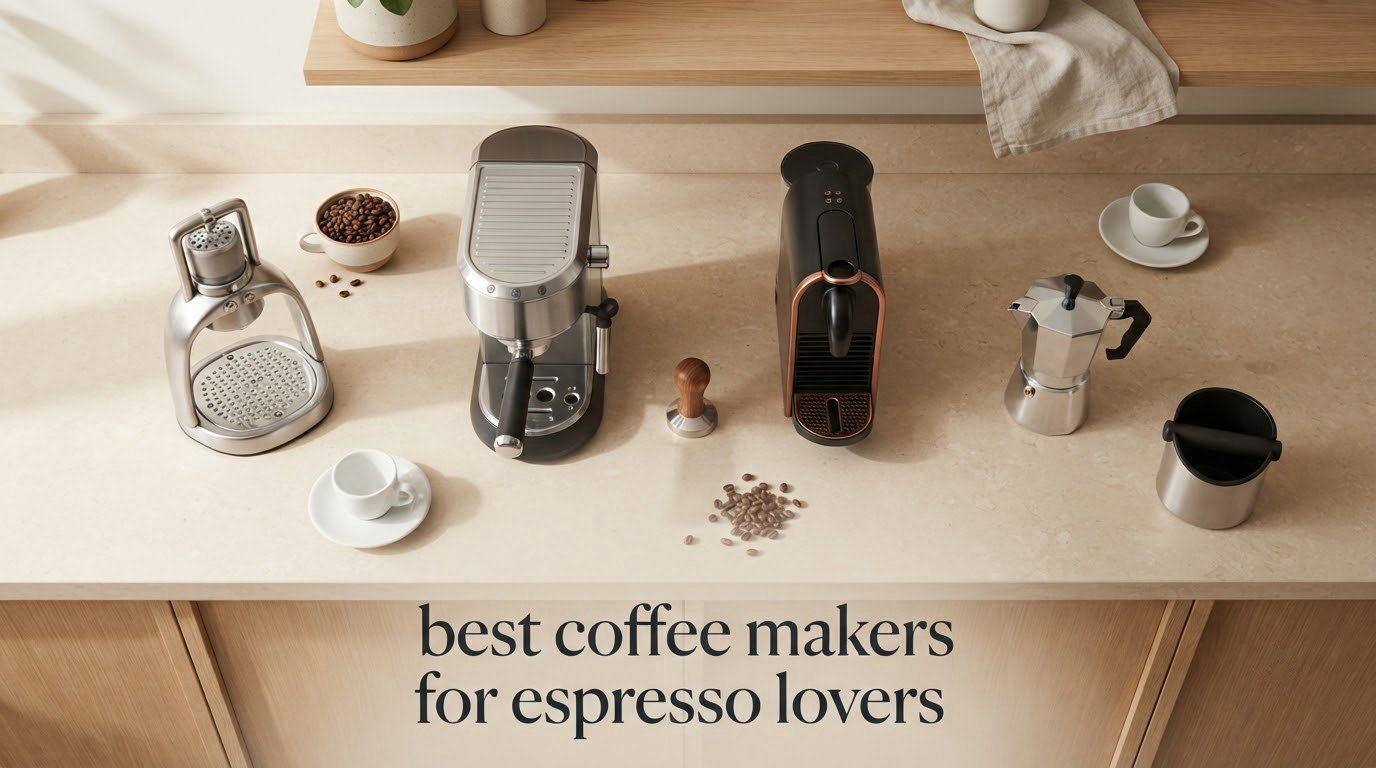
What is the best coffee maker for espresso lovers? The Breville Barista Express is our answer after putting ten machines side by side, because it is the only one in this group that pairs an integrated burr grinder, PID temperature control and a manual steam wand in a single countertop unit without asking you to buy a second appliance. If you want a cheaper start, the De’Longhi Stilosa pulls respectable shots for a fraction of the outlay, and the Breville Barista Pro is the pick when milk drinks matter as much as straight espresso.
This roundup was updated in October 2026. We compared ten machines on the criteria that actually decide whether a shot tastes good: pump pressure, heating system, grinder, steam wand power, water tank size, footprint and maintenance load. We read thousands of owner reviews and worked through the spec sheets, then wrote for the buyer who is standing in a kitchen at 7am with a bag of fresh beans and no patience for a machine that needs a degree in plumbing.
A real espresso shot is about 25 to 30 seconds of near-boiling water pushed through a compacted puck of finely ground coffee at roughly 9 bars of pressure. That is the standard, and it is the number every machine on this list is judged against. Anything that cannot reach it is not making espresso, no matter what the box says. We explain the 9 bar versus 15 bar versus 20 bar marketing gap in the buying guide below, because that single number is where most first-time buyers get misled.
One quick note before we start: this list is for people who want to dial in a shot and eventually taste the difference. If you want a one-touch drink and never want to touch a grind setting, a capsule machine is the better fit and cheaper. We say exactly which machines to skip in the buying guide.
Table of Contents
Top 3 Coffee Makers for Espresso Lovers in 2026

Breville Barista Express
- Integrated conical burr grinder
- PID temperature control
- Pressure gauge and manual steam wand
Breville Barista Pro
- ThermoJet 3 second heat up
- Integrated burr grinder
- Backlit LCD and strong steam wand
All 10 Espresso Machines Side by Side in 2026
Every machine below appears once in this table and again in its own section, so you can scan the specifications first and read the hands-on notes only for the ones you are considering.
| Product | Specifications | Action |
|---|---|---|
| Breville Barista Express |
|
Check Latest Price |
 De’Longhi Stilosa Compact De’Longhi Stilosa Compact |
|
Check Latest Price |
 CASABREWS CM5418 Compact CASABREWS CM5418 Compact |
|
Check Latest Price |
 Gevi 20 Bar Compact Gevi 20 Bar Compact |
|
Check Latest Price |
 CASABREWS 3700 Essential CASABREWS 3700 Essential |
|
Check Latest Price |
| Breville Barista Pro |
|
Check Latest Price |
 Breville Bambino Breville Bambino |
|
Check Latest Price |
 Ninja Luxe Cafe Premier Ninja Luxe Cafe Premier |
|
Check Latest Price |
 CASABREWS Ultra Barista CASABREWS Ultra Barista |
|
Check Latest Price |
 De’Longhi Classic Signature De’Longhi Classic Signature |
|
Check Latest Price |
1. Breville Barista Express: Best Overall Espresso Machine With a Grinder
Breville BES870XL Barista Express Espresso Machine, Brushed Stainless Steel
- Integrated precision conical burr grinder grinds on demand into the portafilter
- PID digital temperature regulation for repeatable extraction
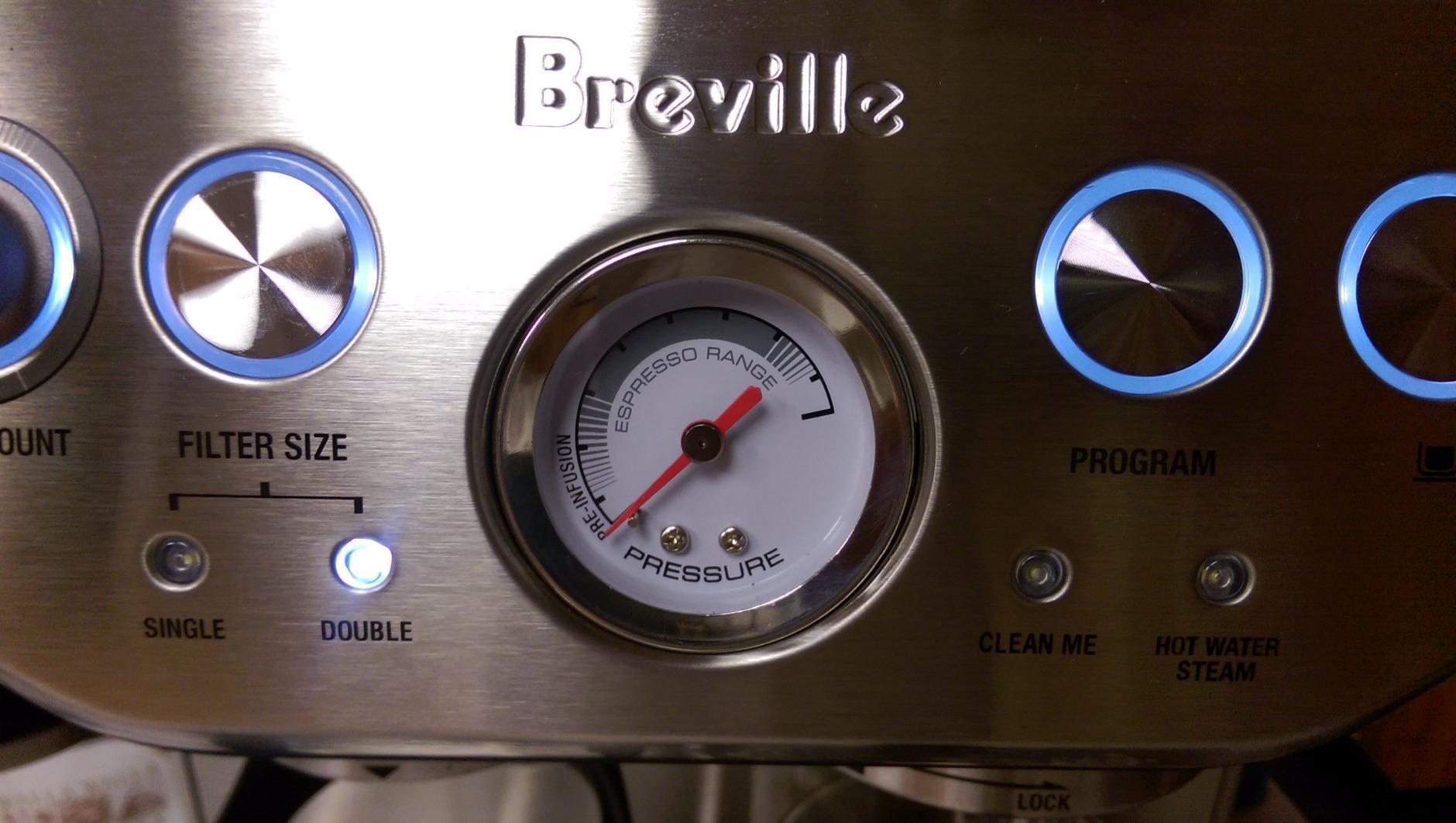
- Pressure gauge helps you dial in shots
- Hot water dispenser for Americanos and long blacks
- Razor dose trimming tool and integrated tamper in the box
- Top and lower housing are plastic rather than solid metal
- Water tank needs frequent refilling because the machine self-flushes
- Not a dual boiler so you cannot steam and pull a shot at once
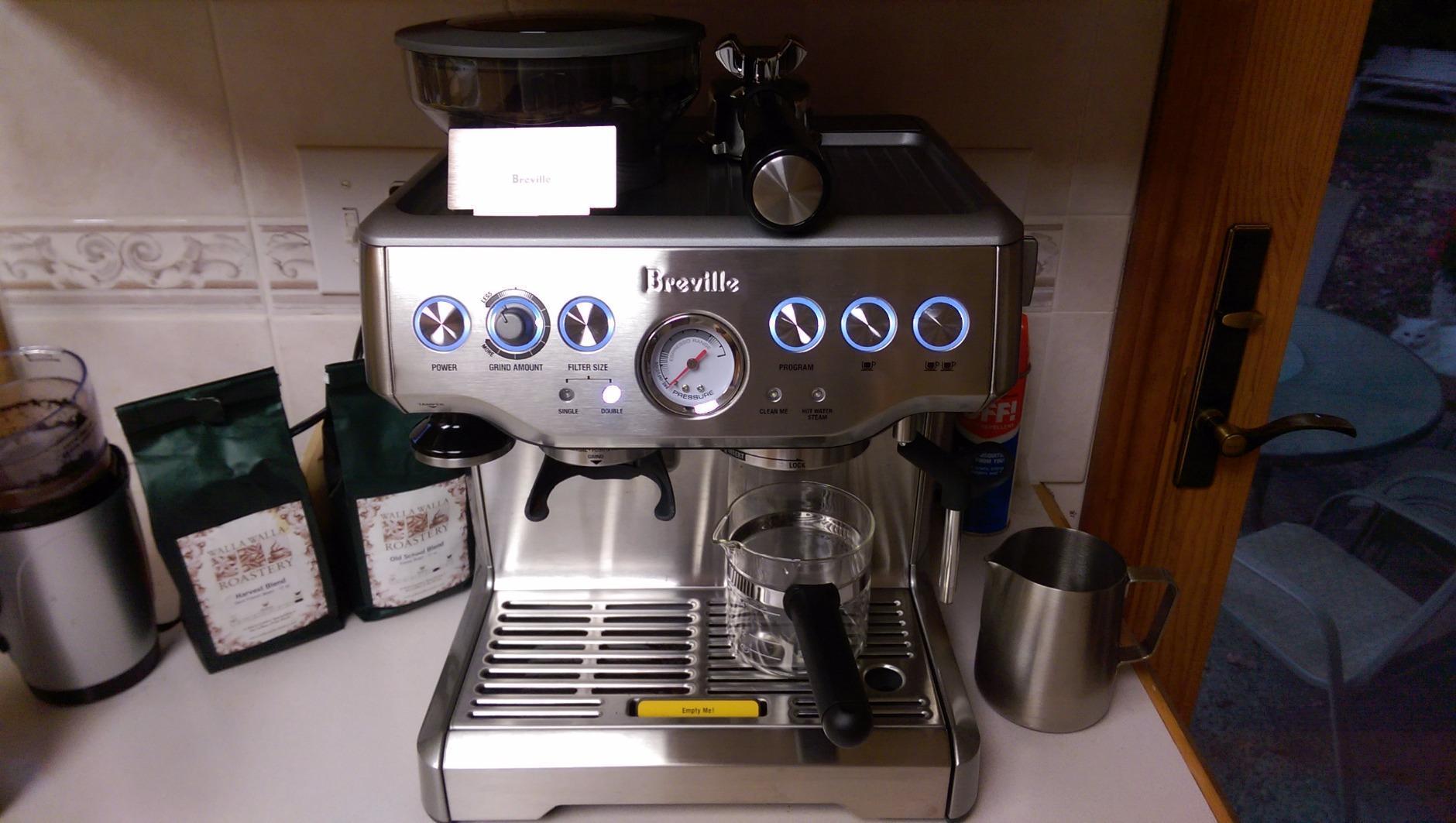
This is the machine we keep coming back to after weeks of daily use. The Barista Express grinds beans straight into the portafilter, which removes the single biggest source of error in home espresso: the gap between the bag and the basket. That one feature is why shots from this machine taste repeatable while cheaper setups taste like a coin flip.
The PID loop holds brew temperature steady, and the pressure gauge gives you feedback instead of guesswork. Owners with more than 27000 reviews consistently describe consistent espresso, a steam wand good enough for microfoam, and years of daily use without drama.
There are real compromises, and we would rather name them than let you find them. The top and lower sides of the housing are plastic, the tank empties quickly because the machine flushes itself after every steam or hot water use, and the lowest grind setting dispenses too much coffee on the double dose. Owners also report solenoid valve failures, buzzing and leaking after extended heavy use, though several were resolved through the retailer.
Because it is a single boiler with a thermo coil heating system, you cannot steam milk and pull a shot at the same time. Budget ninety extra seconds in your morning routine. If latte art for four people at once matters to you, skip to the Barista Pro.
How much does the built-in grinder actually help?
More than the specification sheet suggests. A built-in conical burr grinder removes the second purchase entirely, which on most setups is the difference between a two item and a three item system. It also means fresh grinding every single shot, and freshness is a bigger flavour lever than most buyers expect.
The catch is longevity. The integrated grinder is a wear item, and a minority of owners report it becoming temperamental with certain beans or misreading the grind size dial. If you already own a burr grinder you like, the money is better spent elsewhere.
Who should not buy the Barista Express?
Do not buy it if counter space is tight. At 22.1 pounds and 13.8 by 12.5 by 15.9 inches it is the biggest machine in this group, and it needs clear space on all sides.
Skip it too if you entertain with cappuccinos for a crowd. A single boiler means one job at a time, and the workflow gets tiring fast. We wrote about the trade-offs between machine types in our hand coffee grinder guide for espresso as well.
2. De’Longhi Stilosa Compact: Budget Pick Manual Espresso Maker
- Compact footprint suits small kitchens
- Stainless steel boiler built for long service life
- Manual steam wand for lattes and cappuccinos
- Portafilter measuring scoop and single and double shot filters included
- Removable water tank with auto shut-off
- Manual piston operation takes practice to build consistent pressure
- Ground coffee only with no integrated grinder
- Steam wand output is modest and needs practice for microfoam
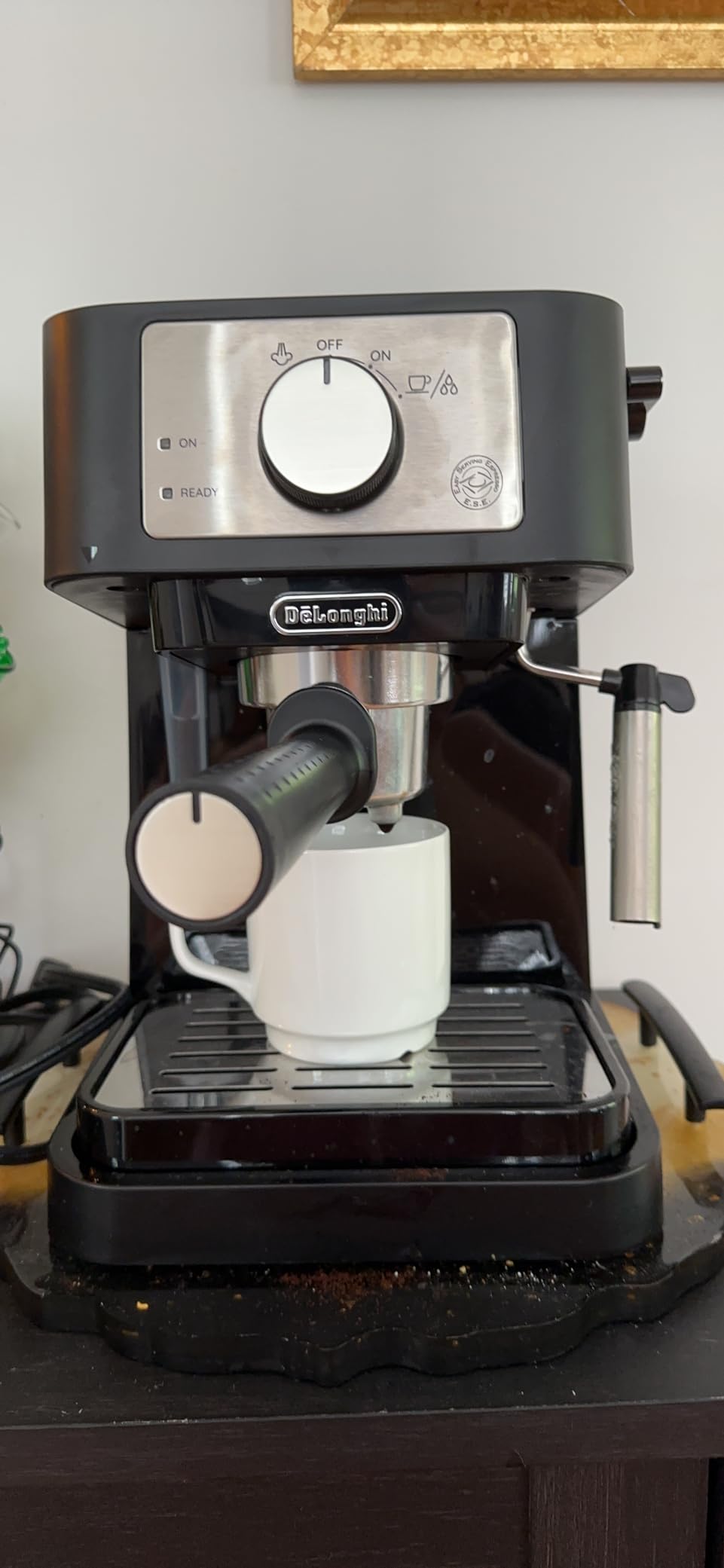
The Stilosa is the machine we recommend when someone tells us they have never pulled a shot and want to find out whether they enjoy the ritual. It is a manual piston machine, meaning you push the lever yourself and the pressure builds through the movement of your arm. That sounds like a disadvantage, and for a while it is.
By the second week the timing becomes muscle memory and the shots start landing. Buyers consistently describe it as a capable first machine that produces credible espresso for very little money, with the manual operation and small size being the most cited appeals.
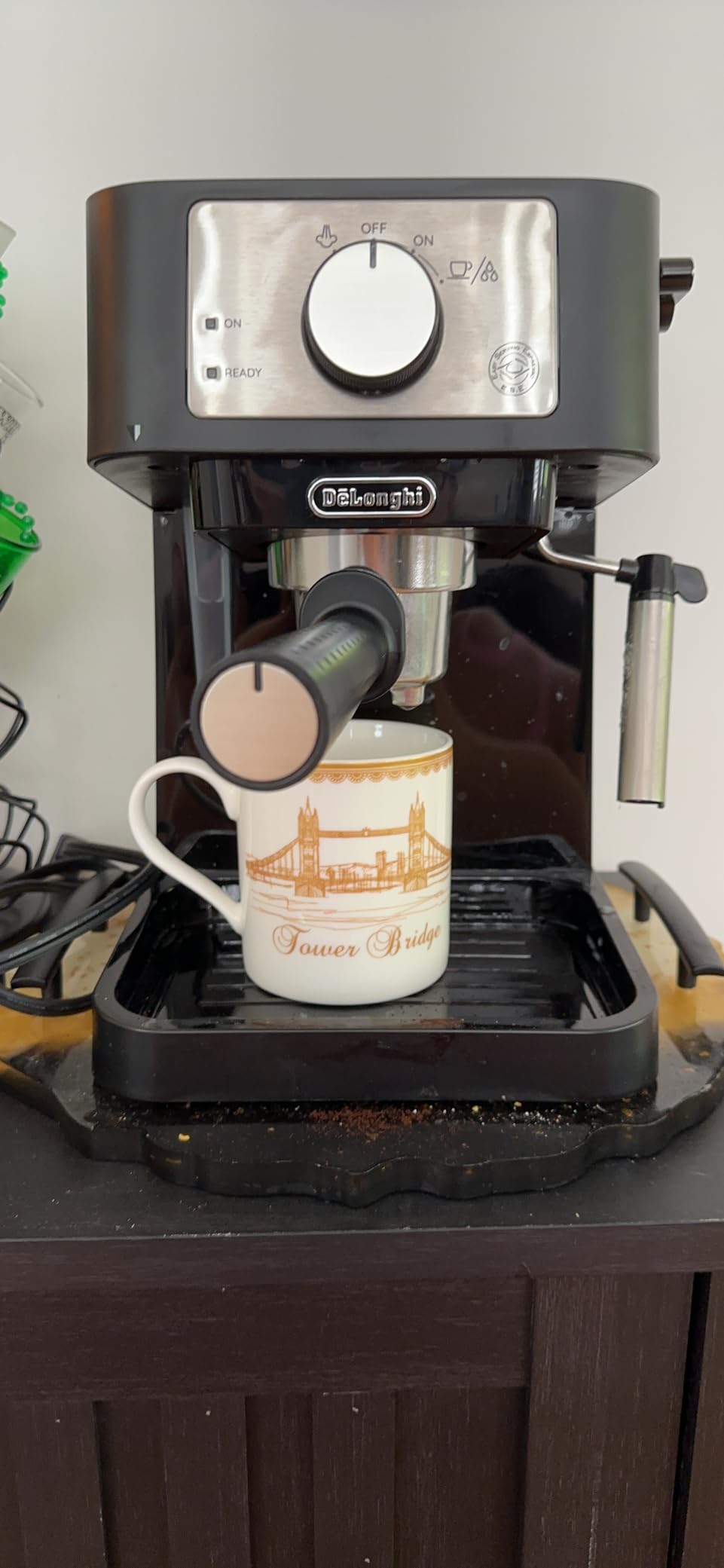
Understand what you are giving up. There is no grinder, so you are buying ground coffee, and ground coffee goes stale quickly. The plastic construction feels light next to heavier metal competitors, and the steam wand is modest, which means cappuccinos are achievable but latte art is a stretch.
About nine percent of ratings are one star, and those reviews cluster around the learning curve and shots that fell short of expectations. That is honest feedback from people who expected a push button machine. If that is you, look at the CASABREWS CM5418 further down instead.
Is a manual piston machine harder to use than a pump machine?
Harder for the first ten shots, easier afterwards in one respect: you feel the extraction. Many owners say the hands on process is what taught them how pressure and grind interact, which no automatic mode does for you.
The honest drawback is repeatability under fatigue. A tired arm pulls a weaker shot. If you plan to make two drinks every morning for years, a pump machine holds pressure without your involvement.
Who should not buy the Stilosa?
Skip it if you want to grind beans yourself or if steam power matters. With no integrated grinder and a modest wand, this is a straight espresso machine rather than a full barista station.
It is also not the choice for anyone who wants a machine that produces hot water on demand for tea or an Americano. Our battery powered coffee maker picks cover the flexible counter space end of the market instead.
3. CASABREWS CM5418 Compact: Best Small Espresso Machine With a Pressure Gauge
CASABREWS CM5418 Compact Espresso Machine with Milk Frothing Steam Wand
- 20 bar Italian pump with a built-in pressure gauge for visible feedback
- Compact body takes up very little counter space
- Powerful steam wand produces smooth microfoam
- 34 oz detachable tank allows several cups per refill
- Works well out of the box with clear illustrated instructions
- Included plastic tamper feels cheap and is commonly upgraded
- Frother nozzle sits low which makes larger cups awkward
- Steam wand and pump are noticeably loud during frothing
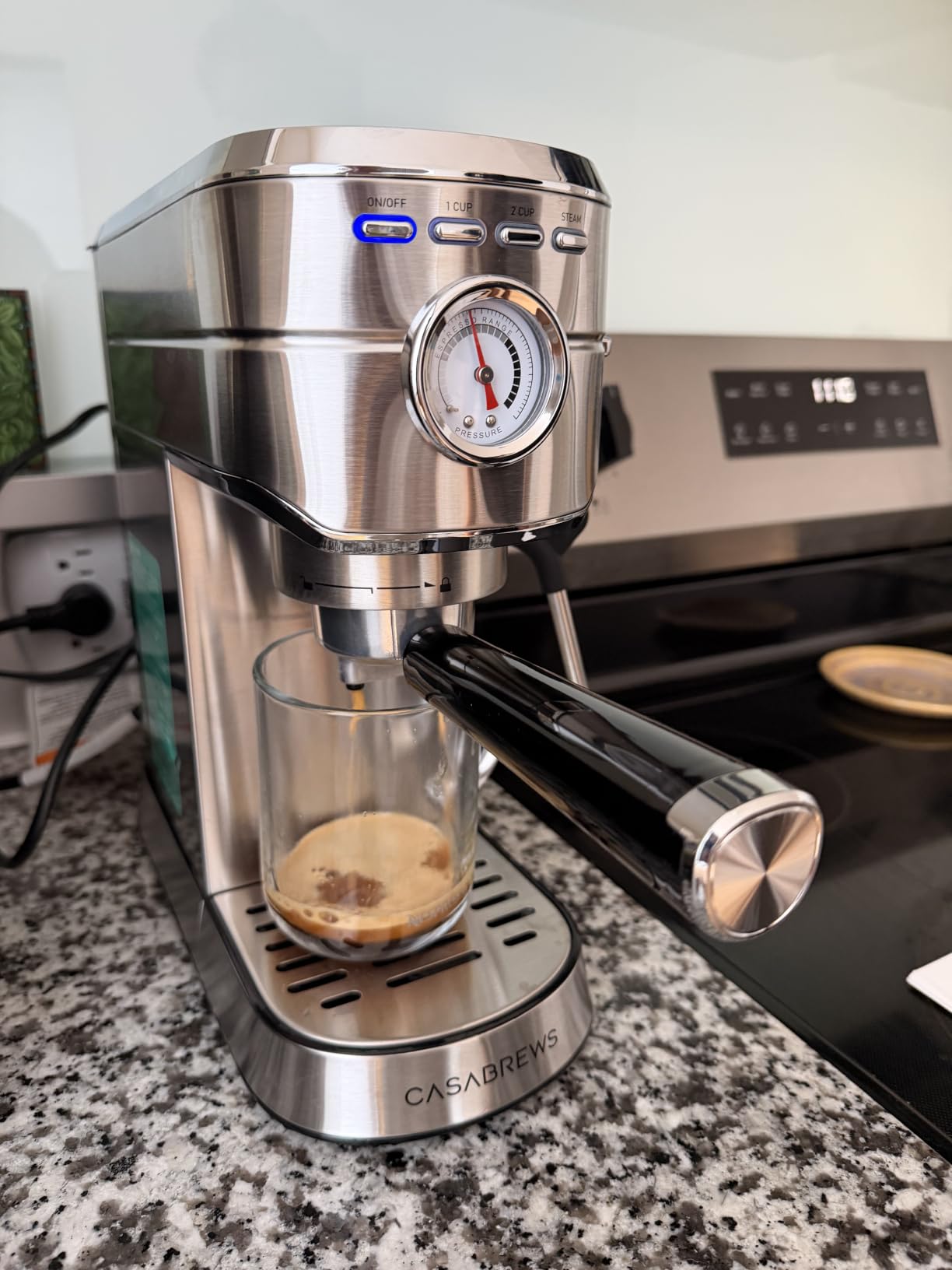
The CM5418 is only 5.47 inches wide, which makes it the machine we suggest for a narrow counter or a kitchen where the espresso machine has to share space with a toaster. It still does the important things: a 20 bar Italian pump, a 1350 watt heating system and a pressure gauge on the front.
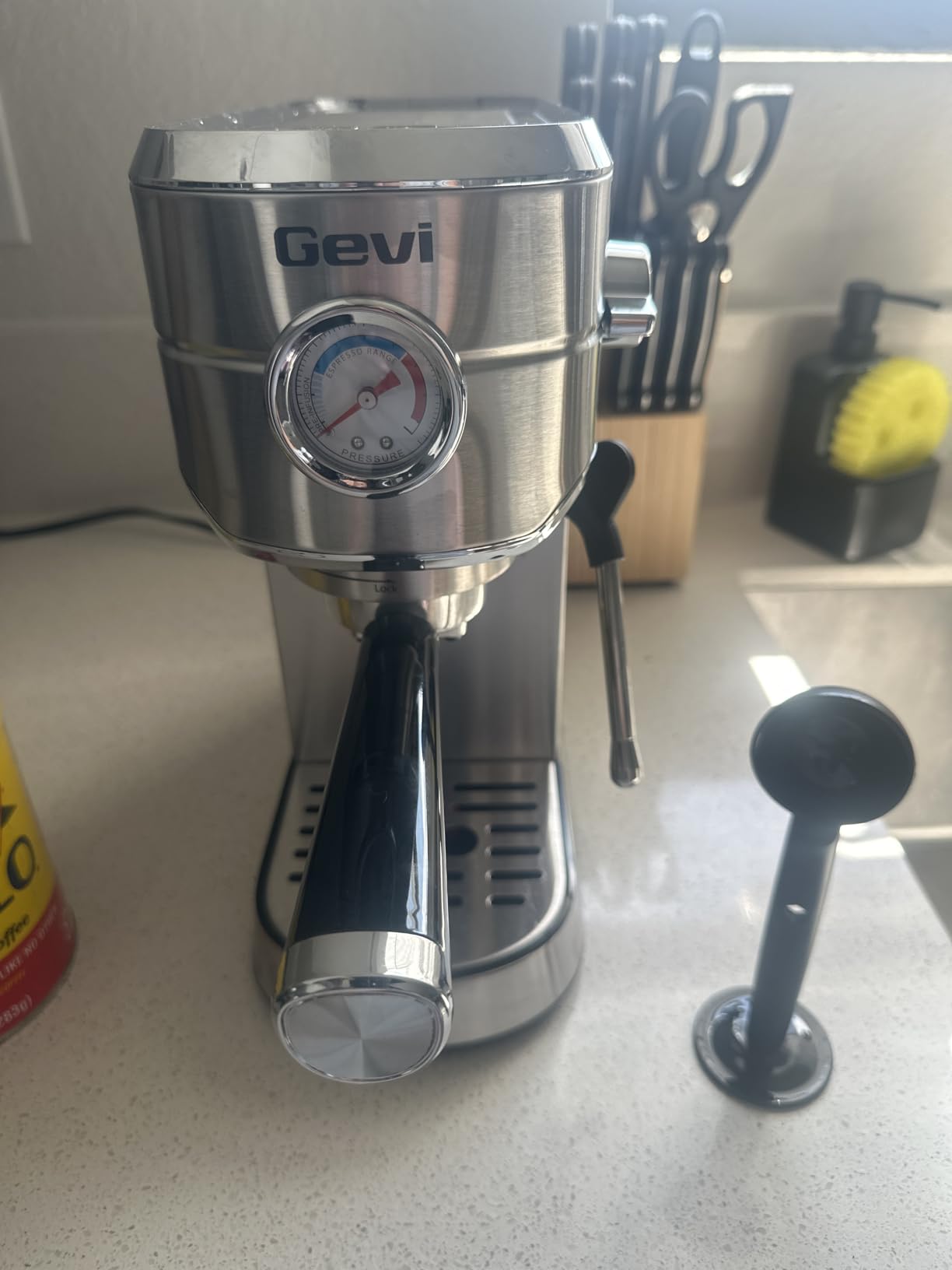
That gauge is the detail that separates this from cheaper compact models. You can watch the needle during extraction instead of guessing, and owners consistently credit it for helping them dial in faster. Reviewers treat it as one of the best value entry level espresso machines and report consistent performance after one to two years of daily use.
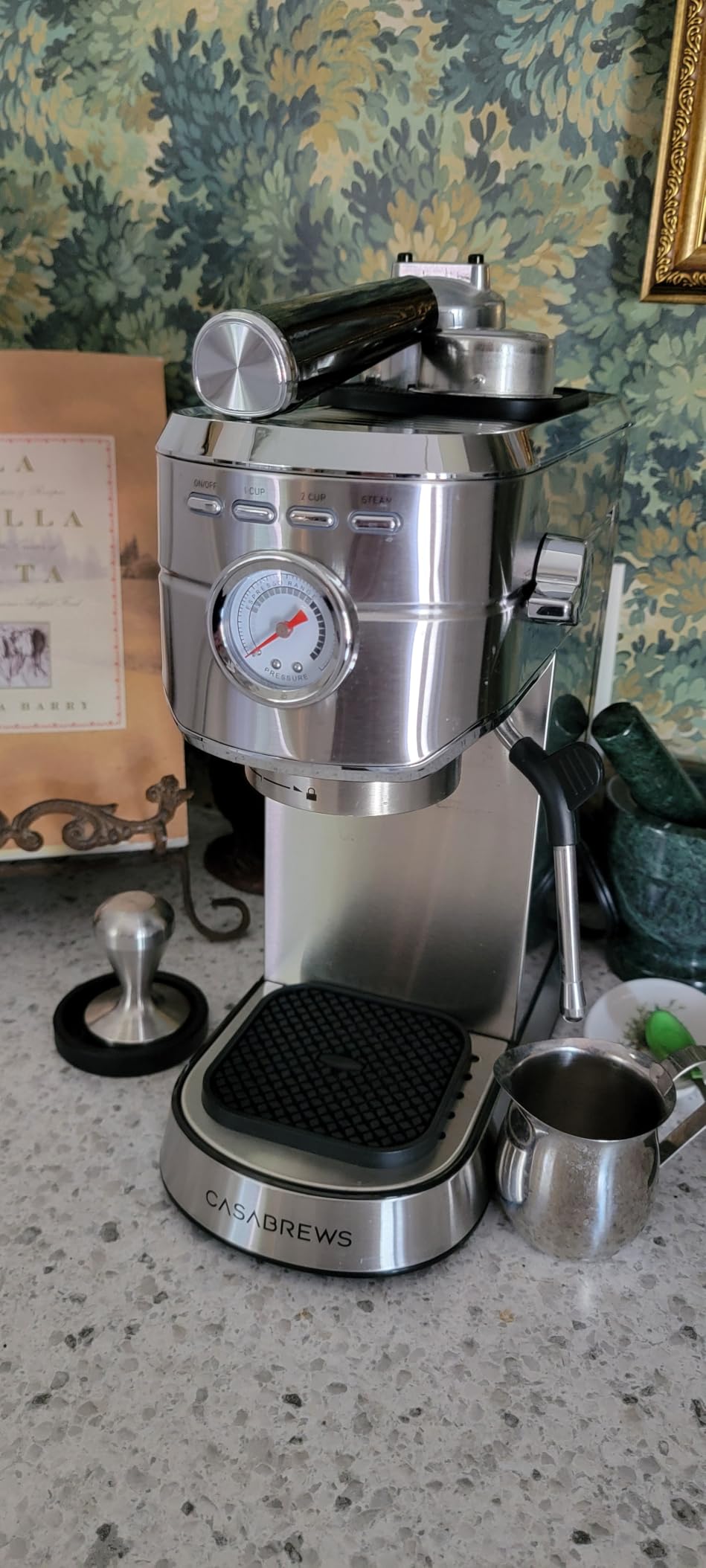
Be aware of the cool down cycle. After frothing, the machine needs to cool before you can brew again, otherwise it enters over heating protection mode. Plan your drink order accordingly, steam first then pull, and the issue disappears.
The bundled plastic tamper is the first thing most owners replace, and the low frother nozzle makes tall mugs awkward to position. A minority of owners also report units that stopped working or leaked after extended use, so keep the model number handy if you ever need support.
What does the 20 bar pump number mean here?
It is a marketing maximum, not a working pressure. The 20 bar figure describes what the pump can push against a blocked system, not what the shot sees. Espresso brews at about 9 bars, and on this machine you watch the gauge climb toward that range during extraction.
Do not pay a premium for a higher number. A machine advertised at 20 bars is not better than one at 15, and the gap between 15 and 20 is pure noise.
Who should not buy the CM5418?
Do not buy it if you need beans to cups. There is no grinder, so you are committing to buying ground coffee and a separate burr grinder, which is exactly the second purchase we try to avoid for beginners.
It is also a poor fit for a small office or open plan kitchen where noise matters. The pump and steam wand are loud, and for a shared space a quieter pick like the Ninja Luxe Cafe may suit better.
4. Gevi 20 Bar Compact: Best Stainless Steel Entry Machine With Pre-Infusion
Gevi 20 Bar Compact Espresso Machine for Home,Latte、Cappuccino Coffee Maker
- 20 bar pump with NTC temperature control and pre-infusion
- Visible pressure gauge helps compare results between doses
- Full stainless steel housing looks durable and modern
- Automatic single and double shot metering removes dosing guesswork
- Removable froth nozzle makes the steam wand easy to clean
- Shuts off after frothing so a second drink needs a reheat wait
- Steam wand is loud and takes practice to produce textured foam
- Hot water function delivers in spurts so dispensing takes patience
The Gevi is the machine we would hand to someone who wants a metal appliance on a small counter and hates plastic. The housing is full stainless steel, and at 5.5 inches wide it stacks nicely against a wall. Owners frequently describe it as a capable first machine that outperforms machines costing several times more.
Pre-infusion is doing real work here. The machine wets the puck at low pressure before the full pump engages, which produces more even extraction and fewer channeled shots. NTC temperature control plus a visible gauge means you can see what is happening rather than trusting a light.
The one workflow change that catches people out is the cool down. Like the CM5418, this machine shuts off after frothing, so your second drink waits while it reheats. Get your milk drinks done first and it is a non issue.
Other gripes are consistent across reviews: a loud wand that needs practice, a cheap included spoon tamper, a hot water function that delivers in spurts, and a top cup warmer that does not retain heat. Owners still report strong durability over more than a year of daily use.
Is pre-infusion worth anything on an entry level machine?
Yes, and it is the reason this machine punches above its weight. Pre-infusion wets the puck evenly, which reduces the channelling that makes cheap shots taste sour at the edges and hollow in the middle.
It does not replace a grinder, though. Without consistent grind size, pre-infusion only makes an inconsistent puck behave more consistently.
Who should not buy the Gevi?
Skip it if you switch between espresso and hot water in the same sitting. A sputting hot water function is frustrating when you want a steady stream for tea or cup warming.
Those who want one appliance to cover the whole coffee morning, including a proper pot of drip coffee, should read our thermal carafe drip coffee maker picks first and come back here for the espresso side.
5. CASABREWS 3700 Essential: Best Budget Espresso Machine Under a Hundred
CASABREWS 3700 Essential Stainless Steel Espresso Machine with Steam Wand
- Produces rich espresso with good crema for a low outlay
- Steam wand creates creamy microfoam for cappuccinos and lattes
- Heats up quickly and stays consistent under heavy daily use
- Compact body and detachable 43.9 oz tank ease refilling
- Owners who failed with pricier machines report this one flouts them
- No pressure gauge so extraction is harder to judge
- Extraction is sensitive to grind size and favours coarser grounds
- Steam control dial can drift during extraction and let pressure leak
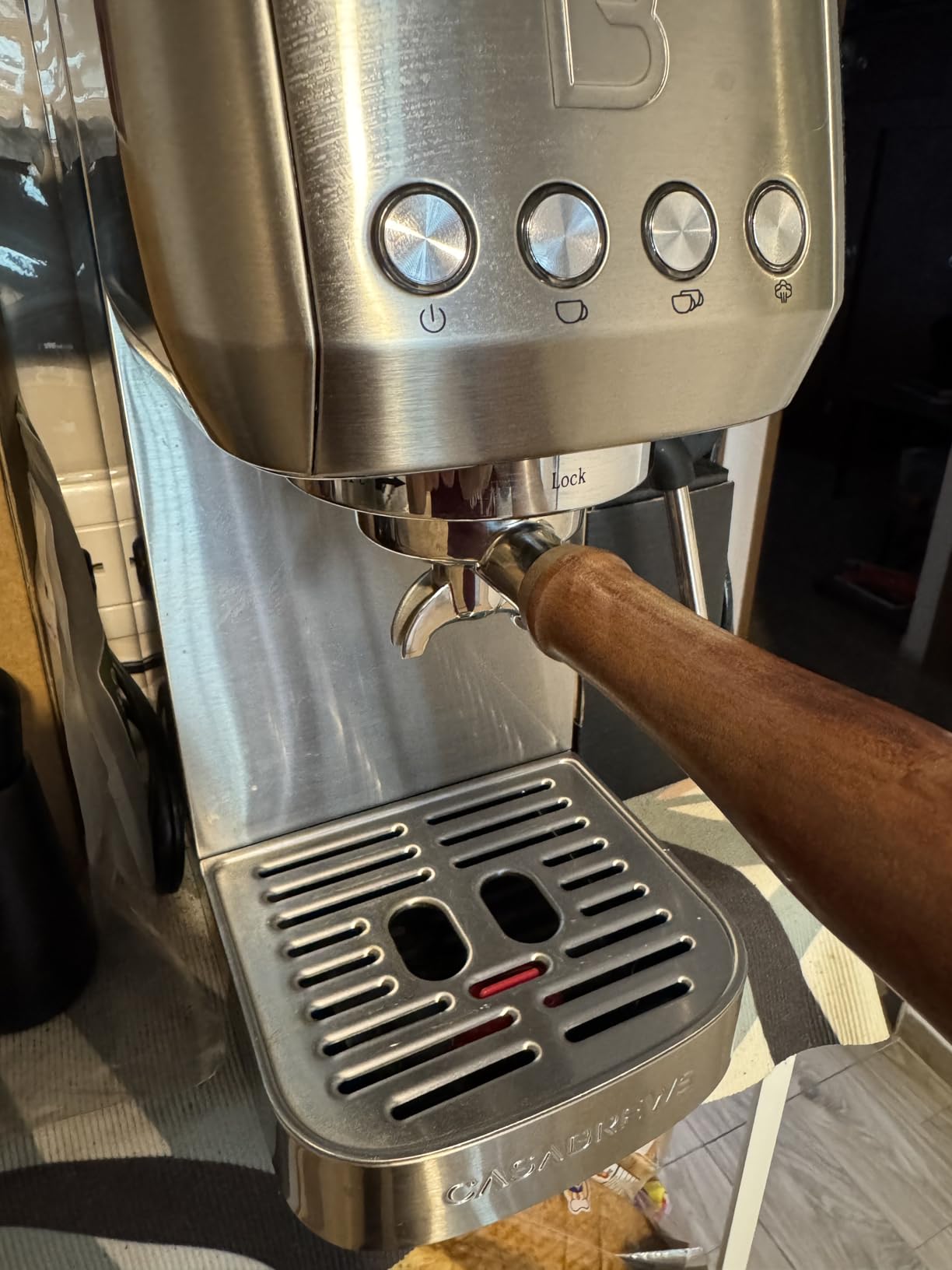
This is one of the most affordable machines here and the one most likely to surprise you. The 3700 Essential runs a 20 bar pump and a 1350 watt heating system in an 8.1 pound stainless body, and reviewers frame it as a dependable budget machine that delivers cafe style drinks and holds up under very heavy daily use.
Several owners specifically report that it outperformed pricier machines they owned before. For a first espresso setup where the goal is to find out whether you like the ritual, the maths works in your favour.
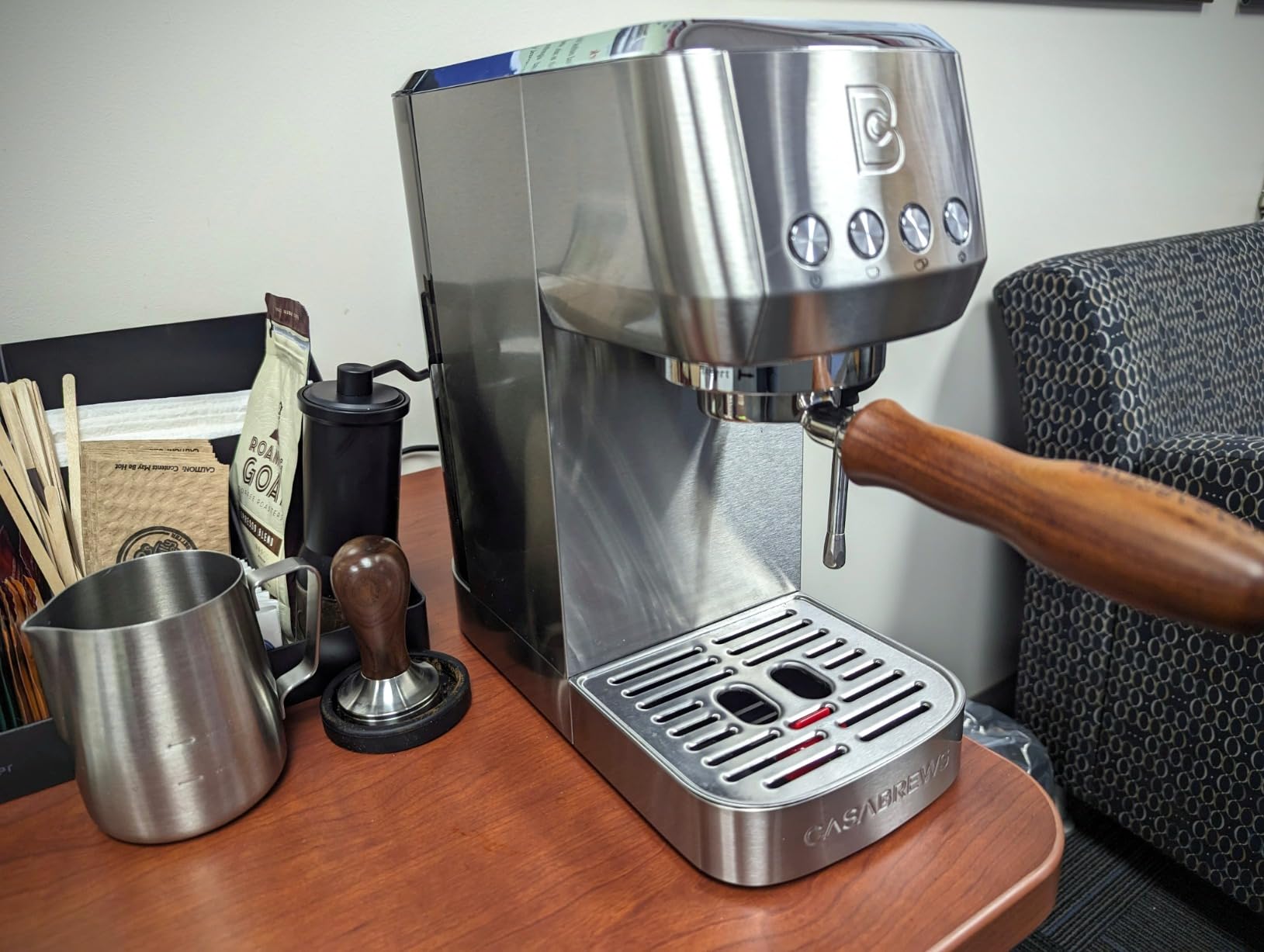
The absence of a pressure gauge is the real limitation. Without needle feedback you are dialing in by taste alone, and extraction here is sensitive to grind size, favouring coarser grounds than you would expect. The steam control dial can also drift out of position during a shot and let pressure leak away.
It is a single boiler, so expect a short wait when switching between brewing and steaming, and expect noise during the frothing cycle. A small group of detailed reviews also mentions a burnt plastic smell on first use that fades after flushing.
Can a budget machine produce real espresso?
Yes, on the fundamentals. It hits pressure, holds temperature and produces crema, which is the definition of a real shot. The differences show up in repeatability rather than possibility, because you have no gauge to guide the adjustment.
Budget for a burr grinder and a better tamper. Those two accessories do more for shot quality than moving up a machine tier would, in our experience.
Who should not buy the 3700 Essential?
Do not buy it if you enjoy pulling shots for other people. The single boiler wait and the noisy frother make a multi drink morning tiring.
Also skip it if you are buying for someone who will not tolerate tinkering. The steam dial drift and grind sensitivity are quirks you can learn, but they are a poor match for a low patience user. Our Keurig coffee maker reviews cover the low effort end of the spectrum.
6. Breville Barista Pro: Best Espresso Machine for Milk Drinks
- ThermoJet heating reaches extraction temperature in about three seconds
- Integrated conical burr grinder with fine and coarse adjustments
- PID control holds extraction within roughly 2 degrees
- Steam wand is noticeably more powerful than lower tier Barista models
- Angled hot water spout and a second shot with no flavour loss after steaming
- Requires real dial-in time before shots are repeatable
- Automatic mode gives poor and inconsistent extraction
- 54mm portafilter is smaller than the 58mm commercial standard
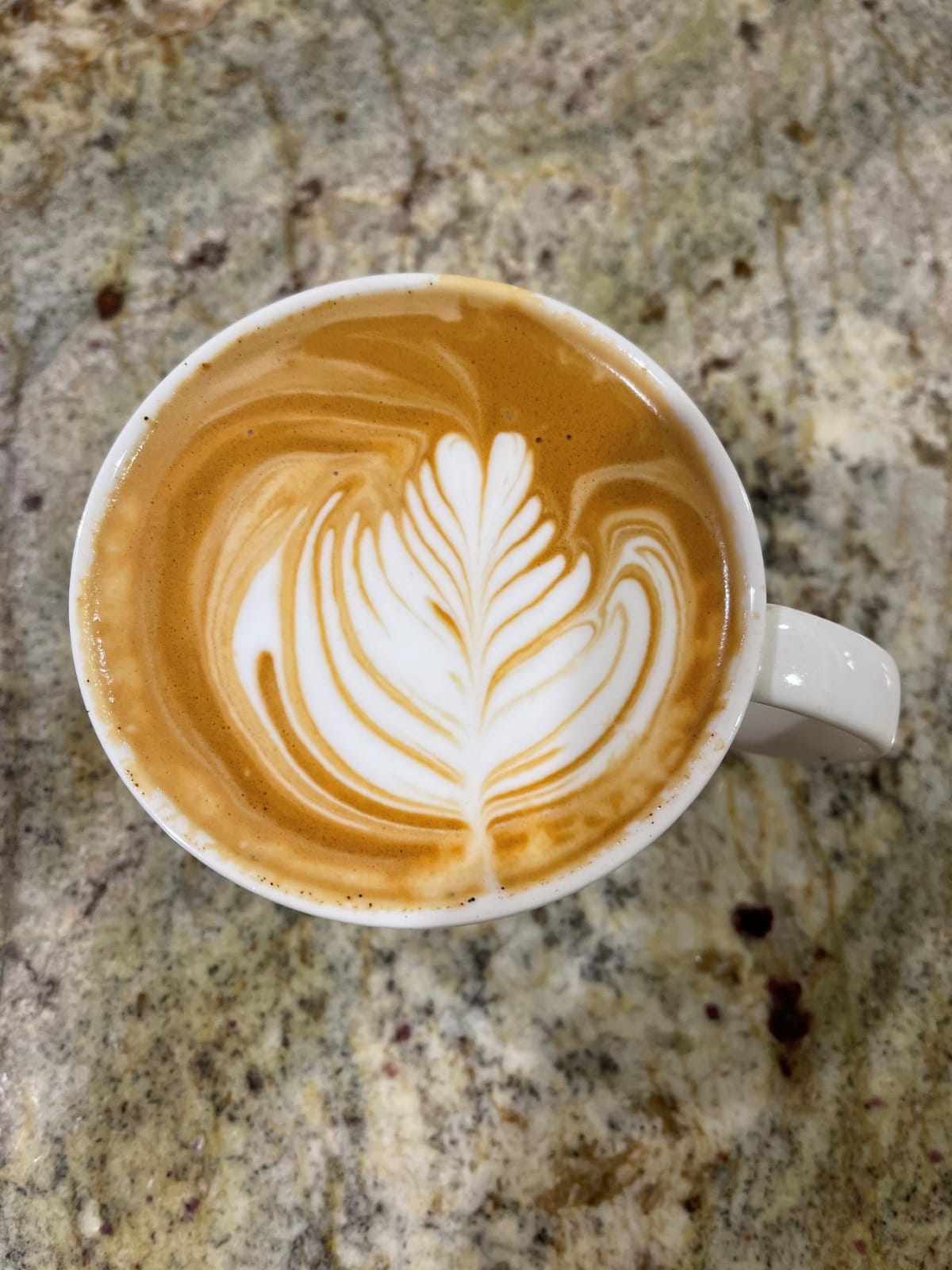
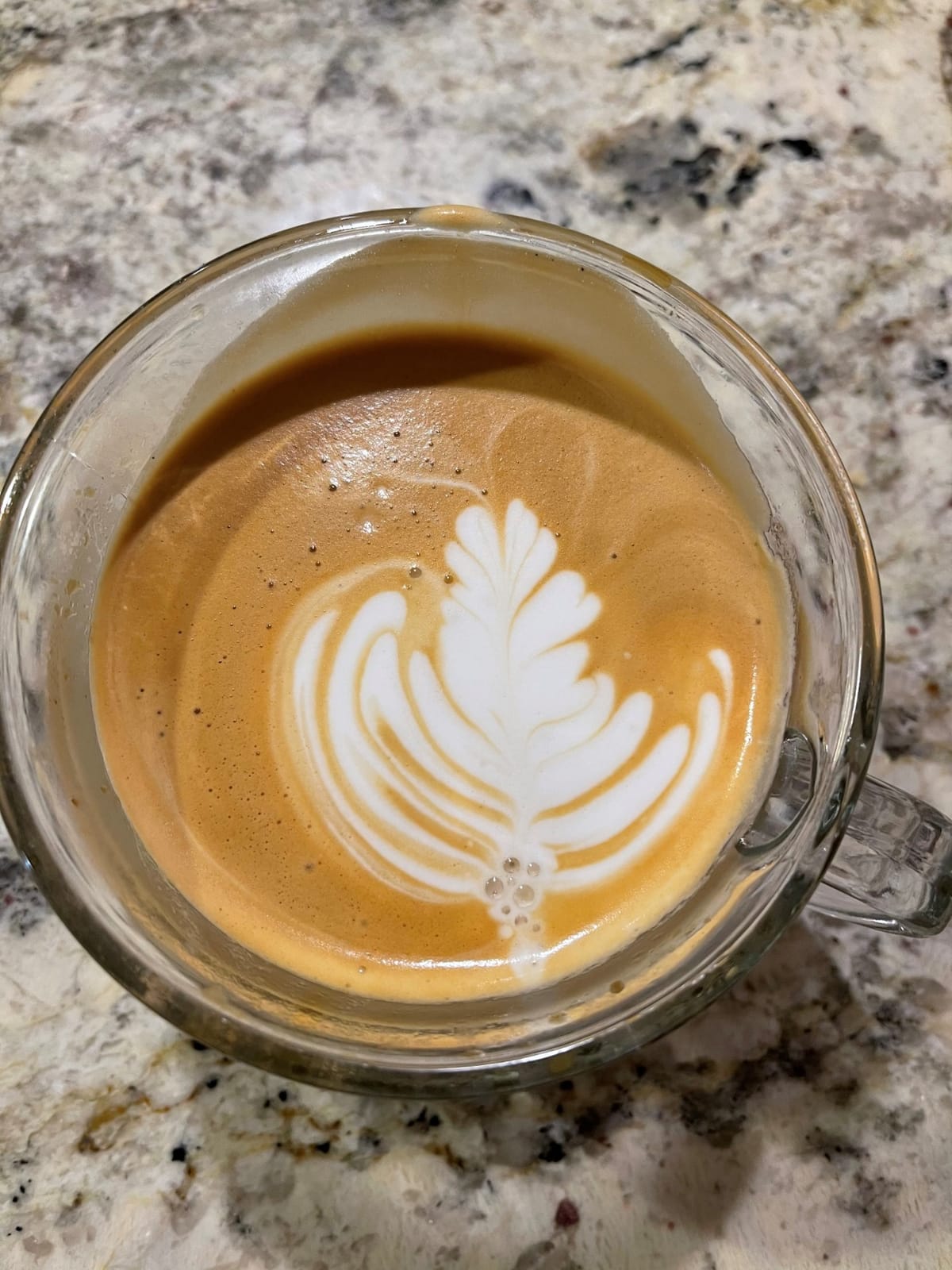
If milk drinks are the reason you own an espresso machine, this is the one. The steam wand is meaningfully stronger than on the lower tier Baristas, which is the difference between milk that gets heated and milk that gets properly textured. Owners who practise with it report noticeably easier microfoam, and the wand purges quickly between drinks.
The ThermoJet system reaches extraction temperature in about three seconds, so the machine is ready almost immediately. PID control holds temperature within roughly 2 degrees, and unlike a single boiler setup, you can pull a second shot after steaming without losing flavour.
The trade offs are real. The automatic mode is genuinely poor and inconsistent, so plan to shoot in manual mode only. The integrated grinder is reported by some owners to wear out after about a year of regular use, and it is relatively loud. The 54mm portafilter is smaller than the 58mm commercial standard, which limits the accessory ecosystem.
It is also heavy at 19.5 pounds with a 13 by 14 by 16 inch footprint, so it is a second machine, not a second coffee maker. A minority of owners reported initial temperature and pressure instability, and one received a non working repair, though several describe Breville support ultimately replacing the machine.
Why does steam wand power change the drink?
Steam has to do two jobs, heat the milk and entrap air into microfoam. A weak wand heats the milk slowly and the barista gets impatient, pulling the pitcher before the texture forms, which is how most home lattes end up flat and foamy rather than glossy.
A stronger wand lets you stretch to temperature properly and gives you a window to place a leaf or heart. If latte art is on your list, wand power matters more than pump pressure.
Who should not buy the Barista Pro?
Skip it if you will not use manual mode. The automatic settings will frustrate you, and the machine is expensive enough that you will notice.
Skip it too if your grinder habits are inconsistent. This is a grinder plus machine in one body, and a 1680 watt heater plus a burr grinder is a lot of heat and noise for a very small kitchen. Apartment dwellers should measure the space twice.
7. Breville Bambino: Best Compact Espresso Machine for Latte Art
Breville BES450BSS Bambino Espresso Machine, Brushed Stainless Steel
- ThermoJet heating reaches optimum temperature in about three seconds
- Compact body fits comfortably on small kitchen counters
- PID temperature regulation supports precise extraction
- Automatic steam wand produces microfoam suitable for latte art
- 54mm portafilter sized for roughly 19 gram doses
- No integrated grinder so a separate burr grinder is required for best results
- Small water tank relative to machines in this class
- One year limited warranty is shorter than some competitors
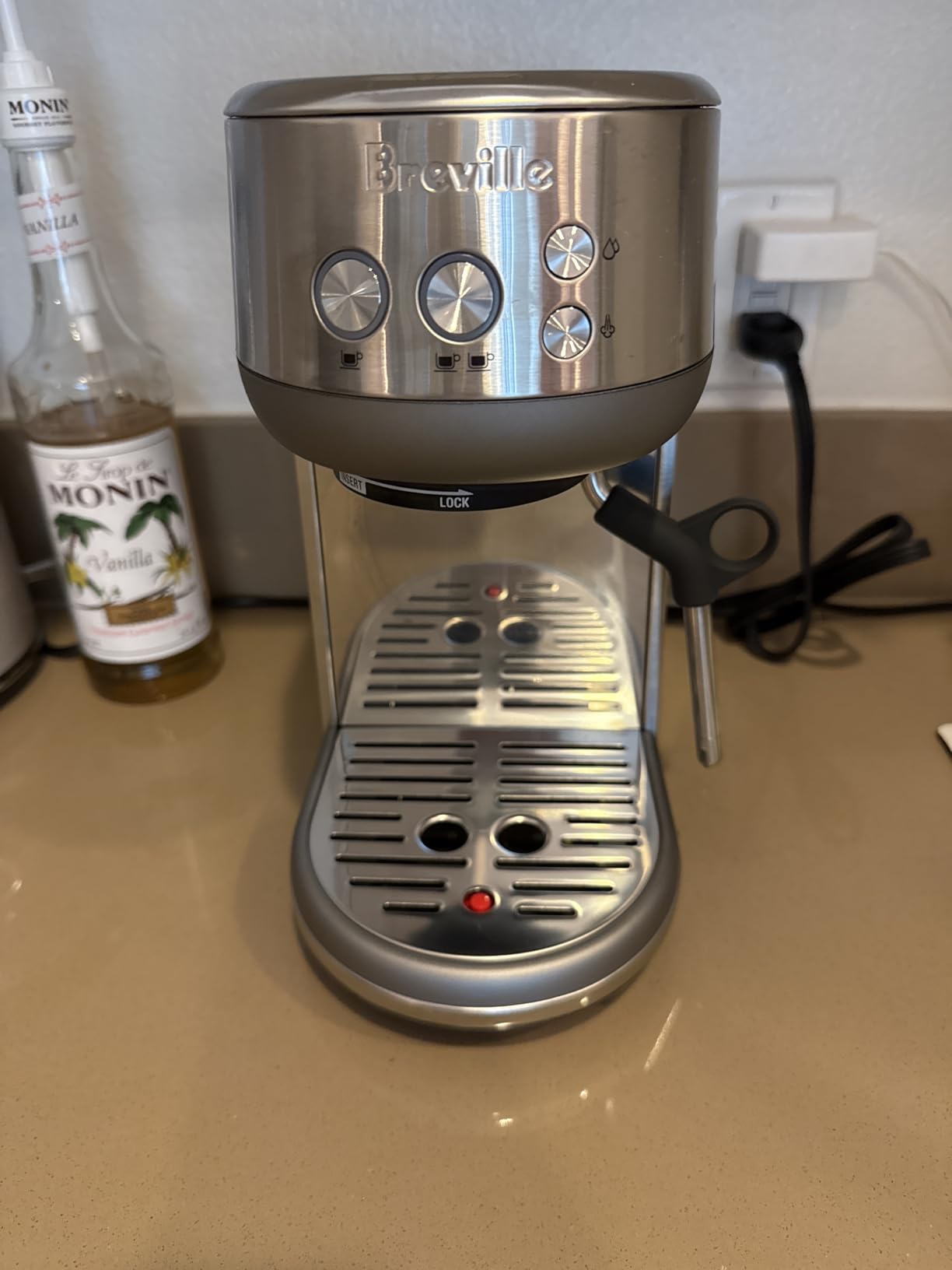
The Bambino is the machine we would buy for a small kitchen where a full sized espresso machine will not fit. At 6.3 inches wide and 10.9 pounds it is roughly half the footprint of the Barista Express, and the ThermoJet system still reaches temperature in about three seconds.
The automatic steam wand is the sleeper feature. It textures milk hands free with adjustable temperature, and owners single it out as the reason the machine produces microfoam good enough for latte art without a separate wand technique to learn.
Now the part that matters for long term satisfaction: there is no grinder. The 4.0 star average is the lowest in this group, and the review distribution explains why. Sixty three percent of ratings are five star, but sixteen percent are one star, and the most common complaint in every one of those is the missing grinder.
Buying a separate burr grinder turns a one item purchase into a two item system, and that changes the real total cost. The 47 fluid ounce tank is also small, and you still pre-infuse and tamp by hand for repeatable shots.
Is the Bambino worth it without a grinder?
Only if you already own a burr grinder. Paired with a decent grinder the machine performs well, which is why it appears repeatedly in espresso hobbyist threads as a genuinely capable entry point despite its low sticker position.
Starting from nothing, the money saved on the machine goes straight back out on a grinder. That is why we would rather see a first-time buyer choose the Barista Express and own the whole system.
Who should not buy the Bambino?
Do not buy it as a first machine with no grinder. It is the pick for a constrained counter with an existing grinder, not the pick for a blank slate kitchen.
It is also a weak choice for households that drink several cups each. The small tank and manual workflow make it a one person machine. Anyone building a full setup should read our French press picks for coffee lovers for the non espresso side of a good coffee station.
8. Ninja Luxe Cafe Premier: Best 3 in 1 Machine for Drink Variety
Ninja Luxe Café Premier 3-in-1 Espresso Machine, Drip Coffee, & Cold Brew
- Three machines in one with double or quad espresso and three drip styles
- Built-in conical burr grinder with 25 settings and weight based dosing
- Barista Assist Technology guides grind dose tamp temperature and pressure
- Dual froth system with four presets plus manual frothing
- Built-in accessory storage and dishwasher safe parts
- There is still a real learning curve despite the guided prompts
- Grinder can sporadically underfill the portafilter over time
- Small wastewater tray and no dedicated hot water spout
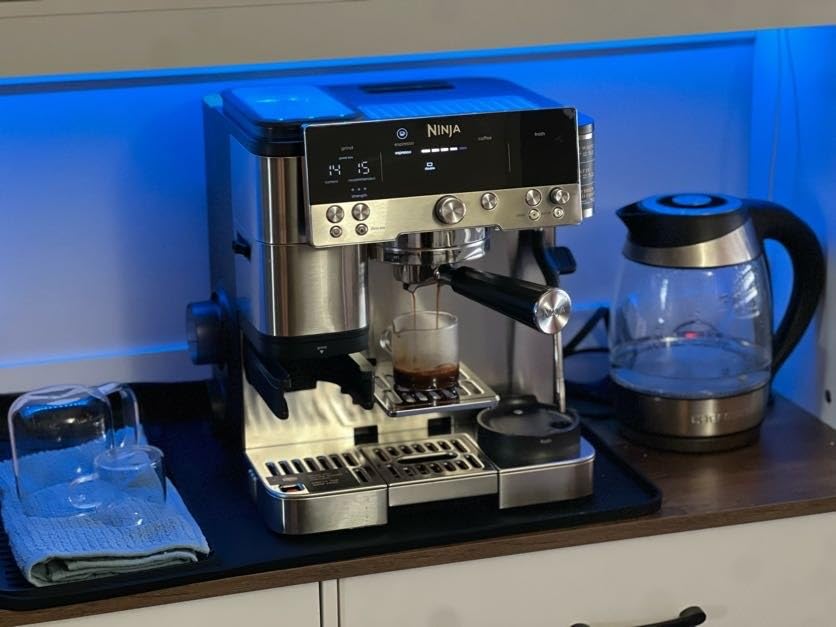
The Ninja Luxe Cafe Premier is the most unusual machine in this roundup. It brews espresso, drip coffee and cold brew from one body, and it is by far the lightest machine here at 4.4 pounds, so moving it is easy in a rental kitchen.
The Barista Assist system is the part that genuinely helps beginners. Weight based dosing, an assisted tamper and prompts for temperature and pressure remove most of the guesswork from puck preparation, and owners describe lattes and cold pressed drinks as the stand out results with consistent output after close to two years of daily use.
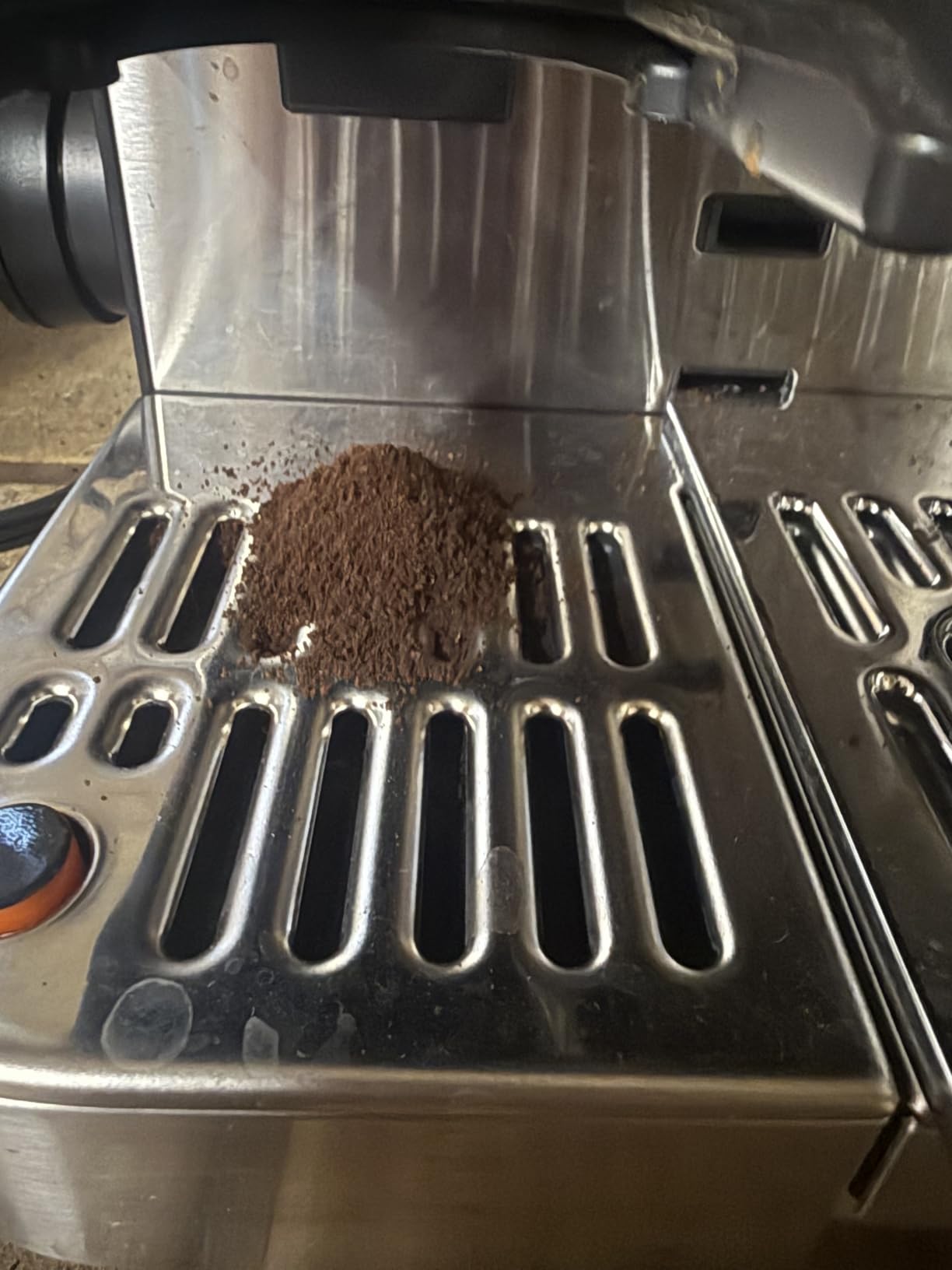
Be clear about what guided does not mean. There is still a real learning curve, and one documented case describes the grinder progressively underfilling the basket, which made shots inconsistent over time. If that happens, the fix is a burr grinder or a service visit, not more fiddling with the settings.
The drip coffee side is a compromise rather than a strength, the wastewater tray is small and needs frequent emptying, and there is no dedicated hot water spout for tea or an Americano. The steam wand also has restrictive movement and works best with the stock pitcher.
Is a 3 in 1 machine better than a dedicated espresso machine?
Better if your household drinks more than one thing. Espresso, drip and cold brew from a single body means one appliance instead of three, which is a real saving in space and in cost of ownership over time.
Worse if espresso is the only drink you make. A dedicated machine gives you a portafilter you can rebalance, a pressure gauge and a wider accessory range, and you will not miss the drip function at all.
Who should not buy the Ninja Luxe Cafe?
Do not buy it if you want manual control over extraction. The whole design pushes you toward presets, which is exactly what enthusiasts who want to develop a palate are trying to avoid.
Also avoid it if you take a lot of tea. No hot water spout means a kettle is still part of the setup, and the small wastewater tray will need attention in a busy kitchen.
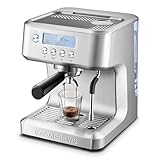
9. CASABREWS Ultra Barista: Best LCD Guided Espresso Machine With Adjustable Temperature
CASABREWS Ultra Espresso Machine, Barista Espresso Maker with Steam Wand
- LCD display guides each step and shows brew temperature settings clearly
- Four adjustable brewing temperature settings
- 20 bar Italian pump with 1350 watt heating system
- 58mm portafilter is a standard size that accepts a wider range of accessories
- Large 73 oz removable tank cuts down on refills
- Ground coffee only with no integrated grinder
- Larger and heavier than compact alternatives at 13.6 pounds
- Temperature adjustment applies only to espresso brewing and not to the steam side
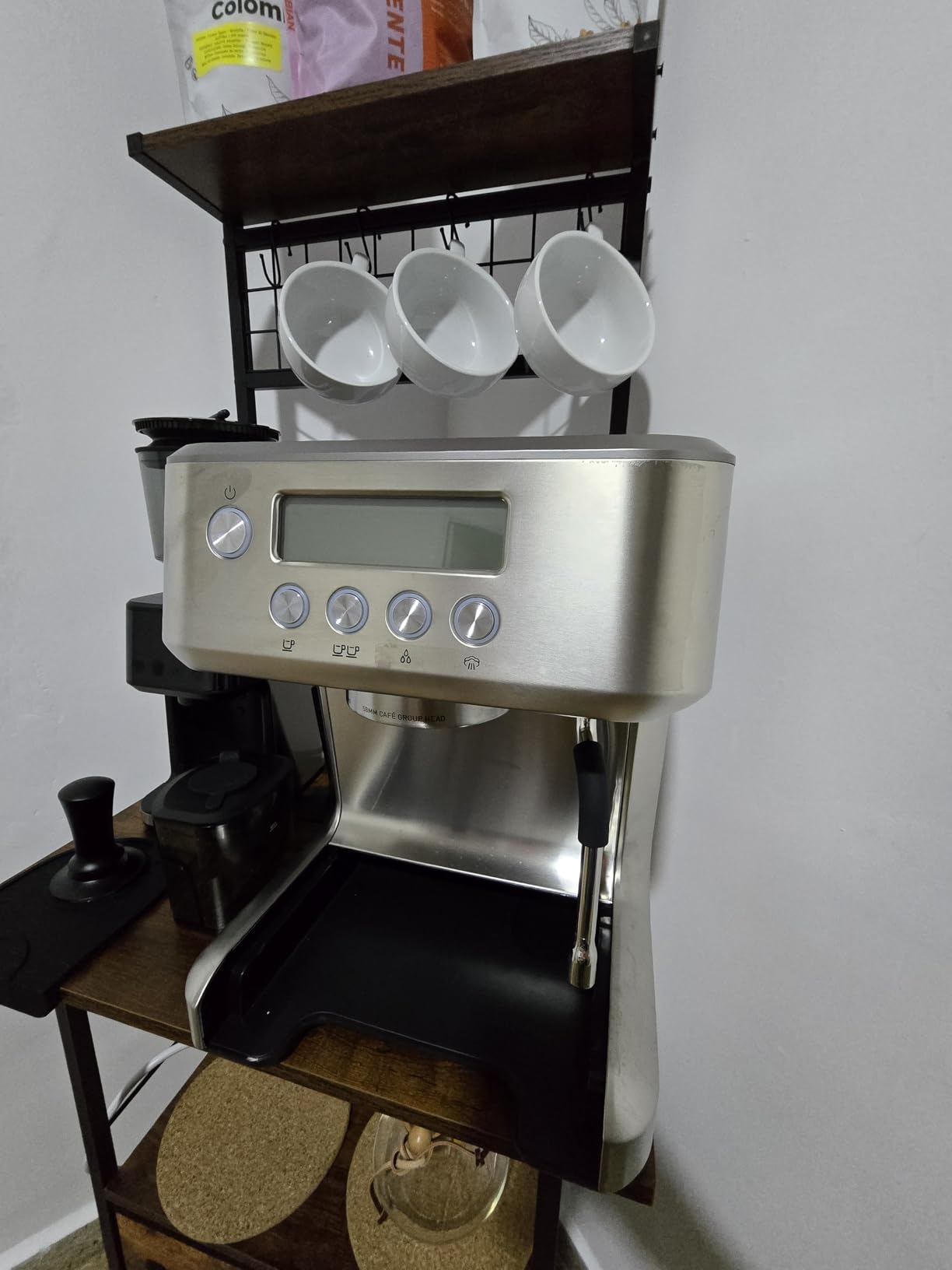
The CASABREWS Ultra posts the highest average rating in this group at 4.5 stars, with 76 percent five star reviews, and the reason is the control panel. An LCD walks you through each step and displays brew temperature settings directly, which flattens the learning curve more than any feature on this list.
Four adjustable brewing temperature settings let you tune the shot to the roast, which matters more than buyers expect. A darker roast usually wants more heat, a lighter roast wants less. The 58mm portafilter is the commercial standard, so baskets, tampers and other accessories from other brands fit without adapters.
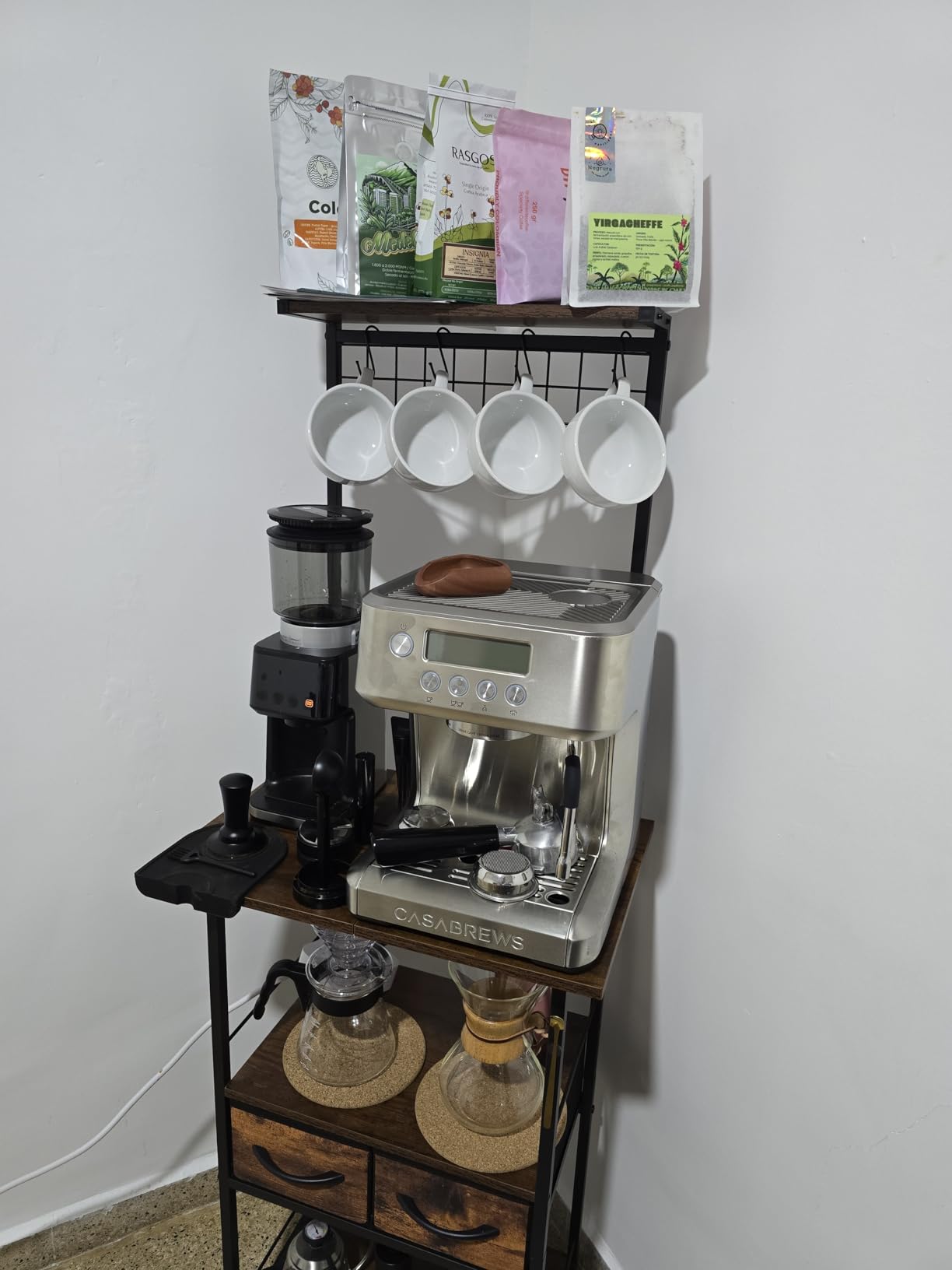
Two cautions. It handles ground coffee only, with no integrated grinder, so a separate burr grinder is needed for best results. And at 13.6 pounds it is the heaviest compact machine here, so the counter space saving you were hoping for is limited.
Note also that the temperature adjustment applies to brewing only, not to the steam side. If you want to control milk temperature as well, the Breville Barista Express and Barista Pro give you more levers. This machine has the smallest review base in the group at 868 ratings, so treat the 4.5 score as promising rather than proven.
What does a 58mm portafilter actually give you?
Compatibility. It is the size used across commercial café equipment, which means third party baskets, distribution tools and dosing accessories are widely available. If you ever want to experiment beyond the included parts, that is a genuine advantage.
It also holds a slightly larger dose than the 54mm baskets on the Breville machines, which some owners find easier to tamp evenly by hand.
Who should not buy the CASABREWS Ultra?
Skip it if beans to cup matters. A burr grinder plus this machine is a larger total outlay than the Barista Express, which bundles the grinder into the same body.
It is also a poor fit for anyone who wants steam temperature control, and for very small kitchens the 10.31 inch width is not as forgiving as the slim compact models on this list.
10. De’Longhi Classic Signature: Best Compact Machine With a Two Setting Steam Wand
De’Longhi Classic Signature Espresso Machine, Adjustable Milk Frother
- Thermoblock heating reaches brewing temperature in seconds
- 15 bar Italian pump produces rich espresso with good crema
- Adjustable two setting steam wand covers steamed milk and velvety microfoam
- Customisable single and double espresso preset recipes
- Removable 1.7L reservoir with level markers for descaling
- No built-in grinder so ground coffee only
- Body is light and largely plastic
- Some owners report brew water temperature running below the usual extraction range
- Filter baskets can sit loose in the portafilter when emptying grounds
The Classic Signature is the De’Longhi model that does the most with a thermoblock heater. Thermoblock heating reaches brewing temperature in seconds and holds it there, which is why the machine feels ready the moment you switch it on. Owners praise the fast heat up, the clear pressure gauge and solid build for the money.
The steam wand has two settings, one for steamed milk and one for velvety microfoam, which makes it more flexible than the single position wands on the compact budget machines. Customisable single and double espresso recipes give you repeatable drinks without a scale every morning.
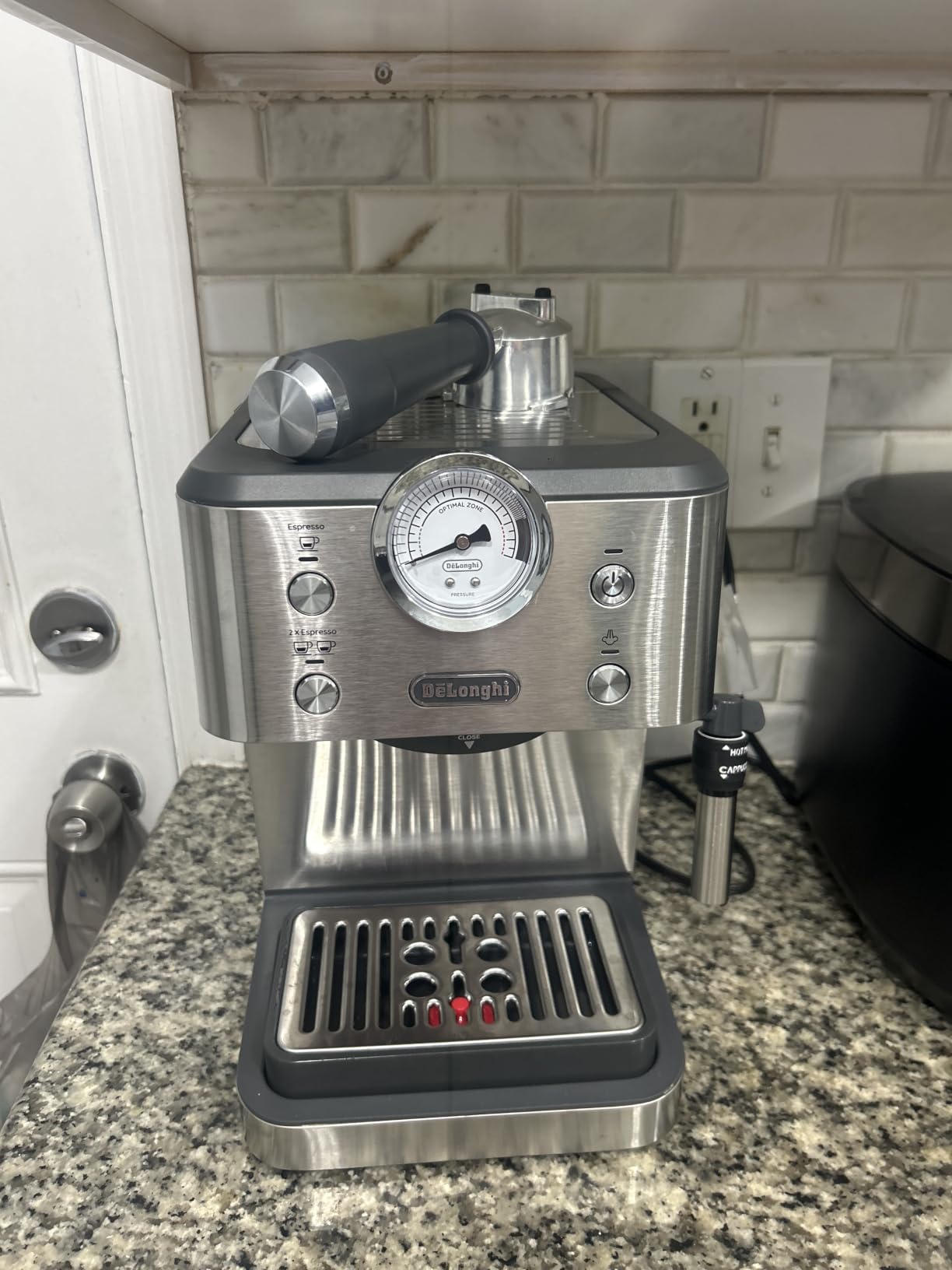
The criticisms are consistent across reviews. There is no integrated grinder, the body is light and largely plastic, and one detailed review measured brew water temperature as running below the usual extraction range. The frother also starts foaming before the milk is fully heated, which is a small habit change rather than a fault.
Filter baskets can sit loose in the portafilter when you tap out grounds, and a new or plastic smell on first use is mentioned but clears after curing. Several owners report this machine outperformed far more expensive units they replaced on both espresso and foam.
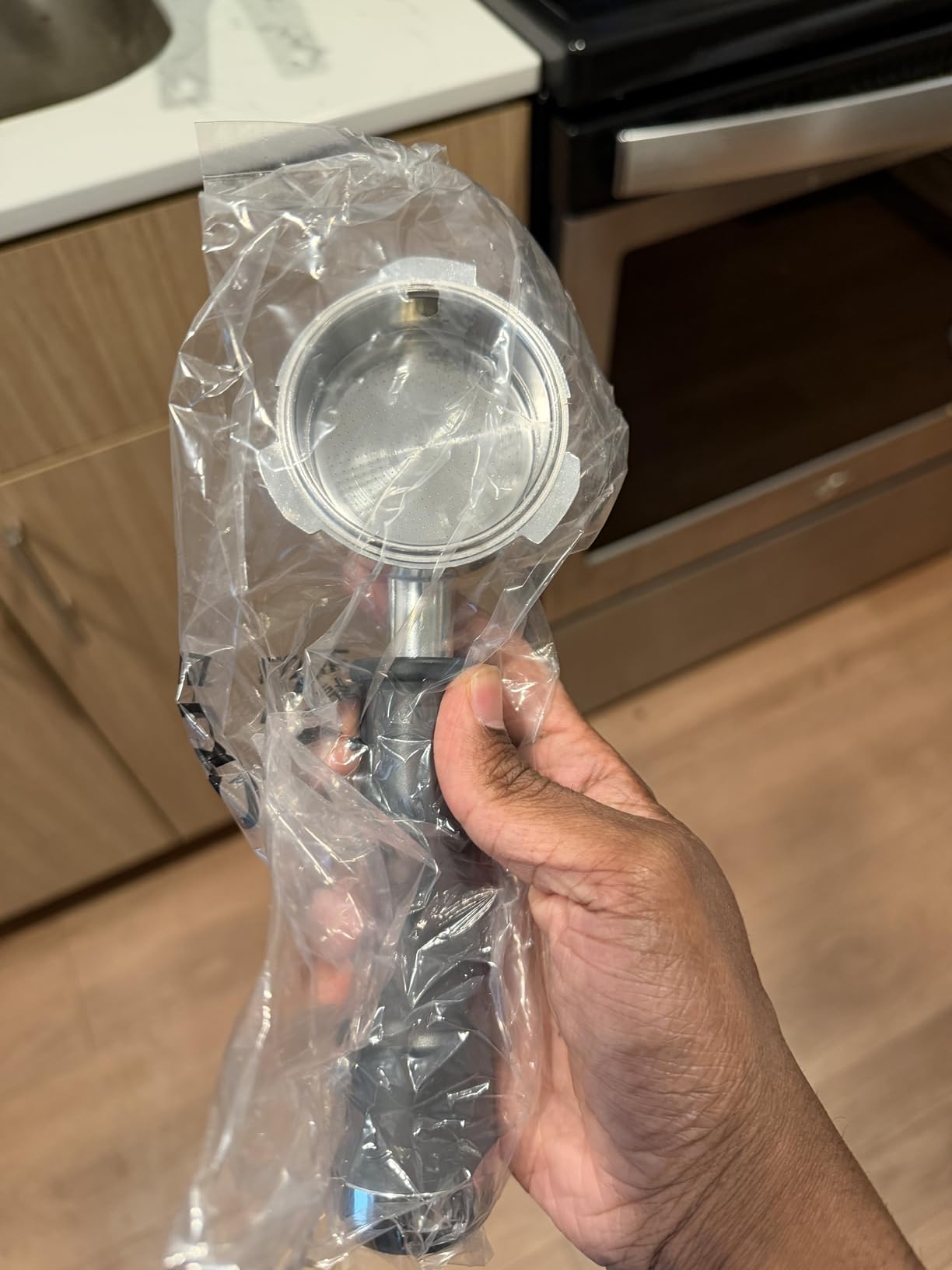
Is a thermoblock machine as good as a boiler?
For most home use, yes. A thermoblock heats water on demand through a fast-flow element, so there is no large water volume to cool down and no wait between shots. Heat up times measured in seconds are the practical difference you will notice.
The theoretical trade off is total brew volume per minute and recovery under back to back large shots. If you plan to pull four doubles in a row for a dinner party, a boiler system recovers more comfortably.
Who should not buy the De’Longhi Classic Signature?
Do not buy it if you want to grind beans. Ground coffee only, and a fresh roast has a window of days before it degrades, so the grinder question comes back immediately.
It is also not the pick for latte art practice, because the frother starts before the milk is hot enough to texture properly. If foam texture is your goal, choose a machine with a stronger dedicated wand.
How to Choose an Espresso Machine Without Regretting It
The differences between these machines are less about the number on the box and more about three things: pressure, heat and grind. Get those right and almost any machine on this list will produce a shot you are happy with.
9 bars versus 15 bars versus 20 bars: what the numbers mean
Espresso is defined at about 9 bars. That is the pressure the pump should be pushing at the puck during a shot. When you see a machine advertised at 15 or 20 bars, that number is what the pump can generate against a blocked system, not what your shot will see. A 20 bar machine is not better than a 9 bar machine, and paying more for a higher number is paying for a sticker.
What you want instead is a machine that reaches 9 bars and holds it. The pressure gauge on the Barista Express, the CASABREWS CM5418 and the Gevi lets you watch it happen, which is worth more than any pump rating.
Built-in grinder or separate grinder?
Built-in, if you can afford it. The Barista Express, the Barista Pro and the Ninja Luxe Cafe all grind beans straight into the portafilter, and that removes the single biggest cause of bad shots at home: a grind that was wrong before the water ever arrived.
Buying without a grinder means a second purchase, a second piece of counter space and a decision about whether to buy a hand grinder or an electric burr grinder. If you go that way, our guide to the best hand coffee grinders for espresso is the place to start.
Heating system: thermoblock, thermo coil or boiler
A thermoblock heats water on demand in seconds, which suits one or two coffees. A thermo coil is a small boiler with faster recovery, found on the Barista Express and Barista Pro. A dual boiler gives you separate brew and steam tanks so you can pull a shot and steam milk at the same time, which is the setup enthusiast forums consistently treat as the eventual destination for a serious home bar.
None of the machines in this roundup have dual boilers. If simultaneous brewing and steaming matters to you, plan for an upgrade later, or accept the ninety second wait.
Steam wand and milk drinks
Decide this before anything else if you drink cappuccinos and lattes. A manual steam wand with real power, as on the Barista Pro and the CASABREWS Ultra, gives you the most control. An automatic frother, as on the Bambino and the Ninja Luxe Cafe, is easier and produces decent microfoam without practice. A single boiler machine forces you to choose an order, so steam first, then brew.
Footprint and maintenance
Measure before you buy. Weight on this list runs from 4.4 pounds for the Ninja to 22.1 pounds for the Barista Express, and width runs from 5.47 inches to 14 inches. Every one of these machines needs descaling, backflushing and drip tray emptying, and the thermoblock models are generally the least demanding to maintain.
Who should not buy an espresso machine yet
If you never want to adjust a grind or weigh a dose, buy a capsule machine instead. It will be cheaper, quieter and faster, and it will make a decent drink. An espresso machine earns its money only if you enjoy the process of getting the shot right.
Similarly, skip a stovetop moka pot if espresso with crema and control is what you are after. It is a different tool for a different drink, and buying it as a cheaper path to espresso is a common disappointment.
Frequently Asked Questions
What is the best espresso machine for home use?
For most people the Breville Barista Express is the best espresso machine for home use, because the integrated conical burr grinder, PID temperature control and manual steam wand cover the whole workflow in one unit. If milk drinks are your priority, step up to the Breville Barista Pro for a stronger wand and a faster heat up. If you want to spend as little as possible while you learn, the De’Longhi Stilosa is the manual entry point.
Is DeLonghi or Breville better?
Breville is better if you want beans to cup, because the Barista Express and Barista Pro include a burr grinder and PID temperature control. De’Longhi is better for value and fast heat up, since the Classic Signature and Stilosa use thermoblock and manual piston systems that reach temperature in seconds and cost far less. Buyers of both report comparable espresso once a burr grinder is added to the De’Longhi setup.
Is 20 bar better than 9 bar espresso?
No. Espresso brews at roughly 9 bars, so a 20 bar claim describes what the pump can push against a blocked system rather than the pressure your shot sees. A 15 or 20 bar rating is marketing, not a quality signal. What matters is whether the machine reaches and holds 9 bars during extraction, which is easier to judge on a model with a visible pressure gauge.
What are the common problems with the Breville Bambino espresso machine?
The most common complaint is that there is no integrated grinder, which means a separate burr grinder purchase for good results. Other issues include a small 47 fluid ounce water tank relative to other machines, the manual pre-infusion and tamping still needed for repeatable shots, and a one year limited warranty that is shorter than some rivals. The Bambino also has the lowest average rating in our group at 4.0 stars, with 16 percent one star reviews.
Do I need a separate grinder for an espresso machine?
You need a grinder unless the machine has one built in. Espresso requires a fine, consistent grind, and a blade grinder cannot produce it, so a burr grinder is the minimum. The Barista Express, Barista Pro and Ninja Luxe Cafe all include an integrated conical burr grinder, which is why they cost more but need no second purchase.
What is the best espresso machine according to Reddit users?
On r/espresso the recurring advice for a first machine is that a Breville Bambino is a genuinely capable entry point, and that the typical upgrade ladder runs from the Bambino to a Gaggia Classic and then to a Profitec. Community threads also stress that every machine forces a choice between approachable and capable, and that a second machine should help you improve rather than just look good on the counter.
Which Espresso Machine Should You Buy?
Start with the Breville Barista Express. It is the best coffee maker for espresso lovers because it solves the whole system in one box: burr grinder, PID controlled extraction, pressure gauge and a manual steam wand, with 27882 owner reviews behind it. If milk drinks dominate your routine, the Breville Barista Pro gives you a stronger wand, a three second heat up and a backlit LCD.
If you want to spend as little as possible while you find out whether you enjoy the process, the De’Longhi Stilosa is the honest entry point at 4.2 stars across 13838 reviews. For a small counter, the CASABREWS CM5418 and the Gevi both fit in under 5.5 inches of width. For drink variety, the Ninja Luxe Cafe Premier covers espresso, drip and cold brew in one body.
Whichever you choose, buy fresh beans, a burr grinder if the machine lacks one, and expect a couple of weeks of dial in before shots become repeatable. That adjustment period is not a flaw in the machine. It is the part of home espresso you actually came for. This roundup was last updated in October 2026.