

Some of my happiest childhood memories involve standing on a kitchen chair next to my grandmother, watching her transform butter, sugar, and flour into magic. She never measured anything with precision. Her recipes lived on stained index cards tucked inside a tin box, written in handwriting only she could fully decode. Those old fashioned dessert recipes shaped how I think about baking today, and I want to share that same feeling with you.
This guide brings together 15 timeless vintage desserts that real home bakers still make and love in 2026. I have tested every recipe on this list in my own kitchen, adjusted measurements for modern ovens, and included pro tips so your results match the memory. Whether you want a simple weeknight treat or a showstopper for a family reunion, you will find something worth baking here.
If you love the idea of easy, no-fuss desserts, you might also enjoy our collection of no-bake dessert recipes for days when turning on the oven feels like too much work.
Table of Contents
What Makes a Dessert Old-Fashioned?
Old-fashioned desserts are recipes passed down through generations, typically relying on simple pantry staples and traditional techniques from the early-to-mid 20th century. They favor butter, sugar, flour, eggs, and cream over processed ingredients, and they depend on time-tested methods like creaming, folding, slow simmering, and chilling rather than modern shortcuts.
What separates a vintage dessert from a trendy one is reliability. These recipes survived decades of bake sales, church potlucks, and Sunday dinners because they actually work. A retro American baking tradition carries stories of Depression-era resourcefulness, postwar abundance, and family gatherings where dessert meant love on a plate.
Most old fashioned desserts share a few common traits that make them instantly recognizable.
- Simple ingredient lists: usually under 10 items, all pantry-friendly
- Handwritten origins: passed from mother to daughter on recipe cards
- Forgiving methods: they tolerate measurement imperfections
- Make-ahead friendly: many taste better the next day
- Crowd-sized yields: built to feed a family, not a single serving
One quick note on terminology before we get cooking. Vintage typically refers to desserts from the 1920s through the 1960s. Retro covers the fun, kitschy sweets of the 1950s through 1970s. Classic is the broader umbrella for any recipe that has stood the test of time. Old-fashioned covers all three, and I use them interchangeably throughout this guide.
15 Best Old Fashioned Dessert Recipes Worth Trying
Here are the recipes I keep coming back to, organized from simplest to most impressive. Each one includes a short origin story, the key ingredients, a brief method overview, and a pro tip from my own testing. I have also included an image prompt for each dessert so you can visualize the final result before you start.
1. Classic Southern Banana Pudding
Banana pudding is the unofficial dessert of every Southern gathering, and once you make it once, you understand why. Layers of vanilla wafers, sliced bananas, and silky custard come together in a dish that tastes like a hug from someone who loves you.
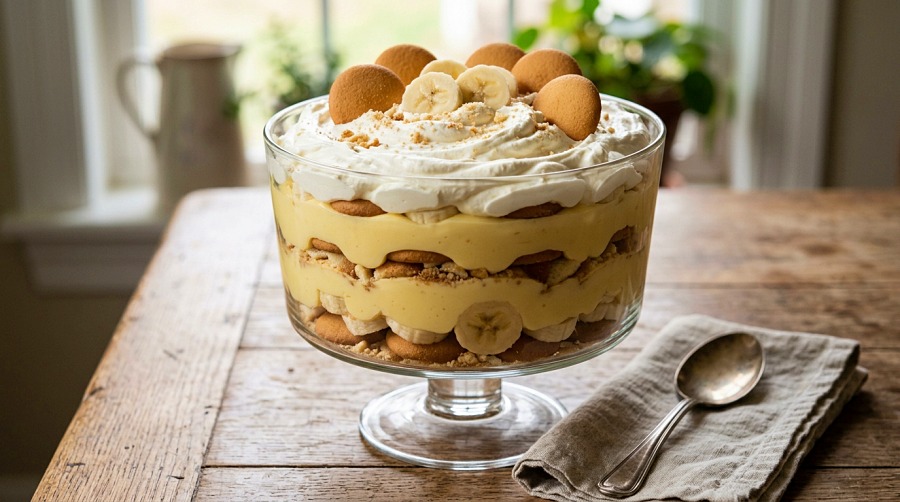
Key ingredients: ripe bananas, vanilla wafers, whole milk, sugar, egg yolks, vanilla extract, a pinch of salt.
Method overview: Whisk egg yolks, sugar, and cornstarch into hot milk to form a stovetop custard. Layer vanilla wafers and banana slices in a trifle dish, pour warm custard over each layer, and chill for at least four hours. Top with whipped cream or a torched meringue.
Pro tip: Use bananas that are ripe but still firm. Overripe bananas turn mushy and darken the custard. I also add a splash of vanilla to the custard twice, once during cooking and once at the end, for a deeper flavor.
2. Homemade Butterscotch Pudding
Before boxed pudding mixes took over, butterscotch pudding was a stovetop labor of love. The real version tastes nothing like the powdery store stuff. Deeply browned butter and dark brown sugar create a caramel complexity that boxed versions cannot touch.
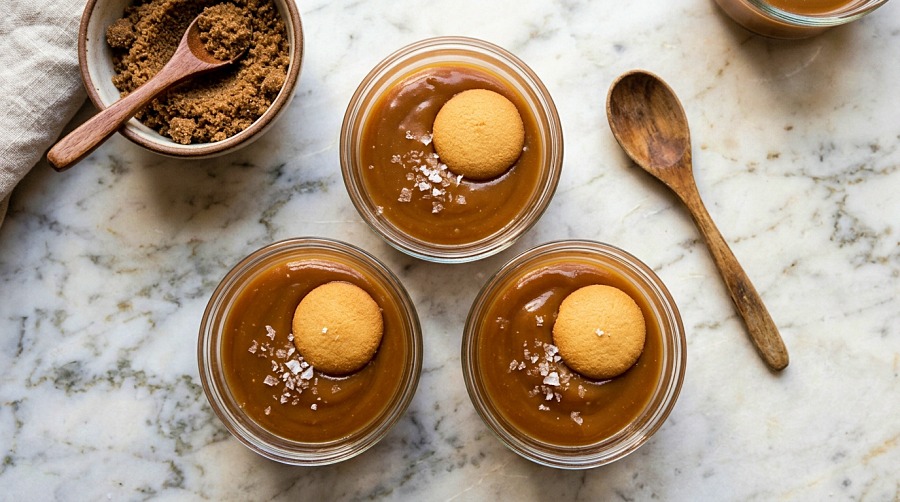
Key ingredients: dark brown sugar, butter, cornstarch, whole milk, heavy cream, egg yolks, vanilla, sea salt.
Method overview: Brown the butter in a saucepan until it smells nutty. Whisk in brown sugar, then stream in milk and cream tempered with egg yolks. Cook until thickened, strain into ramekins, and chill covered with plastic directly on the surface to prevent a skin.
Pro tip: Do not rush the butter browning. That one extra minute is the difference between butterscotch and caramel sauce pretending to be pudding. A flaky pinch of Maldon salt on top before serving balances the sweetness perfectly.
3. Old-Fashioned Apple Crisp
Apple crisp is the dessert I make when I want something comforting without spending the afternoon in the kitchen. It skips the fussy pie crust entirely and leans on a buttery oat topping that gets golden and crunchy in the oven.
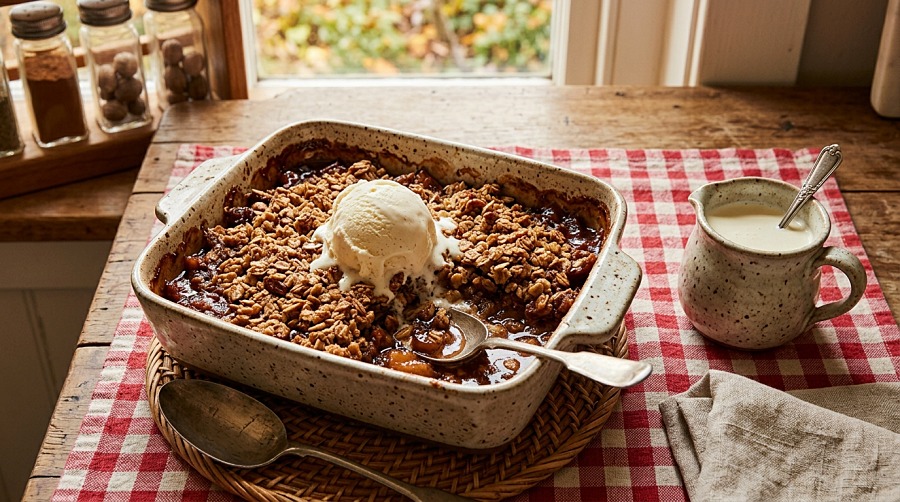
Key ingredients: tart apples like Granny Smith, old-fashioned rolled oats, brown sugar, butter, flour, cinnamon, nutmeg, a squeeze of lemon.
Method overview: Toss sliced apples with sugar, lemon, and spices, then spread in a baking dish. Cut cold butter into oats, flour, and brown sugar until the mixture looks like wet sand. Pile the topping over the apples and bake at 375°F for about 45 minutes until bubbling and golden.
Pro tip: Use a mix of apple varieties for the best texture. Half tart baking apples like Granny Smith and half sweater eating apples like Honeycrisp gives you the perfect balance of structure and natural sweetness. If you love easy fruit desserts, our easy dump cake recipes use the same dump-and-bake philosophy.
4. Coca-Cola Cake
This retro Southern sheet cake showed up at every church potluck my grandmother attended. The soda does mysterious, wonderful things to the crumb, making it impossibly moist with a slight fudgy chew that regular chocolate cake never quite achieves.
Key ingredients: Coca-Cola (do not substitute diet), buttermilk, cocoa powder, butter, mini marshmallows, powdered sugar.
Method overview: Bring Coca-Cola, butter, and cocoa to a simmer, then stir in marshmallows until they melt into the batter. Combine with a simple flour-sugar-buttermilk dry mixture, pour into a sheet pan, and bake at 350°F for about 30 minutes. Pour hot chocolate frosting over the warm cake so it sinks in slightly.
Pro tip: The marshmallows float to the top during baking and create little pockets of goo. Do not skip them or substitute marshmallow fluff, which behaves completely differently. This cake tastes even better on day two, so it is the perfect make-ahead dessert.
5. Shoofly Pie
A Pennsylvania Dutch classic, shoofly pie is what happens when resourceful bakers turn molasses and crumbs into a dessert. It has two layers, a cakey top and a gooey molasses bottom, that bake into something between pie and coffee cake.
Key ingredients: molasses (not blackstrap), brown sugar, flour, butter, boiling water, a pie crust, baking soda.
Method overview: Make a crumb mixture from flour, brown sugar, and butter. Dissolve baking soda in boiling water, then stir in molasses. Pour the molasses liquid into an unbaked pie shell, top with the crumbs, and bake at 400°F for 10 minutes then reduce to 350°F for 30 more minutes.
Pro tip: The crumb-to-liquid ratio determines whether your pie is “wet bottom” or “dry bottom.” Wet bottom is the traditional Pennsylvania Dutch style and the one I recommend for first-timers. Serve it slightly warm with strong coffee for breakfast, the way it was originally intended.
6. Depression-Era Water Pie
Water pie is exactly what it sounds like, a pie made mostly with water, sugar, and flour during the Great Depression when dairy and eggs were scarce. It sounds impossible, but it bakes into a sweet, custardy, slightly caramel-like filling that will make you a believer.
Key ingredients: water, sugar, flour, butter, vanilla, a pie crust.
Method overview: Pour water into an unbaked pie shell, then sprinkle flour and sugar evenly over the top. Dot with butter, drizzle vanilla, and bake at 400°F for 30 minutes, then reduce to 350°F for another 30 minutes. The flour sinks and forms layers as it bakes.
Pro tip: Do not stir. The magic happens because the flour settles in layers and creates texture on its own. Opening the oven door during baking will also ruin the structure, so use the oven light and trust the process.
7. Classic Pineapple Upside-Down Cake
This cake is pure mid-century Americana. The butter-brown-sugar glaze caramelizes around rings of pineapple and bright red maraschino cherries while the cake bakes on top. Flip it out of the pan and you have a sunshiny showpiece.
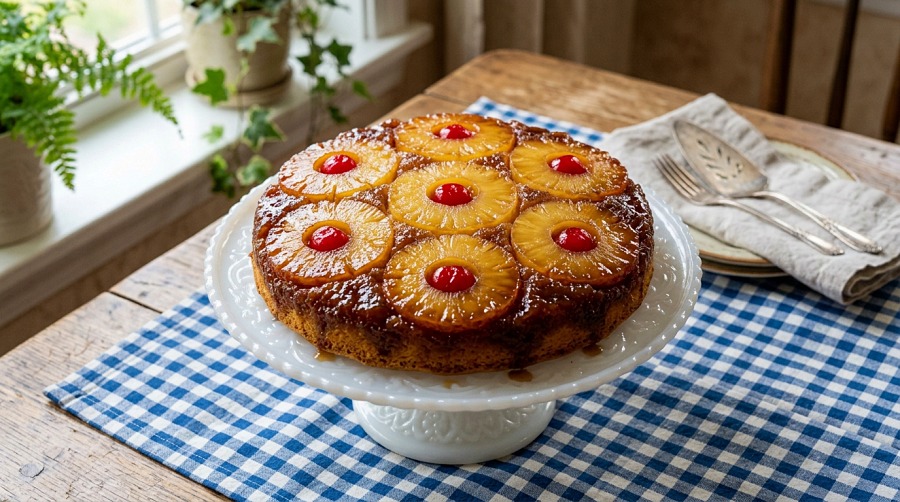
Key ingredients: canned pineapple rings, maraschino cherries, brown sugar, butter, cake flour, eggs, vanilla.
Method overview: Melt butter and brown sugar in the bottom of a cake pan, arrange pineapple rings and cherries in a decorative pattern, then pour yellow cake batter over the top. Bake at 350°F for 40 to 45 minutes. Invert onto a serving plate while still warm so the topping releases cleanly.
Pro tip: Invert the cake exactly three minutes after it comes out of the oven. Too soon and the topping slides. Too late and the caramel sets like glue. Run a thin knife around the edge first to release any stuck pineapple.
8. Old-Fashioned Bread Pudding with Vanilla Sauce
Bread pudding is the original waste-not dessert, born from the practical need to use up stale bread. Done right, it is luxurious, with a soft custardy interior and crispy golden edges, all soaked in a buttery vanilla sauce that elevates humble ingredients into something special.
Key ingredients: stale bread (challah or brioche work best), whole milk, eggs, sugar, butter, raisins, vanilla, cinnamon, nutmeg.
Method overview: Tear stale bread into chunks and soak in a mixture of warmed milk, eggs, sugar, and spices for 20 minutes. Fold in raisins, transfer to a buttered baking dish, and bake at 350°F for 45 minutes until puffed and golden. Pour warm vanilla sauce over each serving.
Pro tip: Day-old bread is the secret. Fresh bread turns gummy and collapses. If you forgot to plan ahead, spread cubed bread on a sheet pan and toast at 300°F for 10 minutes to dry it out without browning.
9. Lazy Daisy Cake
Lazy Daisy Cake earned its name because it is almost embarrassingly easy. A simple hot-milk sponge cake gets topped with a broiled coconut-brown-sugar-pecan glaze that bubbles and crisps under the broiler in just minutes.
Key ingredients: flour, sugar, eggs, milk, butter, baking powder, shredded coconut, chopped pecans, brown sugar, vanilla.
Method overview: Make a hot-milk sponge by beating eggs and sugar until thick, folding in scalded milk and butter with the dry ingredients. Bake at 350°F for 25 minutes. While still warm, spread a mixture of coconut, pecans, brown sugar, butter, and cream over the top, then broil for 2 to 3 minutes until bubbly and golden.
Pro tip: Watch the broiler like a hawk. The difference between perfectly toasted and burnt is about 30 seconds. I set a timer for 90 seconds, check, then continue in 15-second intervals until it looks right.
10. Homemade Banana Cream Pie
A proper banana cream pie is layers of vanilla custard, fresh bananas, and whipped cream in a flaky crust. It is one of those old fashioned desserts that every diner in America used to feature, and the homemade version puts the slice-of-pie-under-glass renditions to shame.
Key ingredients: pie crust, whole milk, egg yolks, sugar, cornstarch, butter, vanilla, ripe bananas, heavy cream for topping.
Method overview: Bake a pie shell until golden. Make a stovetop vanilla custard with milk, egg yolks, sugar, and cornstarch. Slice bananas into the cooled crust, pour hot custard over them, press plastic directly on the surface, and chill for at least four hours. Top with fresh whipped cream just before serving.
Pro tip: Toss the banana slices in a tiny bit of lemon juice before layering. This prevents browning without changing the flavor. The custard must be hot when poured over the bananas so it slightly softens them and locks in freshness.
11. Cherry Cobbler
Cobbler is what pioneer cooks made when they wanted pie but had no time (or rolling pin skills) for a proper crust. A simple batter gets poured over fruit and bakes into something between cake, biscuit, and pie that is best served warm with a big scoop of vanilla ice cream.
Key ingredients: fresh or frozen cherries, sugar, cornstarch, flour, butter, baking powder, milk, a pinch of salt.
Method overview: Melt butter in a baking dish in the oven. Whisk flour, sugar, baking powder, and milk into a batter, pour over the melted butter without stirring. Spoon sweetened cherries over the top. Bake at 375°F for 40 to 45 minutes until the batter rises through the fruit and turns golden.
Pro tip: The golden rule of cobbler is do not stir. The batter rises through the fruit as it bakes, creating a self-crusting effect. Stirring makes it a buckle instead, which is delicious but a different dessert entirely.
12. Vintage Pound Cake
Pound cake is the foundation of Southern dessert culture. The original recipe called for a pound each of butter, sugar, eggs, and flour, hence the name. Modern versions are lighter, but they keep that dense, buttery crumb that makes pound cake perfect on its own or dressed up with berries and cream.
Key ingredients: butter, granulated sugar, eggs, cake flour, whole milk, vanilla extract, a pinch of salt.
Method overview: Cream butter and sugar until light and fluffy, about five full minutes. Add eggs one at a time, beating well after each. Alternately fold in dry ingredients and milk, ending with dry. Pour into a greased tube or bundt pan and bake at 325°F for about 75 minutes until a toothpick comes out clean.
Pro tip: All ingredients must be at room temperature, no exceptions. Cold eggs will curdle the batter and ruin the texture. I set everything out the night before to be safe. Cake flour instead of all-purpose gives the tender crumb that separates a great pound cake from a merely good one.
13. Old-Fashioned Strawberry Shortcake (Biscuit Style)
Real strawberry shortcake uses a split buttery biscuit, not those spongy store-bought cake cups. The contrast of warm, slightly salty biscuit against sweet macerated strawberries and cold whipped cream is what made this dessert an American classic in the first place.
Key ingredients: fresh strawberries, granulated sugar, flour, cold butter, baking powder, heavy cream, a pinch of salt.
Method overview: Macerate sliced strawberries in sugar for at least 30 minutes. Cut cold butter into flour, baking powder, sugar, and salt, then stir in heavy cream to form a soft dough. Pat out, cut into rounds, and bake at 425°F for 12 to 15 minutes. Split warm biscuits, spoon strawberries and their juices between the layers, and top with freshly whipped cream.
Pro tip: A pinch of salt in the whipped cream makes the strawberries taste brighter. And do not skip the macerating step. The strawberry juices that pool in the bowl are the soul of this dessert.
14. Lemon Chiffon Pie
Chiffon pies were the height of mid-century elegance. They use gelatin to set a light, airy filling made from whipped egg yolks and folded-in egg whites. The result is a pie that seems to float, with a tangy lemon flavor that is perfect after a heavy meal.
Key ingredients: lemon juice and zest, sugar, egg yolks, egg whites, unflavored gelatin, water, a graham cracker or pastry crust.
Method overview: Dissolve gelatin in hot lemon-sugar syrup cooked with egg yolks. Chill until the consistency of raw egg whites, then fold in stiffly beaten egg whites. Pour into a prepared crust and chill until set, at least four hours.
Pro tip: Timing the gelatin stage is everything. If you fold the egg whites in too soon, they dissolve. If you wait too long, the filling gets lumpy. Test by lifting a spoonful, it should fall in a slow ribbon. If you enjoy light, creamy no-bake desserts, our classic no-bake cheesecake uses a similar airy technique.
15. Brown Betty
The Brown Betty is a forgotten cousin of apple crisp and bread pudding. Layers of sweetened spiced apples alternate with buttery toasted bread crumbs, baked until the top is crunchy and the apples melt into a saucy mess underneath. It is humble, homey, and quietly spectacular.
Key ingredients: tart apples, fresh bread crumbs (not seasoned stuffing), brown sugar, butter, cinnamon, nutmeg, lemon juice, a pinch of salt.
Method overview: Toss sliced apples with brown sugar, spices, and lemon. In a buttered dish, alternate layers of buttered bread crumbs and spiced apples, ending with crumbs on top. Bake covered at 375°F for 30 minutes, then uncover and bake 15 more minutes until golden and bubbling.
Pro tip: Use fresh bread crumbs from a sturdy white bread, not dried store-bought crumbs. Pulse slightly stale bread in a food processor for the best texture. The crumbs should be soft enough to absorb apple juices but sturdy enough to keep their shape.
Pro Tips for Baking Vintage Desserts in a Modern Kitchen
Old recipes were written for old kitchens. Oven temperatures were vague, ingredient brands did not exist, and measurements depended on whatever teacup the cook had on hand. Here is how I adapt vintage recipes for a 2026 kitchen without losing their original character.
Oven Temperature Conversions
Vintage recipes use descriptive terms like “moderate oven” or “quick oven.” Here is what those actually mean. A slow oven is 250 to 300°F. A moderate oven is 350 to 375°F. A hot oven is 400 to 450°F. A very hot oven is 450 to 500°F.
Modern ovens also run hotter than vintage gas ovens because they are better insulated. If a recipe from the 1930s says 375°F, I usually bake at 350°F and check five minutes early. Every oven has hot spots, so rotate your pan halfway through baking for even results.
Ingredient Substitutions for Hard-to-Find Items
Some vintage ingredients have disappeared from modern grocery stores. Here are the substitutions I rely on.
- Sour milk: add 1 tablespoon of lemon juice or white vinegar to 1 cup of whole milk, let sit for 5 minutes
- Heavy cream: substitute equal parts whole milk and melted butter if you are in a pinch
- Buttermilk: same trick as sour milk, or thin plain yogurt with a little milk
- Molasses: use light, not blackstrap, which is too bitter for most desserts
- Lard in pie crust: substitute butter, or use half butter and half vegetable shortening for flakiness
Pan Size Equivalents
Vintage recipes call for pan sizes that have largely disappeared. Here are the swaps I use regularly. A 9-inch round cake pan holds the same batter as an 8-inch square pan. A 10-inch tube pan equals a 12-cup bundt pan. Two 8-inch round pans equal one 9-by-13-inch rectangular pan. A 1.5-quart baking dish equals an 8-inch square pan.
When in doubt, fill any pan no more than two-thirds full to allow for rise. Overflowing batter burns on the oven floor and creates smoke that will haunt your kitchen for days.
Make-Ahead and Storage Guidance
Many old fashioned desserts actually improve with time. Pound cake, banana pudding, shoofly pie, and Coca-Cola cake all taste better on the second day because their flavors meld overnight.
Custard-based desserts like banana cream pie and lemon chiffon pie should be covered tightly and refrigerated for up to three days. Frosted cakes like pound cake and lazy daisy cake keep well covered at room temperature for up to four days. Cobblers, crisps, and brown bett are best the day they are baked but can be refrigerated for up to two days and gently reheated.
Never freeze custard pies, chiffon pies, or anything topped with whipped cream. The texture breaks down into a watery mess. Pound cake, cookie dough, and unbaked fruit pies freeze beautifully for up to three months when wrapped tightly in plastic and foil.
Choosing the Right Old-Fashioned Dessert for Any Occasion
Picking the right dessert matters almost as much as making it well. Here is how I match old fashioned desserts to the moment.
For Beginners
If you are new to vintage baking, start with recipes that forgive mistakes. Apple crisp, cherry cobbler, and water pie require zero special techniques. Brown Betty and banana pudding also work beautifully because they rely on layering rather than precise mixing.
Looking for even simpler options? Our simple dessert recipes with minimal ingredients are perfect for building confidence before you tackle a chiffon pie or pound cake.
For Holidays and Special Occasions
Thanksgiving calls for shoofly pie, sweet potato pie, or a deeply spiced apple crisp. Christmas deserves a Coca-Cola cake, lemon chiffon pie, or a homemade banana cream pie. Easter brunch pairs beautifully with strawberry shortcake or a slice of vintage pound cake.
For Potlucks and Family Gatherings
Potluck desserts need to travel well and serve a crowd. Coca-Cola cake, lazy daisy cake, banana pudding, and brown bett are all sturdy enough to survive a car ride and feed 12 to 15 people from a single batch.
For Quick Weeknight Treats
When the baking urge strikes on a Tuesday night, reach for apple crisp, cherry cobbler, or lazy daisy cake. All three come together in under 20 minutes of active prep time. If even that feels like too much, our quick dessert recipes like microwave mug cakes come together in five minutes flat.
For Impressive Showpieces
When you want to wow a crowd, lemon chiffon pie, homemade banana cream pie, and a perfectly crackly pound cake all deliver that home-baked-but-fancy effect. The visual payoff is huge, and none of them require professional skills.
FAQ
What are the best old fashioned desserts?
The best old fashioned desserts include banana pudding, Coca-Cola cake, shoofly pie, apple crisp, butterscotch pudding, pineapple upside-down cake, pound cake, and bread pudding. These recipes have survived generations because they use simple pantry ingredients and reliably produce comforting, crowd-pleasing results.
What old fashioned desserts did Grandma make?
Grandma’s dessert table typically featured banana pudding, pineapple upside-down cake, pound cake, lemon chiffon pie, brown bett, homemade butterscotch pudding, strawberry shortcake with biscuits, and apple crisp. These recipes were popular from the 1930s through the 1970s and appeared regularly at Sunday dinners, holidays, and church potlucks.
What are some simple old fashioned dessert recipes?
Simple old fashioned dessert recipes include apple crisp, cherry cobbler, water pie, lazy daisy cake, and brown bett. These recipes use fewer than 10 ingredients, require no special equipment, and rely on forgiving techniques like dumping, layering, and stirring rather than precise pastry work.
What are the most popular retro desserts?
The most popular retro desserts are Coca-Cola cake, banana pudding with vanilla wafers, pineapple upside-down cake with maraschino cherries, shoofly pie, lazy daisy cake, and lemon chiffon pie. These desserts peaked in popularity between the 1940s and 1970s and remain beloved for their nostalgic flavors and simple preparation.
What vintage desserts are making a comeback?
Vintage desserts making a comeback in 2026 include water pie, shoofly pie, brown bett, lemon chiffon pie, and Depression-era cakes like wacky cake and crazy cake. Home bakers are rediscovering these resourceful recipes through social media, handwritten recipe cards shared online, and renewed interest in traditional from-scratch baking.
Bringing Grandma’s Recipes Back to Life
Old fashioned dessert recipes endure because they connect us to people and places we love. Every cobbler, pound cake, and chiffon pie on this list carries the fingerprints of home bakers who came before us, and each one still works beautifully in a modern kitchen.
Pick one recipe from this list and bake it this week. Start with apple crisp if you are new, or tackle lemon chiffon pie if you want to feel like a 1950s hostess. The beauty of these old fashioned dessert recipes is that they ask for nothing more than pantry staples, a little patience, and the willingness to trust a method that has worked for a hundred years.