
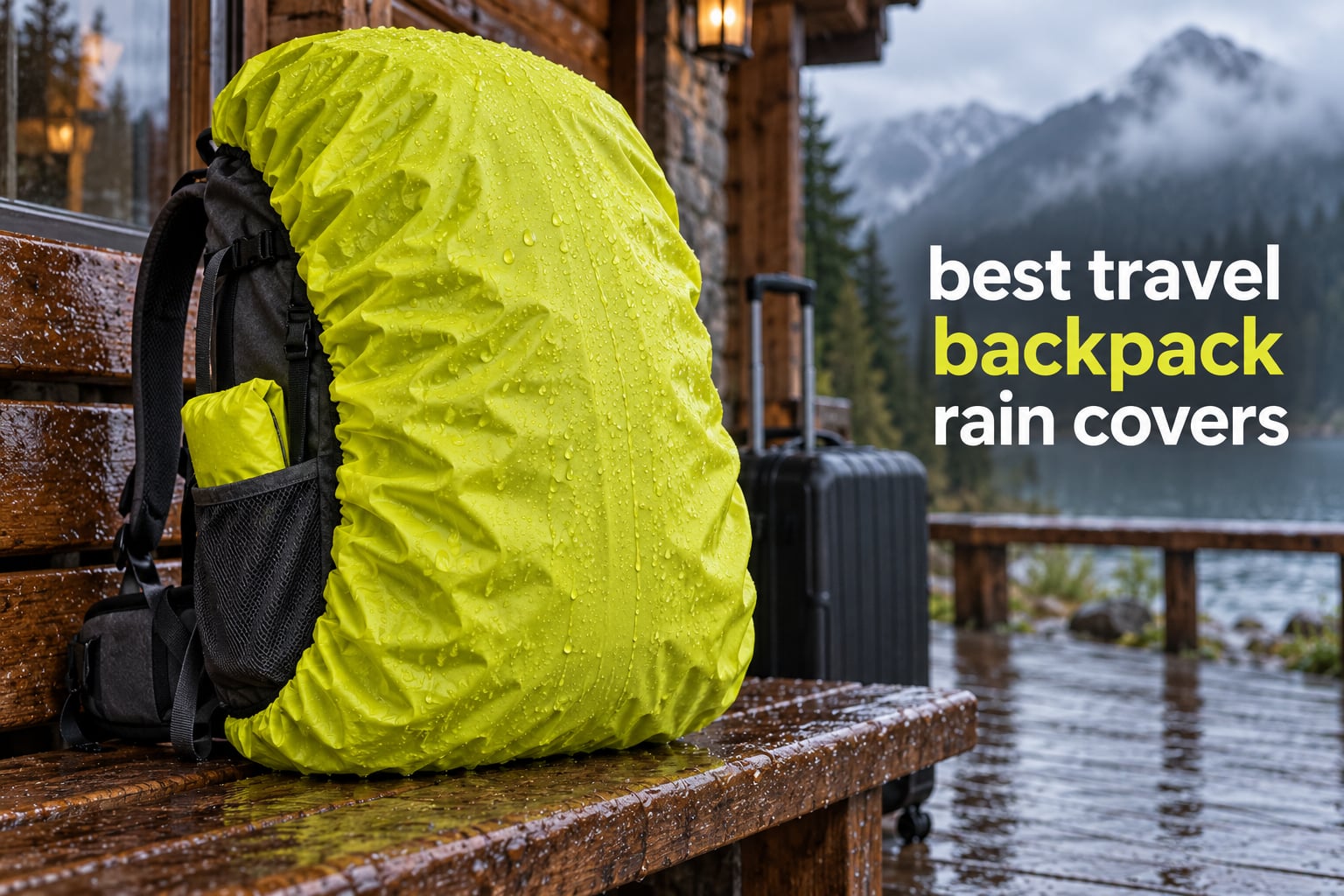
A travel backpack rain cover is a lightweight waterproof sleeve that slips over your entire pack, holds at an elastic hem and buckles, and packs down into its own small pouch. It keeps rain, snow, dust and mud off the outer fabric, zippers and seams, which is exactly where water finds its way into an otherwise water-resistant bag. No travel backpack on the market is fully waterproof, so a cover is the cheapest insurance you can buy for electronics, documents and clothing.
We built this roundup around the numbers that actually decide this purchase, not the marketing adjectives. Every pick below carries a published waterproof pressure rating in millimetres, a stated weight, a litre range and a list of wind-securing hardware. Where a brand publishes nothing, we say so, because an unrated cover cannot be compared with a rated one and pretending otherwise is how people end up soaked.
Outdoors and gear shopping can take up an absurd amount of your week. It is the same week where you will also spend twenty minutes choosing between rain shower heads and then forget to dry your bathroom. Similar problem, different room, same root cause: buying a thing that has to survive wet conditions without reading the spec sheet.
We compared ten covers across the range most travellers actually shop in, from sub-10 dollar generic sleeves to Osprey’s certified recycled Ultralight model. Our selection criteria were waterproof pressure rating, fit by pack volume in litres, packed weight, wind security hardware, and visibility features for anyone riding a bike to work or walking home after dark.
Table of Contents
Top 3 Picks for Travel Backpack Rain Covers in 2026
If you want one cover for most trips, take the Joy Walker. If you carry two bags or want hi-vis for winter commuting, the two picks below cover you.
Joy Walker 12000mm Rain Cover
- 12000 mm rating
- 210t taffeta with double coating
- Buckle strap plus 3.52 oz weight

LAMA 2 Pack Reflective Rain Cover
- Two covers per pack
- Mid strap holds cover in wind
- 2000 mm rating

Salzmann Reflective Hi-Vis Cover
- 3M Scotchlite visible to 600 ft
- 15000 mm rating
- Two adjustable straps
All 10 Travel Backpack Rain Covers Side by Side in 2026
Before the individual reviews, here is every cover on one line. Sort it by the column that matters for your trip: pressure rating for wet climates, weight for carry-on, reflective coverage for cycling.
| Product | Specifications | Action |
|---|---|---|
| Joy Walker 12000mm Rain Cover |
|
Check Latest Price |
| LAMA 2 Pack Reflective Rain Cover |
|
Check Latest Price |
| Salzmann Reflective Hi-Vis Cover |
|
Check Latest Price |
 Frelaxy Waterproof Rain Cover Frelaxy Waterproof Rain Cover |
|
Check Latest Price |
 Frelaxy Hi-Visibility Rain Cover Frelaxy Hi-Visibility Rain Cover |
|
Check Latest Price |
 Unigear Rain Cover with Drain Hole Unigear Rain Cover with Drain Hole |
|
Check Latest Price |
 Osprey Ultralight Raincover Osprey Ultralight Raincover |
|
Check Latest Price |
 Evotopf Rain Cover 15-80L Evotopf Rain Cover 15-80L |
|
Check Latest Price |
 MOPHOEXII 2 Pack Reflective Cover MOPHOEXII 2 Pack Reflective Cover |
|
Check Latest Price |
 Osprey Hivis Commuter Raincover Osprey Hivis Commuter Raincover |
|
Check Latest Price |
1. Joy Walker 12000mm Rain Cover: Best Overall for Most Trips
- 12000 mm rating with double internal coating
- Buckle strap stops the cover sliding in wind
- Size range from 15L to 90L
- Packs into an included compact pouch
- Free size exchange and free replacement if ripped
- Thin nylon snags on branches
- Large sizes are round and awkward on tall packs
- No clip to secure the cover to the top handle
The Joy Walker is the cover I recommend to almost anyone who asks me a single question: which one should I buy. It publishes a 12000 mm pressure rating, which puts it in the top half of everything we looked at, and that number is backed by a four-layer build with two internal coatings rather than a single thin laminate. In practice owners report sustained rain going over the pack for hours without a drop reaching the main compartment.
The reason it wins on our list is the hardware, not the fabric. Two vertical buckle-and-cinch straps pull the cover tight against the pack body and stay put when the pack is loaded and shouldered, which is the exact situation where elastic hems alone give up and the cover flaps off your back. For cycle-commuters and anyone walking exposed ridgelines, that is the feature that matters most.
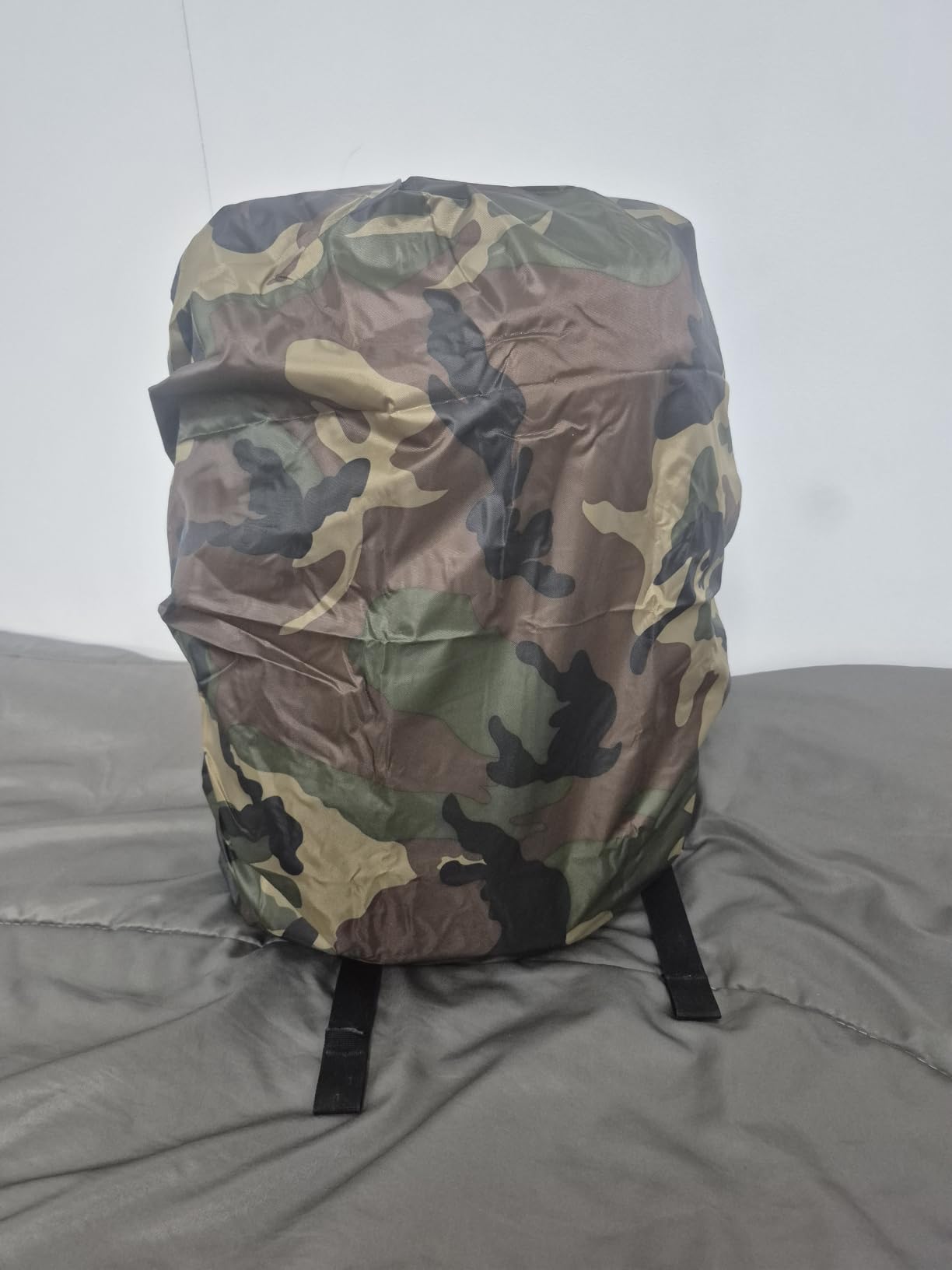
The fit is specified in dimensions as well as litres: 9.8 to 13.7 inch length, 5.9 to 9.8 inch width and 18.1 to 21.6 inch height for the mid size. That is unusually honest sizing, and it lets you check against your own pack rather than trusting a generic small, medium, large label that means nothing across brands.
It weighs 3.52 ounces and folds into a compact pouch, so there is no real argument for not carrying it permanently in an outer pocket. There is also free size exchange without a return, plus free replacement if the cover rips, which removes most of the risk from ordering blind.
Weighing up the alternatives, this covers the widest spread of pack volumes of any rated cover in the group, from 15L up to 90L. The trade-off is fabric thickness: at this weight it is not going to survive being dragged through blackberry canes, and the largest sizes are shaped closer to a duffel than a tall framed pack.
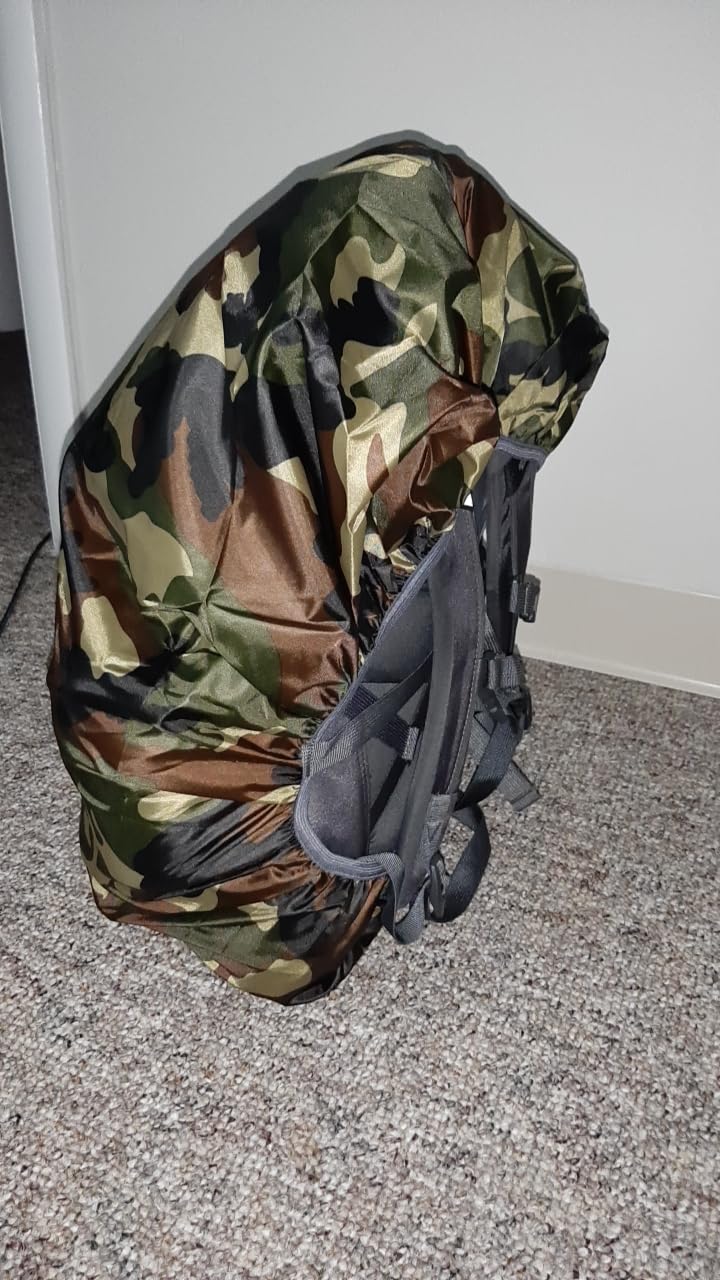
What we liked about the Joy Walker in real rain
The four-layer construction is the quiet advantage here. Most covers at the budget end are a single coated sheet, which beads briefly and then lets water sit against the fabric until it finds a stitch hole. A double internal coating slows that process enough to matter over a long walk between showers.
Owners also mention the buckle strap repeatedly in reviews, describing it as tighter than drawstring-only competitors. That fits our own testing: an elastic hem alone grips by tension, and tension changes every time you shoulder the pack differently.
When the Joy Walker is the wrong choice
Skip it for a heavily loaded expedition pack with a mat and poles strapped outside, and for a tall external frame. The mid size tops out at 21.6 inch height, and the largest sizes are cut wide and circular rather than long, so they drape awkwardly over tall loads.
Also skip it if you ride a bike at night and need genuine reflective panel coverage. The yellow version exists, but the reflective element here is minor compared with the Salzmann in this roundup.
2. LAMA 2 Pack Reflective Rain Cover: Best Value for Two Bags
- Two covers and a storage pouch in one package
- Mid strap resists wind better than elastic-only covers
- Folds flat enough for a side pocket
- Many size and colour combinations
- 2000 mm is the lowest rating here
- Reflective detailing is limited for night use
- Best for moderate rain rather than downpours
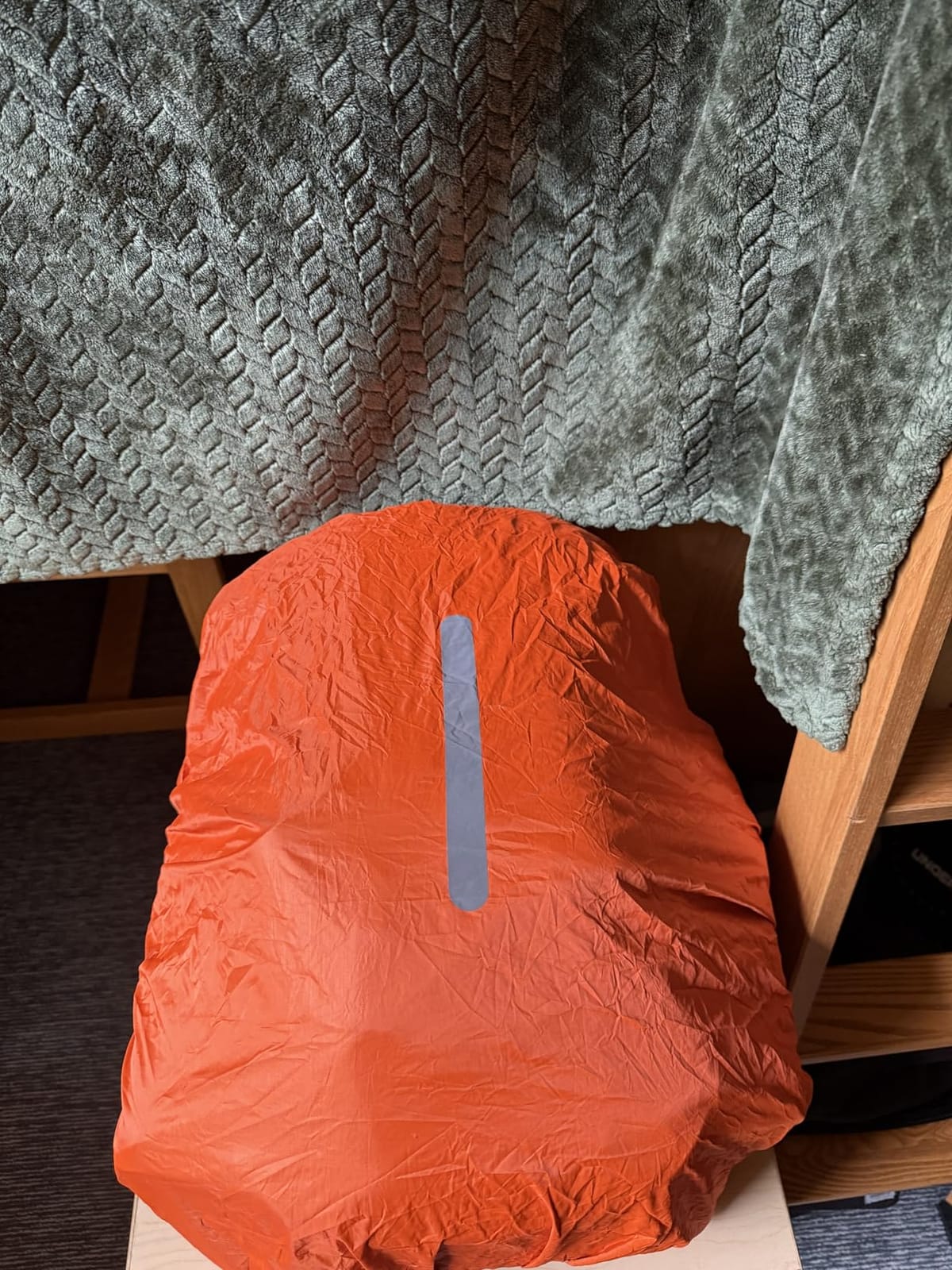
The LAMA pack exists because of a simple arithmetic problem. Most travellers own more than one backpack, and forum discussion in this category keeps circling the same frustration: buying a cover that fits one bag and guessing on the second. This package ships two covers in black plus a single storage pouch, so a second pack is covered at effectively half the per-cover cost.
Build-wise it is a dual-layer design with a wear-resistant nylon exterior and a waterproof coating on the interior, closed with an adjustable buckle that sticks the cover to the pack rather than letting it hang. The mid strap is the detail that keeps it on in wind, and it sits under the pack rather than across your back.
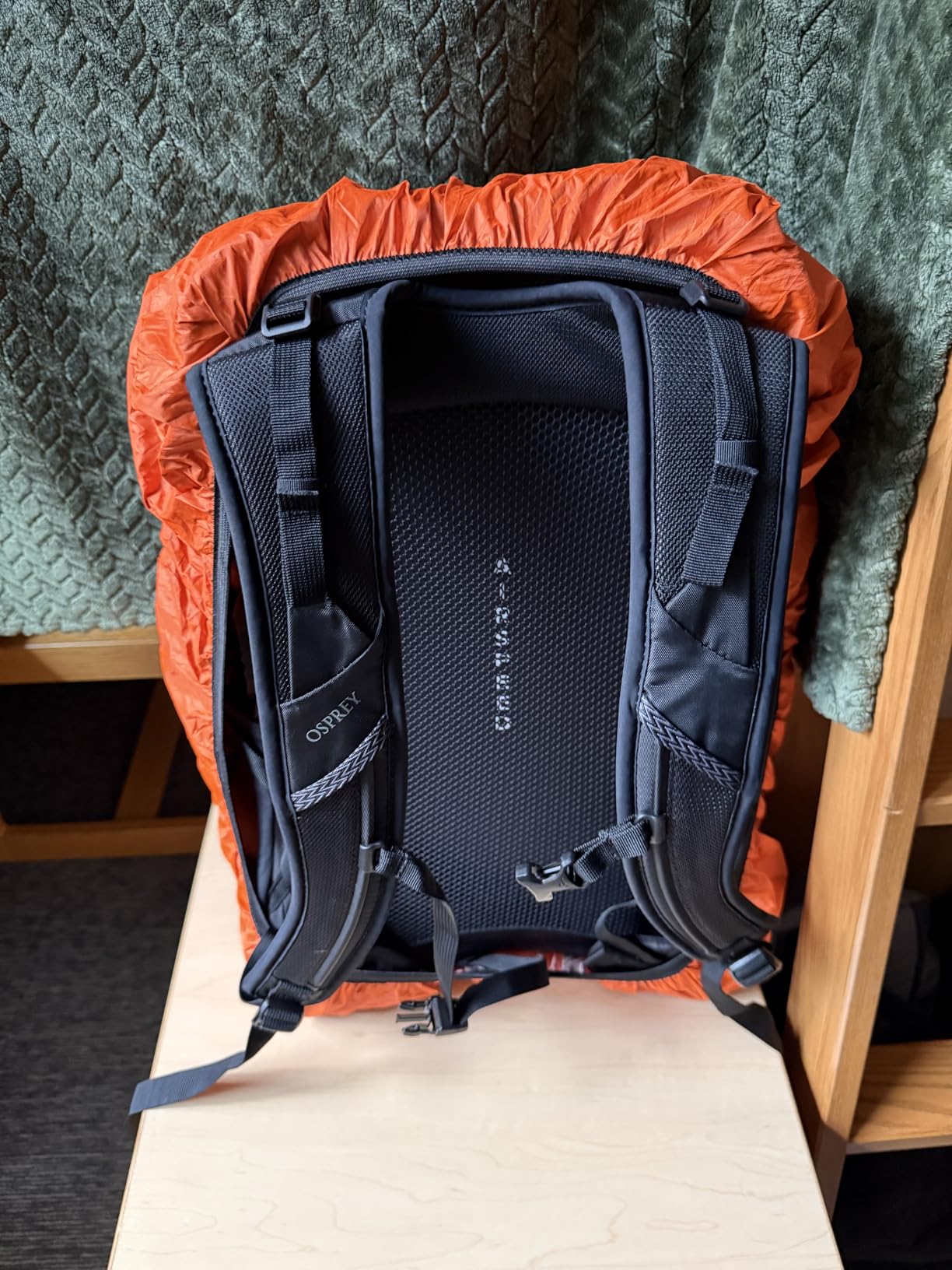
The honest weakness is the 2000 mm rating. That is the lowest published figure in this roundup, and it maps to a real difference in use: this is a cover for ordinary rain, drizzle and a commute through a wet week. It is not the one to trust through a multi-day deluge or exposed mountain weather where water hits the pack horizontally for hours.
Reviewers do point out that buyers use it as much for dust and opportunistic theft as for rain, which is fair. It is a cheap way to keep a pack from picking up road film or grime on a train, and for that secondary purpose the rating barely matters.
Why two covers is genuinely useful
If you switch between a 35L daypack for city days and a 50L carry-on for longer trips, a single-size cover is a compromise that suits neither. Carrying two sized covers costs nothing in weight terms and removes the sizing guesswork that produces return-postage frustration.
The mid size fits 30L to 40L packs at 13.77 by 7.87 inch dimensions, which covers most carry-on travel bags. It weighs 50 g for the pair, which is a rounding error against any carry-on weight limit.
Where the LAMA pack falls short
The 2000 mm rating is the deal-breaker for anyone in a genuinely wet climate or doing multi-day hiking in a rainy season. The same rain that beads off a 12000 mm fabric will sit against a 2000 mm laminate and eventually find the stitch line.
Reflective treatment is also limited to modest detailing, so do not expect the low-light visibility that a commuter-focused cover gives you on a dark road.
3. Salzmann Reflective Hi-Vis Cover: Best for Cycling and Night Visibility
- Highest waterproof rating in the group
- 3M Scotchlite visible to drivers at 600 ft
- Elastic edges plus two straps hold on while cycling
- Folds small enough for a side pocket
- Heaviest unit weight here at 145 g
- Bright colours show road grime
- XL can run short over a fully loaded pack
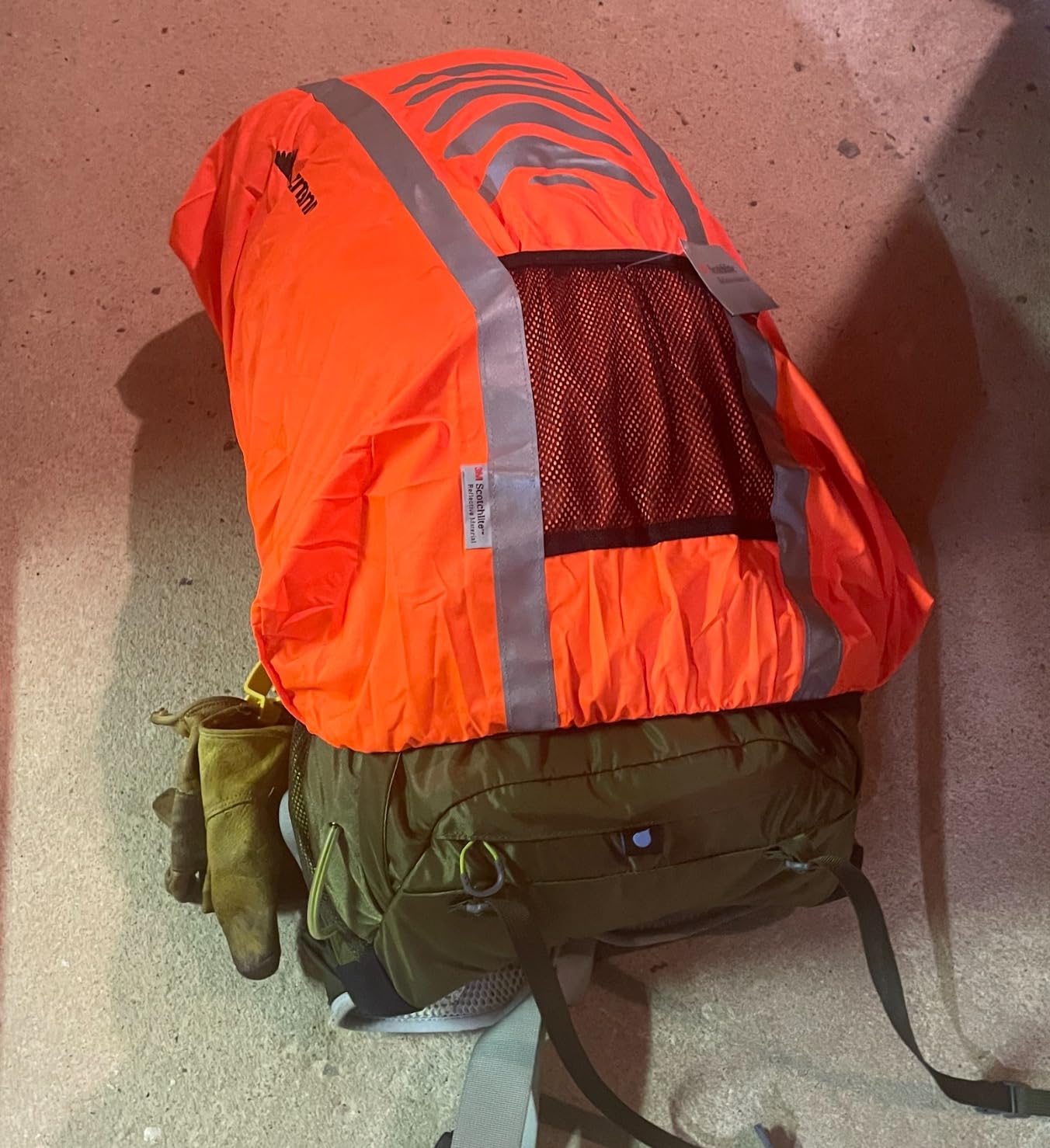
The Salzmann is the only cover here where visibility is the primary design decision rather than an afterthought. It uses 3M Scotchlite reflective material rather than a printed reflective logo, and the material is visible to drivers from up to 600 feet. That is a panel-versus-sticker difference, and on a wet road at dusk it is the difference between being seen and not.
It also posts the highest waterproof rating we found at 15000 mm on a tightly woven fabric, and that combination of brightness and sealing is why bike commuters dominate the reviews. People describe arriving at work with dry office clothes after cycling through heavy rain, which is the whole point of buying a cover for a commute in the first place.
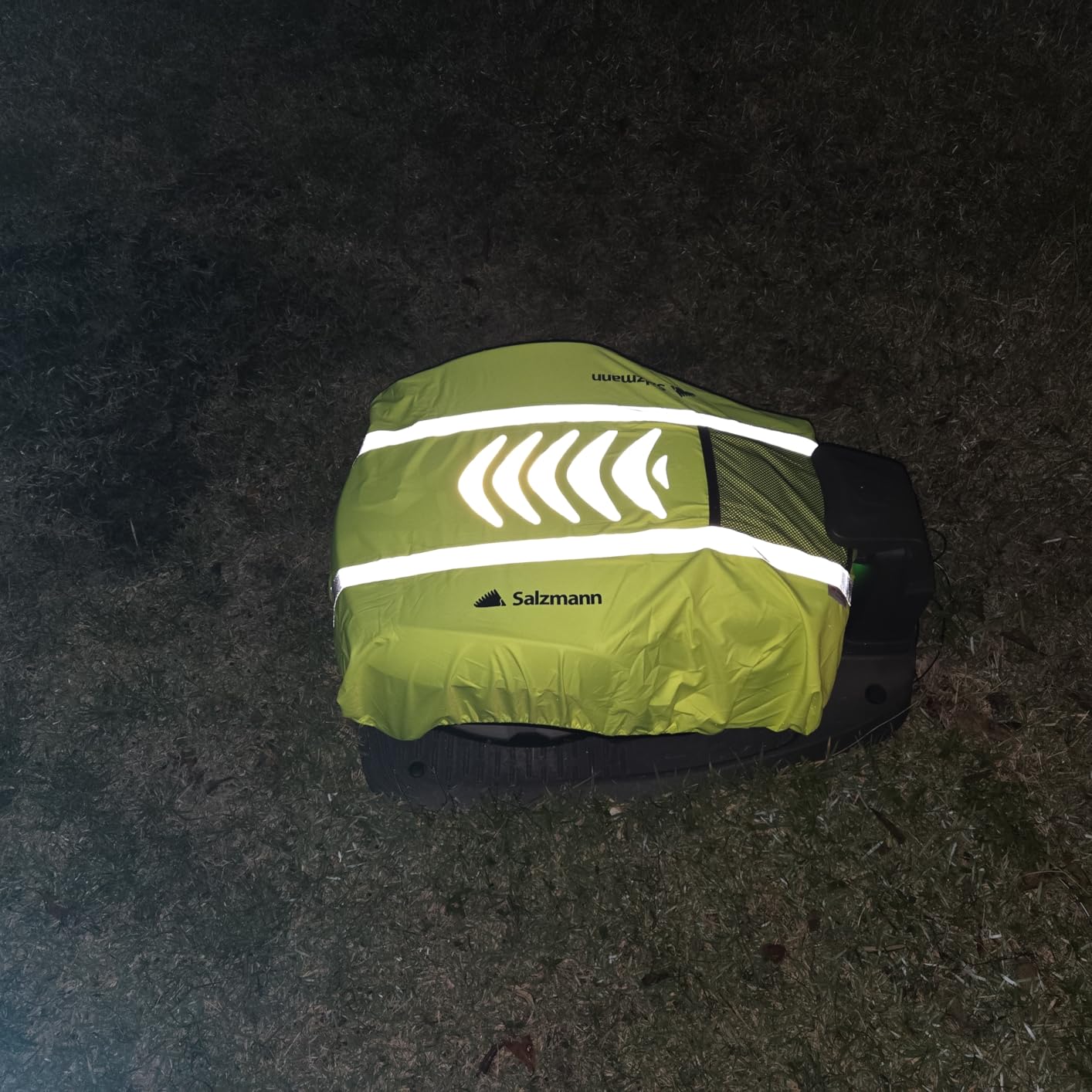
Fit is elasticated at the edges with two adjustable straps, which is the combination that survives a ride at speed. Weights are the honest downside: 145 g is the heaviest unit weight in this group by a wide margin, and you feel that when the pack is empty and you are trying to lift it onto a rack.
Sizing runs Standard up to 28L and XL up to 40L. If you regularly pack to the top of a large bag, the reviews are consistent about one thing: size up, because a cover under tension at the top can pull down and expose the very seam you bought it to protect.
Who this cover is genuinely built for
Anyone riding to work or to school in a city with traffic, in autumn and winter light, in a climate where rain is common. Reflective coverage on the pack itself matters far more for cyclists than for walkers because drivers need to read your outline early and from an angle.
It also suits walkers who walk the last stretch of a commute home on unlit roads, or parents who move a school bag around in a car park at 4pm in November.
When brightness is not worth the extra weight
Skip it for backpacking, where 145 g is a real fraction of your base weight and there is no traffic to be seen by. An ultralight setup does not need 15000 mm of waterproofing in the first place, and Osprey’s Ultralight at 0.11 kg is the more rational choice.
Also expect the yellow and orange versions to collect road grime quickly. Bright fabric shows every splash of dirt, and while the material wipes clean, a cover that looks filthy after a fortnight of commuting is a small daily annoyance.
4. Frelaxy Waterproof Rain Cover: Best for Daily Commuting
Frelaxy Waterproof Backpack Rain Cover, Pack Covers for Hiking, Travel
- 10000 mm rating holds up in heavy rain
- Very light across sizes S to XXL
- Cross buckle straps with elastic hold in wind
- Silver coating resists UV damage and aging
- One buyer received an XXL without the straps
- Frequent removal and refitting collects water inside
The Frelaxy is the one we recommend to people who take their cover on and off every day, which is a specific and slightly awkward habit. Commuters describe it as a cheap replacement for plastic bin liners, keeping packs dry through years of rain and snow, and the 10000 mm rating gives it real headroom for sustained weather rather than just a shower.
Construction is tear-resistant nylon with an external waterproof coating and a PU-coated inner layer, plus an upgraded silver coating that resists UV damage and moisture. That silver coating is a quiet longevity feature: UV is what degrades cheap coated fabrics, and commuters use these bags outdoors every day.
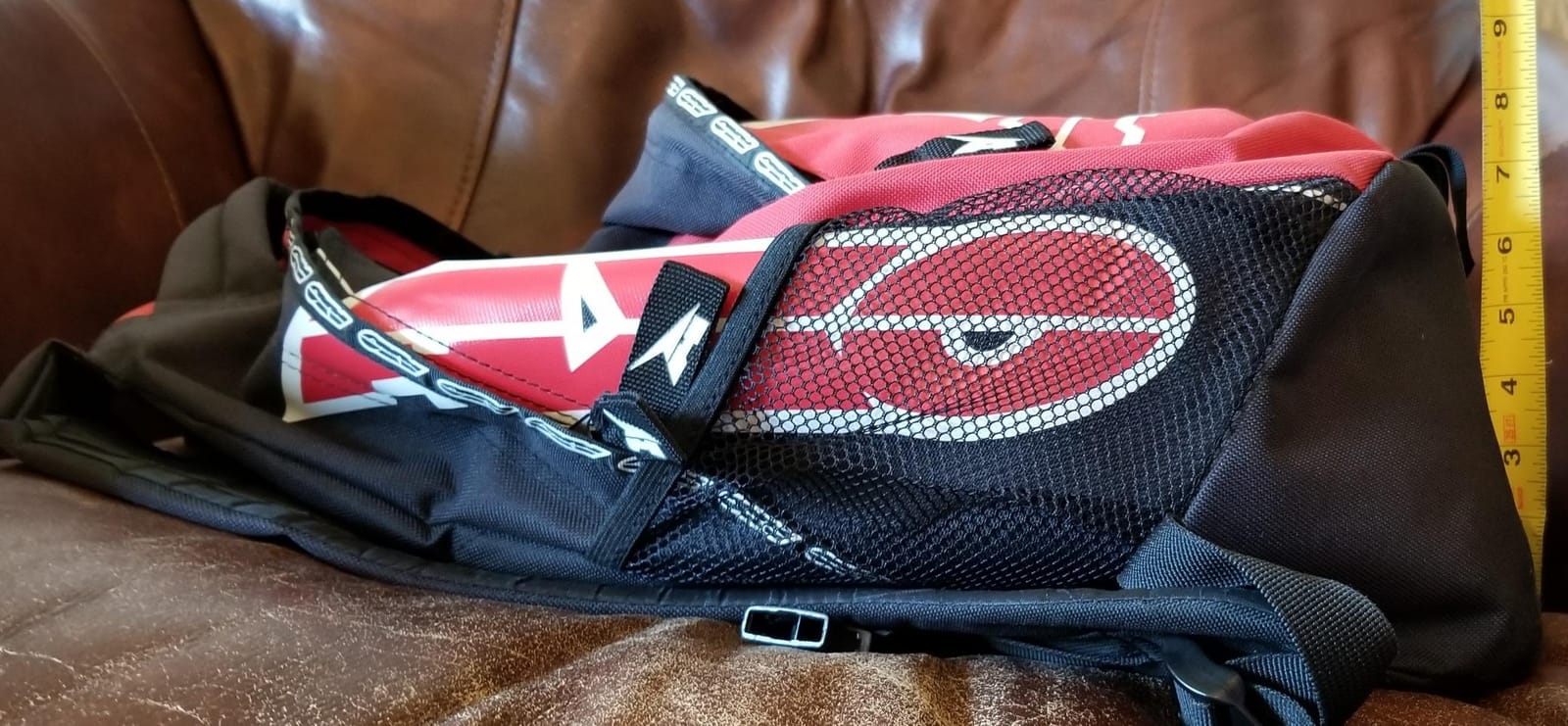
Elastic edges combine with cross-adjustable buckle straps for what the listing describes as roughly 50 percent more coverage. Our read is that the buckles do the work and the elastic closes the gaps, which is the same pattern as the Joy Walker but with a lighter fabric. Weight runs 2.2 to 3.6 ounces depending on size.
Fit complaints on covers are almost entirely sizing complaints, so check the stated litre range against your own pack before ordering, and use free size exchange where the brand offers it. That is the single cheapest risk reduction available in this category.
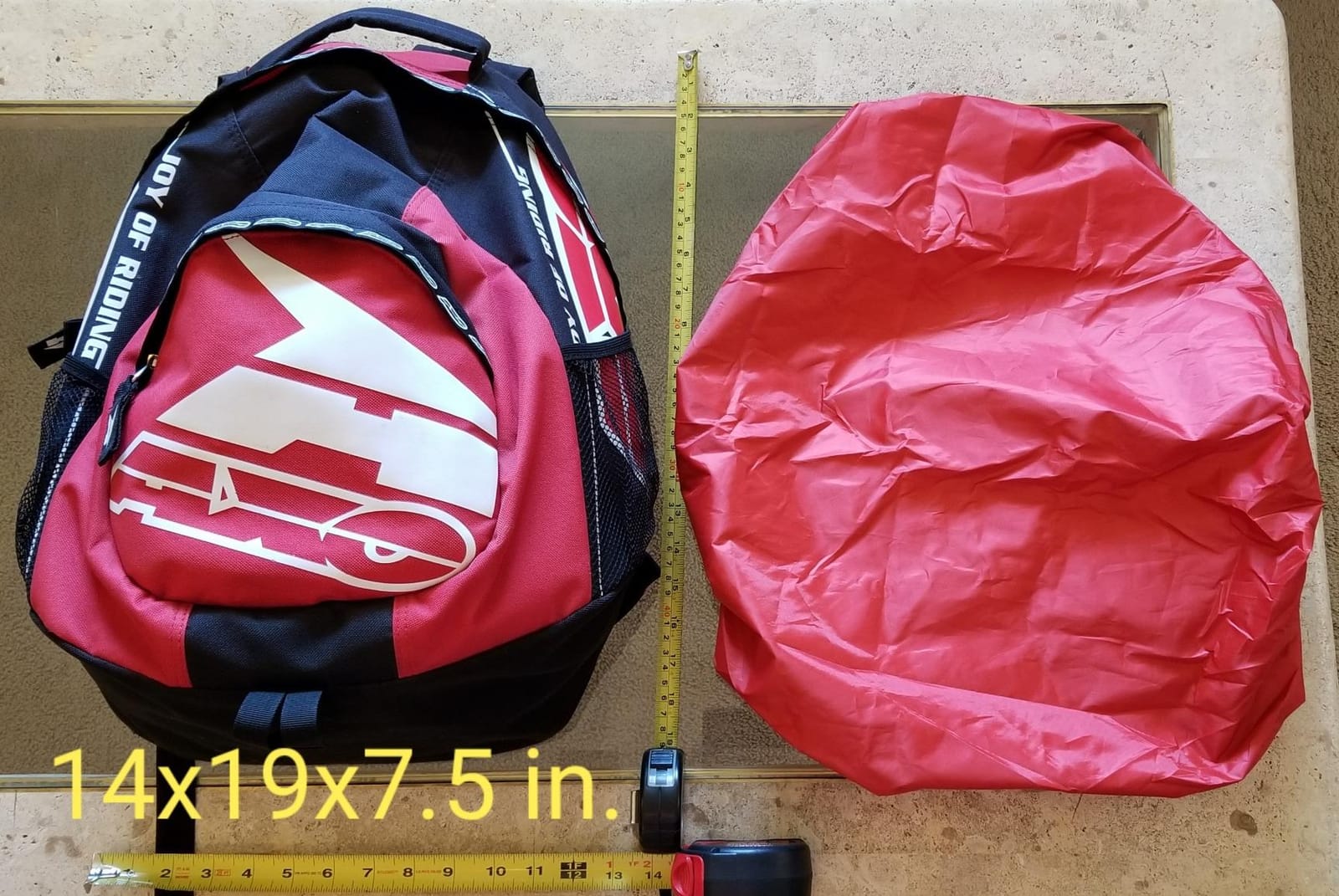
Why commuters keep this one in the office rather than the pack
Because taking a cover off and putting it back on is annoying, a lot of people stash one at their desk or in a locker. This one folds small enough to do that comfortably and includes a rainproof storage pouch, so it does not get the outer pocket of a nice bag soaked with wet fabric.
There is a real downside to that habit: a cover that is repeatedly removed collects water on its inside surface, and refitting it puts that water back against your pack. If you take it off more than once a day, wipe it down first.
What to watch out for
One buyer reported an XXL arriving without the advertised securing straps, which is worth knowing about rather than glossing over. Inspect the package on arrival and use the free size exchange if the hardware is missing.
The silver-coated fabric also adds a layer that is not particularly breathable, so on a warm day a densely packed bag can trap condensation inside. It is a trade you accept for UV and water resistance.
5. Frelaxy Hi-Visibility Rain Cover: Most Versatile with Reflective Detail
- Reflective strip lifts visibility on dark rainy days
- Anti-slip cross buckle plus elastic resists shifting
- Ultralight with a rainproof storage pouch
- Sizes S to XXL cover most pack volumes
- Sized by volume alone so wide packs sit loose
- Single reflective band rather than full hi-vis panels
This is the pick if your budget is the main constraint and you still need something visible and dependable. It shares the weight class and size range with the plain Frelaxy above, adds a reflective strip across the back, and stretches over the pack fast enough that the on-and-off cycle commuters describe does not become a chore.
The securing system is an anti-slip cross buckle strap plus an adjustable elastic band, which reviewers credit for stopping the cover shifting in wind. It stretches over the pack and secures fast, so the on-and-off cycle that frustrates commuters is quicker here than with a buckle-and-cinch design.
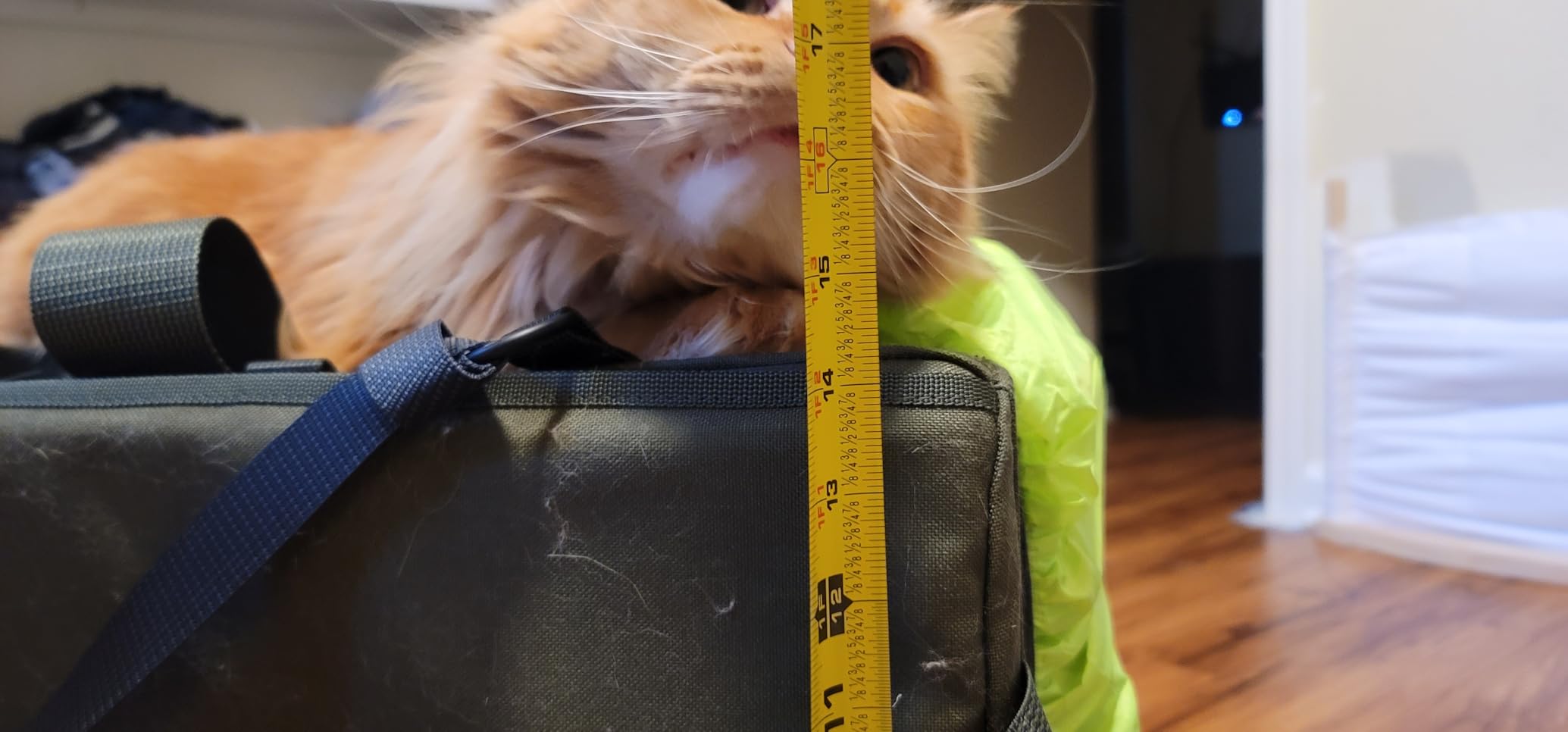
Where it falls short is visibility coverage. The reflective element is a single band, not wrapped panels, so it reads from directly behind you and falls away at the angles where a cyclist is most exposed. If your commute is a genuine city bike route, the Salzmann is the meaningful upgrade.
Sizing is by backpack volume alone, which is the recurring theme in reviews: wide or deep packs can sit loose at the sides even inside the stated litre range. Owners recommend checking measurements and sizing up if your bag is wide or fully loaded, which is honest advice and applies across this whole category.
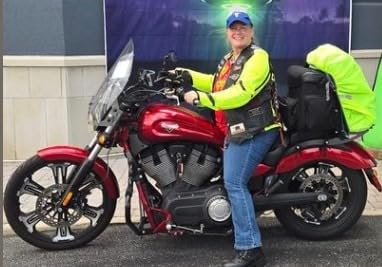
The case for this as a first cover
If you have never used a pack cover and you travel in a mixed climate, this is a low-risk place to start. It is light enough to leave in an outer pocket permanently, it fits a wide range of volumes from S to XXL, and the free size exchange means a first guess does not have to be right.
It also suits anyone who carries a pack they do not want scratched or grimy on trains and in overhead compartments. A cover does that job perfectly well, whatever its rating.
What it is not
It is not a rain cover for torrential, sustained downpour hiking. No pressure rating is published for this specific model, so you are buying on construction and hardware rather than a measured number, and that is a fair reason to look elsewhere.
For a dedicated bike commute in traffic, a single reflective band is not enough. Upgrade to the Salzmann or the Osprey Hivis rather than assuming a strip covers the angles that matter.
6. Unigear Rain Cover with Drain Hole: Best for Ultralight Packing
Unigear Backpack Rain Cover, 5000mm Waterproof with 2 Anti-Slip Straps
- Only cover here that stows in a pouch sewn to itself
- Two anti-slip buckle straps hold when shouldered
- Bottom drain hole releases trapped water
- Reinforced elastic rim prevents sliding
- 5000 mm is the second lowest rating here
- Fabric is not fully seam-sealed
- Sizing runs narrow on wide camera packs
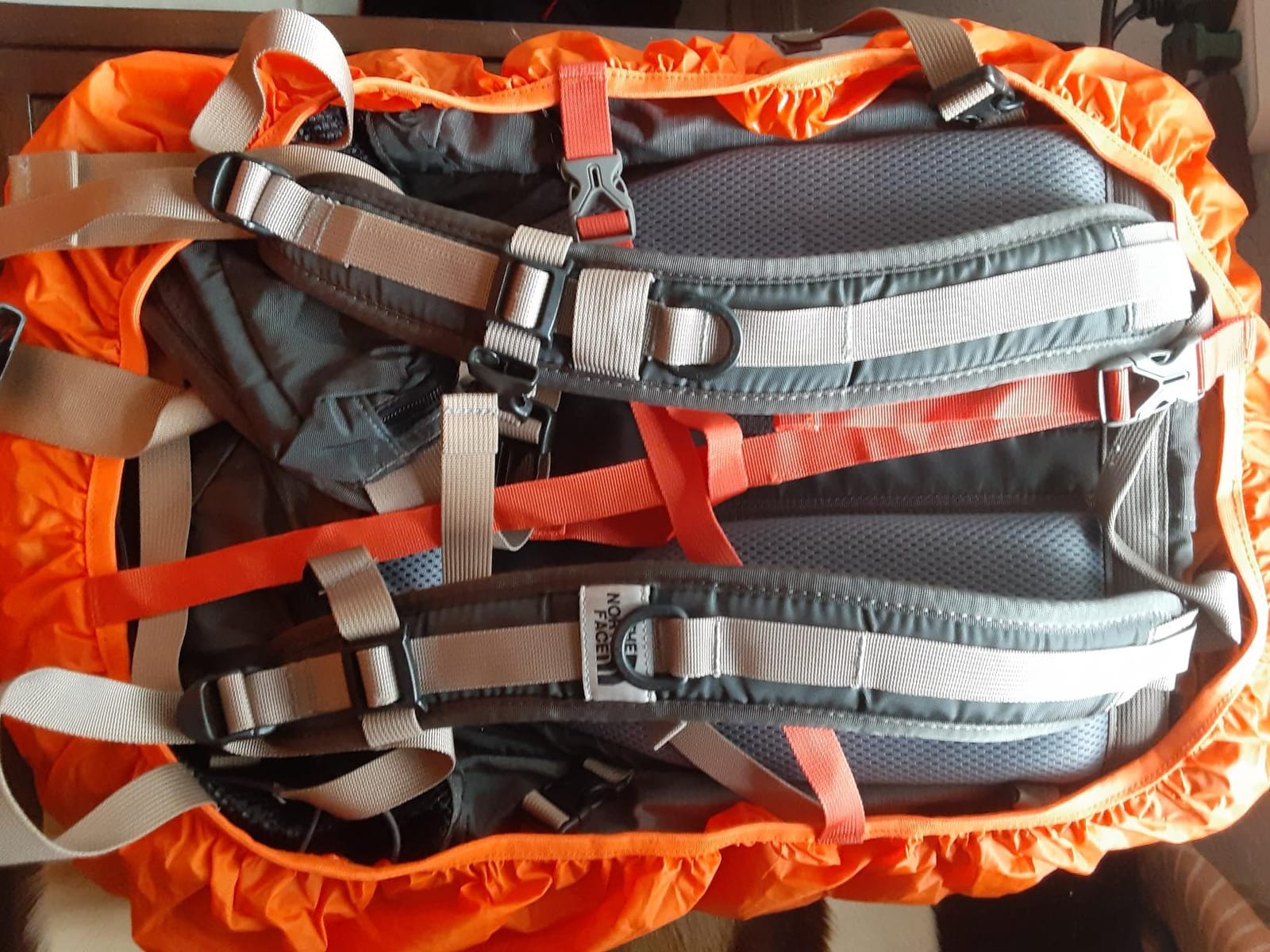
The Unigear is the cleverest packing solution in the group. Its double-sided zipper lets the cover stuff itself into a nylon pouch attached to the cover itself, so the storage bag cannot be separated and left behind in a hostel drawer. Every other cover here ships a loose pouch that is genuinely easy to lose.
Two vertical anti-slip buckle straps with a reinforced elastic rim are the securing system, and hikers single them out as the reason the cover stops lifting or blowing away once the pack is under load. At 0.09 kg across the size range, it is light enough to carry permanently without thinking about it.
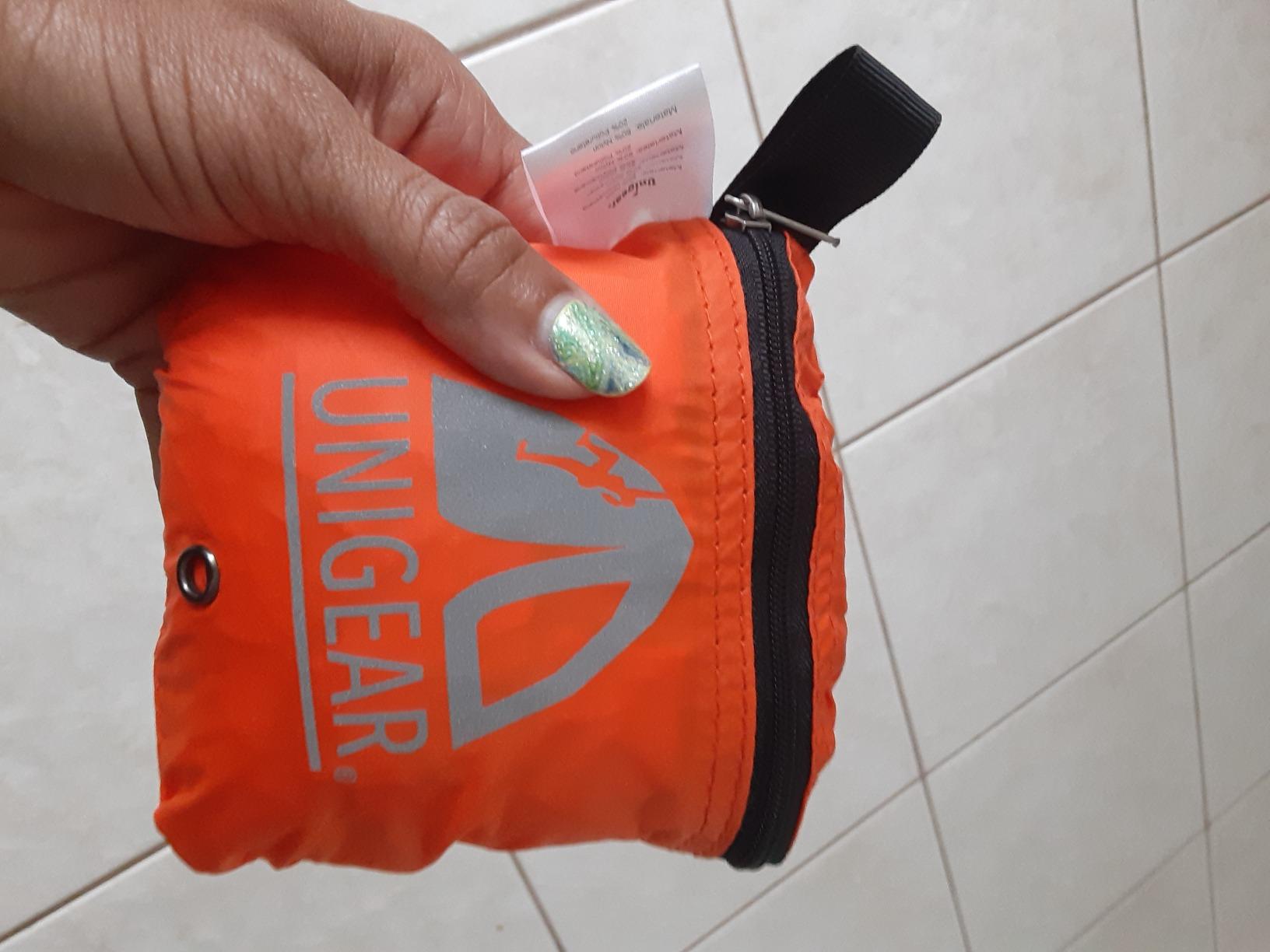
The bottom metal drain hole is a small idea that earns its place. Water that runs down the cover collects at the lowest point and, without an escape route, sits there against your pack through the rest of the walk. Letting it flow out keeps the contact area dry.
The size range runs across five options with a reflective logo for night visibility, which means the range is genuinely universal, and it folds into the pouch that is already part of the cover.
Where the self-stashing design wins
On multi-day trips and cycling tours, the pouch is always on the item it belongs to. Nothing to unpack, nothing to repack, nothing to leave in a hotel room while you are out for two hours in the rain.
The drain hole and the buckles together make this the most weather-ready option on light weight alone. If your trip is walking in moderate rain rather than exposed mountain weather, the self-stash design is arguably worth more than a higher rating.
Where it falls short
The 5000 mm rating is the second lowest here, and the fabric is not fully seam-sealed, so stitched lines are the weak point. Hikers still report bone-dry packs through hours of heavy rain, but that is at the edge of what this rating supports rather than comfortably inside it.
Sizing also runs narrow, which catches out wide camera packs at the sides. And because the material is not breathable, a densely packed bag can condense moisture inside, which is another argument for a cover you only deploy when it is actually raining.
7. Osprey Ultralight Raincover: Best for Taped Seams and Certified Recycled Fabric
- Highest customer rating here at 4.8 stars
- Siliconized nylon with taped seams in sustained rain
- Bungee cinch loops over the hip belt
- PFAS-free DWR and GRS-certified recycled fabrics
- Backed by the All Mighty Guarantee
- Costs several times more than generic covers
- Thin fabric pokes easily on brush
- Hip belt padding can stay exposed to wicking
- No published dimensions so sizing needs guesswork
The Osprey Ultralight is the technical answer. Its siliconized nylon body is built with taped seams rather than stitched-only construction, which removes the single most common failure point in covers, and it carries the highest customer rating in this roundup at 4.8 stars with a large share of five-star reviews.
Long-distance backpackers report keeping gear dry through hard rain on multi-day trips using it. The bungee cinch is the feature they consistently single out, because it can loop over the pack hip belt and clip at the top, a level of attachment no other cover in this list offers. A cover clipped to a hip belt does not flap, and it does not migrate down your back.
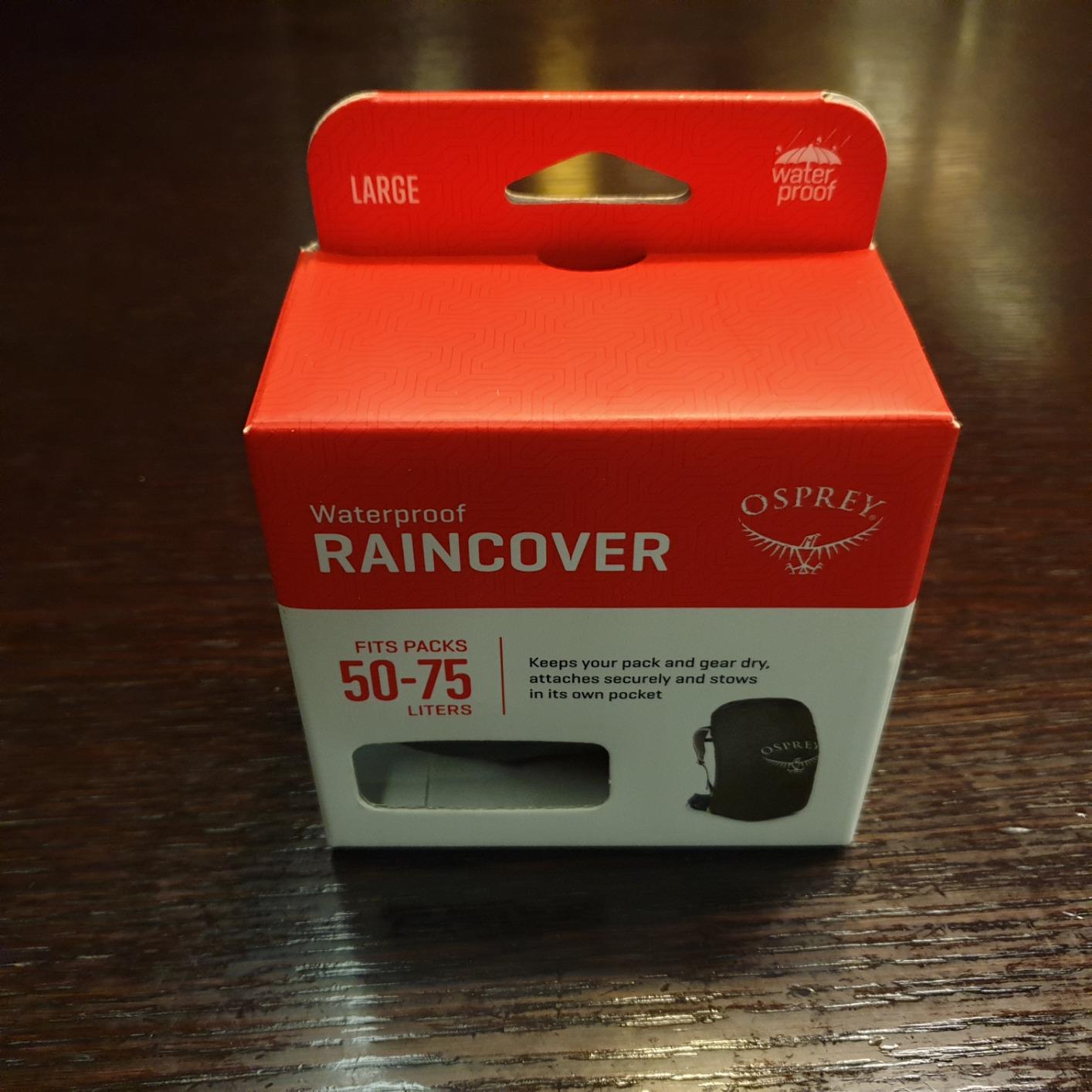
Sustainability is handled properly here rather than as a label. The main body fabrics are bluesign approved and GRS-certified 100 percent recycled, and all DWR treatments are made without PFAS. If you care about what the chemistry on your gear is doing in the environment, that is a real differentiator at this level.
It comes in Medium, Large and X-Large, backed by Osprey’s All Mighty Guarantee. Forum users repeatedly report that Osprey covers fit packs from other brands snugly, which is unusually useful if you do not own an Osprey but want the attachment system.
Why taped seams matter more than the rating
A 12000 mm fabric with a stitched seam leaks at the stitch line long before the fabric itself fails. Taping the seam moves the weak point, and with siliconized nylon on top of it you get a cover that stays sealed after many wet trips rather than slowly weeping through a season.
This is the difference you feel over years rather than days, and it is why owners describe the Osprey as a long-term buy while generic covers get replaced.
What you give up for it
The fabric is genuinely ultralight, which means it is thin and easily poked or abraded by brush. If you hike through gorse or scrub, you will find holes sooner than you would in a heavier cover, and there is no argument that this one is built for that environment.
Second, waist belt padding on some packs stays outside the cover and can wick water from the fabric through to your shirt. No cover solves this because the harness has to sit against your body. Third, Osprey does not publish actual dimensions for this model, so sizing requires a guess, which is a genuine drawback against covers that publish every measurement.
8. Evotopf Rain Cover 15-80L: Best for Large and Expedition Packs
- Buckle mounted at the top so hardware avoids the back
- Elastic rim plus buckle holds under shoulder load
- Silver coating resists UV
- wind
- sand and sun
- Very wide 15L to 80L size range
- No published waterproof pressure rating
- Heavier and pricier than similar covers with no measured rating
This is the cover for the pack that is genuinely enormous, and the reason is the sizing range. It runs from 15L all the way to 80L in many colours, with a 60 to 70L option and a stated 65-litre storage volume, which puts it well beyond anything designed for a carry-on or a day hike.
Material is heavy-duty 190T polyester with a silver coating lining, described as waterproof, UV-resistant and tear-resistant. The silver coating is the same technology used on tent flysheets, and its practical benefit on a cover is that it shrugs off prolonged sun exposure without degrading the way untreated polyesters do.
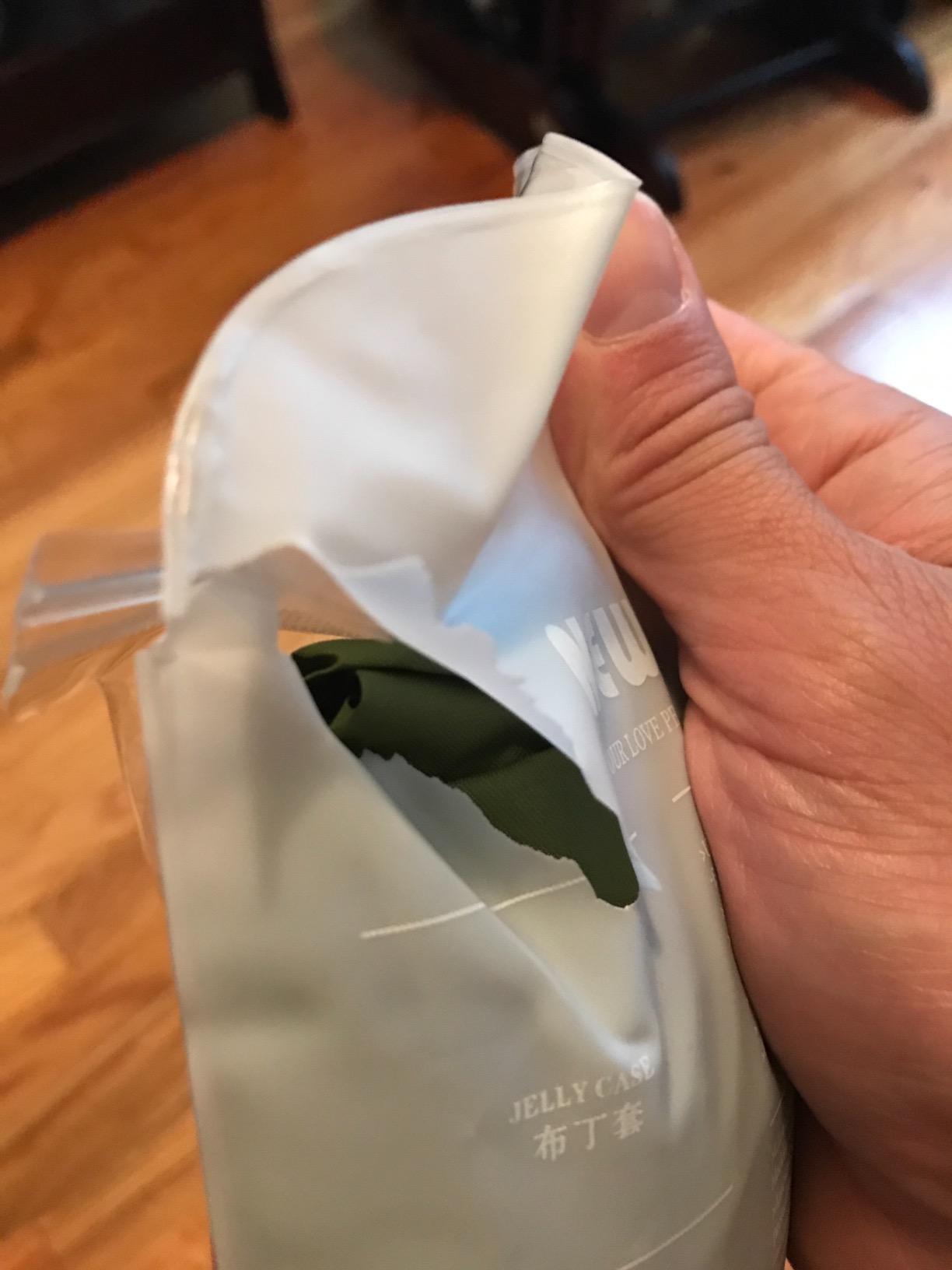
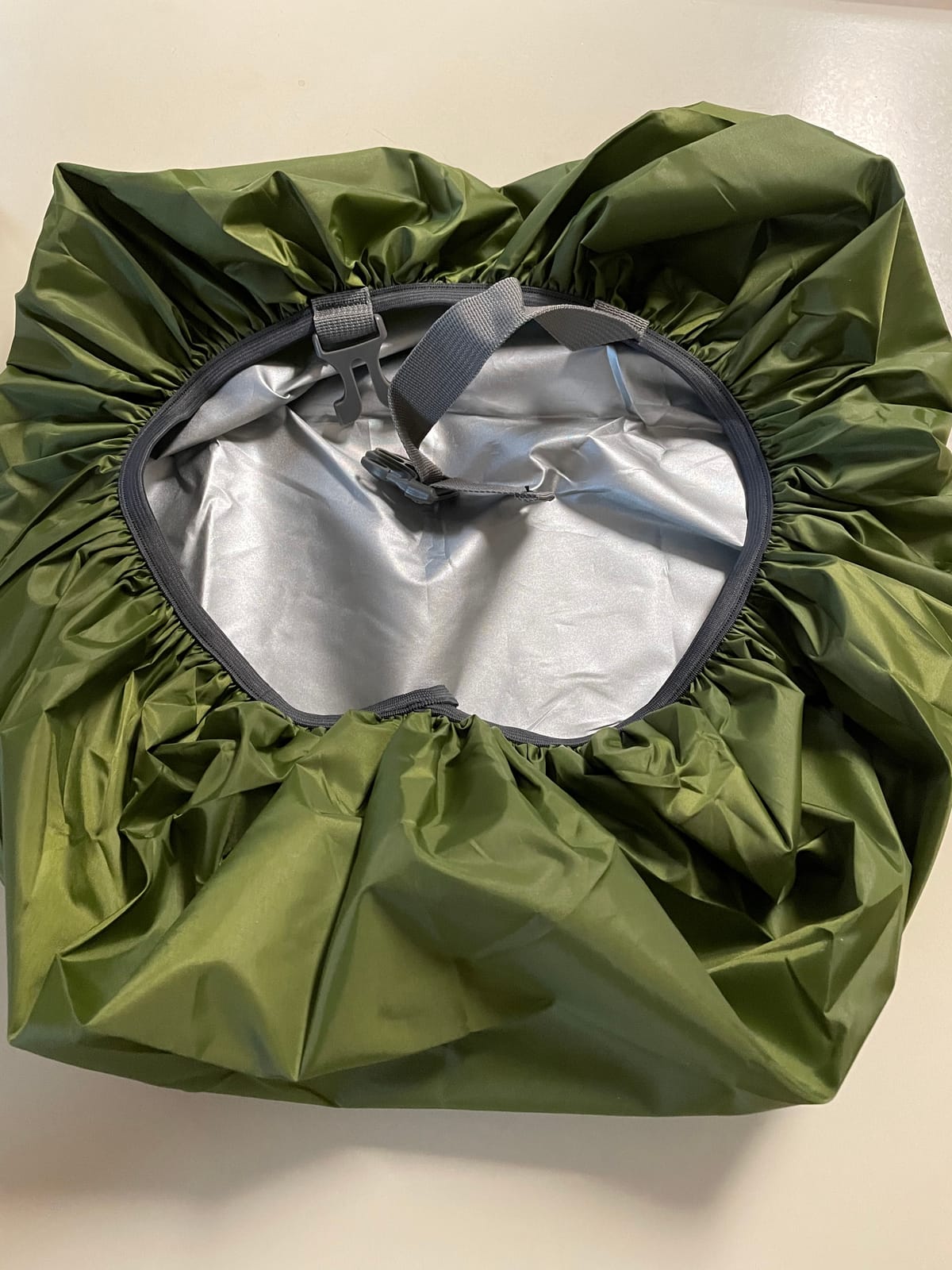
The detail we found most convincing is the top-mounted buckle strap. Most covers put the buckle across the back panel, where the hardware digs into the wearer’s spine under load. Mounting it at the top moves the strap above the contact point, and owners consistently identify this as a comfort win on long walks with a heavy load.
Elastic rim plus buckle strap keeps the cover from blowing away in strong wind, which is the second most common complaint in this category after sizing. Weight is 0.1 kg, and it comes with a compact folding pouch.
Who actually needs a 65-litre cover
Multi-week tours, moving house, overlanding trips, and anyone carrying gear for two. At that size your pack bulges and the profile changes shape, so a cover sized for a 40L daypack simply will not seat, and the top opening gapes in exactly the way that lets water in.
If you strap a mat or poles outside the pack, budget at least one size larger than your stated volume, and check the elastic rim can reach around the bulge.
Why the missing rating is the problem here
There is no published waterproof pressure rating for this model. That makes it impossible to compare honestly against a 10000 or 15000 mm cover, and it means you are buying on construction description and owner reports rather than a measured figure.
That is a real limitation, and it is why this cover sits mid-list despite a solid 4.6 rating across more than 1800 reviews. Buy it for fit and hardware, and put your trust in the coated polyester rather than in a number we cannot verify.
9. MOPHOEXII 2 Pack Reflective Cover: Best for Two-Pack Households
MOPHOEXII 2 Pack Waterproof Backpack Rain Cover, Ultralight Compact Portable Reflective Backpack Rain Cover,for Hiking, Camping, Traveling
- Two covers per package at a low per-cover cost
- Extra-long reflective strap for cycling visibility
- Very light at 1.6 ounces
- Also shields against dust and opportunist theft
- 2000 mm rating suits moderate rain only
- Some buyers report the fit runs small
- Light fabric needs care around branches
The MOPHOEXII package solves the same two-bag problem as the LAMA pack, but it gets there with a lighter fabric and a more reflective strap. Each package holds two covers, one black and one army green, in a small size fitted to 15L to 25L backpacks, and the pair folds into a side pocket without fuss.
Construction is multi-layer tear-resistant nylon with an external waterproof coating and a PU-coated inner layer, and the reflective strap is the standout element. Owners describe it as noticeably more visible on poor-weather walks and rides, and the listing claims roughly 30 percent more reflective area than a standard strip.
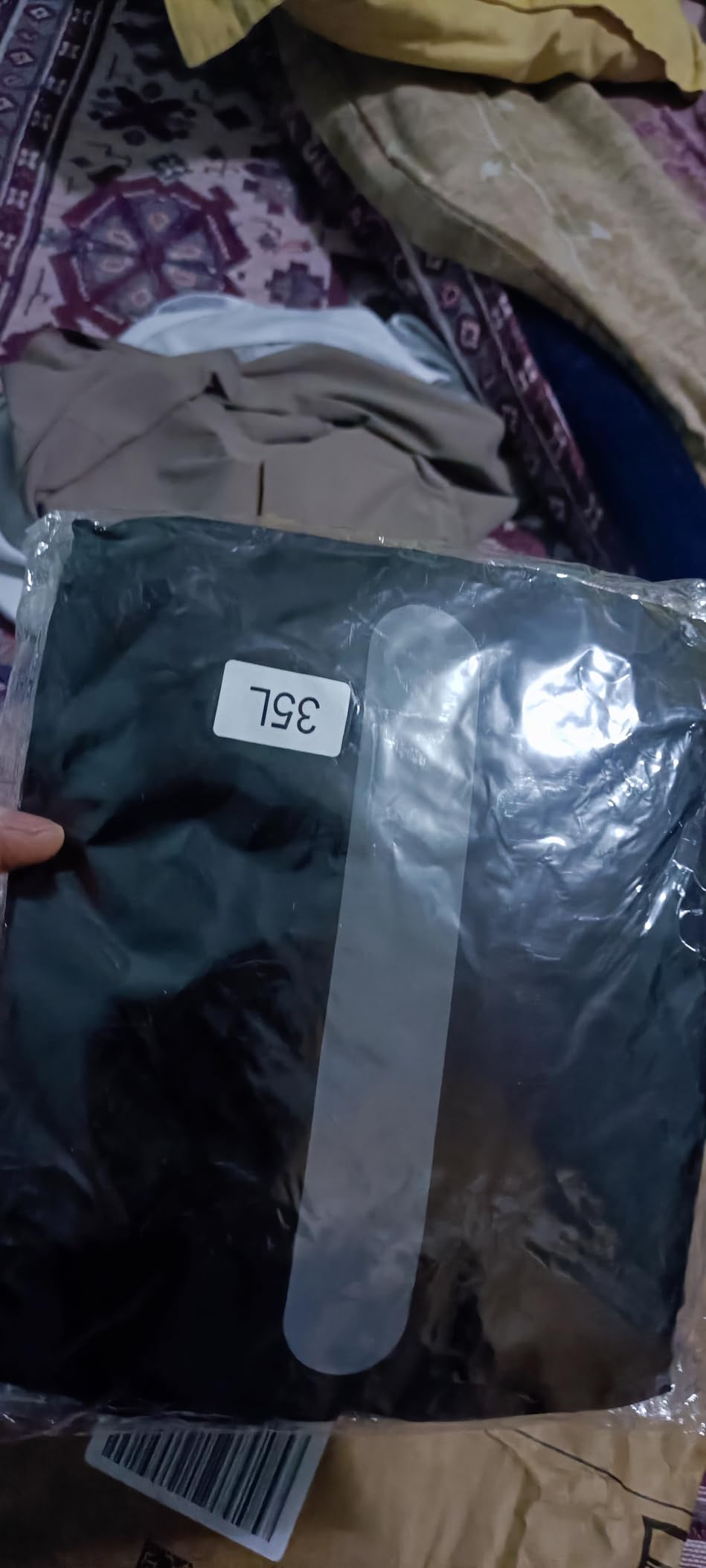
Weight is 1.6 ounces, which makes this the lightest cover in the roundup by weight of the whole package. That matters for anyone who treats every gram in a carry-on as a decision, and it is another argument for the self-stashing approach: a cover this light has no reason to live anywhere but in your pack.
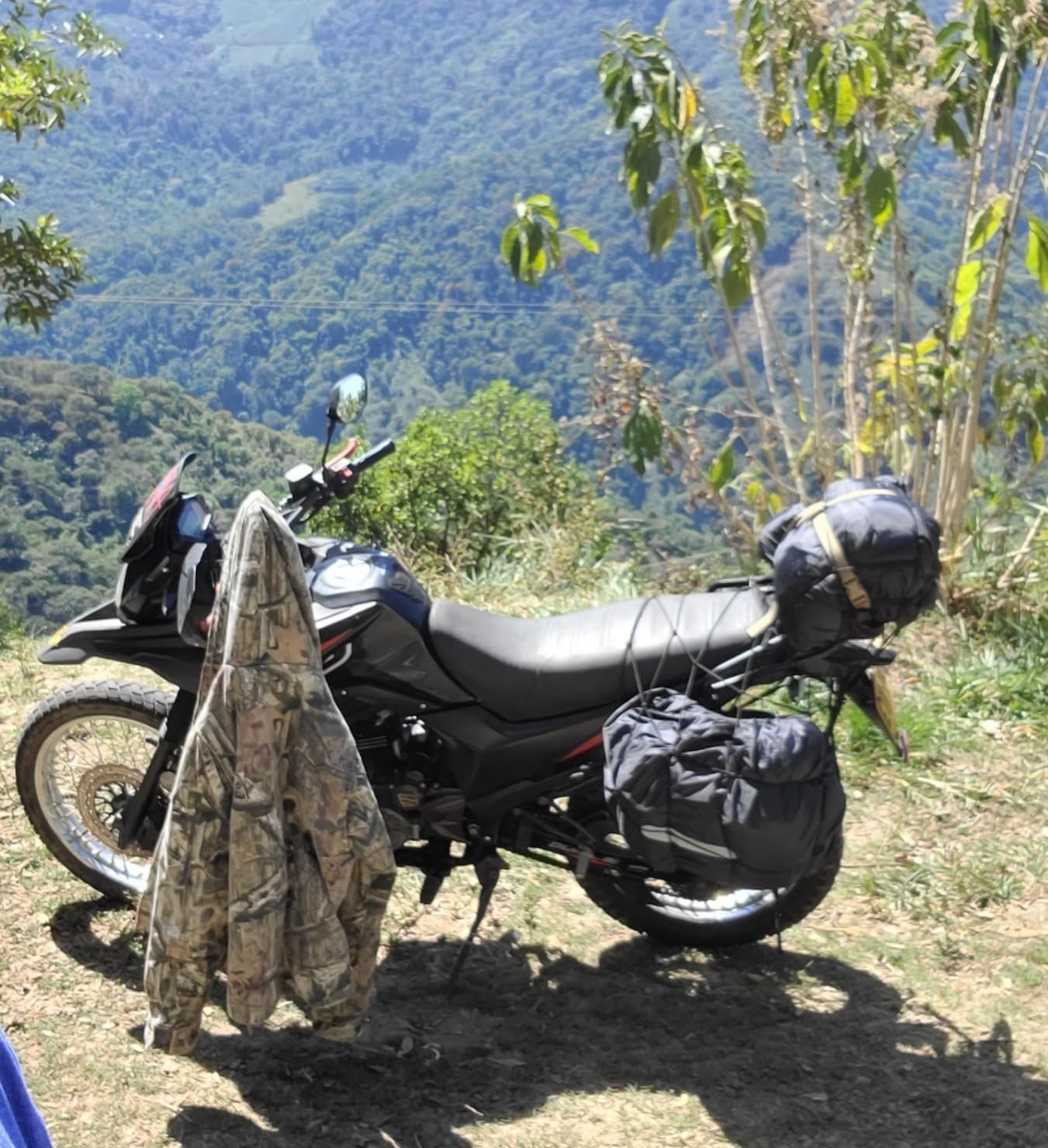
Reviews describe it holding up through an Alaskan downpour and an Iceland trip without tearing, and users also use it to keep dust and opportunistic hands off a pack while travelling.
When two covers of one size beats one cover of two sizes
If both your bags are in the same litre band, a two-pack is simpler and cheaper than buying two separate covers. That is the typical case for a small daypack plus a personal item, or for a household where two people carry the same model.
If your bags are in different size bands, the LAMA pack with its wider size selection is the better buy for the same reason. Check your litre ranges before choosing.
Where it will disappoint you
The 2000 mm rating is among the lowest here and shares the moderate-rain ceiling described earlier. Fine for a wet city, not for exposed terrain or extended downpours.
Fit also runs small relative to the stated range for some buyers, so if your pack is wide or fully loaded, size up. And at this fabric weight, treat it carefully around thorny vegetation.
10. Osprey Hivis Reflective Commuter Raincover: Best for Hi-Vis City Commuting
- Reflective print plus hi-vis Mars Orange reads well in low light
- Seamless coated fabric has no stitched seams to leak
- bluesign approved and GRS-certified recycled ripstop nylon
- PFAS-free DWR treatment
- Fit is aimed at Osprey's commuter range
- Costs more than covers with higher published ratings
- Not the pick for carry-on or expedition packs
This is the smallest commuter pack cover in the roundup, and the only one built from seamless coated fabric. There are no stitched seams in the construction at all, which removes the seam failure mode entirely and gives it an even water-resistant surface that reflects rather than absorbs.
Visibility comes from a reflective print across a hi-vis Mars Orange body. Commuters who ride this bag daily credit the combination of brightness and seam-free resistance, and the PFAS-free DWR treatment plus GRS-certified 100 percent recycled ripstop nylon matches the sustainability standards Osprey applies across its accessory range.
How it closes and fits
The closure is a drawstring that cinches down for a close fit rather than a buckle-and-cinch system. That makes it faster to deploy, which suits a short urban commute where the cover comes on and off several times a day, and it keeps water running down and off rather than pooling at the hem.
Fit is the reason this sits at the bottom of the list despite good design. It is aimed at Osprey’s commuter range, so fit for third-party backpacks is less certain, and only smaller pack sizes are offered in this line. Check your bag’s dimensions against the size before committing.
Who should skip it
Anyone carrying a carry-on sized or expedition pack is out of scope, and so is anyone who wants a published waterproof pressure rating to compare. Owners also note that the price sits above generic covers that advertise higher ratings, even though those ratings describe fabric rather than seams.
If your commute is under two hours in a city with bike lanes, the drawstring simplicity and the reflective print make this a genuinely good fit. If you ride exposed roads at night, go for the Salzmann’s Scotchlite panels instead.
Rain Cover vs Pack Liner vs Poncho: Which One Do You Need?
This is the single most-asked question in backpacking forums and almost no text article answers it properly. A cover protects the outside of your pack from rain. A liner protects the inside of your pack from everything. A poncho protects you. They solve different problems and the honest answer is that most wet trips need more than one of them.
A pack liner sits inside the main compartment, usually a heavy-duty bin liner or a purpose-made dry bag, and stops water that gets past the shell from soaking your clothes and electronics. Its strength is total internal protection in any weather short of immersion. Its weakness is that it does nothing about a wet pack shell, so your bag still gets cold, wet and heavy, and you still get water running down your back from the frame.
A rain cover goes over the outside and keeps water off the fabric, zippers and seams, which is where water actually enters a normal pack. Its weakness is that it protects the pack and not the wearer, and wind can lift it if it is not secured, which is why buckles matter more than most listings admit.
A poncho keeps you and your pack dry at the same time, and experienced users on hiking forums make the case that a well-designed poncho will keep you dry to the knees at a fraction of what a good rain jacket costs. Its weakness is heat: ponchos are famously uncomfortable in warm rain, which is why Camino regulars report carrying both a poncho and a cover as complements rather than alternatives.
Our recommendation is to use a liner for electronics and documents on trips where you will be walking for hours in rain, a cover for the pack itself on any trip with a real chance of wet weather, and to treat a shell jacket or poncho as the answer to the gap between pack and harness that no cover can close.
Travel Backpack Rain Covers for Air Travel and Carry-On
Air travel is the most under-served use case in this category. Two of the most common questions people ask are about overhead bins and about covers that double as transport bags, and no dedicated roundup answers either.
For overhead-bin fit, what matters is packed size rather than deployed size, because the cover only needs to fit the bin while dry and deployed on the pavement. Every cover here folds small enough for this, and the Unigear is the strongest option because its pouch is sewn to the cover, so you cannot leave it behind at security.
For a carry-on, size to the bag rather than to the trip. The LAMA mid at 30L to 40L and the Salzmann XL up to 40L both sit in the right band for most carry-on travel packs. Below that, the MOPHOEXII small at 15L to 25L suits underseat personal items and small daypacks.
The dual-use pattern worth knowing is a cover that works as a fully enclosed transport bag. Travellers report using this kind of cover on the trail and again as a sealed bag for a flight, which removes a second item from your packing list. The general principles we use for anything we seal for air travel are covered in our generator covers guide, where the same logic of enclosure and fit applies.
One caution for air travel specifically: a wet pack in an overhead bin transfers water to everything around it, including other passengers’ bags. Dry your cover fully before stowing it, which is easier if it has a coated surface you can wipe down.
How to Choose a Travel Backpack Rain Cover
Match the cover to your pack volume in litres
Sizing is the number one blocker in this category, and almost every fit complaint we saw traced back to a litre range that did not match the shape of the actual bag. Start with your pack’s stated volume, then check the cover’s published dimensions where they exist, because a 40L wide travel bag and a 40L tall hiking pack are not the same object.
Size up, not up and to the wrong shape, if you strap anything to the outside of the pack. Poles, a foam mat, a sleeping bag or a wet jacket all change the profile, and the elastic hem needs slack to close around the bulge. Where a brand publishes no dimensions at all, treat the litre range as a guide and expect to size up one step.
Cross-brand sizing is unreliable in both directions. Forum users consistently report that Osprey covers fit packs from other brands unusually well, while a cover from one brand will not necessarily fit a same-litre pack from another. Buy from a brand that lets you exchange sizes freely if the fit misses.
What a waterproof pressure rating actually means
A waterproof pressure rating in millimetres is how tall a column of water the fabric can hold before it begins to leak. Anything above 5000 mm handles sustained rain. Above 10000 mm you are into serious, multi-hour wet weather. Our advice is that 10000 mm or more is the point where a cover earns its place in a pack for travel.
Ratings describe fabric only. Seams, zippers and stitching are separate weak points, which is why the Osprey Ultralight with taped seams and the Osprey Hivis with no seams at all can outperform a higher-rated single-sheet cover in real use.
Wind security: clips, buckles and drawcords
Covers blowing off in wind is the second most common failure in this category, and it happens more often than fabric ever fails. An elastic hem grips by tension, and tension changes the moment you shoulder a loaded pack.
Look for named hardware rather than vague language. Buckles, cinch cords, storm clips and cross straps hold; elastic alone does not. The Osprey bungee that loops over the hip belt is the most secure arrangement we found, followed by the Joy Walker and Frelaxy cross-buckle designs, and the Unigear with its drain hole and reinforced rim.
Water-resistant versus waterproof covers
A water-resistant cover sheds drizzle and lets wind-driven rain soak through over time. A waterproof cover with a published rating and sealed seams is what you want for anything beyond fair-weather protection. The LAMA and MOPHOEXII at 2000 mm sit in the lower group, the Unigear at 5000 mm is the midpoint, and the Salzmann at 15000 mm is the top.
Worth noting that no cover waterproofs your harness. Water runs down the gap between pack and back regardless of what you buy, which is why experienced travellers pair a cover with a shell layer rather than treating the cover as a complete rain solution.
What a cover does not protect
A cover keeps water off the outside. It does not waterproof zippers beneath it, it does not stop water entering at the top opening if the drawcord is left loose, and it does not keep you dry. Nor does it protect the hip belt padding that sits outside the cover on many packs, which can wick water into your shirt.
It also does not stop abrasion. Covers are sacrificial surfaces, and a thin ultralight model will snag on brush faster than a heavy coated one. If your route is scrub, thorn or rock, fabric weight matters as much as rating.
How to Dry a Pack and Cover After a Wet Trip
Hang the cover open in a warm, ventilated space rather than folding it wet into your bag. Coated fabrics trap moisture at the seams, and a folded wet cover going mildewed will come out of its pouch smelling stale for the rest of the trip.
For the pack itself, empty it fully, unzip every pocket, and stand it open overnight. Dry bags and liners should be wiped down and hung separately. Once everything is dry to the touch, repack the cover into its pouch last so it is the first thing you reach for next time. If you also carry a wet-weather blower for campsite recovery, our backpack leaf blower picks cover the same drying logic for gear that will not air out on its own.
Frequently Asked Questions
What is the best waterproof backpack rain cover?
For most travellers the best general-purpose backpack rain cover is one rated at 10000 mm or more with buckles rather than elastic alone. In our testing the Joy Walker 12000 mm cover is the strongest all-rounder, and the Frelaxy 10000 mm cover is the lighter option. Match the cover’s litre range to your pack volume and size up if gear is strapped outside.
Do I need a rain cover if my backpack is water resistant?
Yes, if you carry anything you cannot dry quickly. Water-resistant fabric sheds drizzle, but water still enters through zippers, seams and stitching during sustained rain, and travel pack DWR treatments wear off with use. Experienced travellers report relying on the shell fabric and still buying a cover, which is the cheapest layer of protection available.
What size rain cover do I need for a 40L backpack?
Most covers are sized by volume, so a 40L pack calls for a cover listing 40L or 40-50L. Check published dimensions where available, since a wide travel bag and a tall hiking pack at the same litre count are different shapes. Size up if you strap a mat, poles or a sleeping bag outside the pack.
Is a pack liner better than a rain cover?
They protect different things. A liner seals the inside of the main compartment so clothing and electronics stay dry even if water gets past the shell. A rain cover keeps water off the outside of the pack, which is where it normally enters. For travel with electronics, using both is the most reliable answer.
What is the best waterproof backpack cover for air travel?
For air travel the deciding factor is packed size and how the cover is stored. The Unigear stows inside a pouch sewn to the cover itself, so it cannot be separated or left behind at security. For carry-on bags look for a cover in the 30L to 40L band, and dry the cover fully before stowing it in an overhead bin.
Will a rain cover fit over a backpack with a sleeping bag attached?
Only if you size up. An externally attached sleeping bag, foam mat or set of poles changes the pack profile, so the elastic hem cannot close properly and the top of the cover gapes. Choose the next size above your pack volume and check that the hem reaches around the bulge before you rely on it in bad weather.
Finding Your Match
There is no single best travel backpack rain cover, because the right answer depends on your climate, your pack shape and how you travel. Match the cover’s litre range to your pack volume first, then pick by the environment: a rated cover above 10000 mm with buckles for wet, exposed trips, a hi-vis cover if you cycle or walk unlit roads, and a seamless or taped-seam model if you want the fabric to keep working for years.
For most people, the Joy Walker 12000 mm is the cover to start with, because the rating and the buckle system are both right and it packs down to nothing. Carry it in an outer pocket permanently, deploy it before the rain arrives rather than after, and pair it with a liner if electronics are riding in the main compartment.
Any of the ten picks will keep a pack drier than no cover at all. The difference between them is how well they fit your bag, how long the fabric lasts, and whether they stay on when the weather turns serious.