
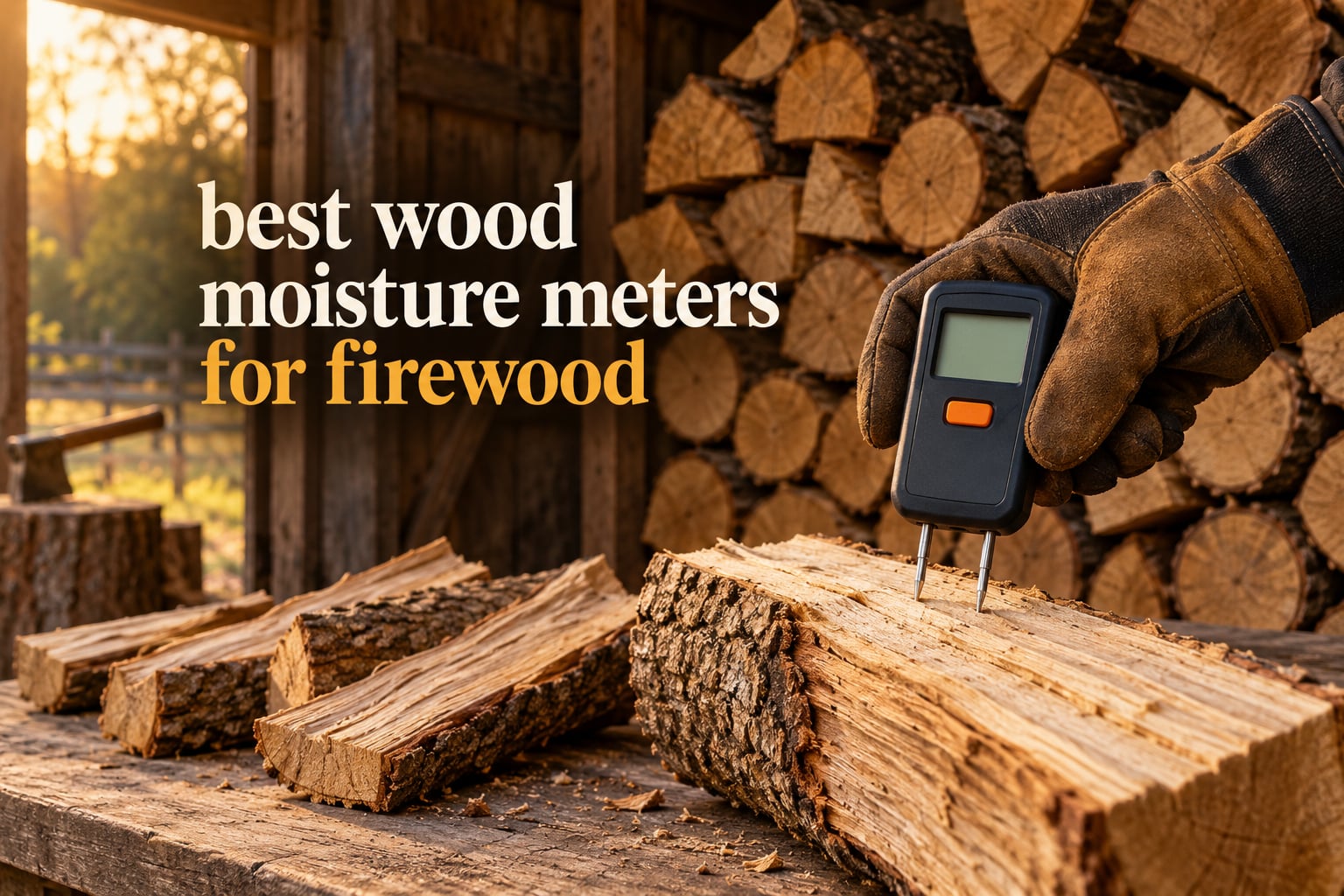
Firewood is ready to burn at 20% moisture content or below. Below 15% is better still, and anything at or under that range gives you the cleanest fire with the least smoke and creosote. That single number is why people buy a moisture meter in the first place, and it is the only number you need to track as your pile seasons.
I have spent more time than I care to admit with a woodpile behind a shed, and after going through the meters on the market for this guide, one thing is clear: the best wood moisture meters for firewood are not the priciest ones. They are the ones that give you a repeatable number on a freshly split face, tell you when a piece is under 20%, and do not fall apart when you push two pins into dense ash.
Below are 12 meters, from a low-cost pin model to a pinless scanner built for damp stacks, each judged only on firewood work rather than on general woodworking polish.
Table of Contents
Top 3 Picks: Best Wood Moisture Meters for Firewood in 2026
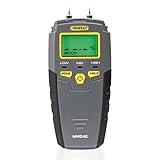
General Tools MMD4E
- 5-50 percent wood range
- Plus or minus 3 percent accuracy
- Replaceable 8mm pins
- Hold button

Bosch UniversalHumid
- Traffic light burn verdict
- Cap doubles as calibration check
- Two wood group settings

All 12 Meters Compared Side by Side in 2026
| Product | Specifications | Action |
|---|---|---|
| General Tools MMD4E |
|
Check Latest Price |
 Klein Tools ET140 Klein Tools ET140 |
|
Check Latest Price |
 Tavool MT270 Tavool MT270 |
|
Check Latest Price |
 RDINSCOS MT28 RDINSCOS MT28 |
|
Check Latest Price |
| Bosch UniversalHumid |
|
Check Latest Price |
| TOPTES TS-630 |
|
Check Latest Price |
 Valiant FIR421 Valiant FIR421 |
|
Check Latest Price |
 Proster PST050 Proster PST050 |
|
Check Latest Price |
 Dr.meter MT1905 Dr.meter MT1905 |
|
Check Latest Price |
 Proster PST199-P Proster PST199-P |
|
Check Latest Price |
 Mecurate WMM Mecurate WMM |
|
Check Latest Price |
 Calculated Industries 7440 Calculated Industries 7440 |
|
Check Latest Price |
What Moisture Content Should Firewood Be?
Burn firewood at 20% moisture content or below, and aim for 15% or under if you can. Anything above 20% sends a large share of the fire’s energy into turning water into steam rather than heating the room, and you burn through the pile faster than you expect.
The practical symptoms are easy to recognise without any meter at all. A fire that hisses, spits, smokes when the door is open, or leaves heavy black soot on the firebox glass is burning wet wood. So is one that pushes a condensation ring back down the flue on a cool morning.
Seasoning time varies more than most sellers admit. Dense hardwoods such as oak and hickory take the longest, while ash, birch and most softwoods dry faster. Splitting thinner accelerates everything, and the US EPA guidance is to let wood season at least six months before burning it.
1. General Tools MMD4E: The Best Overall Firewood Moisture Meter
General Tools MMD4E Moisture Meter for Wood, Walls & Water Leak Detection
- Three buttons and no manual needed to work it
- Wood range 5-50 percent covers green to seasoned wood
- Extra 8mm stainless steel pins and protective cap included
- Hold button freezes a reading while you write it down
- Pin holes stay in the wood you test
- Readings drift on wet surfaces if you do not hold it steady
- Printed manual no longer ships in the box
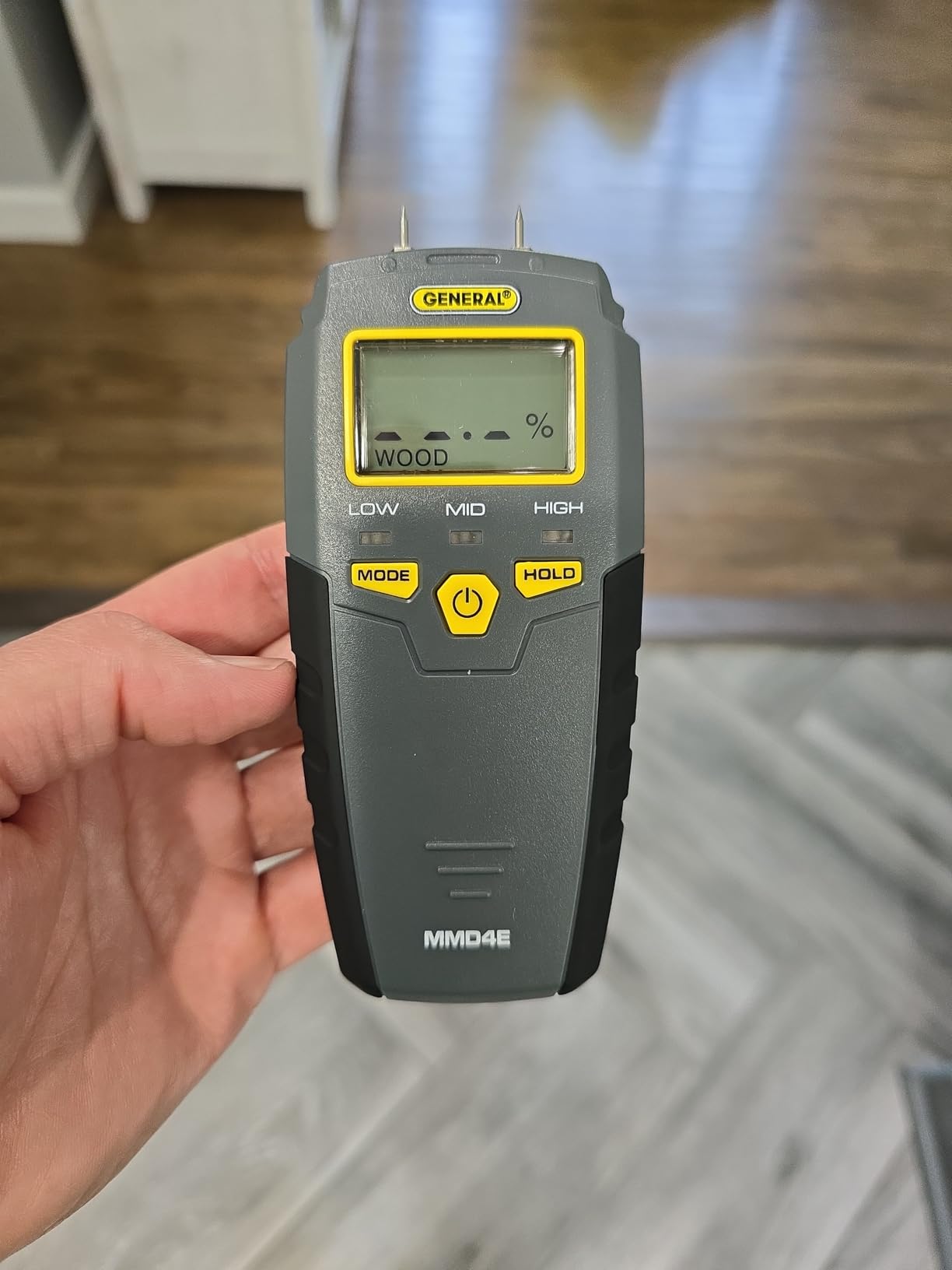
This is the meter that keeps coming up in firewood conversations. The General Tools MMD4E is named repeatedly as a repeat recommendation across r/firewood, forestryforum and hearth.com threads, and in my experience that reputation is deserved rather than accidental.
Three buttons and a 5% to 50% wood range mean you can put pins in a piece, read a number, and get on with stacking. The 0.3 inch high digits on the backlit screen are readable in a dim shed without glasses, and the hold button is the feature I use most.
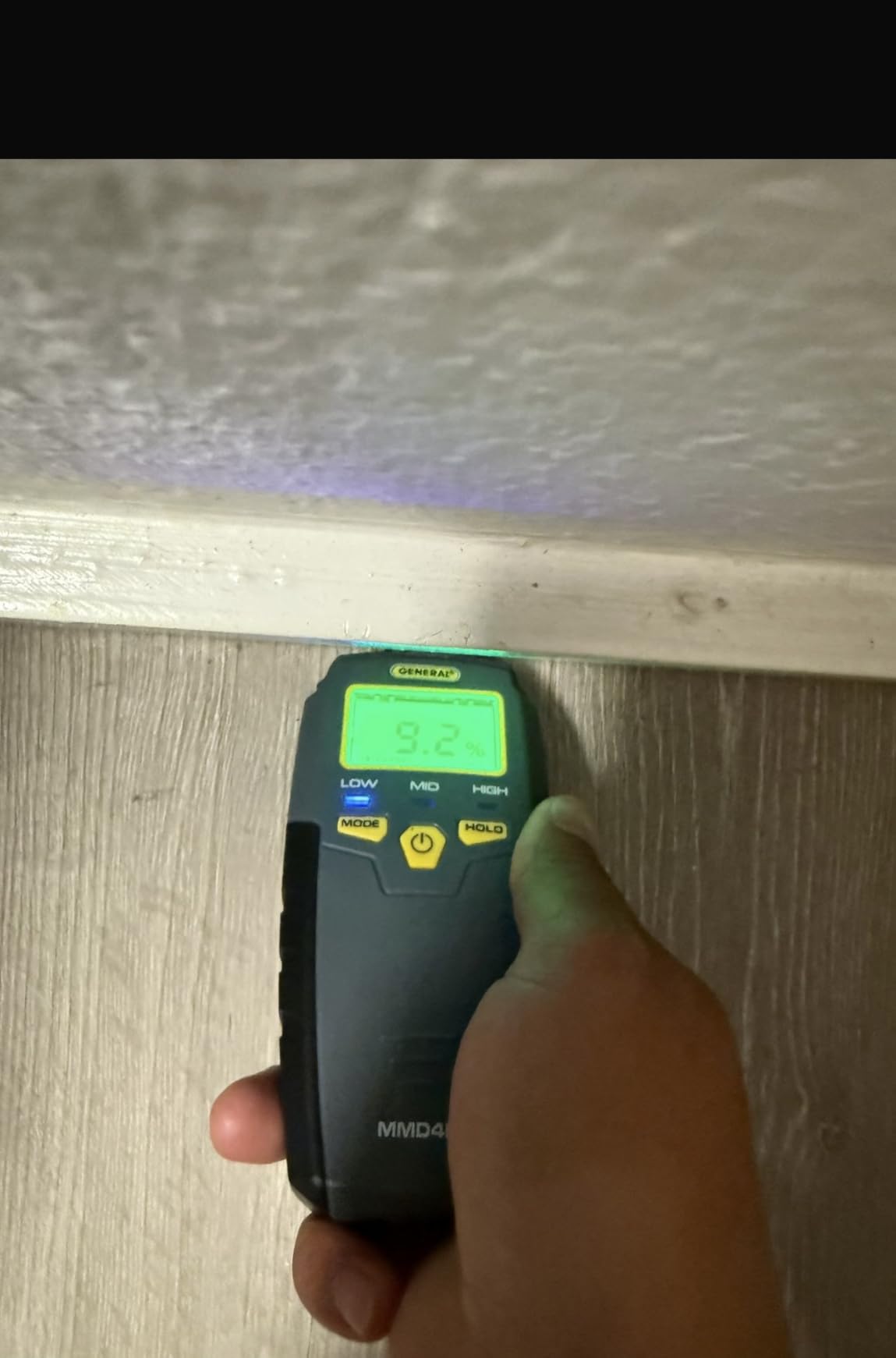
Accuracy lands around plus or minus 3 percent by the spec sheet, which is more than enough to judge the 20% line. Two complaints come up again and again: pin-type meters leave small holes, so probe a spot you will not burn, and readings drift on damp material if you do not hold the contact steady.
Who this suits
If you burn a wood stove most winters and want one meter that will not let you down, this is the safe choice. Replacement pins are widely reported as easy to source from the manufacturer, so a snapped probe in dense ash is a minor event, not a dead tool.
It also doubles as a general household meter for damp drywall and leaks, which is how most owners first end up buying it.
Who should skip it
Skip it if you need sub-percent precision for hardwood flooring or cabinet timber, or if the idea of pin holes in a face piece bothers you. Choose a pinless model for that instead.
2. Klein Tools ET140: Best Pinless Meter for Cold and Damp Stacks
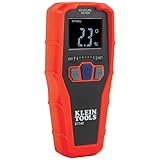
Klein Tools ET140 Pinless Moisture Meter, Detects up to 3/4-Inch Deep
- Scans three-quarter inch deep with zero pin holes
- Repeatable readings that map where damp actually sits
- Two-minute setup and a three-button interface
- Large bright display
- Hardwood setting reads several points low
- No case included
- Flat sensor head is awkward in corners and on rough faces
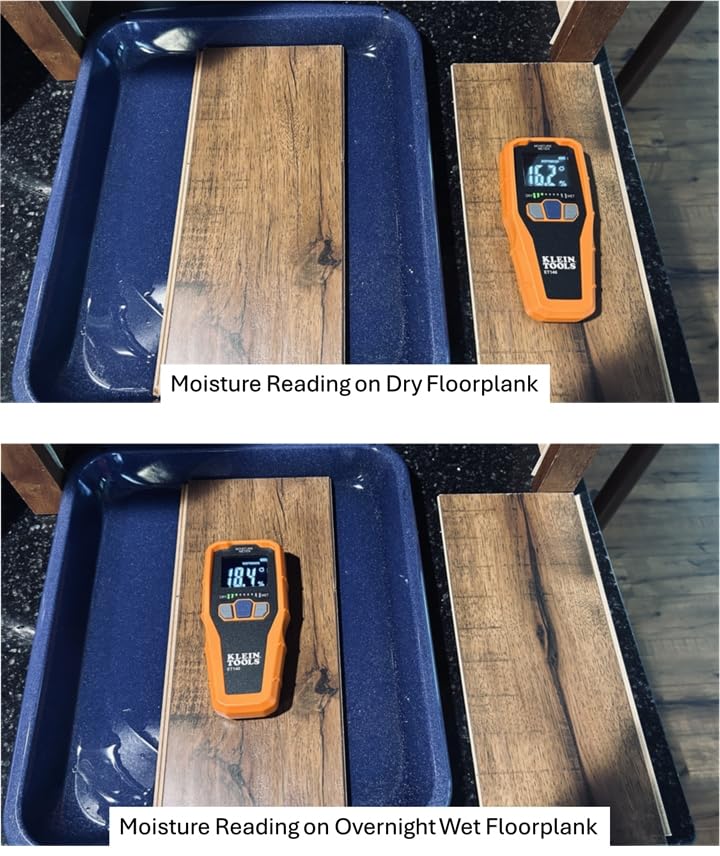
When your problem is a stack that has been rained on or sitting in a cold shed, a pinless scanner solves a real headache: you do not have to split a piece to know it is wet. The ET140 reads through the surface to about three-quarter inch.
Owners report repeatable numbers that map moisture boundaries, and one user verified it against a contractor’s professional instrument and found them nearly identical. For firewood, that consistency is worth a lot when you are watching a pile month to month.
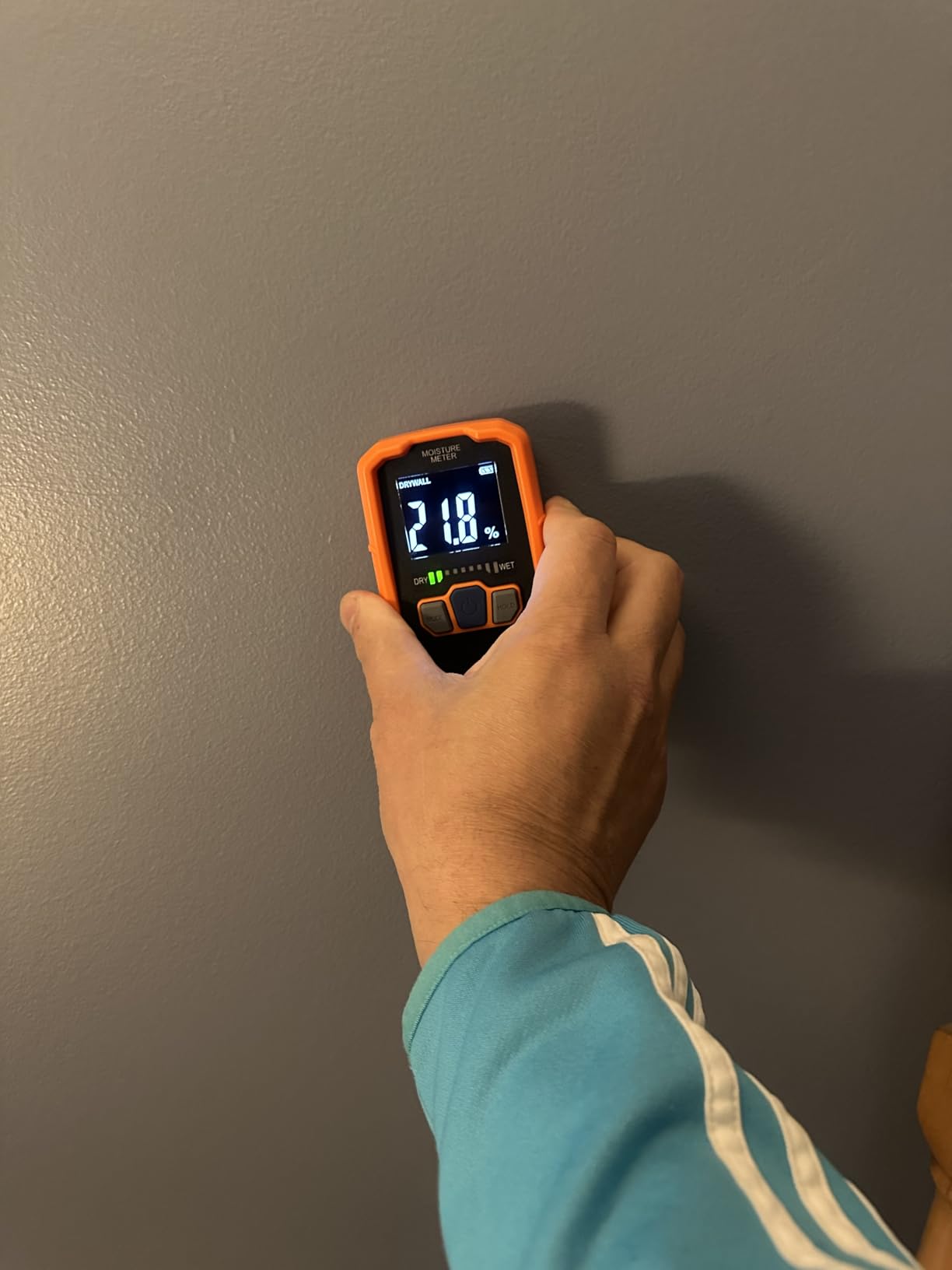
The honest limitation is calibration. Owners report the hardwood setting reads several points low compared with a pin meter, while the softwood setting is closer to correct, so on a mixed pile of oak and pine lean on softwood and treat hardwood numbers as rough. Readings also often jump straight to the maximum rather than showing intermediate values, which simply means the piece is saturated.
Who this suits
Choose it if you are tracking an outdoor stack, want to scan whole splits without marking them, or you are checking wood you bought by the cord where the ends are already dirty. No holes means you can still burn the piece you just tested.
Who should skip it
Skip it if you need a number you can argue about, or if your firewood is mostly dense hardwood, where the calibration gap bites hardest. It is also a building-diagnostics tool first, so its masonry and drywall modes add nothing for a woodpile.
3. Tavool MT270: Best Meter for Wood Species Settings
- Eight wood calibration scales plus A-J hardness settings
- Wood range runs to 60 percent so green wood still registers
- Large backlit screen readable without glasses
- Solid housing that does not flex
- Ten minute auto power off
- No reading below 6 percent
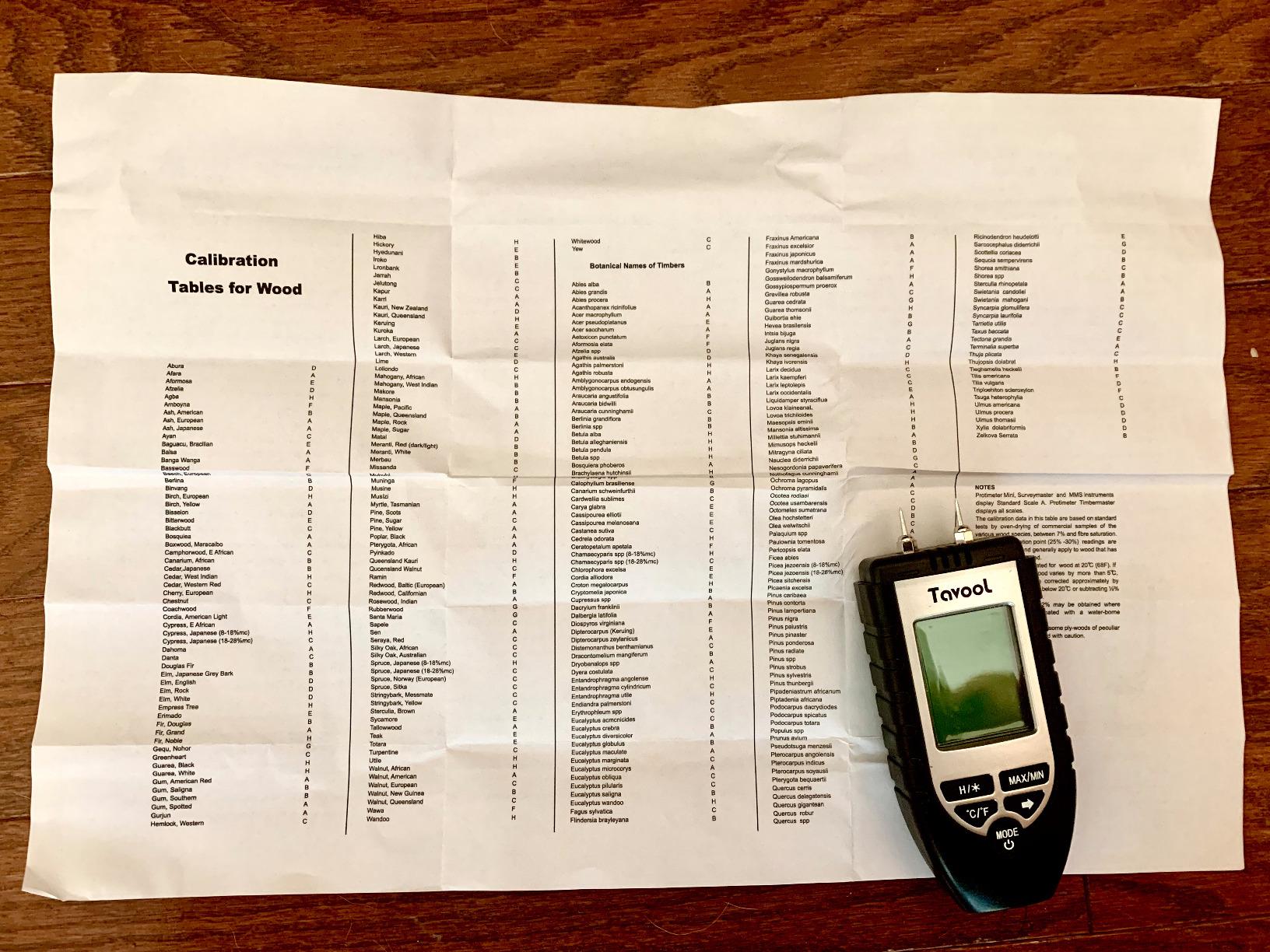
- Calibration table is long and the manual wording is hard to follow
- Pins must be pushed in properly or the number drifts
Species correction is where cheap meters quietly go wrong, and the MT270 takes it more seriously than most. Eight wood calibration scales plus a lettered hardness setting let you match ash, oak or pine rather than guessing between a softwood and hardwood switch.
Owners report readings that matched known moisture levels in stored lumber, and several long-term users still rely on it three or four years on. A lot of firewood buyers praise it specifically for checking splits before stacking them into the stove.
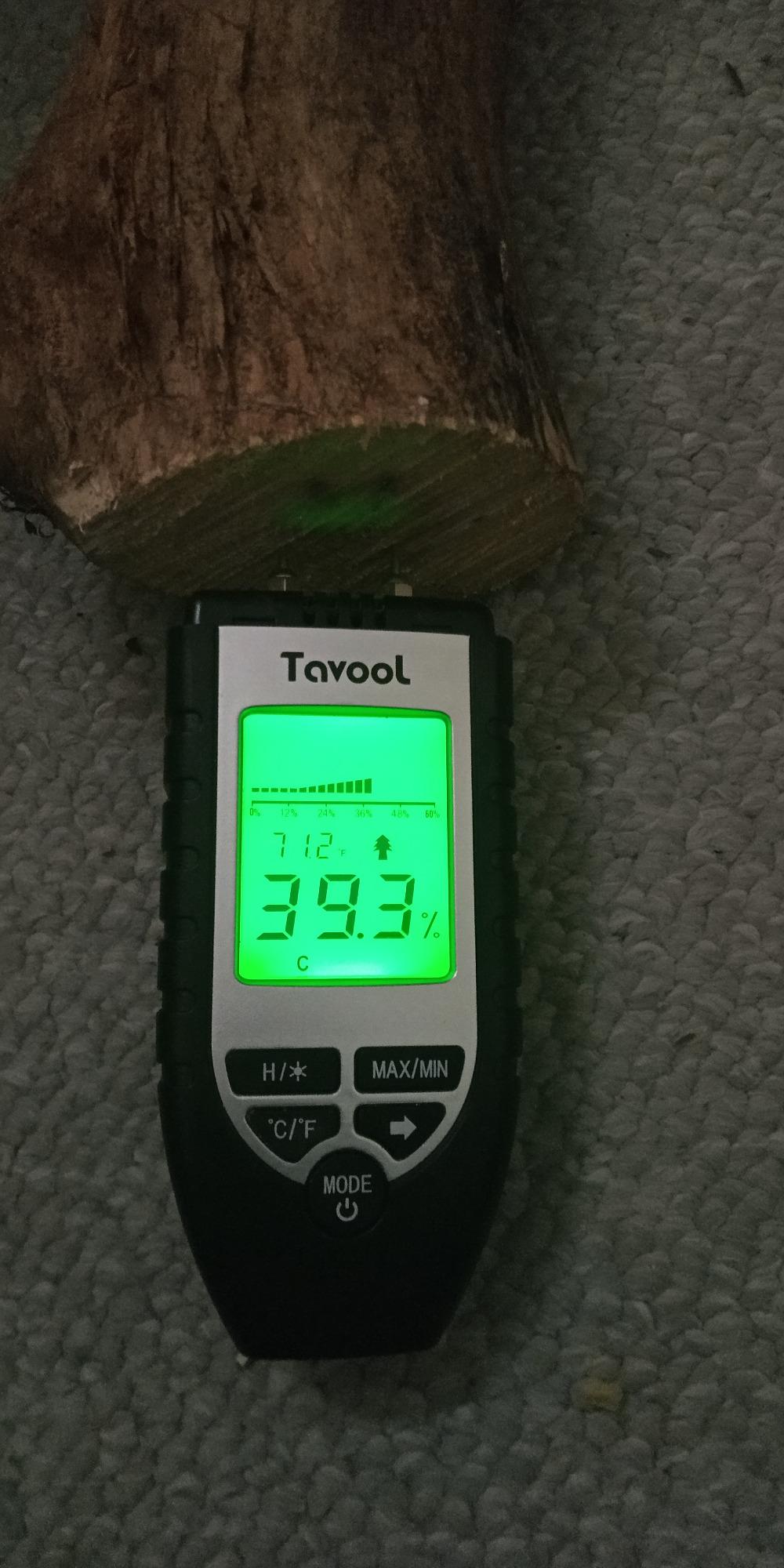
Two things to know before you commit: the 6% floor means bone-dry wood shows nothing at all, which matters if you buy kiln-dried wood, and the calibration table is genuinely unwieldy, listing some species twice with no alder entry. Detailed buyers also warn that surface-only readings can understate the core of large pieces, so drive the pins in and read near the middle of a split.
Who this suits
It suits anyone stacking a mixed pile of species who wants a correction that is more granular than a single softwood or hardwood switch. The wide 60% ceiling also lets you watch green wood dry rather than sitting on a blank display.
Who should skip it
Skip it if your firewood is already well seasoned and you want a number in the teens, because the fuzzy species table becomes a daily annoyance. Very dry wood users will be happier with a lower-range model.
4. RDINSCOS MT28: Best for Working in a Dark Shed
- No pins and so no holes in the split you are about to burn
- Color LCD is clear and easy to read
- Built-in flashlight for dark sheds and crawl spaces
- Material chosen with buttons rather than scrolling
- Readings are relative rather than true percentages
- Keep it away from metal or results are interfered with
- Concrete readings reported as untrustworthy
The flashlight is the reason this meter shows up in a firewood roundup at all. A woodshed at the end of the day is dark, and a meter that lights its own way through a stack is more pleasant than squinting at an unlit screen.
Reviewers find it quick and consistent on wood, and good for comparing relative wetness between areas. On a woodpile that is often the job: find the wettest corner, turn that face outward, and recheck next month.
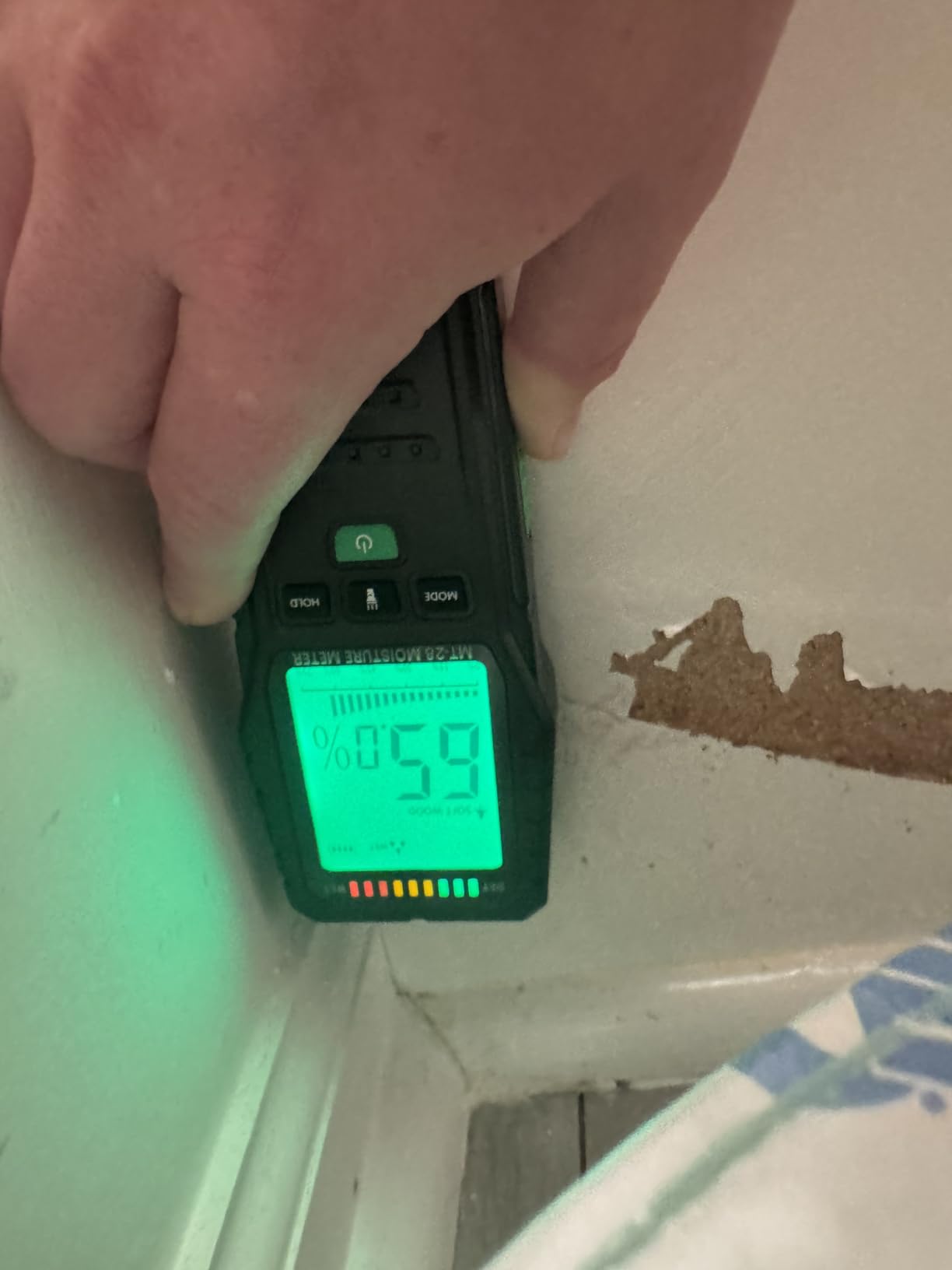
Be clear-eyed about what a plus or minus 5 percent pinless meter can tell you. That band is wide enough that a reading of 18% could really be near the 20% threshold, which is precisely the line you care about. Owners also report concrete readings staying high after months of dehumidification, so stay on wood.
Who this suits
It suits a first-time buyer who wants to compare stacks rather than record exact percentages, and anyone checking wood in a shed or garage with no lighting. It also doubles as a damp detector behind drywall.
Who should skip it
Skip it if you need to defend a number at the 20% line, or if your woodpile is full of dense hardwood, where pinless sensing is at its least reliable. Pin-based meters are the better tool for a single decisive reading.
5. Bosch UniversalHumid: Top Rated for a Burn or No-Burn Verdict
- Traffic light gives an immediate burn verdict
- Protective cap contains a real built-in calibration check
- Two wood group settings tighten up the reading
- Keeps the last three readings on screen
- Drains batteries even when switched off
- Battery cover can slide off when you pull the pins free
- No backlight on the display
This is the meter that understands the question firewood owners are actually asking. Its traffic light LED shows red for not recommended to burn, yellow for a concern, and green for ready to use, which means a beginner can get a correct answer without understanding moisture at all.
Buyers consistently rate it a clear step up from budget units: the build feels solid, the two wood group settings sharpen the reading, and owners single out the cap-based calibration check as the feature that restores confidence the number is real. On firewood it is excellent, because sharp, solid prongs pierce ash without slipping.
Who this suits
It suits anyone who wants a single clear answer rather than a figure to interpret, and anyone who cares about verifying that the meter is still accurate. Keeping the last three readings on screen makes side-by-side comparison of two splits effortless.
If you also do furniture or flooring, you get one tool that covers both jobs well.
Who should skip it
Skip it if you read at night, because there is no backlight. Also skip it if you leave it in a vehicle or shed over summer, since it drains batteries while switched off and the battery cover is easy to dislodge.
6. TOPTES TS-630: Best Value for Sorting a Woodpile
- Fast and repeatable readings one owner verified against three other meters
- Spare pins and a mini wrench in the box
- Pocketable for the outdoor rack
- Sturdy pins that have held up well
- Three year warranty
- Shows Lo instead of a number on very dry or kiln-dried wood
- Needs a firm press that leaves small dents on soft wood
- Manual is padded with pages of non-English text
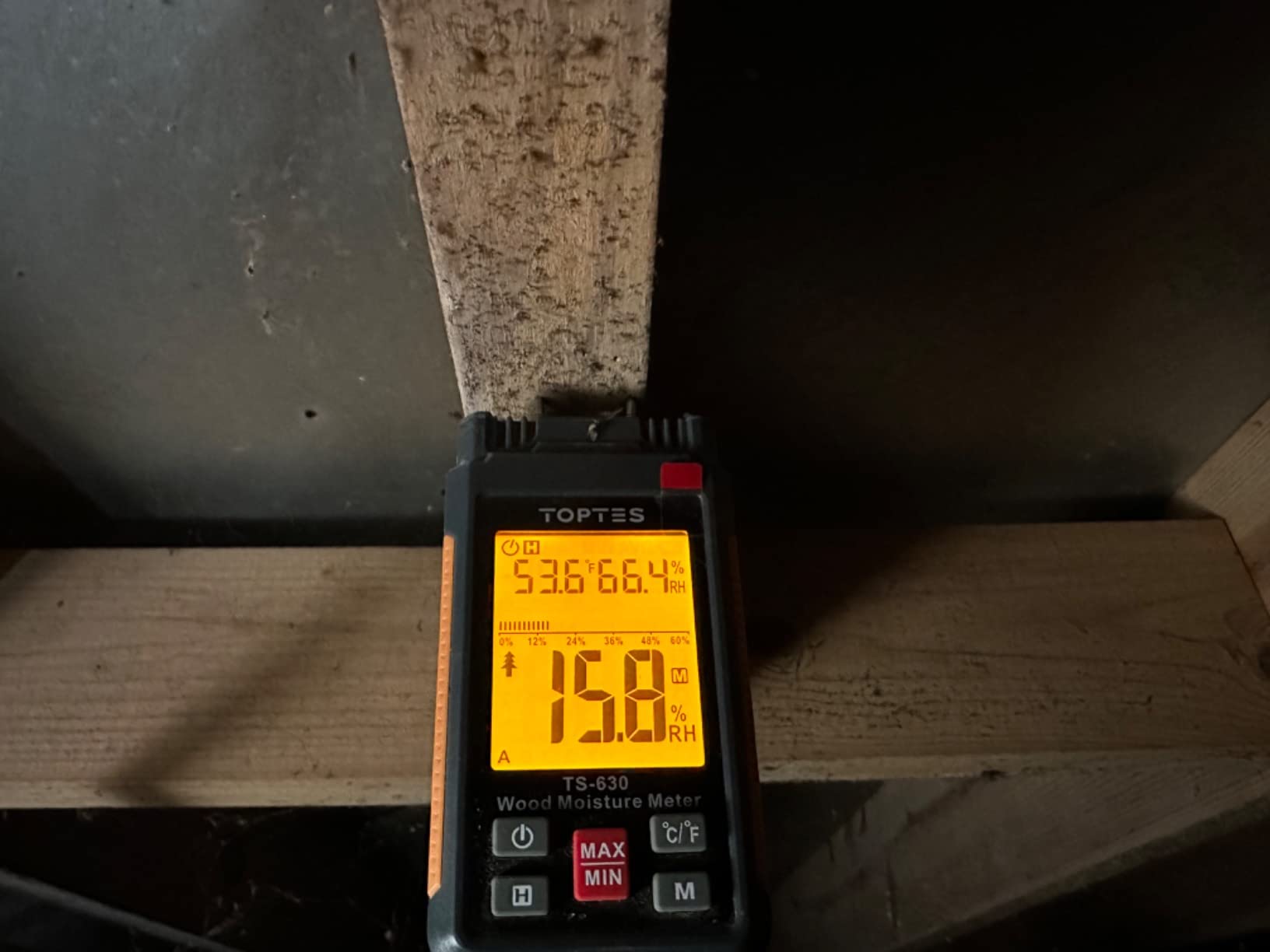
The tricolor backlight is the reason owners describe this as their firewood tool of choice. Green, orange and red screen colours let you sort a stack in seconds without stopping to parse a number, and the bar graph adds a second visual cue.
One owner cross-checked it against three other meters and found the readings fast, stable and repeatable. That is the standard I would want from a firewood meter, and it is rarer than the spec sheets suggest.
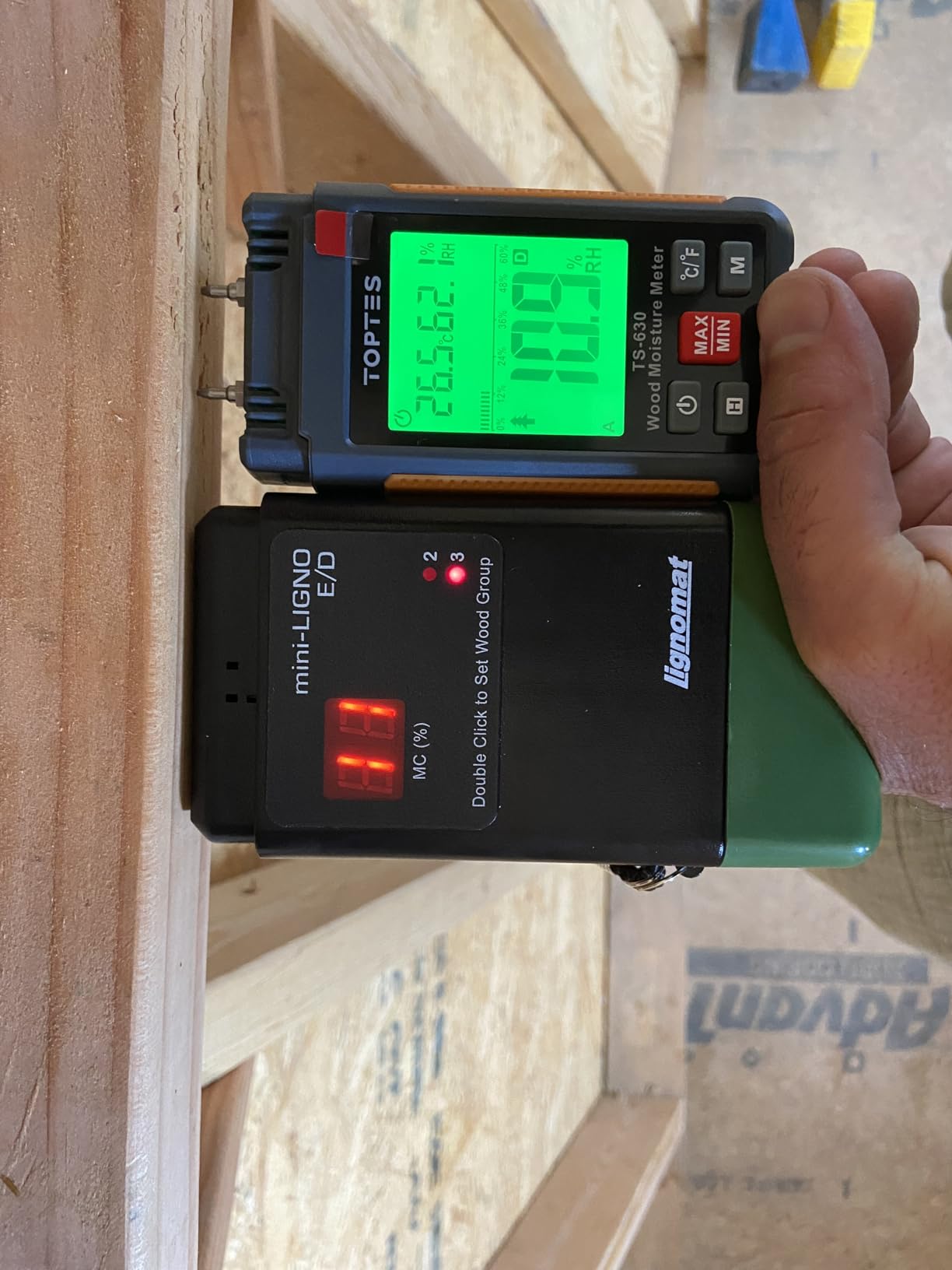
The real limitation is the low end of the range. Anything around 10% or drier, including kiln-dried lumber, shows Lo rather than a number, and it cannot detect moisture in new flooring before acclimation. For a seasoning pile that is fine, because the interesting phase is the descent toward 20%. The pins also have to be pressed firmly, which is where the small dents on softer wood come from.
Who this suits
It suits a wood stove owner who wants an immediate visual answer at arm’s length, gloves on, in poor light. The box includes three batteries, a carry pouch, spare pins and a mini wrench, so nothing else needs buying.
Who should skip it
Skip it if you buy kiln-dried wood and want to confirm it is genuinely bone dry, or if you plan to use the same meter for indoor furniture work where the bottom of the range matters.
7. Valiant FIR421: Best for Temperature Alongside Moisture
Valiant FIR421 Digital Moisture Meter for Firewood Timber and Brickwork, Black
- Colour coded indicator makes burn suitability obvious at a glance
- Readable in poor light
- Covers wood fuel and brickwork in one device
- Temperature shown in C or F
- Fewer ratings than most models here
- Operating humidity listed as 10-90 percent
Temperature is the variable most firewood meters ignore and the one that changes a reading more than people expect. Cold wood fools a meter, and this model shows you the wood temperature next to the moisture figure so you can judge how much to trust it.
It is designed around fuel rather than construction, measuring wood fuels, structural timber and brickwork in one device, with a colour coded indicator for whether the wood is suitable to burn. Readability holds up in poor light, and the listed 10-90% operating humidity covers outdoor sheds and cold snaps.
Who this suits
It suits anyone checking wood outdoors in cold weather, where a meter with no temperature readout is guessing. The colour coding also makes it friendly for a first fireplace.
Who should skip it
Skip it if you want a wide set of species scales, since the feature set here is deliberately small. Buyers also have less written owner feedback to draw on, which is worth weighing for a long-term purchase.
8. Proster PST050: Budget Pick That Still Gives You a Number
- The cheapest way to get a numeric moisture reading
- 0 to 99.9 percent wood range at 0.1 percent resolution
- Four species groups covering about 28 woods
- Hard case and pin cover included
- Forgets the wood mode at every power on
- No backlight for low light work
- Pin cap is very hard to pry open
Forum consensus on firewood meters is blunt: most people need a cheap pin meter and nothing more. This is the cheapest model here that still produces a real percentage, which is exactly the job at hand.
Owners frame it as a well-priced, adequate tool that paid for itself quickly, and several compared it favourably to name-brand meters costing several times more. For sorting green, drying and ready wood into three piles, it does the job.
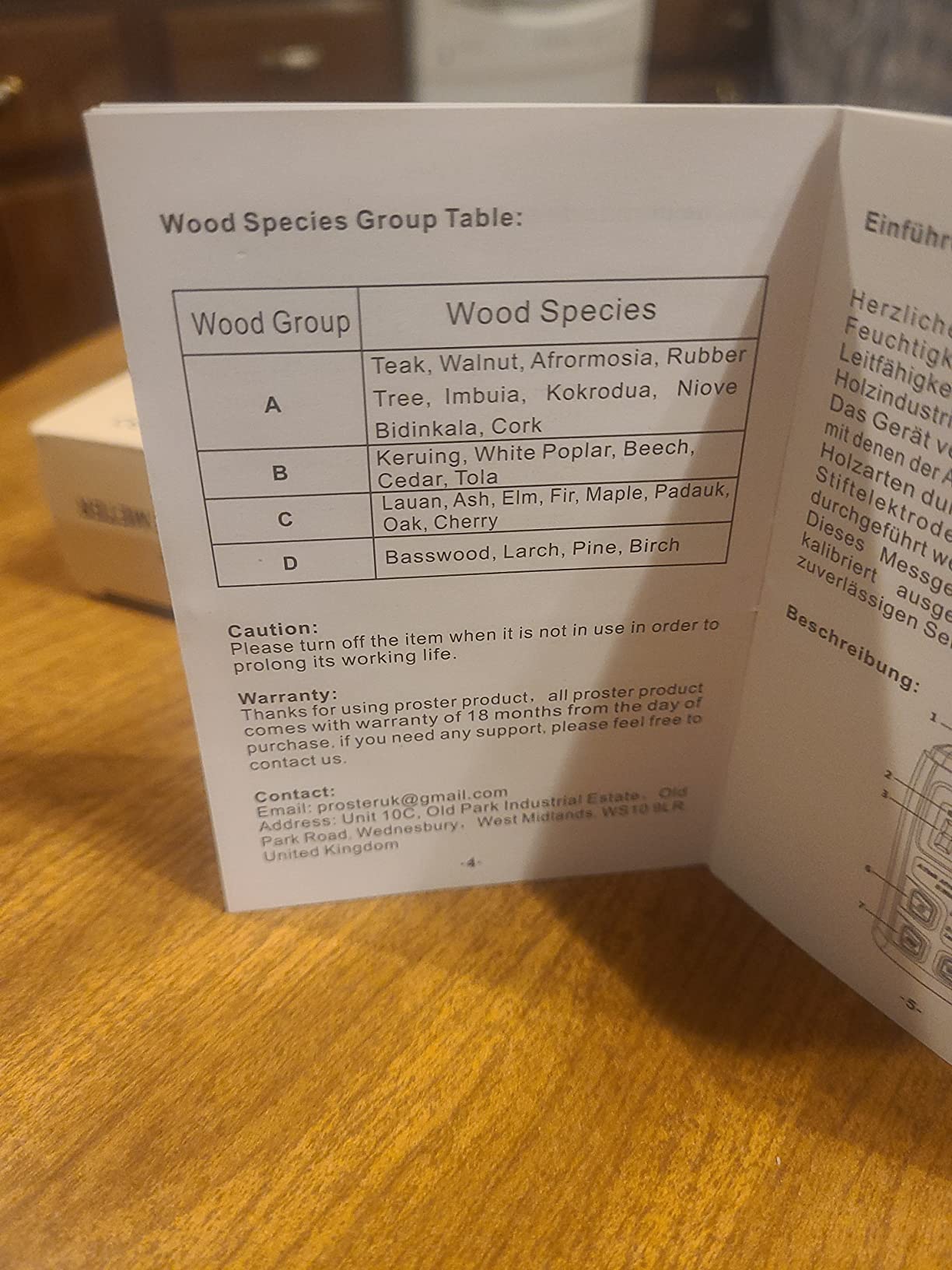
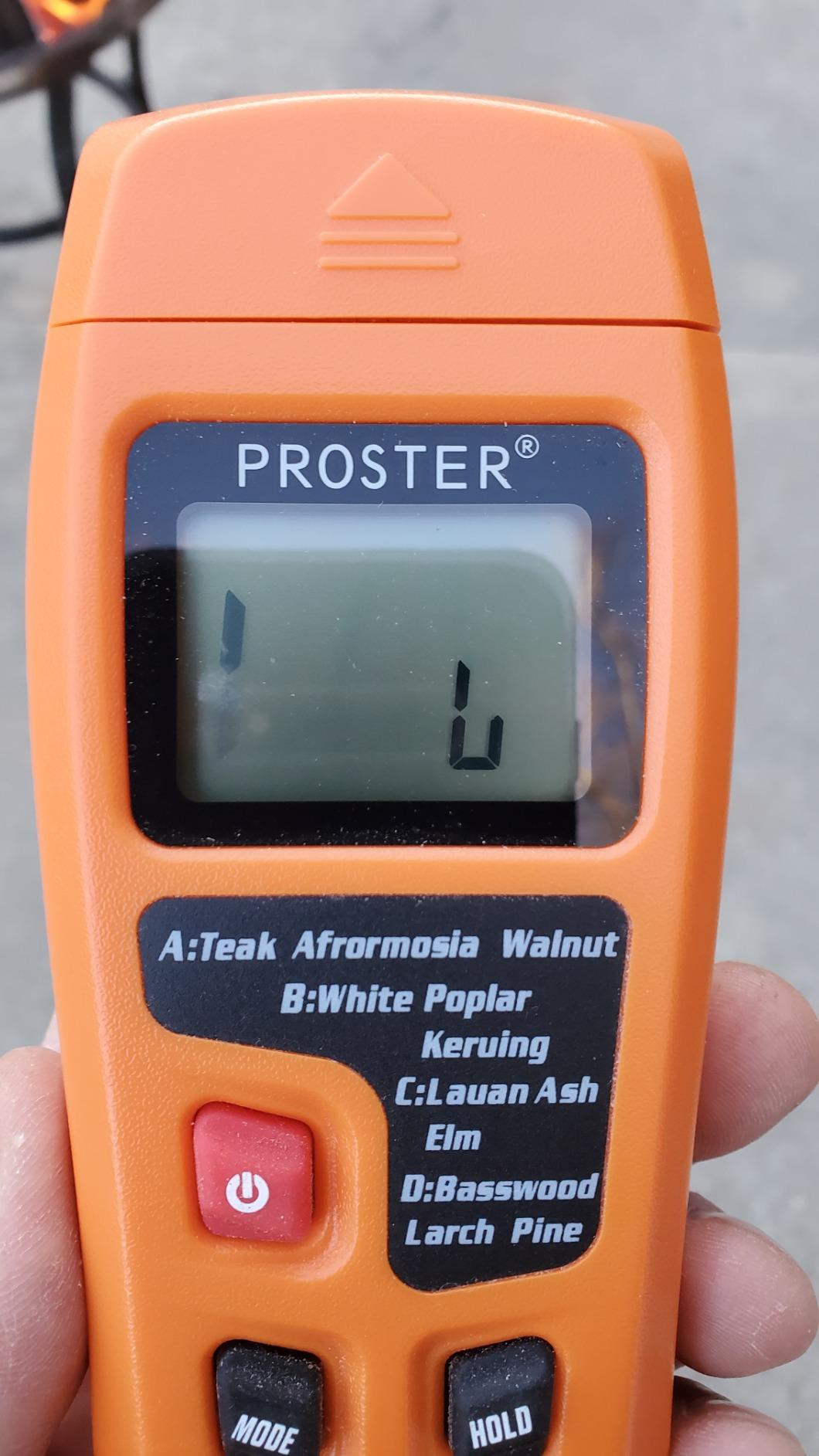
The wide 0-99.9% range means it will not go blank on a soaking log, and the four species groups cover common softwoods like pine and birch. The friction is in the small stuff: it forgets the wood mode every time you switch it on, there is no backlight, and the species list leans tropical while missing denser hardwoods such as hickory.
Who this suits
It suits a first purchase, a gift, or anyone who wants a meter per property without fuss. If your only question is whether a piece is above or below 20%, the wide range and simple readout are enough.
Who should skip it
Skip it if you plan professional work, or if you read at night. The reselect-every-time behaviour and the stiff pin cap get old fast, and the reinforced battery holder is the one place the budget build was clearly upgraded.
9. Dr.meter MT1905: Best Two-in-One Pin and Pinless Unit
Dr.meter 2 in 1 Pin & Pinless Wood Moisture Meter for Wood Drywall
- Pin and pinless measurement in a single device
- Pin mode is faster and tighter at plus or minus 2 percent
- Green backlit display with hold and signal bars
- Over-range beep fires above 17 percent wood moisture
- Ambient temperature reading
- Lowest average rating in the group at 4.3
- Pinless mode is noticeably less accurate than pin mode
- Heavy 0.24 kg body
Two measurement styles in one body is a genuinely practical compromise for a woodpile. Pins give you a precise reading on a split face, and the pinless mode lets you scan a stack or a round log without marking anything.
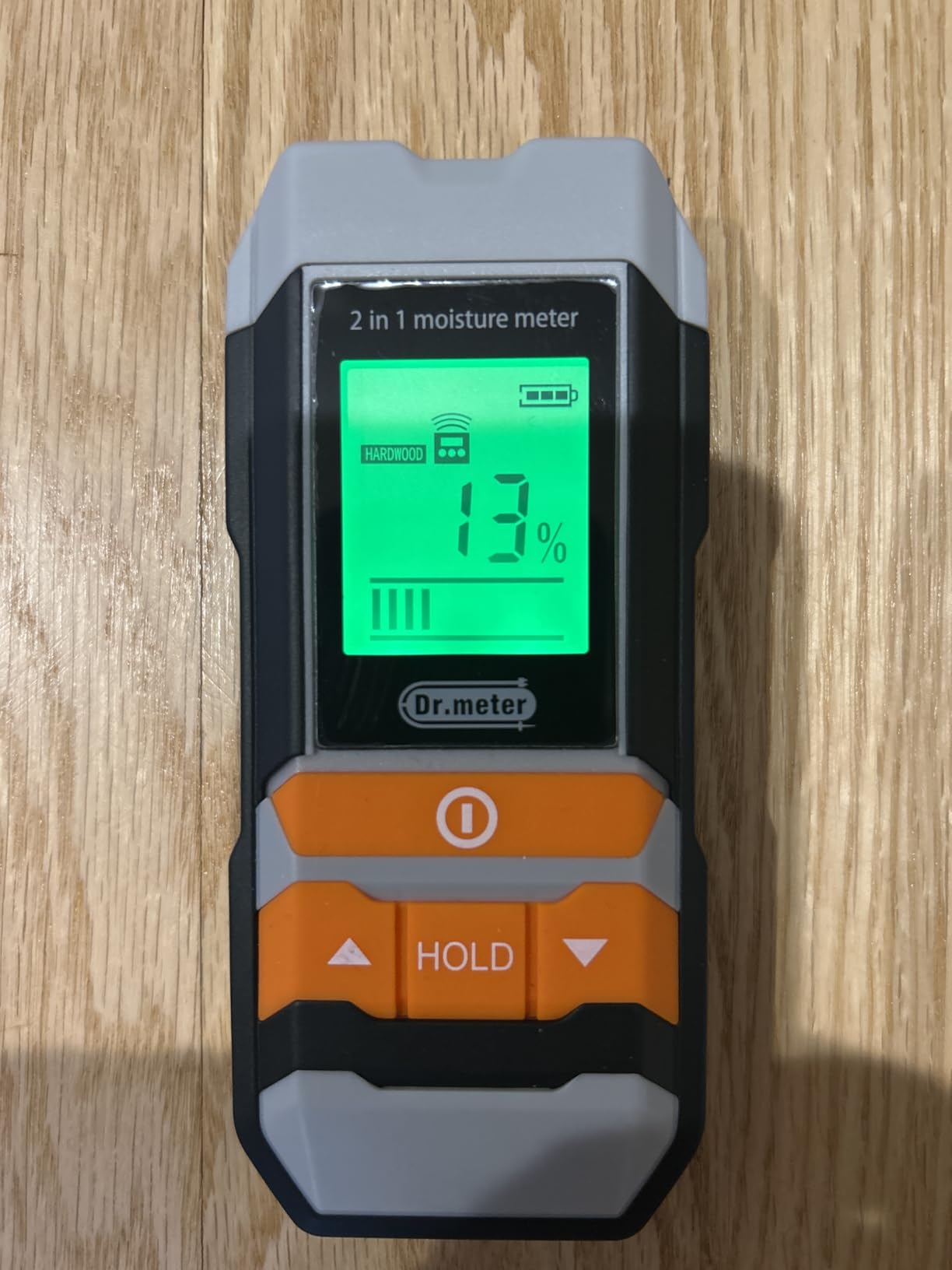
The pin mode is the one to trust, at plus or minus 2 percent for wood, and the over-range beep above 17 percent wood moisture gives an audible burn or no-burn cue that is useful when your hands are cold and busy.

Buyers are drawn to the versatility and the backlit display, and the gap between pin and pinless accuracy is the practical trade-off. Four pinless modes cover softwood, hardwood, masonry and drywall, which is more than a firewood-only unit needs, and the ambient temperature reading helps on cold wood. Note that this model carries the lowest average rating in the group at 4.3, with about 6% of ratings at one star.
Who this suits
It suits someone who splits wood occasionally and does not want to commit to a pin-only or pinless-only philosophy. It also handles drywall and floors if you are chasing a leak in winter.
Who should skip it
Skip it if you want the confidence of a single-purpose meter with a stronger rating history, or if you plan to do professional structural work, where the pinless error is too wide.
10. Proster PST199-P: Best Pinless Meter for Thick Split Logs
Proster Pinless Moisture Meter 3/4″ Depth Color Alarm Non-Destructive
- No pin holes on the split face you intend to burn
- Three-color LED bar graph plus an audible alert
- Scans three-quarter inch deep for thick stock
- Large backlit reverse-contrast display
- Hold and auto power off with out-of-range alarm and low battery warning
- Heavy 270 g body
- Lower bound of 5 percent so very dry wood may not register
- Pinless is less precise than a pin meter on dense hardwoods
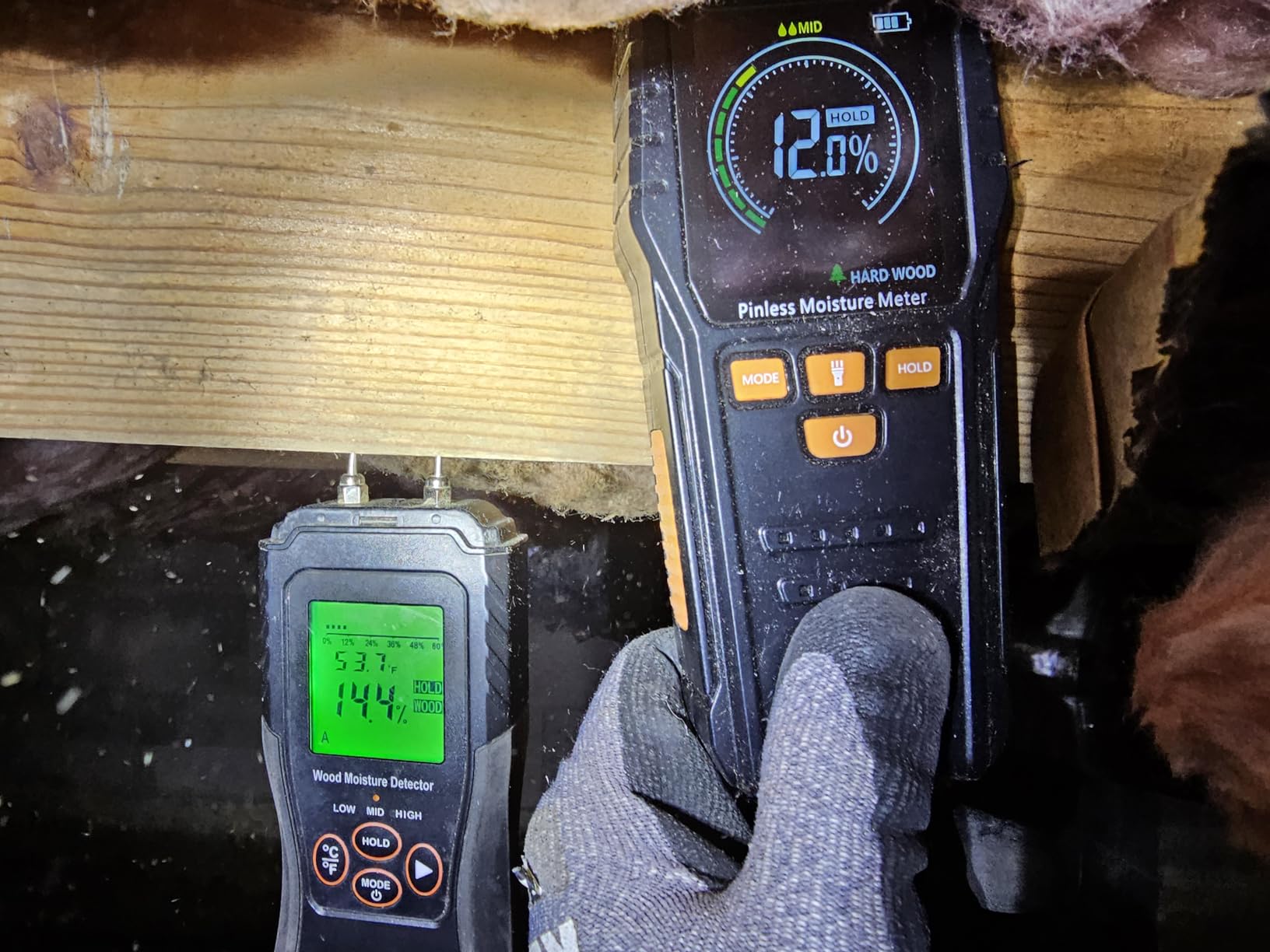
This is the pinless option to beat for firewood, because it combines depth with an alarm. The three-color bar graph and the high-pitch audible alert mean you can sweep a stack quickly and hear where the concentrated damp is.
Detecting to about three-quarter inch suits thick split rounds where a shallow scan would only see the drying face. Owners also like the large backlit reverse-contrast display, which stays readable outdoors.
Two trade-offs to keep in mind. It weighs 270 g, and the 5% lower bound means very dry wood may not register meaningfully. As with all pinless meters, precision on dense hardwood falls short of a pin reading, though roughly 73% of ratings here are five-star.
Who this suits
It suits anyone stacking big rounds and split logs rather than thin kindling, and anyone who wants to leave no marks on the wood. The audible alert makes it good for a quick sweep of a large pile.
Who should skip it
Skip it if you need a precise number at the 20% line on dense oak, or if weight in the hand bothers you. For very dry seasoned wood, the 5% floor is a real limitation.
11. Mecurate WMM: Best for Built-In Calibration Checks
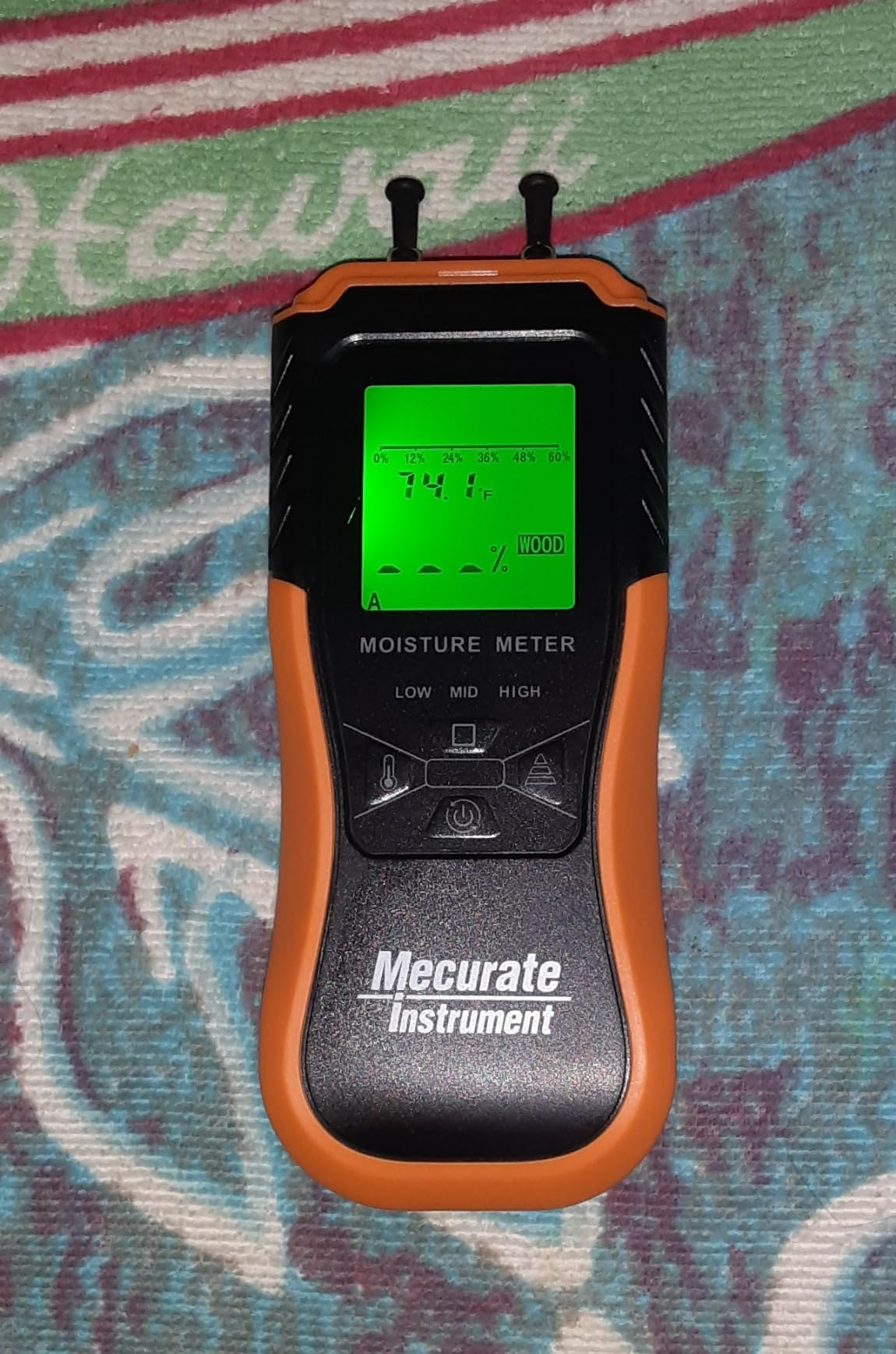
Mecurate Digital Pin Type Wood Moisture Meter with 3 Colored Indicators, Moisture Detector 2 Mode 8 Calibration Large Backlit for Wood, Wall, Firewall (Orange)
- Self-testing calibration built into the protective cap
- Very sensitive sensor that settles fast without deep pin insertion
- Eight wood scales across wood and building material modes
- Jumbo backlit screen readable in any light
- Pouch included
- Replacement pins and cap need real force to remove
- Batteries supplied in the box were reported as old
- Wood range starts at 6 percent
Readers who are tired of wondering whether a cheap meter is still reading correctly usually end up here. The self-testing calibration aid sits inside the protective cap, so you can check the unit against itself without a reference block or a spare piece of wood.
Reviewers repeatedly single this out as better than the vague self-calibration claims of cheaper units. The fast, highly sensitive sensor and the jumbo backlit screen with colored indicators are praised too, and some owners report using it daily on site.
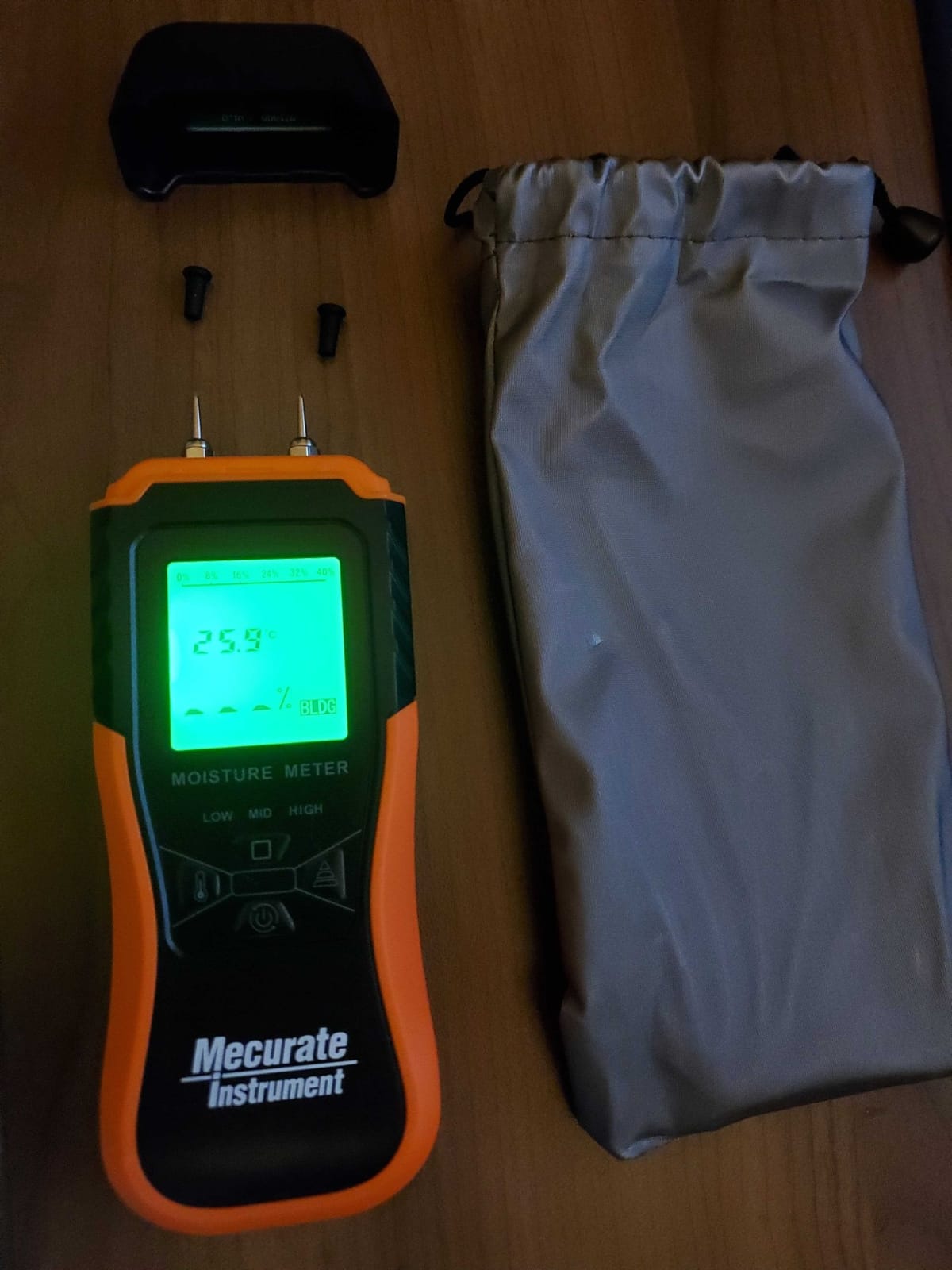
The 4.6 average with a 77% five-star share is among the strongest here, and the wood type quick-search index printed on the back saves carrying a separate table. The reported drawbacks are minor: a stiff pin cap, batteries in the box that were reported as old, and the usual pin-hole trade-off, plus a 6% wood floor if you handle very dry lumber.
Who this suits
It suits a buyer who has been burned by a meter that drifted, because the cap check gives you a real answer in a few seconds. The 0.1% resolution and wide scale count also suit mixed-species piles.
Who should skip it
Skip it if you want to test a face piece without holes, or if you need readings on kiln-dried wood below 6%. Bring your own batteries rather than trusting the supplied ones.
12. Calculated Industries 7440 AccuMASTER XT: Best Printed Firewood Bands
- Firewood readiness bands printed on the meter itself
- Built-in calibration test pins for verifying accuracy
- Large backlit LCD with a hold key
- Sturdy body that resists flexing when pressing pins in
- Least-reviewed model here at 830 ratings
- 4.4 average sits below the group norm
- Pin holes in the wood
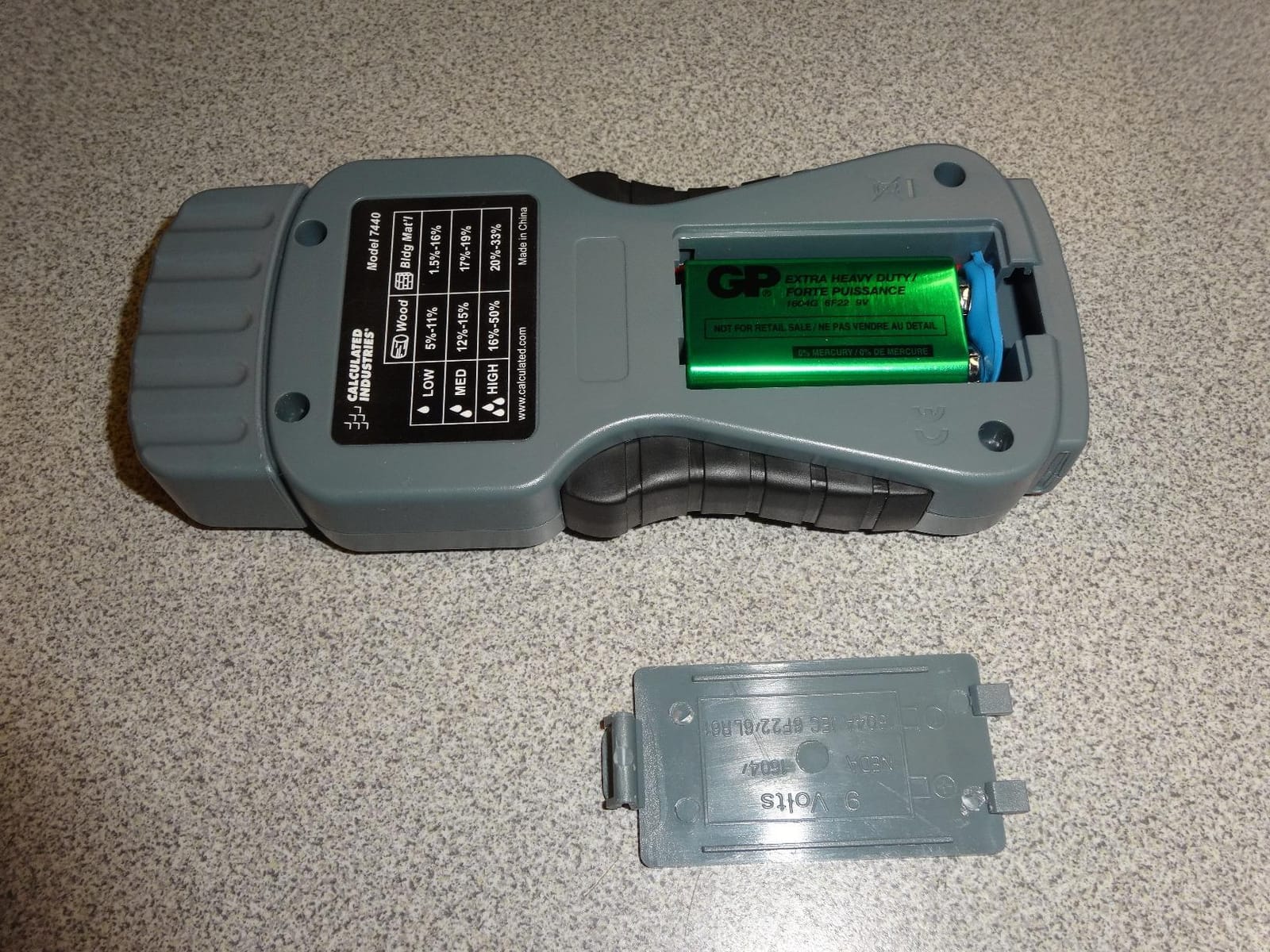
The 7440 takes the guesswork out of the threshold by printing firewood bands on the meter: low 5-11%, medium 12-15%, high 16-50%. You are not interpreting a number, you are looking at a band that tells you whether to light it.
It also has built-in calibration test pins, so verifying accuracy needs no extra equipment, and the hold key lets you freeze a reading and record it without leaving the meter buried in the wood. The wide material range means it also measures carpet, plaster, brick and concrete if you ever need to chase a damp patch indoors.
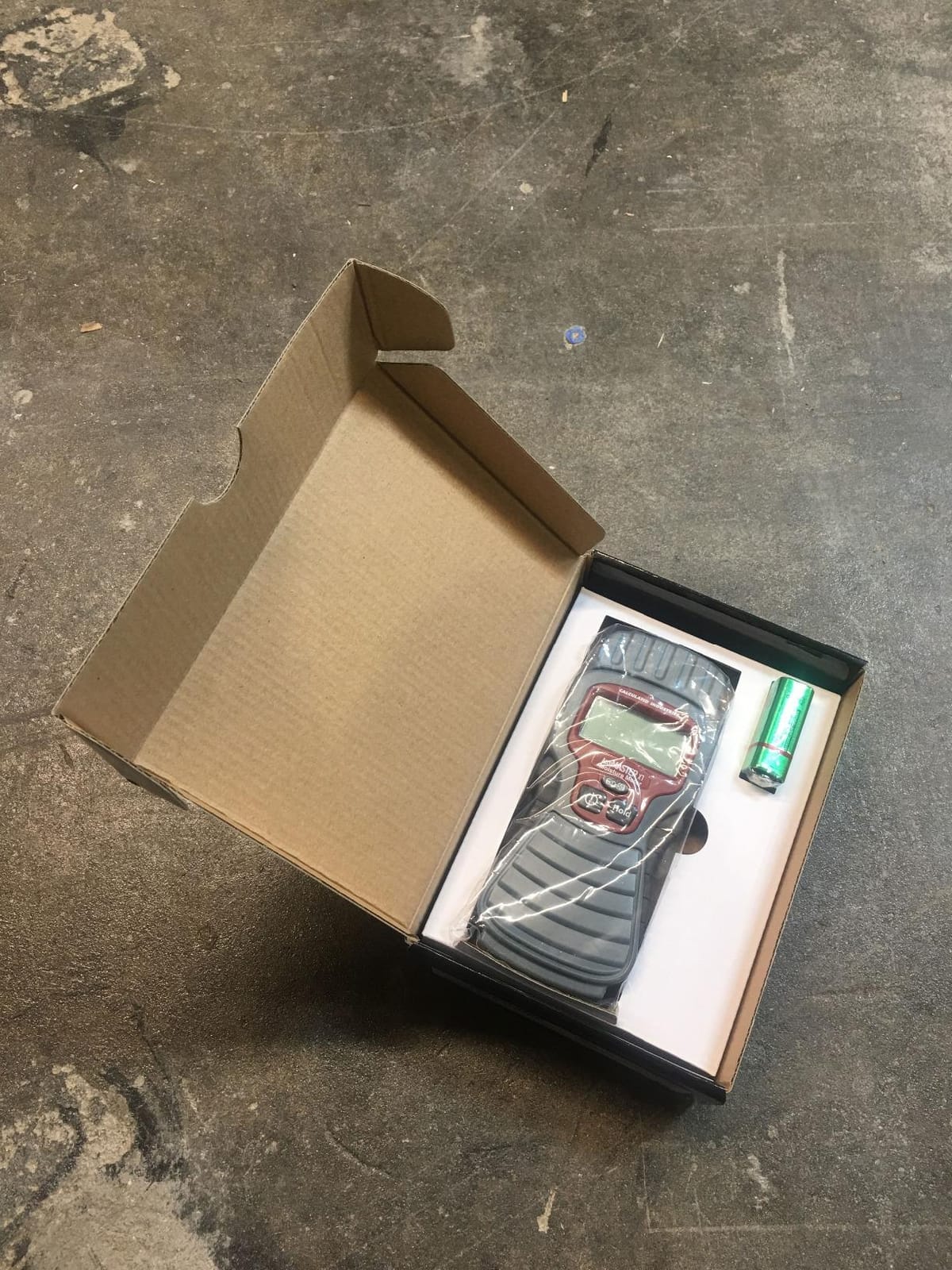
With 830 ratings behind it, this is the least-reviewed meter in the group and its 4.4 average sits a little below the rest of the field. What you notice instead is the body: it does not flex when you press the pins into a hard oak round, which is more than can be said for several lighter models, and the backlit screen stays readable in an unlit shed.
Who this suits
It suits a beginner who wants a clear call rather than a figure, and anyone who wants to confirm their meter is accurate at a moment’s notice. The wide material range suits a house with both a woodpile and old plasterwork.
Who should skip it
Skip it if you want lots of written owner feedback to lean on, since this is the least-reviewed model in the group. For professional flooring or inspection work, a higher-resolution meter is a better investment.
How to Take a Firewood Moisture Reading Without Fooling Yourself
The biggest cause of bad firewood readings is not the meter, it is where you put it. Follow these five steps and any of the models above will give you a number you can trust.
- Split the piece if you have not already. A meter on bark or a weathered outside face tells you about the surface, not the core.
- Read the middle of a fresh split face, away from bark, knots and any wet rain film.
- Set the species group as close to your wood as the meter allows, and use hardwood settings for oak, hickory and ash, softwood settings for pine and similar.
- Push the pins in fully and steadily, then take three to five readings on different pieces from the same spot in the stack and average them.
- Compare the average against 20%. Under 20% and you can burn it. Above 20% and leave that face turned outward in the stack.
If you are cutting and splitting a season’s worth at once, our gas chainsaw roundup covers the tools that get the wood to the size you want in the first place.
Pin vs Pinless Meters for a Woodpile
For firewood, a pin meter gives the more trustworthy number; a pinless meter is easier on cold, damp and uncut wood. Pin meters measure electrical resistance between two probes driven into the wood, and that resistance reflects actual water in the cells. Pinless meters project an electromagnetic field into the wood and read the response, which is fast but softer and more affected by surface conditions.
Forum users lean pin-type for firewood, and hearth.com regulars call pins the most reliable option on wood. That tracks with the physics: pins are the only way to reach past surface moisture into the core.
Where pinless wins is convenience. No holes, no pre-splitting, and a fast sweep across a stack to find the damp corner. If your wood is cold, wet and uncut, a pinless meter is a screening tool and a pin meter is the referee.
How to Tell If Your Moisture Meter Is Lying to You
Cheap meters give wildly inconsistent readings, and the same log at the same spot can return anything from 20% to 30% depending on pin depth. That is the most common complaint in firewood forums, and it is testable in about ten minutes.
Run a consistency check. Take five readings in the same small area without moving the meter, then five more an inch away. If the spread inside one spot is more than two or three points, the meter is not resolving moisture and the reading is mostly noise.
Check the depth effect. Push the pins in shallow, then full depth, on the same face. A large jump means the outer wood is dry and the core is still wet, which is useful information rather than a fault. The Bosch and Mecurate both use their protective caps as calibration checks, and the Calculated Industries carries built-in test pins, so run a check before every season.
One forum user tested around 15 inexpensive meters and found results did not correlate with price, with a low-cost unit beating a far more expensive one. That is the argument against spending heavily in this category.
How to Season Firewood Faster and What Changes Month to Month
Splitting is the single biggest lever you control. Pieces split to a consistent four to six inch thickness dry far faster than thick rounds, because the smaller the cross-section the shorter the path moisture has to travel out.
Stack for airflow, not for height. Rows running north to south with gaps between them, a tarp only on the top, and split faces turned outward will outpace a tight, covered pile every time. Moving wood off its own season and off bare soil speeds things further.
Expect a slow first month and a faster decline after the surface cracks open. Green ash and birch move quickly, oak and hickory drag, and a winter stack will essentially pause while frozen. Check monthly, and expect the number to fall in steps rather than a straight line.
Once the wood is down to about six inch splits, a chipper turns the leftovers into fuel that seasons quickly, and our wood chipper guide covers the options. If you want the wood flat rather than burning it, our wood planer buying guide is the other half of the job.
Do You Actually Need an Expensive Meter for Firewood?
No, and that is the most useful thing in this entire guide. The r/firewood consensus is that most moisture meters will work fine, that they are exceptionally simple devices, and that a cheap model from a hardware store has worked for people for years.
What you need is a number you can repeat on a freshly split face and a species setting that is roughly right. That is available well under what the professional trade meters cost, and the accuracy difference will never change your decision between burning a split and turning it. Spend more only for specific reasons: you sell wood by the cord and customers argue about dryness, you also do flooring work, or you want a meter with a real calibration check you can trust after a few seasons of abuse.
Frequently Asked Questions
What is the best wood moisture meter for firewood?
For most people the General Tools MMD4E is the best wood moisture meter for firewood. It is a pin-type meter with a 5-50 percent wood range, plus or minus 3 percent accuracy and a hold button, and it is the model most often recommended across firewood forums. If you want a clearer yes-or-no answer, the Bosch UniversalHumid shows a traffic light verdict and includes a calibration check in its cap.
Do moisture meters work on firewood?
Yes, moisture meters work well on firewood as long as you test a freshly split face rather than bark or a weathered side. Pin meters are more reliable because the probes reach into the core of the wood. Pinless meters scan faster and leave no holes, which makes them useful for screening a whole stack, but they are less precise on dense hardwood.
What is the best moisture reading for firewood?
Burn firewood at 20 percent moisture content or below. Under 15 percent is better still and gives the driest, cleanest fire. Above 20 percent much of the fire’s energy goes into boiling off water, which produces smoke, soot and creosote. Take three to five readings on different pieces from the same part of the stack and average them before you decide.
What is the best humidity meter for firewood?
You do not need a humidity meter for firewood, you need a wood moisture meter. Relative humidity meters measure the air, while the meters listed here report the percentage of the wood’s weight that is water. A few models such as the Valiant FIR421 and the Dr.meter MT1905 also display wood temperature, which helps you judge readings on cold wood.
Why does my firewood moisture meter give inconsistent readings?
The most common causes are reading a weathered or bark-covered surface, pushing the pins only part way in, and using the wrong wood species setting. Test the middle of a fresh split face, push the pins in fully and steadily, and set the species group to match your wood. If readings still jump around, take three to five readings and average them rather than trusting a single number.
The Bottom Line on Wood Moisture Meters for Firewood
The best wood moisture meters for firewood are simply the ones that give you a repeatable number on a fresh split face and stay honest month after month. The General Tools MMD4E remains my pick for most people, with the Bosch UniversalHumid ahead of it for anyone who wants a clear burn or no-burn light and a real calibration check.
Check that reading against 20%, put anything wetter back on the pile with the split face out, and repeat in a month. That simple routine will save you a season of smoky fires and a chimney swept more often than it should be.