
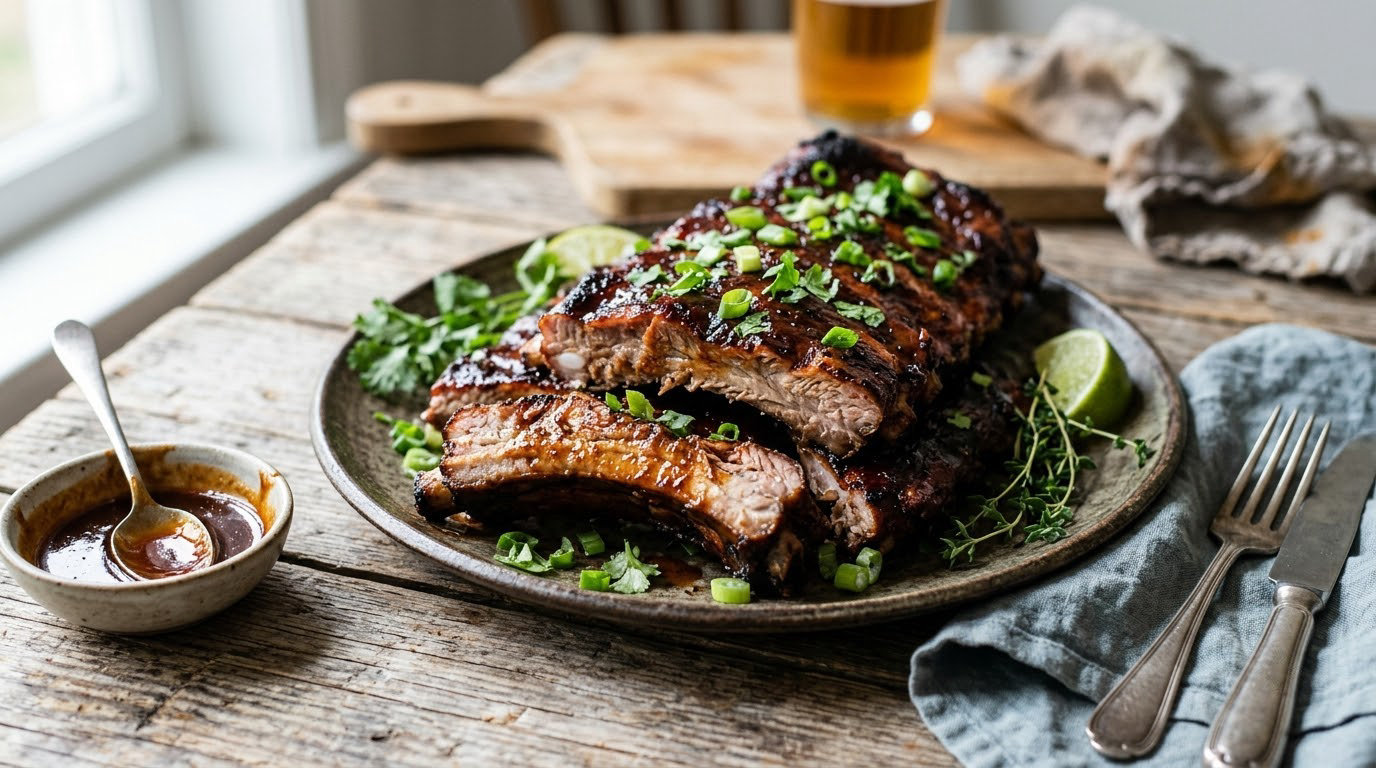
How long to bake ribs at 300? A rack of baby back ribs needs about 2 to 2.5 hours at 300°F wrapped in foil, St. Louis-style ribs need 2.5 to 3 hours, and spare ribs need 3 to 3.5 hours. That is the whole answer, and everything below just helps you land inside the right window.
Ribs are stubborn meat. The collagen has to turn to gelatin before the bones give, and 300°F is slow enough to do that without drying the meat out. It is the temperature most home cooks land on because it works in a normal oven with no smoker, no water pan and no special equipment.
I cook ribs through the year, and fall is when this question comes up most: cooler evenings, longer evenings, and a rack in the oven while the rest of dinner happens. Everything in this guide is the method I use, with the timings I actually trust rather than a single round number.
Table of Contents
How Long to Bake Ribs at 300: Quick Timing Guide
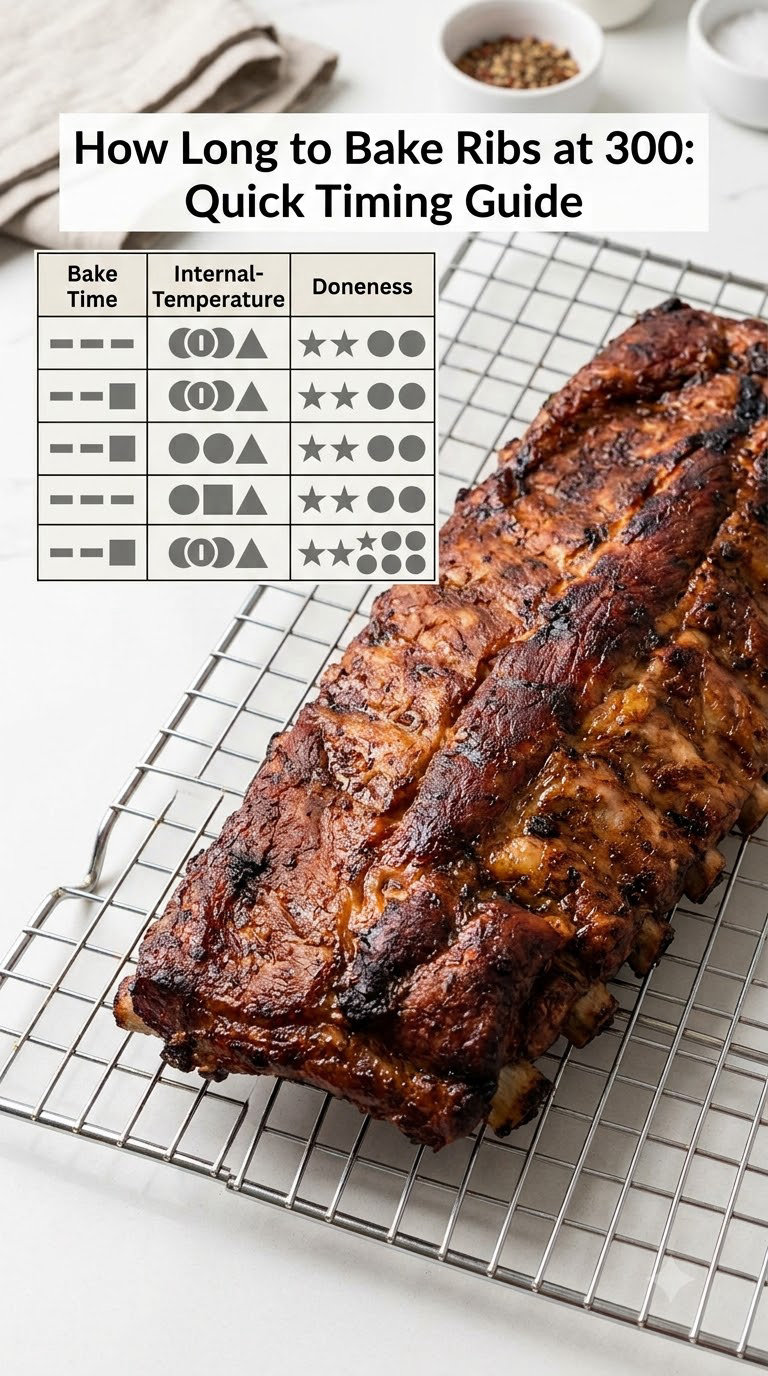
The times below assume ribs at room temperature, membrane removed, seasoned, and wrapped in foil on a baking sheet. They are the point where the meat slides off the bone cleanly.
| Rib type | Baked at 300°F, wrapped | Baked at 300°F, uncovered | Best temperature cue |
|---|---|---|---|
| Baby back ribs | 2 to 2.5 hours | 1.5 to 2 hours | 195°F, meat pulls back on the bone |
| St. Louis-style ribs | 2.5 to 3 hours | 2 to 2.5 hours | 195 to 200°F, bones wiggly |
| Spare ribs | 3 to 3.5 hours | 2.5 to 3 hours | 200 to 203°F for fall-off-the-bone |
| Country-style ribs | 1.5 to 2 hours | 1.25 to 1.75 hours | 190°F, meat pulls away easily |
Chilled ribs straight from the fridge add 20 to 30 minutes. Start checking 30 minutes before the low end of the range, because a thermometer beats a clock every time.
What Type of Ribs Are You Baking?
The cut decides the time more than anything else. Two racks from the same pack can differ by a full hour because of thickness and how much fat is riding on them.
Baby back ribs are short, curved and fatty. They cook the fastest of the pork ribs and go tender while still juicy, which is why most recipes use them. If you want a loose-meat method rather than a timer, my boneless pork ribs recipes cook faster still.
St. Louis-style ribs are trimmed spare ribs with the brisket cut off. Even, meaty and a little leaner than baby backs, so they need a bit longer and forgive overcooking better.
Spare ribs are the big ones, with more meat and more bone to turn soft. They are the reason so many people think ribs take forever. Plan on the full 3 to 3.5 hours and check often at the end.
Country-style ribs are cut from the shoulder, not the rib side. They are boneless or short-boned and behave more like a pork chop, so they finish fast. This is the one worth checking country-style pork rib recipes for before you set a timer.
How Long to Bake Ribs at 300 Based on Size and Doneness
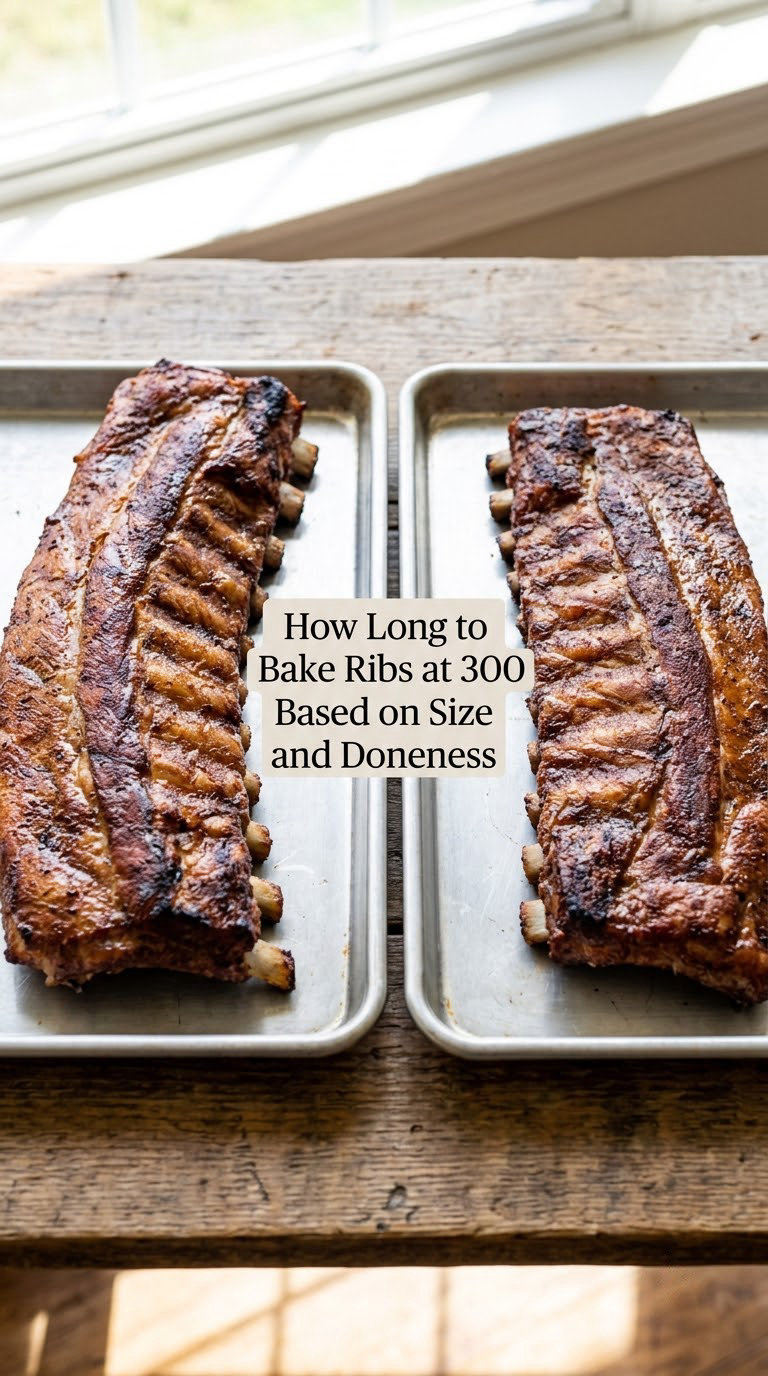
Rack weight is the honest predictor. A rack under 2 pounds is a different job than a 4-pound spare rib rack, and the timing chart rarely tells you that.
| Rib type and size | Sliceable (bites clean) | Tender (fork goes through easily) | Pull-apart (falls off the bone) |
|---|---|---|---|
| Baby back, chilled from fridge | 1 hr 45 min | 2 hr 10 min | 2 hr 30 min |
| Baby back, room temperature | 1 hr 30 min | 2 hours | 2 hr 15 min |
| St. Louis, room temperature | 2 hours | 2 hr 30 min | 3 hours |
| Spare, trimmed of brisket | 2 hr 30 min | 3 hours | 3 hr 30 min |
| Spare, full size with brisket | 2 hr 45 min | 3 hr 15 min | 3 hr 45 min |
Sliceable is the right target for a lot of people, especially if the ribs are going into a pan with sauce and back into the oven. Fall-off-the-bone is the right target when the ribs are the meal.
Those temperatures map onto the texture: roughly 185 to 190°F for sliceable, 190 to 195°F for fork tender, and 200 to 203°F when the meat is falling off.
How to Get Ribs Ready for the Oven
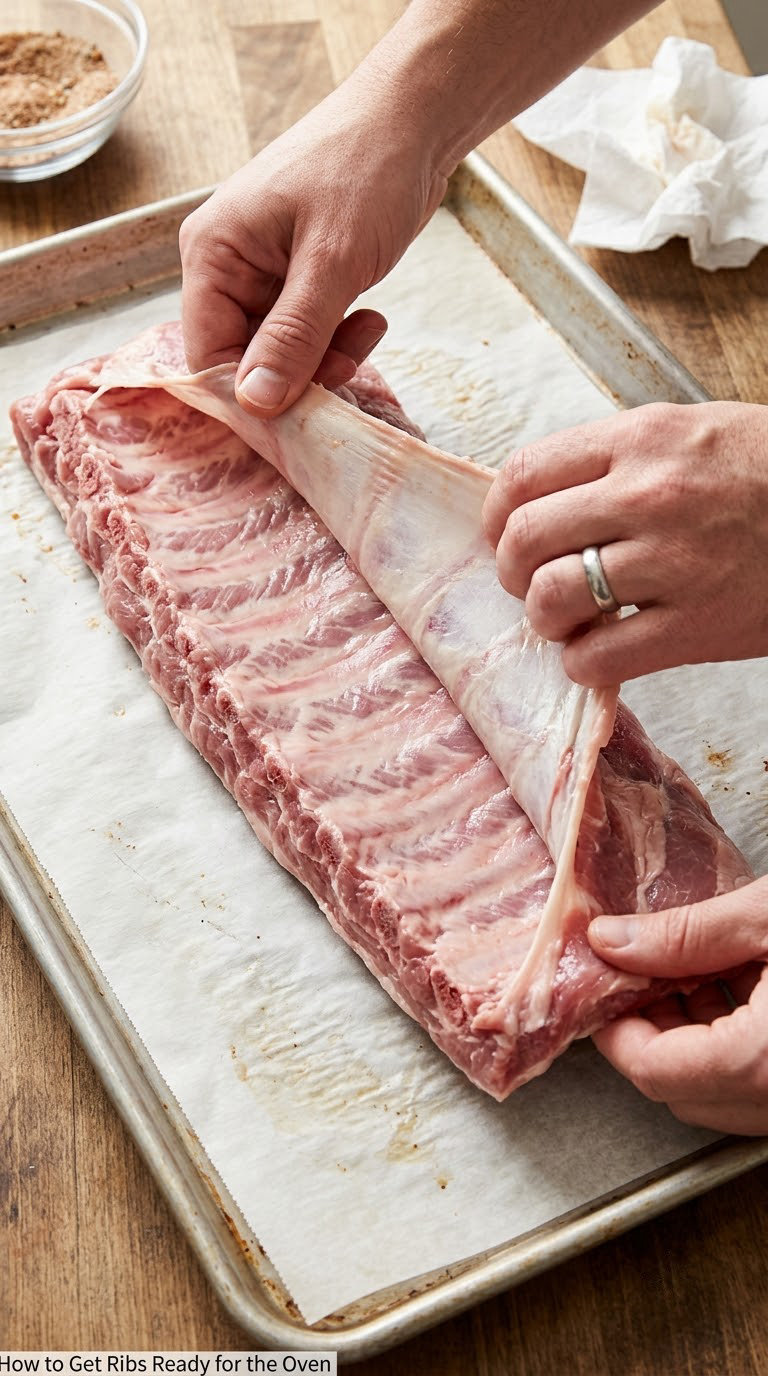
Most timing problems turn out to be prep problems. Ten minutes here saves half an hour of staring at the oven door.
- Pat the ribs dry. Moisture under the rub makes it slide off and steam instead of crusting.
- Pull the membrane. Slide a paring knife under the thin silver skin on the bone side, grab it with a paper towel, and tug. It comes off in one sheet. If it tears into pieces, use the knife edge to lever it up in sections.
- Trim the fat. Leave a thin layer, because some fat is what keeps the ribs moist at 300°F. Pull off the brisket on spare ribs.
- Season. Salt, black pepper and whatever you like, applied right before they go in. A rub applied the night before gives you deeper flavor.
- Preheat to 300°F with a rack set in the center of the oven.
- Wrap. Use heavy-duty foil, not the thin stuff that tears. Parchment paper underneath is optional but it stops the sauce from welding itself to the sheet pan.
Racks need air around them too. Leave a gap between each one so heat circulates, and never stack them.
How to Bake Ribs at 300
- Heat the oven to 300°F and let it run ten minutes before the ribs go in. A cold oven adds fifteen minutes you did not plan for.
- Put the wrapped racks on the center rack of a baking sheet, seam side up.
- Bake for the low end of the range. Two hours for baby back, two and a half for St. Louis, three for spare.
- Rotate the sheet pan once, around the halfway mark, so both sides color evenly.
- Open the foil and brush on sauce in the last 30 to 45 minutes. Sugar in the sauce burns fast at this stage, so a thin coat is plenty.
- Start checking early. From the 75-minute mark for baby backs, the 90-minute mark for spare ribs.
- Verify with a probe in the thickest part of the meat, away from the bone.
- Broil to finish. Two to four minutes under the broiler, watching constantly, until the sauce bubbles and darkens at the edges.
- Rest 5 to 10 minutes before slicing. The juices need to settle or they end up on the cutting board instead of in the meat.
That is the same shape as most oven timing guides: prep, bake, sauce and finish, rest. Four stages, and only one of them is hard.
Should You Cover Ribs at 300 Degrees?
Cover them. Foil traps steam, and steam is what keeps ribs moist through a three-hour cook. Uncovered at 300°F you are trading moisture for browning you can get back at the end.
How long to bake ribs at 300 without foil
Uncovered takes roughly 30 to 45 minutes off the wrapped time, so baby backs land around 1.5 to 2 hours and spare ribs around 2.5 to 3 hours. The edges crisp earlier and the surface dries out sooner, which is why the fastest route to a sauced finish is wrapped first, uncovered last.
A loose tent of foil in the final stretch is the middle ground. It browns the sauce without drying the meat, and it is what I do when the ribs are for a crowd and I want them to hold up on a buffet tray.
How to Tell When Ribs Are Done
Clock time is a guess. Three tests together tell you the truth.
Fork test. Slide a fork into the meat between two bones. If it goes in and out with almost no resistance, the collagen has converted and the rib is done.
Bend test. Pick up one end of the rack with tongs. When done, it folds into a U without cracking. If the bones snap, keep going.
Pull-back test. Look at the ends of the bones. The meat shrinks back along the bone as it cooks, and at 300°F that gap is a reliable signal on its own.
Thermometer. The USDA safe minimum for pork is 145°F with a three-minute rest, and ribs pass that long before they taste right. Most people pull ribs somewhere between 190 and 203°F, which is where collagen has fully broken down.
If you want ribs that hold together for a platter, pull them around 190°F. If you want them to fall off the bone, wait for 200°F or above.
Can You Bake Frozen Ribs at 300 Degrees?
You can, and it works fine, but the timing stops being predictable. Frozen ribs need roughly 45 to 60 minutes more than thawed ones, and they thaw unevenly, so the outer meat can dry out before the center softens.
The safest plan is to thaw them properly. Put the sealed package on a plate in the fridge overnight, which takes 8 to 12 hours. Cold water works too, in a sealed bag submerged in a bowl of cool water, changed every 30 minutes, roughly an hour per rack.
Leave the microwave out. The outside edges start cooking during the thaw and go leathery before the middle ever softens.
If you must bake from frozen, add an hour, keep them wrapped for the first two hours, and do not open the foil until then.
Common Mistakes
The ribs took longer than the chart said. Chilled meat, a thick spare rib rack, or a crowded pan are the usual reasons. Give it another 30 minutes and check again, and next time start checking 30 minutes early.
They came out dry. Usually uncovered for too long, or foil wrapped too loosely so the steam escaped. Wrap tightly in heavy-duty foil and keep the seam folded down.
The sauce burned. Sugar burns fast at 300°F once it is exposed. Apply sauce in thin coats late in the cook, and stay at the oven for the broil.
Membrane left on. It holds moisture in and keeps the rub from sticking. Grab it with a dry paper towel and pull.
Two racks, uneven cooking. Racks on the same oven shelf cook at the same speed, so no time adjustment is needed. Racks on different shelves do not, so swap and rotate them halfway through.
Cutting too early. Resting is not optional. Five to ten minutes keeps the juice in the meat.
Frequently Asked Questions
How long does it take to bake ribs at 300 degrees?
Baby back ribs take about 2 to 2.5 hours at 300°F wrapped in foil. St. Louis-style ribs need roughly 2.5 to 3 hours, and spare ribs need 3 to 3.5 hours. Uncovered, subtract 30 to 45 minutes. Chilled ribs from the fridge need another 20 to 30 minutes. Start checking with a thermometer 30 minutes before the low end of the range.
Do I need to cover ribs when baking them at 300°F?
Yes, for most of the cook. Foil traps steam and keeps ribs moist through a two to three hour bake at 300°F. Uncovered ribs dry out faster and brown earlier, so if you want sauce, wrap for most of the time and uncover for the last 30 to 45 minutes to glaze, then broil briefly to caramelize.
What internal temperature should baked pork ribs reach?
The USDA safe minimum for pork is 145°F with a three-minute rest. Ribs are almost always cooked well past that, because the texture comes from collagen breaking down rather than from doneness alone. Most home cooks pull ribs between 190 and 195°F for fork-tender meat, and 200 to 203°F for fall-off-the-bone texture.
How do I know when ribs are tender enough to pull apart?
Use three cues together. A fork should slide between the bones with almost no resistance, the rack should fold into a U when lifted with tongs without cracking, and the meat should visibly shrink back along the bone ends. If any one of those fails, give it another 20 to 30 minutes and test again.
Should I bake ribs from frozen or thaw them first?
Thaw first if you can. Frozen ribs need roughly 45 to 60 minutes more at 300°F and cook unevenly, so the outside can dry out before the center softens. Overnight in the fridge is the most reliable method, about 8 to 12 hours. Cold water in a sealed bag works in about an hour per rack. Skip the microwave.
Why are my ribs taking longer than the timing chart says?
Four things usually explain it: the ribs went into the oven cold from the fridge, the rack is a thick spare rib cut, the pan was crowded so air could not circulate, or the oven runs cooler than its dial. Check the actual oven temperature with a separate thermometer, leave space between racks, and start checking 30 minutes earlier next time.
The Best Way to Bake Ribs at 300
If you only remember one thing from this guide, do it this way: bake ribs wrapped at 300°F for most of the cook, start checking earlier than the total estimate, rotate the pan at the halfway mark, and pull the ribs the moment they are tender and browned rather than when the clock says so.
Keep leftovers in the fridge for up to 3 to 4 days and reheat them covered in a 250°F oven with a splash of sauce or broth so they do not dry out. If you want a companion oven guide while yours are going, I have one on how long to bake chicken breast at 400 degrees and another on how long to bake salmon at 400 degrees.