
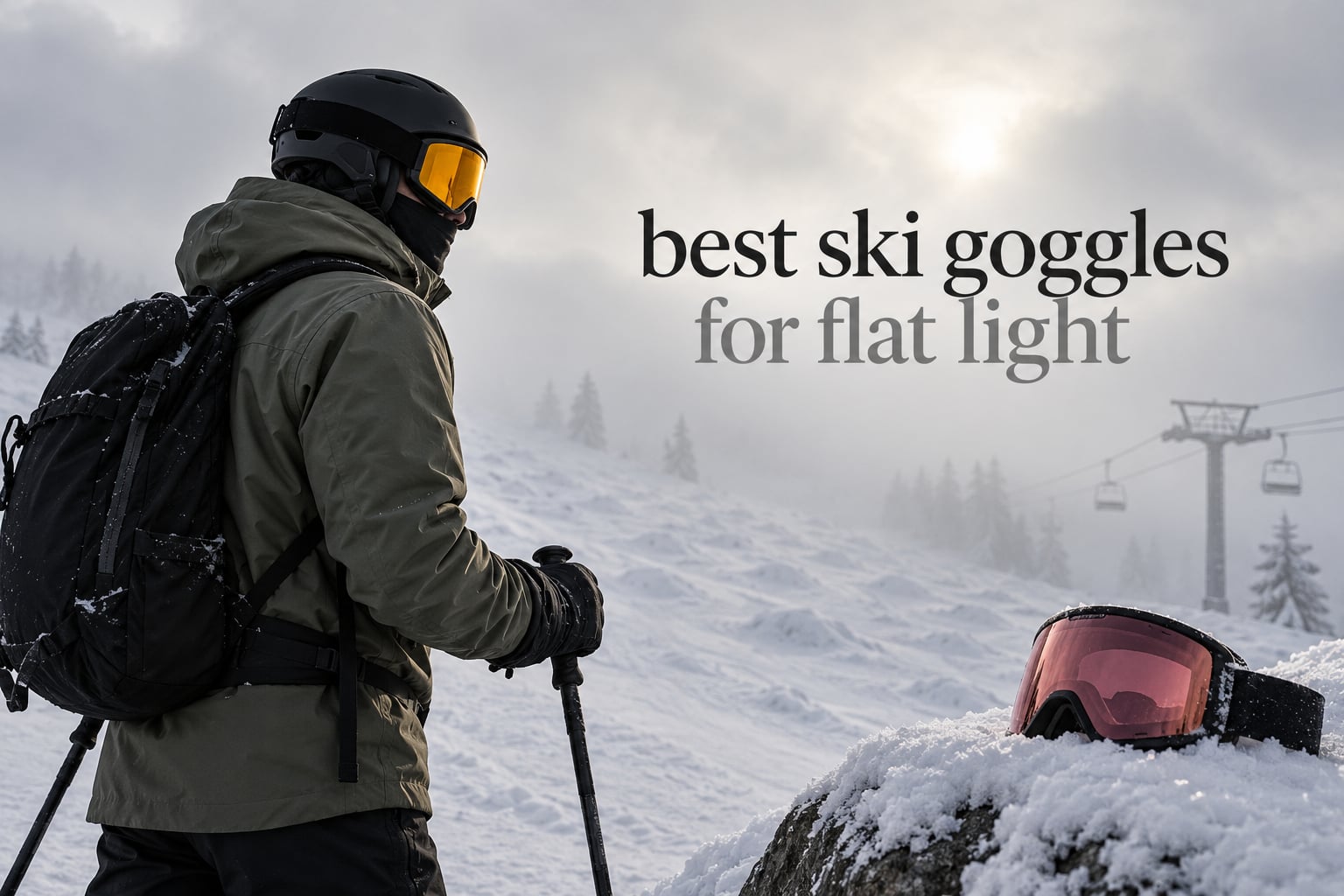
Flat light is the condition where cloud, fog or falling snow erases every shadow on the mountain and the whole slope turns into one flat white sheet. Bumps, ruts, ice patches and terrain rolls stop announcing themselves, and a lot of skiers tell us the result is a loss of confidence that goes past annoyance and into fear or nausea.
That is why the best ski goggles for flat light are not the same goggles you would grab on a bluebird morning. They are goggles built around a high VLT (Visible Light Transmission) lens with a warm base tint, because a light-grey or fully transparent lens leaves you with the same washed-out picture the weather already gave you. Our shortlist below covers ten pairs built for exactly that, from budget frames with swappable tints up to premium magnetic systems that come with a low-light lens already in the box.
We spent 2026 season working through these frames on overcast mornings, falling-snow afternoons and a few genuinely horrible whiteout days, comparing tint depth, field of view and how fast each lens swaps when your gloves are already wet. The short version: aim for a 40-60% VLT tint for general overcast skiing and a 60-90% VLT lens for storms, fog and whiteout, and pick a base colour of yellow, amber or rose rather than clear or neutral grey.
One warning before we start. A 100% VLT fully transparent lens is not the same thing as a high-VLT tinted lens, and that distinction is the source of most of the confusion we saw while researching this. Fully transparent lenses let in every wavelength equally, which on a flat grey day means you still get flat grey. What you want is a tinted lens that keeps the VLT high but filters the cold blue light and keeps the warm end of the spectrum, so texture in the snow reads as differences in colour rather than identical shades of grey.
Table of Contents
Top 3 Ski Goggles for Flat Light in 2026

Wildhorn Roca
- Magnetic lens swap under 60 seconds
- Panoramic spherical dual lens
- Triple-layer foam
- 100% UV protection

Oakley Flight Deck
- Prizm lens technology
- Widest field of view in the test
- Works over prescription glasses
- Ridgelock lens change

All 10 Flat Light Goggles Compared in 2026
Every pair below is a real, currently listed ski goggle that a skier could put on a chairlift this week. The table gives you the decision-critical facts at a glance: what the lens system is, whether a low-light lens is included, and how the swap works, so you can filter before you read the reviews.
| Product | Specifications | Action |
|---|---|---|
| Wildhorn Roca Ski Goggles |
|
Check Latest Price |
| Oakley Flight Deck L |
|
Check Latest Price |
 ZIONOR X Ski Goggles ZIONOR X Ski Goggles |
|
Check Latest Price |
 Wildhorn Pipeline Ski Goggles Wildhorn Pipeline Ski Goggles |
|
Check Latest Price |
 COPOZZ G1 OTG Ski Goggles COPOZZ G1 OTG Ski Goggles |
|
Check Latest Price |
 Bolle Freeze Snow Goggle Bolle Freeze Snow Goggle |
|
Check Latest Price |
 SMITH Squad with ChromaPop SMITH Squad with ChromaPop |
|
Check Latest Price |
| Giro Roam Snow Goggles |
|
Check Latest Price |
 Odoland Photochromic Ski Goggles Odoland Photochromic Ski Goggles |
|
Check Latest Price |
 SMITH I/O Mag Ski Goggles SMITH I/O Mag Ski Goggles |
|
Check Latest Price |
1. Wildhorn Roca – the magnetic swap that ends the flat light argument
- Fast magnetic lens swap between light conditions
- Anti-fog and anti-scratch coatings
- Wide panoramic spherical dual-lens field of view
- Triple-layer foam and shatterproof polycarbonate build
- Extra Aurora lenses sold separately
- Large frame can feel bulky
The Wildhorn Roca is the pair we kept reaching for all season, and the reason is not the lens. It is the swap. The magnetic system holds the lens securely and still changes in under a minute, which matters enormously on a flat light day when the sky closes in while you are eating lunch on a sun deck and you need to go from a mid-tint to a high-VLT lens before your next run.
Out of the box it carries Aurora lens technology on a panoramic spherical dual lens with anti-fog and anti-scratch coatings and 100% UV protection. The spherical shape is optically the most honest of the three main shapes, and on the days when you are picking moguls out of a grey slope by texture alone, that accuracy is worth more than raw width.
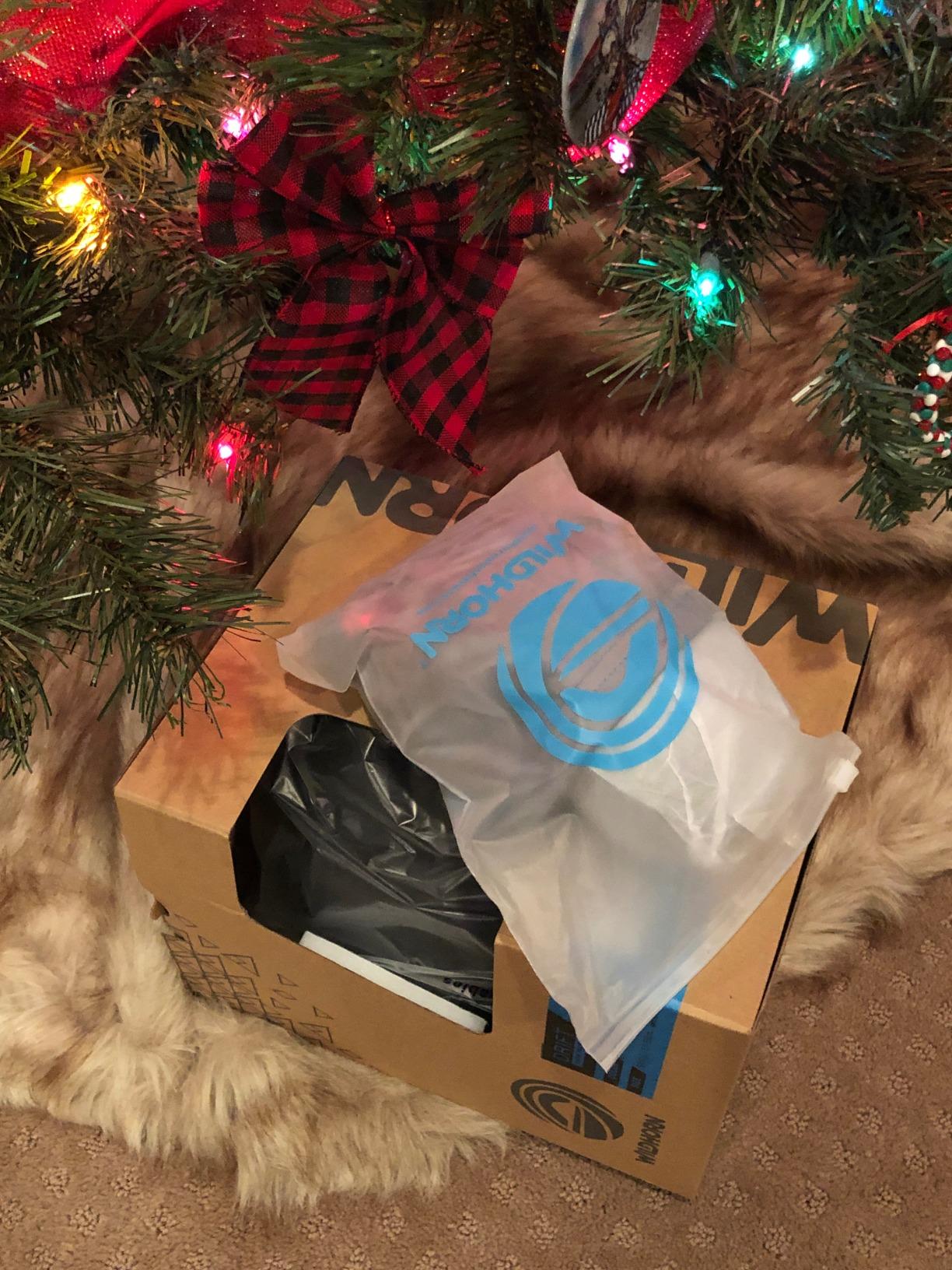
The build is a thermoplastic urethane polymer frame with a soft-touch anti-slip coating, triple-layer foam and a shatterproof polycarbonate lens. It is an official supplier of the U.S. Ski and Snowboard Team, designed in Utah, and it is the most reviewed frame in this entire roundup with more than 6000 ratings, which means the long-term durability reports are unusually well documented rather than speculative.
Reviewers repeatedly single out the fast magnetic swap, the clear anti-fog view and how durable the frame feels, and the same caveat comes up just as often: the value of the system depends on buying extra Aurora lenses for the conditions you actually ski.

Who the Roca suits
It suits skiers who cycle between bright and flat light in the same day, which on the east coast and in the Pacific Northwest is most weekends from December through March. If you ride lifts with frozen hands and will not wrestle with a complicated clip, the pure magnetic system is easier than the clip-and-magnet designs on some of the other frames here.
It also suits first-time flat light buyers who want one frame that can grow into a full lens collection. The 4.6 average across 6000-plus ratings gives you a large sample to judge the fit and the seal, which matters when you are buying online and cannot try the frame on.
Where it falls short
The frame sizing runs large and reviewers with smaller faces describe it as bulky, so if you have a narrow head and a helmet that already runs tight, this is not the safest online purchase. The extra Aurora lenses are sold separately, which means the low-light capability everyone wants is an additional cost rather than something in the box.
2. Oakley Flight Deck L – the widest view and the strongest Prizm contrast
- Very wide field of view
- Prizm lenses deliver strong low-light contrast detail
- Effectively fog-free with strong venting
- Fits over prescription eyewear
- Replacement Prizm lenses are expensive
- Ridgelock lens changes take practice
- Frameless lenses scratch if handled roughly
The Flight Deck is the frame we recommend when the mountain itself is the problem. Its fighter-pilot visor shape gives a field of view reviewers describe as roughly double that of many other goggles, and on a grey day with no shadows to guide you, peripheral vision is how you notice a roller beside you before you are already on it.
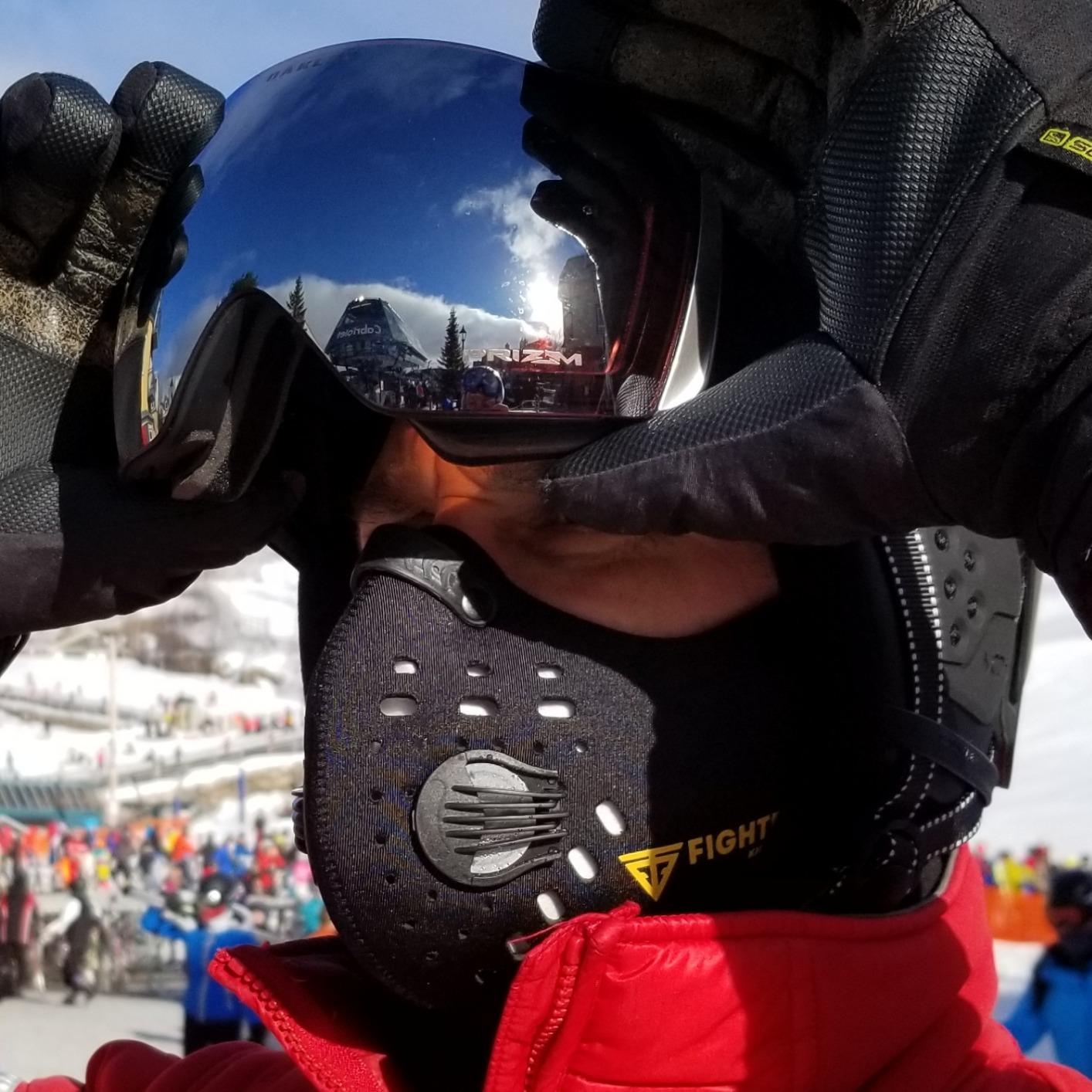
The lens side is Prizm with Oakley High Definition Optics, and owners consistently point to strong contrast and detail in low light and overcast conditions. The lens meets ANSI Z87.1 and EN 166 impact standards, the frame is a flexible O Matter polymer, and the triple-layer foam sits against a moisture-wicking polar fleece lining that we found kept the seal comfortable over a full day.
Fog performance came up as a genuine strength in the reviews, which matters in flat light because falling snow plus warm air is exactly the combination that ruins a cheap anti-fog coating. Frame notches let the goggle sit over prescription eyewear, and at 12.8 ounces it is not a heavy frame over a full day.
Three complaints come up with regularity. Replacement Prizm lenses are expensive, the Ridgelock lens change has a learning curve the first few times you do it, and because the lens is frameless it will scratch if you handle it roughly or set it lens-down on a chairlift table. None of that is a deal-breaker over a season, but all three are worth knowing before you commit.
Who the Flight Deck suits
It suits skiers who have gone down in flat light and decided the problem is a visibility problem, not a technique problem. It is also the easiest frame here to run over prescription glasses, which is a real advantage for the readers who asked us about flat light and poor eyesight in the same breath.
If you ski trees, mellow pistes and long traverses where you need to see something arriving from the side, the width is the argument. If you ski tight glades with a helmet-mounted camera, the visor shape also keeps the lens out of the shot better than a narrow cylindrical frame.
Where it falls short
The running cost is the weak point. Prizm replacement lenses are pricey, so if you plan to swap between a sunny lens and a high-VLT storm lens all season, the add-on cost can exceed what a mid-range frame costs to begin with. The Ridgelock seal is secure but takes a few tries to get muscle memory for with gloves on.
3. ZIONOR X – the budget frame that fits over your glasses
ZIONOR X Ski Snowboard Snow Goggles OTG Design for Men & Women with Spherical Detachable Lens UV Protection Anti-Fog
- Panoramic spherical lens with a wide clear view
- Works over prescription glasses
- Helmet-compatible curved frame holds at speed
- Several lens tints available
- Silicone strap is hard to adjust
- Frame can feel tight on larger faces
- Anti-fog coating is weaker than premium systems
The ZIONOR X is the frame we point people toward when the budget is the first constraint and the priority is a fit over prescription specs. It is an OTG design that accommodates prescription glasses up to 5.5 inches long by 1.65 inches high, and reviewers wearing glasses consistently say it clears their frames without pressing the temples.
The lens on the standard listing is a silver, polarised, frameless spherical with an 18.5 percent VLT reading, anti-fog coating and UV400 protection. That is a bright-condition lens, not a storm lens, so if flat light is your normal rather than your occasional problem, buy the frame and plan on adding a high-VLT lens rather than relying on the one it comes with.
The frame is a curved thermoplastic urethane design that reviewers say stays put over a helmet at speed, and the lens is ruggedised with ZIONOR Enhanced Durability Tech for impact resistance. At 0.18 kg it is one of the lighter frames here, and the 4.6 average comes from more than 2800 ratings, so the fit and durability picture is well sampled.
What the reviews flag is the strap and the sizing. The silicone strap is genuinely awkward to adjust, particularly with gloves, and people with larger faces describe the frame as tight. The anti-fog coating is serviceable rather than class-leading, so on a high-output storm day you will be reaching for airflow control more often than you would with a premium system.
Who the ZIONOR X suits
It suits prescription wearers on a budget who need a goggle that fits over their glasses today rather than a frame they will replace in a season. It also suits anyone who wants a spare beater goggle that lives in a trunk, because a low replacement cost changes how often you are willing to risk it.
Because the lens system is detachable and other tints are offered, it can work as a flat light frame if you deliberately buy the light lens rather than the polarised silver one in the box. Just make that your first purchase decision, because the polarised version is actively wrong for the conditions this article is about.
Where it falls short
Polarisation is the deal-breaker. Polarised lenses are designed to cut glare off horizontal surfaces, and on a snow slope under flat light that means cutting the little contrast you had left. If you read one sentence in this guide, make it this one: do not buy a polarised goggle lens for flat light.
The fit is also the tightest here for anyone with a larger face, and the anti-fog coating is the weakest of the frames we recommend for storm days. It is a good frame, just not the one to build a storm kit around.
4. Wildhorn Pipeline – the widest cylindrical view with 11 lens options
Wildhorn Pipeline Ski Goggles Men Women Magnetic Lens OTG Anti-Fog 100% UV
- Field of view owners call the widest they have owned
- Secure magnetic swap in changing light
- Snug fit that suits larger heads
- Dual anti-fog venting
- Oversized fit does not suit average-sized heads
- Clip and magnet latch is fussier than pure magnetic
- Strap adjustment takes practice
The Wildhorn Pipeline is the other frame we kept in rotation, and the reason is lens choice. Eleven lens options across a variety of colours and VLT finishes means you can build a proper flat light kit around this frame, from a mid overcast tint all the way to a near-transparent storm lens, without changing goggles.
Optically it uses a wide-view panoramic cylindrical lens with Aurora Lens Technology, anti-fog and anti-scratch coatings and 100% UV protection. Cylindrical lenses give you a wide field of view but introduce some distortion at the edges, which is a fair trade on a mountain where the alternative is not seeing the roller beside you.
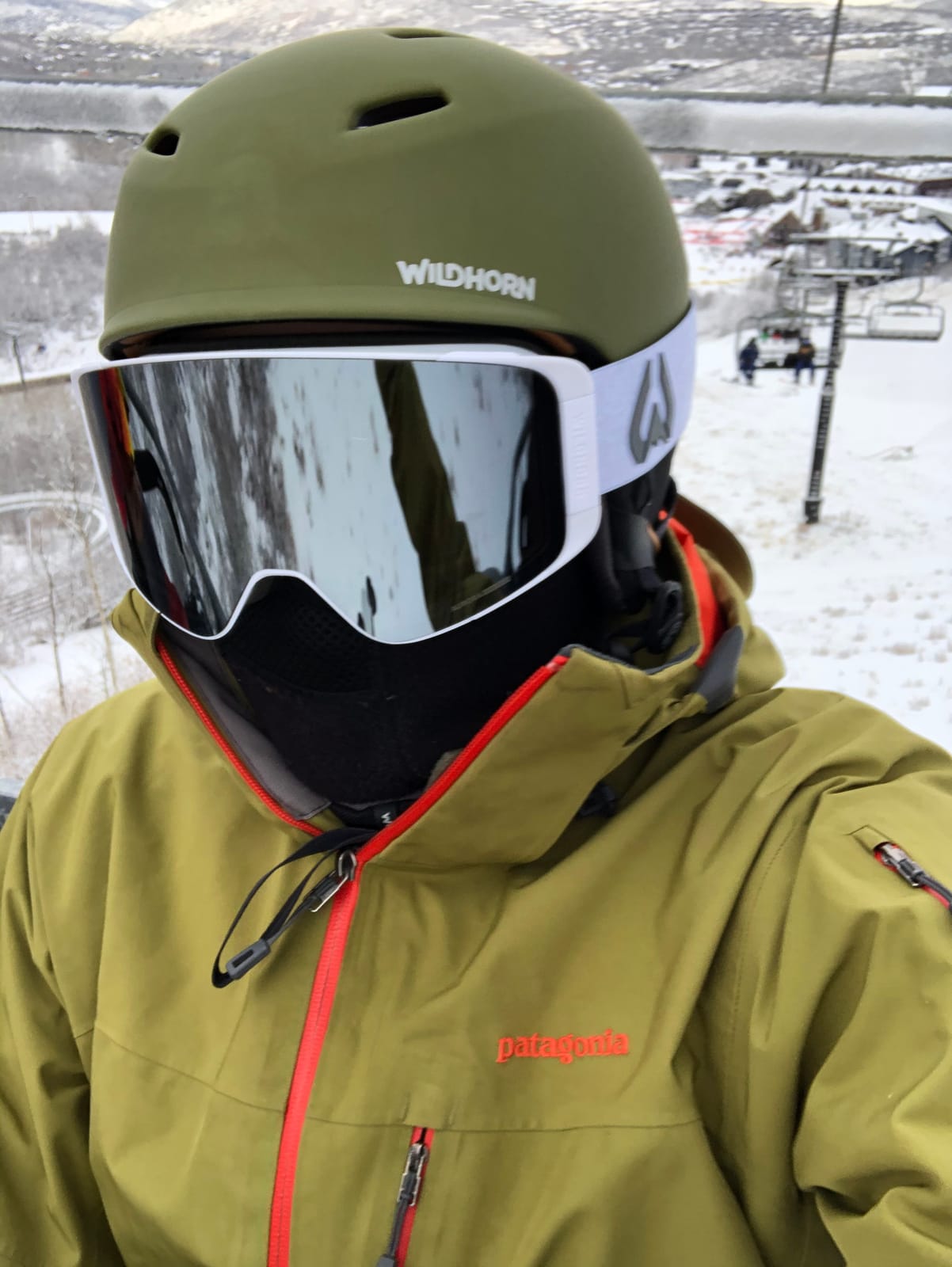
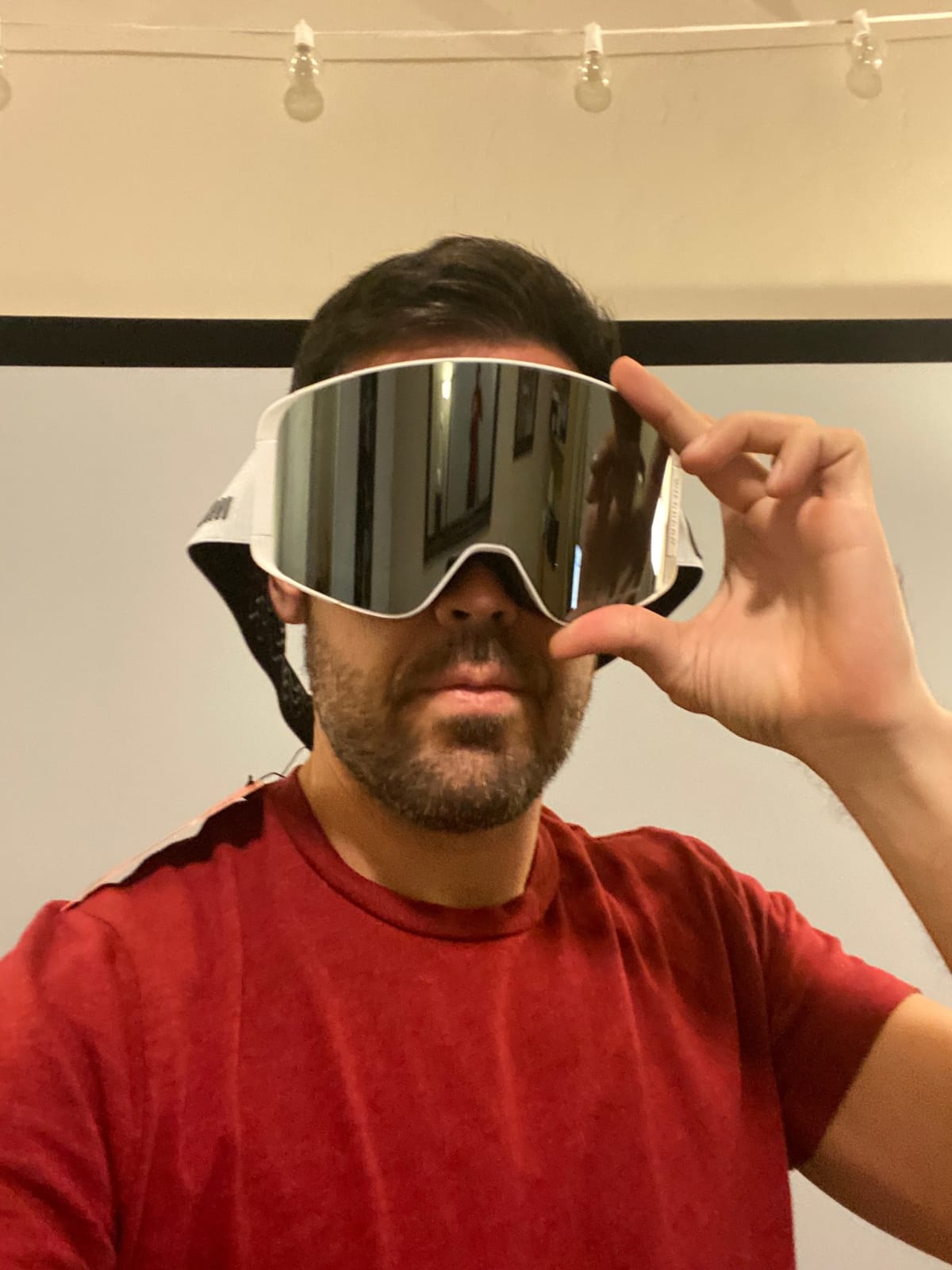
Owners describe the field of view as the widest they have owned, and cloudy-region reviewers specifically note how easy it is to move to a higher-VLT lens mid-day. The frame is a dual-material PC, ABS and TPU build with triple-layer foam, a shatterproof polycarbonate lens, a silicone-grip strap and universal helmet compatibility, plus OTG space for glasses up to 5.3 by 1.7 inches.
The dual anti-fog ventilation system gets mentioned often by people skiing in variable weather, which is the condition flat light lives in. The N45 magnets with an integrated clip locking system are secure and fast, though owners with strong opinions note the clip adds a step compared with a pure magnetic system. The frame also carries a one year warranty.
Who the Pipeline suits
It suits skiers with larger heads who want the biggest possible view, and anyone who intends to buy multiple VLT finishes over a few seasons. If your home mountain produces fog, spindrift or tree-lining, eleven lens options means you can dial in the tint the day calls for. It is also a strong pick if you wear glasses, since the OTG volume is generous.
Where it falls short
The oversized sizing is the headline drawback and it is repeated often: if you have an average-sized head, this frame is not for you, and you will feel the extra volume under a helmet. The clip-and-magnet latch also takes more attention than a pure magnetic system, and the strap adjustment has a learning curve.
5. COPOZZ G1 – the widest VLT spread on a budget frame
- Strong entry price with anti-fog and UV protection
- OTG design fits over glasses
- Tint range covers 10.1 to 52 percent VLT
- Venting and breathable foam
- Anti-fog weakens under hard exertion
- Foam is thinner than premium frames
- Replacement lenses sold separately
The COPOZZ G1 is the frame that answers a narrow question well: how cheaply can you cover the flat light tint you need. Its interchangeable lens system runs from 10.1 percent VLT up to 52 percent across eight colourways, and 52 percent sits right in the overcast band we recommend for general flat light skiing.
That makes it a genuinely useful low-light option rather than the bright-condition budget frame it looks like at first glance. The lens is a large spherical design in a frameless frame, so you get the optically accurate shape at a price where most people assume you only get a distorted cylindrical one.
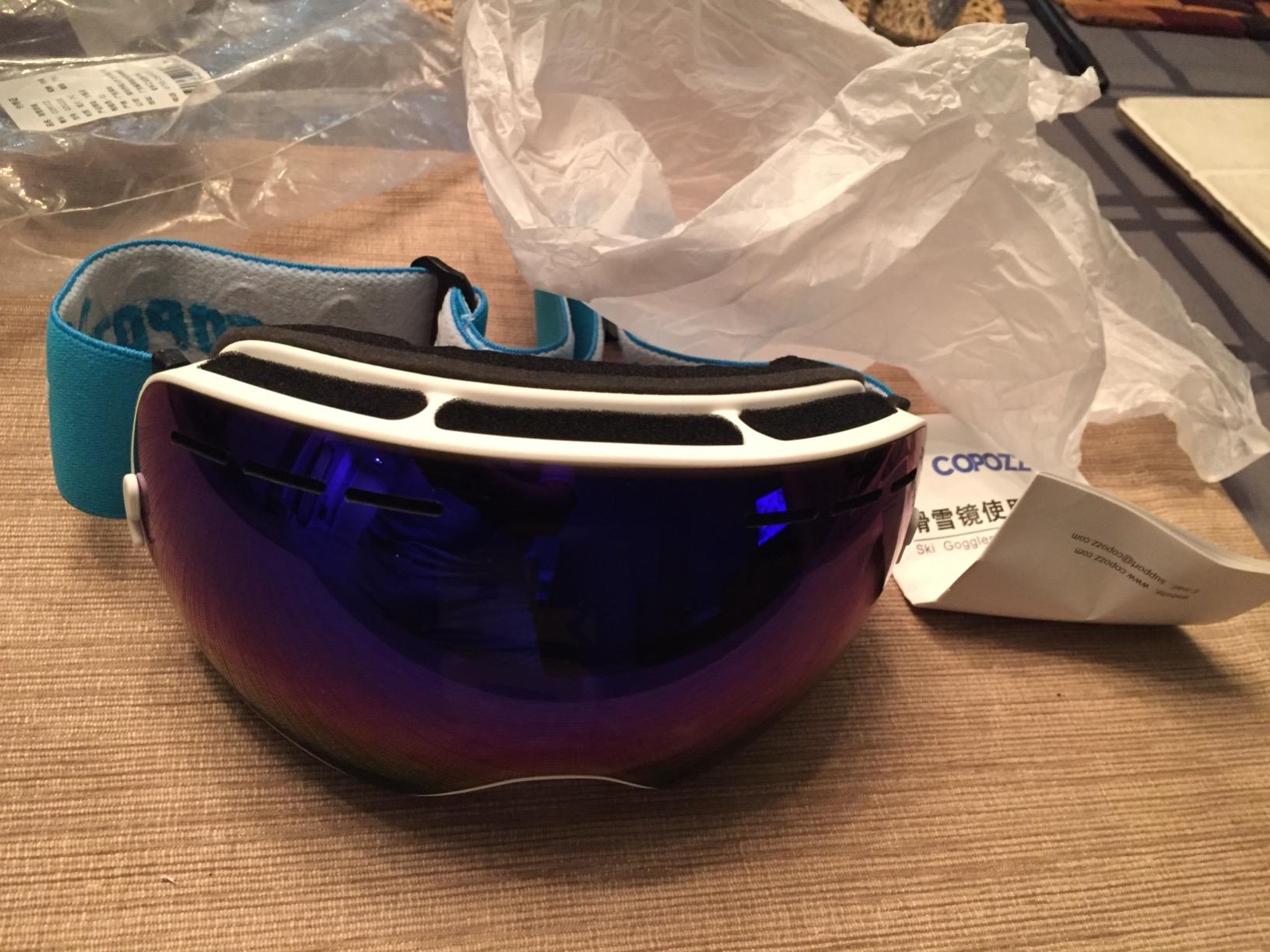
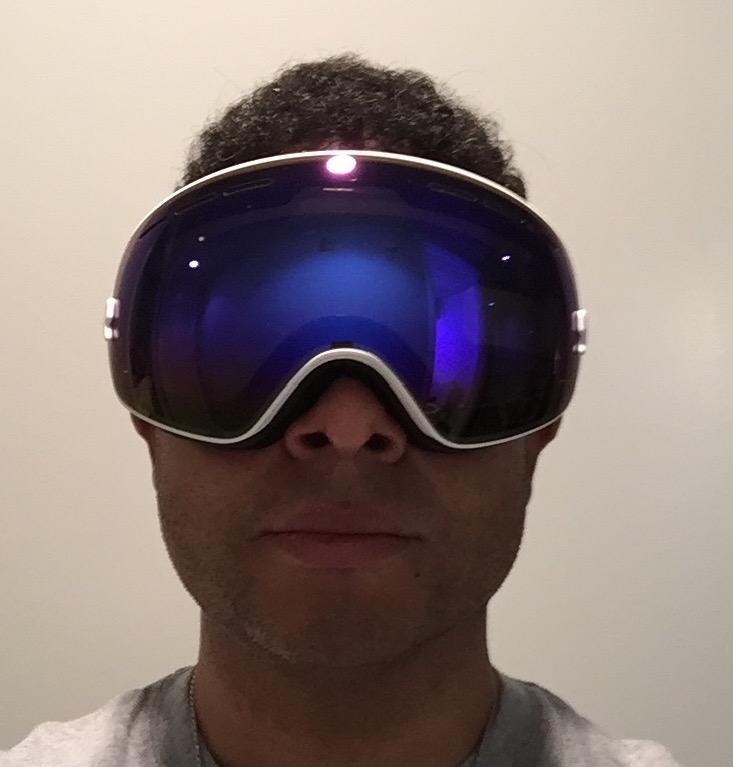
The build details are better than the price suggests. It is a performance double-layer lens with a Revo mirror coating imported from Italy, a long-lasting anti-fog treatment and 100% UV protection, over multi-layer high-density breathable foam with a two-way ventilation system. The extra-long woven non-slip strap with an adjustable buckle is designed for helmet use, and the frame is OTG.
Where the reviews temper enthusiasm is fog performance under real exertion and the foam depth. Skiers working hard in storm conditions report the anti-fog coating giving out sooner than premium systems, and the padding is thinner than frames in the upper half of this list, which shows up as pressure after a full morning.
Who the COPOZZ G1 suits
It suits a skier who wants a specific flat light tint without paying for a brand name, and the 52 percent top of the range is genuinely useful for overcast days. Budget skiers who wear glasses benefit from the OTG fit, and the frameless spherical shape is a rare combination at this level. It is also a low-risk first frame, because the high-VLT lens is an add-on and the decision stays reversible.
Where it falls short
The lens system is only a strength if you actually buy the extra lenses, and COPOZZ G1 replacement lenses are sold separately, so the advertised VLT range is not what you get on the shelf. The 4.5 average is the third lowest here, and it sits there mostly because of fogging and thin foam rather than optics.
6. Bolle Freeze – an 85 percent VLT lens straight out of the box
- Rarely fogs even on snowy weekends
- Comfortable medium fit over a helmet
- Vermillon tint works in mixed and flat weather
- Good value against premium brands
- Only one lens included
- Too light for bright sun
- Full rim is bulkier than frameless designs
The Bolle Freeze is the simplest answer to flat light on this list, because the lens that comes in the box is already a flat light lens. At 85 percent VLT in a Cat.2 mixed-weather category with a PC Vermillon tint, it is the highest transmission figure among the ten frames we reviewed, with no lens swap required to see a bumpy grey slope.
That is exactly the tint family the flat light community keeps recommending. Warm rose and amber tints filter the cold blue light that dominates overcast daylight and let differences in snow texture read as colour, and the 2 year manufacturer warranty is longer than most of the frames here. Owners describe the P80 plus anti-fog and Carbo-glass anti-scratch treatment as consistently working, even on snowy weekends, and the double-lens construction keeps a sealed, warm inner chamber. At 94 grams with a medium fit, it sits well under a helmet and on smaller faces.
Reviewers also like the accurate colour rendering and the value against premium brands. This is the frame we would hand someone who skis two or three days a year in a coastal climate and just wants to see where the ice patches are.
Who the Freeze suits
It suits anyone who wants a genuine high-VLT tinted lens with no extra purchases, no magnetic system to learn and no second lens to lose. Skiers with smaller faces and a medium fit will find it more comfortable than most of the oversized frames in this roundup, and night skiers will find an 85 percent VLT tint well suited to floodlit slopes.
It is also the answer to the fog question for this list. If your flat light days usually arrive with wet snow and heavy fall, the Freeze is the frame we would put in your hands before any of the premium options.
Where it falls short
Only one lens is included, so on a clear day the 85 percent VLT is too light and the Vermillon tint will feel washed out. The full-rim frame is bulkier than the frameless designs, and a dedicated frame with two or three interchangeable tints will serve you better if you ski mixed conditions across a full season.
7. SMITH Squad – ChromaPop contrast plus a low-light lens in the box
- Very wide field of view with no blind spots
- ChromaPop makes bumps and terrain detail pop
- Low-light lens included in the box
- Consistently fog-free performance
- Lens changes take patience and effort
- Strap feels tight even at its loosest
- Soft case offers minimal protection
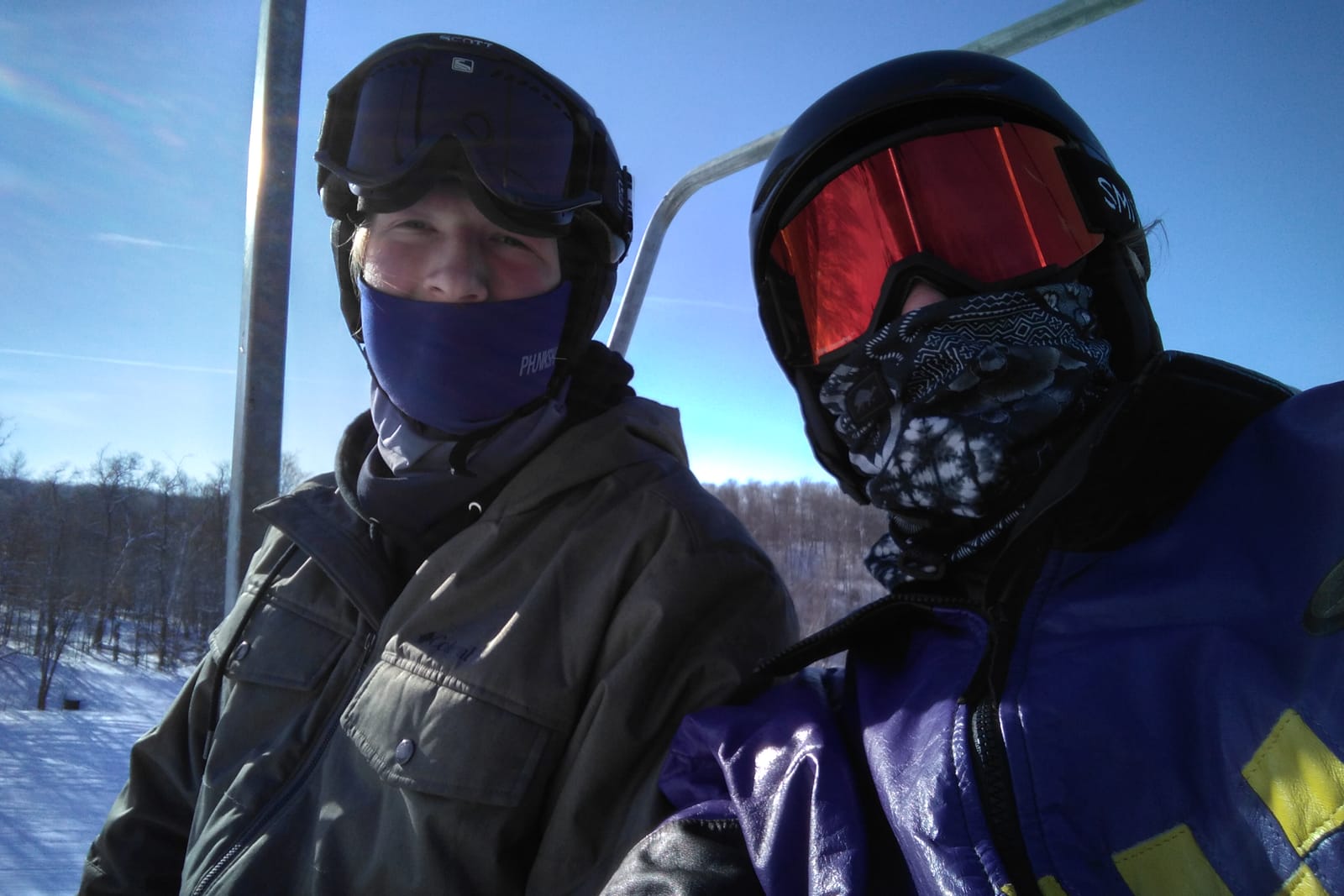
The Squad is the most direct answer to the question readers ask most, which is what a good flat light lens actually does. The oversize cylindrical ChromaPop lens is repeatedly described in reviews as making bumps, shadows and terrain detail pop, and unlike most frames in this roundup the low-light lens is already in the box.
That matters more than it sounds. The common complaint about magnetic and quick-swap systems is not that they are slow in the lab, it is that nobody wants to change lenses on a chairlift in bad weather. The Squad hands you the flat light option from the first morning, which is one less reason to ski the wrong lens all afternoon.
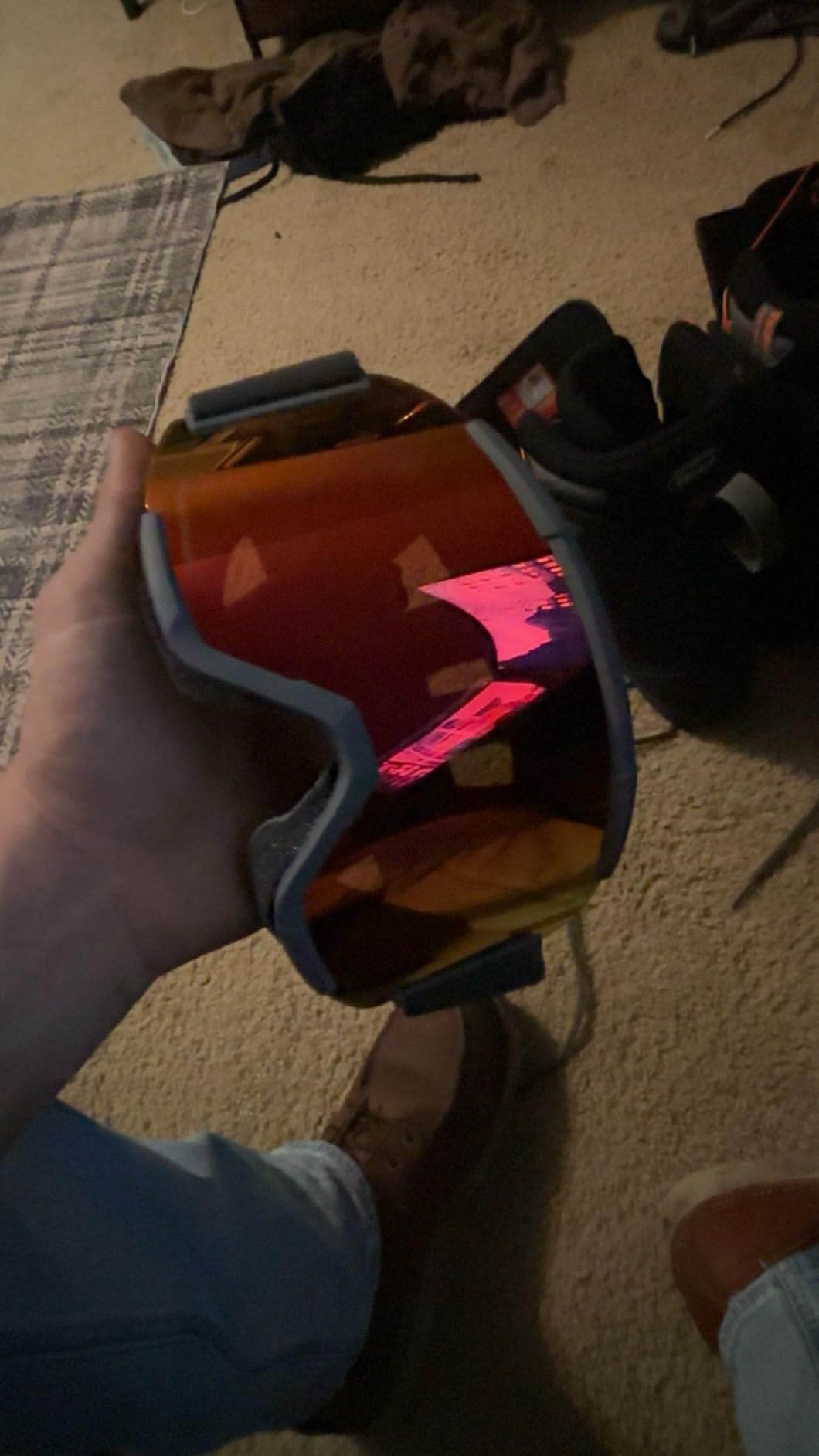
The design is a large semi-rimless frame with an oversize cylindrical lens, anti-fog plus smudge- and moisture-resistant coatings, and a Responsive Fit face foam with a wide adjustable strap. It is built to integrate with Smith snowsports helmets for venting, and owners report a secure, stable fit and consistent fog-free performance over full days.
Fit is where this frame divides people. The strap can feel tight even on the loosest setting, especially on smaller helmets, and lens changes are described as taking patience and effort. A small number of owners also report strap defects on arrival and find the included soft case offers minimal protection for a lens this wide.
Who the Squad suits
It suits skiers who want brand contrast technology and would rather not assemble a second lens. If you own a Smith helmet, the venting integration is a real benefit on a fog-prone day. It is also a strong pick for people who feel contrast is their personal weakness: if you have had the experience of a mogul appearing at the last second, or you have an eye condition or post-concussion history that makes low contrast genuinely uncomfortable, a ChromaPop lens in an oversize frame gives you more to work with than a neutral tint ever will.
Where it falls short
The tight strap is a real risk when you are buying without trying the frame on, and a goggle that leaves a pressure mark after four hours is not going to get worn. The lens change is also fussier than the magnetic systems on the Wildhorn and SMITH I/O Mag frames further down this list.
8. Giro Roam – two lenses, low-light included, best value here
- Includes a dedicated low-light lens
- EXV design gives strong peripheral vision
- Fits over prescription glasses
- Light fogging in most conditions
- Swap mechanism is basic rather than magnetic
- Universal one-size fit suits some head sizes better
- Mirror versions can show internal reflections
The Giro Roam is the frame we keep coming back to as the sensible buy. It is one of only a handful here that includes a dedicated low-light lens as standard, so you get a sun and all-conditions lens plus a flat light lens in the box, and you are covered on day one without a second purchase.
The lens system uses Giro’s Expansion View, or EXV, frame design: a frameless spherical lens for peripheral vision, backed here by a cylindrical thermoformed lens and double-layer face foam with microfleece facing. On a featureless slope, that peripheral vision is doing more work than usual, because you pick up a roller or a cut-off piste edge at the edge of the frame instead of straight ahead.
The frame is rimless with a silicone frame material, silicone inside the strap to prevent slippage, and an anti-fog coating. The OTG interior has extra volume for prescription frames, and it is designed to interface with Giro helmets. The 4.6 average comes from a smaller sample than most of this list at a little over 200 ratings, so the signal is strong but not as deep as the Wildhorn frames.
Two things temper it. The lens swap is functional rather than magnetic, so you are working a mechanism instead of peeling a lens off, and mirror-coated versions can produce slight internal reflections that some owners read as waviness. The universal one-size fit is just-so for certain head circumferences, so check the fit carefully if you are between sizes.
Who the Roam suits
It suits the skier who wants two lenses, OTG room over glasses and peripheral vision without paying for a premium badge. The low-light lens in the box is the single most useful thing about it, because it removes the most common reason people ski flat light in a dark lens for a whole season. Giro helmet owners get a clean interface, and the internal silicone in the strap keeps the goggle put when you are moving fast in poor visibility.
Where it falls short
The swap mechanism is the weak point for anyone who expects a magnetic system, and the second lens arriving scratched is a rare but reported warehouse issue. The mirror coating variant is worth skipping if you are sensitive to internal reflections, and the universal fit may not suit everyone.
9. Odoland Photochromic – one lens that adapts, with a compromise
- Handles variable light without carrying spare lenses
- Anti-fog ventilation with two-way airflow channels
- Comfortable fleece-lined triple-layer foam
- Helmet compatible
- Photochromic adaptation is slower than dedicated lenses
- Tint may not darken enough for bright sun
- Build quality is a step below established brands
The appeal of a photochromic lens is obvious and real: no swaps, no extra lenses in the bag, no fiddling on a chairlift. The Odoland uses one that adjusts its tint automatically as light changes, which on a day that starts flat and briefly clears is genuinely convenient.
Here is the honest part. The forum consensus we came across, and the reviewers of this frame, land in the same place. In genuinely flat light, a photochromic lens on its own is usually not enough. A photochromic lens responds to overall light intensity, and a flat overcast day already sits in the range where the lens decides there is not much to darken, so you end up with a lightly tinted lens and a grey mountain.
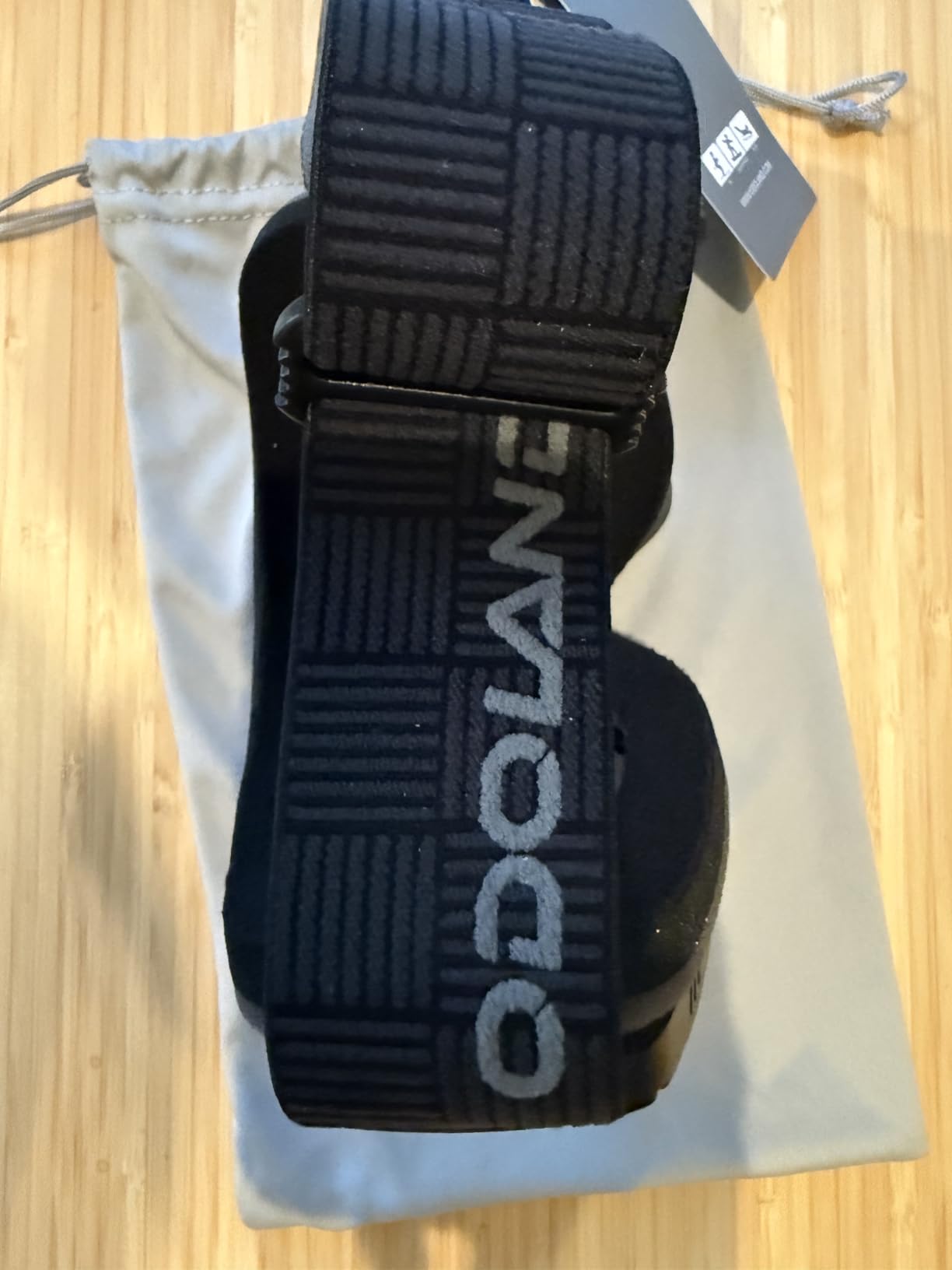
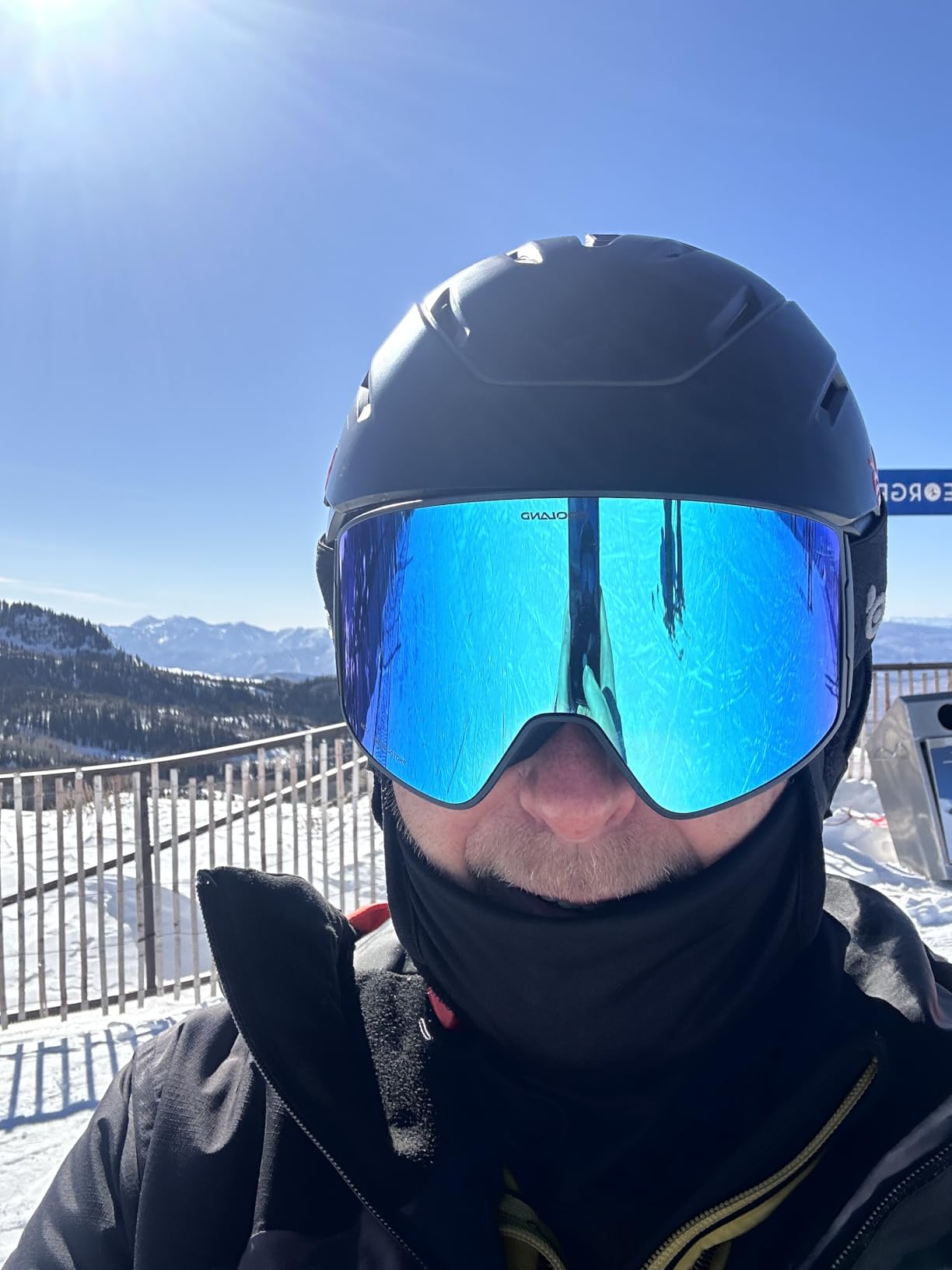
Where the frame does well is comfort and venting. There are two-way airflow channels with a premium Italian defogging inner lens, a contoured triple-layer face foam with a soft fleece liner, and 99.99 percent UV400 protection on a shatter-proof anti-scratch lens with a bendable frame. The helmet-compatible design and the colour-matched embroidered pattern strap make it easy to live in.
The 4.4 average is the lowest of the ten, matched only by the SMITH I/O Mag, and the reviews explain why: owners are split on how far the tint darkens and how quickly it adapts, and a few feel the build quality sits a step below established goggle brands. This is a comfort and convenience pick, not a contrast pick.
Who the Odoland suits
It suits skiers who refuse to swap lenses, who ski a mix of indoor-adjacent cloudy days and occasional clear spells, and who would rather carry one goggle than manage a lens collection. The fleece-lined foam and bendable frame also make it a comfortable option for long days on a slower lift-served mountain.
If you mostly ski at night under floodlights, or in weather that changes quickly rather than staying flat, the auto-tint logic works in your favour. Treat it as a convenience frame and pair it with a real high-VLT lens on the days you know will be whiteout.
Where it falls short
It will not save you on the days this article is actually about. On a flat slope a photochromic lens at its lightest is still a lightly tinted lens, and the contrast lift people are buying goggles for is simply not there. If flat light is your normal, buy a tinted high-VLT lens instead.
10. SMITH I/O Mag – the premium magnetic system with a spare storm lens
SMITH I/O MAG Snow Goggle – Black | Chromapop Sun Green Mirror + Extra Lens
- Secure magnetic system with a locking mechanism
- Two lenses covering bright and low light
- Responsive Fit frame with DriWix foam
- Extra ChromaPop Storm Rose Flash lens in the box
- Bulkier and heavier profile than frameless frames
- Replacement lenses are costly
- Highest one-star share of the ten frames
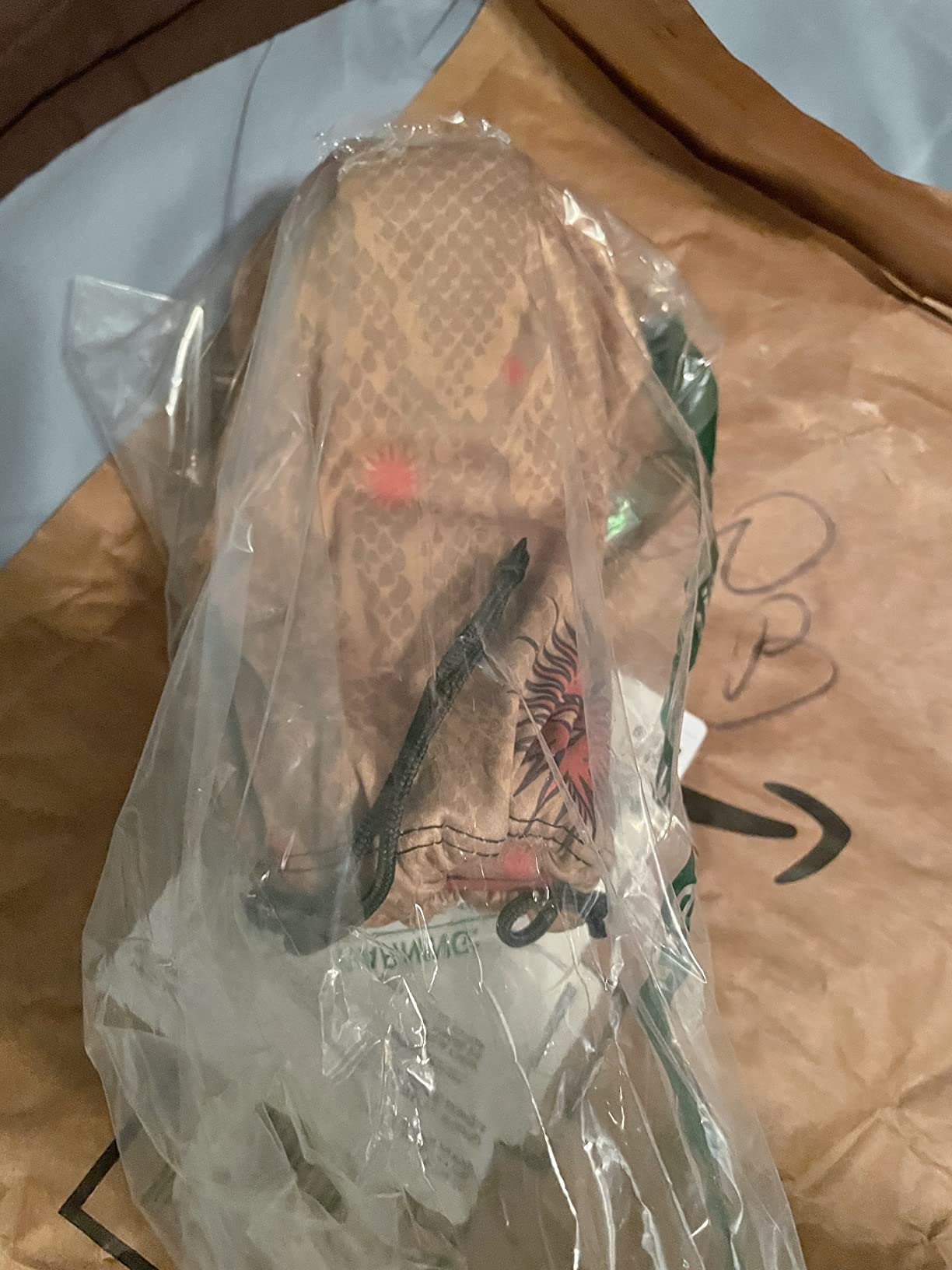
The I/O Mag is the most complete package here for someone who wants a proper flat light setup and will use it. It comes with two ChromaPop performance lenses, one for bright light and one for low light, plus an extra ChromaPop Storm Rose Flash replacement lens in the box, so you have three tint options before you buy anything.
The lens system is Smith MAG, which combines the convenience of magnets with a quick-lock detachment, and owners specifically praise how securely the lens stays put. Optically you get a spherical Carbonic-X lens with TLT lens technology and a 5X anti-fog inner lens, with three-layer DriWix face foam sealing the frame.
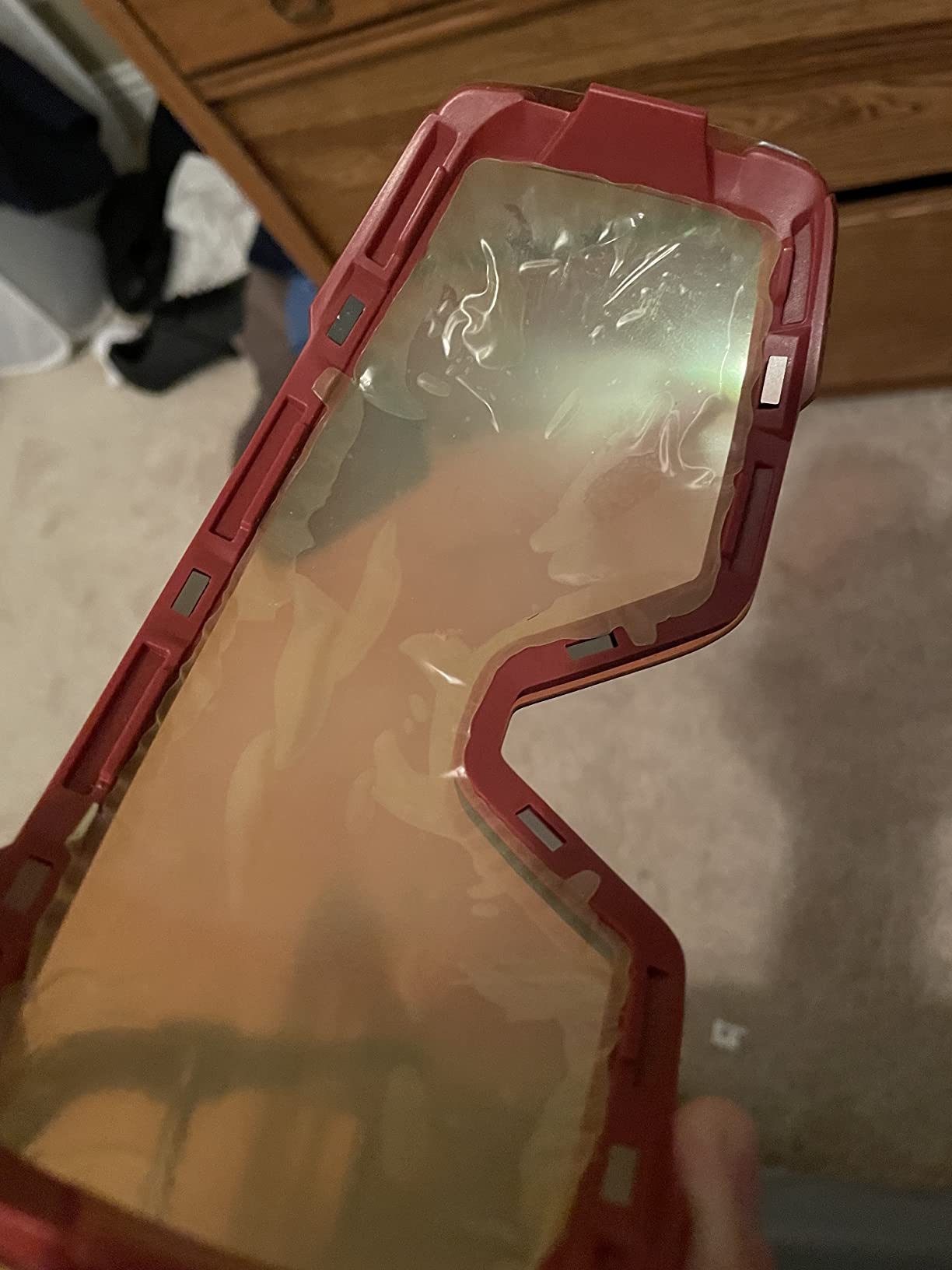
The frame design is called Responsive Fit, with a QuickFit strap adjustment and a clip buckle, plus an ultra-wide silicone-backed strap and an articulating outrigger positioning system to keep the goggle stable over a helmet. A microfibre goggle bag and replacement lens sleeve are included, which is a nice touch for a frame with lenses this removable.
At 300 grams this is a bulkier, heavier profile than the frameless alternatives here, and that shows up on a long day. Replacement lenses are costly, and the 4.4 average carries a one-star share that is the highest of the ten frames we analysed, mostly from complaints about magnetic lens retention and weight.
Who the I/O Mag suits
It suits skiers who already know their tint preferences and want a system that can hold a full lens library without the lens ever falling out mid-run. If you ski three or more days a week across varied conditions, the included low light lens plus the Storm Rose Flash spare covers most flat light weeks. The extra ChromaPop Storm Rose Flash lens in the box is what makes this package interesting for flat light specifically, because storm and rose tints are the ones flat light skiers reach for.
Where it falls short
Weight and bulk are the first issues on a long mountain day, and the silicone strap plus articulating outrigger system is a lot of hardware around your head. The magnetic retention complaints, while a minority, are exactly the failure you would not want on a chairlift, and replacement lens cost is the highest on this list.
What Flat Light Is and Why It Takes Your Terrain Away
Flat light is any condition where cloud cover, fog or falling snow blocks direct sunlight so completely that the slope becomes an evenly lit white surface with almost no shadow. It is not the same as a whiteout, where visibility is genuinely cut off, and it is not the same as flat light night skiing, where there is no ambient light at all. Flat light is a fully lit mountain with no depth cues, and that is what makes it so disorienting.
On a clear alpine day, terrain tells you what it is through shadow. A mogul has a bright side and a dark side, a rut has a lip, an ice patch has a different sheen. Remove the shadow and every one of those features collapses into the same white, which is why experienced skiers describe flat light as the condition where terrain changes appear at the last possible second rather than in time to react.
Here is the VLT definition you need before anything else. VLT, or Visible Light Transmission, is the percentage of visible light that passes through the lens. A high number means a light lens that lets more light in, a low number means a dark lens for bright sun. The number tells you how much light gets through, but not what colour that light is, and that second part is the whole flat light story.
Most of the disagreement online about flat light goggles comes from this. A 100% VLT fully transparent lens has no tint at all, so it passes every wavelength equally and you see the flat grey mountain exactly as it is. A 70% VLT rose or amber lens passes a much higher proportion of warm wavelengths and filters the blues that dominate cloudy daylight, and 70% of filtered light beats 100% of unfiltered light on a whiteout day every time.
Here is the band we use, which reconciles the 25 percent, 40 percent and 75 percent advice floating around online. For bluebird sun, stay under 15 percent VLT. For partly cloudy, aim for 15-30 percent. For general overcast flat light, 40-60 percent is the sweet spot and this is the number we would quote to anyone buying one lens for the season. For storms, fog and whiteout, go 60-90 percent. Night skiing wants that same high band.
Tint colour then decides how that light reads. Yellow and amber are the community favourites because they warm the image and lift contrast without darkening it much. Rose and pink sit slightly darker and add a touch of contrast definition, which is why Prizm Hi Pink and ChromaPop Rose keep coming up in the same conversations. Clear is the one to avoid for flat light, and neutral grey is close to the same mistake in subtler form.
One more clarification worth making, because it is the single most repeated question in our research. Polarised lenses are not a flat light solution. They work by cutting glare off horizontal surfaces, and a snow slope is the flattest horizontal surface there is, so on a foggy day they flatten contrast that you were already short of. Skip polarisation for this use case, whatever the lens listing says about it being a bonus feature.
How to Choose Ski Goggles for Flat Light in 2026
Pick the VLT band that matches your worst storm days
Start by deciding which conditions actually cost you. If most of your flat light is grey overcast rather than falling snow, 40-60 percent VLT is enough and you can keep a sun lens in the same frame. If you regularly ski fog, spindrift and whiteout days, buy into the 60-90 percent band and do not compromise downward, because an under-tinted storm lens is the exact product that leaves you seeing nothing.
Check the lens that actually comes in the box, not the marketing. Several frames in this roundup list a wide VLT range across their colourways while the unit that arrives has a bright-condition lens fitted. The Bolle Freeze with its 85 percent Vermillon lens and the Giro Roam and SMITH Squad with included low-light lenses are the three that are ready for flat light on arrival.
Choose the lens tint colour: yellow, amber, rose or pink
Yellow and amber are the safest starting point because they lift contrast without eating much light, and they are the tints most commonly recommended in the flat light community. Rose and pink add a little more definition and a slightly darker picture, which helps in heavier snow but can feel heavy on a bright grey morning.
There is no universal winner here, and the forum consensus is genuinely split. One skier ranks Hi Yellow first and Prizm Rose second while their friends prefer Hi Pink, and the same person notes it is strongly subjective per person. The practical move is to test, which is the next section, rather than to trust a stranger’s ranking.
Does contrast technology actually matter in flat light?
Yes, but it matters less than the tint, and the experienced voices in the forums are blunt about it. The usual claim is that brand contrast filters like ChromaPop, Prizm and Perceive amplify the specific colours human vision is worst at discriminating, which in theory helps in flat conditions where everything is the same white.
The counter-argument comes from people who have actually compared them, including a field test where a low-cost yellow lens pair performed markedly better than a premium ChromaPop lens for one skier’s wife. The honest read: a good plain yellow or amber tint will beat a poor neutral lens regardless of branding, but among two good lenses the contrast filter is a real edge rather than pure marketing.
Lens shape and field of view in low visibility
Spherical lenses are the most optically accurate because they curve the light the way your eye expects. Cylindrical lenses wrap flatter around the face, which gives a noticeably wider field of view at the cost of some distortion at the edges. Toric lenses sit between the two, giving width with better accuracy than a full cylindrical.
When contrast is already poor, the distortion at the edge of a wide cylindrical lens is a worse trade than people expect, because your brain is working harder to read terrain. If your flat light problem is specifically about peripheral terrain, the widest spherical and toric options are the safest, and the frameless EXV and panoramic spherical designs on the Wildhorn Roca and Giro Roam are worth looking at for that reason.
Polarised lenses hurt contrast in flat light
This is the rule we would put on a card. Polarised lenses cut reflected glare from horizontal surfaces, and under flat light the only horizontal surface you care about is the snow, which means you are cutting the exact information you are missing. A polarised silver lens in grey weather gives you a slightly darker, flatter, lower contrast picture than a plain untinted lens of the same VLT.
If you already own a pair of polarised goggles, do not bin them. They are excellent on bluebird days and on glare off water at the base. Just do not treat them as your flat light pair, and if you are buying new, cross polarised listings off your list.
Staying fog-free when the snow is falling
Fog and flat light arrive together more often than people expect, because warm humid air plus falling snow plus a cold lens is the exact combination that defeats coatings. The Bolle Freeze, ZIONOR X, Wildhorn Pipeline, Giro Roam and Odoland all use anti-fog treatments, and the Pipeline adds a dual anti-fog ventilation system while the Odoland uses two-way airflow channels with an Italian defogging inner lens.
Venting matters more than coating brand on a storm day. Frames with a helmet integration channel, like the SMITH Squad, move air across the lens as you ride, which beats a passive coating once the snow is falling. And the boring truth is that no coating saves you if you wipe the inside of the lens with a glove sleeve, so a microfibre cloth belongs in the jacket pocket from the first run.
Test lens tints in the shop before you buy
This is the technique that keeps coming up in the forums and appears in no competitor guide we read, which is why we are putting it here. Ask the shop to hold two lenses up in front of your eyes over rippled or textured snow, or over any surface with visible relief, and swap between them while looking at the same spot. The tint that makes the bumps pop when you move it is the tint you want.
Do it with the shop lights off if they will allow it, and do it before you have emotionally committed to a brand. Do it again on the second day, because eyes adapt, and ask your household to try it too if the skier who will use the goggles is not the person standing in the shop. Tints are genuinely subjective, and one skier whose friends all prefer Hi Pink still ranks Hi Yellow first for themselves.
Fit, face size, OTG and helmet compatibility
Fit decides whether any of this matters. The Wildhorn Pipeline and Wildhorn Roca both run large and are repeatedly described as bulky or oversized, so they are poor choices for average or smaller heads buying online. The Bolle Freeze is a medium fit that works well on smaller faces, and the SMITH Squad strap can feel tight even at its loosest setting on smaller helmets.
If you wear glasses, check the OTG specification rather than assuming. The ZIONOR X fits frames up to 5.5 by 1.65 inches, the Wildhorn Pipeline up to 5.3 by 1.7 inches, the Oakley Flight Deck uses discreet frame notches, and the Giro Roam has an OTG interior with extra volume. All of them work, but the extra-volume designs are the ones glasses wearers report being happiest in.
Who does not need a dedicated flat light pair
If you already own a magnetic goggle with a good lens library, you do not need to buy a new frame. Add a high-VLT amber, rose or yellow lens to the frame you have. The forum consensus is that brand replacement lenses such as Prizm Hi Yellow, Prizm Hi Pink, ChromaPop Storm and Giro Vivid Rose do most of the work a dedicated flat light goggle would do, for a fraction of the outlay.
The exception is the 100 percent VLT misunderstanding. If the lens you own is fully transparent rather than tinted, adding it to your kit is what you need, because transparent is not a substitute for a warm high-VLT tint no matter how much light it transmits. And if you are a photochromic-only owner, that is exactly the complaint the community raises: photochromic lenses alone are usually not enough in truly flat light.
While you are setting up a kit, you may also like our guides to flat top griddles for camping and under cabinet lighting kits for the parts of your life that happen indoors, plus flat burr coffee grinders for the morning after a long whiteout day.
Frequently Asked Questions
What ski goggle lenses are best for flat light?
Yellow, amber and rose tints are the most effective flat light lens tints, because they filter the cold blue light that dominates overcast daylight and let differences in snow texture read as colour. Pair them with a high VLT: 40-60 percent for general overcast skiing and 60-90 percent for storms, fog and whiteout. Avoid fully transparent 100 percent VLT lenses, because untinted light leaves you with the same flat grey view the weather already gave you.
What are the best ski goggles for flat light conditions?
The Wildhorn Roca is our default flat light pick, with a magnetic lens swap that finishes in under 60 seconds so you can move to a high VLT lens when the sky closes in. The Oakley Flight Deck leads on field of view and Prizm low-light contrast, the Bolle Freeze ships with an 85 percent VLT Vermillon lens ready to go, and the SMITH Squad and Giro Roam both include a low-light lens in the box.
What VLT is best for flat light skiing?
Aim for 40-60 percent VLT for general overcast flat light, and 60-90 percent for storms, fog and whiteout skiing. Stay under 15 percent for bluebird sun and 15-30 percent for partly cloudy days. The key point is that VLT describes how much light passes through, not what colour it is, so a 70 percent rose or amber lens beats a 100 percent transparent lens in fog because it filters the blues.
Do polarised lenses help in flat light skiing?
No. Polarised lenses cut glare off horizontal surfaces, and a snow slope is the flattest horizontal surface there is, so under flat light they flatten contrast you are already short of. Polarised lenses are excellent on bluebird days and on glare at the base area, but for grey and foggy days choose a tinted high VLT amber, rose or yellow lens instead. This is the most common deal-breaker in flat light goggle shopping.
Are photochromic ski goggles good for flat light?
Not on their own. A photochromic lens responds to overall light intensity, and a fully overcast day already sits in the range where it decides there is little to darken, so you end up with a lightly tinted lens and a grey mountain. If flat light is your normal, buy a tinted high VLT lens, and use photochromic as a convenience layer for days that shift between grey and clear.
What are the best ski goggles that don’t fog?
Venting beats coating when the snow is falling. The Bolle Freeze is the most consistently fog-free frame in our roundup, with a double-lens construction, P80 plus anti-fog and Carbo-glass anti-scratch treatment and a 2 year warranty. The Wildhorn Pipeline adds a dual anti-fog ventilation system, the Odoland uses two-way airflow channels with an Italian defogging inner lens, and the SMITH Squad vents through its helmet integration. Budget frames like the COPOZZ G1 let go first under hard exertion.
The Default Flat Light Goggles to Buy in 2026
Buy the Wildhorn Roca if you want one answer to this question. Its magnetic lens swap finishes in under a minute, the panoramic spherical lens is optically the most accurate shape here, and more than 6000 ratings give you the deepest ownership record in the roundup. Add a high VLT amber, rose or yellow lens and you have covered everything from grey overcast to whiteout.
If you want zero decisions, take the Bolle Freeze. An 85 percent VLT Vermillon Cat.2 lens in a medium fit with a 2 year warranty is the highest transmission figure we reviewed, and owners report it barely fogs. If you want the widest view and the strongest named contrast filter, the Oakley Flight Deck takes both, at the cost of pricier replacement lenses.
Whatever you pick, the lens matters more than the badge. Aim for 40-60 percent VLT on overcast days and 60-90 percent for storms, choose a warm yellow, amber or rose tint over grey or fully transparent, skip polarisation, and test the tints side by side over textured snow before you commit.