
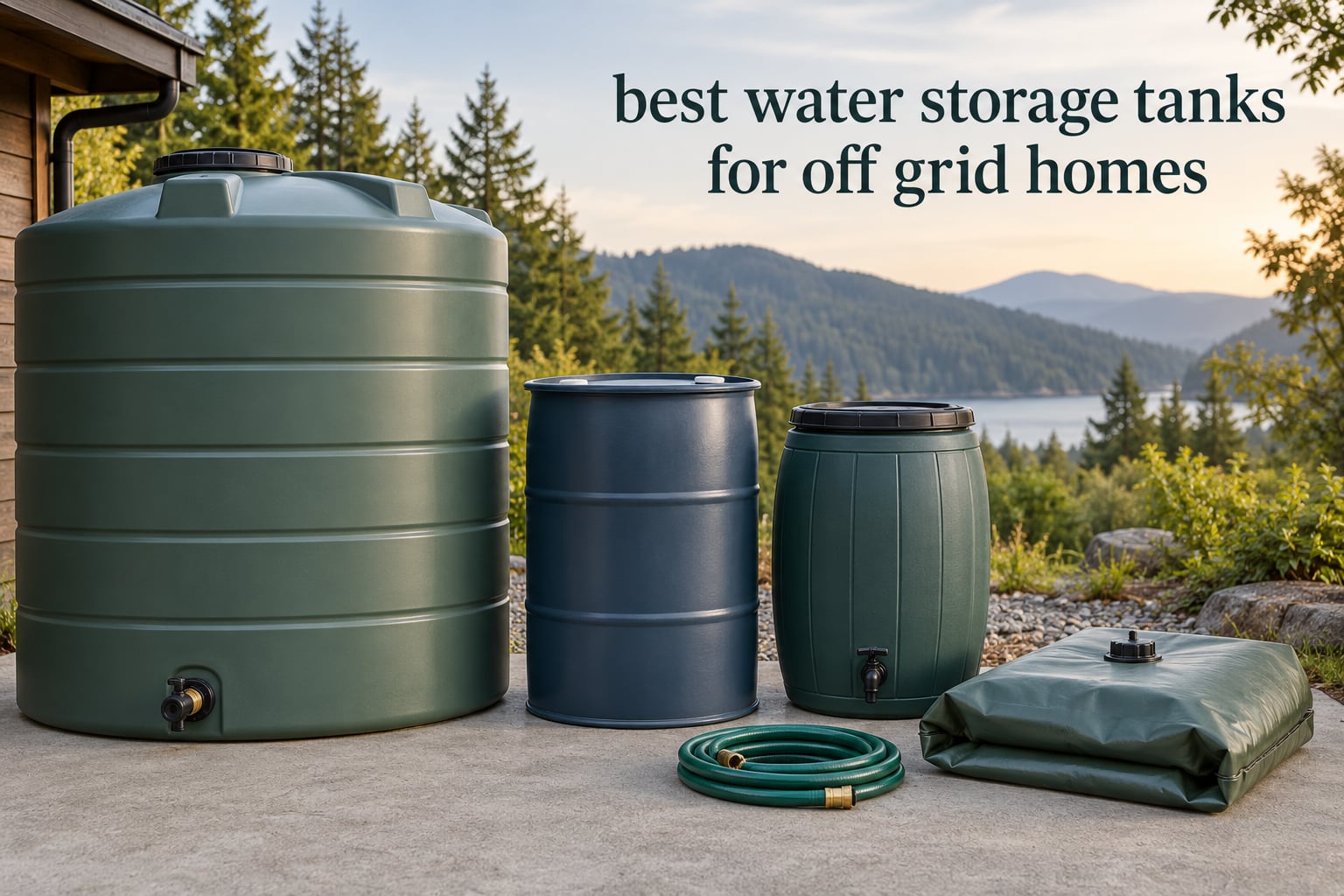
Almost every ranking page for this keyword hands you a 55-gallon plastic barrel and calls it off-grid water storage. That container is hurricane gear. An off-grid household drinks, cooks, washes and flushes somewhere between 200 and 400 gallons a day, so four barrels last a few hours. Buying the wrong capacity is the single most expensive mistake in this category, and it is the one almost nobody warns you about.
So we start with the math instead of the products. Work out how many gallons your household burns in a day, multiply by the number of days you want to hold, and only then look at a tank. Once you have a number, the buying decision collapses into three smaller ones: capacity class, material, and how the water gets from the tank to your taps.
Our team compared the ten tanks below across capacity, material, footprint, warranty, and real owner complaints. The lineup spans 50 gallons to 1,000 gallons and covers rigid polyethylene, structural foam, and collapsible PVC, so a two-person cabin and a year-round homestead can both find an honest answer. An off grid water storage tank is simply a food-safe container that holds rainwater, well water, or hauled water on a property with no municipal supply; a cistern is the same idea at bulk scale, usually hundreds to thousands of gallons.
Table of Contents
Top 3 Picks for Off-Grid Water Storage

FCMP Outdoor 50 Gallon Rain Barrel
- Flat back fits a wall
- Aluminum mesh debris screen
- Linkable multi-barrel kit

RTS Home Accents 50 Gallon ECO Barrel
- 100% recycled polyethylene
- Built-in overflow valve
- Linkable for more capacity
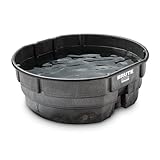
Rubbermaid 300 Gallon Foam Tank
- Structural foam body
- 10-year limited warranty
- 2-inch protected drain plug
Water Storage Tanks for Off-Grid Homes in 2026
Every tank below is listed with the capacity class it actually serves, so you can disqualify the wrong ones fast.
| Product | Specifications | Action |
|---|---|---|
| FCMP Outdoor 50 Gallon Rain Barrel |
|
Check Latest Price |
| Rubbermaid 300 Gallon Structural Foam Tank |
|
Check Latest Price |
 MXQMKL 528 Gallon Water Bladder MXQMKL 528 Gallon Water Bladder |
|
Check Latest Price |
 BayTec 55 Gallon Blue Water Barrel BayTec 55 Gallon Blue Water Barrel |
|
Check Latest Price |
 WaterPrepared 55 Gallon Stackable Tank WaterPrepared 55 Gallon Stackable Tank |
|
Check Latest Price |
| RTS Home Accents 50 Gallon ECO Barrel |
|
Check Latest Price |
 VEVOR 264 Gallon Water Bladder VEVOR 264 Gallon Water Bladder |
|
Check Latest Price |
 RomoTech 50 Gallon Square Poly Tank RomoTech 50 Gallon Square Poly Tank |
|
Check Latest Price |
 GHOSOONE 1000 Gallon Water Bladder GHOSOONE 1000 Gallon Water Bladder |
|
Check Latest Price |
 Rodelna 65 Gallon Water Bladder Rodelna 65 Gallon Water Bladder |
|
Check Latest Price |
How Much Water an Off-Grid Home Actually Needs
A family of four living off grid needs roughly 200 to 400 gallons a day; the usual planning figure is 50 to 100 gallons per person per day. A single occupant on the same calculation needs 50 to 100 gallons, and a couple needs 100 to 200. That single number decides everything else, so calculate it before you shop.
Then add your reserve days. A household with a drilled well and a reliable pump only needs enough storage to bridge pump cycles and short outages, which is a week or two. A household depending on rain or a spring needs far more, because dry spells are the whole risk, and many operators plan for 30 to 90 days of reserve.
If you are sizing against rainfall instead of a well, the standard figure is that 1,000 square feet of roof collects about 620 gallons for every inch of rain. A modest 1,500 square foot metal roof therefore yields about 930 gallons per inch. Divide your required reserve by that number and you know how many inches of rain you need to survive a dry spell.
Run the numbers on a 1,000-gallon tank and the picture is clear: it is 2.5 to 5 days of supply for a family of four, or 10 to 20 days for two people living at the low end. A 300-gallon tank is barely a full day for four. That is why a stack of 55-gallon barrels, however nicely reviewed, cannot run a household. They belong beside the pump as a drinking reserve, not in place of it.
1. FCMP Outdoor 50 Gallon Rain Barrel – Best All-Round Catchment Tank
- Flat back sits flush against a wall
- Aluminum mesh screen blocks leaves and grime
- Side spigots let you link barrels for more capacity
- Kit includes hose
- thumb valve
- clips and overflow
- No base or stand is included
- Some barrels arrive with plastic shavings to rinse out
This is the barrel we come back to. The flat back is the reason it works in a real off-grid site, where you push it against a foundation wall or the side of a shed instead of losing a foot of clearance all the way around. The kit also includes an overflow hose and a multi-barrel linking kit, so two of them become 100 gallons without any new fittings.
At 25 pounds empty, one person can tip it into place or lift it into a truck bed. The aluminum mesh screen across the top is the part that saves you maintenance; owners mention it as the reason their water stays clear of leaf litter through a season.
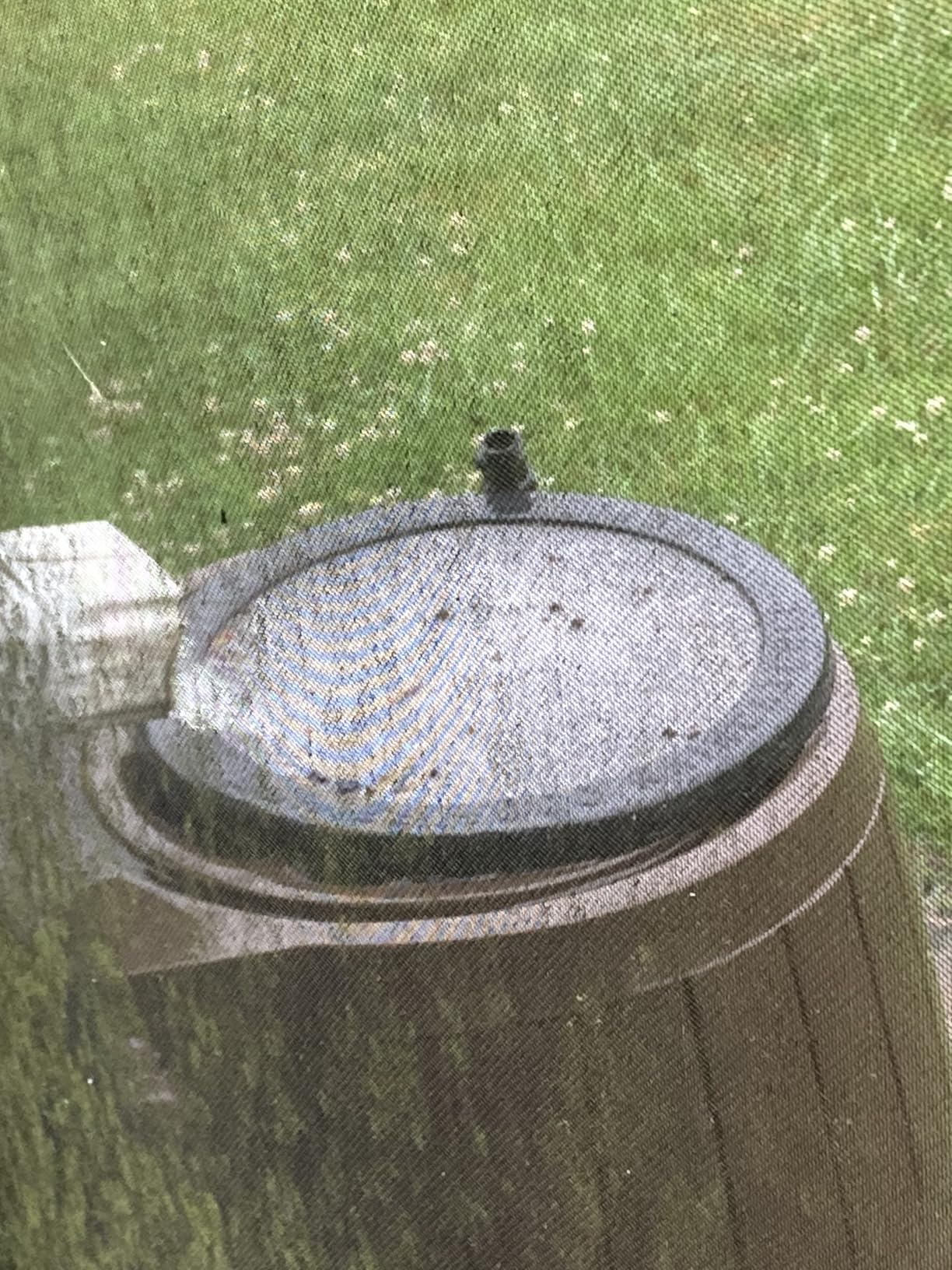
One thing to plan for is the spigot height. The barrel does not include a platform, and reaching a low spigot on a full barrel is awkward, so a simple stand is the first thing I would add. A few buyers also report rinsing out small plastic shavings before first fill, which takes a hose and five minutes.
For a family of two, 50 gallons is a realistic daily reserve. For four people, run two of them in series and treat it as the drinking and cooking reserve rather than the whole supply.
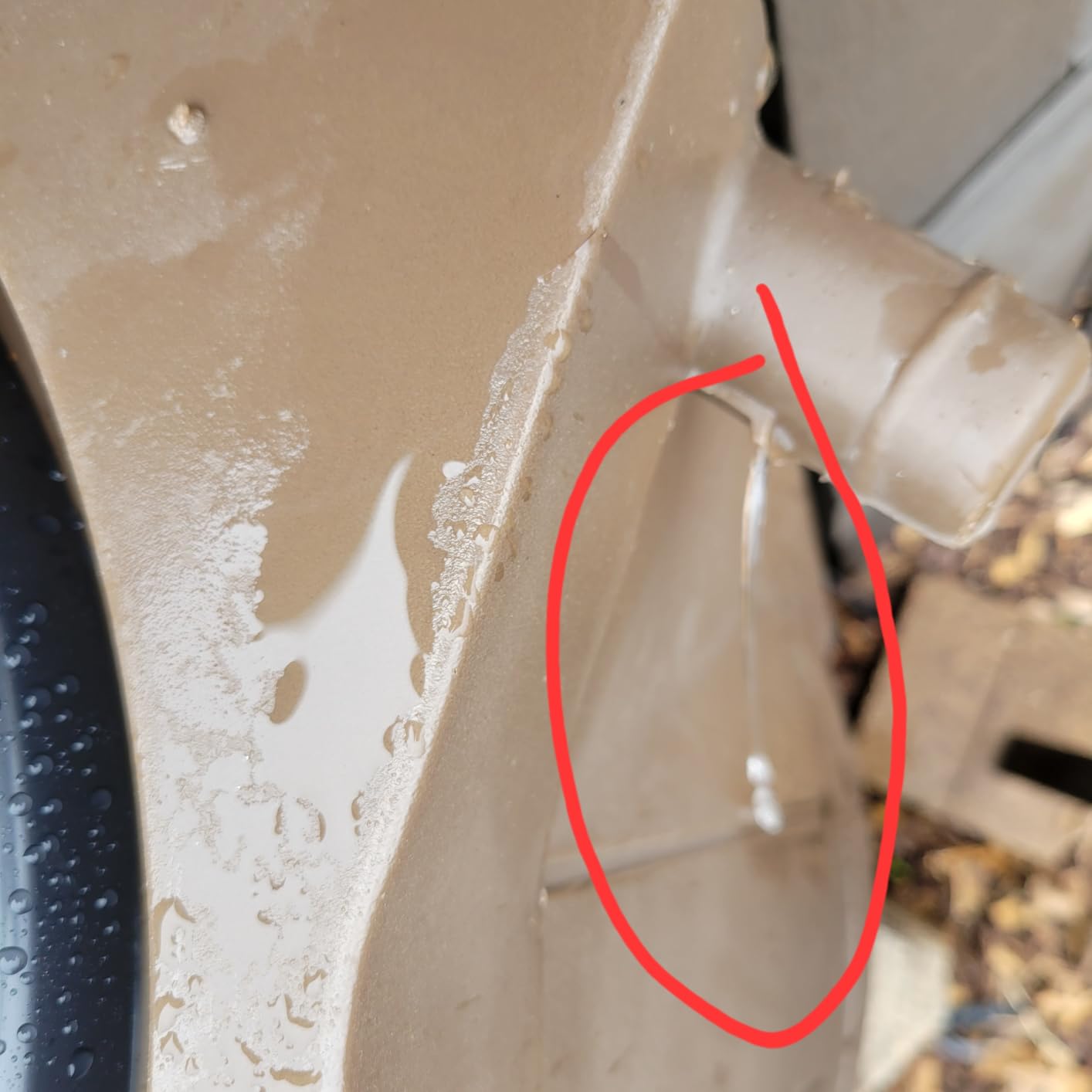
What to check before you buy
Confirm the barrel is sitting on a level pad and that you can reach the spigot comfortably. If you plan to run a hose to a garden bed or a livestock trough, check that the spigot threads match a standard garden hose before you buy a second one.
Look at your downspout. The overflow hose only carries water away if it has somewhere to go; an overflow pointed at a foundation is how you end up with a wet basement wall in the first month.
Where it falls short
At 50 gallons this is a supplement, not a supply tank. A household of four empties it before breakfast. If you skip the sizing math and treat four of these as a water system, you will be hauling water long before you run out of tank space.
The polyethylene is not insulated, and this barrel is not rated for burial. In a climate that drops below freezing, it needs to be drained or heat traced, not left full and forgotten.
2. Rubbermaid 300 Gallon Structural Foam Tank – Best for Livestock and Irrigation
- RigidCell body and ribbed base handle heavy loads in all weather
- 10-year limited warranty
- Built-in body stiffeners resist deformation
- Oversized protected 2-inch drain plug
- Smooth surfaces safe for cattle and goats
- 80 pounds empty makes a full tank a two-person job
- Open top needs a cover against debris and evaporation
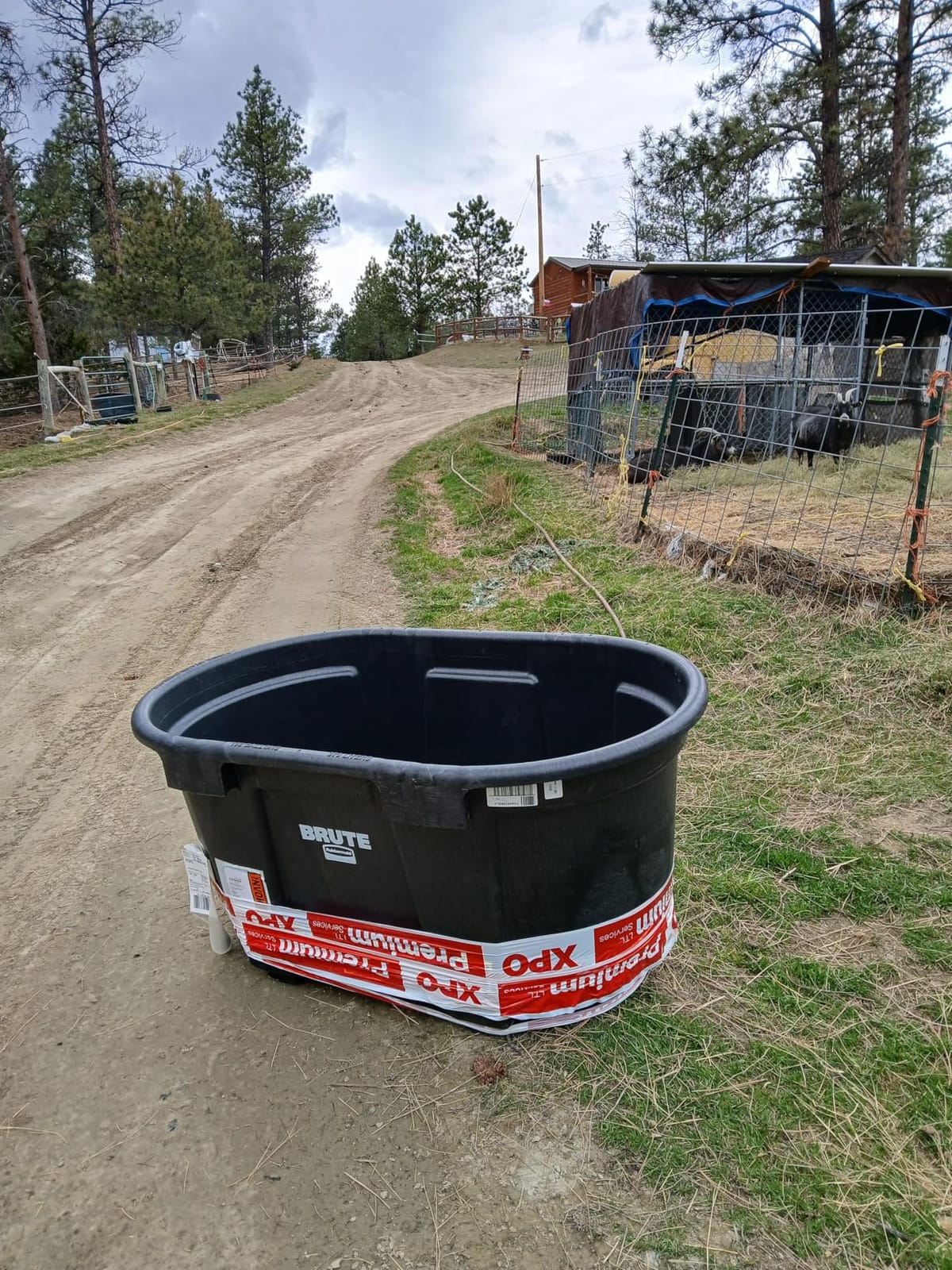
This is the first tank on the list that starts to behave like infrastructure. At 300 gallons it holds roughly a day for a family of four, or three days for a couple, and the structural foam body is far less likely to crack or deform than thin molded plastic. The ribbed base and built-in stiffeners are what let it sit on uneven ground.
The 10-year limited warranty is the strongest coverage in this group, and Made in USA construction is a decent signal for a vessel meant to sit outdoors through decades of temperature swings. Owners consistently rate it on ruggedness rather than on appearance, which is the right measure for a livestock tank.
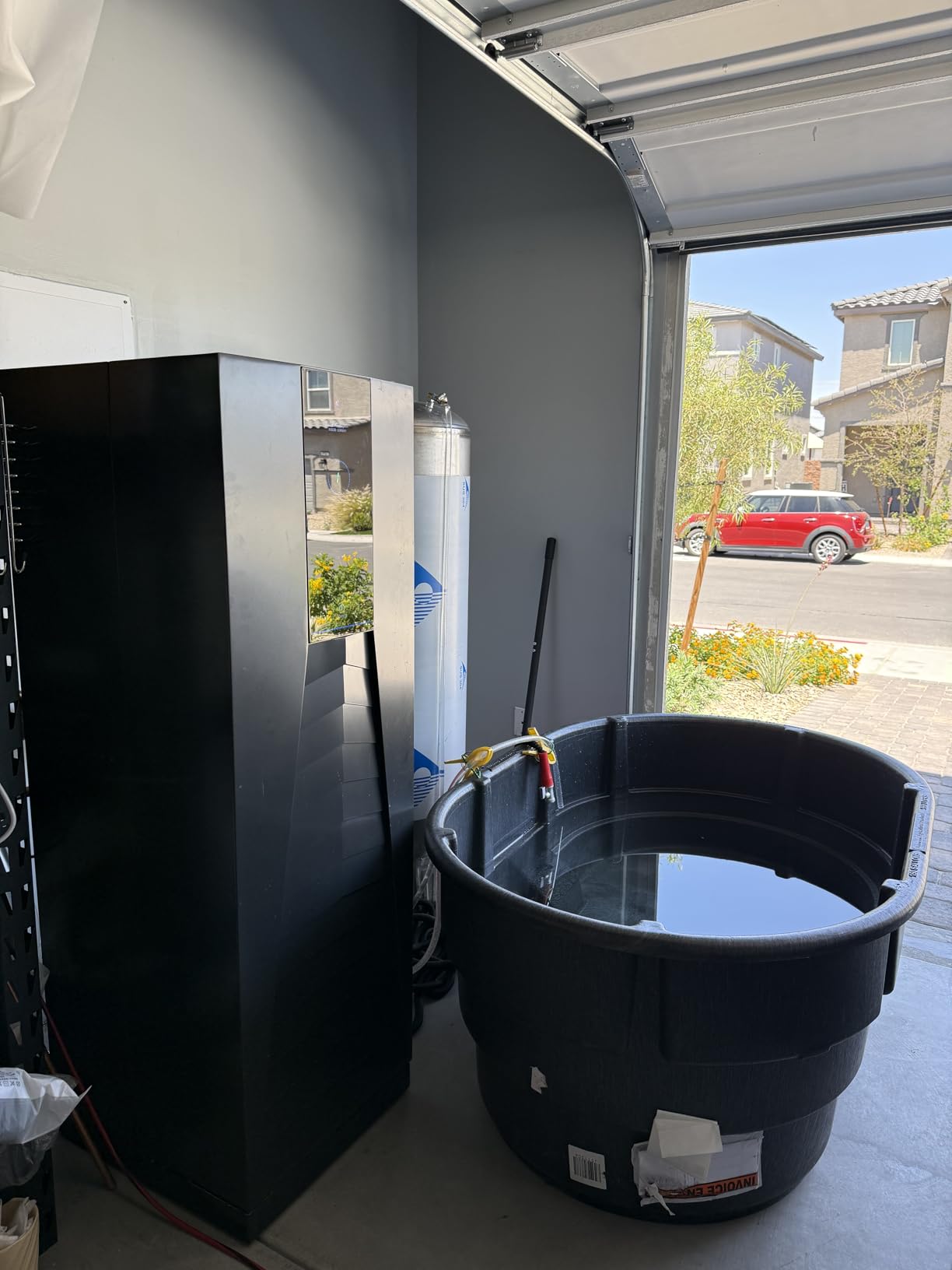
The oversized protected drain plug is genuinely useful. Draining, rinsing and sanitizing a tank this size is otherwise a chore, and the plug is the difference between a ten-minute cleanup and a lost afternoon. Note that the listed variants run from 50 to 300 gallons, so the same product family covers a backup tank and a primary one.
For irrigation and animals, this is our pick without much debate. For drinking water, we would not start with an open-top livestock tank even with a good cover, because access for cleaning is harder and the interior is harder to inspect.
What to check before you buy
Decide what goes in it first. If the answer is animals, irrigation, or fire reserve, an open top with a drain plug is an advantage. If the answer is drinking water, you want a closed tank with a screw lid so you can sanitize the interior.
Check the route to its final position. At 80 pounds empty and about 2,500 pounds full, you want it poured into place, not carried. Wide gates and a clear path matter more here than for any other tank on this list.
Where it falls short
The open top is the main limitation. Debris, insects, evaporation and leaf litter all get in, and in a dry summer you lose a meaningful share of the water to heat. A fitted cover fixes most of this but is a separate purchase.
It is also a large object. The footprint is a full-size round tank footprint, and 300 gallons is a day of supply, not a season of supply, so most year-round households will want to pair it with something larger.
3. MXQMKL 528 Gallon Water Bladder – Best High Capacity for the Money
2000L/528 gal Water Bladder Storage Containers,Foldable Portable Water Tank
- Folds to a small parcel while holding 528 gallons
- Double-sided PVC mesh rated -50 to 65 Celsius
- Sleeved port accepts a water pipe directly
- 21 pounds empty makes it easy to reposition
- Included valve threads and adapters are often mismatched
- Some arrive with a seam leak needing sealing
- A minority report a persistent plastic odor
This is the capacity-per-dollar leader in the group, and it works on a completely different principle from the rigid tanks. A soft collapsible bladder holds 528 gallons at 21.2 pounds empty and folds down when empty, which means one person can move the entire water supply of a small cabin with two hands.
The double-sided PVC mesh is 0.9 mm thick with high-frequency welded seals and a reinforcing rib around the port, and the stated operating range runs from -50 to +65 Celsius. That range is what makes it usable in a climate where a rigid plastic tank would be at risk of cracking.
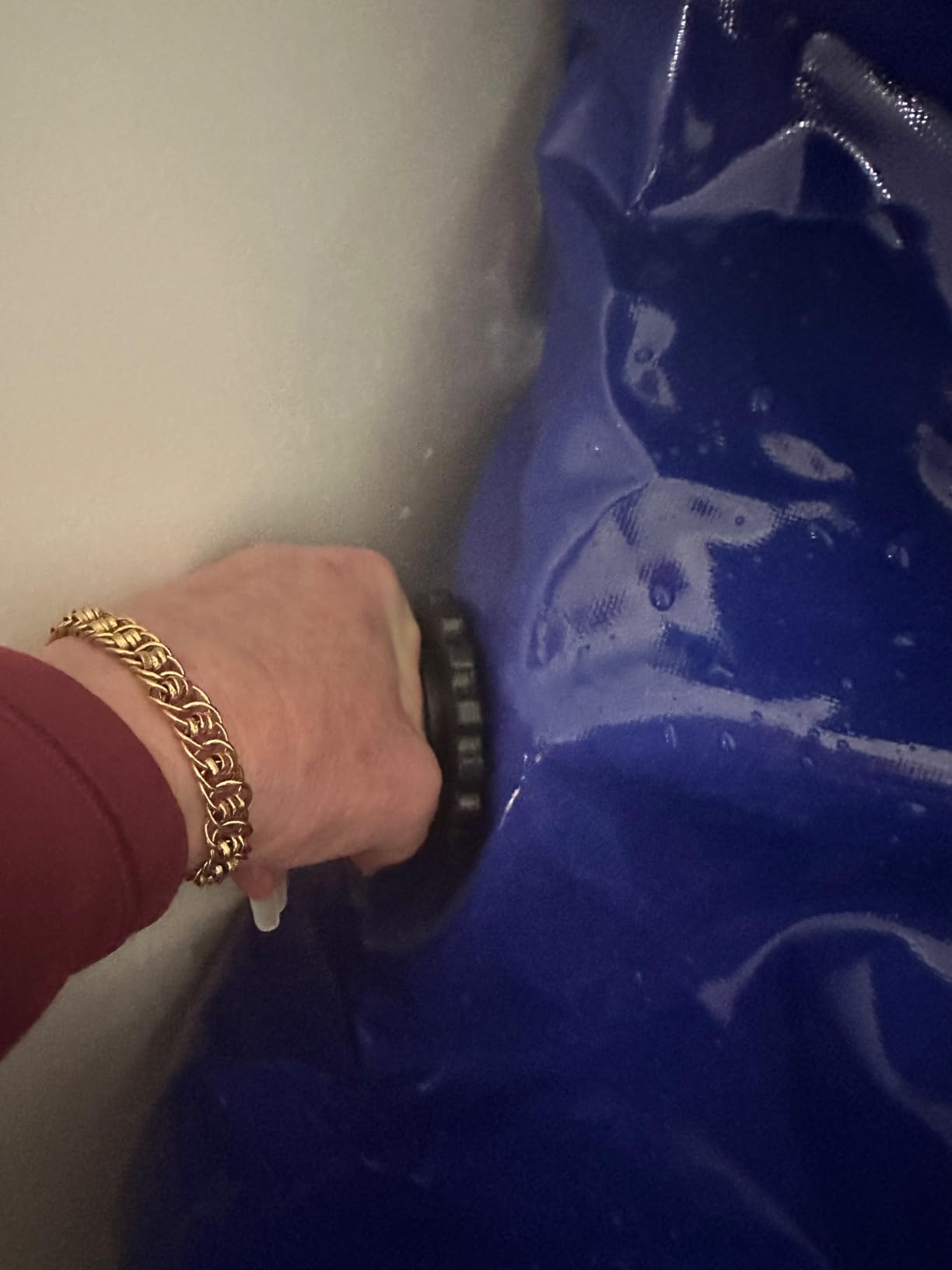
Plan on one afternoon of setup before first fill. Owners repeatedly recommend buying a standard 3/4 ball valve and hose adapter up front, because the included hardware does not always match. Checking the seams and applying a patch kit if needed is a cheap afternoon that prevents a wet floor later.
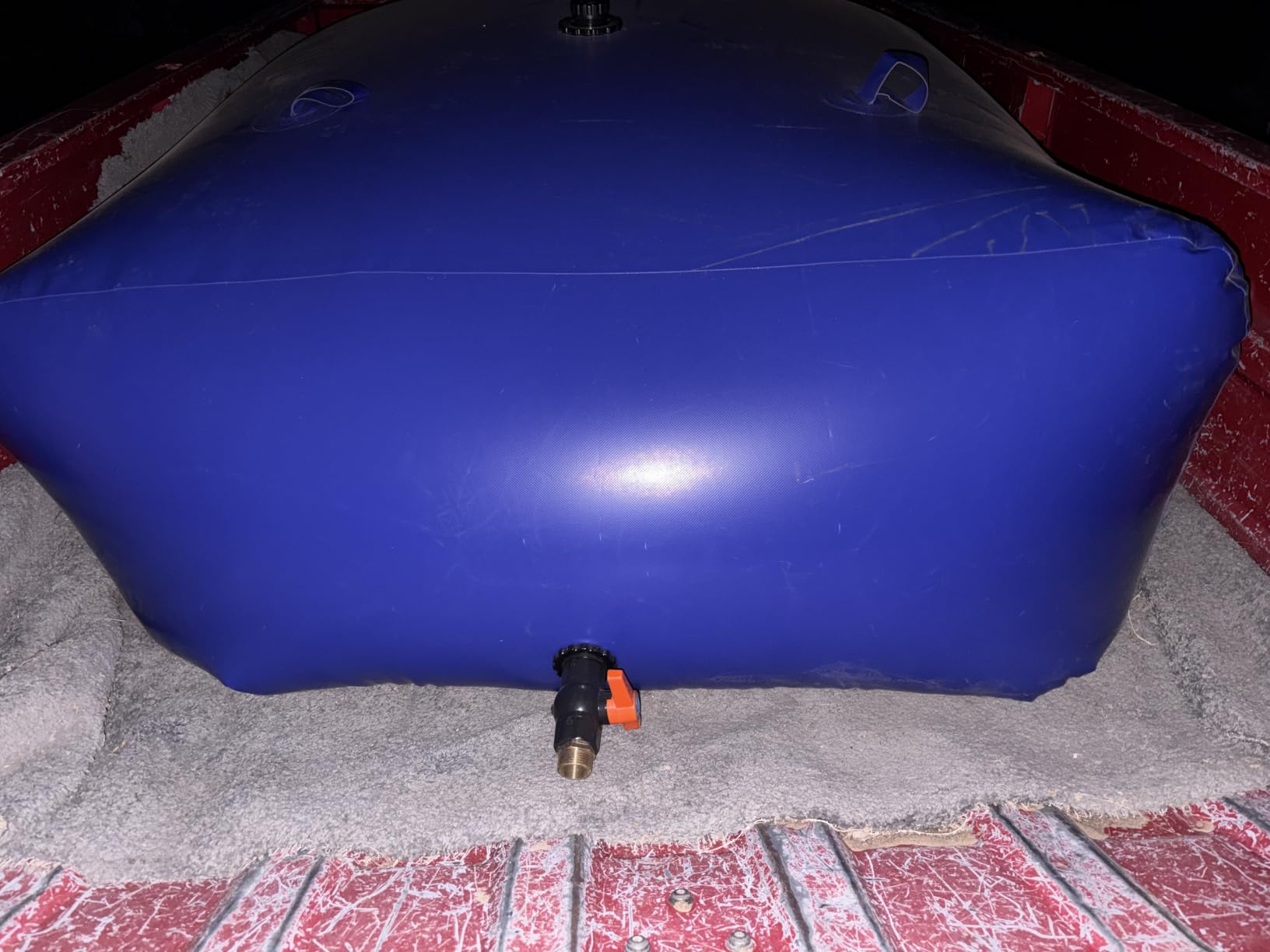
Once filled, it becomes a level, self-supporting pillow. That is convenient for a base or a pond liner, but it means you need a genuinely flat, wide pad: 78.8 by 59 inches at full inflation, and 27.5 inches tall.
What to check before you buy
Measure your pad, not your tank. Once filled, a soft bladder spreads out and gives you no structural support, so it needs flat ground and a liner underneath to protect against punctures.
Decide what it is for. This material is a flexible PVC and is not the right choice for water you intend to drink without a proper treatment train, though it is fine for irrigation, livestock, fire reserve, and drought buffering.
Where it falls short
A soft-sided container loses pressure as it drains, so gravity flow from it slows near the end. If you are counting on gravity pressure to a distant tap, this is a poor choice and a rigid tank is better.
The fittings are the weak point. Mismatched valve threads and occasional seam defects account for most of the complaints, and the reported plastic odor needs a long rinse before the bladder smells neutral.
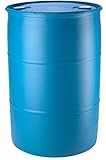
4. BayTec 55 Gallon Blue Water Barrel – Best for Drinking Water Storage
55 Gallon Blue Water Barrel | Solid Mold |2 Inch Bung Holes, Good for Long Term Drinking Water Use | BPA Free
- Food grade and BPA free for long-term drinking water storage
- Heavy-gauge one-piece HDPE with solid threaded caps
- Level visible by looking down a bung hole
- Pressure checked and leak tested
- Ships without a box
- so barrels can arrive scuffed
- Some arrive with a manufacturing odor needing a bleach rinse
- Closed top requires drilling or a pump to fill
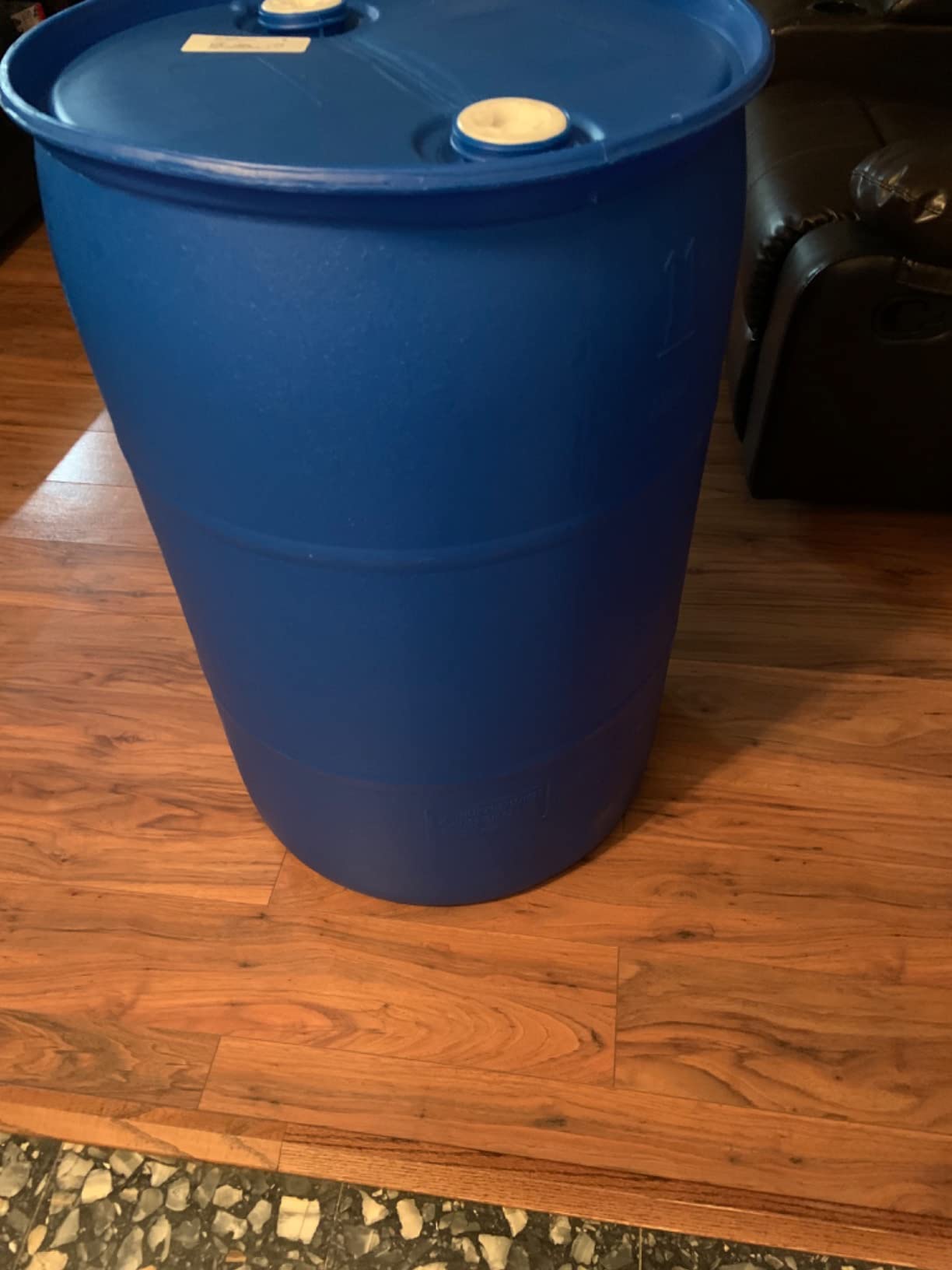
This is the one we would actually put drinking water in. The listing states food grade, BPA free and UN-DOT certified, with a solid-mold HDPE body and a closed top, and it carries a 4.6 rating across 862 reviews. That combination of certification language and review base is the strongest potable-water signal in the group.
Two 2-inch bung holes do real work here. One is a fill port, the other is where you mount a hand pump or a small submersible pump, and looking down a bung with a light gives you a rough level check without opening anything. Buyers report no leaks across multiple barrels.
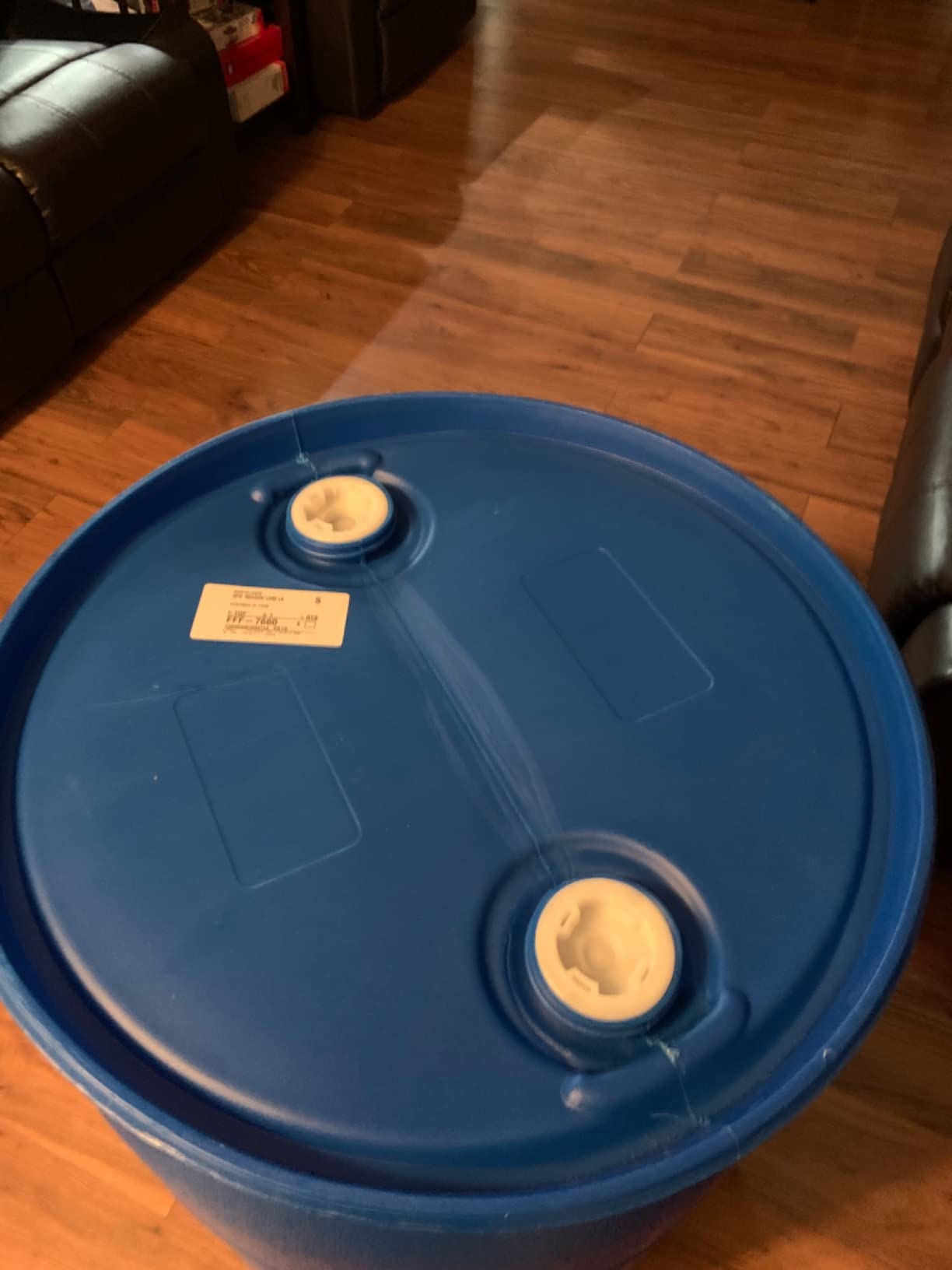
Plan a sterilization rinse before first fill. A few owners report a strong manufacturing odor that clears after a wash with a bleach solution, and doing that on day one is much easier than doing it after you have filled and plumbed the barrel. The same rinse is the habit you want to repeat on a rotation schedule.
The same family comes in 15 and 30 gallon sizes, which makes it easy to build a drinking reserve in graduated steps instead of one large purchase. Keep the drinking reserve separate from livestock and irrigation water; cross-contamination is the fastest way to ruin a clean barrel.
What to check before you buy
Confirm the certification wording on the listing matches your use, and buy from a seller who will stand behind it. Food-grade claims are worth nothing if the barrel has been stored next to solvents or pesticides.
Think about where it lives. A closed HDPE barrel is easy to move indoors when empty, which is exactly what you want in a freezing climate, but it is not rated for burial and should be shaded in summer to limit algae growth.
Where it falls short
At 55 gallons this is a reserve, not a supply. It is one day for a family of four and a little over a day for a couple. Anyone planning to run a household from drinking barrels alone will be backhauling constantly.
The closed top is a real trade-off. It protects the water, but filling and extracting both need either a drilled port, a siphon or a pump, and the shipping has no box or covering, so some barrels show transit scuffs and need wiping down first.
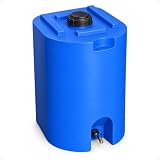
5. WaterPrepared 55 Gallon Stackable Tank – Best for Tight Indoor Spaces
WaterPrepared 55 Gallon Unique Stackable Utility Water Tank, Blue
- Stackable oval shape uses less floor space than a drum rack
- Pre-tested leak-free and owners confirm no leaks
- Brass spigot fits standard garden hoses
- UV-proof plastic limits bacterial growth in stored water
- Fits through a standard doorway
- A full tank is awkward to reposition and needs a stand for the low spigot
- Some contain small plastic shavings to vacuum out
- Stacking needs a platform rated for the combined filled weight
The stackable design is the whole point. A standard horizontal drum rack swallows a large rectangle of floor, while these oval tanks nest against each other and gain roughly 55 gallons per tier. For a small cabin, a shed, or a tiny house mechanical room, that is the difference between a tank and no tank.
The UV-resistant polyethylene blend is the second reason to like it. Stored drinking water in a translucent tank in full sun grows algae, and the listing specifically claims the UV-proof blend prevents bacterial build-up during long storage. At 4.6 across 783 reviews, owners on well and off-grid systems use it for exactly that: outage reserve.
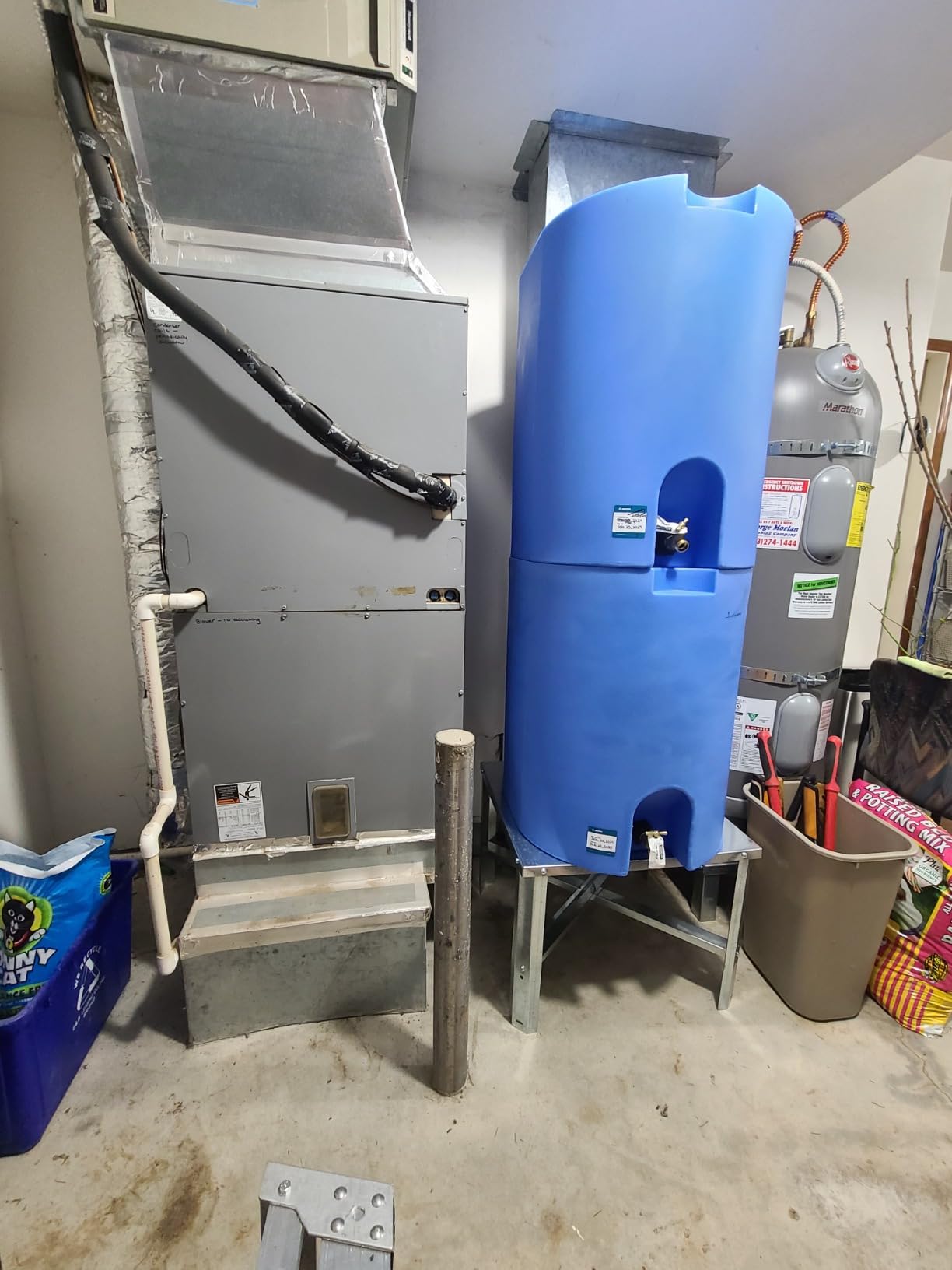
It fits through a standard doorway, which matters more than it sounds. Most tanks on this list are too wide to bring inside once full, and being able to move the container indoors for winter is a genuine advantage in a cold climate. The manufacturer also states the stack configuration needs about 4 inches of clearance beneath the upper tank.
The brass spigot is a step up from plastic. Garden hose threads connect directly, which removes the most common failure point on cheaper barrels. Vacuum out the shavings some owners report on arrival, and it is ready to fill.
What to check before you buy
Measure the height of the platform, not just the floor area. A stacked pair needs vertical clearance for the upper tank plus about 4 inches underneath it, and the platform has to be rated for the combined filled weight of both tanks.
Check the light where it will live. UV-resistant plastic is not UV-proof in every orientation, and a tank tucked under a dark cabinet or an opaque cover holds drinking water better than one in an open, sunlit corner.
Where it falls short
Handling is the honest drawback. A full 55-gallon tank weighs over 450 pounds, so moving it is not a solo job, and the low spigot position means you need a stand to drain it properly.
Stackability has a limit. Two tiers is a sensible maximum for most platforms, and going higher multiplies the weight without improving water quality. If you need more than 110 gallons, a rigid bulk tank is a better answer.
6. RTS Home Accents 50 Gallon ECO Rain Barrel – Best Value Rain Barrel
- Flat back fits snugly against walls and fences
- Built-in overflow valve with multi-barrel linking
- UV-resistant recycled plastic that is easy to maintain
- #1 selling rain barrel with the largest review base here
- Flat back can bow outward under a full load
- Plastic spigot is a weak point and often replaced
- Top screen fits poorly and the overflow opening is unscreened
With 3,700 reviews this is the most-proven container on the list, and it ranks first in its category. The flat back against a wall or fence is the same smart footprint decision as the FCMP barrel, and at 18 pounds empty it is the lightest rigid option here.
It is made from 100% recycled, UV-resistant polyethylene and the listing notes it is made in the USA. The built-in overflow valve handles the moment the barrel is full, and barrels can be linked together, so capacity scales without new plumbing decisions.
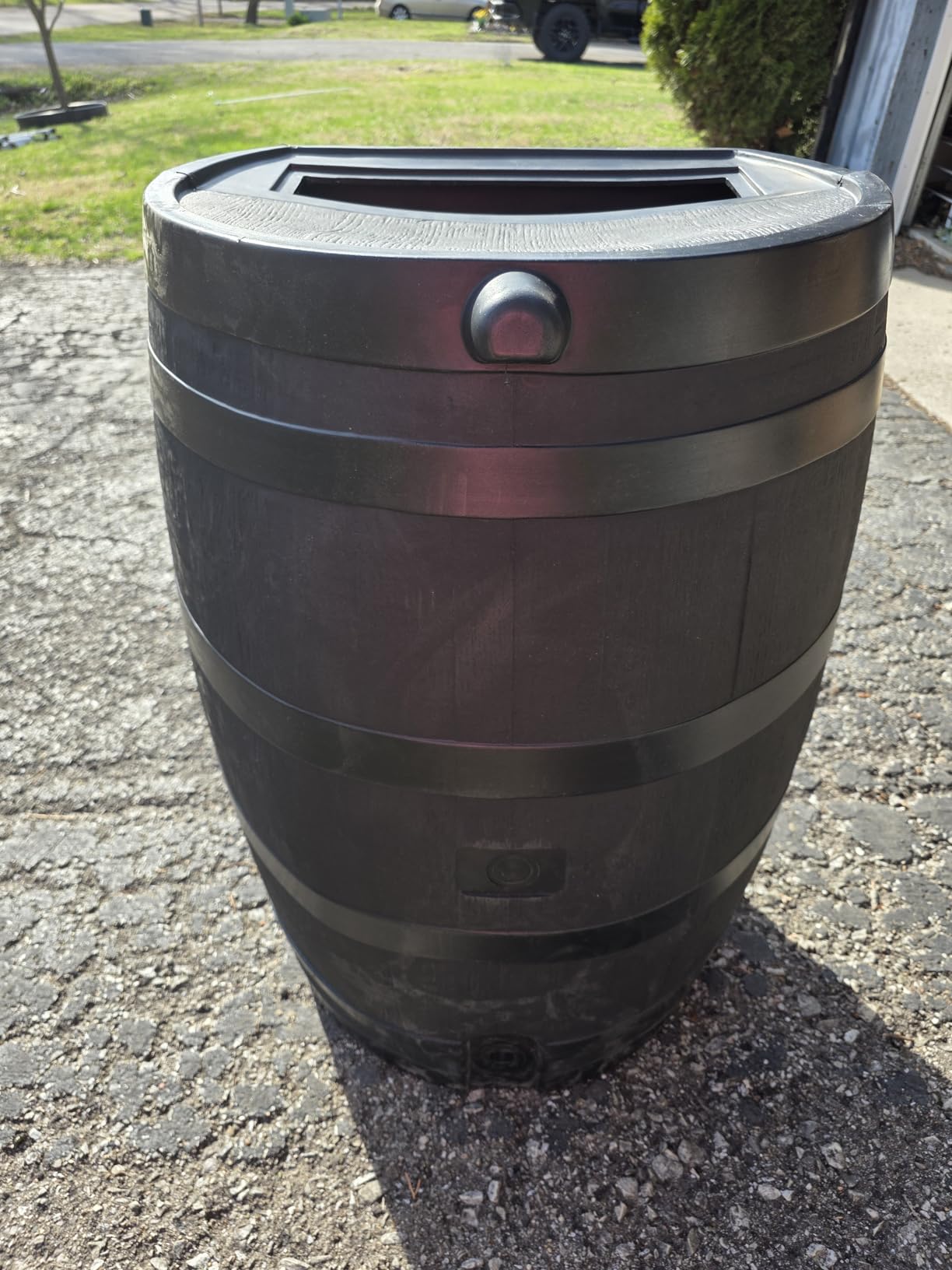
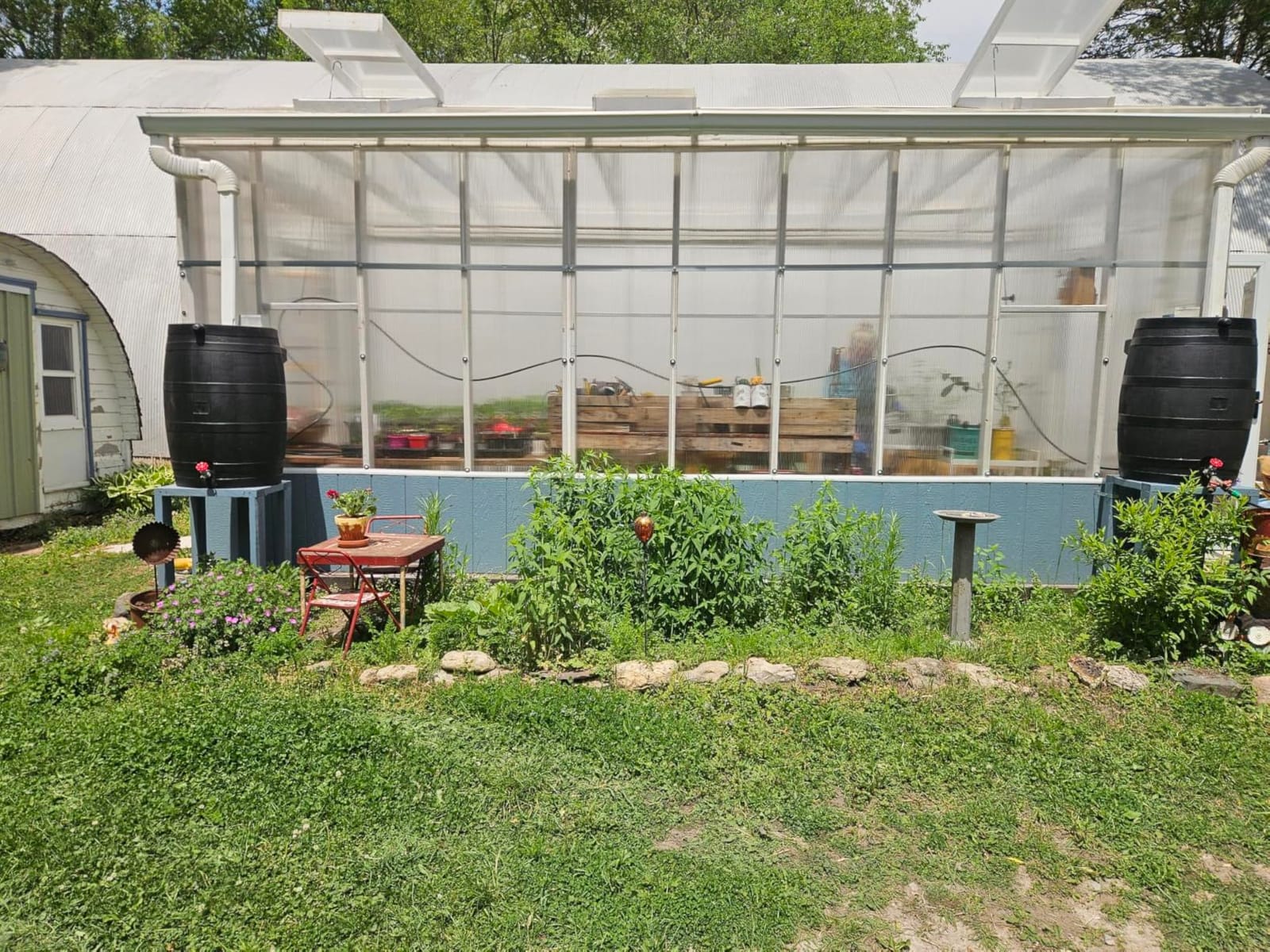
Owners use it for what it is good at: garden beds, raised planters, and the general watering chores around a home. That is real value, and the most common feedback in the reviews is about the flat back and the price, not about failure.
Two fixes are worth doing on day one. Replace the plastic spigot with a brass one, because gasket failure on the plastic spigot is the most common complaint in the reviews. Some owners also trim the top screen where it fits poorly.
What to check before you buy
Look at the overflow opening. The front overflow is unscreened, and in warm weather that is an insect entry point. A screen over the overflow is a five-minute fix that prevents a whole season of problems.
The barrel stand is sold separately. Budget for it, because without a stand the spigot sits low and the barrel is awkward to fill from a large bucket or to connect to a hose.
Where it falls short
Warping is the recurring structural complaint. Some owners report the flat back bowing outward under a full 50-gallon load, and a few report permanent warping. If you need a tank that will sit full through a decade, a structural foam or rotationally molded tank is a better bet.
It must be drained before winter or it can crack, and it is not rated for burial. Treat it as a seasonal garden asset unless you are prepared to manage its winter cycle.
7. VEVOR 264 Gallon Water Bladder – Best for RV and Truck Bed Carry
- Folds flat at 13.5 pounds empty
- Reinforced double-layer PVC resists tearing and abrasion
- Pre-installed inlet and outlet connectors accept a garden hose
- Included faucet fittings tape and repair patches
- Four pull-rings for strapping during transport
- Soft sides lose pressure as it drains
- Must be secured in a vehicle to avoid abrasion against the bed
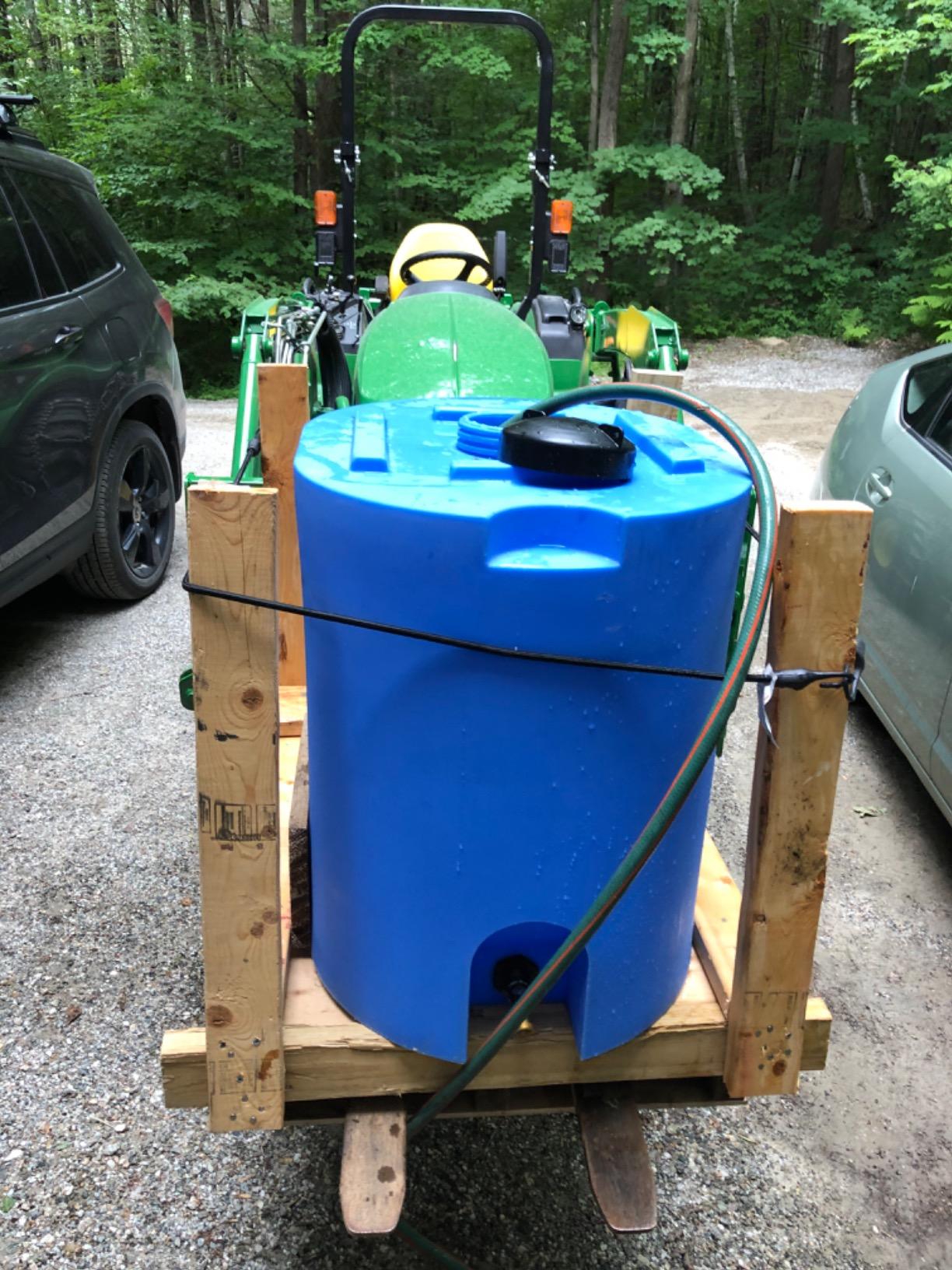
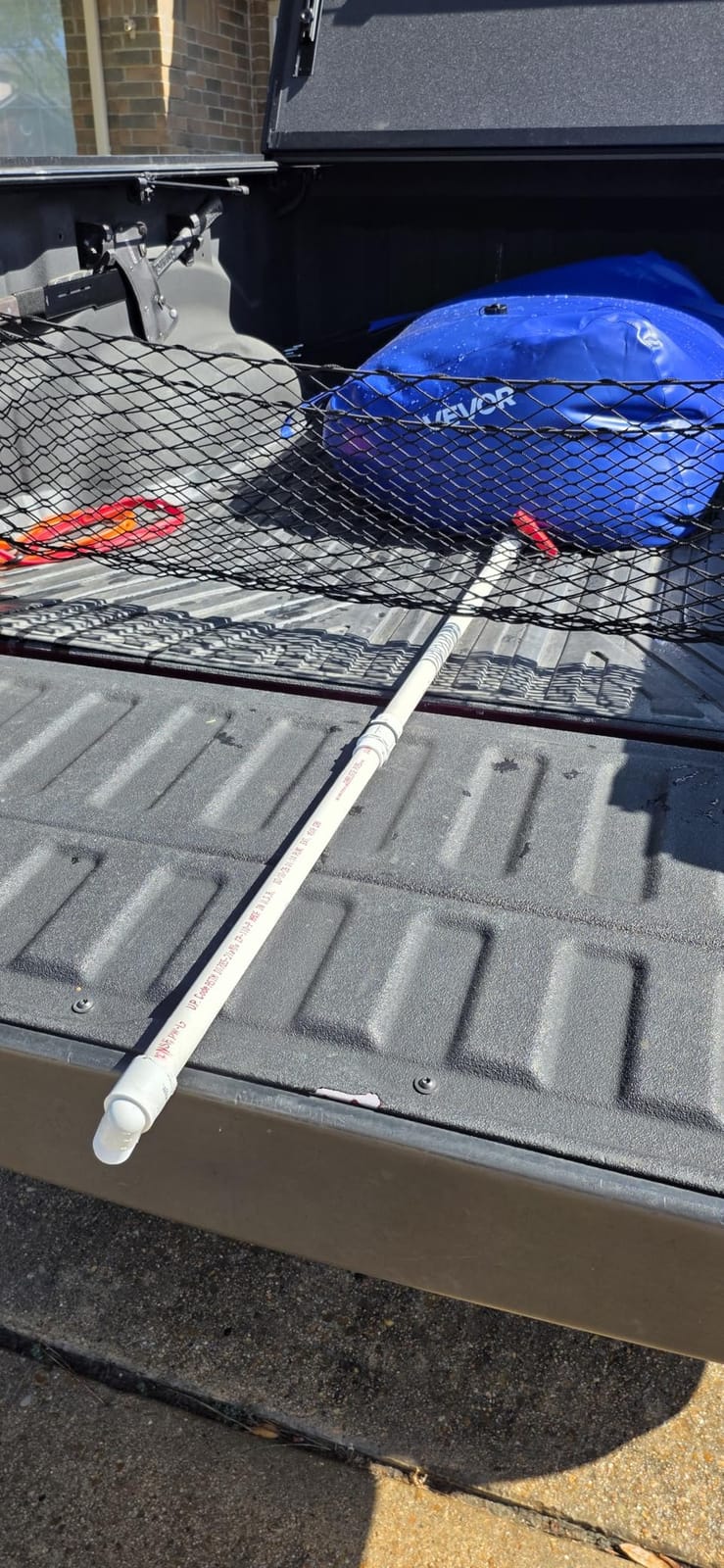
This is the tank for a site that does not have a delivery address worth shipping a rigid tank to. At 264 gallons and 13.5 pounds empty, you can fill it at a spring, a neighbour’s well, or a water stop, fold it flat, and put it in a pickup bed behind the cab. That is genuinely new capability compared to a 300-gallon rigid tank.
The construction is 1000D double-layer PVC with a mesh middle layer, high-temperature welded seams, and dual-layer hot-melt sealed ports. The stated temperature tolerance of 5 to 167 degrees Fahrenheit makes it a reasonable seasonal storage vessel in cold regions, provided it is not left full through a hard freeze.
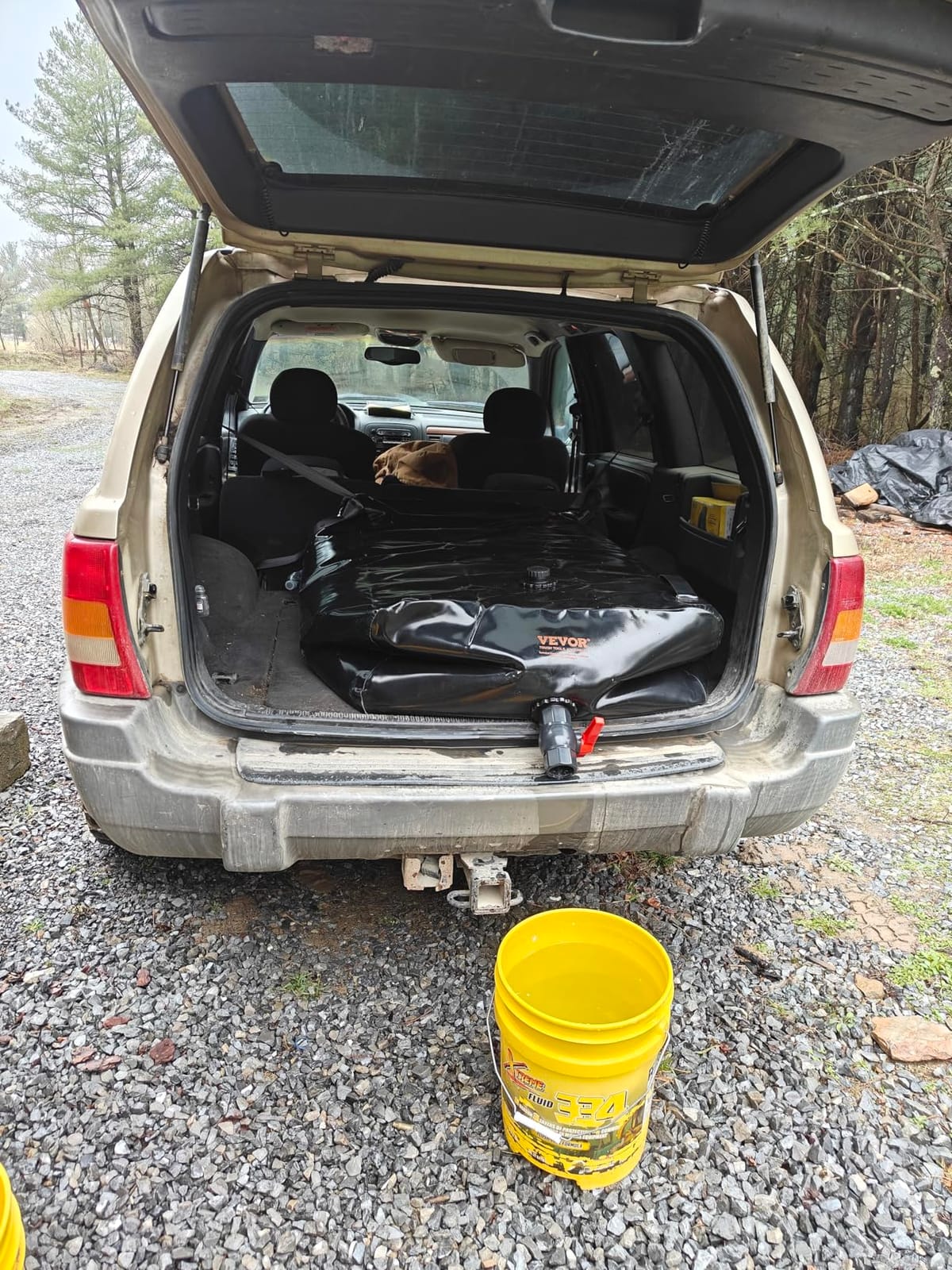
The accessory kit is unusually complete for this category: a faucet valve, a 3/4 inch connector, a fitting, PTFE tape, a spare sealing ring, and repair patches. Owners rate the low cost per gallon as the headline, and the fact that it is usable out of the box rather than after a hardware run is a genuine convenience.
Four pull-rings let you strap it down in a truck bed or an SUV, which matters more than it sounds. An unrestrained bag slides, abrades against the bed, and wears through faster than any material in this list.
What to check before you buy
Decide how it gets to the site. If there is no freight access, hauling capacity is the deciding factor and this is one of the strongest options in the roundup. If a tanker can reach the pad, a rigid tank is more durable long term.
Confirm the footprint. Filled, it is 78.7 by 39.8 inches and 20.1 inches tall, so it needs a level liner or pad even though it weighs nothing empty.
Where it falls short
Soft walls mean pressure drops as it empties, which limits gravity-fed draw distance. If your house sits downhill from the tank, a rigid vessel is the correct tool.
It is a flexible container, not a pressure vessel, and it is easy to puncture with a nail, a wire, or a rodent. Keep it off bare soil and away from sharp-edged gravel.
8. RomoTech 50 Gallon Square Poly Tank – Best for Hauling Water
RomoTech 82123919 50 Gallon Square Polyethylene Water Storage Tank
- Translucent body shows the level without opening the tank
- Molded gallon and liter graduations for volume checks
- UV stabilized and rust and corrosion resistant
- Tie-down channels accept saddle straps
- Reported by off-grid users as a reliable way to haul water
- Outlet is not at the lowest point
- leaving residual water behind
- Some arrive with a loose drain fitting or a split at the middle seam
- 3/4 inch NPT outlet may need an adapter
The RomoTech is the most thoughtfully engineered small tank here. It is rotationally molded medium-density polyethylene, which is a thicker, seamless wall than injection molding produces, and the molding includes gallon and liter graduations so you can check volume without guessing.
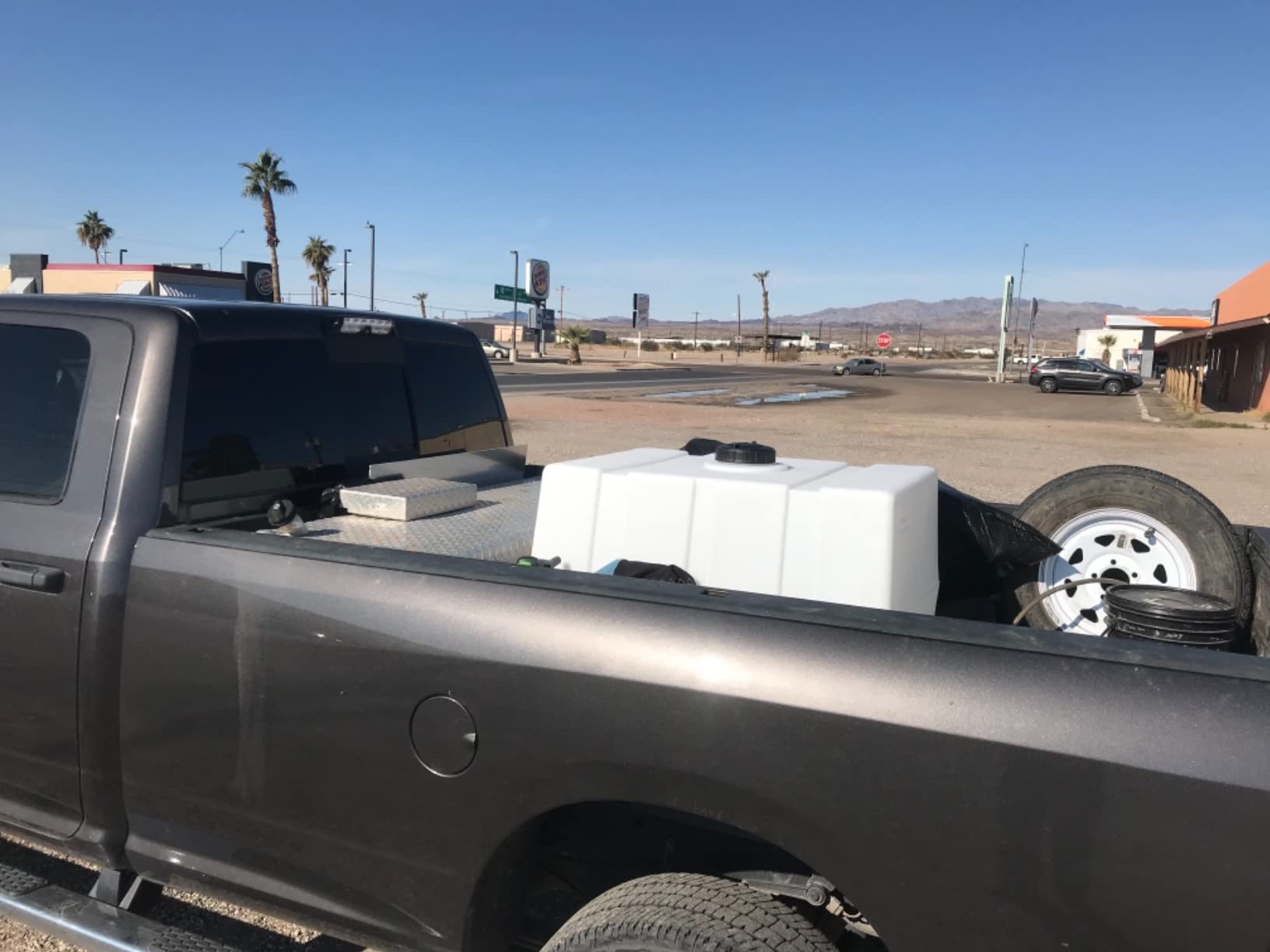
Two details make it a hauler rather than just a container. The built-in tie-down channels accept saddle straps, and the translucent body lets you see the level through the side of a truck bed at a glance. Off-grid owners report using it to move water without a trailer, which is a real saving on remote properties.
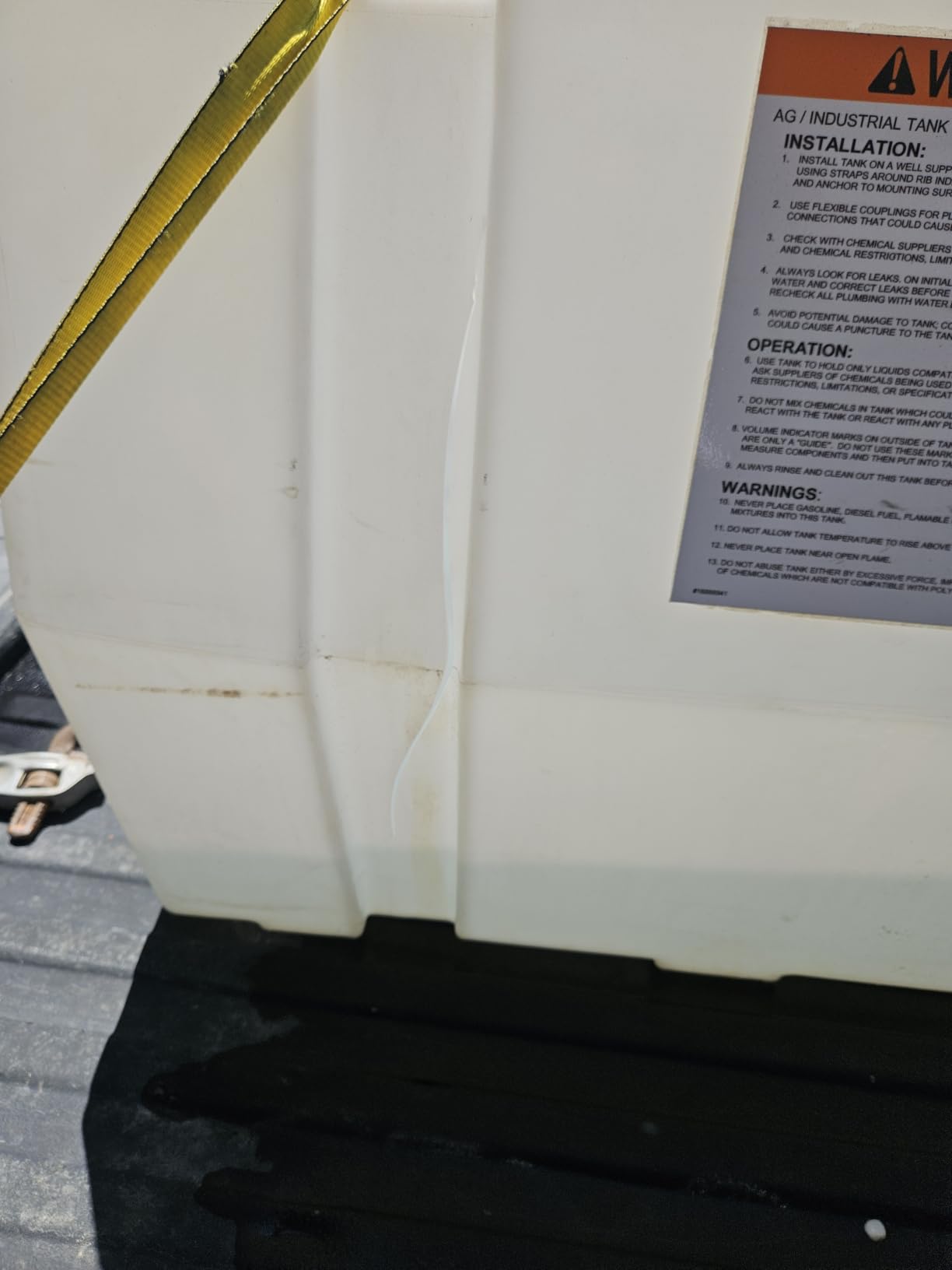
The 5-1/2 inch lid with a 5 inch opening is large enough to clean by hand, which matters for a vessel you will need to sanitize. The built-in bulkhead fitting with a 3/4 inch NPT outlet is a proper threaded port rather than a glued fitting, so it accepts standard plumbing hardware.
It is also rated for non-flammable liquids up to 140 degrees Fahrenheit, so it is not limited strictly to water. The same product line comes in 30 and 100 gallon versions if you want to step capacity without changing systems.
What to check before you buy
Test the drain before you rely on it. A small number of owners report a loose drain fitting or a split at the middle seam on arrival, and a five-minute water test catches both while the tank is still empty.
Bring the right adapter. The outlet is 3/4 inch NPT, which does not always match a garden hose thread directly, so have a conversion fitting planned before fill day.
Where it falls short
The outlet is not at the lowest point of the tank, so a residue of water stays behind after draining. That matters for winterizing and for any application where you need the vessel fully empty.
Some owners report a slight bulge at the center seam when full. It is a molded seam and worth inspecting twice a year, especially if the tank lives in direct sun or sees wide temperature swings.
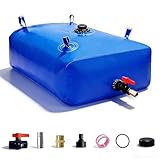
9. GHOSOONE 1000 Gallon Water Bladder – Best for a Large Rainfed Reserve
4000L/1000Gal Water Bladder Tank, Foldable Portable Water Storage Container
- Stores 1000 gallons at 30 pounds empty and folds to a small parcel
- Three-layer 2000D PVC resists puncture
- tear
- abrasion
- UV and static
- High-frequency welded seams with reinforced rib sealing
- Inlet fits standard garden hoses with a rigid connector included
- Four reinforced handles for carrying the folded package
- A 1000 gallon footprint needs a large level pad
- Soft walls give no structural support
- Non-potable use only and must be kept away from sharp objects
This is the only container here that can hold a meaningful multi-week reserve, and it does so while weighing 30 pounds empty. A 1,000-gallon tank is 2.5 to 5 days for a family of four and 10 to 20 days for two people, so on a rain-fed property this is the difference between riding out a dry month and not.
The construction is three-layer 2000D PVC-coated polyester mesh, 0.9 mm thick, with high-frequency welded seams and reinforced rib sealing. The stated operating range runs from -30 to +175 degrees Fahrenheit, and the folded package is roughly 19 by 18 by 9.5 inches, which means one person can carry it.
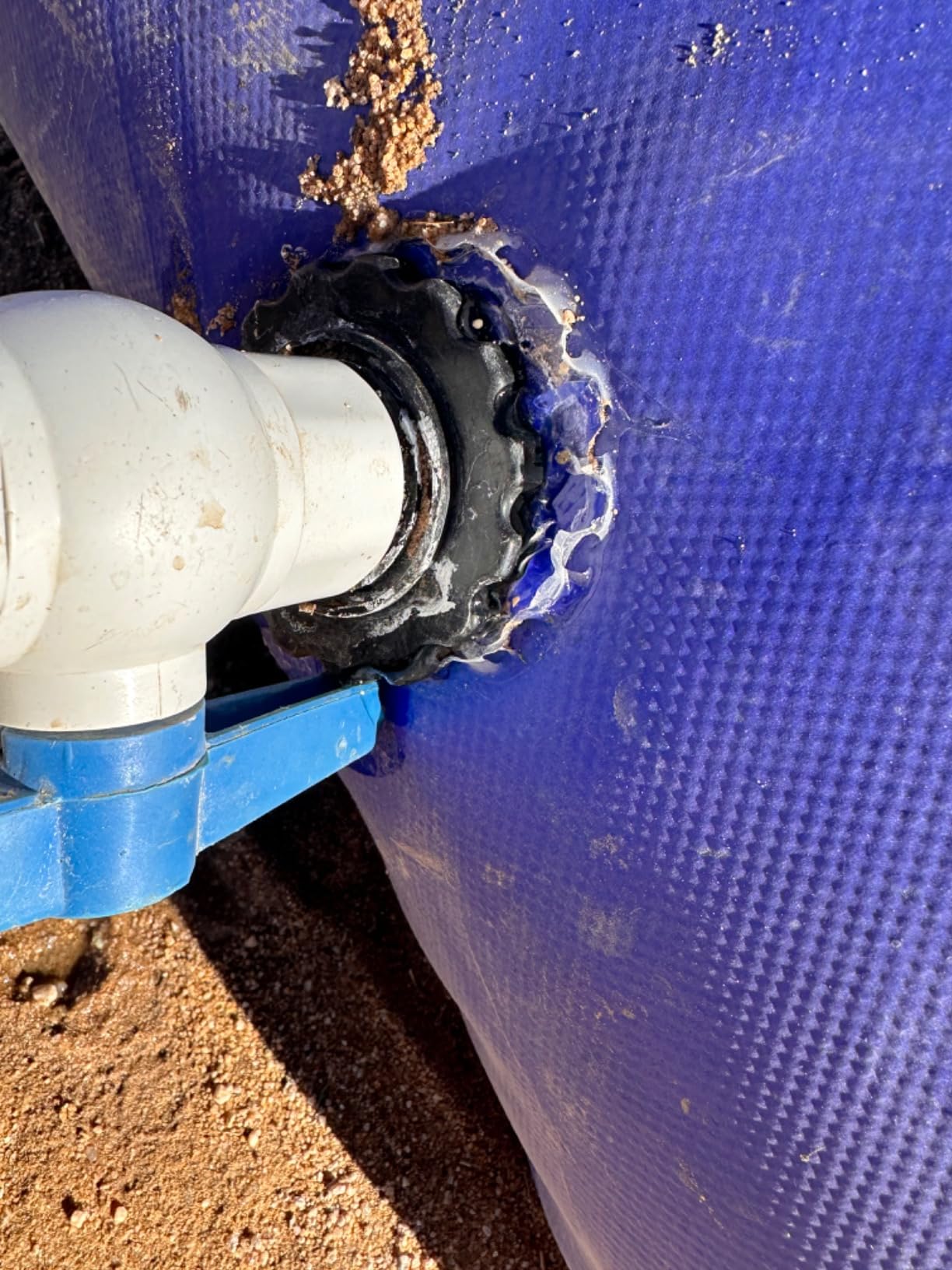
The fittings are better thought out than most in this category. The inlet accepts a standard garden hose and a rigid 32 mm outlet connector is included, so you are not hunting for adapters on installation day. Owners rate it highest among the 1,000-gallon options here.
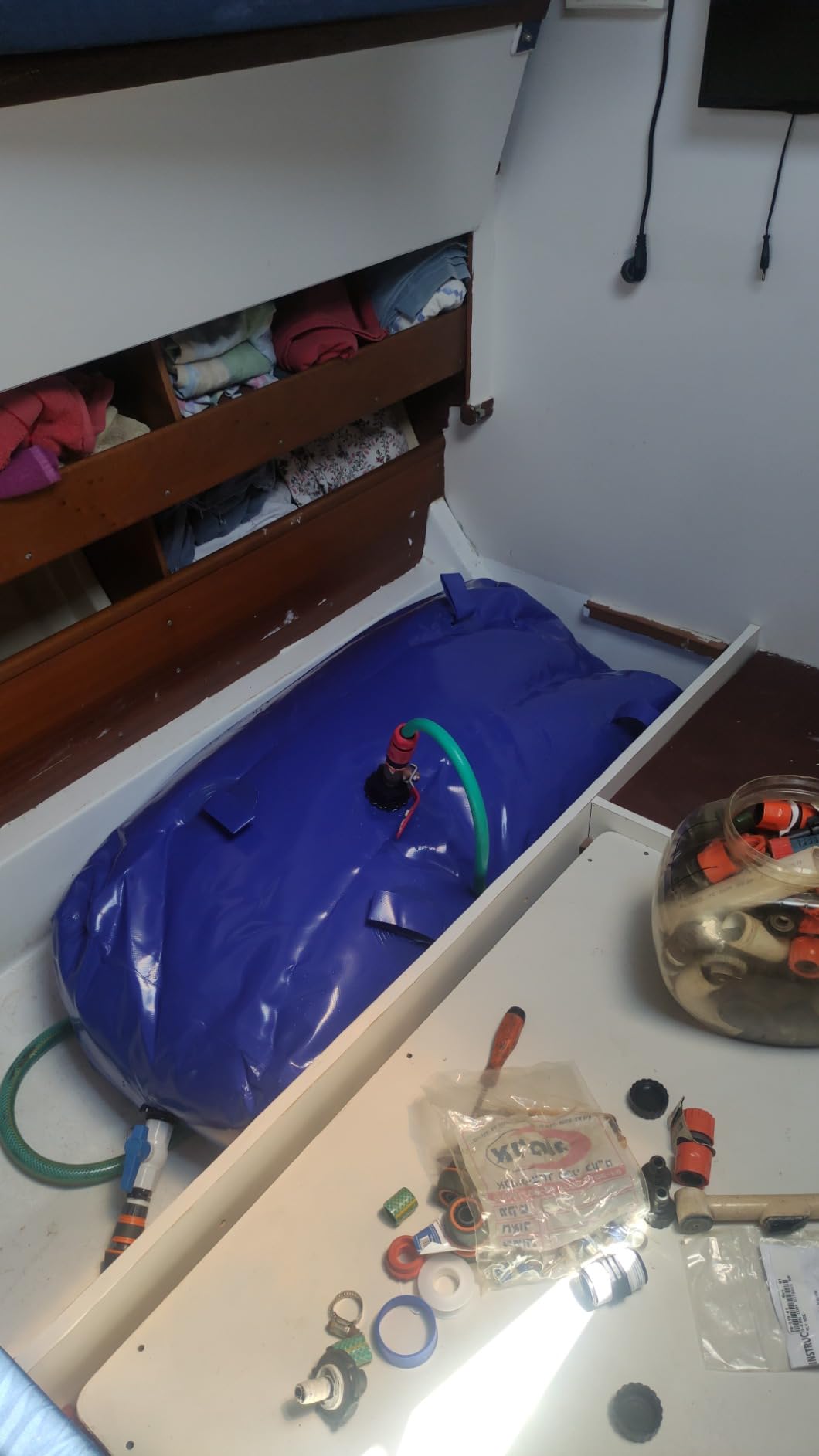
Site preparation is the real work. Filled, it measures 78.7 by 78.7 inches and 39.3 inches tall, so you need a genuinely level, large pad, and a liner or a smooth surface underneath to protect against puncture.
What to check before you buy
Measure the pad twice and check the fill route. A first-flush diverter on the gutter, plus a screened inlet, keeps roof debris out of a bag you cannot easily open and clean later.
Plan the treatment train. This is listed for non-potable use, so drinking water from it has to pass through sediment filtration, disinfection, and a properly sized storage stage before it reaches a tap.
Where it falls short
Soft walls give no structural support, so a puncture from a nail, a wire, or an animal is the most likely failure. Protection under and around the bladder is not optional.
It does not pressurize. As it drains the bag slumps and gravity flow weakens, so a pump downstream is effectively required for anything beyond short distances.
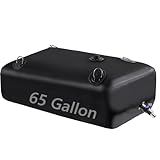
10. Rodelna 65 Gallon Water Bladder – Budget Pick for Light-Duty Backup
- Lowest cost per gallon in the group
- Thick 1000D PVC mesh with reinforced seam strips
- Stainless steel outlet valve and a wide fill opening
- Owners confirm it holds water for days without leaking
- The plastic outlet sleeve strips easily and will not fit a garden hose without an adapter
- Soft sides lose pressure as it empties
- Not for diesel
- alcohol or similar liquids
This is the cheapest usable capacity per gallon here, and for a garden, a fire reserve, or a short drought buffer that is a reasonable trade. The material is 1/20 inch thick high-density coated PVC mesh with reinforced seam sealing strips and high-frequency welded bonding, rated from -30 to +70 degrees.
At 65 gallons it fills a wheelbarrow twice, runs a hose for an afternoon of irrigation, and stores flat in a closet in winter. The 1.5 inch fill opening and the handles make it easy to handle when empty, which is how it will spend most of its life.
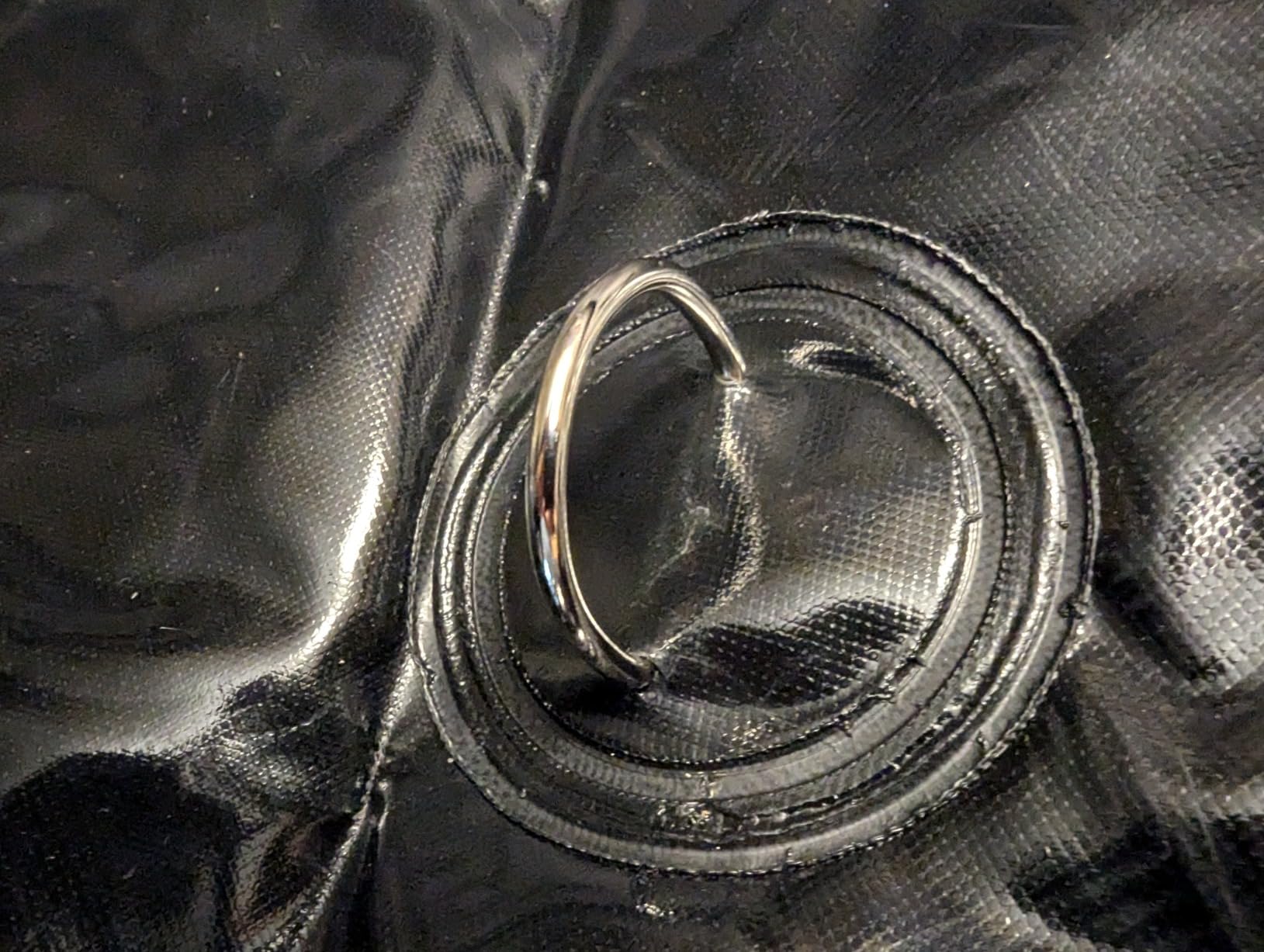
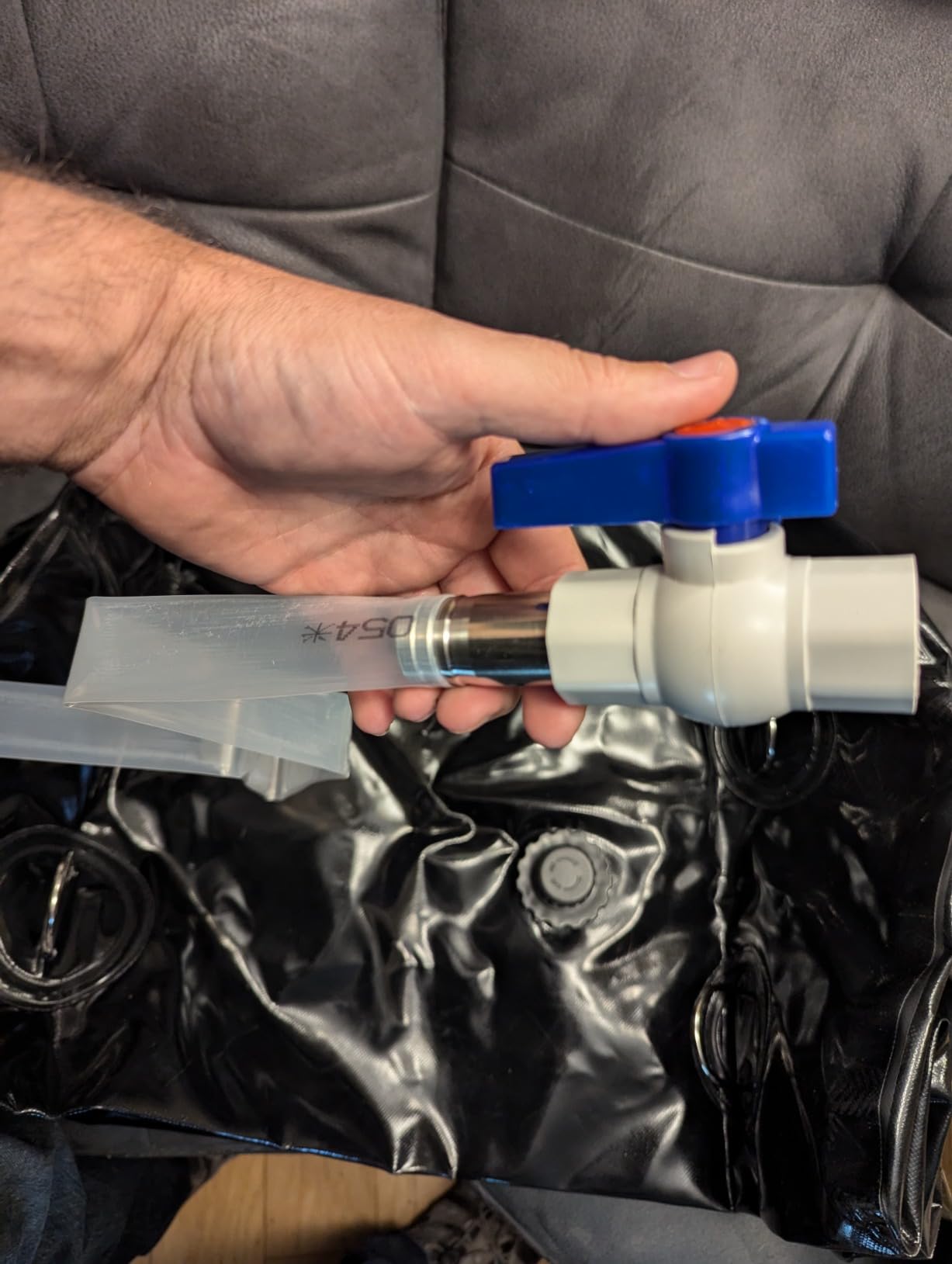
The stainless steel outlet valve is better hardware than most low-cost bladders carry, and owners confirm it holds water for days without weeping. It is the fittings around that valve that cause the trouble, not the fabric.
Budget for hardware. Several buyers of low-cost bladders recommend buying quick-connect fittings separately, or choosing a rigid tank instead, and that advice applies here. Plan the adapter before the day you need the water.
What to check before you buy
Decide if you need to draw water by gravity. If the outlet is lower than the point of use and the distance is short, it will work. If you need steady pressure, pick a rigid tank.
Confirm the liquid. The listing is explicit that it is not for diesel, alcohol, or similar liquids, and it should be kept away from harsh chemicals that can attack the coating.
Where it falls short
It carries the lowest rating in this group, and the reason is consistent: fittings. The included plastic outlet sleeve strips easily and does not connect to a standard garden hose without an adapter.
It is a light-duty container. Treat it as seasonal irrigation or a short-term buffer rather than as drinking water storage or a long-term reserve.
Above-Ground vs Underground Tanks
Above ground is easier, cheaper, and easier to inspect; underground is protected from sun, freeze, pests, and evaporation. For most off-grid homes, above ground wins on install cost and serviceability, and a shaded pad beside the house is the default choice.
Burial earns its place when freeze is the concern or when the tank would otherwise be an eyesore in a yard you use. The trade is access: a buried tank needs an openable lid and a planned route for a pump, and cleaning a buried tank means getting a hose and a person to the site. Excavation and a concrete collar are real costs that are rarely in a product listing.
Forum operators running larger setups often mix both. A common pattern is above-ground bulk tanks on a barn or outbuilding plumbed to a smaller header tank that feeds the house, which keeps the big volume shaded and easy to reach while the day tank sits close to the pump.
Choosing a Tank Material
Polyethylene is the default for a reason: it does not rust, it is light, it is inexpensive, and food-grade HDPE is certified safe for drinking water. Structural foam adds wall thickness and load strength for livestock and irrigation, and rotational molding produces thicker, seamless walls than injection molding.
Non-plastic options exist and are worth knowing about. Galvanized or stainless steel tanks and lined concrete cisterns avoid the plastic question entirely, and that matters if you are developing a spring and want no plastic in contact with drinking water. The cost is higher, the weight is far higher, and delivery to a rural property is more involved.
Collapsible PVC bladders sit in their own category. They are the cheapest way to add large volume and the easiest to transport, but they are not pressure vessels, they lose shape as they drain, and they are not appropriate for drinking water without a full treatment train.
Pumps, Pressure Tanks, and Getting Water to Your Taps
A tank alone does not deliver water. The standard chain runs from your source, through a first-flush diverter at the gutter, into the tank, then through a pump, a filter stack, a pressure tank, and out to the household plumbing.
Where the pump goes depends on the tank. A submersible pump sits inside a rigid tank near the outlet, a jet pump sits on the pad beside it, and if the tank sits higher than your house, gravity does the work with no electricity at all. That last option is the most reliable off-grid arrangement because it removes the pump from the failure chain entirely.
For pressure storage you have two real choices. A bladder tank uses a rubber bladder to separate water from pressurized air, and the bladder needs replacing every 5 to 10 years. A bladderless tank keeps an air cushion inside the tank itself, so there is no bladder to replace; it costs more upfront, is usually larger, and wants a slow well pump or a proper cycle controller. If you have ever asked whether there is a well tank that does not require a bladder, the answer is yes, and bladderless systems are common on off-grid installs with limited power.
For power, size the pump for solar with battery backup rather than sizing the battery for the pump. If you are planning the whole build, our solar generator guide for off-grid cabins covers the sizing on the electricity side, and our masonry heater kits guide covers the other end of the same problem, keeping a home warm through winter.
Keeping Tank Water Potable and Freeze-Proof
A sanitized, sealed, opaque polyethylene tank keeps drinking water potable for roughly 6 to 12 months without further treatment, provided you add chlorine every 3 to 6 months for longer storage. That is a maintenance schedule, not a one-time event, and a monthly level check catches leaks and slow losses before they become problems.
Algae is the usual reason stored water turns unacceptable, and it is a light problem more than a chemistry problem. Opaque or dark tanks, lids, and shade from a wall or a roof overhang do more for water quality than any filter downstream.
Freeze protection applies to the tank, not just the pipes, and most competitors only cover the pipes. Water expands about 9 percent when it freezes, which is enough to split a rigid plastic tank. Drain above-ground tanks before the first hard freeze, or keep them full and circulate them with heat trace on a circuit that stays above 32 degrees Fahrenheit. A bladder tank and a pump sitting in an unheated shed are the two things most likely to crack in a cold snap.
Hardness is a separate issue from safety, and it is where a water softener earns its place. If you are on a well with hard water, a softener or a reverse osmosis stage at the tap protects fixtures and makes the water taste better without re-treating the whole stored volume.
Delivery, Siting, and Permits
Where a large tank gets delivered is the question that surprises first-time buyers. Rigid tanks above roughly 1,000 gallons usually arrive crated on a flatbed, and freight to a rural property, a gate that is too narrow, or a driveway that cannot take a loaded truck will stop the delivery until it is sorted.
Before you order, confirm the route end to end: gate width, overhead branches, driveway turn radius, and where the tank will sit. Have the pad poured and levelled first, and have someone on site for the drop. Setting the tank into position on the day it arrives is far easier than moving it a week later.
Setbacks matter too. Keep a storage tank a sensible distance from a well and its drain field, away from property lines, and clear of any area where a leak could run toward a source. Permits and water rights for bulk storage vary by county, so a single call to your local building department before the order is cheaper than a relocation after the order.
If you want a head start on the rest of the mechanical room, our water heater expansion tank guide covers the small vessels that are easy to forget until a relief valve starts weeping.
Who These Tanks Are Not For
None of these tanks is a drinking-water solution on its own, and that is the honest framing. Every one of them is a storage vessel. Turning stored water into tap water takes a pump, a pressure tank, filtration, and disinfection, and skipping any of those steps is how a clean barrel ends up undrinkable.
They are also not wells. A tank stores water that already exists somewhere, and if your source is a drilled well, storage is a buffer between pump cycles rather than a supply. If your source is rain, storage volume is capped by catchment area, so 1,000 square feet of roof yielding about 620 gallons per inch is the real limit on how long a large tank can go between meaningful fills.
And the 50 and 55 gallon containers at the top of this list are hurricane gear, not off-grid supply. They are excellent for drinking reserve, outage buffer, and garden water, and buying four of them expecting them to run a household is the mistake this article exists to prevent.
Frequently Asked Questions
What is the best water system for off-grid living?
The best off-grid water system has three parts: a source, storage sized to your daily demand, and a pressurization method. A drilled well with a submersible pump and a pressure tank is the most reliable. Rainwater with a 1,000-gallon or larger storage tank is the most affordable. A gravity-fed system from an elevated tank needs no power at all.
How long will a 1000 gallon water tank last?
A 1,000-gallon tank lasts 2.5 to 5 days for a family of four using 200 to 400 gallons a day, or 10 to 20 days for two people at 50 to 100 gallons each. Stored as a reserve rather than a supply, a sanitized polyethylene tank keeps drinking water potable about 6 to 12 months if it is sealed, opaque, and shaded, with chlorine added every 3 to 6 months.
How do I store water for off-grid living?
Calculate daily demand at 50 to 100 gallons per person, multiply by the reserve days you want, and size the tank from that number. Choose a material: polyethylene or structural foam for value, steel or lined concrete to avoid plastic entirely. Site it below the frost line or shade it above ground, add first-flush diversion at the gutter, sanitize before filling, plumb a pump and pressure tank, then test and rotate monthly.
Is there a water well tank that does not require a bladder?
Yes. Bladderless well pressure tanks use an air cushion inside the tank rather than a rubber bladder, so there is no bladder to replace every 5 to 10 years. They are typically larger, cost more upfront, and need a slow well pump or a proper cycle controller. Air-operated tank systems are a common alternative on off-grid setups where power is limited.
How much water does an off-grid home need?
Plan on 50 to 100 gallons per person per day. One person needs 50 to 100 gallons, a couple needs 100 to 200, and a family of four needs 200 to 400. Multiply your daily figure by your reserve days to get the required capacity, then round up to the nearest available tank size.
How do I keep tank water from freezing?
Water expands about 9 percent when it freezes, which is enough to split a rigid plastic tank. Drain above-ground tanks before the first hard freeze, or keep them full and circulate them with heat trace on a circuit that stays above 32 degrees Fahrenheit. Protect the pump and any pressure tank as well, since both are usually the first things to fail in an unheated shed.
Can I drink rainwater without filtering it?
Not without treatment. Roof catchment water can carry organic debris, bacteria, and metals from roofing and gutters. A first-flush diverter, a sediment filter, a carbon filter, and a disinfection stage such as chlorine or UV will make collected rainwater safe to drink. Opaque tanks and lids help by blocking the light that drives algae growth.
How much water can I collect from my roof?
Every 1,000 square feet of roof collects about 620 gallons for each inch of rain. A 1,500 square foot metal roof therefore yields about 930 gallons per inch. Divide your required reserve by the gallons you get per inch of rain to work out how many inches of rainfall your tank needs between fills.
Conclusion
Sizing decides everything. Work out 50 to 100 gallons per person per day, multiply by the reserve days your water source can actually miss, and the tank choice makes itself.
For most off-grid homes the FCMP Outdoor 50 Gallon Rain Barrel is the right place to start, because the flat back, the debris screen, and the linking kit make it the most flexible catchment tank here, and you can add a second for drinking reserve. When you need real volume, the Rubbermaid 300 Gallon foam tank handles livestock and irrigation, and the GHOSOONE 1,000 gallon bladder is the only option in this roundup that holds a multi-week supply. Pick the capacity class that matches your daily demand, plumb a pump and a pressure tank, and plan the rotation schedule before you fill it.