
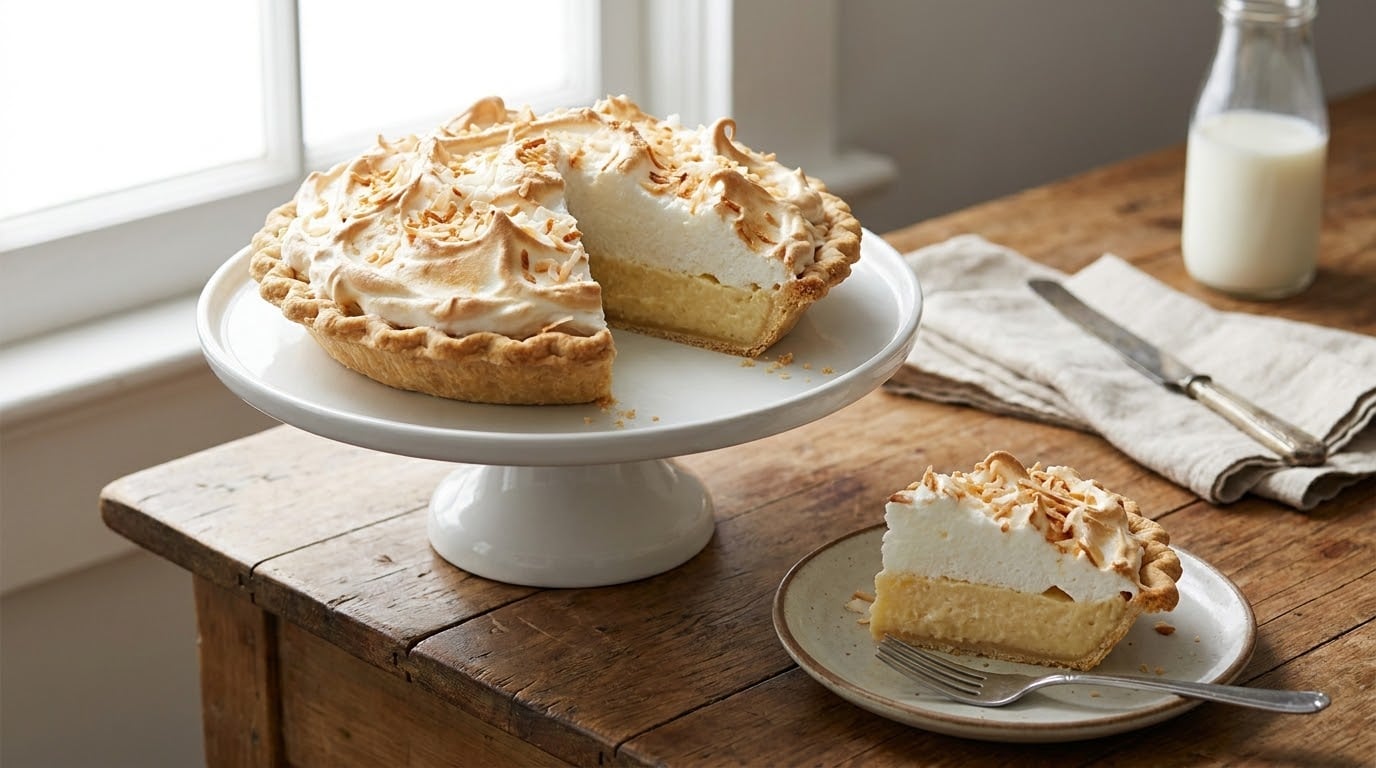
This coconut cream pie recipe gives you a flaky all-butter crust, a silky coconut custard made with whole milk and real coconut milk, and a tall cloud of toasted meringue on top. Plan on about an hour of hands-on work and at least four hours of chilling, and you will have a pie that slices cleanly and tastes like the one at a good diner.
I make this every spring for Easter and again in late summer when the heat makes oven-heavy baking feel like too much. It is the dessert I bring to a new neighbor, the one I send to a friend who just had a baby, and the recipe my mother-in-law now asks for instead of her own. If you have ever been disappointed by a watery slice or a weeping meringue, the method below fixes both.
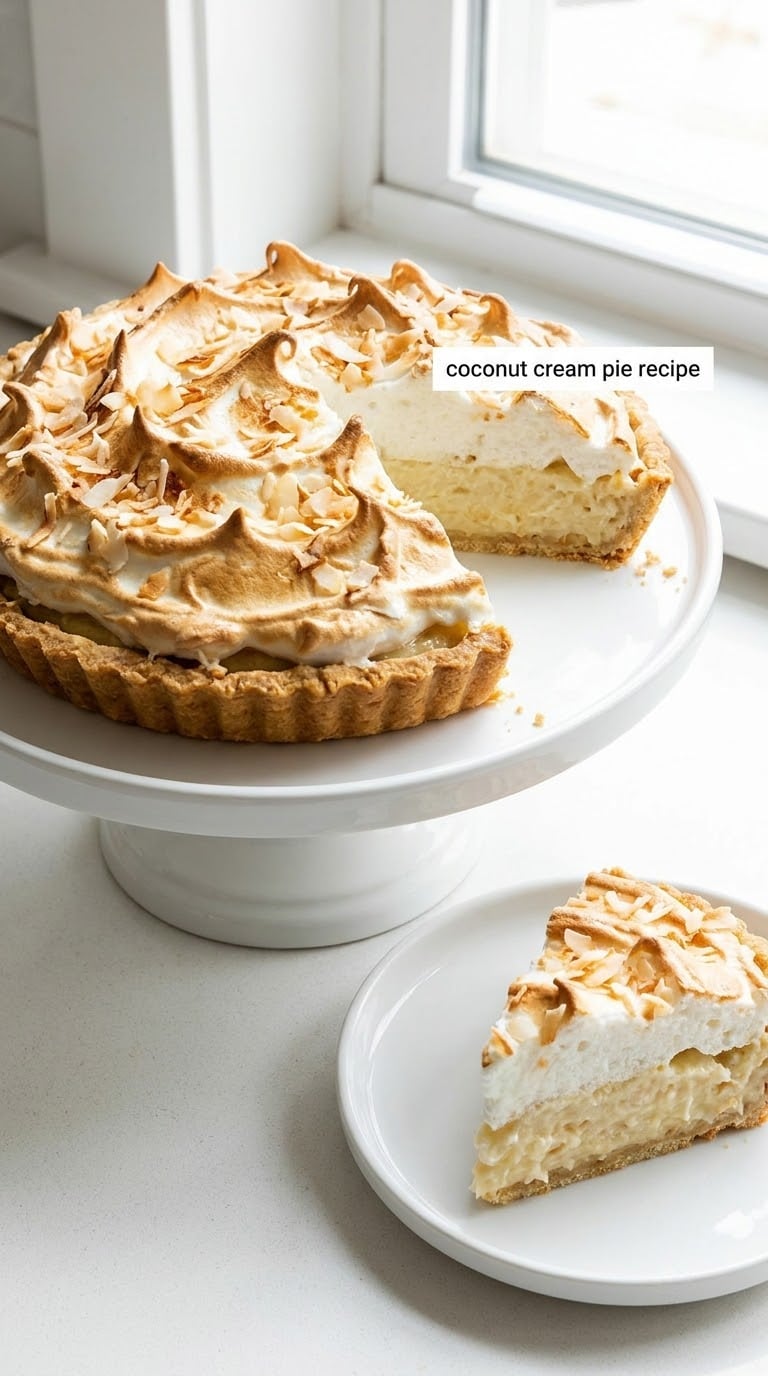
Table of Contents
Why This Recipe Works
A good coconut cream pie is mostly about patience, not skill. Five small choices separate a slice that holds its shape from one that puddles on the plate.
- Blind-bake the crust until deep golden. A pale crust softens under custard; a well-baked crust stays crisp for two days in the fridge. I bake mine 15 minutes with weights, then 8 to 10 more without, until the bottom looks like a buttery cookie.
- Use whole milk and full-fat coconut milk together. All coconut milk makes the filling slightly oily; all whole milk loses the tropical note. A 50/50 split gives you richness and coconut flavor in the same spoon.
- Thicken with cornstarch, not flour. Cornstarch sets clearer and holds its shape once chilled, which is what gives the slice those clean edges in the photo.
- Temper the yolks slowly. A thin stream of hot milk into the yolk mixture, whisking the whole time, prevents the scrambled bits that show up as flecks in the finished custard.
- Seal the meringue to the crust edge. When meringue touches hot filling and the crust rim, it grips and cannot slide or weep. Press it right down to the pastry.
- Chill the filled pie for at least four hours. Under-set custard is the most common reason for runny slices. Plan ahead.
Ingredients
For the crust:
- 1 1/4 cups (160 g) all-purpose flour
- 1 tablespoon (12 g) granulated sugar
- 1/2 teaspoon fine sea salt
- 1/2 cup (113 g) cold unsalted butter, cubed
- 3 to 4 tablespoons ice water
For the coconut custard filling:
- 1 1/2 cups (360 ml) whole milk
- 1 1/2 cups (360 ml) full-fat canned coconut milk, shaken
- 5 large egg yolks
- 3/4 cup (150 g) granulated sugar
- 1/4 cup (32 g) cornstarch
- 1/4 teaspoon fine sea salt
- 2 tablespoons (28 g) unsalted butter
- 1 1/2 teaspoons pure vanilla extract
- 1 teaspoon coconut extract
- 1 cup (75 g) sweetened shredded coconut
For the meringue:
- 4 large egg whites, room temperature
- 3/4 cup (150 g) granulated sugar
- 1/4 teaspoon cream of tartar
- 1/2 teaspoon pure vanilla extract
- 1/2 cup (40 g) toasted coconut flakes, for garnish
Notes on the key ingredients: full-fat canned coconut milk is not the same as the refrigerated carton sold for drinking. Look for the can with at least 60 percent coconut extract and no added sugar. The coconut extract is optional but worth it, since it boosts the tropical note without making the filling greasy. For a gluten-free crust, swap the all-purpose flour for a 1:1 gluten-free baking blend and add an extra tablespoon of cold water. For a dairy-free custard, replace the whole milk with unsweetened oat milk and skip the butter (or use refined coconut oil).
Equipment
You do not need a lot of gear, but a few items make the process easier.
- 9-inch (23 cm) glass or metal pie plate
- Rolling pin and a sheet of parchment
- Pie weights or 2 cups of dried beans
- Heavy-bottomed 3-quart saucepan
- Whisk and a rubber spatula
- Fine-mesh strainer set over a bowl
- Candy or instant-read thermometer for the meringue
- Stand mixer or a large bowl with a hand mixer
- Offset spatula for spreading the meringue
How to Make Coconut Cream Pie
Read all the way through before you start. The custard needs to go into a warm crust and the meringue needs to go onto a warm filling, so the order matters.
Make and Blind-Bake the Crust
- Pulse the flour, sugar, and salt in a food processor. Add the cold butter and pulse until you see pea-sized pieces.
- Drizzle in 3 tablespoons of ice water and pulse until the dough just holds when you pinch it. Add the last tablespoon if needed.
- Shape into a disc, wrap, and chill for at least 1 hour (or up to 2 days).
- Roll the dough on a floured counter into a 12-inch (30 cm) round. Transfer to a 9-inch (23 cm) pie plate, trim to a 1-inch overhang, and crimp the edges.
- Chill the shaped crust for 20 minutes. This relaxes the gluten so it does not shrink in the oven.
- Heat the oven to 400°F (204°C). Line the cold crust with parchment and fill with pie weights.
- Bake for 15 minutes. Lift out the parchment and weights, then bake another 8 to 10 minutes until the bottom is dry and golden brown.
- Cool on a rack while you make the filling. Lower the oven to 350°F (177°C).
Cook the Coconut Custard
- Whisk the egg yolks, sugar, cornstarch, and salt in a medium bowl until smooth and pale, about 1 minute.
- Combine the whole milk and coconut milk in a heavy saucepan. Warm over medium heat until you see steam and small bubbles around the edge, about 4 minutes. Do not let it boil.
- Slowly pour half the warm milk into the yolk mixture while whisking constantly. This tempers the yolks so they do not scramble.
- Pour the yolk mixture back into the saucepan and cook over medium heat, whisking constantly and scraping the bottom, until the custard thickens and big bubbles pop on the surface, 3 to 4 minutes.
- Remove from the heat and whisk in the butter, vanilla, and coconut extract until the butter melts.
- Stir in the shredded coconut. Pour the custard through a fine-mesh strainer into a bowl to catch any bits of cooked egg.
- Press a piece of plastic wrap directly onto the surface of the custard and let it rest 5 minutes while you toast the coconut for the topping.
Whip and Brown the Meringue
- Combine the egg whites, sugar, and cream of tartar in the bowl of a stand mixer. Set the bowl over a saucepan of barely simmering water and whisk gently until the sugar dissolves and the mixture reaches 160°F (71°C) on a thermometer, about 3 minutes.
- Move the bowl to the mixer fitted with the whisk attachment. Beat on medium-high speed until stiff, glossy peaks form, about 4 minutes. Beat in the vanilla.
- Remove the plastic from the warm custard. Pour the custard into the cooled crust and smooth the top with an offset spatula.
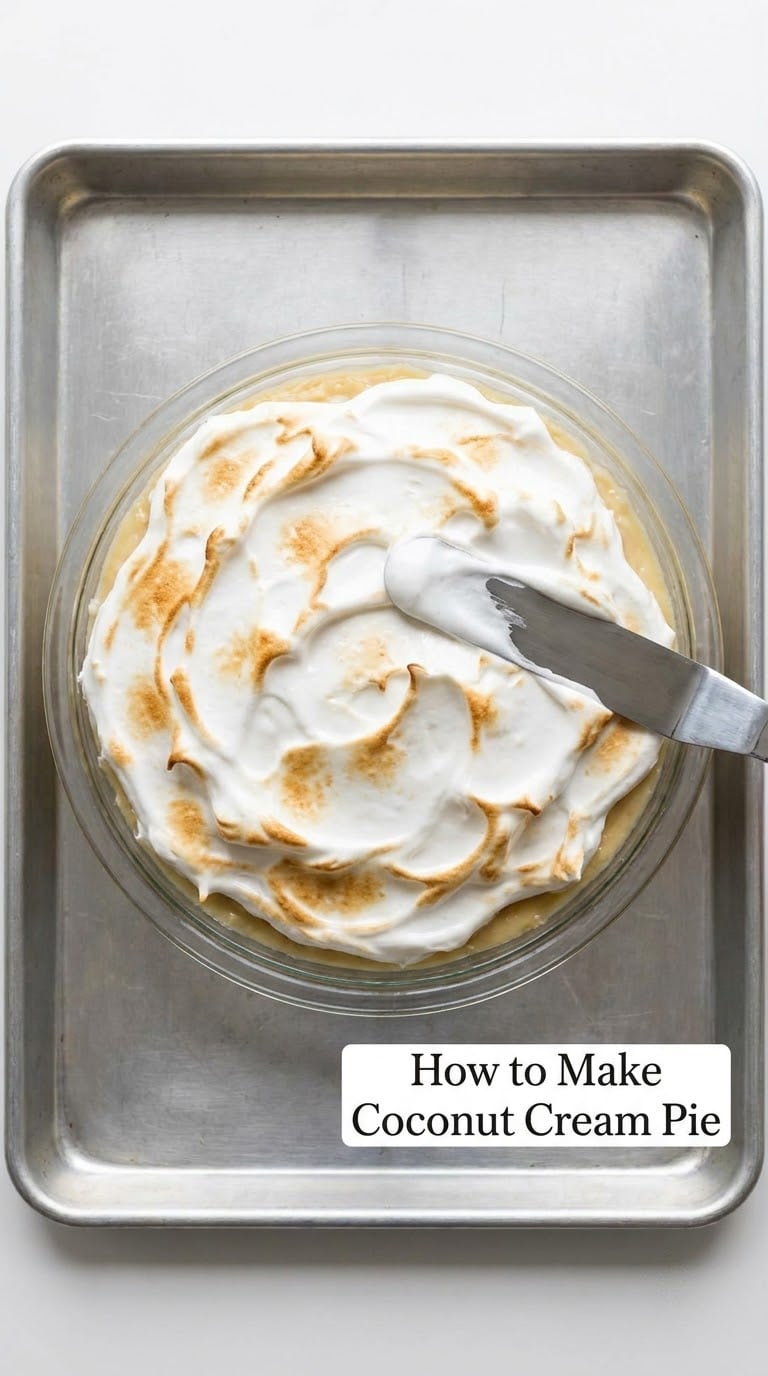
- Mound the meringue over the warm filling, spreading it to seal against the crust edge. Use the back of a spoon to swirl it into soft peaks.
- Bake at 350°F (177°C) for 12 to 14 minutes, until the meringue is pale golden on the peaks. For a more dramatic brown, switch the oven to broil for the last 60 to 90 seconds and watch it closely.
- Sprinkle the toasted coconut around the edge of the meringue while it is still warm. Cool the pie on a rack for 1 hour, then chill at least 4 hours before slicing.
Assemble and Chill
- Cut the pie with a thin knife wiped clean and dipped in hot water between slices. The hot blade keeps the meringue from tearing and the custard from dragging.
- Chill any leftovers within 2 hours of baking. Cover loosely with a clean towel, not plastic, so the meringue does not get soggy.
Tips for Success
These are the small things that have made the biggest difference in my kitchen, and they line up with what experienced bakers on r/Baking and r/pie tend to recommend.
- Bake the crust past golden. If the bottom looks blonde, give it another 2 minutes. A pale crust will turn soggy under the custard overnight.
- Strain the custard. It is tempting to skip this step, but it catches any bits of cooked yolk and gives you a satin-smooth filling.
- Pour custard warm, not hot. If it is too hot when you add the meringue, the meringue shrinks as it bakes. Five minutes of resting while you whip whites is usually the right window.
- Seal the meringue to the rim. Press the meringue all the way down to the crust so there is no gap for liquid to escape from the filling.
- Use pasteurized eggs where you can. Pasteurized egg whites and yolks are widely available at regular grocery stores and remove the raw-egg concern with the meringue. Look for them in the egg case or refrigerator section.
- Give it the full chill. A pie that has only rested for an hour will slump when sliced. Plan on four hours minimum, or overnight for the cleanest cuts.
If you want a crust you can roll out blind without any fuss, my easy homemade pie crust recipe from scratch walks through the same food-processor method with a few extra tips for hot kitchens and high-altitude baking.
Variations
Once you have the base method down, it is easy to make this pie your own.
- Tropical lime. Stir 1 tablespoon of lime zest into the finished custard and garnish the meringue with lime zest instead of toasted coconut.
- Chocolate-dipped crust. Melt 4 ounces of dark chocolate and brush a thin layer over the bottom and up the sides of the blind-baked crust. Chill 10 minutes before adding the custard.
- Dairy-free. Swap the whole milk for unsweetened oat milk, replace the butter with refined coconut oil, and use pasteurized egg yolks. Skip the butter in the custard and the pie will still set up well.
- Mini pies for a party. Press the dough into a standard 12-cup muffin tin, blind bake for 12 minutes, and fill each cup with a few tablespoons of custard and a swirl of meringue. Bake another 10 minutes. Great for brunches and showers.
- Chocolate ganache top. Skip the meringue and pour a thin layer of cooled ganache (equal parts warm cream and chopped dark chocolate) over the chilled custard. A small slice of this is plenty.
Storage, Make-Ahead and Reheating
Coconut cream pie keeps in the refrigerator for up to 2 days, loosely covered. The crust will slowly soften after the first day, so the texture is best within 24 hours. If you want to make it further ahead, bake and fill the crust with the custard the night before, then top with fresh meringue and brown it on the day of serving. That last-minute meringue step is the trick bakeries use to get a fresh-looking pie after a long assembly.
For freezing, the custard-filled crust (without meringue) freezes well for up to 1 month. Wrap the whole pie in plastic, then a layer of foil, and thaw overnight in the refrigerator. Top with meringue and bake as directed the next day. Freezing the finished pie with meringue is not recommended, as the meringue becomes rubbery once thawed.
For longer storage of the toasted coconut garnish, store it in a small jar at room temperature for up to 1 week. If you would rather use a topping without raw egg, an easy homemade whipped cream dollop on each slice works just as well, especially if you are serving a crowd that includes anyone who is pregnant or avoiding undercooked eggs.
What to Serve With It
A rich pie like this wants a few simple pairings rather than a lot of extras.
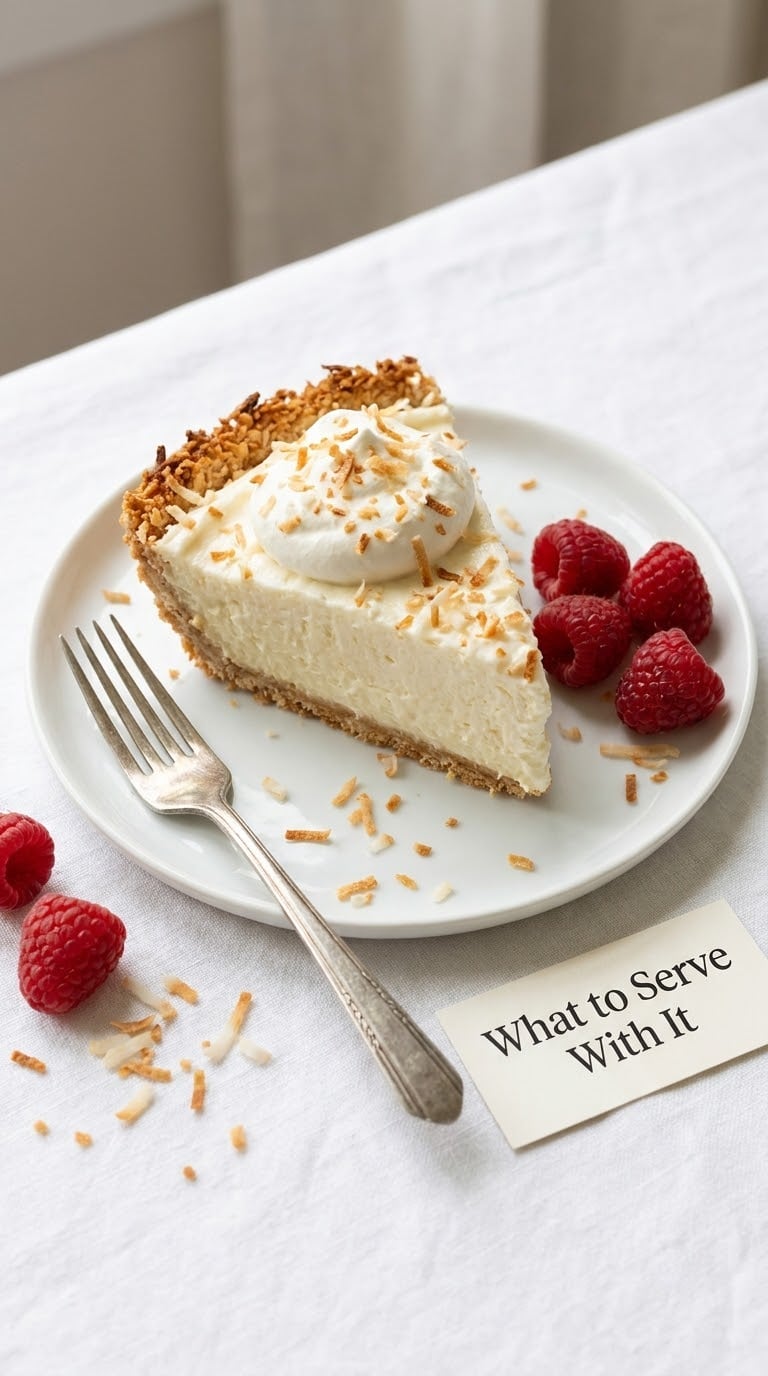
- A small pot of strong brewed coffee, which cuts through the sweetness
- Fresh raspberries or strawberries tossed with a squeeze of lime and a spoon of sugar
- A glass of cold Moscato, Riesling, or a small pour of dessert wine for adults
- A scoop of vanilla ice cream on the side for an à la mode plate
- A drizzle of easy homemade hot fudge sauce over each slice when you want to push it over the top
If you are building a full pie board, this coconut cream pie plays well with a classic apple pie and a simple berry galette. A third pie made from a few other coconut desserts can round out a spring or summer table.
Frequently Asked Questions
How do I keep the crust from getting soggy in a coconut cream pie?
Blind bake the crust until the bottom is a deep golden brown, not just pale, and let it cool fully before adding the custard. Brushing the warm crust with a thin layer of beaten egg white and baking it for 2 more minutes creates a barrier that blocks moisture from the filling.
Can I use pasteurized eggs in the meringue for food safety?
Yes. Pasteurized egg whites and yolks are sold in most grocery stores and work exactly the same in a meringue as regular eggs. They take the worry out of any raw or lightly cooked meringue, which matters for pregnant guests, young children, and anyone avoiding undercooked eggs.
Why is my meringue weeping or sliding off the pie?
Weeping usually means a gap between the meringue and the crust, or a filling that was too cold when the meringue went on. Spread the meringue while the custard is still warm and press it all the way down to the crust edge so it can seal and grip. Sugar on the bowl or under-beaten whites can also cause sliding.
How far ahead can I make coconut cream pie?
You can bake and fill the crust the day before, then top with fresh meringue and brown it on the day you plan to serve. Fully assembled with meringue, the pie is best within 24 hours of baking, since the crust softens and the meringue loses its snap after that.
Can I freeze coconut cream pie and how do I thaw it?
Freeze the custard-filled crust without the meringue for up to 1 month, wrapped tightly in plastic and foil. Thaw it overnight in the refrigerator, then add fresh meringue and brown it the next day. Do not freeze a fully assembled pie with meringue, as the meringue becomes rubbery once thawed.
Coconut Cream Pie You Will Make on Repeat
The single most important step in this whole coconut cream pie recipe is the blind bake. If you can train yourself to bake the crust until it is genuinely golden, not just barely colored, the rest of the pie takes care of itself. Everything else is just a few minutes of whisking, a careful pour, and time in the fridge.
Once you have made it once, you will start to see it the way I do, as a default spring and summer dessert. It is a do-able weekend bake that looks like more work than it is, and a single slice with strong coffee is one of the best treats in my kitchen.