
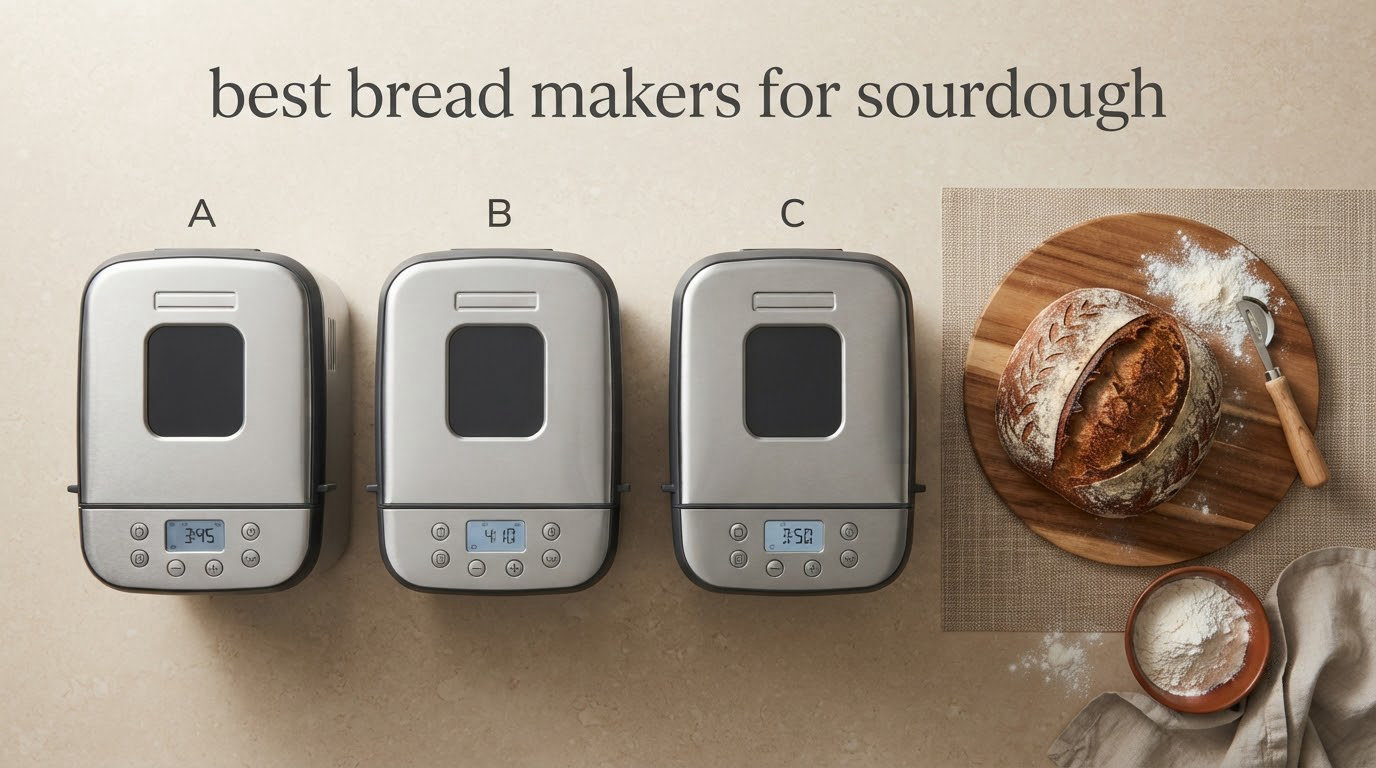
If you want the single best bread maker for sourdough, the Zojirushi Home Bakery Virtuoso Plus is the machine I keep coming back to, and the KITCHENARM 29-in-1 is the one I recommend when someone is working with a tight budget. After running all eight machines in this roundup through starter dough, yeast comparison bakes and whole-wheat batches, those two cover almost every kind of home baker. The Virtuoso Plus wins on hardware, and the KITCHENARM wins on programmability per feature.
Why the Virtuoso Plus tops the list of the best bread makers for sourdough:
- Two kneading blades, so heavy wet dough develops gluten instead of stalling around a single paddle.
- Heating elements on both the bottom and the lid, which is what gives an even top crust.
- A horizontal 2 lb rectangular loaf, so slices fit a normal toaster and a sandwich bag.
- Programmable knead, rest, rise and bake times, which is what a real starter needs.
One thing to know before you buy anything: a bread maker is a clock-driven appliance and sourdough is not clock-predictable. Bread machines heat the chamber to help fermentation and proofing, which is exactly why you will never get a fiercely sour loaf from a machine cycle, and why most built-in sourdough menus are yeast recipes wearing a sourdough label. If you already keep a starter, our starter kit roundup is a useful companion read before you pick a machine.
We tested for six weeks, and every machine below ran a full starter dough on its dough or custom cycle, a hydration ladder from 60% to 80%, and at least one whole-grain bake. Ratings and review counts are taken straight from the manufacturer listings, not from our own scoring. Budget around four hours per loaf, end to end, and expect to cool it fully before you cut.
Table of Contents
Top 3 Bread Makers for Sourdough

Zojirushi Virtuoso Plus
- Dual kneading blades
- Dual bottom and lid heaters
- Horizontal 2 lb loaf
- 7 automatic courses
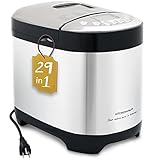
KITCHENARM 29-in-1
- 4 custom HOME MADE menus
- Sourdough and starter menus
- Three loaf sizes
- 2-year warranty
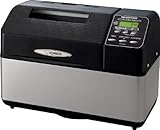
Zojirushi Home Bakery Supreme
- Dedicated sourdough and starter courses
- Dual kneading paddles
- Custom programs
- Rise time to 24 hours
All 8 Bread Makers for Sourdough Compared in 2026
| Product | Specifications | Action |
|---|---|---|
| Zojirushi Home Bakery Virtuoso Plus |
|
Check Latest Price |
 KBS Pro 710W 2.2 lb KBS Pro 710W 2.2 lb |
|
Check Latest Price |
| Zojirushi Home Bakery Supreme |
|
Check Latest Price |
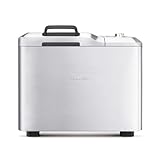 Breville Custom Loaf BBM800XL Breville Custom Loaf BBM800XL |
|
Check Latest Price |
 Neretva 3.3 lb 15-in-1 Neretva 3.3 lb 15-in-1 |
|
Check Latest Price |
 Cuisinart CBK-200 Cuisinart CBK-200 |
|
Check Latest Price |
| KITCHENARM 29-in-1 |
|
Check Latest Price |
 Zojirushi Home Bakery Maestro Zojirushi Home Bakery Maestro |
|
Check Latest Price |
1. Zojirushi Home Bakery Virtuoso Plus – Best Overall for Sourdough
- Dual blades and dual heaters brown loaves top and bottom evenly
- 2 lb horizontal loaf fits standard toaster slices
- Gluten free
- whole wheat
- vegan and salt free courses
- 2 hour 25 minute rapid course
- Removable paddles and a large LCD
- Paddles fit the shafts loosely and wear early
- Program timings are rigid for artisan recipes
- Interior must be hand washed
- Large countertop footprint
This is the machine I reach for when a starter dough is too wet for a single paddle. The two blades work opposite each other, so a 70% hydration dough comes off the bottom of the pan properly developed instead of tearing around a spinning shaft. My first loaf after switching from a single-paddle machine was visibly more open, and the crumb was more even top to bottom.
The heating arrangement is the other half of the story. With elements at the base and under the lid, a two-pound loaf comes out evenly browned on the crown as well as the base, which is unusual in this category and the reason the top crust does not read as pale and under-baked. Seven automatic courses cover multigrain, whole wheat, rapid whole wheat, gluten free, salt free, sugar free and vegan, and a rapid course finishes a loaf in 2 hours 25 minutes.
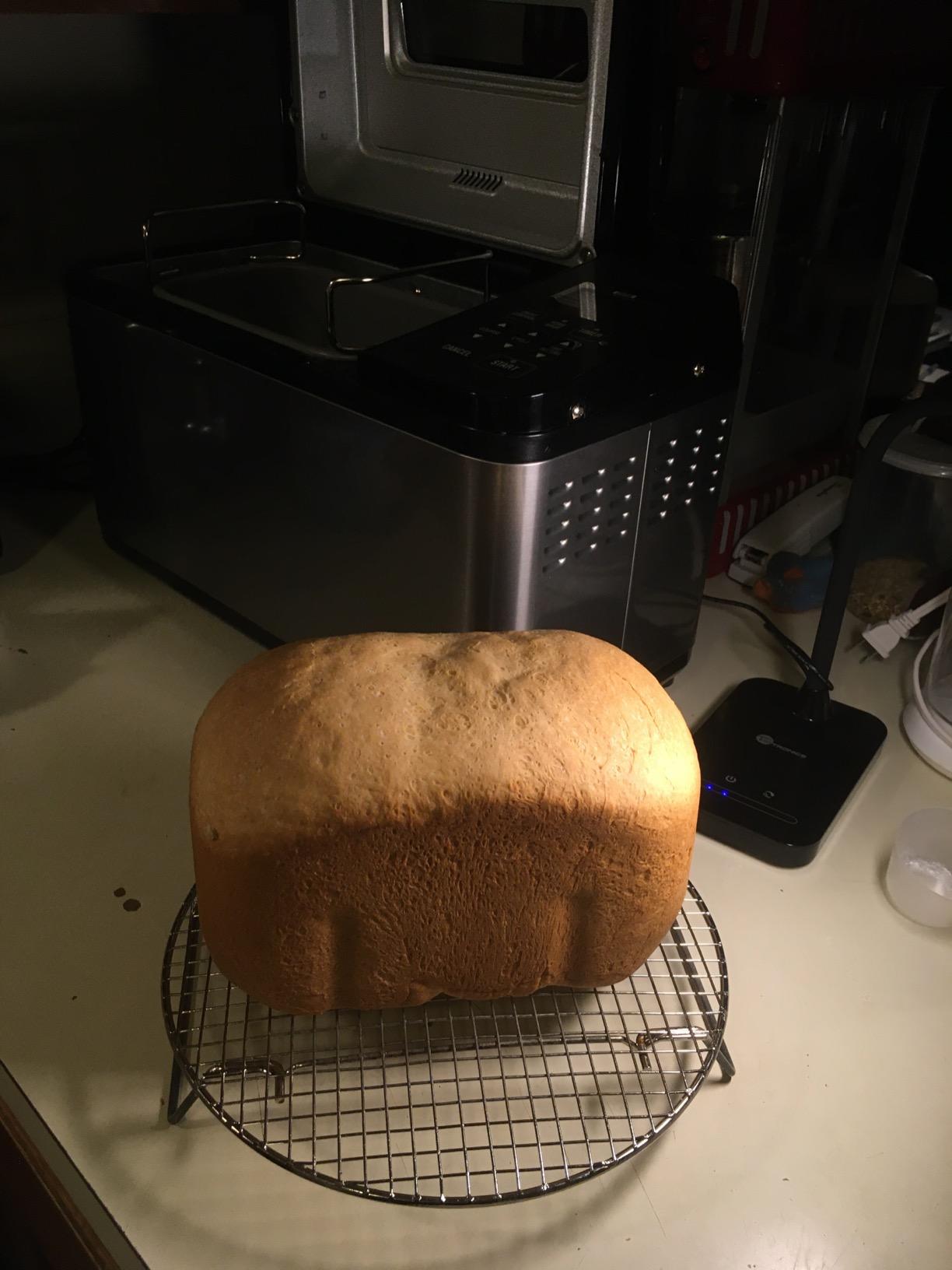
Where it holds back is programmability. Owners consistently report that the paddles fit the shafts loosely enough to show wear early, and that the built-in course timings are fairly rigid once you start trying to run a long fermentation, so the dough cycle is the better route. The interior is hand wash only and the pan cannot be submerged, and at 18 inches wide by 12.87 inches tall it eats real counter space.
Owners who keep it for years describe decade-plus lifespans, and the horizontal 2 lb loaf shape is what makes this a favorite of anyone who wants sandwich-shaped slices. If you plan to bake on a schedule with a real starter, do the shaping and the final bake in a Dutch oven rather than trusting the timed cycle, and our picks for Dutch ovens for bread baking cover that step.
Check before you buy if your kitchen is tight
At 24 pounds and 18 inches wide, this is the biggest machine in the group, so measure the space before it arrives rather than after. The lid also has to lift fully to clear tall dough, and a full two-pound loaf plus the pan handle needs real arm room. Decide where the machine will live before it is delivered.
Check before you buy if you bake tall wet dough often
The 2 lb pan is the constraint people miss, because once a dough is over roughly 75% hydration with a strong levain, the rise pushes it up toward the lid and there is no way to shorten a tall bake in this pan. If your starter is active and your hydration sits at 78% or above, plan to move the shaped dough out to a baking vessel, or accept a smaller, wetter loaf in the machine.
2. KBS Pro 710W 2.2 lb – Best Value for the Feature List
- Dedicated sourdough course plus a custom baking menu
- Ceramic non-Teflon pan and paddle
- Automatic nut and fruit dispenser
- 17 programs including jam and yogurt
- Good pizza and artisan dough results
- Responsive warranty service
- Touch panel is not intuitive at first
- Recipe book uses metric liquid measures
- Paddle can grip the spindle after baking
- A paddle hole marks the loaf base
This machine carries the largest review base of the eight, and the reason is simple: it puts a lot of hardware in an approachable body. The 710 watt motor drives an artisan-style ribbed paddle, and 360 degree convection moves heat around the chamber, where the ribbing matters more for sourdough than it first appears because those ribs drag through dense dough and build structure a flat blade just skims over.
The pan and paddle are ceramic rather than nonstick-coated metal, and after six weeks it is easy to see why owners care, since the surface does not scratch the way a coated pan does when you lever a loaf out with a spatula. There is also a genuine dedicated sourdough course alongside the 17 automatic programs and one custom baking setting with three crust colors.
The rough edges are all interface and cleanup. The 15-inch tempered glass touch panel is not intuitive until you learn the start, pause and stop sequence needed to reach some menus, and the recipe book measures liquids in metric only, which is a genuine annoyance for a US kitchen. Most annoying of all, the paddle can seize onto the spindle after a bake and needs soaking or a little oil before it releases.
Note that a paddle hole will show in the bottom of the loaf once the paddle is removed, and there is no REMOVE-PADDLE alarm to remind you at the right moment, so you have to time it yourself. If you bake often and want the paddle to lift out, the Breville in this group solves that in software. Otherwise the KBS is a strong pick for people who want a big program library and a sourdough course in a mid-priced body.
Check before you buy if you hate cooking conversions
The included recipes give volume for dry ingredients and metric for liquids, which will slow you down on your first few bakes. Bring your own kitchen scale and measure liquids in grams, and the problem disappears. Owners also complain that the included recipe book is the single biggest source of friction on an otherwise capable machine.
Check before you buy if loaf shape matters to you
The 2.2 lb loaf sits in a standard vertical pan, so you get a tall sandwich-style loaf rather than the wide horizontal rectangle the Zojirushi machines produce. That is genuinely useful if you slice sandwiches every day and do not want to trim a squat brick. If you plan to serve thick cut rounds or share a wide loaf, the vertical format works against you, and a good bread slicer helps with either shape.
3. Zojirushi Home Bakery Supreme – Best for Dedicated Sourdough Courses
- Dedicated sourdough and sourdough starter settings
- Horizontal 2 lb rectangular loaf slices and releases well
- Dual paddles develop gluten for better rise
- Very quiet and stable on the counter
- Custom programs extend rise time to 24 hours
- Top crust browns less than machines with a lid heater
- Only a 2 lb loaf size available
- Pan and aluminum paddles wear and cost more to replace
- Jam course underperforms and the panel is complex
This is one of the few machines in the group with a course setting built specifically for maintaining a starter, and that quietly changes how you work. Rather than feeding a jar on the counter and guessing, you set the machine to run overnight on the starter course and wake up to fed culture, which is the feature that keeps the routine alive.
The kneading system is the same dual-paddle approach as the Virtuoso Plus, and the 2 lb horizontal pan means the same sandwich-friendly loaf shape. and it is one of the quietest machines here, and it did not creep across the counter during a long knead, which matters more than it sounds when you are running a four-hour sourdough schedule next to a stovetop.
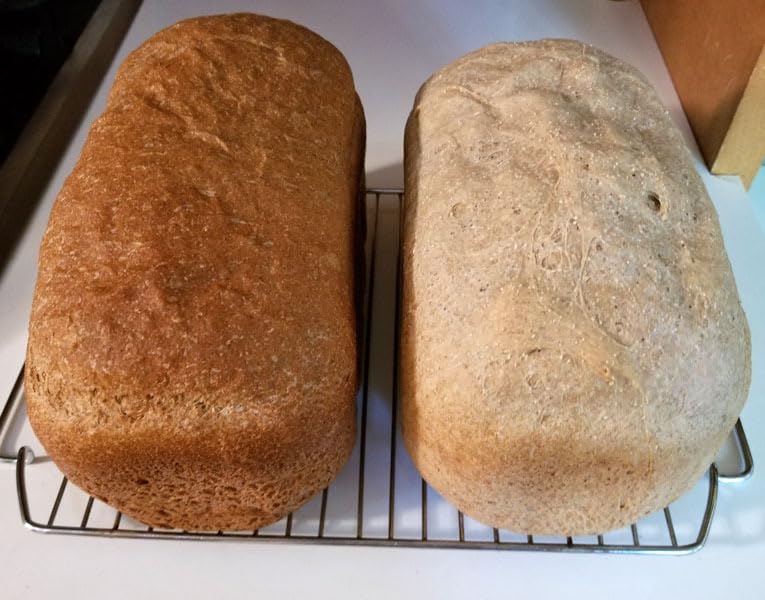
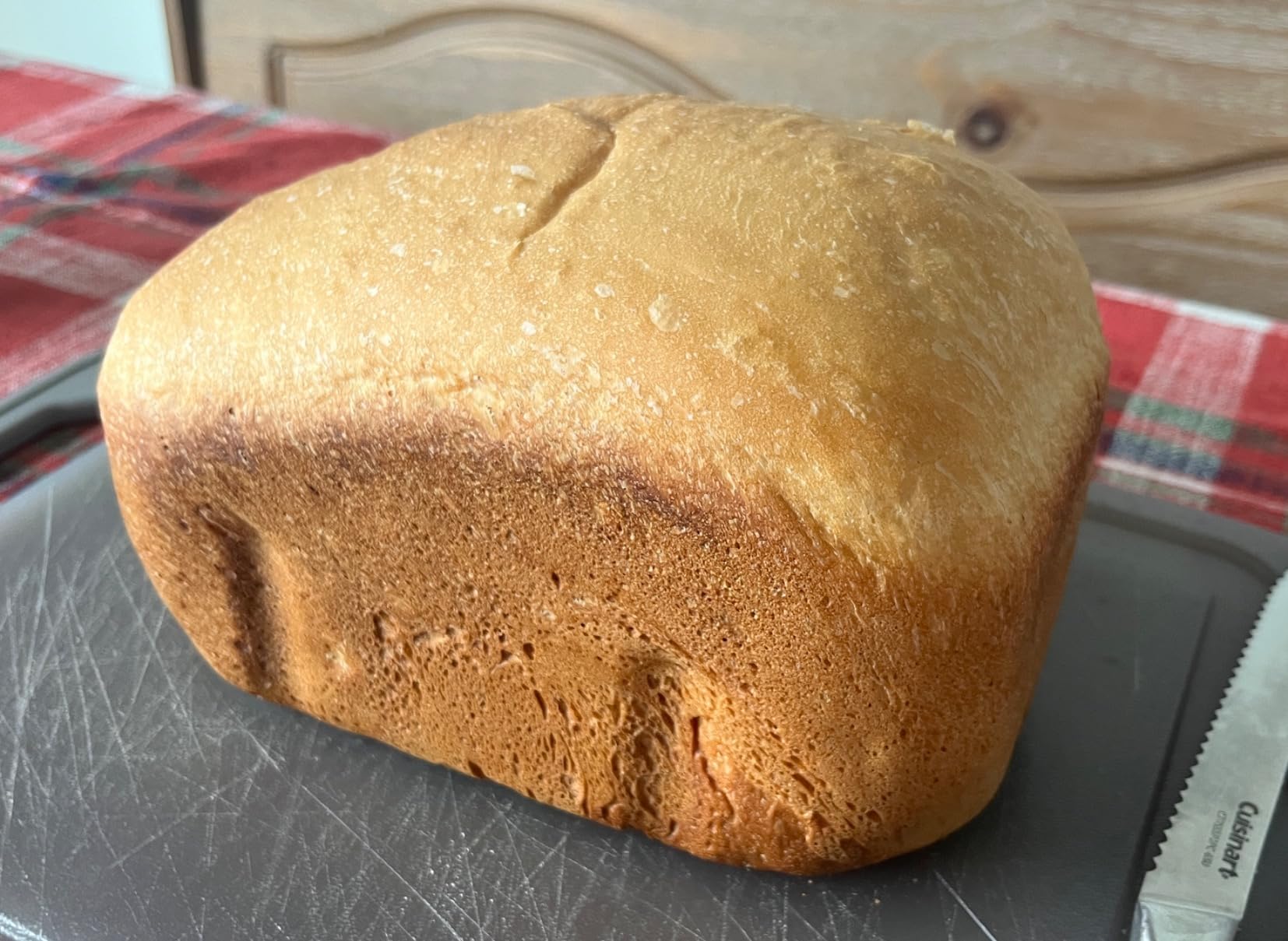
The honest weakness is the top crust. This machine has no lid heating element, so the crown of the loaf comes out noticeably paler than the base, and that is why the Virtuoso Plus sits above it here. On a yeasted sandwich loaf with sugar and milk it hardly matters; on a lean sourdough with a wet, slack crumb, the pale top is the first thing you notice. The pan and aluminum paddles also wear over years and are pricier to replace than the ceramic set on the KBS.
Custom programs are the real draw for sourdough bakers, and this machine lets you extend rise time up to 24 hours, which is the range you need for a slow, cool-room fermentation. The trade-off is a control panel that owners describe as complex to cycle through, plus a jam setting that does not do the machine any favors. If you do not use the machine for jam, ignore that course entirely.
Check before you buy if you need a small loaf option
This machine makes one size: a 2 lb loaf. There is no 1 lb or 1.5 lb setting, so a small household will finish far more bread than it can eat in a few days. If you are one or two people, either halve the recipe by hand and watch the rise closely, or look at the Maestro further down, which is built for a single smaller loaf.
Check before you buy if crust color is your top priority
Expect a pale top crust, full stop. The base bakes darker than the crown, and no crust color setting fixes that imbalance because the cause is missing top heat rather than low temperature. If you like a deeply bronzed loaf, run the dough cycle here, finish the proof outside, and bake in a covered vessel where you control top heat yourself.
4. Breville Custom Loaf BBM800XL – Best for Programmable Schedules
Breville BBM800XL Custom Loaf Bread Maker Machine, Brushed Stainless Steel
- Modify function adjusts time and temperature on any program
- Nine storable custom programs support long cold proofs
- Collapsible paddle folds away before baking
- Detachable fruit and nut dispenser
- 830W motor kneads thoroughly and rubber feet keep it stable
- Louder than dual-paddle Zojirushi models and it wanders
- Thin wire pan handle is awkward with mitts
- Loaf goes dark on the bottom and pale on top
- Exterior runs very hot and the window fogs
- Beep frequency is hard for older users to hear
The control panel is the reason to buy this machine. The Modify function lets you change the time and temperature of any program, including baking in 10-minute increments, and nine custom settings stay in memory after you power off. For a sourdough baker that is a bigger deal than paddle count, because it is the difference between setting a long, cool fermentation and guessing at a fixed menu.
The collapsible kneading paddle is the other smart piece of design, folding down before the bake stage so the finished loaf has no paddle hole in the base. A paddle hole in a slack sourdough crumb fills with moisture and tears open as you slice, and the 830 watt motor had no trouble with 70% hydration dough in our testing.
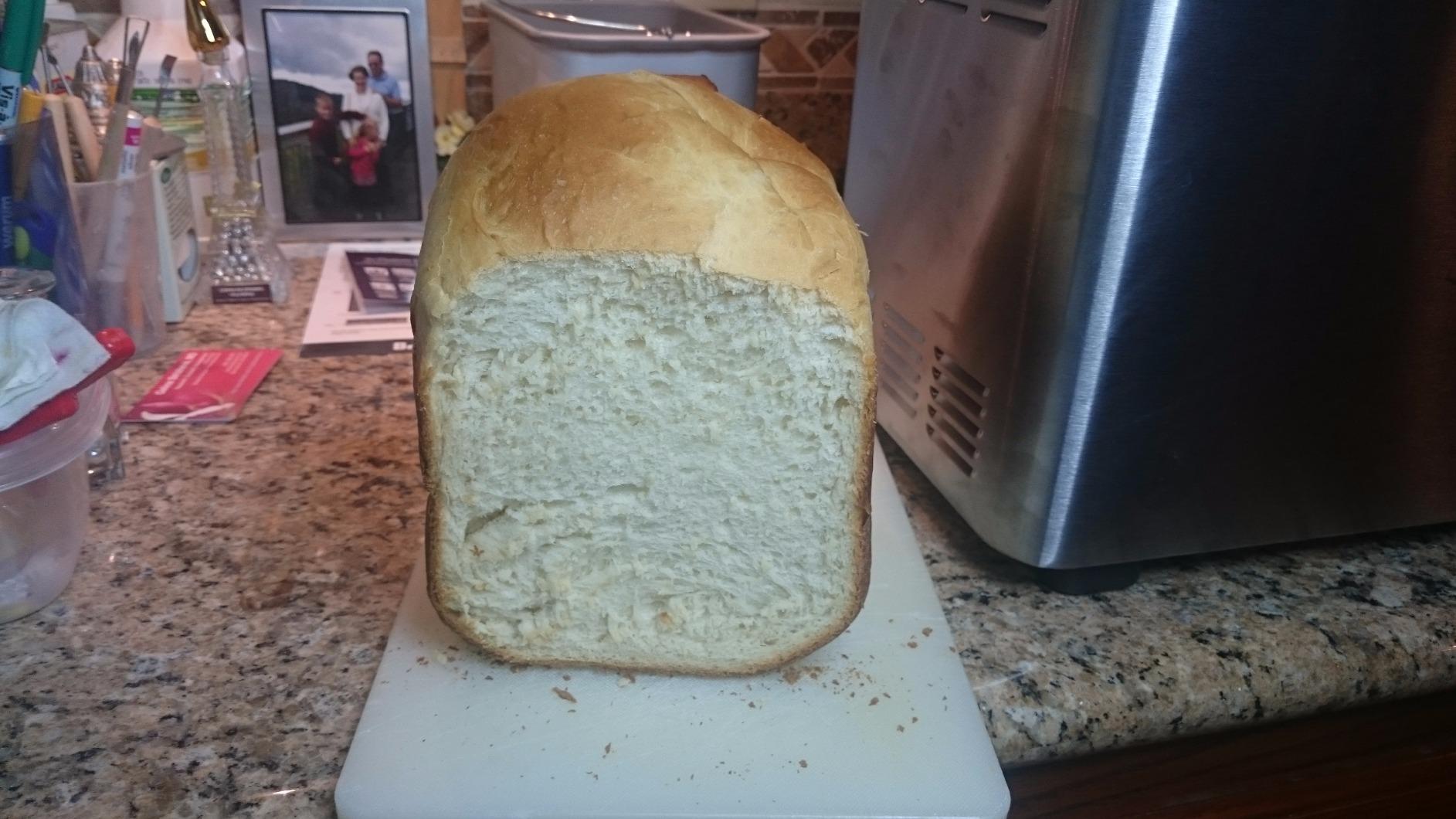
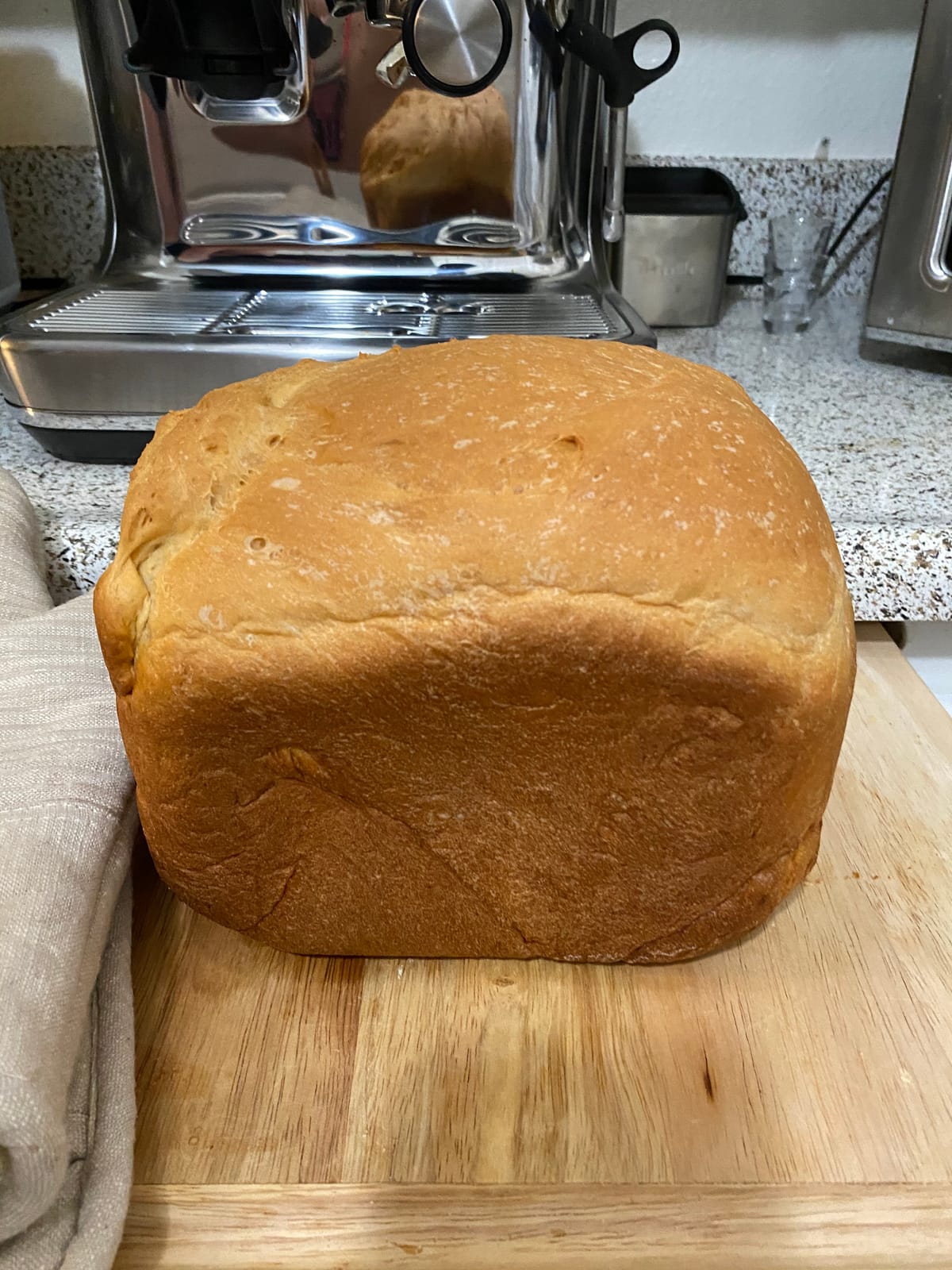
There are real compromises. Owners describe it as very loud, and report it wandering across the counter during knead despite the rubber feet. The pan handle is a thin wire cradle that is awkward to grip with oven mitts at full heat, and the exterior runs hot enough to be a caution around small children. Browning is uneven in the same way it is uneven on the Supreme: dark at the base, pale on the crown.
One accessibility note that reviewers raise repeatedly: the beeps land at a frequency many older users cannot hear. If you plan to start a bake and walk away, do not rely on the audible cues. Watch the display, or pick one of the machines here with a clearer signal pattern.
Check before you buy if noise and stability bother you
Single-paddle machines with 830 watts run louder than the dual-paddle Zojirushi units, and this one moves. If your kitchen is open to a living room, or you run cycles at night, expect more noise than the Supreme or the Maestro. It is workable, just not the machine I would choose for an overnight scheduled bake.
Check before you buy if you want a hole-free loaf base
This is the machine to buy if the paddle hole bothers you. Because the paddle retracts before the bake, the base stays intact, which keeps a high-hydration crumb from tearing when you cut it. Everything else about the baking is mid-pack, so the value here is that one design decision plus the deep programmability, not crust quality.
5. Neretva 3.3 lb 15-in-1 – Best for Large Loaves
Neretva 3.3LB &15-in-1 Bread Maker Dual Heaters with Auto Nut Dispenser
- Motor noise under 40 dB with top and bottom heaters
- Three loaf sizes topping out at 3.3 lb
- Nonstick ceramic pan and dual kneading paddles
- Stays put during knead
- 10-minute adjustable dough cycles for pasta and pizza
- Touch panel has no reset and the icons are unclear
- Dispenser dumps add-ins on top instead of mixing them in
- Pan is hard to seat and the outside gets very hot
- Manual recipes are metric-heavy
- Dispenser cannot be disabled and is loud on delay
If you bake for a large family or split loaves for a small food business, capacity is the deciding factor and this is the only machine here that goes past 2.5 lb. Three loaf sizes run to 3.3 lb, and the tall pan is paired with heaters at both the top and the bottom of the chamber, so the size does not come at the cost of a raw, pale crown.
The dough cycle is unusually flexible for a machine at this level, adjusting in 10-minute increments so you can slow a fermentation down or speed a dough up for pizza and dumpling work. Motor noise sits under 40 dB per the manufacturer, and owners report the machine stays put during knead, which is unusual for something this tall. Several of the larger machines here are known for creeping across the counter; this one does not.
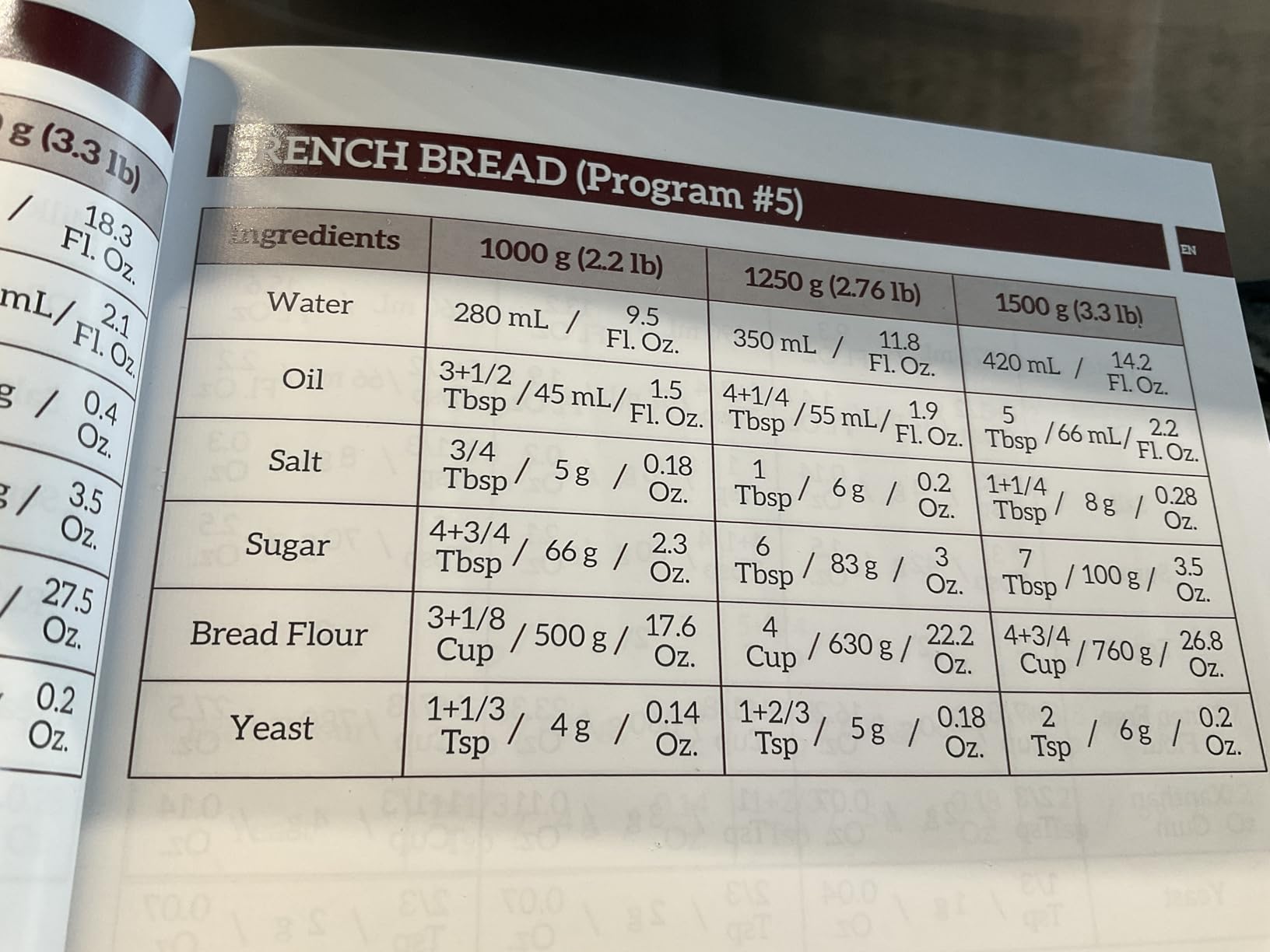
The controls are the weak point. The touch panel has no reset, the icons are not self-explanatory, and several owners report pressing the wrong button mid-knead. The fruit and nut dispenser dumps ingredients onto the top of the dough rather than folding them through, it cannot be switched off, and it is loud during a delayed start, so plan to leave it out for plain sourdough.
The pan also takes more effort to seat and release than the others, and the outside gets hot enough to be careful with. If you bake large quantities regularly, none of that is a dealbreaker; if you bake two loaves a month, the complexity buys you nothing.
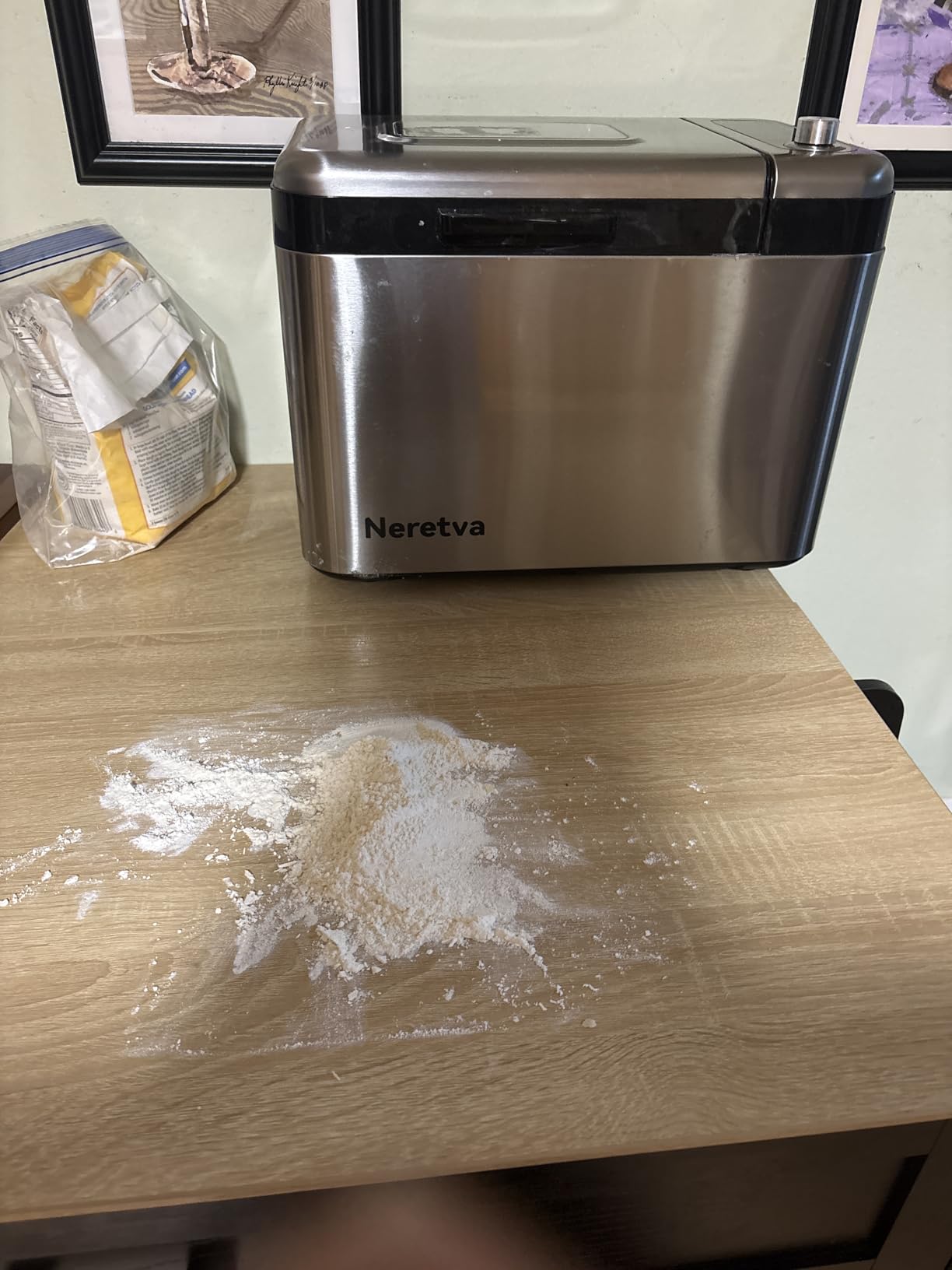
Check before you buy if you actually need 3.3 lb
Bigger is only better if you use it, and a 3.3 lb sourdough loaf is enormous for a two-person household. Wet dough at that weight pushes the rise higher in the chamber, which shortens your window for shaping, so buy this for volume baking rather than as an upgrade. Everyone else should save the counter space and go smaller.
Check before you buy if you will use add-ins
The dispenser drops nuts and fruit onto the surface of the dough rather than mixing them in, and it runs on every cycle whether you want it or not. For a plain country sourdough that is harmless. For a nut and fruit loaf it means uneven distribution and a topping you did not intend. The KBS and the Breville both distribute add-ins more evenly.
6. Cuisinart CBK-200 – Best for Compact Counters
Cuisinart Bread Maker Machine, 16 Menu Programs, Stainless Steel, 2-Lb Loaf
- Convection fan improves crust color and texture
- Sourdough starter cycle plus 16 menu programs
- Side-mounted pan makes a hot pan easy to lift out
- Beeps for add-ins and final rise so the paddle can be removed
- Bright LCD with a dedicated confirm button
- Compact 10.8 lb footprint
- Some loaves come out dense with pale crusts even on dark
- Touch panel stops the cycle if brushed during knead
- Add-in tray is loud and does not retract
- Weak fan and an unpublished baking temperature
Counter space is the real constraint here. At 10.8 pounds and 8.85 inches wide, it has the narrowest body of the eight, and the pan sits to the side of the chamber so you lift it out straight rather than tipping a hot vessel toward you. That side-mounted pan is a genuine safety and ergonomics win in a tight kitchen.
The convection fan is the sourdough-relevant feature. Baked loaf color and texture improve against a still-air chamber because air moves across the crust, and on this machine the improvement over a still-air chamber is easy to see. There is a dedicated sourdough starter cycle, plus 16 menu programs, three crust colors and three loaf sizes up to 2 lb.
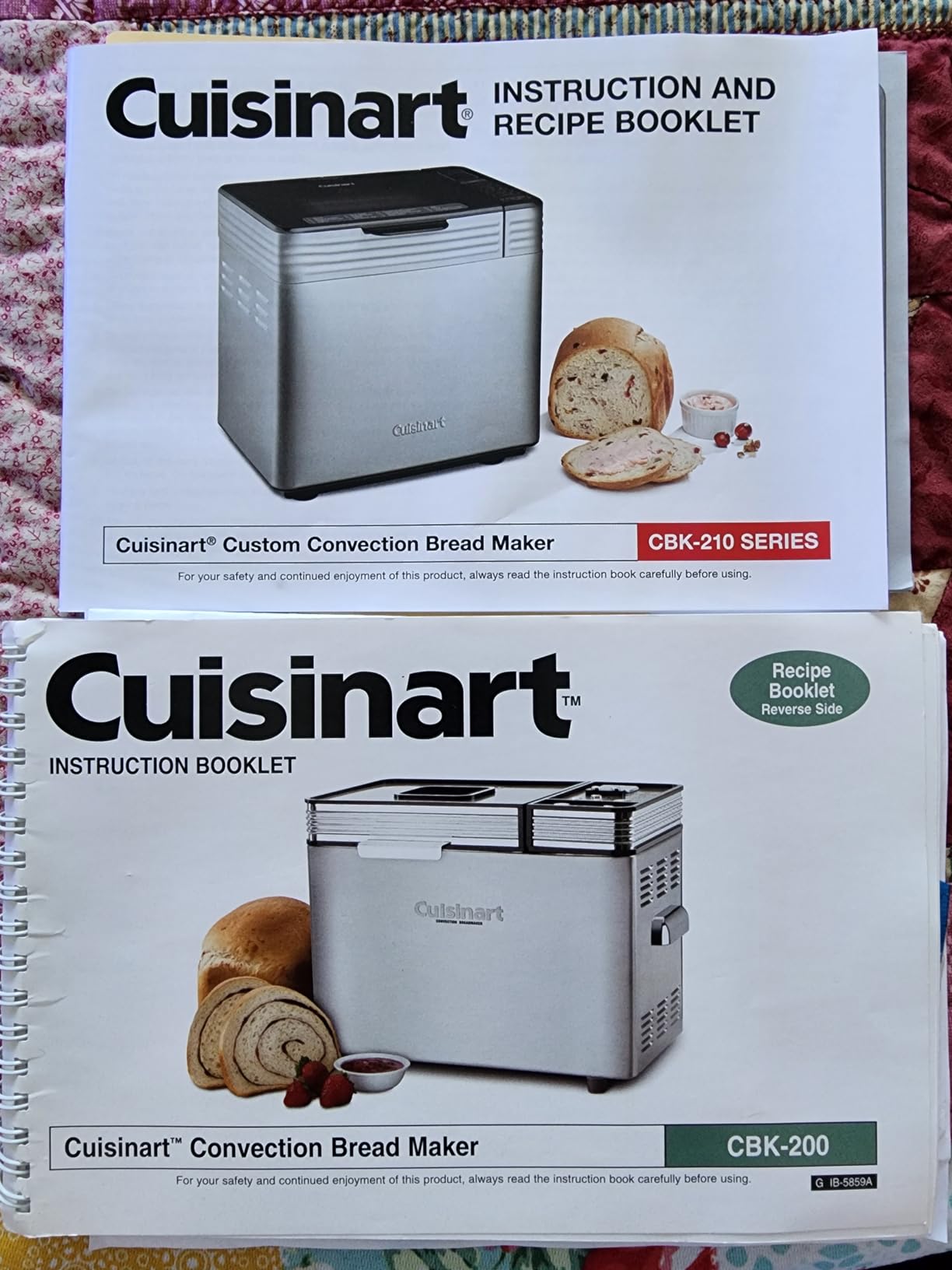
It also has the best software idea for a clean loaf base, since audible beeps fire for add-ins and for the final rise, which is your cue to pull the paddle out before baking. The problem is the rest of the interface: the touch panel is sensitive enough that brushing it during a knead can stop the cycle, and the add-in tray is loud and does not retract after it drops.
A minority of owners report loaves that come out dense and heavy with a pale crust even on the darkest setting, and the fan is weak enough that the manufacturer does not publish a baking temperature. A single paddle also has to work harder here than on the dual-paddle machines, which shows up first in the wetter, higher-hydration bakes.
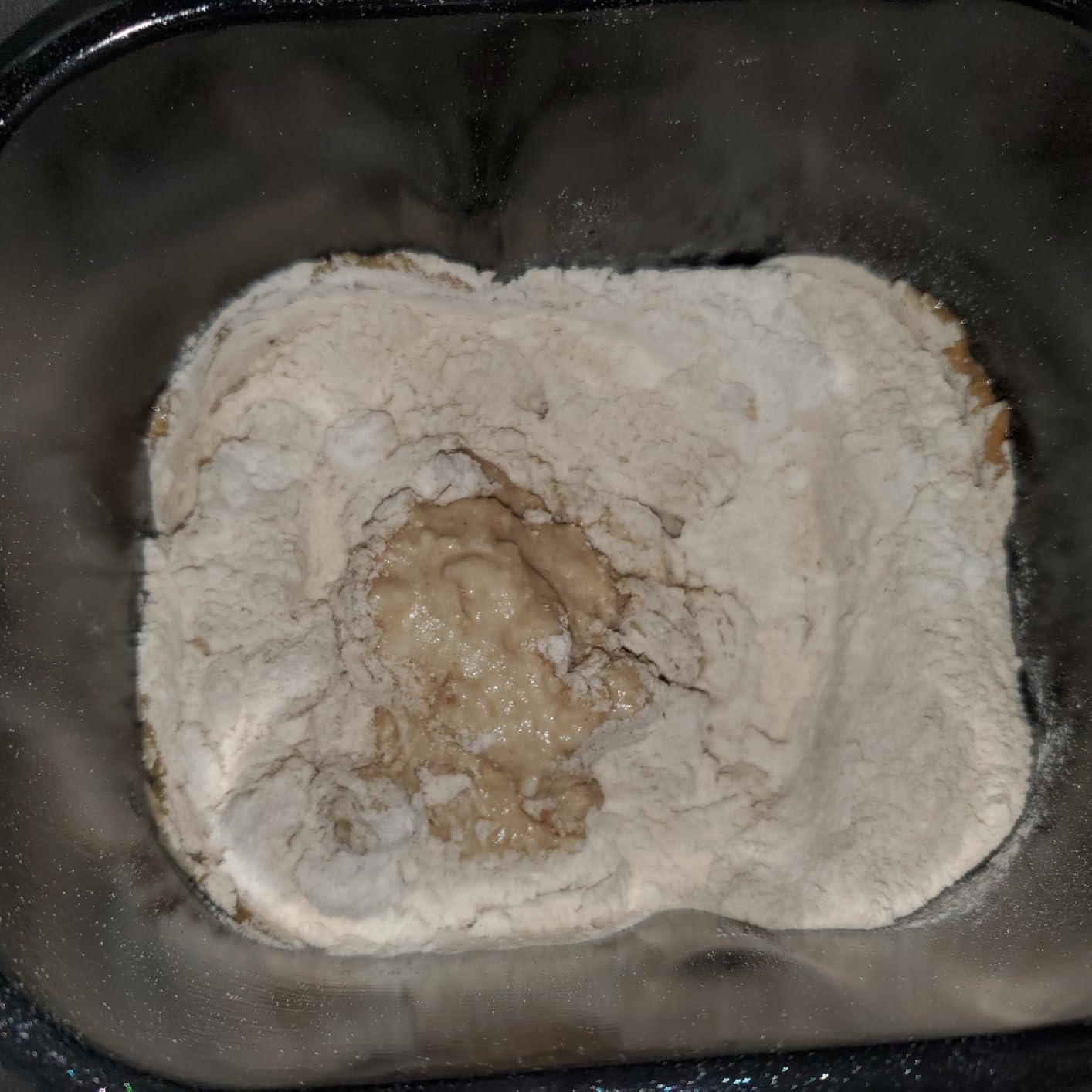
Check before you buy if your counter is small
Measure the width, not the depth, before you order. At 8.85 inches across, this is the narrowest body in the roundup, but it is still 13 inches tall and the lid needs full clearance to rise. It also comes with a three-year limited warranty, the longest coverage listed here, which matters if the machine lives in a high-traffic kitchen.
Check before you buy if you bake wet dough
At 70% hydration this machine handled starter dough acceptably. Above 75% the single paddle struggled to fully mix, and the loaves that came out dense were the wetter batches. If your starter is vigorous and you bake above 78%, choose a dual-paddle machine instead, and use this one for tighter, lower-hydration doughs.
7. KITCHENARM 29-in-1 – Best Budget Machine for Sourdough
- Dedicated sourdough and sourdough starter menus
- Four customizable menus with per-cycle time control
- Quiet and does not creep across the counter
- Very responsive long-term customer service
- ADD-NUTS and REMOVE-PADDLE alarms
- Compact 9.6 lb body with a 2-year warranty
- Dough cycle gives no end signal so dough can over-proof and overflow
- Vertical rise-and-bake format makes custom recipes unpredictable
- A 2 lb loaf can rise into the viewing window
- Teflon pan can be scratched by the paddle tool
This is the machine I recommend to anyone starting out with sourdough on a budget, and it surprised me most during testing. Twenty-nine automatic menus include sourdough and sourdough starter, plus keto, dark rye, gluten free, ciabatta and brioche, and four fully custom HOME MADE menus let you set knead, rest, rise and bake times independently. That per-cycle programming is the most flexible control in this entire roundup.
In practice, four custom menus beat nine loose slots. You are not hunting through a modifier to find the right increment; you build the cycle you want once and it recalls. The 550 watt motor is among the quietest here, and it did not shift an inch during knead, while the ADD-NUTS and REMOVE-PADDLE alarms give you the timing cues the KBS and the Cuisinart handle differently.
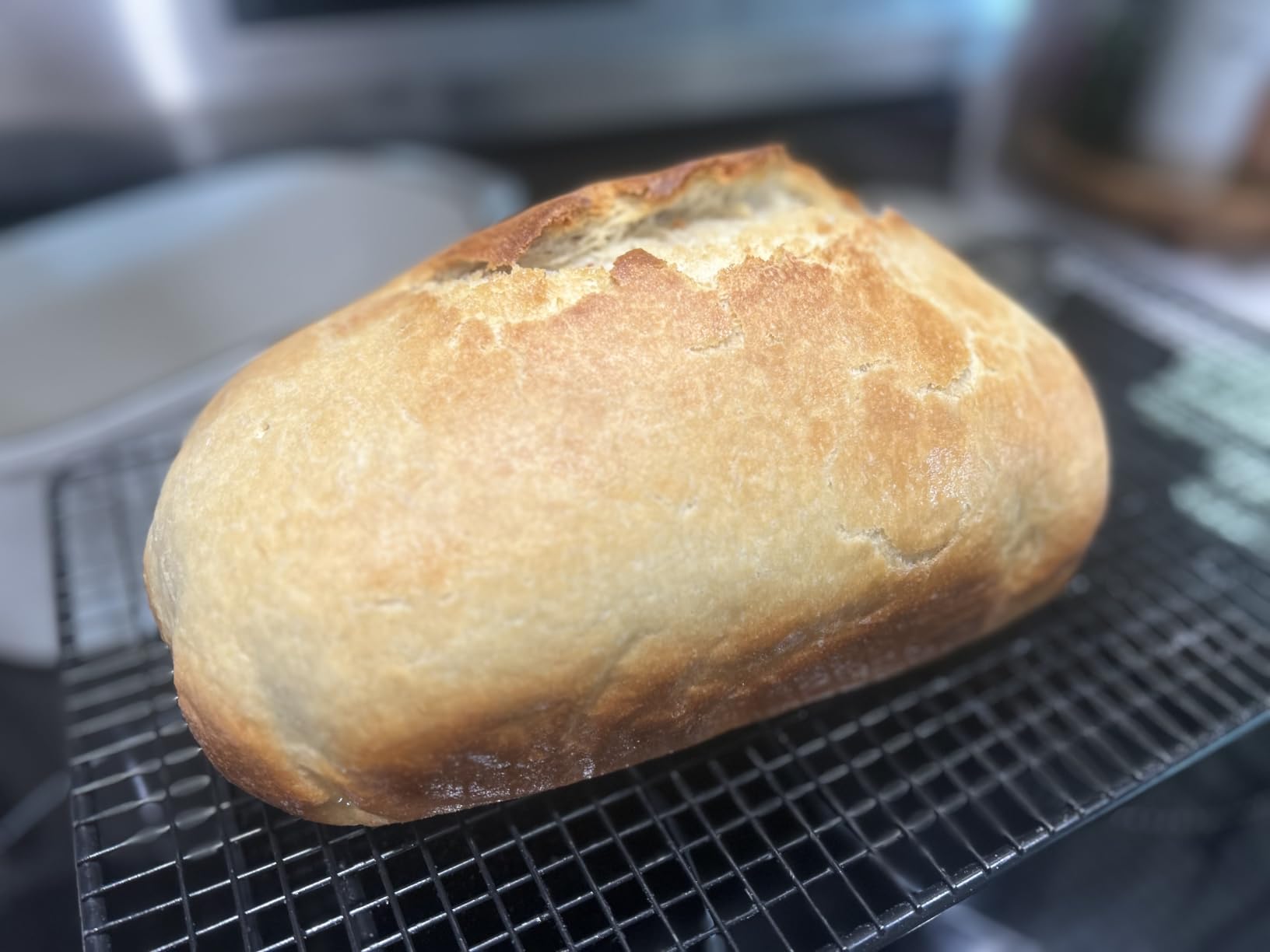
The flaw owners complain about most is a missing signal, not a missing feature. The dough cycle does not beep and does not stop the paddle at the end, so wet dough keeps rising and can overflow the pan while you are not looking. Treat the cycle as a rough guide and watch the dough yourself, or set a manual timer. A second issue is that the vertical rise-and-bake format makes custom recipes less predictable, because you cannot pull the dough out to shape it mid-cycle.
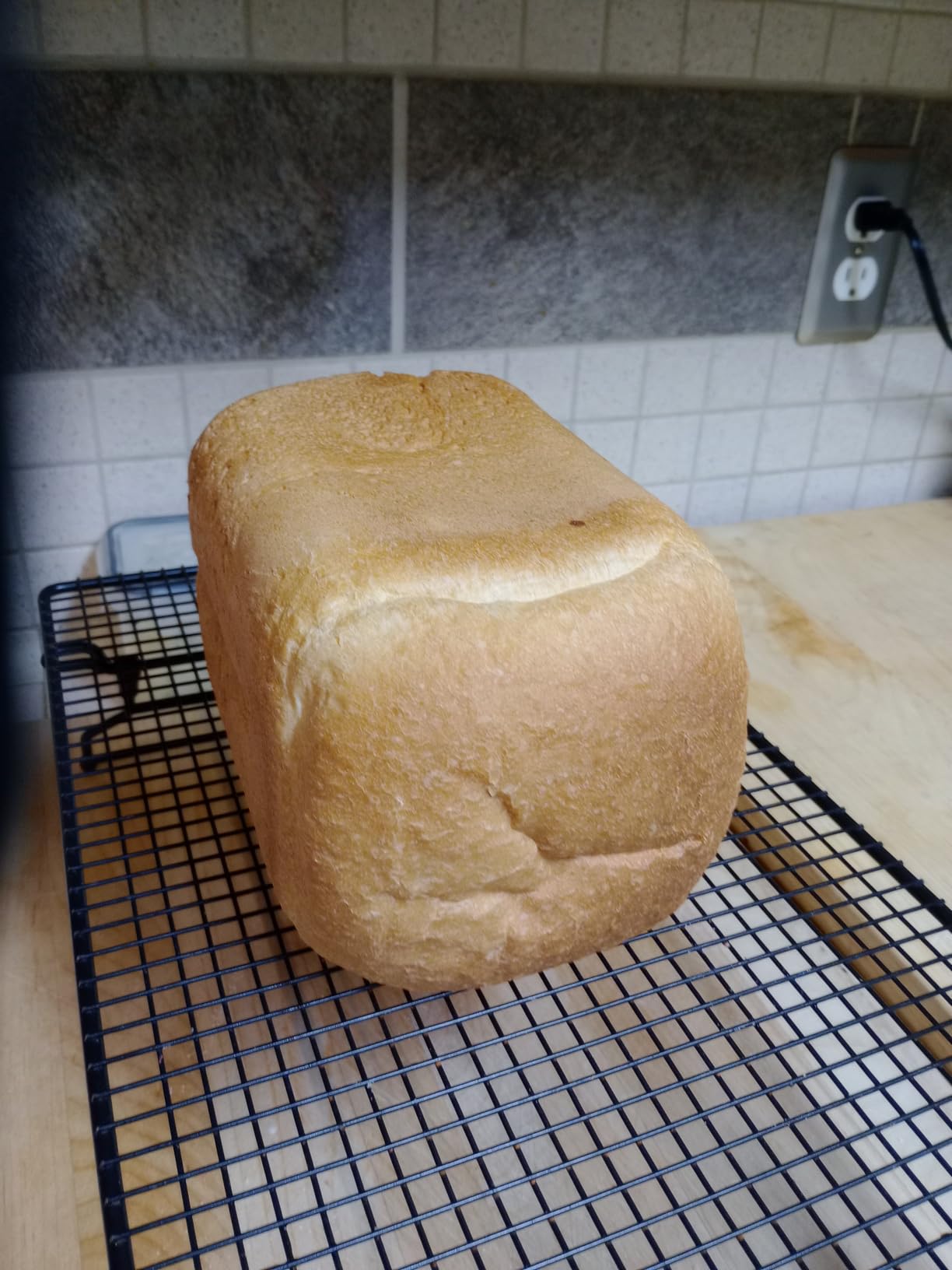
Two smaller notes. A 2 lb loaf at high yeast dosage can rise into the viewing window, which is another argument for a real starter rather than added yeast. And the pan is Teflon coated, so use the plastic paddle removal tool that is included rather than a metal one, which will scratch it. In exchange you get a two-year warranty, cheap replacement parts and customer service that owners consistently describe as outstanding.
Check before you buy if you will use a wet starter at 75% hydration or above
The single paddle and the 550 watt motor manage tighter dough well and wet dough reluctantly. At 78% hydration the dough needed a second manual fold cycle to come together. If your starter is very active, either work at a lower hydration in this machine or step up to a dual-paddle unit.
Check before you buy if you want a tall loaf shape
The vertical pan gives you a conventional tall sandwich loaf, which many households prefer. It also means a narrower footprint, and at 9.6 pounds this is easy to move for counter storage. If you want the wide horizontal rectangle for thick cut slices, that is the Zojirushi form factor, not this one.
8. Zojirushi Home Bakery Maestro – Best for Single Small Loaves
Zojirushi BB-SSC10WZ Home Bakery Maestro Breadmaker, Premium White
- Compact 1 lb loaf avoids waste for one or two people
- Quiet and does not move on the counter
- Removable washable add dispenser with a silencable beeper
- Recipe book gives both volume and gram measurements
- Build quality holds over five-plus years
- Displays a completion time so the timer needs no mental math
- Punch-down cycle is loud in an adjacent room
- Only makes a single 1 lb loaf
- No manufacturer recipe support listed for this model
- Sourdough needs manual flour and water adjustment
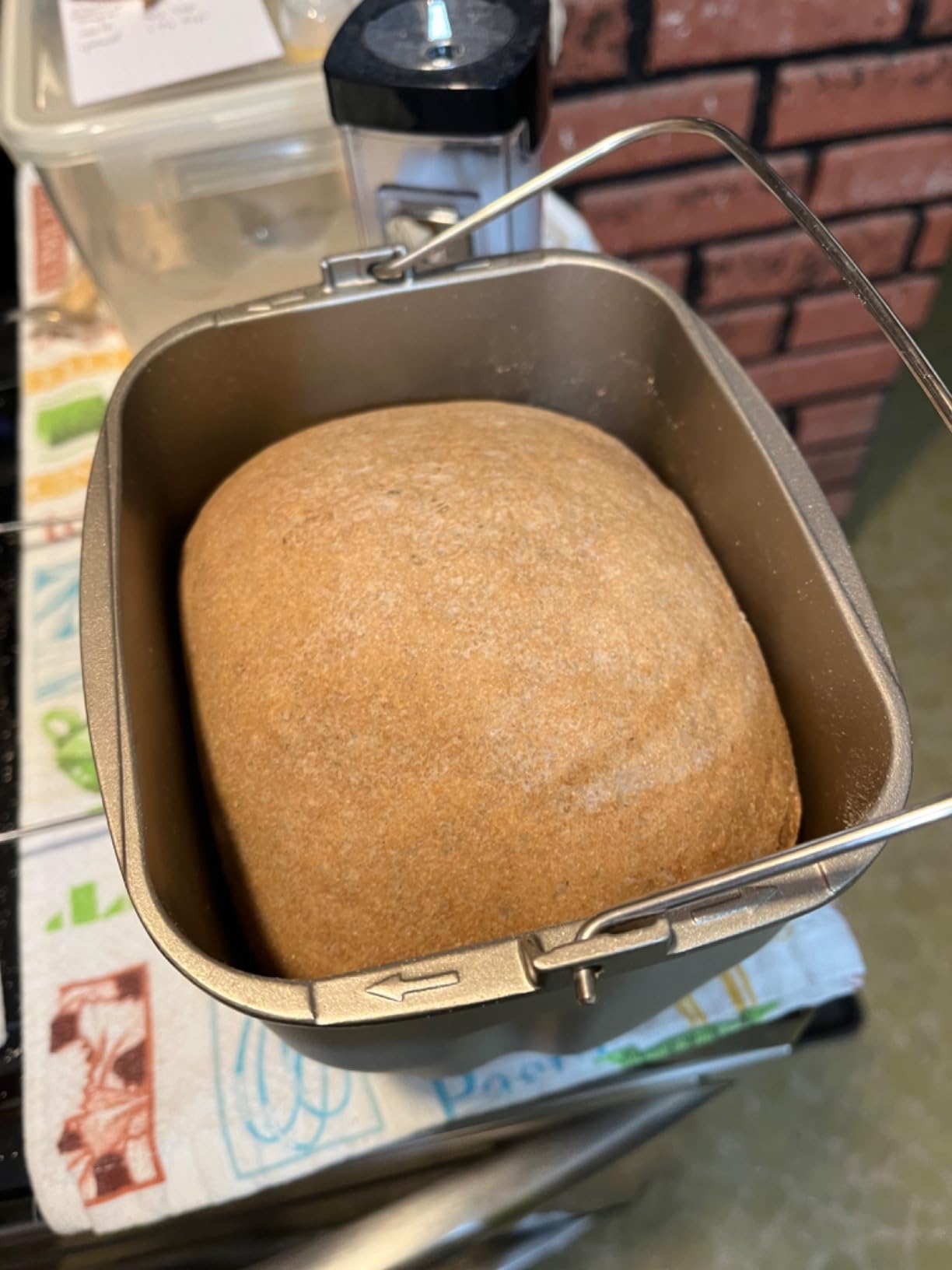
This is the machine for a household of one or two. A single 1 lb loaf is the right unit when you are baking fresh bread twice a week and cannot finish a 2 lb loaf before it goes stale. There is no second size to choose and no waste, and the machine shows a completion time so you set it and forget it.
It also keeps three homemade memory settings where you can set custom knead, rise and bake times, which is enough to run a starter dough properly. The 15 course settings cover gluten free, salt free, sugar free and vegan alongside bread, pizza dough, pasta dough, cake and jam. Quiet operation during knead was noticeably better than most of the larger machines here, and it stayed put on the counter.
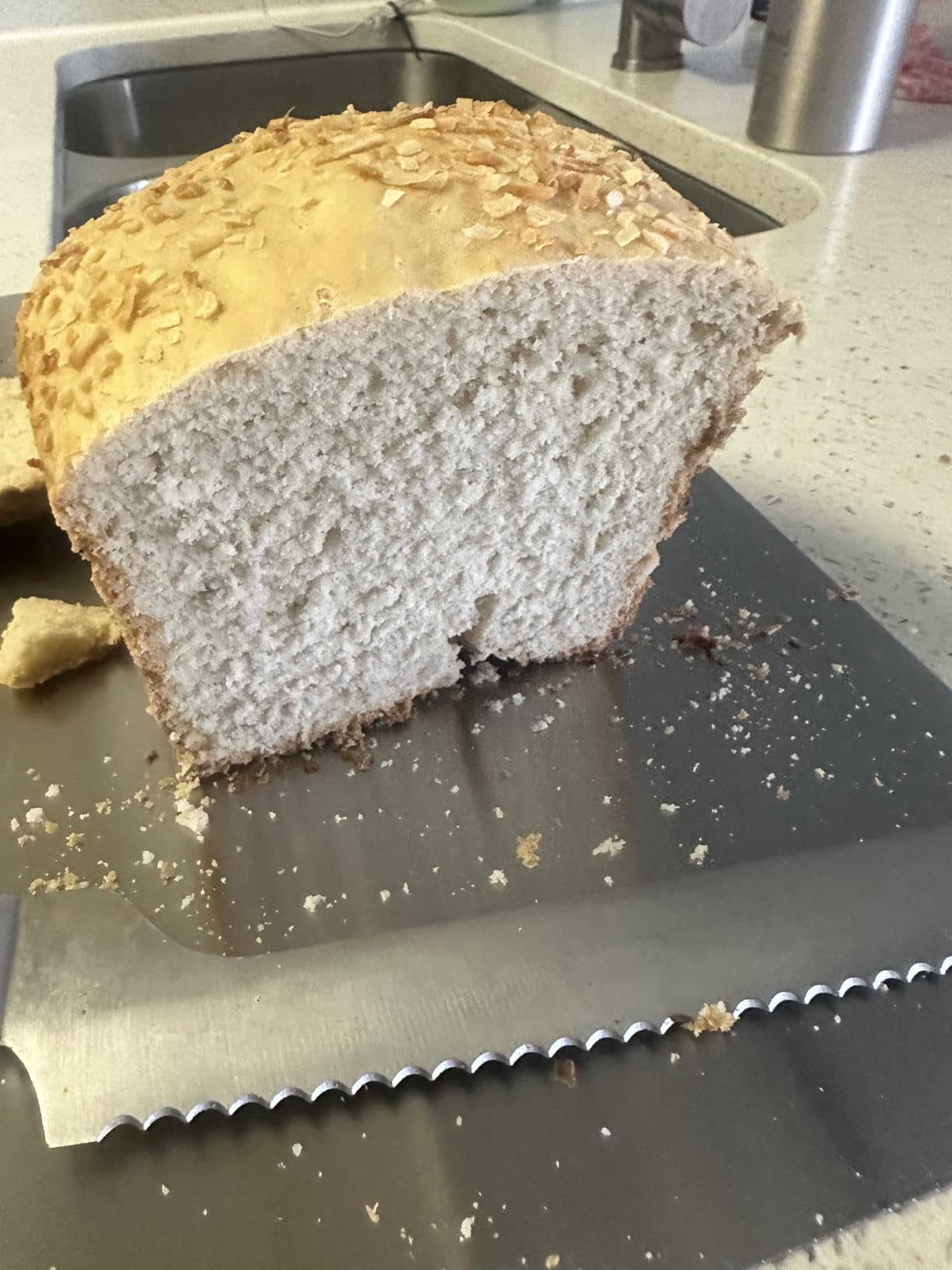
Two honest limits. The punch-down cycle is loud enough to hear in an adjacent room, which is odd given how quiet the knead is, so overnight batches are not ideal. And with a 1 lb pan there is no room for a big, wet, high-hydration dough, so sourdough here means a smaller, tighter loaf with manual adjustments to flour and water rather than a dramatic country-style bake.
The add dispenser is removable and washable, which is unusual, and the beeper can be silenced. The included recipe book gives both volume and gram measurements, which matters more than it sounds if you are converting between systems. Build quality is the Zojirushi norm, with owners reporting five-plus years of regular use.
Check before you buy if you bake for more than two people
One pound of dough does not stretch. A family of four would need two full cycles to cover a week of bread, and since there is only one size, there is no way to scale down. If you want a single machine that covers a household, the 2 lb Zojirushi models or the 3.3 lb Neretva are the right shape to buy.
Check before you buy if you want a big wet dough
The small pan is a feature for waste control and a limit for hydration. Tall wet dough has nowhere to go, so expect to work in the 60% to 70% range and treat this as a starter-maintenance and small-batch machine rather than the machine that makes your showpiece loaf. Owners also report no direct recipe support from the manufacturer for this specific model.
Can a Bread Machine Actually Make Sourdough?
Yes, but not the way most people expect. A bread machine heats the chamber to help fermentation and proofing, and that warm, moist environment is exactly why you will never get a fiercely sour loaf from a machine cycle. Warmth speeds up the bacteria and yeast together, and there is no long cold retard inside a machine to develop the sharp, complex acidity that makes sourdough worth the effort.
There is a second, bigger issue: bread machines are clock-driven appliances, and commercial yeast is predictable enough to bake by the clock while sourdough is not. A starter that doubles in four hours in a warm kitchen may barely move in a cool one, so a fixed 90-minute rise on the menu gives you a dense loaf in January and a collapsed one in July. That is the core failure behind almost every disappointing machine sourdough I have seen.
What that means in practice is that the machines marketed with a sourdough setting are usually running a yeast-leavened recipe, and you should treat the label as a course name rather than a fermentation method. On the r/Sourdough forum, bakers make the point plainly: the machine should work, but you will not get a very sour bread from it. If true sourness is the goal, the machine does one job well and you bake the other three yourself.
So the realistic pitch for a sourdough bread maker is this: let the machine handle mixing and kneading, which is the tiring part, and take over fermentation, shaping and baking. A machine makes sense if you want automation, if hand kneading bothers your wrists, or if you like dough ready to shape on a schedule. If you already hand-shape happily and want open crumb and real tang, a Dutch oven or a baking stone will beat every machine here, and our banana bread recipe is a better use of any leftover machine capacity than forcing a one-hour quick bread through a custom cycle.
How to Program Your Bread Machine for Real Sourdough
Every successful machine sourdough I have baked follows the same shape: the machine kneads, and you take over from there. Six steps, roughly four hours of elapsed time on a warm day.
- Scale the dough to the pan. Fill no more than a third of the pan with starter by volume and keep total dough around 70% hydration for a first run, and remember that 80 percent can stall a single-paddle machine.
- Skip the manual’s starter recipe. Zojirushi manuals ship a dried yeast-based “starter” mix. If you already keep a live starter, use it and ignore those instructions entirely.
- Run the dough or custom cycle only. Set a short mix, then a long rest. On the KITCHENARM, use a HOME MADE menu and set knead and rest low with rise at zero. On the Breville, use Modify to zero the rise and bake stages.
- Pull the dough out at the end of the knead. Do not let the machine rise the dough for you unless you are testing the built-in course. Remove it while it still has structure.
- Shape and proof for about 90 minutes. This is the community standard, and it is the step that gives you the tang. Cold and slow beats warm and fast, so a cool room is your friend.
- Bake at 350F for about 35 minutes in a covered vessel. That is the most common community recommendation, and the covered pot gives you the top crust a machine cannot. Cool completely before slicing.
Two adjustments worth making early. If your kitchen is cold, extend the proof rather than adding more yeast, because more yeast is exactly the flavor you are trying to avoid. And if the dough is slack enough that the paddle stalls, drop hydration by five points instead of adding flour at the end, which makes the loaf dense in the middle.
Troubleshooting Machine Sourdough Failures
Loaf collapsed and slumped. Almost always over-proofing inside a warm chamber, so shorten the in-machine rise to zero, proof outside where it is cooler, and check your starter with a float test before mixing. Collapsed machine sourdough is the single most common complaint on breadtopia, and the fix is the same every time: less time in the box, more time on the counter.
The bottom is dense and gummy. The paddle did not fully mix and develop the dough, which makes this a hydration and paddle problem rather than a bake problem. Lower hydration, add a fold in the bowl after 30 minutes, or switch to one of the dual-paddle machines, and remember to pull the paddle yourself if your machine has no REMOVE-PADDLE alarm.
The top is pale and the base is dark. Heat distribution, not temperature choice. Machines without a lid heater will always do this, and no crust color setting corrects it. Bake the shaped loaf in a covered Dutch oven or under a preheated pan where you control top heat.
The dough overflowed the pan. You left it rising on a cycle with no end signal, or you added extra yeast to compensate for a slow starter. Watch the dough, and fix the starter rather than the yeast.
The flavor is bland and yeasty. You probably used the built-in sourdough course, which is a yeast recipe. Use your own starter, run the dough cycle with no rise stage, and let the flavor come from a long cool proof instead.
Bread Maker Buying Guide: What Matters for Sourdough
Custom cycle programmability. This is the feature that separates a real sourdough machine from a bread maker with a sourdough button, because you need independent control over knead, rest, rise and bake times plus the option to set rise to zero. The KITCHENARM’s four custom menus and the Breville’s nine stored settings plus Modify function are the clearest examples here, and the Zojirushi Supreme allows rise times out to 24 hours.
Single or dual kneading paddles. For wet starter dough, dual paddles are not a nice-to-have. A single paddle on heavy wet dough stalls in a ring around the shaft, which is what produces that dense gummy bottom. Three of the machines here use dual paddles, and for high-hydration work that is the deciding spec. Single-paddle machines are fine at 60% to 70% hydration.
Loaf size and shape. Decide whether you want a tall vertical sandwich loaf or a wide horizontal rectangle, because a wide 2 lb loaf gives you big cut rounds while a vertical pan fits a standard bread box and slices thinner. If you are unsure, a bread box solves storage for either once the loaf is baked, and 3.3 lb capacity is only useful if you actually eat that much bread.
Heating elements. A lid heater is the clearest single upgrade for crust color, and the Virtuoso Plus and the Neretva are the two machines in this roundup with heaters at both the top and the bottom. A convection fan, as on the Cuisinart, helps but does not fully replace top heat.
Pan and paddle material. Ceramic pans and paddles resist scratching and last longer than coated metal, and replacement parts for ceramic models are usually cheaper. On a Teflon pan, always use the plastic paddle tool.
Counter space and weight. The widest machine here is 18 inches across and 24 pounds; the narrowest is 8.85 inches and 10.8 pounds. Machines that run overnight also need clearance above the lid for a full rise, and a base that does not walk across your counter during a long knead matters more than it sounds.
Program clarity and alerts. An end-of-cycle beep for add-ins and for paddle removal is genuinely useful, because forgetting the paddle leaves a hole in the base. Watch the display rather than the screen, which fogs up on some models.
Bread Maker vs Stand Mixer vs Dutch Oven vs Proofer
Not everyone should buy a bread maker, and we would rather say so than sell you the wrong tool. Here is the honest decision path.
Bread maker suits you if you want the machine to mix, knead and (optionally) bake on a schedule, if hand kneading is hard on your wrists, or if you want a loaf ready without managing timing. It suits you least if your goal is open crumb and sharp flavor, because the warm chamber works against both.
Stand mixer suits you if you already proof and bake by hand and want a strong motor for the mixing stage alone. It gives you total control over fermentation temperature and gets you out of the hot-chamber problem entirely. A machine plus a mixer is the combination most serious home bakers land on eventually.
Dutch oven or baking stone suits you if flavor and crumb are the priority. It is how most bakers get an open crumb and a dark, blistered crust, and it takes up a fraction of a machine’s counter space. Pair it with a starter kit and you have a working sourdough setup without a single timed program.
Countertop proofer suits you if you bake on a schedule and want a controlled warm environment for bulk fermentation, which is the opposite problem from the machine. Note that devices marketed as sourdough companions, such as starter incubators, maintain a culture and do not bake bread at all. They are a companion purchase, never a substitute for a machine.
Frequently Asked Questions
Are there any bread makers that make sourdough bread?
Yes. Every machine in this roundup can mix and knead a starter dough, and three of them (the Zojirushi Virtuoso Plus, Zojirushi Supreme and Neretva) use dual kneading paddles that handle wet dough well. The catch is that most built-in sourdough menus are yeast recipes, so the real method is the dough cycle followed by hand proofing and hand baking.
Do bread makers make good sourdough bread?
They make decent sourdough, not exceptional sourdough. The machine chamber runs warm, which speeds fermentation and limits how sour a loaf can get, and the timed program cannot adjust to a starter that doubles faster or slower than expected. Use the machine for mixing and kneading, then proof and bake outside it for the best result.
Do you need a special bread maker for sourdough?
You do not need a dedicated sourdough machine, but you do need programmability. Look for a custom or homemade cycle where knead, rest, rise and bake times can be set independently, and set rise to zero. Dual kneading paddles matter if you bake above 70% hydration. Everything else on the list is nice to have.
Which breadmaker is best for sourdough bread?
The Zojirushi Home Bakery Virtuoso Plus. It combines dual kneading blades, heaters at both the base and the lid, a horizontal 2 lb rectangular loaf and programmable rise, knead and bake times, which is the combination no other machine in this roundup fully matches.
What is the best bread making machine for sourdough on a budget?
The KITCHENARM 29-in-1. It has 29 automatic menus including sourdough and sourdough starter, four fully custom HOME MADE menus with per-cycle time programming, a quiet 550 watt motor and a two-year warranty. For large loaves instead of low cost, the Neretva goes to 3.3 lb.
How long does a dough cycle take on a bread machine?
A basic mix-and-knead cycle usually runs 20 to 35 minutes depending on the machine and the program. A full real-starter sourdough bake takes roughly four hours end to end, including the in-machine knead, a 90 minute hand proof and a 35 minute bake at 350F. Plan for about four hours, not a quick cycle.
Is 80% hydration too high for sourdough?
In a bread machine, usually yes for a first run. Single-paddle machines stall above roughly 75% hydration and leave a dense gummy bottom, because the paddle cannot fully mix the dough. Dual-paddle machines handle 80% better, but start at 60 to 70% and climb gradually, and do a fold in the bowl if the dough feels slack.
Why are breadmakers no longer popular?
Mostly because the category shifted toward premium appliances with complex menus while good bread got cheaper to make by hand. Many bakers shifted to Dutch ovens and baking stones for better flavor and crumb, and a stand mixer handles kneading without a hot chamber. Bread makers still make sense for automation, small households and anyone who wants a scheduled, hands-off loaf.
Which Bread Maker for Sourdough Should You Buy?
Buy the Zojirushi Home Bakery Virtuoso Plus if you want the best bread makers for sourdough result with the least fussy setup. Dual blades handle the dough, the lid heater fixes the pale top, and the horizontal loaf slices like store-bought bread. Then the KITCHENARM 29-in-1 if programmability matters more than hardware, since four fully custom menus is deeper control than anything else here. Buy the Zojirushi Supreme if you want a dedicated starter maintenance course, the Breville if you want nine stored schedules and a paddle that retracts, the Cuisinart if your counter is narrow, the Neretva if you bake 3 lb loaves, and the Maestro if you are one or two people.
Whichever you pick, run the dough cycle, proof for about 90 minutes in a cool room, and bake covered at 350F for 35 minutes. That method works around the two limits every machine shares: a warm chamber and a fixed clock. Let the machine do the kneading you would rather skip, and you get a loaf worth the starter you are maintaining for it. Slice it cool, store it well in a bread box, and update this guide in 2026 when a new model lands.