
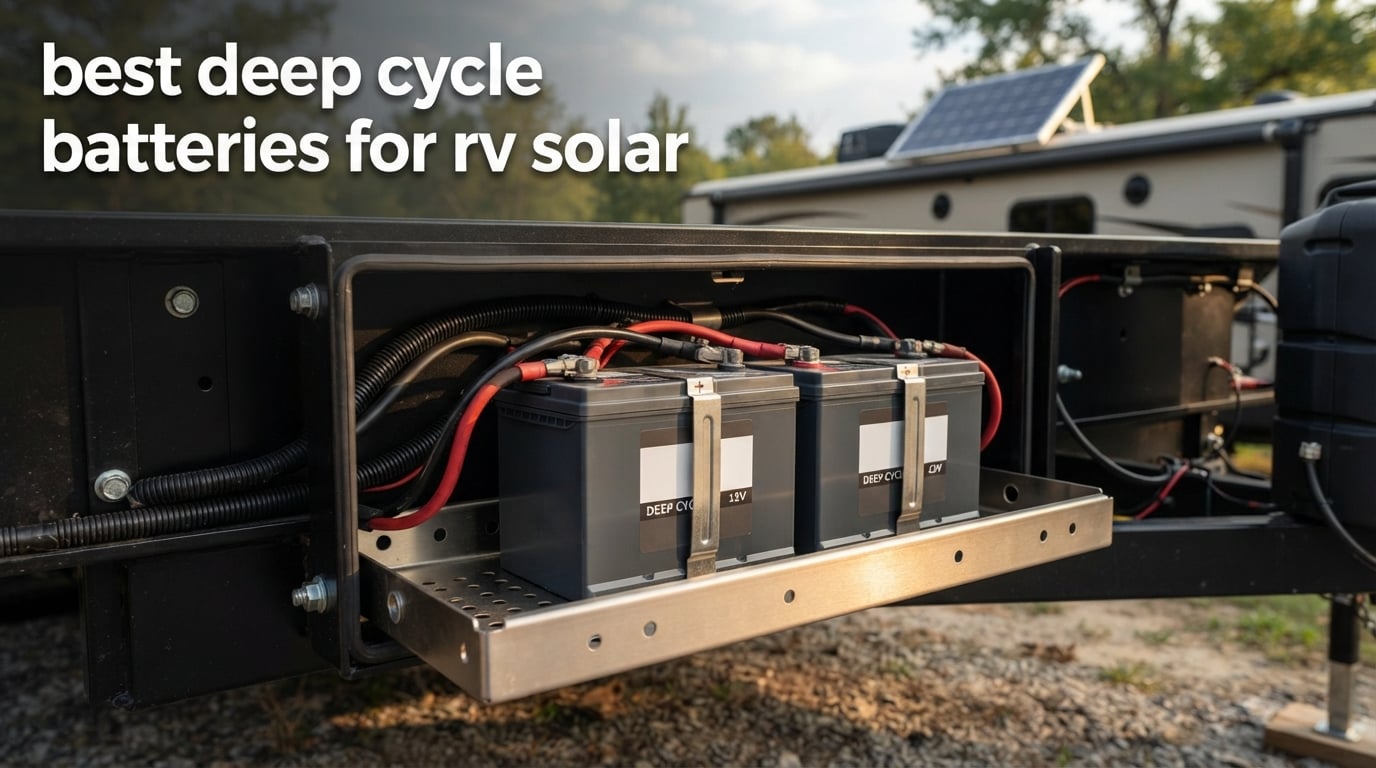
Most RV solar builds fail for the same reason: the battery that came with the trailer is a starter battery, built to deliver one huge burst of cranking amps and then sit idle. A deep cycle battery does the opposite job. It delivers steady amperage for hours, survives being drained to near empty, and takes thousands of recharge cycles, which is exactly what a solar-charged house bank does to it. Below are the best deep cycle batteries for RV solar, chosen from ten 12V options that cover the lead-acid budget tier, the mainstream LiFePO4 tier and the cold-weather premium tier.
The chemistry verdict is simple, and it is the one RV and van-living forums keep arriving at: LiFePO4 is the practical default for a new build because it carries far more usable capacity per pound, holds charge acceptance better on slow solar-only charging, and lasts multiple lead-acid banks over the life of the trailer. AGM still makes sense in two cases, which we flag throughout: when your array is small and charging is marginal, and when cold-weather charging with a standard battery simply is not going to happen.
We read the specification sheets, weighed the claims against owner reports, and paid close attention to the three things that decide whether a bank is usable in a real trailer: physical fit, how much of the rated amp-hour figure you can actually use, and what the warranty says when a battery fails in year three. If your sleep setup matters as much as your power budget, our RV mattress picks are worth a look for the same reason a bigger bank matters: it lets you stay off-grid longer.
Table of Contents
Top 3 Deep Cycle Battery Picks for RV Solar

WEIZE 12V 100Ah AGM
- Sealed maintenance-free AGM
- 1-3% monthly self-discharge
- 1100A 5-second max discharge
- Charge from 14F to 122F
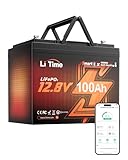
LiTime 12V 100Ah Self-Heating
- Two self-heating modes
- Bluetooth 5.0 monitoring
- Group 24 drop-in fit
- 4000+ deep cycles

Redodo 12V 100Ah LiFePO4
- 4000 cycles at 100% depth
- 100A built-in BMS
- Expandable to 4S or 4P
- About 22 lb
All 10 Deep Cycle Batteries Compared in 2026
| Product | Specifications | Action |
|---|---|---|
| WEIZE 12V 100Ah AGM |
|
Check Latest Price |
 Renogy 12V 100Ah AGM Renogy 12V 100Ah AGM |
|
Check Latest Price |
| Redodo 12V 100Ah LiFePO4 |
|
Check Latest Price |
 Dumfume 12V 200Ah LiFePO4 Dumfume 12V 200Ah LiFePO4 |
|
Check Latest Price |
 LiTime 12V 100Ah LiFePO4 Group 24 LiTime 12V 100Ah LiFePO4 Group 24 |
|
Check Latest Price |
 Daakmax 12V 100Ah AGM Daakmax 12V 100Ah AGM |
|
Check Latest Price |
| LiTime 12V 100Ah Self-Heating |
|
Check Latest Price |
 WattCycle 12V 100Ah Mini WattCycle 12V 100Ah Mini |
|
Check Latest Price |
 WindyNation 12V 100Ah AGM WindyNation 12V 100Ah AGM |
|
Check Latest Price |
 LiTime 12V 100Ah RV LiTime 12V 100Ah RV |
|
Check Latest Price |
What Is the Best Deep Cycle Battery for Solar?
The best deep cycle battery for solar is a 12V 100Ah or 200Ah LiFePO4 unit with a built-in BMS, Bluetooth monitoring and a low-temperature charge cutoff, provided your charge controller has a LiFePO4 profile. LiFePO4 stores more usable energy per pound, tolerates daily deep discharge and recharges from a weak array better than AGM. Choose AGM instead if your budget is fixed and your solar is small.
Three things decide the answer, in this order:
1. Chemistry. LiFePO4 gives you roughly 80 to 100 percent of rated capacity as usable energy, against about 50 percent for AGM. That difference alone means one lithium battery can replace two lead-acid batteries of the same label.
2. Capacity in amp-hours. A single 100Ah unit at 12.8V nominal stores about 1280Wh before any depth-of-discharge haircut. Two of them in parallel give you 200Ah, or roughly 2560Wh of bank capacity.
3. BMS and cold-weather protection. Every lithium option here has an integrated battery management system. The meaningful difference is low-temperature charge cutoff, and whether a self-heating model is worth it for where you camp.
1. WEIZE 12V 100Ah AGM Deep Cycle Battery – the Most Validated Bank in the Group
- Maintenance-free sealed AGM case
- 1-3% monthly self-discharge
- 1100A 5-second max discharge current
- Charging range from 14F to 122F
- 57 lb makes lifting a two-person job
- 1-year warranty is among the shortest here
- AGM usable depth of discharge is about 50%
I keep coming back to this battery as the default recommendation because the review history is the deepest in the group. More than 16.9k reviews at a 4.5 average is a real sample size, and the pattern in it is consistent: owners report solid multi-night boondocking on a modest solar setup and no acid drips in the battery bay.
It is a 12V 100Ah sealed lead-acid AGM, listed at 57 pounds with dimensions of 6.73 by 12.99 by 8.43 inches. Terminal orientation puts the red positive on one side of the case and the black negative on the other, so confirm the layout against your existing cables before you plan the run.
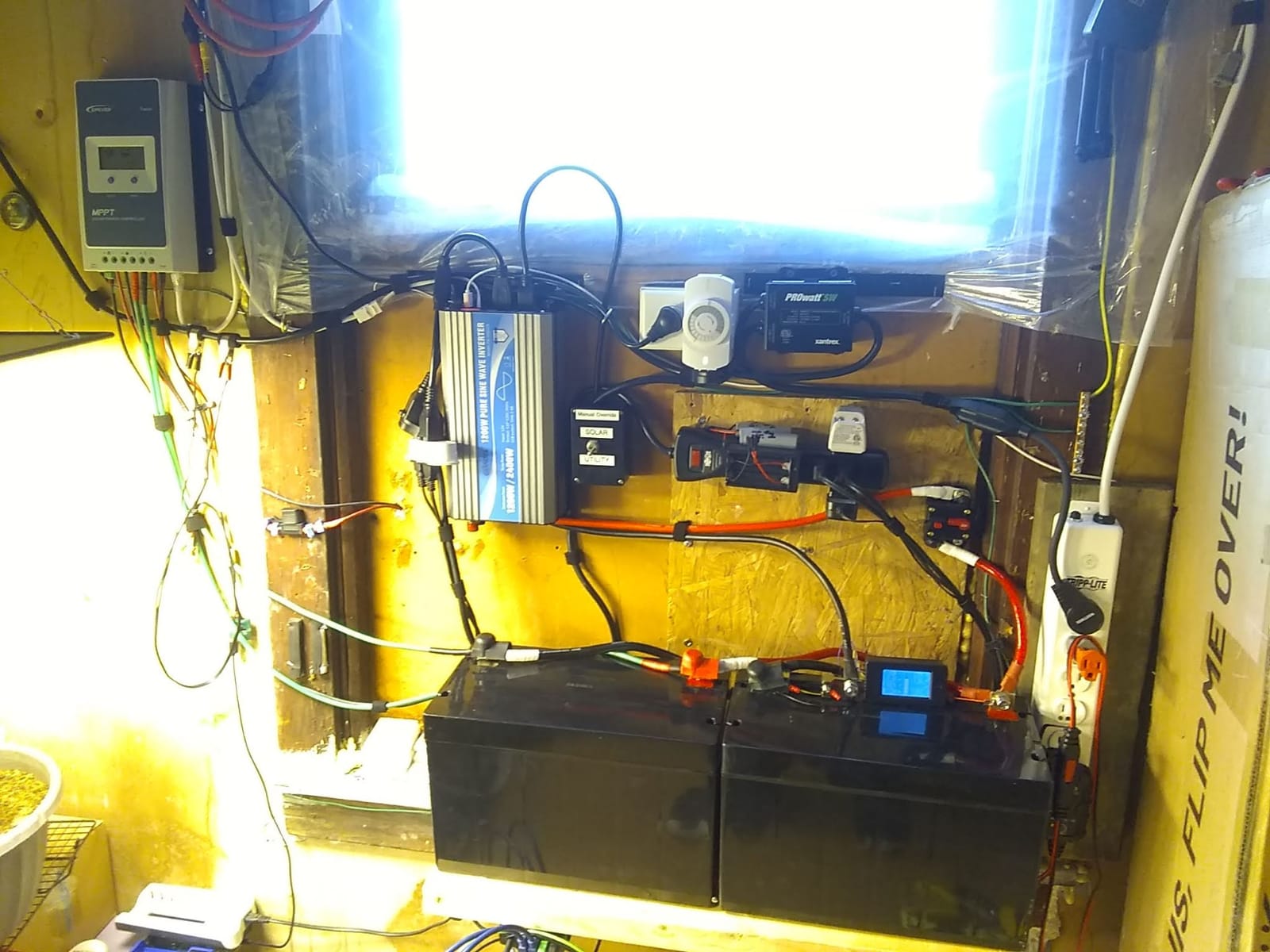
The engineering details that matter for solar are the charge range and the discharge ceiling. It is rated for charging from 14F to 122F and discharging from 5F to 122F, with best behaviour around 77F, and it delivers up to 1100A for a five-second burst, which is more than enough to start a CPAP, a microwave or a 12V fridge compressor.
Self-discharge of 1 to 3 percent per month is what makes it workable for seasonal use. Park a trailer for a month in the shoulder season and you come back to a bank that still holds a charge, which is exactly the failure that strands people who store lead-acid batteries over winter.
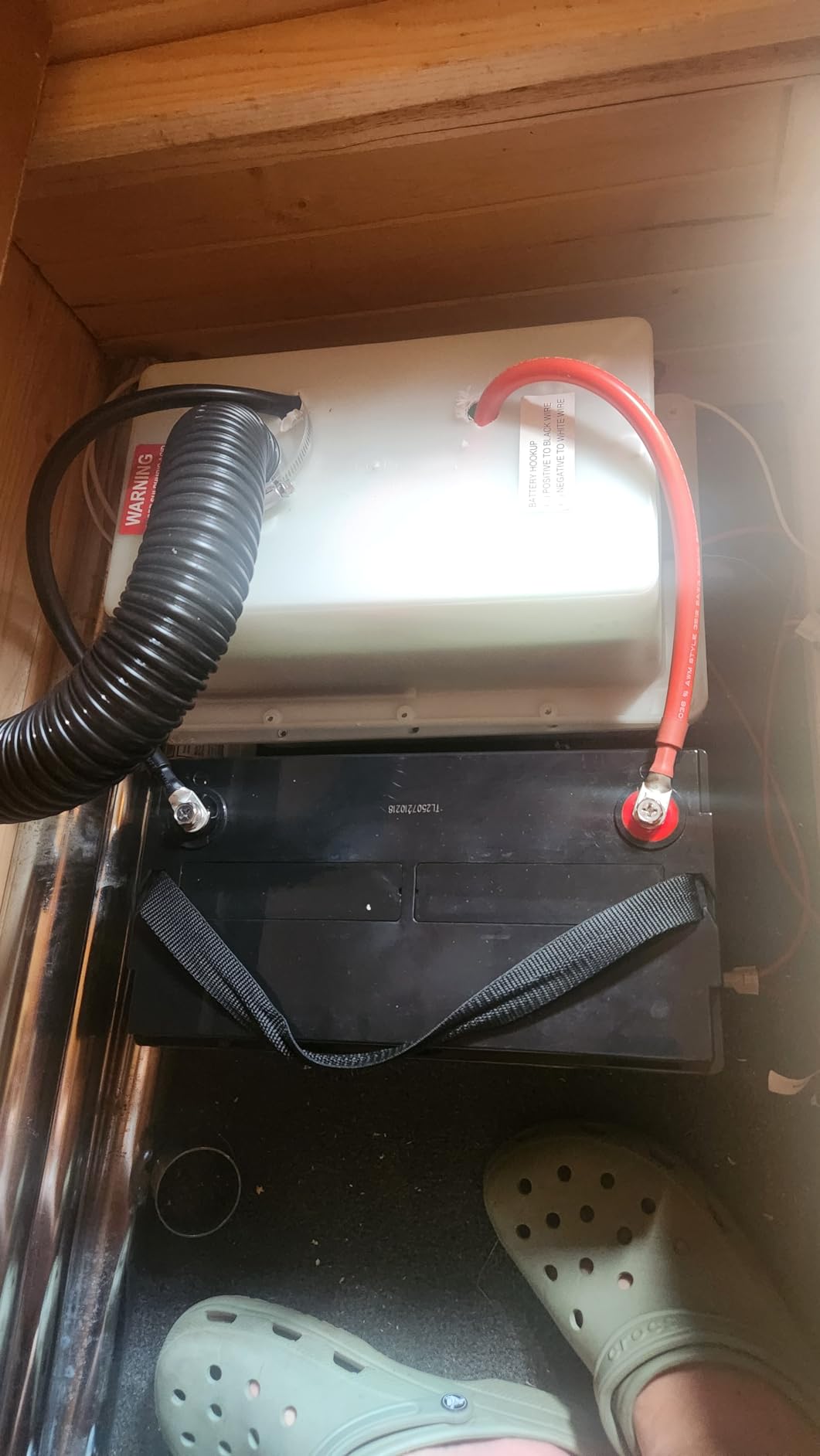
The honest limit is chemistry, not construction. AGM gives you about half of rated capacity before it starts complaining, so a 100Ah unit is really a 50Ah usable bank in daily off-grid service. Plan on two of these in parallel for a weekend of autonomy, and treat a lead-acid profile on your charge controller as correct rather than something to fight.
At 57 pounds and with a footprint that is larger than many factory trays, installation is a two-person job. A few owners of multi-battery purchases also report uneven state of health between units, which is normal when lead-acid cells age at slightly different rates.
What you get with the WEIZE that other lead-acid options do not offer
Review volume is the real differentiator. When thousands of people report on a battery, the failure modes show up in the reviews, and for this one they are consistent and minor. Weight is the complaint, not longevity.
It also works outside RV use, which is a good sign for a mixed fleet. Trolling motors, wheelchairs, scooters, UPS backup and zero-turn mowers are all listed applications, and a battery that behaves in three of those usually behaves in the fourth.
Where the WEIZE falls short for a solar build
The 1-year warranty is among the shortest we found across all ten products. For a bank that will sit in a trailer absorbing daily cycles, that is thin, and it is worth weighing against the 5-year terms on every LiFePO4 option in this list.
The second issue is payload. Fifty-seven pounds per battery is roughly 114 pounds for a matched pair, and that is the reason full-time RVers at or near GVWR keep moving away from lead-acid. If weight is not your constraint, this is a very safe choice.
2. Renogy 12V 100Ah AGM Deep Cycle Battery – Built for Stationary Solar Banks
Renogy 12 Volt 100Ah Deep Cycle AGM Battery, Lead Acid Solar Battery
- Supports series and parallel wiring up to 4P
- Discharge rated from -4F to 140F
- Self-discharge below 3% per month
- M8 terminals with removable caps
- One of the heavier units here at 63.9 lb
- 2-year prorated warranty
- Voltage sags under heavy load without a monitor
Renogy is the name experienced solar builders search for, and this is the model they search for. Over 230000 of these have been sold worldwide, and the bank configuration options are spelled out clearly, which matters more than most buyers expect when they wire two or three units together.
This is a 12V 100Ah lead-acid AGM rated at 50A, weighing 63.9 pounds with dimensions of 13.1 by 6.9 by 8.6 inches. The model number is RNG-BATT-AGM12-100-US, and it carries a 2-year prorated material and workmanship warranty, which is the best AGM warranty here but still well short of the lithium units.
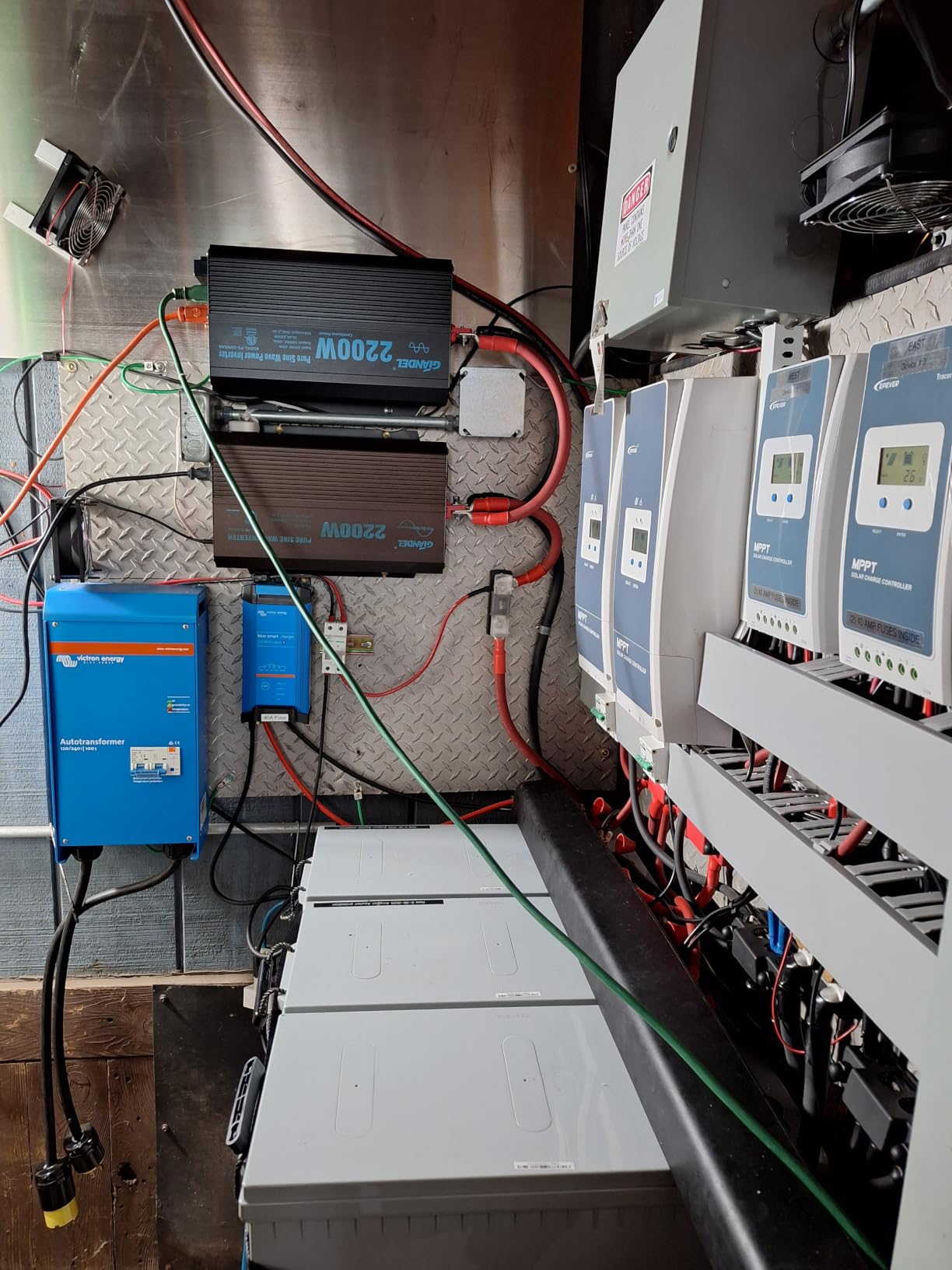
The electrolyte formula is rated for discharge from -4F to 140F, which is the widest operating range of any lead-acid option in this group. That matters if you winter camp or run hot-desert boondocking, because a battery that has to stay indoors to survive is not doing much for you.
It supports series and parallel wiring up to 4P, and the M8 screw terminals come with removable caps that make parallel cabling straightforward. Self-discharge is under 3 percent per month at 77F, and the 1100A five-second discharge figure covers fridge, microwave and CPAP loads without strain.
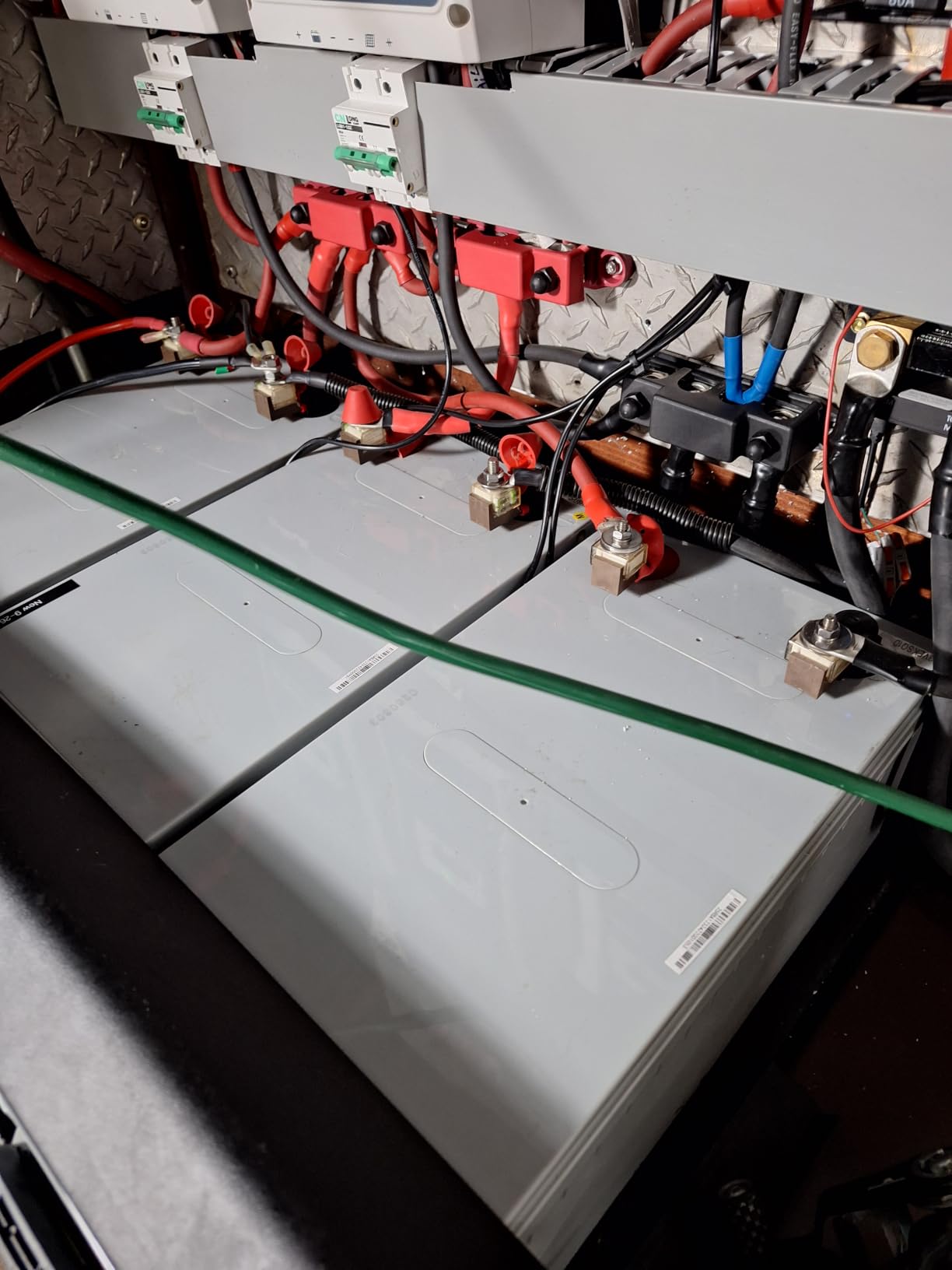
Users running parallel banks report measured capacity that matches the 100Ah label, which is more than a lot of budget lead-acid delivers in real service. Renogy customer service has also supplied specific Peukert and charge-efficiency data to buyers setting up monitoring, which tells you something about how they handle technical questions.
At 63.9 pounds it is one of the heavier units in this group, and that needs a plan. Voltage also sags noticeably under heavy load, so a shunt monitor or a quality battery monitor is close to mandatory in an RV rather than optional.
Why experienced solar owners still choose this AGM
Lead-acid voltage is predictable, which means a cheap PWM controller works fine and a standard lead-acid charge profile is correct. There is no lithium charging curve to configure and no cold-charge cutoff to fight, so the system stays simple.
It is also the safest choice in a battery bay that is not well ventilated and not well monitored. A sealed AGM that quietly tops up every few days needs far less attention than a lithium bank with a BMS and an app.
Where the Renogy falls short
Just over 63 pounds a battery means a two-person lift for every swap, and that cost shows up on every replacement for the life of the trailer. Buyers who have already replaced a matched pair with lithium commonly report that the weight change alone justified the switch.
A small number of buyers also report units that would not hold a charge after installation. It is a minority complaint, but with a 2-year prorated warranty you should confirm the date of manufacture and test the resting voltage before you wire it in.
3. Redodo 12V 100Ah LiFePO4 Battery – Best Value Lithium Drop-In
- About 60% lighter than the lead-acid equivalent
- 4000 cycles at 100% depth of discharge
- 100A built-in BMS
- Detailed 23-page manual and wiring diagrams
- Some units stop accepting charge after a few years
- Group 31 tray may not fit an existing box
- Needs a LiFePO4-compatible charger
If you are moving from AGM to lithium and want the biggest capacity jump for the least fuss, this is the battery I would put in a trailer first. It is a 12V 100Ah lithium iron phosphate pack listed at 12.8 volts, with the technical sheet putting the weight at 22 pounds against 57 to 64 pounds for the AGM units above.
The chemistry is rated for 4000 cycles at 100 percent depth of discharge and up to 15000 cycles at 60 percent depth. The energy density figure is 58Wh per pound, and the case is roughly 5 percent smaller than the lead-acid battery it replaces, at 12.99 by 6.82 by 8.46 inches.
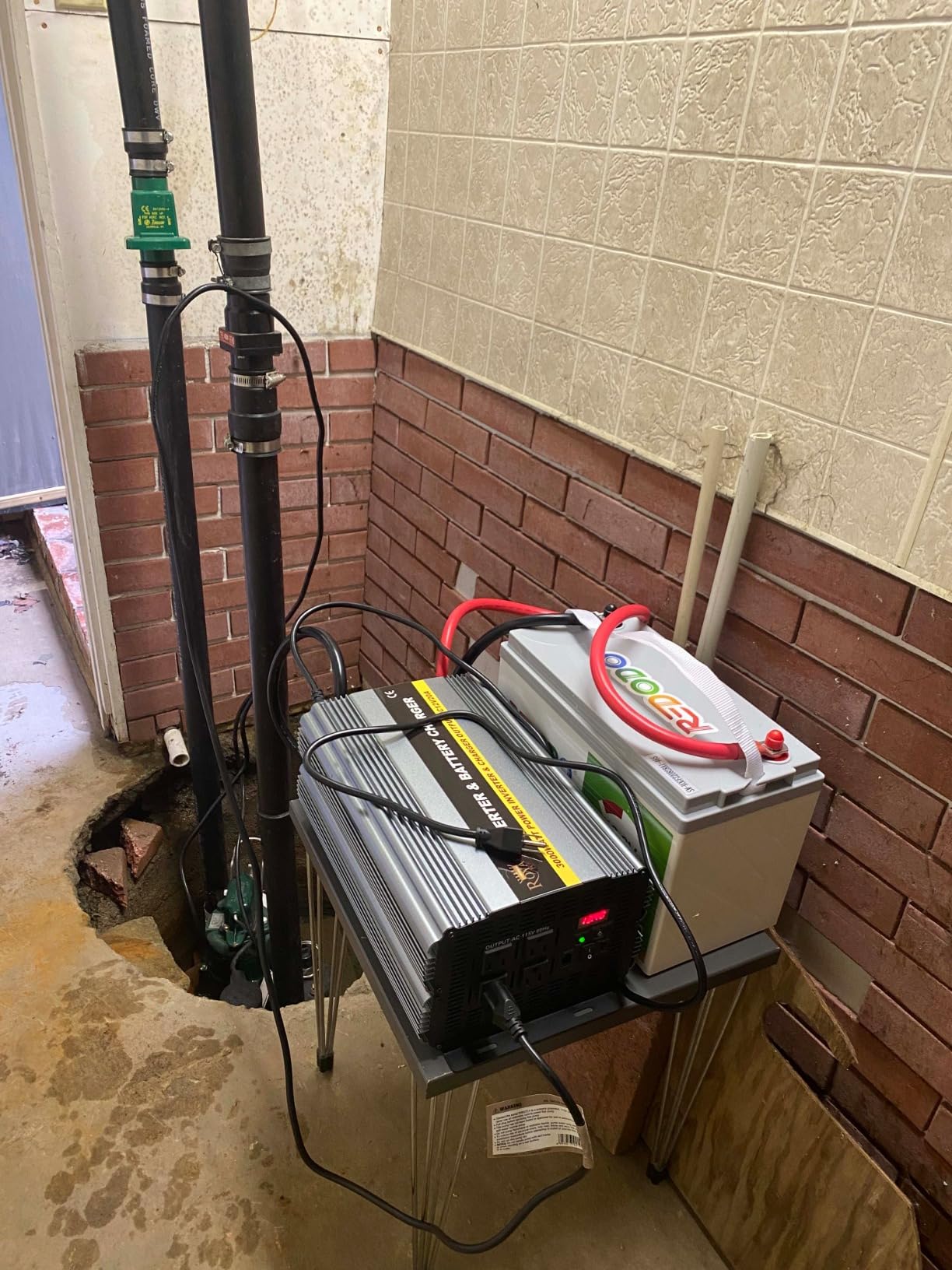
The BMS is a 100A unit protecting against overcharge, over-discharge, over-current, short circuit and high temperature. Expansion is supported to 4S or 4P, so you can build up to 400Ah or 51.2V from the same case, and charging can come from a LiFePO4 charger, solar with a controller, an alternator or a generator.
Full-time van and trailer owners report using close to the full rated 100Ah, and long-term users describe capacity that measures slightly above the label. The included kit is the battery, insulating caps for the bolts and M8 terminal bolts, so you are not hunting for hardware on install day.
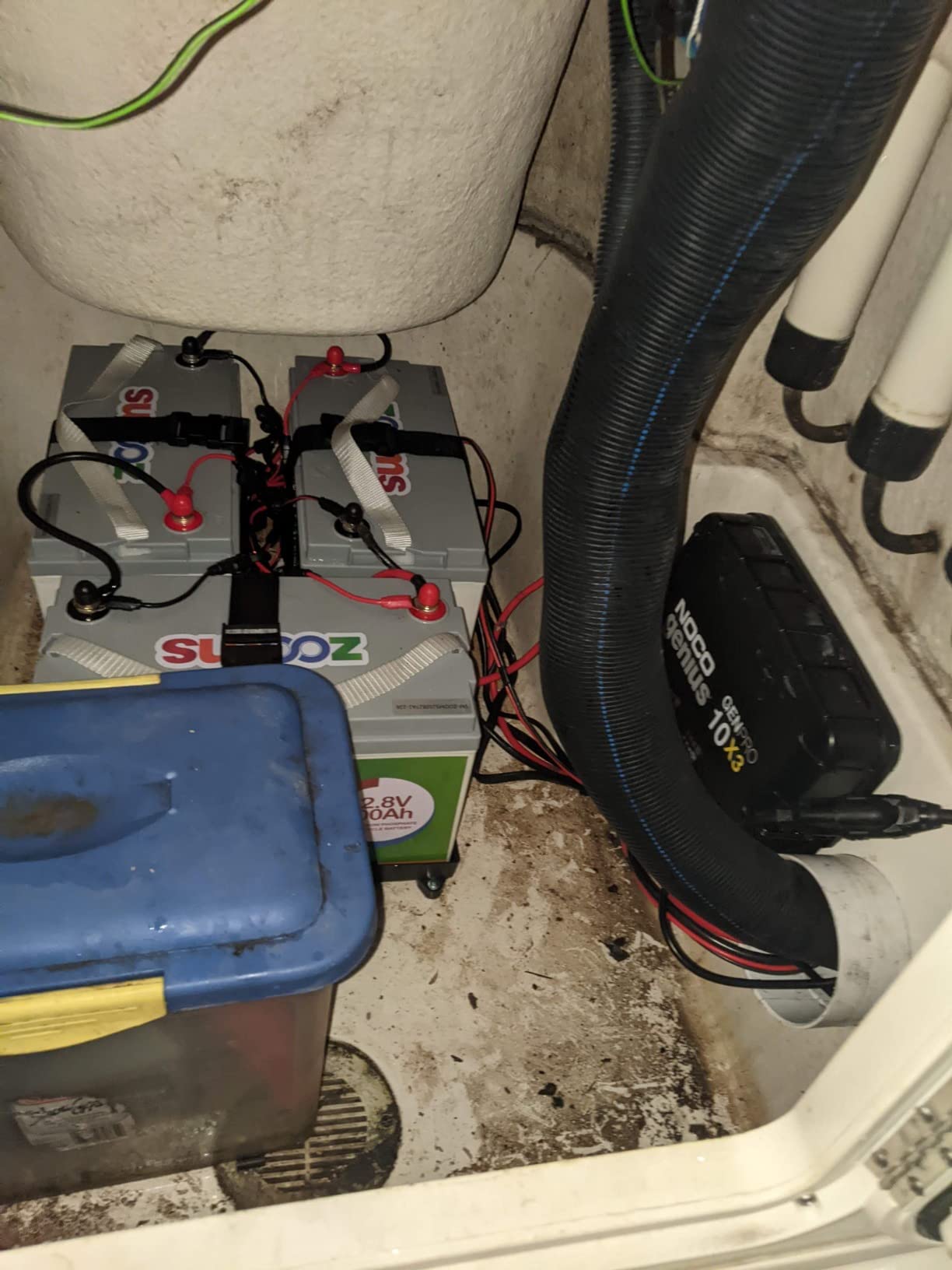
The documentation is unusually good. The 23-page manual has clear diagrams and wiring guidance, and support has been reported as responsive on charge controller settings and quick to process warranty replacements. That matters more than it sounds, because most lithium problems are configuration problems.
Capacity in practice is the headline. A single 100Ah LiFePO4 bank gives you close to 1280Wh of usable energy where a 100Ah AGM gives you about 640Wh, so one unit can replace a pair of lead-acid batteries and free roughly 60 pounds of payload.
Check the case size before you commit
This listing is sold as a Group 31 footprint, which is bigger than a Group 27 box. Measure your battery bay, because owners upgrading from smaller AGM trays frequently have to replace the tray, and that is the most common reason a good battery ends up sitting in a closet.
If your bay is tight, look at the mini case sizes later in this roundup before you fall in love with a Group 31 footprint that does not fit.
Where the Redodo falls short
The most serious complaint in reviews is long-term durability, with a minority of units that stop accepting charge after a few years and need a BMS reset that does not always recover them. One buyer also described warranty settlement as closer to a prorated discount than a like-for-like replacement, so read the warranty terms before you count on a swap.
It also needs a LiFePO4-compatible charger. Running a lead-acid equalisation profile against it is the classic way to damage a lithium bank, so make sure your MPPT controller has a lithium setting and disable equalisation.
4. Dumfume 12V 200Ah LiFePO4 Battery – One Battery Instead of Two
Dumfume 12V 200Ah LiFePO4 Lithium Battery 200A BMS 2560Wh IP65
- 200A continuous smart BMS
- IP65 dust and water resistance
- Supports expansion to 4S4P and 40.96kWh
- Low-temperature charge cutoff below 32F
- 58.9 lb still needs a two-person placement
- May arrive only partially charged
- 5-year warranty applies to direct purchases
Capacity per enclosure is the whole argument here. This is a 12.8V 200Ah lithium iron phosphate battery rated at 2560Wh, and it lets you build a serious bank out of one case instead of two, which halves the number of parallel connections, cables and failure points.
The BMS is a 200A continuous unit with a 14.6V overcharge cutoff and a 9.2V over-discharge cutoff. It cuts over-current in 50 milliseconds above 200A and isolates a short circuit in under 100 microseconds, and the enclosure carries an IP65 rating for dust and low-pressure water jets.
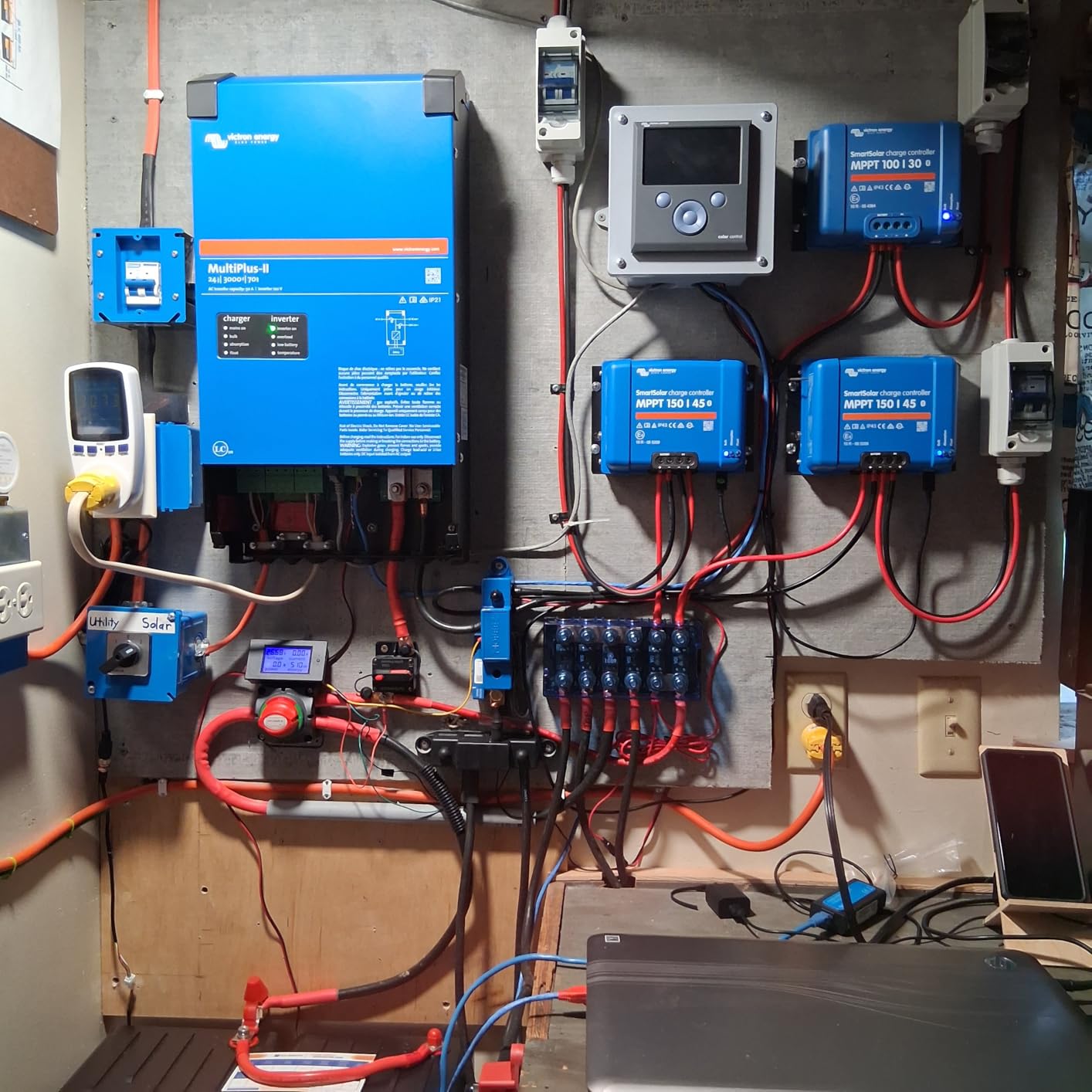
Cold-weather behaviour is the part that matters most in an RV. The low-temperature charge cutoff engages below 32F and resumes once the cells reach 41F, which prevents the lithium plating that permanently damages a cell charged while frozen. That is protection rather than heating, so plan on keeping the battery compartment above freezing in winter.
Expansion runs to 4S4P, up to 16 batteries for a 51.2V 800Ah bank and 40.96kWh. The pack is UL and UN38.3 certified for transportation, which is the certificate an installer or an insurer will ask to see.
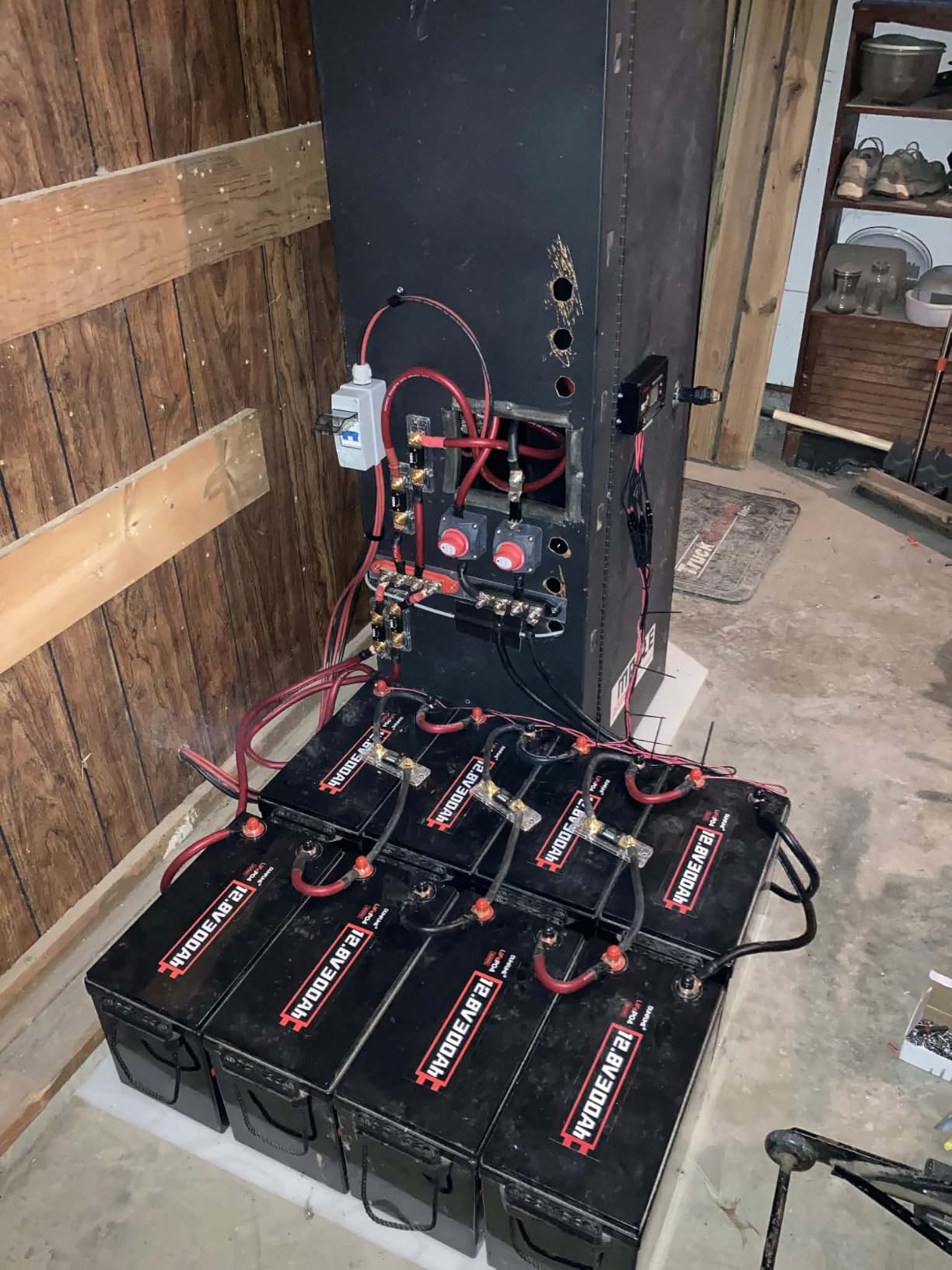
Owners moving from AGM to lithium in Class C motorhomes and campervans report the expected capacity jump, and one owner ran a 12k BTU RV air conditioner for 13 hours on a charge. Teardown reviewers describe clean internal assembly, and the box arrives with handles, extra bolts and colour-coded terminal covers.
Support is listed as 24/7 with a 5-year warranty. The practical caveat is that the brand states the 5-year warranty applies to direct purchases rather than third-party marketplace orders, so check where you are buying from.
Why a 200Ah single case changes the wiring plan
One large battery means one set of bus cables, one fusing point and one breaker, instead of doubling all of it. Fewer interconnects also means fewer places for voltage drop to creep in on a long run from the compartment to the inverter.
The trade is size. At 21.06 by 8.07 by 8.46 inches, this is a long thin case, and it will not fit under a moulded Group 24 cover. Measure the bay length as well as the width.
Where the Dumfume falls short
At 58.9 pounds it is not a one-person install despite being lithium. Plan the lift before the battery shows up, because a 200Ah pack coming out of a compartment is the most awkward moment in any battery swap.
The other real issue is first charge. Units that arrive only partially charged need a full balance charge to 14.6V before first use, and skipping that step is a common cause of the early BMS complaints in reviews. There is also an isolated report of a battery dying after about a year with the BMS stuck in low-voltage cutoff.
5. LiTime 12V 100Ah LiFePO4 Group 24 Battery – Best Bluetooth Monitoring
Litime 12V 100Ah LiFePO4 Battery, Group 24 Lithium Batteries for RV, Camper
- Drops into a standard Group 24 box
- Real-time Bluetooth state of charge and temperature
- 100A BMS with 20+ safeguards
- Expandable to 4P4S and 20.48kWh
- Companion app can freeze and force reconnects
- No self-heating for cold-weather charging
- Short Bluetooth range
For most RV installs, monitoring is the feature that turns a lithium bank from an expensive black box into a managed asset. This LiTime unit pairs over Bluetooth 5.0 through the LiTime app by QR code, reporting voltage, current, state of charge and temperature in real time, which is close to the function of a shunt monitor at a fraction of the work.
Physically it is the friendliest lithium option for a factory trailer. At about 21 pounds with dimensions of 10.24 by 6.61 by 8.3 inches, it drops into a standard Group 24 box as a direct lead-acid replacement with no tray modifications.
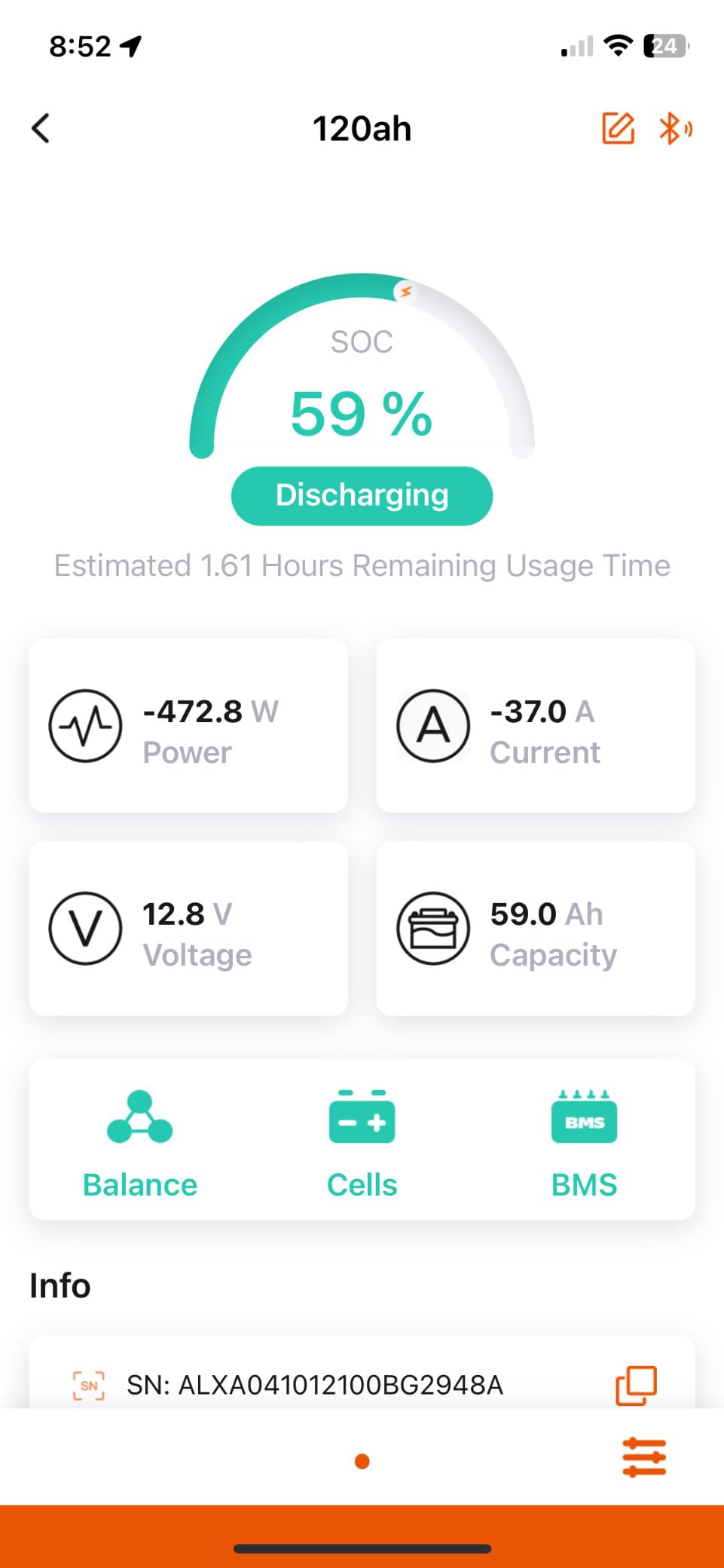
It is 63 percent lighter and 35 percent smaller than an equivalent lead-acid battery, with a 100A BMS carrying more than 20 safeguards including a low-temperature charge cutoff. The cells are automotive grade, rated for more than 4000 deep cycles and a 10-year lifespan, and the warranty is 5 years with 24/7 technical support.
Expansion runs to 4P4S for a maximum of 20.48kWh, and one full-time RVer reports getting a full week of off-grid camping from a parallel pair. Anglers report it handles high-draw trolling motor work while still retaining most of its rated capacity.
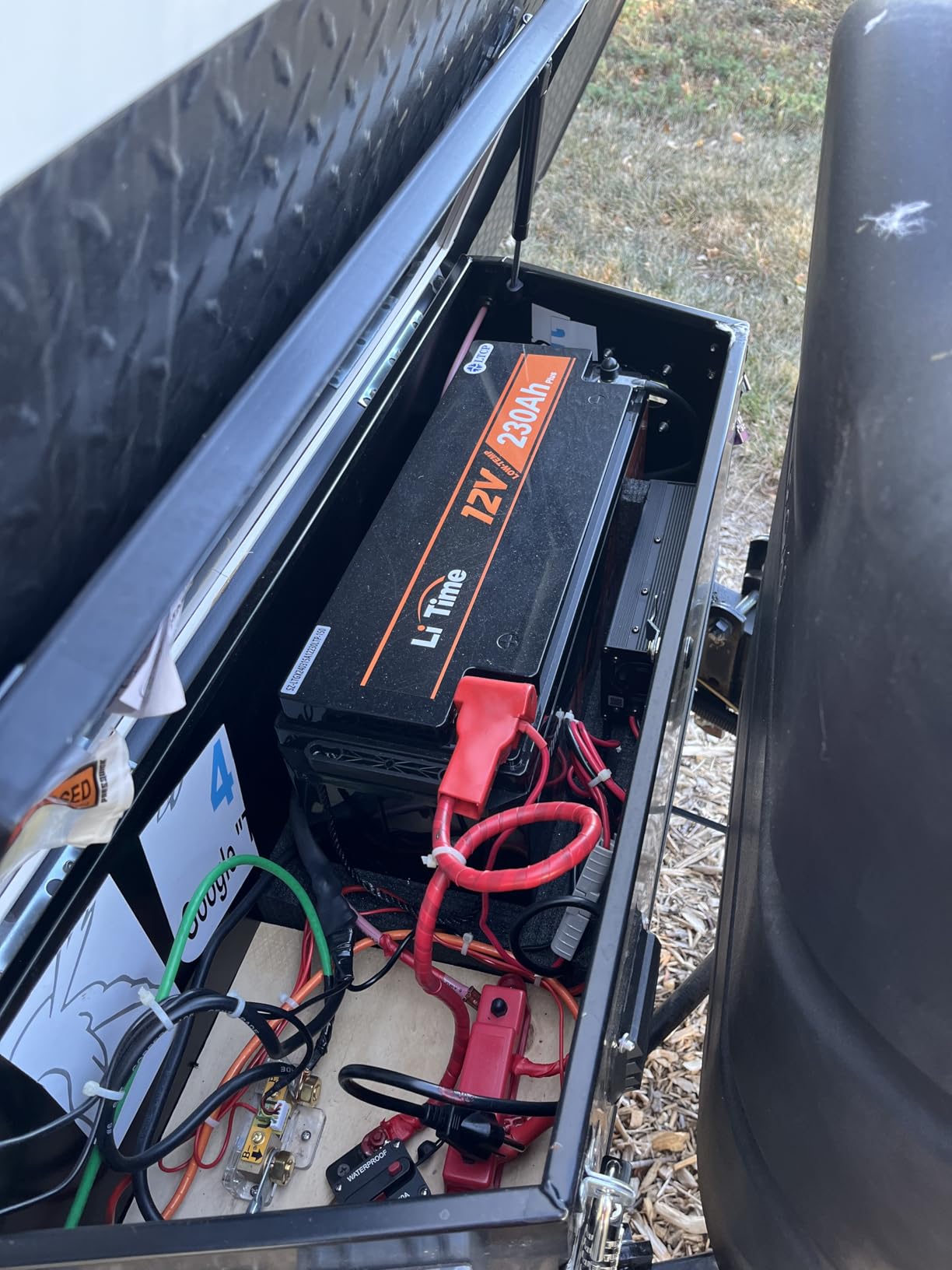
The IP65 enclosure is worth noting on a trailer that gets dusty and wet, and the direct Group 24 drop-in is the real headline, because most lithium conversions fail on fitment rather than on performance. At 1280Wh per unit you get roughly double the usable energy of a 100Ah AGM from a battery that is easier to lift than one AGM, which is why this unit is a common lithium recommendation in the roundup.
Why Bluetooth state of charge changes daily operation
AGM state of charge is inferred from voltage, which sags under load and gives a different reading every time you look. A Bluetooth BMS reports what the pack actually knows, including temperature, so you can see when a bank is being held back by a cold cell.
That visibility also makes troubleshooting faster. A bank that will not charge is either a controller profile problem, a temperature cutoff or a failed cell, and the app data usually tells you which within minutes.
Where the LiTime Group 24 falls short
The companion app is the most common complaint. Reviewers describe it freezing on status updates and forcing reconnects, and Bluetooth range is short enough that some users report needing to be near the battery compartment. If you want monitoring that never drops out, a shunt on the main negative terminal is more dependable.
There is no built-in heater, so cold-weather charging still relies on the low-temperature cutoff, which blocks charge rather than warming the pack. If you camp below freezing regularly, the self-heating model further down is the better tool for that job.
6. Daakmax 12V 100Ah AGM Deep Cycle Battery – Budget Starter Bank
- Entry point into the 100Ah sealed AGM class
- Sealed vibration-resistant ABS casing
- Terminal covers and hardware included
- Arrives pre-charged for immediate use
- 1-year warranty is among the shortest here
- Terminal hardware is awkward in tight compartments
- Weight and dimensions not published in the listing
If the build is a weekend trailer with a small array and a hard budget, a lead-acid bank is a legitimate answer rather than a compromise. This Daakmax unit is a 12V 100Ah sealed lead-acid AGM with a listed maximum discharge current of 1150A, and it is a straightforward route into a sealed 100Ah lead-acid bank without moving up to the lithium tier.
The case is a vibration-resistant ABS shell, which is the right material for a trailer floor or a boat, and self-discharge is 1 to 3 percent per month so a stored bank holds a charge through the off-season.
Owners report it arriving pre-charged and powering equipment straight out of the box, with terminal covers and hardware included for a clean install. That matters more than it sounds, because half an hour with loose hardware in a dark battery bay is how installs go wrong.
Application coverage is broad: RV, UPS backup, camping, marine and off-grid solar systems are all listed uses. For an emergency or shore power outage bank alongside a lithium upgrade, a pair of these is a reasonable add.
The honest limitation here is that the listing does not publish a weight or case dimensions, which is unusual for a battery. Check the physical size against your bay before you commit, because the Group 31 shape is common for 100Ah lead-acid and the tray has to match.
You are also accepting the 50 percent depth-of-discharge ceiling. A 100Ah AGM is roughly 640Wh of usable energy, so plan on a matched pair for a weekend away from shore power.
When an AGM bank is still the right answer
Small arrays charge slowly, and lead-acid tolerates low-and-slow solar-only charging better than lithium. Owners with modest panels and no generator often prefer AGM precisely because a weak array will not keep a lithium bank at its absorption voltage.
Simplicity has value too. A sealed lead-acid bank works with a basic PWM controller, needs no app, and cannot be damaged by a lithium charge profile. For a first build or a trailer used four weeks a year, that is a fair trade.
Where the Daakmax falls short
The 1-year warranty is among the shortest in this group, and it is the main reason we would not put these in a full-time build. A deep cycle bank cycles hard, and a one-year term means the entire risk sits with you.
Installation hardware is the practical friction point. Reviewers describe the terminal square nuts as awkward to hold in a tight compartment and wish for shorter terminal screws, so allow extra time and a second pair of hands. A large share of the visible reviews also cover smaller powersport starter batteries rather than this 100Ah deep cycle unit, so read carefully before you take a data point as gospel.
7. LiTime 12V 100Ah Self-Heating LiFePO4 Battery – Best for Winter Boondocking
Litime 12v 100Ah RV Self-Heating LiFePO4 Lithium Battery for Marine, Camper
- Two self-heating modes for sub-freezing charging
- Highest-rated battery in this group at 4.7
- Group 24 drop-in with OEM terminal layout
- Bluetooth 5.0 monitoring
- Needs a wake-up charge before the app connects
- App is largely informational
- A small number of units arrive unable to connect
This is the highest-rated battery in the group, and the reason is not marginal. Its self-heating function is the single feature that separates winter boondocking from guesswork, which is the failure mode owners on cold-weather forums describe most often: a lithium bank that simply refuses to charge because the cells are below freezing.
Two heating modes are offered. The regular mode heats the pack below 41F and stops at 50F before charging begins, and an energy-efficient mode does the same with lower draw, so you are not burning stored energy just to get the cells into a chargeable range.
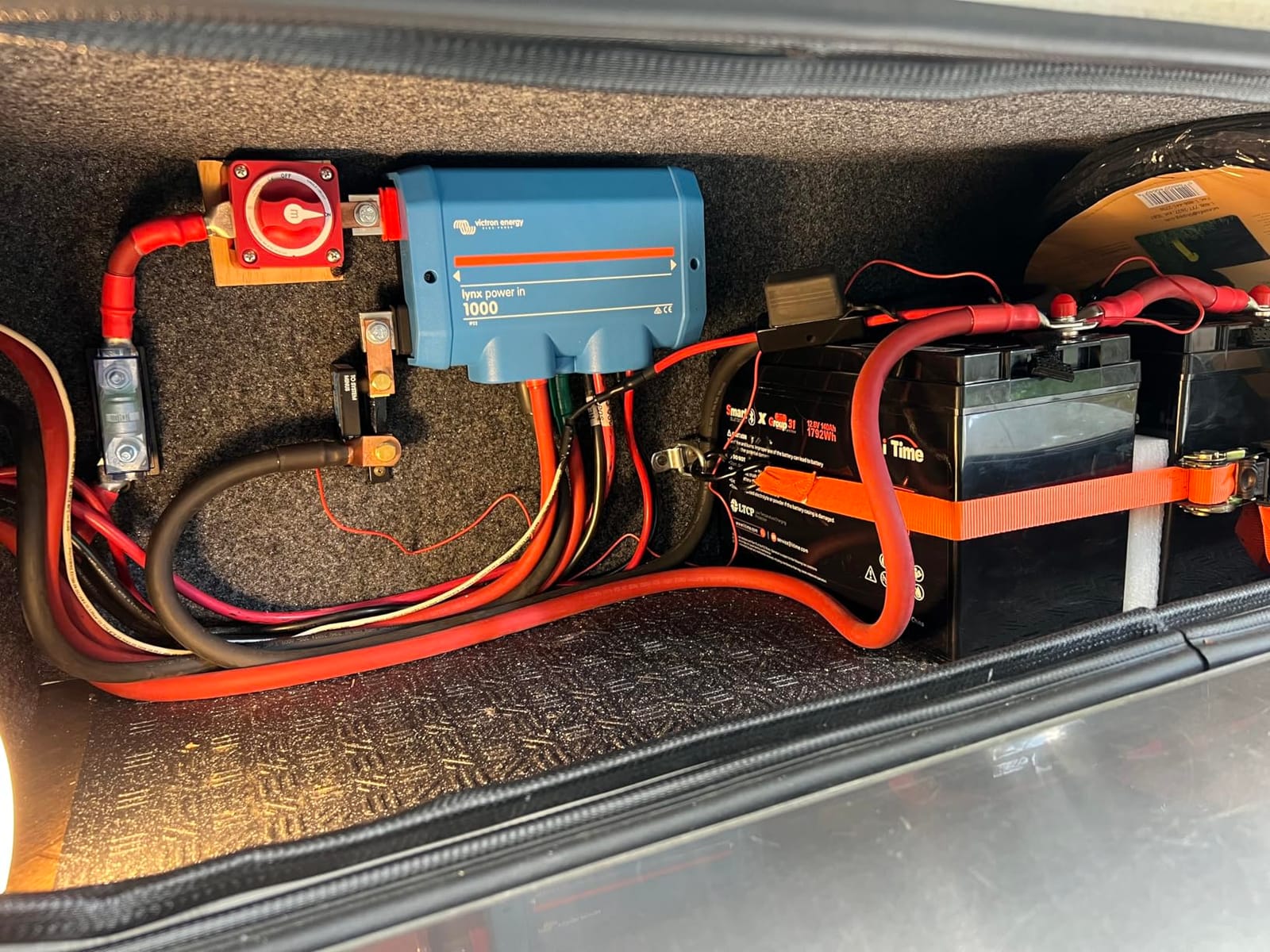
Everything else here is a strong Group 24 drop-in. Terminal layout matches the OEM AGM it replaces so no rewiring is needed, Bluetooth 5.0 gives real-time telemetry through the LiTime app, and the pack carries a 5-year warranty with 4000+ deep cycles at 100 percent depth of discharge from automotive grade cells.
Weight is about 22.71 pounds against 57 to 64 pounds for a comparable AGM, and owners converting RV, trailer and marine lead-acid banks report removing roughly 60 pounds of tongue weight per matched pair.
Protection is thorough, with more than 20 safety layers, 30-second overload auto-recovery and IP65 dust and water resistance. Expansion to 4P4S covers up to 16 batteries and 20.48kWh if your converter and inverter are sized for it.
Because the case is a universal Group 24 fit, this is also one of the cleanest swaps in the roundup for anyone still on factory lead-acid and unhappy with how their bank performs in February.
Why self-heating is worth it above 32F
Charging a lithium cell below freezing causes lithium plating, where lithium metal deposits inside the cell and permanently reduces capacity. Standard BMS cutoffs prevent the damage by refusing to charge, which protects the battery but still leaves you without power.
Self-heating resolves that trade. The pack brings its own cells up to a safe temperature and then charges, so a self-heating unit keeps producing in conditions where a non-heating lithium bank simply sits at 32F. If your winter trips outnumber your summer ones, this is the pick.
Where the self-heating LiTime falls short
It has to be woken with a LiFePO4 or MPPT charger after delivery before the Bluetooth app will connect, which catches out a lot of first-time buyers. The app is also largely informational and asks for repeated sign-ins, so treat it as a diagnostic tool rather than a live dashboard.
A small number of units have arrived unable to connect over Bluetooth or accept a charge at all. Plan your first charge as a deliberate step before you wire anything, and keep the receipt.
8. WattCycle 12V 100Ah Mini LiFePO4 Battery – Smallest Footprint
WattCycle 12V 100Ah Mini LiFePO4 Battery with Bluetooth 100A BMS Group 24
- Smallest case in the group at 9 x 5.4 x 8.2 inches
- 39 percent volume reduction
- EV Grade A+ cells rated up to 15000 cycles
- Bluetooth app with remote power down
- Multiple owners report BMS not restarting after cold shutdown
- Two competing apps and connection issues
- May read low voltage until the app wakes the BMS
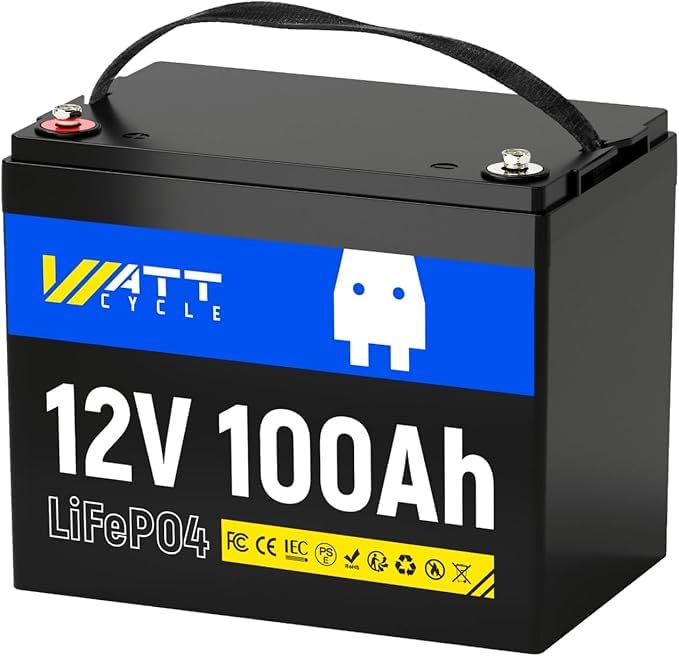
Size is the whole pitch here. This is a 12V 100Ah LiFePO4 pack measuring 9.02 by 5.43 by 8.19 inches and weighing 20.94 pounds, which makes it the most compact case in the entire group and one of the easiest lithium options to hide in a tight bay or a converted van.
That footprint comes from the mini form factor, an 11 percent weight and 39 percent volume reduction against the first generation, at an energy density of 63Wh per pound. Cells are EV Grade A+ lithium iron phosphate rated for a 10-year lifespan and up to 15000 cycles.
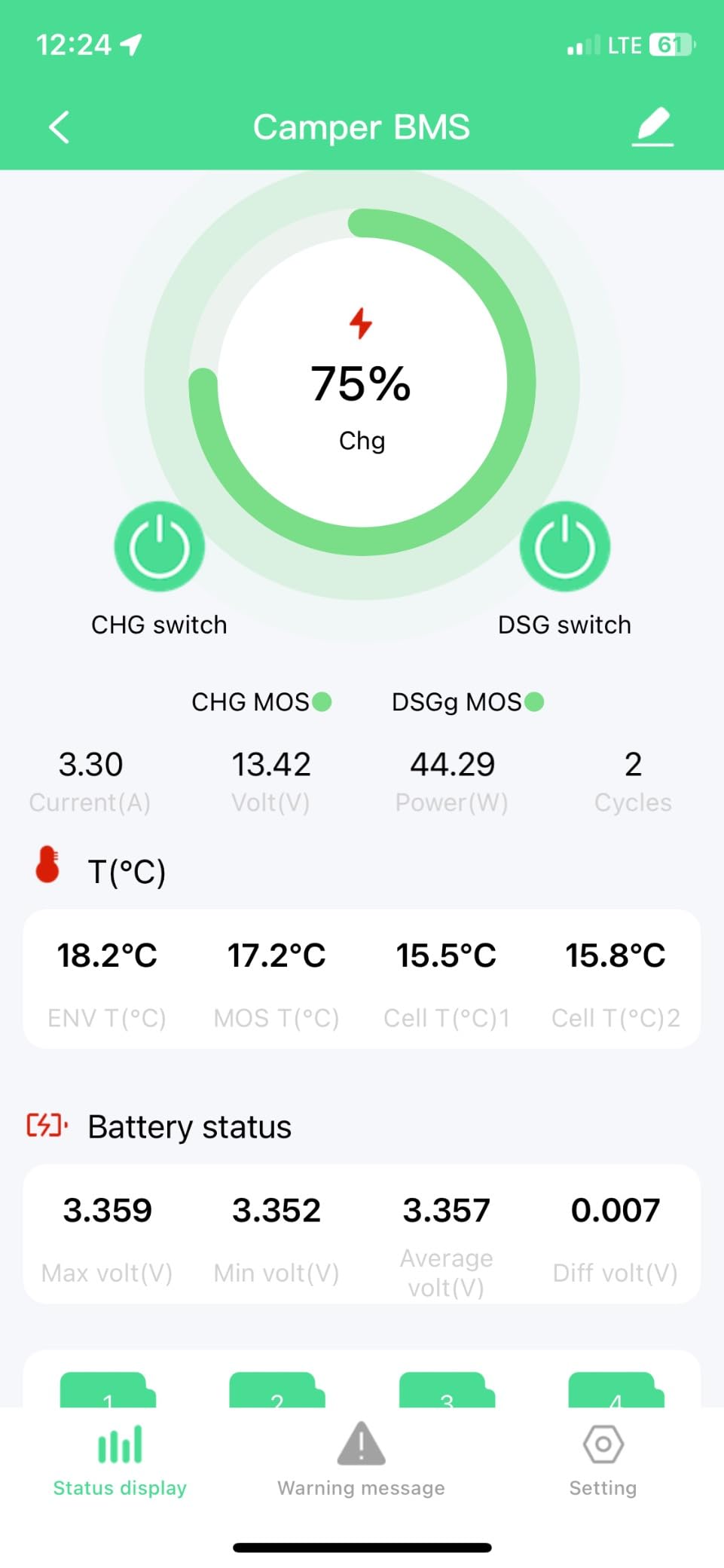
Operating range is -4F to 158F with automatic low-temperature shutdown, and the 100A BMS covers overcharge, deep discharge, overload, overheating, low temperature and short circuit. The warranty is 5 years, and support is reported as responding within 24 hours.
The Bluetooth app shows voltage, charge and discharge current, temperature and alarms, and it can power the battery down remotely. That last function is genuinely useful on a trailer, where a parasitic drain from an appliance you cannot reach is a common and expensive discovery.
Owners report charging times that match the 100Ah rating in controlled tests, and an angler still had 40 percent charge after a full day of trolling in wind and current. Customer support has also processed full multi-battery warranty replacements and covered the cost of return postage, which is the behaviour you want when a lithium unit fails.
For a van conversion where every cubic inch is contested, this is the pick. It delivers 100Ah of lithium capacity in a case lighter than one 100Ah AGM, and it fits where a Group 31 lithium case never will.
Where the mini footprint pays off
Van builds and small trailers run out of bay volume long before they run out of payload. A 39 percent volume reduction against a first-generation case of the same capacity means you can often double your bank without relocating anything.
It is also a good fix for an awkward original battery tray. If your compartment was built around a small case with plenty of clearance around it, this is the lithium unit that will actually land in it.
Where the WattCycle falls short
Reliability after a cold shutdown is the significant negative theme in reviews. Multiple owners report the internal BMS failing to restart once the pack has tripped its low-temperature protection, which is exactly the scenario a winter buyer cares about.
App fragmentation compounds it. There are two competing apps, the older one stopped working after a permissions update, and individual batteries connect inconsistently, so some buyers end up with a battery they cannot monitor at all. Some units also read low voltage until the app wakes the BMS.
9. WindyNation 100Ah 12V AGM Deep Cycle Battery – Lead-Acid That Keeps Going
WindyNation 100 amp-Hour 100AH 12V 12 Volt AGM Deep Cycle Sealed Lead Acid Battery – Solar RV UPS Off-Grid (1 pc 100 amp-Hour)
- Made from 99.995% pure virgin lead
- Multi-year service reported in owner reviews
- Includes lifting strap and terminal protectors
- 100Ah at the 10-hour rate
- 66 to 71 lb makes lifting a two-person job
- Voltage sags noticeably while discharging
- Capacity declines in cold weather after several years
There is a case for buying a battery that has already proven its lifespan in service, and this is it. WindyNation uses 99.995 percent pure virgin lead rather than recycled lead, which is the spec line that shows up in long-duration owner reports, and the float life is rated at 10 to 12 years at 25C.
The capacity figures are honest and specific: 100Ah at the 10-hour rate and 110Ah at the 20-hour rate, rather than a headline number measured at a gentler discharge. That is the number that matters for a solar bank, and seeing it stated plainly is a good sign about the rest of the datasheet.
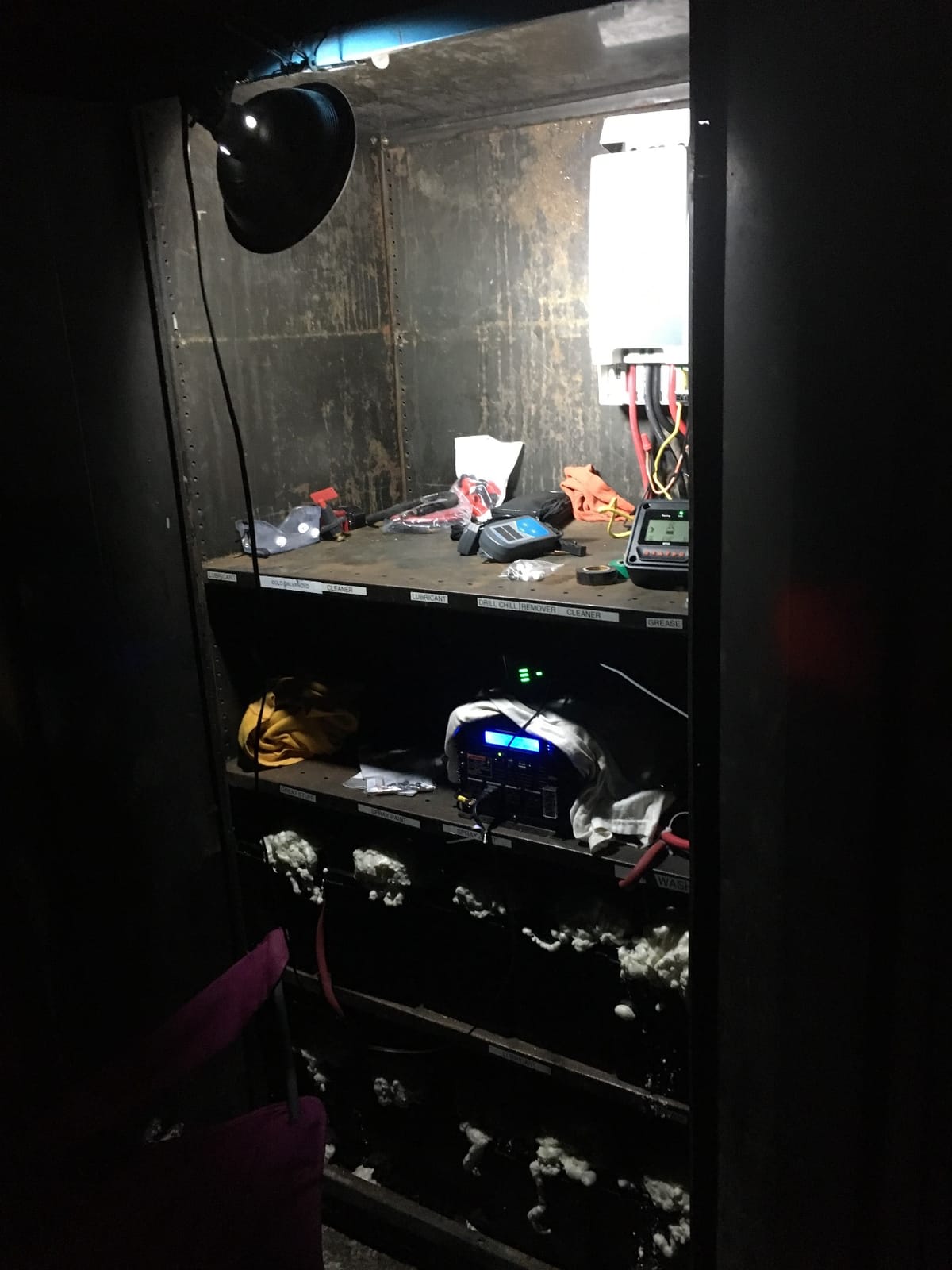
Owners report genuinely durable service, including individual batteries lasting 6 to 7 years in boondocking and trolling duty, with one owner citing seven years of service. It is also reported to run cool, around 30C while charging under load, which matters in a sealed battery bay.
The box includes a lifting strap and red and black terminal protectors already attached, which is more thoughtful packing than most lead-acid offers at this level. It suits solar, RV, UPS, offshore marine, telecom and portable tool duties, so it is not a single-application battery.
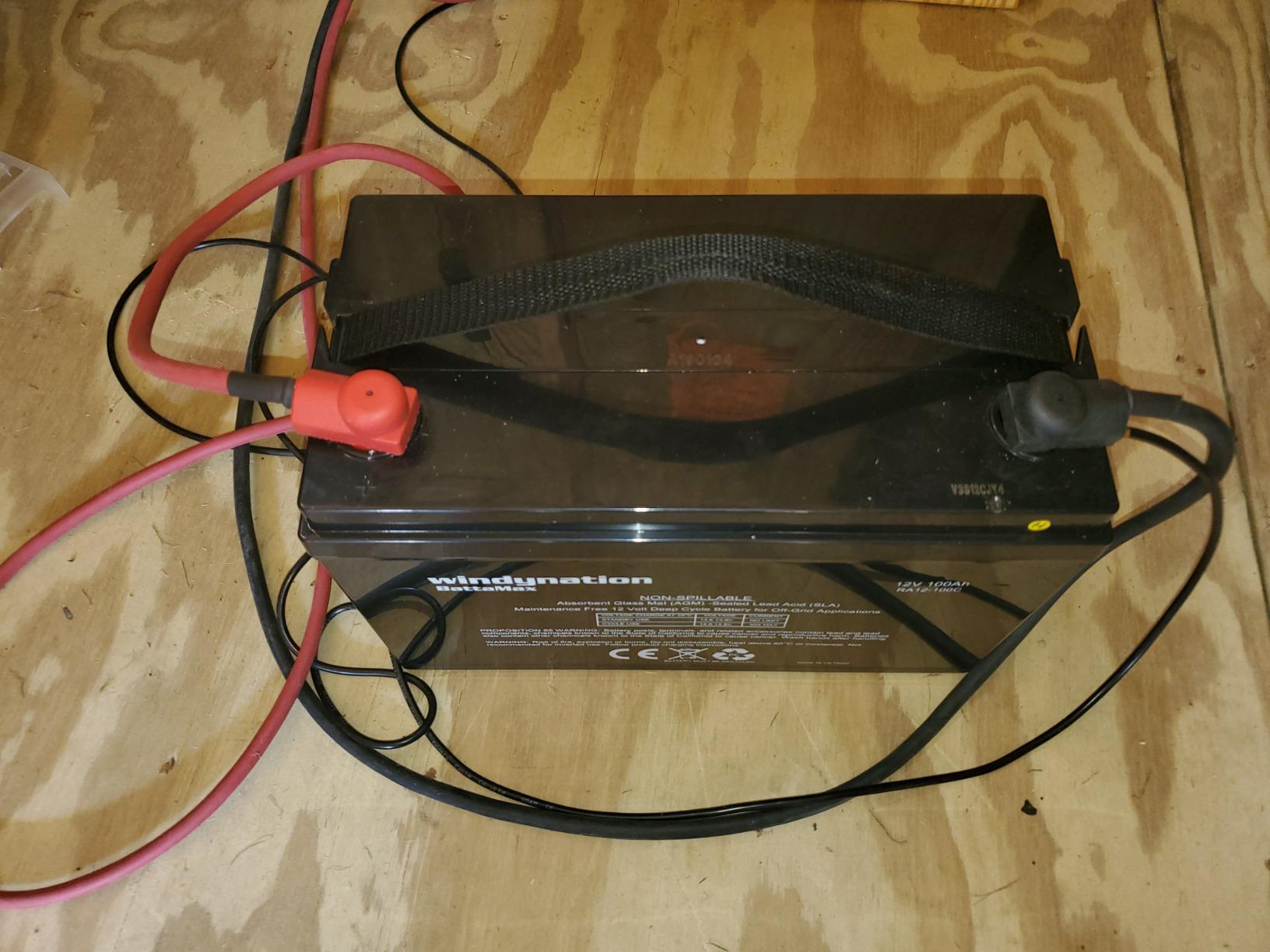
At 66 to 71 pounds, depending on which unit in the range you take, this is among the heaviest batteries in the roundup by a wide margin. Dimensions are 13 by 6.8 by 8.7 inches, so it needs both floor area and a two-person lift, and lifting into a boat or trailer is the friction point buyers mention most.
The second real limitation is voltage sag while discharging. One buyer treated that sag as the reason to upgrade to a 24V lithium system, which is a telling reaction, because lead-acid voltage under load is the physical limit you are paying for with the lower purchase price.
What long-service lead-acid actually gives you
Nothing here is exotic. Deep cycle AGM plates, a sealed case, no watering, no ventilation requirement and a chemistry that every basic charge controller handles correctly. The appeal is steady reliability with a service record behind it.
Float life of 10 to 12 years at 25C is a laboratory figure rather than a boondocking promise, but the reported multi-year service suggests the plates hold up when they are actually cycled rather than merely floated.
Where the WindyNation falls short
Weight is the dominant drawback at 66 to 71 pounds, and it compounds in a bank. Two of these together come to well over 130 pounds of payload before you add anything else, which is why so many full-time RVers have moved off lead-acid entirely.
Capacity also declines after several years of use, particularly in cold weather, and the 50 percent depth-of-discharge ceiling still applies. If your trailer is heavy enough that payload matters, or your trips run through winter, this is the wrong shape of solution.
10. LiTime 12V 100Ah RV LiFePO4 Battery – Best for Boats and Trailers
Litime 12v 100Ah RV LiFePO4 Lithium Battery for Van, Marine, Off-Grid
- True Group 24 drop-in with no rewiring
- 1280Wh of 100% usable energy
- Grade-A LiFePO4 cells with a 100A BMS
- Storage loss of only 8% across five months
- No Bluetooth so state of charge needs a separate monitor
- Warranty handling can mean returning the battery overseas
- Not for golf carts or MerCruiser inboard systems
Sometimes the right lithium battery is the one that does less. This LiTime RV listing has no Bluetooth and no app, and it delivers 1280Wh of usable energy from a Group 24 case that weighs about 21 pounds, roughly one third the weight of a Group 24 AGM.
That simplicity has a practical appeal. No app to pair, no firmware, and no telemetry to interpret, and nothing to fail at 6am on a dark campsite, which is a real consideration for owners who have been disappointed by companion apps on other packs.
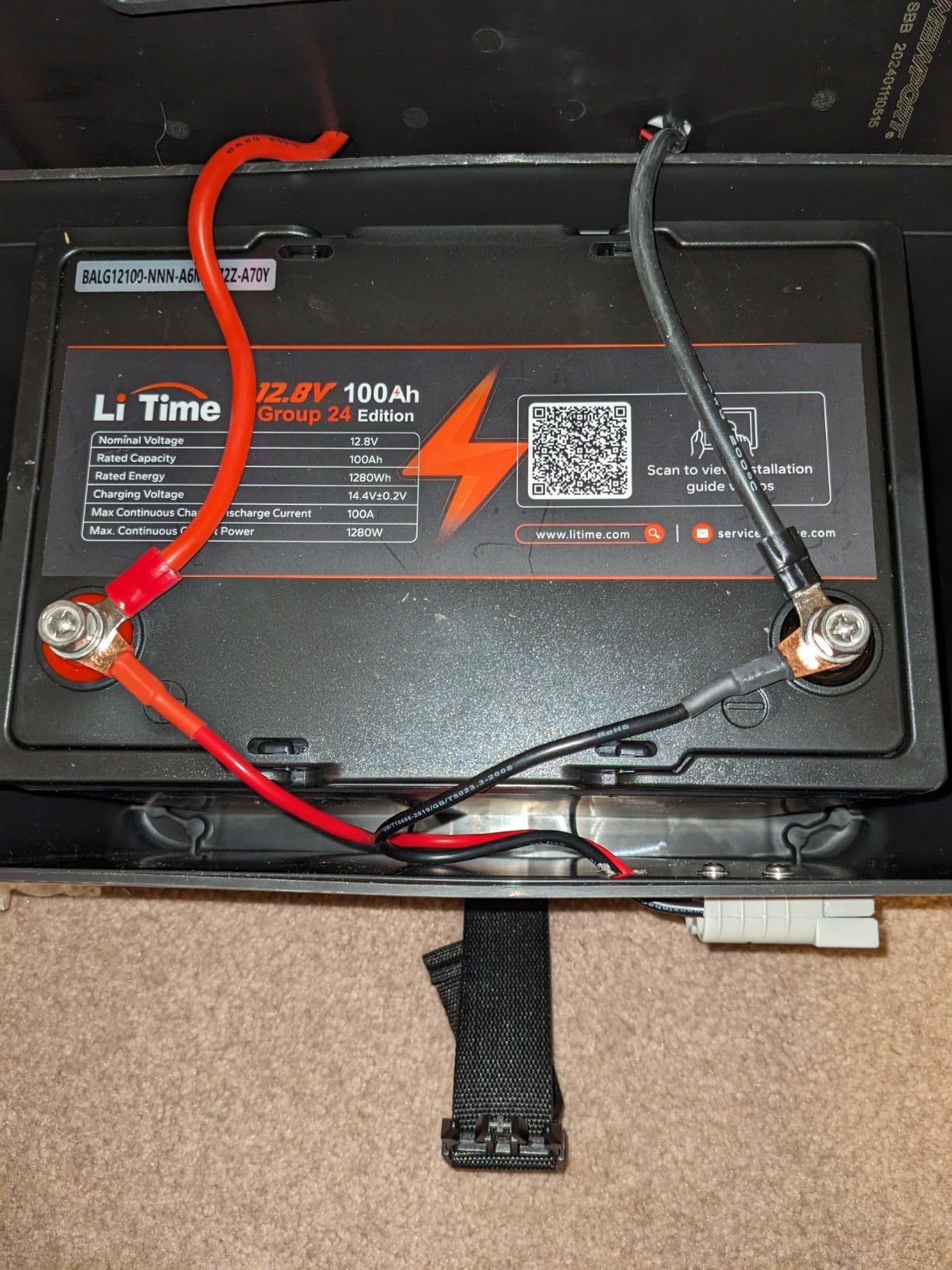
The cells are Grade-A LiFePO4 rated for 4000+ deep cycles and a 10-year design life, with a 100A BMS protecting against overcharge, over-discharge, short circuit and overheating. It is a BCI Group 24 universal fit, so it drops into a standard box as a direct replacement for AGM with no rewiring.
Storage behaviour is the standout in owner reports. One marine owner logged only 8 percent loss across five months of winter storage with no capacity fade into the second season, and a full season of 12V trolling motor use finished with more than 50 percent charge remaining.
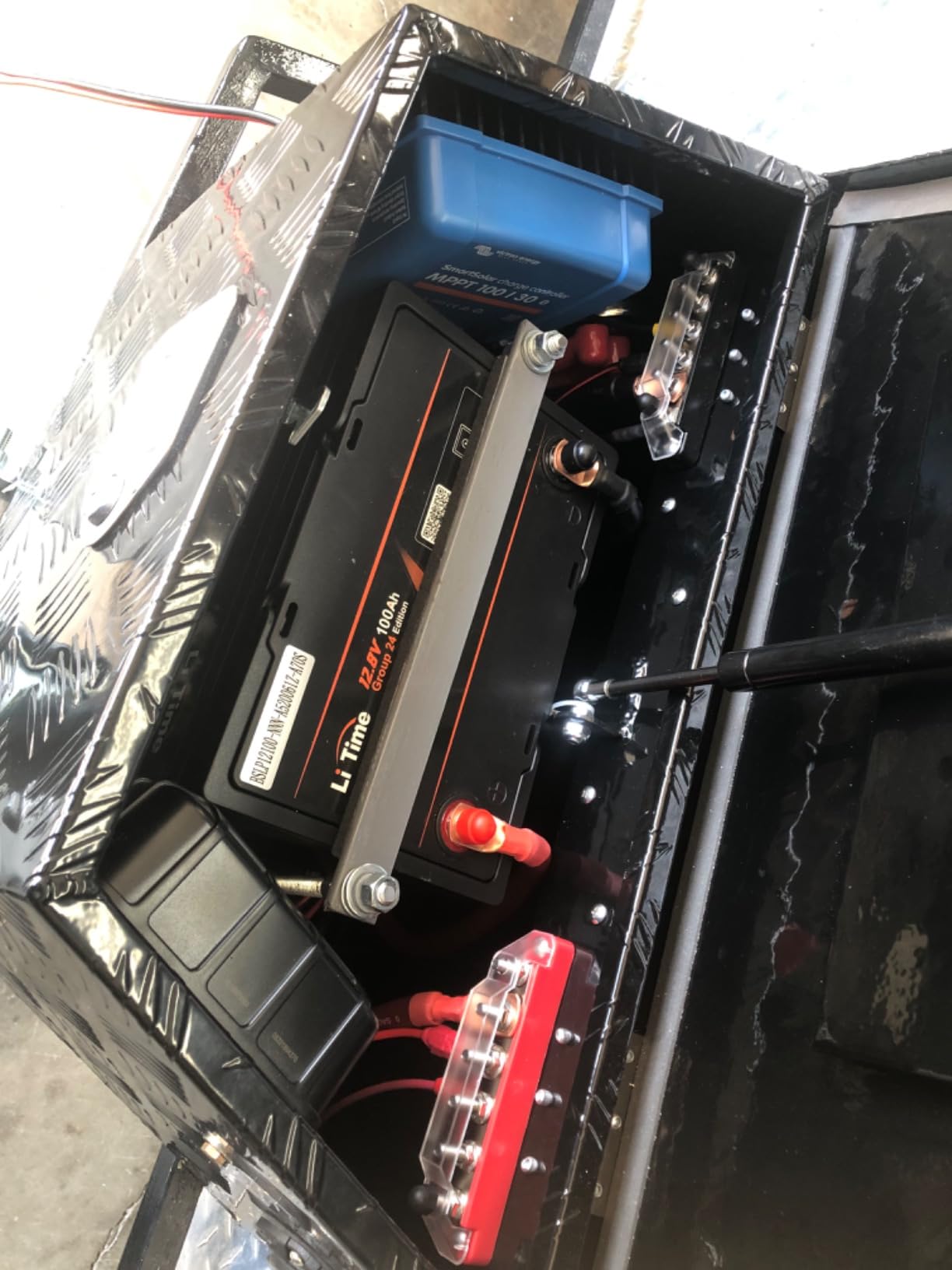
Expansion runs to 4P4S for a 51.2V 400Ah bank and up to 20.48kWh, and the stated trolling motor range is 30 to 70 pounds of thrust, which covers most recreational setups. The warranty is 5 years.
Dimensions are 14.49 by 7.44 by 10.04 inches, so it is a tall Group 24 case. Check clearance under a moulded cover before ordering, because height is the dimension that catches people out.
Why skipping Bluetooth can be the right call
Without an app, you need a monitor to know your state of charge, and that means a shunt on the main negative terminal. Owners who already run a Victron SmartShunt or a comparable monitor get accurate data and lose nothing by choosing this pack.
It also removes a whole failure category. Several of the lithium packs in this roundup draw most of their complaints from app reliability, and this one simply has no app to fail.
Where this LiTime falls short
Warranty handling is the main friction point. Some buyers have had to send a failed battery back overseas and wait for a refund, which can stretch a support problem into weeks, and a small number of units failed to charge out of the box and needed a wake-up procedure.
It is also explicitly not suitable for golf carts, jacks or MerCruiser marine engines and inboard systems, so check that list before you buy for a boat. If you want built-in monitoring, step back up to the Bluetooth version earlier in this list.
RV Solar Battery Buying Guide: Chemistry, Capacity and Cold Weather
LiFePO4 is the right default chemistry for a new RV solar bank, AGM is the right budget chemistry, and flooded or gel are worth skipping in a trailer entirely. The decision comes down to how much usable energy you get per pound, how many cycles it will survive, and what happens in cold weather.
LiFePO4 vs AGM vs Flooded vs Gel: what actually changes
LiFePO4 gives you close to 100 percent of rated capacity as usable energy, weighs roughly 60 percent less than an equivalent lead-acid battery, tolerates daily deep discharge, and uses an integrated BMS. Its limits are cost per amp-hour and the need for a lithium charge profile on your controller.
AGM is sealed and maintenance-free with self-discharge around 1 to 3 percent per month, but realistic usable depth of discharge is about 50 percent, and it runs sulfation risk when it sits undercharged on a small solar array. Flooded lead acid is cheaper still and needs water, ventilation and a level check, which is why it rarely belongs inside an enclosed trailer bay. Gel cells are similar to AGM on usable capacity, tolerate a slow charge better, and are typically priced above AGM for a marginal gain.
Forum consensus across RV and van-living communities lands in the same place: LiFePO4 has moved from almost ready for everyone to the practical default for new builds, while AGM remains a defensible choice for small arrays and fixed budgets.
Depth of discharge and usable amp-hours
Depth of discharge, or DoD, is the share of rated capacity you can actually take out before the battery is unhappy. Lead-acid is happiest near 50 percent. Lithium is specified for 100 percent on these cells, which is why a 100Ah LiFePO4 unit stores about 1280Wh of usable energy while a 100Ah AGM gives you roughly 640Wh.
That is the number to size a bank with, not the label. Two 100Ah AGM batteries in parallel and one 100Ah lithium battery hold broadly comparable usable energy, and the lithium pair of that comparison carries well over 90 pounds less, which on a full-time trailer is the difference between adding panels and not.
Cold cranking amps do not apply to a house bank
Cold cranking amps measure how much current a battery delivers in a few seconds to start an engine. Your house bank never does that job, so a high CCA figure is not a reason to buy. What matters instead is continuous discharge current, so your fridge, water pump and inverter have the amps they need for hours at a time.
Several batteries here quote a 1100A to 1150A five-second figure. That is a starter-grade number, and while it is reassuring for a surge, it tells you nothing about whether the battery can hold a 10A load for 20 hours.
Case size, Group 24 and Group 31, and payload weight
Group 24 and Group 31 describe physical case sizes, not chemistry, is the most common reason a good battery ends up unused. Measure your bay and the lid clearance before ordering, because the tall Group 24 cases and the long Group 31 cases do not interchange.
Then check payload. The lead-acid options here weigh 57, 63.9 and 66 to 71 pounds, while the lithium units run about 21 to 25 pounds, and the 200Ah lithium case is 58.9 pounds. Full-time RVers who are near GVWR should do the weight math before anything else.
On payload-limited builds, storage matters too. If your battery bay doubles as a cabinet, our deep drawer organizer picks and deep dresser reviews cover the interior side of the same space problem, and lighter batteries free up room for larger living space conversions.
How to Size an RV Solar Battery Bank
Size the bank from your daily load in watt-hours, not from the inverter size and not from the panel wattage. Work through it in four steps, and the whole calculation takes about ten minutes.
Step 1: daily load in Wh. Add up the average draw of everything that runs on battery: a 12V fridge compressor cycling roughly a third of the time, interior and exterior lights, a water pump, a router, a phone charger, and anything on the inverter. Multiply watts by hours of use per day for each item.
Step 2: apply inverter losses. A typical inverter runs at about 90 percent efficiency, so divide your Wh figure by 0.9 to get the DC energy the bank has to supply. If you run a large 12V fridge directly with a DC-to-DC converter, losses are much smaller.
Step 3: add days of autonomy. Multiply your corrected daily figure by the number of cloudy days you want to cover. A weekend camper often chooses 2, a full-time RVer usually wants 3.
Step 4: convert to amp-hours using depth of discharge. Divide total watt-hours by 12.8V for a 12V bank, then divide by your usable depth of discharge, 0.8 to 0.9 for lithium and 0.5 for AGM. A common owner build lands around 5120Wh usable, which is four 100Ah LiFePO4 units in parallel, and that covers roughly 40 percent of a typical 1550Wh per day RV load.
Match your array and MPPT charge controller to the bank
A bank larger than your array can recharge is a bank that lives at partial state of charge, and that is what sulfates AGM. A common working pattern reported on RV forums is two Group 31 deep cycle batteries in parallel with 200W of solar, which is a deliberately conservative ratio.
As a rule of thumb, size the MPPT controller so its output current comfortably covers the bank at your chosen charge rate, and set the profile to lithium with equalisation disabled if you are running LiFePO4. Never run a lead-acid equalisation cycle at 15.5V against a lithium bank; overcharging lithium is the fastest way to end its life.
If your 200W array can only average a couple of amps of charge on a good day, a 200Ah bank is not going to reach full charge often. In that case, either add panels, accept a smaller bank, or stay on AGM where a chronically undercharged state is less damaging.
12V vs 24V, Series vs Parallel, and Battery Bay Safety
Stay on 12V unless you are running a large inverter, and never run more than two batteries in parallel per string. Those two rules cover most of what goes wrong with DIY bank wiring.
Series vs parallel, and the parallel limit
Parallel wiring adds amp-hours, so two identical 12V 100Ah batteries in parallel give you a 12V 200Ah bank. Series wiring adds voltage, so four 12V 100Ah units in series give a 48V bank, and many of the lithium packs here support 4S configuration for exactly that reason.
Owners commonly ask how many in parallel is too many, and the practical answer is two. Beyond two parallel batteries, small differences in internal resistance and state of health cause the weakest cell to carry more current than its share, which ages the pack unevenly. If you need more than 400Ah, move to a 24V system rather than a third parallel string. Match age, chemistry and capacity whenever you combine banks, and never mix a new lithium battery with an old lead-acid one in the same string.
Battery bay ventilation, fusing and torque
Lead-acid is sealed and needs no ventilation, which is one of its quieter advantages inside an RV. Lithium gives off very little gas, but a battery bay still needs a fuse or breaker on the positive lead close to the battery, a secure hold-down that survives road vibration, and terminals torqued to the manufacturer figure rather than snugged by feel.
Keep the compartment dry, keep metal tools away from the terminals, and check the bank voltage before and after a long storage period. If you are leaving the trailer for the winter, bring the bank to 40 to 60 percent state of charge and leave the solar controller connected so it can top up slowly.
Frequently Asked Questions
What is the best deep cycle battery for solar?
A 12V 100Ah or 200Ah LiFePO4 battery with a built-in BMS, Bluetooth monitoring and a low-temperature charge cutoff is the best deep cycle battery for solar. LiFePO4 stores roughly 1280Wh of usable energy per 100Ah unit at 12.8V nominal, versus about 640Wh from an AGM of the same label. Always pair it with a charge controller set to the lithium profile with equalisation disabled.
Are deep cycle batteries good for solar power?
Yes. Deep cycle batteries are designed for exactly what a solar bank does: deliver steady amperage for hours, be drained well below full, and be recharged thousands of times. A starter battery is built for one short high-current burst and will sulfate quickly under repeated solar cycling. The only chemistry caveat is that a small array may not keep a large lead-acid bank fully charged, so match bank size to panel wattage.
What is the best battery for a boondocking RV?
For most boondocking setups, a 12V 100Ah LiFePO4 battery in a Group 24 case is the best balance of usable capacity, weight and drop-in fit, with a second identical unit in parallel for weekend trips. If you camp below freezing, choose a self-heating model that charges below 32F. If your array is small and charging is marginal, a matched pair of 100Ah AGM batteries is a defensible lower-cost choice.
Are Lifepo4 batteries better than AGM?
For most RV solar builds, yes. LiFePO4 gives close to 100 percent usable depth of discharge against about 50 percent for AGM, weighs roughly 60 percent less, tolerates slow solar-only charging without sulfating, and carries 4,000+ cycle ratings with 5-year warranties. AGM wins on purchase cost, on tolerance of very low charge current, and on simplicity with a basic lead-acid charge controller.
What size solar panel do I need to keep my RV battery charged?
Match panel wattage to your daily load in watt-hours, then confirm the controller can cover the bank. A 200W array suits a weekend bank of about 200Ah, a 400W array suits 400Ah, and a 600W array suits 600Ah of lithium. A frequently cited owner build is two Group 31 deep cycle batteries in parallel with 200W of solar. Undersizing the array leaves the bank chronically undercharged, which is the main cause of lead-acid sulfation.
Which is better for camping, a lithium battery or an AGM battery?
Lithium is better for most campers because you carry less weight for more usable energy and can run a 12V fridge for days without watching state of charge. AGM is better if your budget is fixed, your panel array is small, or you camp in cold weather and want a battery that accepts a charge without a low-temperature cutoff. Cold-weather boondockers should look for a self-heating lithium model rather than lead-acid.
Which Deep Cycle Battery Should You Buy?
For most people reading this, the best deep cycle batteries for RV solar come down to three picks. The WEIZE 12V 100Ah AGM is the one to buy if you want the deepest review history in the group, a simple lead-acid charge profile and a chemistry every basic controller handles. The LiTime 12V 100Ah Group 24 LiFePO4 is the one to buy if you are ready for lithium and want Bluetooth state of charge plus a true drop-in fit. The LiTime self-heating 12V 100Ah is the one to buy if you camp below freezing and refuse to give up charging in January.
Match the rest of the roundup to your situation. Weight-limited van and trailer builds should look at the WattCycle mini case or the Redodo Group 31, a single-battery 200Ah build fits the Dumfume, boats and simple non-monitored setups suit the no-Bluetooth LiTime, and small arrays on a fixed budget are honestly served by either the Renogy or the budget Daakmax.
Before you order anything, measure the bay, confirm your charge controller has a lithium profile, and size the array to the bank. If interior space is the other half of the puzzle, our deep carpet cleaning guide is for the spring reset after a season off-grid, and our deep seat sofa picks cover the interior upgrades that freed payload makes possible.