
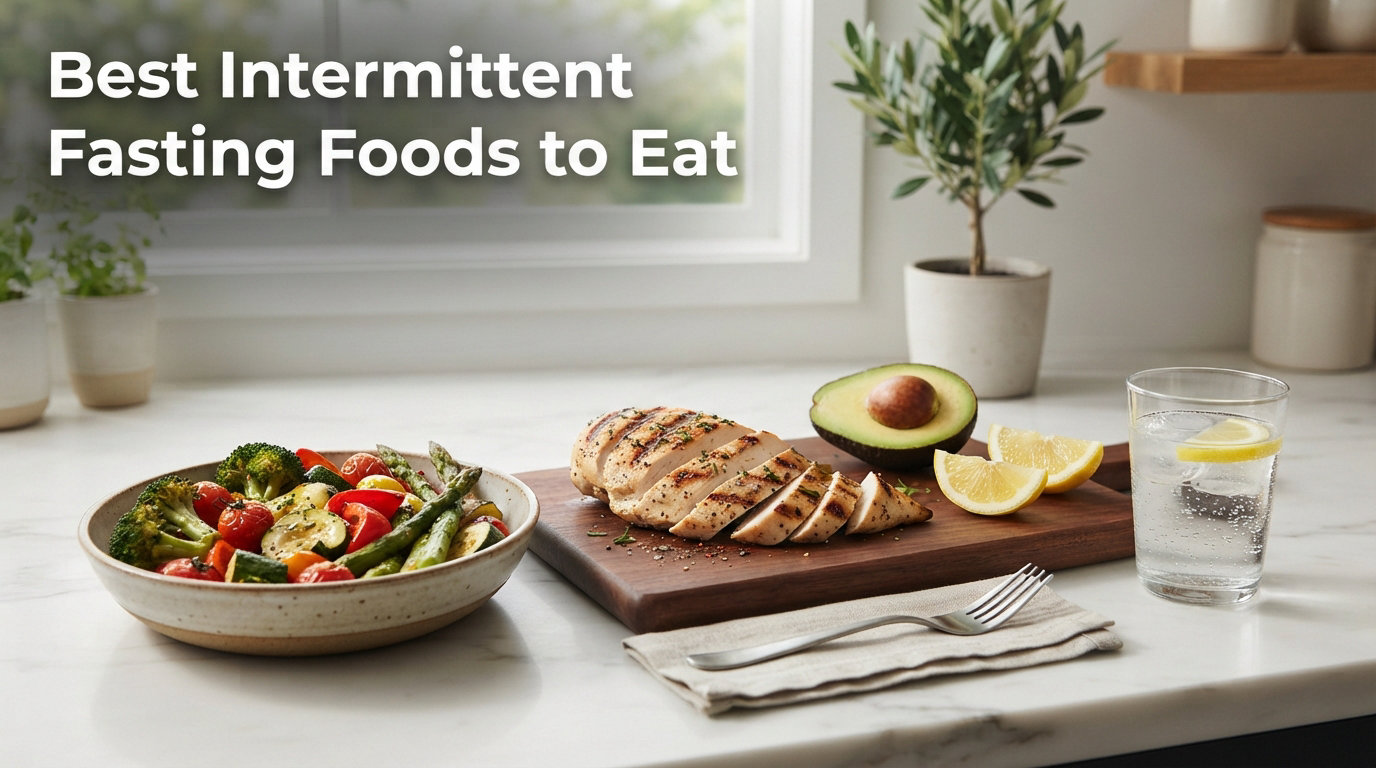
Intermittent fasting tells you when to eat, but food quality still matters during the eating window. The best intermittent fasting foods to eat are satisfying, nutrient-dense choices that provide protein, fiber, healthy fats, vitamins, and minerals rather than trying to “make up” for fasting with an oversized meal.
This guide covers practical foods for breaking a fast and building balanced meals. Intermittent fasting is not appropriate for everyone, and it does not guarantee weight loss or better health. Speak with your health-care professional before starting, especially if you take medication or have a medical condition.
Table of Contents
What Counts as Intermittent Fasting?
Intermittent fasting is an eating pattern that alternates regular periods of eating and fasting. Common approaches include a daily eating window, the 5:2 pattern, and alternate-day fasting. Researchers are still studying the long-term benefits, risks, and practicality of these approaches. What you eat during the eating window remains important because a shorter schedule does not automatically create a balanced diet.
20 Best Intermittent Fasting Foods to Eat
1. Eggs
Eggs provide complete protein and are easy to use in a first meal. Pair two eggs with vegetables and a high-fiber carbohydrate, such as whole-grain toast or beans, for a more complete plate. Boiled eggs are also convenient for a planned snack.
2. Plain Greek Yogurt
Greek yogurt offers protein and a creamy base for fruit, oats, nuts, or seeds. Choose plain yogurt to control added sugar, then sweeten it naturally with berries or chopped fruit. If you avoid dairy, look for an unsweetened fortified soy yogurt with a useful amount of protein.
3. Chicken or Turkey
Skinless chicken and turkey are versatile lean protein choices. Roast or grill a batch for salads, grain bowls, soups, or wraps. A palm-sized portion alongside vegetables and whole grains can be satisfying without making the meal unnecessarily heavy.
4. Salmon and Other Oily Fish
Salmon, sardines, trout, and mackerel provide protein plus omega-3 fats. Pair fish with roasted vegetables, beans, potatoes, or brown rice. If using canned fish, compare sodium on the label and choose a lower-sodium option when possible.
5. Beans
Black beans, kidney beans, cannellini beans, and pinto beans combine plant protein with fiber. Add them to salads, soups, tacos, or grain bowls. Rinsing canned beans removes some of the sodium and makes them ready to use in minutes.
6. Lentils
Lentils cook more quickly than many dried beans and work in curries, soup, salad, or pasta sauce. Their combination of fiber and plant protein makes them especially useful when a long fasting period leaves you tempted to eat very quickly.
7. Tofu and Tempeh
Tofu and tempeh are substantial plant proteins that absorb marinades well. Bake tofu until crisp or sauté tempeh with vegetables. Calcium-set tofu can also contribute calcium, but amounts vary, so check the label.
8. Oats
Oats are an easy source of whole-grain carbohydrate and soluble fiber. Cook them with milk or a fortified alternative, then add Greek yogurt, chia seeds, or nuts for protein and fat. Unsweetened oatmeal is a gentler first meal than a sugary pastry.
9. Quinoa
Quinoa is a flexible whole-grain-style seed that supplies fiber and some protein. Use it under roasted vegetables, chicken, tofu, beans, or fish. Cooked quinoa keeps well in the refrigerator, which makes balanced meals faster to assemble.
10. Brown Rice and Other Whole Grains
Brown rice, barley, farro, and whole-wheat couscous provide energy and fiber. They are most satisfying when combined with protein and vegetables rather than eaten alone. Portion them according to your appetite and overall needs.
11. Sweet Potatoes
Sweet potatoes provide carbohydrate, fiber, potassium, and beta-carotene. Roast them with the skin on and pair them with turkey, beans, eggs, or tofu. A baked sweet potato also makes a useful base for leftover chili.
12. Berries
Strawberries, blueberries, raspberries, and blackberries bring sweetness, fluid, and fiber. Add them to yogurt or oats instead of drinking fruit juice, which removes much of the fiber and is easier to consume quickly.
13. Apples and Pears
Whole apples and pears are portable and keep well. Pair one with yogurt, cheese, or a small handful of nuts to make a more satisfying snack. Keep the edible skin on for additional fiber.
14. Leafy Greens
Spinach, kale, romaine, arugula, and collard greens add volume and nutrients to meals. They are not a full meal by themselves, so build a salad with protein, a fiber-rich carbohydrate, and a flavorful dressing.
15. Broccoli, Cauliflower, and Cabbage
These vegetables are easy to roast, steam, or stir-fry. Cabbage and cauliflower last particularly well in the refrigerator, while frozen broccoli is a convenient backup. If a large amount of raw cruciferous vegetables causes bloating, start with a smaller cooked serving.
16. Avocado
Avocado supplies unsaturated fat and fiber. A few slices can make eggs, toast, salads, or grain bowls more satisfying. It is energy-dense, so use an amount that fits naturally with the rest of the meal rather than treating it as unlimited.
17. Nuts
Almonds, walnuts, pistachios, and peanuts provide unsaturated fats, fiber, and some protein. A small handful is practical, while eating directly from a large bag makes portions harder to notice. Choose unsalted or lightly salted varieties when you can.
18. Chia, Flax, and Pumpkin Seeds
Seeds add texture and nutrients to yogurt, oatmeal, soup, or salad. Ground flax is easier for the body to use than whole flaxseed. Chia absorbs liquid, so mix it into moist foods and drink enough fluid during the eating window.
19. Olive Oil
Olive oil is a useful unsaturated fat for cooking and dressings. Whisk it with lemon juice, vinegar, herbs, or mustard for a simple sauce. A measured spoonful adds flavor without overwhelming the rest of the meal.
20. Water-Rich Foods
Cucumber, tomatoes, oranges, melon, soup, and yogurt contribute fluid along with food. They do not replace drinking water, but they can be helpful when rehydrating during the eating window.
For more ways to combine these foods, browse our high-fiber foods list, potassium-rich foods, and magnesium-rich foods.
Best Foods to Break a Fast
There is no required “fast-breaking” food for a routine overnight or time-restricted fast. Many people feel best starting with a moderate, balanced meal instead of a very large, greasy, or sugary one. Eat slowly and pay attention to comfort.
-
Greek yogurt with berries, oats, and walnuts
-
Eggs with sautéed spinach and whole-grain toast
-
Oatmeal with milk, chia seeds, and fruit
-
Lentil soup with a side salad and whole-grain bread
-
Chicken or tofu with brown rice and cooked vegetables
If you have fasted for an unusually long period, are ill, or have been unable to eat, ask a health professional for individual guidance rather than relying on a general internet list.
What Can You Drink During a Fast?
Water is the simplest choice. Some fasting plans also allow unsweetened tea or plain coffee, but the exact rules depend on the approach. Drinks with sugar, cream, juice, protein, or alcohol contain energy and generally end a strict fast.
More caffeine is not always better. Coffee can cause jitteriness, reflux, headache, or stomach discomfort in some people, especially without food. Avoid using excessive caffeine to suppress hunger, and remember that individual fluid needs vary with climate, activity, pregnancy, illness, and medication.
A Simple Balanced Eating-Window Example
This is an example, not a prescription. Change the timing, ingredients, and portions to suit your schedule, hunger, health needs, and cultural preferences.
First Meal
An egg-and-vegetable scramble, one slice of whole-grain toast, and a piece of fruit.
Optional Snack
Plain Greek yogurt with berries, or an apple with a small handful of nuts.
Main Meal
Salmon, tofu, chicken, or lentils with roasted vegetables and brown rice or a potato. Add a yogurt-herb sauce or olive-oil dressing for flavor.
For a different pattern, our Mediterranean diet food list offers more balanced meal components, and our weight loss meal prep ideas can help you prepare portions in advance.
Foods to Limit During the Eating Window
You do not need a list of completely forbidden foods. However, regularly filling a short eating window with sugary drinks, alcohol, highly refined snacks, or very large meals can crowd out needed nutrients and may leave you uncomfortable.
-
Sugar-sweetened drinks and frequent specialty coffees
-
Large portions of fried food
-
Highly refined snacks that provide little protein or fiber
-
Heavy alcohol intake, especially on an empty stomach
-
Very large meals eaten quickly at the end of a fast
Enjoyment still matters. A treat can fit within an overall balanced pattern; the aim is to make nourishing foods the foundation rather than to create another rigid set of rules.
Who Should Avoid Intermittent Fasting?
Johns Hopkins advises that intermittent fasting is not for everyone. Children and teenagers, people who are pregnant or breastfeeding, people with type 1 diabetes who take insulin, and those with a history of eating disorders should not try it without appropriate medical guidance. Anyone taking blood-sugar or blood-pressure medication, or living with a chronic condition, should speak with their clinician because meal timing may affect medication and symptoms.
Stop and seek medical advice if fasting causes fainting, confusion, persistent dizziness, severe weakness, vomiting, unusual anxiety, or symptoms of low blood sugar. Hunger is not a test of willpower, and a plan that makes you feel unwell is not a healthy plan for you.
Frequently Asked Questions
What is the best first meal after intermittent fasting?
A moderate meal that includes protein, fiber-rich carbohydrate, produce, and some unsaturated fat is a practical choice. Eggs with vegetables and whole-grain toast, or yogurt with oats, berries, and nuts, are simple examples.
Can I eat carbohydrates while intermittent fasting?
Yes. Intermittent fasting is a schedule, not a requirement to eliminate carbohydrates. Whole grains, beans, fruit, and starchy vegetables can be valuable sources of energy, fiber, vitamins, and minerals.
Can I drink coffee during intermittent fasting?
Many plans allow plain coffee, but rules vary. Sugar, cream, and flavored additions contain energy. If coffee on an empty stomach causes discomfort or makes you feel anxious or shaky, choose water or discuss the pattern with your clinician.
Does intermittent fasting guarantee weight loss?
No. Some people lose weight with it, while others do not. Total food intake, food choices, activity, sleep, medications, health conditions, and whether the schedule is sustainable all influence the outcome.
How much should I eat during the eating window?
There is no universal portion. Eat balanced meals that satisfy you without trying to compensate for the entire fasting period at once. A registered dietitian can help if you need an individualized target.
Conclusion
The best intermittent fasting foods to eat are ordinary, nourishing foods that make meals satisfying: protein, vegetables, fruit, whole grains, beans, and unsaturated fats. Build a pattern you can maintain, stay hydrated, and do not let a fasting clock override hunger, symptoms, medication needs, or medical advice.
Sources: National Institute on Aging: Research on Intermittent Fasting; Johns Hopkins Medicine: Intermittent Fasting; NIDDK: Intermittent Fasting and Type 2 Diabetes.