
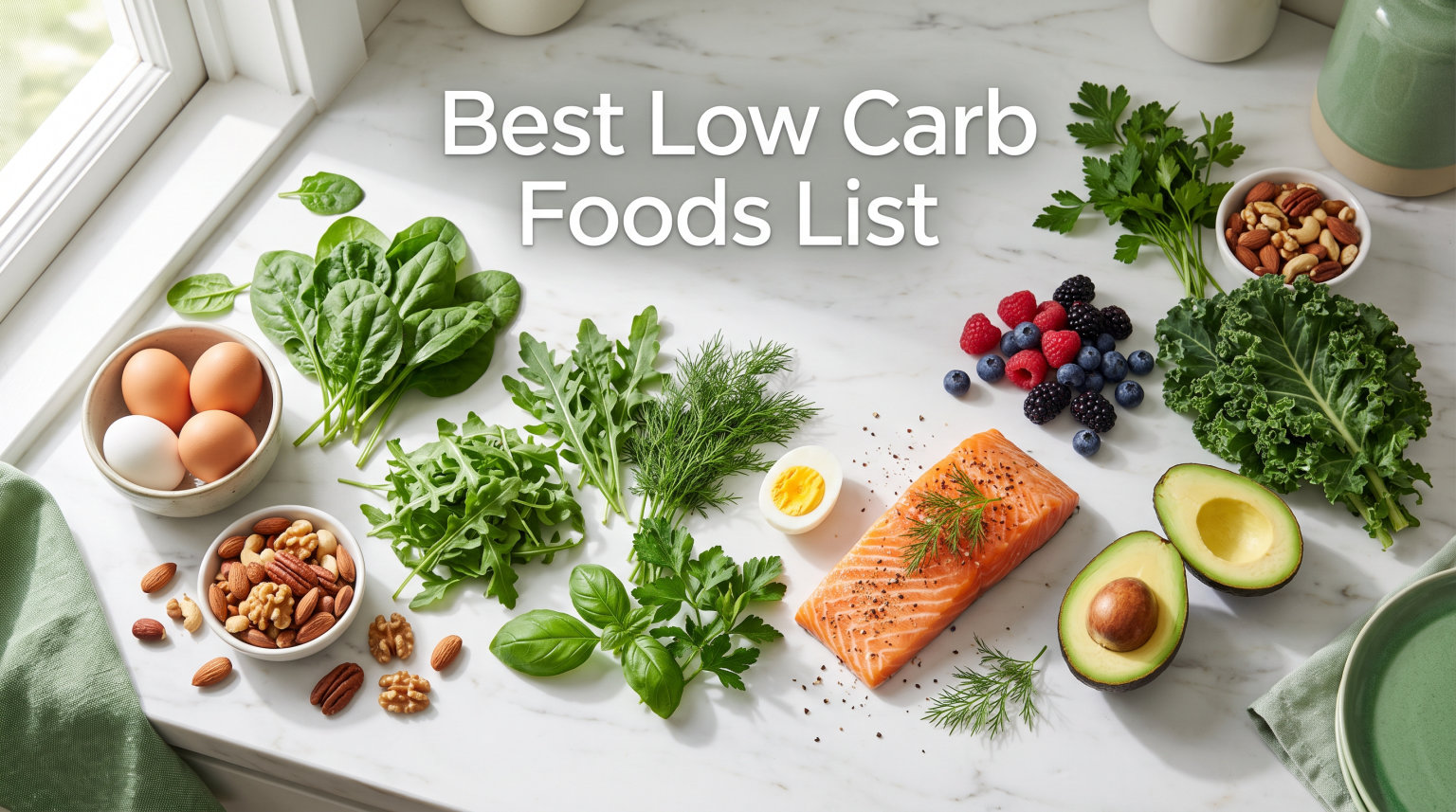
Building a low carb foods list changed how I approach meal planning. After years of struggling with energy crashes and stubborn weight, I discovered that focusing on nutrient-dense, low-carbohydrate foods gave me the sustained energy and satisfaction I was missing. Whether you are managing blood sugar, pursuing weight loss, or simply want to feel better throughout your day, having a comprehensive guide to the best low-carb options makes all the difference.
This guide brings together everything I have learned about low carbohydrate diet foods through research and personal experience. You will discover which proteins, vegetables, fruits, and fats deserve a permanent spot on your plate. I have organized everything by food category with specific carb counts, practical shopping tips, and meal planning strategies that work in real life.
Many people following a diabetic diet also benefit from low-carb eating, as the same foods that support stable blood sugar often fit perfectly into a low-carb lifestyle. The principles overlap more than you might expect.
By the end of this article, you will have a complete reference you can return to whenever you need inspiration for your next grocery trip or meal plan.
Table of Contents
Best Low Carb Foods List: Your Complete Guide to Eating Well
Creating a sustainable low carb foods list starts with understanding what “low carb” actually means. Most definitions suggest keeping daily carbohydrate intake under 130 grams, though some people aim for 50 grams or fewer when following ketogenic approaches. The key is finding the range that works for your body and goals.
Quality matters as much as quantity. A low-carb diet built from whole, unprocessed foods delivers more nutrients and satisfaction than one relying on packaged “low-carb” products. This guide emphasizes natural foods that nourish your body while keeping carbohydrates in check.
Quick Reference: Top 10 Low-Carb Foods to Keep Handy
Sometimes you need answers fast. Here are the ten best low-carb foods that offer maximum nutrition with minimal carbohydrates:
Eggs – Nearly zero carbs, complete protein, incredibly versatile
Chicken breast – Zero carbs, lean protein that works in countless recipes
Salmon – Zero carbs, rich in omega-3 fatty acids for heart health
Spinach – Only 1 gram net carb per cup, packed with iron and vitamins
Avocado – 2 grams net carbs, loaded with healthy monounsaturated fats
Broccoli – 4 grams net carbs per cup, excellent fiber content
Almonds – 2 grams net carbs per ounce, perfect portable snack
Cheddar cheese – Less than 1 gram carb per ounce, satisfying and filling
Olive oil – Zero carbs, the foundation of healthy fat intake
Cauliflower – 3 grams net carbs per cup, incredibly versatile vegetable
These foods form the backbone of any successful low-carb eating plan. Keep them stocked in your kitchen and you will always have options for quick meals and snacks.
Understanding Net Carbs vs Total Carbs
Before diving into specific food categories, you need to understand how carbohydrate counting works. This distinction trips up many beginners and can mean the difference between success and frustration.
Total carbs represent every carbohydrate in a food, including fiber and sugar alcohols. Net carbs subtract the fiber and certain sugar alcohols from that total, giving you the carbohydrates that actually impact blood sugar. The formula is simple: Total Carbs minus Fiber equals Net Carbs.
Fiber matters because your body cannot digest it. When you eat foods high in fiber, those carbohydrates pass through without raising glucose levels. This explains why vegetables with the same total carb count can affect your body differently based on their fiber content.
Here is a comparison of total versus net carbs for common low-carb foods per 100-gram serving:
| Food | Total Carbs | Fiber | Net Carbs |
|---|---|---|---|
| Spinach | 3.6g | 2.2g | 1.4g |
| Broccoli | 7g | 2.6g | 4.4g |
| Cauliflower | 5g | 2g | 3g |
| Avocado | 9g | 7g | 2g |
| Almonds | 21g | 12g | 9g |
| Strawberries | 8g | 2g | 6g |
| Eggs | 0.7g | 0g | 0.7g |
| Chicken breast | 0g | 0g | 0g |
| Salmon | 0g | 0g | 0g |
| Cheddar cheese | 1.3g | 0g | 1.3g |
Focus on net carbs when planning your meals. This approach lets you enjoy more vegetables and fiber-rich foods while staying within your carbohydrate goals. Most people following a low-carb lifestyle track net carbs rather than total carbs for this reason.
Protein Sources: Meat, Poultry, and Eggs
Animal proteins form the foundation of most low-carb eating patterns. These foods deliver complete nutrition with virtually no carbohydrates, making them essential for satiety and muscle maintenance.
Beef offers zero carbs alongside iron, zinc, and B vitamins. Choose grass-fed when possible for higher omega-3 content. Ground beef works for quick meals, while steaks and roasts suit slower cooking methods. A 6-ounce serving provides about 50 grams of protein to keep you full for hours.
Pork including chops, tenderloin, and perfectly crispy bacon contains minimal carbs. Bacon earns its popularity in low-carb circles for good reason. It adds flavor and satisfaction to any meal. Just watch for added sugars in some commercial brands.
Chicken and turkey provide lean protein options with zero carbs. Dark meat offers more flavor and fat for satisfaction, while white meat keeps calories lower. Rotisserie chicken saves time on busy weeknights. Turkey works beautifully in place of higher-carb sandwich fillings.
Eggs deserve special recognition as nature’s perfect low-carb food. At less than one gram of carbohydrate per egg, they deliver complete protein, healthy fats, and choline for brain health. Boil a dozen at the start of each week for instant meals and snacks. Scramble them with spinach for a nutrient-packed breakfast.
Organ meats like liver and heart offer exceptional nutrient density. Though not everyone’s favorite, liver provides more vitamins and minerals per calorie than almost any other food. If you are new to organ meats, start with chicken liver for milder flavor.
Variety matters with protein sources. Rotating between beef, pork, poultry, and eggs ensures you get a full spectrum of amino acids and micronutrients. Aim for a palm-sized portion at each meal to support muscle maintenance and keep hunger at bay.
Seafood and Fish
Seafood brings unique benefits to your low-carb foods list beyond just protein. The omega-3 fatty acids found in fatty fish support heart health, reduce inflammation, and may even improve mood.
Salmon stands out as the superstar of low-carb seafood. Wild-caught salmon offers more omega-3s than farmed varieties. A 6-ounce serving delivers about 34 grams of protein with zero carbs. Bake it with lemon and dill for a simple weeknight dinner.
Sardines and mackerel provide budget-friendly omega-3 options. Canned sardines work great on salads or mashed with mayo for quick spreads. These small fish contain less mercury than larger species, making them safer for frequent consumption.
Shellfish vary in carbohydrate content. Shrimp and crab contain virtually zero carbs. Oysters and mussels have slightly more at about 4-5 grams per 3-ounce serving, but still fit easily into a low-carb plan. Lobster and scallops offer luxury options for special meals.
White fish like cod, halibut, and tilapia provide lean protein with minimal fat. These work well when you want protein without added calories. Their mild flavor takes on seasonings beautifully. Try cod baked with tomatoes and olives for a Mediterranean-inspired dish.
Tuna offers convenience and affordability. Canned light tuna provides an easy lunch option mixed with mayo and celery. Fresh tuna steaks sear beautifully for restaurant-quality meals at home. Just monitor consumption of albacore tuna due to higher mercury content.
Aim for at least two seafood servings weekly to capture those unique omega-3 benefits. Your brain and heart will thank you for making fish a regular part of your low-carb rotation.
Low-Carb Vegetables
Non-starchy vegetables should fill half your plate on a low-carb diet. They provide essential vitamins, minerals, fiber, and volume without spiking blood sugar. Learning which vegetables fit your carb budget opens up endless meal possibilities.
Leafy greens top the list for lowest carbohydrate content. Spinach, kale, lettuce, arugula, and Swiss chard contain 1-3 grams net carbs per cooked cup. These vegetables also deliver folate, potassium, and antioxidants. Use them as salad bases, wilt them into soups, or blend them into smoothies.
Cruciferous vegetables include broccoli, cauliflower, cabbage, Brussels sprouts, and bok choy. These vegetables offer cancer-fighting compounds called glucosinolates along with their low carb counts. Cauliflower deserves special mention as the ultimate low-carb substitute. Rice it, mash it, or roast it for a satisfying side dish.
Above-ground vegetables generally contain fewer carbs than root vegetables. Zucchini, bell peppers, asparagus, green beans, and cucumbers fit this category. Zucchini noodles make an excellent pasta replacement. Bell peppers work for stuffing with ground meat and cheese.
Here are the best low-carb vegetables ranked by net carb content per 1-cup serving:
Spinach (cooked): 1g net carbs
Lettuce (raw): 1g net carbs
Arugula: 1g net carbs
Cucumber: 2g net carbs
Celery: 2g net carbs
Mushrooms: 2g net carbs
Zucchini: 3g net carbs
Cauliflower: 3g net carbs
Asparagus: 3g net carbs
Green beans: 4g net carbs
Broccoli: 4g net carbs
Bell peppers: 5g net carbs
Brussels sprouts: 5g net carbs
Cabbage: 5g net carbs
Eggplant: 5g net carbs
Root vegetables require more caution. Onions, garlic, and ginger add flavor in small amounts but contain more carbs. Carrots fit in moderation at about 6 grams net carbs per medium carrot. Avoid potatoes, sweet potatoes, and parsnips on strict low-carb plans.
Eat vegetables freely within your daily carb limit. They provide the bulk that makes meals satisfying while delivering essential nutrients animal products lack.
Low-Carb Fruits
Fruit presents a challenge on low-carb diets. While packed with vitamins and antioxidants, most fruits contain significant sugar. The key is choosing fruits with lower glycemic impact and watching portions carefully.
Berries offer the best fruit option for low-carb eaters. Strawberries, raspberries, blackberries, and blueberries contain fewer carbs than other fruits while delivering powerful antioxidants. A half-cup serving of raspberries provides only 3.5 grams net carbs with impressive fiber content.
Avocado technically qualifies as a fruit and stands out as the most low-carb-friendly option. With just 2 grams net carbs per half fruit, avocados deliver heart-healthy monounsaturated fats, potassium, and fiber. Use them in salads, smoothies, or simply seasoned with salt and lime.
Lemons and limes add flavor without meaningful carb impact. Their juice and zest enhance water, dressings, and cooked dishes. Keep these citrus fruits handy for brightening up low-carb meals.
Tomatoes work in moderation for most low-carb plans. A medium tomato contains about 3 grams net carbs. Cherry tomatoes make convenient snacks. Sun-dried tomatoes concentrate both flavor and carbs, so use them sparingly.
Olives provide another fruit option with minimal carbs. A quarter-cup serving contains about 2 grams net carbs plus satisfying healthy fats. Their briny flavor adds interest to salads and snack plates.
Here is a carb comparison of low-carb fruits per half-cup serving:
Raspberries: 3.5g net carbs
Blackberries: 3.5g net carbs
Strawberries: 4g net carbs
Cranberries: 4g net carbs
Blueberries: 9g net carbs
Cantaloupe: 6g net carbs
Peach: 7g net carbs
Plum: 7g net carbs
Watermelon: 6g net carbs
Coconut meat: 3g net carbs
Treat fruit as a special occasion rather than a dietary staple. When you do indulge, berries give you the most nutritional bang for your carb budget.
Nuts, Seeds, and Healthy Fats
Healthy fats and low-carb nuts provide essential fatty acids, help you absorb fat-soluble vitamins, and keep you satisfied between meals. These foods prove that low-carb eating is anything but restrictive.
Nuts vary significantly in carbohydrate content. Some fit better into low-carb plans than others. Pecans and macadamia nuts rank lowest in carbs while delivering the most satisfying fats. Cashews contain significantly more carbs and work better as occasional treats.
Here are common nuts ranked by net carbs per 1-ounce serving:
Pecans: 1g net carbs
Brazil nuts: 1g net carbs
Macadamia nuts: 2g net carbs
Walnuts: 2g net carbs
Hazelnuts: 2g net carbs
Almonds: 2.5g net carbs
Peanuts: 4g net carbs
Pistachios: 5g net carbs
Cashews: 8g net carbs
Seeds offer excellent nutrition with minimal carbs. Pumpkin seeds, sunflower seeds, chia seeds, and flax seeds all fit beautifully into low-carb eating. Chia seeds create pudding-like textures when soaked in liquid. Ground flaxseed adds fiber to baked goods and smoothies.
Oils and fats contain zero carbs and deserve prominent placement in your diet. Extra virgin olive oil tops the list for heart health and flavor. Avocado oil handles high heat cooking beautifully. Coconut oil provides medium-chain triglycerides that some people find energizing.
Butter and ghee from grass-fed cows offer fat-soluble vitamins and satisfying richness. Ghee works well for those with dairy sensitivities since the milk solids have been removed. Both make vegetables taste incredible.
Other healthy fats include full-fat mayonnaise made with avocado or olive oil. Olives and their oil add Mediterranean flair. Fatty cuts of meat and poultry skin provide natural fats that enhance flavor and satiety.
Do not fear fat on a low-carb diet. Without carbohydrates for energy, your body needs dietary fat to fuel itself properly. Embrace these foods and watch your satisfaction levels rise.
Dairy Products
Dairy divides the low-carb community. Some people thrive on full-fat dairy products while others find they stall weight loss or cause inflammation. Understanding the carb content of different dairy options helps you make informed choices.
Cheese wins popularity as a near-zero-carb food. Hard cheeses like cheddar, parmesan, and Swiss contain less than 1 gram of carbs per ounce. Soft cheeses like brie and camembert stay similarly low. Even cream cheese fits at about 1.5 grams per ounce.
Heavy cream contains about 3 grams of carbs per quarter-cup serving. Use it to enrich coffee, make sauces, or whip into dessert toppings. Avoid half-and-half which contains more milk and therefore more sugar.
Full-fat Greek yogurt works in moderation with about 6 grams net carbs per half-cup serving. Choose unsweetened varieties and add your own berries for control over sugar content. The protein content helps justify the carb count.
Butter contains virtually zero carbs and adds incomparable flavor to cooking. Ghee offers the same benefits with a higher smoke point and removal of milk proteins. Both fit perfectly into any low-carb plan.
Milk presents challenges due to its natural lactose content. One cup of whole milk contains about 12 grams of carbs. If you use milk, treat it as a significant carb source in your daily count. Unsweetened almond milk and coconut milk provide lower-carb alternatives.
Cottage cheese offers a middle ground with about 4 grams net carbs per half-cup. The high protein content makes it a satisfying snack or breakfast base. Look for full-fat versions for better satiety.
Pay attention to your individual response to dairy. If weight loss stalls or you notice inflammation, try eliminating dairy for a few weeks to see if symptoms improve.
Beverages and What to Drink
What you drink matters as much as what you eat on a low-carb diet. Many beverages hide surprising amounts of sugar that can derail your progress. Choosing the right drinks keeps you hydrated without adding unnecessary carbs.
Water remains the gold standard. Plain water, sparkling water, and mineral water all contain zero carbs and support every bodily function. Add lemon, lime, or cucumber slices for flavor without meaningful carb impact.
Coffee fits perfectly into low-carb eating when prepared properly. Black coffee contains zero carbs. Add heavy cream, unsweetened almond milk, or a small amount of MCT oil for a satisfying morning beverage. Avoid sugar, flavored syrups, and most creamers.
Tea offers similar benefits to coffee. Black, green, white, and herbal teas contain no carbohydrates. Enjoy them hot or iced with a splash of cream or lemon. Some herbal teas like peppermint and ginger aid digestion.
Broth and stock provide savory options when you want something warm and filling. Bone broth delivers collagen and minerals with minimal carbs. Use it as a base for soups or sip it plain as a comforting drink.
Diet sodas and sugar-free drinks contain zero carbs but spark debate. Artificial sweeteners do not raise blood glucose, though some research suggests they may affect gut bacteria or cravings. Use them as transition tools rather than daily staples if possible.
Alcohol requires moderation and careful selection. Pure spirits like vodka, gin, whiskey, and tequila contain zero carbs. Wine ranges from 2-4 grams per glass. Beer contains significant carbs and works poorly for low-carb goals. Avoid sweet mixed drinks entirely.
Read labels carefully on commercial beverages. Even “unsweetened” products sometimes contain added sugars. When in doubt, choose plain water or unsweetened coffee and tea.
Smart Shopping: Your Organized Low-Carb Grocery List
Walking into a grocery store without a plan leads to poor choices and forgotten essentials. Organizing your list by store section streamlines shopping and ensures you return home with everything needed for low-carb success.
Produce section priorities: Load up on leafy greens like spinach, kale, and lettuce. Grab cruciferous vegetables including broccoli, cauliflower, and cabbage. Pick up zucchini, bell peppers, cucumbers, and asparagus. Add avocados and lemons. Select berries if they fit your carb budget.
Meat and seafood counters: Choose a variety of proteins for the week. Ground beef offers versatility. Chicken thighs provide more flavor than breasts. Pick up salmon or another fatty fish for omega-3s. Bacon and eggs deserve permanent spots on your list. Consider a whole rotisserie chicken for quick meals.
Dairy case selections: Stock up on butter and eggs if you have not already. Choose full-fat cheese varieties. Grab heavy cream for coffee and cooking. Unsweetened almond milk works for recipes and drinking.
Pantry staples to keep on hand: Extra virgin olive oil and avocado oil top the list. Coconut oil works for certain recipes. Keep nuts like almonds, walnuts, and macadamias stocked. Chia seeds and flaxseed add nutrition to meals. Low-carb condiments including mustard, hot sauce, and sugar-free mayonnaise help with flavor.
Frozen foods for convenience: Frozen vegetables match fresh nutrition and last longer. Cauliflower rice saves prep time. Frozen spinach works for quick additions to eggs and sauces. Wild-caught frozen fish offers affordable omega-3 options.
Eating low-carb does not require a massive grocery budget. Eggs, ground beef, chicken thighs, and seasonal vegetables cost less than their premium counterparts while delivering the same nutritional benefits. Frozen vegetables often cost half the price of fresh while lasting months instead of days.
Meal Planning and Prep Strategies
Success with low-carb eating requires preparation. When hunger strikes without a plan, convenience foods and high-carb options become tempting. A few hours of weekend prep sets you up for effortless low-carb eating all week.
Cook proteins in bulk. Roast a sheet pan of chicken thighs, hard-boil a dozen eggs, and brown several pounds of ground beef on Sunday. Store these cooked proteins in containers for quick assembly throughout the week. Having protein ready removes the biggest obstacle to low-carb meals.
Prep vegetables ahead. Wash and chop vegetables when you bring them home from the store. Store cut vegetables in clear containers at eye level in your refrigerator. Pre-cut vegetables make cooking faster and snacking healthier.
Make low-carb bases. Prepare cauliflower rice in batches. Roast trays of mixed vegetables. Make a large salad that lasts several days without dressing. These bases become instant meals when topped with your pre-cooked proteins.
Stock emergency foods. Keep grab-and-go low-carb options available for busy days. Cheese sticks, nuts, hard-boiled eggs, and cut vegetables with dip prevent desperation choices. A well-stocked emergency stash saves your diet during hectic weeks.
Start your day with these low-carb breakfast recipes that keep you satisfied until lunch. Many work perfectly for meal prep and can be made ahead for busy mornings.
For a protein-packed dinner or game day, try these crispy oven-baked chicken wings. They deliver flavor without the breading and frying that adds unnecessary carbs.
Plan for flexibility. Life happens and rigid plans fail. Build in simple backup meals that require minimal preparation. Scrambled eggs with spinach takes five minutes. A can of tuna with mayo and celery requires no cooking. These safety nets keep you on track when elaborate meal prep fails.
Budget-Friendly Low-Carb Eating
The perception that low-carb eating requires expensive specialty foods keeps many people from trying this approach. In reality, some of the most affordable foods in the grocery store fit perfectly into a low-carb plan. Smart shopping makes this lifestyle accessible to any budget.
Eggs remain the ultimate budget protein. At just a few cents per egg, they deliver complete nutrition that rivals foods costing ten times more. Keep a dozen hard-boiled eggs ready for instant snacks and meals. Scramble them with leftover vegetables for nearly free meals.
Chicken thighs beat chicken breasts for value. They cost half the price while delivering more flavor and moisture. The small amount of extra fat actually supports low-carb goals. Roast them with vegetables for simple sheet-pan dinners.
Ground beef offers versatility at low cost. Buy in bulk when on sale and freeze in portions. Higher fat percentages cost less and work better for low-carb cooking anyway. Use ground beef for everything from burgers to taco salads to stuffed peppers.
Seasonal vegetables save money. Buy vegetables when they are abundant and prices drop. Summer brings cheap zucchini and peppers. Fall offers affordable cauliflower and Brussels sprouts. Winter provides budget-friendly cabbage and hearty greens.
Frozen matches fresh for nutrition. Frozen vegetables often cost half the price of fresh with identical nutritional value. They last months without spoiling, reducing food waste. Frozen spinach, broccoli, and cauliflower rice deserve permanent freezer space.
Canned fish provides affordable omega-3s. Canned sardines, mackerel, and salmon cost significantly less than fresh while delivering the same essential fatty acids. Keep these stocked for quick protein additions to salads and snacks.
Avoid the expensive trap of packaged low-carb products. Special keto breads, sugar-free cookies, and low-carb pasta substitutes cost significantly more than whole foods. Focus on simple ingredients you prepare yourself for the most affordable approach.
Frequently Asked Questions About Low-Carb Foods
What are the 10 best low-carb foods?
The 10 best low-carb foods include eggs, chicken breast, salmon, spinach, avocado, broccoli, almonds, cheddar cheese, olive oil, and cauliflower. These foods offer maximum nutrition with minimal carbohydrate content, making them foundational for any low-carb eating plan. Each provides essential nutrients while keeping net carbs under 5 grams per serving.
How to start a low-carb diet for beginners?
Begin by clearing high-carb foods from your pantry and stocking up on proteins, non-starchy vegetables, and healthy fats. Calculate your daily carb target based on your goals. Plan your first week of meals in advance to avoid impulsive choices. Start with a moderate approach of 50-100 grams daily rather than diving into strict ketosis. Stay hydrated and prepare for an adjustment period of 1-2 weeks as your body adapts.
Can a low-carb diet lower A1c?
Research shows that low-carb diets can significantly reduce A1c levels in people with type 2 diabetes and prediabetes. Studies demonstrate reductions of 1-2 percentage points over several months. The improvement comes from reduced blood sugar spikes and improved insulin sensitivity. Many people following a diabetic diet find their A1c improves within 3-6 months of consistent low-carb eating.
What happens after 2 weeks of no carbs?
After two weeks of very low carb intake, most people enter ketosis where the body burns fat for fuel. Common experiences include initial fatigue and brain fog often called the keto flu, followed by increased energy and mental clarity. Appetite typically decreases significantly. Some people report improved sleep, reduced inflammation, and steady weight loss beginning around the two-week mark.
What’s the worst carb for belly fat?
Refined sugar and high-fructose corn syrup contribute most significantly to visceral fat accumulation around the midsection. These simple sugars spike insulin, promote fat storage, and provide no nutritional value. Sugary beverages prove particularly problematic since liquid calories do not trigger satiety signals. White bread and other refined grains rank similarly high for promoting abdominal fat.
Can a low-carb diet lower creatinine?
The relationship between low-carb diets and creatinine levels requires medical supervision. Some studies suggest low-carb eating may improve kidney function markers in certain populations, particularly those with diabetes-related kidney issues. However, high protein intake on some low-carb plans could stress kidneys in vulnerable individuals. Anyone with existing kidney concerns should consult their healthcare provider before significantly changing their carbohydrate intake.
Final Thoughts on Building Your Low-Carb Foods List
Creating your personal low carb foods list transforms eating from a constant calculation into a sustainable lifestyle. Focus on the foundational foods that deliver nutrition and satisfaction: quality proteins, non-starchy vegetables, healthy fats, and strategic dairy choices.
Remember that perfection matters less than consistency. A low-carb diet works because it reduces processed carbohydrates and emphasizes whole foods. Even if your carb count varies day to day, maintaining that core principle delivers results.
Start with the top 10 foods listed earlier and gradually expand your repertoire. Try one new vegetable each week. Experiment with different protein preparations. Find the healthy fats that satisfy your cravings. Build your customized list based on foods you actually enjoy eating.
The best low-carb diet is the one you can follow long-term. Use this guide as your foundation, adjust based on your body’s response, and create an eating pattern that supports your health goals for years to come.