
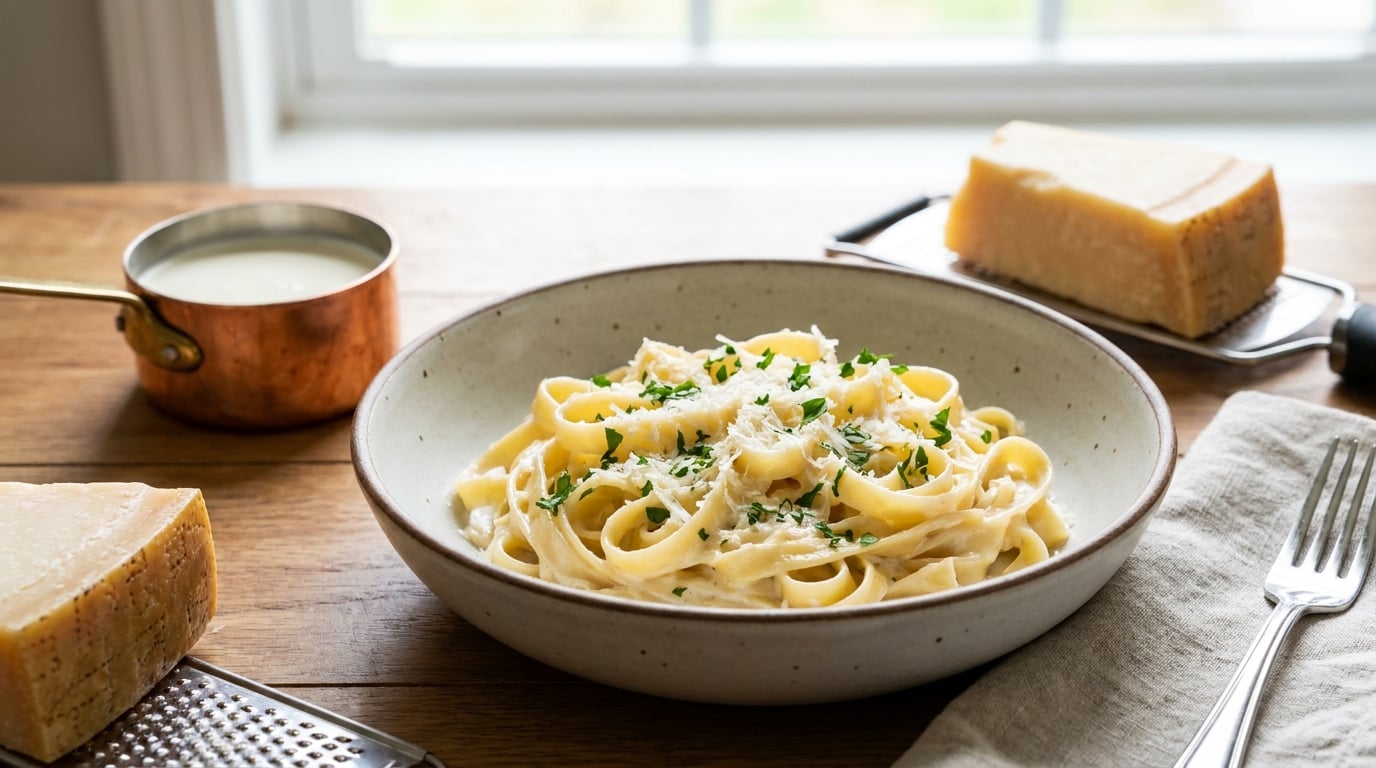
Alfredo sauce is a butter, heavy cream and Parmesan pasta sauce melted together into one smooth, creamy emulsion. This easy homemade alfredo sauce recipe needs only five core ingredients, a whisk and a skillet, and it goes from cold pan to plated pasta in about 15 minutes.
No jar, no roux, no special equipment. The whole trick is heat control: melt the butter, bring the cream to a gentle simmer, then take the pan off the burner before the Parmesan goes in. Do that and the sauce stays silky instead of turning grainy.
Yield: about 1 1/2 cups of sauce, enough for 4 to 6 servings · Prep: 5 minutes · Cook: 10 minutes · Total: 15 minutes · Difficulty: Easy
Table of Contents
Why This Recipe Works
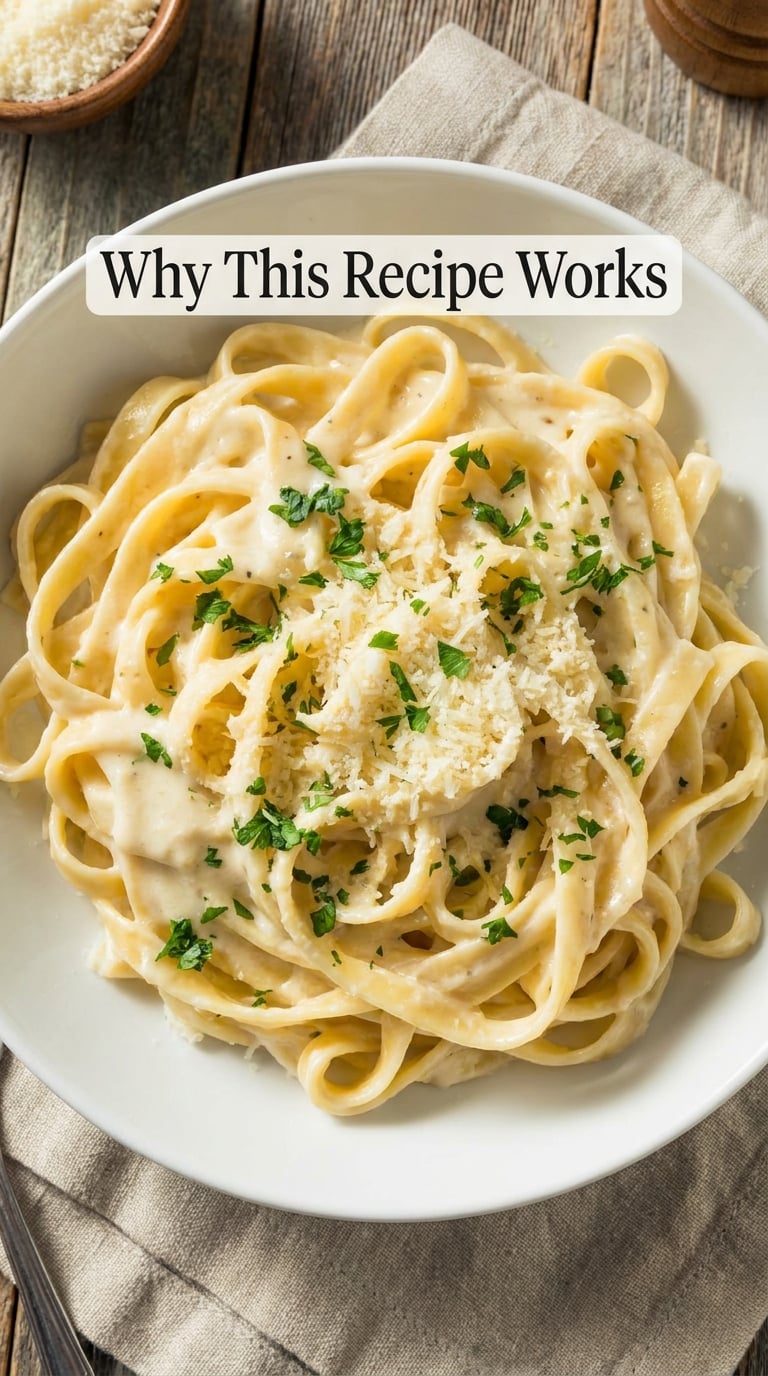
- Whisking builds the emulsion. Alfredo is a fat-and-water emulsion held together by constant movement. Whisk steadily and the sauce stays glossy; stop and it separates.
- The Parmesan goes in off the heat. Residual warmth melts the cheese slowly. Direct heat on the pan makes protein and fat in the cheese seize into rubbery strings.
- It simmers, it never boils. Bubbling cream destabilizes the emulsion. You want lazy bubbles around the edge of the pan, nothing more.
- Everything is a pantry staple. Butter, cream, Parmesan, garlic, salt and pepper. Nothing needs a special shop.
The reason homemade beats the jar comes down to what goes in it. Store-bought versions lean on modified cornstarch and anti-caking coatings on pre-grated cheese, which is why they can taste thin, gluey and faintly grainy at once.
Ingredients
Allergen note: this recipe contains milk and dairy (butter, cream, Parmesan). Parmesan is an aged cheese and may be made with animal rennet, so check the label if that matters to your household.
- 4 tablespoons unsalted butter (56 g), cut into pieces
- 2 cloves garlic, finely minced
- 1 1/4 cups heavy cream or heavy whipping cream (300 ml)
- 1 cup freshly grated Parmesan, plus extra for serving (100 g)
- 1/2 teaspoon fine sea salt, plus more to taste
- 1/4 teaspoon freshly ground white or black pepper
- 1 to 2 tablespoons reserved pasta water, optional
- 1/4 teaspoon chicken stock, optional, for an easier measure
- Chopped parsley or basil, optional, for serving
On the Parmesan: buy a wedge and grate it yourself. Pre-grated cheese is dusted with cellulose or potato starch to keep it from clumping in the bag, and that coating is exactly what makes it clump in your pan instead. No microplane? A box grater on its finest hole works fine, and so does a small food processor with a blade, pulsed in short bursts.
On the cream: heavy cream and heavy whipping cream are the same product on most US shelves. Half-and-half gives you a thinner, lighter sauce and is safe to use as long as you keep the heat low. Whole milk works too, but expect a softer sauce that needs more whisking and a little more Parmesan for body.
The 3-ingredient version: butter, heavy cream and Parmesan. That is the whole dish and it works on its own. Add garlic for a fourth ingredient and the salt and pepper for a fifth, which is what this recipe does.
Equipment
- A medium or large skillet, 10 inch or 12 inch
- A whisk or a silicone spatula
- A microplane or the fine side of a box grater
- A heatproof measuring cup or bowl, for holding the hot pasta
How to Make Easy Homemade Alfredo Sauce
Make the Sauce Base
- Set a wide skillet over medium-low heat and add the butter. Let it melt on its own without stirring, about 2 minutes, until it foams and turns pale gold.
- Add the minced garlic and cook for 30 to 45 seconds, stirring, until fragrant. You want it soft and pale, not brown. Brown garlic turns bitter and haunts the whole sauce.
- Pour in the cream and the optional chicken stock. Bring to a gentle simmer over medium heat, 2 to 3 minutes, stirring occasionally so nothing catches on the bottom.
- Simmer 4 to 6 minutes more until the cream reduces slightly and coats the back of a spoon. Watch for the first small bubbles at the pan’s edge. If you see a rolling boil, turn the heat down now.
Finish the Creamy Alfredo Sauce
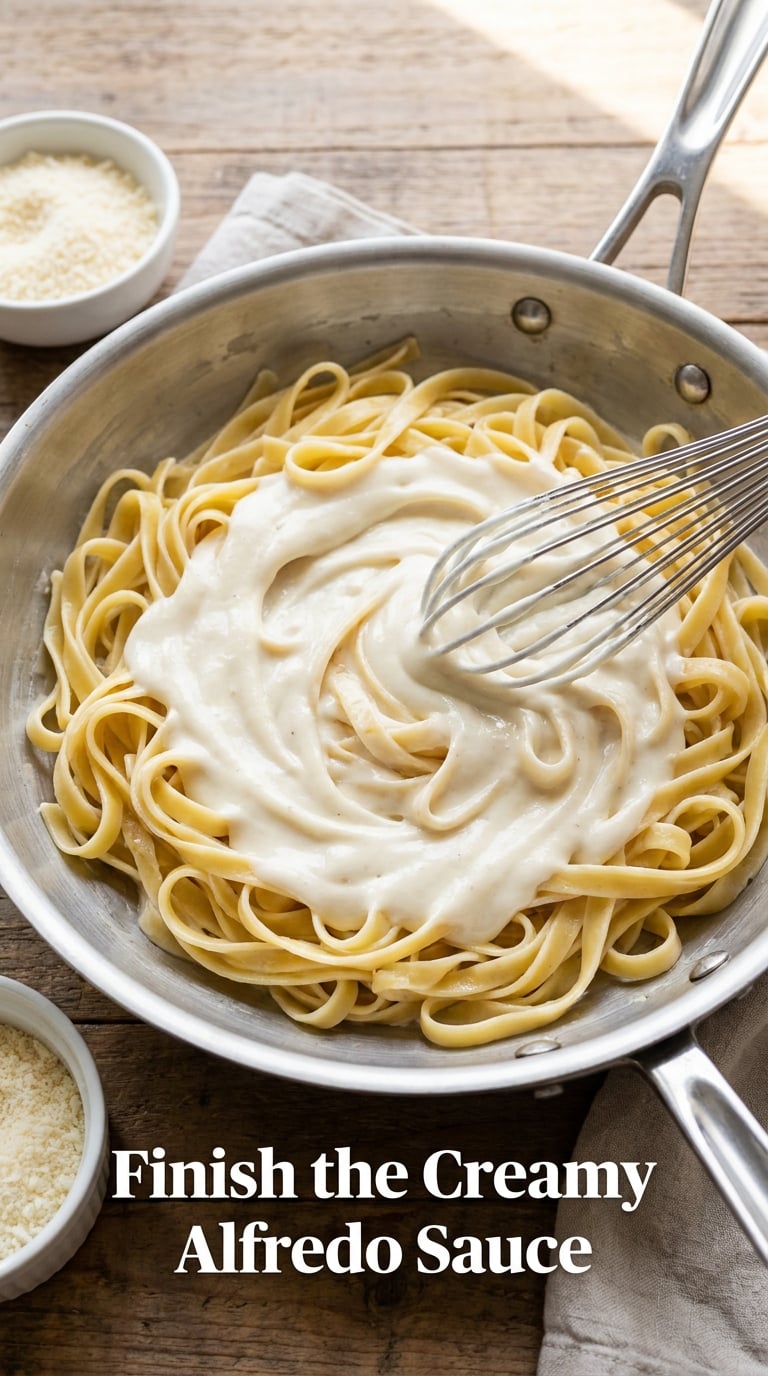
- Take the pan completely off the heat. Let it sit for 30 seconds so it stops steaming.
- Sprinkle in the Parmesan a handful at a time, whisking constantly until each addition has disappeared. Add the salt and pepper with the last handful.
- The sauce may look loose and slightly separated at this point. That is normal. Keep whisking, and stir in 1 tablespoon of warm pasta water; it will pull back together into something glossy.
- Taste. It should be distinctly cheesy and gently salty. Add a pinch more salt or a splash more cream if it needs loosening.
- Boil your pasta in well-salted water, reserving at least 1 cup of the water before draining. Toss the hot pasta into the sauce with a splash of that water and toss hard for 30 seconds. The starch is what binds the sauce to the noodles.
- Serve right away with more grated Parmesan and a scatter of parsley.
Please do not boil the sauce. If your pasta water is at a hard boil when it hits the pan, wait a minute. That is the single most common reason a homemade batch turns greasy on the plate.
Tips for Success
- Grate the cheese while the butter melts. Cold cheese hits a warm pan and seizes. Room-temperature Parmesan blends in far more evenly.
- Whisk constantly once the cheese goes in. Every clump that forms can still be broken up, but only if you keep the motion going.
- Sauce too thick? Add cream or warm pasta water one tablespoon at a time until it runs off the spoon in a slow ribbon.
- Sauce too thin? Simmer it for another minute or two, or stir in another quarter cup of Parmesan. The starchy pasta water is faster and keeps the flavor balanced.
- Sauce broke and looks oily? Take it off the heat, add a tablespoon or two of cold milk or cream, and whisk hard. Emulsions can be reassembled off the heat quite often.
Variations
- Lighter version: swap the heavy cream for half-and-half and use 1 cup of Parmesan instead of 1 1/4. Simmer a minute longer to build back some body. Expect a lighter sauce, not a heavy one.
- Dairy-free version: use a plain unsweetened plant-based cream and shave parmesan-style cheese, or go the three-ingredient route with olive oil, nutritional yeast and a splash of plant milk. The texture is close; the flavor leans more savory than nutty.
- Garlic and herb version: add a teaspoon of Italian seasoning, a pinch of nutmeg and a strip of lemon zest with the garlic, then finish with basil instead of parsley. Smoked paprika works in place of the nutmeg for a smokier edge.
- Chicken or shrimp version: add 1 to 2 cups of cooked protein at the last step. Cook boneless chicken breast to 165°F (74°C) before it goes in, and shrimp to 145°F (63°C), then fold them through the finished sauce off the heat.
If you want something with the same creamy base but a different shape, my easy cabbage alfredo skillet recipe uses the same sauce over a pan of browned cabbage and onions.
Storage, Make-Ahead and Reheating
Store the sauce on its own, never with pasta mixed in. Pasta keeps releasing starch as it sits, and the combination thickens into something gluey in the fridge.
- Fridge: 3 to 4 days in an airtight container. Set it in the coldest part of the refrigerator.
- Freezer: 2 to 3 months. Pour it into a shallow container or ice cube tray and freeze solid, then bag it. Shallow freezing is the difference between a scoopable sauce and a solid brick.
- Reheating: the stovetop on low beats the microwave every time. Warm it slowly with a tablespoon or two of cream or milk, stirring often, until it comes back to a loose simmer and looks glossy again.
Alfredo hardens in the refrigerator because the butter and Parmesan fat cool and set, which pulls it out of emulsion. That is not spoilage, and it comes back with a splash of liquid and a little stirring.
For a big batch, freeze it in shallow pans rather than one deep dish, and plan to thin each portion more generously than feels right. Cold sauce always looks thinner than it tastes.
A note on timing: making this ahead is more about batch size than effort. The sauce itself is a ten-minute job, so for a normal weeknight dinner you have not saved much by making it the night before.
What to Serve With It
- Fettuccine or linguine. Wide flat noodles hold the most sauce. Use 8 ounces dry per 4 servings, and always reserve that pasta water.
- Grilled chicken. Slice one poached or grilled breast per serving and lay it over the pasta, or fold the whole thing into a casserole and bake at 375°F (190°C) for 20 minutes.
- Roasted vegetables. Broccoli, cauliflower and asparagus all take it well. Roast at 425°F (220°C) for about 20 minutes and spoon the sauce over instead of tossing, so they keep their edges.
- A plain green salad. Something sharp and cold cuts the richness. A simple lemon dressing is enough, and it takes ten seconds.
For a different creamy pasta idea, my whipped ricotta lemon pasta recipe is bright and much faster, which makes it a good backup when dinner is already late. When you want a red sauce instead, my ground beef and tomato sauce recipes take about the same amount of time.
Frequently Asked Questions
Why is my Alfredo sauce grainy?
Grainy sauce means the Parmesan was added to a pan that was too hot, or the cheese has an anti-caking coating on it. Protein and fat in cheese tighten and clump at high heat, so take the skillet off the burner, let it stop steaming for 30 seconds, and whisk the grated Parmesan in slowly. Use a wedge you grate yourself, not pre-grated bagged cheese.
How do I make Alfredo sauce thicker?
Simmer it for another minute or two on low heat, or stir in another quarter cup of freshly grated Parmesan off the heat. A tablespoon of the reserved starchy pasta water thickens the sauce without shifting the flavor. Remember the sauce thickens noticeably once it is tossed with hot pasta, so judge it a little looser than you think you want it.
Can I use heavy cream without parmesan?
Yes, and you will get a rich garlic cream sauce, just not Alfredo. Parmesan is not only for flavor; its proteins are part of what makes the sauce cling to pasta. If you leave it out, serve the sauce over something with its own texture, like gnocchi or roasted vegetables, and finish with a different aged cheese such as Pecorino Romano if you want that sharp note.
Does Alfredo sauce freeze well?
It freezes better than most people expect. Let the sauce cool completely, pour it into a shallow container or ice cube tray, and freeze until solid before bagging. Use it within 2 to 3 months. Thaw in the fridge overnight and loosen with a splash of cream or milk on the stovetop while stirring, since the sauce separates as it cools. Skip the microwave for this step.
What is the best pasta for homemade Alfredo sauce?
Wide, flat noodles like fettuccine, linguine or pappardelle work best because their surface area holds the sauce. Penne is fine too, though the sauce pools in the tube rather than clinging. Short shapes such as radiatori and shells are also good. Whatever you choose, use well-salted water and save a cup of it, because that starchy water is what emulsifies the sauce onto the noodles.
Start with this easy homemade alfredo sauce recipe as written, with the Parmesan going in off the heat, and you will have a silky sauce the first time. Once you trust the technique, start playing with what you toss through it.