
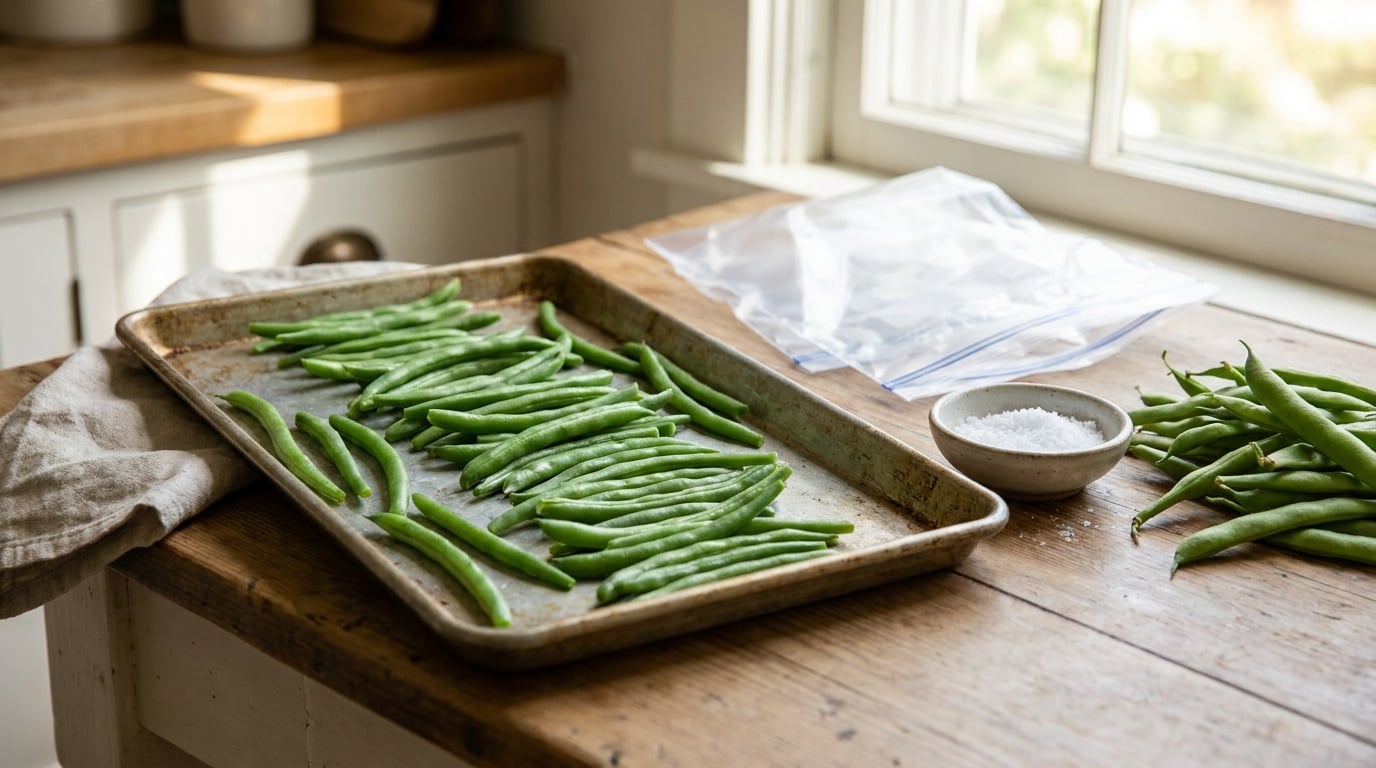
Yes, you can freeze fresh green beans without blanching. Wash them, trim the ends, pat them dry, spread them on a baking sheet until frozen solid, then move them into an airtight freezer bag. It takes about 20 minutes of active work and no boiling water, which is exactly why so many gardeners do it during harvest season.
The trade-off is shelf life. Green beans that were blanched first stay good in the freezer roughly 8 to 12 months. Beans frozen raw are at their best in the first 2 to 3 months, and usually hold up well to about 4. For soups, stews, casseroles and sauteed side dishes, that difference rarely matters.
If you are putting away a garden surplus or a large CSA share in late summer, this is the fastest way to get the beans out of the heat and into the freezer. Here is the whole method, plus the fixes for the one problem everybody hits, soggy beans.
Table of Contents
How to Freeze Fresh Green Beans Without Blanching
To freeze fresh green beans without blanching, wash the beans, snap off the ends, dry them thoroughly, spread them in a single layer on a lined baking sheet for 1 to 2 hours until solid, then transfer them to freezer bags or containers, press out the air, label with the date, and keep the freezer at 0°F (-18°C).
Skipping the blanch is a deliberate choice, not a shortcut that leaves you unprotected. It is safe to freeze raw green beans, and it is also safe to eat them, because you cook them before serving. Home-canning rules are a separate thing altogether, and freezing raw beans has nothing to do with them.
Why Freeze Green Beans Without Blanching?
Blanching is a short boil followed by an ice bath, and it is recommended because heat stops the enzymes in the bean from continuing to work once the bean is frozen. Enzymes are the reason color, flavor and crispness fade in the freezer. Without blanching, those enzymes stay active, and quality drops faster.
Here is what you are trading away and what you get in return.
- Enzyme activity. Raw beans keep working in the freezer, which is why color dulls and texture softens sooner than it would with blanched beans.
- Shorter freezer life. Plan on 2 to 3 months for peak quality and up to about 4 months for acceptable quality, against 8 to 12 months for blanched beans.
- Texture and taste. Unblanched beans come out of the freezer a little softer and less sweet. In a soup nobody will notice; as a standalone side dish the difference shows.
The reason people look for this method is speed. Blanching means several small batches, a pot of boiling water, a colander, a sink full of ice, and a hot kitchen in July. Freezing raw takes one tray, one bag, and about twenty minutes.
It is also a good fit for the way most of us actually use freezer beans. We pull a handful out for a soup or a casserole, not a whole tray for a winter salad. Unblanched beans are at their best in cooked dishes, so skipping the step costs you little there.
Choosing and Preparing Fresh Green Beans
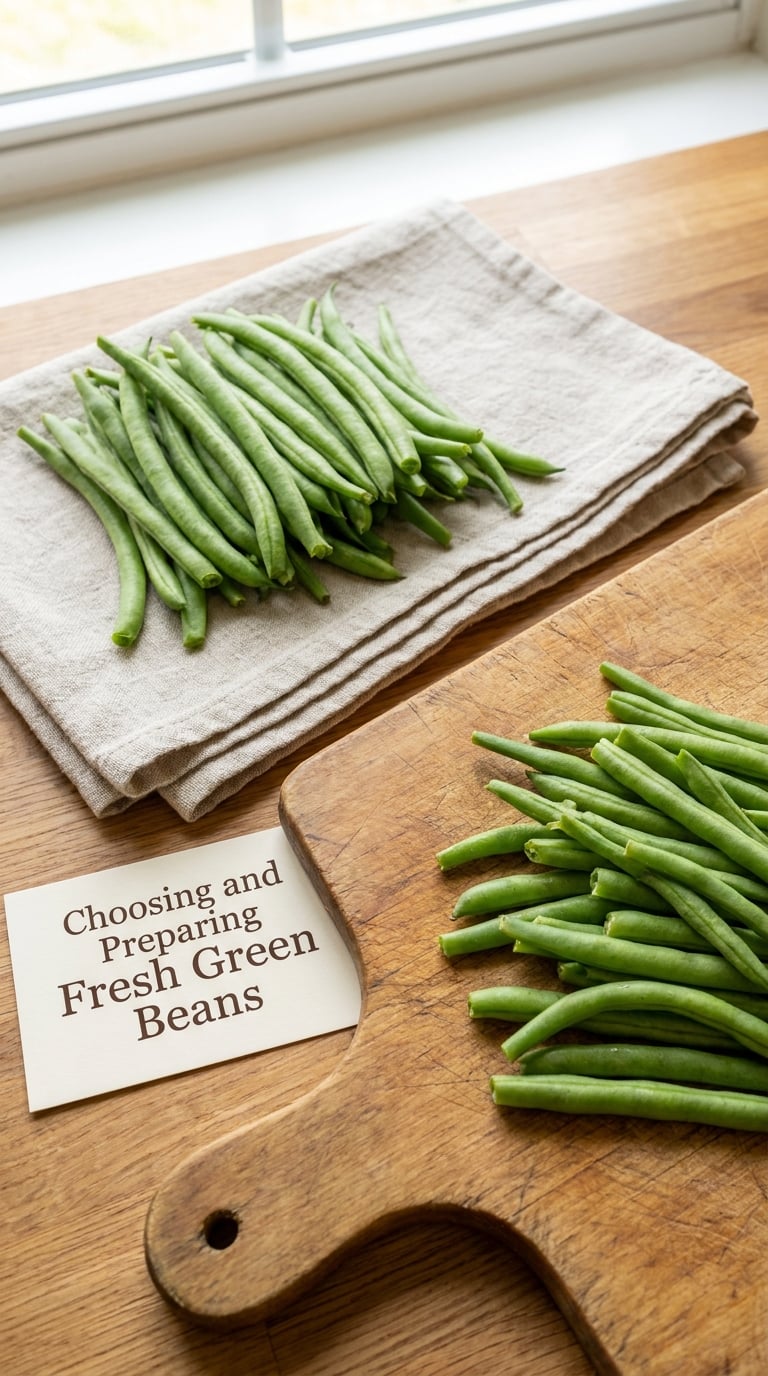
Pick beans that snap, not bend. If the pod bends without breaking, it is past its best and will be tough no matter how you freeze it. Avoid anything wilted, yellowish, blemished or drilled by insects, and sort out any damaged beans before you start.
Wash the beans in cool running water and check for insects hiding in the seams. Then dry them properly, because surface moisture is the single biggest reason frozen beans turn into one solid clump. A salad spinner works, or you can lay the beans on a clean towel and roll it around for a minute.
Snap off both ends. Halve any long beans so they fit your pot later, and leave thinner beans whole if you like. Once they are dry and trimmed, they are ready for the tray.
How to Freeze Fresh Green Beans Without Blanching: Step-by-Step
- Wash the beans. Rinse in cool running water and check the seams for insects.
- Dry them completely. Use a salad spinner or a clean kitchen towel until the pods feel dry to the touch.
- Trim and cut. Snap off the stem ends and cut or break the beans into 2 to 3 inch pieces, or leave them whole.
- Season now if you like. A light coating of oil, salt or garlic powder freezes fine. Skip the salt if you plan to cook the beans in salted broth later.
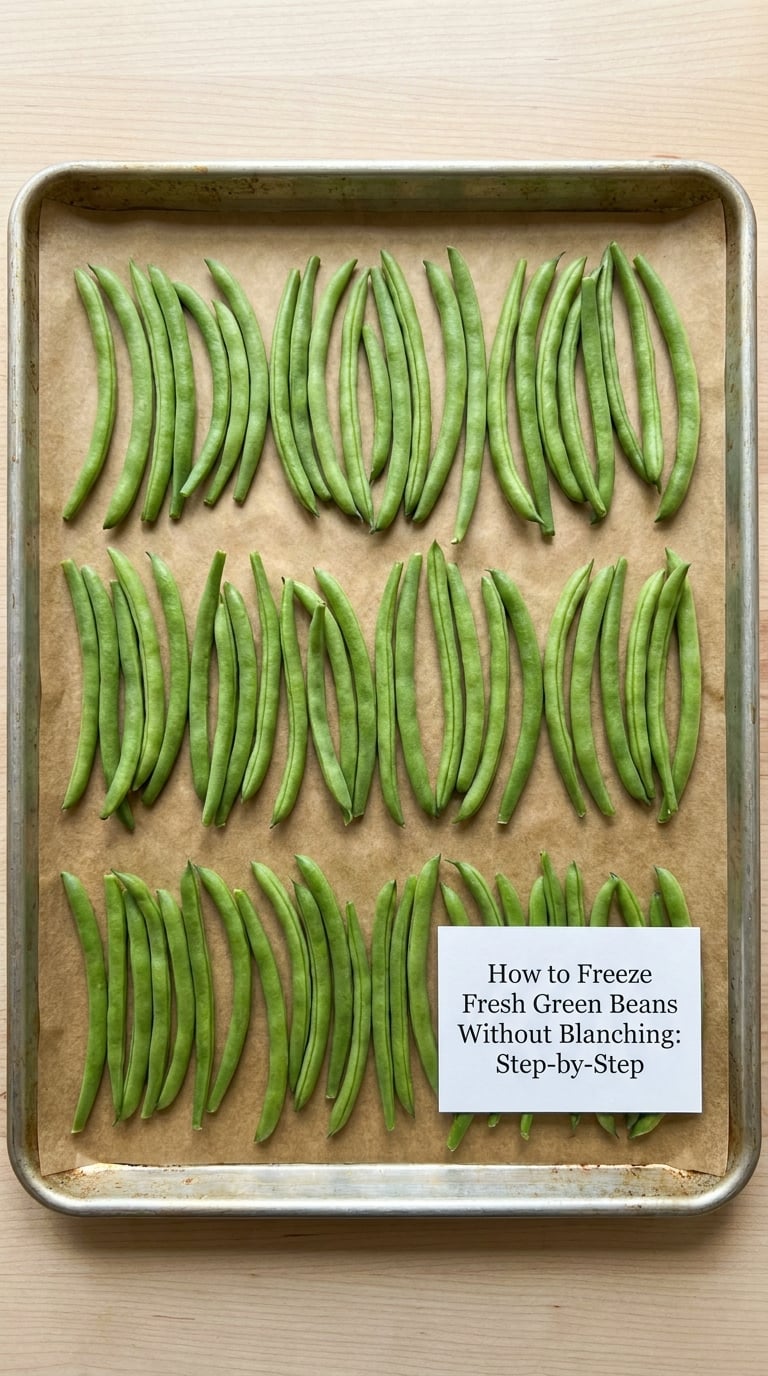
- Flash freeze on a tray. Arrange the beans in a single layer on a parchment-lined baking sheet, leaving space between pieces. Freeze for 1 to 2 hours, until they are solid to the touch.
- Transfer to bags or containers. Tip the frozen beans into freezer bags or rigid containers. Fill bags only two-thirds full, press the air out, and seal flat so they stack.
- Label and date. Write the contents and the freezing date on the bag with a marker or a piece of masking tape.
- Store at 0°F (-18°C) and use within 2 to 3 months for the best texture.
The tray step is the one people skip, and it is the one that matters most. Beans frozen in a crowded pile freeze together into a block, and then every time you want a small handful you have to hack the whole thing apart with a cleaver.
If you would rather blanch, the fallback is simple: boil the trimmed beans for 3 minutes, plunge them into ice water for 3 minutes, drain well, dry, and freeze the same way. That extra step is what buys the 8 to 12 month shelf life.
Green Bean Freezing Times and Storage Guide
Here is how the different methods compare, with the quality you can expect from each.
| Method | Prep time | Freezer life | Quality expectation | Best for |
|---|---|---|---|---|
| Raw, no blanch, no tray freeze | 10 minutes | 1 to 3 months | Soft, mild; beans clump into a block | Small batches you will use within weeks |
| Raw, no blanch, tray frozen | 20 minutes plus 1 to 2 hours freezing | 2 to 3 months for best results, about 4 months acceptable | Good color and flavor, slightly soft | Soups, stews, casseroles, stir-fries |
| Vacuum sealed after tray freeze | 25 minutes | About 4 to 6 months | Holds color and flavor well, less freezer burn | Bagged beans stored for a few months |
| Blanched 3 minutes, ice bath 3 minutes | 40 to 60 minutes in batches | 8 to 12 months | Best color retention and crispiest texture | Long-term storage and thawed salads |
Airtight storage matters as much as the method. Press the air out of each bag, or use a vacuum sealer or the straw trick from an old camping trip, and the beans will not develop freezer burn. A dated label tells you which bag to open first.
Thawing and Using Frozen Green Beans
For most cooking, do not thaw at all. Drop the frozen beans straight into the pot, a hot saute pan, a casserole dish before it goes in the oven, or a sheet pan under the broiler. Frozen unblanched beans need less cooking time than fresh ones, so start checking a couple of minutes early.
Cook them from frozen by boiling for 3 to 5 minutes, sauteing over medium-high heat for 4 to 6 minutes with a splash of oil, microwaving on high for 3 to 4 minutes, or adding them to a soup in the last 10 minutes before serving. Season at the end, since salt early can make the skins feel tough.
Thaw only when a recipe truly needs it. For a cold salad, move the bag to the refrigerator for several hours or overnight and use the beans within a day or two of thawing. Cold-water thawing works too, sealed in a bowl, for about 30 minutes.
Beans soften as they cook because their cell walls break down with heat and the water they release gets into the surrounding liquid. A longer cook makes that more noticeable, which is why unblanched beans turn mushy faster than blanched ones.
They are excellent in cozy fall soups that freeze well, and they disappear happily into easy ground beef and bean recipes where the texture is not the point. Plan on cooking them from frozen for a holiday table too, alongside my easy green bean side dish recipes.
Common Mistakes When Freezing Green Beans Without Blanching
Frozen while still wet. This is the reason for soggy beans. Water on the surface freezes into ice crystals, and the beans end up limp and wet instead of crisp. Dry them thoroughly before the tray, and if you wash them under a tap, give them time on a towel first.
Crowding the baking sheet. Touching beans touch each other and freeze into a clump. Leave a finger’s width between pieces, or work in two batches.
Skipping the tray entirely. You can bag beans straight from the garden, and plenty of people do, but you will be chiselling them out of one frozen brick for months. The tray takes an hour and no attention.
Storing them for a year. Unblanched beans past 3 or 4 months are not dangerous, but the flavor and texture drop off badly. That bag is for a soup, not a salad.
Thawing and refreezing. Each cycle costs you more texture. Pull only what you need from the bag, and keep the rest frozen.
Using wilted or woody beans. Freezing will not rescue a bean that was already past its best. Sorting at the start saves the whole batch.
Leaving air in the bag. Air is what causes freezer burn and grey, dry patches on the pods. Zip the bag from one end, pressing the air out as you go.
Frequently Asked Questions
Can you freeze fresh green beans without blanching them?
Yes. Wash the beans, trim the ends, dry them well, flash freeze them on a baking sheet for 1 to 2 hours, then bag and seal them. It is safe and works well for beans you will cook into soups, stews, casseroles and sauteed dishes within 2 to 3 months.
How long can you freeze green beans without blanching?
Unblanched green beans are at their best for 2 to 3 months and stay edible to about 4 months. Blanched beans, boiled for 3 minutes and chilled in ice water, hold their color and texture for 8 to 12 months. If you want a full year of storage, blanch first.
Why are my frozen green beans soggy after freezing?
Soggy beans almost always mean excess moisture. Beans frozen while wet form ice crystals that turn the pods limp, and unblanched beans also keep enzymes active, so they soften faster. Dry the beans thoroughly, leave space on the tray, and cook them from frozen for only 3 to 5 minutes.
Do I need to wash green beans before freezing?
Washing is recommended, because beans that are dirty or hold insects should not go into the freezer. Just dry them very well afterwards. A few people skip washing and rinse at cook time, which is fine for clean garden beans, but the beans must be dry either way.
Is it safe to freeze raw green beans without blanching?
Yes. Freezing raw green beans carries no special risk. Blanching is recommended for quality, not for safety. Cook the beans before eating them, as you would any fresh vegetable, and remember that home canning green beans is a separate process with its own rules that do not apply to freezing.
Can I refreeze green beans after thawing them?
You can, but the texture will be softer and mushier the second time around. It is safest to thaw only the portion you need. For a soup, drop the frozen beans straight into the pot without thawing at all, and they will cook evenly and taste better.
A Simple Way to Freeze Green Beans Without Blanching
Dry, trimmed beans freeze just fine without blanching, and they are the right call when you want to be done in twenty minutes and the beans are headed for a soup, stew, or casserole. Freeze them in a single layer until solid, bag them flat with the air pressed out, write the date on the bag, and use them up within 2 to 3 months.
If you want beans that are still worth eating in December, blanch them for 3 minutes first. That is the whole difference between a fast summer project and long-term freezer storage.