
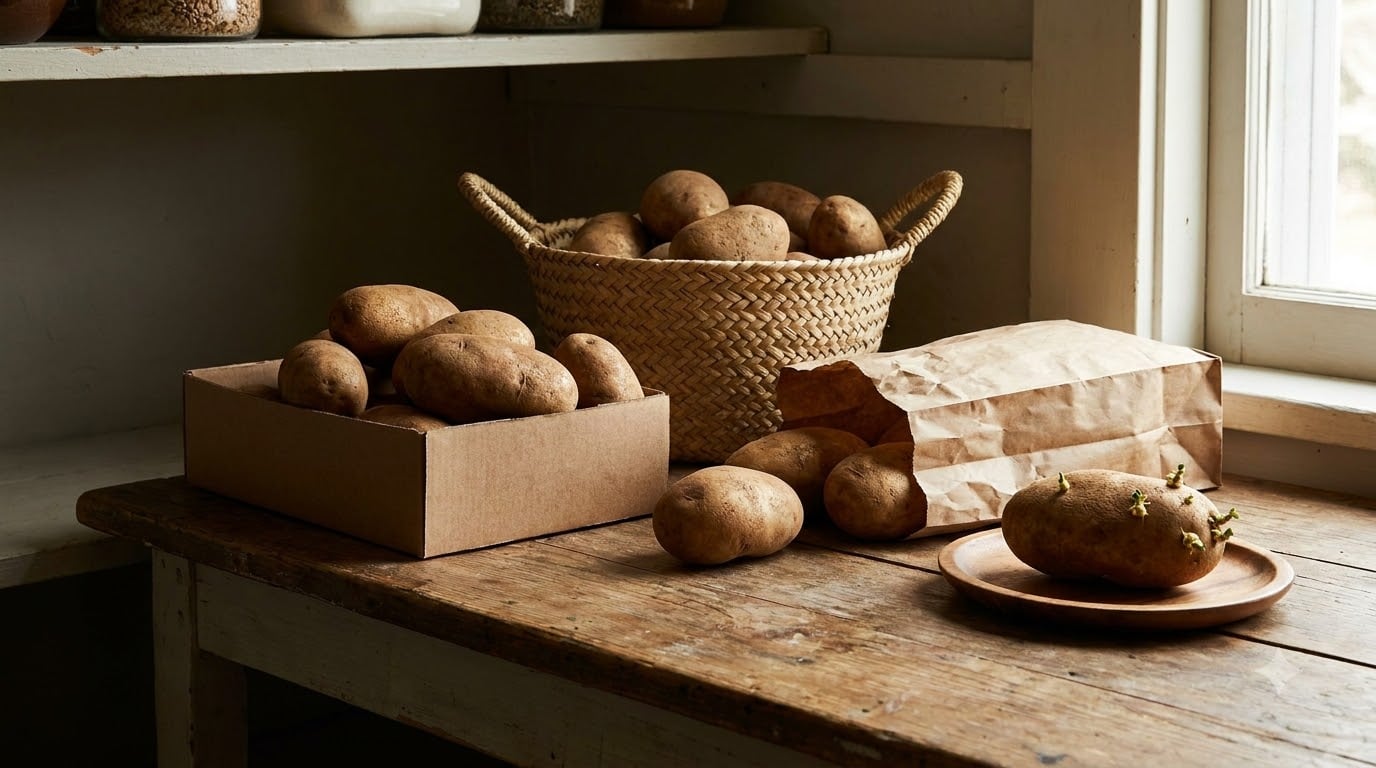
Whole raw potatoes keep about 2-3 months in a cool, dark, well-ventilated pantry. On an open kitchen counter the same potatoes last 1-2 weeks, and russets held in ideal conditions can stretch to 3-5 months. Last updated for October 2026.
I have lost more potatoes to a forgotten bag behind the cereal boxes than to anything else in my kitchen. Turns out the storage spot matters more than the variety, so here is how long do potatoes last in the pantry, broken down by state and by where you keep them. Pick the row that matches what is actually in your cupboard.
Table of Contents
How Long Do Potatoes Last in the Pantry? Quick Guide
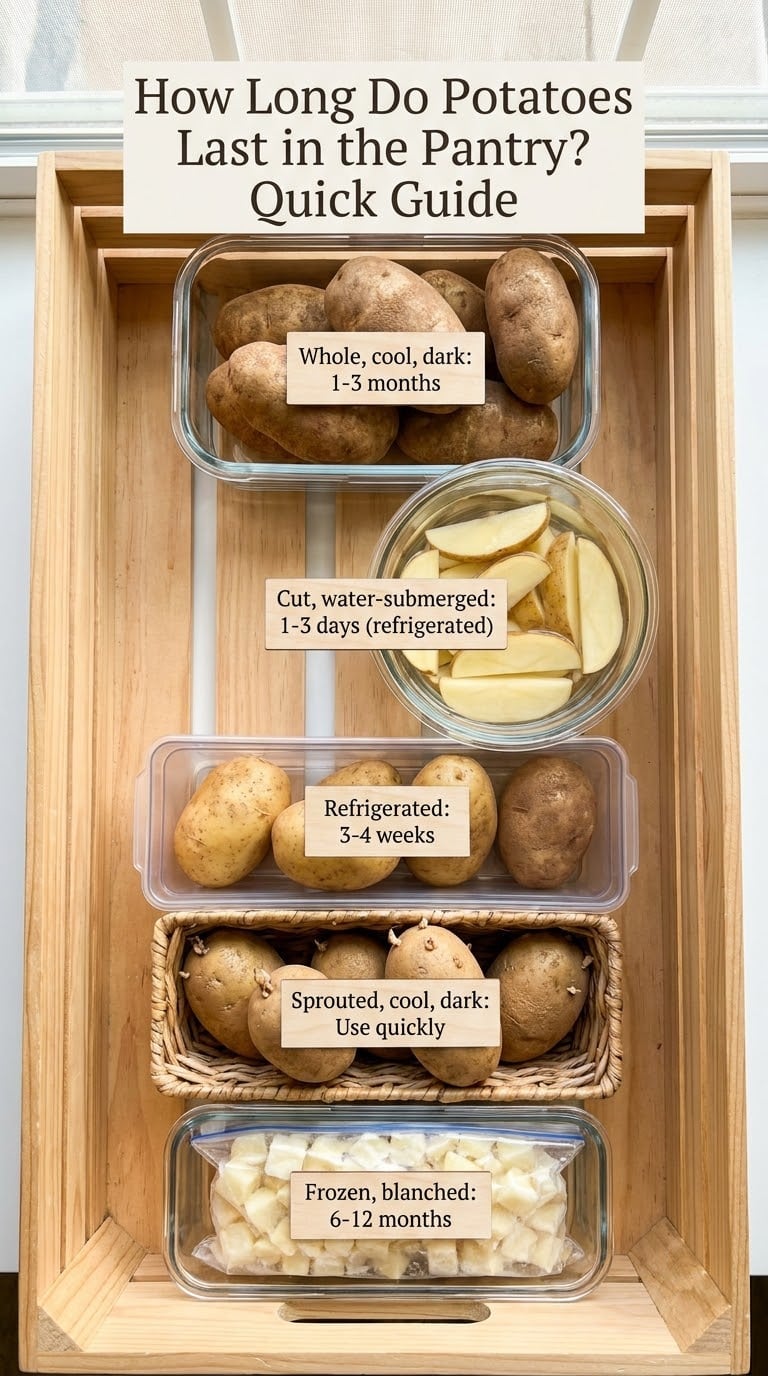
The number people want is the first one on this list. Everything below it is a variation on the same rule: cool, dark, dry and ventilated.
| Potato state | Where to store it | How long it lasts |
|---|---|---|
| Whole, raw, unwashed | Cool dark pantry, 45-55°F (7-13°C) | 2-3 months |
| Whole, raw | Open kitchen counter | 1-2 weeks |
| Whole, raw | Refrigerator | 1-2 months, sweeter and softer |
| Washed, raw | Airtight container in the fridge | 2-3 days, plan to use it fast |
| Cut or peeled | Airtight container in the fridge | 1-4 days, best within 48 hours |
| Cut, submerged in water | Covered container in the fridge | 2-3 days |
| Sprouted, raw | Cool dark pantry | Use within 1-2 weeks, quality drops fast |
| Peeled and blanched | Freezer | 10-12 months |
| Cooked, plain | Fridge, covered | 3-4 days |
| Mashed | Fridge, covered | 3-4 days |
| Potato salad | Fridge, kept cold | 3-4 days |
| Sweet potato | Cool dark pantry above 55°F (13°C) | 1-3 months |
| Home-dug, uncured | Garage or shed, spread out single layer | 2-3 weeks to cure, then 3-6 months |
USDA FoodKeeper reference charts and the potato board guidance both land in the same range for the pantry row, so treat two to three months as a realistic planning number rather than a guarantee. Buy for what you will eat in a month and sort out the rest.
What Conditions Keep Pantry Potatoes Fresh Longer?
Four things decide how fast your potatoes go bad, and you can only control three of them.
Temperature. The sweet spot is 45-55°F (7-13°C), which in most homes means a closet, a lower shelf, a garage or a cellar rather than the kitchen. Heat speeds up respiration and moisture loss, so potatoes dehydrate and shrivel faster in a warm pantry.
Darkness. Light turns chlorophyll green in the skin and raises the glycoalkaloid level in the tissue underneath. That is the same compound in nightshades, and it tastes bitter and acrid before it makes anyone sick.
Airflow. Potatoes still breathe, and moisture they give off has to go somewhere. A ventilated basket, mesh bag, open paper bag or a cardboard box lets that moisture escape instead of condensing into rot.
Humidity. Somewhere around 85-95% relative humidity keeps skins from shriveling without pushing the potatoes toward mold. A pantry is usually close. A dry cupboard is not, which is why unwashed skins matter so much here.
A cardboard box with a loose flap beats a sealed plastic bag every time. If your problem is that the cupboard is warm and bright, the fix is a container in a different room, not a better container. My freestanding pantry cabinet guide covers the options for keeping a cool spot out of the walkway in a small kitchen.
How Long Do Potatoes Last in the Pantry on an Open Counter?
Roughly 1-2 weeks before you see real quality loss, and about 3-4 weeks before most of the batch is worth cooking. Counters are lit, room temperature and often next to the stove or a window, so a potato on the counter gets the light, warmth and air movement of the room, just not the worst of it.
If a counter is all you have, treat the bag as a 2-week grocery and move anything left over into a darker cupboard. Small baby potatoes from the fridge last a few days on the counter; an entire five-pound bag has no chance.
How Long Do Potatoes Last in the Pantry by Potato Type?
Thick skins and starchy flesh win the long game. Thin-skinned, waxy varieties sprout and dehydrate faster.
- Russet: 3-5 months in a good pantry. The thick russet skin is why it wins on shelf life.
- Yukon Gold: 2-3 months. Thin skin, so it loses moisture sooner and sprouts earlier than russet.
- Red potatoes: 1-2 months. Thin skin and high moisture content shorten the window.
- Fingerling: 1-2 months. Small size means more surface area losing water.
- New potatoes: 1-3 weeks. The skins scrape off and the flesh is not firm enough for long storage.
- Instant potatoes: 6-12 months sealed airtight, since they are already dried and cooked.
Why sweet potatoes are a different case
Sweet potatoes are not stored like regular pantry potatoes. Chilling injury shows up as black spots inside the flesh after time in a cold fridge, so keep them at 55-70°F (13-21°C), stored separately from regular potatoes, and expect 1-3 months rather than the russet range. One to three months on a counter in a coolish kitchen is workable, while a fridge crisper bin usually means blackened flesh within a few weeks.
How to Store Potatoes from the Grocery Store
The grocery store is a different starting point than a garden, because the potatoes may have been washed, cured in a light industrial room or sat in a plastic crate. Sort them when you get home.
- Pick dry, firm, unwashed ones. Loose skin and no soft spots. Skip anything leaking or already showing green.
- Sort the whole bag immediately. One bruised potato in a closed bin goes from a bruise to rot in about two weeks and takes its neighbors with it.
- Do not wash them. Water on the skin is the fast track to mold. Wash right before you cook.
- Choose a ventilated container. Cardboard box, mesh bag, open basket or a paper bag with the top folded over, not a sealed plastic bag.
- Keep them in a single layer if you can. Air moves better, and you see problems early.
- Keep potatoes away from onions. Onions release moisture and ethylene gas, and gases from ripening fruit like apples do the same thing. A separate shelf, not a shared bag.
- Check weekly. A ten-second feel through the top layer catches soft spots before they spread.
For the cold-storage side of the same question, how long cooked chicken lasts in the fridge covers the same leftovers-plus-refrigeration logic if you are batching meals for the week.
How Long Do Cut and Peeled Potatoes Last?
Cutting a potato exposes wet flesh to air and bacteria, so the pantry clock stops immediately. A cut potato left on the counter is food-safety territory after about two hours.
In the fridge: submerged in cold water in a covered container, cut potatoes keep 2-3 days. The water keeps the flesh from browning and drying. Change the water once if you are storing more than a day.
In an airtight container: peeled or cut potatoes that are not covered in water keep 1-4 days, and 48 hours is the safest plan for quality. A squeeze of lemon water or a thin coating of oil slows the browning, though it is not a safety measure.
In the freezer: raw potatoes freeze poorly on their own. They go spongy and watery when thawed because of the water in the cells. Blanch first, drain well, spread on a tray to freeze solid, then bag them. Blanched and frozen they keep 10-12 months and roast straight from frozen at a hot oven.
Cooked: plain cooked potatoes, mashed potatoes and potato salad all keep 3-4 days in the fridge, covered and kept cold. Potato salad is the one most people over-keep, so date the container when you make it.
Once a potato is cooked, my rule is to plan three days and freeze anything past that. The leftover mashed potato recipe ideas roundup is what I go to when a batch is heading for day four.
How to Tell Whether Pantry Potatoes Are Still Good
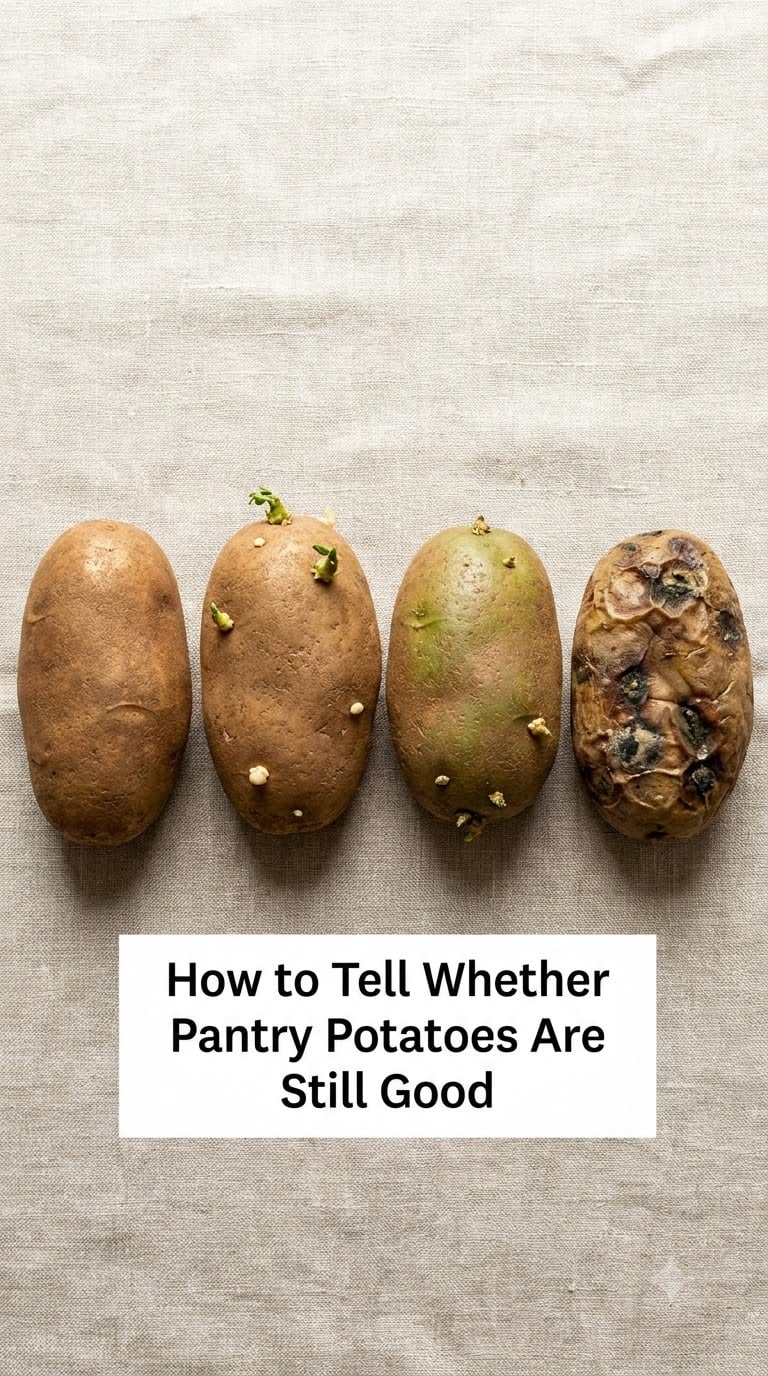
Four checks, in this order: look, press, smell, and only then cut.
- Surface dirt is fine. Dry soil rubs off. That is not spoilage.
- Firm skin with a taut feel means the potato is fine, even if it looks a little dull.
- Normal color, no green patches, and a mild earthy smell all point to a usable potato.
- Small sprouts are a quality issue, not a safety one. Cut the sprout and a generous margin around it, and eat the potato.
Throw it out if the skin is wrinkled or shriveled, if the potato is soft or squishy and leaks, if you see black fuzz or fuzzy mold, if it smells musty or sour, or if a cut reveals a large green area. Bruising, by contrast, is safe. A brown patch from a dropped potato is damaged tissue, not rot, and you can cut right past it.
Greening and sprouting are two different responses. Sprouting comes from age, cool-but-not-cold conditions or variety; greening comes specifically from light. Both raise glycoalkaloids, and potatoes left in the light can climb to a hundred times the normal level. Symptoms of solanine exposure show up as nausea, vomiting and diarrhea within about 8-10 hours.
My line, and it has never let me down: if the green or sprouted area is bigger than a small pea, toss the whole potato. If you are chewing on it and it tastes bitter, spit it out. Small eyes and a hint of green are not an emergency.
Common Mistakes That Make Potatoes Last Less Time
Washing before storing. Water sits in the eyes and cuts and feeds mold. Fix: keep them dusty and unwashed, wash at the sink right before cooking.
Sealed plastic bags. A closed bag traps the moisture the potatoes are releasing, and the skins go damp. Fix: cardboard box, mesh bag or an open paper bag.
A warm kitchen. Above 60°F the respiration rate climbs and potatoes lose water fast, which is why soft, wrinkly skins show up in hot climates. Fix: move the bin to the coolest, darkest room you have, and shorten your planning horizon to a few weeks.
Refrigerating whole raw potatoes. The fridge is not cold enough to stop spoilage, but it is cold enough to convert starch to sugar below about 50°F (10°C). The potato gets sweeter and the texture goes waxy after cooking. Fix: pantry for whole potatoes, fridge only for cut, peeled or cooked ones.
Storing potatoes next to onions or fruit. Onions and ripening apples give off moisture and ethylene, and ethylene speeds sprouting. Fix: a separate shelf or bin.
Storing near the stove or under the sink. Heat and moisture from cooking and plumbing do exactly what you do not want. Fix: never store potatoes near an appliance that generates heat or humidity.
Forgetting about them. A forgotten bag in a warm corner is the most common reason people throw food away. Fix: a weekly check, oldest bag in front.
Frequently Asked Questions
Do russet potatoes last longer than Yukon Gold potatoes in the pantry?
Yes, russets usually outlast Yukon Golds by a few weeks because their thick, papery skin slows water loss. In a cool dark pantry, russets keep 3-5 months while Yukon Golds keep 2-3 months. Yukon Golds also sprout earlier, so if you buy Golds plan to use them within a couple of months and check the bag more often.
Should potatoes be stored with onions in the pantry?
No. Onions release moisture and ethylene gas, and the moisture makes potato skins damp while the ethylene speeds up sprouting. Keep the two in separate bins or on separate shelves, and give potatoes the darker, cooler spot. Store potatoes away from ripening apples and bananas for the same reason.
Can pantry potatoes last for a month in a cool basement?
A month is a safe bet, and most potatoes will still be in good condition after four to six weeks at 45-55°F with airflow. Sort the batch when it comes out of the basement and pull anything soft. If the spot is warm rather than cool, drop the expectation to two to three weeks and move the bin somewhere darker.
Can sweet potatoes be stored the same way as regular potatoes?
Not exactly. Sweet potatoes are sensitive to cold, and refrigerator temperatures can cause chilling injury that shows up as black spots inside the flesh after a few weeks. Keep them in a warm, dark, ventilated spot around 55-70°F, away from onions, and expect 1-3 months of storage rather than the three to five months russets get.
What is the best container for keeping potatoes fresh in a pantry?
A cardboard box with the flaps left loose, a ventilated basket, a mesh bag or an open paper bag all work well because air moves around the potatoes and skin moisture can escape. Avoid sealed plastic bags and airtight tubs, which trap condensation. Line the box with a layer of newspaper for extra darkness, and keep the potatoes in a single layer when the container allows it.
Simple Storage Plan for the Freshest Potatoes
Do this next time you get home from the store: sort the whole bag, throw out anything bruised or soft, and move the rest into a cardboard box or ventilated basket in the coolest dark spot you have. Leave them unwashed, in a single layer, away from onions and ripening fruit, and give the bin a ten-second check each week with the oldest bag in front.
That is the whole answer to how long do potatoes last in the pantry: about 2-3 months for unwashed whole potatoes in a cool, dark, ventilated spot, 1-2 weeks on an open counter. When a potato gets soft, wrinkled or faintly sweet instead, turn it into dinner rather than the bin. A batch of soft russets is the best possible starting point for a one-pan dinner like these hamburger and potato recipes, which is my answer to the pile of aging potatoes sitting in the pantry on a Wednesday night.