
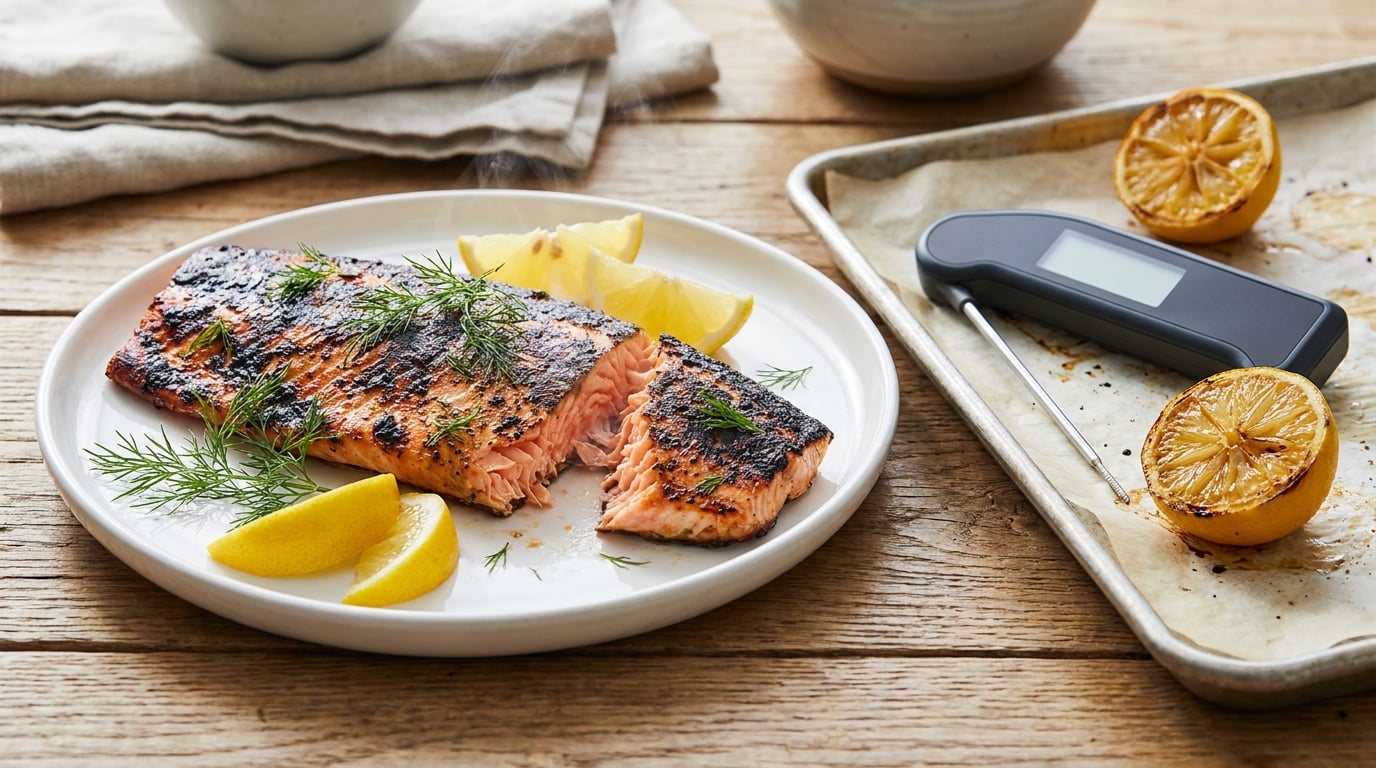
What temperature to bake salmon in the oven? 400F (200C) is the standard answer for a quick, evenly cooked fillet with a lightly browned top. Drop to 375F (190C) when you want the moistest, most forgiving result, and go as low as 275-300F (135-150C) when you have time for a slow roast that turns the fish almost custard-soft.
Whatever oven setting you pick, the number that actually decides your dinner is the internal temperature you pull the fish at: 145F (63C) is the USDA safe minimum, and 130-140F (54-60C) is where most cooks land because the fish stays juicy. Salmon goes from perfect to dry in about two minutes, which is why a thermometer beats a timer every single time.
Table of Contents
What Temperature to Bake Salmon in the Oven
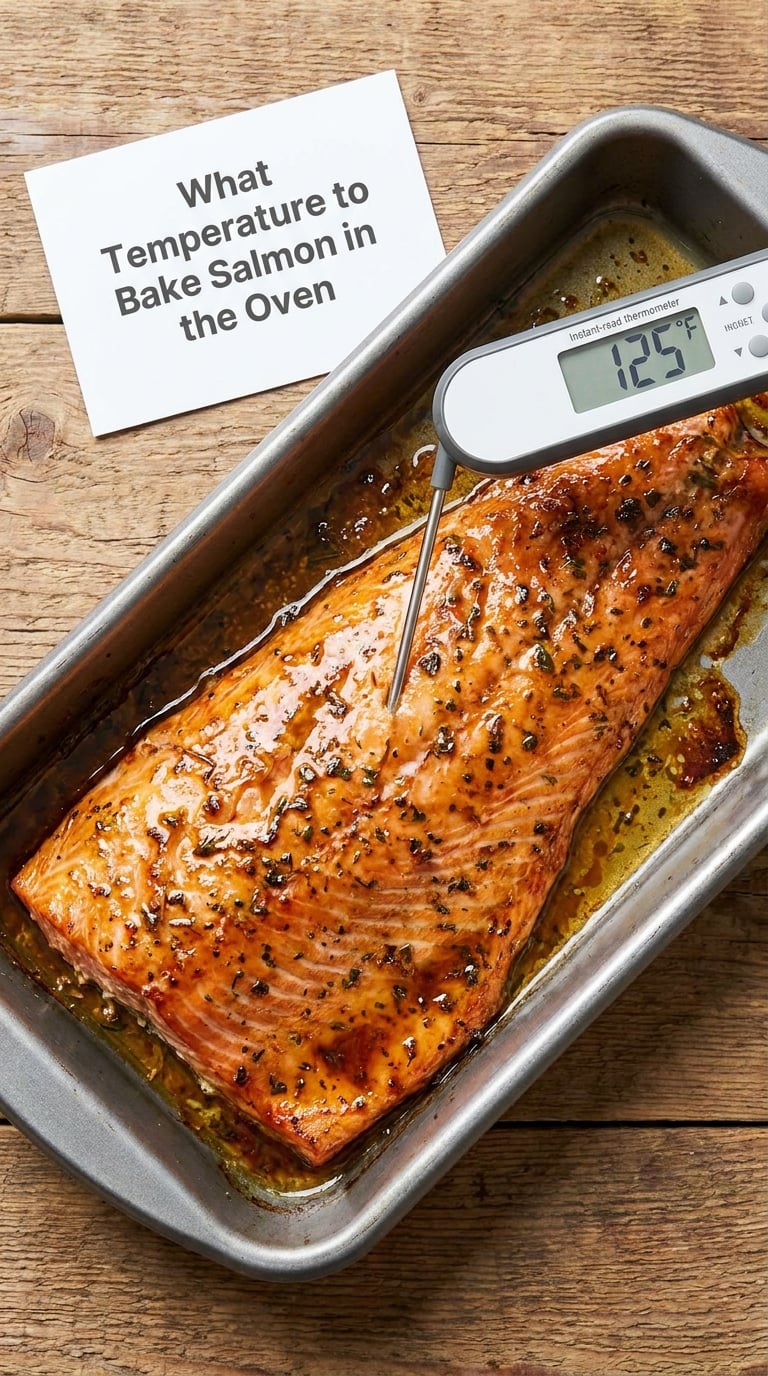
Bake salmon at 400F (200C) for standard fillets, 375F (190C) for a gentler cook, or 275-300F (135-150C) for a slow roast. Here is the way each tier behaves.
- High heat, 400-425F (200-220C). Fast, 8-12 minutes for a 1-inch fillet. You get browned edges and lightly crisp skin, with a tighter window before the fish dries out. Best on fattier, thicker cuts.
- Standard heat, 375F (190C). The reliable middle. Even cooking, very little risk of a raw centre, forgiving of a slightly thicker fillet. This is the one I come back to most weeks.
- Low and slow, 275-300F (135-150C). 25-40 minutes depending on size. Gentle heat keeps the delicate muscle fibres from squeezing out moisture, so the flesh stays silky. Best for lean wild sockeye and for a whole side.
Baked salmon temperature and time chart
Times below assume the fish goes into the oven straight from the fridge and is checked with a thermometer rather than trusted blindly. Start checking at the low end of each range.
| Oven temperature | 3/4-inch fillet | 1-inch fillet | 6-ounce fillet | 1.5-1.75 lb side | Best for |
|---|---|---|---|---|---|
| 350F (175C) | 18-22 min | 22-26 min | 20-24 min | 30-36 min | Gentlest cook, thick sides |
| 375F (190C) | 15-18 min | 18-21 min | 15-18 min | 25-30 min | Moist, forgiving default |
| 400F (200C) | 10-13 min | 12-15 min | 11-14 min | 18-22 min | Standard weeknight bake |
| 425F (220C) | 8-11 min | 10-13 min | 9-12 min | 15-18 min | Browned top, fattier cuts |
| 450F (230C) | 7-10 min | 9-12 min | 8-11 min | 13-16 min | Fastest, needs a close eye |
As a rule of thumb, allow about 10 to 12 minutes per inch of thickness at 400F, and add roughly a minute per extra quarter inch. The oven setting moves the surface colour; the thickness moves the clock.
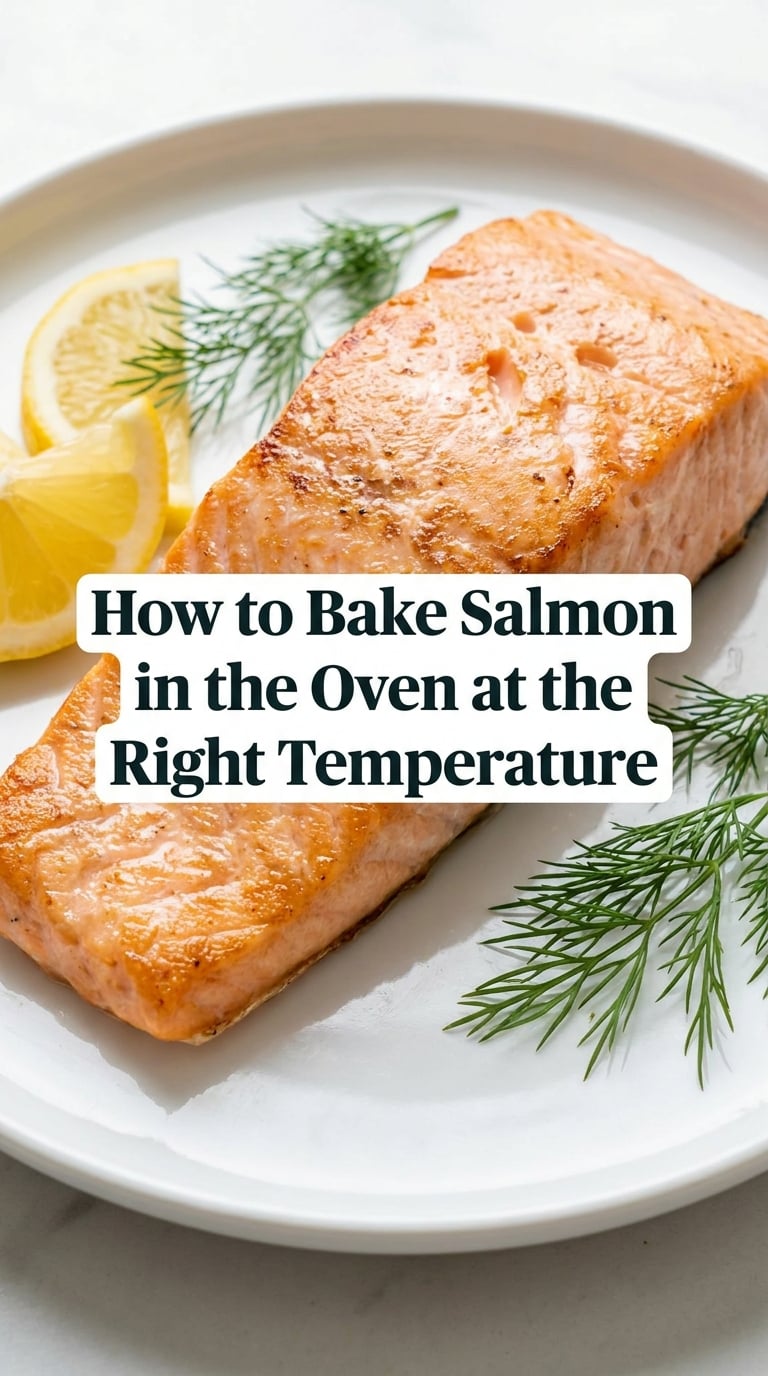
How to Bake Salmon in the Oven at the Right Temperature
- Preheat fully. Set the oven to 400F (200C) and give it a full 10 minutes at temperature. An oven that has not recovered yet is the reason so many fillets come out pale on top and raw underneath.
- Take the salmon out 10 to 20 minutes ahead. You are not chasing room temperature, just taking the chill off. Leave the fish in the fridge until the last moment, then move it to the counter while the oven finishes preheating.
- Pat the fillet dry. Blot both sides with paper towel. Surface moisture steams instead of browning, and a wet skin sticks to the pan.
- Oil and season the top. Rub the flesh side with olive oil, then salt and pepper. Oil on the flesh side is what gives you a lacquered finish instead of a chalky one.
- Place skin-side down on a lined sheet. Parchment or a light spray of oil on a rimmed baking sheet. Leave a finger’s width between fillets; crowded fish steams and the edges never crisp. Skin-side down gives you crisp skin and a protected, moist top.
- Bake and start checking early. At 400F, check at the 8-minute mark. At 375F, check at 12 minutes. Push the probe into the thickest part of the fillet, away from the skin and the pan, and read it fast.
- Pull about 5 degrees under your target. Carry-over heat keeps climbing after the fish leaves the oven. Pull at 130-135F (54-60C) and it will coast to 140F (60C) while it rests.
- Rest 3 to 5 minutes, then serve. Loosen the skin with a thin spatula, then lift. A short rest lets the juices settle instead of running onto the plate.
Convection, toaster oven and air fryer adjustments
If your oven has a fan, drop the temperature by 25F (15C) and start checking about 20 percent earlier. Fan heat wraps the fillet from both sides, so the top browns almost as fast as the bottom cooks.
In a toaster oven, the heat is close and uneven, so tent the fish with foil for the first two thirds of the cook. For an air fryer, 400F (200C) for 7-10 minutes on a 1-inch fillet is a fair translation, though the tight basket means you should still watch the internal temperature, not the dial.
Whatever the appliance, an accurate dial matters more than most people assume. If you have never checked yours, the 10 best leave-in oven thermometers roundup covers the tools worth trusting, and our picks on the 11 best double oven ranges cover true convection and easy-to-read temperature controls.
Baked Salmon Temperatures by Cut and Thickness
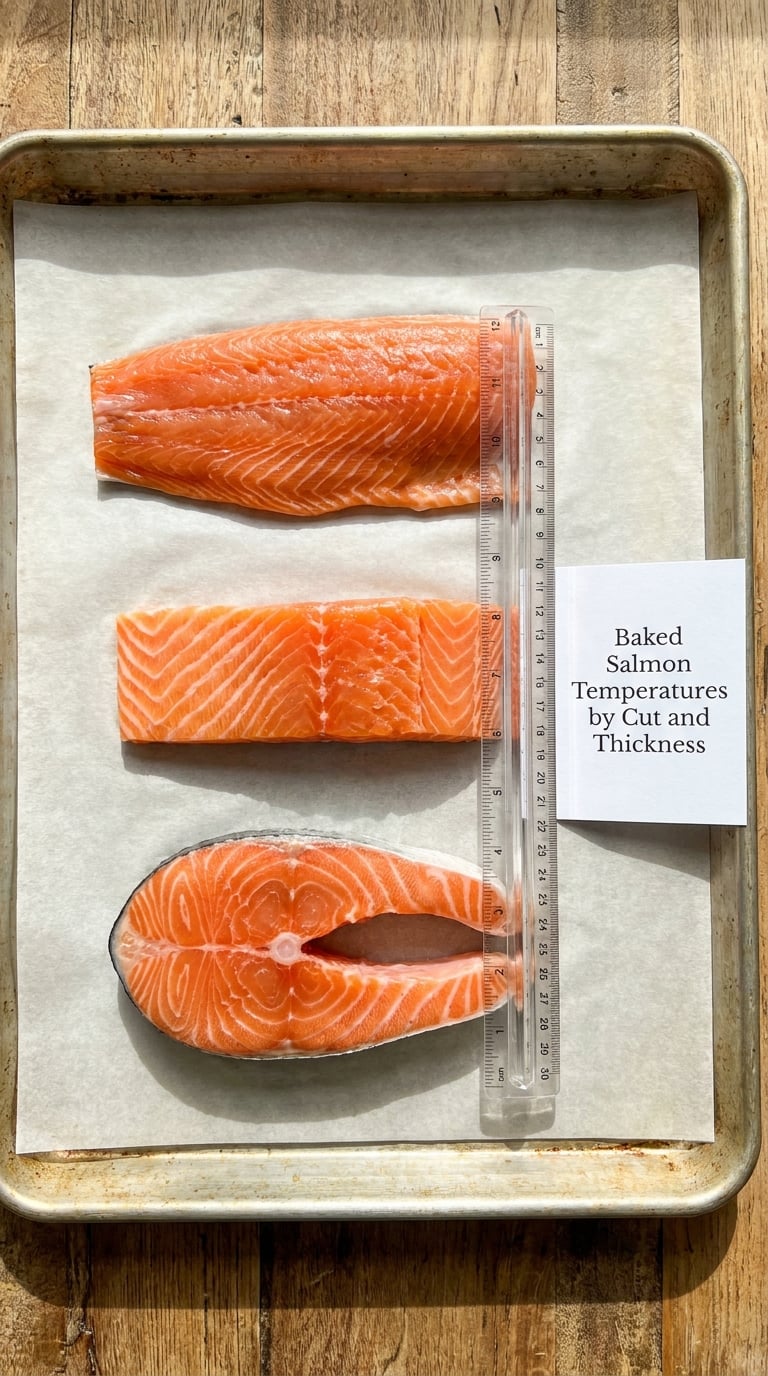
Thickness changes the cooking time more than any oven temperature does. A 1-inch center-cut fillet at 400F takes about 12-15 minutes, while a tapered tail-end piece can be done in 9 and a 1.75 lb side needs closer to 20. Same oven, same fish, three different answers.
Skin-on fillets
Skin on is the easiest route to moist flesh. The skin acts as a heat shield over the delicate underside, and you get crisp skin as a bonus. Leave it on, and use a wide flat spatula so you lift instead of scooping.
Skin-off fillets
Skin-off cooks faster and browns more evenly, but the flesh has nothing protecting it. Lower the oven to 375F (190C), and add a splash of broth or white wine to the pan. Expect to lose a minute or two off the time in the chart above.
Salmon steaks and thick portions
Steaks and thick center-cut portions are bone-in, so the bones act as little heat sinks. Start checking three minutes earlier than the chart says, and probe the part of the steak between the bones rather than the flesh right beside them. A bone will read hot and give you a falsely high number.
Lean wild versus fatty farmed
Wild sockeye and coho are lean, with a higher fat ratio in the belly than the shoulder, and they punish high heat. Farmed Atlantic has more marbling and can take 425F (220C) without complaint. Lean fish deserves 375F (190C) and a firm hand on the thermometer; fatty fish can go hotter and longer.
Baking from frozen
You can bake salmon from frozen, but the oven needs help. Set it to 425F (220C), put the fillet on a sheet, and cover it loosely with foil. Bake until the centre of the ice block has loosened, about 12-15 minutes, then pull the foil, drop the oven to 400F (200C), and cook 6-8 minutes more until it hits temperature. Thawing overnight in the fridge gives you better seasoning penetration, but a freezer-burned fillet is the one case where going straight from frozen actually wins.
Once the basics are set, the 12 sushi bake recipes ideas collection is a good place to take a baked fillet in a completely different direction.
How to Tell When Oven-Baked Salmon Is Done
Push an instant-read thermometer into the thickest part of the fillet, at a slight angle, touching neither the skin, the bone, nor the pan. That is the whole technique. A reading taken anywhere else is a guess.
The USDA safe minimum internal temperature for fish is 145F (63C). Most home cooks pull earlier, at 130-140F (54-60C), because residual heat carries the fish to about 145F during the rest, and the flesh holds far more moisture. Both are defensible; the important thing is that you checked.
| Doneness | Pull at | What it looks like | Note |
|---|---|---|---|
| Very rare | 115-120F (46-49C) | Translucent, glassy centre, very soft | Well past food safety only with sous vide |
| Medium-rare | 125-130F (52-54C) | Translucent at the very centre, flakes with pressure | My favourite for farmed Atlantic |
| Medium | 135-140F (57-60C) | Opaque throughout, just turning firm | The sweet spot for lean wild fish |
| Well done | 145F (63C) and up | Firm, dry-looking, springs back | USDA safe minimum, firmer texture |
Without a thermometer, three cues still work. The flesh turns opaque and changes from translucent pink to a lighter coral. A fork slides into the thickest part with almost no resistance and separates the fish into clean flakes. And the white protein, or albumin, that sits just under the surface sets into a firm white bead rather than staying wet and glassy.
Signs of overcooking are unmistakable once you have seen them: the surface tightens and turns rubbery, the flakes shrink and pull away from each other, and a thin white liquid weeps out. Once that happens in the oven, nothing pulls it back. It is why the five degrees under is worth the discipline.
Common Salmon Baking Mistakes and Fixes
The biggest mistake in oven-baked salmon is not a wrong temperature. It is cooking to the temperature you intended instead of pulling early and letting carry-over finish the job.
| What went wrong | Why it happened | Fix it next time |
|---|---|---|
| Dry, chalky flesh | Cooked too long or at too high a heat for a lean cut | Drop to 375F (190C) and pull at 135F (57C) |
| Rubbery, springy texture | Left in the oven past 145F (63C) | Start checking two minutes earlier than the chart |
| Raw centre, browned top | Oven not fully preheated, or fillet sat too close to the element | Preheat a full 10 minutes, use the middle rack |
| Heavy white streaks | Albumin pushed out by fierce heat | Reduce 25F (15C) and shorten by two minutes |
| Sticking to the pan | Fillet went in wet, or skin side was not pressed flat | Pat dry, oil the pan, press skin side down first |
| Uneven cooking across the sheet | Fillets crowded, so the middle steams instead of browning | Space fillets a finger’s width apart, or bake in two batches |
| Uneven texture on one fillet | Tapered tail-end piece used as though it were a centre cut | Pull the thin end first, treat it as a 20 percent shorter cook |
If you already overcooked a fillet, do not serve it dry and apologise. Break it into large flakes and fold it through a lemony mayonnaise, a little capers, and dill for a quick salmon salad, or spoon a warm brown-butter lemon sauce over the top and serve it with crusty bread.
For leftovers, reheat gently rather than hot. A 10-minute rest in a 250F (120C) oven with a splash of broth keeps the flesh from tightening, and a microwave on 50 percent power for 60 to 90 seconds is faster and works fine as long as you do not walk away from it.
Frequently Asked Questions
Is 350F or 400F better for baking salmon?
350F (175C) cooks the fillet gently and evenly, which keeps the flesh moistest but gives you almost no browning. 400F (200C) adds a lightly browned top and slightly crisper edges in about half the time. If you are new to cooking fish or your fillets are thick, use 375F (190C) as the middle ground. Only drop to 350F when you are roasting a full side of salmon.
How long should I bake salmon at 400F?
At 400F (200C), a 1-inch-thick fillet takes 12-15 minutes, a three-quarter-inch fillet takes 10-13 minutes, and a 1.5-1.75 lb side of salmon takes 18-22 minutes. Start checking eight minutes in, because the gap between perfect and dry is roughly two minutes. Pull at 130-135F (54-60C) and let carry-over heat take it the rest of the way.
Do I need to thaw frozen salmon before baking it?
No. You can bake salmon straight from the freezer at 425F (220C), covered loosely with foil, for 12-15 minutes until the ice loosens. Then pull the foil, drop the oven to 400F (200C), and cook 6-8 minutes more until the centre reaches 140F (60C). Thawing overnight in the fridge seasons better, but frozen cooking keeps fillets that have started to freezer-burn from drying out further.
How do I know when salmon is cooked through without cutting it?
Watch for three cues together. The flesh turns opaque and lighter, a fork slides into the thickest part with almost no resistance and separates it into clean flakes, and the white albumin just under the surface sets into a firm bead. If the flakes shrink and pull apart, or a thin white liquid weeps from the fish, it has already gone past done.
Should I bake salmon skin-side down or up?
Skin-side down. The skin shields the delicate underside from direct heat, which keeps the flesh moist, and the exposed top side gets the browning you actually want. Press the fillet skin down onto the pan so it lies flat, and use a wide flat spatula to slide underneath when it is time to lift it out.
How do I reheat baked salmon without drying it out?
Use low heat and add moisture. Put the fillet in a dish with a splash of broth, cover it loosely, and warm it in a 250F (120C) oven for about 10 minutes. A microwave on 50 percent power for 60-90 seconds also works, but only if you stop it before the flesh tightens. Never reheat at full power or leave it until it steams, or the fish turns rubbery.
Conclusion
Start at 400F (200C) for a 1-inch fillet, and start checking at eight minutes with a thermometer in the thickest part. If you want a softer, wetter result, drop the oven to 375F (190C) and give it four or five more minutes rather than raising the heat.
Whichever temperature you settle on, the winning habit is the same: pull the salmon at 130-135F (54-60C), let it rest, and let carry-over heat carry it to the 145F (63C) USDA safe minimum. That is what temperature to bake salmon in the oven comes down to, week after week.