
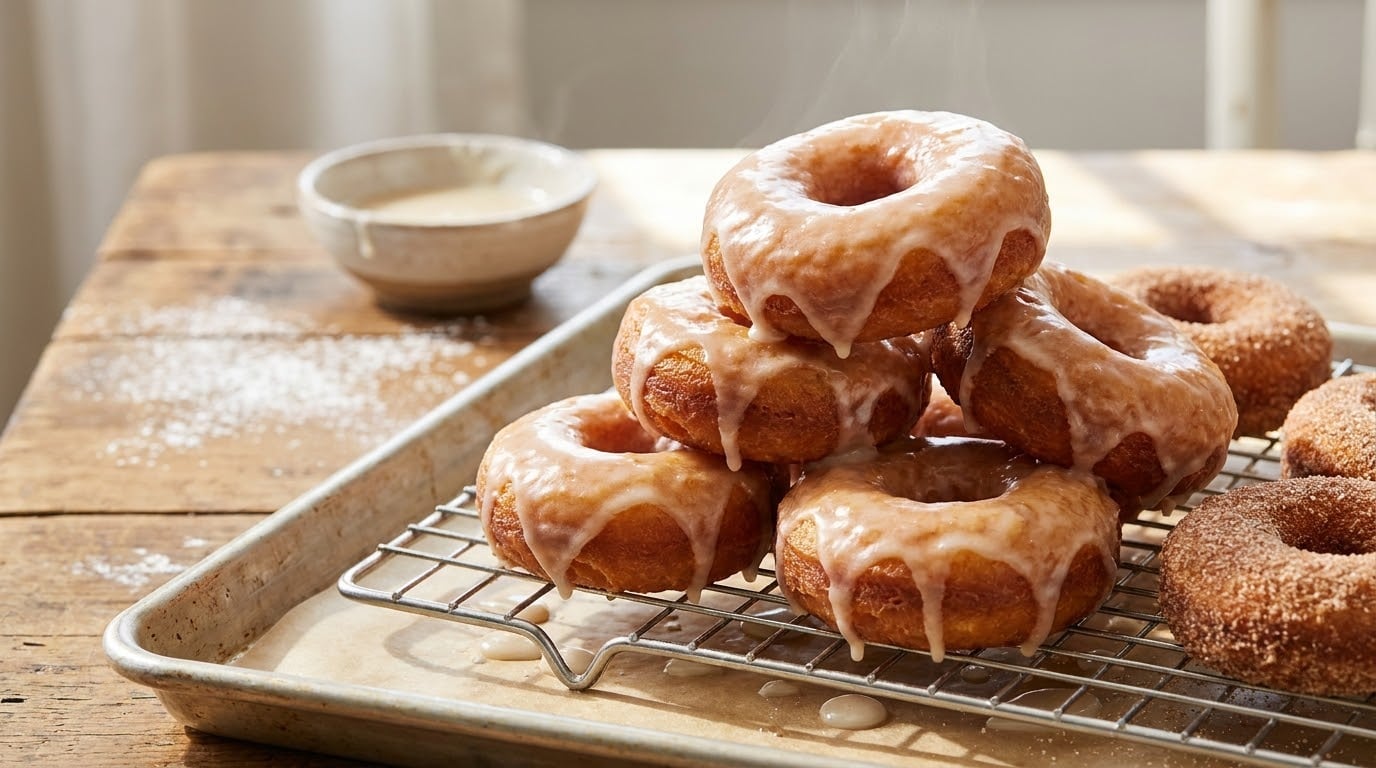
Old fashioned sour cream donuts are the kind of cake donut I came up craving on Saturday mornings. Golden and crackly around the edges, tender through the middle, and finished with a thin vanilla glaze that sets just enough to cling without going crunchy. This old fashioned sour cream donuts recipe is the version I keep coming back to: pantry staples, no yeast, no proofing, and the whole batch fries up in about ten minutes once the oil is hot.
If you have ever had one of those diner cake donuts and wondered how they got that dense-but-tender crumb, the answer is sour cream. The acidity tightens the gluten just slightly so the donut holds its shape in the oil, and the fat keeps the inside from drying out. Total time from flour on the counter to glazed donut in hand is around an hour, with most of that spent chilling the dough so it rolls out cleanly.
Table of Contents
Why This Recipe Works
Three small things separate a forgettable cake donut from a great one, and this recipe nails all three.
- Sour cream does the heavy lifting. It adds moisture and a gentle tang, and the lactic acid reacts with baking powder to give a slightly more open crumb than a plain milk dough.
- Short, hot fry sets the crust fast. Frying at 360 to 370 degrees F (182 to 188 degrees C) for about 90 seconds a side means a crisp, golden outside and a fully cooked interior. Lower oil and the donuts drink it; hotter oil and the outside burns before the middle catches up.
- Cake flour keeps things tender. Lower protein than all-purpose, so the crumb stays soft instead of chewy. If you only have all-purpose, the cornstarch trick in the swaps below gets you close.
- No yeast, no waiting. Baking powder does the leavening, so the dough comes together in one bowl and chills while you set up the fry station.
- Pantry staples only. Flour, sugar, butter, eggs, sour cream, baking powder, salt, and a little nutmeg. Nothing weird, nothing you have to plan a trip to the store for.
Ingredients
This makes about 10 to 12 donuts plus a handful of holes. Everything goes in one bowl except the glaze.
For the donuts:
- 2 and 1/2 cups (280 g) cake flour, spooned and leveled
- 1 cup (200 g) granulated sugar
- 1 and 1/2 teaspoons baking powder
- 1 teaspoon fine sea salt
- 1/2 teaspoon ground nutmeg, freshly grated if you can
- 4 tablespoons (56 g) unsalted butter, cold and cubed
- 2 large egg yolks
- 1 cup (240 g) full-fat sour cream, cold
- 1 teaspoon pure vanilla extract
- Neutral oil for frying (peanut, canola, or vegetable), about 2 inches deep in the pot
For the vanilla glaze:
- 2 cups (240 g) powdered sugar, sifted
- 3 to 4 tablespoons whole milk or buttermilk
- 1 teaspoon pure vanilla extract
- Pinch of fine sea salt
On the key ingredients: Full-fat sour cream is the move here. Low-fat will work in a pinch, but the crumb will be a touch drier. Real butter, cold, gives the cleanest flavor. Cake flour is worth buying for this one batch; it makes a noticeable difference. If you only have all-purpose, measure 2 and 1/4 cups (270 g) and replace 2 tablespoons of the flour with 2 tablespoons of cornstarch, then sift them together.
The only reliable swaps: Buttermilk thinned with a teaspoon of lemon juice can stand in for sour cream in equal measure. Whole-milk Greek yogurt, drained for 10 minutes on paper towels, also works. Do not swap in regular milk; you will lose the tender crumb and the slight tang that defines an old fashioned sour cream donut.
Equipment
The right gear matters more for this recipe than for most bakes because the oil needs to behave.
- Heavy Dutch oven or deep, heavy pot. A 5 to 6 quart pot holds about 2 inches of oil without crowding. Thin pots cool the oil too fast when you drop the dough in.
- Candy or deep-fry thermometer. Clip-on style, so it stays put. An instant-read also works, but you will be holding it the whole time.
- 3-inch round cutter for the outer edge, plus a 1-inch cutter for the centers. A piping tip works in a pinch for the holes.
- Wire rack set over a rimmed sheet pan for draining. Paper towels under the rack catch drips, and the rack keeps the bottoms from going soggy.
- Rolling pin and a lightly floured surface for rolling the dough.
- Slotted spoon or spider for lifting donuts out of the oil.
How to Make Old Fashioned Sour Cream Donuts
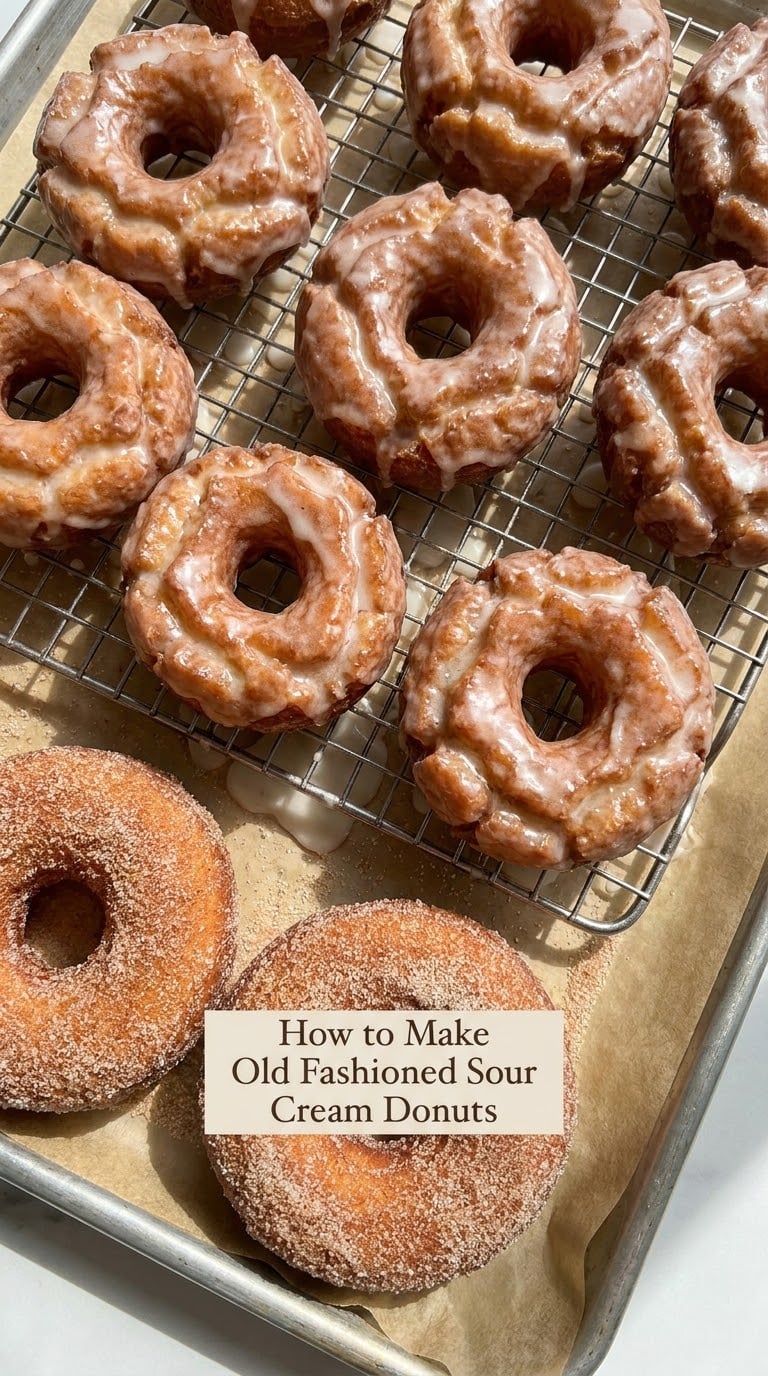
Plan for about 30 minutes of active work and 30 minutes of chilling, then 8 to 10 minutes of frying once the oil is up to temperature.
Step 1. Mix the dry ingredients. Whisk the cake flour, sugar, baking powder, salt, and nutmeg together in a large bowl until evenly combined.
Step 2. Cut in the butter. Add the cold butter cubes and work them in with your fingertips or a pastry cutter until the mixture looks like coarse sand with a few pea-sized bits of butter still visible. Those bits melt in the fryer and help create the slightly craggy, crisp edges that make old fashioned donuts look like old fashioned donuts.
Step 3. Whisk the wet ingredients. In a separate bowl, whisk the egg yolks, cold sour cream, and vanilla together until smooth.
Step 4. Bring the dough together. Pour the wet into the dry and stir with a fork or spatula just until a shaggy dough forms. Do not overmix. A few dry streaks are fine; you are going to chill the dough and they will hydrate.
Step 5. Chill the dough. Turn the dough out onto a piece of plastic wrap, press it into a flat 1-inch-thick disc, wrap tightly, and refrigerate for at least 30 minutes, up to overnight. Cold dough rolls out clean, cuts without sticking, and holds its shape in the hot oil.
Step 6. Heat the oil. Pour 2 inches of oil into the Dutch oven, attach the thermometer, and heat over medium to 360 to 370 degrees F (182 to 188 degrees C). Maintain that range through the whole fry. This is the single biggest factor in how your donuts turn out.
Step 7. Roll and cut. Lightly flour the counter and the top of the dough. Roll the chilled disc out to about 1/2 inch thick. Cut with the 3-inch cutter, then pop out the centers with the 1-inch cutter. Gather scraps, re-press gently, and cut again. Slide cut donuts and holes onto a parchment-lined sheet and keep them in the fridge while the first batch fries.
Step 8. Fry. Working in batches of 2 or 3 so the oil temperature holds steady, gently lower a donut into the oil. Fry for about 90 seconds on the first side, until the underside is deep golden brown, then flip and fry another 60 to 90 seconds on the second side. The donut should bob to the surface within 10 seconds if your oil is hot enough.
Step 9. Drain. Lift the donuts out with a slotted spoon or spider and transfer to the wire rack over the sheet pan. Let them rest 2 to 3 minutes before glazing so the surface is not so hot that the glaze slides right off.
Step 10. Glaze. Whisk the powdered sugar, 3 tablespoons milk, vanilla, and salt together until smooth and thick but pourable, about the texture of heavy cream. Add the last tablespoon of milk only if needed. Dip the top of each warm donut into the glaze, let the excess drip back into the bowl, and set it back on the rack. The glaze will set in about 10 minutes.
Tips for Success
Most cake donut problems come down to oil temperature, dough handling, or glazing timing. Here is what to watch for.
- Oil temperature is the number one variable. Too cool and the donuts absorb oil and taste heavy. Too hot and the outside scorches before the inside cooks. Clip that thermometer to the side of the pot and adjust the burner between batches.
- Chill the dough, and chill it long enough. Thirty minutes is the minimum. Cold butter means less spread, cleaner edges, and a more tender crumb.
- Do not overwork the dough. Mix just until the wet and dry come together, then stop. A tough donut is almost always an overmixed one.
- Keep cut donuts cold until the oil is ready. A quick trip back into the fridge for 5 to 10 minutes firms them up so they hold their shape in the hot oil.
- Flip once, gently. A spider or two slotted spoons is easier on the crust than tongs. The second side cooks faster than the first, so peek at 60 seconds.
- Glaze while warm, not hot. If you dip straight out of the oil, the glaze runs off. Two or three minutes on the rack is the sweet spot. Glaze sets in about 10 minutes and dries to a soft, slightly tacky finish.
Variations
Once you have the base down, the glaze is where you can play. These are the swaps I come back to most.
- Cinnamon sugar instead of glaze. Dip the warm donuts in melted butter, then roll in a mix of 1 cup granulated sugar and 2 tablespoons cinnamon. Old fashioned sour cream donuts done this way taste like a cinnamon-sugar cake donut shop.
- Chocolate glaze. Whisk 1/4 cup unsweetened cocoa powder into the powdered sugar before adding the milk. For an extra-rich version, try a chocolate frosting like the one on these Easy Cookies and Cream Donuts Recipe (Oreo Cake Donuts).
- Maple glaze. Swap the milk for 3 tablespoons pure maple syrup and add a splash of milk to loosen. Brown butter stirred into a maple glaze is the move in this Easy Sour Cream Cake Donuts Recipe with Maple Brown Butter Glaze, which is essentially the richer cousin of today’s bake.
- Lemon glaze. Use lemon juice in place of the milk and add the zest of one lemon. Bright, light, and a nice change of pace in spring.
- Baked instead of fried. Press the rolled dough into a greased donut pan and bake at 350 degrees F (175 degrees C) for 12 to 14 minutes, until the tops spring back lightly. The crumb will be slightly more cupcake-like and a touch paler, but still tender. Glaze once they have cooled for 5 minutes.
Storage, Make-Ahead and Reheating
Old fashioned sour cream donuts are at their very best the day they are fried, when the crust is still crisp and the glaze is just set. After that, they soften, which some people love and some do not.
- Room temperature: Up to 24 hours in a single layer, uncovered or loosely tented. Stacking traps steam and softens the crust fast.
- Freezer: Freeze unglazed donuts in a single layer on a sheet pan, then transfer to a freezer bag for up to 2 months. Thaw at room temperature, warm on a rack in a 300 degrees F (150 degrees C) oven for 5 minutes, then glaze while warm.
- Make ahead: The dough can be made a day ahead, wrapped tightly, and kept in the fridge. Cut and fry straight from the fridge. The glaze can be whisked together up to 3 days ahead and stored covered; whisk again with a splash of milk before using.
- Reheating: A 300 degrees F (150 degrees C) oven for 5 minutes brings back most of the crispness. Avoid the microwave; it makes the crust soft and chewy.
What to Serve With Them
Cake donuts want something that contrasts their sweet, slightly dense crumb.
- Hot coffee or cold brew. The classic. A dark roast balances the glaze.
- A cold glass of milk. The way most of us ate them as kids, and still the simplest good answer.
- Hot chocolate. For a winter breakfast or a snowy afternoon project.
- Warm berry compote for dipping. Simmer 1 cup mixed berries with 2 tablespoons sugar and a squeeze of lemon for 5 minutes, smash a few with a spoon, and serve warm.
- Fresh strawberries and a soft scramble. For a slow weekend brunch plate, donuts on one side, eggs and fruit on the other.
Frequently Asked Questions
Can I make the donut dough ahead of time?
Yes. Mix and chill the dough up to 24 hours in advance, wrapped tightly in plastic. Cut and fry straight from the fridge; the cold dough actually holds its shape better in the oil. Bring the glaze together the morning you plan to serve and whisk in a splash of milk if it has thickened overnight.
Can old fashioned sour cream donuts be baked instead of fried?
You can bake them in a greased donut pan at 350 degrees F (175 degrees C) for 12 to 14 minutes, until the tops spring back lightly. The texture will be more cupcake-like and a touch paler than fried, with a softer crust. Glaze after a 5 minute cool on the rack so the glaze sets properly.
Why are my sour cream donuts raw in the middle?
Almost always oil that is not hot enough. Drop the thermometer in and confirm 360 to 370 degrees F (182 to 188 degrees C) before each batch. If the oil is below 360, the outside browns slowly while heat never reaches the center. Also avoid crowding the pot, which drops the temperature fast.
Why are my donuts greasy after frying?
Greasy donuts mean the oil was too cool when they went in. Anything under 360 degrees F (182 degrees C) lets the dough soak up oil before the crust sets. A second cause is leaving them on paper towels instead of a wire rack, where trapped steam softens the crust and makes them feel greasy. Drain on a rack, always.
What is the best oil for frying sour cream donuts?
A neutral, high smoke-point oil like peanut, canola, or vegetable. Peanut oil gives the cleanest flavor and browns evenly. Avoid olive oil and butter, which burn at fry temperatures and will leave the donuts tasting acrid. Whatever you use, keep the temperature between 360 and 370 degrees F (182 to 188 degrees C) the whole time.
Can I substitute Greek yogurt for the sour cream?
Yes, with one small step. Use full-fat plain Greek yogurt and let it drain on a layer of paper towels for 10 minutes to remove some of the extra liquid. Measure out 1 cup of the drained yogurt per cup of sour cream. The result is a slightly tangier donut with a crumb very close to the sour cream version.
That is the old fashioned sour cream donuts recipe I make on the first cold weekend of fall and again whenever someone asks for “the donut one.” Fry a small test donut first to dial in your oil, then work in batches, and you will end up with a dozen cake donuts that taste like they came from a small-town bakery window. If you love this kind of bake, my 15 Best Old Fashioned Dessert Recipes Ideas roundup is a good place to find the next one.