
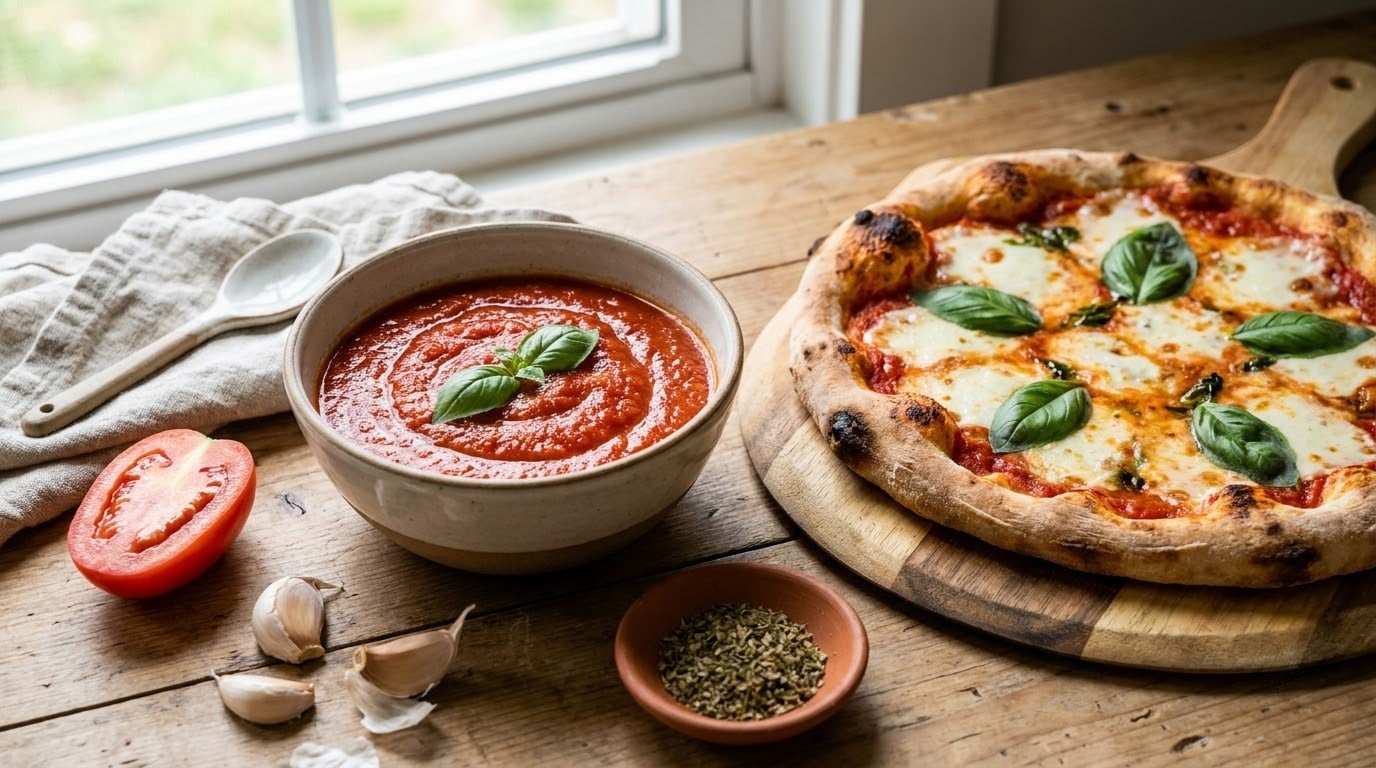
Store-bought pizza sauce is usually watery, oddly sweet, or tastes like nothing much at all, and that thin sauce is the number one reason a homemade pizza comes out soggy in the middle. This easy homemade pizza sauce recipe takes 25 minutes start to finish and gives you a sauce thick enough to sit on the crust without soaking it, seasoned exactly the way you like it.
Everything comes from the pantry: one can of crushed tomatoes, a couple tablespoons of tomato paste, olive oil, garlic, dried oregano and a pinch of sugar. Simmer it while the dough rises, or make a triple batch and freeze half in half-cup portions for the next three Fridays. It is worth making because you control the salt, the sweetness and the thickness, and those are the three things jarred sauce gets wrong most often.
Table of Contents
Why This Recipe Works
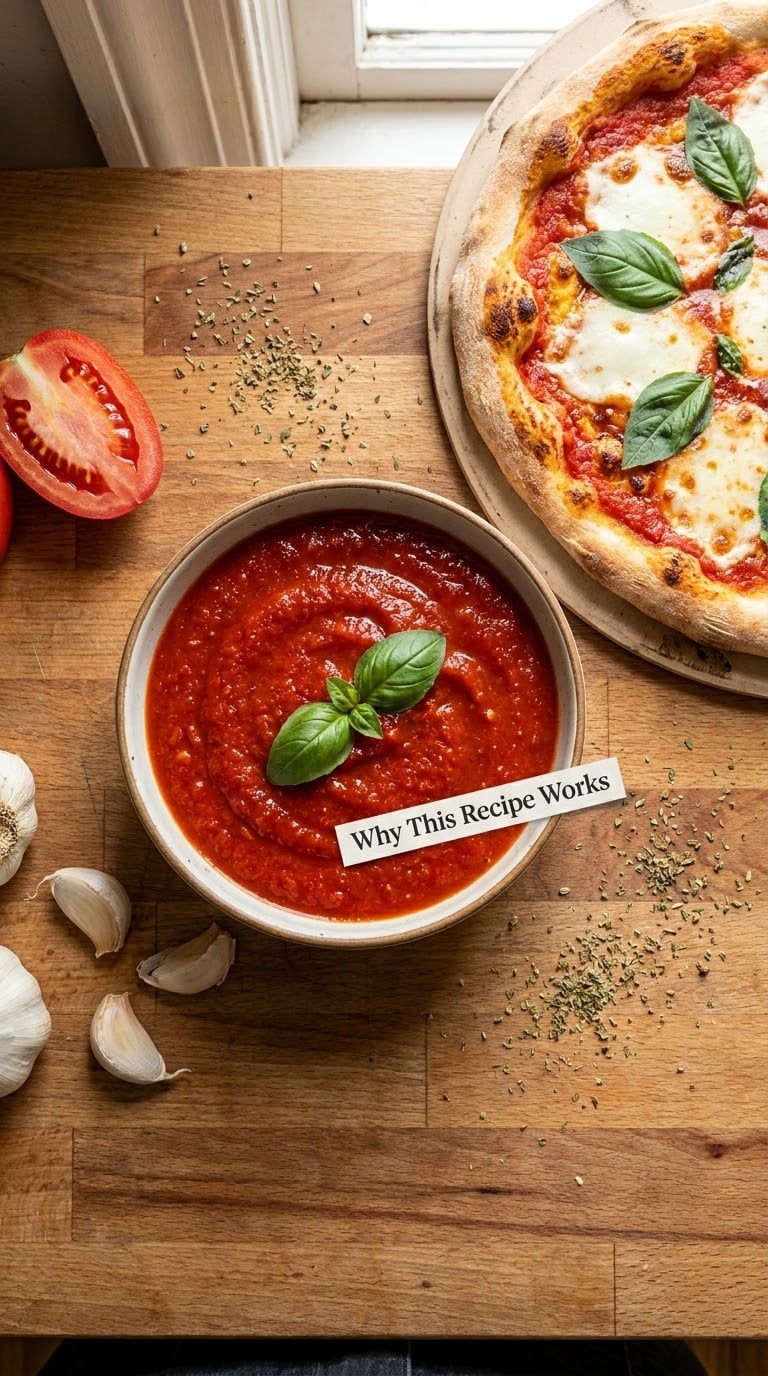
The difference between a good pizza sauce and a jar of sauce is not a secret ingredient, it is thickness and balance. Here is what each part of this easy homemade pizza sauce recipe is doing for you.
- Hand-crushed tomatoes give you control over the texture. You leave some texture in rather than puréeing to a smooth purée, and that is what makes it taste like tomatoes instead of ketchup.
- Tomato paste is the thickener. Two tablespoons stirred in at the start absorb liquid and keep the sauce from turning the middle of your crust to mush during the bake.
- A short simmer concentrates, it does not cook. Twenty minutes of low bubbling deepens the flavor without flattening the fresh, bright tomato taste. Cook it much longer and you land somewhere closer to a pasta sauce.
- A pinch of sugar balances acidity, not sweetness. Canned tomatoes vary in sharpness by brand, and a small amount of sugar rounds that edge off so the sauce tastes balanced rather than sour.
- Salt is added at the end, by taste. The salt content of canned tomatoes swings quite a bit between brands and styles, so a fixed amount in a recipe is a guess. Taste, then season.
Ingredients
This makes about 2 cups of sauce, which is enough for two 12-inch pizzas or one large sheet-pan pizza. Use crushed tomatoes for the smoothest classic result.
- 1 (15 oz) can crushed tomatoes, undrained
- 2 tbsp tomato paste
- 2 tbsp extra-virgin olive oil
- 2 garlic cloves, minced
- 1/2 tsp dried oregano
- 1/2 tsp Italian seasoning
- 1/2 tsp sugar
- 1/2 tsp red pepper flakes (optional, for a little heat)
- 1/2 tsp kosher salt, plus more to taste
- 2 tbsp grated Parmesan (optional, for body and a salty edge)
The crushed tomatoes are the base and they matter most. Whole peeled tomatoes give you the most control, diced tomatoes leave a chunkier, more rustic sauce, and jarred pizza sauce is already sweetened and seasoned, which defeats the point of making your own. If you want to lean Italian, a can of San Marzano style tomatoes is worth the trip to the grocery store, but any decent crushed tomatoes will make a good sauce.
| Tomato base | Prep | Result | Best for |
|---|---|---|---|
| Crushed tomatoes | None | Smooth with a little texture | Classic pizza, dipping sauce |
| Whole peeled | Crush by hand | Coarsest, most tomato-forward | People who want real tomato flavor |
| Diced tomatoes | Drain well | Chunky and rustic | Soupy pizzas, dipping |
| Jarred pizza sauce | None | Thin and already sweet | Only if you thicken and season it hard |
Everything else is a swap-fest. Dried basil works in place of oregano, garlic powder replaces fresh garlic when you are in a hurry, and a tablespoon of butter can stand in for the olive oil if that is what you have. The Parmesan is the one truly optional item, and it is there for body rather than for flavor.
Equipment
All you truly need is a medium saucepan, ideally one with a heavy base so the sauce simmers rather than scorches. A wooden spoon and a can opener finish the list.
An immersion blender is worth having if you like a completely smooth sauce, since you can blend it right in the pot and skip transferring anything. A food processor works too, but it means dirtying one more dish, and several readers who have made this recipe switched to an immersion blender purely for faster cleanup.
How to Make Easy Homemade Pizza Sauce
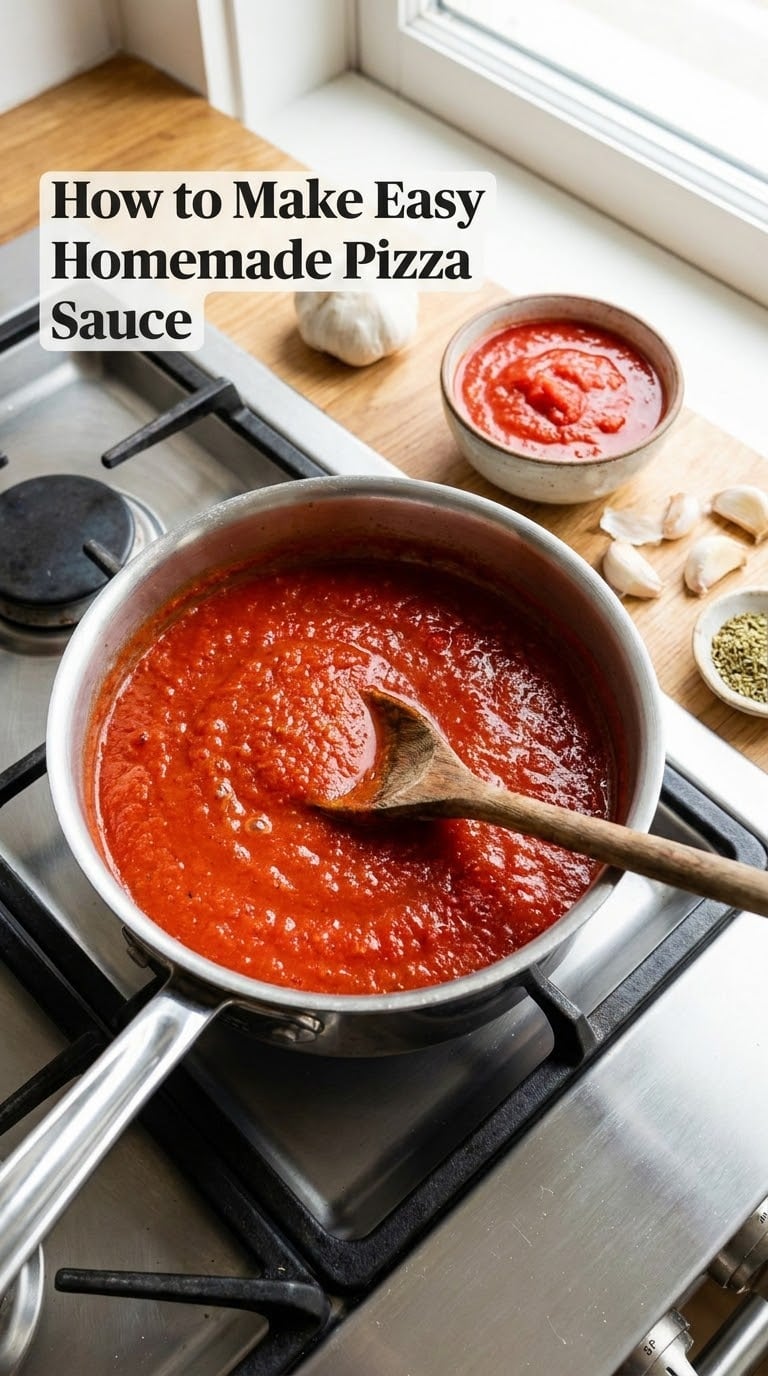
Read the can before you open it. If the tomatoes are packed in juice rather than water, that liquid is fine to keep, because the simmer and the tomato paste will handle the thickness. You do not need to drain them for this recipe.
- Pour the olive oil into a medium saucepan and set it over medium-low heat.
- Add the minced garlic and cook gently for 30 to 45 seconds, stirring, until fragrant and just pale gold. Do not let it brown.
- Add the crushed tomatoes, scraping the can clean with a spoon or rubber spatula.
- Stir in the tomato paste, oregano, Italian seasoning, sugar, red pepper flakes and salt.
- Bring the sauce to a simmer, then lower the heat so it bubbles gently with small pops at the surface.
- Simmer uncovered for 15 to 20 minutes, stirring every few minutes so the bottom does not catch.
- Taste. Add salt, a little more sugar, or a squeeze of lemon if it tastes flat or sharp.
- Remove from the heat and let it cool for 10 minutes before using or storing.
Cook the Aromatics
Garlic burns faster than almost anything else in a saucepan, and burnt garlic will follow you through the whole pizza. Medium-low heat and 30 to 45 seconds is all it takes, and you are looking for a pale gold color and a sweet smell, not brown bits.
If you are using garlic powder instead, add it with the dried herbs later so it does not scorch on the empty pan. Fresh garlic also gives you a gentler flavor than the jarred paste, which is why some people add half a teaspoon of garlic powder alongside the two cloves.
Simmer and Reduce the Sauce
The simmer is where thickness happens. Small bubbles at the surface, not a rolling boil, and a sauce that has dropped by roughly a third in volume and leaves a clean trail behind the spoon when you drag it across the bottom of the pan.
Fifteen to 20 minutes is the window. Under 15 minutes and the sauce is still thin enough to soak a crust. Over 30 minutes and the bright, summery tomato flavor flattens into something closer to a slow-cooked pasta sauce, which is a fine thing to have but a different recipe.
A saucepan splatters as it reduces, and that is a real annoyance rather than a small one. A splatter screen or a partially offset lid solves it without dropping the heat, which is the mistake most people make.
Tips for Success
- If your sauce is too watery, simmer it longer in an uncovered pan. No flour, no cornstarch, no reduction shortcut.
- Still thin after 20 minutes? Stir in another tablespoon of tomato paste and give it five more minutes. This is faster and tastes better than reducing the sauce down further.
- If your sauce is too thick, stir in a tablespoon of warm water at a time. A spoonful of the canning liquid from the tomato can also works.
- If it tastes bland, it is almost always under-salted, not under-seasoned. Salt first, then reassess.
- If it is too sweet, you likely started with jarred sauce or added sugar twice. A squeeze of lemon or a teaspoon of red wine vinegar brings the balance back without more sugar.
- Waiting on the dough? Spread the sauce on the crust about 5 minutes into the bake, before the cheese goes on. The extra oven time dries the surface out and keeps the center of the crust crisp. It is the fix a lot of pizza-night regulars use instead of thicker sauce.
- How much sauce per pizza? About 1/2 cup for a 12-inch pizza. Stop at the outer edge of the dough and leave the rim bare.
Variations
- Meatless herb version: skip the Parmesan, double the dried oregano, and add 1/4 cup of torn fresh basil off the heat. This is the version most kids eat without complaint.
- Spicy arrabbiata-style: add 1 teaspoon of red pepper flakes at the start with the garlic and 1/2 teaspoon more at the end, and cut the sugar to 1/4 teaspoon. Let it simmer the full 20 minutes so the heat settles.
- Roasted pepper version: blend 1/2 cup of roasted red peppers into the sauce with an immersion blender, then reduce for 5 minutes. Sweet, smoky and very good on a white pizza.
- Vegan: leave out the Parmesan, and the rest of the recipe already is. Nothing else changes.
- Lower sodium: use unsalted tomatoes if you can find them, hold the salt back entirely until you taste the finished sauce, and lean on the oregano, basil and garlic instead.
Storage, Make-Ahead and Reheating
Cool the sauce to room temperature before you put a lid on it, and move the leftovers into the refrigerator within two hours. In a sealed container it keeps 3 to 4 days, which is usually two pizza nights.
For freezing, ladle the cooled sauce into half-cup portions in a freezer bag or small freezer-safe container, press out the air, and label it with the date. Half a cup is exactly one 12-inch pizza, so you can pull one out at a time and leave the rest frozen. It keeps 3 months in the freezer.
One honest warning: a sauce you froze without cooking tends to separate and thin out once thawed, so give it a good stir and a minute on the stove before you use it. A fully simmered sauce holds its body much better in the freezer.
To reheat from the fridge, warm it slowly over low heat with a splash of water if it has tightened up, and stir until steaming all the way through, which is 165°F (74°C). Do not microwave it in a closed container, and use the same reheating guidance for any tomato sauce, homemade or not. A microwave works fine if you leave the lid cracked and stop to stir halfway.
What to Serve With It
The sauce is the easy part, so pair it with dough that does the rest of the work. If you have not picked your crust yet, these 10 easy pizza dough recipes for homemade pizza night cover everything from a no-yeast pan pizza to a slow-ferment overnight dough.
- Garlic bread: spoon it over sliced baguette with a little butter, bake at 425°F (220°C) until the edges crisp, roughly 10 minutes.
- Mozzarella sticks: bake frozen sticks according to the package, then serve the sauce warm on the side rather than on top so the crusts stay crunchy.
- A simple green salad: the acid in the tomatoes and the olive oil make something with bitter greens and a lemon dressing the obvious counterweight.
- Pizzadillas: spread it inside a tortilla with shredded mozzarella, fold it in half, and pan-fry until the outside is golden and the cheese has melted.
- Stuffed peppers and zucchini boats: thin it with a few spoonfuls of water, season it a little harder, and bake until the vegetables are tender.
Frequently Asked Questions
Can I use fresh tomatoes instead of canned tomatoes for this easy homemade pizza sauce recipe?
You can, but plan on 45 to 60 minutes instead of 25. Roughly 2 pounds of ripe tomatoes, seeded and crushed by hand, will give you about the same 2 cups. Cook them down longer than you would canned tomatoes because fresh fruit holds far more water, and add the tomato paste at the 20 minute mark rather than the start. The flavor is brighter and more summer-tasting. Most weeknight cooks I know who try it once go back to canned for pizza night and save fresh tomatoes for canning in season.
How can I make pizza sauce thicker without adding flour or cornstarch?
Three options, in order of how well they work. First, simmer the sauce uncovered for another 5 to 10 minutes and stir more often, which reduces it without changing the flavor. Second, stir in an extra tablespoon of tomato paste and give it 5 minutes to cook in. Third, if the sauce is already finished, spread it thinly on a plate and refrigerate it for 30 minutes, then scrape it back together. A dedicated splatter screen keeps the mess down while the first method does its work.
Which canned tomatoes work best when I do not want an acidic sauce?
Mild crushed tomatoes are the practical answer. Look for varieties labeled mild or with a shorter ingredient list, and reach for the larger 28 ounce cans, which are usually less aggressively seasoned than the small 14 ounce ones. Simmering also softens acidity, so cooking the sauce the full 20 minutes and finishing with a small pinch of sugar does more than any brand switch. If a sauce still tastes sharp to you, a squeeze of lemon is not the fix; a teaspoon of sugar stirred in at the end is.
Can I make this pizza sauce ahead for a party or freeze it in individual portions?
Yes, and this is the reason I make a triple batch. Cool it fully, then ladle it into 1/2 cup portions in a freezer bag or small container, press out the air, label with the date, and freeze for up to 3 months. Half a cup covers one 12-inch pizza, so you can pull exactly what you need. For the night before a party, refrigerate the sauce and reheat it with a splash of water. A sauce you froze without simmering separates a little, so stir it well and warm it on the stove before serving.
How long should pizza sauce simmer before it is safe to use?
For a cooked tomato sauce, simmer it gently for at least 15 minutes and up to 20 minutes, until the surface shows small lazy bubbles and the volume drops by about a third. That is a reduction, not a full cook, and the sauce is meant to be used within a few days or frozen. If you want longer shelf life, cool it, refrigerate it within 2 hours, and keep it 3 to 4 days in a sealed container. Freezing in half-cup portions is the safer route for a big batch, where cooked sauce holds its texture best.
Make This Pizza Sauce Tonight
If you have not made your own sauce before, this is the one to start with. It is 25 minutes, one pan, and the two things that matter most, thickness and seasoning, are both under your control.
Pick your dough first, put it in the oven so it rises while you make this easy homemade pizza sauce recipe, and you will have dinner on the table in about an hour. Then make a second batch on the weekend and freeze it in half-cup portions. Future you will be glad.